
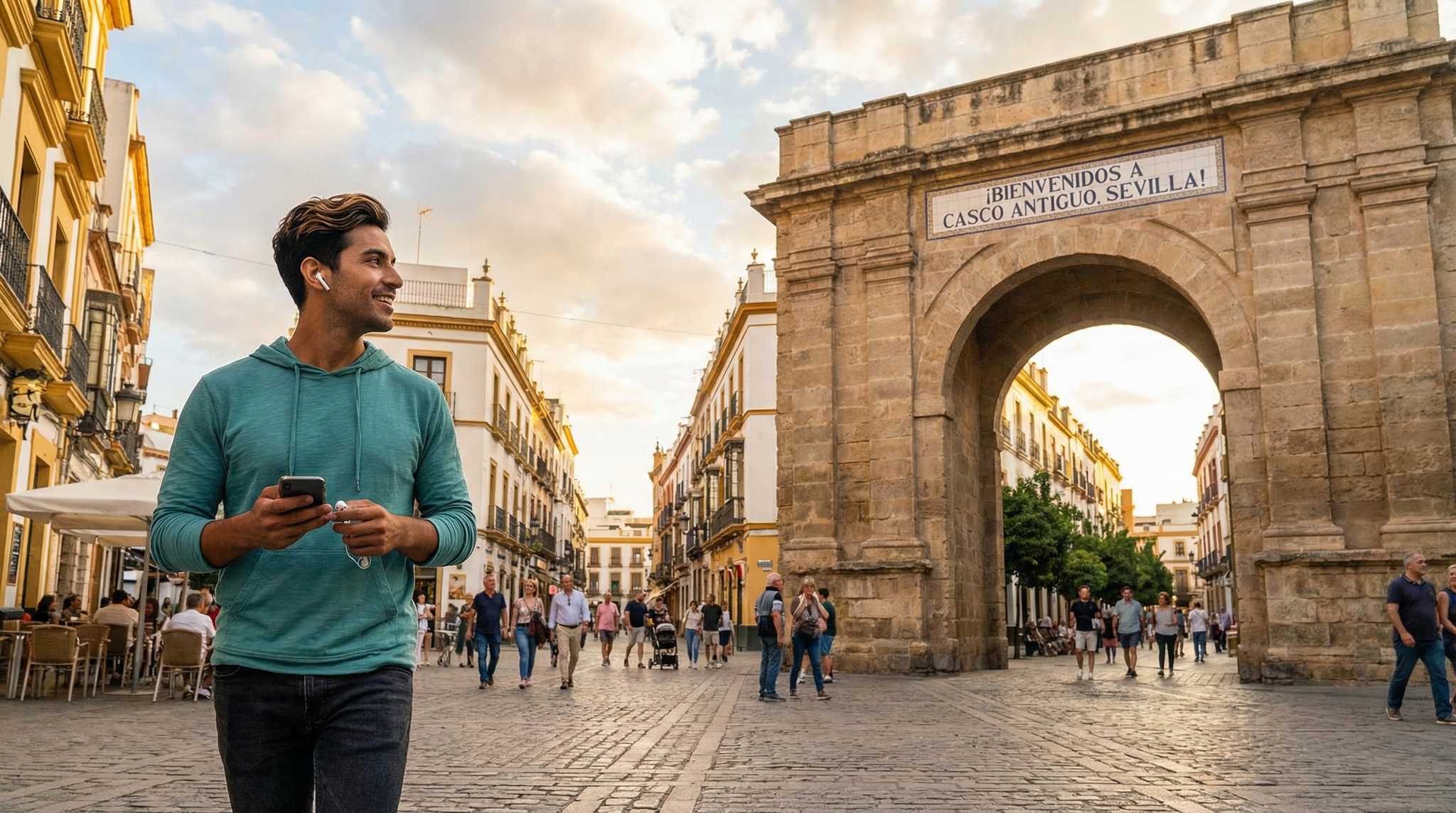
세비야 오디오 투어: 세비야의 시대를 초월한 영혼을 탐험하는 숨겨진 구석 오디오 여정
플라멩코는 세비야에 그저 존재하는 것이 아니라, 숨겨진 안뜰과 고대 돌담에서 불꽃처럼 타오르며 모든 구불구불한 골목에 리듬을 불어넣습니다. 이 셀프 가이드 오디오 투어를 통해 목적을 가지고 거닐며, 일반적인 엽서 너머의 잃어버린 장들과 비밀스러운 구석들을 발견해보세요. 침략자들이 새벽에 도시를 위협했을 때, 이 요새 벽에서 어떤 어두운 사건이 울려 퍼졌을까요? 왜 어떤 이들은 단 하나의 경사로가 한 동네 전체의 운명을 바꾸었다고 말할까요? 그늘진 안달루시아 파티오의 닫힌 문 뒤에서 어떤 전설적인 무용수의 발자취가 여전히 속삭여지고 있을까요? 거리에서 스캔들이 끓어오르고 반란자들이 보이지 않는 계단을 오르던 수세기 동안을 거닐어 보세요. 세비야 성벽의 그림자 속에서 긴장이 고조되고, 매달린 발코니 아래에서 호기심이 솟아나는 것을 느껴보세요. 이 여정은 단순한 풍경 이상을 제공합니다. 세비야만이 불러낼 수 있는 삶, 전설, 그리고 웃음을 통해 심장이 두근거리는 산책입니다. 플라멩코의 불꽃이 당신을 이끌게 하세요. 탐험을 시작하고, 세비야의 숨겨진 이야기들이 당신을 어디로 데려갈지 확인해보세요.
투어 미리보기
이 투어에 대하여
- schedule소요 시간 40–60 mins나만의 속도로 이동
- straighten2.3 km 도보 경로안내 경로 따라가기
- location_on
- wifi_off오프라인 작동한 번 다운로드, 어디서든 사용
- all_inclusive평생 이용언제든지 다시 재생 가능
- location_on플라멩코 춤 박물관에서 시작
이 투어의 정류장
To spot the Flamenco Dance Museum as you walk, keep your eyes out for a beautiful, old building with warm, sandy-colored stone and traditional arched entrances. It’s nestled right…더 보기간략히 보기
To spot the Flamenco Dance Museum as you walk, keep your eyes out for a beautiful, old building with warm, sandy-colored stone and traditional arched entrances. It’s nestled right on a narrow street in the heart of the historic Santa Cruz neighborhood. If you see a sign that says “Museo del Baile Flamenco” and hear distant guitar strings, you’re in the right place. Look for a doorway leading into a cool, shaded Andalusian courtyard-if you hear the echo of heels or laughter, you’re very close! Now, standing here, you’re right outside the world’s only Flamenco Dance Museum, the Museo del Baile Flamenco. Imagine for a second that you’ve just strolled away from the busy buzz of Plaza de la Alfalfa and find yourself caught between the past and present of Andalusia. Here, in this very spot, people from all over the planet come to feel the fire and soul of one of Spain’s oldest and proudest traditions: flamenco. It might look calm on the outside, but step in and WHAM-your senses are about to dance!. Inside, there are four whole floors dedicated to music, movement, and passion. There's even a secret underground level, where the stone walls seem to hum with history. On the ground floor, there’s a rare sight-a classic Andalusian patio-one of the last in Seville. It’s like a secret oasis, and almost every night, this quiet courtyard bursts alive with swirling dresses, flying hands, and lightning-fast feet. All of this magic started with a local flamenco star, Cristina Hoyos, who wanted to create a home for this art. She turned an 18th-century building into this living museum, blending old tradition with modern technology. Every corner takes you deep into flamenco-through stories about legends like Carmen Amaya and Sara Baras, and interactive displays that let you try your own moves (don’t worry, I promise not to judge your Sevillanas!). You’ll find more than just dancing here. Art fills the walls-photographs catch the flash of a dancer’s heel, paintings capture those explosive moments of duende, that wild spirit you feel only with flamenco. Throughout the museum, you’ll hear echoes of top artists, politicians, and even movie stars who have come for a taste of this magic. The best part? As the day winds down, the patio becomes a stage, and world-class artists sweep onto it. There’s singing, there’s guitar, and above all, there’s the deep, urgent rhythm of flamenco-the rumba, tangos, alegrías, and more. So, ready to feel the soul of Seville? Don’t be shy-flamenco is not just about dancing on stage; it’s about letting the rhythm pull you in, even if your dancing skills are more “awkward tourist” than “graceful Sevillano.” Let’s see if we can catch a bit of that magic before we head on to the next stop!
전용 페이지 열기 →Look up ahead and slightly to your left - see that long, towering wall, rough and ancient, stretching alongside the road? Notice the thick, earthy stone blocks at the base, topped…더 보기간략히 보기
Look up ahead and slightly to your left - see that long, towering wall, rough and ancient, stretching alongside the road? Notice the thick, earthy stone blocks at the base, topped with rows of pointy, square merlons marching along the wall like a line of chess pieces. Up high, you’ll spot one of the old gate towers, a big stone archway that feels like it could open into another world. If you look closely, you might even spot small plants and moss squeezing between the stones - nature’s way of sneaking into history. Right here in front of you stands what’s left of Seville’s mighty Walls. Now, try to imagine it - a thousand years ago, you’d be staring at a fortress! These huge military walls circled the entire old city, making sure nobody got in unless they were supposed to. Every era built a bit more wall as Seville grew, but the ones you see here? They’re mostly from the 1100s, when the Almohads ruled the city. Amazing, right? Not even a magic trick - just hard work, sweat, and about two meters of wall thickness! You won’t see much of the Roman original, but deep underground, historians still find hints: a chunk of Roman stone here, a buried corner there. The funny thing? People used to tell wild tales that Julius Caesar built the first walls, but by the time the Romans arrived, walls were already in place. Maybe the real magic was how everyone kept recycling and improving what came before. Imagine the city in those days - noisy, lively, but always on edge. Let’s add some drama. In 844, Vikings attacked, so the city hurried to beef up its defenses. Later, the walls grew stronger, taller, packed with towers every 40-50 meters. Back then, there were 18 gates and secret postigos - you’d have to know the right one to sneak in with your goat or basket of oranges. Only four gates remain today. If these stones could talk, I bet they’d whisper endless secrets about old battles, invaders, and the daily life of everyone hurrying through the gates. So, take a slow walk along these walls. You’re not just looking at old rocks - you’re stepping along the skin of Seville’s history! Keep your eyes out: every shadow and crack might be hiding a bit more of the story. And hey, if you hear whispering, it’s probably just the wind… or maybe a ghostly architect checking his medieval handiwork! Exploring the realm of the gates and shutters to access the city, preserved sections of the wall or the photo gallery? Feel free to consult the chat section for additional information.
전용 페이지 열기 →
9개 정류장 더 보기정류장 적게 보기expand_moreexpand_less
As you walk up, you’ll spot the Municipal Newspaper Archive of Seville right ahead-just look for the grand entrance framed by four impressive stone columns, standing tall like…더 보기간략히 보기
As you walk up, you’ll spot the Municipal Newspaper Archive of Seville right ahead-just look for the grand entrance framed by four impressive stone columns, standing tall like ancient guards. Above them, you’ll see a row of serious-looking windows, and two flags waving in the breeze: one Spanish, and one green-and-white for Andalucia. The building’s red brick and cream stone trim make it stand out from its neighbors, almost like it’s posing for its own front-page story. Now, let’s imagine you’re stepping through time. This is not just any archive-it’s the keeper of Seville’s stories, where old newspapers, wild headlines, and secret histories are saved from being lost forever. The Municipal Newspaper Archive was born back in 1934, right inside the grand halls of the Alcázar, during a summer so hot that even the ink on the papers must have threatened to melt! This place holds almost 30,000 volumes, with newspapers dating all the way back to 1661. Can you imagine? Walking by dusty shelves, you’d find the first issues printed in candlelight, gossip from royal courts, and posters for plays that made people laugh and cry in long-vanished theaters. The archive has survived more drama than some soap operas! During the Civil War, its first home was abandoned, papers left behind like forgotten treasure. Then in the ‘60s, part of another home-the Pabellón Mudéjar-collapsed, sending a rain of bricks and a few precious collections into history’s black hole. But the people of Seville never gave up. They moved the archive again and again, determined that every headline and scandal would be preserved. Now, the archive is embracing the digital age. With the NO8DO Digital project, you can browse hundreds of years’ worth of Sevillian life online, with photos, virtual exhibits, and stories you’d never believe. As you stand here, you’re just steps away from centuries of laughter, heartbreak, and headlines. You know, if newspapers could talk, I bet this building would never sleep! Ready for the next chapter of your tour? Let’s wander on through history.
전용 페이지 열기 →Take a look to your left-the Church of the Annunciation stands out with its solid brick walls and a proud, domed bell tower rising above the rooftops. The church faces Calle…더 보기간략히 보기
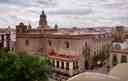
Take a look to your left-the Church of the Annunciation stands out with its solid brick walls and a proud, domed bell tower rising above the rooftops. The church faces Calle Laraña, and you’ll spot its grand entrance flanked by two mighty columns, almost like a couple of muscular guards on door duty. There’s a tall rectangle of a facade, broken up by a large arched door, and if you squint, you might see stone statues peering down from their perches. Over the entrance, notice the central statue of the Virgin and Child, keeping watch over everyone passing by. The building’s reddish-brown color gives it a warm “baked in the sun” look. Now, imagine standing here in Seville nearly 500 years ago. The street noise would have been a little different-maybe clopping horse hooves and excited chatter as people hurried to lectures. The Church of the Annunciation was more than just a church; it was a powerhouse during the Spanish Counter-Reformation and a launchpad for Jesuit missions that sailed to lands far away. It was built beginning in 1565, and its design shows off the brains of not one but two masterminds: Bartolomé de Bustamante and Hernán Ruiz the Younger-the latter being the “rockstar architect” of Seville’s cathedral. No pressure, right? Standing by the impressive entrance, picture yourself in front of two floors of stonework. There are columns, rectangular windows, fancy frames, statues of saints, and-if you look in the middle niche-a careful sculpture of the Virgin Mary by Juan Bautista Vázquez. But here’s where it gets even more interesting: below your feet, hidden from view, is a crypt that keeps the remains of Sevilla’s most celebrated citizens, like the poet Gustavo Adolfo Bécquer. Maybe if you put your ear to the ground you’ll catch a whisper of poetry! This spot has been a chameleon through time: first a Jesuit HQ, then the beating heart of a university, stuffed with scholars and books and wild discussions about the future. It’s seen the Jesuits booted out, the university move in, and generations of knowledge-hungry students pass through. When you’re ready, we’ll take our next step through the living history of Seville-no time machines required.
전용 페이지 열기 →As you’re walking down this narrow street, glance to your left and you’ll spot a building with a grand, dark wooden door studded with bronze, topped by a richly decorated stone…더 보기간략히 보기
As you’re walking down this narrow street, glance to your left and you’ll spot a building with a grand, dark wooden door studded with bronze, topped by a richly decorated stone archway. Above the entrance, there’s a balcony with bold black railings and some fancy stone scroll work curling out to the sides. You’re looking for that elegant but slightly dramatic doorway, almost as if it’s waiting for a countess to sweep out in a swirl of mystery and history. Welcome to the Lebrija Palace, one of Seville’s best-kept secrets! Imagine the bustling sounds of carriage wheels bumping along the cobbles as noble families come and go, centuries ago. This building has been standing here since the 16th century-though, trust me, its story is much older than the paint on its walls. Now, the outside is classic Andalusian-that deep red behind the stonework, the carved windows, and just a hint of drama. But inside? Well, you’d better let your imagination loose. It’s like stepping into a treasure chest where every inch hides a new surprise. The Countess of Lebrija, Regla Manjón, collected Roman mosaics as if she was gathering rare stamps. In fact, there are mosaics straight from the ancient city of Italica, spread like magic carpets across the ground floor. A historian once called this the “best paved house-palace in Europe”-which honestly sounds like an Olympic event, but with a lot more marble. Picture this: in the palace courtyard, sunlight bounces off the colorful stones of a giant Roman mosaic. Right in the center, you’d find Pan, the god of wild music, playing his flute and trying to charm a nymph. You might even hear the echo of a flute if you listen closely-of course, that might just be my imagination or a clever tour guide with a sound app. All around, marble busts grin or stare, ancient columns stand like guards, and everywhere you look, there’s another curious artifact or artwork. The countess loved archaeology so much she turned her house into a living museum. She filled it with treasures from Roman times, Moorish pieces, and even art from distant China and Persia. And just when you think it can’t get more impressive, you wander upstairs to discover libraries packed with over 4,000 old books-enough to keep any bookworm busy for the next several centuries. So, as you stand here, try to imagine being invited inside for a grand dinner or secret meeting. Maybe you’d discover a priceless painting, or perhaps just lose yourself in the echoes of the past. In 1999, the palace was opened to the public, so luckily, you don’t need to be a count or countess to enter now-just a curious visitor thrilled by stories and beauty. Don’t worry, no secret passwords required!
전용 페이지 열기 →Look ahead and slightly upward-you can’t miss the bold, rosy-red facade of the Iglesia del Salvador! Framed by striking white stone columns and topped with decorative domes, the…더 보기간략히 보기
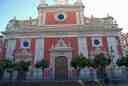
Look ahead and slightly upward-you can’t miss the bold, rosy-red facade of the Iglesia del Salvador! Framed by striking white stone columns and topped with decorative domes, the church almost looks like it’s wearing a royal coat, complete with a giant circular window in the center, like a jewel on its chest. Notice the ornate carvings and the grand wooden doors, all behind a line of playful orange trees standing guard by an old iron fence. If you’re facing the busy plaza, that magnificent building right in front is where the history happened. Alright, picture this: more than a thousand years of stories have stacked up on this very spot! First, there may have been a Roman building here, then a Visigothic church-or so the legends say. But one thing’s for sure: in the early 800s, the grand mosque of Ibn Adabbás rose up here, filling these stones with the sound of ancient prayers. Jump forward to 1248, and things get dramatic! King Ferdinand III of Castile takes Seville, and suddenly, this mosque is transformed into a church, dedicated to the Divine Savior. Imagine the whirlwind of change: minarets turning into bell towers, and the buzz as people wondered what would come next. By the 17th century, the church was in bad shape-so sunken into the street you had to walk down 20 steps to get inside! You could almost touch the roof from the outside, which is quite convenient if you’re scared of heights, but not great for a church. In 1671, they tore it all down and started fresh. But oops-a classic builder’s blunder! The new church collapsed just before opening, thanks to hasty removal of supports. Back to the drawing board! The fiery red walls and white trim you see now were finally finished in the early 1700s by architect Leonardo de Figueroa. Imagine the grand opening-all the music, the voices, and the pride as Seville’s largest Baroque church shone in the sunlight. Inside, this place turned into a musical hotspot, echoing with some of the best sacred music in town. After all those ups and downs, the church lost its old title in the 1800s and became a regular parish, though plenty of locals stubbornly call it the old name anyway! Its last big facelift was in 2003, restoring a touch of that original shine. So as you stand here, outside this feast of color and history, take a deep breath and listen-you can almost hear the footsteps of Romans, the prayers of Moors, and the joyful sounds of centuries gone by.
전용 페이지 열기 →You’re almost there! Just look ahead for a grand building with tall, pale stone columns and delicate stucco details, all surrounding handsome arches. If you spot a beautiful old…더 보기간략히 보기
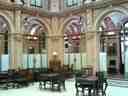
You’re almost there! Just look ahead for a grand building with tall, pale stone columns and delicate stucco details, all surrounding handsome arches. If you spot a beautiful old courtyard with a square ground plan, big lanterns hanging over your head, and rows of arched windows, you’ve made it-you’re at the Convent of Saint Acacius. Peer through the windows, and you might even see elegant old chess tables waiting for their next match. That’s your cue! Now, let me sweep you back in time. Imagine it’s the 16th century, and outside the walls of Sevilla, this place buzzed with monks in long robes-Augustinians, to be exact. There’s a whiff of anxiety in the air: they want to build a grand college, but their coin purse is lighter than a feather. Just when hope is fading, along comes Leonor de Virués, a widow with a heart as generous as her garden, donating houses and orchards so these monks can finally get building. You’d see students hustling over dusty paths, books clutched tight-maybe dodging an overzealous chicken or two. By 1601, the church here was finished and became a beacon for those seeking wisdom, faith, and maybe a slice of peace away from the city’s clatter. Over time, the city grew and this convent moved to its present spot, right here in the heart of Sevilla. Oh, but it wasn’t all quiet prayers and gentle chanting. This building’s life is like a Spanish soap opera: monks in, monks out, artists, noblemen, invading armies (hello, Napoleon), and even a public credit office at one point. At night, neighbors would gather for rosary processions, wandering these cloisters by lantern light, filling the warm air with whispers and song. Look up at the sturdy columns around you and picture a line of monks with secrets under those heavy robes-perhaps sneaking extra bread, or maybe just a forbidden chess game on those old tables. And don’t forget, this courtyard was designed by the famous Leonardo de Figueroa-in the late 1600s-so every detail is a little piece of art. In the end, this convent retired from holy work and transformed into the Real Círculo de Labradores in the 1950s-a place of gathering, laughter, and lively debate. So next time someone tells you Sevilla is all oranges and flamenco, tell them there’s history and drama waiting behind every arched door. Alright, onward to our next adventure!
전용 페이지 열기 →

자주 묻는 질문
투어는 어떻게 시작하나요?
구매 후 AudaTours 앱을 다운로드하고 교환 코드를 입력하세요. 투어를 바로 시작할 수 있습니다 - 재생을 탭하고 GPS 안내 경로를 따라가시면 됩니다.
투어 중 인터넷이 필요한가요?
아닙니다! 시작 전에 투어를 다운로드하면 완전히 오프라인으로 즐길 수 있습니다. 채팅 기능만 인터넷이 필요합니다. 모바일 데이터 절약을 위해 WiFi에서 다운로드하시는 것을 권장합니다.
이것은 가이드가 안내하는 단체 투어인가요?
아닙니다 - 이것은 셀프 가이드 오디오 투어입니다. 폰을 통해 오디오 나레이션을 들으며 나만의 속도로 독립적으로 탐험합니다. 투어 가이드도, 단체도, 일정도 없습니다.
투어는 얼마나 걸리나요?
대부분의 투어는 60-90분이 소요되지만, 속도는 전적으로 본인이 조절합니다. 원할 때 언제든지 일시정지하거나, 정류장을 건너뛰거나, 휴식을 취하세요.
오늘 투어를 끝낼 수 없으면 어떻게 하나요?
괜찮습니다! 투어는 평생 이용이 가능합니다. 원할 때 언제든지 일시정지하고 다시 시작하세요 - 내일, 다음 주, 또는 내년에도. 진행 상황이 저장됩니다.
어떤 언어를 이용할 수 있나요?
모든 투어는 50개 이상의 언어로 이용 가능합니다. 코드를 교환할 때 원하는 언어를 선택하세요. 참고: 투어 생성 후에는 언어를 변경할 수 없습니다.
구매 후 투어는 어디에서 이용하나요?
App Store 또는 Google Play에서 무료 AudaTours 앱을 다운로드하세요. 교환 코드(이메일로 전송됨)를 입력하면 라이브러리에 투어가 나타나며, 다운로드하여 시작할 수 있습니다.
투어가 마음에 들지 않으시면 환불해 드립니다. 문의: [email protected]
안전한 결제 


