그라나다 오디오 투어: 유산과 역사를 탐험하다
황금빛 안달루시아 태양 아래, 그라나다의 고대 돌들은 비밀을 속삭입니다. 어떤 돌들은 정복자, 반역자, 선구자들의 발자취를 여전히 메아리칩니다. 이 셀프 가이드 오디오 투어에서 세계적으로 유명한 기념물뿐만 아니라 대부분의 여행자들이 결코 알아채지 못하는 숨겨진 이야기와 간과된 구석들을 발견하세요. 산 헤로니모 수도원 안에서 스페인의 운명을 영원히 바꿀 뻔한 사건은 무엇이었을까요? 그라나다 대성당의 어떤 유물이 폭발적인 스캔들의 중심이 되었을까요? 왜 로마 가톨릭 그라나다 대교구의 초대 주교들은 수세기 전에 상인으로 변장했을까요? 그늘진 회랑에서 화려한 예배당으로 거닐면서 정치적 격변, 왕실의 야망, 맹렬한 헌신, 불과 믿음에서 태어난 예술에 대한 이야기들이 펼쳐집니다. 한 걸음 한 걸음마다 드라마와 잊혀진 미스터리가 드러나며, 그라나다의 솟아오른 탑과 고요한 지하 묘지를 보는 방식을 재구성합니다. 문턱을 넘어 그라나다가 그 화려함 아래 숨기고 있는 것을 발견할 준비가 되셨나요? 도시의 역사가 기다리고 있습니다. 지금 바로 여정을 시작하세요.
투어 미리보기
이 투어에 대하여
- schedule소요 시간 30–50 mins나만의 속도로 이동
- straighten3.7 km 도보 경로안내 경로 따라가기
- location_on
- wifi_off오프라인 작동한 번 다운로드, 어디서든 사용
- all_inclusive평생 이용언제든지 다시 재생 가능
- location_on산 헤로니모 수도원, 그라나다에서 시작
이 투어의 정류장
The Monasterio de San Jerónimo is famous for being the first church in the world dedicated to the Immaculate Conception of Mary. It was founded by the Catholic Monarchs, Isabella…더 보기간략히 보기
The Monasterio de San Jerónimo is famous for being the first church in the world dedicated to the Immaculate Conception of Mary. It was founded by the Catholic Monarchs, Isabella I of Castile and Ferdinand II of Aragon, during the final stage of the Reconquista. The construction of the monastery began in 1504 and was led by the talented architect and sculptor, Diego de Siloé. As you enter the monastery, you'll be captivated by the richly decorated Renaissance interior. The main chapel's mannerist altarpiece, created by Pablo de Rojas, is considered the starting point of Andalusian sculpture. The intricate coffering, scalloping, and sculptures throughout the building showcase the late Renaissance humanism. One of the highlights of the Monasterio de San Jerónimo is the burial site of Gonzalo Fernández de Córdoba, known as the "Great Captain," and his wife, Doña Maria de Manrique. Their grandeur and heroism are emphasized through the iconographic program present in the church. Throughout its history, the monastery has faced various challenges, including the invasion by the French during the Peninsular War. It was later restored by the State in the early 20th century, with the tower being reconstructed in the 1980s. In 2022, the image of "Our Lady of Solitude" was canonically crowned by Pope Francis, adding another layer of significance to this already magnificent place. As you explore the monastery, make sure to visit the two cloisters. The older cloister boasts genuine Renaissance decorations and was originally meant to house the remains of the Great Captain. The second cloister, now occupied by the monks, was once the residence of Empress Isabella of Portugal. Before we continue our journey through Granada, take a moment to appreciate the elaborate gateway that separates the monastery from Calle Rector López Argueta. Although the sculpture of the Virgin of Sorrows on the gate is not original, it adds a touch of elegance to this already enchanting site. As we move on to our next stop, Puerta Real, keep in mind the rich history and architectural grandeur you've experienced here at the Monasterio de San Jerónimo.
전용 페이지 열기 →What makes this cathedral even more fascinating is the fact that it was constructed on the site of the city's main mosque after the reconquest of Granada. It represents the…더 보기간략히 보기
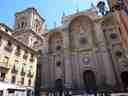
What makes this cathedral even more fascinating is the fact that it was constructed on the site of the city's main mosque after the reconquest of Granada. It represents the blending of different cultures and religions throughout history. Dedicated to Santa María de la Encarnación, the construction of the Granada Cathedral began in the 16th century and took a staggering 181 years to complete. The original plans for the cathedral included two impressive 81-meter towers, but due to various reasons, including financial constraints, the project remained unfinished. Nevertheless, the cathedral stands as a testament to the exquisite blend of architectural styles and influences that shaped it. The design of the cathedral showcases a unique combination of Renaissance and Gothic elements. Architect Diego de Siloé, who took over construction from Enrique Egas, incorporated a circular capilla mayor (principal chapel) instead of the usual semicircular apse, drawing inspiration from Italian architectural concepts. The cathedral also features the Vitruvian orders of architecture, adding to its artistic grandeur. As you approach the cathedral, the facade greets you with a triumphal arch-like structure adorned with portals and canvas. The three pillars, topped with semicircular arches, are supported by pilasters with sculptured projections and marble medallions. Above the main door, you'll notice a marble tondo depicting "José Laughing on the Annunciation," while a vase with lilies symbolizes the pure and virtuous nature of the Virgin Mary. Inside the cathedral, you'll find a rectangular base with five staggered naves, the central nave being the largest. The main chapel is adorned with Corinthian columns, supporting an entablature and a delicately designed vault with stained glass windows. Look out for two kneeling effigies of the Catholic King and Queen, Isabel and Ferdinand, created by renowned sculptor Pedro de Mena y Medrano. Alonso Cano also contributed with his sculptures of Adam and Eve. Don't forget to visit the Chapel of the Trinity, which houses a marvelous retablo featuring paintings by renowned artists such as El Greco, Jusepe de Ribera, and Alonso Cano. You'll also be captivated by the mesmerizing dome adorned with gold stars on a blue background, surrounded by petal-like shapes. The Granada Cathedral truly encapsulates the rich history, cultural diversity, and architectural brilliance of this beautiful city. As you explore its halls and chapels, take a moment to appreciate the intricate details and the centuries of artistry that went into its creation. I hope you enjoy your visit to the Granada Cathedral, and if you have any questions or would like to explore further, please feel free to ask!
전용 페이지 열기 →Originally known as the Diocese of Elvira, it dates back to the 3rd century and lasted until the 10th century. However, it was later re-founded and given the name of Granada in…더 보기간략히 보기
Originally known as the Diocese of Elvira, it dates back to the 3rd century and lasted until the 10th century. However, it was later re-founded and given the name of Granada in 1437. Soon after, it was recognized as a metropolitan archdiocese by Pope Alexander VI on December 10, 1492. The Archdiocese of Granada has several suffragan sees, including Almería, Cartagena, Guadix, Jaén, and Málaga. Its mother church, and the seat of its archbishop, is the magnificent Cathedral of the Incarnation in Granada. This stunning cathedral is also home to the Basilicas of San Juan de Dios and Nuestra Señora de las Angustias. The current archbishop of Granada is Francisco Martínez Fernández, appointed by Pope John Paul II on March 15, 2003. The archdiocese has seen a long line of bishops throughout its history, with names ranging from Caecilius in the 1st century to Basilio Tomás Sancho y Hernando in the 18th century. This landmark not only represents the spiritual and religious importance of Granada but also stands as a testament to the rich history of the Catholic Church in Spain. So, let's take a moment to admire the grandeur of the Roman Catholic Archdiocese of Granada before moving on to our next stop!
전용 페이지 열기 →
7개 정류장 더 보기정류장 적게 보기expand_moreexpand_less
The Alcaicería gets its name from the original main bazaar that stood here during Granada's Arab-Islamic era, under Nasrid rule from the 13th to 15th centuries. Unfortunately, a…더 보기간략히 보기
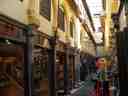
The Alcaicería gets its name from the original main bazaar that stood here during Granada's Arab-Islamic era, under Nasrid rule from the 13th to 15th centuries. Unfortunately, a fire in 1843 destroyed the original bazaar, but it was lovingly rebuilt in its current form. This area holds great significance since the Zirid period in the 11th century when the city's Great Mosque (now replaced by the cathedral) was constructed here. Initially, it was a lightly urbanized space, belonging to the ruling Zirids as a semi-rural estate called almunia. The construction of the Great Mosque was perhaps a strategic move to promote the city's growth in this direction, leading to the development of the city's first major markets. During the Nasrid period, as Granada expanded, the Alcaicería became the bustling commercial heart of the city. The Nasrid emir Yusuf I played a key role in raising its profile by building a madrasa (the Madrasa al-Yusufiyya) and a caravanserai (the Funduq al-Jadida) nearby, as well as remodeling the Alcaicería as a whole. The district surrounding the Great Mosque was filled with souqs (markets) and various commercial establishments. The Alcaicería itself was a distinctive bazaar owned directly by the Nasrids. It was locked and guarded at night, showcasing luxurious goods such as silk and other valuable items, which were taxed at a higher rate by the Nasrid authorities. This exclusive market covered a vast area of nearly 4,600 square meters and was bordered by Libreros, Oficios, Tinte, and Zacatín streets, as well as Bibarrambla Square. Close to the market, you'll find al-Qanṭara al-Jadida, the New Bridge, leading to the state-owned Funduq al-Jadida. When the Catholic Monarchs conquered Granada in 1492, the Alcaicería came under Spanish crown ownership. It continued to operate as a guarded market, officially known as the Real Sitio y Fuerte de la Alcaicería, or the Royal Site and Stronghold of the Alcaicería. In 1843, tragedy struck again when a fire ravaged the market, leading to its reconstruction on a smaller scale. The Alcaicería was rebuilt with a Neo-Moorish style, reflecting the enchanting Nasrid architecture. The reconstruction resulted in a reduced size and the removal of some smaller internal streets to make way for larger apartment blocs. Today, the Alcaicería remains a vibrant market street where you can immerse yourself in the hustle and bustle of local commerce. As you explore, take in the beautiful architecture and imagine the rich history that surrounds you. So, let's continue our journey through Granada and discover more hidden gems together!
전용 페이지 열기 →The area earned its name after King Felipe IV's visit on April 8, 1624. It is said that during a storm, the king entered Granada through the gate of El Rastro or La Paja in the…더 보기간략히 보기
The area earned its name after King Felipe IV's visit on April 8, 1624. It is said that during a storm, the king entered Granada through the gate of El Rastro or La Paja in the Muslim defensive wall, known as Bib-al-Rambla. This gate became the entrance point for the king, and thus the area surrounding it became known as Puerta Real. During the 16th century, Puerta Real emerged as the central square of Granadine social life. In 1515, it was adorned with the coat of arms of the Catholic Monarchs, Isabella and Ferdinand. Later, in 1610, new national symbols celebrating the reconquest of Spain from Muslim rule were added. Puerta Real has witnessed numerous transformations throughout its existence. In the past, the Darro River flowed through this area, but for hygiene reasons, it was eventually redirected. This change led to Puerta Real becoming a focal point of social activities, surpassing the importance of Elvira Street and Nueva Square. Over the years, Puerta Real has become home to various commercial establishments. One notable but no longer existing establishment is the Casino. Additionally, the Swiss Café, constructed in the late 19th century and situated next to Mesones Street, played a significant role in the district's social scene. Within Puerta Real, you'll also discover Genil Avenue, named after the Genil River that once flowed through this area. At the end of Genil Avenue lies the meeting point of the Genil and Darro Rivers. Don't miss the stunning Nuestra Señora de las Angustias Church along this avenue, which is dedicated to the Virgin of Granada. So, as we stroll through Puerta Real, take in the rich history and vibrant atmosphere that this historic area offers. From royal visits to social gatherings, Puerta Real has played a central role in shaping the cultural fabric of Granada.
전용 페이지 열기 →Designed by the talented artist Mariano Benlliure, this bronze sculptural group depicts a historic meeting between Isabella I of Castile and Christopher Columbus. It's a powerful…더 보기간략히 보기
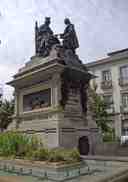
Designed by the talented artist Mariano Benlliure, this bronze sculptural group depicts a historic meeting between Isabella I of Castile and Christopher Columbus. It's a powerful representation of the pivotal moment in history when Isabella supported Columbus's journey to the Americas. Interestingly, the idea for this monument came about in the late 19th century when many Spanish cities planned to commemorate the 400th anniversary of Columbus's voyage. Granada had initially proposed a bombastic triumphal arch with a mix of Aztec, Hispano-Arab, and Renaissance styles. However, due to budget constraints, a new project was called for, and Mariano Benlliure's design was eventually chosen. The sculpture on top of the monument portrays Columbus bowing to Queen Isabella, who is seated on her throne. Originally, there were plans to include a figure of Boabdil as well, but this idea did not come to fruition. Unfortunately, the actual commemoration of the 400th anniversary did not go as planned. Queen regent Maria Christina of Habsburg-Lorraine refused to travel to Granada for the inauguration, which led to a revolt in the city, with fires, riots, and barricades. Despite the chaos, the monument was informally unveiled by the people of Granada on November 2, 1892. Since then, the monument has been relocated to its current position at Plaza de Isabel la Católica, not far from the burial place of Isabella in the Royal Chapel of Granada. It serves as a reminder of Isabella's pivotal role in history and her support for Columbus's explorations. I hope you find this monument fascinating, both in its historical significance and its artistic beauty. Let's continue our tour and move on to our next stop - the Palace of the Forgotten!
전용 페이지 열기 →Located in the beautiful Albaicín neighborhood, which is a declared World Heritage Site by UNESCO, the museum is housed in the symbolic Casa-Palacio de Santa Inés, a restored…더 보기간략히 보기
Located in the beautiful Albaicín neighborhood, which is a declared World Heritage Site by UNESCO, the museum is housed in the symbolic Casa-Palacio de Santa Inés, a restored 16th-century building of great cultural significance. As you approach the museum, you'll notice an unidentified coat of arms on its façade, suggesting the history of a converted Jew who wished to showcase their purity of blood. Inside, you'll discover over 7534 square feet (700 square meters) of exhibition space spread across two floors and unique grand halls. From the museum's terraces, you can also enjoy breathtaking views of the Alhambra and the Albaicín, providing a perfect backdrop for your visit. The Palace of the Forgotten opened its doors in 2014 and has since been offering fascinating guided tours by appointment. Through its carefully curated exhibitions, the museum aims to shed light on the Sephardic culture of Granada, a community that was largely forgotten after their expulsion during the Inquisition. One of the permanent exhibitions here is called "Inquisition: Ancient Instruments of Torture." Step into this eerie yet captivating space and witness over 70 instruments of torture used during the Inquisition. It's a chilling reminder of the dark period in Spanish history when the Catholic Monarchs sought to purify Spain and instill Catholicism. On the other hand, the museum also hosts the "Interactive Flamenco" exhibition on the first floor. Experience the vibrant and soul-stirring world of flamenco through interactive multimedia applications. This exhibition allows you to immerse yourself in the rhythms, beats, and types of voices that make up the rich tapestry of flamenco. Throughout your tour, you'll also encounter various objects from private collections, including the renowned Crespo López Family collection. These pieces provide glimpses into the lives of converted Jews, religious symbols, liturgical and ritual objects, as well as festivities. The museum places a strong emphasis on highlighting the role of women in Sephardic culture and showcasing famous figures from the Jewish community. In a dedicated room, you'll find a recreation of the ritual bath (Mikveh) of the Water Synagogue in Úbeda, Jaén. This serves as a reminder of the relevance of the Inquisition in the daily lives of Granada's Jews. As you navigate through the Palace of the Forgotten, you'll witness the chilling juxtaposition of instruments of torture alongside symbols of Sephardic culture. Gallows with views of the Alhambra, guillotines, and "torture masks" share space with sundials and astrophysical advancements, representing the light and shadow of this period in both Jewish and Spanish history. The Spanish Inquisition lasted for a staggering 350 years until its de facto abolition in 1834. The museum's aim is to showcase the impact and consequences of this historical period, creating a space for reflection and remembrance. So, prepare to be intrigued, moved, and captivated as you explore the Palace of the Forgotten. This museum offers a deep dive into the complex and intertwined histories of the Spanish Inquisition, Jewish culture, and Granada's rich heritage. Enjoy your visit, and if you have any questions, feel free to ask!
전용 페이지 열기 →As you approach the mosque, you'll notice its stunning architecture that incorporates traditional Muslim motifs. The building complex itself is not just a place of worship but…더 보기간략히 보기
As you approach the mosque, you'll notice its stunning architecture that incorporates traditional Muslim motifs. The building complex itself is not just a place of worship but also serves as a center for Islamic studies. It encompasses a serene garden and various facilities such as a library, conference hall, exhibition area, bookshop, and reception area. Inside the mosque, the atmosphere is peaceful and inviting. The mosque holds five daily prayers as well as the special Friday prayers, where the local Muslim community gathers to worship. Additionally, there are daily recitations and study sessions of the Quran, providing a space for spiritual growth and learning. The Granada Mosque is not only a place for religious practice but also serves as a bridge between cultures, fostering understanding and appreciation in this diverse city. It stands as a symbol of Granada's rich history and the coexistence of different religions and traditions throughout the centuries. Take a moment to soak in the tranquility of this sacred place, and appreciate the sense of unity and community that resonates within its walls. It truly is a testament to the beauty and diversity of Granada.
전용 페이지 열기 →As you wander through the palace, you'll discover the fascinating history it holds. It was once the residence of Aisha al-Horra, the wife of Sultan Abu'l-Hasan Ali and mother of…더 보기간략히 보기
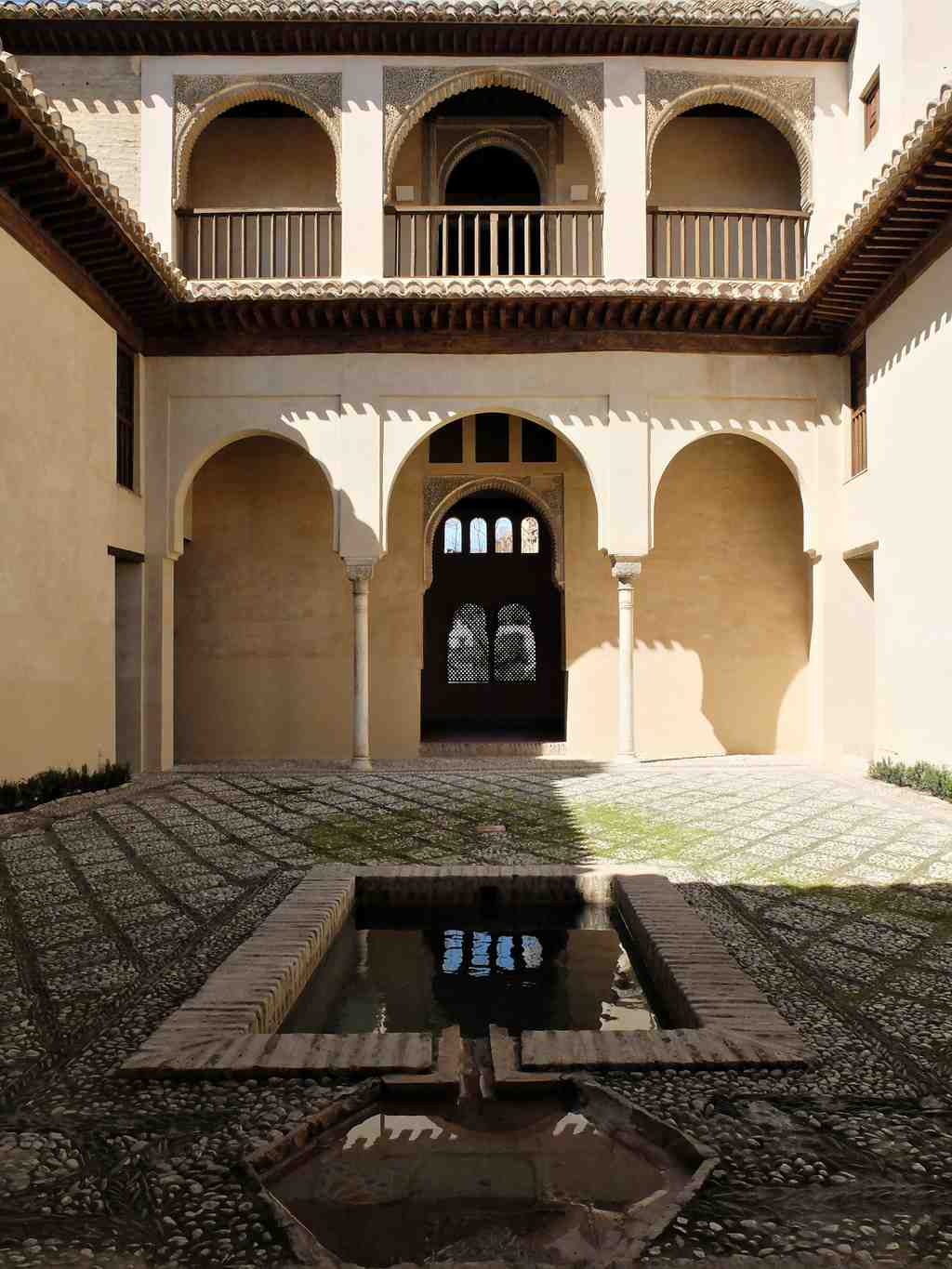
As you wander through the palace, you'll discover the fascinating history it holds. It was once the residence of Aisha al-Horra, the wife of Sultan Abu'l-Hasan Ali and mother of the last Nasrid sultan, Muhammad XII. The name "Dar al-Horra" translates to "House of the Free Woman" and pays homage to Aisha's connection to the palace. Perched atop the Albaicín hill, Dar al-Horra offers sweeping views of the surrounding neighborhood, which was once home to the Alcazaba al-Qadima, the palace and citadel of the Zirid rulers. Some believe that Dar al-Horra may have originally been part of this ancient palace, although concrete evidence is yet to be found. After the fall of Granada and the end of the Reconquista in 1492, the property was given to Hernando de Zafra, secretary of the Catholic Monarchs. It later became a Franciscan convent for nuns, as part of the Monastery of Santa Isabel la Real, under the rule of Queen Isabel. As a result, the palace underwent some modifications to suit its new purpose. The architecture of Dar al-Horra beautifully showcases the characteristics of Nasrid and Moorish design. The two-story building surrounds a central rectangular courtyard with a charming small pool, creating a serene atmosphere. The courtyard served as a cloister for the nuns, contributing to its excellent state of preservation. Venturing inside, you'll find the main rooms arranged behind a two-story portico on the northern side of the courtyard, as well as a one-story portico on the southern side. Some of these rooms and hallways still display remnants of intricate Nasrid-era decoration in carved stucco, serving as a testament to the palace's rich history. The southern side of the courtyard features a grand chamber, which once served as a chapel until the construction of the Church of Santa Isabel la Real nearby. The northern side houses several rooms spread across two floors, including a mirador (lookout) room that protrudes from the building, offering panoramic views of the ancient Zirid walls and the neighborhoods beyond. Lastly, don't miss the tower-like section in the northeast corner of the building, which rises to a third floor. From here, you can enjoy a unique perspective of the surroundings. Dar al-Horra is a truly captivating landmark that showcases the grandeur of Nasrid architecture and offers a glimpse into Granada's rich cultural heritage. Take your time to explore and soak in the beauty of this historic palace.
전용 페이지 열기 →Ah, the Gate of Elvira, our final stop on this wonderful tour! This arch holds so much history and charm. Located in Granada, Spain, it was declared a Bien de Interés Cultural,…더 보기간략히 보기
Ah, the Gate of Elvira, our final stop on this wonderful tour! This arch holds so much history and charm. Located in Granada, Spain, it was declared a Bien de Interés Cultural, which means it's a site of special cultural significance, back in 1896. Once you step through the gate, you'll find yourself at the beginning of Calle Elvira, also known as Elvira Street. This street is full of life and is located on the edge of the Albaicín neighborhood, one of the oldest parts of Granada. It's such a vibrant area, filled with narrow streets, white-washed houses, and a true sense of Andalusian culture. The Gate of Elvira, or Puerta de Elvira in Spanish, has quite the story to tell. In Arabic, it was known as Bāb Ilbīra. Originally, it was part of the impressive 11th-century Zirid walls that once protected Granada. However, as centuries passed and the city grew, the gate was transformed into a heavily-fortified structure during the 14th century. This transformation was necessary because the Nasrid dynasty sought to extend the city walls, incorporating the gate into their grand plan. Today, only a portion of the gate remains as a fragment of its former glory. Nevertheless, it still stands as a testament to the rich history of Granada. Interestingly, right outside the Gate of Elvira, there used to be a sprawling Muslim cemetery known as the Ibn Malik Cemetery. It's truly fascinating to imagine how this area was once a final resting place for the Granadinos of the past. Nowadays, the Royal Hospital, or Hospital Real, has been built on a part of this ancient cemetery, serving as a reminder of the ever-changing landscape of the city. As we conclude our tour here at the Gate of Elvira, I hope you've enjoyed exploring the historical landmarks of Granada with me. Remember, Granada is a city where the past intertwines with the present, and it's a place where you can truly immerse yourself in its captivating history and culture. Thank you for joining me, and I hope you've made beautiful memories during our time together!
전용 페이지 열기 →
자주 묻는 질문
투어는 어떻게 시작하나요?
구매 후 AudaTours 앱을 다운로드하고 교환 코드를 입력하세요. 투어를 바로 시작할 수 있습니다 - 재생을 탭하고 GPS 안내 경로를 따라가시면 됩니다.
투어 중 인터넷이 필요한가요?
아닙니다! 시작 전에 투어를 다운로드하면 완전히 오프라인으로 즐길 수 있습니다. 채팅 기능만 인터넷이 필요합니다. 모바일 데이터 절약을 위해 WiFi에서 다운로드하시는 것을 권장합니다.
이것은 가이드가 안내하는 단체 투어인가요?
아닙니다 - 이것은 셀프 가이드 오디오 투어입니다. 폰을 통해 오디오 나레이션을 들으며 나만의 속도로 독립적으로 탐험합니다. 투어 가이드도, 단체도, 일정도 없습니다.
투어는 얼마나 걸리나요?
대부분의 투어는 60-90분이 소요되지만, 속도는 전적으로 본인이 조절합니다. 원할 때 언제든지 일시정지하거나, 정류장을 건너뛰거나, 휴식을 취하세요.
오늘 투어를 끝낼 수 없으면 어떻게 하나요?
괜찮습니다! 투어는 평생 이용이 가능합니다. 원할 때 언제든지 일시정지하고 다시 시작하세요 - 내일, 다음 주, 또는 내년에도. 진행 상황이 저장됩니다.
어떤 언어를 이용할 수 있나요?
모든 투어는 50개 이상의 언어로 이용 가능합니다. 코드를 교환할 때 원하는 언어를 선택하세요. 참고: 투어 생성 후에는 언어를 변경할 수 없습니다.
구매 후 투어는 어디에서 이용하나요?
App Store 또는 Google Play에서 무료 AudaTours 앱을 다운로드하세요. 교환 코드(이메일로 전송됨)를 입력하면 라이브러리에 투어가 나타나며, 다운로드하여 시작할 수 있습니다.
투어가 마음에 들지 않으시면 환불해 드립니다. 문의: [email protected]
안전한 결제