
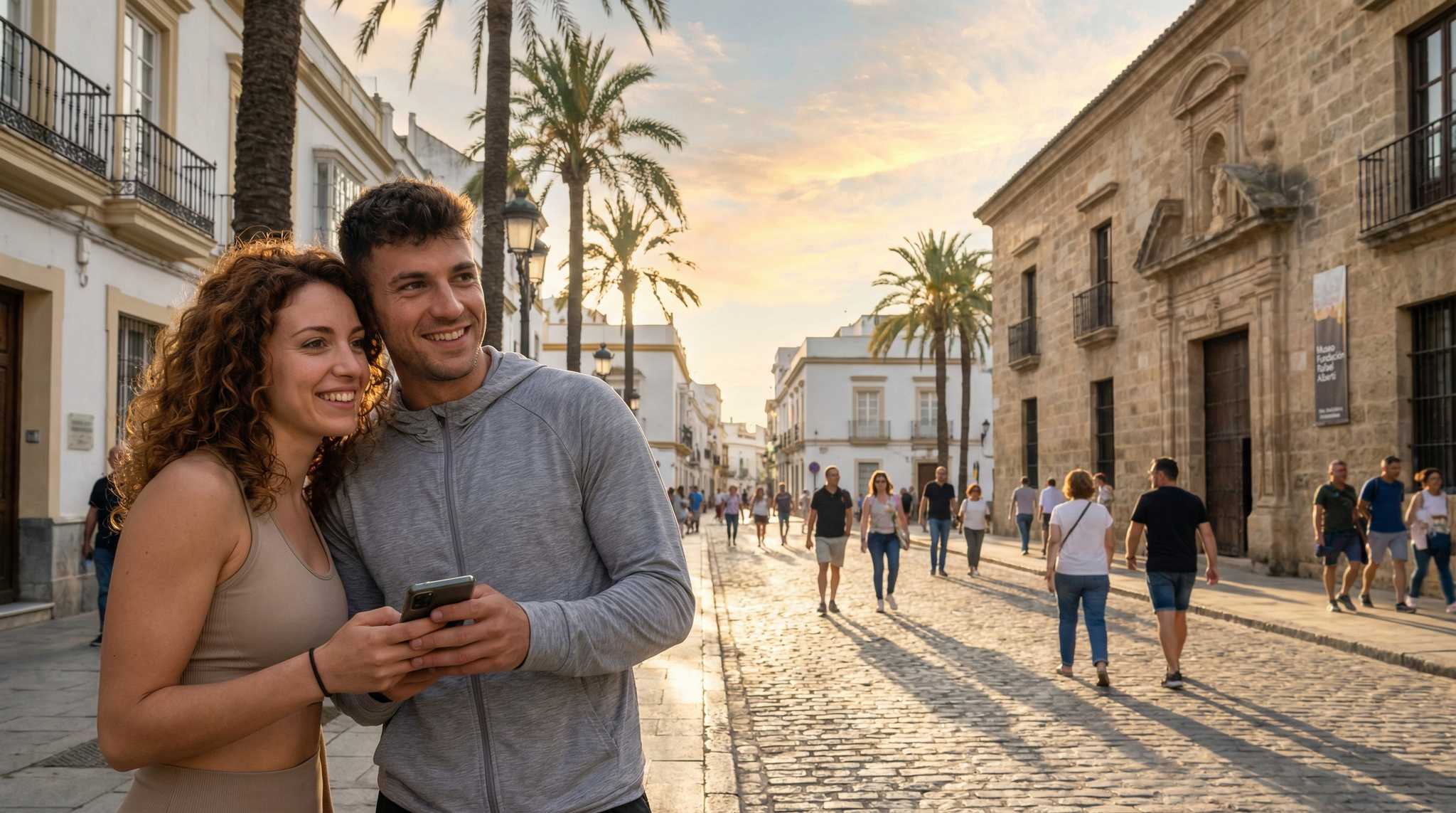
El Puerto de Santa María 오디오 투어: 항구, 광장, 궁전의 전설
황금 황소가 경비를 서고 시인들은 청동 침묵 속에 머물지만, El Puerto de Santa María는 가장 짜릿한 비밀들을 눈에 띄지 않는 곳에 숨기고 있습니다. 이 셀프 가이드 오디오 투어는 번화한 광장과 조용한 정원을 지나며, 다른 사람들이 그냥 지나치는 도시의 숨겨진 이야기와 간과된 구석들을 드러낼 것입니다. 어떤 정치적 도박이 수도원 교회를 영원히 휩쓸어 갈 뻔했을까요? 아베 마리아 광장의 그늘진 벤치에는 누구의 속삭이는 스캔들이 남아있을까요? 매 축제마다 경기장 붉은 문 밖에서 왜 그렇게 많은 신발이 신비롭게 사라질까요? 햇살 가득한 파사드에서 그림자 진 예배당으로 활기차게 발걸음을 옮기세요. 수세기가 눈앞에서 충돌하고 전설들이 구불구불한 거리를 가득 채웁니다. 웃음소리의 모든 메아리와 발밑의 닳아빠진 돌 하나하나에서 역사가 살아납니다. 모든 동상 뒤에 숨겨진 것을 밝혀내고 경계를 늦추지 마세요. 도시는 당신이 숨겨진 심장을 드러내기를 기다리고 있습니다. 재생 버튼을 눌러 모험을 시작하세요.
투어 미리보기
이 투어에 대하여
- schedule소요 시간 40–60 mins나만의 속도로 이동
- straighten3.6 km 도보 경로안내 경로 따라가기
- location_on
- wifi_off오프라인 작동한 번 다운로드, 어디서든 사용
- all_inclusive평생 이용언제든지 다시 재생 가능
- location_on아베 마리아 광장에서 시작
이 투어의 정류장
Spot the big arena with its golden brick walls, a row of tall red doors, and a sign high above the entrance that says “Plaza de Toros”-just look for the grand, round building…더 보기간략히 보기
Spot the big arena with its golden brick walls, a row of tall red doors, and a sign high above the entrance that says “Plaza de Toros”-just look for the grand, round building ahead of you with a bull statue out front. Welcome to the Real Plaza de Toros de El Puerto de Santa María, where the sun bounces off the pale bricks and the excitement practically hangs in the air. Imagine it’s the late 1800s, and you’re here with a buzzing crowd, the arena sparkling fresh and new after its grand completion in 1880, thanks to Manuel Portillo de Avila y Herrera. The arena is so massive-99 meters wide, with a central ring so big you could almost get lost in it. It can fit over 12,000 people, which means when the bullfights were in full swing the cheers and whistles must have made the whole town vibrate. Some say even the bulls felt nervous hearing the excitement echo off the stone walls! Take a deep breath-can you almost smell the dust and sun-warmed sand? This place has seen epic battles, daring matadors, and plenty of drama-one wrong step, and the audience would gasp as if they’d just bitten into a lemon by accident! Today, even empty, it seems to hold secrets of all those heart-pounding afternoons. So, if you listen closely, you might still hear the echoes of the past swirling above the red doors.
전용 페이지 열기 →Right in front of you stands the Priory Church, a commanding stone building with tall, weathered walls, statues peering down from above, and a richly decorated entrance carved…더 보기간략히 보기
Right in front of you stands the Priory Church, a commanding stone building with tall, weathered walls, statues peering down from above, and a richly decorated entrance carved with dramatic detail-just face the big square and look for the beautiful arches and stonework set opposite the Municipal Museum. Now, take a deep breath and get ready to travel back in time, because the Priory Church isn’t just any old church-it's like opening the cover of an epic novel set in Spain’s past, right here in El Puerto de Santa María! Imagine, for a moment, the year is 1486. Workers bustle about a muddy construction site, hauling big sandstone blocks cut from the nearby Sierra de San Cristóbal. If you listen closely, you might almost hear the steady clink of hammers and the creak of wooden scaffolding rising toward the sky. The architect, Alonso Rodríguez, oversees every detail, hoping this church becomes the pride of the town. But why build it here, on Plaza España, and not closer to the Guadalete River? Well, the answer is pure common sense-they didn’t want their grand church floating downstream during the next big flood! Plus, being right in the heart of the town, the plaza soon became known to locals as Plaza de la Iglesia: Church Square. Construction wasn’t quick, of course. Work began in 1486, and the doors finally opened in 1493. The church kept growing over time, a little like that neighbor who just can’t stop adding rooms-and secret passageways-onto their house. In 1517, a nobleman built a private chapel for his family's future burials. By 1533, it changed hands, bought by another well-to-do local, Benito Benavides, proving that even in the 1500s, real estate deals were a big thing. Now, let your eyes wander along the church’s facade. You’ll see a dramatic mix of Gothic, Baroque, and even Plateresque touches-the result of several centuries’ worth of changes. Among the ornate doorways, the "Door of Forgiveness" is original Gothic, while the main entrance, the Sun Portal, was added later. Legend has it that the Sun Portal was built between 1535 and 1544, funded by the Duke of Medina. It’s decked out with a whole parade of stone figures showing off the Christian virtues-faith, hope, and charity-while smaller statues represent the Church Fathers between the lower columns. Honestly, it’s like Spain’s greatest spiritual rock band, immortalized in stone. And yet, just when you think the story is set, along comes the 1636 earthquake-boom!-shaking more than a few tiles loose and forcing the townsfolk to rebuild portions in the fashionable Baroque style of the day. That’s why this church is such an architectural mash-up: it’s a place where Gothic arches, Baroque sculptures, and centuries of history all mingle under one roof. Inside, the surprises keep coming: silver altarpieces from 1682 glint in candlelight, and art from the 16th century glows with a strange sort of peaceful energy. Today, the Priory Church is still open, welcoming everyone-worshippers, tourists, and even a few curious souls hoping to spot the ghost of a medieval stonemason. And in 1982, it was finally recognized as a Bien de Interés Cultural, cementing its status as one of Spain’s proud historic jewels. So, go ahead-step a little closer. And if the statues start whispering stories from the past, don’t say I didn’t warn you.
전용 페이지 열기 →
9개 정류장 더 보기정류장 적게 보기expand_moreexpand_less
To spot the Castillo de San Marcos, look for high, solid stone walls topped with battlements and corner towers rising above the plaza-straight ahead where the trees part, you’ll…더 보기간략히 보기
To spot the Castillo de San Marcos, look for high, solid stone walls topped with battlements and corner towers rising above the plaza-straight ahead where the trees part, you’ll see its impressive fortified facade and striking pinkish trim near the top. Welcome to the Castillo de San Marcos, where history stands tall and refuses to be quiet. Imagine you’re in the 1200s, the scent of orange blossoms wafting through the air, but just beyond, the heavy thud of stones is ever-present as masons and soldiers build a mighty fortress. If these walls could talk, they’d have stories that stretch back even further than the dust between the stones. Believe it or not, you’re standing at the crossroads of civilizations. The castle rises on the ancient foundations of a mosque, which itself stood atop Roman ruins-so if you ever feel like the ground is buzzing with secrets, you’re not imagining things! In the year 1264, King Alfonso X (known as Alfonso the Wise, and let’s be honest, with a beard like his, he had to be wise) ordered that the old mosque be transformed into a fortified Christian church. Picture craftsmen working by torchlight as four towers, two with hexagonal shapes and two with mighty square bases, slowly grew towards the Andalusian sun. Inside, the lower rooms of the hexagonal towers became sacred spaces for the Virgin of the Miracles-a name that certainly fits for a place that’s survived so much. And if you press your ear close enough, you might even hear echoes of prayers that mix with the shouts of guards, wondering who left the drawbridge down again. Some original features still survive today: look for the quibla wall, where the mihrab of the mosque once pointed people towards Mecca. The castle’s upper tower still boasts its distinctive Almohad style-flat, simple lines crowned by detailed battlements that stand out against the sky, almost like a row of teeth daring invaders to try their luck. Speaking of invaders, this fortress wasn’t just for show. It stood ready to defend against raids from North Africa-imagine anxious soldiers watching the horizon from these very towers, the wind rattling their armor. Over time, Castillo de San Marcos switched hands between powerful nobles-genovese admirals, heroic knights, and even Alonso Pérez de Guzmán, who gifted it to his daughter as a wedding present (because who needs a toaster when you can have a castle?). By the fifteenth century, new Gothic vaults and chapels sprouted from its ancient heart, while courtyards on the upper levels rang with the footsteps of sailors and explorers. Even Christopher Columbus and Juan de la Cosa, famous map-makers and explorers, walked right here. Look for a tiny corner near the castle where you’ll see a bust of Juan de la Cosa and a small fountain with a replica of his legendary map-that’s a little slice of world-changing history tucked beside these stone walls. Today, after centuries of being loved, neglected, abandoned, and finally restored, the castle is alive again with music festivals and study halls. So, as you stand here, imagine the layers of time stacked beneath your feet-each one echoing with stories, laughter, and the clink of armor. Welcome to the Castillo de San Marcos, where history never rests!
전용 페이지 열기 →Look to your left and you'll see a long, striking stone building with a row of big, rounded arches and sharp, pointy spires along the rooftop-it's hard to miss, especially with…더 보기간략히 보기
Look to your left and you'll see a long, striking stone building with a row of big, rounded arches and sharp, pointy spires along the rooftop-it's hard to miss, especially with that grand central arch topped by a heraldic decoration. Welcome to the Old Market, also nicknamed the “Pescadería Vieja” or “El Resbaladero,” which means “the slippery place”-watch your step, or you might slide into history! Back in the 18th century, this very spot would have been buzzing with fishermen, eager sellers, and hungry buyers, the air thick with the salty scent of the day’s catch. Imagine voices echoing under those arches, haggling prices in the warm sun while baskets of fish glistened on the stone. But don’t be fooled-this isn’t just an old fish market. Over the years, the building has transformed countless times: from a fresh fish bazaar all the way to a lively restaurant in the 1980s, and now, if you listen closely on a Saturday night, you might even hear the thumping beat of music from the nightclub Gold, run by the Montoya family. They say, until someone named Fofi buys it, the party goes on! In this building, every stone has a secret, every echo tells a story, and-between us-maybe there’s still a little fishy business left over from the old days.
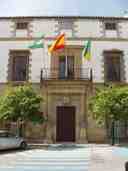
전용 페이지 열기 →If you look straight ahead, you'll spot the Powder Tower Square by its grand old buildings with stone facades and a splash of color from the flags waving above the doorway, right…더 보기간략히 보기
If you look straight ahead, you'll spot the Powder Tower Square by its grand old buildings with stone facades and a splash of color from the flags waving above the doorway, right next to the leafy orange trees along the street. Step right up, traveler, because you're standing on a stage where centuries of drama have unfolded! Powder Tower Square, or Plaza del Polvorista, was born way back in 1884, and if you listen closely, you might just hear a whisper from the past. Picture the scene: long ago, this was one edge of the city, and soldiers used to march in perfect ranks here, trumpets sounding as the entire plaza watched with nerves and excitement. But these days, instead of nervous recruits, you’ll see locals relaxing under the leafy shade and children playing near the central fountain. All around you are stunning mansions-once home to the city’s powerful families-like the grand Vizarrón Palace and the stately town hall, still bustling with decisions and debates. And right in the heart of the square stands a monument to Rafael Alberti, El Puerto’s own famous poet. Maybe he’s still listening, hoping someone will recite a poem or even just hum a happy tune. Soak in the tranquil beauty, breathe the scent of orange blossoms, and if you feel inspired, maybe try a little verse of your own!
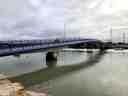
전용 페이지 열기 →To spot the Pedestrian walkway "Pepe El del Vapor," look for a graceful blue bridge with metal railings stretching over the river right in front of you, connecting both riverbanks…더 보기간략히 보기
To spot the Pedestrian walkway "Pepe El del Vapor," look for a graceful blue bridge with metal railings stretching over the river right in front of you, connecting both riverbanks with its sweeping modern curve. Alright, picture yourself here a few decades ago-the only way across this river was to wait for a boat, and if you were in a rush, well, you’d better hope the captain was having a good day! But now, behold the mighty “Pepe El del Vapor,” named after a beloved local steamboat and its captain, whispering stories of adventure as you step onto its path. This isn’t just any bridge; it’s one of only two ways connecting the heart of El Puerto de Santa María with the neighborhood of Valdelagrana and the bustling commercial port. At 104 meters long and 6 meters wide, it elegantly glides over the river with three spans-the middle stretch soaring 66 meters, held up by sturdy metal beams, high enough for curious little boats to slip under, even when the tide’s feeling cheeky and high. Now, imagine the gentle creak of your footsteps mingling with the salty breeze, the river whispering beneath, and maybe-just maybe-the echo of ancient footsteps from pilgrims centuries ago, since this walkway is also part of the legendary Via Augusta on the Camino de Santiago. You’re crossing where history meets holiday, mystery meets the morning jogger, and the spirit of Pepe keeps a watchful, wink-filled eye on every traveler. Careful-cross too slowly and you might start feeling like a local legend yourself!
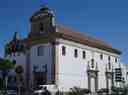
전용 페이지 열기 →To spot the Convent of the Holy Spirit, just look for a large, whitewashed building with a classic neoclassical stone facade and an old belltower crowning one end-right in front…더 보기간략히 보기
To spot the Convent of the Holy Spirit, just look for a large, whitewashed building with a classic neoclassical stone facade and an old belltower crowning one end-right in front of you at the intersection. Welcome to the oldest convent for women in El Puerto de Santa María! Imagine yourself back in the late 1400s-there’s a quiet little chapel here called the Hermitage of San Blas. Then, boom! The city grows, the convent rises, and its thick walls fill with whispered prayers and the soft shuffle of nuns’ feet. The women here followed the old rule of Guido of Montpellier and-get this-they had to have both a hospital and communities for both men and women. But soon, it was the ladies’ turn to take over, and the convent became women-only. In the 16th century, this spot was alive with the faint sound of healing, as the Hospital of the Holy Spirit and San Telmo bustled with care. Now, don’t let these calm walls fool you-they’ve survived battles, earthquakes, and the odd misbehaving soldier. In 1702, during the War of Succession, soldiers from England and Holland stormed the city and ransacked the convent, turning precious archives into ashes. Just when the dust settled, the famed Lisbon earthquake of 1755 sent shudders through the hallways, rattling windows and creaking the old beams. And again, during the War of Independence, French troops decided this was a great place to nap... after kicking out everyone else! Take a look at the simple yet elegant church, with just one main aisle and artwork from three centuries watching over you. Today, the tradition continues-nuns run a school here, and, quite possibly the holiest of miracles, they bake pastries so good they might just restore your faith in desserts. So, while this building wears the scars of history, it still stands as a place of peace, prayer, and, of course, sweet treats!
전용 페이지 열기 →To spot the Santa Maria Port Station, just look ahead for a sleek, modern railway platform with long, open platforms and bright shelters stretched alongside multiple sets of…더 보기간략히 보기
To spot the Santa Maria Port Station, just look ahead for a sleek, modern railway platform with long, open platforms and bright shelters stretched alongside multiple sets of tracks-it’s hard to miss with its broad metal roofs and overhead electric cables. Now that you’re standing here, let’s roll back the clock and dive into the spirited story of this station-one that has more twists and turns than a high-speed express! Close your eyes for a second and imagine it’s the late 1800s: the air is thick with the scent of fresh timber, coal dust, and, just maybe, a trace of sherry wine drifting in from the bodegas nearby. You might hear the huff and clank of early steam trains going by, their whistles echoing off the river Guadalete, which flows close to where you’re standing right now. Back then, the very first station here was attached to what today is a tunnel heading out towards the Salinas de San José. But this was no ordinary train stop-this was the birthplace of some of Andalusia’s oldest railway history, right on the line that would become the famous “wine train.” This train line, dreamed up by the ambitious Company of the Railways of Seville to Jerez and Puerto Real to Cádiz, had a rather tasty mission: to link the sherry capital of Jerez de la Frontera to the port at Muelle de Trocadero-so Europe’s wine glasses could be filled with golden Andalusian wine! A banker, José Díez Fernández de la Somera, was behind the original route; imagine the excitement when the new, permanent station opened its doors here in 1876-it was a railway revolution. Not many places can claim such a prestigious spot in the story of Spanish trains. But the plot thickens: just one year later, in 1877, the line joined the mighty Andaluces Railway Company. The tracks buzzed with travelers, barrels of wine, and people heading towards dreams or duty. Then came harder times. By the 1930s, the Andaluces, swamped by financial troubles, lost control during the Second Republic, and everything was handed to the National Company of the Western Railways. But even that was short-lived-by 1941, the entire Spanish railway network was swept up and nationalized under RENFE, giving this station an even grander place in history. Fast forward-new lines came and went: branches to Trocadero and Sanlúcar vanished, and the echoing sound of the railway to Rota-Chipiona-Sanlúcar fell silent in 1985. The station you see now is surprisingly new, sparkling into service in 2008, part of a wave of upgrades that arrived with the high-speed line between Seville and Cádiz. But the heartbeat is familiar-trains still come and go, carrying everything from local commuters and long-distance visitors to starry-eyed tourists like us. Today, you can hop aboard for Madrid, Cádiz, even Barcelona if you like a really scenic trip. And from here, you’re tied in with everything: regional, long-haul, and-you guessed it-Spain’s famous Cercanías commuter trains chugging in and out with clockwork regularity. Weekends you might hear fewer trains, so you can soak in the silence-or maybe just imagine, for a moment, the ghostly rattle of the “wine train” on its way down the line. So, take a deep breath, listen to the hum of the modern engines, and remember: this station isn’t just a place to catch a train-it’s a portal through time, where every arrival and departure adds a chapter to the long, adventurous story of El Puerto de Santa María. All aboard for the next adventure!
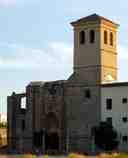
전용 페이지 열기 →Look for a solid, fortress-like stone building with a tall square tower, old arched doorways, and detailed Gothic carvings above the entrance, right ahead of you. Now, as you…더 보기간략히 보기
Look for a solid, fortress-like stone building with a tall square tower, old arched doorways, and detailed Gothic carvings above the entrance, right ahead of you. Now, as you stand here, picture yourself in the 16th century, when the Dukes of Medinaceli decided to build this mighty monastery. Back then, it must have echoed with the quiet prayers of monks shuffling through its chilly halls, candle wax flickering across these ancient stones. But listen closely-if these walls could talk, they’d have some wild tales to whisper! By the late 1800s, the silence was shattered as the grand monastery became a prison. Imagine the rattling of iron keys, the echo of shouts, and maybe even the tap-tap of political prisoners plotting hopeful escapes. During the Spanish Civil War and Franco’s rule, this place gave shelter-well, “shelter”-to rebels like Ramón Rubial and Eleuterio Sánchez, who was famously known as “El Lute.” Some say his plans to break free made the guards lose more sleep than the prisoners! Despite its stormy past, today the old monastery is filled with visitors’ laughs and the hum of exhibitions every Friday, celebrating stories-not sorrows. So, while you’re here, take a moment to imagine the monks, prisoners, and dreamers who shaped this place. And remember-not even thick stone walls can hide a good story forever!
전용 페이지 열기 →


자주 묻는 질문
투어는 어떻게 시작하나요?
구매 후 AudaTours 앱을 다운로드하고 교환 코드를 입력하세요. 투어를 바로 시작할 수 있습니다 - 재생을 탭하고 GPS 안내 경로를 따라가시면 됩니다.
투어 중 인터넷이 필요한가요?
아닙니다! 시작 전에 투어를 다운로드하면 완전히 오프라인으로 즐길 수 있습니다. 채팅 기능만 인터넷이 필요합니다. 모바일 데이터 절약을 위해 WiFi에서 다운로드하시는 것을 권장합니다.
이것은 가이드가 안내하는 단체 투어인가요?
아닙니다 - 이것은 셀프 가이드 오디오 투어입니다. 폰을 통해 오디오 나레이션을 들으며 나만의 속도로 독립적으로 탐험합니다. 투어 가이드도, 단체도, 일정도 없습니다.
투어는 얼마나 걸리나요?
대부분의 투어는 60-90분이 소요되지만, 속도는 전적으로 본인이 조절합니다. 원할 때 언제든지 일시정지하거나, 정류장을 건너뛰거나, 휴식을 취하세요.
오늘 투어를 끝낼 수 없으면 어떻게 하나요?
괜찮습니다! 투어는 평생 이용이 가능합니다. 원할 때 언제든지 일시정지하고 다시 시작하세요 - 내일, 다음 주, 또는 내년에도. 진행 상황이 저장됩니다.
어떤 언어를 이용할 수 있나요?
모든 투어는 50개 이상의 언어로 이용 가능합니다. 코드를 교환할 때 원하는 언어를 선택하세요. 참고: 투어 생성 후에는 언어를 변경할 수 없습니다.
구매 후 투어는 어디에서 이용하나요?
App Store 또는 Google Play에서 무료 AudaTours 앱을 다운로드하세요. 교환 코드(이메일로 전송됨)를 입력하면 라이브러리에 투어가 나타나며, 다운로드하여 시작할 수 있습니다.
투어가 마음에 들지 않으시면 환불해 드립니다. 문의: [email protected]
안전한 결제 


