비슈케크 오디오 투어: 소련의 메아리에서 활기찬 문화까지
고요한 예술가의 끌, 광장의 시위 폭풍, 수백 년 된 전통의 웅성거림—비슈케크는 가장 거친 이야기들을 표면 아래에 숨기고 있습니다. 이 셀프 가이드 오디오 투어는 엽서 같은 풍경을 넘어 혁명이 일어났던 곳, 조각가들이 등불 아래에서 꿈을 키웠던 곳, 그리고 공동체 전체가 정체성을 지키기 위해 싸웠던 곳으로 여러분을 안내합니다. 대부분의 현지인조차 놓치는 비밀들을 들어보세요. 수천 명이 알라-토 광장을 가로질러 돌진하여 한 국가의 전환점을 만들었던 이유는 무엇일까요? 올가 마누일로바의 홈 스튜디오에는 어떤 숨겨진 상징이 남아있을까요? 우즈벡 공동체를 이끌게 된 뜻밖의 스포츠 마스터는 누구였으며, 어떤 스캔들이 그들을 거의 갈라놓을 뻔했을까요? 비슈케크를 가로지르며 극적인 장면들과 신비로운 구석구석을 거닐어 보세요. 발걸음마다 알려지지 않은 전투, 대담한 예술, 웃음, 그리고 예상치 못한 단결이 피어납니다. 평범한 거리들이 긴장과 승리로 생생하게 살아나는 것을 지켜보세요. 비슈케크의 가장 잘 보존된 비밀들을 밝혀내세요—또 다른 이야기가 전설 속으로 사라지기 전에 지금 바로 모험을 시작하세요.
투어 미리보기
이 투어에 대하여
- schedule소요 시간 30–50 mins나만의 속도로 이동
- straighten3.2 km 도보 경로안내 경로 따라가기
- location_on
- wifi_off오프라인 작동한 번 다운로드, 어디서든 사용
- all_inclusive평생 이용언제든지 다시 재생 가능
- location_onO. M. 마누일로바 기념 가옥 박물관에서 시작
이 투어의 정류장
Olga Maximilianovna Manuilova was the ultimate artistic multitasker. Between 1948 and 1984, she lived and worked right here, turning out over six hundred original sculptures!…더 보기간략히 보기
Olga Maximilianovna Manuilova was the ultimate artistic multitasker. Between 1948 and 1984, she lived and worked right here, turning out over six hundred original sculptures! That’s more masterpieces than socks I’ve lost in the laundry. Her sculptures honored the everyday heroes of the republic-think dazzling busts of labor champions, grand granite monuments, and even the sculptural ensemble above the grand Kyrgyz Opera and Ballet Theater. On a stroll through Bishkek, you’ll also spot her impressive monument to the poet Togolok Moldo, a local celebrity, raised right in time for his 100th birthday. Step into the museum, and you’ll see it’s more like a time capsule than a typical gallery. Olga’s tiny bedroom doubled as her creative den, jammed with shelves, books, sculptures big and small, and a humble rope-strung cot she crafted herself. Some say if you peek in at the right angle, you’ll still see the old patchwork blanket and a table covered in scribbled notes, like she’s about to return any moment. Around fifty of her works are here-busts, delicate reliefs in wood, marble, metal, some recently returned from faraway private collections. The museum even hosts art shows and storytelling nights, and the best part? It’s free! Try not to get too inspired though, or you might find yourself asking, “Do you have any clay I can borrow?” That would make Olga proud-she always said, “Come in, sculpt away,” to anyone itching to create. So take a slow look around, breathe in the atmosphere, and imagine the clang of metal, the shuffle of friends from across the USSR, and the spirit of open-hearted creativity that made Olga’s home a real Bishkek legend. Let’s get ready for our next artistic adventure!
전용 페이지 열기 →Look straight ahead for a wide open square, a giant red flag waving high on a pole, a heroic statue on a tall base, and a bold, white rectangular building behind it all - that’s…더 보기간략히 보기
Look straight ahead for a wide open square, a giant red flag waving high on a pole, a heroic statue on a tall base, and a bold, white rectangular building behind it all - that’s Ala-Too Square! Welcome to the very heart of Bishkek, where the stories are as big as the flag above you! Close your eyes for a moment and try to imagine this square back in 1984. Crowds gathered, Soviet music echoing through the air, as workers unveiled a massive statue of Lenin to mark the 60th birthday of the Kirghiz Soviet Socialist Republic. For years, Lenin watched over the square, but history loves a good game of musical statues - in 2003, he was quietly shuffled away to a smaller spot nearby. In his place came a statue called Erkindik, or Freedom, waving her palms like she was ready to do the YMCA. Then in 2011, on the 20th birthday of Kyrgyz independence, it was time for another switcheroo! Up rode the figure you see today: the legendary Manas, hero of the epic folk tale, staring into the horizon with the confidence of someone who just won at chess. But Ala-Too Square isn’t just about statues. This place has seen everything: fireworks and flag-waving, laughter and tears, even the wild drama of revolution. Picture this - in 2005, on the afternoon of March 24th, thousands gathered here, furious about the election. Voices rose, fists pumped, then suddenly: chaos! The ground shook with the power of 15,000 people demanding change. This was the birthplace of the Tulip Revolution - the moment when Kyrgyzstan’s future changed course as the president fled and the crowd seized the square. On quieter days, Ala-Too is a stage for parades, concerts, and national celebrations - from world war memorials, to the legendary recitation of the Epic of Manas (imagine reading nonstop for fourteen hours - you’d need a heroic throat lozenge!). So as you stand here, let your feet rest, but let your imagination run wild - because every inch of this wide, sunlit space has a story to tell. To expand your understanding of the protests, events or the layout, feel free to engage with me in the chat section below.
전용 페이지 열기 →Picture Mirzokhid Mirzorakhimov, a passionate journalist and writer, as he took the helm as the very first president. He wasn’t alone for long-every leader that followed brought…더 보기간략히 보기
Picture Mirzokhid Mirzorakhimov, a passionate journalist and writer, as he took the helm as the very first president. He wasn’t alone for long-every leader that followed brought their own energy to the growing organization. By the early 1990s, the center was not only a place-it was an idea, a way to weave Uzbek culture deeply into the colorful tapestry of Kyrgyz life. Through the years, the center was led by editors, deputies, and even university rectors, all sharing a similar mission: keep Uzbek language and customs alive, make friends with neighbors, and solve real problems that people faced in everyday life. Just imagine the energy in 1997! In Osh region, 153 delegates gathered for a founding conference-if they’d all sneezed at once, I’m sure the windows would have rattled from all that tradition in the air! They elected a presidium and set the wheels in motion for the local center and, soon after, the entire republic followed suit. During these energetic years, the name changed more than a celebrity at a fashion show; from cultural center to “Society of Uzbeks,” but the heart stayed the same. When M.T. Mamasaidov-a respected academic and the rector of Kyrgyz-Uzbek University-became president, he oversaw both the region’s and the entire nation’s Uzbek centers. His team, a cast of names like Fattohov, Sobirov, Juraev, and more, worked tirelessly. Their efforts weren’t just about heritage-they wrote textbooks for schools, revived old customs, and even worked to solve sometimes tense relations between different groups. The center became a bridge, one brick at a time. Fast-forward to the 21st century: the leadership continued to change hands, but every new president, like B.A. Fattohov and, since 2018, Bakhtiyor Kodirov, added something special. Would you believe that today’s leader is not just a politician, but also a sports master, a teacher, and president of the national basketball federation? It’s enough to make you feel like you underachieved at gym class! The Center isn’t just Bishkek, though. Local branches popped up: Uzgen, Kara-Suu, Aravan, and Nookat all formed their own councils, each with their own leaders. Imagine the bustling excitement each time a new center launched-a room full of community elders, women’s councils, youth, and even sports committees-all working to strengthen equality and unity across the country. Each branch focused on helping their own, supporting the poor, sponsoring sports tournaments, and even launching students off to Russian universities, like arrows from a particularly intellectual bow. If you peeked into the Osh center’s creation in 2005, you’d have seen crowds gathered to honor Salizhan Sharipov, a hero-cosmonaut. Delegates, leaders, and citizens stood shoulder to shoulder, creating a council of 75, all working to keep traditions alive-even after the sudden passing of a beloved leader, Oybek Olimjonov. His mother, a respected teacher, took over, teaching everyone that sometimes the torch of tradition is passed in the quietest, most heartfelt ways. Over the decades, these centers have sewn together a vibrant quilt of Uzbek life in Kyrgyzstan-organizing charity works, running schools and mosques, and constantly finding ways to help the less fortunate. If it takes a village to raise a child, it takes dozens of councils, presidiums, and women’s groups to hold a community together! And here’s a little fact to put some spice in your mental broth: Uzbeks are about 14.8 percent of Kyrgyzstan’s population-nearly a million people, most speaking the Fergana dialect and contributing to everything from business to farming to, yes, plenty of delicious food. I hope their legendary hospitality rubs off on you-you’re a guest in their house now. So next time you hear the soft twang of a dutar or smell plov wafting in the air, remember: it’s traditions like these, and centers like this, that help keep the spirit of a people alive across generations. Go on, enjoy the energy-and maybe ask if someone knows a good joke to tell in Uzbek! Intrigued by the number of uzbeks in kyrgyzstan, main objectives or the guidance? Explore further by joining me in the chat section below.
전용 페이지 열기 →
8개 정류장 더 보기정류장 적게 보기expand_moreexpand_less
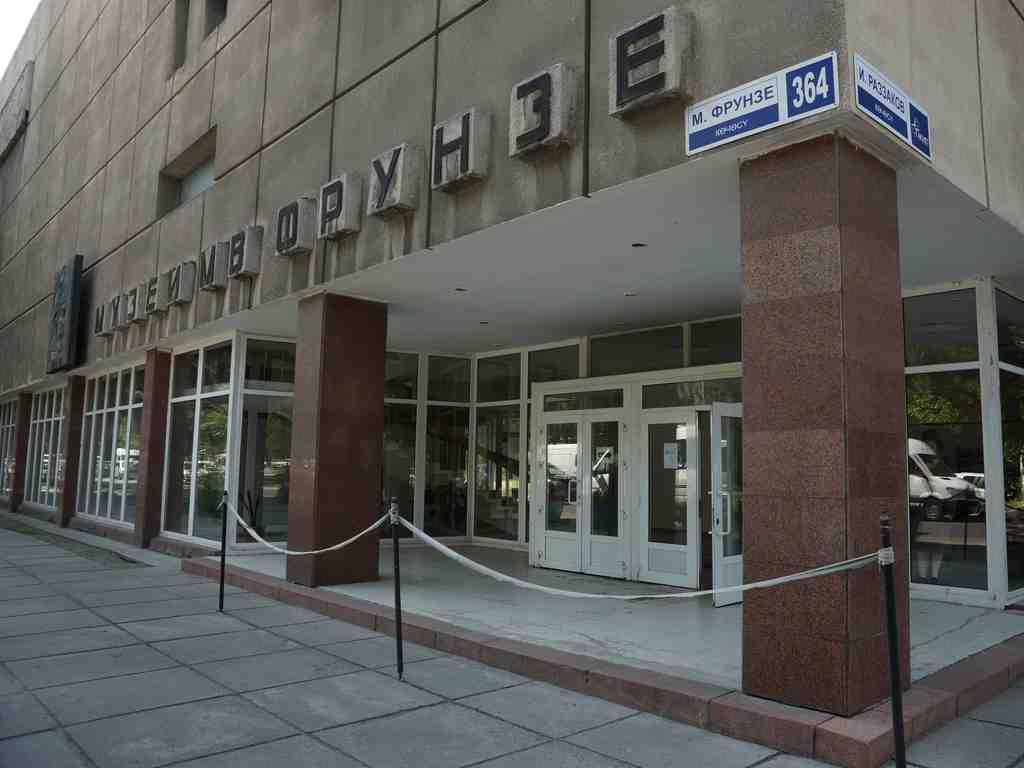
To spot the House-Museum of M. V. Frunze, just look for a bold concrete building with tall glass windows and big block letters above the entrance facing the street corner-if you…더 보기간략히 보기
To spot the House-Museum of M. V. Frunze, just look for a bold concrete building with tall glass windows and big block letters above the entrance facing the street corner-if you see the address sign “M. Frunze 364” right at the intersection, you’ve found it! Welcome to the House-Museum of M. V. Frunze! If these walls could talk, they’d surely trade stories from every decade of Bishkek’s colorful past-though they’d probably ask you to wipe your feet first. Right here, at this very spot, a great Kyrgyz tale began in 1885. In those days, it wasn't concrete and glass before you, but a humble house of adobe brick and a thatched reed roof, crafted by Vasily Frunze: a feldsher, or medical assistant, who set up both his family and his clinic in a cozy little wing that’s still preserved inside the museum today. Imagine the clinking of horse hooves on the dusty roads and the whisper of reeds on a summer evening. This is the childhood home of Mikhail Vasilyevich Frunze-the boy who would grow up to become a revolutionary, general, and, not least, a bit of a local legend. His was a house full of busy hands: medical bags and white coats hung by the door, a kitchen full of the aroma of rye and tea, a samovar bubbling on the table, and a spinning wheel whirring beside sunlit windows decorated with potted plants. Even the children’s room was alive, with carpets on the walls, wooden cribs, a toy rocking horse, and Frunze’s own childhood desk cluttered with candles, inkwells, and glass jars. It was a window into the world of Pispek’s first settlers at the turn of the 20th century-a frontier town with little more than ambition, dust, and dreams. But time, like a nosy neighbor, kept peeking in. This place changed hands many times: after the Frunze family moved away, doctors, tailors, notaries, and even military officers lived here, spinning their own stories into the walls. Then, in 1925, the new Soviet government decided this spot deserved to be more than just a footnote. They founded a museum in honor of the famous Mikhail Frunze, preserving its old wing and filling it with family treasures, handwritten notes, medals, and extraordinary weapons-like a richly decorated saber that once belonged to the Emir of Bukhara and was later given to Frunze by revolutionaries in gratitude. Imagine unwrapping that gift; it certainly beats a pair of socks! Now, here's the twist: in the 1950s, the city needed more space for this growing collection, so the original family house was mostly demolished-except for the wing you can still spy through the modern glass facade. The whole museum was re-imagined by architects inspired by the spirit of modern Soviet monumentalism. Today, what you see is an imposing building with light gray concrete, mighty pillars, and solemn Soviet-era bas-reliefs showing scenes of revolution and war-along with Frunze’s own copper profile, keeping an eternal watch above the door. There's even a forest of Tien-Shan fir trees outside, planted to give the entry a stately air. Inside, the first floor lets you peek into the very rooms where the Frunze family once lived and worked. Step up and you’ll find yourself walking through time: the second and third floors house ever-changing exhibits and an airy hall, big enough to hold 570 square meters of history, talks, and even the occasional film screening. There are over 13,000 items hidden away in its collection-each, perhaps, with its own secret to tell. From Frunze’s famous papakha hat to his Nagan revolver, and even the original baptism record from a remote village church, every object helps peel back another layer of mystery about the man and the city that shaped him. Of course, not every museum can boast an Order of Friendship of Peoples from the Soviet Union as this one can-a medal for teaching generations of visitors about patriotism, history, and the bond between cultures. Even now, the House-Museum trains its gaze on both the distant past and the ever-changing present, reminding us that every great story starts in an ordinary room. And hey, if you listen closely, you just might catch an echo of life from a century ago, when a mischief-making boy named Mikhail once played right where you stand.
전용 페이지 열기 →To spot the National Historical Museum of the Kyrgyz Republic, look for a large, white, cube-shaped building with a wide staircase leading up to glass doors, set just off Ala-Too…더 보기간략히 보기
To spot the National Historical Museum of the Kyrgyz Republic, look for a large, white, cube-shaped building with a wide staircase leading up to glass doors, set just off Ala-Too Square and guarded by tall flagpoles. Alright, explorer, pause for a moment and take it all in-the bright sun glinting off the museum’s marble walls, the huge glass windows staring back like watchful eyes, and the lively buzz of the city around you. This isn’t just any building-it’s the heart of Kyrgyzstan’s history, the National Historical Museum! Picture this: it’s the 1920s in Bishkek, and scholars, artists, and dreamers are eager to share stories of ancient Kyrgyz life. In 1925, they band together and create the very first scientific institution in the country-a place to gather centuries of secrets and treasures. Imagine the pride on opening day in 1927 as curious visitors pushed open the doors to the first-ever exhibit. Back then, it wasn’t even called a historical museum! After several name changes and even a split into two museums (one for history, the other for nature-can you imagine the debates over dinosaur bones versus ancient jewelry?), this building finally became the National Historical Museum in 1954. In the 1980s, it moved to this spectacular marble palace, designed by a team of ambitious architects, ready to show off a whopping 90,000 historical objects! Inside, you’ll discover ancient tools from Stone Age tribes, rare jewelry worn by Kyrgyz queens, and mysterious artifacts from migrating nomads. One collection is so special, it’s considered world heritage! There’s excitement, too-stories of Kyrgyzstan’s days with Russia, revolutions, and even a whole section celebrating Lenin (the man, not the beetroot salad). After years of silence during renovations-imagine the echoing halls, longing for visitors-the doors re-opened in 2021. So, as you stand here, you’re not just outside a museum-you’re inches away from some of the greatest legends and secrets of Central Asia! Think you’re ready to step in and travel back in time?
전용 페이지 열기 →Right in front of you is a massive, white, cube-shaped building with a broad staircase and huge mirrored windows-just look for the large, modern structure on the edge of Ala-Too…더 보기간략히 보기
Right in front of you is a massive, white, cube-shaped building with a broad staircase and huge mirrored windows-just look for the large, modern structure on the edge of Ala-Too Square, and you can’t miss it! Let me paint you a picture: imagine it’s the early 1920s, Bishkek wasn’t even called Bishkek then, and the people of Kyrgyzstan wanted a special place to keep the treasures and stories of their culture safe. Instead of a secret lair guarded by dragons, they started dreaming of a grand museum. Fast forward to December 9, 1925-the day the first big scientific institution in Kyrgyzstan was born! Back then, historians and ethnographers scurried about, gathering ancient pottery, golden jewelry, mysterious coins, and even spooky sculptures from the Bronze Age. They were kind of like Indiana Jones, but with warmer coats and less running from giant boulders. Through the decades, the museum’s name kept changing, almost as if it couldn’t decide what outfit to wear-Museum of Local Customs, then Museum of National Culture, and finally, the State Historical Museum. In the swinging 1980s, this impressive, modern marble building appeared, right where you’re standing, close to the seat of government-perfectly placed for Kyrgyz culture to shine. Now, legend says there was once a large statue of Lenin welcoming you at the door. But, as times changed, he was politely moved to the back, probably to ponder history in peace. Step inside, and you’d find everything from ancient caves to shiny nomadic jewelry, from felted yurts you might want to nap in, to mannequins dressed for wild, ancient parties. Even migration tales and secrets of the Kyrgyz Soviet Republic are tucked away here, waiting for curious minds! So, take a deep breath, and imagine the whispers of centuries mixing with the wind around you. If you listen closely enough, this museum almost tells its own stories-no translation required. Ready for the next adventure?
전용 페이지 열기 →To spot Old Square, look straight ahead for a grand beige building with tall columns and a row of red and gold flags standing at attention-a bit like soldiers, but with better…더 보기간략히 보기
To spot Old Square, look straight ahead for a grand beige building with tall columns and a row of red and gold flags standing at attention-a bit like soldiers, but with better fashion sense! Now, imagine you're stepping back in time to 1936. The dust is flying, hammers are pounding, and all this commotion is because Bishkek (then called Frunze) is about to change forever. Workers are sweating under the sun, racing to finish this giant square to celebrate the 19th anniversary of the October Revolution. The world is on edge with war on the horizon, but here, the square slowly grows as a symbol of hope-or maybe just a place for really dramatic parades! By 1954, after years of hard work, the square is finally done, and just three years later, a truly stately Government House rises up, its massive pillars daring Bishkek’s winter winds to knock them over. Important people in stern suits gather here, plotting the next steps for the Kyrgyz SSR, and even the mighty Communist Party calls this place home. Fast forward to the swinging sixties-and I mean literal swinging, as cranes and scaffolds overhaul the square with Soviet architect Pisarskoi at the helm. By 1970, a theatre appears, ready for plays and performances. During Soviet times, this very ground shakes as tanks roll by and crowds cheer in huge military parades. And then, suddenly, it’s 1984. Ala-Too Square opens, stealing the spotlight, and Old Square becomes the quieter sibling. But don’t be fooled-today, there’s still magic here, with students, locals, the American University of Central Asia, and even the Prime Minister’s office nearby. The biggest twist? In 2016, private investors swooped in like fairy godparents, giving this square a sparkling makeover so new generations could write their own stories right here.
전용 페이지 열기 →You’re standing in front of a building that has seen more plot twists than your favorite TV drama-the House of the Government of the Kyrgyz SSR, right here at 205 Abdumomunov…더 보기간략히 보기
You’re standing in front of a building that has seen more plot twists than your favorite TV drama-the House of the Government of the Kyrgyz SSR, right here at 205 Abdumomunov Street. Imagine it’s the year 1936: the city is busy preparing for the 19th anniversary of the October Revolution, and somewhere nearby, you hear the clanking of construction equipment and the shouts of determined builders, their voices echoing around the unfinished structure. When it first rose above Bishkek’s skyline, this building was like the ultimate VIP room. Leaders of the Kyrgyz SSR strode in and out, big decisions swirling through these very halls. But don’t let its sharp, boxy look fool you-the avant-garde style mixed with classic columns was as modern as you could get back then. Architect Yu. V. Dubov designed it with strict, rectangular windows and bold horizontal lines-he must have loved a good ruler. Inside, the building glowed with rich Kyrgyz patterns, so bold it made paperwork feel like a celebration. In 1937, the building grew wings, so to speak. Two portal groups, lined with proud columns, marched onto the scene, and a decade later, the top was crowned with heraldic symbols-if only buildings could wear medals! People admired it so much that it ended up on postage stamps in 1951 and 1966. Imagine mailing a letter with this mighty facade staring out beside your return address. For decades, government wheels turned here until, plot twist, in 1997, part of the building was handed over to the American University. Students dashed through corridors where major decisions were once whispered. In 2015, the Supreme Court of Kyrgyzstan picked up the torch, bringing justice to echo through these halls. Today, as you gaze at its mix of strong lines and grand columns, take a second to picture the secrets, hustle, and history that have passed through these doors-maybe try not to look too suspicious, though. After all, this place has hosted as many surprises as a piñata at a birthday party!
전용 페이지 열기 →To spot the M. V. Frunze Museum, look for a sturdy, gray concrete building with big glass windows, square columns with reddish-brown stone, and bold Cyrillic letters across the…더 보기간략히 보기
To spot the M. V. Frunze Museum, look for a sturdy, gray concrete building with big glass windows, square columns with reddish-brown stone, and bold Cyrillic letters across the entrance above a row of white doors. Now that you’re standing here, close your eyes for a second… Imagine the year is 1925. The city is quieter, the streets are dustier, and here stands the humble house where a little boy named Mikhail Frunze once dodged chores, dreamed big dreams, and probably spilled his soup a few times. This entire museum is dedicated to that boy, who grew up to become one of the most famous military leaders in Soviet history-talk about a glow-up! The original house was built in 1879 by his father Vasily, and believe it or not, they preserved it right here, like a secret tucked inside this modern shell. After the October Revolution’s anniversary in 1967, the museum was given a fresh look by talented muralists, making it a site that feels both grand and deeply personal. Over the years, the museum became a treasure chest, storing not only Frunze’s childhood memories but 6,583 artifacts-everything from his dinner plates to rare documents and even the family’s furniture. Step inside, and you might stumble upon an old adobe hut, feeling like you’ve just time-traveled into the past (minus the need for a horse and buggy). But the museum’s history isn’t all peaceful. Can you sense the mystery? In 2014, thieves made off with precious relics, including an actual Red Army banner, and in 2019, more drama with stolen jewelry! Yet, the museum perseveres, welcoming visitors from across the world-even ambassadors and vice mayors-while curating exhibitions that tell not just Frunze’s story, but Bishkek’s as well. So, as you stand at this quiet entrance, I invite you to imagine voices from another century swirling just behind those glass doors-echoes of ambition, adventure, and maybe, if you listen closely, the giggle of a future hero dodging his mother’s call for dinner. Shall we step inside and see what secrets await?
전용 페이지 열기 →Look straight ahead and you’ll spot Panfilov Park by its tall red obelisk poking above the trees, with a golden Soviet symbol balanced on top and flowerbeds surrounding the…더 보기간략히 보기
Look straight ahead and you’ll spot Panfilov Park by its tall red obelisk poking above the trees, with a golden Soviet symbol balanced on top and flowerbeds surrounding the monument at the front entrance. Alright, take a deep breath and step into Panfilov Park, one of Bishkek’s greenest gems and a place where history whispers beneath the leaves. Imagine you’re standing in a star-shaped park-yes, they really designed it in the shape of a star back in 1924, when it was called Zvezda Park because “Zvezda” means “star” in Russian. But hold on, that’s not even the best part! The park was renamed for Ivan Panfilov in 1942. Now, Panfilov wasn’t just any fellow-he was a real-life war hero, a man who stood strong during World War II, defending his homeland with courage, mustache, and all! His monument in front of you isn’t just a statue; it’s the very first one in the entire USSR ever built for him. Picture the wartime air when this monument was opened in 1944-the tension was thick, but hope was in the air. And to this day, you might see soldiers marching through here on special anniversaries, their footsteps adding to almost a hundred years of park memories. So look around-people stroll, laugh, and take selfies, maybe wondering, “Why a star?” Well, now you know-you’re not just walking in a park, but tracing the outline of history, honor, and maybe just a dash of Soviet star power. And don’t worry, there are no pop quizzes in my tours-just stories and a little fresh air!
전용 페이지 열기 →You’ve made it to our grand finale: the Dolen Omurzakov Stadium! Take a look at this massive arena in front of you - if its walls could talk, they’d be chanting! Built to hold…더 보기간략히 보기
You’ve made it to our grand finale: the Dolen Omurzakov Stadium! Take a look at this massive arena in front of you - if its walls could talk, they’d be chanting! Built to hold over 23,000 roaring fans, this place is the beating heart of football in Bishkek. Imagine standing here on game day, the crowd buzzing with excitement, scarves waving, and the sound of a thousand voices rising together. This stadium isn’t just the home turf of the Kyrgyzstan national football team, but also legendary local teams like Dordoi Bishkek, Alga Bishkek, Asiagoal Bishkek, and FC Bishkek City. Fun fact: it used to be called Spartak Stadium-a throwback to its Soviet roots. You can almost feel the echoes of old matches, as teams from near and far competed under the bright lights. Sometimes, when the stakes are high, the drama unfolds right to the last minute-penalties, heartbreaks, wild victories. In fact, some fans say that the echo of a last-minute winning goal can still be heard on quiet days. If you listen closely, maybe you’ll catch a bit of that electric energy. Thanks for joining this tour-maybe next time, bring a football and see if you can score your own legendary goal right here!
전용 페이지 열기 →
자주 묻는 질문
투어는 어떻게 시작하나요?
구매 후 AudaTours 앱을 다운로드하고 교환 코드를 입력하세요. 투어를 바로 시작할 수 있습니다 - 재생을 탭하고 GPS 안내 경로를 따라가시면 됩니다.
투어 중 인터넷이 필요한가요?
아닙니다! 시작 전에 투어를 다운로드하면 완전히 오프라인으로 즐길 수 있습니다. 채팅 기능만 인터넷이 필요합니다. 모바일 데이터 절약을 위해 WiFi에서 다운로드하시는 것을 권장합니다.
이것은 가이드가 안내하는 단체 투어인가요?
아닙니다 - 이것은 셀프 가이드 오디오 투어입니다. 폰을 통해 오디오 나레이션을 들으며 나만의 속도로 독립적으로 탐험합니다. 투어 가이드도, 단체도, 일정도 없습니다.
투어는 얼마나 걸리나요?
대부분의 투어는 60-90분이 소요되지만, 속도는 전적으로 본인이 조절합니다. 원할 때 언제든지 일시정지하거나, 정류장을 건너뛰거나, 휴식을 취하세요.
오늘 투어를 끝낼 수 없으면 어떻게 하나요?
괜찮습니다! 투어는 평생 이용이 가능합니다. 원할 때 언제든지 일시정지하고 다시 시작하세요 - 내일, 다음 주, 또는 내년에도. 진행 상황이 저장됩니다.
어떤 언어를 이용할 수 있나요?
모든 투어는 50개 이상의 언어로 이용 가능합니다. 코드를 교환할 때 원하는 언어를 선택하세요. 참고: 투어 생성 후에는 언어를 변경할 수 없습니다.
구매 후 투어는 어디에서 이용하나요?
App Store 또는 Google Play에서 무료 AudaTours 앱을 다운로드하세요. 교환 코드(이메일로 전송됨)를 입력하면 라이브러리에 투어가 나타나며, 다운로드하여 시작할 수 있습니다.
투어가 마음에 들지 않으시면 환불해 드립니다. 문의: [email protected]
안전한 결제