
레팀노 오디오 투어: 모스크, 신화 & 시간의 요새
레팀노의 황금빛 태양 아래, 익숙한 항구 너머에는 숨겨진 비밀들이 맥동하고 있습니다. 그곳의 구불구불한 골목길에서는 수세기가 충돌하고, 침묵하는 돌담은 맹렬했던 반란을 기억합니다. 도시의 심장부를 가로지르는 셀프 가이드 오디오 투어를 통해 현지인조차 무심코 지나치는 역사의 층들을 발견하세요. 대부분의 방문객이 결코 듣지 못하는 아치, 분수, 요새 뒤에 숨겨진 이야기들을 찾아보세요. 베네치아 병사들은 왜 살아남기 위해 강력한 포르테차에 바리케이드를 쳤을까요? 리몬디 분수의 시원한 물줄기 아래에는 어떤 고대 미스터리가 남아있을까요? 고고학 박물관의 옛 예배당 안에서 금지된 의식을 위해 모든 것을 걸었던 사람은 누구일까요? 그늘진 안뜰에서 햇살 가득한 광장까지 거닐어 보세요. 레팀노가 드라마와 아름다움의 폭풍을 드러내면서 정치적 음모와 빛바랜 화려함을 해독해 보세요. 모든 발걸음마다 이 전설적인 도시에 대한 새로운 이야기와 신선한 시각을 선사합니다. 전설과 비밀이 여전히 울려 퍼지는 곳을 더 자세히 들여다보고 걸을 준비가 되셨나요? 지금 바로 여정을 시작하세요.
투어 미리보기
이 투어에 대하여
- schedule소요 시간 30–50 mins나만의 속도로 이동
- straighten3.2 km 도보 경로안내 경로 따라가기
- location_on
- wifi_off오프라인 작동한 번 다운로드, 어디서든 사용
- all_inclusive평생 이용언제든지 다시 재생 가능
- location_on멜리나 메르쿠리 실내 경기장에서 시작
이 투어의 정류장
You are standing right by the Melina Merkouri Indoor Hall, unmistakable with its massive square footprint, its expansive flat white panel roof, and its solid concrete exterior. It…더 보기간략히 보기
전용 페이지 열기 →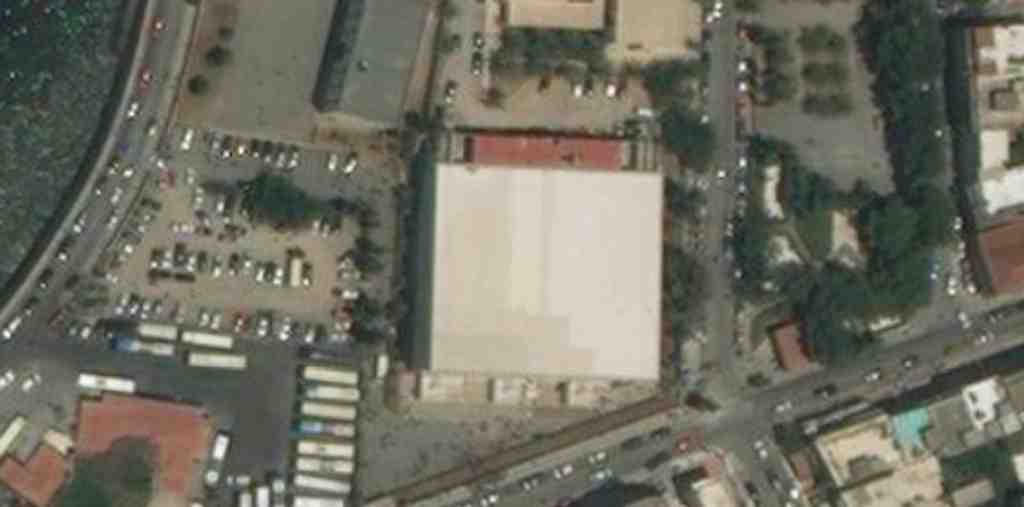
Melina Merkouri Indoor HallPhoto: NASA World Wind, Wikimedia Commons, Public domain. Cropped & resized. You are standing right by the Melina Merkouri Indoor Hall, unmistakable with its massive square footprint, its expansive flat white panel roof, and its solid concrete exterior. It might not look like an ancient temple, but since opening in 1992, this municipal arena has been a modern sanctuary for local sports fans. It is named after the legendary Greek actress and politician Melina Mercouri, a woman who certainly knew how to command a room. Appropriately, this building draws quite a crowd. It serves as the home court for the Rethymno Cretan Kings, a professional team in the top-tier Greek Basket League. Back in 2007, when the team first clawed their way into that premier division, the city had to quickly increase seating capacity from eleven hundred to sixteen hundred people just to meet league standards. Since then, it has hosted international talent, including the FIBA Europe Under-16 Championship in 2007 and the Under-20 Championship in 2017. With plans to expand the facility yet again, it seems the local appetite for basketball is only growing. It is a true testament to the modern competitive spirit here. Whenever you are ready to move on, just head toward our next stop.
On your right, you will see a pale stone building featuring three prominent rounded domes over a series of open archways, anchored by a tall, slender cylindrical minaret tower on…더 보기간략히 보기
전용 페이지 열기 →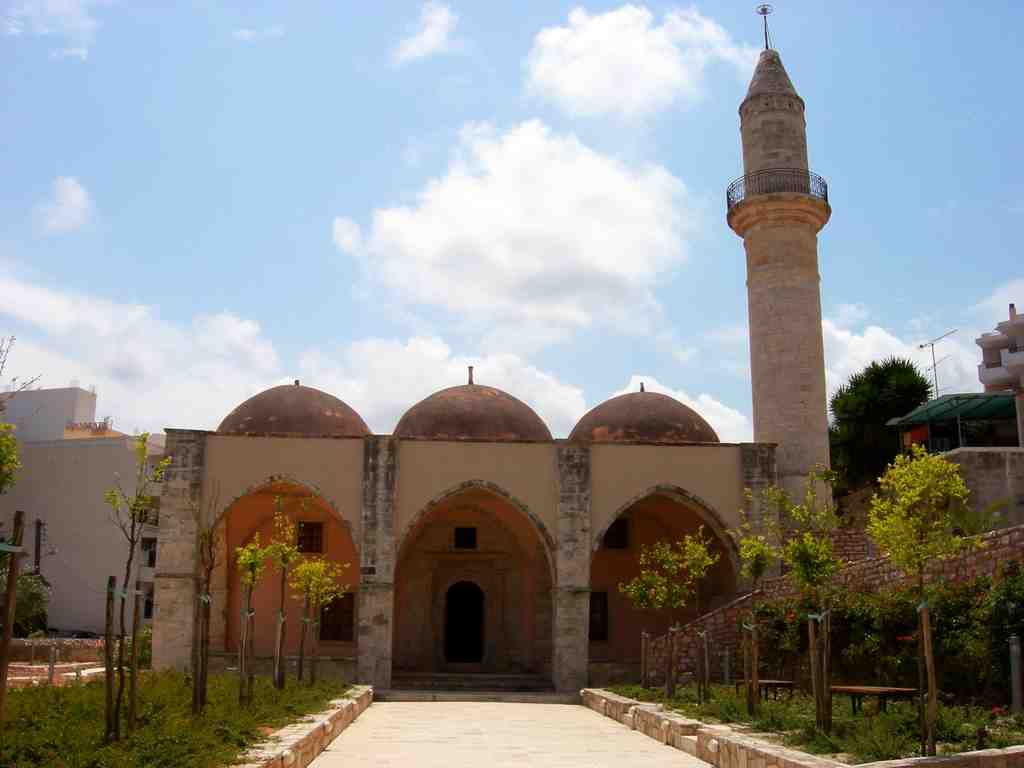
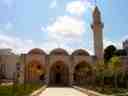
Veli Pasha MosquePhoto: stephanemat, Wikimedia Commons, CC BY-SA 3.0. Cropped & resized. On your right, you will see a pale stone building featuring three prominent rounded domes over a series of open archways, anchored by a tall, slender cylindrical minaret tower on the right side. This is the Veli Pasha Mosque. The Ottomans built this shortly after conquering Rethymno in 1646. They built it right on the site of their former military camp, which itself sat on top of an older Christian church dedicated to Saint Onuphrius. Nothing says we are here to stay quite like building your house of worship exactly where you pitched your tents.
Take a look at the roof. You can clearly see the three larger domes over the portico, which is the covered entrance porch, but there are actually six smaller domes behind them, making nine in total. The complex originally included a tekke, a gathering place for dervishes. These were Sufi Muslim mystics who followed the Ottoman armies and played a major role in helping new communities socialize and settle.
That tall tower is Rethymno's oldest surviving minaret, dating back to 1789. The minaret was used to broadcast the adhan, the Islamic call to prayer.
In 1670, an Ottoman traveler described this courtyard as a mythical earthly paradise, lush with plants and shrubs. The mosque suffered heavy bombing damage during World War Two, but was beautifully restored in the 2010s to house, of all things, the Paleontological Museum. This structure is truly a layered fossil of the city's history. Take a moment to appreciate these layers, and whenever you are ready, we can head to the next stop.
To your left is a smooth stone building defined by its two rounded domes and a portico of pointed arches set behind a dark iron fence. This is the Kara Musa Pasha Mosque. Like…더 보기간략히 보기
전용 페이지 열기 →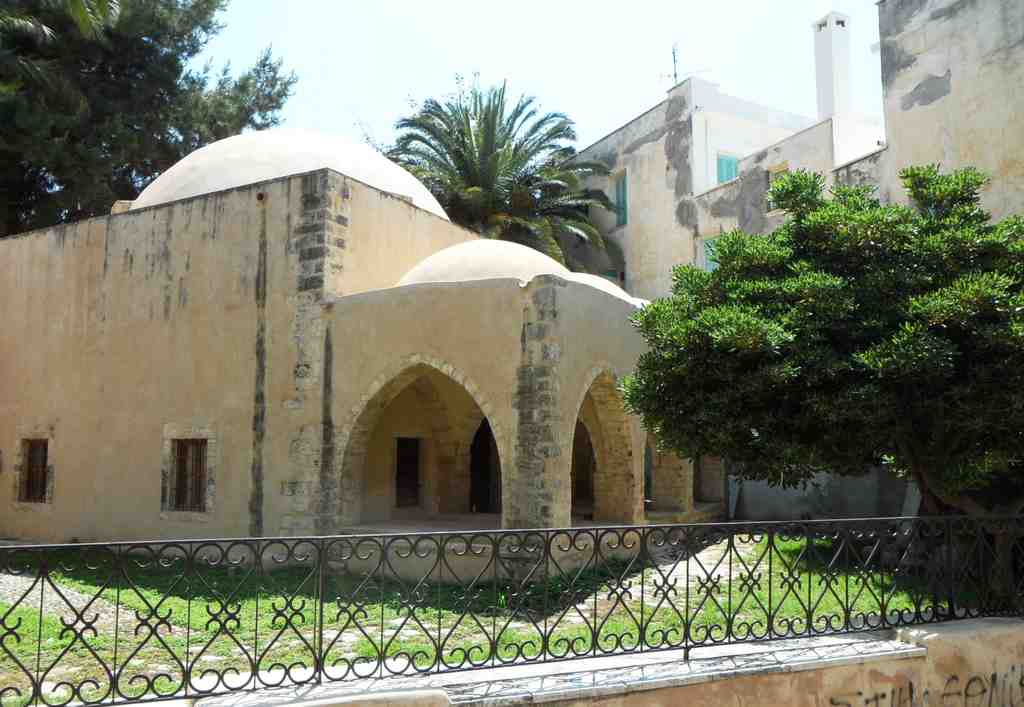
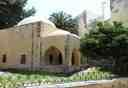
Kara Musa Pasha MosquePhoto: Hugo.arg, Wikimedia Commons, CC0. Cropped & resized. To your left is a smooth stone building defined by its two rounded domes and a portico of pointed arches set behind a dark iron fence. This is the Kara Musa Pasha Mosque. Like many historical buildings here, it has had a bit of an identity crisis over the centuries. It actually began life as a Venetian monastery dedicated to Saint Barbara. But after the Ottomans conquered the city in the seventeenth century, they gave the property a major makeover.
They added those prominent domes and a minaret, the tall slender tower used for the call to prayer. Today, only the base of the minaret survives. Glance at your screen to see a closer view of the entrance. You actually walk right under a domed fountain to get inside the building.
Somewhere in the precinct lies a turbes, a classic vaulted stone tomb, where the founder Kara Musa Pasha is likely buried. Abandoned in the 1890s, it is now safely preserved by the archaeological service. It stands as a fascinating monument to architectural adaptation. Take a moment to appreciate the details, and whenever you are ready, we can head toward our next stop.
5개 정류장 더 보기정류장 적게 보기expand_moreexpand_less
On your right is the Archaeological Museum of Rethymno. Notice it looks an awful lot like a church? Good eye. This is actually the Church of Saint Francis, built by the wealthy…더 보기간략히 보기
전용 페이지 열기 →On your right is the Archaeological Museum of Rethymno. Notice it looks an awful lot like a church? Good eye. This is actually the Church of Saint Francis, built by the wealthy Barozzi family around 1530. It even gives this road its name, Agiou Fragkiskou, which translates to Saint Francis Street.
You are looking at one of the smallest museums in the world. But what it lacks in size, it makes up for in character. Check your screen to see what they packed inside. That is a beautiful marble statue of Aphrodite standing in the old nave, the soaring central hall of the church. Also, take a look at this unique artifact on your app. It is an ancient Greek inscription from roughly 500 BC that explicitly outlaws excessive drinking. Clearly, local authorities have been managing rowdy crowds for millennia.
Since we will return here at the end of our tour, you might want to save a visit inside for later. When you are ready, we can head to the next stop.
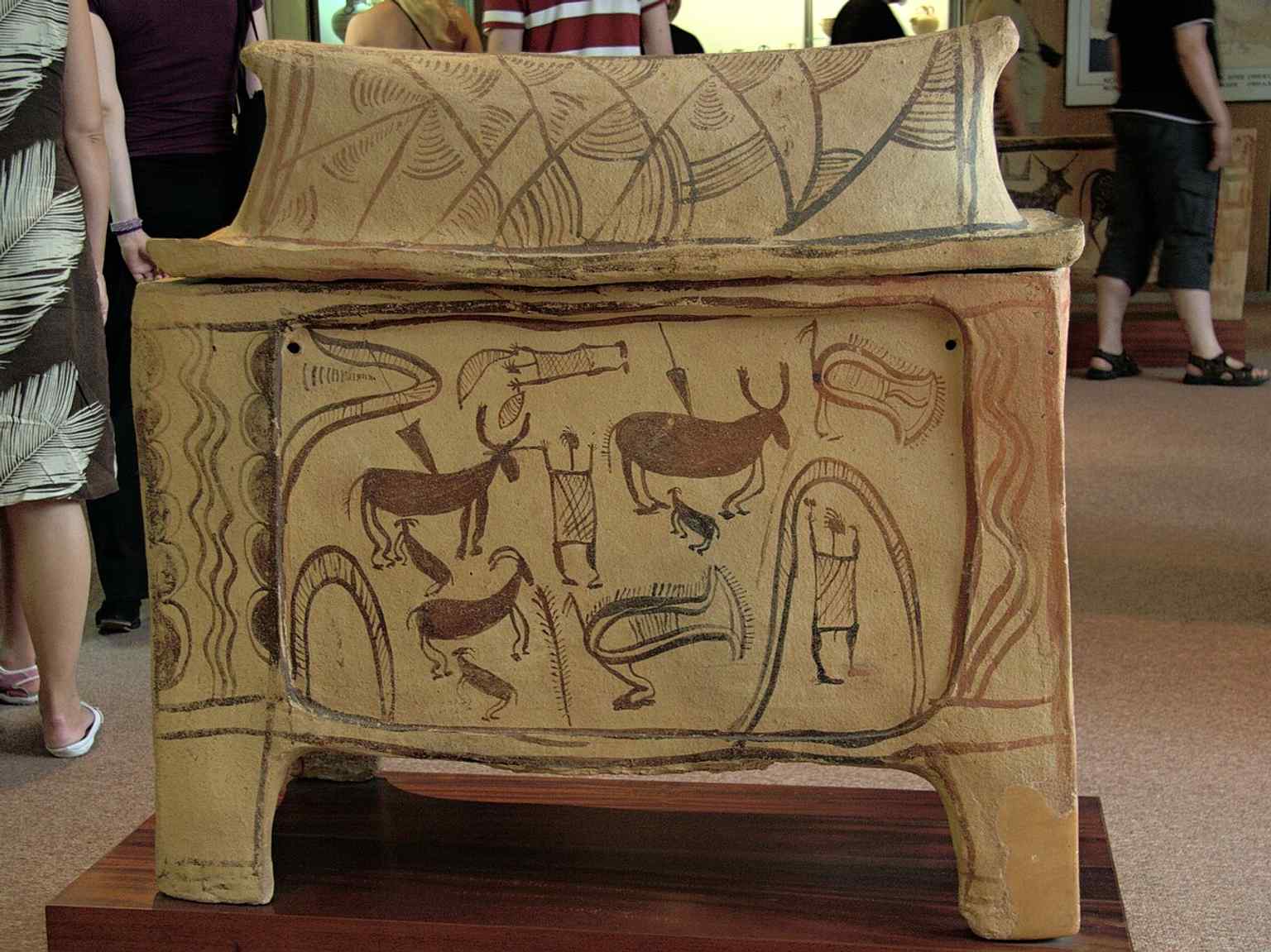
This Early Minoan terracotta funerary chest, known as a larnax, features a dynamic hunting scene with deer and a capricorn, showcasing the rich artifacts found in the museum's collection.Photo: Zde, Wikimedia Commons, CC BY-SA 4.0. Cropped & resized. On your left is a massive stone fortress wrapping around a rocky promontory, punctuated by a smooth spherical dome rising above its irregular defensive walls. This is the…더 보기간략히 보기
전용 페이지 열기 →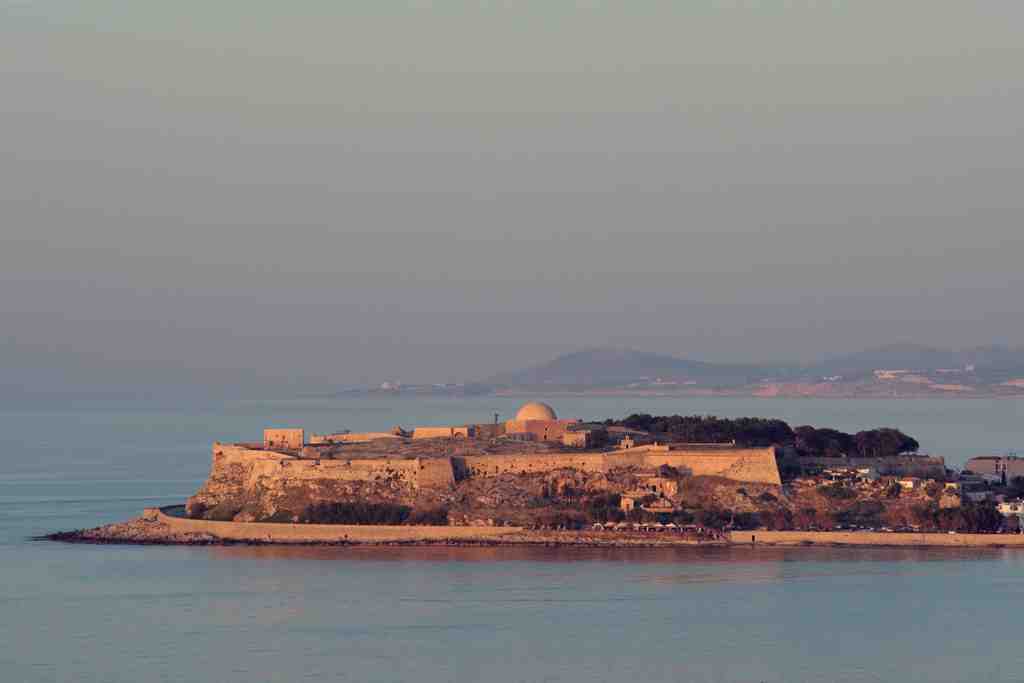
Fortezza of RethymnoPhoto: Jerzy Strzelecki, Wikimedia Commons, CC BY 3.0. Cropped & resized. On your left is a massive stone fortress wrapping around a rocky promontory, punctuated by a smooth spherical dome rising above its irregular defensive walls. This is the Fortezza, which simply means fortress in Italian. It was built by the Venetians in the late sixteenth century, and it stands on a hill called Paleokastro, or old castle.
The Venetians originally tried to protect the city with a different set of walls starting in fifteen forty, but they learned a harsh lesson. Those earlier walls were weak, and when the Ottoman admiral Uluç Ali Reis attacked in fifteen seventy-one, the city was easily captured and sacked. After that disaster, and with the recent loss of Cyprus, Venice decided Rethymno needed serious protection. It was their third most important city in Crete, after Heraklion and Chania.
So, they brought in a military engineer named Sforza Pallavicini. He designed this new citadel using the Italian bastion system. A bastion is essentially an angled, projecting piece of a wall that lets defenders fire in multiple directions at once, eliminating blind spots. Building it was a monumental undertaking. If you look at your screen, you can see a long stretch of these formidable walls. To construct this perimeter of thirteen hundred and seven meters between fifteen seventy-three and fifteen eighty, it took the grueling labor of exactly one hundred and seven thousand, one hundred and forty-two Cretans, alongside forty thousand, two hundred and five animals. They kept very detailed records.
A long stretch of the Fortezza's formidable fortification wall, constructed with incredible effort by 107,142 Cretans and 40,205 animals between 1573 and 1580.Photo: Dietmar Rabich, Wikimedia Commons, CC BY-SA 4.0. Cropped & resized. The original plan was to move the entire town inside these walls for safety. But once built, they realized the Fortezza was too small to hold everyone. So, it just became a secure neighborhood for the Venetian administration, while the regular citizens remained vulnerable down below. Ironically, the fortress itself was never truly secure. It lacked a defensive ditch, and its protective upper walls were strangely low.
When the Ottomans returned in sixteen forty-six during the Fifth Ottoman-Venetian War, the townspeople fled inside the Fortezza. But disease, starvation, and a lack of ammunition quickly took their toll, and the Venetians surrendered in just a few weeks. The Ottomans moved in and tweaked the architecture. They built a ravelin, which is a triangular outer wall to protect the main gate, and they converted the Venetian Cathedral of Saint Nicholas into a mosque. You can check your app to see the Sultan Ibrahim Mosque and its striking dome today.
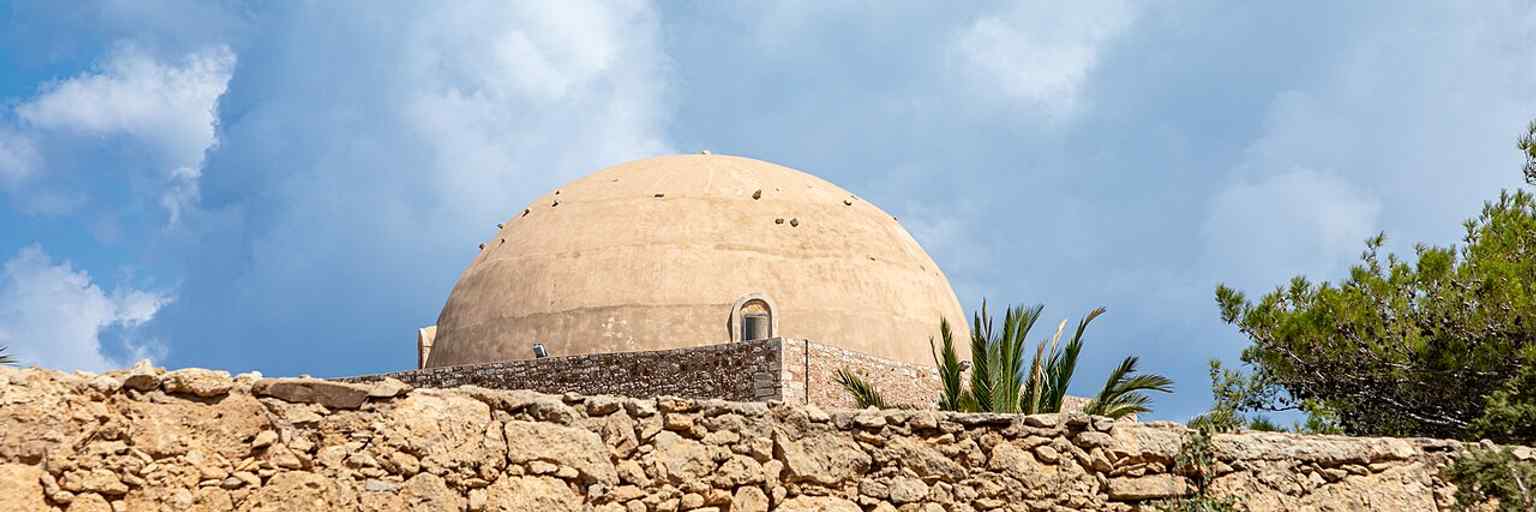
The impressive Sultan Ibrahim Han Mosque, originally the Venetian Cathedral of Saint Nicholas before its conversion during the Ottoman occupation in 1646.Photo: Dietmar Rabich, Wikimedia Commons, CC BY-SA 4.0. Cropped & resized. Over the centuries, the Fortezza evolved. By the early twentieth century, it was packed with residential houses, and at one point, it even held the local prison. After World War Two, the city expanded, the residents moved out, and the modern houses were demolished to preserve the historic structures.
Today, the site is proudly managed by the Ministry of Culture and is open to the public daily from ten in the morning until eight at night. Take a moment to appreciate this immense achievement of engineering. When you are ready, we can head to the next stop.
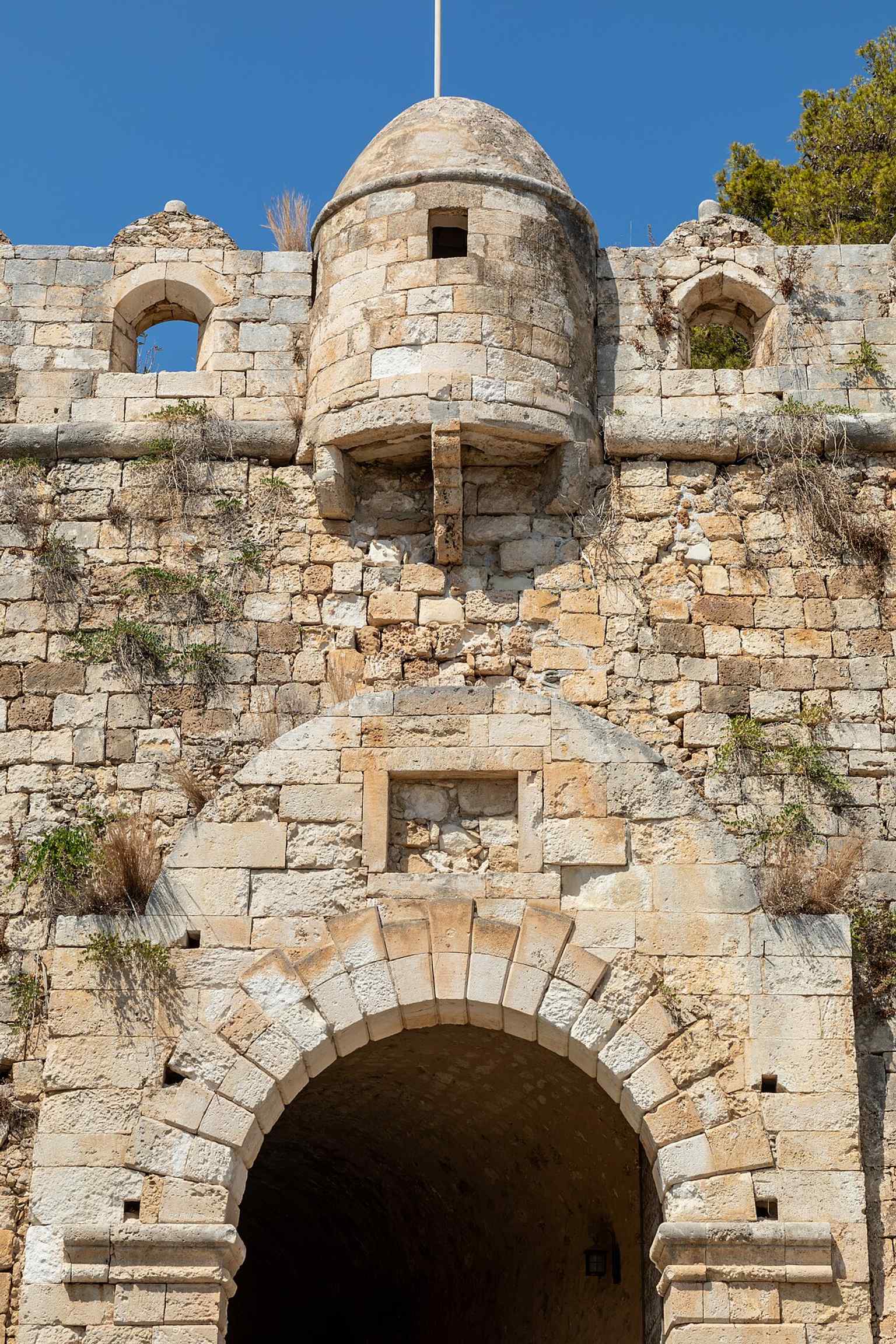
This is the main eastern gate of the Fortezza, protected by an Ottoman-era ravelin which now houses the Archaeological Museum.Photo: Dietmar Rabich, Wikimedia Commons, CC BY-SA 4.0. Cropped & resized. 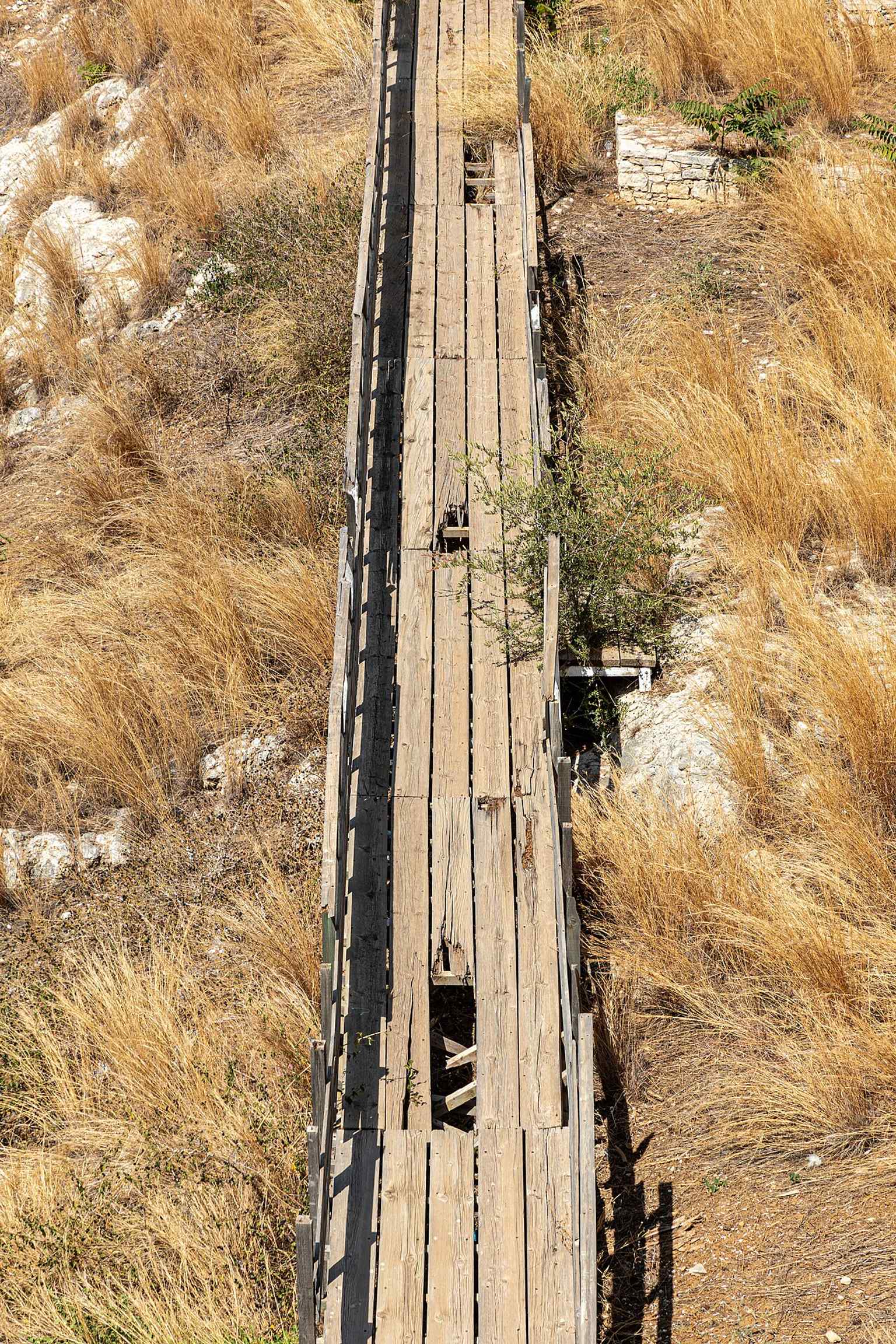
A walkway along the impressive fortification walls of the Fortezza, which span a total length of 1,307 meters around the acropolis.Photo: Dietmar Rabich, Wikimedia Commons, CC BY-SA 4.0. Cropped & resized. 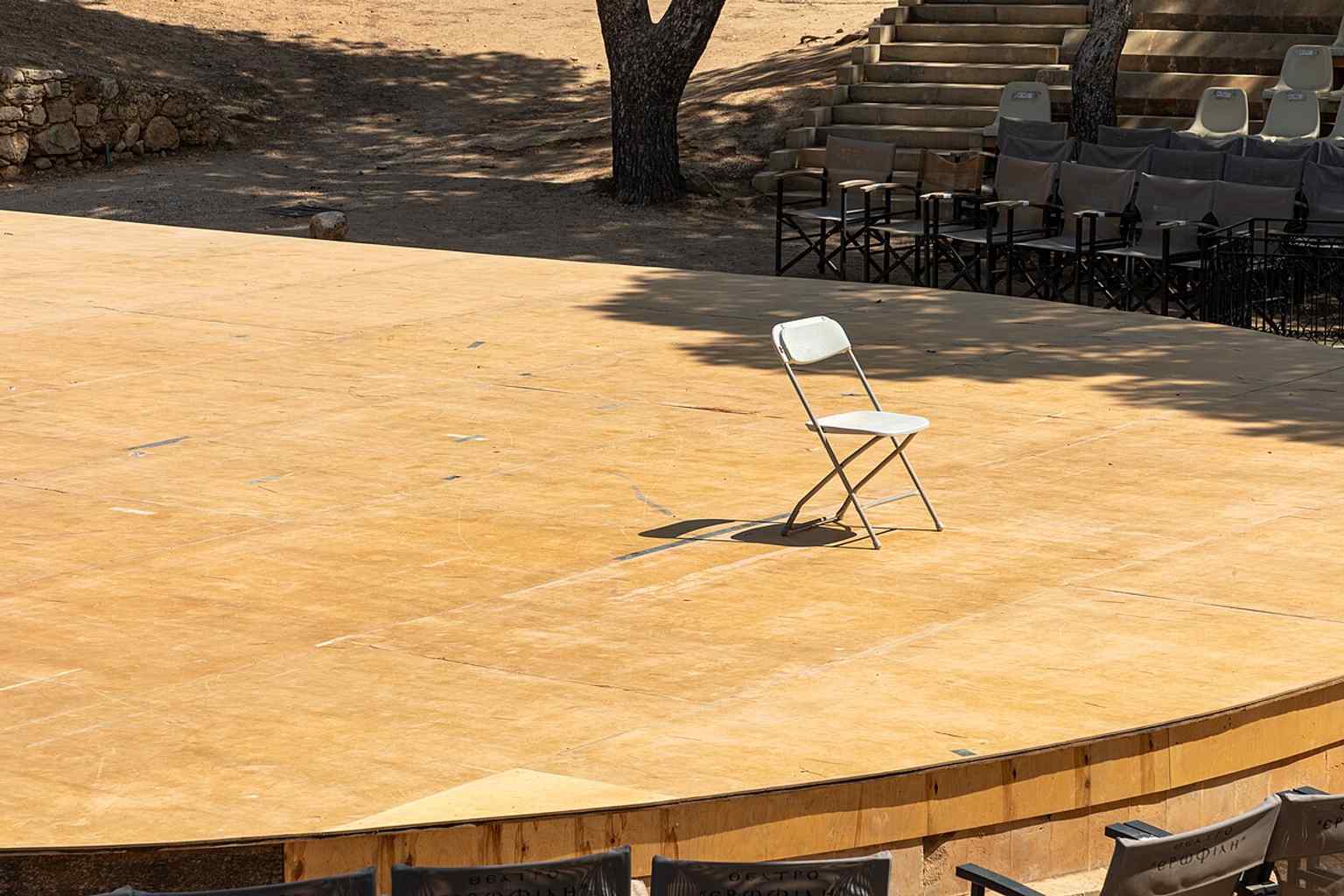
The stage of the Erofili Open-Air Theatre, opened in 1993 and situated within the St. Elias semi-bastion at the southern end of the Fortezza.Photo: Dietmar Rabich, Wikimedia Commons, CC BY-SA 4.0. Cropped & resized. 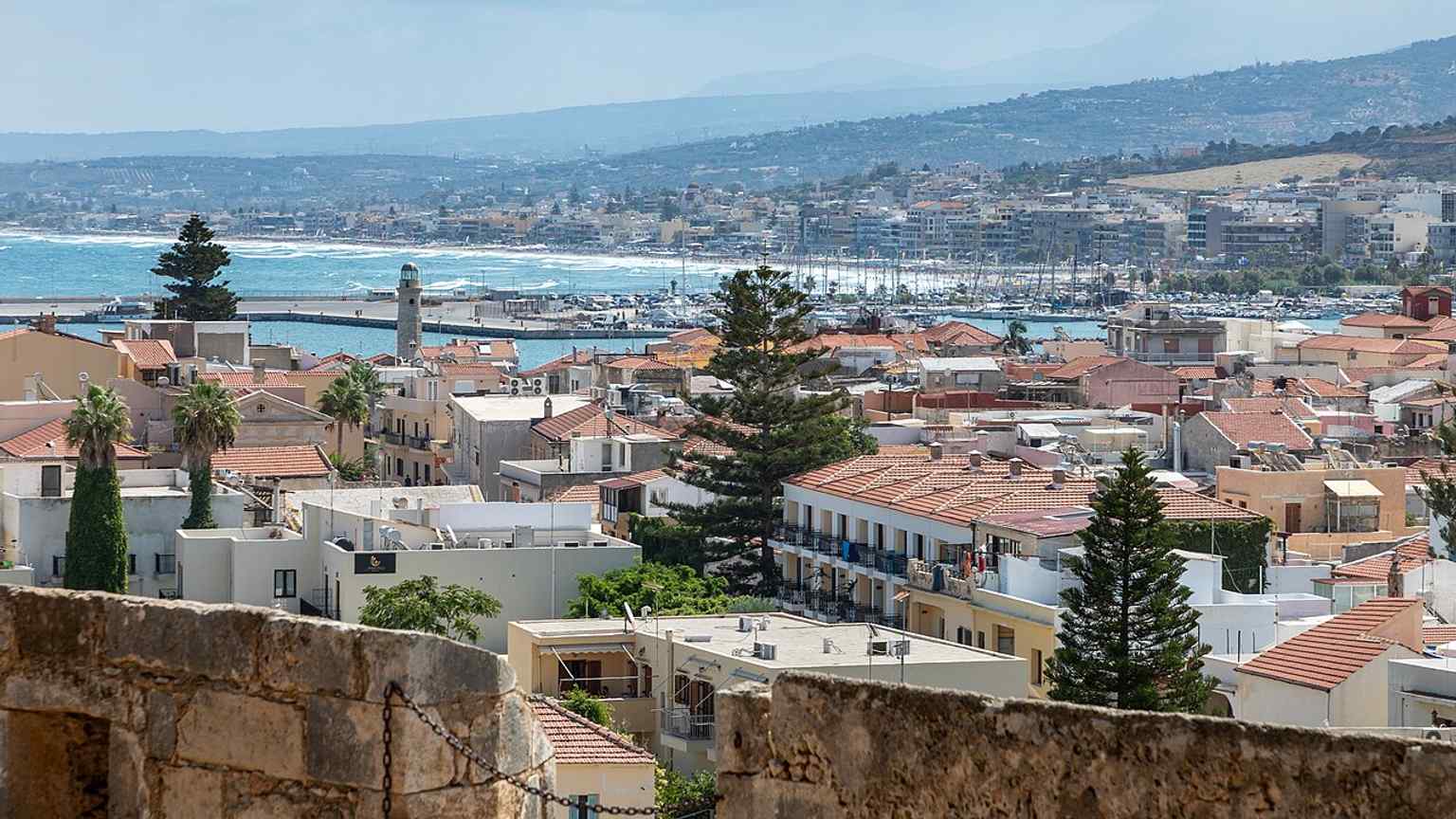
A panoramic view of Rethymno city from the Fortezza, built by the Venetians in the 16th century to protect the settlement below.Photo: Dietmar Rabich, Wikimedia Commons, CC BY-SA 4.0. Cropped & resized. 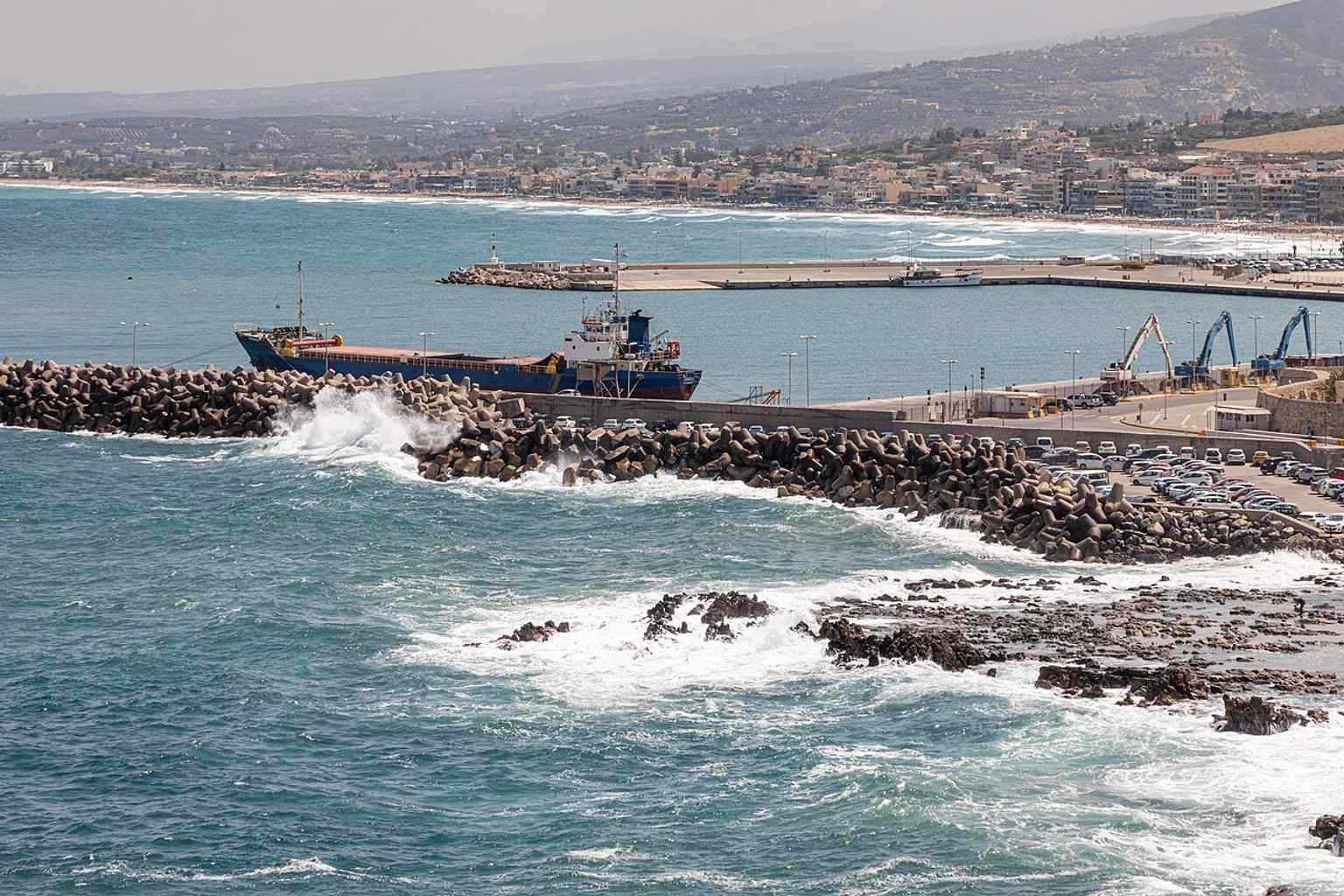
A strategic view of the small port of Rethymno from the Fortezza, highlighting its importance as the third most significant city in Crete during Venetian rule.Photo: Dietmar Rabich, Wikimedia Commons, CC BY-SA 4.0. Cropped & resized. 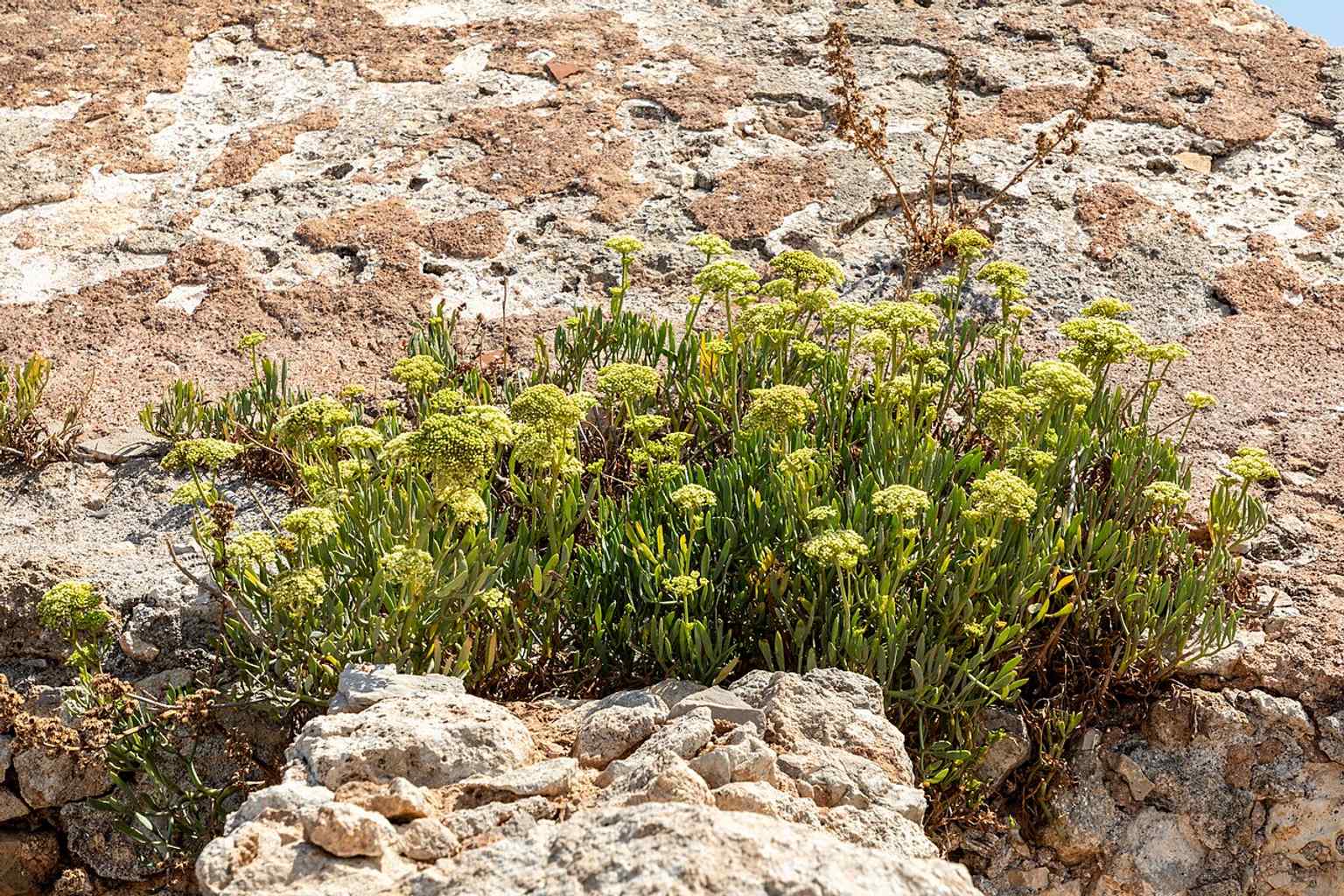
Sea fennel grows beside one of the Fortezza's powder magazines, which were essential for storing ammunition during its active use as a fortress.Photo: Dietmar Rabich, Wikimedia Commons, CC BY-SA 4.0. Cropped & resized. 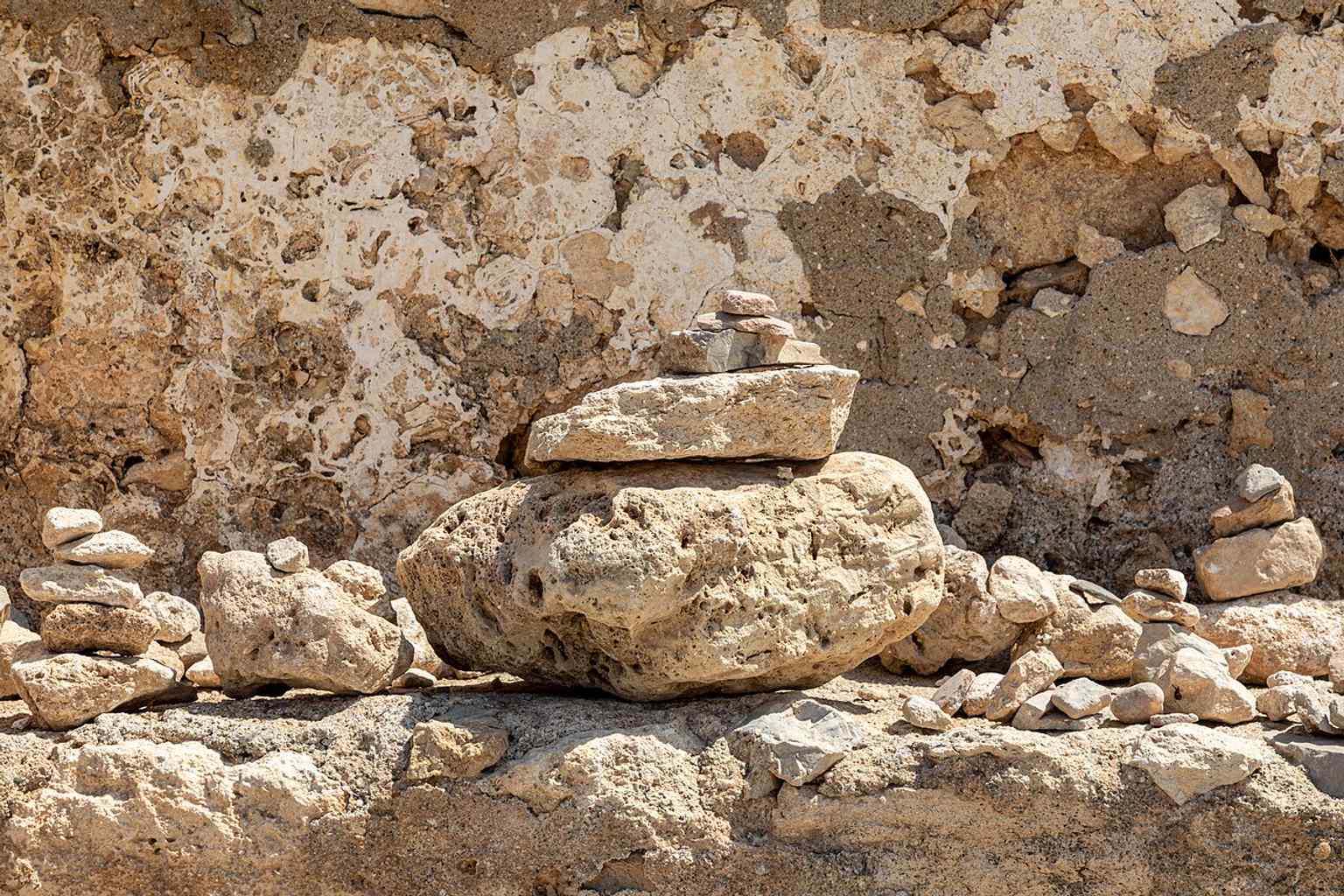
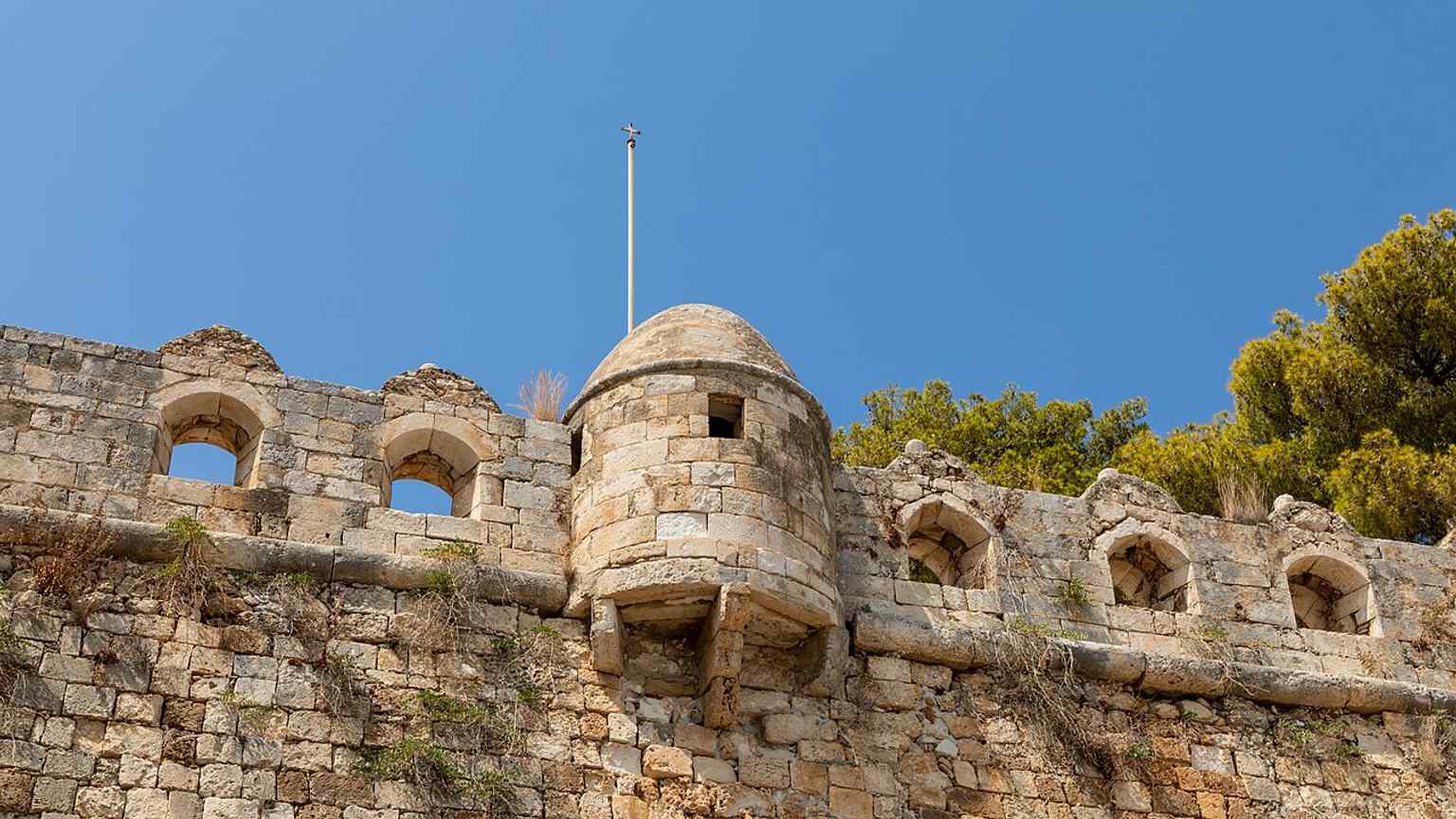
A detail of the stone towers along the Fortezza's fortification walls, part of the extensive defensive structure built by the Venetians to protect Rethymno.Photo: Dietmar Rabich, Wikimedia Commons, CC BY-SA 4.0. Cropped & resized. 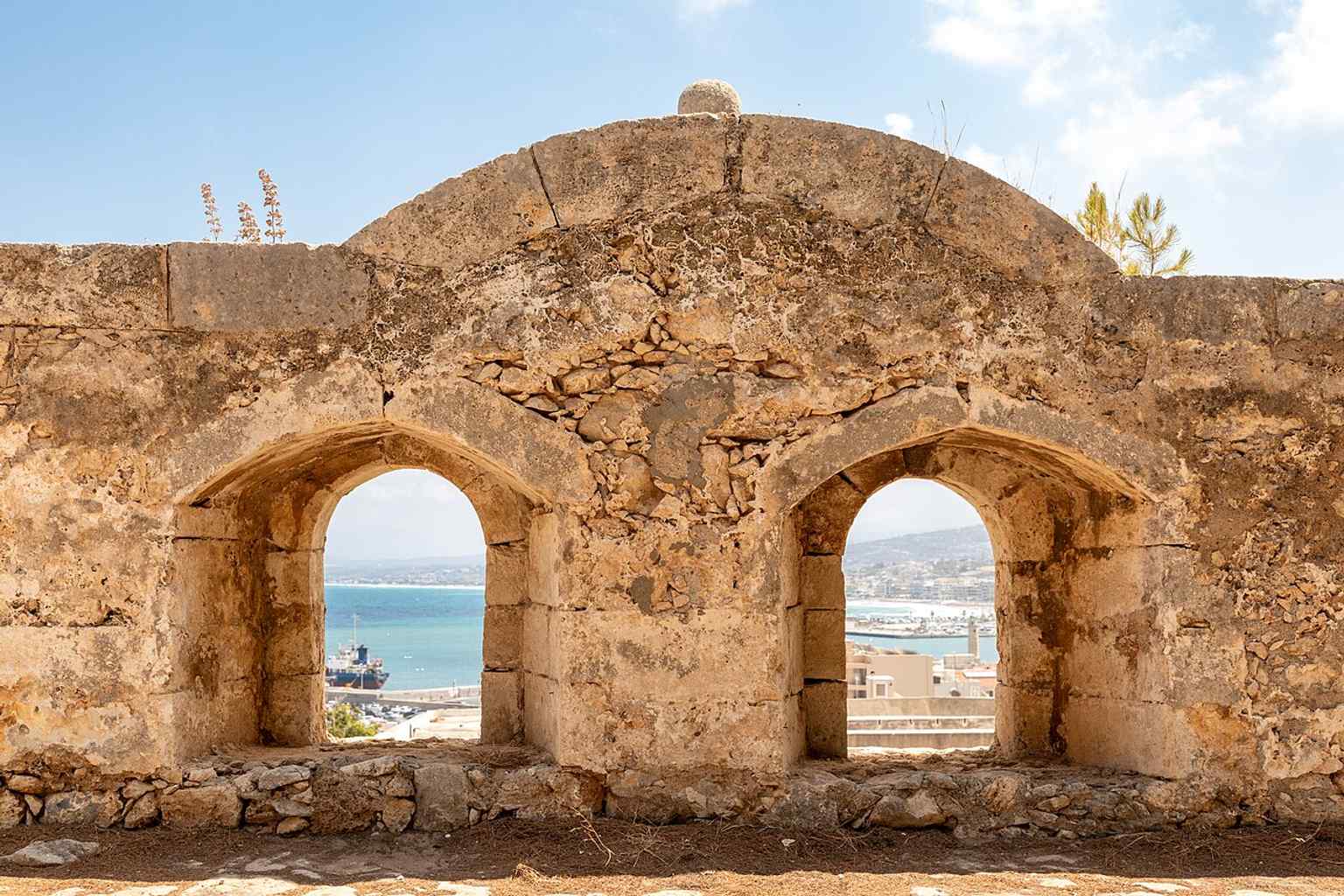
A close-up of the breastwork of the Fortezza, part of the defensive structures that were noted as being rather low and not always secure.Photo: Dietmar Rabich, Wikimedia Commons, CC BY-SA 4.0. Cropped & resized. 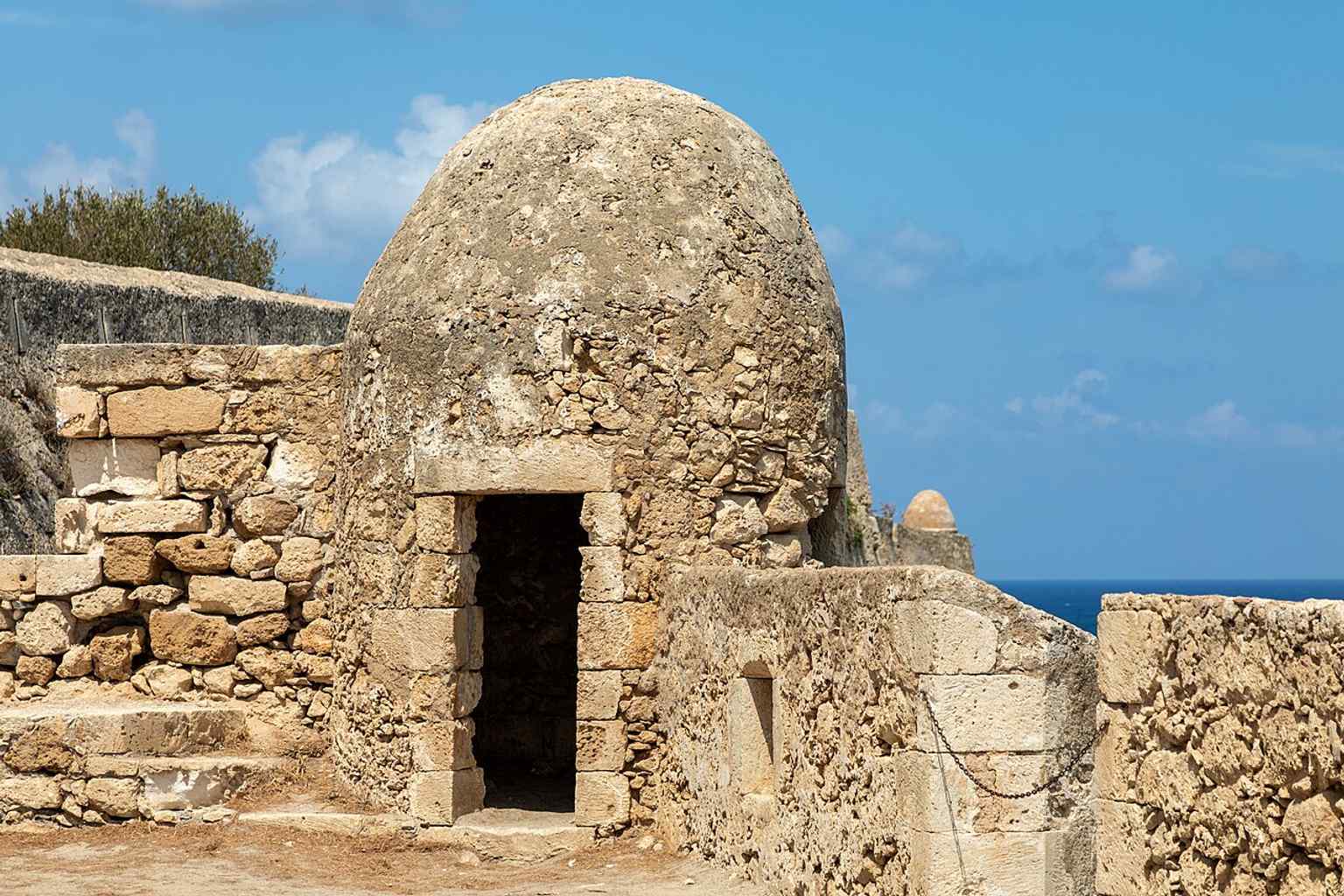
A watchtower integrated into the breastwork of the Fortezza, from where guards would have monitored for potential threats during Venetian and Ottoman rule.Photo: Dietmar Rabich, Wikimedia Commons, CC BY-SA 4.0. Cropped & resized. 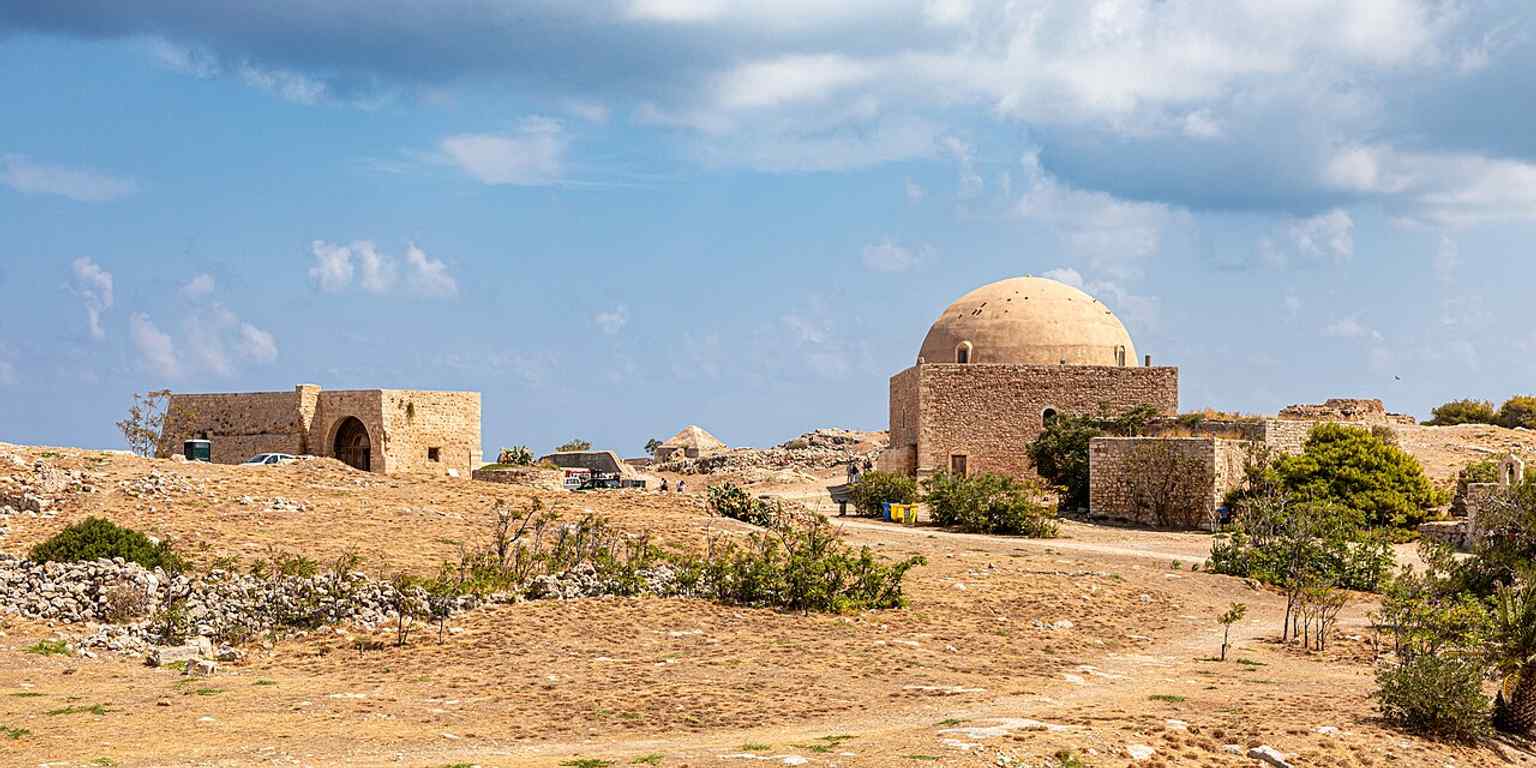
The Sultan Ibrahim Mosque stands beside what was once the Rector's residence, the home of the Venetian governor of Rethymno province, whose prisons are the only parts that survive today.Photo: Dietmar Rabich, Wikimedia Commons, CC BY-SA 4.0. Cropped & resized. 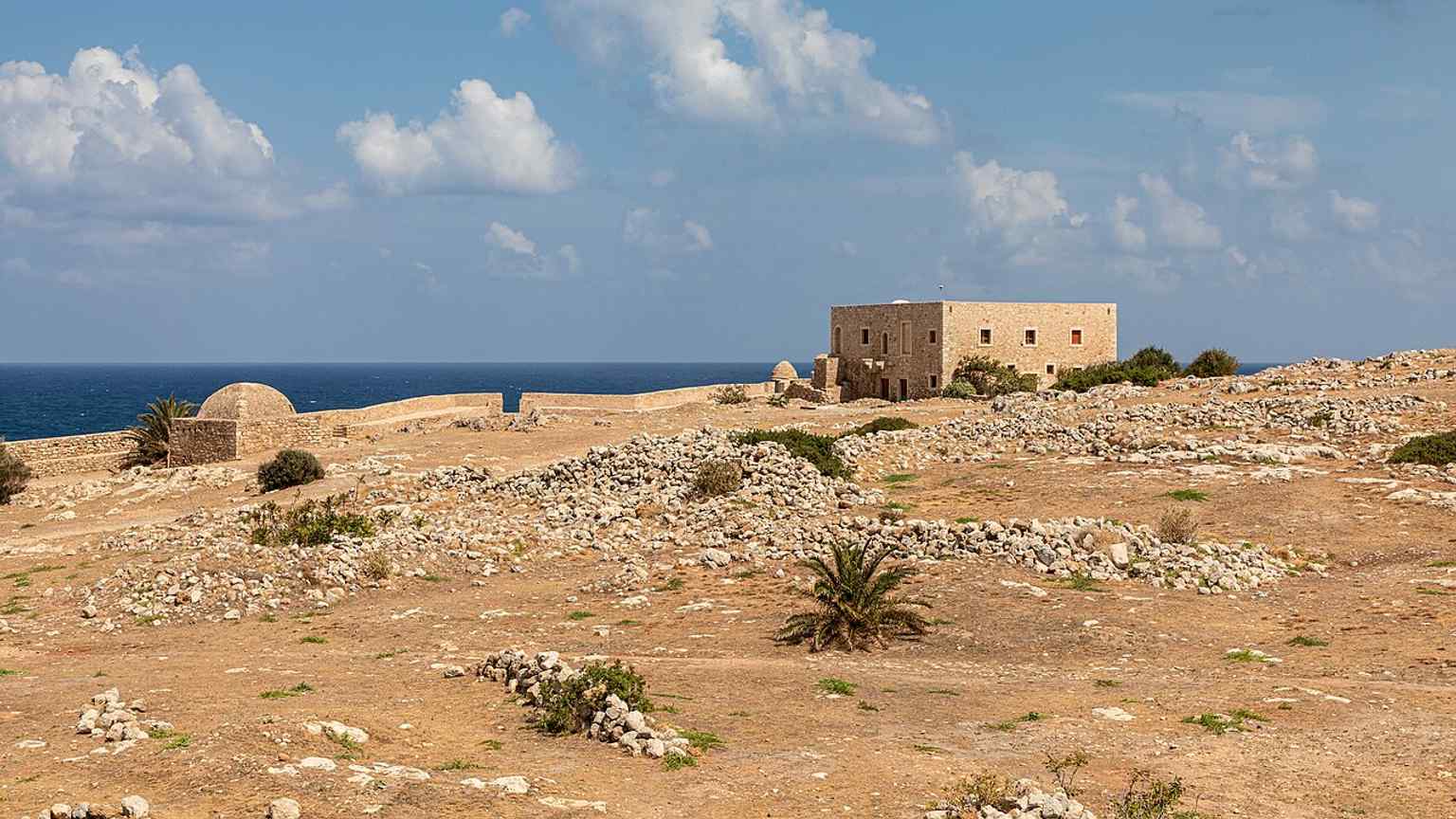
The former powder chamber and the Council Palace, which once housed a part of the Venetian administration of Rethymno within the Fortezza.Photo: Dietmar Rabich, Wikimedia Commons, CC BY-SA 4.0. Cropped & resized. Look for the flat pale stone facade featuring four fluted columns that frame three ornate lion-head spouts pouring water into the basins below. Much like the massive Fortezza we…더 보기간략히 보기
전용 페이지 열기 →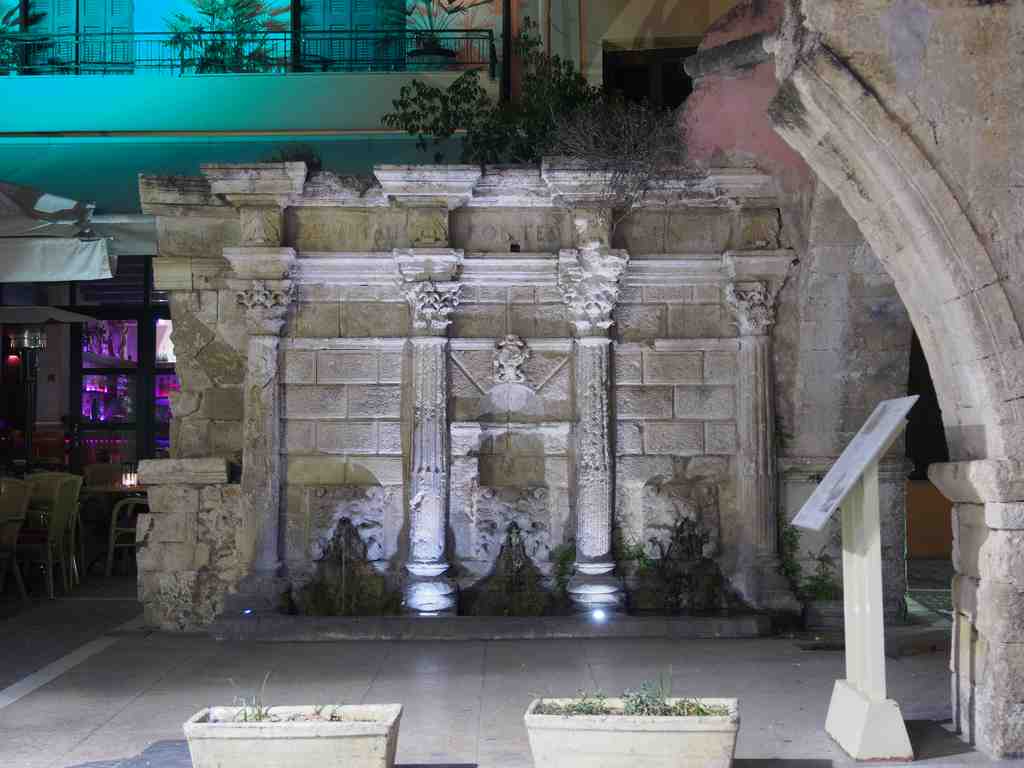
Rimondi FountainPhoto: C messier, Wikimedia Commons, CC BY-SA 3.0. Cropped & resized. Look for the flat pale stone facade featuring four fluted columns that frame three ornate lion-head spouts pouring water into the basins below. Much like the massive Fortezza we explored earlier, this is a prime piece of Venetian engineering, though its purpose was entirely life saving rather than military.
Back in the sixteenth and seventeenth centuries, Rethymno had a serious problem. The population was booming, and the city was running out of good water. The old wells and cisterns were failing, and the previous water source, the San Zuane fountain, had been heavily damaged by severe rains in 1592. By the time the Venetian commander Alvise Rimondi took charge in 1623, the city water supply was basically a trickle of bad news.
So, he decided to fix it himself. According to his own records, Rimondi did not use a single drop of public funds. He personally paid to repair an aqueduct bringing water from a spring half a mile away, and he funded the construction of this beautiful new fountain, which was likely completed around 1626. Because it is fed directly by that aqueduct pipe, there is no large water tank hidden behind the wall.
Notice how the architecture resembles a classical Roman facade. Those four half-columns are topped with Corinthian capitals, meaning the uppermost sections of the columns are intricately carved to look like stylized leaves. These were crafted from a soft, local stone called Alfa limestone. The columns divide the wall into three neat sections, each featuring a water spout. The spouts are carved as a mascherone, an architectural face or mask. Here, they look like lions, but if you look closely, the manes are actually made of carved leaves and twisting vines. The three stone troughs at the bottom were incredibly practical, serving as the daily watering spot for the city horses and livestock.
Up at the very top center, Rimondi made sure everyone knew who picked up the tab. That carved shield crowning the monument is his family coat of arms.
When the Ottomans later took control of the city, they added a large dome over the fountain, turning it into what they called the Great Fountain. The dome has long since collapsed, but you can still see the single stone pillar standing nearby that used to support it. The area around the fountain also gained a darker reputation during this era, as a nearby plane tree became the grim spot where rebels and criminals were executed.
Thankfully, today it is simply a peaceful landmark that remains open twenty-four hours a day for anyone who wanders by. Enjoy the atmosphere, and when you are ready, we can head to the next stop.
On your left is the Neradje Mosque, a rectangular stone building defined by three semicircular domes and a soaring minaret. Like several landmarks we have seen, it has played many…더 보기간략히 보기
전용 페이지 열기 →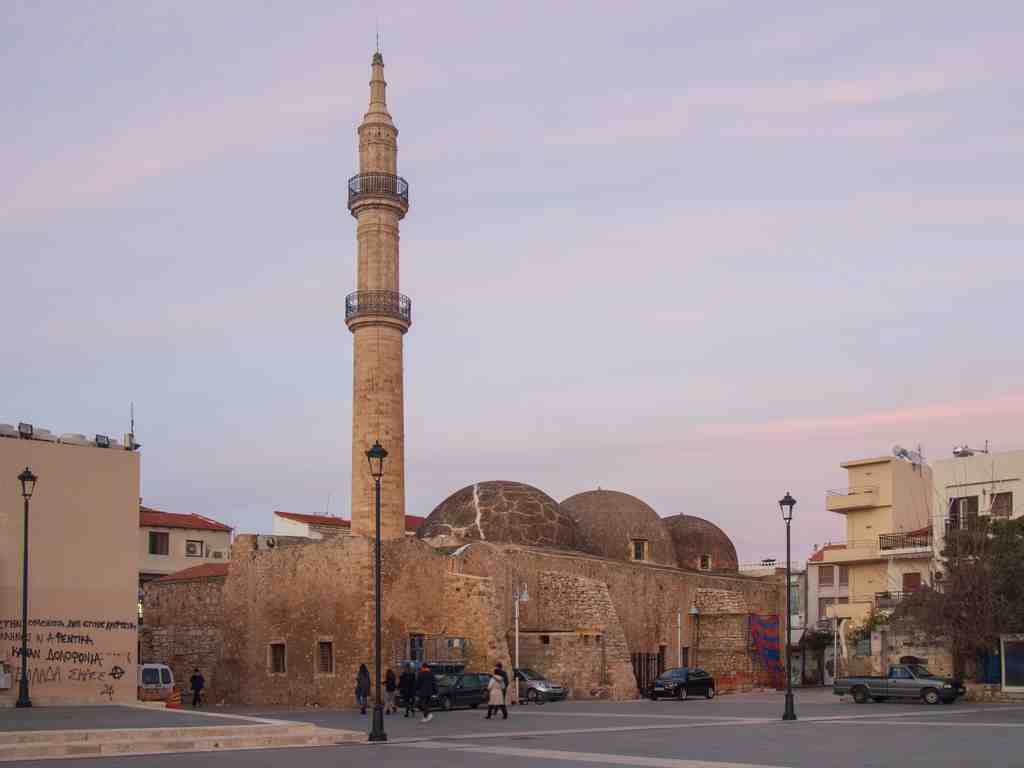
Neradje MosquePhoto: C messier, Wikimedia Commons, CC BY-SA 4.0. Cropped & resized. On your left is the Neradje Mosque, a rectangular stone building defined by three semicircular domes and a soaring minaret. Like several landmarks we have seen, it has played many roles. Originally, this was Santa Maria, a Catholic monastery for the Augustinian order. When the Ottomans conquered the city, they repurposed it into a mosque.
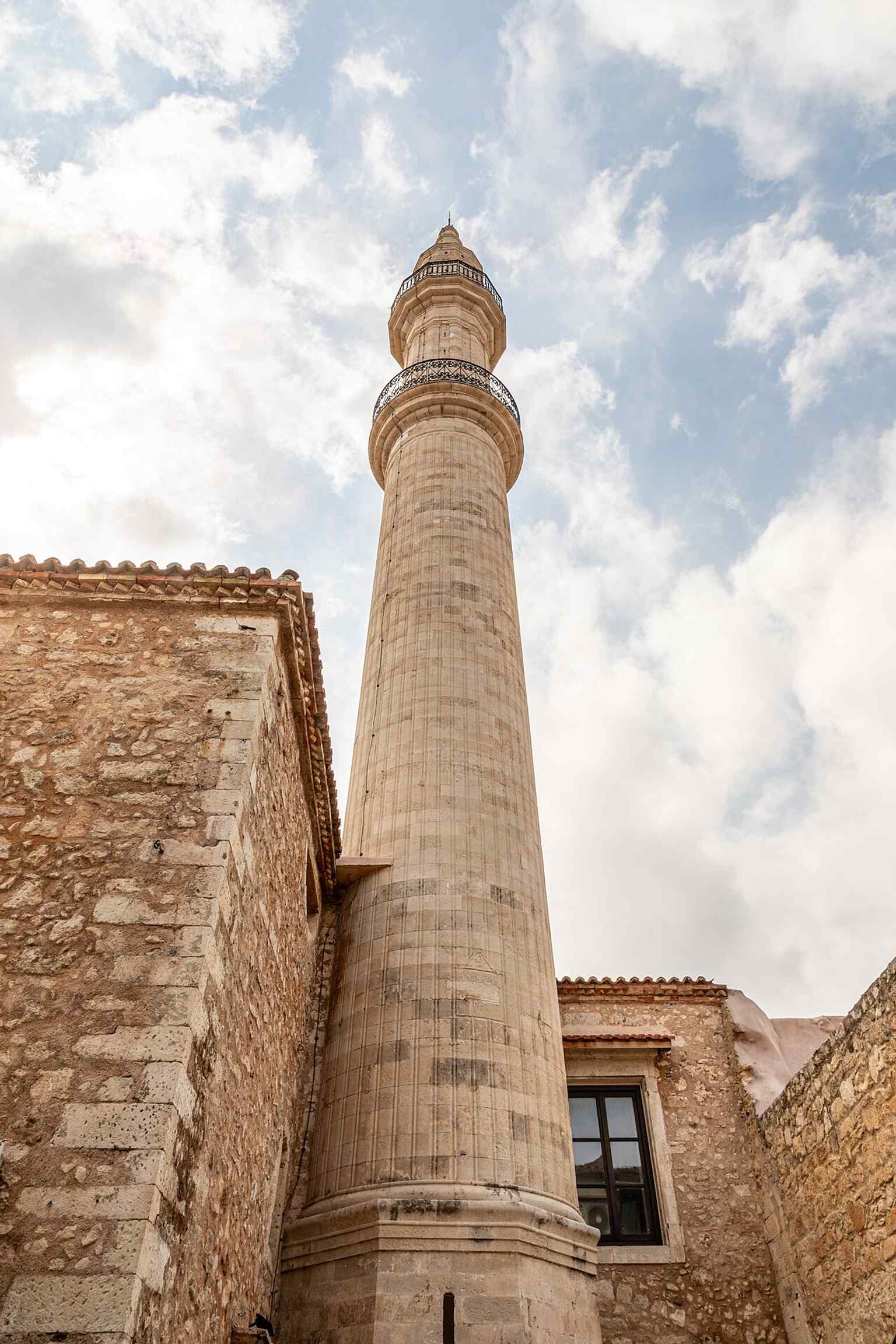
Take a look at your screen to see the intricate doorway. Those Corinthian columns and Renaissance details are based on the work of Italian architect Sebastiano Serlio. The towering minaret, which is the slender balcony lined tower used for the Islamic call to prayer, was added much later in 1890 by local engineer Georgios Daskalakis. It is still the tallest structure in town.
A close look at the building's facade revealing Renaissance elements and the ornate doorway with Corinthian-style columns, believed to be based on the work of Sebastiano Serlio.Photo: Dietmar Rabich, Wikimedia Commons, CC BY-SA 4.0. Cropped & resized. Following a forced population exchange between Greece and Turkey in 1924, the Muslim community left Crete entirely. The building was then transformed once again this time into a music school. It is open daily from 10 AM to 4 PM if you want to peek inside. The overlapping eras of Rethymno are perfectly preserved right here. Whenever you are ready, we can walk to our next stop.
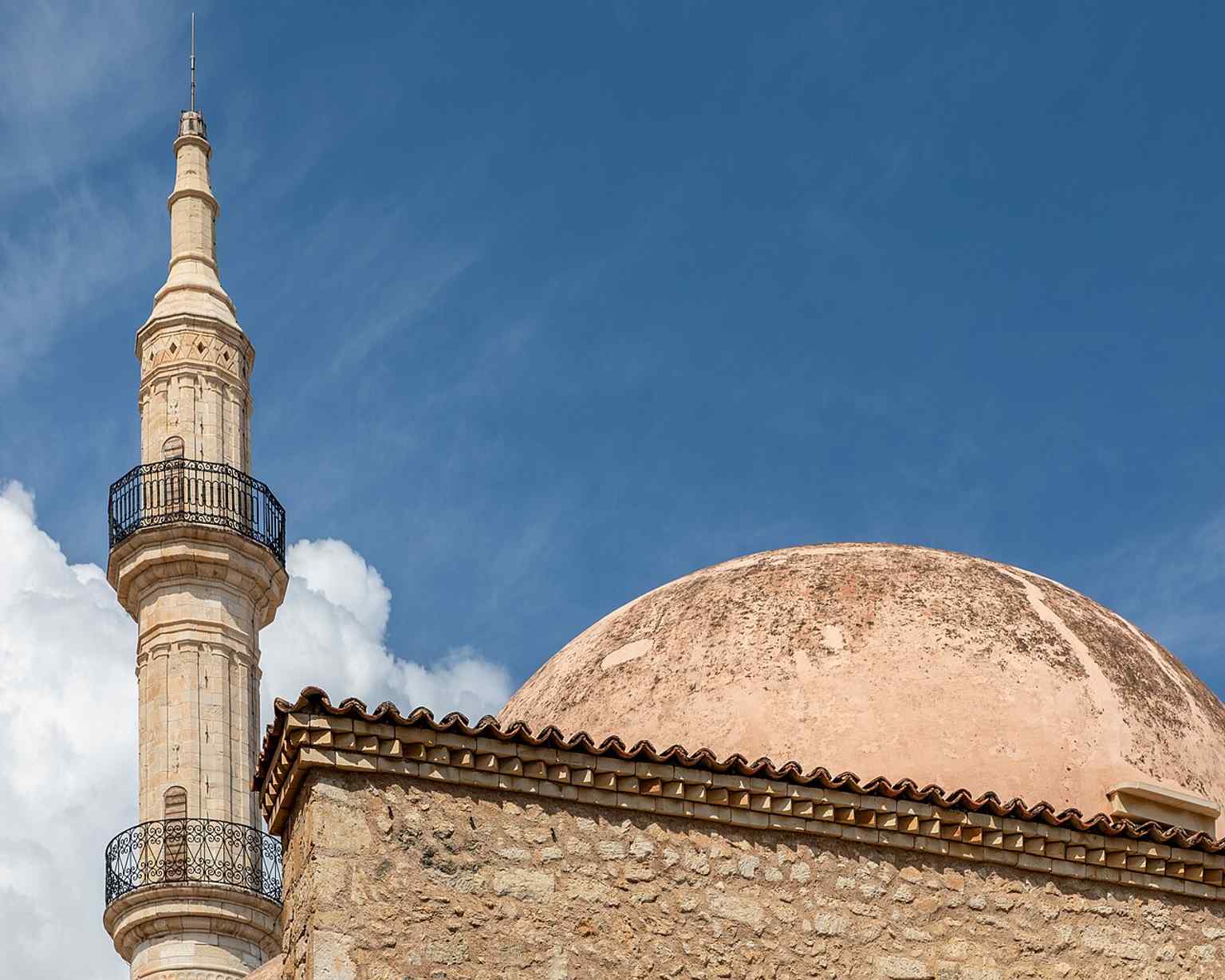
A wide view of the Neradje Mosque, originally a Catholic monastery and later repurposed as a music school in Rethymno, Crete.Photo: Dietmar Rabich, Wikimedia Commons, CC BY-SA 4.0. Cropped & resized. 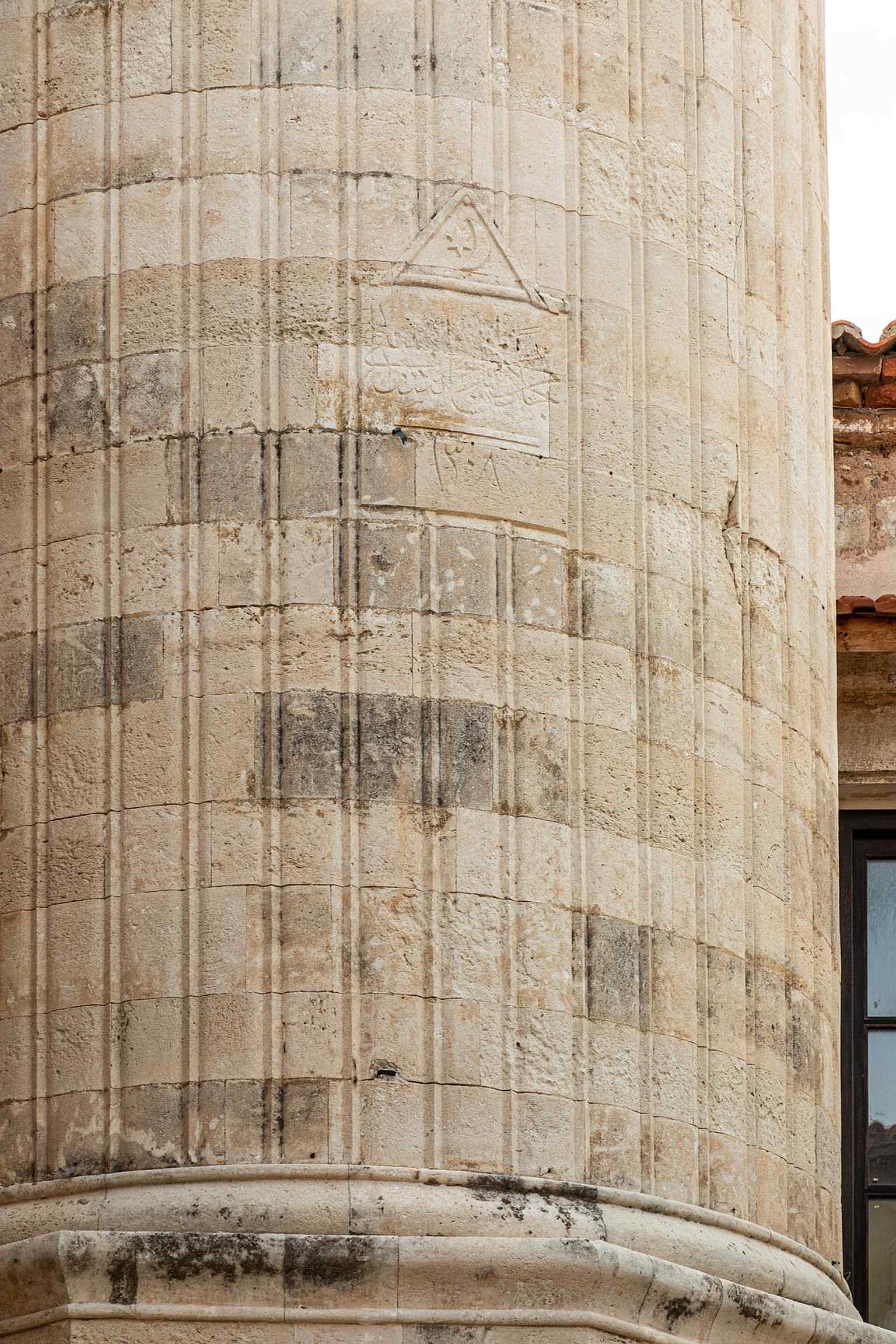
The imposing single minaret, built in 1890 by engineer Georgios Daskalakis, is the tallest structure in Rethymno and features two balconies.Photo: Dietmar Rabich, Wikimedia Commons, CC BY-SA 4.0. Cropped & resized. 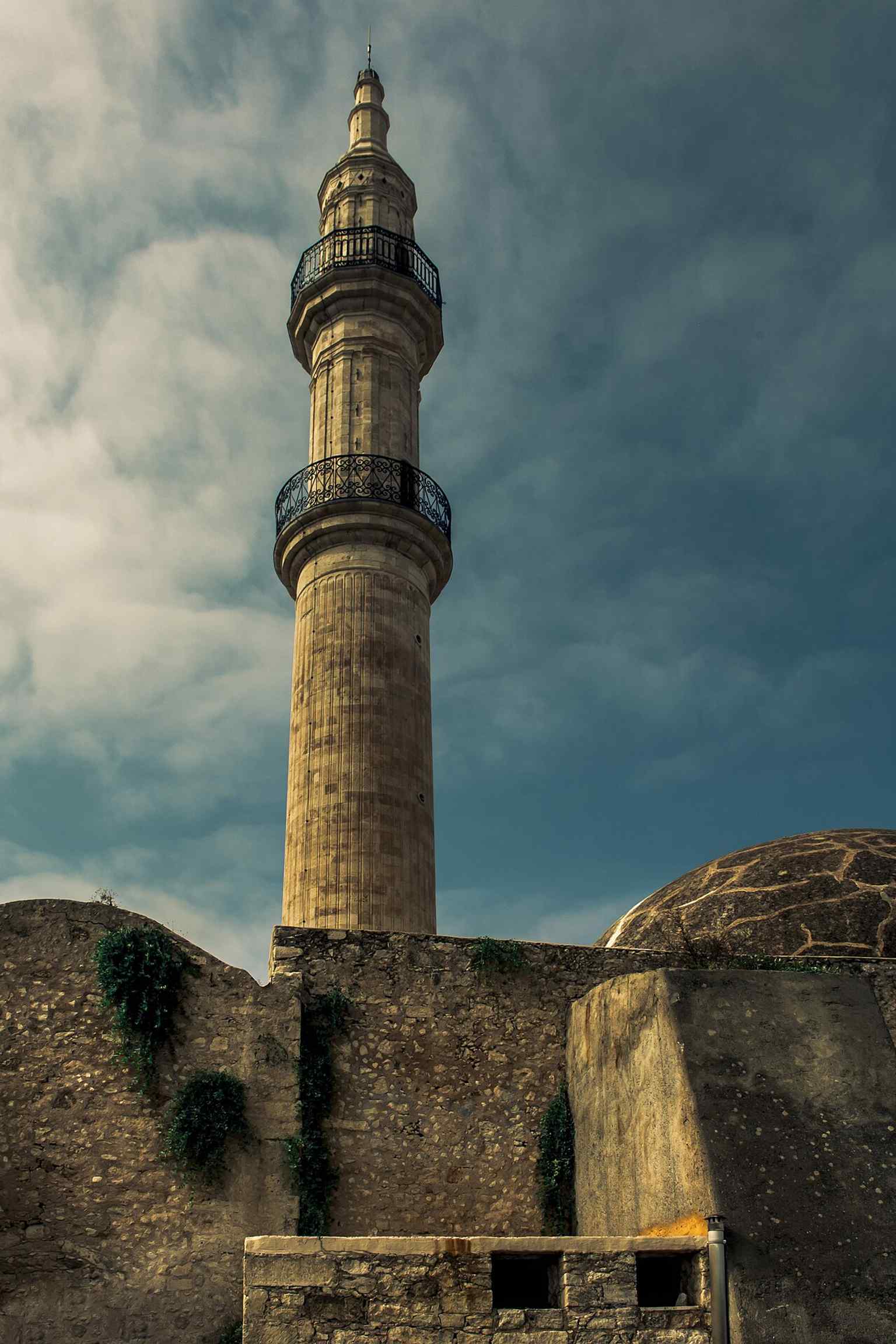
A vertical shot emphasizing the minaret's elegant structure and its two distinct balconies from a different perspective.Photo: RoyBatty8888, Wikimedia Commons, CC BY-SA 4.0. Cropped & resized. 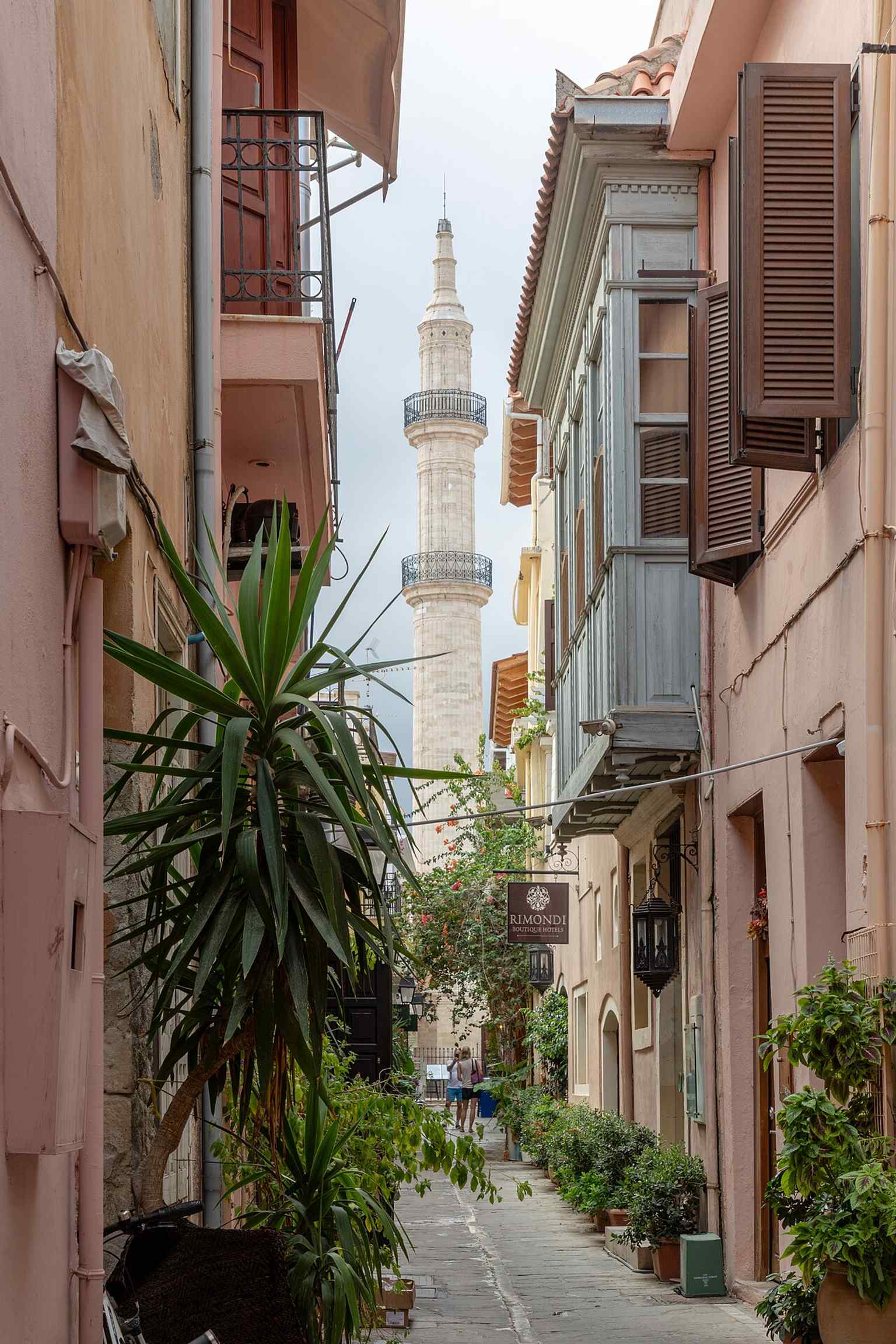
This view captures the main building, which was once the Catholic monastery of Santa Maria before its conversion into a mosque.Photo: Dietmar Rabich, Wikimedia Commons, CC BY-SA 4.0. Cropped & resized. 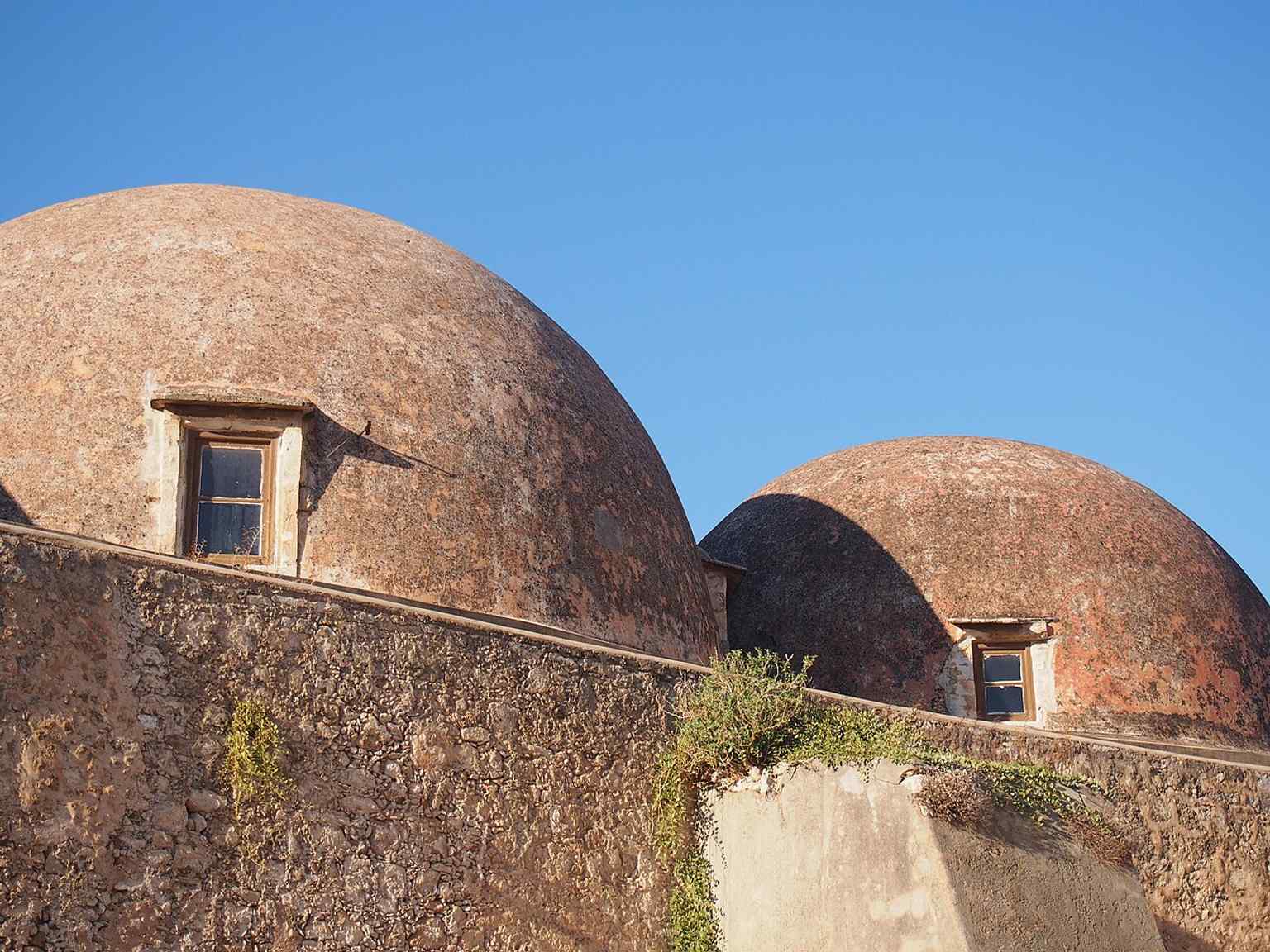
A view of the former Gazi Hüseyin Pasha Mosque, which was abandoned in 1924 following the population exchange between Turkey and Greece.Photo: C messier, Wikimedia Commons, CC BY-SA 4.0. Cropped & resized. 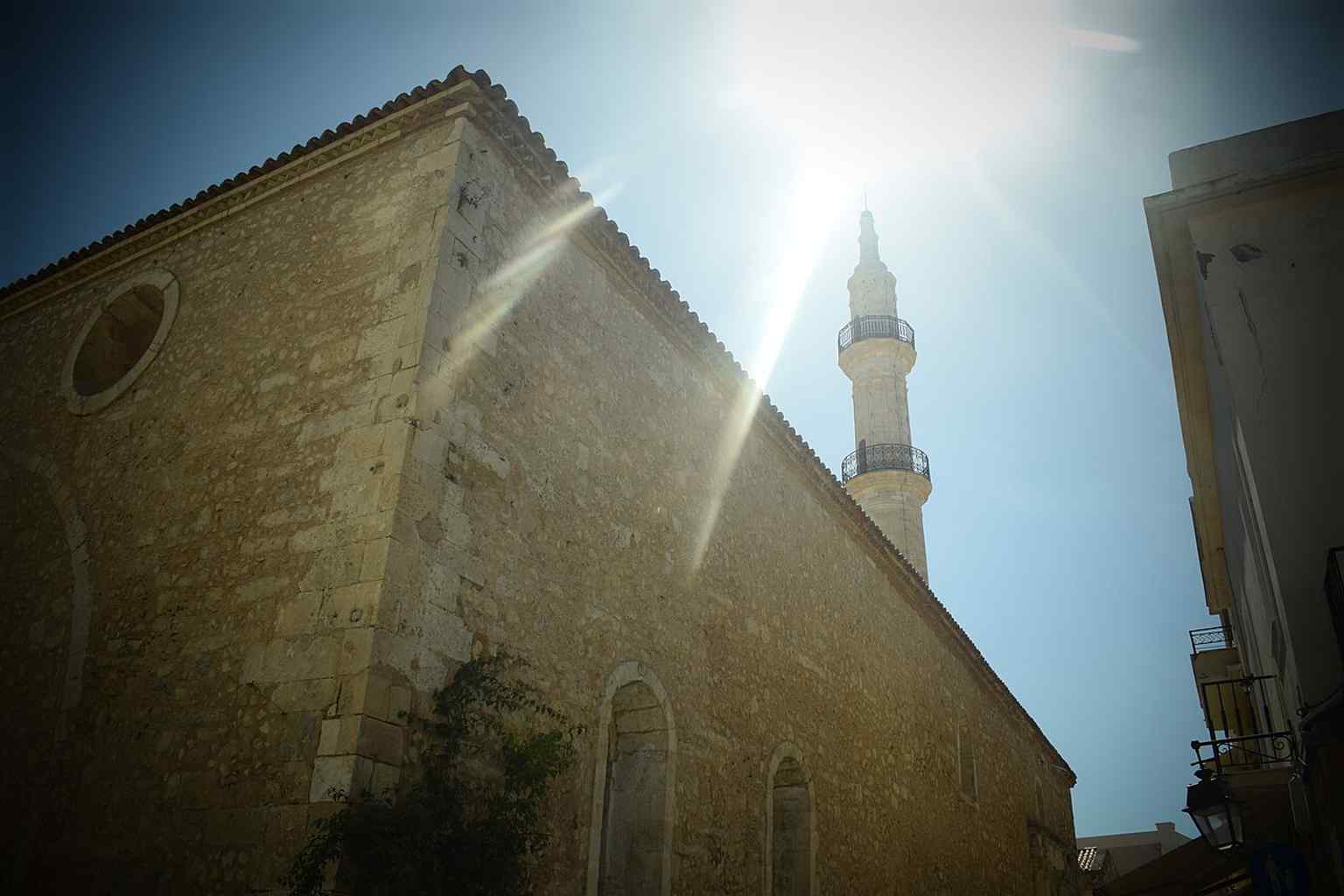
A broad, high-resolution view of the Neradje Mosque, a prominent landmark in the old town of Rethymno, Greece.Photo: Geotiger18, Wikimedia Commons, CC BY-SA 4.0. Cropped & resized. 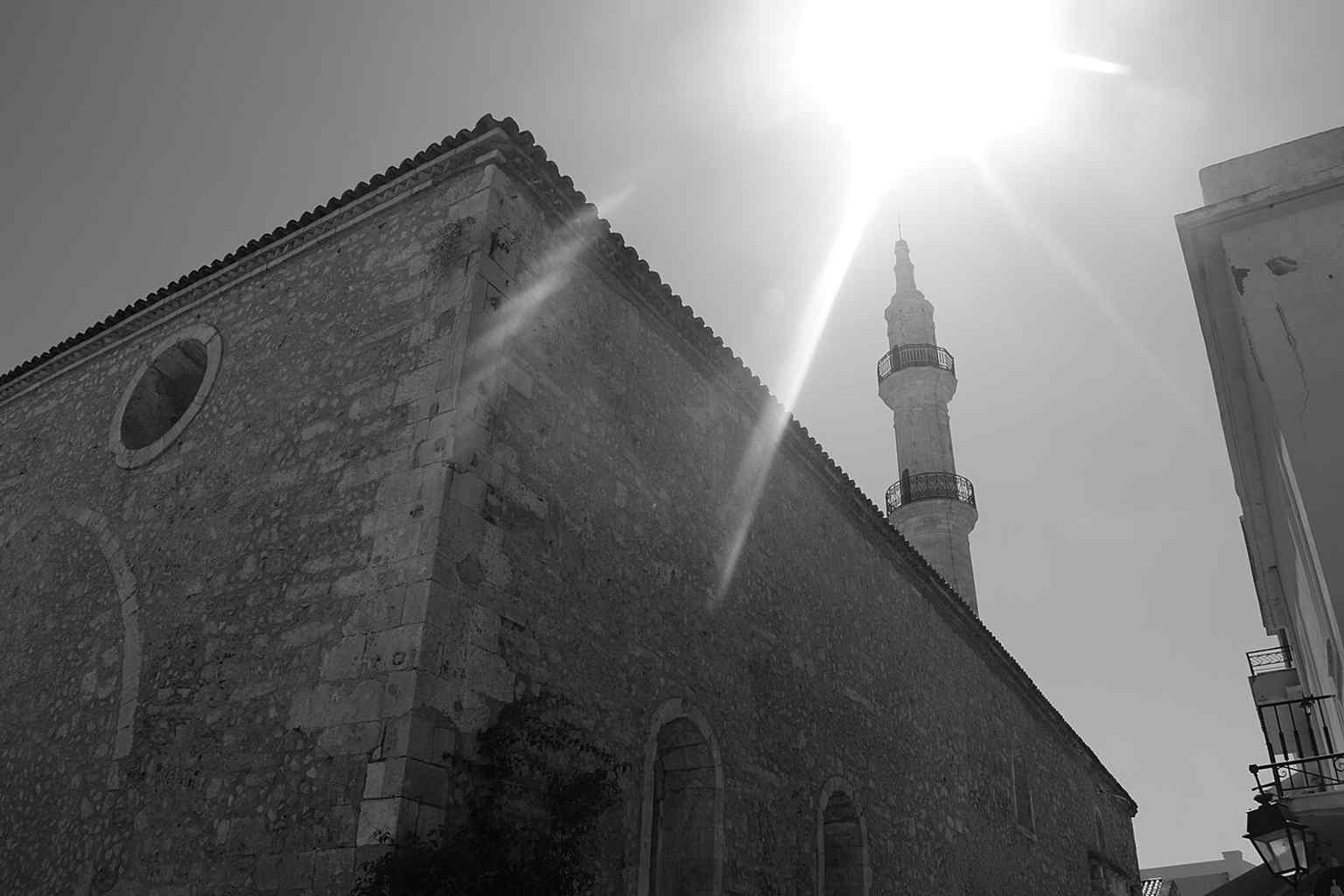
A closer look at the building's Renaissance-style windows and the ornate decorative elements present on its façade.Photo: Geotiger18, Wikimedia Commons, CC BY-SA 4.0. Cropped & resized. 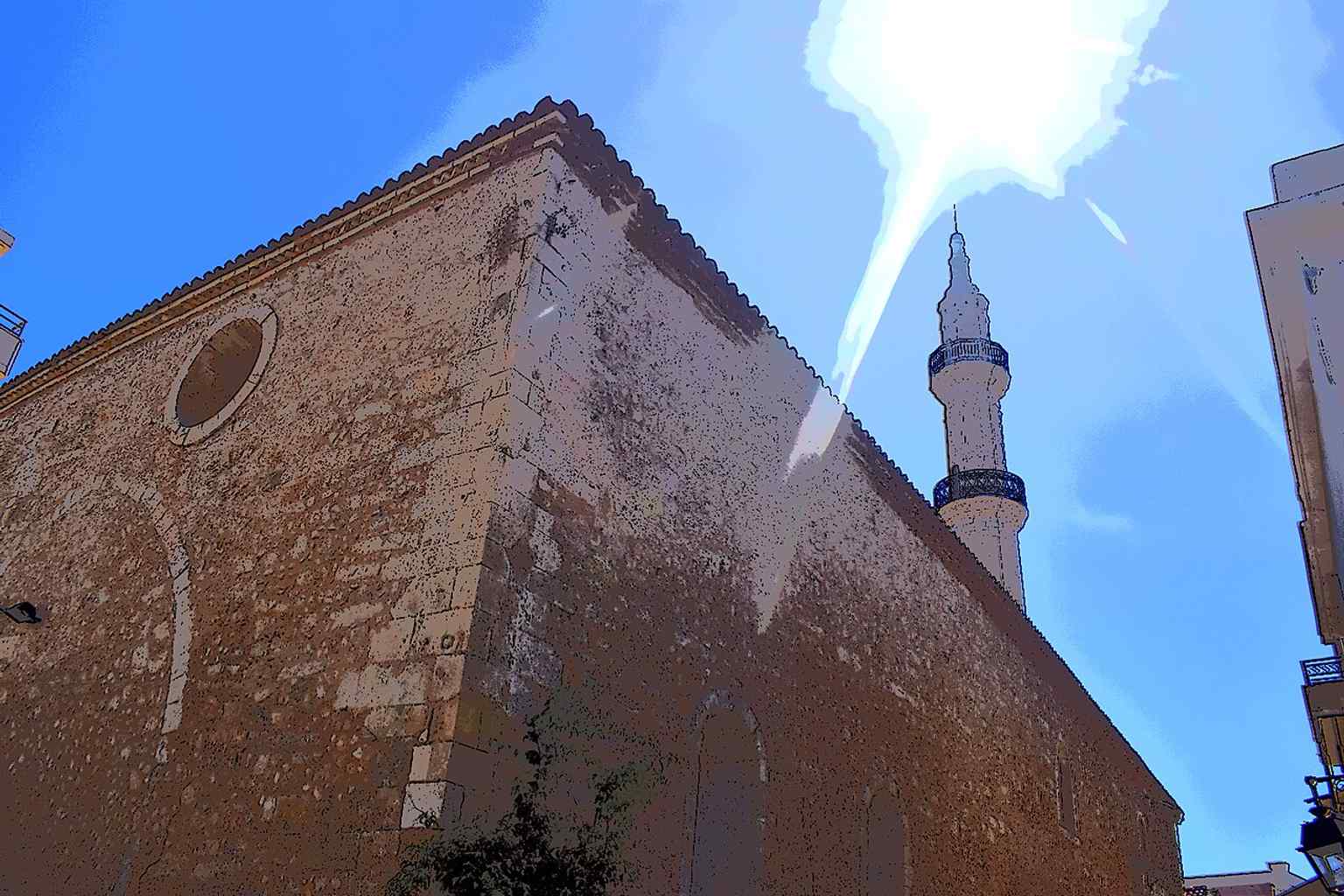
A distinct side view of the Neradje Mosque, clearly showing the cluster of three semicircular domes that define its roofline.Photo: Geotiger18, Wikimedia Commons, CC BY-SA 4.0. Cropped & resized. 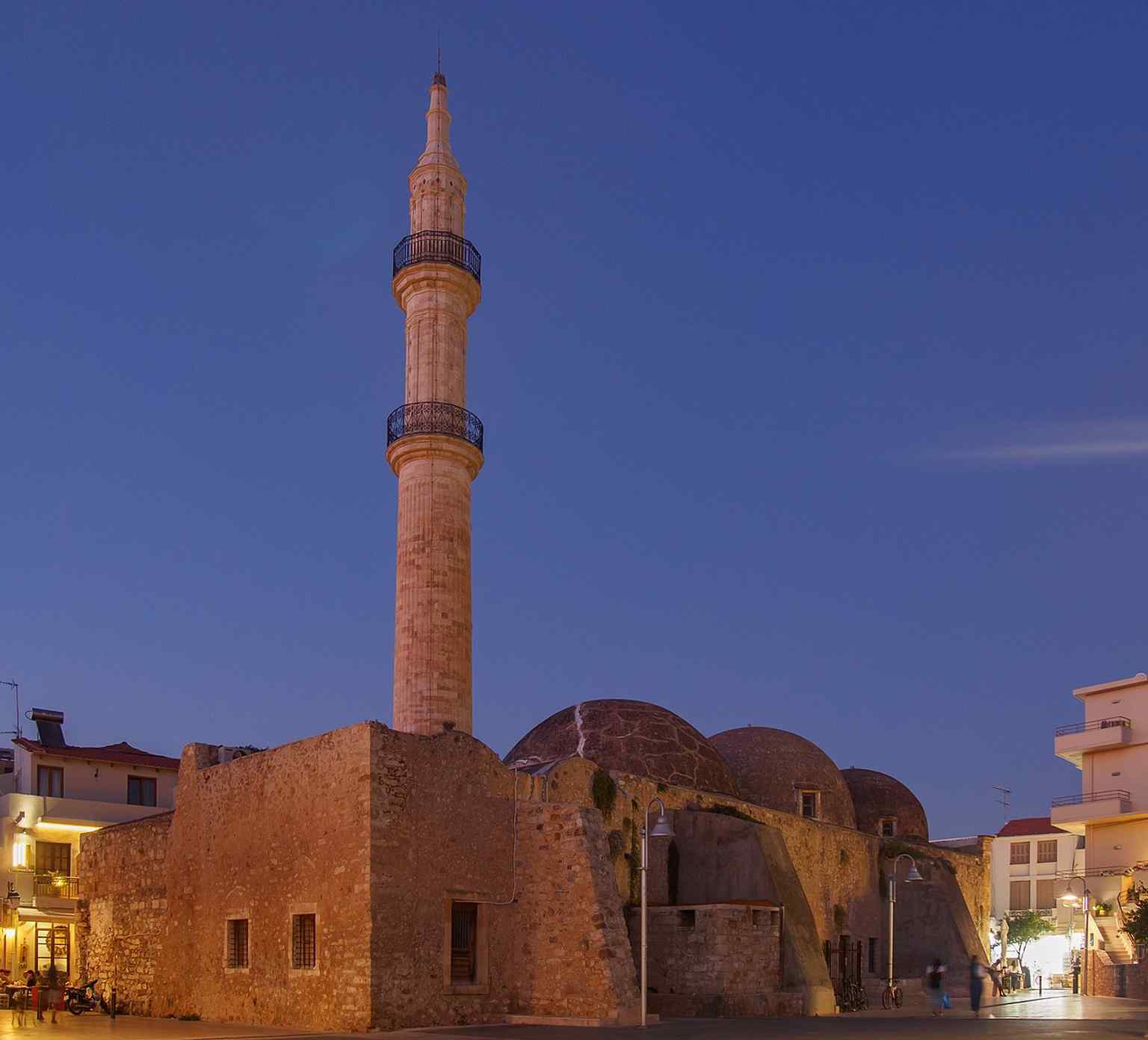
A broader perspective of the mosque's exterior, showcasing its rectangular form and the historic architecture from the Ottoman era.Photo: C messier, Wikimedia Commons, CC BY-SA 4.0. Cropped & resized. Look for the tall, pale beige building with high arched windows and a reddish tiled gable roof, sitting just behind a weathered stone perimeter wall. Here we are again at the…더 보기간략히 보기
전용 페이지 열기 →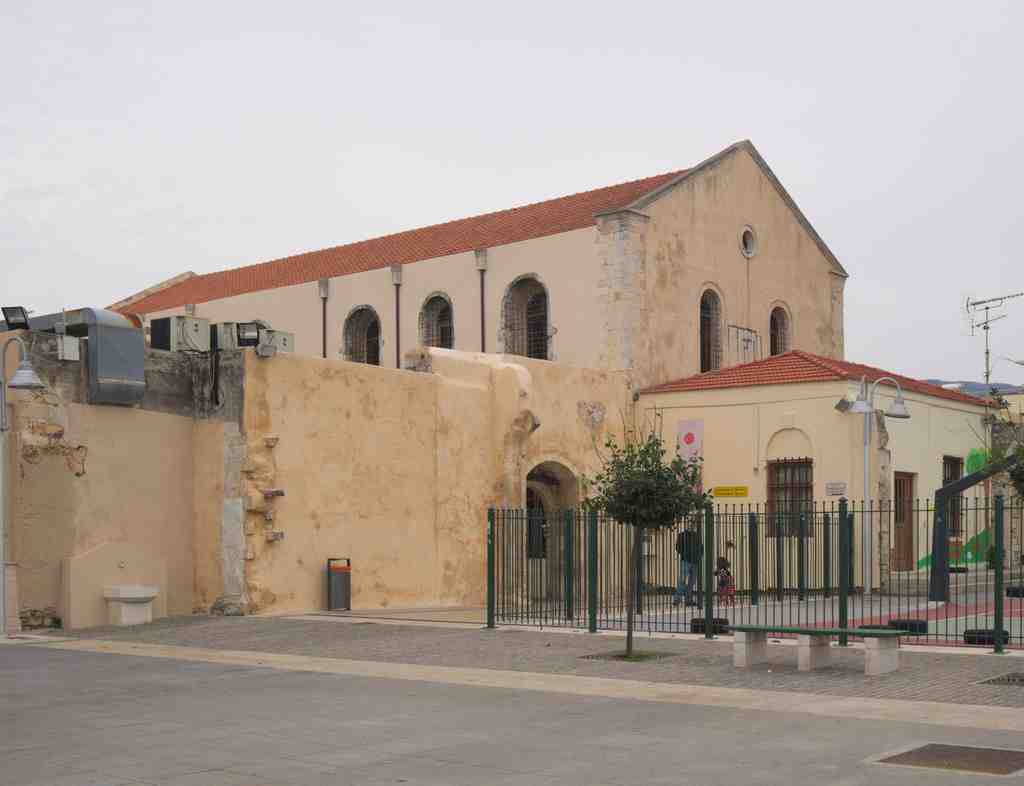
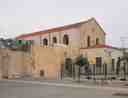
Archaeological Museum of RethymnoPhoto: C messier, Wikimedia Commons, CC BY-SA 4.0. Cropped & resized. Look for the tall, pale beige building with high arched windows and a reddish tiled gable roof, sitting just behind a weathered stone perimeter wall.
Here we are again at the Archaeological Museum of Rethymno. Well, for now, anyway. As we noted earlier, it is currently housed in the former Church of Saint Francis. The museum itself, however, has been a bit of a nomad over the years. Its collection began coming together in the late nineteenth century in a different part of the old town. By 1954, it had moved into a Venetian administration building, and from 1991 to 2015, it sat in a pentagonal building right across from the Fortezza, the massive fortress we explored a little while ago.
Eventually, the city decided this vast collection needed a new, permanent, purpose-built home. While authorities figure out exactly how and where to build that, the artifacts are taking an extended vacation here in this restored sixteenth-century church.
Inside, you will find items spanning thousands of years, from Neolithic tools carved in 3500 BC right up through the Roman era. The sheer density of history packed into this temporary space is remarkable.
Take a look at your screen for a glimpse of one of the more fascinating pieces inside. This is a larnax, which is an ancient Minoan terracotta funerary chest used to hold remains. This particular one was unearthed at the Armenoi necropolis, a sprawling ancient cemetery, and dates back to roughly 1320 BC. Notice the vivid hunting scene painted across the side. It shows how the Minoans preferred to carry the action and vibrancy of their daily lives directly into the afterlife.
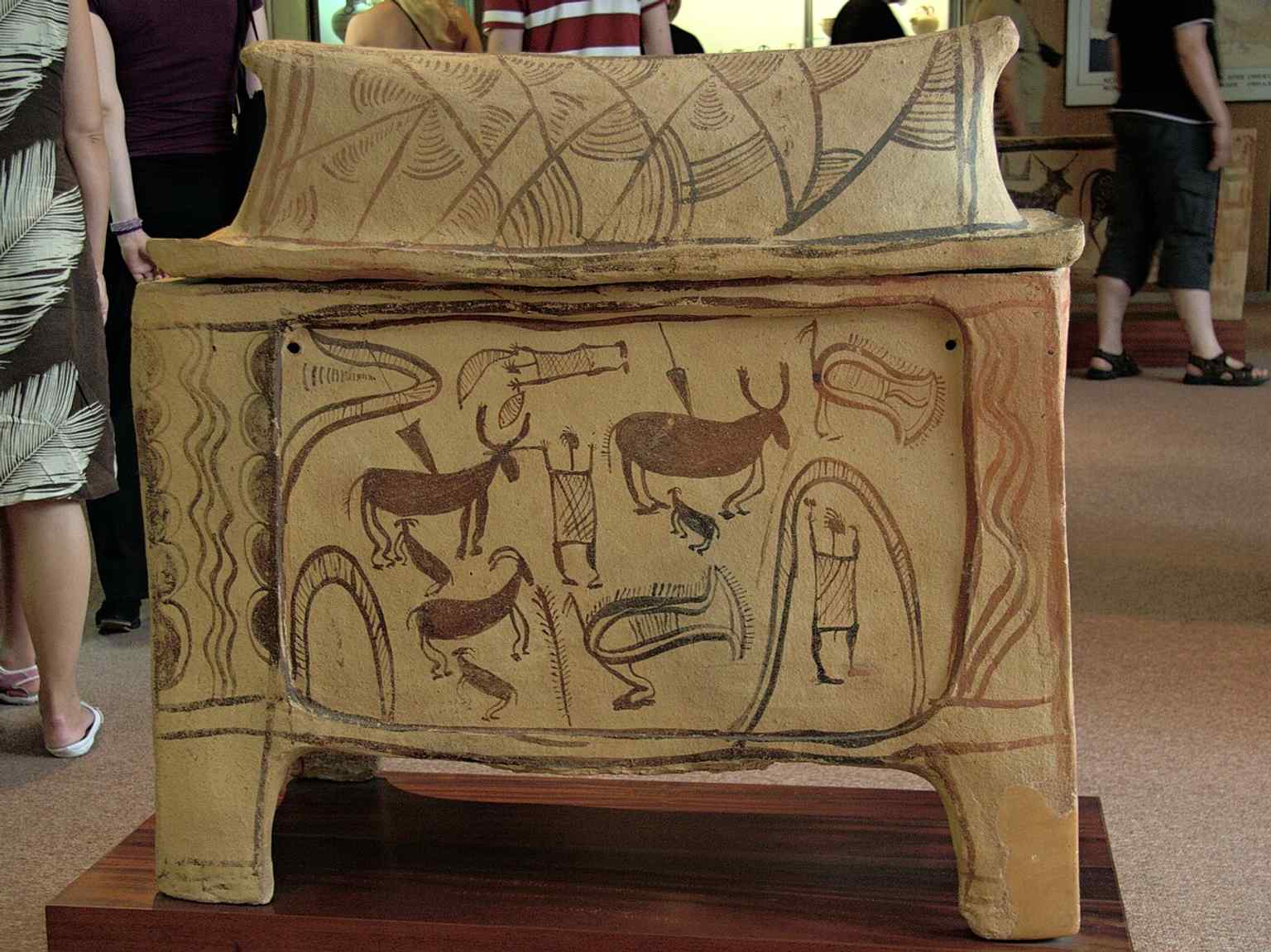
This Early Minoan terracotta funerary chest depicts a vibrant hunting scene and was found in the Armenoi necropolis, a significant Late Minoan site.Photo: Zde, Wikimedia Commons, CC BY-SA 4.0. Cropped & resized. There are also artifacts that highlight the later classical periods of the island. Glance at your app one more time for a closer look at the marble statue of Aphrodite we saw earlier. Found in the ancient settlement of Lappa, it is actually a Roman copy of a much older Greek original, carved around 100 BC.
The museum also holds some true historical puzzles, like a stone ceremonial altar inscribed with Linear A. That is an ancient script used by the Minoans that modern scholars still cannot fully read. It is a quiet reminder that no matter how much we dig up, the past still keeps a few secrets.
Since this is the final stop on our walk, I will leave you here to explore the exhibits at your own pace. The museum is open Wednesday through Monday from 9 AM to 5 PM, and is closed on Tuesdays. It has been an absolute pleasure wandering through Rethymno with you today, take care.
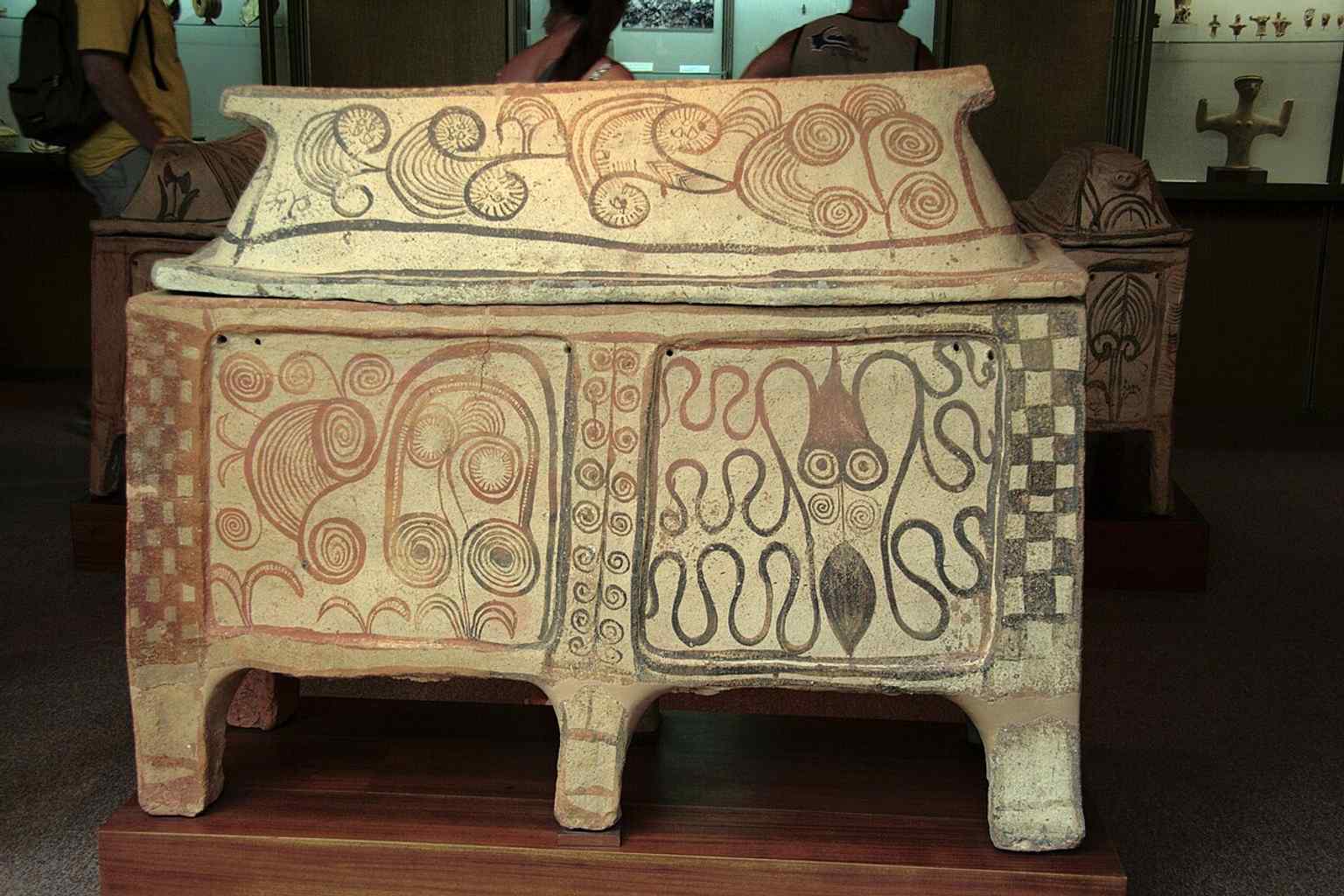
Observe this Minoan larnax, a sarcophagus adorned with the exquisite "Marine style," a popular decorative motif during the Neopalatial period in Crete.Photo: Zde, Wikimedia Commons, CC BY-SA 4.0. Cropped & resized.
자주 묻는 질문
투어는 어떻게 시작하나요?
구매 후 AudaTours 앱을 다운로드하고 교환 코드를 입력하세요. 투어를 바로 시작할 수 있습니다 - 재생을 탭하고 GPS 안내 경로를 따라가시면 됩니다.
투어 중 인터넷이 필요한가요?
아닙니다! 시작 전에 투어를 다운로드하면 완전히 오프라인으로 즐길 수 있습니다. 채팅 기능만 인터넷이 필요합니다. 모바일 데이터 절약을 위해 WiFi에서 다운로드하시는 것을 권장합니다.
이것은 가이드가 안내하는 단체 투어인가요?
아닙니다 - 이것은 셀프 가이드 오디오 투어입니다. 폰을 통해 오디오 나레이션을 들으며 나만의 속도로 독립적으로 탐험합니다. 투어 가이드도, 단체도, 일정도 없습니다.
투어는 얼마나 걸리나요?
대부분의 투어는 60-90분이 소요되지만, 속도는 전적으로 본인이 조절합니다. 원할 때 언제든지 일시정지하거나, 정류장을 건너뛰거나, 휴식을 취하세요.
오늘 투어를 끝낼 수 없으면 어떻게 하나요?
괜찮습니다! 투어는 평생 이용이 가능합니다. 원할 때 언제든지 일시정지하고 다시 시작하세요 - 내일, 다음 주, 또는 내년에도. 진행 상황이 저장됩니다.
어떤 언어를 이용할 수 있나요?
모든 투어는 50개 이상의 언어로 이용 가능합니다. 코드를 교환할 때 원하는 언어를 선택하세요. 참고: 투어 생성 후에는 언어를 변경할 수 없습니다.
구매 후 투어는 어디에서 이용하나요?
App Store 또는 Google Play에서 무료 AudaTours 앱을 다운로드하세요. 교환 코드(이메일로 전송됨)를 입력하면 라이브러리에 투어가 나타나며, 다운로드하여 시작할 수 있습니다.
투어가 마음에 들지 않으시면 환불해 드립니다. 문의: [email protected]
안전한 결제 


%2C%20Rethymno%2C%20Fortezza%20--%202023%20--%208321.jpg)
%2C%20Rethymno%2C%20Fortezza%2C%20Sultan%20Ibrahim%20Han%20Mosque%20--%202023%20--%208247.jpg)
%2C%20Rethymno%2C%20Fortezza%2C%20Tor%20--%202023%20--%208235.jpg)
%2C%20Rethymno%2C%20Fortezza%2C%20Laufweg%20vor%20der%20Mauer%20--%202023%20--%208241.jpg)
%2C%20Rethymno%2C%20Fortezza%2C%20Theater%20--%202023%20--%208243.jpg)
%2C%20Rethymno%2C%20Fortezza%2C%20Blick%20auf%20Rethymno%20--%202023%20--%208245.jpg)
%2C%20Rethymno%2C%20Fortezza%2C%20Blick%20auf%20den%20Hafen%20--%202023%20--%208292.jpg)
%2C%20Rethymno%2C%20Fortezza%2C%20Pulvermagazin%2C%20Meerfenchel%20--%202023%20--%208289.jpg)
%2C%20Rethymno%2C%20Fortezza%2C%20Festungsmauer%2C%20Steint%C3%BCrmchen%20--%202023%20--%208291.jpg)
%2C%20Rethymno%2C%20Fortezza%2C%20Brustwehr%20--%202023%20--%208314.jpg)
%2C%20Rethymno%2C%20Fortezza%2C%20Brustwehr%2C%20Wachturm%20--%202023%20--%208309.jpg)
%2C%20Rethymno%2C%20Fortezza%2C%20Wohnhaus%20des%20Rektors%20und%20Sultan-Ibrahim-Moschee%20--%202023%20--%208255.jpg)
%2C%20Rethymno%2C%20Fortezza%2C%20Pulverkammer%20und%20Haus%20der%20Ratsherren%20--%202023%20--%208252-4.jpg)
%2C%20Rethymno%2C%20Moschee%20Neratze%20--%202023%20--%208778.jpg)
%2C%20Rethymno%2C%20Moschee%20Neratze%20--%202023%20--%208176.jpg)
%2C%20Rethymno%2C%20Moschee%20Neratze%20--%202023%20--%208775.jpg)

%2C%20Rethymno%2C%20Moschee%20Neratze%20--%202023%20--%208769.jpg)


