AudaTours logoAudaTours

Montpellier Audio Tour: An Audio Exploration

오디오 가이드15 정류장

몽펠리에의 황금빛 아래, 고대 돌들과 그림자 진 아치들은 수세기 동안의 반란과 재창조를 숨기고 있습니다. 셀프 가이드 오디오 투어를 시작하여 대부분의 방문객이 진정으로 보지 못하는 도시를 발견하세요. 모든 건물 외관은 드라마를 숨기고 희미한 속삭임이 거리에 달라붙어 있습니다. 폭력적인 내전 후 생트 율랄리 교회가 한때 텅 비고 침묵했던 이유는 무엇일까요? 페이루 문(Porte du Peyrou)의 햇살 가득한 아치에 새겨진 승리의 조각상 아래에는 어떤 비밀이 숨겨져 있을까요? 어떤 잊힌 스캔들로 인해 포슈 거리(Rue Foch)는 한 세기 만에 그렇게 여러 번 이름이 바뀌었을까요? 구불구불한 대로와 시대를 초월한 광장을 따라가 보세요. 왕실 선언, 폐허가 된 성소, 소란스러운 군중, 비밀스러운 공모자들의 흔적을 따라 이동하세요. 돌 예배당에서 제국의 아치형 문으로, 그리고 속삭이는 역사가 늘어선 화려한 거리로 건너갈 때, 고요한 표면 아래에서 여전히 뛰고 있는 혁명의 맥박을 느껴보세요. 호기심이 다음 발걸음을 안내하게 하세요. 몽펠리에의 살아있는 미스터리 속으로 뛰어들어 지금 바로 여정을 시작하세요.

투어 미리보기

map

이 투어에 대하여

  • schedule
    소요 시간 40–60 mins나만의 속도로 이동
  • straighten
    2.7 km 도보 경로안내 경로 따라가기
  • location_on
  • wifi_off
    오프라인 작동한 번 다운로드, 어디서든 사용
  • all_inclusive
    평생 이용언제든지 다시 재생 가능
  • location_on
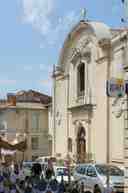
    몽펠리에의 생트 율랄리 교회에서 시작

이 투어의 정류장

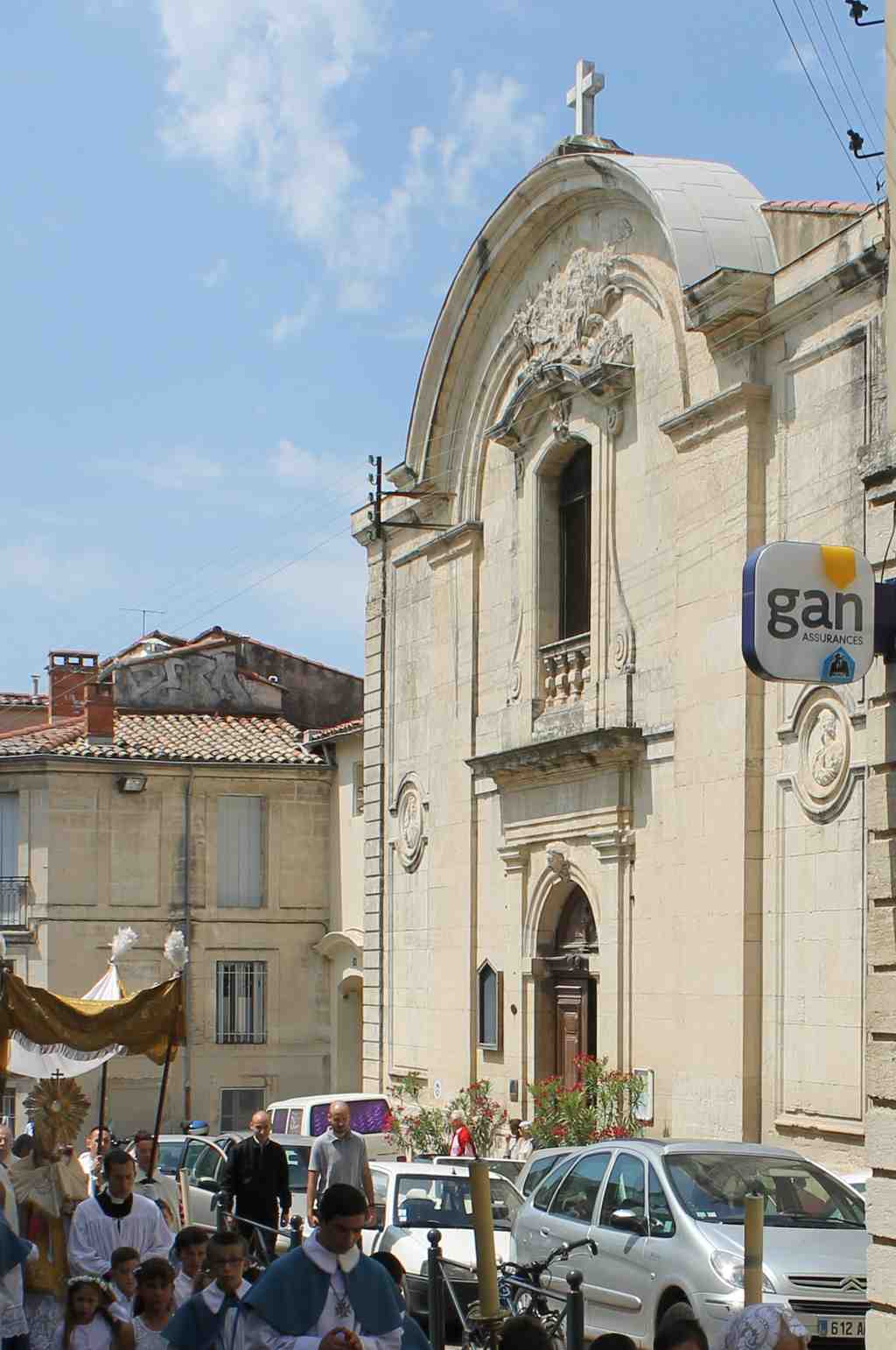
  1. Alright, as you’re walking along rue La Merci, keep your eyes open for a light stone building with a gently curving front and a white cross perched right at the very top. That’s…더 보기간략히 보기

    Alright, as you’re walking along rue La Merci, keep your eyes open for a light stone building with a gently curving front and a white cross perched right at the very top. That’s your target-Saint Eulalie Church! Look for its soft creamy façade, graceful archways, and just a touch of old-world elegance that pops out among the more modern buildings nearby. If you spot the ornate sculpted details above the door, you’ve found it. And hey, if you hear the faint sound of church bells, you’re definitely close! Now, imagine yourself here in the heart of Montpellier, right beneath the shadow of the promenade royale du Peyrou and the regal Arc de Triomphe-pretty fancy neighbors for a church, don’t you think? Saint Eulalie isn’t just another old stone building. No sir! It’s got some serious stories tucked inside these walls. For nearly six centuries, this was the chapel for the Mercedarian monks. These guys were sort of like action heroes from medieval times-their main gig was to rescue Christians who’d been captured and taken as slaves far away. Picture it: monks with heart, courage, and a mission. And the name “Merci” comes from “merced” (grace) in Spanish or “merces” (ransom) in Latin. Not bad for a word that also means “thank you” in French, right? Picture medieval Montpellier, the countryside all around, and this chapel, freshly built near a busy old road. The monks moved fast-by 1261, Pope Urban IV himself declared the chapel finished. You’d have heard the chanting of monks, the echoes bouncing off the stone walls, and maybe, if you were lucky, the deep voice of the organ that’s still famous today. But wait, here’s where the drama heats up-a massive civil war broke out in the 16th century. Suddenly, the very stones you’re looking at shuddered as mercenaries stormed the area. The church and most of the area were flattened, and the monks had to flee for their lives. But Saint Eulalie wasn’t about to give up. Centuries later, the order returned, rebuilt on hope, and laid the stones you see today. Their numbers were never as large-only about a dozen monks remained by the 1700s-but they built big, hoping the crowds would come. They left us this beautiful wide nave and an organ built by the legendary Joseph Merklin & Schütze, fit for echoing music and the joyful sounds of community. Even now, students and special groups fill Saint Eulalie with laughter and music for concerts and mass. If these walls could talk, they’d tell tales of bravery, devotion, destruction, and rebirth. So next time you walk by, don’t just look-listen. Who knows? Maybe you’ll catch a lingering note of the past carried on the breeze or the low hum of secrets kept safe for centuries. Now, onwards to our next adventure-just promise you won’t try to abseil off the top. That cross is strictly ornamental! Eager to learn more about the la première église médiévale, la construction de l'église actuelle or the les différentes affectations entre 1787 et 1843? Simply drop your inquiries in the chat section and I'll provide the details you need.

    전용 페이지 열기 →
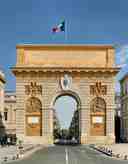
  2. To spot the Porte du Peyrou, just look straight ahead-it's that grand, cream-colored arch reaching up proudly at the end of the avenue, like an ancient gateway calling you in. The…더 보기간략히 보기

    To spot the Porte du Peyrou, just look straight ahead-it's that grand, cream-colored arch reaching up proudly at the end of the avenue, like an ancient gateway calling you in. The arch stands tall above the street, covered in big, bold stone blocks and decorated with four golden panels and a shield right above the middle. If you see people walking underneath or cars passing through, you know you’re in the right place! Alright, welcome to Porte du Peyrou! Imagine you’re standing in front of this massive stone archway, and for a moment, let’s crank back the clock to the late 1600s. This gate isn’t just a piece of rock with a serious face-it’s Montpellier’s way of saying, “Hey world, look how fancy and powerful we are!” Designed by François Dorbay, this arch is basically Montpellier’s version of the city saying, “Take that, Paris, we’ve got style too!” Inspired by Paris’s own arches, it was finished in 1693 and was meant to celebrate King Louis XIV-yep, the Sun King, a guy who loved power so much he practically wanted the sun to rise just for him. If you look up, you’ll spot those sculptures carved into the stone-they’re like the comic strips of the old days, except a bit less funny and a lot more heroic! One shows Louis XIV in full action, standing mighty while the Dutch kneel in front of him after the capture of Namur. Another has Louis dressed as Hercules, getting crowned by Victory herself-you know, as one does on a Saturday. There’s a scene about digging the Canal du Midi, which was the 17th-century version of connecting your phone to Wi-Fi: suddenly, everything works better! And, of course, the revocation of the Edict of Nantes, showing off another big dramatic turn in the king’s rule. But here’s the best part: walk through the arch, and you’ll see all of Montpellier spread out ahead, with narrow streets, bustling cafés, and the whole city buzzing with history-plus a shop or two eager to sell you some pastry. When you pass under this arch, imagine all the feet that have marched through before you-royalty, revolutionaries, and that guy who just really needed a baguette. Alright, take a look around, soak it in, and get ready for our next stop. Onward to adventure!

    전용 페이지 열기 →
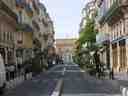
  3. Take a look straight ahead of you! To spot Rue Foch, just follow the long stretch of quiet road lined with elegant, creamy stone buildings-like rows of French pastries standing…더 보기간략히 보기

    Take a look straight ahead of you! To spot Rue Foch, just follow the long stretch of quiet road lined with elegant, creamy stone buildings-like rows of French pastries standing tall on both sides. Many have those ornate iron balconies, as if they're ready to whisper secrets from centuries past. And at the far end of the view, you can't miss that golden Arc de Triomphe, standing right in the middle, keeping watch over the whole scene. Notice the palms and the flashes of greenery on the sides, making this boulevard feel almost Mediterranean. Now, as you stand here on Rue Foch, let your imagination spin back in time. The buzz of footsteps and café chatter you hear today was once mixed with the clatter of horses and the shouts of merchants, all the way back in 1205! This street started as a passage through the fortified walls for villagers and traders, eager to reach the city’s famous gateway, the Porte du Peyrou. Imagine being stopped here by a medieval guard asking, “Friend or foe?” For the record, I’d always say ‘friend’-the foes get pretty grumpy. Rue Foch was originally called rue du Peyrou and was the main commercial artery of Montpellier’s historic Écusson quarter. It didn’t always look this grand. It grew and changed shape over centuries, with big plans, squabbles, and a fair bit of drama-Montpellier took a page from Paris during the time of Haussmann. Suddenly, everyone wanted wide, sunny boulevards, but not everyone wanted to move out of their homes to make way. I can just hear it: “You want to knock down my bakery for a bigger road? Mon Dieu!” The street changed names as often as a fashion model swaps outfits. It was rue Impériale, then rue Nationale, and finally, in 1929, Rue Foch-named for Marshal Foch, the hero of the Great War. Sometimes, it felt like the only thing faster than these changes was the pace of the city’s revolution. Look around for the important buildings: the massive Palais de Justice with its fierce columns, the old Hôtel de Paul, the post office that’s seen more love letters than you can count, and of course, the Hôtel Foch. If these facades could talk, oh, the tales they’d tell-of revolutions, lazy summer days, and secret midnight meetings. So, as you stroll under the gentle shade of the palm trees, just remember: this isn’t just a street. It’s Montpellier’s catwalk, history’s museum, and maybe, if you listen closely, you’ll hear the laughter of past centuries echoing between the walls. Now, keep those eyes open for surprises-Rue Foch is never short on stories!

    전용 페이지 열기 →
12개 정류장 더 보기정류장 적게 보기expand_moreexpand_less
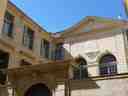
  1. Look just ahead of you-you’re searching for a pale stone building with soft beige walls that almost glow under the Mediterranean sun. The windows have pretty green shutters flung…더 보기간략히 보기

    Look just ahead of you-you’re searching for a pale stone building with soft beige walls that almost glow under the Mediterranean sun. The windows have pretty green shutters flung open wide, as though the house itself is trying to catch every gossiping breeze. Notice the fancy archway in front, with a grand wooden door tucked beneath. Over the entrance, there’s some elegant carvings and a big, impressive crest-looks like a secret society should be living here, doesn’t it? Welcome to the Hôtel de Lunas! Don’t be fooled by the name: you can’t check in for the night unless you’ve got a time machine and a title of nobility in your pocket. This mansion has been here right in the heart of old Montpellier since the 1500s, when a doctor-Denis Fontanon-decided he needed a house big enough to host possibly the world’s fanciest house calls. Imagine walking these streets centuries ago-rattling carts, the clack of horses against the ancient stones, and the Fontanon family’s coat of arms showing off a lion holding a flaming heart. Talk about dramatic family values! As you stand here, picture every bend of this proud building being changed and expanded with each owner, almost like a royal family passing down secret blueprints. Half of those owners left their names scattered across Montpellier-like breadcrumbs, or maybe just because they were a little too self-confident. Eventually, the hotel passed to the illustrious Sabatier family, who generously handed it over to the state-so thank them for your chance to peep at this beauty today. Take a deep breath. Smell that? History never washes out of the stone, especially not when it’s built from fossil-rich rocks hauled from a village called Pignan. Look to your right, and you can spot the side boulevard-once a medieval moat, now just a fine street for modern wanderers. With three wings folded in a ‘U’ shape, the Hôtel de Lunas seems to be holding onto centuries of secrets. Did you feel that breeze? Some say it’s the ghosts of ancient doctors and scholars, still waiting for their next lecture! So, shall we continue before the next aristocratic spirit tries to join our tour? Ready to delve deeper into the situation, histoire or the description? Join me in the chat section for an enriching discussion.

    전용 페이지 열기 →
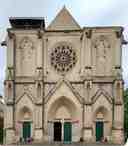
  2. If you’re approaching Saint-Roch Church, look up ahead for a grand, light stone building, standing tall at the end of a broad staircase. The front is split into three sections…더 보기간략히 보기

    If you’re approaching Saint-Roch Church, look up ahead for a grand, light stone building, standing tall at the end of a broad staircase. The front is split into three sections with tall, pointed arches, each housing big green doors. Notice the huge circular rose window near the very top - it’s like a stone sunflower with stained glass petals. There are empty niches where statues were meant to stand, and a small clock sits quietly to the right. If you see a wide open space in front of the church filled with locals chatting or resting, you’re in the right spot! So here you are, standing in front of the Saint-Roch Church, or as the locals call it, the “sanctuary.” Take a breath and imagine the echoes of hammers and saws when this neo-Gothic beauty was raised in the 19th century. The city of Montpellier, full of pride for their local hero, Saint Roch-protector of pilgrims and healer of plague-decided to honor him right here. Picture this: in 1861, the city calls on everyone for donations! “Let’s build a church for Saint Roch!” they said. They chose Jean Cassan as their architect, who swung for the fences with grand plans and tall spires-except... well, someone must have run out of bricks or inspiration! If you look up, those side towers are missing their pointy hats. The plan was for soaring spires like you’d see in Paris, but they never materialized. Maybe the builders ran off on a little pilgrimage themselves. But don’t let the unfinished bits fool you! The three aisles inside, with their ribbed arches, were inspired by the famous Valmagne Abbey. And if you step inside, on the left, you’ll spot paintings by Auguste-Barthélémy Glaize-capturing Saint Roch as a hero, giving to the poor, or even in prison. There’s also a larger-than-life statue of Saint Roch himself, dressed as a pilgrim, with a faithful dog by his side. The church sits over the remains of the older Saint-Paul church, once destroyed in a siege way back in the 1600s. And out front, this big plaza was only opened up in 2004, making space for all the people, dogs, and street musicians you see today. Saint Roch welcomes pilgrims from around the world, especially those traveling the Camino de Santiago. Imagine the tired footsteps, the whispered prayers, the stories shared with every step on these old stones. So as you stand here, maybe you’ll pick up a bit of the spirit these old stones have gathered-hope, healing, and a sense of adventure. After all, even without its fancy spires, Saint-Roch Church stands proud in the heart of Montpellier, ready to keep blessing travelers like you! Ready to delve deeper into the historique, le bâtiment or the l'intérieur? Join me in the chat section for an enriching discussion.

    전용 페이지 열기 →
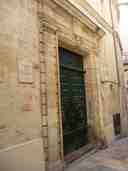
  3. Look ahead and a little to your left, and you’ll spot a grand old doorway. It’s tall and impressive, framed by thick, pale stone that looks almost golden in the sunlight. Notice…더 보기간략히 보기

    Look ahead and a little to your left, and you’ll spot a grand old doorway. It’s tall and impressive, framed by thick, pale stone that looks almost golden in the sunlight. Notice the heavy, dark green doors-sturdy enough to make you wonder if they’re keeping out wandering ghosts or just the city’s curious pigeons. There’s a modest plaque and a little round number 15, if you like spotting details. You’re now standing in front of the Hôtel de Ginestous, sometimes called the Hôtel d'Hortolès. Now, don’t let the word “hotel” fool you-you won’t find a reception desk with free mints inside! In France, "hôtel particulier" means a very fancy townhouse, the kind you’d expect to belong to wealthy nobles or mysterious counts with secret passageways. Imagine the quiet hustle of 18th-century Montpellier-cobblestones echoing beneath horse-drawn carriages, the scent of bread and roasting chestnuts drifting through these very streets. The men and women who stepped through this doorway centuries ago wore lace, velvet, and maybe a little too much perfume. Here’s a mystery for you: since October 18, 1944, this building has been protected as a historic monument. It’s official! There’s no telling what stories its walls have heard. Maybe a whispered conspiracy over candlelight? A heartfelt reunion on the doorstep? Or perhaps someone simply complaining about their shoes-because even then, fashion hurt! Take a moment and picture yourself in that long-ago era, the sound of laughter and secrets just out of sight behind those grand doors. Ahead lies more of Montpellier’s secrets, but for now, enjoy this spot-it’s seen centuries come and go, and now, it’s welcoming you.

    전용 페이지 열기 →
  4. Just up ahead, take a look to your left-see those two enormous, round stone towers with pointy spires and a huge arched entrance in between? That’s Montpellier Cathedral. You…더 보기간략히 보기

    Just up ahead, take a look to your left-see those two enormous, round stone towers with pointy spires and a huge arched entrance in between? That’s Montpellier Cathedral. You can’t miss it! The building stands out with its thick, sandy-colored stone walls and those dramatic spikes on top of the square towers. It honestly looks like something out of a medieval movie-no wonder people stop to stare. As you stand in front of these mighty towers, let your imagination travel back almost 700 years. The year is 1364, and a group of monks is laying the first stones for what was once the church of Saint-Benoît. Picture the clatter of chisels and the deep echoes of hammers, all ringing off those Gothic arches. It wasn’t always as peaceful as it seems today. In the 16th century, during the wild and chaotic Wars of Religion, this cathedral saw more drama than a soap opera marathon! Parts of it were destroyed and then rebuilt, stone by stone, in the 17th century. Yet, through all that chaos and thunder, these solid walls never gave up their secrets. Here’s a fun fact: when Montpellier was elevated to archbishop status in 1536, this former monastery church suddenly found itself promoted to the main event-cathedral style. Imagine the monks trying to update their business cards! Close your eyes for a second and listen. Can you hear the cool hush inside, broken only by the distant whir of wings or a soft footstep on echoing stone? That’s centuries of history under your feet-tales of faith, rivalry, and resilience. Alright! Whenever you’re ready, let’s carry on-just don’t try jousting with those giant towers; they always win!

    전용 페이지 열기 →
  5. Look ahead-see that wide open square framed by historic stone buildings? The spot with the striking bronze fountain right in the middle, surrounded by open space and a few…더 보기간략히 보기

    Look ahead-see that wide open square framed by historic stone buildings? The spot with the striking bronze fountain right in the middle, surrounded by open space and a few scattered café tables under big umbrellas? That’s the Flower Market Square, or in French, Place du Marché-aux-Fleurs. You’ve found it! And if you listen closely, you might just imagine the faint echo of florists calling out their prices and the buzz of a lively crowd. Now that you’re here, picture this place a couple of centuries ago-once the home of an old Capuchin convent, swept away during the French Revolution. After the dust settled, this space became a lively public square, sometimes called Place Louis XVI, and even hosted a big, bustling metallic hall (until it caught fire-talk about a hot market!). The star attraction right in front of you is the playful fountain by the Spanish sculptor Manuel Clemente Ochoa, set in 1985. Legend says it replaced a statue of King Louis XVI-who was dressed in full royal bling, hand dramatically outstretched. That statue? Well, it had its own dramatic destiny: toppled and hidden in pieces through war, change, and even shipped to Kentucky in the USA! I suppose even statues need a vacation sometimes. The square now is part of the historic Écusson neighborhood, watched over by the impressive Préfecture de l’Hérault to the west and the grand post office to the south. It’s almost all for pedestrians (watch for the occasional car heading to the underground parking!). These days, Flower Market Square has traded flower stalls for café terraces and is alive with laughter, conversations, and a vibrant community, especially known as the heart of the local LGBTQ+ scene. The mood here is always blooming, even if the flowers have moved on. Take a deep breath and imagine the scent of fresh croissants and coffee blending with the memory of hundreds of fresh bouquets-this is a square with stories in every stone. Ready to wander to your next adventure?

    전용 페이지 열기 →
  6. Look straight ahead! To spot Montpellier’s famous landmark, just follow the lively hum of the crowd and gaze up at the grand cream-colored building with its elegant rounded corner…더 보기간략히 보기

    Look straight ahead! To spot Montpellier’s famous landmark, just follow the lively hum of the crowd and gaze up at the grand cream-colored building with its elegant rounded corner and domed roof-it’s making quite the statement here on the square. And don’t miss the playful statue of the three graces on the beautiful fountain to your right-the one that seems to invite both pigeons and people to gather around. Welcome to Montpellier, where the sunshine feels like it's giving you a warm Occitan hug! This city is the heart of southern France, right in the ancient province of Languedoc. Picture yourself standing at a crossroads between Spain and Italy, with the Mediterranean just a quick breeze away. Montpellier is far from sleepy-every year since 1945, more people have called it home, and now, it’s buzzing with over 300,000 energetic souls, including more students than you can shake a stick at. I mean, with 70,000 students, it’s almost easier to find a textbook than a baguette here! This city has been built on rolling hills-look around, you might notice why the locals called it “Lo Clapàs”: “the pile of stones”. The creamy white stone you see on the buildings comes from Castries, and over time it turns a golden color, just like bread left out in the sun-delicious and historic. Once, counts and kings traded this city like an expensive collectible. Even the King of Aragon was born right here! Oh, and the defenses you see in old paintings? They built those citadels in the 17th century, bracing themselves for who-knows-what kind of trouble. Today, those walls host students instead of soldiers. Montpellier is a city that never sits still, always growing, always pulsing with life. The sounds of water running through Le Lez and laughter from street cafés, along with the tram bells, tell you you’re in the heart of a place filled with secrets and stories. So, take a deep breath, smell the sea breeze-yes, it’s only about 10 kilometers away-and feel the gold-tinted glow of history and sunshine. Ready to keep exploring? Let’s see what else this city has hidden around its next corner! If you're keen on discovering more about the géographie, urbanisme or the toponymie, head down to the chat section and engage with me.

    전용 페이지 열기 →
  7. Take a look just ahead-see that narrow passageway winding between weathered stone walls, the sunlight squeezing through and giving the street ahead a soft, golden glow? You’re…더 보기간략히 보기

    Take a look just ahead-see that narrow passageway winding between weathered stone walls, the sunlight squeezing through and giving the street ahead a soft, golden glow? You’re looking at Rue Castel-Moton. The buildings lean in close, as if sharing secrets about centuries past, while the doors and shutters wear the scars of old stories. If you spot a house number 13, you’re in just the right spot. The lane feels almost like a friendly whisper from the Middle Ages, squeezed gently between tall facades, emerging into a quieter world. Now, as you stand here, imagine yourself back hundreds of years ago. Castel-Moton is really two ancient streets, meeting at a neat right angle-a geography puzzle left by history for today’s wanderers. The street’s name goes all the way back to the days when Montpellier had its own “castel,” belonging to the powerful Guilhem family. The neighborhood buzzed with merchants-imagine the jingle of coins and the lively chatter of a marketplace, right where you’re standing. Later, this became a home for the city’s Jewish community, after they were bounced around by the rulers like chess pieces: first moved from Villefranche, then nudged again by the Duke of Anjou, until they finally settled near here, close to Triperie. Feeling curious? Peek to the corner at Rue du Palais and Castel-Moton. There’s an old Renaissance house once home to Guillaume Clauzel, who had probably the city’s biggest real estate headache-it was originally three houses, separated by a narrow lane. Next door, you’ll find the former “logis de la colombe,” a busy inn where travelers snored away their worries long before hotels had mini-bars. But let’s not leave without a bit of mystery: up on the roof of number 3 (once number 308), a scientist named Picard made some famous weather observations in 1674. It’s said the old tower he used is still standing-so if you suddenly feel a breeze, who knows? Maybe Picard himself is checking the weather and muttering, “Chance of rain, with a hundred percent probability of history.” So as you stroll along, listen carefully. You might just hear the footsteps of wandering merchants, distant laughter from the old inn, or the echo of a scientist measuring the very stars above your head. Rue Castel-Moton: proof that even the smallest streets can have the biggest stories!

    전용 페이지 열기 →
  8. To spot the Richer de Belleval Hotel, look for an elegant, light-stone building with tall windows and classic shutters. If you’re standing in Place de la Canourgue, you’ll notice…더 보기간략히 보기

    To spot the Richer de Belleval Hotel, look for an elegant, light-stone building with tall windows and classic shutters. If you’re standing in Place de la Canourgue, you’ll notice intricate iron railings running along a narrow balcony above, and a pair of grand green doors below a sign that once read “Palais de Justice Annexe.” There are a couple of potted trees flanking the doors like welcoming sentinels, and some old-fashioned lamp posts twinkling nearby. It’s that timeless charm that lets you know you’ve arrived. Welcome in front of the Richer de Belleval Hotel-a building with a past as surprising and layered as the perfect mille-feuille dessert. Imagine the sound of elegant footsteps on ancient cobblestone, echoing back through time. This isn’t just a hotel; it’s a survivor of centuries, having started as a home for church canons. In the 1600s, Étienne de Boulhac snapped up the land, and his descendant Charles built this very mansion between 1669 and 1682. The place changed hands like a good story at market day, with noble families joining forces and upgrading the building bigger and better-thanks to some handy wedding arrangements, of course. And what’s a French mansion without a bit of drama? After the revolution, this elegant address became the city hall. Picture official papers rustling and mayors pacing these grand old floors. But wait, there’s more! For decades, the building kept reinventing itself: a palace of justice, council chambers, offices, even a spot for the prud’hommes (the council handling workplace disputes-imagine the whispered arguments in these echoing hallways). And now, after a stunning restoration, the Richer de Belleval has stepped into the spotlight once more-this time as a luxury hotel, a gourmet restaurant called “Le Jardin des Sens,” and a space dedicated to contemporary art. Inside, you’ll find historic decor lovingly brought back to life: sculptures, painted ceilings by Jean de Troy, dazzling details by skillful artists whose work spans the ages. So next time you pass those grand iron gates, give a little wave-who knows, maybe the ghosts of elegant nobles and busy town clerks are still peeking out those shuttered windows, wondering if you’re here to check in, or just check out the view.

    전용 페이지 열기 →
  9. Look ahead for a stately building with tall arched windows, grand stone walls, and a square tower rising up on one side - it looks a little like a castle crossed with a…더 보기간략히 보기

    Look ahead for a stately building with tall arched windows, grand stone walls, and a square tower rising up on one side - it looks a little like a castle crossed with a university! The sign says “Université de Montpellier Faculté de Médecine,” so if you see that, you’re definitely in the right place. Alright, you’ve made it to one of the most legendary places in Montpellier! Imagine the bustle of scholars in robes, the soft echo of footsteps on ancient stone floors, and the eager buzz of students arguing about mysterious remedies… The Faculty of Medicine of Montpellier isn’t just any old school - it’s the oldest medical university in the world that still exists! It all started way back in 1220, when most towns didn’t even have cobblestone streets, let alone a place to learn the secrets of the human body. Medieval Montpellier was a crossroads for merchants, travelers, and wise doctors from all around Europe, Africa, and the Middle East. You could hear a dozen languages in the air and smell strange herbs from apothecaries around every corner. The city became a real hotspot for medical knowledge - so much so that in 1181, the local lord, Guilhem VIII, actually encouraged anyone, from anywhere, to come and teach medicine here. Probably made for some wild dinner parties! By 1220, things were getting a little chaotic, so the faculty was officially founded to bring order to the world of medicine. Legends, old scrolls, and wisdom from Greece, Arabia, and Italy all got mixed together right here. Want another fun fact? In 2020 and 2021, this faculty celebrated its 800th birthday. Imagine: eight centuries of discoveries, arguments about anatomy, and probably a lot of dramatic fainting in the dissection room. If you listen closely, you might even hear some ancient whispers echoing through the halls… Today, the Faculty works with not just one, but two university hospitals - one here in Montpellier, and the other in Nîmes - so it’s really a modern medical powerhouse as well. The motto here sums it all up: “Once Hippocrates was from Kos, now he is from Montpellier.” In other words, if someone sneezes in class, don’t be surprised if three medical students offer you a diagnosis! Ready to move on? Don’t forget to tip your hat to Hippocrates as you go - you’re standing on ground that’s helped heal the world for centuries! Interested in a deeper dive into the histoire, liste des doyen(ne)s de la faculté de médecine or the formation? Join me in the chat section for an insightful conversation.

    전용 페이지 열기 →
  10. To spot the Roman Catholic Archdiocese of Montpellier, look straight ahead for a striking stone building with two tall, rectangular towers lined with spiky pinnacles on top.…더 보기간략히 보기

    To spot the Roman Catholic Archdiocese of Montpellier, look straight ahead for a striking stone building with two tall, rectangular towers lined with spiky pinnacles on top. You’ll recognize it by the dramatic, pointy arches that rise boldly in front, like stone fingers stretching to the sky. The whole structure is made from pale, weathered stone, and as sunlight hits it, you’ll notice how imposing and grand it feels-almost like a castle built for both worship and wonder. Now, while you’re standing here, shut your eyes for a moment and imagine the thick stone walls humming with a thousand years of stories. You are at the heart of the Metropolitan Archdiocese of Montpellier-where history is thicker than the city’s best cassoulet! This place is no ordinary headquarters. Imagine popes, bishops, crusaders, and townspeople buzzing around the square, each leaving a footprint on history. The archdiocese covers not just Montpellier, but lands stretching out to Lodève, Béziers, Agde, and Saint-Pons-de-Thomières. Today, Archbishop Pierre-Marie Carré holds the keys to this ancient realm, but his seat has a wild past-one filled with secrets, coins, and even a few squabbles with popes. The origins? That’s where it gets mysterious. The earliest Christian roots trace back to a simple tombstone from the fourth century. Only in the sixth century do we first hear about a bishop here. As wars crashed through the region, cathedrals and dioceses shifted like chess pieces. At one point, the bishops here even minted their own coins-and not just any coins, but “Miliarensis” with Arabic inscriptions. Coins in Latin and Arabic! Imagine the sound of those coins jangling in a merchant’s pouch. Who ever said the Middle Ages were boring? Legend tells that after the original seat was shattered in battle, it was rebuilt, then moved, and rebuilt again. Montpellier itself grew from two small villages, rumored to be gifts from the sisters of a bishop. Royalty and powerful clergymen fought-sometimes with swords, sometimes with pens-over who truly ruled this land. Even a Pope, Urban II, stayed here while rallying for the First Crusade, leaving echoes of marching boots and whispered prayers in these walls. From hidden relics to papal decrees, this spot has seen enough drama to fill a dozen adventure novels. So, as you stand here, picture yourself not just as a visitor-but as another twist of history, right at the crossroads of faith, legend, and mystery. Now, on to the next epic stop!

    전용 페이지 열기 →
  11. Right in front of you, you'll see a bright, open square surrounded by classic Montpellier buildings. The most striking feature is the grand, cream-colored building with a clock…더 보기간략히 보기

    Right in front of you, you'll see a bright, open square surrounded by classic Montpellier buildings. The most striking feature is the grand, cream-colored building with a clock right in the middle at the top and the French flag hanging proudly above the entrance. To spot the square itself, look for the round fountain bubbling gently in the center, surrounded by low stone walls and benches shaded by a few small olive trees. If you catch a whiff of paper and ink, that’s probably coming from the historic bookstore nearby! Welcome to the Martyrs of the Resistance Square-one of Montpellier’s hidden gems in the heart of the old city! This peaceful little plaza seems calm now, but its past is packed with suspense. Imagine the clip-clop of boots on stone, tense silence, and secret glances exchanged by political resisters making their way to the Prefecture-the official building looming ahead of you. This wasn’t just the nerve center for city officials, it was also the last stop for many before being imprisoned or deported during dark days of World War II. After the Allies triumphed, Montpellier wanted to honor these brave souls, so they named this spot “Place des Martyrs-de-la-Résistance”-a place for remembrance and resilience. But don’t worry, it’s not all somber history! On your right, you’ll spot Gibert Joseph, the oldest general bookstore in town, where the only thing getting arrested today is your attention by thousands of books. The city’s largest post office is just steps away, which means if your postcards mysteriously disappear, blame the ghosts of old resistance messengers playing tricks! And get this: during the Second World War, the Prefecture right in front of you hosted a dramatic first meeting between Pétain and General Franco-a moment that still echoes in whispers around these stone columns. If the square feels a bit uneven underfoot, that’s soon to change! The city has announced a renovation to make it smoother and more accessible for everyone. So, next time you’re here, it might just feel like gliding across history. Take a moment here. Breathe in, look around, and imagine the layers of courage and curiosity that fill this very square. The past might be serious-but hey, at least the parking’s easy with over 2,000 spots beneath your feet!

    전용 페이지 열기 →
  12. Right ahead of you stands the incredible Tower of Pines-just look for the tall, square stone structure peeking above the trees, with a red flag fluttering at the top and a crown…더 보기간략히 보기

    Right ahead of you stands the incredible Tower of Pines-just look for the tall, square stone structure peeking above the trees, with a red flag fluttering at the top and a crown of real pine trees waving in the wind. See those impressive stone arches at the top? Don’t miss the plaque on the boulevard side-there’s a bit of history engraved right into the wall. If you're walking along boulevard Henri IV, keep your eyes a bit above the parked cars and tree line, and you can't miss it! Now, imagine yourself hundreds of years ago, walking up to the mighty medieval walls of Montpellier. The Tower of Pines, known as La tour des Pins, is one of the last guardians from those days, a real survivor from the end of the 1100s, when the city needed walls to keep out unfriendly visitors. Picture this tower as it once was: twenty-nine meters tall, looking out over a deep ditch, probably hoping no one would try sneaking into Montpellier after dark. Today it’s missing four meters of height (that darn ditch got filled in!) but it hasn’t lost any of its old magic. But this tower isn’t just good looks and stonework-it’s got more plot twists than a soap opera. Once, it was a military lookout, then someone decided, “Hey, let’s make it a house!” A century later? “Why not use it as a prison?” During the Revolution, it was filled with echoes of footsteps and secrets behind thick stone walls. After all this, the city decided to give it a softer touch: a home for ‘repentant girls’, then a convent for two different kinds of sisters, and finally a safe haven for the city’s precious archives. If you stand really still, you might feel the stories swirling in the air: young girls learning to start fresh, nuns in deep contemplation, and maybe someone frantically trying to stop a pine tree from falling off the top-because there’s a local legend. They say that as long as the pines stand tall up there, Montpellier will stay safe and sound. Nostradamus himself, who once studied medicine right in this city, gave his mysterious warning: “When the pines disappear, the city will perish.” Luckily, even when a pine did fall in 1828, Montpellier just shrugged and carried on-though you’ll notice, the trees are still carefully replaced, just in case! Since 2003, this tower has welcomed local associations keeping Montpellier’s spirit alive. And that plaque? It honors Jacques I of Aragon, who was born right here in 1208! So give a wave to the pines-Montpellier owes them a lot. And if you hear a whisper of wind up there, remember: you’ve just met a tower that’s kept watch through the city’s wildest chapters. Not bad for a pile of stones and a few stubborn trees, right?

    전용 페이지 열기 →

자주 묻는 질문

투어는 어떻게 시작하나요?

구매 후 AudaTours 앱을 다운로드하고 교환 코드를 입력하세요. 투어를 바로 시작할 수 있습니다 - 재생을 탭하고 GPS 안내 경로를 따라가시면 됩니다.

투어 중 인터넷이 필요한가요?

아닙니다! 시작 전에 투어를 다운로드하면 완전히 오프라인으로 즐길 수 있습니다. 채팅 기능만 인터넷이 필요합니다. 모바일 데이터 절약을 위해 WiFi에서 다운로드하시는 것을 권장합니다.

이것은 가이드가 안내하는 단체 투어인가요?

아닙니다 - 이것은 셀프 가이드 오디오 투어입니다. 폰을 통해 오디오 나레이션을 들으며 나만의 속도로 독립적으로 탐험합니다. 투어 가이드도, 단체도, 일정도 없습니다.

투어는 얼마나 걸리나요?

대부분의 투어는 60-90분이 소요되지만, 속도는 전적으로 본인이 조절합니다. 원할 때 언제든지 일시정지하거나, 정류장을 건너뛰거나, 휴식을 취하세요.

오늘 투어를 끝낼 수 없으면 어떻게 하나요?

괜찮습니다! 투어는 평생 이용이 가능합니다. 원할 때 언제든지 일시정지하고 다시 시작하세요 - 내일, 다음 주, 또는 내년에도. 진행 상황이 저장됩니다.

어떤 언어를 이용할 수 있나요?

모든 투어는 50개 이상의 언어로 이용 가능합니다. 코드를 교환할 때 원하는 언어를 선택하세요. 참고: 투어 생성 후에는 언어를 변경할 수 없습니다.

구매 후 투어는 어디에서 이용하나요?

App Store 또는 Google Play에서 무료 AudaTours 앱을 다운로드하세요. 교환 코드(이메일로 전송됨)를 입력하면 라이브러리에 투어가 나타나며, 다운로드하여 시작할 수 있습니다.

verified_user
만족 보장

투어가 마음에 들지 않으시면 환불해 드립니다. 문의: [email protected]

안전한 결제

Apple PayGoogle PayVisaMastercardPayPal

AudaTours: 오디오 투어

재미있고, 경제적이고, 자유로운 셀프 가이드 워킹 투어

앱 체험하기 arrow_forward

전 세계 여행자들에게 사랑받고 있습니다

format_quote 이 투어는 도시를 보는 정말 좋은 방법이었습니다. 이야기들이 너무 대본처럼 느껴지지 않으면서도 흥미로웠고, 나만의 속도로 탐험할 수 있어서 좋았습니다.
Jess
Jess
starstarstarstarstar
Tbilisi 투어 arrow_forward
format_quote 관광객처럼 느끼지 않으면서 Brighton을 알아가는 훌륭한 방법이었습니다. 내레이션에 깊이와 맥락이 있었지만 과하지 않았습니다.
Christoph
Christoph
starstarstarstarstar
Brighton 투어 arrow_forward
format_quote 크루아상을 한 손에 들고 아무 기대 없이 시작했습니다. 앱이 그냥 자연스럽게 함께해 주는 느낌이에요, 부담도 없고, 그냥 나와 이어폰과 멋진 이야기들.
John
John
starstarstarstarstar
Marseille 투어 arrow_forward

무제한 오디오 투어

전 세계 모든 투어의 잠금을 해제하세요

0 투어·0 도시·0 국가
all_inclusive 무제한 탐험