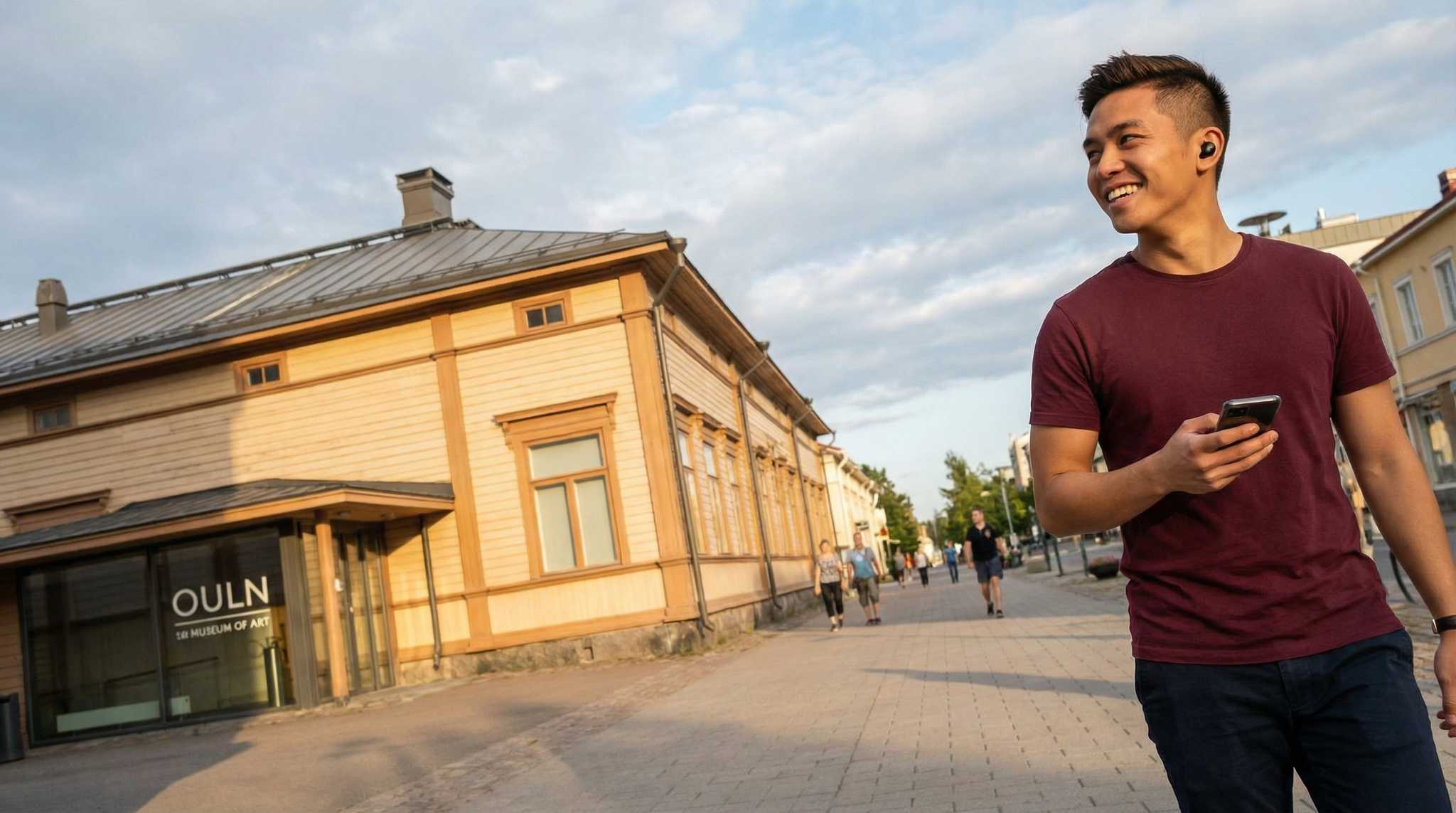
오울루 오디오 투어: 시장 광장 전설부터 대성당 이야기까지
백야 아래, 오울루는 위엄 있는 첨탑과 강변 무대의 그림자 속에서 깜빡이는 이야기들을 숨기고 있습니다. 이 셀프 가이드 오디오 워크는 오울루의 심장에 새겨진 비밀을 밝히고, 엽서 속 풍경을 넘어 드라마와 저항이 흔적을 남긴 장소로 안내합니다. 오울루 대성당 내부의 격렬한 권력 투쟁이 핀란드의 미래를 영원히 바꾸었을까요? 오울루 시립 극장을 맴도는 밀실 미스터리는 무엇이며, 배우들은 어둠 속에서 속삭이게 만들까요? 오울룬 뤼세오 고등학교에서 평범해 보이는 겨울날에 스캔들이 터진 이유는 무엇일까요? 웅장한 외관과 조용한 골목길 사이를 오가며 도시의 전설이 당신 주위에서 펼쳐집니다. 발밑에서 역사가 움직이는 것을 느끼고, 익숙한 랜드마크를 새로운 시선으로 바라보세요. 이곳의 모든 모퉁이에는 귀 기울일 줄 안다면 놀라움이 숨어 있습니다. 지금 바로 여행을 시작하고 오울루가 여전히 얼마나 많은 비밀을 간직하고 있는지 발견해보세요.
투어 미리보기
이 투어에 대하여
- schedule소요 시간 40–60 mins나만의 속도로 이동
- straighten2.3 km 도보 경로안내 경로 따라가기
- location_on
- wifi_off오프라인 작동한 번 다운로드, 어디서든 사용
- all_inclusive평생 이용언제든지 다시 재생 가능
- location_on오울루 옛 소방서에서 시작
이 투어의 정류장
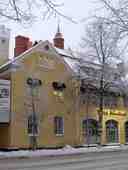
You’re looking for a sturdy yellow stone building at a busy street corner, featuring a pointed red turret popping above the snowy rooftops-just glance up and spot the round tower…더 보기간략히 보기
You’re looking for a sturdy yellow stone building at a busy street corner, featuring a pointed red turret popping above the snowy rooftops-just glance up and spot the round tower if you’re not sure! Let’s imagine Oulu in the early 1900s: horse-drawn carriages rush along snow-packed streets, bells clanging and flurries in the air as firefighters spring into action. This is the Old Fire Station, a Jugend-style masterpiece drawn up by architect Karl Sandelin. Oddly, the journey to a real, full-time fire brigade in Oulu didn’t spark all at once. For years, locals had to depend on eager volunteers and their trusty buckets. After a fire in 1916 nearly took down a whole city block, Oulu decided enough was enough-no more “every man for himself” during emergencies! After a few stops and starts, including a little hiccup called the Civil War, construction began in 1919, often pausing for months while the city scraped up enough money for bricks and mortar. The fire brigade’s first “engine” was more like horsepower-real horses, in fact. Imagine the chaos as teams dashed through wintry streets, clang, clang, clang, trying not to skid into snowdrifts. Their first fire truck arrived in 1925, but Oulu clung to horses until 1947 because snow could turn even the bravest engine into an expensive sled. The building was Oulu’s only fire station until the city grew north and east in 1965, when firefighters started answering calls from much farther afield. By 1982, the last alarms were sounded here, and the fire crews packed up for bigger quarters. Today, instead of sliding down poles, people sip coffee or run businesses where the old hoses once hung. Those old garage doors on Uusikatu were turned into windows, but there’s still a whiff of excitement in the air. Go ahead, peek inside-just don’t shout “fire”!
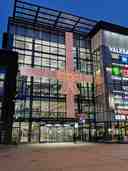
전용 페이지 열기 →You’ll spot the Valkea Shopping Centre right in front of you by its massive glass façade decorated with a giant sparkling bow-hard to miss when it looks like the building is about…더 보기간략히 보기
You’ll spot the Valkea Shopping Centre right in front of you by its massive glass façade decorated with a giant sparkling bow-hard to miss when it looks like the building is about to unwrap itself as a present! Now, get ready for a modern tale mixed with a bit of drama. Imagine this place taking shape: Osuuskauppa Arina invested nearly 100 million euros, like betting on a future where shopping bags and laughter echo through these halls. In 2016, the doors opened wide, unveiling sixty shops, the grand Sokos department store, and even sixty-six homes perched above-twelve floors high! The structure literally bridges the bustling Isokatu street, turning this patch of the city into a pedestrian’s playground. Before Valkea, there stood the Galleria mall and City-talo, once joined by a humble walking bridge, now replaced by Valkea’s vibrant buzz. Here, you might sense an undercurrent of energy because Valkea is always alive-so alive, in fact, that after 2023, round-the-clock security guards became as much a fixture as the sale banners thanks to a surge in crime. Tension peaked in June 2024, with two tragic stabbings on the Summer Street. Both cases were unsettling shocks to the community, tied to deeper social currents and leaving Valkea in somber headlines. But even with its dramatic moments, Valkea stands resilient-a glittering centerpiece where Oulu gathers, shops, dines, and, ok, occasionally wishes the escalators were faster.
전용 페이지 열기 →Look for a large, cream-colored building on the corner with sleek, rounded balconies and a clock on its wall, and just above it you'll see bold letters spelling out "ARINA" on the…더 보기간략히 보기
Look for a large, cream-colored building on the corner with sleek, rounded balconies and a clock on its wall, and just above it you'll see bold letters spelling out "ARINA" on the roof. Welcome to Hotelli Arina-or as the locals call it today, Sokos Hotel Arina! You’re standing where history and hospitality blend like a perfect recipe; this landmark was born in 1939, designed by architect Armas Lehtinen. Imagine the smells of fresh bread and coffee from the shops on the ground floor back in the day, guests in the upstairs rooms amazed to discover the city’s very first flushing toilets-believe me, in 1939, that was as fancy as having Wi-Fi today! But Arina’s charm isn’t just in its creature comforts. During the dark, tense days of World War II, bombs fell close by, even shaking the windows as explosions erupted across the street. Somehow, Arina stood tall-a safe house while everything rattled outside. When Oulu was evacuated in 1944, right here became the central hub for planning, buzzing with urgency and hope. Since then, Arina has seen face-lifts, growing and modernizing, but if these walls could talk, they’d tell tales of refugees and relief, parties and pancakes. So as you gaze up, remember: you stand not just before a hotel, but a survivor and silent witness to nearly a century of Oulu’s ever-changing story.
전용 페이지 열기 →
12개 정류장 더 보기정류장 적게 보기expand_moreexpand_less
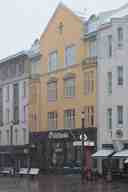
To spot Kirkkokatu 10, look for the tall yellow building with a steep roof and large windows, right along the lively pedestrian street-just above the "Säästöpankki" bank signs at…더 보기간략히 보기
To spot Kirkkokatu 10, look for the tall yellow building with a steep roof and large windows, right along the lively pedestrian street-just above the "Säästöpankki" bank signs at street level. Now, let’s unravel the story of this grand building! Imagine yourself over a hundred years ago, as the streets of Oulu buzz with dreams and business. This very spot once held humble wooden houses, but then in 1910, a deal happened-like a real-life game of Monopoly-between a merchant named Gust Hägg and the prison warden V. O. Juvelius, all on behalf of the city’s savings bank. They swept away the old houses to make way for this elegant, jugend-style landmark, designed by Finland’s renowned architect Wivi Lönn. The grizzled stone on the ground floor? It’s not just for looks; it’s there to impress and hint at the strength of your future savings! When the bank opened its shiny new doors in 1912, it became a beacon of hope for locals, whether they were saving for a rainy day or plotting world domination, one Finnish markka at a time. Over the years, the place saw war, bombs, and wild plans to turn the attic into apartments (which, spoiler alert, never happened). Even today, you might spot the echoes of that original, sturdy bank vault vibe inside. And remember, the next time you pop in for a coffee or handle your banking, you’re standing in the middle of a story that’s had more twists than a detective novel!
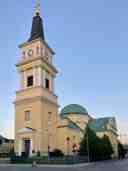
전용 페이지 열기 →In front of you stands the Oulu Cathedral, easily spotted by its tall yellow tower with a clock face and a golden cross atop, crowned by a striking green dome behind it. Now,…더 보기간략히 보기
In front of you stands the Oulu Cathedral, easily spotted by its tall yellow tower with a clock face and a golden cross atop, crowned by a striking green dome behind it. Now, imagine yourself over 200 years ago, standing where the heart of Oulu beats strong and proud. This ground has been dedicated to worship and gathering since the 1610s, when a small wooden church first took root here. Time marched on, though, and by the 1750s, that little wooden chapel had seen better days - some even said it was more dangerous than a surprise Finnish winter storm! After much debate (and probably a few cups of very strong coffee), the townsfolk decided Oulu deserved something grand: a stone church, sturdy enough to outlast generations. While the townspeople grumbled at the price, King Adolf Frederick himself declared: “No skimping, build it of stone!” So, with a bit of royal nudge, building began in 1771. Now, picture a snowy Christmas Day in 1777: the new stone church opened, Oulu’s people flocked inside, and the candles flickered against cool stone walls. At that time, this place was only second in size to Turku’s cathedral - quite a feat, considering the only building rules back then were “Don’t let it fall over!” The church was named after Queen Sofia Magdalena, and held space for 1,500 - a true city landmark. But in spring 1822, disaster struck. The Great Fire of Oulu swept through the city, setting the wooden roof ablaze. Everything except the rugged stone walls was lost, but in a heroic dash, townsfolk saved almost everything movable - yes, even the candle chandeliers! For the next decade, services were held in a temporary wooden church thrown up right beside the smoking ruins. You might say Oulu isn’t just resilient; it’s downright stubborn. Oulu Cathedral’s modern face comes from the magic hands of architect Carl Ludvig Engel, who redesigned the building in neoclassical style in 1832 - think tall straight lines, gleaming pale walls, and a big shiny dome. The bell tower you see was finished in 1845 and soars 56.5 meters above the street, just in case anyone ever needed a reminder of the right time (or to duck for low-flying birds). By 1900, the church became the seat of the northernmost diocese in Finland - Oulu’s official cathedral, serving a region so big it could put some countries to shame. Inside, the treasures range from centuries-old silver chalices to grand organs that rumble the floor with 62 stops. You’ll find echoes of many centuries, with everything from ancient gravestones to modern renovations, even a crypt beneath your feet from the 1990s. Step back and admire the golden cross glinting above, the dignified neoclassical columns, and remember: this isn’t just a church, it’s a living time capsule filled with stories of survival, devotion, and a whole lot of Finnish determination! Exploring the realm of the stone church, artefacts or the former wooden church? Feel free to consult the chat section for additional information.
전용 페이지 열기 →You’re looking for a grand, two-story building with red brick on the upper half, cream-colored stone on the bottom, and a fancy crest over the front doors-right across from the…더 보기간략히 보기
You’re looking for a grand, two-story building with red brick on the upper half, cream-colored stone on the bottom, and a fancy crest over the front doors-right across from the park, behind a crowd of wintery birch trees. Now, as you stand in front of this dignified building, imagine it’s the year 1890 and the streets are filled with the excitement of something brand new: the grand administrative heart of all Oulu, built in a style so elegant even the snow seemed to take notice. Designed by Johan Jacob Ahrenberg and Ludvig Isak Lindqvist, this majestic spot became both the governor’s home and the nerve center for the whole province. Oh, and it’s not just official business inside; the walls now hold works of art, some dating back to the mid-1800s-talk about mixing politics with a touch of culture! Over the years, the building’s had some pretty fancy facelifts, most notably in 1995. The renovations were so good, they even won an award. Next door, you’ll spot older and newer additions: an 1859 stone survey office, a bold red-brick building from the swinging ‘70s, and tucked away, an 1889 wooden carriage house. The Oulu Provincial Government Building is a true survivor-graceful, practical, and just a little bit aristocratic, even during Finland’s chilliest winters!
전용 페이지 열기 →To spot Franzén Park, just look ahead for a small green space surrounded by trees, and in the center you’ll see a proud statue of Frans Mikael Franzén atop a pedestal, with the…더 보기간략히 보기
To spot Franzén Park, just look ahead for a small green space surrounded by trees, and in the center you’ll see a proud statue of Frans Mikael Franzén atop a pedestal, with the old provincial government building rising behind it. Alright, welcome to Franzén Park, the beating green heart of Oulu! Picture yourself in the late 1800s, right here-no trees, no flowers, just a wide-open square known as Kirkkotori, echoing with footsteps and church bells. But Oulu dreamed bigger. In 1878, the city decided their beloved poet Frans Mikael Franzén deserved to watch over everyone. They called up Erland Stenberg, a sculptor with a knack for dramatic busts, and ordered a monument. The unveiling in 1881 was almost a circus-crowds, speeches, and to make up for the lack of trees, they decorated the whole square with borrowed trees in pots. Trust Oulu to have a sense of humor! Transformation didn’t happen overnight, though. Some city councilors thought, “Should we really plant trees here? Maybe next year…” So, the square waited and waited, trees mostly in their imaginations, until around 1885 when the city gardener got everyone organized. Birches sprang up and, by the sound of it, the park finally looked less like a prairie. Franzén’s statue, by the way, got an unforgettable nickname: Mollo! Locals joked, “Mollo just sits here watching us all,” and even the park became known as Molloplaana for a while. Today, as you stroll past blooming roses, yews, and flower beds, remember: what you see is a living patchwork of past debates, borrowed trees, local jokes, and Oulu’s enduring love for its poet. And somewhere, Mollo’s stoic gaze makes sure no one skips poetry class!
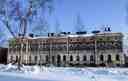
전용 페이지 열기 →By the 1880s, government support boosted the school, helping it to grow from a small private institution into a state-run powerhouse. The building itself has seen several…더 보기간략히 보기
By the 1880s, government support boosted the school, helping it to grow from a small private institution into a state-run powerhouse. The building itself has seen several upgrades: the first extension in 1875 brought an impressive assembly hall, and a gymnasium designed by Theodor Granstedt appeared in 1907-now, every time you hear the echo of bouncing balls inside, remember: that’s architectural history at play! But Oulun Lyseon lukio is anything but old-fashioned. Since 1992, it’s offered the International Baccalaureate program, welcoming students from across the globe, including sporty folks from Sotkamo. Some students even tune in from Tyrnävä through remote learning. Getting admitted is a feat-future scholars here know their maths from their moose. As for famous graduates, let’s just say: the corridors have launched enough bright stars to light up all Oulu on a dark winter night! So, as you gaze at these storied columns, picture students from centuries past nervously awaiting exam results or planning their next energy-boosting coffee raid. And don’t forget, if you misplace a textbook here, it’s probably hiding somewhere in the building’s many historic corners-a true Lyseo tradition!
전용 페이지 열기 →You’re looking for a large, light green, two-story corner building with classic white-trimmed windows-just glance to the edge of Franzén Park at the intersection of Kajaaninkatu…더 보기간략히 보기
You’re looking for a large, light green, two-story corner building with classic white-trimmed windows-just glance to the edge of Franzén Park at the intersection of Kajaaninkatu and Kirkkokatu. Here at Franzén’s House, the air practically tingles with stories. Picture the year 1829: Oulu is recovering from a terrible fire, soot still clinging to the cellars as Johan Franzén dreams up this elegant empire-style building, almost on the ashes of what stood before. If you had been here in the 1600s, the chatter you’d hear was from scholars at the old trivial school. Fast forward, and Sara Wacklin’s hearty laughter and the sound of young girls learning fill the rooms-her girls’ school ran here in the 1830s! Next, see if you can spot the memorial plaques for Sara Wacklin and poet Samuel Gustaf Bergh, whose house once stood right in this spot. Over the years, there was even suspense-city officials schemed for years to turn this place into a city hall, their plans foiled in lengthy court battles. Today, the wonderful smells drifting out? That’s a Turkish restaurant, Hagia Sofia, in the ground floor. So, this corner of Oulu truly serves up history with a flavorful twist!
전용 페이지 열기 →Look for a grand, yellow stone building with twin towers, big wooden doors, and a row of steps leading up-it's right in front of you, standing proudly in Maria Silfvan…더 보기간략히 보기
Look for a grand, yellow stone building with twin towers, big wooden doors, and a row of steps leading up-it's right in front of you, standing proudly in Maria Silfvan Park. Welcome to Oulu City Hall, but be careful-this place has survived more drama than your average soap opera star! Imagine the year is 1886: the city buzzes with excitement, the smell of coal and new stone fills the air, and someone is hammering the last nail on Johan Erik Stenberg’s fresh neo-Renaissance masterpiece, just in time for a huge feast. Only four years earlier, a terrible fire swept through Oulu, and the city’s only party hall burned down. So when this strong stone building took its place, it became a proud sign of rebirth. For decades it was the top spot for glittering theatre shows, important political meetings, you name it-even the city council has gathered here since 1921. Now, walk around to Torikatu and you’ll see “Ajan kulku,” a bronze sculpture by Sanna Koivisto, telling Oulu’s story from the 1600s to today. It hasn’t escaped hardship-since 2019 it’s been under renovation after finding some mystery mold, and along the way, workers even uncovered sparkling glass art and forgotten 1920s newspapers! Oulu never tires of secrets, does it?
전용 페이지 열기 →To spot the Cultural Centre Valve, just look for a glowing red neon sign with the word “Valve” outside a grand, ornate stone building with arched windows, located right along the…더 보기간략히 보기
To spot the Cultural Centre Valve, just look for a glowing red neon sign with the word “Valve” outside a grand, ornate stone building with arched windows, located right along the street. Now let’s step into the past and shake things up! Imagine standing here in 1882-just as the flames of the Great Oulu Fire were crackling through this very spot. Once the fire passed, a determined tradesman named K.J. Granberg decided to bring life back to this city block with a brand-new building, designed by Johan Lybeck. Oulu took it over, and-believe it or not-gave it a glow-up, raising it another floor, stretching it wider, and adding a dash of civic importance. At one point, this building juggled jobs as the city hall, police station, and even a school, so if these walls could talk, they’d need three voices! In the 1950s, you’d have found prison cell doors clanging right about here. Fast forward past police hats and school bells, and this spot flourished in 1989 as a vibrant youth and cultural centre, swapping cells for cinema seats, theatre lights, and art galleries. Today, Valve is a cultural playground-home to Finland’s second largest film library and the Northern Photographic Centre, buzzing with creativity instead of sirens!
전용 페이지 열기 →To spot Charles Vault, look to the street corner where a sturdy, pale yellow stone building with decorative white trim and large windows stands with an arched doorway under…더 보기간략히 보기
To spot Charles Vault, look to the street corner where a sturdy, pale yellow stone building with decorative white trim and large windows stands with an arched doorway under glowing evening lights. Welcome to Charles Vault, or as the locals say, Kaarlenholvi! Imagine yourself standing here in the late 1700s, when this stately building was first rising from the snow-dusted ground. Back then, none of the locals had any clue that their humble stone house would survive Oulu’s great fire of 1822. When flames swept through the city, the building’s wooden upper floor was lost-poof, just like a magician’s trick! But the stone ground floor stood unbeaten. Later, the whole building was rebuilt with sturdy stone in the early 1800s, giving us the classic empire style you see today. Over its lifetime, Charles Vault has been a chameleon: a hospital, a jail cell (yes, a real one-imagine the stories those walls could whisper), a distillery, a bookshop, a wine shop, a post office, even the bishop's court. Some pretty interesting folks lived here, too, like the famous poet Runeberg and the writer Hellaakoski. Today, laughter and music spill out from the restaurants and pubs inside. So next time you visit for a meal, just remember-you’re eating in a building with more lives than a Finnish cat!
전용 페이지 열기 →To spot the landmark, look straight ahead and find the large bronze statue of a round-faced policeman in uniform, proudly standing in the square. Imagine yourself in Oulu’s busy…더 보기간략히 보기
To spot the landmark, look straight ahead and find the large bronze statue of a round-faced policeman in uniform, proudly standing in the square. Imagine yourself in Oulu’s busy Market Square, where you'll find a rather serious-looking, stout policeman made of bronze-meet the famous Toripolliisi! This statue, standing 220 centimeters tall, has been watching over Oulu’s traders and visitors since 1987, crafted by sculptor Kaarlo Mikkonen. But here's a fun twist: the real "market policemen" once patrolled this very area between 1934 and 1979, keeping peace among busy vendors, squabbling shoppers, and mischievous kids-imagine the shouts and laughter of the crowd around you. Toripolliisi owes his existence to the people of Oulu, who rallied together in 1985, raising money through donations, selling postcards, and even gingerbread cookies shaped like this chubby little lawkeeper. The statue’s look was inspired by Mikkonen’s own father-in-law, who once served as a strict chief constable in Paimio. When the statue was finally unveiled in September 1987, Oulu embraced this silent, watchful guardian. Today, Toripolliisi remains a local hero-a bronze protector whose stern gaze still keeps the square in check. So if you’re feeling mischievous, remember he’s always keeping an eye on things!
전용 페이지 열기 →To spot the Market Square, just look ahead for a large open plaza by the Oulujoki river, filled with white tents and rows of colorful market stalls right at the waterfront,…더 보기간략히 보기
To spot the Market Square, just look ahead for a large open plaza by the Oulujoki river, filled with white tents and rows of colorful market stalls right at the waterfront, bordered by charming old red barns and historic buildings. Welcome to the beating heart of Oulu! Imagine standing here over a century ago-smells of fresh bread, fish, and maybe a whiff of mystery meat hanging in the cool river air. Market Square has always been the center of city life, right here in the Pokkinen district on the river’s edge. The tradition of lively market stalls goes way back, but back then, things got a bit too wild with meat selling openly… Let’s just say it wasn’t a place for a sensitive nose! In 1901, city leaders decided enough was enough and built the gorgeous Oulu Market Hall just across the square, so you could buy your sausages in peace and the birds could shop elsewhere. Surrounding the square, you’ll see classic red barns-once shelter for merchants’ goods and now transformed into cozy bars and restaurants where you can swap your coins for a coffee instead of potatoes. And just behind you, the Rotuaari pedestrian zone stretches out, perfect for people-watching after you’ve filled your basket. Through good times, harsh winters, and countless summer festivals, Market Square has remained the city’s living room-always open, always buzzing, never boring.
전용 페이지 열기 →Look straight across the water and you’ll spot the Oulu City Theatre-a modern, creamy rectangular building with long lines of windows, sitting proudly above the waterfront on its…더 보기간략히 보기
Look straight across the water and you’ll spot the Oulu City Theatre-a modern, creamy rectangular building with long lines of windows, sitting proudly above the waterfront on its very own artificial island. As you stand here by the water, imagine the hum of excitement before a show. Oulu City Theatre isn’t just some ordinary playhouse; it’s a stage with a dramatic life story, full of twists, applause, and the occasional explosion-literally! The roots of theatre in Oulu stretch back to 1931, when eager amateurs formed the Oulun Näyttämö and performed in a lively workers’ hall. But in 1944, history took a fiery turn: during the war, a bombing raid destroyed their beloved theatre building, setting the city’s passion for acting ablaze-just in a less desirable way! Homeless but undeterred, Oulu’s theatre folk kept their spirits up, staging shows in the grand hall of City Hall while dreaming of a permanent spotlight. In 1972, that dream became a reality with this bold modern theatre, shimmering on Vänmanninsaari island as if it were Oulu’s own floating stage. With its clean, geometric lines designed by Marjatta and Martti Jaatinen, the building was an instant statement piece. The debut of the Kalevala play opened this house, drawing an audience of 78,000-the biggest crowd the theatre had ever seen. Since then, Oulu Theatre has welcomed 80,000 visitors a year, offering everything from Finnish and international premieres to dazzling operas, musicals, and colorful children’s festivals. But wait, there’s more behind these walls! The theatre is home to four different stages, the grandest seating over 500, and even a “Vinttikamari” attic chamber for intimate performances. After a major renovation, completed in 2004, people swarmed in by the thousands to see the new look. Today, innovative artists like Alma Lehmuskallio lead the house, winning awards and shaking up Oulu’s cultural scene with fresh winds of equality, imagination, and fearless creativity. So, while this place may look crisp and modern from the outside, the real spectacle is what’s happened (and still happens) on stage-and sometimes off! Now, if you listen closely, you might just hear echoes of applause, children’s laughter, and even a bit of theatrical mischief drifting from the doors... Intrigued by the theatre house, stages or the theatre directors? Make your way to the chat section and I'll be happy to provide further details.
전용 페이지 열기 →
자주 묻는 질문
투어는 어떻게 시작하나요?
구매 후 AudaTours 앱을 다운로드하고 교환 코드를 입력하세요. 투어를 바로 시작할 수 있습니다 - 재생을 탭하고 GPS 안내 경로를 따라가시면 됩니다.
투어 중 인터넷이 필요한가요?
아닙니다! 시작 전에 투어를 다운로드하면 완전히 오프라인으로 즐길 수 있습니다. 채팅 기능만 인터넷이 필요합니다. 모바일 데이터 절약을 위해 WiFi에서 다운로드하시는 것을 권장합니다.
이것은 가이드가 안내하는 단체 투어인가요?
아닙니다 - 이것은 셀프 가이드 오디오 투어입니다. 폰을 통해 오디오 나레이션을 들으며 나만의 속도로 독립적으로 탐험합니다. 투어 가이드도, 단체도, 일정도 없습니다.
투어는 얼마나 걸리나요?
대부분의 투어는 60-90분이 소요되지만, 속도는 전적으로 본인이 조절합니다. 원할 때 언제든지 일시정지하거나, 정류장을 건너뛰거나, 휴식을 취하세요.
오늘 투어를 끝낼 수 없으면 어떻게 하나요?
괜찮습니다! 투어는 평생 이용이 가능합니다. 원할 때 언제든지 일시정지하고 다시 시작하세요 - 내일, 다음 주, 또는 내년에도. 진행 상황이 저장됩니다.
어떤 언어를 이용할 수 있나요?
모든 투어는 50개 이상의 언어로 이용 가능합니다. 코드를 교환할 때 원하는 언어를 선택하세요. 참고: 투어 생성 후에는 언어를 변경할 수 없습니다.
구매 후 투어는 어디에서 이용하나요?
App Store 또는 Google Play에서 무료 AudaTours 앱을 다운로드하세요. 교환 코드(이메일로 전송됨)를 입력하면 라이브러리에 투어가 나타나며, 다운로드하여 시작할 수 있습니다.
투어가 마음에 들지 않으시면 환불해 드립니다. 문의: [email protected]
안전한 결제