AudaTours logoAudaTours

슈타이어 오디오 투어: 성, 묘지, 그리고 강변 이야기

오디오 가이드13 정류장

람베르크 성의 그림자 아래, 슈타이어의 자갈길은 수세기 동안의 야망, 갈등, 그리고 눈에 보이지 않는 비밀들을 속삭입니다. 모든 발걸음을 새로운 발견으로 바꾸는 셀프 가이드 오디오 투어를 시작하세요. 구불구불한 골목과 경외심을 불러일으키는 첨탑을 따라가며 대부분의 방문객이 들어보지 못한 이야기들을 발견해보세요. 폭풍우 치는 밤, 람베르크 성의 홀에 어떤 절박한 행동이 울려 퍼졌을까요? 성 미카엘 교회에 있는 신비로운 스테인드글라스 뒤에 누구의 정체가 숨겨져 있을까요? 격렬한 마을 스캔들 이후 슈타이어 본당 교회의 신랑에 이상한 모양의 상징이 나타난 이유는 무엇일까요? 안개 낀 안뜰과 반란의 속삭임, 잊혀진 사랑이 여전히 남아있는 강변을 지나보세요. 이 여정은 드라마, 기적, 그리고 음모로 형성된 도시 슈타이어를 새로운 시각으로 바라보게 하며, 매번 돌아서는 길마다 새로운 비밀이 드러납니다. 돌들 자체가 기억하는 슈타이어의 숨겨진 심장을 열 준비가 되셨나요? 재생 버튼을 누르고 이야기들을 시작해보세요.

투어 미리보기

map

이 투어에 대하여

  • schedule
    소요 시간 40–60 mins나만의 속도로 이동
  • straighten
    3.9 km 도보 경로안내 경로 따라가기
  • location_on
  • wifi_off
    오프라인 작동한 번 다운로드, 어디서든 사용
  • all_inclusive
    평생 이용언제든지 다시 재생 가능
  • location_on
    성 마리아 교회에서 시작

이 투어의 정류장

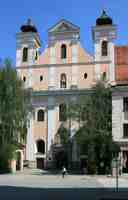
  1. Look for the pale, twin-towered church set slightly back from the line of the square, with a round-arched portal and a statue of Mary above the entrance. This is St. Mary’s…더 보기간략히 보기
    St. Mary's Church
    St. Mary's ChurchPhoto: Lewenstein, Wikimedia Commons, CC BY-SA 3.0. Cropped & resized.

    Look for the pale, twin-towered church set slightly back from the line of the square, with a round-arched portal and a statue of Mary above the entrance.

    This is St. Mary’s Church, or Marienkirche... and it has lived a few different lives. It is not the town’s main parish church, even though it stands right here on the square like it owns the place. Instead, it serves as a branch church, where Catholics from several nearby parishes gather, so baptisms, weddings, and funerals happen here only rarely.

    Dominican friars from Krems came to Steyr in the fourteen seventies and bought a house here from Georg and Wilhelm von Losenstein. They finished the church in fourteen seventy-eight. Then the city fire of fifteen twenty-two tore through and wrecked both church and monastery. A few decades later, Emperor Ferdinand the First allowed the citizens to rebuild, planning to use the complex for an evangelical Latin school. That experiment nearly drowned... in fifteen seventy-two, floodwater brought down the eastern wing, and sixty students barely escaped.

    During the Counter-Reformation, the Catholic pushback against Protestantism, the Dominicans claimed the church back in the sixteen twenties. In the early sixteen forties, master mason Hans Tanner gave it the bold Baroque face you see now, inspired by Saint Michael’s in Munich. Notice the two towers, the Virgin above the portal, and Saint Dominic standing up in the gable like he’s still keeping watch.

    If you want, take a quick peek at the before-and-after image; the facade looks brighter and sharper now, like the building has taken a deep breath.

    Inside, the church turns wonderfully theatrical. The seventeen seventies brought a Rococo makeover - that’s Baroque’s lighter, more playful cousin - with a powerful high altar, a treasured statue of Mary, a crowded sculptural pulpit, and a new organ. You can catch that richness on your screen.

    A wider view of the high altar and pulpit, showing the rich interior decoration mentioned in the church history.
    A wider view of the high altar and pulpit, showing the rich interior decoration mentioned in the church history.Photo: Anzi9, Wikimedia Commons, CC BY-SA 3.0. Cropped & resized.

    So this church is a survivor: fire, flood, schoolhouse, monastery, Jesuit residence... and still standing calm at the edge of the square.

    Take a second with it. When you’re ready, we can wander on to the next stop.

    Another view of Steyr’s main square, helping place the church in its urban setting opposite the town hall side.
    Another view of Steyr’s main square, helping place the church in its urban setting opposite the town hall side.Photo: Miloš Hlávka, Wikimedia Commons, CC0. Cropped & resized.
    전용 페이지 열기 →
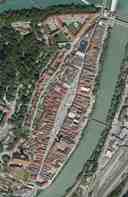
  2. On your left, the Town Square opens as a broad lens-shaped stone space, ringed with plaster-fronted houses and marked by the Saint Leopold fountain rising from granite. This is…더 보기간략히 보기
    Town square
    Town squarePhoto: Fotosː BEV - Bundesamt für Eich- und Vermessungswesen / Bearbeitung (Stitch, Tonwertkorrektur)ː Christoph Waghubinger, Wikimedia Commons, CC BY 4.0. Cropped & resized.

    On your left, the Town Square opens as a broad lens-shaped stone space, ringed with plaster-fronted houses and marked by the Saint Leopold fountain rising from granite.

    This is the heart of Steyr, and not in some polite brochure sense... I mean the real heart, the place where the city’s old arteries still meet. The square took shape in the mid-thirteenth century, when two older settlements finally grew together: one around the Stirapurc stronghold, the other around the parish church. Its unusual almond-like form came from an earlier road line and the lay of the ground, so even the shape of the place feels like history refusing to straighten itself out.

    What I love here is the trick the square plays on your eyes. A lot of these facades look Baroque or Rococo, all dressed up and sociable, but behind them many house cores are much older, still Gothic at heart. The whole place remains divided in medieval parcels, so the rhythm of the buildings still follows a plan set down centuries ago. If you check the view on your screen, you can really see that long, unbroken sweep of historic fronts holding the square together like one giant architectural sentence.

    A different angle on the square that helps show the continuous historic facades and busy urban character.
    A different angle on the square that helps show the continuous historic facades and busy urban character.Photo: Miloš Hlávka, Wikimedia Commons, CC0. Cropped & resized.

    Now let your attention wander. Number thirty-two, the Bummerlhaus, is the local celebrity and the oldest house here, still showing off its late fifteenth-century Gothic face. The Rococo town hall arrived later, between seventeen sixty-five and seventeen seventy-eight, with plans by Johann Gotthard Hayberger. At number twelve, the Sternhaus flashes a Rococo facade decorated with the five senses, but its Gothic bones still peek through in the old projecting corbels and the pointed portal. War hit this square too: the left side of the Sternhaus was destroyed in World War Two and later rebuilt true to the original, while nearby house number fourteen disappeared in the bombing of the twenty-fourth of February, nineteen forty-four.

    There’s music in this square too, at least in memory. Franz Schubert stayed in Steyr in eighteen nineteen, eighteen twenty-three, and eighteen twenty-five. The first two times he lodged in the Stalzerhaus, and the last time in house number sixteen, the Schuberthaus, where a plaque added in eighteen ninety still remembers him. Imagine him stepping out here, hearing carriage wheels, church bells, market voices... the same stone bowl, a different soundtrack.

    At the southern end, the Marienkirche anchors the whole space; the app has a nice angle that shows how firmly it closes the square. And the fountain here, set up in sixteen eighty-three with granite pieces from the former Windhaag monastery, reminds you that even public water once arrived with a bit of ceremony.

    A second view near the Marienkirche end of the square, good for showing how the church anchors the southern side.
    A second view near the Marienkirche end of the square, good for showing how the church anchors the southern side.Photo: Miloš Hlávka, Wikimedia Commons, CC0. Cropped & resized.

    In two thousand and eighteen, the city reshaped the square again, widening the pedestrian promenade and creating more space just to linger, and yes... during that work, paving stones briefly spelled out the surname of a city official, Hingerl, before the city tore them back out.

    This square feels less like a monument and more like a city still thinking out loud. It never really closes, so you can pass through at any hour. Take your time here, and when you’re ready, we can drift on to the next stop.

    The town square on a quiet Saturday morning, highlighting the pedestrian space and everyday life in the historic center.
    The town square on a quiet Saturday morning, highlighting the pedestrian space and everyday life in the historic center.Photo: Isiwal, Wikimedia Commons, CC BY-SA 4.0. Cropped & resized.
    Pride parade activity on the town square shows the square still functions as a lively public stage for events and gatherings.
    Pride parade activity on the town square shows the square still functions as a lively public stage for events and gatherings.Photo: Miloš Hlávka, Wikimedia Commons, CC0. Cropped & resized.
    Festival crowds on the town square illustrate how the central plaza hosts major city events such as the summer Stadtfest.
    Festival crowds on the town square illustrate how the central plaza hosts major city events such as the summer Stadtfest.Photo: Miloš Hlávka, Wikimedia Commons, CC0. Cropped & resized.
    전용 페이지 열기 →
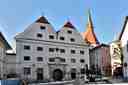
  3. On your left, look for the broad pale plaster building with a stepped double gable, rows of barred windows, and a painted scene above the heavy central gate. This is the…더 보기간략히 보기
    Innerberger Stadel
    Innerberger StadelPhoto: StadtmuseumSteyr, Wikimedia Commons, CC BY-SA 4.0. Cropped & resized.

    On your left, look for the broad pale plaster building with a stepped double gable, rows of barred windows, and a painted scene above the heavy central gate.

    This is the Innerberger Stadel, a Renaissance workhorse from around sixteen twelve or sixteen thirteen, built to hold provisions, not to show off... though it ended up doing both. Over the main portal, that fresco from the story of Joseph quietly explains the building’s original job as a food storehouse, and right above it the date sixteen twelve still sits like a signature. In sixteen twenty-eight, the Innerberger iron consortium bought the place and gave it the name it still carries. Those scratch-drawn plaster decorations around the doors and windows are called sgraffiti, designs cut through layers of plaster, and on the second floor a haloed double eagle carries the iron guild’s coat of arms. If you want, compare the earlier view with the restored facade to see how the refurbishment sharpened the facade between twenty fifteen and twenty twenty-three. Today, this old granary holds the city museum and the Steyrer Kripperl. Not bad for a storage shed.

    Take one more look at that sturdy face before you leave it behind. When you’re ready, we can drift on to the next stop.

    Front view of the Innerberger Stadel, a Renaissance storage building from around 1612/13 that now houses the city museum and the Steyrer Kripperl.
    Front view of the Innerberger Stadel, a Renaissance storage building from around 1612/13 that now houses the city museum and the Steyrer Kripperl.Photo: Christoph Waghubinger (Lewenstein), Wikimedia Commons, CC BY-SA 3.0 at. Cropped & resized.
    The Stadel seen from the Grünmarkt with the Bürgerbrunnen in front, matching the place the source text describes beside the building.
    The Stadel seen from the Grünmarkt with the Bürgerbrunnen in front, matching the place the source text describes beside the building.Photo: Walter Isack (isiwal), Wikimedia Commons, CC BY-SA 3.0 at. Cropped & resized.
    Scaffolding wraps the Innerberger Stadel during restoration work for the 2021 state exhibition, showing the monument in a later historic phase.
    Scaffolding wraps the Innerberger Stadel during restoration work for the 2021 state exhibition, showing the monument in a later historic phase.Photo: Christoph Waghubinger (Lewenstein), Wikimedia Commons, CC BY-SA 4.0. Cropped & resized.
    A museum room inside the former storehouse, where the sturdy wooden beam ceiling reflects the building’s practical Renaissance function.
    A museum room inside the former storehouse, where the sturdy wooden beam ceiling reflects the building’s practical Renaissance function.Photo: Christoph Waghubinger (Lewenstein), Wikimedia Commons, CC BY-SA 3.0 at. Cropped & resized.
    Another exhibition room in the Stadel’s former magazin, with baroque heraldic figures displayed under the timber ceiling.
    Another exhibition room in the Stadel’s former magazin, with baroque heraldic figures displayed under the timber ceiling.Photo: Christoph Waghubinger (Lewenstein), Wikimedia Commons, CC BY-SA 4.0. Cropped & resized.
    The passage inside the complex that once connected the Stadel to the later workshop buildings behind it, illustrating the museum’s layered history.
    The passage inside the complex that once connected the Stadel to the later workshop buildings behind it, illustrating the museum’s layered history.Photo: Christoph Waghubinger (Lewenstein), Wikimedia Commons, CC BY-SA 4.0. Cropped & resized.
    A ground-floor museum gallery in the Innerberger Stadel, now used to present the city history that the building shelters today.
    A ground-floor museum gallery in the Innerberger Stadel, now used to present the city history that the building shelters today.Photo: Christoph Waghubinger (Lewenstein), Wikimedia Commons, CC BY-SA 4.0. Cropped & resized.
    A view focused on the Schmiedemuseum section, highlighting how the former granary now preserves Steyr’s industrial and craft heritage.
    A view focused on the Schmiedemuseum section, highlighting how the former granary now preserves Steyr’s industrial and craft heritage.Photo: Robert210365, Wikimedia Commons, CC BY-SA 4.0. Cropped & resized.
    전용 페이지 열기 →
10개 정류장 더 보기정류장 적게 보기expand_moreexpand_less
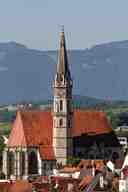
  1. On your right, look for the pale stone Gothic church with its tall six-sided tower, pointed rooflines, and stepped buttresses bracing the outer walls. This is Steyr’s parish…더 보기간략히 보기
    Steyr parish church
    Steyr parish churchPhoto: Lewenstein, Wikimedia Commons, CC BY-SA 3.0 AT. Cropped & resized.

    On your right, look for the pale stone Gothic church with its tall six-sided tower, pointed rooflines, and stepped buttresses bracing the outer walls.

    This is Steyr’s parish church, dedicated to Saint Aegidius and Saint Coloman, and it’s the heavyweight sacred building of the city. It has been claiming this hill for a very long time. Historians trace the first church here back to around the year eleven hundred, and by twelve seventy-five it shows up in records during a property dispute, which is such a classic way for history to say, yep, this place mattered.

    The church took hits early on. A city fire in thirteen oh three damaged it, but the really dramatic reinvention came in the fifteenth century, when Steyr grew rich and crowded enough to want a church that matched its ambition. In fourteen forty-three, the master builder Hans Puchsbaum, the same kind of top-tier architect you called when you wanted something grand, began a full late-Gothic rebuild. He finished the raw structure of the choir, the sacred space around the altar, and after his death Laurenz Spenning vaulted it and added the tower... even though the tower had not been part of the original plan.

    Then came the fire of fifteen twenty-two. And this one was brutal. Flames started near the city bath, jumped into the timber and scaffolding of the unfinished church, and tore through the roof, altars, windows, paintings, the ornate pulpit, and even the bells bought at huge expense. Imagine the whole place as a half-finished masterpiece suddenly turning into a frame of smoke and falling beams.

    The church kept changing with the city. In the later sixteen hundreds, after many townspeople embraced Luther’s teachings, Protestant preachers worked here, and the broad west porch took shape during that era. Later, Benedictine monks from Garsten steered the church toward Baroque style. Then the nineteenth century pulled a sharp turn back again: Adalbert Stifter, better known as a writer, pushed for a return to Gothic character, so much of the Baroque interior got removed in favor of a more medieval look.

    The tower you see now tells another rescue story. After the tower spire burned in eighteen seventy-six, Friedrich von Schmidt designed the present neo-Gothic stone top, finished in eighteen eighty-nine. That’s why the tower feels so exact and vertical, like a stone finger pointing over Steyr.

    If you feel like it, compare the earlier restoration view in the app; it shows how the interior went from scaffolding into the bright late-Gothic space visitors admire now.

    That interior restoration ran from two thousand nine to two thousand fifteen, conserving the vaults, glass, roof timbers, and bringing back the white and yellow coloring. And if you glance at the image on your screen, you can see the nave, the church’s big central hall, opening into that soaring Gothic space.

    The nave seen from inside shows the church as a bright hall space, with the historic pew carvings and Gothic proportions still clearly visible.
    The nave seen from inside shows the church as a bright hall space, with the historic pew carvings and Gothic proportions still clearly visible.Photo: Isiwal, Wikimedia Commons, CC BY-SA 4.0. Cropped & resized.

    One more lovely twist: Anton Bruckner spent summers living in the old parish house opposite from eighteen eighty-four onward, and between eighteen eighty-six and eighteen ninety-four he composed parts of his eighth and ninth symphonies here. He even advised changes to the organ. So this church did not just gather prayers... it also quietly fed music that still shakes concert halls.

    This place feels less like one building and more like a stack of centuries learning how to sing together.

    Take a second with it, and when you’re ready, we can wander on to the next stop.

    A classic side view that places the church together with the Margaretenkapelle and old parish house, showing the whole landmark ensemble on the hill above Steyr.
    A classic side view that places the church together with the Margaretenkapelle and old parish house, showing the whole landmark ensemble on the hill above Steyr.Photo: Christoph Waghubinger (Lewenstein), Wikimedia Commons, CC BY-SA 3.0. Cropped & resized.
    The tower view highlights the church’s powerful vertical landmark, including the neo-Gothic top added after the 1876 fire.
    The tower view highlights the church’s powerful vertical landmark, including the neo-Gothic top added after the 1876 fire.Photo: P e z i, Wikimedia Commons, CC BY-SA 3.0 at. Cropped & resized.
    Looking through the west porch toward the old lane network, this image shows the 16th-century west entrance that was expanded during the Reformation era.
    Looking through the west porch toward the old lane network, this image shows the 16th-century west entrance that was expanded during the Reformation era.Photo: Christoph Waghubinger (Lewenstein), Wikimedia Commons, CC BY-SA 4.0. Cropped & resized.
    The north porch and Marian statue show one of the church’s important exterior approaches, including the richly carved northern portal area.
    The north porch and Marian statue show one of the church’s important exterior approaches, including the richly carved northern portal area.Photo: Christoph Waghubinger (Lewenstein), Wikimedia Commons, CC BY-SA 4.0. Cropped & resized.
    A wide nave view toward the high altar captures the church’s three-aisled Gothic hall and the neo-Gothic redesign of the 19th century.
    A wide nave view toward the high altar captures the church’s three-aisled Gothic hall and the neo-Gothic redesign of the 19th century.Photo: Christoph Waghubinger (Lewenstein), Wikimedia Commons, CC BY-SA 3.0. Cropped & resized.
    This view into the left choir aisle helps explain the church’s late-Gothic spatial structure and the long choir added in the 15th century.
    This view into the left choir aisle helps explain the church’s late-Gothic spatial structure and the long choir added in the 15th century.Photo: Christoph Waghubinger (Lewenstein), Wikimedia Commons, CC BY-SA 3.0 at. Cropped & resized.
    The organ loft at the main entrance connects to the church’s musical history, including Anton Bruckner’s ties to the instrument.
    The organ loft at the main entrance connects to the church’s musical history, including Anton Bruckner’s ties to the instrument.Photo: Isiwal, Wikimedia Commons, CC BY-SA 4.0. Cropped & resized.
    The sunflower epitaph is a moving reminder of the 1703 smallpox deaths remembered inside the church.
    The sunflower epitaph is a moving reminder of the 1703 smallpox deaths remembered inside the church.Photo: Isiwal, Wikimedia Commons, CC BY-SA 4.0. Cropped & resized.
    This 1569 baptismal font reflects the church’s Renaissance furnishings and its long-liturgical history.
    This 1569 baptismal font reflects the church’s Renaissance furnishings and its long-liturgical history.Photo: Isiwal, Wikimedia Commons, CC BY-SA 4.0. Cropped & resized.
    The Laxenburg window preserves rare medieval glass fragments, some dating back to around 1300 and later returned from Laxenburg.
    The Laxenburg window preserves rare medieval glass fragments, some dating back to around 1300 and later returned from Laxenburg.Photo: Isiwal, Wikimedia Commons, CC BY-SA 4.0. Cropped & resized.
    The Lamberg memorial window commemorates Franz Philipp von Lamberg and shows how 19th-century stained glass was used for historical remembrance.
    The Lamberg memorial window commemorates Franz Philipp von Lamberg and shows how 19th-century stained glass was used for historical remembrance.Photo: Isiwal, Wikimedia Commons, CC BY-SA 4.0. Cropped & resized.
    Scaffolding in the nave documents the 2009–2015 interior restoration, when the church’s Gothic vaulting and surfaces were carefully conserved.
    Scaffolding in the nave documents the 2009–2015 interior restoration, when the church’s Gothic vaulting and surfaces were carefully conserved.Photo: Christoph Waghubinger (Lewenstein), Wikimedia Commons, CC BY-SA 4.0. Cropped & resized.
    전용 페이지 열기 →
  2. On your left, look for a pale rectangular villa rising from a heavy stone-block base, with four corner towers and a pointed central gable marked by a round rosette. Schloss…더 보기간략히 보기
    Voglsang Castle
    Voglsang CastlePhoto: Lewenstein, Wikimedia Commons, CC BY-SA 3.0 AT. Cropped & resized.

    On your left, look for a pale rectangular villa rising from a heavy stone-block base, with four corner towers and a pointed central gable marked by a round rosette.

    Schloss Voglsang feels like someone took a Scottish castle, shrank it just enough to fit a hillside in Steyr, and then let it keep its swagger. Josef Werndl, the great industrialist of Steyr, bought this land in the eighteen seventies and told builder Anton Plochberger to think big. According to local tradition, Werndl even sent him to Scotland to study a real castle, with a garden architect tagging along to size up the park. What came back was this neo-Gothic villa, finished in eighteen eighty-two: three main floors over a stone base, battlements along the roofline, and a glasshouse-like structure in the middle of the roof to pour light into the staircase.

    It was meant to impress, especially the first floor, the bel étage... basically the grand show-off level, with a gentlemen’s salon and a huge dining room. But life swerved. After Werndl’s wife Karoline Antonia died, he lost interest in living here. In eighteen seventy-eight he offered the unfinished shell to the city, asking them to turn it into a poorhouse. The city said no. He tried selling it, complained it had serious construction faults, and even thought about tearing it down. Imagine nearly losing all this drama in stone.

    By then, he had already spent sixty-four thousand florins on it, roughly half a million euros in today’s buying power. Instead of disappearing, the place kept reinventing itself: exhibition venue in eighteen eighty and eighteen eighty-four, then later a residence, then a boys’ boarding school run by Franciscans, and now senior apartments. If you want, compare the older view on your screen... the castle barely blinks while the whole approach around it changes character.

    And if you glance at the app’s historic exhibition picture, you can catch Voglsang in eighteen eighty-four, still unfinished and already performing for the public.

    The illuminated 1884 exhibition grounds include Schloss Voglsang, showing how the unfinished villa was reused as a public event venue.
    The illuminated 1884 exhibition grounds include Schloss Voglsang, showing how the unfinished villa was reused as a public event venue.Photo: Wilhelm Gause, Wikimedia Commons, Public domain. Cropped & resized.

    Voglsang is really a near-miss turned landmark.

    Take a last look at those towers, and when you’re ready, we can wander on to the next stop.

    Seen from the street side with the park and fountain, matching the historic setting of Schloss Voglsang as a villa with grounds.
    Seen from the street side with the park and fountain, matching the historic setting of Schloss Voglsang as a villa with grounds.Photo: Bodory Thomas, Wikimedia Commons, CC BY-SA 3.0. Cropped & resized.
    A distant view from the Tabor highlights the building’s position in Steyr and its distinctive towered roofline.
    A distant view from the Tabor highlights the building’s position in Steyr and its distinctive towered roofline.Photo: Christoph Waghubinger (Lewenstein), Wikimedia Commons, CC BY-SA 3.0 at. Cropped & resized.
    The old gate on the Volksstraße side survives from the time when the estate had a second access route besides Preuenhueberstraße.
    The old gate on the Volksstraße side survives from the time when the estate had a second access route besides Preuenhueberstraße.Photo: Christoph Waghubinger (Lewenstein), Wikimedia Commons, CC BY-SA 4.0. Cropped & resized.
    A 1893 book illustration of Schloss Vogelsang and Preuenhubergasse, offering a period view of the villa and its approach road.
    A 1893 book illustration of Schloss Vogelsang and Preuenhubergasse, offering a period view of the villa and its approach road.Photo: Franz Kulstrunk, Wikimedia Commons, Public domain. Cropped & resized.
    The first-floor plan points to the bel étage, where the Herrensalon and large dining room were designed for representation.
    The first-floor plan points to the bel étage, where the Herrensalon and large dining room were designed for representation.Photo: Anton Plochberger (1823-1890), Wikimedia Commons, Public domain. Cropped & resized.
    전용 페이지 열기 →
  3. Ahead of you is a pale baroque castle with angular wings of stuccoed masonry, perched on a rocky terrace, and marked by the crenellated Römerturm rising like an older, tougher…더 보기간략히 보기
    Lamberg Castle
    Lamberg CastlePhoto: Lewenstein, Wikimedia Commons, CC BY-SA 3.0. Cropped & resized.

    Ahead of you is a pale baroque castle with angular wings of stuccoed masonry, perched on a rocky terrace, and marked by the crenellated Römerturm rising like an older, tougher survivor.

    Lamberg Castle is really two places wearing one coat. The elegant shell you see now grew out of the Styraburg, a fortress raised at the start of the tenth century and first written down in the year nine hundred eighty-five. That older stronghold mattered so much it gave its name not only to Steyr, but to Steiermark, Styria itself. If you glance at the aerial photo in the app, you can see the logic instantly: this castle grips the high ground above the meeting of the Steyr and the Enns, right where roads and rivers made power feel very practical.

    A sweeping south-facing aerial view showing Lamberg Castle perched above the Steyr River confluence, exactly where the old stronghold controlled the strategic river crossing.
    A sweeping south-facing aerial view showing Lamberg Castle perched above the Steyr River confluence, exactly where the old stronghold controlled the strategic river crossing.Photo: Carsten Steger, Wikimedia Commons, CC BY-SA 4.0. Cropped & resized.

    Back in the Middle Ages, this was border country. The Steyr River marked the line between the March of Austria and the March, later duchy, of Styria. Count Otakar the Second made the fortress his residence in the year ten seventy-nine. In twelve ninety-two, the Georgenberg Pact handed it to the Babenbergs, and later the Habsburgs took over. Only in the year twelve fifty-four did a treaty between Ottokar the Second of Bohemia and Béla the Fourth of Hungary shove the Styrian border farther south and calm this frontier role.

    People also told a more dramatic origin story. Two knight brothers rode through the area, argued over the best building site, and settled it with a duel: one wanted the hill at Tabor, the other this safer rocky spur above the rivers. The winner chose this spot... which feels exactly like the kind of decision a castle would approve of.

    The name Lamberg arrived later, when the Counts of Lamberg took possession in the year sixteen sixty-six. Then came disaster: a fire wrecked the place in seventeen twenty-seven. Johann Michael Prunner rebuilt it in the baroque style, but he couldn’t erase the medieval bones. The Römerturm, the old keep, still anchors the whole complex. Its base even includes granite blocks that may have come from the Roman legionary camp at Lauriacum. After the town fire of eighteen twenty-four, builders gave the tower its striking crenellated platform, those tooth-like battlements at the top.

    Even the layout tells the story. The inner courtyard forms a triangle because the castle had to fit this rocky point. In there stands a fountain from sixteen sixty-six with a water-spouting dog, the Lamberg family emblem, surrounded by sandstone dwarf figures brought from Gleink. Those dwarfs, carved around seventeen twenty by Johann Baptist Wuntscher, poke fun at social classes, officials, fashions, whole slices of society really. The courtyard got a major refresh in twenty fourteen and twenty fifteen, when restorers cleaned up the fountain, the sculptures, and the whole space. If you want, check the before-and-after image; the courtyard really does look newly tuned.

    This place also carries harder memories. After the February fighting in nineteen thirty-four, officials used the stables as a temporary prison for around eight hundred detainees, mostly members of the Schutzbund, a socialist defense organization. In nineteen forty-three, forced laborers from the Steyr-Münichholz camp dug an air-raid bunker here; today that space holds the exhibition called Tunnel of Memory. So yes, this castle can play aristocrat, fortress, police headquarters, and witness all at once.

    That’s Lamberg Castle: baroque grace over a very old nerve center.

    Take a last look at those towers. When you’re ready, let’s move on.

    The classic view from Ennsdorf reveals the castle’s baroque massing on the rocky terrace, with the old defensive hilltop position still easy to read.
    The classic view from Ennsdorf reveals the castle’s baroque massing on the rocky terrace, with the old defensive hilltop position still easy to read.Photo: Christoph Waghubinger (Lewenstein), Wikimedia Commons, CC BY-SA 3.0. Cropped & resized.
    A full view of the entire Lamberg Castle complex, useful for introducing the castle as a layered ensemble rather than a single building.
    A full view of the entire Lamberg Castle complex, useful for introducing the castle as a layered ensemble rather than a single building.Photo: Thomas Ledl, Wikimedia Commons, CC BY-SA 3.0 at. Cropped & resized.
    The approach from Blumauergasse shows one of the castle’s access routes and helps place the entrance side within the historic town fabric.
    The approach from Blumauergasse shows one of the castle’s access routes and helps place the entrance side within the historic town fabric.Photo: Palickap, Wikimedia Commons, CC BY-SA 4.0. Cropped & resized.
    The arched bridge over the moat recalls the surviving defensive layout of the medieval Styraburg, linking the present castle to its fortress past.
    The arched bridge over the moat recalls the surviving defensive layout of the medieval Styraburg, linking the present castle to its fortress past.Photo: Isiwal, Wikimedia Commons, CC BY-SA 4.0. Cropped & resized.
    This view of the barbican and bridge passage highlights the remaining fortification structures hidden within the baroque castle complex.
    This view of the barbican and bridge passage highlights the remaining fortification structures hidden within the baroque castle complex.Photo: Clemens Mosch, Wikimedia Commons, CC BY-SA 4.0. Cropped & resized.
    The courtyard with the portal toward Berggasse shows the castle’s triangular plan, shaped by the rocky promontory on which the fortress was built.
    The courtyard with the portal toward Berggasse shows the castle’s triangular plan, shaped by the rocky promontory on which the fortress was built.Photo: Thomas Ledl, Wikimedia Commons, CC BY-SA 3.0 at. Cropped & resized.
    A broader courtyard view that captures the restored inner space of the castle, where the baroque setting now frames civic and cultural uses.
    A broader courtyard view that captures the restored inner space of the castle, where the baroque setting now frames civic and cultural uses.Photo: Palickap, Wikimedia Commons, CC BY-SA 4.0. Cropped & resized.
    The restored courtyard fountain reflects the 1666 Renaissance/baroque decoration mentioned in the source and the recent conservation work.
    The restored courtyard fountain reflects the 1666 Renaissance/baroque decoration mentioned in the source and the recent conservation work.Photo: Palickap, Wikimedia Commons, CC BY-SA 4.0. Cropped & resized.
    One of the baroque dwarf figures from the famous courtyard ensemble, brought here from Gleink and reinstalled for the 1980 exhibition.
    One of the baroque dwarf figures from the famous courtyard ensemble, brought here from Gleink and reinstalled for the 1980 exhibition.Photo: Isiwal, Wikimedia Commons, CC BY-SA 4.0. Cropped & resized.
    The allegorical seasons sculptures in the courtyard are part of the decorative program that gives Lamberg Castle its distinctive baroque character.
    The allegorical seasons sculptures in the courtyard are part of the decorative program that gives Lamberg Castle its distinctive baroque character.Photo: Photograph: Christoph Waghubinger (Lewenstein), Wikimedia Commons, CC BY-SA 4.0. Cropped & resized.
    The Trinity Column in the castle park connects the grounds to the wider historic landscape around Lamberg Castle and its former garden traditions.
    The Trinity Column in the castle park connects the grounds to the wider historic landscape around Lamberg Castle and its former garden traditions.Photo: Foto: Christoph Waghubinger (Lewenstein), Wikimedia Commons, CC BY-SA 3.0 at. Cropped & resized.
    These temporarily relocated dwarf figures show the castle’s much-loved courtyard sculptures during restoration, an unusual glimpse behind the scenes.
    These temporarily relocated dwarf figures show the castle’s much-loved courtyard sculptures during restoration, an unusual glimpse behind the scenes.Photo: Christoph Waghubinger (Lewenstein), Wikimedia Commons, CC BY-SA 4.0. Cropped & resized.
    The water tower nearby helps anchor the castle within Steyr’s riverfront landscape and shows the historic urban setting around Lamberg Castle.
    The water tower nearby helps anchor the castle within Steyr’s riverfront landscape and shows the historic urban setting around Lamberg Castle.Photo: Christoph Waghubinger (Lewenstein), Wikimedia Commons, CC BY-SA 3.0 at. Cropped & resized.
    전용 페이지 열기 →
  4. On your left is a long, pale factory-like building of brick and plaster, with straight rows of rectangular windows and a narrow tower section marking the old industrial complex.…더 보기간략히 보기
    Museum Arbeitswelt Steyr
    Museum Arbeitswelt SteyrPhoto: Walter Luttenberger, Wikimedia Commons, Public domain. Cropped & resized.

    On your left is a long, pale factory-like building of brick and plaster, with straight rows of rectangular windows and a narrow tower section marking the old industrial complex.

    This is Museum Arbeitswelt, and I kind of love its whole attitude. It takes old nineteenth-century factory buildings by the Steyr River and says, all right... instead of making metal, let’s make conversation. The museum opened in nineteen eighty-seven for a big Upper Austrian state exhibition called Arbeit Mensch Maschine, meaning Work, Human, Machine: the road into industrial society. The spark came from industrial museums that were appearing in England in the late nineteen seventies, and Steyr ran with the idea so well that the temporary show turned into a permanent museum. Over time, it grew into an internationally recognized cultural and event center.

    If you peek at your screen, you can see how those renovated factory buildings still keep their muscular industrial outline. Inside, the museum traces how work and everyday life changed after industrialization, but it never gets stuck in nostalgia. It has tackled robots, computer history, Anne Frank, migration, women at work, globalization, future food, and in twenty twenty-four an exhibition called Aufsässiges Land, about strikes, protest, and stubborn resistance. Not exactly sleepy museum stuff.

    The renovated factory buildings of Museum Arbeitswelt on the Steyr River, fitting its mission to tell the story of work since industrialization.
    The renovated factory buildings of Museum Arbeitswelt on the Steyr River, fitting its mission to tell the story of work since industrialization.Photo: Christoph Waghubinger (Lewenstein), Wikimedia Commons, CC BY-SA 3.0. Cropped & resized.

    And this place has taken hits. In two thousand and two, the Steyr River flooded and destroyed the entire exhibition area. There’s a photo on your phone showing the aftermath, and the damage looks brutal. The museum rebuilt anyway, and in twenty nineteen it won the Austrian Museum Prize.

    A view from after the 2002 flood damage, when the museum’s riverside setting was heavily affected and later rebuilt.
    A view from after the 2002 flood damage, when the museum’s riverside setting was heavily affected and later rebuilt.Photo: Herbert Ortner, Wikimedia Commons, CC BY 3.0. Cropped & resized.

    One of its strongest roles reaches beyond exhibitions: since two thousand and nine, the Politikwerkstatt, basically a hands-on civic workshop, has brought people in to wrestle with democracy, racism, migration, and participation. The museum also cares for the Stollen der Erinnerung, the Memorial Tunnel under Lamberg Castle, where a former air-raid bunker tells the story of forced labor, concentration camps, resistance, and Steyr’s Nazi past.

    If you want to go inside later, it is closed Monday and Tuesday, open Wednesday through Friday from nine to five, and Saturday and Sunday from ten to five.

    This place proves a factory can keep working long after the machines go quiet. Take your time here, and when you’re ready, we can wander on to Steyrdorf.

    The museum’s side entrance by the river, showing the former industrial site that became a cultural center in the Wehrgraben.
    The museum’s side entrance by the river, showing the former industrial site that became a cultural center in the Wehrgraben.Photo: Clemens Mosch, Wikimedia Commons, CC BY-SA 4.0. Cropped & resized.
    Visitors gathering at Museum Arbeitswelt during Steyr Pride 2025, reflecting the museum’s role as a lively public forum.
    Visitors gathering at Museum Arbeitswelt during Steyr Pride 2025, reflecting the museum’s role as a lively public forum.Photo: Miloš Hlávka, Wikimedia Commons, CC0. Cropped & resized.
    A Pride 2025 stand at the museum with the Communist Party of Austria, echoing the museum’s long engagement with social and political debate.
    A Pride 2025 stand at the museum with the Communist Party of Austria, echoing the museum’s long engagement with social and political debate.Photo: Miloš Hlávka, Wikimedia Commons, CC0. Cropped & resized.
    Mayor Markus Vogl speaking at the museum during Pride 2025, underscoring its function as a venue for civic dialogue.
    Mayor Markus Vogl speaking at the museum during Pride 2025, underscoring its function as a venue for civic dialogue.Photo: Miloš Hlávka, Wikimedia Commons, CC0. Cropped & resized.
    A large public gathering in front of Museum Arbeitswelt, showing how the site is used for events beyond exhibitions.
    A large public gathering in front of Museum Arbeitswelt, showing how the site is used for events beyond exhibitions.Photo: Miloš Hlávka, Wikimedia Commons, CC0. Cropped & resized.
    Another view of the 2024 Pride crowd at the museum, highlighting its contemporary role in community and participation.
    Another view of the 2024 Pride crowd at the museum, highlighting its contemporary role in community and participation.Photo: Miloš Hlávka, Wikimedia Commons, CC0. Cropped & resized.
    Festival activity at Museum Arbeitswelt, a reminder that the former factory is now an active cultural and event space.
    Festival activity at Museum Arbeitswelt, a reminder that the former factory is now an active cultural and event space.Photo: Miloš Hlávka, Wikimedia Commons, CC0. Cropped & resized.
    People at the museum during Steyr Pride 2024, connecting the site’s history of labour with present-day questions of democracy and inclusion.
    People at the museum during Steyr Pride 2024, connecting the site’s history of labour with present-day questions of democracy and inclusion.Photo: Miloš Hlávka, Wikimedia Commons, CC0. Cropped & resized.
    The parade ending at Museum Arbeitswelt, a strong image of the museum as a destination for public assembly and discussion.
    The parade ending at Museum Arbeitswelt, a strong image of the museum as a destination for public assembly and discussion.Photo: Miloš Hlávka, Wikimedia Commons, CC0. Cropped & resized.
    The final moments of Steyr Pride at the museum, emphasizing its role as a backdrop for civic and cultural events.
    The final moments of Steyr Pride at the museum, emphasizing its role as a backdrop for civic and cultural events.Photo: Miloš Hlávka, Wikimedia Commons, CC0. Cropped & resized.
    전용 페이지 열기 →
  5. Look for rows of plaster-faced old houses with steep roofs and narrow street fronts, gathered around the rising tower of St. Michael like a stone-and-stucco village folded into…더 보기간략히 보기
    Steyrdorf
    SteyrdorfPhoto: Lewenstein, Wikimedia Commons, CC BY-SA 4.0. Cropped & resized.

    Look for rows of plaster-faced old houses with steep roofs and narrow street fronts, gathered around the rising tower of St. Michael like a stone-and-stucco village folded into the city.

    Steyrdorf feels less like one sight and more like a whole preserved heartbeat. This district stretches around streets like Gleinker Gasse and Sierninger Straße, and what makes it special is how much of the old fabric still holds together... a long, continuous run of houses reaching back to the Middle Ages. If you glance at your screen, the panorama shows how churches and homes stack together into one historic quarter.

    A wide panorama of Steyrdorf with the Michaelerkirche, Bürgerspitalkirche, and Bruderhauskirche lined up in the old quarter.
    A wide panorama of Steyrdorf with the Michaelerkirche, Bürgerspitalkirche, and Bruderhauskirche lined up in the old quarter.Photo: Christoph Waghubinger (Lewenstein), Wikimedia Commons, CC BY-SA 4.0. Cropped & resized.

    Once, this was Steyr’s busy world of craftspeople and traders. Wieserfeldplatz, the biggest square here, pulsed with market life, and in nineteen oh nine people even imagined a railway station there for a planned line to Sankt Florian. That station never came. The workshops and little shops mostly faded, and Steyrdorf settled into a residential neighborhood instead. Still, the bones remain so important that the district is protected under the Hague Convention, an international agreement that shields cultural heritage in wartime. Check the aerial view and you can really feel that urban patchwork.

    An elevated view over Steyrdorf toward Sierninger Straße and the former factory area, highlighting how the old quarter blends housing and historic urban fabric.
    An elevated view over Steyrdorf toward Sierninger Straße and the former factory area, highlighting how the old quarter blends housing and historic urban fabric.Photo: Christoph Waghubinger (Lewenstein), Wikimedia Commons, CC BY-SA 4.0. Cropped & resized.

    Steyrdorf keeps everyday history wonderfully intact.

    Take your time here, and when you’re ready, we’ll wander on to Dunklhof.

    Steyrdorf seen with the Wehrgraben and Heindlmühlwehr in the foreground, capturing the district’s setting between old town and river infrastructure.
    Steyrdorf seen with the Wehrgraben and Heindlmühlwehr in the foreground, capturing the district’s setting between old town and river infrastructure.Photo: Christoph Waghubinger (Lewenstein), Wikimedia Commons, CC BY-SA 4.0. Cropped & resized.
    전용 페이지 열기 →
  6. On your left, look for the yellow plaster townhouse with a projecting upper floor over the ground level and a steep tiled roof: that’s the Dunklhof. This place has layers. The…더 보기간략히 보기
    Dunklhof
    DunklhofPhoto: Lewenstein, Wikimedia Commons, CC BY-SA 4.0. Cropped & resized.

    On your left, look for the yellow plaster townhouse with a projecting upper floor over the ground level and a steep tiled roof: that’s the Dunklhof.

    This place has layers. The oldest part goes back to the fifteenth century, and for a time it held the seat of lower jurisdiction, meaning local officials handled smaller legal cases right here. So behind this calm street face, people once came with disputes, fines, and all the little frictions of everyday life.

    What really makes the Dunklhof special is hidden inside. If you glance at your screen, the courtyard image shows why locals rave about it: arcades from around fifteen twenty to fifteen twenty-five, with decorated columns and corner supports dressed in delicate stone tracery, those lace-like carved patterns you usually expect in a church window. Steyr calls this the finest arcaded courtyard in town, and honestly... that feels earned. Another close view lets you catch the ornamental stonework up close.

    The Renaissance courtyard highlights the refined arcades that were built around 1520/25 and restored with care.
    The Renaissance courtyard highlights the refined arcades that were built around 1520/25 and restored with care.Photo: Bodipic, Wikimedia Commons, CC BY-SA 4.0. Cropped & resized.

    The house kept reinventing itself. In eighteen thirty-four, Christian Brittinger opened a pharmacy here, and the Holy Spirit Apothecary became Steyr’s oldest. The sign still remembers that chapter. Then came the Dunkl family, including architect Heinrich Dunkl and the poet Dora Dunkl, who began hosting “Evening Music in the Dunklhof” in nineteen fifty-nine. Those serenade evenings returned year after year, turning a private home into a little cultural heartbeat.

    A careful renovation in nineteen ninety-six revived historic details, and the yellow street façade got its current look in two thousand six.

    This house feels like Steyr in miniature: law, art, trade, and beauty packed into one façade. Take your time with it... and when you’re ready, we can wander on to the next stop.

    The yellow late-Gothic street façade on Kirchengasse, where the upper floor visibly juts forward above the ground floor.
    The yellow late-Gothic street façade on Kirchengasse, where the upper floor visibly juts forward above the ground floor.Photo: Christoph Waghubinger (Lewenstein), Wikimedia Commons, CC BY-SA 3.0. Cropped & resized.
    The courtyard reveals the mix of Gothic arcades and a Renaissance section, matching the house’s 16th-century arcaded court.
    The courtyard reveals the mix of Gothic arcades and a Renaissance section, matching the house’s 16th-century arcaded court.Photo: Christoph Waghubinger (Lewenstein), Wikimedia Commons, CC BY-SA 3.0. Cropped & resized.
    A closer look at the arcade walkway in the Dunklhof, showing the decorated court architecture that makes it Steyr’s most notable arcaded courtyard.
    A closer look at the arcade walkway in the Dunklhof, showing the decorated court architecture that makes it Steyr’s most notable arcaded courtyard.Photo: Isiwal, Wikimedia Commons, CC BY-SA 4.0. Cropped & resized.
    The present-day yellow façade after the 2006 renovation, with the building still linked to its long history as an old apothecary house.
    The present-day yellow façade after the 2006 renovation, with the building still linked to its long history as an old apothecary house.Photo: Christoph Waghubinger (Lewenstein), Wikimedia Commons, CC BY-SA 4.0. Cropped & resized.
    A broad view into the courtyard, useful for showing the layered Gothic-and-Renaissance character of the Dunklhof.
    A broad view into the courtyard, useful for showing the layered Gothic-and-Renaissance character of the Dunklhof.Photo: Palickap, Wikimedia Commons, CC BY-SA 4.0. Cropped & resized.
    Another courtyard perspective that helps convey how the arcades surround the inner yard of this historic townhouse.
    Another courtyard perspective that helps convey how the arcades surround the inner yard of this historic townhouse.Photo: Palickap, Wikimedia Commons, CC BY-SA 4.0. Cropped & resized.
    A detail view of the courtyard architecture, ideal for the carved supports and ornamental masonry mentioned in the source text.
    A detail view of the courtyard architecture, ideal for the carved supports and ornamental masonry mentioned in the source text.Photo: Palickap, Wikimedia Commons, CC BY-SA 4.0. Cropped & resized.
    This close courtyard view emphasizes the restored historic fabric, echoing the 1996 refurbishment that revived original features.
    This close courtyard view emphasizes the restored historic fabric, echoing the 1996 refurbishment that revived original features.Photo: Palickap, Wikimedia Commons, CC BY-SA 4.0. Cropped & resized.
    A tight look at the arcaded passage, capturing the decorative structure of the Renaissance courtyard.
    A tight look at the arcaded passage, capturing the decorative structure of the Renaissance courtyard.Photo: Palickap, Wikimedia Commons, CC BY-SA 4.0. Cropped & resized.
    The arcade details and stonework show why the Dunklhof is regarded as Steyr’s most impressive arcaded courtyard.
    The arcade details and stonework show why the Dunklhof is regarded as Steyr’s most impressive arcaded courtyard.Photo: Palickap, Wikimedia Commons, CC BY-SA 4.0. Cropped & resized.
    The information display helps orient visitors and ties the building to its heritage status and event use today.
    The information display helps orient visitors and ties the building to its heritage status and event use today.Photo: Palickap, Wikimedia Commons, CC BY-SA 4.0. Cropped & resized.
    A full exterior view of the Dunklhof, useful for understanding its placement as a notable townhouse in Steyrdorf.
    A full exterior view of the Dunklhof, useful for understanding its placement as a notable townhouse in Steyrdorf.Photo: Palickap, Wikimedia Commons, CC BY-SA 4.0. Cropped & resized.
    Seen from Kirchengasse, the yellow Dunklhof stands out among the street buildings and marks the entrance to this historic house.
    Seen from Kirchengasse, the yellow Dunklhof stands out among the street buildings and marks the entrance to this historic house.Photo: Christoph Waghubinger (Lewenstein), Wikimedia Commons, CC BY-SA 4.0. Cropped & resized.
    전용 페이지 열기 →
  7. On your right, look for a pale stone tower with a steep metal roof and a low attached house, marked by the iron Panther fixed to the wall. This little tower did serious work.…더 보기간략히 보기
    Steyr Water Tower
    Steyr Water TowerPhoto: Bodory Thomas, Wikimedia Commons, CC BY-SA 3.0. Cropped & resized.

    On your right, look for a pale stone tower with a steep metal roof and a low attached house, marked by the iron Panther fixed to the wall.

    This little tower did serious work. Between fifteen seventy-two and fifteen seventy-four, Michael Aidn built it for the city, tucking a water reservoir inside. A waterwheel in the Steyr powered a pump that shoved river water up here and sent it on to the Neptune and Poseidon fountains in the town square... basically, this was the hidden engine behind public splendor. If you want to see that riverside logic, take a glance at your screen. In nineteen fifteen, the south wall gained the Iron Panther, a war-nailing monument - a wooden figure people hammered nails into to raise money during the First World War. The close view in the app catches its fierce stare. In nineteen oh-nine, the imperial monument commission saved the tower from demolition, even though it already leaned thirty-two centimeters, and workers shortened it by eight meters instead. The pump kept running until nineteen forty-eight. You can visit this exterior anytime; it is accessible twenty-four hours a day. Take a moment here... when you're ready, we can drift on to Saint Michael.

    The Water Tower from Ortskai, illustrating how the tower stood by the river and supplied water to the town square fountains.
    The Water Tower from Ortskai, illustrating how the tower stood by the river and supplied water to the town square fountains.Photo: Walter Isack (isiwal), Wikimedia Commons, CC BY-SA 3.0 at. Cropped & resized.
    South façade of the Steyr Water Tower with its attached extension — the side that carries the famous iron Panther war-nailing from 1915.
    South façade of the Steyr Water Tower with its attached extension — the side that carries the famous iron Panther war-nailing from 1915.Photo: Bodory Thomas, Wikimedia Commons, CC BY-SA 3.0. Cropped & resized.
    North façade of the Water Tower seen from Ortskai, showing the historic tower in its riverside setting near the Steyr.
    North façade of the Water Tower seen from Ortskai, showing the historic tower in its riverside setting near the Steyr.Photo: Christoph Waghubinger (Lewenstein), Wikimedia Commons, CC BY-SA 4.0. Cropped & resized.
    Close view of the tower’s roof and weather vane — a good detail shot for the 1864 reroofing and later preservation history.
    Close view of the tower’s roof and weather vane — a good detail shot for the 1864 reroofing and later preservation history.Photo: Christoph Waghubinger (Lewenstein), Wikimedia Commons, CC BY-SA 3.0 at. Cropped & resized.
    The Iron Panther on the Steyr Water Tower, a 1915 war-nailing monument whose wooden core was designed by Leo Zimpel.
    The Iron Panther on the Steyr Water Tower, a 1915 war-nailing monument whose wooden core was designed by Leo Zimpel.Photo: Christoph Waghubinger (Lewenstein), Wikimedia Commons, CC BY-SA 4.0. Cropped & resized.
    전용 페이지 열기 →
  8. On your left, look for a pale stone church with a tall twin-towered façade, a broad rectangular front, and a monumental portal crowned with statues and a noble coat of arms.…더 보기간략히 보기
    St. Michael
    St. MichaelPhoto: Lewenstein, Wikimedia Commons, CC BY-SA 3.0 AT. Cropped & resized.

    On your left, look for a pale stone church with a tall twin-towered façade, a broad rectangular front, and a monumental portal crowned with statues and a noble coat of arms.

    This is St. Michael, and it really knows how to make an entrance. It doesn’t just sit in Steyrdorf... it presides. Set up high above the bridgehead where the Steyr meets the Enns, the church was meant to be seen from a distance, almost like a spiritual checkpoint at the edge of town. If you glance at the image in the app, you’ll catch that commanding perch right away.

    Viewed from the Enns bridge, the church’s commanding position over the river junction becomes especially clear.
    Viewed from the Enns bridge, the church’s commanding position over the river junction becomes especially clear.Photo: Isiwal, Wikimedia Commons, CC BY-SA 3.0 at. Cropped & resized.

    Its story starts with a major shift in the city’s religious life. In the early seventeen hundreds? No, earlier than that... in the sixteen thirties, Steyr had been a strong center of Protestant belief, but the Habsburg rulers pushed hard for Catholic renewal. The Jesuits became one of their sharpest tools. Emperor Ferdinand the Second ordered the city in sixteen thirty to hand over eleven houses near the Bürgerspital so the Jesuits could build a church and a college. By sixteen thirty-four, those houses came down. By sixteen forty-eight, the new church stood ready for consecration.

    And then it kept growing. The twin towers reached completion in sixteen seventy-seven, and later, between seventeen sixty-six and seventeen seventy, builders raised them even higher, giving the whole façade that extra vertical swagger. Around the same time, Franz Xaver Gürtler painted the gable with a dramatic fall of the angels.

    Now, zero in on the portal. It carries the Latin words Hic Deum Adora... “Here, adore God.” That’s not subtle, and the Jesuits were not trying to be subtle. If you want the details up close, check the portal image in the app. Above the entrance, you’ve got the Virgin Mary with the child Jesus, flanked by Peter and Paul, and at the top sits the Eggenberg coat of arms, a little badge of political power folded into sacred space.

    The 1677 portal carries the inscription “HIC DEUM ADORA” and the statues and Eggenberg coat of arms mentioned in the text.
    The 1677 portal carries the inscription “HIC DEUM ADORA” and the statues and Eggenberg coat of arms mentioned in the text.Photo: P e z i, Wikimedia Commons, CC BY-SA 3.0 at. Cropped & resized.

    The building itself follows a Jesuit model made famous in Munich: one big central hall, rather than a forest of aisles, with side chapels tucked into the walls. Inside, that main hall carries a barrel vault - a ceiling shaped like the inside of a long stone tunnel - and the decoration leans late Baroque and early Classical. The high altar shows the Archangel Michael defeating Lucifer, which fits the whole personality of the place: disciplined, theatrical, absolutely sure of itself.

    After the Jesuit order was dissolved in seventeen seventy-three, the church lost its original role. But not for long. In seventeen eighty-five, Emperor Joseph the Second’s reforms turned this former Jesuit church into Steyr’s second parish church, serving the suburb here.

    So St. Michael is more than a handsome façade. It’s a marker of power, education, religion, and city planning all rolled into one stone statement.

    Let it linger for a second... and when you’re ready, we can continue on toward the urn cemetery at Tabor.

    A classic view of St. Michael rising above Steyrdorf, matching the church’s elevated position that dominates the cityscape near the river confluence.
    A classic view of St. Michael rising above Steyrdorf, matching the church’s elevated position that dominates the cityscape near the river confluence.Photo: Anzi9, Wikimedia Commons, CC BY-SA 3.0. Cropped & resized.
    A close view of one of the twin towers, completed in the 1670s and later heightened in the 18th century.
    A close view of one of the twin towers, completed in the 1670s and later heightened in the 18th century.Photo: P e z i, Wikimedia Commons, CC BY-SA 3.0 at. Cropped & resized.
    The second tower complements the façade’s twin-tower design, a major feature of St. Michael’s skyline silhouette.
    The second tower complements the façade’s twin-tower design, a major feature of St. Michael’s skyline silhouette.Photo: P e z i, Wikimedia Commons, CC BY-SA 3.0 at. Cropped & resized.
    The church seen together with the former Bürgerspital reflects the urban ensemble described in the source and its strong setting above the bridge.
    The church seen together with the former Bürgerspital reflects the urban ensemble described in the source and its strong setting above the bridge.Photo: Isiwal, Wikimedia Commons, CC BY-SA 4.0. Cropped & resized.
    This riverside panorama places St. Michael in the broader confluence landscape where the Steyr meets the Enns.
    This riverside panorama places St. Michael in the broader confluence landscape where the Steyr meets the Enns.Photo: Isiwal, Wikimedia Commons, CC BY-SA 4.0. Cropped & resized.
    A wider confluence view showing how the church helps define Steyr’s historic riverfront skyline.
    A wider confluence view showing how the church helps define Steyr’s historic riverfront skyline.Photo: Isiwal, Wikimedia Commons, CC BY-SA 4.0. Cropped & resized.
    The church with the Spitalmühlwehr captures the steep, fortified-looking setting that the source emphasizes.
    The church with the Spitalmühlwehr captures the steep, fortified-looking setting that the source emphasizes.Photo: Palickap, Wikimedia Commons, CC BY-SA 4.0. Cropped & resized.
    A distant overview from the hang bridge gives a strong sense of the church’s hilltop dominance over Steyrdorf.
    A distant overview from the hang bridge gives a strong sense of the church’s hilltop dominance over Steyrdorf.Photo: Palickap, Wikimedia Commons, CC BY-SA 4.0. Cropped & resized.
    A recent street-level view of the church façade, showing that St. Michael still anchors public life at Michaelerplatz.
    A recent street-level view of the church façade, showing that St. Michael still anchors public life at Michaelerplatz.Photo: Miloš Hlávka, Wikimedia Commons, CC0. Cropped & resized.
    전용 페이지 열기 →
  9. On your left, look for a light-plastered crematorium with a low rectangular form, a dark pitched roof, and orderly rows of stone urn graves gathered around it. This quiet…더 보기간략히 보기
    Urn cemetery at Tabor
    Urn cemetery at TaborPhoto: Fotosː BEV - Bundesamt für Eich- und Vermessungswesen / Bearbeitung (Stitch, Tonwertkorrektur)ː Christoph Waghubinger, Wikimedia Commons, CC BY 4.0. Cropped & resized.

    On your left, look for a light-plastered crematorium with a low rectangular form, a dark pitched roof, and orderly rows of stone urn graves gathered around it.

    This quiet complex changed how Steyr handled one of life’s biggest thresholds. In the nineteen twenties, Josef Wokral founded the association Flamme - “Flame” - to campaign for cremation, or fire burial instead of burial in the ground. That idea stirred real resistance. The Catholic Church strongly opposed cremation and pushed back hard against placing a crematorium inside the Tabor Cemetery, so on the eleventh of July, nineteen twenty-six, the city council gave Flamme a neighboring plot instead. Architect Franz Koppelhuber designed the crematorium here, and when it opened on the twenty-sixth of June, nineteen twenty-seven, it became only the second crematorium in Austria, after Vienna’s Feuerhalle Simmering. If you check the aerial view on your screen, you can see how tightly this site fits beside the older cemetery rather than inside it.

    A wider 2022 aerial shot of the Tabor cemetery and the Urn Cemetery, useful for understanding the site’s position in Steyr.
    A wider 2022 aerial shot of the Tabor cemetery and the Urn Cemetery, useful for understanding the site’s position in Steyr.Photo: Fotosː BEV - Bundesamt für Eich- und Vermessungswesen / Bearbeitung (Stitch, Tonwertkorrektur)ː Christoph Waghubinger, Wikimedia Commons, CC BY 4.0. Cropped & resized.

    The first recorded cremation here followed not long after: Hedwig Mitterberger, who died on the twelfth of August, nineteen twenty-seven. It’s a small note in a death register, but it marks a big shift in local custom. The city took over the site in late nineteen thirty-nine, and the whole ensemble is now protected as a historic monument.

    Then comes the part that asks for stillness. During the Nazi period, this crematorium also served, at least until nineteen forty-one, to cremate prisoners from Mauthausen concentration camp and its satellite camps. In nineteen forty-eight, more than one thousand urns were buried here near the end of a connecting path. Later expansion covered that burial place with asphalt. Only in two thousand eleven did people rediscover the site, after the initiative of a grandson of Wiktor Ormicki. The marker is stark and deliberate: a three-part granite cover, shown in the close-up on your phone.

    The marked site of the mass urn burial for KZ prisoners’ ashes, rediscovered in 2011 and now identified by a granite cover.
    The marked site of the mass urn burial for KZ prisoners’ ashes, rediscovered in 2011 and now identified by a granite cover.Photo: Anton-kurt, Wikimedia Commons, CC BY-SA 3.0 at. Cropped & resized.

    If you want to return inside the grounds another time, they are open daily from seven in the morning to eight in the evening. This place holds reform, memory, and grief in the same frame. When you're ready, we can continue on to Tabor Cemetery.

    The crematorium and farewell hall at the heart of the site — opened in 1927, it was the second crematorium in Austria.
    The crematorium and farewell hall at the heart of the site — opened in 1927, it was the second crematorium in Austria.Photo: Christoph Waghubinger (Lewenstein), Wikimedia Commons, CC BY-SA 3.0 at. Cropped & resized.
    A clear view of the crematorium and urn cemetery together, highlighting the complex as a protected monument ensemble.
    A clear view of the crematorium and urn cemetery together, highlighting the complex as a protected monument ensemble.Photo: Cyan22, Wikimedia Commons, CC BY-SA 4.0. Cropped & resized.
    The small house at Taborweg 10 next to the crematorium, part of the original 1926/27 facility.
    The small house at Taborweg 10 next to the crematorium, part of the original 1926/27 facility.Photo: Bodory Thomas, Wikimedia Commons, CC BY-SA 3.0. Cropped & resized.
    The entrance from Industriestraße, one of the access points into the cemetery grounds.
    The entrance from Industriestraße, one of the access points into the cemetery grounds.Photo: Christoph Waghubinger (Lewenstein), Wikimedia Commons, CC BY-SA 3.0 at. Cropped & resized.
    The memorial plaque at the Taborweg entrance, tying the place to the history of the fire-cremation association Flamme.
    The memorial plaque at the Taborweg entrance, tying the place to the history of the fire-cremation association Flamme.Photo: Cyan22, Wikimedia Commons, CC BY-SA 4.0. Cropped & resized.
    A memorial to the Republic of Poland at the crematorium wall, recalling victims from the Nazi period and the site’s broader wartime history.
    A memorial to the Republic of Poland at the crematorium wall, recalling victims from the Nazi period and the site’s broader wartime history.Photo: Anton-kurt, Wikimedia Commons, CC BY-SA 3.0 at. Cropped & resized.
    The grave of Josef Wokral, founder of the Flamme association and a key figure behind Steyr’s crematorium.
    The grave of Josef Wokral, founder of the Flamme association and a key figure behind Steyr’s crematorium.Photo: Cyan22, Wikimedia Commons, CC BY-SA 4.0. Cropped & resized.
    View toward the entrance from inside the cemetery, linking the crematorium grounds with the Taborweg access.
    View toward the entrance from inside the cemetery, linking the crematorium grounds with the Taborweg access.Photo: Cyan22, Wikimedia Commons, CC BY-SA 4.0. Cropped & resized.
    A close aerial view of the urn cemetery, showing the compact footprint of the protected site.
    A close aerial view of the urn cemetery, showing the compact footprint of the protected site.Photo: Fotosː BEV - Bundesamt für Eich- und Vermessungswesen / Bearbeitung (Stitch, Tonwertkorrektur)ː Christoph Waghubinger, Wikimedia Commons, CC BY 4.0. Cropped & resized.
    전용 페이지 열기 →
  10. In front of you stands a pale stone gateway with a square tower, a rounded Renaissance arch, and arcaded wings that frame the cemetery behind it. From right here, the entrance…더 보기간략히 보기
    Tabor Cemetery
    Tabor CemeteryPhoto: Fotosː BEV - Bundesamt für Eich- und Vermessungswesen / Bearbeitung (Stitch, Tonwertkorrektur)ː Christoph Waghubinger, Wikimedia Commons, CC BY 4.0. Cropped & resized.

    In front of you stands a pale stone gateway with a square tower, a rounded Renaissance arch, and arcaded wings that frame the cemetery behind it.

    From right here, the entrance tells the whole story. Tabor Cemetery is huge by city standards, about four hectares with around eight thousand five hundred graves, but its heart is still the part finished in fifteen eighty-four: this Renaissance gate and the arcaded burial gallery beside it. That gallery holds eighty-four vaults and forms a Campo Santo, which simply means a sacred burial court laid out as a square. People decorated it richly with paintings and sculpture, so even a place of mourning carried a strong sense of craft.

    Steyr did not build this cemetery out of elegance. The old burial ground by the parish church overflowed during the plague of fifteen forty-one and fifteen forty-two. Another site failed when the ground began sliding toward the defensive ditch in fifteen sixty-nine. Then a flood on the Enns and Steyr rivers swallowed the money set aside for this new cemetery. Only in fifteen eighty-three did work finally begin here. And because the Reformation unsettled church life, the cemetery stayed unconsecrated until the thirty-first of August, sixteen twenty-eight, when Abbot Anton the Second Spindler of Garsten blessed it.

    Over time, this place turned into a map of Steyr itself: a Protestant section in eighteen ninety-two, a Jewish cemetery from eighteen seventy-four with one hundred forty-one graves, soldiers' graves from the end of the First World War, and a mass grave for more than one hundred Hungarian Jews murdered on a death march in the war's final days. Friedrich Uprimny, who fled in nineteen thirty-nine and later returned as the city’s only Jewish citizen to come back after the war, devoted himself to restoring the Jewish cemetery.

    If you want, compare the earlier view in the app; the old bell-tower gateway still anchors everything, even as the setting around it feels more contemporary now. On your screen, the aerial photo shows the earth cemetery and the neighboring urn cemetery side by side like two chapters of the same story.

    A clear aerial view showing the main Tabor Cemetery and the adjacent urn cemetery at Tabor, matching the site’s dual cemetery layout described in the history.
    A clear aerial view showing the main Tabor Cemetery and the adjacent urn cemetery at Tabor, matching the site’s dual cemetery layout described in the history.Photo: Fotosː BEV - Bundesamt für Eich- und Vermessungswesen / Bearbeitung (Stitch, Tonwertkorrektur)ː Christoph Waghubinger, Wikimedia Commons, CC BY 4.0. Cropped & resized.

    Writers like Marlen Haushofer and industrial giants like Josef Werndl rest here now, and the cemetery stays open daily from seven in the morning until eight in the evening.

    The main portal and tower of Tabor Cemetery, the historic entrance that dates back to the late 16th century.
    The main portal and tower of Tabor Cemetery, the historic entrance that dates back to the late 16th century.Photo: Isiwal, Wikimedia Commons, CC BY-SA 4.0. Cropped & resized.
    A straight-on view of the cemetery’s entrance tower, highlighting the Renaissance-era gate structure mentioned in the source text.
    A straight-on view of the cemetery’s entrance tower, highlighting the Renaissance-era gate structure mentioned in the source text.Photo: Christoph Waghubinger (Lewenstein), Wikimedia Commons, CC BY-SA 3.0 at. Cropped & resized.
    The arcaded cloister with burial vaults — the oldest core of the cemetery, originally planned as a Campo Santo with 84 crypts.
    The arcaded cloister with burial vaults — the oldest core of the cemetery, originally planned as a Campo Santo with 84 crypts.Photo: Isiwal, Wikimedia Commons, CC BY-SA 4.0. Cropped & resized.
    A closer look into the arcades beside the main portal, ideal for showing the richly decorated burial galleries from the 1580s.
    A closer look into the arcades beside the main portal, ideal for showing the richly decorated burial galleries from the 1580s.Photo: Isiwal, Wikimedia Commons, CC BY-SA 4.0. Cropped & resized.
    Josef Werndl’s family vault, connecting the cemetery to Steyr’s industrial history and one of its most prominent buried figures.
    Josef Werndl’s family vault, connecting the cemetery to Steyr’s industrial history and one of its most prominent buried figures.Photo: Isiwal, Wikimedia Commons, CC BY-SA 4.0. Cropped & resized.
    The Ludwig Werndl family crypt in the arcades, another example of the notable industrial families commemorated here.
    The Ludwig Werndl family crypt in the arcades, another example of the notable industrial families commemorated here.Photo: Christoph Waghubinger (Lewenstein), Wikimedia Commons, CC BY-SA 4.0. Cropped & resized.
    The burial vault of Ignaz Freiherr Trollmann von Lovcenberg, showing the cemetery’s role as a resting place for Steyr’s civic and military elite.
    The burial vault of Ignaz Freiherr Trollmann von Lovcenberg, showing the cemetery’s role as a resting place for Steyr’s civic and military elite.Photo: Christoph Waghubinger (Lewenstein), Wikimedia Commons, CC BY-SA 4.0. Cropped & resized.
    The graves of the poets Anton Schosser and Josef Moser, linking the cemetery to Steyr’s local literary heritage.
    The graves of the poets Anton Schosser and Josef Moser, linking the cemetery to Steyr’s local literary heritage.Photo: Christoph Waghubinger (Lewenstein), Wikimedia Commons, CC BY-SA 4.0. Cropped & resized.
    Soldiers’ graves from the end of the First World War, part of the memorial layers added to the cemetery in the 20th century.
    Soldiers’ graves from the end of the First World War, part of the memorial layers added to the cemetery in the 20th century.Photo: Christoph Waghubinger (Lewenstein), Wikimedia Commons, CC BY-SA 4.0. Cropped & resized.
    A memorial in the Protestant section, illustrating the cemetery’s denominational divisions after the 19th-century expansions.
    A memorial in the Protestant section, illustrating the cemetery’s denominational divisions after the 19th-century expansions.Photo: Christoph Waghubinger (Lewenstein), Wikimedia Commons, CC BY-SA 4.0. Cropped & resized.
    전용 페이지 열기 →

자주 묻는 질문

투어는 어떻게 시작하나요?

구매 후 AudaTours 앱을 다운로드하고 교환 코드를 입력하세요. 투어를 바로 시작할 수 있습니다 - 재생을 탭하고 GPS 안내 경로를 따라가시면 됩니다.

투어 중 인터넷이 필요한가요?

아닙니다! 시작 전에 투어를 다운로드하면 완전히 오프라인으로 즐길 수 있습니다. 채팅 기능만 인터넷이 필요합니다. 모바일 데이터 절약을 위해 WiFi에서 다운로드하시는 것을 권장합니다.

이것은 가이드가 안내하는 단체 투어인가요?

아닙니다 - 이것은 셀프 가이드 오디오 투어입니다. 폰을 통해 오디오 나레이션을 들으며 나만의 속도로 독립적으로 탐험합니다. 투어 가이드도, 단체도, 일정도 없습니다.

투어는 얼마나 걸리나요?

대부분의 투어는 60-90분이 소요되지만, 속도는 전적으로 본인이 조절합니다. 원할 때 언제든지 일시정지하거나, 정류장을 건너뛰거나, 휴식을 취하세요.

오늘 투어를 끝낼 수 없으면 어떻게 하나요?

괜찮습니다! 투어는 평생 이용이 가능합니다. 원할 때 언제든지 일시정지하고 다시 시작하세요 - 내일, 다음 주, 또는 내년에도. 진행 상황이 저장됩니다.

어떤 언어를 이용할 수 있나요?

모든 투어는 50개 이상의 언어로 이용 가능합니다. 코드를 교환할 때 원하는 언어를 선택하세요. 참고: 투어 생성 후에는 언어를 변경할 수 없습니다.

구매 후 투어는 어디에서 이용하나요?

App Store 또는 Google Play에서 무료 AudaTours 앱을 다운로드하세요. 교환 코드(이메일로 전송됨)를 입력하면 라이브러리에 투어가 나타나며, 다운로드하여 시작할 수 있습니다.

verified_user
만족 보장

투어가 마음에 들지 않으시면 환불해 드립니다. 문의: [email protected]

안전한 결제

Apple PayGoogle PayVisaMastercardPayPal

AudaTours: 오디오 투어

재미있고, 경제적이고, 자유로운 셀프 가이드 워킹 투어

앱 체험하기 arrow_forward

전 세계 여행자들에게 사랑받고 있습니다

format_quote 이 투어는 도시를 보는 정말 좋은 방법이었습니다. 이야기들이 너무 대본처럼 느껴지지 않으면서도 흥미로웠고, 나만의 속도로 탐험할 수 있어서 좋았습니다.
Jess
Jess
starstarstarstarstar
Tbilisi 투어 arrow_forward
format_quote 관광객처럼 느끼지 않으면서 Brighton을 알아가는 훌륭한 방법이었습니다. 내레이션에 깊이와 맥락이 있었지만 과하지 않았습니다.
Christoph
Christoph
starstarstarstarstar
Brighton 투어 arrow_forward
format_quote 크루아상을 한 손에 들고 아무 기대 없이 시작했습니다. 앱이 그냥 자연스럽게 함께해 주는 느낌이에요, 부담도 없고, 그냥 나와 이어폰과 멋진 이야기들.
John
John
starstarstarstarstar
Marseille 투어 arrow_forward

무제한 오디오 투어

전 세계 모든 투어의 잠금을 해제하세요

0 투어·0 도시·0 국가
all_inclusive 무제한 탐험