AudaTours logoAudaTours

캔버라 오디오 투어: 파크스에서의 예술과 기억 산책

오디오 가이드14 정류장

캔버라 호숫가에 작은 돌 오두막이 조용히 서 있지만, 그 벽은 반란과 회복력의 비밀을 속삭이며 거의 아무도 듣지 못합니다. 엽서 같은 풍경과 웅장한 기념물 너머, 이 셀프 가이드 오디오 투어는 모험심 강한 사람들을 위해 눈에 띄지 않게 숨겨진 도시의 묻힌 이야기, 즉 장소와 순간들을 발견합니다. 겸손한 황소 마부와 요크 공작의 만남이 왜 지역 역사를 바꾸었을까요? 국립 응급 서비스 기념관의 어떤 용감한 행동이 오랫동안 논란을 숨기고 있을까요? 어떤 이상한 음악적 사고가 한때 카리용의 웅장한 종소리를 며칠 동안 침묵하게 만들었을까요? 강변 오두막에서 솟아오른 탑까지 거닐다 보면, 변화하는 빛이 오래된 스캔들, 잃어버린 개척자, 영웅적인 희생, 그리고 돌과 강철에 새겨진 인간 드라마의 흔적들을 드러냅니다. 도시가 발아래에서 꿈틀거리며, 당신이 알고 있는 것을 다시 쓰려 합니다. 익숙한 곳 너머에서 울려 퍼지는 캔버라의 숨겨진 이야기를 들을 준비가 되셨나요? 재생 버튼을 누르고 모든 발걸음이 당신을 살아있는 과거 속으로 더 깊이 이끌게 하세요.

투어 미리보기

map

이 투어에 대하여

  • schedule
    소요 시간 40–60 mins나만의 속도로 이동
  • straighten
    5.8 km 도보 경로안내 경로 따라가기
  • location_on
  • wifi_off
    오프라인 작동한 번 다운로드, 어디서든 사용
  • all_inclusive
    평생 이용언제든지 다시 재생 가능
  • location_on
    블런델스 코티지에서 시작

이 투어의 정류장

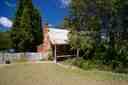
  1. Great! As you approach our first stop, Blundells Cottage, take a look around for a quaint stone cottage nestled among lush greenery. You'll notice a charming white picket fence…더 보기간략히 보기

    Great! As you approach our first stop, Blundells Cottage, take a look around for a quaint stone cottage nestled among lush greenery. You'll notice a charming white picket fence surrounding the property and a distinct rust-colored tin roof. A tall evergreen tree stands guard to the left of the cottage, which makes it pretty hard to miss. The warm stone walls and old brick chimney give it a cozy, historic vibe. Blundells Cottage is a heritage-listed gem from about 1858, located on the northern shore of Lake Burley Griffin. This six-room stone cottage was built by George P. Campbell for his ploughman, William Ginn, who lived here with his family until 1874. Flora and George Blundell then moved in and stayed until around 1933. Flora was a midwife, and George was Campbell's bullock driver. Talk about a power couple! In 1913, the Commonwealth of Australia acquired the Duntroon estate to be part of the new Federal Capital Territory, but the Blundells got to stay. Later, Harry and Alice Oldfield moved in around 1933. It's quite the stone survivor, added to the Commonwealth Heritage List on July 15, 2005. Interestingly, William Ginn, the original resident, was an immigrant from Hertfordshire, England. He came to Australia in 1857 and quickly made a name for himself as an excellent ploughman, so much so that George Campbell built this very cottage for him. After saving up enough money, William bought his own land in 1874 and moved out. George Blundell, who moved in next, was a local bullock driver and a significant community figure. Married to Flora McLennan, the couple had eight children while living in the cottage. Flora became the local midwife, and George, a pioneer, was even chosen to meet the Duke of York in 1927. Now, as you admire this picturesque cottage, imagine the stories and history that these walls have witnessed. It's like stepping into a well-worn but cherished book! Want to explore the the ginn family, the blundell family or the the oldfield family in more depth? Join me in the chat section for a detailed discussion.

    전용 페이지 열기 →
  2. Alrighty, you're getting close to the National Emergency Services Memorial! Look to your right, just ahead on the northern shore of Lake Burley Griffin at the southern end of…더 보기간략히 보기

    Alrighty, you're getting close to the National Emergency Services Memorial! Look to your right, just ahead on the northern shore of Lake Burley Griffin at the southern end of Anzac Parade. You’ll see a stunning outdoor sculpture and a frieze that will catch your eye. Now that you've spotted it, let's dive in! The National Emergency Services Memorial was dedicated in July 2004, a time when we all still thought flip phones were cutting-edge. Designed by Aspect Melbourne Pty Ltd, this memorial bears a lot of heart. The frieze bas relief, crafted by artist Charles Anderson, tells quite the story, and the outdoor sculpture by Darryl Cowie is a true masterpiece. What's the scoop on this memorial? It’s here to honor the countless men and women who serve in Australia's emergency services, the real-life superheroes. It's a spot for reflection, to remember those who have fallen or perished while doing their brave duties. Picture it as a heartfelt 'thank you' from the nation, dedicated by none other than The Hon. John Howard MP, Prime Minister of Australia, on 12 July 2004. So take a moment here, breathe in the fresh air, and give a nod to the heroes who keep us safe. And remember, if you ever run into someone from the emergency services, say thanks-they've earned it!

    전용 페이지 열기 →
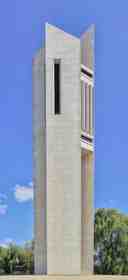
  3. As you're walking along the edge of Lake Burley Griffin, look to your left and you’ll spot the impressive National Carillon towering over the landscape. It’s hard to miss this…더 보기간략히 보기

    As you're walking along the edge of Lake Burley Griffin, look to your left and you’ll spot the impressive National Carillon towering over the landscape. It’s hard to miss this tall, slender structure reaching up to the sky. The Carillon’s three vertical columns, with their smooth, cream-colored surfaces and bold, architectural lines, look almost like a modern-day fortress or a giant flute on steroids. Keep an ear out for the melodic chimes it emits. Now let’s dive into the story behind this majestic musical marvel: The National Carillon, situated on Queen Elizabeth II Island in Lake Burley Griffin, is a towering tribute to Canberra's history and a gift from the British government commemorating Canberra's 50th anniversary as the national capital. Imagine 57 bells, each with its own voice, ranging from a bass bell weighing a hefty 6,108 kg to the petite treble bell tipping the scales at just 8 kg! This structure, designed by the Western Australian firm Cameron Chisholm Nicol and officially opened by Queen Elizabeth II on 26 April 1970, stands at an impressive 50 meters. The three columns symbolize the partnership between Britain, Australia, and the City of Canberra, while the chimes remind many of Big Ben’s familiar sound. In 2019, the Carillon got a makeover, adding a new lowest semitone bell named the Ngunnawal bell, honoring the region's first peoples. It also gained a new highest bell, stretching the musical range to nearly five octaves. With its strong, bold shapes and vertical lines, the tower is a prime example of late twentieth-century Brutalist architecture. The National Carillon chimes every quarter-hour, treating the area to a mini concert, and often hosts longer recitals. Want to hear the best tunes? Stick around within 100 meters of this melodious monument, and you won’t miss a beat!

    전용 페이지 열기 →
11개 정류장 더 보기정류장 적게 보기expand_moreexpand_less
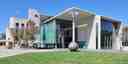
  1. Alright, keep your eyes peeled to your right as you approach! You can't miss the National Gallery of Australia with its modern, angular architecture. The building is primarily…더 보기간략히 보기

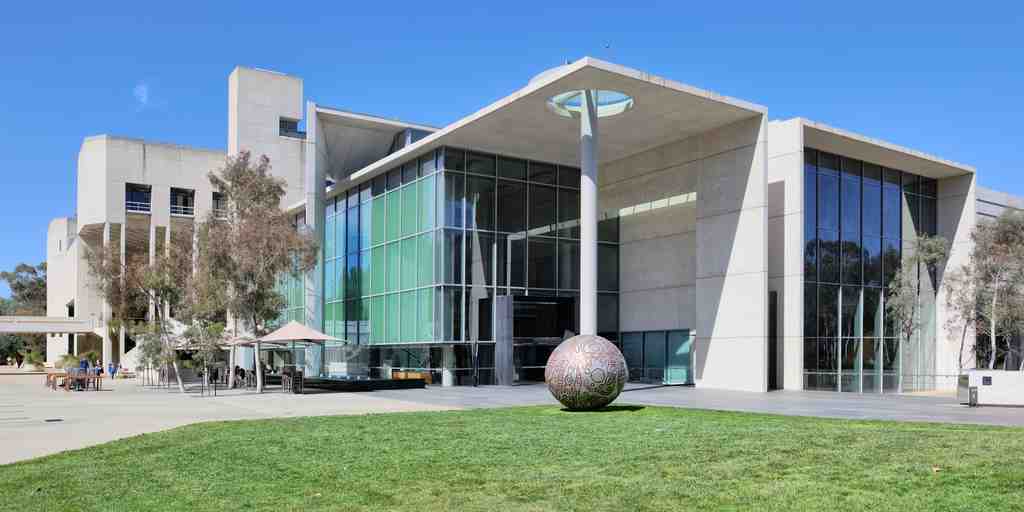
    Alright, keep your eyes peeled to your right as you approach! You can't miss the National Gallery of Australia with its modern, angular architecture. The building is primarily made of concrete with large glass windows that give a contemporary feel. Notice the geometric shapes and the stark, clean lines of the structure. Right in front of the entrance, you'll see an intriguing, large spherical sculpture covered with intricate designs. Now, let's dive into some fun facts about this marvelous place. The National Gallery of Australia, also known as the NGA, boasts an impressive collection of over 166,000 works of art. That's like having a football stadium packed with paintings and sculptures! Established in 1967, the gallery was the brainchild of several Australian prime ministers, helped along by an enthusiastic lobbying effort by the celebrated artist Tom Roberts. You can thank the Historic Memorials Committee for the initial rounds of art collection, which included portraits of Australian political figures and landscapes. They were so dedicated to building a permanent home for the art collection that it outlasted two World Wars and several economic downturns. Eventually, in 1967, Prime Minister Harold Holt green-lit the construction of the gallery, securing its place in Canberra's thriving cultural landscape. The design process was quite the adventure too! The location kept shifting due to the grand layout plans of the Parliamentary Triangle. But finally, after a design competition in 1968, the NGA found its striking look thanks to architect Colin Madigan. So, as you stand here now, just think: this place is not just a museum, but a testament to persistence, artistic spirit, and a lot of wrangling over government plans. Enjoy your visit and immerse yourself in the incredible world of Australian and international art! Seeking more information about the establishment, building and garden or the directorship? Ask away in the chat section and I'll fill you in.

    전용 페이지 열기 →
  2. Now, let's dive into the treasure trove that is the National Gallery of Australia Research Library and Archives! This esteemed library has held its reputation as a pre-eminent art…더 보기간략히 보기

    Now, let's dive into the treasure trove that is the National Gallery of Australia Research Library and Archives! This esteemed library has held its reputation as a pre-eminent art library in Australia since the time Margaret Shaw was appointed as the second Chief Librarian in 1978, three years before the Gallery’s grand opening! What's spectacular here? Well, the Research Library is a resource powerhouse with a Reference Service open to the public online via the National Gallery website. This library has its fingers in many pies, partnering with Wikimedia Australia to host Know My Name edit-a-thons since 2020. These events are dedicated to shining a light on the contributions of Australian women artists. The library’s holdings are a goldmine covering a wide span of art history. Some of their unique strengths include Aboriginal and Australian art, Asian textiles, global contemporary art, and specific gems like Ballets Russes, and rare finds from African, Oceanic, and Pre-Columbian art. But wait, there's more! They have special collections of fragile and rare materials: everything from the 19th-century auction sales to the Paris Salon catalogues. And there's a massive Ephemera collection with over one million items, including press clippings, exhibition flyers, and more, all meticulously preserved. The Archives and Manuscripts collection is nothing short of legendary. It contains personal papers from major Australian artists and significant institutions, capturing a vivid history of Australian visual arts. And for the audio-visual buffs, the library holds an invaluable collection of interviews and recordings, like the James Gleeson Oral History Collection, recognized by UNESCO for its cultural heritage significance. So, while you’re here, take a moment to appreciate this incredible repository of art knowledge and history. It’s a paradise for art researchers and enthusiasts!

    전용 페이지 열기 →
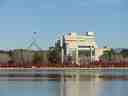
  3. Coming up on your left, you’ll spot the unique and imposing structure of the High Court of Australia Building. It stands majestically on the shore of Lake Burley Griffin and is a…더 보기간략히 보기

    Coming up on your left, you’ll spot the unique and imposing structure of the High Court of Australia Building. It stands majestically on the shore of Lake Burley Griffin and is a prime example of Brutalist architecture. To help you find it, look for a large, multi-tiered concrete building with striking vertical lines and substantial use of glass. The High Court of Australia Building has been the courthouse’s permanent home since 1980. It was the brainchild of architect Christopher Kringas, who was honored with a plaque in the public hall after his untimely death. The construction began in 1975 and was completed in 1980, inaugurated by none other than Queen Elizabeth II on the 26th of May. The building’s architectural significance spans internationally, earning it various accolades, including the Australian Institute of Architects Canberra Medallion in 1980 and the national Enduring Architecture Award in 2007. The High Court’s saga is a fascinating one. Prime Minister Robert Menzies envisioned a grand national capital plan, which included this very court building. After years of planning competitions and architectural feats, Christopher Kringas’s winning design was realized, despite his passing just before the project's physical inception. The result? An architectural marvel of the Brutalist style, complete with a vast 24-meter-high public hall, interconnected by a central public ramp system. The exposed concrete paired with expansive glazing creates a bright, functional environment for justice. So, as you gaze upon this notable edifice, remember the remarkable history and architectural prowess it represents. It’s not just a building; it's a chapter in the story of Canberra’s development and architectural advancement. If you're keen on discovering more about the architecture, interior or the artwork, head down to the chat section and engage with me.

    전용 페이지 열기 →
  4. As you approach the National Portrait Gallery (Australia), you should be on the lookout for a sleek, modern building with large cantilevered concrete blades. These blades frame…더 보기간략히 보기

    As you approach the National Portrait Gallery (Australia), you should be on the lookout for a sleek, modern building with large cantilevered concrete blades. These blades frame the entrance and present a distinct geometrical alignment. You'll notice the building's minimalist facade, characterized by its clean, smooth lines and a series of bays running perpendicular to the Land Axis. The lettering “National Portrait Gallery” is clearly visible on the right side of the building, guiding your steps to the entrance. Welcome to the National Portrait Gallery, where you can mingle with some of Australia’s most notable figures-though in portrait form, of course! Established back in 1998, this gallery moved to its current stunning location on King Edward Terrace in December 2008. You can thank painter Tom Roberts for the initial idea, though it took many decades and even more cups of tea before the gallery finally came into existence. The journey to this dedicated building began in the 1990s with an exhibition called “Uncommon Australians.” This was the brainchild of founding patrons Gordon and Marilyn Darling and it lit the spark that eventually led to the creation of the gallery. The gallery’s first real home was in Old Parliament House, and after hopping around a bit, it finally landed here, in this state-of-the-art building designed by Johnson Pilton Walker. Inside, you’ll find approximately 3000 portraits of prominent Australians, captured through photography, painting, drawing, multimedia, sculpture, and textiles. Portraits of people who have made a mark in their respective fields are displayed here, giving the term "people-watching" a whole new meaning! The National Portrait Gallery also hosts two prominent awards. The National Photographic Portrait Prize is a yearly treat for photography enthusiasts, boasting a nifty A$30,000 prize. Meanwhile, the Darling Portrait Prize for painted portraits offers a whopping A$75,000 prize and runs biennially-thank you, L. Gordon Darling! So, step inside, and let these faces tell you their stories, beaming with pride and a dash of historical intrigue. Enjoy your visit! For a more comprehensive understanding of the the permanent collection, prizes or the the building, engage with me in the chat section below.

    전용 페이지 열기 →
  5. Coming up on your left is the Director of National Parks - not to be confused with a park ranger handing out parking tickets! You'll notice the building is a modern office…더 보기간략히 보기

    Coming up on your left is the Director of National Parks - not to be confused with a park ranger handing out parking tickets! You'll notice the building is a modern office structure, part of the government complex, with sleek lines and a professional look. Keep an eye out for its distinct government signage and maybe spot a few folks busy in conversation or heading into meetings. Now, let me tell you a bit about what goes on inside. The Director of National Parks is like the maestro of a very special orchestra. Instead of music, though, this maestro is conducting the preservation and management of some of Australia’s most precious natural areas - both on land and at sea. It's all done under the Environment Protection and Biodiversity Conservation Act 1999, or EPBC Act. Think of it as their “nature-saving playbook.” This entity, sometimes colloquially known as Parks Australia, might have changed names a few times - like every good spy in the movies - but its mission remains noble: to manage six Commonwealth national parks, the Australian National Botanic Gardens, and 60 marine parks. This includes places where land meets sea in pristine beauty, and yes, even islands far off the coast. Currently, the Director of National Parks is Ronald 'Ricky' Archer - the first Indigenous person to hold this significant position. He’s leading efforts not just for today’s environment but for future generations too. Ricky keeps quite busy with a list of responsibilities, from managing parks and protecting biodiversity to carrying out research and working with international counterparts. Remember, this office is behind those stunning visages of Kakadu National Park, Uluru-Kata Tjuta National Park, and many more. It’s like the unsung hero ensuring we always have these natural marvels to marvel at. So, next time you admire a national park or marine wonder, give a nod to the Director of National Parks - they’re the behind-the-scenes pro making sure nature’s show always goes on. Now, onwards to our next stop! Seeking more information about the legal status and history, responsibilities or the portfolio and delegations? Ask away in the chat section and I'll fill you in.

    전용 페이지 열기 →
  6. As you're walking, look to your right and you'll notice a beautiful, formal garden set against the backdrop of Old Parliament House. You'll spot neatly arranged rose beds, lined…더 보기간략히 보기

    As you're walking, look to your right and you'll notice a beautiful, formal garden set against the backdrop of Old Parliament House. You'll spot neatly arranged rose beds, lined with green lawns and mature trees offering some shade. The timber pergolas and well-kept pathways add to the picturesque atmosphere. There's even a bench under a tree inviting you to sit and enjoy the view. Welcome to the National Rose Gardens! Picture yourself stepping into history - these heritage-listed gardens in Parkes, Canberra were Australia's first national gardening project, dreamed up in 1926 and opened in 1933. It's a blooming symbol of cooperation, with roses contributed by all States in Australia. These gardens are not just any rose collection but a throwback to early 20th-century garden design, showcasing the best varieties from Australia and overseas. The roses were arranged with a formal style in mind, right in front of the then Provisional Old Parliament House, adding a dash of floral elegance to the building’s facade. Can you imagine it? Over 2,000 roses planted, each garden bed crafted to resemble the petals of a fully opened rose. Enclosed by mature trees, this green oasis offers a changing tapestry with the seasons, providing wind protection and a picturesque hangout spot for locals and visitors alike. Even Thomas Weston, the first officer in charge of afforestation in Canberra, must’ve been proud when his ashes were scattered here. The gardens received a royal touch-up for Queen Elizabeth II's visit in 1954, replacing many roses and adding new garden beds. Since then, they've kept evolving, with regular updates to keep the blooms fresh and fabulous. So, take a deep breath and let the fragrant roses tell you stories of the past. Enjoy your stroll!

    전용 페이지 열기 →
  7. Alright, as you continue along the path, keep your eyes peeled to the right. You’ll soon see a grand building with strong symmetrical facades. Look for tall windows arranged in…더 보기간략히 보기

    Alright, as you continue along the path, keep your eyes peeled to the right. You’ll soon see a grand building with strong symmetrical facades. Look for tall windows arranged in vertical bays and a central entrance highlighted with tall, formidable columns leading to an expressed portico. Welcome to the John Gorton Building! This heritage-listed landmark is the administrative hub for the Department of Climate Change, Energy, the Environment and Water. Originally known as the Administrative Building, it stands proudly in Canberra's Parliamentary Triangle, showcasing the Inter-war Stripped Classical style. Started in 1924, designed in 1946, and completed in 1956-yup, it took quite a journey to get here, just about as long as a kangaroo hopping across the Outback! Its features include symmetrical facades, vertical bays, and classical column forms, making it a true architectural gem in Canberra. The building also adds to the cultural landscape of the Parliamentary Triangle, standing in a strategic location that was part of the grand vision of the 1916 Griffin plan. It’s got quite the neighbor across the central lawns too-the Treasury Building, making the area look like the carefully laid out masterpiece it was meant to be. First occupied by the News and Information Bureau, the Department of the Interior, the Department of Health, and the Department of External Affairs, this building has seen many important decisions and developments over the decades. Renamed in 1999 in honor of Australia's 19th Prime Minister, John Gorton, it’s now a critical piece of Australia’s federal operations puzzle. Oh, and about the bunker-it’s infamous! Built with steel-lined walls and a concrete superstructure in the 1970s to keep sensitive communications secure, it might not be as dramatic as Hollywood makes it out to be, but it sure adds a nice touch of mystery to the building’s story. So, take a moment to admire its grandeur and think about all the pivotal moments in Australian history that have passed through these very corridors!

    전용 페이지 열기 →
  8. Look to your right and you can't miss it! The grand two-story heritage-listed building with "National Archives of Australia" emblazoned on its façade is a sight to behold. It's a…더 보기간략히 보기

    Look to your right and you can't miss it! The grand two-story heritage-listed building with "National Archives of Australia" emblazoned on its façade is a sight to behold. It's a symmetrical structure with a white facade and red brick foundation, flanked by lush green trees on either side. The entrance is welcoming, featuring a pair of stairways that lead up to the main doors. Oh, and those flagpoles at the front? They add a stately touch, guiding you right to the door! Now, onto the fun facts about this landmark: The National Archives of Australia (NAA) is like the nation's epic filing cabinet! It’s the official haven for all federal government documents, storing everything from significant historical records to quirky government memos. Originally known as the Commonwealth Archives Office, this place has a rich history of collecting and preserving documents that tell Australia's story. Picture this: at one point, after World War I, the Commonwealth National Library (later dubbed the National Library of Australia) was the one collecting all these precious government records. Fast forward to 1944, the library got its first archives officer, and by 1961, the Commonwealth Archives Office spread its wings as a separate entity from the library, later being named the Australian Archives in 1975. Now, here’s a tricky bit: in 1966, a guy named Peter Scott revolutionized how records were handled. He introduced the Australian Series System, which allowed for a flexible way to organize records that could accommodate various agencies and name changes. Think of it as the ultimate rebranding solution! In 1983, the Archives Act gave these records their first legislative protection, marking a significant milestone. Then, drum roll please, in February 1998, the Australian Archives got a grand new name: the National Archives of Australia! With roles that include preserving the nation’s valuable records and promoting excellent information management practices, the NAA is more than just a storage space. It’s constantly buzzing with exhibitions, educational programs, and even publishes books and guides to its treasures. Oh, and did I mention it moved into this gorgeous heritage-listed "East Block" in 1998? This building, built in 1926, has served many purposes over the years, from housing various government departments to being Canberra’s first post office and telephone exchange. As of June 2017, a purpose-built National Archives Preservation Facility was opened, boasting a massive 17,000 square meters for storage, effectively making it the ultimate time machine filled with Australia’s paper and audio-visual treasures - over 100 km worth! Lastly, here’s a fun tidbit: the popular sections in their collection often include defence service and immigration records, which serve as a goldmine for anyone looking to trace family history. So, as you stand here, you’re looking at a building that’s not just a keeper of records but also an active participant in keeping the story of Australia alive and accessible! Yearning to grasp further insights on the facilities, collections or the recent modernisation efforts and collaborations? Dive into the chat section below and ask away.

    전용 페이지 열기 →
  9. Ah, you’ve made it to the iconic Old Parliament House in Canberra! Look ahead for a grand, white, symmetrical building with a hint of neoclassicism to its design. It's fronted by…더 보기간략히 보기

    Ah, you’ve made it to the iconic Old Parliament House in Canberra! Look ahead for a grand, white, symmetrical building with a hint of neoclassicism to its design. It's fronted by an expanse of green lawn and flanked by impressive flagpoles, all served up with the deliberate simplicity that screams 1920s and 30s architecture. You can’t miss its horizontal lines and that central section with a bit of elevation indicating the main chambers. Now, let's dive into some history: Old Parliament House, formerly known as the Provisional Parliament House, was the home of Australia’s Parliament from 1927 to 1988. Picture the buzz here when it opened on May 9, 1927, as politicians relocated from Melbourne to the new capital, Canberra. It continued to serve as the parliamentary hub until 1988 when the seats of power were moved to the new Parliament House on Capital Hill. Since 2009, this storied building has transformed into the Museum of Australian Democracy, or MoAD, where history buffs and curious minds alike can explore exhibits about the evolution of democracy in Australia. It’s also a lively venue for exhibitions, lectures, and concerts. Originally designed by John Smith Murdoch, the building’s ‘provisional’ nature didn’t stop it from standing the test of time for over 50 years. The exterior captures a Simplified, or “Stripped,” Classical Style, avoiding excessive classical elements but maintaining orderliness and symmetry. The central entrance is framed by strong, clean lines and a sense of harmony in its façade. This three-storey structure was built from Canberra clay bricks and finished with timber and lightweight concrete floors. What’s striking is the use of materials from all over Australia; each state (except South Australia) is represented by different timbers used within. The design cleverly incorporates plenty of natural light through windows, skylights, and light-wells. Maintained under a heritage management plan, the building is not just an artifact of political history but also a shining example of early modern architectural principles. Its grand King’s Hall, parliamentary library, and dining rooms offer a peek into the past with perfect symmetry and classicized forms. So, take your time to admire this piece of history that’s not just a building, but a legacy of Australia’s democratic journey! Curious about the façade and design elements, plan or the king's hall? Don't hesitate to reach out in the chat section for additional details.

    전용 페이지 열기 →
  10. As you approach the Aboriginal Tent Embassy, take a look to your right. You'll see an area with tents and various signs. It’s a bit of an informal setup, directly across the lawn…더 보기간략히 보기

    As you approach the Aboriginal Tent Embassy, take a look to your right. You'll see an area with tents and various signs. It’s a bit of an informal setup, directly across the lawn from Old Parliament House. Look for a gathering of tents and banners - this simple yet powerful arrangement marks the spot. The Aboriginal Tent Embassy is not your usual embassy with grand buildings and elaborate offices. Instead, it's a symbol of protest and representation for the political rights of Aboriginal Australians and Torres Strait Islander people. First set up on 26 January 1972, it sprang up under an umbrella to protest against the government's approach to Indigenous land rights. Picture this: four men standing their ground with just a beach umbrella and a few placards, challenging the political tide of the time. What started under that small umbrella has grown into the longest continuous protest for Indigenous land rights in the world. For over 50 years, this site has been an emblem of resistance and a cry for justice, representing grassroots campaigns for land rights, against Aboriginal deaths in custody, and for self-determination and sovereignty. Though it is not an official embassy acknowledged by the government, it serves a significant role in raising awareness and garnering support for crucial issues affecting Indigenous people in Australia. So, as you stand here, remember you're not just looking at a few tents. You're witnessing a powerful ongoing statement about the struggles and rights of Australia's First Peoples. Pretty inspiring stuff, right? And who knew that an umbrella could start such a global conversation! To expand your understanding of the background, 1972: establishment or the 1970s-1990s: temporary relocation, feel free to engage with me in the chat section below.

    전용 페이지 열기 →
  11. As you’re walking down King George Terrace, look to your right for a semicircular network of roads. You’ll spot a striking and serene green space with a unique monument in its…더 보기간략히 보기

    As you’re walking down King George Terrace, look to your right for a semicircular network of roads. You’ll spot a striking and serene green space with a unique monument in its center. The Magna Carta Monument should catch your eye-it’s sheltered by a distinct, wooden, gazebo-like structure sitting atop a curved, undulating base with an artistic black and white pattern. It sits nestled among lush, green grass and shaded by tall, inviting trees, making it quite the picturesque sight. Now, let me tell you a bit about Magna Carta Place in a fun way! So, here you are in Canberra, and you’ve stumbled upon a little piece of medieval history nestled in the heart of the city. Magna Carta Place is home to a monument dedicated by the British Government to Australia back in 1997 to mark the 700th anniversary of the sealing of the Magna Carta by King Edward I. This spot was further graced by the presence of the Australian Prime Minister, John Howard, who unveiled the monument in 2000, just before Australia celebrated its centenary of federation in 2001. This monument sits among a lovely semicircular road network-King George Terrace, Queen Victoria Terrace, and Langton Crescent. It's like taking a mini time machine tour with a 1297 copy of the Magna Carta itself on display just a stone’s throw away in the Parliament House! It’s not just history; it’s like a living, breathing piece of it, nestled right here in Canberra’s green oasis.

    전용 페이지 열기 →

자주 묻는 질문

투어는 어떻게 시작하나요?

구매 후 AudaTours 앱을 다운로드하고 교환 코드를 입력하세요. 투어를 바로 시작할 수 있습니다 - 재생을 탭하고 GPS 안내 경로를 따라가시면 됩니다.

투어 중 인터넷이 필요한가요?

아닙니다! 시작 전에 투어를 다운로드하면 완전히 오프라인으로 즐길 수 있습니다. 채팅 기능만 인터넷이 필요합니다. 모바일 데이터 절약을 위해 WiFi에서 다운로드하시는 것을 권장합니다.

이것은 가이드가 안내하는 단체 투어인가요?

아닙니다 - 이것은 셀프 가이드 오디오 투어입니다. 폰을 통해 오디오 나레이션을 들으며 나만의 속도로 독립적으로 탐험합니다. 투어 가이드도, 단체도, 일정도 없습니다.

투어는 얼마나 걸리나요?

대부분의 투어는 60-90분이 소요되지만, 속도는 전적으로 본인이 조절합니다. 원할 때 언제든지 일시정지하거나, 정류장을 건너뛰거나, 휴식을 취하세요.

오늘 투어를 끝낼 수 없으면 어떻게 하나요?

괜찮습니다! 투어는 평생 이용이 가능합니다. 원할 때 언제든지 일시정지하고 다시 시작하세요 - 내일, 다음 주, 또는 내년에도. 진행 상황이 저장됩니다.

어떤 언어를 이용할 수 있나요?

모든 투어는 50개 이상의 언어로 이용 가능합니다. 코드를 교환할 때 원하는 언어를 선택하세요. 참고: 투어 생성 후에는 언어를 변경할 수 없습니다.

구매 후 투어는 어디에서 이용하나요?

App Store 또는 Google Play에서 무료 AudaTours 앱을 다운로드하세요. 교환 코드(이메일로 전송됨)를 입력하면 라이브러리에 투어가 나타나며, 다운로드하여 시작할 수 있습니다.

verified_user
만족 보장

투어가 마음에 들지 않으시면 환불해 드립니다. 문의: [email protected]

안전한 결제

Apple PayGoogle PayVisaMastercardPayPal

AudaTours: 오디오 투어

재미있고, 경제적이고, 자유로운 셀프 가이드 워킹 투어

앱 체험하기 arrow_forward

전 세계 여행자들에게 사랑받고 있습니다

format_quote 이 투어는 도시를 보는 정말 좋은 방법이었습니다. 이야기들이 너무 대본처럼 느껴지지 않으면서도 흥미로웠고, 나만의 속도로 탐험할 수 있어서 좋았습니다.
Jess
Jess
starstarstarstarstar
Tbilisi 투어 arrow_forward
format_quote 관광객처럼 느끼지 않으면서 Brighton을 알아가는 훌륭한 방법이었습니다. 내레이션에 깊이와 맥락이 있었지만 과하지 않았습니다.
Christoph
Christoph
starstarstarstarstar
Brighton 투어 arrow_forward
format_quote 크루아상을 한 손에 들고 아무 기대 없이 시작했습니다. 앱이 그냥 자연스럽게 함께해 주는 느낌이에요, 부담도 없고, 그냥 나와 이어폰과 멋진 이야기들.
John
John
starstarstarstarstar
Marseille 투어 arrow_forward

무제한 오디오 투어

전 세계 모든 투어의 잠금을 해제하세요

0 투어·0 도시·0 국가
all_inclusive 무제한 탐험