セント・オールバンズ・オーディオツアー:コットンミルの伝説、酒宴、失われた修道院
中世の修道院の廃墟となった壁には、獰猛な修道女たちの物語が隠され、普通のパブは何世紀にもわたる秘密の協定や騒々しい反乱を覆い隠しています。セント・オールバンズは単なる歴史ではなく、すべての通りに織り込まれたドラマの層であり、発見されるのを待っています。 このセルフガイド・オーディオツアーは、コットンミル、ソップウェル修道院、ザ・ホワイト・ライオン、そしてイングランドの王冠が危機に瀕した戦場へとあなたを導きます。ガイドブックがしばしば無視する隠された物語を発見するためのチケットです。 強盗の一団がソップウェルの修道女たちの穏やかな生活を襲ったとき、何が起こったのでしょうか?王室の陰謀が渦巻く夜、ザ・ホワイト・ライオンの梁の裏に消えたのは誰でしょう?そして、30分の混乱の中で、裏庭の泥だらけのブーツがどのようにして国家の運命を覆したのでしょうか? 廃墟と石畳の間を歩き、曲がり角ごとに新たな陰謀が明らかになります。足元に戦いの響きを感じ、ろうそくの灯る片隅に笑い声が残る—セント・オールバンズは、あなたが動くにつれて変貌します。 再生ボタンを押して、影が石にまとわりつくセント・オールバンズの秘密を明らかにしましょう。
ツアーのプレビュー
このツアーについて
- schedule所要時間 30–50 mins自分のペースで進める
- straightenウォーキングルート 3.6kmガイド付きパスに沿って進む
- location_on
- wifi_offオフライン対応一度のダウンロードでどこでも使える
- all_inclusive無期限アクセスいつでも、ずっと再生可能
- location_onソップウェル修道院から開始
このツアーのスポット
The Priory of St Mary was set up by Geoffrey de Gorham, the abbot from nearby St Albans Abbey, right here on top of an old hermit’s retreat. Picture nineteen noble nuns, robed in…もっと読む折りたたむ
The Priory of St Mary was set up by Geoffrey de Gorham, the abbot from nearby St Albans Abbey, right here on top of an old hermit’s retreat. Picture nineteen noble nuns, robed in black, bustling between the dormitory and the chapter house, with the aroma of herbs from the kitchen gardens drifting by. Even a royal shadow touched this place: King Henry III himself once granted a yearly sum-imagine getting a royal paycheck!-to keep their chaplain well-fed and well-paid. But peaceful as it was, trouble did occasionally come knocking. Or in this case, barging! In 1429, the dastardly robber William Wawe and his ragtag crew tried to plunder the priory. Can you hear the chaos-shouts, banging doors, nuns gasping and rushing to safety? Lucky for the sisters, their neighbors came to the rescue and drove the villains away. A regular medieval action movie, minus the slow-motion. Among the priory’s legends was Juliana Berners-a prioress in the 15th century, who may have actually penned the “Boke of St Albans,” an early collection about hawking, hunting, and fishing. Talk about a surprising hobby for a nun! Who would have thought the abbess would rather be bird-watching than sermonizing? Fast forward to 1539-King Henry VIII is dissolving monasteries, and Sopwell Priory doesn’t escape his keen eye. The nunnery was sold to Sir Richard Lee, a knight with a taste for grand design. He wasn’t exactly sentimental: down came the priory, up went Lee Hall. But he liked a good fireplace, so he left one in the nave of the old church. Later, Lee’s ambitions grew: he built Sopwell House, filled it with laughter and the sound of feasts in its great hall. Over centuries, the estate changed hands, faces, and fortunes, until eventually, most of it was carted away or left to crumble. By the late 1700s, it was already turning into the romantic ruin you see now. So as you take in the quiet stones, the breeze on Cottonmill Lane, and maybe even read a bit of modern graffiti, remember that you’re standing on ground that’s seen nuns, robbers, knights, and kings. This ruin is more than just bricks; it’s a storybook of saints, sinners, and a few unexpected surprises!
専用ページを開く →Right in front of you, you’ll spot The White Lion with its white-painted facade and a pub sign swinging gently above the door-it’s the building with the bold blue sign, nestled…もっと読む折りたたむ
Right in front of you, you’ll spot The White Lion with its white-painted facade and a pub sign swinging gently above the door-it’s the building with the bold blue sign, nestled close to the street alongside a row of charming houses. Now, take a deep breath-can you smell that? Maybe a faint trace of ale or the ghostly scent of a roast dinner! This spot has seen more than a few centuries of laughter, trouble, and secrets. The White Lion dates back to the late 1500s, meaning it’s been here since Shakespeare’s time. Underneath its modern face, there’s an old timber frame holding up the walls, but don’t bother peeking through the bricks to see the beams-they’re well hidden! Oh, the stories this place could tell: think of weary coachmen bursting in from the rain, soldiers swapping tales by candlelight, or even secret meetings during stormy nights. Its slightly jutting upper floor is a little nod to medieval architecture, as if the building is leaning in to listen to the gossip on the street below. Despite all the centuries gone by, The White Lion is still a lively gathering spot (now owned by Punch Taverns, at least the last time I checked). So next time you fancy a pint, remember-you’re stepping into a slice of history that’s witnessed more St Albans drama than any pub quiz could handle. Cheers to that-just don’t ask the lion on the sign to fetch your drink; I hear he’s terrible at pouring.
専用ページを開く →To spot the landmark commemorating the First Battle of St Albans, look ahead for a historical display or plaque near the street intersection, right where the old narrow streets…もっと読む折りたたむ
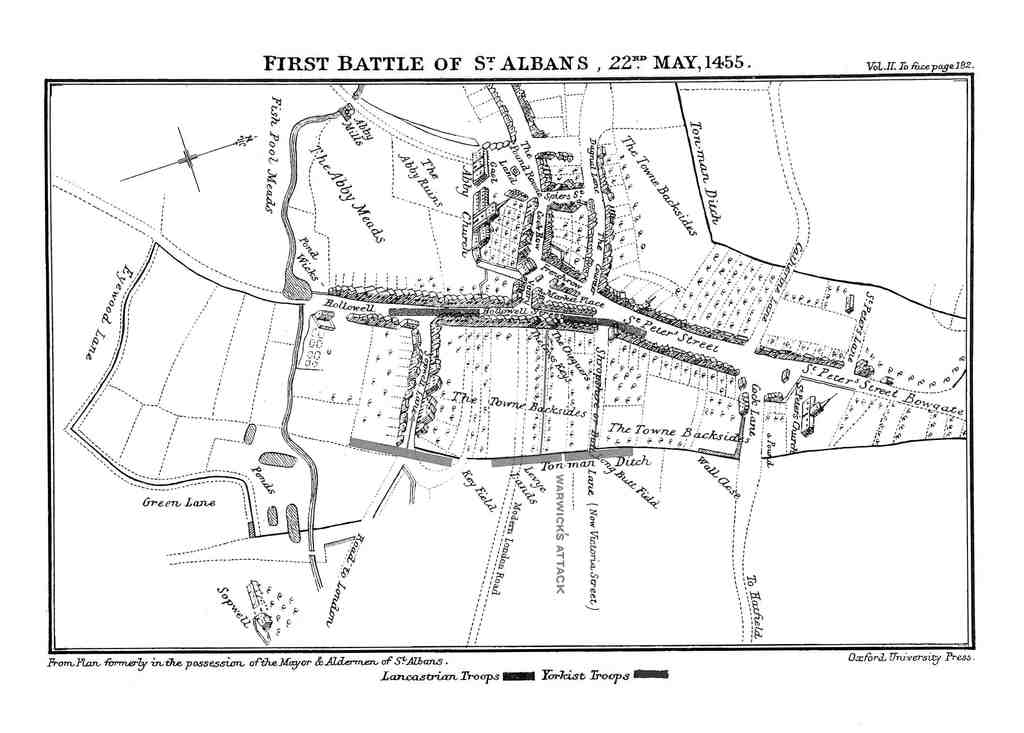
To spot the landmark commemorating the First Battle of St Albans, look ahead for a historical display or plaque near the street intersection, right where the old narrow streets converge-just like the ones marked on the map, often set where the bustling present meets the past. Welcome, time traveler! You’re now standing on ground that once rumbled with the thunder of marching boots, clashing steel, and a bit of royal panic. Let’s step back to the morning of May 22, 1455-St Albans, twenty-two miles north of London, is no quiet market town today. Instead, it’s the opening chapter of the Wars of the Roses, a dynastic squabble so famous that people still squabble about who won at the local pubs. The main characters couldn’t be more dramatic. Richard, Duke of York-a man who just wanted a little recognition, perhaps the crown-arrives with thousands of supporters, including the mighty Nevilles. On the other side, Edmund Beaufort, Duke of Somerset, is desperate to stay in the king’s favor after some rather embarrassing losses in France. King Henry VI, poor soul, battles his own mind as much as his enemies, having just recovered from a mysterious illness that left him unfit to rule. Rumor has it, the only thing more fragile than Henry’s health was his grip on his crown! Knights and soldiers crowd the winding, medieval streets you see around you. Imagine the tension as heralds, dressed like rejected chess pieces, shuttle messages back and forth under the watchful eyes from St Peter’s Street and the Tonman Ditch. St Albans’ citizens peep from doorways and taverns-one of which, the Castle Inn, will become a very famous holdout in about half an hour. Richard of York tries one last time to parley. He asks the king: “Hand over Somerset, please! He’s got some explaining to do.” King Henry’s reply is less than diplomatic. Picture a king, finally having a good day, shouting, “By the faith I owe to St. Edward and the crown, I’ll destroy every last one of you!” You can almost hear the medieval equivalent of a mic drop-except it’s a royal proclamation instead. Negotiations? Over. Suddenly, chaos erupts! Arrows whistle through the air. Metal bangs against wooden barricades set up in these very lanes. The Yorkists surge down the alleys near St Peter’s Church and the barricades of Sopwell Lane, but they’re met with stubborn resistance. For a few nerve-wracking minutes, it looks like no one can break through. But then, young Richard Neville, the future “Kingmaker” Warwick, sneaks through gardens and backstreets with his men. Imagine him darting behind hedges, mud on his boots, appearing suddenly in the marketplace-where the Lancastrian soldiers are relaxing, some with their helmets off, convinced it’s going to be a quiet lunch hour. Surprise! The Yorkists storm into their midst, and the rout begins. Somerset, realizing his number’s up, tries to hold out in the Castle Inn. He charges out, sword whirling, but is cut down in the chaos. Northumberland tries for the same escape and falls too. Even poor Lord Clifford is hacked down in the lanes, and above it all, arrows from Warwick’s archers zip towards the king’s party, injuring both Henry and the Duke of Buckingham. And just like that, within half an hour, the fighting is done. Less than sixty men killed, but the future of England is forever changed. York’s daring gamble has paid off-he’s captured King Henry, the ultimate bargaining chip. In the days after, York will ride back to London with the king in tow, eventually to be named Protector of England. Somerset, Northumberland, Clifford-all dead in these very streets. The Wars of the Roses have started, and the world will never quite be the same. The drama here was so famous that even Shakespeare couldn’t resist making it the climax of his play “Henry VI, Part 2.” So next time someone tells you St Albans is just a sleepy little town, you can say, “Not on my watch!” And for tonight, maybe check if there’s a pint to be had in the local taverns-just make sure there aren’t any sword fights breaking out in the back! Ready to delve deeper into the background, prelude or the battle? Join me in the chat section for an enriching discussion.
専用ページを開く →
さらに8件のスポットを表示表示するスポットを減らすexpand_moreexpand_less
Look to your left for a grand, creamy-white building with tall columns out front and a formal, almost palace-like presence right on the corner-if you see the structure with a…もっと読む折りたたむ
Look to your left for a grand, creamy-white building with tall columns out front and a formal, almost palace-like presence right on the corner-if you see the structure with a classical, ancient-Greek feel, you’ve found St Albans Town Hall! Alright, traveler, stand tall-just like those columns-and take in this splendid slice of St Albans history! Imagine yourself back in the 1820s, when the old Moot Hall in the Market Place was falling to bits-probably as creaky as your grandad’s knees after a long walk. The local bigwigs and judges had a bit of a bicker over where to put the new town hall. The judges fancied Romeland, but the city leaders insisted on St Peter’s Street, right where you’re standing. Eventually, they agreed, and in 1826, out of the stubbornness (and a sense of style) of St Albans locals, this elegant neoclassical hall was born, designed by George Smith. Now, close your eyes and picture the clatter of carriages and the buzz of market stalls outside, while inside, this building was a hub of excitement and drama-a courtroom and town hall rolled into one. Not only did laws get made and broken here, but in 1851, a storm of controversy brewed inside these very walls. Picture the townsfolk gossiping on street corners as the Bribery Commission rolled in to investigate a scandal so juicy it puts modern reality TV to shame-“cash for votes!” Jacob Bell, a candidate from the Whig Party, tried to buy his way to victory, tossing out £5 notes like confetti. Imagine over 300 locals pocketing their election ‘bonus’-enough for a decent party, I expect! When the dust settled, St Albans lost its spot in Parliament, booted out for bad behavior until 1885. You might say the politicians here learned that cheaters really do never prosper. Or at least, they get caught! Step into the assembly hall-if only with your imagination-and you’d find echoes of elegant dances and serious council debates, with the smell of wax polish and a sense of anticipation in the air. The courtrooms were octagonal, paneled, and no doubt filled with the nervous shuffles of defendants and the rustling robes of judges. St Albans had its own special status-the Liberty of St Albans-and held quarter sessions here, with legal arguments echoing off the paneling. But after the Courts Act of 1971, the days of dramatic crown court cases here came to an end, and by the 1990s, justice moved down the road to Bricket Road. As St Albans grew, the city council set up its HQ here too, with pomp, circumstance, and more than a few heated debates, I’m sure. Then in 1966, things got a bit too cramped, and the council packed up for a newer, shinier building. But the story didn’t end-oh, no! After a £7.75 million makeover (talk about a glow up), the old town hall was reborn as the St Albans Museum in 2018. Now, the whispers of deals, debates, and even a potential bribe or two live on, with locals and visitors alike wandering its historic halls. So give a nod to the pillars-they’ve held up a lot more than just a roof over the years!
専用ページを開く →The St Albans Museums are right in front of you - just look for the big, grand building with tall pillars and a classic old-town feel, sitting proudly in the middle of the market…もっと読む折りたたむ
The St Albans Museums are right in front of you - just look for the big, grand building with tall pillars and a classic old-town feel, sitting proudly in the middle of the market square. Now, imagine you’re standing where history never stays still! St Albans Museums is more than just a building - it’s actually a whole collection of amazing places scattered around the city, all cared for by the local council. Here in front of you is the St Albans Museum + Gallery, a place bursting with stories from the city’s distant past and its lively artistic side today. This impressive spot wasn’t always a museum; it used to be the old town hall, where serious folks argued over council business. But, don’t worry, those days are long gone - unless you hear the distant echo of a mayor’s gavel! Step inside, and you’d find galleries that change more often than the British weather. One day you might stroll past Roman mosaics; the next, you’re face-to-face with cutting-edge local art. In fact, the museum loves a surprise - with new, never-before-seen exhibits always popping up (like that sock you lost in the laundry, only a lot more valuable!). There’s mystery too, as tons of amazing artifacts are tucked away in storage, just waiting for their big moment in the spotlight. And that’s not all: this museum isn't alone. It keeps the keys to the fascinating Verulamium Museum over by the park, packed with Roman secrets, and even oversees Sopwell Priory’s ruins and the medieval Clock Tower. Just picture archaeologists in the 1930s, dust swirling as they dug up treasures from the days when St Albans was a bustling Roman city. People here have been uncovering stories for centuries. So, whether you love a good mystery, a bit of drama, or just discovering something new, the St Albans Museums offer a little adventure every time you visit. Take a deep breath - you’re surrounded by history, art, and maybe even an echo or two of the past!
専用ページを開く →Just ahead, you’ll spot St Albans Market by the bustling crowd filling the wide street, colourful canopies flapping above the stalls, and a rainbow of bunting stretching between…もっと読む折りたたむ
Just ahead, you’ll spot St Albans Market by the bustling crowd filling the wide street, colourful canopies flapping above the stalls, and a rainbow of bunting stretching between the trees-just follow the lively energy and the scent of street food! Welcome to St Albans Market, the living, breathing heart of the city-where history, shouting traders, and the occasional whiff of fresh bread all collide. Imagine the air busy with all sorts of smells: roasting coffee from a corner stall, fried onions sizzling, people laughing, and the distinctive sound of traders hawking their wares. But this isn’t just any old market-it’s almost as old as England itself! In fact, St Albans Market is the oldest street market in England that still stands on its original site, with traders first setting up shop here way back in the year 860. That’s over 1,100 years ago-back when people thought the best way to keep your market in order was to put the odd troublemaker in the pillory for a few hours. The market was started by Wulsin, the sixth abbot of St Albans Abbey, hoping it would provide the abbey with plenty of coins and help a new town blossom. Even in those early medieval days, the market was a sight to behold! It was carefully arranged, with different sections for everything from fresh meat (the “fleshambles”-try saying that five times fast), to fish, malt, wool, and even a special row just for shoemakers-because apparently your medieval shopping trip wasn’t complete without a new pair of shoes and a sheep or two! By 1287, Wednesdays and Saturdays had become THE official market days-a tradition that survives to this very century. All sorts of drama unfolded here. In 1297, the whole place was almost lost to the crown when John of Berkhamsted was caught playing fast and loose with the weights for bread and ale. For a short while, the king took over, but soon enough the abbey had it back-and by the 1300s, market stalls were slowly turning into permanent shops, some with brick and wood construction that might have lasted nearly as long as your average wheel of cheese. Fast forward to the reign of Henry VIII-who, as you might know, was quite keen on shutting down monasteries-the abbey was dissolved and the market was swept up into crown hands. One poor lessee, Raynold Carte, ended up in the pillory for some misdeed-hard to say whether it was dodgy grain or dodgy moustache, though. After a few years, the market passed into the control of the town. Suddenly, the mayor became the chief market boss, with the terrifying power to fine anyone selling without paying tolls, and-presumably-the even greater power to judge anyone buying dodgy pudding in the pudding shambles. By the 1700s, things started to change. Market days slimmed down, the weekly Wednesday market disappeared for a while, and strange new rules popped up-like forbidding the sale of corn before 10AM, unless the toll had been paid. That’s what I call keeping the grains honest. A fancy new market cross was built in 1703, topped with the figure of Justice and a town pump, so weary shoppers could stay hydrated after all their bargaining. Through the centuries, St Albans Market welcomed bustling trade, Victorian inventiveness, and a few rather stern rules. In the 1800s, the market was so busy it was said to be among the greatest in England. According to one charming Victorian, “The primitive street market, with oil lamps flaming away, and the loud cries of bellicose vendors make it quite captivating.” Lamps, loud voices, and lively trades-that’s the spirit of the place! The 20th century was just as lively-Queen Victoria herself squeezed by the crowds here in 1841, remarking that the town was especially packed on market days. St Albans was always a place on the move; coachloads of tourists, fancy hats from the plait market, and, eventually, the end of trading live animals as shops gained better fridges rather than muddy pens. In modern times, St Albans Market faced new battles-coach travel dipped, profits fell, and then lockdowns threatened to close the old place for good. But markets, like old traders, are tough. In 2020, as the market re-opened, many returning traders had to build their own stalls, just like the old days, but with loads more hand gel. And yet, look around you now: in 2024, St Albans Market was crowned the Best Large Outdoor Market in the whole country. From medieval tolls to pandemic pivots, this is a place shaped by centuries of hustle, drama, and a bit of good-natured chaos. As the laughter drifts through the bunting, it’s clear-come rain or shine, market day in St Albans is the very heartbeat of the city. Now, are you ready to see what treasure you can find among the stalls? The ghosts of old abbots and mayors are probably hoping you go home with something nice… preferably not a wheel of cheese from 1287.
専用ページを開く →Right in front of you stands the Clock Tower, a tall, narrow stone tower with a battlemented roof and a large clock face on its southern side-you can’t miss it, just look up and…もっと読む折りたたむ
Right in front of you stands the Clock Tower, a tall, narrow stone tower with a battlemented roof and a large clock face on its southern side-you can’t miss it, just look up and spot the tower with weathered flint walls and sharp, angular corners amid the surrounding shops. Welcome to the Clock Tower, St Albans! Now, don’t be fooled-this isn’t just a fancy stone box with a clock stuck on top. You’re standing next to England’s only remaining medieval town belfry, built in the early 1400s by some rather rebellious locals who didn’t fancy letting the great Abbey decide when everyone should wake up, work, or wrap things up for the night. Imagine back then, the Abbey’s bells ruled the roost, but the merchants wanted some control over their own lives… and their own time! So, up shot this five-story high tower, built by Thomas Wolvey-a royal mason with a nose for a protest. It rises 64 feet into the air, each floor just a bit smaller than the one below, with strange gargoyles giving you the stink eye from every corner of its roof. Let’s go back in time for a second: the clatter of chisels, the scrape of stone being hauled, the freezing winter air biting against the flint as the last blocks went in between 1403 and 1412, most likely finished by 1405. The builders intentionally put this tower on higher ground than the Abbey, facing it down squarely-like two rivals in a staring contest. And it wasn’t just any old spot, either. The tower sits close to where the grand Eleanor cross once stood-a marker commissioned by King Edward I for his beloved Queen Eleanor, whose funeral procession stopped here in 1291. That cross was knocked about during the Civil War and later swapped out for market buildings, a town pump, and even a grand old drinking fountain, all gone now-hard to keep up with the street furniture around here, really! The exterior is clad in rough flint which catches the winter sun, with elegant freestone corners and a stone string marking every floor. You’ll spot the arches and wide windows all along the bottom, and high up, those clock faces-one historic clue after another. Now, rumor has it the first merchant to suggest building this tower probably had trouble waking up for market. Speaking of markets, the clock tower’s bells weren’t just for show. The smaller Market Bell was used to tell non-freemen when trading could start-if you weren’t a freeman, you had to hang about until 10 a.m. before you could even open your stall. No sneaky early-bird specials here! The bell reads, “Thomas Robins, Mayor of St Albans, 1729,” and was cast by Richard Phelps-a man who must’ve loved making bells, because he did eight more for St Peter’s church just along the way. The Market Bell invited not just trade, but opportunity-and possibly a bit of gossip with your morning onions. But now, listen for the real granddaddy of the bells: Gabriel. With an inscription that claims it was “heaven sent,” this monster of a bell weighs about a ton and is nearly four feet wide. Some think it was cast as far back as the 1330s, long before the tower itself! Gabriel would ring out at 4 a.m. for the Angelus-if you weren’t a morning person back then, tough luck. It tolled curfew, emergencies-like fires, or even the fateful First Battle of St Albans. During the Napoleonic Wars, the tower’s height made it perfect for a semaphore station, those clever shutter-telegraphs sending secret messages across the country. No emails or texts-just a system of flipping boards, with your signal racing all the way to Great Yarmouth in a matter of minutes. Bit less convenient than a mobile app, I admit. Inside, the clock mechanism, installed in 1866, was dreamed up by Lord Grimthorpe, the same chap behind Big Ben’s mechanism in London. That’s right: you’re looking at an ancestor of the British bongs. And during its days, the tower has sheltered clock keepers, housed shopkeepers in its base, and even been nearly demolished-only to be rescued, restored, and celebrated time and again. Today, the tower is lovingly looked after by volunteers, opening its doors on weekends and special occasions-if your legs are up to the challenge, all that stands between you and the top is a quick 93-step spiral staircase. If you get out of breath, don’t worry. You can always blame the altitude-or the excitement of standing amid centuries of rebellion, markets, and the echo of those ancient chimes. So while you gaze up-or maybe set your watch by the old clock-just remember: this isn’t just a tower. It’s a stony reminder of a town determined to call time for itself. And trust me, the view from the top isn’t too shabby either… if you dare the climb. If you're keen on discovering more about the design, bells and clock or the access, head down to the chat section and engage with me.
専用ページを開く →To spot the Fleur de Lys, look for a charming white building with a row of black-trimmed windows, cheerful green window boxes, and an old hanging sign above outdoor wooden tables…もっと読む折りたたむ
To spot the Fleur de Lys, look for a charming white building with a row of black-trimmed windows, cheerful green window boxes, and an old hanging sign above outdoor wooden tables right on bustling French Row. Ah, the Fleur de Lys-imagine this, centuries ago, as you’re standing here, the street would have been alive with the click-clack of horse-drawn carts, the scent of ale wafting out from those very windows, and the cheerful noise of locals and travelers seeking warmth and good company. With its brickwork façade dating to the 1700s, what hides underneath is even older, stretching back to the mysterious Middle Ages. If these walls could talk, I bet they’d compete for loudest storyteller in town! Back then, this was the sort of place where secrets were swapped, plots were hatched, and maybe even a sock or two was lost-especially on market days. Before it was renamed ‘The Snug’ in 2007 and polished up for a new generation, the Fleur de Lys was known as the beating heart of the row. So as you peer at those windows or hear a distant laugh echo from the past, remember: you’re standing where history unfolded, pints were raised, and a good story was always on the next barstool. Careful, though, they say if you listen closely, you can still hear the ghost of a half-finished toast from the Middle Ages-cheers to that!
専用ページを開く →To spot St Albans Cathedral, just look ahead for the massive, creamy stone church with two tall spires flanking a grand, arched entrance and a huge rose window above-the tallest…もっと読む折りたたむ
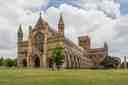
To spot St Albans Cathedral, just look ahead for the massive, creamy stone church with two tall spires flanking a grand, arched entrance and a huge rose window above-the tallest and longest building around, standing proud on the sweeping green. Welcome to St Albans Cathedral! As you stand here, close your eyes and try to imagine footsteps echoing on stone as people have gathered here for over a thousand years. Once upon a time, when this was still Roman Verulamium, a local called Alban sheltered a Christian priest running from persecutors. When soldiers came knocking, Alban bravely swapped clothes with the priest and was marched away himself. As he crossed the wild River Ver, legend says he thirsted on the hill-right here!-and, with a prayer, a spring burst from the ground at his feet. Sadly, standing up for what he believed in led to his execution. The story goes that where his head came to rest, another miraculous well sprang forth. Now, if you ever wondered why the road leading up here is called Holywell Hill, you’ve got your answer! The first church on this spot was a humble shrine over Alban’s grave, attracting pilgrims eager to honour Britain’s very first Christian martyr-talk about a legendary claim to fame. In 793, King Offa of Mercia decided to build an abbey that would both impress and, possibly, show off a bit. By the 11th century, under the strict eye of Abbot Paul of Caen, massive Norman builders arrived, hauling blocks of flint, Roman bricks, and even some marble “recycled” from the old Roman city; that’s eco-friendly medieval style for you! The nave-just ahead of you-stretches a whopping 85 metres, making it the longest in England. But building here wasn’t easy. There were sagging walls, daring repairs, and even earthquakes. In 1250, one unlucky shake sent half the east end tumbling down. Each time disaster struck, new hands took up the challenge-sometimes with rather questionable taste! Take a look at the dramatic west front-it was designed in the 1800s by Lord Grimthorpe, a man with plenty of money, big ideas, and, well… let’s just say very confident opinions. Locals still argue whether his ideas were genius or-let’s be polite-a bit of a disaster. Through the centuries, the abbey was a place of grand processions and quiet prayers, but not always peaceful. Raiding Danes, sacking monks, and even the odd runaway nuns from nearby Sopwell brought plenty of drama. When Henry VIII ordered the Dissolution of the Monasteries in 1539, monks were pensioned off and many treasures carted away. The shiny gold and silver were taken, and showy graves dug up-no wonder the abbey fell into disrepair, with the roof nearly collapsing more than once! At one point in the 1770s, the city almost tore the whole thing down, but the locals loved it too much to see it go. Come closer and you can spot features from almost every era-Norman arches, lofty Gothic spires, and Victorian repairs that are, if we’re honest, a bit of an architectural “mash-up.” Inside, colourful stained glass fills the air with a rainbow wash, and murals on ancient stone tell stories as lively as any comic book. Beneath your feet, over the centuries, thousands-popes, priests, and the odd local hero-have been laid to rest, including the only Englishman ever to become Pope, Adrian IV, who, ironically, was once rejected as a novice by this very abbey. Talk about holding a grudge-or maybe just making it big elsewhere! These days, the cathedral is still buzzing. There are choirs, organ festivals, and laughs echoing under the arches-if you’re lucky, you might even catch the bells ringing from the crossing tower, some cast as recently as 2010 and one dating all the way back to 1290. Seven brand-new statues went up recently, including one, thanks to Covid history, that’s wearing a face mask. Now how’s that for a timeline twist? So whether you’re drawn by miracles, the thrill of hidden tombs, or just fancy a look inside the longest nave in England, this grand old cathedral has a story for you-one where every crumbly stone, every echoing bell, has seen centuries of faith, drama, and a dash of good old British eccentricity. Enjoy your visit…and mind your head inside, those medieval arches don’t always take kindly to tall tourists! To delve deeper into the britain's first christian martyr, modern times or the dean and chapter, simply drop your query in the chat section and I'll provide more information.
専用ページを開く →Just ahead of you, Verulamium Park spreads out like a giant green carpet, with its wide lawns, glistening ornamental lake, and scattered ancient stone ruins, all framed by mature…もっと読む折りたたむ
Just ahead of you, Verulamium Park spreads out like a giant green carpet, with its wide lawns, glistening ornamental lake, and scattered ancient stone ruins, all framed by mature trees-look for the shiny surface of the lake with flocks of waterbirds, and you’ll know you’re in the right spot. Alright, time for a little magic! Picture yourself standing not just in a city park, but on an ancient Roman frontier. Right under your feet once stood the bustling city of Verulamium-yes, Romans in sandals, togas, and the whole nine yards! The park’s name tells the secret: this land remembers chariots, senators, and maybe even the odd goat wandering around two thousand years ago. If you listen closely, you can almost hear the whispers of the past blending with the quacking of the ducks. Now, let’s fast forward from togas to top hats. In 1929, during the Great Depression, St Albans’ city leaders bought these 100 glorious acres from the Earl of Verulam. Not only did they save the land from getting gobbled up by builders, but they also gave local people much-needed jobs-imagine crowds with shovels in hand, digging out the ornamental lake you see sparkling before you. That very lake is now home to an ever-changing line-up of mallards, grand swans, bossy geese, herons, grebes, coots, and even the mysterious pochard, who sounds like he should be solving crimes in a detective story. Keep wandering and you’ll find signs of this history everywhere. On a sunny day, the play area rings with kids’ laughter, and the cafe, Inn On The Park, smells of fresh coffee and cake (sorry to make you hungry!). Adventurous types try out the crazy golf, outdoor gym, or even splash in the seasonal splash park-free from May to September. But here’s where things get spicy-a real archaeologist’s jackpot happened right here in the 1930s. Sir Mortimer Wheeler and his wife Tessa started digging, and what did they discover? An 1800-year-old Roman hypocaust! That’s ancient underfloor heating, and its mosaic floor is so precious, it now lives under a protective structure you can peek inside. The park buzzes with cricket and football games, summer festivals, and a spectacular November fireworks display that would have made any Roman gasp. Oh, and if you hear bells and rowdy laughter floating in from the edge, that’s Ye Olde Fighting Cocks, a pub that’s been serving up pints since before England even had traffic lights-or so the locals say! So whether you’re watching waterbirds glide by, jogging among ruins, or just enjoying the sheer peace of British parkland, remember: there’s a whole city of stories underneath your shoes here. And who knows, maybe your next step lands exactly where a Roman once stood, wondering what the future might look like.
専用ページを開く →Take a look just across the street for a charming, long, white-painted timber-framed building with a jolly row of colourful hanging flower baskets and a row of tall brick chimneys…もっと読む折りたたむ
Take a look just across the street for a charming, long, white-painted timber-framed building with a jolly row of colourful hanging flower baskets and a row of tall brick chimneys poking out of its sloping tiled roof-that’s The Six Bells pub right in front of you. Now, imagine you’re standing on ground soaked with not just rain, but over 2,000 years of history. Long before this cheerful old pub welcomed anyone in for a pint, the Romans were here, sweating it out in their fancy bath house. Picture it: steamy rooms, echoing laughter, and maybe the odd Roman wishing for a cold beer instead of hot water. But, suddenly, the air is split by the sound of chaos-Boudica, the famous warrior queen, sweeps through and the city is ablaze, the bath house left broken and quiet. The city eventually dusts itself off, but the baths don’t return here. Centuries pass. In the 1600s, the pub we see today rises up, its creaky wooden beams almost whispering about those who came before. When it needed a name, someone must have listened to the beautiful peal of the six bells ringing out from nearby St Michael's Church-and the name stuck! Little did they know the church would add even more bells, but tradition has a way of hanging on. More recently, archaeologists, TV crews, and adventurous locals have dug up secrets in the car park and cellars, unearthing whispering traces of the Romans and pub-goers alike. Now, The Six Bells stands safe under its grade II listing, ready to share stories and, if you’re thirsty, maybe a drink or two!
専用ページを開く →
よくある質問
ツアーはどうやって始めますか?
購入後、AudaToursアプリをダウンロードして引き換えコードを入力してください。ツアーはすぐに開始できます。再生ボタンをタップして、GPSガイド付きルートに従うだけです。
ツアー中にインターネットは必要ですか?
いいえ!開始前にツアーをダウンロードしておけば、完全にオフラインで楽しめます。チャット機能のみインターネットが必要です。モバイルデータを節約するため、WiFi環境でのダウンロードをお勧めします。
これは団体ツアーですか?
いいえ、これはセルフガイド式のオーディオツアーです。ガイドや団体、決まったスケジュールに縛られることなく、スマホから流れるナレーションを聴きながら自分のペースで自由に探索できます。
ツアーの所要時間は?
ほとんどのツアーは60〜90分で完了しますが、ペースは完全に自由です。好きな時に一時停止したり、スポットを飛ばしたり、休憩を取ったりできます。
今日中にツアーを終えられない場合は?
問題ありません!ツアーには無期限でアクセスできます。明日、来週、あるいは来年でも、好きな時に再開できます。進行状況は保存されます。
どの言語が利用可能ですか?
すべてのツアーが50以上の言語に対応しています。コードを引き換える際にお好みの言語を選択してください。注意:ツアー生成後に言語を変更することはできません。
購入後、どこからツアーにアクセスできますか?
App StoreまたはGoogle Playから無料のAudaToursアプリをダウンロードしてください。メールで届いた引き換えコードを入力すると、ライブラリにツアーが表示され、ダウンロードして開始できるようになります。
もしツアーを楽しめなかった場合は、返金いたします。お問い合わせ先: [email protected]
以下の決済で安全にチェックアウト