AudaTours logoAudaTours

パンプローナ・オーディオツアー:カスコ・アンティグオの中心を発見する

オーディオガイド11 か所

かつてパンプローナのエスタフェタ通りを雄牛が駆け抜けたが、その突進の下には何世紀にもわたる秘密が隠されている。隠されたスキャンダル、失われた名前、そして石に刻まれた大胆な野望。このセルフガイド・オーディオツアーは、観光ルートから外れて、旧市街のあまり知られていない伝説と生き生きとした鼓動を発見するよう誘います。 革命中にゴイェネチェ宮殿を駆け巡った絶望的なメッセージとは?街が眠る中、真夜中に城広場の片隅で誰が陰謀を企てたのか?そして、なぜある郵便局は手紙を配達するよりも多くの争いを引き起こしたのか? ランナーたちが今も運命を追いかける石畳の峡谷をさまよい、王国の興亡を見守った宮殿のファサードの前に立ち、パンプローナで最も壮大な広場を幽霊のような足跡をたどってください。歴史が足元に迫り、見慣れた通りがスリリングに見慣れないものに変わるのを感じてください。 パンプローナの最も大胆な物語と最も深い謎に飛び込む準備はできていますか?あなたの時間旅行はここから始まります—ただ、飛び交う蹄に注意してください。

ツアーのプレビュー

map

このツアーについて

  • schedule
    所要時間 30–50 mins自分のペースで進める
  • straighten
    ウォーキングルート 2.0kmガイド付きパスに沿って進む
  • location_on
  • wifi_off
    オフライン対応一度のダウンロードでどこでも使える
  • all_inclusive
    無期限アクセスいつでも、ずっと再生可能
  • location_on
    郵便局(通り)から開始

このツアーのスポット

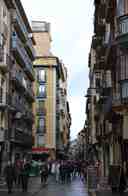
  1. Look ahead for a narrow, lively street lined with colorful buildings, balconies full of iron railings, and bustling with locals and visitors alike. If you spot busy people dodging…もっと読む折りたたむ

    Look ahead for a narrow, lively street lined with colorful buildings, balconies full of iron railings, and bustling with locals and visitors alike. If you spot busy people dodging chalkboard menus and little awnings, congratulations, you’ve found the famous Estafeta street! The buildings stand tall, cozy and close together, making the street feel more like a canyon - an urban river for daily life… and for a certain high-energy event. Alright, take a deep breath. Right now, you’re standing on a street that has seen centuries of change, excitement, and the occasional flying hoof. This is Estafeta Street, one of the most legendary roads in Pamplona’s Casco Antiguo. Its old name was Rúa de la Zaga del Castillo - but apparently, it changed names almost as many times as a bull changes direction! Back in the 1700s, it finally became Estafeta when a post office opened here, so you could say this street delivered more than just mail. Look at these narrow walls. Imagine the pounding of hooves echoing down the way during the San Fermín festival, with crowds packed against the sides, hearts racing. It’s quite a scene! In fact, if you listen closely, you can almost hear the distant cheers and yells, and maybe a scream or two from someone realizing they’re standing right in front of a bull. The street stretches for about 315 meters, slightly sloped and once paved with cobblestones. Bulls and brave runners still race through here every July. And here’s a fun fact for you: at this very spot, bulls sometimes slow down, breaking into two groups. Runners seize the perfect moment to “catch the bull” - which really means “get as close to the horns as your nerves allow!” Would you try it? No pressure, but even the bravest sometimes just run behind the safety of a cafe menu. So, soak in the energy, snap some photos, and watch your step… or you might be swept up in the history, or, worse, mistaken for a bull runner on an off day. Ready to walk onward? Let’s head toward our next stop, Goyeneche Palace!

    専用ページを開く →
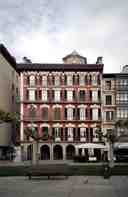
  2. If you’re looking for the Goyeneche Palace, just look to the building right in front of you with its deep red brick and elegant white window frames. It stands out proudly from its…もっと読む折りたたむ

    If you’re looking for the Goyeneche Palace, just look to the building right in front of you with its deep red brick and elegant white window frames. It stands out proudly from its neighbors, rising four stories high, with rows of tall windows and delicate black balconies. Along the ground floor, you can spot a row of wide stone arches-like a series of grand doorways leading into history! If you see lots of windows, elegant arches, and maybe even a few pigeons pacing in front, you’re in the right spot. Now, picture yourself standing here a few centuries ago. You’d catch a whiff of new bricks, hear the distant hum of merchants bartering, and perhaps the clip-clop of horses pulling up to a grand doorway. This is the Goyeneche Palace, born in the hustle and bustle of 18th-century Pamplona, when the city was buzzing with opportunity and ambition. Let me set the scene: Back in the 1700s, Pamplona was the heart of the Kingdom of Navarre. Imagine fancy carriages, nobles showing off, and the sound of hatching plans for bigger, better houses. The Goyeneche family, originally wool merchants from Baztán-yes, wool was the big business, sheep were basically the yuppies of their day-decided this was the place to build their legacy. Pedro Fermín Goyeneche, a man who knew how to seize opportunity (and evidently liked a good building project), raised this stately home right here. The Goyeneche Palace has three facades, but the one facing you, opening onto the bustling Plaza del Castillo, stole the spotlight thanks to some fashionable upgrades in the 19th century. If you peek around the building, you’ll see more sides stretching down Estafeta Street (famous for the running of the bulls!), and toward Bajada de Javier. Look up for a moment-you’ll notice the windows, first straight-lined and proper, and above, graceful rounded arches. Some say those arches are like eyebrows raised in surprise, maybe still shocked by how fast this city changes. Oh, and here’s a fun fact: the Goyeneche family wasn’t just about style. Thanks to a royal order, one of them got to run all the post offices and mail routes in these kingdoms. So if you’re waiting on a letter, you have these folks to thank-or blame for the delay! Take a moment, look at the rich red brick, the carefully carved window frames, and imagine the flurry of activity that once swirled behind these walls-grand banquets, whispered deals, or maybe just someone cursing about lost mail. The past is very much alive here, all you need to do is listen. Ready to carry on? There’s more Pamplona splendor right around the corner!

    専用ページを開く →
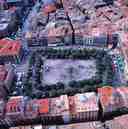
  3. You’re getting close now! Look ahead-Castle Square is easy to spot. It’s a big, open space surrounded on all sides by rows of elegant, old buildings. You’ll see lively terraces…もっと読む折りたたむ

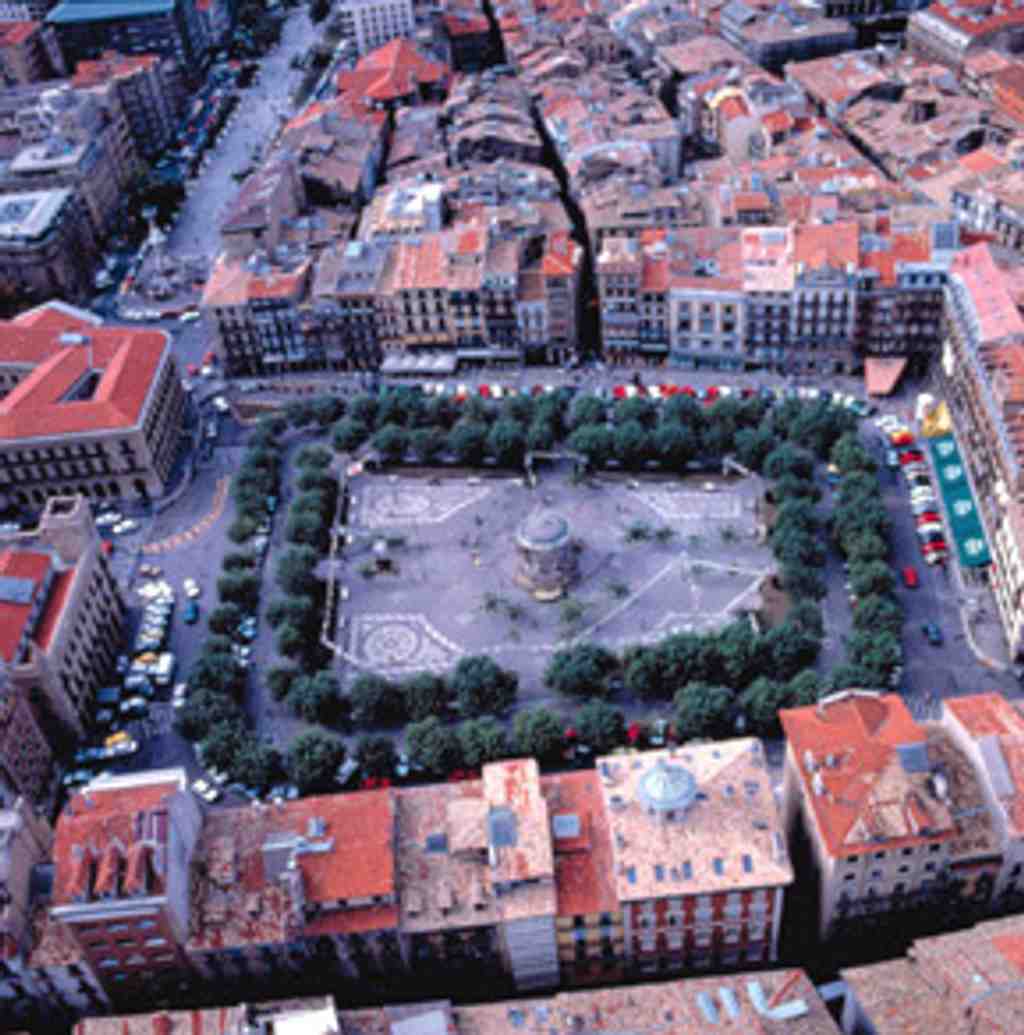
    You’re getting close now! Look ahead-Castle Square is easy to spot. It’s a big, open space surrounded on all sides by rows of elegant, old buildings. You’ll see lively terraces and a beautiful circle of trees, and right in the center stands a large, round, raised bandstand with steps swirling up to it like a cake. If you hear laughter, music, or the clink of coffee cups, you’re definitely in the right place! Welcome to the heart of Pamplona-Castle Square, or as the locals call it, their “living room”! Imagine standing here back in the 1500s, when this was the meeting spot for every big event, every story, and probably a few secrets too. The square stretches out nearly 14,000 square meters, surrounded by buildings that look like a patchwork quilt-different heights and faces, each built in its own time. Don’t bother looking for matches. This isn’t a fashion show, it’s the history of Pamplona, stitched together over centuries! On the south side, you’ll catch a glimpse of the grand Navarra Palace. If you swing your gaze north, you’ll see the old Casino where folks used to dress their best and make fortunes-or lose them-in a single evening. And over to the east is the Baroque Goyeneche Palace, standing there as if it’s still expecting a royal visit. Walk a little, and you might hear the rustle of leaves from the tall plane trees, planted in tidy flower beds. Tucked beneath them, people are forever finding perfect picnic spots or the best places to people-watch. In the square’s very center, proud on its pedestal, the music kiosk has seen decades of swirling skirts and stomping feet. Once, there was a lovely white fountain here, but now this kiosk is the king of Castle Square, hosting concerts, celebrations, and maybe the occasional air guitar contest. Let your eyes wander and imagine this place hundreds of years ago, buzzing with traders, parades, and fierce market gossip. And remember, this spot has changed names over and over-depending on who was ruling, who was rebelling, or which grand idea seemed clever at the time. But through it all, Castle Square stayed the beating heart of Pamplona. So, take a spin around the square, breathe in the city’s history, and keep your eyes open-maybe you’ll spot the spirit of an old gambler or a mischievous troubadour still hanging around! Want to explore the urban planning and architecture, denomination or the image gallery in more depth? Join me in the chat section for a detailed discussion.

    専用ページを開く →
さらに8件のスポットを表示表示するスポットを減らすexpand_moreexpand_less
  1. As you’re walking down Avenida Carlos III el Noble, look ahead on your left-right at the beginning of the wide avenue, where it touches the busy Plaza del Castillo. You’ll see a…もっと読む折りたたむ

    As you’re walking down Avenida Carlos III el Noble, look ahead on your left-right at the beginning of the wide avenue, where it touches the busy Plaza del Castillo. You’ll see a tall stone base with a life-sized bronze king standing proudly on top. The king wears a crown, a cloak, and holds a scroll in one hand, as if he’s about to make a grand announcement to the whole city. There’s also a plaque on the front of the pedestal with his name and achievements. Now, take a moment to imagine you’re standing here in Pamplona, the year is 1423, and everyone’s in a big mood-the sort where the townsfolk gather, gossip is thick in the air, and you hear footsteps echoing between medieval buildings. In the middle of it all stands Charles III the Noble, King of Navarre, regal but also surprisingly approachable for someone wearing a crown like that! This monument was put up to remember him in 2004, just in time for the 581st anniversary of something called the Privilege of the Union. Sounds serious, right? It was! Up until then, Pamplona was divided into different “burgos”-imagine the city split into rival neighborhoods. They fought, made up, fought again-like siblings over who gets control of the TV remote. Charles III stepped in with some royal diplomacy, a good deal of clever negotiation, and finally united the city on September 8th, 1423. Hard to believe he pulled it off just two years before he died! Charles III was a king who preferred words over swords-he wanted peace and prosperity for his kingdom, unlike his father who loved a good battle (and probably gave royal accountants a headache with all the expenses). Charles was also a big fan of art and building things. Thanks to him, Pamplona has the stunning cathedral nearby, and he made sure the King’s Palace in Olite was the fanciest place for miles. So as you stand here, picture Charles III staring off toward the old town, cloak swirling gently in the breeze. He’s got the look of someone who knows a thing or two about bringing feuding neighbors together-even if he couldn’t stop every argument. Maybe, just maybe, he’d approve of today’s Pamplona: a city still full of life, stories, and enough history to keep even the nosiest medieval gossip satisfied. Ready to move on to the next adventure? Fascinated by the location, historical context or the description? Let's chat about it

    専用ページを開く →
  2. To spot the Cámara de Comptos de Navarra as you walk, look for a building that looks tough and medieval. Its stone walls are solid and timeworn, with pointed arches and small…もっと読む折りたたむ

    To spot the Cámara de Comptos de Navarra as you walk, look for a building that looks tough and medieval. Its stone walls are solid and timeworn, with pointed arches and small windows that make it seem almost like a little fortress. There might be a coat of arms or a seal-like the one you see in the image-red and gold, circular, and decorated with a curious pattern right above the entrance. The seal and the sign you see in the image are a big hint you’ve found the right place! Alright, you’re standing in front of the Cámara de Comptos de Navarra-a fancy name for a building whose job was to keep an eye on royal treasure and taxes. Imagine the scribbling of quills and the clinking of coins inside. Founded way back in 1365 by King Charles II of Navarre, this place is Spain’s oldest “court of accountants.” It’s older than wearing socks with shoes-now that’s ancient! Back then, money troubles were always close by-a bit like today, eh? In this building, experts called “maestros de comptos” kept watch over every coin that entered or left the kingdom’s coffers. During the Middle Ages, the finances of Navarra were so important, some records had to be sent all the way to France for double-checking! In fact, the system here was inspired by the comptos chambers of Paris. If you listen closely, you might hear the distant sound of chests opening, ledgers slamming shut, and medieval auditors grumbling about missing shillings. Over time, this sturdy building has been more than just an accounting office. At one point, it was packed with old maps, historic swords, and stone statues, serving as a mini-museum-a maze of memories and mysteries, with secrets hidden in every shadowy corner. So, as you look at its weathered stones, imagine centuries of secrets and sums being calculated inside. Just be glad you don’t need to file your own taxes here-the auditors were even stricter than your modern tax office! For a more comprehensive understanding of the history, historical administration (1365-1836) or the currently: mission, functions and composition, engage with me in the chat section below.

    専用ページを開く →
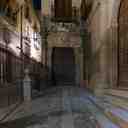
  3. Right in front of you, you’ll notice a grand doorway set back in a shadowy, narrow courtyard. Look for a thick wooden door studded with metal and framed by sturdy stone columns.…もっと読む折りたたむ

    Right in front of you, you’ll notice a grand doorway set back in a shadowy, narrow courtyard. Look for a thick wooden door studded with metal and framed by sturdy stone columns. Above the entrance, there’s an old, weathered coat of arms carved right into the stone-like a silent guardian that’s watched over this building for centuries. Wrought-iron balconies perch overhead, and if you spot the tall, iron gates and the cobblestones under your feet, you know you’ve found it. Now, let’s set the scene: Imagine this place hundreds of years ago. The air buzzes with the faint sound of horse-drawn carriages rattling over the cobbles, and somewhere in these halls, nobles are probably arguing over who gets the last slice of manchego cheese at dinner. Maybe, if you’re really quiet, you can almost hear the swish of silk dresses and the echo of boots along the stone floors. Legend has it that beneath this stately façade, there were secret gatherings-conspiracies, celebrations, perhaps even a little romance. The palace stands tall, unfazed, daring anyone to guess its secrets. Picture the eyes of a stern count peering from a window above, making sure no one’s getting too close to his palace gates. I bet he’d be pretty surprised to see us peeking at his front steps these days. So, while you’re standing here, take in the creak of the old ironwork, the cool stone, and the way time seems to linger. Who knows-you might just leave with a story or two stuck to your shoes, just like the dust in this ancient street.

    専用ページを開く →
  4. Look just ahead-yes, right there in front of you-where the square opens up and the world suddenly feels electric. You’ll spot Pamplona City Hall straight across the bustling…もっと読む折りたたむ

    Look just ahead-yes, right there in front of you-where the square opens up and the world suddenly feels electric. You’ll spot Pamplona City Hall straight across the bustling plaza. It’s a charming old building draped with balconies, statues, and a big clock peering down at you, like it’s watching over everything that happens here. Imagine packed crowds dressed mostly in white with bright red scarves, filling every inch of the square, cheering, singing, and bursting with excitement. It’s hard to miss the grand facade of City Hall-especially if there’s a giant flag hanging from it or people waving from the balconies. The energy in this spot? You can almost hear laughter echoing off the yellow and green buildings on the left, with flower boxes and balcony railings overflowing with people. So, welcome to the beating heart of Pamplona, the City Hall Square-Udaletxe Plaza! This isn’t just any old square, this is where the whole world turns its eyes every July when San Fermin explodes into action. If you stand here on the 6th of July, you’ll feel the ground trembling as the festival begins with the famous txupinazo-a rocket shot into the sky, launching a week of pure celebration. Picture everyone chanting, “Pamploneses, Viva San Fermín! Gora San Fermín!” I promise, goosebumps are almost guaranteed. But it’s not all wild parties and bull runs-though, yes, the bulls thunder through right where you’re standing during the encierro! This square is a place of peace too, full of centuries-old stories. Imagine way back to the Middle Ages: three neighborhoods always at each other's throats. Fights so frequent, it’s a wonder anyone could find time for a good nap. Finally, in 1423, King Charles III declared “enough!” and brought everyone together with the Privilege of the Union. They smashed the old walls that divided them and built this City Hall right on the no-man’s-land between them. The square became a new start, where old rivals met as neighbors. Now, instead of battles, the only competition is who can sing loudest or run the fastest. And when the festival ends, the last song-Gaixoa Ni or Pobre de Mí-rings out as candles flicker and the city sighs in the warm night air. Whether it’s the thundering festival or the calm after, this square is always at the center, waiting for its next story. Soak it in, take a look at the City Hall and all the colorful people and balconies, and imagine the centuries of drama, laughter, and maybe an occasional bull, that have passed right through where you’re standing now.

    専用ページを開く →
  5. Right in front of you stands a big, powerful block of pale stone rising above its old defensive wall. The Palace of the Kings of Navarre is a fortress-like building, with tall,…もっと読む折りたたむ

    Right in front of you stands a big, powerful block of pale stone rising above its old defensive wall. The Palace of the Kings of Navarre is a fortress-like building, with tall, narrow windows stretching up its face and straight, sturdy lines. It almost looks like a giant stone puzzle put together by a medieval king with a fondness for rectangles. To spot it, look for the highest, most imposing structure on this side of the old town, with thick stone walls at the base-almost like it’s daring you to guess what stories it holds inside. Now, take a deep breath and imagine the air filled with the tension of royal dramas and echoes of marching boots. The Palace of the Kings of Navarre is not just a building-it’s a time machine built out of stone. Picture this: back in the twelfth century, this was the shiny new palace for Navarre’s kings. If you listen closely, you might hear the hum of medieval life.... But life here wasn’t always so peaceful. For hundreds of years, this place changed hands and faces: kings, bishops, viceroys, generals, and maybe the occasional sneaky ghost! After the conquest of Navarra in the sixteenth century, it became the home for Spanish viceroys-the king’s stand-ins-who probably spent a lot of time looking out these windows and sighing about the weather. The palace has had more names than a secret agent: Palace of San Pedro because of the nearby church, Captaincy Palace, Military Government... It even spent some lonely years abandoned, secrets locked behind its heavy walls, windows peeking out like silent eyes over Pamplona. In 2003, award-winning architect Rafael Moneo swooped in and gave it a makeover-no fairy godmother’s wand, just a lot of careful planning and stonework. Now it’s the Royal and General Archive of Navarre, keeping centuries of dusty mysteries safe. Long ago, bans on building here were meant to keep the powerful from lording it over the neighbors. But what’s a king without a good loophole? Sancho the Wise got himself a clever deal-permission from the bishop to put his palace right on this spot! From that moment on, this hilltop became a stage for real power plays, with kings and bishops trading accusations, throwing around excommunications like confetti. And of course, drama loves company. There were epic lawsuits, sieges-at one point, catapults launching stones from the palace’s terrace down onto the city below!. Even Spain’s own kings have slept here-legend says Felipe II replaced the bishop’s coat of arms with his own, leaving the stone badge you can see above the entrance today. So, next time you forget where you left your keys, count yourself lucky-at least you never lost a whole palace in a royal feud! Interested in knowing more about the denominations, general zone indications or the architecture

    専用ページを開く →
  6. To spot the Palacio Marqués de Rozalejo, just look ahead for a stately beige stone building that stands out between the colorful, narrower houses. You’ll recognize it by its grand…もっと読む折りたたむ

    To spot the Palacio Marqués de Rozalejo, just look ahead for a stately beige stone building that stands out between the colorful, narrower houses. You’ll recognize it by its grand arched doorway, with distinctive old wooden balconies above and a large, proud coat of arms sitting right in the middle of the upper facade. If you see intricate stonework and classic baroque flourishes, you’re in the right place. The building’s broad frontage and symmetrical look make it hard to miss on this street corner. Now that you’re standing in front of it, take a moment to imagine life here nearly three hundred years ago! This isn’t just any palace-it’s more like a noble’s massive old house, built in the 1700s for the powerful Guendica family, who came from the Basque Country and planted their roots right here in Pamplona. Picture a bit of drama: a proud military man named Luis Guendica Mendieta built it in 1739, but he never actually lived in it. Instead, it became home to his children-including one who grew up here while Spain spun with intrigue and change. You’re looking at an impressive example of baroque style, with a facade so grand that it had to be protected by the city-imagine rain and sun working for centuries to shape the stone you see. The entrance, the big coat of arms, even the hidden stone hallway right behind the doors, all give this building a mysterious, almost secretive air. This palace sits right on the trail of pilgrims walking the Camino de Santiago. People have wandered past here for centuries, maybe stopping for water at the old Santa Cecilia fountain just across from you or catching a little gossip from the house’s noble residents. It’s changed purposes many times-at one point, it was full of rental apartments, with people clattering up and down the interior staircases. In recent years, the palace was even “occupied” by local activists, who gave it a new nickname-Gaztetxe Maravillas. Talk about a house with stories! Despite all these changes, you’re looking at a protected piece of Pamplona’s soul. Today, it’s being readied to hold the city’s Memory Institute, so its walls will continue to keep the stories and history of Pamplona alive for generations. Imagine the creak of the old floors, the distant echo of cathedral bells, and the laughter of people who have walked by here for nearly 300 years. If these walls could talk, they’d definitely have a few spicy secrets to share! To delve deeper into the urban context, historical context or the description, simply drop your query in the chat section and I'll provide more information.

    専用ページを開く →
  7. Look just ahead of you-you’ll spot a life-sized bronze figure clad in elegant, flowing robes. This headless statue stands tall and proud, even after all these centuries. The…もっと読む折りたたむ

    Look just ahead of you-you’ll spot a life-sized bronze figure clad in elegant, flowing robes. This headless statue stands tall and proud, even after all these centuries. The drapes look heavy, almost ready to rustle in a Roman breeze, and the statue’s hand once gestured, holding authority or perhaps greeting a friend-though you’ll notice the left hand and head are missing, giving it a mysterious air. This Togado stands almost eerily lifelike, with folds and textures so realistic you might expect him to step down and join you on your stroll. His bronze surface glimmers under the light in shades of green and brown, a gift from centuries of waiting for you to find him. Let me take you back-not just a hundred years, but almost two thousand! We’re standing in front of one of the most important Roman statues ever discovered in Spain, known as the Togado of Pompelo. Imagine Pamplona, not with cafés and pintxos, but with the clang and chatter of Roman traders, all moving under the shadow of the Empire. Back then, this was Pompelo, a bustling Roman city, and this statue once watched over its citizens. The story of this statue is an adventure worthy of Indiana Jones. It was made in the middle of the second century-think about that for a moment, that’s before chocolate, before the internet, even before pizza delivery! It was discovered by accident, buried deep in the earth right here in Pamplona in 1895. And then? Like a magician’s trick, it vanished! For over a hundred years, its whereabouts were a complete mystery. It traveled through secret collections in France and the United States. At one point, people thought it came from France, not Pompelo. It even went to an auction, but-believe it or not-nobody bought it! Eventually, a sharp-eyed specialist spotted the statue in a private collection, and Pamplona’s ancient secret was finally revealed again. Why is this statue special? It’s the first bronze Roman toga’d figure found in Spain, and only thirteen like it survive across the whole world! Can you imagine? Five are from Pompeii and Herculaneum, where dust and lava have saved their secrets. Here is our own survivor, weathered by time and mystery, but still majestic. He’s a bridge to a past where Latin was spoken in the streets and togas were the fashion of the day. I guess you could say he was the trendsetter of ancient Pompelo-too bad he lost his head from all the excitement! As you stand here, close your eyes for a second and imagine the Roman city teeming around you. Feel the thrill of discovery-because here you’re standing in the presence of a legend that not even centuries of secrets could keep hidden. Now, let’s head on to our next stop-the Pamplona Cathedral! I promise, no missing heads there. Intrigued by the description, archaeological context or the open debate: male or female figure? Explore further by joining me in the chat section below.

    専用ページを開く →
  8. As you walk forward, set your sights ahead and look for a grand Neoclassical façade rising above the rooftops. The tall, twin bell towers frame a portico with classic columns that…もっと読む折りたたむ

    As you walk forward, set your sights ahead and look for a grand Neoclassical façade rising above the rooftops. The tall, twin bell towers frame a portico with classic columns that almost make the cathedral look like it’s auditioning for a role in an epic movie. Trust me, you can’t miss it-this is the proud heart of old Pamplona. You’re now standing in front of Pamplona Cathedral, or as the locals know it, Santa María de la Asunción. Take a moment to imagine centuries of history pressing at your back, the stones around you echoing with footsteps from Romans, medieval kings, and the occasional lost tourist. The building you see today mostly dates from the 1400s, when the old Gothic church replaced an even older Romanesque one. Archaeologists have actually found ruins here from two churches before those. Looks like even churches couldn’t resist renovating back in the day. You’ll notice that dignified façade-it’s thanks to Ventura Rodríguez, who gave the cathedral a fancy new look in 1783. It’s a bit like the cathedral got dressed up for a royal portrait and never changed out of its best outfit. Step a little closer in your mind: behind this Neoclassical face lies a world of twisted Gothic arches, ribbed vaults, and the faint hint of candle smoke hanging in the air. Pamplona Cathedral isn’t just a pretty face, either. Kings of Navarre were crowned and some even buried here. Imagine the trumpets blaring and nervous royalty, moments before the crown was placed on their heads. And way back when, important meetings of Navarre’s Parliament were held right inside these walls. So if you’re feeling the urge to make a grand proclamation, now’s your chance. This church has always belonged to Saint Mary of the Assumption. For centuries, there was even a local debate about whether to call her Santa María la Real. The name got so popular the paperwork nearly got lost in translation! Just goes to show, even in the Middle Ages, popularity contests were a thing. If you look at the floor plan, the cathedral is shaped like a cross. Its French Gothic design was so stylish that even the French were jealous. Inside, you’ll find tombs of royals, elaborate choir stalls, gleaming iron grates, and even remnants of ancient retables-ornate altar pieces that seem to sing stories into the halls. But the real treasure? The 13th-century cloister, cool and shaded, with delicate carvings that tell tales in stone. When you pass through the “Precious Door,” you’re following in the footsteps of meditative monks, heads full of prayers and hands probably sticky from medieval ink. To your right, listen for the soft creak of ancient wood and the gentle murmur of voices who’ve passed this way for hundreds of years. In Pamplona Cathedral, history isn’t just written-it’s whispered in every stone and sung in every chapel. So don’t just look-listen. You might catch the echo of a coronation, the low hum of ancient Parliament, or maybe, just maybe, the faintest giggle of history enjoying its little secrets. Fascinated by the church, cloister or the diocesan museum? Let's chat about it

    専用ページを開く →

よくある質問

ツアーはどうやって始めますか?

購入後、AudaToursアプリをダウンロードして引き換えコードを入力してください。ツアーはすぐに開始できます。再生ボタンをタップして、GPSガイド付きルートに従うだけです。

ツアー中にインターネットは必要ですか?

いいえ!開始前にツアーをダウンロードしておけば、完全にオフラインで楽しめます。チャット機能のみインターネットが必要です。モバイルデータを節約するため、WiFi環境でのダウンロードをお勧めします。

これは団体ツアーですか?

いいえ、これはセルフガイド式のオーディオツアーです。ガイドや団体、決まったスケジュールに縛られることなく、スマホから流れるナレーションを聴きながら自分のペースで自由に探索できます。

ツアーの所要時間は?

ほとんどのツアーは60〜90分で完了しますが、ペースは完全に自由です。好きな時に一時停止したり、スポットを飛ばしたり、休憩を取ったりできます。

今日中にツアーを終えられない場合は?

問題ありません!ツアーには無期限でアクセスできます。明日、来週、あるいは来年でも、好きな時に再開できます。進行状況は保存されます。

どの言語が利用可能ですか?

すべてのツアーが50以上の言語に対応しています。コードを引き換える際にお好みの言語を選択してください。注意:ツアー生成後に言語を変更することはできません。

購入後、どこからツアーにアクセスできますか?

App StoreまたはGoogle Playから無料のAudaToursアプリをダウンロードしてください。メールで届いた引き換えコードを入力すると、ライブラリにツアーが表示され、ダウンロードして開始できるようになります。

verified_user
満足保証

もしツアーを楽しめなかった場合は、返金いたします。お問い合わせ先: [email protected]

以下の決済で安全にチェックアウト

Apple PayGoogle PayVisaMastercardPayPal

AudaTours: オーディオツアー

楽しくて手頃なセルフガイド式ウォーキングツアー

アプリを試す arrow_forward

世界中の旅行者に愛されています

format_quote このツアーは街を見るのに本当に良い方法でした。ストーリーは作り込まれすぎず面白くて、自分のペースで探索できるのが良かったです。
format_quote 観光客気分になりすぎず、ブライトンを知るためのしっかりとした方法でした。ナレーションには深みと文脈がありました。
Christoph
Christoph
starstarstarstarstar
ブライトン・ツアー arrow_forward
format_quote 片手にクロワッサンを持ち、期待ゼロで始めました。アプリはただ一緒にいてくれる感じで、プレッシャーもなく、クールな物語を楽しめました。

オーディオツアー使い放題

世界中のすべてのツアーをアンロック

0 ツアー·0 都市·0 国
all_inclusive アンリミテッドを探索