
シラクーザ・オーディオツアー:帝国の残響と聖なる泉
シチリアの太陽の下、古代の剣闘士の咆哮とささやき声の祈りの残響が、何世紀にもわたって染み込んだ石畳の路地を漂います。シラクーザは、征服、陰謀、そして突然の反乱の上に築かれた秘密を隠しています。 このセルフガイド・オーディオツアーで、街のより深い層を解き明かしましょう。各停留所では、他の旅行者が見逃してしまうような物語、隠されたスキャンダル、失われた儀式、そして足元に広がる息をのむような偉業が明らかになります。 シラクーザ大聖堂は、包囲された時代にどのような強力な秘密を隠していたのでしょうか?ローマ円形劇場の下の血に染まった砂の中に消え、二度と戻らなかったのは誰でしょうか?そして、聖フィリッポ使徒教会で盗まれた聖遺物が、なぜ地元の歴史を永遠に変えるほどの確執を引き起こしたのでしょうか? ツアーがあなたを古代の神殿から崩れかけた劇場、そして神秘的な礼拝堂へと誘うにつれて、移り変わる影と黄金の光の中をさまよいましょう。一歩ごとに感覚が研ぎ澄まされ、ドラマと発見の新たな章が開かれます。 街があなたを待っています。シラクーザの伝説に引き込まれてください。
ツアーのプレビュー
このツアーについて
- schedule所要時間 30–50 mins自分のペースで進める
- straightenウォーキングルート 3.5kmガイド付きパスに沿って進む
- location_on
- wifi_offオフライン対応一度のダウンロードでどこでも使える
- all_inclusive無期限アクセスいつでも、ずっと再生可能
- location_onシラクーザのローマ円形劇場から開始
このツアーのスポット
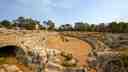
To spot the Roman Amphitheater of Syracuse, look for a massive oval stone structure carved deep into the earth with wide, worn steps encircling a dusty central arena-if you see…もっと読む折りたたむ
To spot the Roman Amphitheater of Syracuse, look for a massive oval stone structure carved deep into the earth with wide, worn steps encircling a dusty central arena-if you see trees and rocky ruins opening up in a gigantic sunken space, you’ve found it! Alright, time to travel back-right where you’re standing, picture the wild roar of a Roman crowd. This isn’t just any ruin: it’s one of the greatest amphitheaters of the early Roman Empire, carved straight out of solid rock more than 2,000 years ago. The Romans didn’t just build with bricks here-they let their chisels do the talking, shaping the arena’s grand curves by following the slope of the land. The northern side tucks right into the rocky hillside, the same stone that forms the Greek Theater nearby. It was so enormous-about 140 meters long-and its arena was dotted with passageways, hidden corridors for gladiators and wild beasts to make their dramatic entrances, just before the games began. Gladiators, VIP Roman citizens, and onlookers from every walk of life would pour in from two great entrances, following elaborate stairways that tunneled under the seating. The important folks sat up front-imagine the sparkle of togas and polished armor while the “average Joes” (or should I say “Iulios”?) grabbed seats higher up. There were three covered walkways-like stadium concourses-handy if the Sicilian sun got too fierce or if someone needed a quick escape from a charging lion! Beneath your feet, under the arena itself, ingenious Roman machinery clanked and squeaked, lifting up stage sets or animals for surprise entrances. The amphitheater even had a monumental fountain nearby and water flowing from a massive underground cistern-necessary for cooling down after all that Roman excitement (or terror). Fast forward to the 18th century: people discovered the whole thing buried under a blanket of wild lettuces-imagine a garden salad with a gladiator twist! Today, the stones might seem quiet, but if you listen closely, maybe you’ll catch the ghostly echo of ancient cheers, ready to welcome you to center stage.
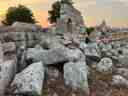
専用ページを開く →Look ahead! You’ll spot huge, weathered limestone blocks, some tumbled and some still stacked to form a crumbling, ancient wall snaking across the rugged landscape-these are the…もっと読む折りたたむ
Look ahead! You’ll spot huge, weathered limestone blocks, some tumbled and some still stacked to form a crumbling, ancient wall snaking across the rugged landscape-these are the Dionysian Walls. As you stand here gazing at these silent giants, just imagine: it’s the year 400 BC, and instead of today’s quiet breezes, the air is bustling with shouts, hammering, and the thud of immense stone blocks being stacked up, one after another. These mighty walls were ordered by Dionysius I, the cunning tyrant of Syracuse, who thought, “If you want to keep your city safe, make your walls so big that even the Romans will have to stop and scratch their heads!” He wanted a fortress so strong it could take on all comers, and he really pulled out all the stops-literally. More than 70,000 slaves and 6,000 oxen worked in tandem, moving 300 tons of stone every day to encircle the entire plateau of Epipoli. It wasn’t just heavy lifting, though-Dionysius used the landscape itself. These walls snake along the natural slopes, giving guards a sweeping view for miles. “See those hills?” a sentry might have said, “If any invaders show up, we’ll spot them before they even put on their sandals!” In fact, from the tip of the northern shore all the way to Ortigia Island, and down south to the great port, the walls hugged the city tight-a massive 21 kilometers long! If you count the ones weaving around Ortigia too, that’s 27 kilometers. Rome’s famous Aurelian Walls? These gave them a run for their money! And there were gates, too-like hidden trapdoors in a magician's hat. Up north near what’s now the Eurialo Castle stood the Trypilon gate, another to the south where Viale Epipoli stretches today. The Scala Greca quarter still whispers about Porta Scea, and the not-quite-lost Exapilon would’ve led you straight to the main roads heading north. Imagine travelers centuries ago, stopping before these immense guarded portals, their hearts pounding, eyes wide with awe! But these weren’t just walls-they were legends. When Carthage came knocking in 397 BC, the whole city huddled inside, silent but unbroken, as the walls stood firm. Later, the Romans found their advances thwarted. Enter Archimedes, Syracuse’s answer to modern science fairs! With his famous burning mirrors, he supposedly set Roman ships aflame right from these heights. Who needs dragons when you have Greek math? Eventually, though, even the strongest wall meets its match. The Romans managed to conquer Syracuse centuries later, but they respected these stones so much they strengthened them even more-it was serious business to own a city this tough! But as time passed-Byzantines, Arabs, Normans, you name it-the walls were chipped away, their stones taken for new buildings. The earthquake of 1693 finished the job, tumbling what was left. Yet here you are, on the ruins rediscovered by archaeologist Paolo Orsi. UNESCO calls these ruins masterworks, and who can argue? Even 18th-century travelers were spellbound-measuring these stones, claiming they could rival the walls of Paris! Plans are in the works to build a grand park so folks like you can stroll through history. For now, close your eyes and let the echoes of those ancient builders, the clash of swords, and the wild inventions of Archimedes bring these broken stones back to life. And whatever you do, don’t try to move a block-unless you brought your own team of 200 oxen! For further insights on the the city gates, numbers of the walls or the travellers' descriptions, feel free to navigate to the chat section below and inquire.
専用ページを開く →
さらに5件のスポットを表示表示するスポットを減らすexpand_moreexpand_less
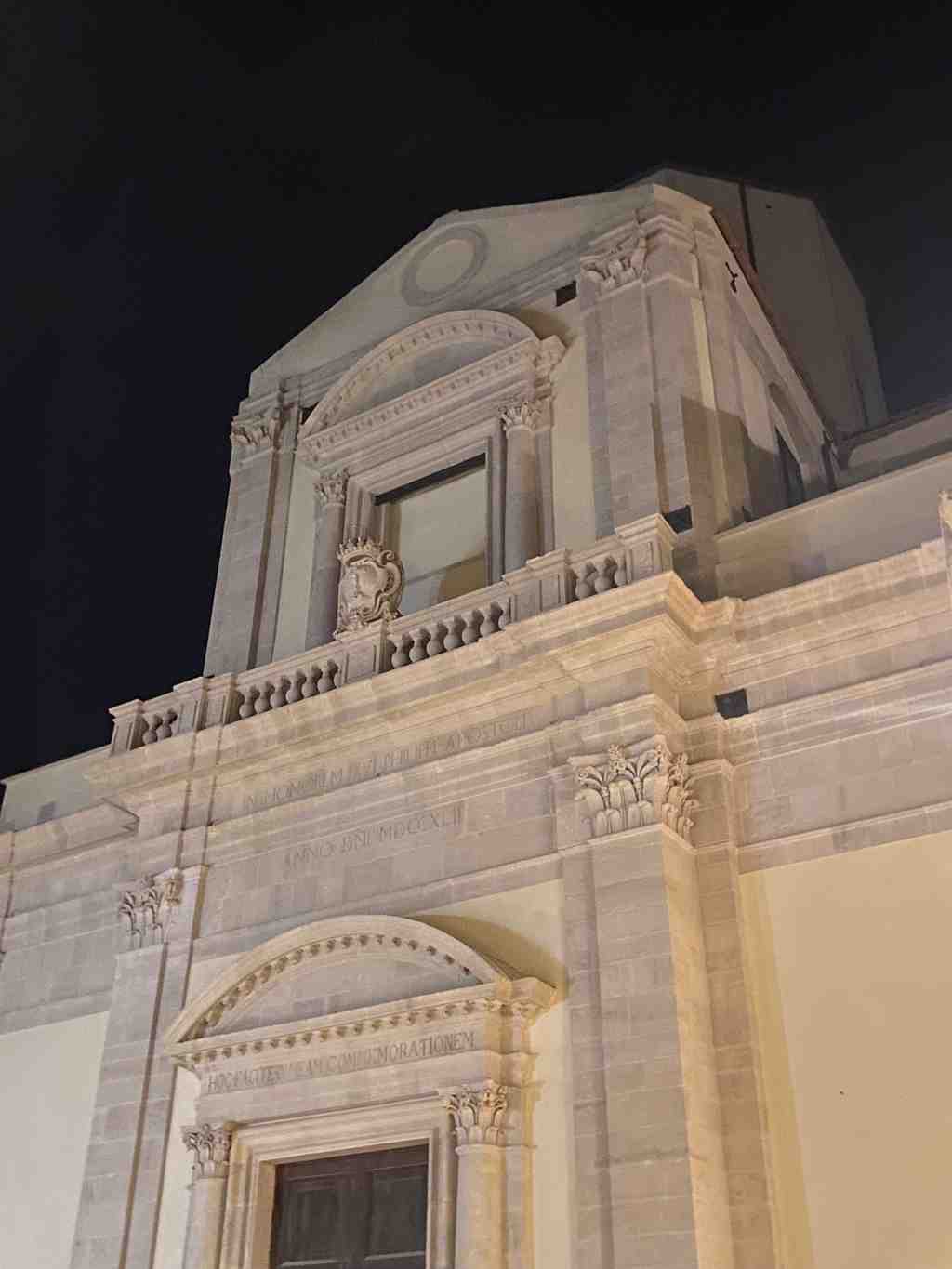
To spot the Church of St. Philip the Apostle, look for a tall, sand-colored Baroque façade with decorative columns, a large central doorway topped by a rounded pediment, and a…もっと読む折りたたむ
To spot the Church of St. Philip the Apostle, look for a tall, sand-colored Baroque façade with decorative columns, a large central doorway topped by a rounded pediment, and a series of elegant arches and stone carvings-just glance up and you can’t miss this stately structure rising in front of you. Now, take a breath and let your mind travel through time as we uncover the layers of history beneath your feet and above your head. Imagine standing here almost three thousand years ago, when Greek settlers from Corinth first landed on Ortigia in 734 BC. Back then, the ground would have been loud with the as they dug quarries to build their first temples, and carved white limestone for the homes and shrines that would shape this island. The spot where the church now stands was once one of those quarries, echoing not with prayer, but with the shouts and sweat of ancient builders! Move forward through the centuries-by the Middle Ages, this area became home to Syracuse’s Jewish community, so large and thriving that some say it might have been the biggest in Western Europe! Their synagogue is thought by many to have stood right here, and beneath the ground, they carved out a mysterious bath-what many now believe was a mikvah, a ritual Jewish bath, fed by the sweet groundwater far below the city. The hum of life back then must have come with laughter, chatter in many languages, and the splashing of water as families prepared for sacred rituals. Everything changed in 1492 when a royal order forced Jews across Sicily to leave if they didn’t convert to Christianity. Imagine for a moment the sudden silence and sorrow that filled these streets as an entire community disappeared almost overnight. The ghostly presence of their lives still lingers in the underground chambers, waiting for curious visitors like you. After that, the site became the domain of the Arciconfraternity of St. Philip. The old synagogue and its hidden spaces above and below began a slow transformation. Peep into the written records and you’ll find stories of the church being smaller and simpler, with just three altars and an unfinished masterpiece above the main one. But disaster struck in 1693, when a massive earthquake shook Syracuse to its bones. The old church was nearly lost, but the brave locals seized this as a chance to rebuild everything, and they hired two master builders to craft the elegant Baroque gem you see now. Step back and look up-see how the dome isn’t tucked away at the usual crossroads inside, but instead sits boldly in the center? It’s a unique twist inspired by the famous Rosario Gagliardi, who left his mark on Sicilian Baroque. And even the columns by the entrance tell a tale-they're thought to be relics from Roman times, now supporting an exquisite organ built in 1757 by a local master, Pietro Santuccio. I’m afraid I can’t play it through your phone, but trust me, its music is legendary. Inside, if you were to sneak past the doors (don’t worry, I won’t tell), you’d spot chapels filled with beautiful paintings, statues, and even relics like a centuries-old bust of St. Francis of Paola. There’s artwork from anonymous but talented hands, including a lovely “Madonna of the Letter,” and down the nave, touching memorials from the city’s prominent families. And if you have a detective’s spirit, the left side altar once held a portrait of the Madonna della Speranza, so treasured that it collected more gold and silver offerings than a pirate’s chest. Beneath your feet lies a crypt, reserved for the burials of the church brotherhood-think of flickering candles, painted images of death, and quiet prayers for souls long gone. Dig deeper still, and that ancient mikvah-turned-mystery calls out to you: spiral steps carved around a shaft, dropping deep into the cool dark earth, windows to let in shafts of sunlight, and the age-old question-is it Jewish, is it Christian, or both? Scholars still debate! If you hear echoes of bombs and shouting in the air, don’t be startled! The church was damaged by an air raid in World War II-on July 10, 1943, a bomb crashed through the roof -but the people of Syracuse stitched it back together, repairing the stucchi and rebuilding its foundations over the years. By the 1960s, trouble was brewing again. Water leaks weakened the ground so badly the church had to close, but with grit (and a little Sicilian stubbornness), they removed and rebuilt the heavy dome with lighter materials, restoring this Baroque landmark to glory in 2010. Today, it’s alive again with Mass, music, and the guided footsteps of visitors exploring three underground worlds-the crypt, a WWII shelter, and the ancient bath. So, think of St. Philip’s not just as a church, but as a secret time machine layered with human dreams, faith, upheaval, and survival-ready for you to discover! For a more comprehensive understanding of the description, crypt or the miqweh, engage with me in the chat section below.
専用ページを開く →Look ahead across the sunny square and spot the grand, cream-colored palace with intricate balconies, Corinthian columns around the large arched entrance, and statues proudly…もっと読む折りたたむ
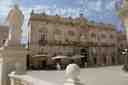
Look ahead across the sunny square and spot the grand, cream-colored palace with intricate balconies, Corinthian columns around the large arched entrance, and statues proudly lining its ornate roof-this is the majestic Beneventano del Bosco Palace, right in front of you! Now, step back for a moment and imagine the square in the late 1700s-rustling silk dresses brushing over mosaic cobblestones, coach wheels clattering and echoing off ancient stone, and the scent of Mediterranean flowers wafting through large open windows. The Beneventano del Bosco Palace stands before you now, but its foundations tell centuries of drama, disaster, and dazzling nobility. The story starts far before the facade you see today. Long ago, this place was a bustling epicenter of power; the Arezzo family-another crowd of local nobles who clearly didn’t shy away from building big-first raised a residence here in the 1400s. Within these walls, orders were handed down from mighty councils and knights. The palace was home to legendary governing bodies like the Senate of Syracuse and even welcomed the Knights of the Holy Sepulchre. You could say this was the beating heart of medieval Ortigia-full of schemes, secrets, and perhaps a knight or two awkwardly tripping over their armor. But in 1693, disaster struck. One of Sicily’s infamous earthquakes shook the city to its core, and the old palace was left in ruins-stones toppled, great halls split open, the echoes of history momentarily silenced under rubble and dust. But, just like a true Sicilian soap opera, the story wasn’t over. In 1778, Baron Guglielmo Beneventano emerged onto the scene-imagine a man with style, a title, and, most importantly, a vision for a grand comeback. He bought the ruins and enlisted local architect Luciano Alì to help him put his stamp on history. Together, they transformed devastation into beauty, giving us the palace you see today. The family name-Beneventano del Bosco-literally came from the forested lands they owned between Syracuse and Floridia. Everywhere they went, from Siracusa to Modica and Lentini, the Beneventano family held power. Their enormous coat of arms, visible on the palace, shows a gold shield, three green hills, and a face-off between a red lion and a red bear-a combination that must have raised more than a few eyebrows at the tavern. All that grandeur is on display right here. Take a look at the magnificent facade. It’s all divided into three levels, bracketed by stepped pillars, and the entrance alone is a masterpiece-an arch framed by four Corinthian columns supporting a richly ornate balcony. Count six small arched doors left and right of the main one, each topped by their own little balcony, separated by flowers sculpted in stone. Over the main entrance, a special inscription and medallion commemorate the time when King Ferdinand himself paid a visit in 1806-he watched a play from that very balcony, likely laughing with one eye on the local pastries. But these walls know more than royal applause. Admiral Horatio Nelson-yes, the legendary British naval hero himself-slept here, probably nursing a bit of a sunburn, after defeating Napoleon’s forces at Abukir. Even before that, this spot housed the heady drama of the Knights of Malta and chivalrous orders who rested here between crusades and covert missions. Let’s sneak a peek behind the grand doors. Inside, Italian Baroque style explodes-arching stucco ceilings, glittering with light brought in by colored Venetian and Maltese glass. There are painted frescos bursting with color and marble from Catania under your feet. The courtyard feels like an endless stage set, paved in swirling black and white stones as intricate as a royal carpet. If you listen quietly, you might almost hear the footsteps of a noblewoman or whispered court gossip drifting out an open window. Upstairs, the rooms are treasure troves, filled with antique furniture, a delicate private chapel, and historic prints-maps of Sicily and all Italy that sparked dreams of power and intrigue. Not bad for a turn of fortune out of an earthquake’s ashes! So, as you stand here breathing in the grandeur, don’t be surprised if you feel a prickle on your neck-that’s just the ghosts of barons, knights, and maybe even a mischievous lion and bear, all watching over the grand Beneventano del Bosco Palace. For a more comprehensive understanding of the palace architecture, illustrious guests or the image gallery, engage with me in the chat section below.
専用ページを開く →To spot the Arethusa Spring, look for a round, stone-edged pool just below street level, bustling with tall papyrus plants and often dotted with white ducks right by the…もっと読む折りたたむ
To spot the Arethusa Spring, look for a round, stone-edged pool just below street level, bustling with tall papyrus plants and often dotted with white ducks right by the waterfront, next to the old stone buildings. Now, let’s pause for a moment and imagine we’re standing on an island of ancient myths, where clear, fresh water bubbles up surrounded by whispering papyrus and the city of Syracuse hums behind you. This is no ordinary spring-here’s where Arethusa, the nymph herself, burst out from the depths! According to the old Greek legends, poor Arethusa was just trying to get away from an overenthusiastic river god in Arcadia when she shot through the earth and surfaced right here, probably gasping for air and wishing for a travel guide to warn her about unexpected journeys. But this fountain didn’t just quench nymphs' thirst! It became famous across the world, getting shout-outs from such literary legends as Virgil, Milton, Pope, and Wordsworth-talk about making waves. Even Melville wrote in Moby-Dick that its waters were rumored to be connected to the Holy Land. The fountain, along with Saint Lucy, has become a true symbol of Syracuse: together, they shine as the City of Water and Light. And if you sniff the air, you might even catch the scent of papyrus, which barely grows anywhere else in Europe outside the spring, the nearby Ciane river, and Fiume Freddo. Think of all the poets gazing at this very spot, as ducks paddle around, feeling the tug of myth and history with every ripple. So, take a moment-who knows, maybe inspiration will bubble up at your feet too!
専用ページを開く →

よくある質問
ツアーはどうやって始めますか?
購入後、AudaToursアプリをダウンロードして引き換えコードを入力してください。ツアーはすぐに開始できます。再生ボタンをタップして、GPSガイド付きルートに従うだけです。
ツアー中にインターネットは必要ですか?
いいえ!開始前にツアーをダウンロードしておけば、完全にオフラインで楽しめます。チャット機能のみインターネットが必要です。モバイルデータを節約するため、WiFi環境でのダウンロードをお勧めします。
これは団体ツアーですか?
いいえ、これはセルフガイド式のオーディオツアーです。ガイドや団体、決まったスケジュールに縛られることなく、スマホから流れるナレーションを聴きながら自分のペースで自由に探索できます。
ツアーの所要時間は?
ほとんどのツアーは60〜90分で完了しますが、ペースは完全に自由です。好きな時に一時停止したり、スポットを飛ばしたり、休憩を取ったりできます。
今日中にツアーを終えられない場合は?
問題ありません!ツアーには無期限でアクセスできます。明日、来週、あるいは来年でも、好きな時に再開できます。進行状況は保存されます。
どの言語が利用可能ですか?
すべてのツアーが50以上の言語に対応しています。コードを引き換える際にお好みの言語を選択してください。注意:ツアー生成後に言語を変更することはできません。
購入後、どこからツアーにアクセスできますか?
App StoreまたはGoogle Playから無料のAudaToursアプリをダウンロードしてください。メールで届いた引き換えコードを入力すると、ライブラリにツアーが表示され、ダウンロードして開始できるようになります。
もしツアーを楽しめなかった場合は、返金いたします。お問い合わせ先: [email protected]
以下の決済で安全にチェックアウト 


