ミラノオーディオツアー:ミラノの歴史的財宝を発見する
ミラノのきらめく大通りの下には、消え去った宮殿や反抗的な見世物のささやきが、石と影の間でこだましています。このセルフガイドオーディオツアーは、長年ミラノに住む人々さえ忘れてしまったような、街の隠された部屋や物語を解き明かします。 メルカンティ広場にある悪名高い破産者の石の上で、誰が公衆の恥をさらす危険を冒したのでしょうか?スカラ座の黄金のバルコニーは、なぜ執拗なロッジオニスティからの喝采と騒乱の両方で響き渡ったのでしょうか?戦時の運命と戦後の貪欲によって消し去られた、失われた新古典主義の宮殿の痕跡は、今も何が残っているのでしょうか? 賑やかな広場、秘密の中庭、そして歴史ある遺跡を巡りながら、それぞれのランドマークが何世紀にもわたる政治的陰謀、スキャンダル、芸術、そして騒乱を解き明かします。ドラマ、喪失、美しさ、そして予期せぬ展開が随所に重なり合うミラノに、新たに出会ってください。 街の最高の秘密は、目の前に隠されています。さあ、今すぐミラノの深淵へ足を踏み入れましょう。
ツアーのプレビュー
このツアーについて
- schedule所要時間 30–50 mins自分のペースで進める
- straightenウォーキングルート 2.3kmガイド付きパスに沿って進む
- location_on
- wifi_offオフライン対応一度のダウンロードでどこでも使える
- all_inclusive無期限アクセスいつでも、ずっと再生可能
- location_onメルカンティ広場から開始
このツアーのスポット
In the past, Piazza Mercanti was even larger than it is today, extending further north to what is now Via Mercanti. Back then, it was called "Piazza del Broletto" and was home to…もっと読む折りたたむ
In the past, Piazza Mercanti was even larger than it is today, extending further north to what is now Via Mercanti. Back then, it was called "Piazza del Broletto" and was home to the "Broletto Nuovo," the administrative palace that stood in the center of the square. There were six entry points, each associated with a specific trade, from sword blacksmiths to hat makers. One interesting fact is that until the late 19th century, Piazza Mercanti hosted the "Oh bej! Oh bej!" fair, which was the most important and traditional fair in Milan. Can you imagine the vibrant atmosphere and excitement that filled the square during those times? Let me guide you through the four main buildings that surround Piazza Mercanti. First, we have the "Broletto Nuovo" or Palazzo della Ragione on the northeastern side. Built in 1233, this Gothic palace served as the administrative headquarters of the city. On the southwestern side, you'll find Casa Panigarola, also known as "Palazzo dei Notai" or Notary's Palace. This Gothic palace, built in the 15th century, adds a touch of medieval charm to the square. Moving to the southeastern side, we have Palazzo delle Scuole Palatine, a baroque palace designed by Carlo Buzzi in the 17th century. It replaced the former "Scuole del Broletto" or "Broletto Schools," which occupied the same spot. You'll also notice the Loggia degli Osii on the southeastern side, which was built in 1316 as an administrative seat. This loggia includes the "parlera," a balcony from which the authorities would address the people. Although not directly in the square anymore, the Palazzo dei Giureconsulti, a 16th-century building located in Via Mercanti, used to mark the northeastern side before the redesign. It's a fascinating piece of history with its tower dating back to the 13th century. At the center of the square, you'll see a pit from the 16th century, adorned with two impressive columns from the 18th century. Interestingly, this pit was once positioned next to the Palazzo dei Giureconsulti, and nearby, a stone called the "pietra dei falliti" or "bankrupts stone" would expose those guilty of bankruptcy. As you explore Piazza Mercanti, take a closer look at the various statues and monuments scattered throughout. For example, Palazzo della Ragione boasts two renowned reliefs: one depicts a boar associated with the legend of the scrofa semilanuta, and the other represents Oldrado da Tresseno, the man who ordered the construction of the palace. Giovan Pietro Lasagna, a sculptor, created two statues in the square. One is dedicated to Ausonius and can be found on Porta Orefici, an entry point to the square. The other statue honors Augustine of Hippo and adorns the facade of the Scuole Palatine. Keep an eye out for Luigi Scorzini's statue of Ambrose on the Palazzo dei Giureconsulti as well. Fun fact: In the film "Chiedimi se sono felice" by the comedian trio Aldo, Giovanni e Giacomo, they play a basketball game using the iron aureola of a saint's statue as the basket. However, I must clarify that this statue is purely a creation for the movie and not actually found in the square. Now that you know the rich history and sights of Piazza Mercanti, let's continue our adventure to stop number 2: La Scala.
専用ページを開く →Ah, La Scala! This grand and historic opera house in Milan is a true gem. Picture this: it was inaugurated on a warm summer's day, 3rd August 1778, as the Nuovo Regio Ducale…もっと読む折りたたむ
Ah, La Scala! This grand and historic opera house in Milan is a true gem. Picture this: it was inaugurated on a warm summer's day, 3rd August 1778, as the Nuovo Regio Ducale Teatro alla Scala, or 'the New Royal Ducal Theatre at the Scala'. Now, here's the interesting part - the name "Scala" comes from the fact that this very spot used to be the location of a church called Santa Maria della Scala. The old church was deconsecrated and demolished to make way for this magnificent theatre. La Scala has seen countless remarkable performances, and it attracts the most talented opera singers from Italy and around the world. It is renowned as one of the most prestigious opera and ballet theaters globally. The theater hosts not only opera and ballet performances but also houses the esteemed La Scala Theatre Chorus, La Scala Theatre Ballet, La Scala Theatre Orchestra, and the Filarmonica della Scala orchestra. Now, let's talk about the loggione, which is a gallery above the boxes. This is where the enthusiastic opera lovers, known as loggionisti, gather. They can be quite vocal and critical, known to express their elation or disappointment loudly during performances. It's a baptism of fire for artists performing at La Scala, and their successes or failures can be long remembered. During intermissions or after the show, you can step into the Museo Teatrale alla Scala, the La Scala Theatre Museum, which is part of the theater building itself. Here, you can explore a captivating collection of paintings, drafts, statues, costumes, and other artifacts that tell the fascinating history of La Scala and opera in general. This is a definite must-visit for any opera enthusiast! Interestingly, La Scala served not only as a theater but also as a casino in its early days. Imagine gamblers in fancy attire, mingling in the foyer before or after a performance. The atmosphere must have been quite lively! As you can see, La Scala is not just a theater, but a cultural icon that has shaped the art scene in Milan and beyond. It continues to inspire and captivate audiences with its world-class performances.
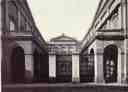
専用ページを開く →Originally, this architectural gem was situated in the heart of Milan, on the vast gardens of the Sant Agostino Neri monastery. After Count Arese's passing, the palazzo was sold…もっと読む折りたたむ
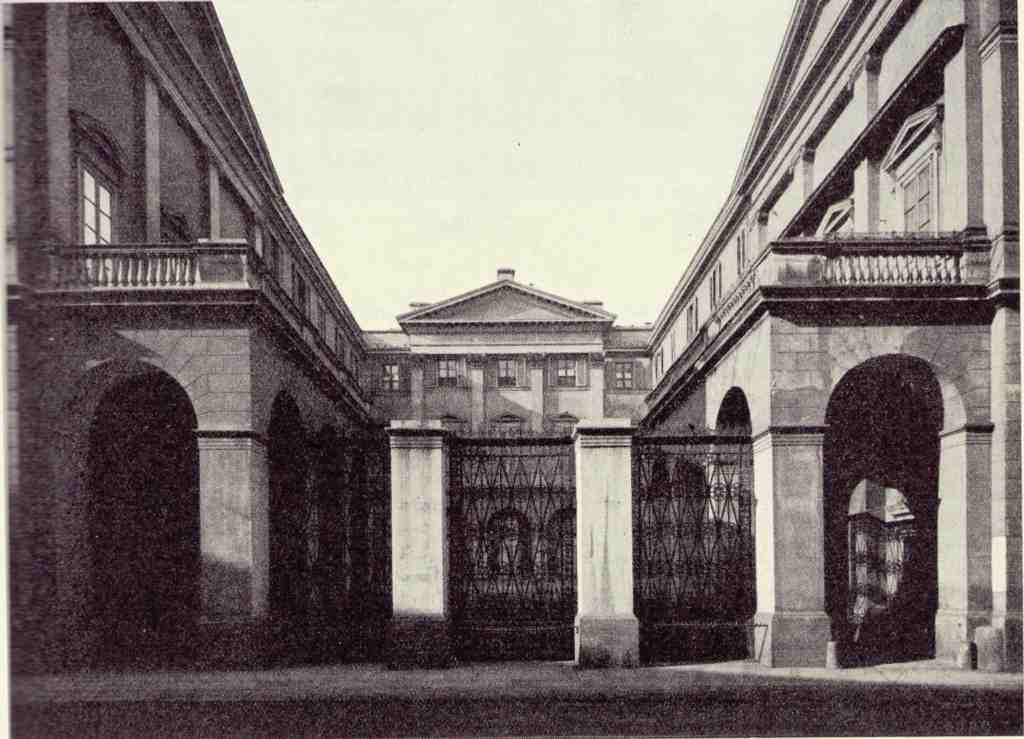
Originally, this architectural gem was situated in the heart of Milan, on the vast gardens of the Sant Agostino Neri monastery. After Count Arese's passing, the palazzo was sold to the Bethlen family from Hungary. With its prime location and expansive gardens, the property was eventually divided and sold to different developers. Over time, the palazzo was transformed into smaller apartments, losing its grandeur. Sadly, during World War II, Milan suffered severe bombing, and although only the central part of the building was damaged, it was enough for developers to demolish the entire structure. Though Palazzo Arese-Bethlen may no longer grace Milan's skyline, its legacy lives on in the memories of those who had the opportunity to see its splendor.
専用ページを開く →
さらに7件のスポットを表示表示するスポットを減らすexpand_moreexpand_less
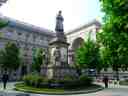
At the top of the monument, you'll find a majestic statue of none other than Leonardo da Vinci himself. He stands as a testament to his genius and contributions to the world of…もっと読む折りたたむ
At the top of the monument, you'll find a majestic statue of none other than Leonardo da Vinci himself. He stands as a testament to his genius and contributions to the world of art and science. But that's not all! The base of the monument showcases four full-length figures of Leonardo's pupils: Giovanni Antonio Boltraffio, Marco d'Oggiono, Cesare da Sesto, and Gian Giacomo Caprotti (also known as Andrea Salaino). These talented individuals were fortunate enough to learn from the great master himself. Now, the creation of this monument wasn't without its challenges. Sculptor Pietro Magni began working on it in 1858, but due to political changes and funding issues during Milan's transition from the Lombardo-Venetian Kingdom to the Kingdom of Sardinia and then to the Kingdom of Italy, the construction faced delays and criticisms. In fact, after its inauguration, many criticized the choice of its location and considered it a reminder of the Austrian administration. Interestingly, back in 1834, a noble and cultured Milanese citizen had planned to create a bronze monument to Leonardo at their own expense. Permission was even obtained from the Austrian government to place the monument in Brera's courtyard. However, this plan didn't come to fruition. Instead, the current monument design emerged from competitions held by the Academy of Fine Arts in Milan in 1856, eventually leading to the selection of Pietro Magni's "Think in marble" model. Emperor Franz Joseph himself decided that this proper tribute to Leonardo should be erected in Piazza San Fedele with a marble statue measuring 3.60 meters in height. Eventually, on December 22, 1858, the commission unanimously chose Magni's design, even though it required a budget larger than initially anticipated. Finally, after overcoming hurdles caused by the Second War of Independence, Magni received support from prominent figures like Urbano Rattazzi and Cavour, allowing him to bring this incredible monument to life. So, as you admire this monument, take a moment to appreciate the dedication and perseverance that went into preserving Leonardo da Vinci's legacy in Milan.
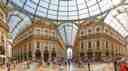
専用ページを開く →As you step inside, you'll be awestruck by the grandeur and elegance of this four-story double arcade. The Galleria consists of two intersecting glass-vaulted arcades that form an…もっと読む折りたたむ
As you step inside, you'll be awestruck by the grandeur and elegance of this four-story double arcade. The Galleria consists of two intersecting glass-vaulted arcades that form an octagon, spanning the street connecting Piazza del Duomo to Piazza della Scala. The street itself is covered by a beautiful arching glass and cast iron roof, a design that was popular for 19th-century arcades. The central octagonal space is crowned with a stunning glass dome, allowing natural light to flood the gallery and creating a mesmerizing atmosphere. The size and scale of the Milanese Galleria set it apart from its predecessors, and it played a significant role in the evolution of modern shopping malls. As you explore, don't miss the four mosaics on the ground of the central octagonal space. These mosaics depict the coats of arms of the three capitals of the Kingdom of Italy - Turin, Florence, and Rome - as well as Milan's. Here's an interesting tradition: it is said that spinning around three times with a heel on the testicles of the bull from Turin coat of arms will bring you good luck. However, this practice has caused some damage to the mosaic, with a hole developing in the place of the bull's genitals. Beyond its architectural beauty, the Galleria is also a connecting point between two of Milan's most famous landmarks: the magnificent Duomo and the renowned Teatro Alla Scala. The gallery and its roof have been recognized as an important reference in 19th-century iron-and-glass architecture. The roof consists of four barrel vaults with a monumental dome, creating a unique and ethereal effect. It's worth noting that the construction of the Galleria involved international collaboration. The ironwork was produced by the French Atelier Henry Joret, while the glass plates were made by Saint-Gobain. The complex construction techniques used in the roof, including invisible reinforcements and glazing bars, make it a true architectural marvel. Unfortunately, the historical roof suffered heavy damage during World War II bombings, but it has undergone multiple maintenance interventions over the years to preserve its beauty and historical significance. As you continue your journey through Milan, take a moment to appreciate the beauty and historical importance of the Galleria Vittorio Emanuele II, and let its grandeur transport you to another time. Shall we move on to our next stop?
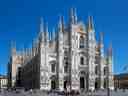
専用ページを開く →The construction of the Milan Cathedral spanned over six centuries, beginning in 1386 and finally completing all the intricate details in 1965. Its immense size makes it the…もっと読む折りたたむ
The construction of the Milan Cathedral spanned over six centuries, beginning in 1386 and finally completing all the intricate details in 1965. Its immense size makes it the largest church in the Italian Republic, only second to St. Peter's Basilica in Vatican City. In fact, it's the third largest cathedral in the world. The location of the cathedral is quite significant as well. The streets of Milan radiate from or encircle the Duomo, which indicates its central position in Roman Mediolanum, where the public basilica faced the forum. The first cathedral, dedicated to St. Thecla, was completed by 355, and a baptistery dating back to 335 can still be visited today beneath the cathedral. In 1075, a fire damaged the existing cathedral and basilica, prompting their reconstruction into the magnificent Duomo we see today. Archbishop Antonio da Saluzzo initiated the construction in 1386, coinciding with the rise to power of his cousin, Gian Galeazzo Visconti. The cathedral was meant to reward and uplift the noble and working classes who had suffered under the previous Visconti ruler. The enthusiasm for this grand project spread among the population, and large donations were collected to support its construction. The Fabbrica del Duomo, a management organization comprising 300 employees led by chief engineer Simone da Orsenigo, oversaw the regulation and progress of the work. Architects from France, such as Nicolas de Bonaventure and Jean Mignot, were brought in to contribute their expertise in Gothic architecture. The use of marble from the Candoglia quarry, generously granted by Gian Galeazzo, added to the grandeur of the cathedral. However, tensions arose between the Visconti family and the management of the factory overseeing the construction. Gian Galeazzo wanted to transform the cathedral into the mausoleum of the Visconti dynasty, which met strong opposition from both the factory and the people of Milan, who wanted to emphasize their autonomy. Despite these challenges, the construction of the Milan Cathedral persevered, and today we can witness its stunning beauty and architectural brilliance. So, let's take a closer look at this awe-inspiring masterpiece and continue our journey through Milan's rich history and culture!
専用ページを開く →Spanning over 7,000 square meters, the Royal Palace regularly collaborates with renowned museums and cultural institutions from around the world to bring incredible collections to…もっと読む折りたたむ
Spanning over 7,000 square meters, the Royal Palace regularly collaborates with renowned museums and cultural institutions from around the world to bring incredible collections to its visitors. With more than 1,500 masterpieces on display annually, it truly showcases the best of the art world. Originally designed with two courtyards, the Palazzo had to make room for the grandeur of the nearby Duomo. However, it still retains its majestic presence, located to the right of the Duomo's facade and opposite the iconic Galleria Vittorio Emanuele II. The Palazzo's facade creates a recess in Piazza del Duomo, creating a stunning courtyard known as the Piazzetta Reale, or the "Small Royal Square." One of the Palazzo's most famous features is the Hall of Caryatids, located on the main floor. Unfortunately, this area suffered heavy damage during World War II's air raids, but it has been preserved and remains a testament to the resilience of this historic site. The origins of the Royal Palace can be traced back to medieval times when it was known as the "Palazzo del Broletto Vecchio" and served as the seat of the city's government. It later became a key political center under various ruling families, including the Torriani, Visconti, and Sforza households. After the construction of the magnificent Duomo Cathedral, the Palazzo underwent extensive renovations under the government of Francesco I Sforza. It was during this time that the court was moved from Castello Sforzesco to the Palazzo, cementing its status as the official residence. Over the years, the Palazzo saw further transformations and expansions. Notably, Governor Ferrante Gonzaga played a crucial role in turning it into a palace befitting a governor, with new rooms dedicated to official functions. To achieve this, the old church of Sant'Andrea al Muro Rotto was demolished, and a passageway was created to connect the Palazzo to the Church of San Gottardo, the court's official place of worship. In the late 16th century, the Royal Palace underwent another renovation under Governor Antonio de Guzman y Zúñiga, Marquis of Ayamonte. This time, Pellegrino Tibaldi, a trusted architect of Archbishop Charles Borromeo, oversaw the project. Tibaldi coordinated the redecoration of the apartments' porticoes, the private chapel, and the Church of San Gottardo, with contributions from esteemed artists of the time. The Royal Palace also boasted a Court Theater, completed during this period. Although it was sadly lost to a fire, it was the first of many theaters built in Milan, leading up to the construction of the renowned La Scala in the 18th century. The current theater at the Royal Palace was reconstructed in the early 18th century under the patronage of the Count of Loewenstein. Designed by Francesco Galli Bibbiena and his pupils Giandomenico Barbieri and Domenico Valmagini, it continues to enchant visitors with its beauty. So, indulge in the rich history and artistic treasures of the Royal Palace of Milan. It stands as a testament to the city's grandeur and will surely leave you in awe of its timeless beauty.
専用ページを開く →When you step inside, you'll be greeted by a vast collection of approximately 400 works of art, with the majority coming from talented Italian artists. As you explore the museum,…もっと読む折りたたむ
When you step inside, you'll be greeted by a vast collection of approximately 400 works of art, with the majority coming from talented Italian artists. As you explore the museum, you'll find an array of fascinating exhibits, from individual artists such as Giorgio de Chirico, Lucio Fontana, and Morandi, to artistic movements like the Italian Futurists, Abstractionism, Arte Povera, and more. One notable piece that demands attention is Giuseppe Pellizza da Volpedo's masterpiece, "Il Quarto Stato" (The Fourth Estate), a captivating and large canvas that once had a room dedicated solely to its presence. Keep in mind that starting in 2022, you can admire this remarkable artwork alongside other exceptional pieces. In addition to the exceptional collection curated inside the museum, the Museo del Novecento also received a generous donation from private collectors Bianca and Mario Bertolini. This donation introduced contemporary art works by renowned artists such as Daniel Buren, Joseph Kosuth, Roy Lichtenstein, Robert Rauschenberg, Frank Stella, and Andy Warhol. Don't forget to visit the museum's bookstore, where you can find an assortment of art-related literature, and once you've finished exploring, make your way up to the restaurant-bar on the top floor. From there, you'll enjoy a breathtaking view of the bustling Piazza del Duomo while savoring delicious cuisine. The Museo del Novecento is a haven for art enthusiasts and curious minds alike, offering a journey through the vibrant and ever-evolving landscape of twentieth-century art. So, let's continue our adventure and discover the next exciting stop on our tour of Milan!
専用ページを開く →Legend has it that the church is built on the very spot where Archbishop Anspertus erected a primitive place of worship dedicated to Saint Satyrus back in 879, making it a truly…もっと読む折りたたむ
Legend has it that the church is built on the very spot where Archbishop Anspertus erected a primitive place of worship dedicated to Saint Satyrus back in 879, making it a truly historic site. However, the current church that you see today was commissioned by Duchess Bona di Savoia and Duke Gian Galeazzo Sforza in the 15th century. While Donato Bramante is often credited with the design of the church, recent documents suggest that Giovanni Antonio Amadeo had a more significant role, especially in designing the façade. However, Bramante's touch can still be seen in the sacristy perspective, showcasing his remarkable talent. Inside the church, you'll find a nave and two aisles with a barrel vault, giving it a grand and spacious feel. The nave is crowned with a beautiful hemispherical dome where it intersects with the transept. As you explore, you'll also notice the Romanesque bell tower, a remnant of the church before the reconstruction in the 1480s. And don't forget to visit the baptistry, which dates back to the 15th century. Once adorned with white and gold paint, the interior of the church was a sight to behold. Unfortunately, the frescoes by Borgognone were transferred to the Pinacoteca di Brera, but the church still holds an altarpiece of the Extasis of St Philip Neri by Giuseppe Peroni. One of the most remarkable features of this church is the choir. Due to the presence of Via Falcone behind the church, Bramante had to truncate its depth to only 90 cm. However, he cleverly replaced it with a painted perspective, creating one of the earliest examples of trompe-l'œil in the history of art. As you explore Santa Maria presso San Satiro, take a moment to appreciate the centuries of history, the intricate architecture, and the artistic masterpieces it holds. It's a true gem within the vibrant city of Milan.
専用ページを開く →Built in 1321 by order of Matteo I Visconti, the powerful lord of Milan, the Loggia degli Osii was intended to house the city's judicial and notary activities. Its name is derived…もっと読む折りたたむ
Built in 1321 by order of Matteo I Visconti, the powerful lord of Milan, the Loggia degli Osii was intended to house the city's judicial and notary activities. Its name is derived from the Osii family, who owned palaces in this area before the construction of the Loggia. Designed by the talented architect Scoto da San Gimignano, this magnificent building features a Gothic style portico and loggia on its facade. What makes it even more unique is the striking black and white marble decoration, which was not commonly seen in the Milanese Gothic structures of that time. This may have been a special homage to Matteo Visconti's wife, Valentina Doria. As you gaze upon the Loggia degli Osii, you'll notice the balcony, known as the parlera, where Milanese judges would stand to proclaim sentences and edicts. Adorned with an eagle holding its prey, a symbol of justice, this balcony served as a stage for the important legal proceedings that took place here. Above the two loggias, you'll find a series of triple mullioned windows, each one housing statues. These statues, created by talented craftsmen from Campione d'Italia and Tuscany, including Ugo da Campione and his son Giovanni, date back to the 14th century. These intricate sculptures add an air of grandeur and elegance to the Loggia's facade. As you stand in this historic square, take a moment to imagine the centuries of life that have unfolded here. The Loggia degli Osii is a testament to Milan's rich history and the power and prestige of the Visconti family. Enjoy the ambiance and let the stories of the past come to life in your imagination.
専用ページを開く →
よくある質問
ツアーはどうやって始めますか?
購入後、AudaToursアプリをダウンロードして引き換えコードを入力してください。ツアーはすぐに開始できます。再生ボタンをタップして、GPSガイド付きルートに従うだけです。
ツアー中にインターネットは必要ですか?
いいえ!開始前にツアーをダウンロードしておけば、完全にオフラインで楽しめます。チャット機能のみインターネットが必要です。モバイルデータを節約するため、WiFi環境でのダウンロードをお勧めします。
これは団体ツアーですか?
いいえ、これはセルフガイド式のオーディオツアーです。ガイドや団体、決まったスケジュールに縛られることなく、スマホから流れるナレーションを聴きながら自分のペースで自由に探索できます。
ツアーの所要時間は?
ほとんどのツアーは60〜90分で完了しますが、ペースは完全に自由です。好きな時に一時停止したり、スポットを飛ばしたり、休憩を取ったりできます。
今日中にツアーを終えられない場合は?
問題ありません!ツアーには無期限でアクセスできます。明日、来週、あるいは来年でも、好きな時に再開できます。進行状況は保存されます。
どの言語が利用可能ですか?
すべてのツアーが50以上の言語に対応しています。コードを引き換える際にお好みの言語を選択してください。注意:ツアー生成後に言語を変更することはできません。
購入後、どこからツアーにアクセスできますか?
App StoreまたはGoogle Playから無料のAudaToursアプリをダウンロードしてください。メールで届いた引き換えコードを入力すると、ライブラリにツアーが表示され、ダウンロードして開始できるようになります。
もしツアーを楽しめなかった場合は、返金いたします。お問い合わせ先: [email protected]
以下の決済で安全にチェックアウト