AudaTours logoAudaTours

フィエーゾレ・オーディオツアー:ヴィラ、絶景、そして古の丘の声

オーディオガイド10 か所

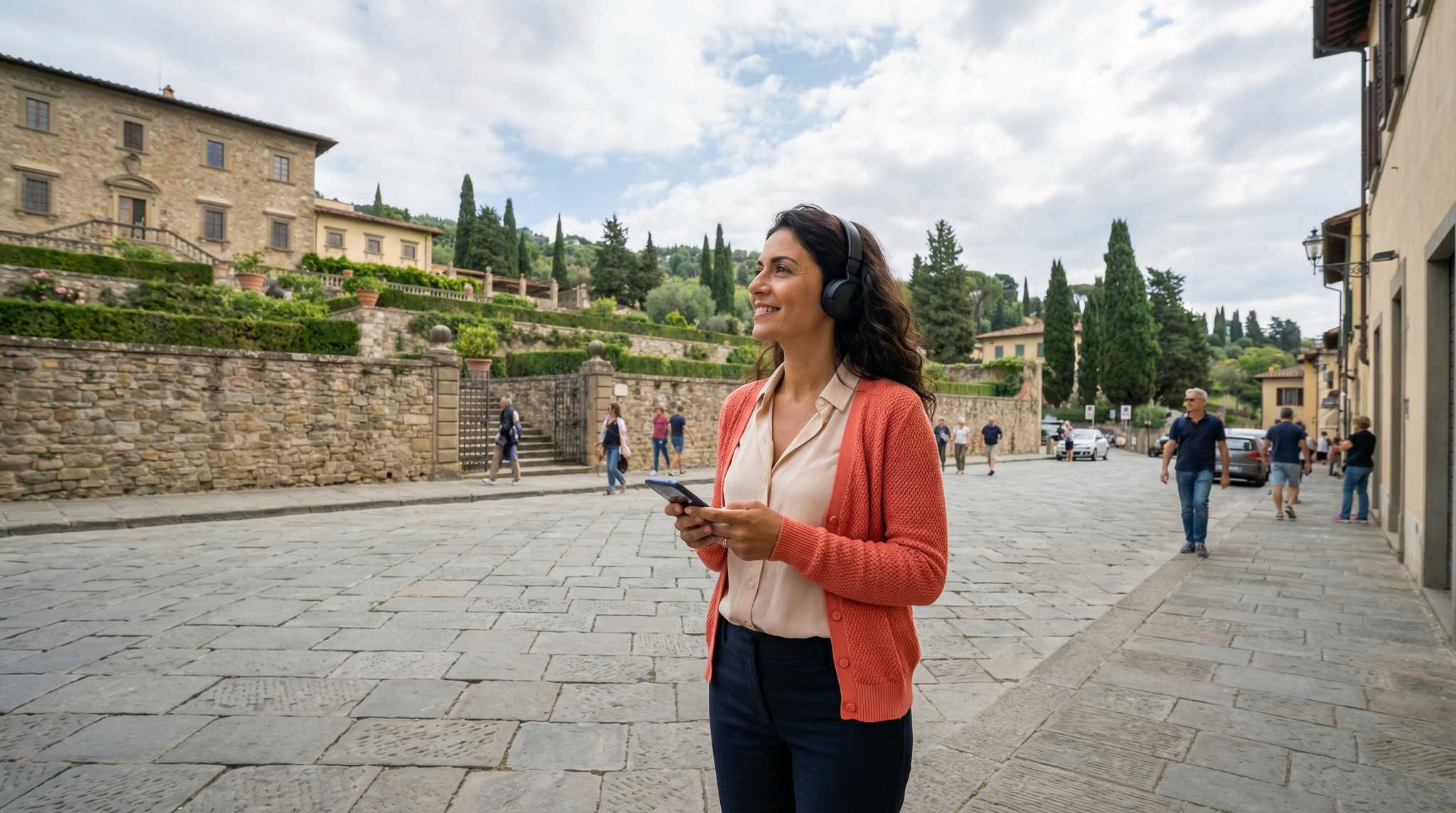
フィレンツェの丘の上にひっそりと佇むフィエーゾレは、すべてのヴィラが秘密を抱え、すべての庭園が歴史の静かなドラマを記憶している世界を隠しています。このセルフガイド・オーディオツアーは、人里離れた場所へとあなたを誘い、ほとんどの旅行者が見ることのない優雅な隠れ家や見過ごされがちな一角を案内します。なぜドイツ兵は連合軍の砲弾が降り注ぐ中、ヴィラ・レ・バルツェを要塞に変えたのでしょうか?誰も語ろうとしないスキャンダルの中で失われた、ヴィラ・メディチの回廊をかつて飾っていた消え去った宝物とは何だったのでしょうか?サン・ジローラモにある奇妙に彫られた貝殻の洞窟は、本当に有名な小説家のどんでん返しにインスピレーションを与えたのでしょうか?一歩ごとに、哲学者の深夜の議論から反乱のささやき、そして糸杉の木陰で策略を練る芸術家たちのつぶやきへとあなたを運びます。新たな目でフィエーゾレが展開するのを見て、広大な景色と心に残る美しさの中で時を超えて移動しましょう。好奇心に導かれ、フィエーゾレの隠れた高みでの旅を始め、その謎が明らかになるに任せましょう。

ツアーのプレビュー

map

このツアーについて

  • schedule
    所要時間 30–50 mins自分のペースで進める
  • straighten
    ウォーキングルート 2.1kmガイド付きパスに沿って進む
  • location_on
  • wifi_off
    オフライン対応一度のダウンロードでどこでも使える
  • all_inclusive
    無期限アクセスいつでも、ずっと再生可能
  • location_on
    ヴィラ・レ・バルツェから開始

このツアーのスポット

  1. To spot Villa Le Balze, look for a striking pale yellow villa with elegant arches, perched dramatically above a sculpted garden with geometric hedges and a sweeping view over the…もっと読む折りたたむ

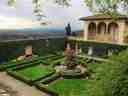
    To spot Villa Le Balze, look for a striking pale yellow villa with elegant arches, perched dramatically above a sculpted garden with geometric hedges and a sweeping view over the valley-you can't miss its lofty hillside position just beyond a wall covered in lush ivy. Welcome to Villa Le Balze! Take a deep breath and let your eyes wander over the intricate, swirling patterns of green in the gardens-the perfect place to imagine that, if you were a philosopher, you’d finally solve all the world’s mysteries right here with a cup of coffee. Now, step back a moment and picture the year 1912. Charles Augustus Strong, an American philosopher-and lucky son-in-law of John D. Rockefeller-stands here with two British architects, squinting at these steep Tuscan cliffs and thinking, “Can we actually build a dream house here without rolling down the hill?” Well, it turns out they could! But not without a little effort-about 1,200 tons of earth had to be hauled away just to make the land flat enough to build on. I hope they had a good wheelbarrow. Strong wanted the sort of view that would make any artist or philosopher sigh-not surprisingly, he’d just stayed up at Villa San Girolamo and was so impressed by the panoramic sweep of Florence that he said, “I want my villa to have this view, but with a side of cliffs.” So began the adventure of Villa Le Balze, which means “the cliffs” in Italian-well named, since in some spots, the ground drops at a dizzying 50-degree incline! The gardens themselves are like a green labyrinth, with terraced levels that cascade down the slope, geometric flowerbeds edged in boxwood, and, in the center, a circular stone basin that looks made for fairy-tale wishes. Picture, if you will, Charles and Elizabeth Strong strolling through the orange garden-now brimming with blooming geraniums and the faint, fresh scent of citrus. Jasmine climbs the balcony walls, lemon trees dot the boxes, and a romantic path with rows of iris, lavender, and roses leads you onward-just mind you don’t get too swept away or you’ll be late for dinner! When Charles lost his wife, the villa became a place for reflection and creativity. If these statues could talk, they’d spill the secrets of countless philosophical debates-think of Strong’s Harvard pal, George Santayana, visiting for long chats leading deep into the night. In fact, many of the statues nestled among the gardens are of philosophers themselves, commemorating those long, meaningful conversations among the olive trees and fountains. Fancy a bit of drama? Well, keep your ears open: just beside the villa, there’s a cave decorated with seashells and coral, and a fountain flanked by pebble mosaics, all presided over by the goddess Venus herself. Gives “spring water” a touch of mystery, doesn’t it? But it wasn’t all sipping limoncello and pondering life’s great questions here. Fast-forward to World War II, and this peaceful retreat became a battlefield-literally! The villa was seized by German forces and transformed into a military headquarters. You can almost hear distant thunder as Allied forces shelled the hillside, shattering windows and scarring the gardens. A German mortar even crashed through the villa’s roof and-by some miracle-landed in the library without exploding. That’s one way to put a stop to late-night studying! After the war, Charles’s daughter, Margaret Rockefeller Strong, looked after Villa Le Balze for 35 years, quietly tending to the memories and keeping the villa’s spirit alive. And then, in a move worthy of the movies, she gave the villa to Georgetown University. Why? The university’s provost promised Margaret he would keep the light burning at her son’s grave in Fiesole. Sounds like the kind of promise you’d read about in an old letter tucked away in a library. Today, the villa buzzes with students from all over the world-a lively mashup of Italian culture, history, and chatter about exams. There’s a permanent staff (including some very good cooks, so rumor has it), and the place is a hive of learning and laughter from morning until, well, let’s just say philosophers never sleep early. As you stand here, breathe in that mingling of fresh grass, ivy, and distant Florence air-from lonely philosopher’s retreat to wartime drama to a joyful academic hub, Villa Le Balze truly weaves together the quiet wisdom of the ages with a flash of excitement and, of course, a view to write home about. Wouldn’t you want your own cliffside villa, too?

    専用ページを開く →
  2. To spot Villa Medici, look up the hillside for a grand, pale villa with green shutters and a row of cypress trees standing guard along its lofty stone terrace. Now that you’ve…もっと読む折りたたむ

    To spot Villa Medici, look up the hillside for a grand, pale villa with green shutters and a row of cypress trees standing guard along its lofty stone terrace. Now that you’ve found it, imagine the year is 1457. The Medici family wanted a special escape from the city’s hustle-so they built this very villa, high above Florence. Picture the warm Tuscan sun bouncing off those creamy stone walls while important Medici nobles step out onto the terrace, cloaks fluttering in the hillside breeze. The air is thick with mystery: artists and thinkers met here to swap secrets and plan the future of Florence, while the view below stretched on forever. Centuries later, this villa became so enchanting it even crept into famous novels; in The English Patient, the ruined convent could be this exact spot. Who knows what hidden stories the walls still remember? As you stand here, enjoy the same peace and wind that brushed against ancient plots and whispered Medici fortunes. Just don’t trip over any ghostly architects still arguing over the perfect design-apparently, everyone’s a critic, even in the afterlife!

    専用ページを開く →
  3. Ahead of you, you’ll see a long, sun-faded yellow villa with rustic red-tiled roofs nestled among olive trees and surrounded by emerald hills-look for its cluster of old stone…もっと読む折りたたむ

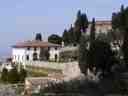
    Ahead of you, you’ll see a long, sun-faded yellow villa with rustic red-tiled roofs nestled among olive trees and surrounded by emerald hills-look for its cluster of old stone chimneys and the backdrop of cypress trees that help it stand out just above the green slope. Welcome to the Villa San Girolamo! You’re standing in front of a building that’s seen more costume changes than a Shakespearean actor-monastery, villa, inn, and even a literary landmark. Picture the 14th century: the air is thick with the scent of rosemary and wild herbs, cypresses lean in like silent, shady sentinels, and hidden behind these golden ochre walls are monks living quietly in their hermitage. These were the Hieronymites, a cloistered order dedicated to quiet reflection, prayer, and possibly the world’s slowest olive harvests. A century later, the Augustinian monks took over, and everything changed. Flash forward to the 1440s, when Cosimo de’ Medici-the trendsetter of the Renaissance-ordered Michelozzo, his favorite architect, to give San Girolamo a grand facelift. Imagine the clatter of hammers and the clink of chisels as the humble buildings expanded, matching the rise of the Medici’s own neighboring villa. But time has a way of playing musical chairs with history. By the 1600s, the tranquil monastery began to empty, its halls growing quieter and quieter, until only the echoes of prayers and the flap of pigeon wings remained. Ownership slipped from the Church into private hands, and somewhere along the way, pigeons were replaced by parties. Don’t miss the entrance portico-those three arches livened up by Matteo Nigetti in 1633 are a reminder that even sacred spaces like a pretty porch. Inside, if you ever get a peek, is a fresco by Luigi Sabatelli of Saint Jerome, staring wisely over the proceedings. Maybe he’s still wondering how things turned out so lively after centuries of silence! San Girolamo’s story isn’t finished. In 1865, it became the headquarters for the Jesuit Superior General. In the late 19th century, the villa welcomed nuns from the Little Company of Mary, who swapped quiet contemplation for running a guesthouse (and probably received more than a few requests for extra towels). The mayor eventually caught on, shutting the operation in 1998-no holy loopholes in the hotel registry! And if the villa seems strangely familiar-it was the atmospheric setting for Michael Ondaatje’s novel, The English Patient. Writers and pilgrims, nuns and nobles, have all gazed out at the unforgettable views, weaving their own threads into San Girolamo’s never-ending tapestry. So, as you stand beneath these ancient roofs, take a breath-the wind here has carried secrets for seven centuries.

    専用ページを開く →
さらに7件のスポットを表示表示するスポットを減らすexpand_moreexpand_less
  1. To find the Episcopal Palace, just look for a grand, rectangular cream-colored building with a double staircase leading up to its entrance, some tall palm trees at each end, and a…もっと読む折りたたむ

    To find the Episcopal Palace, just look for a grand, rectangular cream-colored building with a double staircase leading up to its entrance, some tall palm trees at each end, and a large stone coat of arms proudly displayed above the central arched doorway. Now, step right up and imagine yourself in the heart of Fiesole’s history-Piazza Mino. The Episcopal Palace before you isn’t just a palace; it’s the original “bishop’s crib,” built nearly a thousand years ago. Imagine the year 1028: you would hear the echo of stone masons, smell fresh mortar, and see Bishop Jacopo Bavaro keeping an eagle eye on every block being laid as his new residence took shape alongside the cathedral. Back then, bishops didn’t need a doorbell-they had entire staircases! In fact, what you see out front, that elegant double staircase, wasn’t added until centuries later, in the 1800s, for a bit of dramatic flair. I suppose bishops liked to make an entrance, too. Through the centuries, this palace was buffed up, expanded, and redecorated by bishops who didn’t shy away from a bit of real estate development. Bishop Andrew Corsini made it bigger in the fourteenth century, probably so he could host grand feasts-or maybe just have his own quiet reading corner. And then, see that fancy coat of arms above the door? That’s thanks to Bishop Filippo Neri Altoviti, who made sure to leave his mark during his expansion. Got to let future bishops know who did the heavy lifting, right? But it’s not all marble and history lessons. Step inside-if only in your imagination-and you’d find a private chapel filled with glowing frescoes from the Ghirlandaio school, where saints watch over the bishop day and night. There’s even a secret oratory commissioned by Bishop Cattani da Diacceto, where an artwork once serenaded the Virgin Mary with heavenly color. Oh, and if you peek at the garden out back? Tucked among the greenery, the remains of an Etruscan wall still whisper secrets from over two millennia ago, supporting the very foundation of the town. This is where centuries stack up like bricks-so as you look around, remember: every stone tells a story, and this palace has plenty to share!

    専用ページを開く →
  2. To spot the San Francesco Convent, look for a sturdy stone building with a pointy, gabled roof and a impressive round rose window right above a deep-set entrance, all perched on a…もっと読む折りたたむ

    To spot the San Francesco Convent, look for a sturdy stone building with a pointy, gabled roof and a impressive round rose window right above a deep-set entrance, all perched on a quiet patch of grass with old, welcoming steps leading you up. Now, imagine you’re standing where monks once padded around in sandals, quiet as the morning fog rolling over Fiesole’s hills. Back in 1399, a small group of Franciscans built a simple hermitage right here-a peaceful hideout for prayer, tucked away from the busy world. Over time, this humble hermitage grew into the chunky stone convent you see today. Does the church’s rough, ancient stonework make you feel like you’ve stepped straight into a medieval storybook? That’s no accident. In fact, when the place was restored in the early 1900s, the architect, Giuseppe Castellucci, made sure to bring back some of that old Gothic charm-pointed archways, a rose window, and a roof that looks ready to welcome a few wayward pigeons. As you stand at the porch, peek inside and you’ll spot a portrait of St. Francis himself, making sure you’re not sneaking in with muddy shoes. The inside is as calm as a mountain stream, with a high arched ceiling and simple stone columns. Not far from here, in the choir, you might hear the ghostly echo of a pipe organ built in 1938-a machine so complex it might confuse even the most clever Franciscan, with electric keys and enough buttons to launch a spaceship. But this isn’t just a place for monks and music-life continues to throw in surprises. In 1993, the very same church was the setting for an international love story when the future president of the Philippines, Ferdinand "Bongbong" Marcos, married Liza Araneta here. From secret prayers to famed weddings, San Francesco Convent is a patchwork of centuries-old mysteries and memories. As you walk past, you can't help but think: how many lives, big and small, have crossed these old stone steps before yours?

    専用ページを開く →
  3. To spot the Basilica of Sant'Alessandro, look for a pale beige church with simple lines and a large arched window above two square wooden doors, sitting calmly at the top of a…もっと読む折りたたむ

    To spot the Basilica of Sant'Alessandro, look for a pale beige church with simple lines and a large arched window above two square wooden doors, sitting calmly at the top of a gentle stone ramp. Alright, you’ve made it to one of Fiesole’s most mysterious treasures! Take a look at those sturdy walls and imagine: you’re standing where Etruscans once worshipped their ancient gods. Here comes the plot twist-fast forward to the 6th century, and this spot transforms into a Christian basilica, probably on orders from none other than King Theodoric the Great himself. That’s right, royalty was involved! If you listen closely, maybe you’ll catch a faint echo of ancient footsteps through the stone halls. But wait, there’s more! The church was once called Santo Pietro in Gerusalemme-try saying that five times fast!-but in 823, it got a name change in honor of Saint Alessandro, a bishop from Fiesole who met a rather dramatic end in the River Reno near Bologna. His followers, determined and a bit sneaky, brought his remains all the way back here, tucking them safely behind the altar. Now, even if the outside looks a bit “modern” thanks to that crisp neoclassical façade added in the early 1800s, inside, it’s a time capsule. Picture three ancient naves, rows of marble columns-fifteen made from streaked cipollino marble! If these columns could talk, they’d tell stories of Roman buildings from around town. Stroll to the left and-surprise!-you’ll spot Renaissance frescoes and a glowing painting by Gerino di Pistoia, surviving through centuries of change. By the way, during restoration, workers discovered mysterious Etruscan ruins beneath the basilica. So, right where you’re now standing, there might be secrets still hidden in the earth. Today, the basilica isn’t for regular worship but serves as an exhibition space, a silent guardian of all its incredible stories. Who knew one little church could pack in so much drama, history, and a sprinkle of ancient mystery?

    専用ページを開く →
  4. To spot the Fiesole Cathedral, look for a simple, pale stone church with three big wooden doors and a tall clock tower topped with battlements standing proudly above the…もっと読む折りたたむ

    To spot the Fiesole Cathedral, look for a simple, pale stone church with three big wooden doors and a tall clock tower topped with battlements standing proudly above the rooftops. Imagine being here almost a thousand years ago! This impressive cathedral, officially named the Cathedral of Saint Romulus, has guarded Fiesole since 1028, when Bishop Jacopo the Bavarian decided the people needed a grand new church within the city walls. Maybe he just didn’t want a long walk up from the old cathedral-speaking of, would you want to climb hills in heavy bishop robes? I’d need a snack break halfway! The older cathedral is still around, actually-it was turned into a Benedictine abbey, and its ancient stone façade still stands. But right here, you’re facing a masterpiece of plain, solemn Romanesque style, where every column and carved capital seems to whisper secrets from the past. Step inside, and it’s almost a surprise-not much decoration, just cool, shadowy stone, and a marble altar glowing softly by candlelight. But don’t be fooled by its quiet look! There are treasures everywhere: frescoes of saints by master painters, statues so lifelike you half expect them to step down and say “hello,” and a vision of Saint Romulus himself, celebrated right on the church’s high altar. Even the crypt below feels mysterious-its old columns and ancient capitals practically shiver with stories, and the air is filled with echoes from centuries gone by. If you listen closely, maybe you’ll hear monks chanting or the gentle chime of the campanile clock above, just as people did hundreds of years ago. So, whether you’ve come here for peace, a peek at history, or just to find the tiniest gargoyle, remember: this cathedral has seen wars, prayers, laughter, and even a bishop or two grumbling about the city’s stairs-and now, it gets to greet you!

    専用ページを開く →
  5. In front of you is a sweeping half-circle of ancient stone steps carved right into the hillside, forming an open-air theatre surrounded by green grass and fragments of old…もっと読む折りたたむ

    In front of you is a sweeping half-circle of ancient stone steps carved right into the hillside, forming an open-air theatre surrounded by green grass and fragments of old walls-you’ll spot it easily if you look down to your left for the large curve of weathered stone seating facing a central stage. Welcome to the Archaeological Area of Fiesole-the time machine of Tuscany! If these stones could talk, they’d probably ask you for a standing ovation. Right where you’re standing now, centuries of history lie stacked atop each other, waiting for you to imagine gladiators, priests, emperors, and even a nosy nineteenth-century baron, all making their mark on this hallowed ground. Let’s start your journey back in time with a little drama… in 1809, Baron Friedman Schellersheim, a Prussian with a keen eye for adventure (and probably a knack for muddy boots), ordered the first archaeological digs at a farm called the "Buche delle Fate"-the “Fairy Holes.” Legend has it, he hoped to unearth magical treasures, but instead stumbled upon ruined arches of Fiesole’s magnificent Roman theatre. For a while, after he found a few bits of Roman handiwork, the baron lost interest and moved on-imagine closing up a treasure chest just because you liked the box better than the jewels! The abandoned theatre was even ransacked for its stones, with chunks of it rumored to have ended up in the great Duomo of Florence. Fortunately for us, the magic of Fiesole’s ruins wasn’t forgotten forever. In the 1870s, the town bought the land and official excavations began again-this time, the spotlight stayed on for good. In 1911, after more digging, cleaning, and yes, the occasional argument over how to put the rocks back together, Fiesole’s Roman theatre was finally restored for all to see, with the lower seating area still beautifully preserved. Picture this: nearly two thousand years ago, almost 3,000 Romans would have squeezed onto these very stone seats, snacking on olives or bread during summer spectacles. Now, imagine yourself at the heart of ancient Faesulae, the old Roman name for Fiesole. Right beneath your feet was the city's bustling forum, surrounded by hills and crowned with sacred temples. And take a peek over your shoulder-the little museum building up here was designed a bit like a Roman temple itself (only it’s not quite as old!), sheltering all sorts of ancient treasures from the area. Inside you’d find everything from tragic Greek vases and shining bronze statues to Etruscan urns, each one whispering little secrets about who lived and loved here. There’s more to see! The ruins behind the theatre are actually Roman baths-yes, the ultimate spa experience, first-century style. You can see the remnants of the calidarium, tepidarium, and frigidarium-the hot, warm, and cold rooms, each with their steamy atmospheres and pools. Someone could have spent a whole afternoon here, hopping from hot to cold, chatting politics, and complaining about the cost of olives. Step a bit deeper and you’ll find the oldest foundations in Fiesole: the Etruscan-Roman temple. This sacred site dates back to at least the 4th century BC, but may have been used as a temple for even longer-it’s like a spiritual relay race, passed down through the centuries. Its three-side cella probably honored Jupiter, Juno, and Minerva, and archaeologists even dug up a little bronze owl here: a clue from Minerva herself, maybe. At one point, this was a hotspot not just for the gods, but for coins, tombs, and even a Christian church that later rose (and fell) atop these ancient rocks. And, let’s not forget the “Fairy Holes” themselves-mysterious arches first seen by locals and mistaken for magical burrows, echoing with the rumor of ancient spirits beneath Fiesole’s soil. Even just standing here, you can feel how the whole area hums with stories-of Etruscans, Romans, Longobards, of lost temples, and summer nights when, to this day, you can hear opera or theatre filling the air in the ancient seats. The Archaeological Area is still alive-no magic needed, just a bit of imagination and a love of history. If you listen closely, the stones may tell you their secrets. Just don’t ask them for a song-they’re a bit out of tune after all these years! Fascinated by the archaeological museum of fiesole, roman theatre of fiesole or the thermal baths? Let's chat about it

    専用ページを開く →
  6. To spot the Church of Santa Maria Primerana, look for a simple pale building with a striking columned portico at the top of some stone steps, standing proudly at the edge of…もっと読む折りたたむ

    To spot the Church of Santa Maria Primerana, look for a simple pale building with a striking columned portico at the top of some stone steps, standing proudly at the edge of Piazza Mino. Now, as you stand at the foot of those inviting steps, imagine yourself stepping into a time machine disguised as a church. This is no ordinary stop on our tour; you’re about to enter a place where stories layer thicker than the frosting on a Tuscan wedding cake. Santa Maria Primerana has been holding court in this spot since at least the year 966-yes, that’s over a thousand years of secrets and Sunday mornings. Take a moment to picture the scene long ago: instead of church bells, the clang of Roman sandals filled the air. The church actually stands on top of a platform (that’s a 'stylobate' if you want to impress your friends!) once used by the Romans. If you run your hand along the old north wall, imagine touching a stone column that once saw toga-clad citizens walk by. And just beside you, an ancient Roman street quietly flanks the church, as if still waiting for the sound of chariots. But don’t let the calm fool you-this church sits on ground that’s felt the footsteps of Lombard invaders, heard the whispered prayers of the earliest Christians, and seen just about every style of architecture that Italy can throw at it! The façade you see comes straight from the grand Mannerist playbook of the late 1500s, while the Gothic bones inside are even older, echoing with medieval chants. Peek in and let your eyes follow the sgraffito-those lively scratchy decorations-by Ludovico Buti, then turn your attention to the high altar. There, a 13th-century masterpiece of Madonna and Child waits, a coppery glow to her face that earned the church its name, 'Primerana,' marking the very first place in Fiesole where people venerated the Virgin Mary. Look closely at the transept, too. Is that a self-portrait staring back at you, forever carved in marble by Francesco da Sangallo? And don’t forget the painted crucifix, attributed to Bonaccorso di Cino, which might just wink at you if you linger long enough (okay, maybe not, but it makes for a good story). So, before we walk on, let yourself smile-this little church has survived empire, invaders, and fashion trends. And today, it welcomes another curious traveler: you!

    専用ページを開く →
  7. To spot Villa Il Roseto, look ahead for a simple ochre-colored house with a long staircase climbing the hillside, surrounded by terraced gardens and bursts of colorful…もっと読む折りたたむ

    To spot Villa Il Roseto, look ahead for a simple ochre-colored house with a long staircase climbing the hillside, surrounded by terraced gardens and bursts of colorful flowers. Let’s catch our breath for a moment as we stand right here-good news, you’ve reached the final stop of our tour! Welcome to Villa Il Roseto, perched bravely on the side of the hill, almost as if clinging on for an even better view of Florence below. If you listen closely, you might hear the gentle rustle of rose bushes and cypress trees swaying in the breeze. Not a bad soundtrack for the place where dreams-and quite a bit of garden pruning-have flourished for over a century. This villa was the creation of Consuelo De Jevenois, a painter from Belgium, and let me tell you, she picked one of the best views in all of Tuscany. Imagine the late 1800s and early 1900s: these hills were the secret playground of foreigners seeking inspiration and a delicious glass of vino. The garden here is unexpectedly daring, clambering up the hillside with terraces bursting with hydrangeas, azaleas, and of course, roses so thick you’d swear the air itself was perfumed. Stony paths twist their way to panoramic viewpoints, all lined with wild irises and tiny olive trees-so keep your eyes (and nostrils) open for nature’s finest artwork. But there’s more! In 1958, the villa became home to the famous architect Giovanni Michelucci and his wife Eloisa, herself an artist. Together, they let the garden tell its own story, adding almost nothing and keeping many of the original plants. Michelucci even started a foundation here, filling the villa with sketchbooks, models, and more architectural secrets than you could shake a blueprint at. Today, Villa Il Roseto is not only a treasure trove of creativity but also the final resting place of Michelucci and Eloisa, their legacy blooming in every flower and idea that’s ever graced these terraces. So take a deep breath, soak in the view, and don’t forget to say “grazie” for all the inspiration-your adventure in Fiesole ends in full bloom!

    専用ページを開く →

よくある質問

ツアーはどうやって始めますか?

購入後、AudaToursアプリをダウンロードして引き換えコードを入力してください。ツアーはすぐに開始できます。再生ボタンをタップして、GPSガイド付きルートに従うだけです。

ツアー中にインターネットは必要ですか?

いいえ!開始前にツアーをダウンロードしておけば、完全にオフラインで楽しめます。チャット機能のみインターネットが必要です。モバイルデータを節約するため、WiFi環境でのダウンロードをお勧めします。

これは団体ツアーですか?

いいえ、これはセルフガイド式のオーディオツアーです。ガイドや団体、決まったスケジュールに縛られることなく、スマホから流れるナレーションを聴きながら自分のペースで自由に探索できます。

ツアーの所要時間は?

ほとんどのツアーは60〜90分で完了しますが、ペースは完全に自由です。好きな時に一時停止したり、スポットを飛ばしたり、休憩を取ったりできます。

今日中にツアーを終えられない場合は?

問題ありません!ツアーには無期限でアクセスできます。明日、来週、あるいは来年でも、好きな時に再開できます。進行状況は保存されます。

どの言語が利用可能ですか?

すべてのツアーが50以上の言語に対応しています。コードを引き換える際にお好みの言語を選択してください。注意:ツアー生成後に言語を変更することはできません。

購入後、どこからツアーにアクセスできますか?

App StoreまたはGoogle Playから無料のAudaToursアプリをダウンロードしてください。メールで届いた引き換えコードを入力すると、ライブラリにツアーが表示され、ダウンロードして開始できるようになります。

verified_user
満足保証

もしツアーを楽しめなかった場合は、返金いたします。お問い合わせ先: [email protected]

以下の決済で安全にチェックアウト

Apple PayGoogle PayVisaMastercardPayPal

AudaTours: オーディオツアー

楽しくて手頃なセルフガイド式ウォーキングツアー

アプリを試す arrow_forward

世界中の旅行者に愛されています

format_quote このツアーは街を見るのに本当に良い方法でした。ストーリーは作り込まれすぎず面白くて、自分のペースで探索できるのが良かったです。
format_quote 観光客気分になりすぎず、ブライトンを知るためのしっかりとした方法でした。ナレーションには深みと文脈がありました。
Christoph
Christoph
starstarstarstarstar
ブライトン・ツアー arrow_forward
format_quote 片手にクロワッサンを持ち、期待ゼロで始めました。アプリはただ一緒にいてくれる感じで、プレッシャーもなく、クールな物語を楽しめました。

オーディオツアー使い放題

世界中のすべてのツアーをアンロック

0 ツアー·0 都市·0 国
all_inclusive アンリミテッドを探索