
フルダ音声ツアー:学者、聖人、君主の残響
千年前、影の修道士たちがフルダの古石に秘密を刻み込み、支配者たちは大聖堂の壁の裏で台頭を企てていました。街のバロック様式の尖塔の下には、目に見えないところで物語が脈打っています。 このセルフガイド音声ツアーは、フルダの中心部を巡り、ほとんどの訪問者が見つけることのない劇的な伝説や隠れた場所を明らかにします。 聖ミヒャエル教会内部での禁断の発見は、なぜ地元の歴史を永遠に変えたのでしょうか?聖ブラジウス教区教会の数世紀前の祭壇には、どんな秘密のコードが埋め込まれているのでしょうか?フルダ大学での一夜の政治的陰謀は、どのようにして市を挙げてのスキャンダルを引き起こしたのでしょうか? 曲がりくねった路地や日当たりの良い広場をたどると、神秘的な過去が目の前で解き明かされます。反乱と献身の声が足音ごとに響き渡り、街の穏やかな外観を容赦ないドラマと隠された陰謀の舞台へと変えるので、注意深く耳を傾け、目的を持って歩きましょう。 フルダの隠された層を解き明かしましょう。再生ボタンを押して、旅を始めましょう。
ツアーのプレビュー
このツアーについて
- schedule所要時間 40–60 mins自分のペースで進める
- straightenウォーキングルート 3.4kmガイド付きパスに沿って進む
- location_on
- wifi_offオフライン対応一度のダウンロードでどこでも使える
- all_inclusive無期限アクセスいつでも、ずっと再生可能
- location_onフルダ大学州立図書館から開始
このツアーのスポット
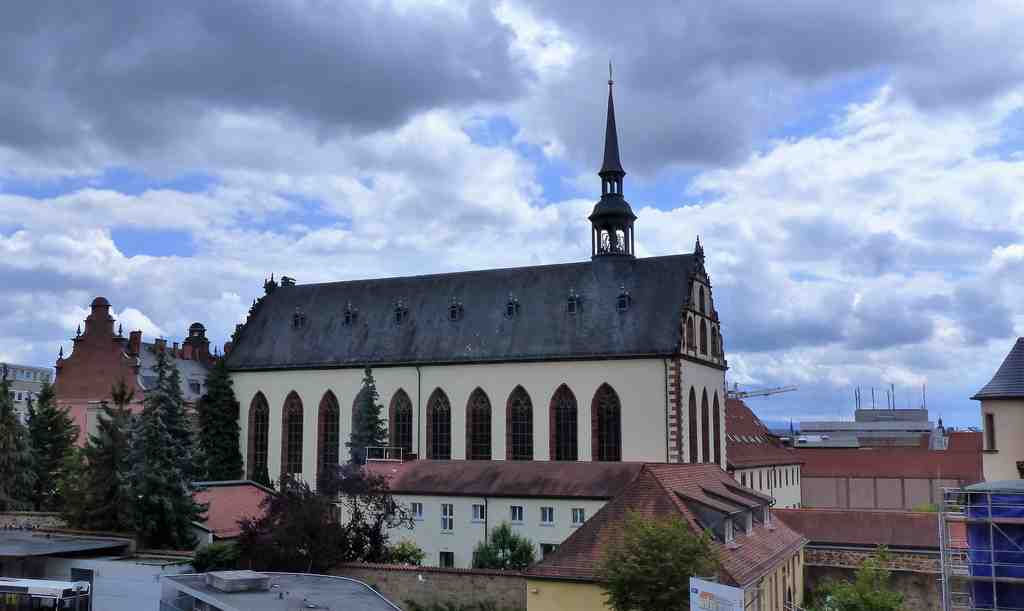
The Benedictine Abbey of Saint Mary stands ahead with its creamy facade, tall pointed windows, and a slender spire topping the roof-just look for the row of dramatic arched…もっと読む折りたたむ
The Benedictine Abbey of Saint Mary stands ahead with its creamy facade, tall pointed windows, and a slender spire topping the roof-just look for the row of dramatic arched windows lined up along the side, right above the garden and courtyard. Here, at the heart of Fulda, stands a building that’s seen almost as much drama as a soap opera binge-though with fewer commercial breaks. Imagine 1626: the air smells of fresh stone and timber, and the first stones of this mighty abbey are being laid by Johann Bernhard Schenk zu Schweinsberg, whose name is almost as grand as the building itself. Just a few years later, four Benedictine nuns arrive from Kühbach near Augsburg, led by Salome von Pflaumern, ready to start a community of prayer, learning, and-believe it or not-gardening. But peace was a rare luxury in the early days. As the nuns went about their days, the thunder of troops and the screech of desperation during the Thirty Years’ War often forced them into hiding. The abbey was plundered multiple times, and just when it seemed things might calm down, the threat of secularization loomed in 1802. To survive, the clever sisters opened a girls’ school. They say necessity is the mother of invention-well, these nuns took it literally. Fast forward to 1875, the Kulturkampf sweeps across Germany, and the sisters are forced into exile in France. It was only in 1887 that they returned, and by 1898, Pope Leo XIII decided it was time to grant the abbey full status. If you asked the nuns, they'd probably say he was just trying to catch up with their resilience! The abbey continued to dodge danger even during World War II. In 1942, when expulsion seemed inevitable, the sisters cleverly offered part of their buildings to the German army, then later used them to shelter bombing victims and refugees. Bombs did hit in 1944, shattering windows and tearing rooftops, but by the 1950s, the spirit of renewal brought new glass and modern updates to the abbey church. Did I mention the garden? Behind those walls lies a 2,000-square-meter paradise where the sisters still grow fruit, vegetables, and herbs. Their handiwork doesn’t stop at gardening; in the monastery shop, you’ll find crafts and local treats, all made with a sprinkle of faith and a good dose of patience. Over the centuries, the abbey has joined the Beuronese Congregation, survived countless storms (literal and otherwise), and continues to be lovingly restored and looked after. Nowadays, under Abbess Benedikta Krantz, the place remains a living testament to devotion, ingenuity, and the occasional dash for cover. Living proof that you can uproot a nun, but you can’t keep her from tending her garden!
専用ページを開く →
さらに12件のスポットを表示表示するスポットを減らすexpand_moreexpand_less
Right ahead of you is the Fulda City Palace: just look for a grand, three-story baroque building with a dark slate roof and central clock tower, flanked by two elegant wings and…もっと読む折りたたむ
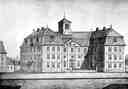
Right ahead of you is the Fulda City Palace: just look for a grand, three-story baroque building with a dark slate roof and central clock tower, flanked by two elegant wings and framed by stone staircases-it's hard to miss, especially as the evening sunlight dances across its golden facade. Now, take a moment and imagine yourself back in the early 1700s. The smell of fresh-cut grass floats on the breeze, carriage wheels rumble over cobblestones, and the imposing silhouette of the Fulda City Palace towers before you like a chess king guarding his court. This wasn’t just a palace-it was a theatrical masterpiece, designed between 1706 and 1714 by the celebrated architect Johann Dientzenhofer. Commissioned by Prince-Abbots and later home to Prince-Bishops, this place was Fulda’s answer to, “How fancy can we get?” But let’s rewind the clock a little more. Long before it became the baroque showstopper you see today, a stern fortress once stood here, built at the start of the 14th century. Legend has it that the abbot, Heinrich V., decided he needed somewhere new after a rather heated spat with his monks-sometimes real estate is all about location and avoiding awkward breakfast meetings! He picked this very spot, right on a strategic hill between the old monastery and the bustling town. Defense was the hot trend, so the “new castle” was built with thick stone walls that merged with the city walls, towers, a broad moat, and entry gates so secretive you almost needed a password (no, “Open Sesame” wouldn’t do). Excavations reveal the remnants of turret foundations and even a drawbridge, so you can picture knights keeping watch while the townsfolk hustled below. Fast forward to the 1600s-power suits were out, ruffled collars and bigger castles were in. The original fortress was transformed into a four-winged palace, still with a whiff of danger on the outside but much more suited to grand dinners and politics than sword fights. Every few decades, a new abbot wanted to leave his mark, adding wings and courtyards, dreaming up ever more impressive facades. One even made sure the palace had its own chapel with beautiful pointed windows, a space for prayers-and perhaps a little bit of plotting. And then came the age of elegance: Baroque! In 1706, Dientzenhofer was called in to give the palace an epic makeover-think palace plastic surgery, 18th-century style. The main wing blossomed with ornate staircases and neat rows of tall windows, the perfect spot for any noble to prepare a dramatic entrance. The central courtyard, where you’re standing, became the “Ehrenhof”-the Court of Honor. By 1714, Fulda’s rulers could stroll up those exterior staircases or gaze out the windows over their domain, feeling right at the center of the world. And yet the palace was never done evolving. When Fulda became a principality, new wings were added in the cool, elegant late-classical style. By the 1800s, the palace hosted the crown prince of Hesse-a whole new chapter of royal intrigue and, I suspect, even fancier parties. Today, the palace is still packed with secrets. It houses the city administration, but you can also sneak a peek at its dazzling rooms-almost all are original, filled with art, silk, and porcelain. If you think your bathroom mirror is impressive, wait until you see the Mirror Hall! Imagine getting dressed in a chamber covered floor to ceiling with mirrors, reflecting the candlelight and glittering with every move. So, as you stand here, linger a moment. Breathe in the centuries of stories-of abbots, bishops, royal heirs, and yes, a disagreement or two that changed the shape of Fulda forever. Not bad for a building that started as an escape from the neighbors, wouldn’t you agree?
専用ページを開く →To spot St. Michael's Church, just look ahead for its striking round tower with a high, pointed slate roof-right next to the tall square bell tower, all built from reddish stone…もっと読む折りたたむ
To spot St. Michael's Church, just look ahead for its striking round tower with a high, pointed slate roof-right next to the tall square bell tower, all built from reddish stone and nestled on the gentle hillside before you. Welcome to St. Michael’s Church-one of Germany’s oldest and most mysterious medieval landmarks! Picture yourself back in the year 820. You’d be standing on a bustling monastery cemetery, surrounded by stonecutters, donkeys, and monks busily overseeing the new construction on this very hill. They were building not just any church but a rotunda in the unusual pre-Romanesque Carolingian style-a huge challenge back then, like assembling IKEA furniture without instructions, but with even more praying and definitely less Allen keys. Listen for a moment to the echo of ancient chisels on stone. Under the orders of Abbot Eigil, this church rose as a copy-or so they hoped-of Jerusalem’s Church of the Holy Sepulchre. For generations it was believed to be the oldest of its kind in Germany, a claim historians still enjoy arguing about at lunch. Why go to all this trouble, you ask? St. Michael’s wasn’t just a chapel; it was built as the monastery’s funeral church. Here, the dead monks could rest-and possibly eavesdrop on a few whispered prayers above. Abbot Eigil himself is buried in the eastern section of the crypt, and although he dreamed of starting a tradition for abbots to be buried here after him, well, let’s just say his successors were a bit shy about joining him. But even if you weren’t a monk, you’d be dazzled by the architecture. Most impressive is the church’s rotunda-a central circular space built upon eight sturdy pillars (think of them as the original “support group”). The layout carries a secret code: the pillars symbolize the eight blessings from Christ’s Sermon on the Mount, while in the crypt below, the central column is said to be Christ himself, holding the whole church up. The circle? That’s eternal life; you walk in and time just… spins round. The crypt, as you might have guessed, is the oldest part-dating straight back to 820. Venture in and you’d find yourself in a softly lit, cool chamber supported by concentric stone rings and a lonely, ancient pillar-a relic even older than the church, possibly reused from Fulda’s first basilica around 750. This was a landmark experiment in engineering-you get bonus points if you spot where the Romans left their legacy! Don’t forget to look up when you’re inside: the upper church boasts original frescoes from the 11th century, showing scenes of Christ, angels, the Eight Beatitudes, and of course, the archangel Michael himself, locked in epic battle with a dragon. Talk about dramatic ceilings! During its long life, St. Michael’s has seen nearly as much action as a Netflix drama-sieges, fires, Viking raids, and even a bombing in World War II. Each time, the church rose from the ashes, surviving by acquiring a few renovations, new towers, and different hats for its spire (so to speak). By the 11th century, it had five altars and even a model of the Holy Sepulchre itself-which would’ve made for quite the medieval tourist attraction! Nowadays, instead of monks, you’re most likely to find visitors and the gentle tolling of three bells in the west tower. The biggest, the “Jakobus” bell, actually made quite the journey from East Prussia after WWII. And during Germany’s bishops’ conferences, the morning mass is still celebrated here-so keep your eyes peeled, you never know who you might spot! So take a deep breath, feel the centuries of devotion, mystery and change, and let St. Michael’s whisper its ancient secrets to you. And don’t worry-if you hear stones creaking or monks whispering, it’s just history saying hello! Interested in a deeper dive into the architecture, equipment or the building symbolism? Join me in the chat section for an insightful conversation.
専用ページを開く →To spot the Faculty of Theology Fulda, look for a stately yellowish-white building with rose-red window trims and a grand staircase leading up to a wooden door topped by a coat of…もっと読む折りたたむ
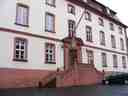
To spot the Faculty of Theology Fulda, look for a stately yellowish-white building with rose-red window trims and a grand staircase leading up to a wooden door topped by a coat of arms, standing directly in front of you. Everyone finds themselves at some point pondering big questions, but here at the Faculty of Theology Fulda, those questions echo a bit louder than most! Imagine standing outside this impressive building a few centuries ago; the air would be thick with the smell of parchment, and you might catch the faint scratching of quills inside as scholars debated issues that shaped the very soul of Fulda. The story of this place begins way back with the benedictine monastery school-a place so old that you’d half expect to bump into a wandering monk carrying a candle, mumbling in Latin. When Abbot Balthasar von Dernbach founded a gymnasium here in 1571, the seeds of higher learning were planted, and soon enough, philosophy and theology became its beating heart. In the 18th century, visionary Adolf von Dalberg founded the University of Fulda, and for a while it thrived, until the winds of change-and Napoleon-blew it away in 1805. Not to be outdone, the Bishop’s Seminary bravely continued theological teaching, even surviving a dramatic closure during the “Kulturkampf” when religious schools were targeted and priests-in-training had to find somewhere else to practice their Latin. Thankfully, under Bishop Georg von Kopp, order was restored and a new era of lively academic chatter began. And here’s a fun fact: out of all German universities, this spot boasts the best student-to-professor ratio in the country. If you studied here, you’d almost have your own professor! So, if you ever felt ignored in a crowd, this is the place for you! Nowadays, you might hear the quiet hum of laptops and scholarly debates inside, but the building remains deeply rooted in tradition, with books stacked so high in the library-over 350,000 of them!-that even the bravest librarian might occasionally get lost. From magister to doctorate, Fulda’s Faculty of Theology continues to evolve, linking arms with Marburg and training future priests, teachers, and anyone curious enough to journey through both faith and reason. Take a moment and imagine all the stories whispered through these walls-after all, the biggest mysteries of life often begin right here, with a good discussion and a great question.
専用ページを開く →Look ahead for a grand Baroque church with two tall matching towers topped with dark, ornate spires, standing wide and proud at the very heart of the square-that’s Fulda…もっと読む折りたたむ
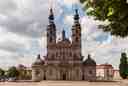
Look ahead for a grand Baroque church with two tall matching towers topped with dark, ornate spires, standing wide and proud at the very heart of the square-that’s Fulda Cathedral, an unmistakable symbol of the city. Now, imagine the scene here back in the early 1700s. The rattling of stone carts, the shouts of craftsmen, and the smell of freshly cut wood from scaffolding would fill the air. This mighty cathedral wasn’t always here-in fact, under your feet lie the old foundations of the massive Ratgar Basilica, once the biggest north of the Alps. That building had to say goodbye (with a little help from the demolition crew) so that Abbot Adalbert von Schleifras could give Fulda a true masterpiece. He hired Johann Dientzenhofer, fresh from a study trip to Rome, who set out to make this cathedral a sort of “little sister” to St. Peter’s itself, only with fewer tourists queuing for hours. By 1712, after eight grueling years, the new church was ready. Can you see those two towers in front of you? Stand between them-you're actually standing in front of the east end of the cathedral, which seems backward compared to most churches in Europe. That’s because Dientzenhofer deliberately wanted to echo the grand churches of Rome, and wasn’t afraid to throw medieval tradition out the window. But Fulda Cathedral is much more than fancy architecture. It is the resting place of Saint Boniface, the “Apostle of the Germans.” His bones lie in a richly decorated crypt below the high altar, in a sarcophagus that would make even an Egyptian pharaoh jealous. That’s why thousands of pilgrims march through here on the Bonifatius pilgrimage every year. Even Pope John Paul II visited in 1980, and locals say the crowd that day was so big it made the town's bakeries run out of pretzels. And here’s a sound you might hear if you were lucky-or in the Middle Ages: the “Golden Wheel.” This was a gigantic, turning star covered in hundreds of tiny bells, which would ring out in a dizzying spinning show of gold, music, and Gothic style. Sadly, it met a spectacular end in 1781 when, during a service, the supporting rope snapped and the whole glittering wheel came tumbling down. Let’s just say, health and safety regulations weren’t really a thing back then. Then there’s the case of the fiery tower. In 1905, a firework misadventure set a tower ablaze, destroying two of the great bells-Osanna and Bonifatius. Miraculously, the rest of the church survived, and the burnt tower was soon rebuilt. Today, the mighty bells ring out in careful order, their sound marking everything from the Angelus to the bishop’s death-let’s hope you’re only here to hear the regular chimes. Step inside (if you have time) and look up at the dome, packed with glowing frescoes and towering figures of angels whose job descriptions remain “look imposing, keep watch.” Legend has it that the builder faced some diabolical challenges while raising that dome-rumor says the devil himself tried to make a pact for a soul in exchange for a perfect roof. Luckily, prayer and perseverance prevailed, and the dome still sits snugly atop the building, while any ambitious demons are left outside to sulk. All around, you’ll see baroque wonders and taste a bit of Rome-by-way-of-Hessen: white walls contrasting with black-and-gold accents, swirling pillars, ornate altars, and-in case you’re looking for extra drama-a collection of organs that have survived wars, upgrades, and more than a few choirmasters’ bad moods. So here before you stands not just Fulda’s cathedral, but its heart, a place of beauty, mystery, drama, and maybe, just maybe, a stray firework or runaway bell. Even in the 21st century, this square is home to open-air pop concerts, and you can imagine that the echoes of history are sometimes interrupted by a drum solo from Sting or Nena-just how the Baroque masters would have wanted, I’m sure. Ready to delve deeper into the architecture, equipment or the surroundings of the duomo? Join me in the chat section for an enriching discussion.
専用ページを開く →Look for a small, stone Gothic church with tall narrow windows and a sharply pointed central steeple rising above, standing snugly next to historic half-timbered houses and old…もっと読む折りたたむ
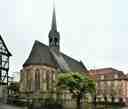
Look for a small, stone Gothic church with tall narrow windows and a sharply pointed central steeple rising above, standing snugly next to historic half-timbered houses and old city buildings. Now, take a deep breath and imagine the bustling life of Fulda’s streets nearly 600 years ago. In front of you, the Severi Church stands like a little time machine-built between 1438 and 1445, when Gothic was the “new style” and not just a cool look for Halloween costumes. This wasn’t just any church; it was lovingly funded by Erasmus Kämmerer, and soon after, it became the wool weavers’ guild chapel-the biggest guild in Fulda! Picture the air thick with the scent of wool and chatter, as the hardworking weavers gathered under this very roof, seeking guidance from their chosen protector, Saint Severus of Ravenna. Over the years, this chapel has been a bit of a “church-for-hire”-unused during the Reformation, then rescued and rededicated in 1621 to Mary and Severus, it welcomed Franciscan monks, Benedictine nuns (for a very brief visit-blink and you’d miss them!), military troops, and generations of teachers and students alike. Even the organ has its own journey, originally built in 1968 for a seminary, now standing here, adding music to this tapestry of stories. If these Gothic walls could talk, they’d sing you a ballad of changing times, wooly beards, and countless prayers whispered above the hum of Fulda’s daily life.
専用ページを開く →Look straight ahead for a large, rosy-red baroque church with two tall towers, each topped with a dark, onion-shaped dome-it rises above the rooftops, crowned by golden…もっと読む折りたたむ
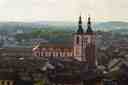
Look straight ahead for a large, rosy-red baroque church with two tall towers, each topped with a dark, onion-shaped dome-it rises above the rooftops, crowned by golden crosses. Welcome to the Parish Church of St. Blasius, Fulda’s proud old baroque beauty! Imagine you’re here in the late 1700s-horses clopping by, merchants haggling nearby, and right where you stand, townsfolk gathering in anticipation of the grand new church rising from the dust of the old. This isn’t just any church-it’s the living heart of Fulda’s city parish, first built way back between 1771 and 1785 by a Jesuit brother named Johann Andreas Anderjoch. You could say he really nailed it... but thankfully not in the way you do with IKEA furniture! But long before baroque grandeur, this site buzzed with everyday life. Around the year 950, as craftsmen and traders settled near the great Fulda monastery, the very first church stood here, likely surrounded by a graveyard and dedicated to St. Mauritius. Over the centuries, fate (and fire) had other plans. After flames devoured the church in 1103, a new Romanesque church rose from the ashes, with strong stone arches and a holy dedication to St. Blasius, who still gives the church its name today. Keep your eyes on those mismatched towers at the front-the left, northern tower is the bell tower, still ringing out every day. Inside, there’s a bell from the 1300s, one of the oldest in all of Hesse-rumor has it, if it rings at 21:00, it means someone just lost track of time shopping for souvenirs! The southern tower, from the baroque era, even has a secret: up a dizzying 162 steps, there used to be a tiny apartment for Fulda’s official tower warden, who watched over the city until 1822. Just imagine the view... and the sore legs! The church as you see it now was built for grandeur-three impressive naves inside, each with brightly painted columns. The side altars are each a masterpiece: one for Mary, painted with child and crowned by angels, and on the opposite side, an altar for St. Joseph, shown with his signature lilies and, probably, the best book club in Fulda. Above, grand ceiling frescoes show scenes of Jesus teaching and driving merchants from the temple. The main altar, built to look like the Fulda Cathedral’s, is propped up by six red marble columns, and above it glimmers a gilded pelican-a rare sight outside Hogwarts! Wander to the back, and you’ll find a medieval baptismal font and, just a bit further, the lingering trace of Fulda’s most bizarre mystery: during roof repairs in 2000, workers found a stone head hidden in the wall-turns out it was part of an ancient depiction of Christ, sealed away for 226 years, like a celestial game of hide and seek! St. Blasius played its own part in religious drama too. During Fulda’s Protestant shakeup, a preacher named Adam Krafft tried to bring in new ideas- but the townsfolk stuck with the old Catholic ways. After all, you don’t mess with tradition, or Grandma’s apple strudel recipe. Let’s not forget a little musical magic either: St. Blasius is known for its grand organs, rebuilt and refined over centuries. The latest, with three keyboards and 50 stops, can thrum the walls with thunder or whisper like angels. And today, after many mergers with other parishes, it’s the headquarters for Fulda’s lively downtown parish community. Through war, art, faith, and nightly bell concerts, St. Blasius lives on-forever watching over Fulda with its twin towers and centuries of stories, secrets, and maybe just a little divine humor. Now, shall we continue, or did those stairs make your legs tired just hearing about them? Intrigued by the architecture, rectory or the holy year of mercy 2016? Make your way to the chat section and I'll be happy to provide further details.
専用ページを開く →Look to your left for a long, tan building with stone accents, lots of windows, and a little tower on its roof - that’s the Vonderau Museum, standing right where the cobblestone…もっと読む折りたたむ
Look to your left for a long, tan building with stone accents, lots of windows, and a little tower on its roof - that’s the Vonderau Museum, standing right where the cobblestone street gently slopes downhill beside the peach-pink Fink Fashion store. Now, imagine the air buzzing with curiosity, the kind of excitement you’d find in a place where every brick seems to whisper a tale. Welcome to the Vonderau Museum, the heart of Fulda’s history, named after a passionate teacher and local researcher, Joseph Vonderau. If these walls could talk, they’d probably ask you if you remembered your homework - but don’t worry, there’s no test here! The story of this museum is a winding journey through time and imagination. It all began back in 1875, during a tense period in German history known as the Kulturkampf, when Fulda’s cathedral chapter member Konrad Hahne decided to gift his collection to the city. The first home of the collection was tucked away in the north wing of the city school, where, if you listen hard enough, you can almost hear the hushed giggles of children learning their lessons. As decades rolled by, the collection grew and needed more space. So, in 1930, the museum packed its bags and marched over to the grand Fulda City Palace. That’s when it began to really stretch its legs, showing off even more treasures to amazed visitors. Fast-forward to April 2, 1938 - Joseph Vonderau’s 75th birthday. Not only did he get cake, but also the honor of having the museum named after him, since he’d been its guiding spirit for 50 years! Talk about a birthday gift that lasts. Of course, true to Fulda’s style, the journey wasn’t simple. When the palace underwent an extensive facelift in 1968, the museum collections ended up scattered like puzzle pieces: some artifacts stayed in the school’s old north wing, while precious paintings and porcelain found homes in the newly renovated palace rooms. It took until the 1980s for the city to finally decide, “Alright, enough with the musical chairs! The museum needs its own real home.” Over several years, they transformed the former city school into a proper museum wonderland - complete with over 4,000 square meters of exhibition space - finally opening its doors on March 8, 1994. Step inside, and you’ll find three worlds in one. There’s cultural history, where you can gaze at Celtic relics from ancient settlements like the Milseburg Oppidum, marvel at tools from Fulda’s prehistory, or peek into perfectly recreated living rooms from the 18th and 19th centuries. Imagine yourself tiptoeing around antique furniture and trying not to spill tea on a priceless rug - careful now! Next, glide into natural history. Large dioramas showcase the ecosystems of East Hesse, with fossils of ancient plants and animals. It’s a place where rocks have stories and even a lump of coal might start boasting about being a celebrity from the Carboniferous period. But don’t go just yet! The painting and sculpture gallery brings you face-to-face with local masterpieces from the Middle Ages up to modern times. If statues could wink, you might not sleep tonight. And here’s the cherry on top: a state-of-the-art planetarium, with 35 seats and full-dome video technology. You can zoom off to the stars or track Fulda’s very own night sky - all without leaving your seat. Whether you’re a fan of ancient artifacts, a budding geologist, or just want to dream under an artificial night sky, the Vonderau Museum is a place where Fulda’s past and present dance together. So take in the view, listen to the echoes of discovery, and promise not to get lost in the gift shop - unless you want to discover the greatest mystery of all: where your afternoon went!
専用ページを開く →To spot the University of Fulda as you walk, look for a large, elegant baroque building with three wings, tall slate roofs, and a distinctive tower rising from the center-it…もっと読む折りたたむ
To spot the University of Fulda as you walk, look for a large, elegant baroque building with three wings, tall slate roofs, and a distinctive tower rising from the center-it stands out right at the edge of the Universitätsplatz. Right now, you’re standing in front of a building with a story so grand, it could probably teach you a thing or two about drama-and maybe a little Latin, if you’re up for it! Let’s rewind to the days when the Fulda Abbey was more than just a monastery-it was the center of learning in all of Germania. Picture the 9th century, monks shuffling through cloisters, manuscripts in hand, all while the grand library buzzed with minds ready to become some of the top scholars the Frankish Empire had ever seen. I hope you brought your imagination-this was the Hogwarts of Fulda, except with more Latin and fewer flying brooms. Fast forward to the 18th century, and things really started popping off under Fürstabt Adolph von Dalberg. Inspired by the region’s scholarly tradition, he founded this university in 1734, giving Fulda its proud title as a university town. Emperor Charles VI and even Pope Clement XII got in on the act, each bestowing their stamp of approval like cosmic admissions officers. Construction began in 1731, and Andrea Gallasini, an architect from Lugano, designed the impressive baroque building right in front of you. Imagine the sounds and hustle of building crews at work. When the big day came-September 19, 1734-the whole city gathered for the university’s grand opening. There were medals in gold, silver, and bronze handed out, and the air buzzed with excitement as Adolph von Dalberg was elected the first Rector Magnificentissimus. Sounds impressive, right? Much fancier than "headmaster." Inside its shiny new halls, the Adolphs University flourished. It offered four faculties: theology, philosophy, medicine, and law. Jesuits and Benedictines shared the teaching duties, creating lively debates that could probably make even your most passionate professor blush. Over the 71 years that followed, more than 4,000 students passed through, some arriving all the way from Nassau and Westphalia-or, as they say, “commuting before it was cool.” And yes, from about 1777, Protestant students were welcomed, too, except for theology-because even universities like to keep a little bit of mystery behind closed doors. But it wasn’t always sunshine and scholarly bliss. During the Seven Years’ War, soldiers from France, Hanover, and Prussia took turns occupying the university, turning these stately halls into stables, storerooms, and even a hospital! After the dust settled, Bishop Heinrich von Bibra tried to revive the energy, but the times were changing. The final bell tolled in 1805, when secularization swept across the region, and Wilhelm Friedrich Prince of Orange-Nassau closed the university for good. That must have been a tough announcement-imagine coming in for philosophy class and getting a lesson in history instead! But Fulda never lost its academic spirit. The Theological Faculty lived on to train priests, and nowadays, Fulda is home to a modern university of applied sciences, founded in 1974. The building here has outlived its original role and witnessed quite the transformation: it later housed a prestigious school, served as a Protestant church after World War II, and currently is home to the Adolf-von-Dalberg primary school. If only the students today knew their classrooms were once walked by future bishops, renowned scholars, and maybe an overslept monk or two. For one last treat, the old university still has an organ, crafted in 1734-it’s survived expansions, restoration, and who knows how many energetic student choirs. So if you hear music drifting through the air, don’t be surprised: Fulda’s academic heart never really stopped beating. Now, how’s that for a campus with character? Wondering about the university building, organ or the students? Feel free to discuss it further in the chat section below.
専用ページを開く →Directly ahead of you stands a sleek, modern building with clean lines, large glass windows, and a glass walkway above the street-just look for the huge vertical “SPARKASSE”…もっと読む折りたたむ
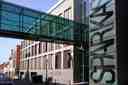
Directly ahead of you stands a sleek, modern building with clean lines, large glass windows, and a glass walkway above the street-just look for the huge vertical “SPARKASSE” lettering running up the side. Welcome to the financial powerhouse of Fulda: Sparkasse Fulda! Imagine yourself for a moment in the late 1700s-tight trousers, maybe a powdered wig if you’re feeling dramatic-and you’ll catch a whiff of the first Städtische Vorschusskasse, founded here by Adalbert von Harstall, the last prince-bishop of Fulda. He probably didn’t plan for cash machines or internet banking, but he did lay the roots for an institution that would someday serve nearly 150,000 customers in Fulda and beyond. Over centuries, this place has grown from a humble lending spot to East Hesse’s biggest regional bank, with 33 locations and over 600 employees who could probably outnumber the fish in Fulda’s fountains! Sparkasse Fulda is a living patchwork of mergers and community ties-uniting city and countryside banks as recently as 1998 to form the team you see today. There’s even a little drama in governance: the city’s mayor and the county’s head have to take turns as chairperson. Picture them swapping seats every two years-perhaps they trade business cards and jokes while they’re at it. Today, Sparkasse Fulda isn’t just where people deposit paychecks; it’s where fortunes are carefully guarded, new homes get financed, and rainy days aren’t so rainy thanks to insurance. All under strict watch from German and EU banking authorities-no room for funny business! Whether you want to save for something big or just enjoy the serious architecture and that sky bridge decorated with birds, this place connects Fulda’s past and present with every euro it handles. And who knows, maybe you’ll be inspired to save a little more for your next adventure! Wondering about the organization and structure, volume or the savings banks finance group? Feel free to discuss it further in the chat section below.
専用ページを開く →To spot the Church of the Holy Spirit, look for a warm yellow Baroque facade topped with a clock and a sunburst above the entrance, with a dark tower rising right in the…もっと読む折りたたむ
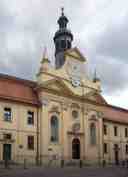
To spot the Church of the Holy Spirit, look for a warm yellow Baroque facade topped with a clock and a sunburst above the entrance, with a dark tower rising right in the middle. Now, as you stand before this bright Baroque beauty, let’s take a stroll through time-watch your step, you’re walking onto ground that’s seen miracles and more than a few hospital slippers. Picture Fulda around the year 1729: instead of the elegant church in front of you, there was a medieval hospital chapel built way back in the 13th century, creaking like a storybook haunted house. But that chapel was torn down in 1728, and in its place rose this lively new church, built by the famous court architect Andreas Gallasini (imagine the man fussing about every single curve on the facade, like an artist late for dinner). The church wasn’t just a place to pray, but a gathering spot for the 32 poorest souls from the connected hospital. The air would have been filled with a mixture of candle wax, hope, and probably the sound of sniffling. Prince-Abbot Adolf von Dalberg, a man with a heart for charity and an impressive title, dedicated this building not just to the Holy Spirit but to the “poor of the homeland,” as announced on the inscription over your head-feel free to practice your Latin! Inside, imagine three sparkling altars: one for the Holy Spirit, one for Saint Margareta, and another for Saint Joseph, everyone’s favorite patron saint of lost car keys. The church earned an extra nickname-Sodalitätskirche-because in 1803 it became the official meeting place for a group of Marian men and young men. No one could compete with their choir, especially with Michael Henkel at the organ, who played until 1851. Oh, and that organ? Built in 1898, it still has all its original bells and whistles, so to speak. By the 1900s, caring nuns and helpful hands from Saint Vincent took over, turning this into a home for compassion-and maybe some fierce board games in the hospital wards. Today, the Church of the Holy Spirit is part of the city’s vibrant parish life-its history as full as the sound of its organ echoing through the years.
専用ページを開く →To spot the Regional Court of Fulda, look for a large modern white building with rows of big windows, and a tall pointed sculpture rising from a circular paved area right…もっと読む折りたたむ
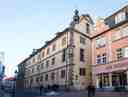
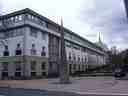
To spot the Regional Court of Fulda, look for a large modern white building with rows of big windows, and a tall pointed sculpture rising from a circular paved area right outside-in front of you! Alright, you’re standing before the Regional Court of Fulda, a place where hundreds of years of drama and decision-making echo through some surprisingly sharp architecture-seriously, that spire looks like it could settle an argument just by pointing at it! Step back in time to 1816, when Fulda’s first major court, the Obergericht, was hearing cases for all sorts of neighboring regions, its halls full of whispers about new laws, shifting borders, and big decisions. Imagine dusty documents piling up and anxious citizens waiting for a verdict while stern judges like Valentin Joseph Werthmüller or Reinhold Stanitzek listened on. Over the years, the courtroom saw the rise and sudden fall of new courts, dramatic annexations by Prussia, and even a period when Fulda lost its important court to Hanau. Finally, after decades in exile, Fulda’s own Landgericht was restored in 1949-like a legal phoenix rising from the ashes of bureaucracy! Now, about sixty-eight hardworking folks (including nineteen wise judges) keep law and order in this modern hub that also houses the local prosecutor’s office and the prison. Stand here and feel the pulse of justice-just don’t jaywalk, you’re literally surrounded by law!
専用ページを開く →
よくある質問
ツアーはどうやって始めますか?
購入後、AudaToursアプリをダウンロードして引き換えコードを入力してください。ツアーはすぐに開始できます。再生ボタンをタップして、GPSガイド付きルートに従うだけです。
ツアー中にインターネットは必要ですか?
いいえ!開始前にツアーをダウンロードしておけば、完全にオフラインで楽しめます。チャット機能のみインターネットが必要です。モバイルデータを節約するため、WiFi環境でのダウンロードをお勧めします。
これは団体ツアーですか?
いいえ、これはセルフガイド式のオーディオツアーです。ガイドや団体、決まったスケジュールに縛られることなく、スマホから流れるナレーションを聴きながら自分のペースで自由に探索できます。
ツアーの所要時間は?
ほとんどのツアーは60〜90分で完了しますが、ペースは完全に自由です。好きな時に一時停止したり、スポットを飛ばしたり、休憩を取ったりできます。
今日中にツアーを終えられない場合は?
問題ありません!ツアーには無期限でアクセスできます。明日、来週、あるいは来年でも、好きな時に再開できます。進行状況は保存されます。
どの言語が利用可能ですか?
すべてのツアーが50以上の言語に対応しています。コードを引き換える際にお好みの言語を選択してください。注意:ツアー生成後に言語を変更することはできません。
購入後、どこからツアーにアクセスできますか?
App StoreまたはGoogle Playから無料のAudaToursアプリをダウンロードしてください。メールで届いた引き換えコードを入力すると、ライブラリにツアーが表示され、ダウンロードして開始できるようになります。
もしツアーを楽しめなかった場合は、返金いたします。お問い合わせ先: [email protected]
以下の決済で安全にチェックアウト 


