AudaTours logoAudaTours

Tour Audio di Sheffield: Dalle Guglie alle Onde Sonore

Audioguida15 tappe

Nel cuore di Sheffield, dove le piazze acciottolate nascondono il ruggito di ribellioni perdute e le guglie gotiche fendono i cieli grigi della città, i segreti si celano appena fuori vista. Questo tour audio autoguidato ti conduce attraverso strade tortuose e sale storiche, svelando racconti che la maggior parte dei passanti non sente mai. Cosa accadde quando folle arrabbiate trasformarono una volta la pacifica Paradise Square in un campo di battaglia per la democrazia? Le ambizioni oscure di chi risuonavano nelle eleganti sale della Compagnia dei Coltelli di Hallamshire? E perché un predicatore solitario comandava un oceano di volti da un balcone georgiano in un normale giorno feriale? Parti e ripercorri la storia sotto i tuoi piedi mentre ogni angolo balena di proteste svanite, scandali e trionfi inaspettati. Muoviti attraverso archi sussurranti e pietre bagnate dal sole per vedere la città – e il tuo posto al suo interno – sotto una nuova luce. Le storie non raccontate di Sheffield attendono nelle pietre. Tocca 'start' e lascia che i loro echi guidino il tuo viaggio ora.

Anteprima del tour

map

Informazioni su questo tour

  • schedule
    Durata 40–60 minsVai al tuo ritmo
  • straighten
    3.5 km di percorso a piediSegui il percorso guidato
  • location_on
  • wifi_off
    Funziona offlineScarica una volta, usa ovunque
  • all_inclusive
    Accesso a vitaRiascolta quando vuoi, per sempre
  • location_on
    Parte da Paradise Square

Tappe di questo tour
  1. If you're trying to spot Paradise Square, look for a gentle slope covered in well-worn cobblestones, surrounded on all sides by tall, elegant red-brick Georgian houses. The square…Leggi di piùMostra meno

    If you're trying to spot Paradise Square, look for a gentle slope covered in well-worn cobblestones, surrounded on all sides by tall, elegant red-brick Georgian houses. The square opens up wide-almost like a quiet stage awaiting its actors. You’ll notice the beautiful blue doors and white-trimmed windows all lined up in a neat row. The square is framed by low iron lanterns and a peaceful air, but you can almost imagine echoes of crowds from centuries past. Try looking downhill if you’re coming from the Cathedral side-Paradise Square reveals itself at the bottom like a secret gathering place. Welcome to Paradise Square-a place that’s been far busier and a lot rowdier than it seems right now. Picture it: the year is 1808, and instead of the soft city hum you hear today, this square was bursting with people buying crockery-yes, actual pots and pans! These grand brick houses have watched Sheffield change for almost 300 years. Imagine attorneys and doctors, elegant women in flowing dresses, and even sculptors and famous physicians living right by where you’re standing. Number 24 once hid the studio of Sir Francis Chantrey, a famous sculptor, while Number 12 was home to the doctor David Daniel Davis-who probably heard more than a few village secrets. But, the square really earned its stripes as a place where Sheffielders gathered to make their voices heard. On 15 July 1779, preacher John Wesley stood on a tall balcony at Number 18 and faced out toward a sea of faces that stretched from one side of the square to the other. He later called it “the largest congregation I ever saw on a weekday”-and he wasn’t joking! Can you imagine the energy? Once, this was "Pot Square" after crockery sellers brought the market here. Later, the Chartists stood their ground here fighting for freedom and change-sometimes ending with running battles in the very spot you’re standing. During elections, crowds cheered and booed as politicians made promises from the balconies. The noise was probably enough to shake the windows. Back then, if you needed a pint, well, you were in luck! The Old Cock Tavern and Q in the Corner Inn were just two of several pubs scattered around. You could argue politics, dodge pottery, and then pop in for a drink after. Today, the square is a little quieter but no less grand, waiting for its next chapter. Who knows-maybe in a few years you’ll see trees and flowers as it gets reborn as a city park. Take a breath, look around… and let yourself listen for the distant echo of speeches, cheers, and maybe a few plates smashing on the cobbles.

    Apri pagina dedicata →
  2. Look straight ahead and you’ll spot it-a grand old building rising from the pavements of Church Street. The first thing you’ll likely notice is the striking stone spire, which…Leggi di piùMostra meno

    Look straight ahead and you’ll spot it-a grand old building rising from the pavements of Church Street. The first thing you’ll likely notice is the striking stone spire, which juts boldly into the sky like a giant wizard’s hat! The façade combines towering, angular pillars and archways-almost like someone mashed up a medieval castle with a 1960s sci-fi movie set. If you see some neat gothic windows and a large clock with blue hands, you’re in the right place. Just don’t forget to look up! You’re now standing outside Sheffield Cathedral, or, if you want to sound really impressive, the Cathedral Church of St Peter and St Paul. Imagine the stone beneath your feet, worn down by thousands of footsteps over centuries, almost humming with history. Built first as a humble parish church long before Netflix and smartphones-try the year 1200 on for size-it grew larger and grander until it was upgraded to cathedral status in 1914. That means you’re surrounded by layers of time, with medieval stonework beside bold modern design. It’s Sheffield’s architectural version of a patchwork quilt. This place has seen just about everything: holy prayers, music soaring from the belltower, and more than a few disasters. There have been fires-imagine the crackle and chaos as flames licked the old bell tower in 1979, with sirens wailing and firefighters racing in. Even in recent years, a fire in 2020 damaged part of the building, showing that this cathedral isn’t just part of history-it’s living it. Keep your eyes peeled for all the little details; maybe, if you listen hard, you’ll hear faint echoes of ancient monks or the clang of lost bells. And if you ever get lost in Sheffield, you can always meet your friends here-unless they time travel back to the 13th century. In that case, just ring the bells! Wondering about the art and architecture, dean and chapter or the change ringing? Feel free to discuss it further in the chat section below.

    Apri pagina dedicata →
  3. Alright, you’ve arrived at the grand entrance of the Company of Cutlers in Hallamshire! Take a moment and imagine you’re standing here back in 1624-horses clopping by, a…Leggi di piùMostra meno

    Alright, you’ve arrived at the grand entrance of the Company of Cutlers in Hallamshire! Take a moment and imagine you’re standing here back in 1624-horses clopping by, a blacksmith’s hammer ringing out from a nearby workshop. This spot has been home to the masters of metal for nearly 400 years, and it all started thanks to an act of Parliament. I know lawyers everywhere wish their paperwork resulted in buildings this majestic. Look up at the stonework-you’re standing in front of the third version of this hall, built in 1832 and spruced up with extensions in Victorian times. If you listen closely, maybe you’ll hear echoes from centuries of banquets and secret handshakes behind those big double doors. Every year, even to this day, the Company hosts a lavish annual feast. Trust me, if you like cutlery, this is where the sharpest folk gathered! And in case you’re wondering, the head honcho here is called the Master Cutler. It sounds a bit like a medieval superhero, doesn’t it? “Quick! To the Cutlery-mobile!” The Company’s French motto, “Pour Y Parvenir a Bonne Foi”-“To Succeed through Honest Endeavour”-pretty much sums up Sheffield’s legendary work ethic. Yet, it wasn’t all about knives-eventually, they looked after steelmakers too. In fact, they’ve had the power to veto any business in the whole UK wanting to use the word “Sheffield” in its name since 1860. Just try sneaking past them with a fake “Sheffield Soup Spoon Ltd.”-not a chance! Inside, the hall is filled with shields, trophies, and memories. Each year, they elect a new Master Cutler, who’s ably supported by two trusty wardens, six searchers (that’s right, six people whose job is just to seek out standards)… and my favorite, the beadle. That’s right, a beadle! He keeps the ceremonial show running, probably with flourishes worthy of a Shakespeare play. Oh! And just to show you history has a sense of humor, it took until 2011 for the first woman to become Master Cutler-Pamela Liversidge-proving it’s never too late to sharpen up your traditions! Ready to continue? I promise the next stop will make the cut!

    Apri pagina dedicata →
Mostra altre 12 tappeMostra meno tappeexpand_moreexpand_less
  1. Alright, you’re standing at the start of High Street-look straight ahead and you’ll spot it right away! Trams glide down steel tracks in the middle of a broad street. On either…Leggi di piùMostra meno

    Alright, you’re standing at the start of High Street-look straight ahead and you’ll spot it right away! Trams glide down steel tracks in the middle of a broad street. On either side, tall stone and brick buildings loom, with big bay windows and quirky towers. Look to your left, you’ll see the striking clock tower of Kemsley House, with its white-brick sparkle and grand clock keeping watch over shoppers and wanderers. To your right and ahead, shops and a familiar fast-food sign nudge up beside banks, all hugging the curve of the street. The energy here? It’s a classic city buzz-people criss-crossing, the ding of a tram bell, and the old meeting the modern at every corner. Now, imagine you’ve just stepped through a time portal. You might smell fresh bread wafting from a bakery centuries ago, or hear market traders shouting their wares right outside the church gates. In the 12th century, this was already the city’s beating heart, lively and busy, owned in part by monks from Worksop Priory-thanks to a lord named William de Lovetot, whose name sounds like he should’ve been running a medieval dating service. Back in those days, High Street wasn’t just a road-it was a magnet for Sheffield’s movers and shakers. Fancy knowing where the city’s first Master Cutler settled down in 1611? Right on the south side! Picture bearded men with stern faces, busy at trade, their houses being grand enough to make their neighbours jealous. By the 17th century, this place had some of the best homes in town-stone-walled, slate-roofed, the kind of real estate you’d put in a prime-time estate agent’s window. But it wasn’t all elegance-oh no! For hundreds of years, the street was actually quite a squeeze. So narrow, in fact, that horse trams could barely fit. There was a timber-framed bailiff’s house, squished up right to the street, stubbornly holding its spot till the 1890s, probably just for tradition’s sake. When the grand plans finally cleared things out in the late 1800s, Sheffield waved goodbye to those old buildings and welcomed a grander High Street. The new Parade Chambers shot up in beautiful, spiky Tudor Gothic style. Give a glance to the building corners-you might spot stone carvings by Frank Tory, like hidden details waiting for sharp-eyed explorers. And over by York Street, the old bank buildings brought in a splash of Renaissance show-off with stones from all over, even Sweden! If you feel your feet tingling, maybe it’s history tickling you: on this street ran the city’s very first American elevator (for posh gentlemen, no less), and the original John Walsh department store, later House of Fraser, where you could buy anything from a fine suit to a new hat, right up until World War II brought it to an end. You can’t miss Kemsley House-the Star newspaper HQ. With its clock tower gleaming and a name that sounds fancier than a Hollywood hotel, it’s one of High Street’s best-known faces today. So, whether you’re here for shopping, people-watching, or just wandering, know that you’re striding where monks, merchants, and a few grumpy bailiffs once made their mark on Sheffield. And keep an eye out-there’s more city magic just around the corner! Onward we go.

    Apri pagina dedicata →
  2. Look just ahead, and you’ll notice a big open space surrounded by shops and modern buildings, right at a tram stop with tracks winding along the pavement. You can’t miss that…Leggi di piùMostra meno

    Look just ahead, and you’ll notice a big open space surrounded by shops and modern buildings, right at a tram stop with tracks winding along the pavement. You can’t miss that bright white tram sliding through the square-if you’re ever lost, just follow the tracks and you’ll soon find yourself right in the heart of Castle Square. Now, imagine for a moment that the concrete and trams give way to the shouts of merchants and the clatter of horse carts. Castle Square has always been the busy heart of Sheffield. 700 years ago, this was swirling with market traders and townsfolk haggling over bread and cloth. Even today, echoes of those voices feel close, don’t they? Back in the Middle Ages, this place was known as the Market Place-if you’d come here in 1296, you’d be picking through fresh veggies and, if you were lucky, dodging runaway geese. In 1568, they put up a grand market cross right here. But after a few centuries-because nothing lasts forever except, maybe, the queue for Primark-the cross was taken down, and the markets moved into Fitzalan Market Hall. By 1930, the old hall was history, ending hundreds of years of market hustle. Then there’s a twist-on a cold December night in 1940, bombs rained down, leaving the area broken and silent. For years, the land was scarred and empty, waiting for something new. Fast forward to the swinging ‘60s, and things got groovy-sort of. Castle Square became home to the “Hole in the Road.” Not a pothole, an actual underground wonderland, complete with winding tunnels, shops, and even a fish tank with 2,000 gallons of water (and some fish that probably had more street cred than me). People loved it, even if it was a bit odd. Time caught up with the Hole in the Road, and by the 90s, it was filled in-rumour has it, using rubble from the Kelvin Flats. Now, the square is open, modern, and criss-crossed by trams-each one gliding past, carrying people and memories through Sheffield’s centre. Take it all in-the footsteps, the city’s pulse, and the stories just beneath your feet. And don’t worry, there are no fish tanks to fall into these days! Let’s carry on and see what else Sheffield has lined up for us.

    Apri pagina dedicata →
  3. Look ahead and you’ll spot Fitzalan Square by its grand, grassy rectangle, surrounded by city hustle and a statue standing proud right in the middle. That statue of King Edward…Leggi di piùMostra meno

    Look ahead and you’ll spot Fitzalan Square by its grand, grassy rectangle, surrounded by city hustle and a statue standing proud right in the middle. That statue of King Edward VII should catch your eye-he stands on a big stone plinth, cape flowing like he’s about to make an important royal announcement (or, you know, order a nice cup of tea). Behind him you’ll notice the elegant, creamy stone buildings-the old Post Office with its arches and domes, and to the side, a lovely old white building with lots of detail if you stroll closer. Alright, pause right where you are and just listen to the energy around you. Fitzalan Square has always buzzed with life-today, it’s trams rumbling, people on the go, and the stories of centuries echoing underfoot. Hard to believe, but this spot has been a busy meeting place since medieval times-back when folks filled their baskets at the market, hoping to find a good deal and maybe a little gossip about the Fitzalan family, the landowners who gave this square its name. If you could time travel, you’d have dodged horse-drawn cabs and, back in 1913, watched as crowds gathered for the big unveiling of King Edward VII’s statue. There was probably just as much excitement as there is during a cup final, though maybe with more top hats. On your right, scan for the sturdy old Post Office, a Sheffield landmark where letters and dreams flew in and out of the city for almost a century. That’s not all-the White Building stands proud, decked out in a special faience tile meant to keep those soot stains at bay. It’s got carvings of Sheffield’s metalwork history, kind of like a storybook in stone. But not all stories here are cheery. Ever hear of “The Marples”? That’s the big building on the corner. People used to gather there for a pint-until one haunting night in December 1940, when the Sheffield Blitz hammered down on the city. Folks, thinking they’d be safe, crowded into the Marples’ cellars, but sadly, a bomb struck, turning the grand hotel into a mountain of rubble and silence. Miraculously, seven people were pulled out alive the next day. So, as the trams whizz by and you stand in the middle of the action, take a second to imagine the layers of life that have crossed these stones-joy, bustle, a bit of Sheffield cheek, and moments of bravery. Who knows, you might spot a piece of that old magic catching the sunlight on a building, or in the laughter of the crowd. Ready to keep exploring? Onward to the next adventure!

    Apri pagina dedicata →
  4. Look out ahead of you… that dazzling blue arch rising over the busy roads, with bright steel beams and a tram zipping across-yep, that’s Park Square Bridge, or as the locals like…Leggi di piùMostra meno

    Look out ahead of you… that dazzling blue arch rising over the busy roads, with bright steel beams and a tram zipping across-yep, that’s Park Square Bridge, or as the locals like to call it, the Supertram Bridge. If you see a bold, sweeping metal bow stretching over the roundabout, and a colorful tram rolling along, you’re in the right spot! Look up and watch the arching structure climb into the sky, almost like a giant’s slingshot. Let’s imagine the scene back in 1993, when builders were putting this all together. It was noisy, a bit chaotic, sparks flying as metal was joined, and everyone holding their breath as the huge arches swung into place. I bet one or two sandwiches got eaten on top of the scaffolding. This isn’t your ordinary bridge-this is a bowstring bridge, which means those big curved arches are holding everything up. The bridge doesn’t just carry people-it carries stories, trams, and the hum of Sheffield’s daily life. Now, as you stand here, listen for the electric hum and gentle clatter of the tram. You might even feel a little shake under your feet as it glides by. For a split second, you’re sharing a journey with hundreds of others, all whisked over the roundabout without a care for the traffic swirling below. It almost feels like you’re in a futuristic city-if only they’d installed hoverboards! So next time you see one of those pink or blue trams crossing overhead, picture yourself as a daring driver, steering through the city on a ribbon of steel and air. And hey, don’t worry, you won’t need a ticket for this tour-just a bit of imagination. Onwards to the next stop!

    Apri pagina dedicata →
  5. Alright, have a look just ahead! You’re searching for a rather eye-catching building - the Old Queen’s Head. It sits right here at 40 Pond Hill, and let me tell you, it’s…Leggi di piùMostra meno

    Alright, have a look just ahead! You’re searching for a rather eye-catching building - the Old Queen’s Head. It sits right here at 40 Pond Hill, and let me tell you, it’s impossible to miss. Set against the more modern buildings around it, this pub looks like it's fallen straight out of a history book. The main feature is its black and white, timber-framed walls-sort of like the ultimate medieval zebra, but friendlier. Its uneven upper floor actually juts out a bit over the ground floor, showing off those exposed beams with a bit of Tudor flair. And of course, there’s the traditional pub sign above the entrance, inviting you in like an old friend. Now, take a deep breath, because you’re standing in front of the oldest surviving domestic building in Sheffield. Built around 1475, this place is so old that when it was new, Henry VIII wasn’t even a glint in his father’s eye. Imagine, the spot you’re standing on was once surrounded by ponds and wild, squawking birds, with nobles on horseback hunting for their dinner. The building might’ve been a banqueting hall for big parties… and with all that feasting, I bet they could’ve done with modern cutlery! Now, let’s add a sprinkle of royal mystery: the name Old Queen’s Head probably refers to Mary, Queen of Scots, who spent twelve years imprisoned in Sheffield. They say she paced, plotted and, at times, maybe dreamed of a pint herself. Are those footsteps you hear in the floorboards from patrons, or perhaps from a restless royal ghost pacing after curfew? That’s for the imagination-and maybe your next drink-to decide. Since 1840, this remarkable spot has been a pub, though it only moved into this very building after some reshuffles with the neighbours. Over the centuries, it’s survived new owners, renovations, and a fair number of wild nights, but it’s always stood strong-wobbly beams and all. Step up to the door. If you listen closely, you might hear the echo of a medieval party, the rustle of silk skirts, or maybe just the cheerful clatter of today’s pint glasses. Cheers to the Old Queen’s Head-a little slice of time travel (no time machine required)!

    Apri pagina dedicata →
  6. If you’re looking for the Crucible Theatre, keep your eyes peeled for a building fronted with bold signage announcing “Sheffield Theatres Crucible” in bright, eye-catching…Leggi di piùMostra meno

    If you’re looking for the Crucible Theatre, keep your eyes peeled for a building fronted with bold signage announcing “Sheffield Theatres Crucible” in bright, eye-catching letters-just like what you see in front of you! The colours are impossible to miss: that vivid purple and cool blue really make the name pop. Get close, and you’ll often sense a bit of excitement in the air-maybe a hint of brass music drifting from inside, or fans chatting about the latest gripping snooker match. Step up and soak it in! You’re standing outside one of Sheffield’s gems, the Crucible Theatre. Now, don’t let its modern boxy look fool you. This place holds more drama, tension, and history than a nail-biting snooker final! Originally opened in 1971, it takes its name from the city’s steelmaking past-crucible steel, the magic ingredient that fired up Sheffield’s industrial revolution. But it’s not just about plays here. The Crucible is the “spiritual home of snooker,” and every year the world's best chalk up their cues and battle it out in the World Snooker Championship, right on that famous stage. Imagine the gentle crack of balls, the hush of the crowd--and the sudden cheers when someone sinks a stunning shot. It all began in the late 1960s, when clever folks like Colin George and designer Tanya Moiseiwitsch decided Sheffield deserved something different-a thrust stage that brings actors and audiences close together. You’re never more than twenty metres from the action, whether you’re gasping at Hamlet or gripping your seat during a snooker frame. On opening night back in 1971, Sir Ian McKellen himself trod these boards-talk about star power! The Crucible isn’t just about history, though. Imagine a £15 million revamp-new seats, new lights, a facelift for the old star. The doors flung open again in 2010, welcoming crowds with all the energy of opening night. Even Prince Edward popped by for a peek! So, as you stand here, picture the quiet intensity inside: world champions holding their breath, actors sending whispers bouncing round the hexagonal walls, audiences leaning in--as the drama unfolds. Not bad for something that started as a bold experiment on a Sheffield street corner, eh? Maybe you’ll catch a bit of magic yourself today!

    Apri pagina dedicata →
  7. If you look straight ahead, you can't miss it - and no, it’s not Hogwarts! The Cathedral Church of St Marie stands tall with light brown stone walls, elegant arched windows, and…Leggi di piùMostra meno

    If you look straight ahead, you can't miss it - and no, it’s not Hogwarts! The Cathedral Church of St Marie stands tall with light brown stone walls, elegant arched windows, and an eye-catching tower that shoots into the sky like a stone rocket. If you’re wondering where to look, just follow the line of Norfolk Row and let your eyes wander up... the highest spire in Sheffield will do the waving for me! Alright, take a breath and step a little closer - you’re standing before a place where secrets, history, and faith have all mixed together for centuries. Just imagine: you might have heard quiet footsteps echoing on cobblestones, robes swishing, and distant bells calling people to prayer. It’s hard to believe now, but once upon a time, being Catholic in Sheffield was a risky business. Back in the days of Henry VIII, Catholics here faced fines, lost property, and had to worship in secret, sometimes even hiding priests in crawlspaces above their ceilings! Sneaking into hidden chapels tucked away above Fargate, keeping their faith alive while the world changed outside - talk about living life on “steeple-chase” mode. Today, all those secrets are out in the open… and what an open it is! Take in the long rows of stone and those beautifully carved statues above the entrance. Inside, this is no plain building: the decorations are colorful and rich, and if you look around, you’ll spot historic altars, painted tiles, and a sense of peace that wraps you up in a warm, quiet hush. Don’t worry, no one’s going to fine you for gazing at the art now! Legend has it that the young priest who helped make this dream a reality-Father Pratt-loved the church so much, he got moved… after he was dead! A stonemason who’d heard Father Pratt say he wanted to be buried in St Marie’s dug up his coffin and secretly brought it to the church. Some people bring flowers, others bring… well, whole people. Bombs, fires, and war couldn’t take this place down. Even when the stained glass was hidden in a flooded mine shaft during WWII-yes, really-it made its way back. You can just imagine the splash, the scramble, and the sigh of relief when the sun finally streamed through those colored windows again. So, as you look up at that spire-195 feet, taller than anywhere else in Sheffield-take a moment to feel the past swirling around you. Adventure, faith, stubbornness, and a little bit of sneaky business. That’s St Marie’s for you! Now, don’t get any ideas about digging up coffins, alright? Onwards to our next stop!

    Apri pagina dedicata →
  8. Right in front of you is Barker’s Pool, one of Sheffield’s grandest open spaces! Look for the impressive, tall war memorial standing proud in the middle of the square, surrounded…Leggi di piùMostra meno

    Right in front of you is Barker’s Pool, one of Sheffield’s grandest open spaces! Look for the impressive, tall war memorial standing proud in the middle of the square, surrounded by red poppy wreaths at its base. To your left, those huge columns belong to the elegant Sheffield City Hall. Across from you are modern glassy buildings, but every bit of this place is packed with stories. Picture yourself here nearly 500 years ago. Back then, this square wasn’t full of lively footsteps-it was Balm Green, with the fresh scent of lemon balm growing where modern stone now lies. Imagine the air tingling with excitement each season as, with a booming clang, the town bellman would announce it was time to open the old reservoir’s sluices. Water came gushing through the streets, and the whole town would pour out-kids squealing, pigs grunting, neighbours shouting. Buckets clattered, windows were scrubbed, and people scrambled to mop up as much of the precious, wild flood as they could. I hope you brought your wellies-otherwise, you’d best keep an eye out for a stray bucket or cheeky splashes from over-enthusiastic children. If you could travel back to the late 1800s, right where John Lewis once stood, the Albert Hall would tower above you-a place alive with music, opera, and, well, the occasional magic lantern show! But, plot twist, it all went up in smoke in a grand fire in the thirties. Not to worry; the Regent Cinema soon took its place, dazzling crowds with the magic of early movies. Though that’s gone now, too, Sheffield has always known how to make a comeback. Take a moment to look up at the war memorial, built in 1925. It stands almost 30 metres tall, a silent witness to the bravery of Sheffield’s people during the First World War. Imagine the crowds in 1925, hats tipped, heads bowed, honouring those they’d lost. This spot has always been a stage for both celebration and remembrance. These days, Barker’s Pool is usually bustling-there might be music floating through the air or the rattle of skateboards on Yorkshire stone. And if you listen closely, you might just catch an echo from those noisy, joyful street cleanings long ago… or maybe that’s just a local, arguing with a pigeon over a stray chip. Either way, you’re standing on ground that’s seen joy, loss, and a fair bit of water! Ready for the next stop, or would you like to soak up more stories here first?

    Apri pagina dedicata →
  9. Right ahead of you is the Showroom Cinema-hard to miss with its sleek, three-storey art deco lines and that big vertical sign announcing ‘SHOWROOM’ in bold! Take a look for its…Leggi di piùMostra meno

    Right ahead of you is the Showroom Cinema-hard to miss with its sleek, three-storey art deco lines and that big vertical sign announcing ‘SHOWROOM’ in bold! Take a look for its striking grid of windows, ribboning across the building, letting the daylight spill into the creative energy inside. There’s a gentle sweep to the front, almost inviting you up the steps beneath the café and cinema bar signs. You’ll spot a giant film reel logo and the bold square entrance nestled above a row of indie offices and shops along Paternoster Row. If you see a bus stop and tree just out front, you’re in exactly the right place-so let’s roll out the red carpet! Standing here, you’re outside more than just a cinema-you’re at the beating heart of Sheffield’s arts scene. Now, imagine the rumble of engines decades ago: this used to be a car dealership, all the way back in 1936, and you’ve got to admit, the building still has a bit of that stylish showroom swagger! But these days, it’s about popcorn, not petrol, since the Showroom morphed into a cinema in 1993. This isn’t your ordinary multiplex. People come here for independent flicks, foreign drama, festivals, and all kinds of creative spectacle-trusted so much, it was voted Guardian readers' favourite indie cinema and crowned 'Best Cultural Venue' by the locals. If you stand here in October, you might even catch a cry of surprise from the Celluloid Screams horror film festival. Talk about a place that loves its drama! You can almost hear the buzz of a packed bar, the hum of people swapping reviews over coffee, and the shuffle of feet queuing up for a film that will probably never make it to the big chain cinemas. Upstairs, creative minds in the Workstation hatch new projects-who knows, maybe the next big Sheffield classic. Oh, and a bit of local pop-culture trivia for you: the Arctic Monkeys shot their video “Leave Before the Lights Come On” right here-though I promise the only thing that’ll chase you out tonight is the film credits rolling. Inside, there are four screens, each one promising comfy chairs (after the grand refurbishment, of course), fresh carpets, and foyers that have seen everything from film students getting their big start through the BFI Film Academy, to festival-goers yelping at late-night horror marathons. This place bursts at the seams with festivals-from Lovebytes, celebrating wild digital art, to film festivals for the city’s youngest cinephiles. So, if the building could talk, it would have a million stories-from chrome bumpers to flashing projectors. For now, why not step closer, maybe pop inside, and take in the unique spirit of this Sheffield gem? If you listen, you might even hear the sound of an audience holding its breath, waiting for the magic to flicker onto the screen. The Showroom really is the director’s cut of Sheffield’s cultural adventure!

    Apri pagina dedicata →
  10. You’re just about to step into Sheaf Square! To spot it while you’re walking, look for Sheffield’s grand stone railway station with those tall arches all in a row-almost like a…Leggi di piùMostra meno

    You’re just about to step into Sheaf Square! To spot it while you’re walking, look for Sheffield’s grand stone railway station with those tall arches all in a row-almost like a line-up of Victorian giants waiting for their tea break. In front of the station, you’ll see a sweeping plaza with wide, curved steps leading down to a sparkling fountain and a long, silvery wall of water. The whole space opens up with people strolling, sitting, or just soaking in the city’s buzz. If you spot the shiny steel water feature that glides like a giant metallic wave, congrats-you’ve made it. Now, pause for a moment and just listen. Can you hear the gentle splash of water mixing with city chatter? This is Sheffield’s front doorstep. Sheaf Square has been through more costume changes than an actor in a panto. Back in 1732, this very spot echoed with clanging metal from the Pond Tilt Forge and the rush of two old dams. But in 1856, those were filled in so the railway could thunder in-and right where you stand, Victorian travellers once hurried, probably a bit lost and probably inventing the Sheffield accent as they went. The square as you see it now was shaped after World War II, when city planners wanted to tame the tangle of traffic. For a long while, this was Sheffield’s big roundabout, with cars swirling like a mechanical ballet. Now, it’s mostly a pedestrian haven. And have you seen that huge steel sculpture over by the water? That’s The Cutting Edge. It’s a tribute to Sheffield’s proud history with steel and feels like something a giant might use to butter toast. You’ve got history all around: the old Howard Hotel from the early 1800s, the clever Showroom Cinema, the park of science ideas, and memories of buildings that have come and gone-like the mysterious Mandela Building and Sheaf House. There are plans on the horizon too: more offices, hotels, and a digital campus. Sheffield likes to keep things evolving, like a rock band always releasing new albums. The real magic is in how this place feels like an open embrace for everyone stepping out of the station. In 2006, when the new gateway opened, there were fireworks and street performers. I like to imagine a guy on stilts tipping his hat to everyone arriving. Today, it’s still Sheffield’s handshake-a fresh, breezy welcome, guiding newcomers from the railway up into the heart of the city. So, take a breath, listen to the water, and give a nod to all the travelers and dreamers who’ve passed through this space over the centuries. And if you want to blend in, feel free to pretend you’re late for a very important meeting-everyone seems to be. Ready to explore the next stop? Let’s keep going!

    Apri pagina dedicata →
  11. To spot The Leadmill, look for a long brick building just ahead of you on Leadmill Road. It’s a striking sight-low, sturdy stone at the front, with a taller section rising up…Leggi di piùMostra meno

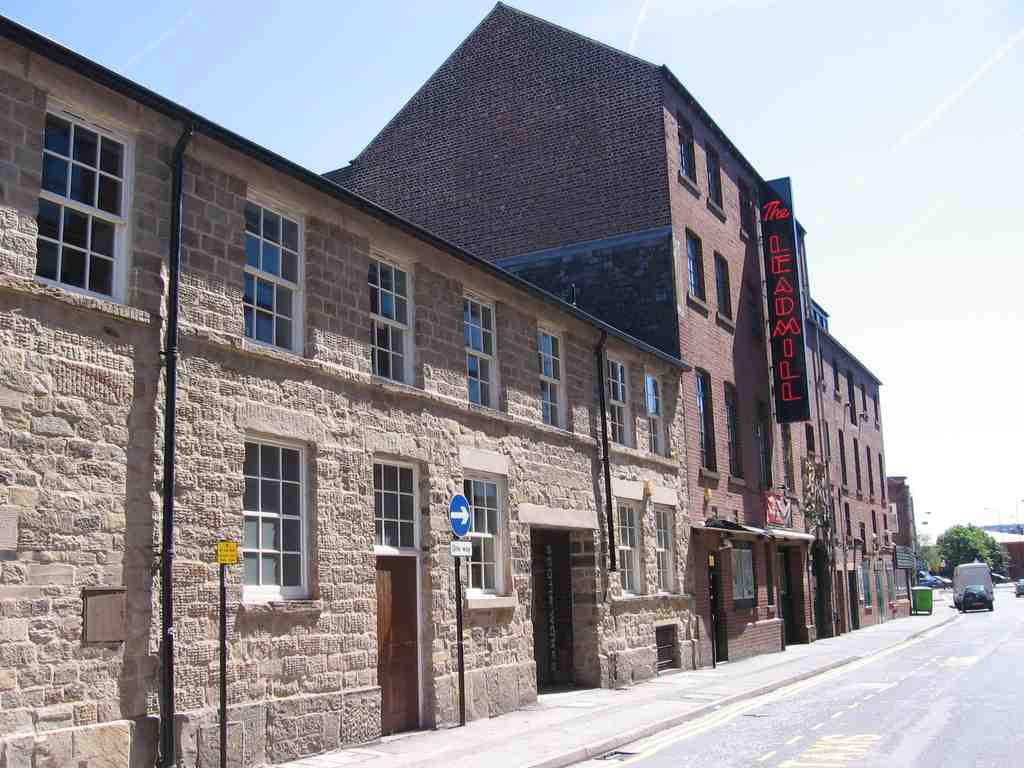
    To spot The Leadmill, look for a long brick building just ahead of you on Leadmill Road. It’s a striking sight-low, sturdy stone at the front, with a taller section rising up further along. You’ll know you’re in the right place when you see a giant black vertical sign outlined in glowing red neon, letters spelling out “The Leadmill,” clinging to the corner of the building like it’s inviting you in for an unforgettable night. Alright, you’re standing in front of Sheffield’s legendary party palace, The Leadmill! Take a deep breath, and imagine the buzz of laughter and the heartbeat thud of bass leaking into the street when the night comes alive. Once, this spot smelled of fresh flour-the building was a real working mill back in the day. Fast forward to 1980, and it reopened, not as a place for bread, but as the warm heart of Sheffield’s live music and nightlife scene. Imagine Prince Charles dodging confetti and spilled pints here, calling it “a building well restored.” Or picture Jarvis Cocker, years before Pulp, directing pantos just behind these doors, and the Housemartins queueing for their own gig-only to be bounced! I bet even their egos were a bit bruised that night. Back in the ‘80s, you couldn’t even get a pint-not until they landed that license. But you could sign up for workshops, take in a play, or just lose yourself in jazz on a lazy Sunday afternoon. Later, the dance floor would fill up, night after night, as famous bands like the Arctic Monkeys packed out the place in record time. Rumour has it, the original dancefloor boards were even sold off as souvenirs after an upgrade-a true slice of Sheffield history. Even a pandemic couldn’t keep The Leadmill down-they sold loo roll for nearly cost, auctioned memorabilia to pay their staff, and became a rallying point for music lovers everywhere. And when new landlords showed up waving eviction notices… well, the story’s not over yet. There’s tension, there’s heart, and there’s an army of gig-goers who won’t let The Leadmill vanish quietly. So, whether you’re here for the music, the legend, or just to stand where so many feet have danced and stomped in joy, you’re now part of Sheffield’s living, breathing story. Fancy seeing who’s playing tonight? Be sure to peek up-the red neon is still buzzing with promise.

    Apri pagina dedicata →
  12. You’ve made it to the grand finale of our tour-BBC Radio Sheffield, right here on Shoreham Street. Picture those massive radio masts reaching into the sky, signals buzzing out,…Leggi di piùMostra meno

    You’ve made it to the grand finale of our tour-BBC Radio Sheffield, right here on Shoreham Street. Picture those massive radio masts reaching into the sky, signals buzzing out, and the hum of voices coming alive each morning. Since 1967, this place has been at the heart of South Yorkshire’s airwaves. Imagine it: back then, newsreaders in smart suits squeezed into a big, old Victorian house, flicking switches and whispering, “You’re live in five!” There was a constant, electric buzz-sometimes even literally, from all the equipment. At first, the radio here would shut down around teatime, but the fun began after 6 pm with wild specialist music and shows for Sheffield’s many communities. Fast forward to the eighties, and you’ve got ambitious DJs ready to spill new tunes well into the night, studio doors swinging open, phones ringing with excited listeners, and cups of tea sloshing about. Sports fans would crowd around their speakers on Tuesdays-if you listened close, you might’ve even caught the odd cheer or groan! There’s a touch of mystery here too. In 1982, staff started archiving their programs-boxes of cassette tapes filled with voices from the steel strike, lost gigs, and breaking news, all tucked away in the City Archives. Who knows what treasures are hiding in those boxes? So whether you were tuning in on 104.1 or 94.7 FM, catching local sports, or hearing voices from every background across Yorkshire, Derbyshire, and Nottinghamshire, BBC Radio Sheffield has been spinning stories and soundscapes for over half a century. And today, their signals buzz out through FM, digital, and online, reaching more than 147,000 listeners every week-a crowd bigger than Bramall Lane on derby day! So take a moment, listen for that pulse in the air, and imagine the next great local story being told just beyond those walls. And hey, if your walk has worked up an appetite, don’t worry-you won’t be forced to eat nothing but radio waves. That’s just the BBC diet plan! Thanks for letting me guide you through Sheffield’s city centre! What a journey it’s been-maybe your story will be the next one to make the airwaves here. For further insights on the technical, programming or the presenters, feel free to navigate to the chat section below and inquire.

    Apri pagina dedicata →

Domande frequenti

Come inizio il tour?

Dopo l'acquisto, scarica l'app AudaTours e inserisci il tuo codice di riscatto. Il tour sarà pronto per partire immediatamente – tocca play e segui il percorso guidato dal GPS.

Ho bisogno di internet durante il tour?

No! Scarica il tour prima di iniziare e goditelo completamente offline. Solo la funzione chat richiede internet. Ti consigliamo di scaricare tramite WiFi per risparmiare dati mobili.

È un tour guidato di gruppo?

No – è un tour audio autoguidato. Esplori in autonomia al tuo ritmo, con la narrazione audio riprodotta dal tuo telefono. Nessuna guida, nessun gruppo, nessun orario.

Quanto dura il tour?

La maggior parte dei tour richiede 60–90 minuti, ma sei tu a controllare il ritmo. Metti in pausa, salta le tappe o fai pause quando vuoi.

E se non riesco a finire il tour oggi?

Nessun problema! I tour hanno accesso a vita. Metti in pausa e riprendi quando vuoi – domani, la prossima settimana o il prossimo anno. I tuoi progressi vengono salvati.

Quali lingue sono disponibili?

Tutti i tour sono disponibili in oltre 50 lingue. Seleziona la lingua preferita quando riscatti il codice. Nota: la lingua non può essere cambiata dopo la generazione del tour.

Dove accedo al tour dopo l'acquisto?

Scarica l'app gratuita AudaTours dall'App Store o Google Play. Inserisci il codice di riscatto (inviato via email) e il tour apparirà nella tua libreria, pronto per essere scaricato e avviato.

verified_user
Soddisfazione garantita

Se il tour non ti piace, ti rimborseremo l'acquisto. Contattaci a [email protected]

Pagamento sicuro con

Apple PayGoogle PayVisaMastercardPayPal

AudaTours: Tour Audio

Tour a piedi autoguidati, coinvolgenti e convenienti

Prova l'app arrow_forward

Amato dai viaggiatori di tutto il mondo

format_quote Questo tour è stato un ottimo modo per vedere la città. Le storie erano interessanti senza sembrare troppo scriptate, e mi è piaciuto poter esplorare al mio ritmo.
Jess
Jess
starstarstarstarstar
Tour Tbilisi arrow_forward
format_quote Un ottimo modo per conoscere Brighton senza sentirsi un turista. La narrazione aveva profondità e contesto, senza esagerare.
Christoph
Christoph
starstarstarstarstar
Tour Brighton arrow_forward
format_quote Ho iniziato questo tour con un cornetto in mano e zero aspettative. L'app ti accompagna tranquillamente, niente pressione, solo tu, le tue cuffie e delle storie interessanti.
John
John
starstarstarstarstar
Tour Marseille arrow_forward

Tour Audio Illimitati

Sblocca l'accesso a OGNI tour nel mondo

0 tour·0 città·0 paesi
all_inclusive Esplora Illimitato