Echi di Imperi: Tour dell'Arazzo Senza Tempo di Saragozza
Una fila di antiche pietre romane si erge accanto ai cipressi, logorata da secoli di assedi e ribellioni—eppure Saragozza custodisce i suoi segreti più profondi tra ombre e luce solare. Questo tour audio autoguidato ti permette di seguire il battito della città attraverso corridoi dimenticati, opere d'arte nascoste e storie che echeggiano da ogni ciottolo. Quale drammatico colpo di scena trasformò un tempo queste possenti mura in un ultimo disperato rifugio? Quale misteriosa rivalità scatenò una battaglia di cattedrali proprio nella vivace Plaza del Pilar? E quale curiosa abitudine Francisco Goya teneva nascosta tra i suoi capolavori eccentrici? Passa dalle imponenti fortificazioni romane al cuore abbagliante della piazza più grande di Spagna e prosegui verso un museo stratificato di segreti. Ogni tappa rivela un nuovo lato di Saragozza—racconti di sfida, intrighi e celebrazioni sfrenate guideranno ogni tuo passo. Pronto a scoprire il dramma inespresso intessuto nelle antiche pietre di Saragozza? La città ti aspetta.
Anteprima del tour
Informazioni su questo tour
- scheduleDurata 40–60 minsVai al tuo ritmo
- straighten3.1 km di percorso a piediSegui il percorso guidato
- location_on
- wifi_offFunziona offlineScarica una volta, usa ovunque
- all_inclusiveAccesso a vitaRiascolta quando vuoi, per sempre
- location_onParte da Mura Romane di Saragozza
Tappe di questo tour
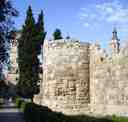
Look ahead for a line of ancient stone blocks forming a tall and solid wall, with a large, round defensive tower sticking out. The wall is honey-beige and gray in color, and looks…Leggi di piùMostra meno
Look ahead for a line of ancient stone blocks forming a tall and solid wall, with a large, round defensive tower sticking out. The wall is honey-beige and gray in color, and looks rugged and worn, with some stones seeming smoother and others rough around the edges. To spot it, just turn your gaze near the row of tall green cypress trees-the Roman Wall stands right beside them, where the sunlight hits the stones and makes them look warm and almost golden. Now, let’s turn back the clock… about two thousand years! You’re standing in front of the mighty Roman Wall of Zaragoza. Imagine the clang of metal armor, Roman sandals crunching on gravel, and the shouts of soldiers keeping watch above you…. This wall was built back when Zaragoza was called Caesar Augusta, a sparkling Roman colony right at the heart of ancient Spain. Under the reign of Emperor Tiberius, folks got busy-building a wall that would stretch about three kilometers, with up to 120 mighty towers! The chunk you see here is about 80 meters long and sits by the Torreón de la Zuda-a real blast from the past. If you peek at the stones closely, you might see how some are big and smooth (from their second phase, in the 3rd century), and others are rougher and older, left from the very first configuration. Imagine being a Roman guard: the city behind you, the wild unknown stretching out in front, and every 14 or 16 meters, you’ve got a rounded tower to duck behind in case of trouble. These towers-some as wide as a city street-look like stone mushrooms popping out of the wall. But don’t think the Romans had all the fun. After them, the Visigoths and then the Moors used this same wall to protect their own cities. If these stones could talk, they’d tell you about sieges, secrets, and more than one guard who fell asleep on the job-hey, those night shifts were long! So, as the wind brushes past the cypress trees beside you, take a moment to imagine all the centuries of stories locked inside these ancient stones. This wall has stood its ground for almost two thousand years, and now, it gets to meet you. Not bad for an old-timer, right? Ready to move on to the next stop in Zaragoza’s epic tale?
Apri pagina dedicata →Take a look in front of you-if you see a massive open space spreading wide, with a grand church on your left, crowned with colorful domes and tall towers reaching up like they’re…Leggi di piùMostra meno
Take a look in front of you-if you see a massive open space spreading wide, with a grand church on your left, crowned with colorful domes and tall towers reaching up like they’re trying to tickle the clouds, then you’re in the right place! There’s a big round sculpture ahead, and the square is lined with trees and modern columns, giving it both a historical and lively city vibe. Pigeons strut around, and people move about as though the square itself is alive, always buzzing! Now, welcome to the Plaza of Our Lady of the Pillar, or as the locals simply call it, Plaza del Pilar. This spot is the true living room of Zaragoza-what a place to host a party, right? If these stones could talk, just imagine the stories! This is where the city gets together to celebrate, to protest, to dance, or just to watch life go by. They even call it “the hall of the city”-yes, it’s that important! But wait for this: you are now standing in the largest pedestrian plaza in all of the European Union. Only the legendary Red Square in Moscow is bigger on our continent. No need for tiny, crowded corners here-there’s enough room to spin in a circle and not knock over a single tourist. Unless you’ve got dance moves as wild as mine! Now, if you look around, you’ll notice more than one massive cathedral. That’s not your eyes playing tricks-you really are seeing double. This is the one and only plaza in Spain with two cathedrals sharing the space. The grand Basilica of Our Lady of the Pillar is in pride of place, and the stunning Cathedral of El Salvador-known as La Seo-is here too. It’s no wonder they sometimes call this the Plaza of the Cathedrals! But it’s not all churches-look for the city hall, the Fountain of Hispanicity splashing away, some important court buildings, and even a statue of the famous painter Goya, looking a bit like he’s thinking up his next masterpiece. Now, take a deep breath. Smell that? It’s a mix of roasted coffee from nearby cafés, old stone, and city excitement. You’re in the heart of Zaragoza, where every step makes you part of its story. And if someone invites you to a party here-well, you’ll know you’re standing in the best “living room” in all of Spain.
Apri pagina dedicata →If you look right ahead, you’ll spot a tall brown building that looks like it popped straight out of a classic history book. Its walls are made of brick, stretching up to a row of…Leggi di piùMostra meno
If you look right ahead, you’ll spot a tall brown building that looks like it popped straight out of a classic history book. Its walls are made of brick, stretching up to a row of deep wooden eaves above, giving it an old-world charm that stands out on this narrow street. See those iron balconies lining up on the first floor? And just above the door, there’s a red sign about Goya’s works. Flags flutter beside two tall windows, marking this place with a sense of importance. Head for the big wooden doorway-it’s almost like stepping through a portal to the past. Alright, here we are in front of the Goya Museum-Ibercaja Collection-Camón Aznar Museum, or Museo Goya for short. You’re about to walk into the heart of Zaragoza’s art history, but don’t worry-no artistic skills required, I promise not to make you paint! This Renaissance palace was built back in 1535 by the Moorish architect Juan de Lanuza. For centuries, it was a grand residence, a military headquarters during the War of Independence, and now-lucky for us-a treasure chest of art. Inside, the air feels a little charged, as if every stone remembers whispered secrets and epic parties from 500 years ago. The shiny marble columns in the central courtyard are like silent guards, welcoming you into rooms that have seen it all. Just imagine: in these halls, the famous Aragonese artist Francisco Goya shines brightest. His paintings and engravings are all around, including wild bullfights, dreamy self-portraits, noble faces, and some scenes that may leave you scratching your head (Goya had quite the sense of humor and mystery, too). This museum is stuffed with wonders-over 1,000 works, with about 500 out for you to see. There are four whole series of Goya’s engravings here, including the very first edition of “La Tauromaquia.” That’s like having the original recipe for paella tucked away in the kitchen! And if you wander into the basement, you might spot the remains of walls from Roman times. Talk about layers of history. While you’re here, take a minute to let your imagination wander. Picture yourself rubbing elbows with Spanish nobles, or hiding out from a marching army, or chatting with Goya himself about what inspired his craziest engraving. Every corner of this museum carries a story-and some say, a bit of friendly artistic magic. Go ahead, step inside. Just try not to get caught in a staring contest with one of Goya’s portraits-they almost always win!
Apri pagina dedicata →
Mostra altre 12 tappeMostra meno tappeexpand_moreexpand_less
If you look around, you’ll spot the Montemuzo Palace by searching for a grand, rectangular brick building with a quiet, elegant face right along the street. The entrance should…Leggi di piùMostra meno
If you look around, you’ll spot the Montemuzo Palace by searching for a grand, rectangular brick building with a quiet, elegant face right along the street. The entrance should catch your eye with its stone doorway in a wide, rounded arch-almost as if the building is politely inviting you in. Look up! The façade is lined with balconies above and, way at the top, a beautiful series of archways forming a gallery, finished off with a dramatic overhanging roof. If you walk to the next street, keep an eye out for a much fancier building joined to it: Casa Artiach, covered with brick, lots of decorative touches, and eye-catching balconies bursting with leafy designs. Now, while you stand out front, imagine the year is sometime around 1590. The streets are quieter, and the only vehicles you’d hear are the clack of horse hooves and people chattering under their breath about city politics. This palace has secrets nestled inside its walls. Built in the late 16th century, Montemuzo was meant for showing off-though it keeps things understated, almost as if it’s trying not to brag. You’ve got three levels stacked above you, all wrapped around a gorgeous inner patio. Step a little closer and, if the doors are open, you’ll glimpse white columns and delicate archways, just like something out of a Renaissance dream. Can you imagine swirling cloaks and whispered plans drifting through the halls? These days, Montemuzo and its stylish neighbor, Casa Artiach, work together as a team-the headquarters for Zaragoza’s Municipal Archives. It’s a place of mysteries now of a different kind: old letters, dusty records, treasures hidden not in chests, but in filing cabinets. The façade on Santiago Street is almost solemn with its neat bricks and simple shape. But walk to Espoz Mina Street, and things really start to party-four floors, big arched windows on the bottom, and enough decorated ironwork to keep your eyes busy. Want a twist? Some of the action from the book “El Círculo Hermético” took place right here, in these halls. You’ll never know what stories the walls might tell if you listened late at night-maybe the wind spinning through the arches or the laughter of someone who lived here centuries ago. So, take a breath and look around: you’re standing in the middle of history that’s not just old, but alive. Perhaps, if you linger, the palace will tell you its best secret after all.
Apri pagina dedicata →Look straight ahead along Calle Dormer and you’ll spot the Palacio de Huarte by its solid brick walls, rising tall and proud, and that impressive arched wooden doorway with stone…Leggi di piùMostra meno
Look straight ahead along Calle Dormer and you’ll spot the Palacio de Huarte by its solid brick walls, rising tall and proud, and that impressive arched wooden doorway with stone jambs. You might notice how the windows sit patiently across three levels, a bit mysterious, like they’ve seen centuries of secrets pass by. Alright, welcome to the Palacio de Huarte! Imagine you’re standing here in the early 1500s-carts rolling over cobblestones, cloaks swishing past, and maybe even a horse or two neighing impatiently nearby. This was not just any house, but a palace built for one of Zaragoza’s wealthiest families. Back in the day, people would have called it Casa Frías, and its owner was a marquis-how’s that for feeling fancy on your walk today? Now it holds stories inside as the Provincial Archive. Take a step closer and just picture the action behind these walls: the whole palace circles around a beautiful Renaissance courtyard, with delicate columns holding up elegant arches. On the upper floor, there’s a balcony with graceful, wavy arches-if you listen closely, you can almost hear the whispers and laughter of gatherings gone by. And although the building has changed a lot over time-a little fix here, a big restoration there-the heart of the palace, that courtyard, has stayed strong for hundreds of years. Even the grand stairs inside are topped with a stunning wooden ceiling, showing just how much style the old Aragón families had. Now, its brick facade might look a little stern at first, but don’t be fooled! There are marks of lost galleries and hidden features everywhere. So as you stand here, let your imagination wander-if those bricks could talk, I bet they’d try to impress you with more than a few royal tales. Ready to dive into the next chapter? Let’s step onward!
Apri pagina dedicata →Look ahead for a modern building with a glass entrance, sitting right on the corner where the street curves. If you peek in through the windows, you’ll spot something rather…Leggi di piùMostra meno
Look ahead for a modern building with a glass entrance, sitting right on the corner where the street curves. If you peek in through the windows, you’ll spot something rather unusual: inside, a sunken, reddish-brown structure with layered steps forming a half-circle, and a floor of worn ancient stones-almost as if you’ve stumbled into a giant Roman bathtub! Alright, you’re standing in front of the Caesaraugusta Public Baths Museum! Imagine the scene almost two thousand years ago: water gently rippling, voices echoing off steamy walls, and the sharp *snap* of someone dropping a sponge into the pool. This place was the ultimate Roman chill-out zone. Long before whirlpools and fancy gym showers, locals flocked here for a hot soak, a cold splash, a bit of social gossip, and-let’s be honest-probably to show off their latest toga. When construction crews dug around here in the 1980s, instead of finding old coins or a crusty sandwich, they unearthed this grand Roman pool and even a set of ancient toilets. Talk about bathroom history! Inside, you can see the bases of classic columns, some wall decorations, and statues that seem almost ready to wink at you. There are also collections of funny Roman bath tools-imagine using a scratchy scraper instead of a towel, or an ancient “sponge on a stick” (the original multi-use gadget, but let’s not ask too many questions about where it went). Stand here a moment and picture the bustle: the splash of water, the slap of sandals, people chatting and laughing as they soaked away a long day in Caesaraugusta. The air would have been thick with steam and stories-a bit like your favorite spa, if your spa included columns and statues staring at you while you rinse your hair. So, take a deep breath, let your imagination wander, and if you feel tempted to toss a coin in for good luck-remember, the Romans might just be watching from behind the columns!
Apri pagina dedicata →Alright, look ahead! If you spot a huge, open semicircle of ancient stone blocks dipping into the ground and surrounded by a modern glass-and-steel structure, you’re in the right…Leggi di piùMostra meno
Alright, look ahead! If you spot a huge, open semicircle of ancient stone blocks dipping into the ground and surrounded by a modern glass-and-steel structure, you’re in the right place. The Roman Theater of Zaragoza is hard to miss-just look for the sweeping ruins with raised walkways hovering above them and a translucent roof letting in that soft Zaragoza light. Now, take a deep breath and imagine the bustle here almost 2,000 years ago. The air would be alive with excitement; over 6,000 Roman townspeople, nearly a third of the city, chatting, laughing, and rustling into their seats, ready to be wowed by a show. You’d hear their voices echoing under a three-story stone facade gleaming in the Iberian sun, with the marble seats just cool enough to make you jump a little when you sit. This wasn’t just any little playhouse. Built during the reigns of Tiberius and Claudius in the first century, the theater spread out over a whopping 7,000 square meters! To put it simply, it was the place to be - think of it like the Roman version of a blockbuster movie night, only with togas and maybe a gladiator or two thrown in for good measure. Roman Zaragoza wanted to impress, following the style of the grand Theater of Marcellus in Rome. But unlike many Roman theaters that nestled into hillsides, this one stood on flat ground-like a stage stubbornly refusing to take any shortcuts. Watch your step - imagine Roman VIPs cutting through a special entrance, marching down a marble path straight from the main door to the best seats in the house. That bit of luxury wasn’t common in Spain at the time; Zaragoza liked to keep its important folks feeling fancy. Maybe that’s why they never dropped popcorn on the floor. But time has its own sense of humor. After centuries of packed performances, the theater fell into decline in the third century. People started taking the stone blocks to patch up the city walls and other buildings. Soon the grand marble seats and orchestra floor disappeared under layers of new homes and shops. The theater was asleep, hidden, until eager archaeologists finally uncovered its bones in the 1970s. Today, you’re walking on modern walkways that snake above the ancient ruins, with the past just below your feet. Step softly-it took nearly two millennia for these stones to see the sun again! If you close your eyes, can you hear the distant cheers, the stomp of sandals, and the drama rolling across the stage? Even the greatest performers could hardly compete with a rowdy Roman audience-but don’t worry, no one’s checking tickets now, so everyone gets the best seat in the house. When you’re ready for more stories, let me know, and we’ll head to the next stop! Curious about the historia, características técnicas or the transformación y redescubrimiento? Don't hesitate to reach out in the chat section for additional details.
Apri pagina dedicata →Look ahead-you’ll spot San Gil Abad by its striking square brick tower, rising high above the surrounding buildings. The church almost blends with the old city, with its light,…Leggi di piùMostra meno
Look ahead-you’ll spot San Gil Abad by its striking square brick tower, rising high above the surrounding buildings. The church almost blends with the old city, with its light, sandy-colored brickwork and beautifully patterned details near the top of the tower. The doorway with its unique sculpted decoration sits tucked beneath that sturdy wall-you can’t miss it! Take a breath and feel the weight of time here. Imagine the street buzzing with horses and wagons long ago, when this ground was actually part of an ancient Roman road. After Zaragoza was recaptured from Islamic rule, the first church here wore Romanesque robes. But, like a plot twist, in the 1300s, a whole new church sprang up in the rich Mudéjar style-a wonderful marriage of Islamic flair and Christian tradition. Centuries rolled by, and the church got a dramatic Baroque makeover in the 18th century. The interior shifted too, almost as if the church turned to face a new day! Nowadays, San Gil Abad has one long nave, with chapels snuggled into the thick buttress walls-almost like little hideouts. And that tower you see? All square and solid-it’s been standing here like a watchful guardian, made, just like the rest, from weathered Zaragoza bricks. Step closer to the entrance, built in 1640. Imagine billowing cloaks and ornate carriages pulling up. Walk inside in your mind’s eye, and you’ll see dazzling Baroque touches from the early 1700s-and over the altar, a masterpiece from 1628, dedicated to Saint Gil Abad himself. If only the saints could speak, I bet he’d have a few stories about the renovations! Up in the sacristy is a secret too: a vaulted ceiling with a spectacular fresco painted by Ramón Bayeu. And look! The walls show off seven paintings by his equally talented brother, Manuel Bayeu-a real sibling rivalry of art. It’s a church that’s survived more drama than most soap operas: wars, rebuilds, and countless prayers. Yet, through all the centuries, it stands calm and welcoming, inviting you to imagine its many lives. Quite the survivor, don’t you think?
Apri pagina dedicata →Right ahead, you’ll see a tall, eye-catching monument rising from a ring of lively fountains. To spot it, just look for a grand, castle-like stone base, topped with bronze figures…Leggi di piùMostra meno
Right ahead, you’ll see a tall, eye-catching monument rising from a ring of lively fountains. To spot it, just look for a grand, castle-like stone base, topped with bronze figures and crowned with a dramatic angel. The angel perches high above, holding a fallen figure in one arm and pointing the way to the sky with the other. If you look at the base, you’ll also see a crowned lady, wrapped in leaves, holding symbols of victory and Zaragoza’s long, heroic story. And if you hear water splashing, you’re in the right spot! Now, let’s step back in time for a moment and picture a Zaragoza under siege, with cannon fire echoing through the streets, and brave defenders fighting for their faith and their city. This, my friend, is the Monument to the Martyrs of Religion and the Homeland-a place that honors not just the many who gave their lives in ancient times, but especially those who stood strong during the fierce Sieges of Zaragoza. Can you hear the distant shouts and clashing swords? It took years and a lot of local effort to build this memorial. Folks from all over Aragón chipped in, making sure their heroes would never be forgotten. The first stone was set in 1899, and by 1904, the angel of victory soared above the plaza-well, if you had wings, you’d want to show off up there too! Under the angel, the circular tower is decorated with the city’s shield, surrounded by palm leaves and a powerful message that can be read in Latin: Zaragoza’s victorious spirit honors all the countless martyrs of faith and homeland. And here comes a twist: this very monument was also built to remember a legendary cross destroyed by cannonballs long ago. So above it all, the angel stands shoulder-to-shoulder with a new cross, as if daring anyone to try again! Go ahead-walk around, soak up the details, and feel the courage and pride packed into every inch of stone and bronze. And if you get the feeling an angel’s watching your every step… well, in Zaragoza, you just might be right.
Apri pagina dedicata →Look straight ahead and you’ll spot a wide, bustling avenue lined with tall, elegant buildings-their cream, beige, and pink facades watching over rows of leafy trees. You might…Leggi di piùMostra meno
Look straight ahead and you’ll spot a wide, bustling avenue lined with tall, elegant buildings-their cream, beige, and pink facades watching over rows of leafy trees. You might notice modern lamp posts and overhead tram wires stretching down the street, while the sidewalk is extra wide, making space for friends, families, and determined phone-walkers. To get the full effect, stand at the edge of the crossing and feel the boulevard open up in front of you, stretching into the distance. Welcome to the famous Paseo de la Independencia! Zaragoza’s main artery-think of it as the city’s catwalk, where the buildings wear their best historic outfits and everybody comes out for a stroll. This iconic street begins at Plaza de España and finishes at Plaza de Paraíso, passing right by Plaza de Aragón. It’s not just a shopping street or a pretty road-it’s named after the Spanish War of Independence. You can almost imagine the echo of cannon fire and the thump of marching boots as Zaragoza’s brave citizens stood together, fighting off an invading French army. For a long time, this avenue existed only in the dreams of city planners. They planned it in the early 1800s, but-classic bureaucracy move-it didn’t see any real action until the 1870s. Over the years, the look and feel of the street have been upgraded. Most notably, in 2002, the sidewalks were widened so people could enjoy an even grander stroll; who says history can’t make more room for your shopping bags? When they tried to build an underground car park, the workers struck gold-not literally, but almost! They found the remains of the old Muslim suburb of Sinhaya from the 10th to 12th centuries. Imagine the surprise: you’re digging for cars and suddenly you hit ancient city walls! Nowadays, the trams cruise down the avenue, and the number of cars has dropped-over 40,000 fewer every day! So as you pass, picture soldiers, shoppers, trams, and centuries of Zaragoza’s ever-changing spirit, all parading along this historic boulevard. If you listen closely, maybe you’ll even catch a whisper of the past hidden under the footsteps and laughter all around you. Let’s keep going-there are still more stories waiting for us ahead!
Apri pagina dedicata →Look ahead, right in the heart of Plaza de España-can you spot the impressive rectangular building with a grand clock right at the top, perched above a row of columns? That’s the…Leggi di piùMostra meno
Look ahead, right in the heart of Plaza de España-can you spot the impressive rectangular building with a grand clock right at the top, perched above a row of columns? That’s the Palace of the Provincial Council! If you see flags fluttering above the main entrance and statues watching over the square, you know you’ve found the right spot. The stone facade is strong and formal, but just wait until you hear the stories hiding behind those walls. Picture yourself here, back in the 1800s. Just imagine old monks quietly sneaking around the ruins of a convent, battered and broken after the War of Independence. Suddenly, the city’s leaders arrive, rolling up their sleeves, and saying, “We’ll take it!” Within a few years, secretaries are scribbling away inside what used to be dusty convent rooms, and powerful debates echo through marble halls. They didn’t just repair the old place-they dressed it up royally: winding staircases like a prince’s daydream, Carrara marble underfoot, golden details sparkling on the walls. Lift your gaze to the top of the building-do you see that enormous glass clock? Trust me, it’s almost two meters across, and it’s flanked by statues representing night and day, so whenever you’re late in Zaragoza, you’ve no excuse. They say if you look at it at midnight, you’ll spot the statues playing wink-wink games. And up on the roof there’s a real musical treasure: one of only five carillons in Spain, with 33 bells just waiting for their next concert. Sometimes, if you’re lucky and the wind’s right, you’ll hear those bells chiming over the noise of the city. Inside, every doorway sparkles with walnut carvings and district crests, and the main hall is so high and airy that voices nearly bounce off the ceiling. The entrance is guarded by kings and coats of arms carved in stone-no pressure, you’re just walking past history’s VIP section! If you ever get a chance to peek in during a concert or celebration, take it-you might just feel the centuries welcome you. So as you stand here, let the sound of the fountain and a whisper of old debates drift over you, and imagine the palace coming alive, night and day, with both solemn ceremony and a hint of mischief. Now, ready for our next stop? Something tells me statues and carillon bells aren’t done surprising us yet!
Apri pagina dedicata →Stop right there and look ahead-do you see that large, sandy-brick building hugging the corner, with the deep wooden eaves casting bold shadows along the top? That’s the Palace of…Leggi di piùMostra meno
Stop right there and look ahead-do you see that large, sandy-brick building hugging the corner, with the deep wooden eaves casting bold shadows along the top? That’s the Palace of Fuenclara right in front of you. The windows are simple and rectangular, and the ground floor hides its original arched entrance behind a row of shopfronts. And don’t miss that dramatic overhanging roof-the kind of place pigeons might dream of calling home. Let’s step back in time together. Imagine yourself here in the late 1500s, cobblestone echoing under your boots. The palace was ordered by Don Antonio Agustín, whose son was a famous archbishop and expert in church law. The building was so grand, it caught the eye (and the fancy) of the Counts of Fuenclara, who moved in next and made the palace their own. Behind those thick, sturdy walls is a hidden centerpiece-a magnificent central courtyard with Tuscan columns that look too serious to tell a joke, but I bet they’ve overheard a few in their day. The grand staircase winds up and up, leading noble feet to the stories above. The inside has changed a lot, thanks to renovations and new residents. But even now, the heart of the palace revolves around that square courtyard-a place that once sparkled with laughter, gossip, and the clinking of fine cups. The ground floor of the courtyard is decorated with shining tiles from Muel, crackling with the energy of centuries of conversation and maybe a secret or two. The façade facing Fuenclara street has seen busy merchants and noble families come and go. Originally it had a beautiful arched entrance. Today, shops hide much of that old-world charm, but if you squint, you might sense the stories in the stones. Imagine balls and banquets above, and shopkeepers hustling below-a building with two lives, both with plenty of drama. Look up at the row of windows along the top-they replaced what once was a beautiful gallery of stone arches. It’s all brick now, capped by a wooden roof so sturdy you’d trust it with your hat collection. So here you stand, right where nobles, archbishops, and ambitious merchants once mingled. Keep your eyes sharp-you never know what secrets the palace might whisper if you linger too long. Ready to continue?
Apri pagina dedicata →As you approach, look straight ahead and slightly to your left-there, rising out of the square, would have stood Zaragoza’s legendary Leaning Tower. Imagine a massive brick tower…Leggi di piùMostra meno
As you approach, look straight ahead and slightly to your left-there, rising out of the square, would have stood Zaragoza’s legendary Leaning Tower. Imagine a massive brick tower soaring into the sky, but with a tilt so daring it might make you clutch your hat or check if your own head’s on straight. The base had the shape of a star-sixteen crisp points-and the walls climbed upwards with geometric designs, ceramics, and arches that whispered stories from another time. You’d find yourself standing there, amazed as the tower seemed to lean over the square as if it were trying to peek down at you, curious about who’d turned up to admire it today. Welcome to the site of the Leaning Tower of Zaragoza, also known as the Torre Nueva! If you’d been here in the 1800s, you’d be craning your neck to see the very top-almost 80 meters up, that’s higher than a stack of 20 giraffes. Built back in 1504, this tower was like a superhero of architecture-mixing Christian, Muslim, and Jewish ideas, all joining bricks and creativity together. Imagine a team of master builders, some hammering away with the midday sun bouncing off the red brick, and maybe a few stopping for a joke about whether the tower was leaning on purpose. Pretty quickly after its birth, the tower started showing off its iconic tilt. Folks argued about whether it’d topple over, but it just kept standing, proud and picturesque, not unlike a charming uncle that tells tall tales after dinner. Its slant reached about three meters off from where it should be. You might have wondered: was it on purpose, or just an enthusiastic rush to finish the job? Either way, it turned into Zaragoza’s favorite landmark, drawn, painted, and even photographed by travelers who knew a good story when they saw one. Some artists in the 19th century preferred to draw the tower more than their own relatives. When tensions hit the city, like during the Napoleonic sieges in the early 1800s, the tower became a lookout. Imagine locals scrambling up inside, peering out through the pointed arches at approaching soldiers, while others below waited for a warning bell-now that’s drama with a skyline! Sadly, in 1892, city leaders decided the tower was leaning a little too much for comfort. People protested, but the decision stood, and the tower came down. Locals, refusing to let the memory disappear, snatched up bricks as souvenirs. Today the tower lives on in stories, images, and maybe, just maybe, in the hearts of anyone who’s ever built a sandcastle that didn’t quite stand up straight. So, as you stand in front of where this remarkable tower once reached for the clouds, close your eyes for just a second. Imagine the hustle of the market, the sound of distant bells, and the excitement of a city who once looked up daily in awe at the most daring tower in Zaragoza-a tower that proved every now and then, it’s good to stand out, even if you lean in a little.
Apri pagina dedicata →Look ahead-you’ll spot a grand rectangular building with creamy stone arches and a tall, ornate iron entrance. If you see lots of windows and an iron-and-glass roof that stretches…Leggi di piùMostra meno
Look ahead-you’ll spot a grand rectangular building with creamy stone arches and a tall, ornate iron entrance. If you see lots of windows and an iron-and-glass roof that stretches across the block, you’ve found it! This is the Zaragoza Central Market, a true jewel mixing old-school style and a feast for your senses. Now, as you stand outside, imagine the year is 1903: horse-drawn carts rumble by and vendors shout out the freshest tomatoes you’ve ever seen. That’s when this market opened its doors, after the city decided it was time to ditch the messy outdoor stalls and get something... well, a little less pigeon-accessible. The architect behind this masterpiece was Félix Navarro Pérez. He was inspired by the grand Les Halles market in Paris-a fancy way of saying “let’s make something as beautiful as it is practical!” This building is pure Zaragoza style: look at the playful mix of stone, iron, and glass. The central hall is tall and bright, like a cathedral for veggies. And don’t miss those little decorations: baskets, acanthus leaves, and even bunches of fruit on the iron columns. Somewhere up there, a stone fruit bowl looks like it’s ready to be plucked! In 2018 and 2019, the whole thing got a major facelift to keep its charm alive. Right now, if you peek through the entrance, you might almost hear the echo of old-timey deals being struck, “Dos kilos por uno, señora!” So, next time you bite into a juicy Spanish peach, just remember: this isn’t just a market-it’s a piece of Zaragoza’s heart, still serving up flavors and stories after more than a century. Just try not to drool on the neoclassical details, okay?
Apri pagina dedicata →You’re in luck-you can’t miss your next stop! Just look across the street in front of you for a grand, sandy-colored building that seems to stretch and curve around the block. Its…Leggi di piùMostra meno
You’re in luck-you can’t miss your next stop! Just look across the street in front of you for a grand, sandy-colored building that seems to stretch and curve around the block. Its three stories are covered in neat rows of arched windows with greenish frames, and the walls are made from beautiful pale brick. The windows look like they’re stacked in columns, and the building dazzles in the sunlight. If you see tall palm trees flanking the side and elegant black street lamps marching along the sidewalk, you’ve found it: the PP school, Escolapios. Now, let’s step back in time-way back, all the way to 1731, when the Escolapios first arrived in Zaragoza. Back then, before electric lights and wifi, this very spot began its life as a new chapter for the city’s kids. This school, first known as the Colegio de Santo Tomás de Aquino, opened its doors in 1740-so imagine the thrill in the air as students rushed inside, maybe only half awake for early lessons! Here’s a fun fact: for about 250 years, this was a boys-only zone. Only in 1990 did girls start joining the school’s daily adventures. And some quite impressive adventurers studied here: one of them was none other than Francisco de Goya, the famous painter. Rumor has it, the walls have seen more than a few doodles over the centuries-maybe even a masterpiece or two. Escolapios isn’t your average school. Kids come here as toddlers just 2 years old, and some don’t leave until they’re 18. It’s paid for by the state, but run privately, so you get a feeling that tradition and community are woven into every stone. Can you feel the history as you look at that old brickwork and those tall, arched windows? If only the building could talk, I bet it would spill stories of eager students, stern teachers, and maybe even a practical joke or two echoing down the marble halls. Oh, and the patio inside-called the Patio de Palafox-is one of the last pieces from the original building, where you can just picture young Goya peeking out the window, daydreaming about colors. So take a moment here by the gates to imagine all the footsteps, laughter, and secrets this place has held. And don’t worry-the only pop quiz today is if you can spot the tallest palm tree next to the building!
Apri pagina dedicata →
Domande frequenti
Come inizio il tour?
Dopo l'acquisto, scarica l'app AudaTours e inserisci il tuo codice di riscatto. Il tour sarà pronto per partire immediatamente – tocca play e segui il percorso guidato dal GPS.
Ho bisogno di internet durante il tour?
No! Scarica il tour prima di iniziare e goditelo completamente offline. Solo la funzione chat richiede internet. Ti consigliamo di scaricare tramite WiFi per risparmiare dati mobili.
È un tour guidato di gruppo?
No – è un tour audio autoguidato. Esplori in autonomia al tuo ritmo, con la narrazione audio riprodotta dal tuo telefono. Nessuna guida, nessun gruppo, nessun orario.
Quanto dura il tour?
La maggior parte dei tour richiede 60–90 minuti, ma sei tu a controllare il ritmo. Metti in pausa, salta le tappe o fai pause quando vuoi.
E se non riesco a finire il tour oggi?
Nessun problema! I tour hanno accesso a vita. Metti in pausa e riprendi quando vuoi – domani, la prossima settimana o il prossimo anno. I tuoi progressi vengono salvati.
Quali lingue sono disponibili?
Tutti i tour sono disponibili in oltre 50 lingue. Seleziona la lingua preferita quando riscatti il codice. Nota: la lingua non può essere cambiata dopo la generazione del tour.
Dove accedo al tour dopo l'acquisto?
Scarica l'app gratuita AudaTours dall'App Store o Google Play. Inserisci il codice di riscatto (inviato via email) e il tour apparirà nella tua libreria, pronto per essere scaricato e avviato.
Se il tour non ti piace, ti rimborseremo l'acquisto. Contattaci a [email protected]
Pagamento sicuro con 




