Tour Audio di Varsavia: Un Viaggio tra Guerra e Trionfo
I ciottoli di Varsavia un tempo echeggiavano segreti di ribellione, dinastie scomparse e silenziosa sfida. Oltre i percorsi battuti si trova una città intessuta di dramma e memoria—un arazzo facile da perdere senza la guida giusta. Questo tour audio autoguidato svela il passato nascosto di Varsavia, invitandoti in cortili in ombra e sale storiche dove sono nate leggende e la storia è stata riscritta. Scopri storie mai raccontate che la maggior parte dei visitatori ignora ogni giorno. Chi ha rischiato tutto dietro i cancelli del Palazzo Krasiński durante una notte fatale? Quali ricordi sussurrati aleggiano al Museo POLIN tra manufatti a lungo avvolti nel mistero? Come una singola valigia all'Umschlagplatz ha alterato i destini in un solo pomeriggio? Traccia le vene di Varsavia dallo splendore al dolore. Incontra trame dimenticate ed eroi inaspettati mentre le strade si trasformano sotto i tuoi piedi. Vivi ogni punto di riferimento con occhi nuovi e una curiosità ardente. Lascia che Varsavia riveli il suo lato nascosto—il tuo viaggio inizia ora.
Anteprima del tour
Informazioni su questo tour
- scheduleDurata 40–60 minsVai al tuo ritmo
- straighten3.1 km di percorso a piediSegui il percorso guidato
- location_on
- wifi_offFunziona offlineScarica una volta, usa ovunque
- all_inclusiveAccesso a vitaRiascolta quando vuoi, per sempre
- location_onParte da Via Miodowa, Varsavia
Tappe di questo tour
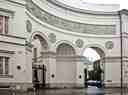
Look for a grand, creamy-white arched gateway with sculpted reliefs and circular medallions set into the stone above three wide archways-position yourself near the intersection…Leggi di piùMostra meno
Look for a grand, creamy-white arched gateway with sculpted reliefs and circular medallions set into the stone above three wide archways-position yourself near the intersection and you can’t miss its distinctive, elegant curve. Welcome to Miodowa Street, or as I like to call it, “Sweet Street”-and back in the 16th century, that nickname was more than just a catchy title! Picture the air thick with the scent of gingerbread and sticky honey oozing from shop windows, while merchants in puffy trousers hustle their confections to passersby. Miodowa was famous for its gingerbread, so it’s safe to say this was Warsaw’s tastiest stretch, and probably the original street for “window shopping.” Now, stand here and imagine the commotion of horse-drawn carriages, vendors shouting out prices, and the gentle clip-clop echoing off the grand buildings. On one side, you’d spot the palace of Crown Marshal Branicki gleaming in 18th-century splendor; on the other, the Palace of the Bishops of Kraków, with its own layer of intrigue and architectural drama. A little further down, a banker’s mansion, sadly lost to history during the Warsaw Uprising, that was designed to impress every guest. And watch for the Capuchin church’s roof peeking out-inside, the heart of King John III Sobieski rests, making this not just a street, but a royal resting ground. Oh, and if you squint, perhaps you’ll see the ghostly outline of painter Bernardo Bellotto setting up his easel to capture the lively chaos-lucky for us, his art froze this very moment forever. They say if you listen closely, you might hear the piping of a gingerbread vendor, still haunting the cobblestones, beckoning customers back for one last sweet treat.
Apri pagina dedicata →To spot the Ministry of Health, look for a classic building ahead crowned with an impressive Polish eagle crest and clear signage reading “Ministerstwo Zdrowia” in bold Polish…Leggi di piùMostra meno
To spot the Ministry of Health, look for a classic building ahead crowned with an impressive Polish eagle crest and clear signage reading “Ministerstwo Zdrowia” in bold Polish letters-just scan for the proud national emblem! Welcome, traveler! You’re standing before the stately heart of Polish healthcare, the Ministry of Health, nestled inside the historic Pac Palace. Picture the air shifting with a solemn breeze as you face this Baroque marvel, its stone façade whispering tales from centuries past. If you listen closely, you almost hear hushed footsteps echoing from the rebuilding years after World War II, when architects Czesław Konopka and Henryk Białobrzeski, like artists with blueprints instead of brushes, breathed new life into the palace’s bones. The garden view hints at the original Baroque dreams of Tylman van Gameren, only slightly updated-imagine the rustle of royal trees framing health policy debates instead of duels! Inside these walls, leaders-from the energetic Witold Chodźko back in 1918, to today’s Minister Jolanta Sobierańska-Grenda-have wrestled with some big questions: How do you treat a nation’s aches and pains? What if your best solution is “take two legal regulations and call me in the morning”? Now, this place doesn’t just organize hospitals and clinics. It’s the nerve center for everything from medical bills, public health campaigns, the wild world of ambulance helicopters, and even who’s allowed to be called “Doctor” in Poland. Several times, a new title on the door meant a new approach. In the chaos of 1944’s final World War II months, ministers like Bolesław Drobner and Wiktor Trojanowski tried to bandage a war-torn nation-sometimes, probably with more paperwork than plasters. Picture the corridors filled with brisk officials, anxious telephones, and the thud of rubber stamps. Fast forward: the building buzzed with the voices of reformers, from Jerzy Sztachelski to Mirosław Cybulko, all trying to juggle surgeries, pandemics, and budgets tighter than a stethoscope on a sumo wrestler. When it comes to healthcare, there’s never a dull-or quiet-moment! But here’s a modern twist: in the Polish Medical Air Rescue office, just imagine the frantic crackle of a radio as a helicopter pilot gets a life-or-death call from somewhere in Poland’s countryside. The Ministry’s air ambulance service, Lotnicze Pogotowie Ratunkowe, whirls into action with a fleet of 27 helicopters and two powerful planes, ready to rush to emergencies from the sea to the Tatra peaks. As health policies changed, so did the faces-some beloved, some barely remembered in the lunchroom, all with stories to tell. Through thick and thin, this palace has remained a symbol: a gentle giant holding the pulse of the nation, adapting, rebuilding, always striving to help the country breathe a little easier. And remember, today’s updates and emergencies are tomorrow’s history lessons-maybe you’ll see a minister inside, coffee in hand, writing another chapter. So, as you stand here, you’re not just looking at stone and glass. You’re peeking into a living, beating heart-a place where every prescription, every ambulance, and every hope for a healthier tomorrow begins. Not bad for a place that started life as a palace, right? That’s history with a healthy twist! To delve deeper into the headquarters, management or the air ambulance, simply drop your query in the chat section and I'll provide more information.
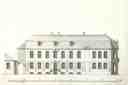
Apri pagina dedicata →To spot Lelewel Palace, look for a grand, symmetrical light-colored building with a gently sloping roof, tall rectangular windows set in two rows, and a small central staircase…Leggi di piùMostra meno
To spot Lelewel Palace, look for a grand, symmetrical light-colored building with a gently sloping roof, tall rectangular windows set in two rows, and a small central staircase leading up to the main entrance. Now, take a moment to imagine yourself transported back to the middle of the 1700s, right here in the heart of Warsaw, with noble carriages rattling down what locals fondly called “Palace Street.” Lelewel Palace may look peaceful in old drawings, but if these walls could talk, they’d have stories to shout-and maybe the odd complaint about all the construction. Originally, this land saw chaos during the Deluge, when Swedish and Brandenburgian troops burned Krzysztof Gembicki’s timber manor to the ground. Not to worry though, the plot didn’t stay empty long; new mansions popped up, and in 1739, a fancy French-style palace arrived with outbuildings and a garden so precise you could lose your balance walking straight! The real magical touch, though, came from Constance Lelewel, born into money, drama, and architectural ambition. After losing her father, she inherited a sizable fortune (imagine her tripping over gold coins every morning!) and decided she wanted something truly stunning here. In 1755, Constance grabbed the property with both hands and, together with the architect Efraim Szreger-who learned his tricks from none other than her dad-she set about making the place the talk of the town. And talk they did: Szreger took inspiration straight from the Palace of Versailles! The staircase alone was the kind you’d hope would impress your snootiest friends. So, if you hear grand footsteps on marble now, that’s just fancy ghosts making their entrance. Only one wing of the planned expansions got built, thanks to time, fate, and what historians call “budgeting issues” (also known as running out of patience, money, or both). After Constance, new owners appeared, from wealthy merchants adding their own flourishes, to the architect Szymon Bogumił Zug, who gave it a neo-classical twist. Over time, the palace grew, merged, and changed, a little like a noble version of musical chairs. But history here isn’t just about balls and banquets. The complex was tragically destroyed by German forces in World War II, its once-grand halls silenced. And yet, Lelewel Palace stands as a beautiful reminder-through drawings, stories, and shadows-of Warsaw’s spirit: no matter what, the city always rises, dusts itself off, and makes room for another brilliant story to unfold.
Apri pagina dedicata →
Mostra altre 9 tappeMostra meno tappeexpand_moreexpand_less
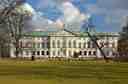
To spot the Krasiński Palace, just look for the grand, white Baroque facade with a pale green roof and a dramatic pediment adorned by detailed statues and sculpted reliefs, set…Leggi di piùMostra meno
To spot the Krasiński Palace, just look for the grand, white Baroque facade with a pale green roof and a dramatic pediment adorned by detailed statues and sculpted reliefs, set behind a wide open lawn right ahead of you. Now, time to step into the shoes of a 17th-century noble! Imagine yourself standing on Krasiński Square, surrounded by the smell of fresh grass and the gentle whisper of leaves as a breeze sweeps across this very garden. Back in the late 1600s, Jan Dobrogost Krasiński-a man who never settled for small dreams-decided Warsaw needed a place as grand as his family tales. He called on Tylman van Gameren, a Dutch architect with an Italian education and a knack for Baroque drama, to design a palace meant to shout, “Look at me!” to all of Poland. And yes, if the Palace could talk, it would probably brag, too. Krasiński, eager to outshine his rivals (and maybe impress the king), kept an eagle eye on the construction. He even hired top French and Italian craftsmen, but the real artistic fireworks came from Andreas Schlüter, a German sculptor who brought the palace’s facade to life. Take a look above the central entrance-the intricate reliefs on the pediment depict a legendary Roman ancestor of Krasiński, Manius Valerius Maximus Corvinus Messalla. Now that’s family pride! There are also French-style doors on the first floor, once crowned with a cartouche held by two fluttering angels showing off Krasiński’s initials, “JK.” Who needs Instagram when you have your own palace-monogram? As you stand in front of these tall windows, picture lavish frescoes inside, painted by Michelangelo Palloni, court painter to King John III Sobieski. The palace was a hub of art and luxury, bursting with stucco moulding, marble, and murals-alas, many lost during World War II. The gardens behind you? They were once even larger, with fancy symmetrical parterres and long, sun-dappled alleys leading off in three directions. Sadly, for all his ambition, Krasiński never quite finished the garden the way he dreamed. Even a nobleman’s to-do list gets a little too long sometimes! Fast forward to 1765, and the palace changed hands, becoming the home of Poland’s Treasury Commission. A fire in 1783 brought another chapter: Italian architect Domenico Merlini helped give the palace a fresh look. By the interwar period, the Supreme Court of Poland met under this ornate roof. Then came the chaos of World War II-flames, rubble, loss. Yet the palace’s outer shell stood proud, a silent witness. Today, after careful restoration, Krasiński Palace isn’t just a pretty face. Since May 2024, it welcomes visitors for the first time, showing priceless treasures from the National Library, including rare manuscripts, Medieval psalters, and even works by Chopin. Admission is free six days a week, so you can soak up centuries of history without spending a zloty! So, next time you pass by, give a little nod to Jan Krasiński. He built a palace that has truly seen it all-glory, ruin, and an epic comeback. And if you listen closely, you might just hear the echoes of old courtly footsteps wandering through the halls.
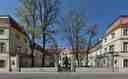
Apri pagina dedicata →To spot the Palace of the Four Winds, look straight ahead for a beautiful pale-yellow palace with two wings and striking red roofs, with four statues standing guard on the…Leggi di piùMostra meno
To spot the Palace of the Four Winds, look straight ahead for a beautiful pale-yellow palace with two wings and striking red roofs, with four statues standing guard on the gateposts and the main building visible beyond the iron fence. Now, let’s step right into the breezy world of the Palace of the Four Winds! Imagine it’s the late 1600s: carriages rattle down Long Street as wealthy officials compete for the grandest homes. Picture Stanisław Kleinpolt, the royal secretary, commissioning this palace, probably saying, “Make it big... and windy!” Over the years, this palace changed hands more often than a hot potato-Krasiński, Załuski, Radziwiłł, they each added their own fancy touch. In the 1730s, Rococo style swept through the halls, and mysterious artists crowned the entrance with the mighty Four Winds-Notus, Boreas, Zephyrus, and Eurus-each one still standing up there, braving Polish winters. Later, as Piotr Tepper moved in, the right wing expanded and a new, elegant facade arrived, giving the building a classic makeover just in time for 1800s high-society parties. This place was so trendy, it even became the swanky Hôtel de Dresde, where you could gossip over a cup of tea and maybe a little strudel. But history had storms in store: after war and decline, the palace became a tenement, then government offices, and finally, during the dark days of 1944, flames swallowed the palace’s glory as the Germans torched it after the Uprising. Standing here, you can almost feel the swirling winds of history-the palace’s walls holding centuries of secrets, laughter, and a few epic windy hair-dos!
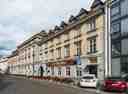
Apri pagina dedicata →To spot Hotel Polski, just look for the long, pale yellow, three-story building with rows of white-framed windows set along Długa Street, right in front of you-the sign for a Thai…Leggi di piùMostra meno
To spot Hotel Polski, just look for the long, pale yellow, three-story building with rows of white-framed windows set along Długa Street, right in front of you-the sign for a Thai restaurant today hints you’re in the right place! Now, let me take you back in time-to a place that once echoed with the chatter of travelers and the hope of people longing for freedom. Picture this street in 1808, horse carriages rattling along the cobblestones, as Hotel Polski first swings open its doors. It quickly becomes one of Warsaw’s most elegant addresses; the kind of spot where you might overhear a deal being made, a romance blooming, or someone complaining about their soup being too salty-some complaints transcend centuries! But fast forward to 1943, and the story turns chilling. The war is raging, and after the terrible liquidation of the Warsaw Ghetto, this building falls into the hands of the Germans. Here’s where a dark chapter unfolds. Hotel Polski became bait in a cruel trap-word spread through secret, whispered channels that Jews in hiding could come here, buy foreign passports, and escape Nazi-occupied Europe for the safety of South America or Palestine. The streets outside must have been filled with a mix of hope and fear, as families clutching battered suitcases snuck through the night. But behind these walls, there was hardly any safety. Most of the documents peddled here were fake or confiscated by the Gestapo and their collaborators, Jewish agents who had lost themselves to fear or greed. The rumors that spun through broken Warsaw were mostly lies: nearly 2,500 Jews surfaced from their hiding places, drawn by hope. Some came with newly forged Paraguayan, Honduran, or Peruvian documents, paid for with fortunes that, in peacetime, might’ve bought a mansion. Sadly, many never saw freedom again. You can almost feel the tension-the Polish Underground desperately tried to warn the Jews to stay away, but hope, sometimes, is louder than caution. Groups were quietly marched off from here, told they were going to Vittel, a resort town in France. That must have sounded bizarre-a spa! But after a brief stop, almost all ended up at concentration camps like Bergen-Belsen and ultimately Auschwitz. It was only the handful with Palestinian documents-about 300 people-who survived, exchanged later for imprisoned Germans. This spot saw courage, heartbreak, betrayal, and even a little artistic flair-some victims were famous writers and resistance leaders. During the Warsaw Uprising in 1944, this battered building served yet another role: it became a Polish insurgent stronghold nicknamed the “Holy Mother Redoubt,” named for a painting inside. Imagine the crackle of gunfire and the shouts of fighters echoing off these now-quiet walls. After the war, the hotel was rebuilt and changed its face yet again-by 1965, it was declared a cultural heritage site, and in 2013, a plaque went up to ensure we never forget. So, as you stand here, remember: these quiet windows have seen secrets, traps, hope, and heroism-all in the span of just one street address. That’s Hotel Polski for you-a building that’s seen more plot twists than a detective novel!
Apri pagina dedicata →Right in front of you stands a broad, yellow-beige building with a red-tiled roof, classic arched windows, and the inscription "PAŃSTWOWE MUZEUM ARCHEOLOGICZNE" above the main…Leggi di piùMostra meno
Right in front of you stands a broad, yellow-beige building with a red-tiled roof, classic arched windows, and the inscription "PAŃSTWOWE MUZEUM ARCHEOLOGICZNE" above the main entrance, making it easy to spot as it stretches out along Długa Street. Now, close your eyes for a second-imagine heavy footsteps echoing on these cobbles, cannons rumbling, and the cold, sharp smell of gunpowder in the air. The Royal Arsenal, or Arsenał Królewski, isn’t just an old building; this place has seen more action than a blockbuster movie marathon. Picture it: the mid-16th century. King Stefan Batory needs somewhere for his war veterans to rest their weary bones, so he orders the first version of this building. But soon, the city’s needs are bigger, and, by 1643, under the steely gaze of General Paweł Grodzicki, the Arsenal is turned into Warsaw’s main fortress for weapons and ammo-walls thick and sturdy, ready for anything. Over the centuries, the Arsenal is like a chameleon, always changing. In the 18th century, it’s spruced up and rebuilt twice, each time by some of Poland’s top architects. Fast forward to 1794: the air vibrates with the sounds of musket fire and shouting during the Warsaw Insurrection. Brave Polish soldiers and civilians clash with Russian occupiers in desperate, dusty close combat right where you’re standing. The Arsenal’s thick walls must have trembled with the force of that battle! By the 1800s, after being damaged and repaired, the building is almost turned into a massive prison, holding criminals for the Russian tsar-though luckily for anyone who doesn’t enjoy gloomy stone walls, they build a whole new citadel elsewhere. The Arsenal then spends some quieter years as a police station and later, thanks to President Stefan Starzyński, transforms into a city archive in the stylish 1930s-complete with its historic courtyard restored to its 17th-century glory. But war returns: In 1943, the street out front explodes into action during “Operation Arsenal,” when young resistance fighters pull off a daring rescue right under the nose of the Nazi occupiers. Then, the Arsenal becomes a fortress again during the Warsaw Uprising of 1944 before being blasted nearly to rubble. Yet, like a true Warsaw survivor, it’s rebuilt after the war to match its 17th-century design, rising once more from the city’s scars. Today, those same thick walls hold the National Museum of Archaeology, filled not with gunpowder but treasures from ancient times. Not bad for a building that’s seen more drama than a soap opera-who needs Netflix with history like this?
Apri pagina dedicata →Look ahead for a grand, pale-yellow building with a long, elegant façade, tall columns, and three large arched entrances at the front-that’s the Mostowski Palace, right where the…Leggi di piùMostra meno
Look ahead for a grand, pale-yellow building with a long, elegant façade, tall columns, and three large arched entrances at the front-that’s the Mostowski Palace, right where the line of parked cars meets the open square. Welcome to a palace that’s got more stories than your grandma’s attic! Mostowski Palace began its life in the 1760s, shimmering in Baroque splendor for a nobleman named Jan August Hylzen. Just imagine the carriages rolling in and the shimmering candlelight behind those grand windows. Then, in a plot twist worthy of a soap opera, the palace passed to Tadeusz Mostowski-revolutionary, statesman, and occasional man-about-town. Fast forward to the 1820s and the government decided it needed a makeover. They brought in the Italian architect Antonio Corazzi, who dusted off the frills and gave the palace its current classicist look-think ancient Greece meets Warsaw. The walls here have heard it all: Chopin himself once played music for high society concerts in these halls. But drama struck during the November Uprising of 1831, when Russian soldiers seized the palace. The 20th century wasn’t kinder-nearly destroyed in World War II, only the elegant façade survived. Like any good hero, it staged a comeback in 1949, rebuilt and reborn. Today, it’s the police headquarters-so if you hear sirens, it’s probably not for you! Take a moment to picture the centuries of intrigue, music, and survival packed into this graceful building.
Apri pagina dedicata →Right in front of you, Nalewki Street once stretched out with large, elegant stone buildings and a busy square filled with people and horse-drawn carriages-look towards the open…Leggi di piùMostra meno
Right in front of you, Nalewki Street once stretched out with large, elegant stone buildings and a busy square filled with people and horse-drawn carriages-look towards the open road lined by historic architecture and the impressive church facade on the right to spot where its spirit lives on. You might not hear the clatter of hooves anymore, but close your eyes and imagine Nalewki Street in its prime-a place buzzing with footsteps, market chatter, and laughter carried by the breeze from the old marshes that gave the street its name. In the 19th century, this was the pulsing heart of a lively Jewish community, with shopkeepers calling out their wares and families hurrying to synagogues or bakeries. The intersection with Franciszkańska was famously busy, a crossroads where everyone seemed to be going somewhere important. Fast forward to today, and the original street is much shorter, its memory stretching into the park you see before you. After World War II and the tragic loss of so many residents during the Holocaust, only part of the street was rebuilt. Where there was once non-stop urban life, you might now hear birds instead of crowds and feel a certain stillness where history still lingers. So as you stand here, sensing layers of stories rising from the cobblestones, remember: beneath your feet lies a street that has witnessed both the bustling highs and the quiet, poignant lows of Warsaw’s past. And if you ever feel your shoes sinking a bit, don’t worry-it’s just the spirit of those old marshes saying hello!
Apri pagina dedicata →To spot the Monument to the Ghetto Heroes, look for a large, dark stone structure with a striking bronze relief of men, women, and children at its center, standing boldly above a…Leggi di piùMostra meno
To spot the Monument to the Ghetto Heroes, look for a large, dark stone structure with a striking bronze relief of men, women, and children at its center, standing boldly above a series of wide steps-it's right in the open square ahead. Alright, now that you’re facing this powerful monument, let’s travel back in time-don’t worry, no need for a DeLorean! Imagine Warsaw in 1943, a city gripped by occupation and fear. The spot beneath your feet saw the very first shots of the Warsaw Ghetto Uprising, a battle of desperate courage where Jewish partisans, some barely older than teenagers, faced overwhelming odds to defend their dignity and freedom. As the struggle erupted, you might imagine the sudden sharp crack of a distant gunshot, the cries of hope, and the chaos that shook this square. But the story of this monument is as layered as a particularly stubborn onion. After the war, survivors and the Central Committee of Polish Jews quickly decided that this chapter couldn’t be forgotten. In 1946, they started with a simple circular plaque: a palm leaf, the Hebrew letter “B,” and words etched in three languages for all to remember those who fell for their people-and for all humanity. Just across from where you stand, the once-invisible wounds of the ghetto’s end lingered in the rubble and silence. Then, in 1948, this massive monument was revealed. Designed by Leon Suzin and sculpted by Nathan Rapoport, it stands a mighty 11 meters tall, its great stones echoing both the ghetto’s prison-like walls and, symbolically, the Western Wall in Jerusalem. And here’s a twist worthy of a movie: much of this black labradorite stone was actually meant for Nazi monuments, ordered by Hitler’s own architect, Albert Speer! That’s poetic justice carved in stone, if you ask me. On the western face, you’ll see a group of rebels, determined and fierce, led by the central figure-Mordechai Anielewicz, the fearless leader of the uprising. He stands among men, women, and even children, clutching homemade weapons. On the other side, the sculpture evokes the relentless suffering, showing people driven mercilessly by their oppressors. Even decades later, this place burns with memory. In 1970, the German chancellor Willy Brandt knelt here-an unexpected flash of humility and history. Today, the POLIN Museum across the street holds the stories that started with bravery and now belong to us all. Take a moment: the silence, the stone, the faces in bronze-this is the sound of memory refusing to be silenced.
Apri pagina dedicata →To spot the POLIN Museum, look ahead for a modern building with a striking minimalist exterior, glass fins, and copper mesh-it’s hard to miss, especially with its bold,…Leggi di piùMostra meno
To spot the POLIN Museum, look ahead for a modern building with a striking minimalist exterior, glass fins, and copper mesh-it’s hard to miss, especially with its bold, contemporary design standing out on the historical landscape. Welcome to the POLIN Museum of the History of Polish Jews! Pause for a moment and listen-the footsteps echoing around you could just as well belong to travelers from centuries past, arriving in search of safety, community, and a new beginning. You’re standing on hallowed ground: the former Warsaw Ghetto, right in the center of what was once the heart of Jewish Warsaw. This place is not just a museum, it’s a living time machine that shakes hands with a thousand years of history. Ready to step in? First, take in that extraordinary building in front of you-its smooth glass, copper shimmer, and the huge, wave-like entrance. It sort of looks like someone tried to split the earth in two, or like a gorge waiting to be crossed. That’s not an accident! The architects, Rainer Mahlamäki and Ilmari Lahdelma (two Finns who know a thing or two about dramatic design), wanted this giant “crack” to symbolize the fractured, turbulent history of the Jews in Poland-sometimes hopeful, often tragic, always moving. Now, let your imagination slip backwards in time. Imagine the first Jewish families arriving in Poland a thousand years ago, forests whispering around them, legends telling them that “Polin” meant “rest here.” Slowly, they established a community that would become the largest Jewish population in Europe. The museum’s name, “POLIN,” even reflects that dual meaning-“Poland” and “rest here.” If you wonder how big that legacy grew, the answer is: very! By the 16th century, Poland was known as “Paradisus Iudaeorum” or the “Jewish Paradise,” a rare patch of tolerance in often hostile Europe. The museum inside takes you on a zigzag journey through history: you’ll walk through eight galleries that start in the dark Polish forests and end in today’s vibrant, resilient Jewish community. But it’s not all peaceful. Step forward and you’ll feel the story turn-fires, pogroms, the infamous partitions when Poland was sliced up by its neighbors, Jews thrown into the same chaos as everyone else. The industrial revolution buzzes in, Jewish textile barons set up shop, while new ideas, new faiths, and new political dreams swirl through the air like autumn leaves. You’ll see the golden glow of interwar Jewish life: bustling streets, theaters, laughter, whispers of romance, the delicious smells of bakeries and fresh coffee. But beware! Climb another step, and you crash into darkness. The Holocaust gallery brings the silence and empty spaces of the Warsaw Ghetto roaring back to life; you’ll meet heroes who secretly preserved every scrap of evidence and memory they could. It’s a place that will chill you-and inspire you-with stories of both brutality and bravery. After WWII, the story isn’t over. Survivors returned, most left again, but a few remained stubbornly, dusting off old traditions as they waited for fresh hope. The museum also covers the revival after 1989, when the iron grip of communism loosened and a new, vibrant-if much smaller-Jewish community began to bloom again. And hey, don’t miss some of the cool technology here: there are multimedia installations, a virtual “shtetl” where you can explore Jewish villages wiped off the map. They even reconstructed the wooden ceiling and roof of a grand 17th-century synagogue! POLIN isn’t just a building stuffed with artifacts. It’s a conversation with the past and a shout to the present. When the doors first opened in 2013, people poured in from all over-over 180,000 in just those early months! POLIN has even won awards for being the best museum in Europe, and it continues to inspire with lectures, concerts, and performances. So go ahead, step closer; feel the echoes, the loss, the celebration, the hope. This isn’t just a museum-this is the heartbeat of a thousand years, waiting for you to listen. Intrigued by the construction, organizational structure or the distinguished benefactors and donors council? Make your way to the chat section and I'll be happy to provide further details.
Apri pagina dedicata →To spot the Umschlagplatz Memorial, look to your right for a white marble wall with a wide black stripe and an arched top-this is your sign you have arrived at the final and very…Leggi di piùMostra meno
To spot the Umschlagplatz Memorial, look to your right for a white marble wall with a wide black stripe and an arched top-this is your sign you have arrived at the final and very important stop on our tour. Welcome to the Umschlagplatz. Take a deep breath-the air here is thick with stories, and echoes of footsteps long past. What you see in front of you looks like an open freight car made of white marble, with a black stripe resembling the tallit, the traditional Jewish prayer shawl. If the design seems somber and stark, that’s no accident. You’re standing at the very spot where the fate of so many was sealed during some of the darkest days in Warsaw’s history. If you listen carefully, you might almost hear the heavy shuffle of thousands of shoes, the murmur of voices, the heartbeats of women, men, and children pressed together in fear and confusion. Back in 1942, this was the place where the Nazis assembled Jews from the Warsaw Ghetto, holding them in this yard next to the railway station. Sometimes people waited here overnight out in the open, clutching the hands of their families, surrounded by a wooden fence that was later replaced by cold concrete walls. On some mornings, freight trains would arrive, and with chilling efficiency, entire blocks of the ghetto would be emptied into these cars, their destination: Treblinka, a death camp where most would never return. You’d think the word "Umschlagplatz" would be innocent-it means "reloading point" in German, usually a spot where goods are transferred for shipping. But here, on Stawki Street, it became twisted, a cruel euphemism, for loading human lives onto trains. The word itself became a mask-a way for the Nazis to cover up what was really happening, just like they used bland words for their worst crimes. This wasn’t just unique to Warsaw; there was another Umschlagplatz at Radogoszcz near the Łódź Ghetto, a dreadful pit stop on the way to Chełmno and Auschwitz. During the so-called Grossaktion Warsaw, which started in July 1942, as many as 10,000 Jews a day were expelled from the ghetto. They walked, marched, or stumbled toward this square, often herded straight from their homes-sometimes even through tenement courtyards or along Zamenhof Street. Imagine the thunder of boots, the calls and orders in foreign voices, the desperate tears and whispering of prayers. Not even the most important or skilled could escape easily; even famous musicians like Władysław Szpilman, known today from the movie "The Pianist," stood among the crowds here, just another face in a sea of thousands. The site was divided into two parts back then. The southern part, fenced inside the ghetto, was where people gathered and waited. The northern section, next to the rails, is where people were packed into the freight cars, the doors slammed shut behind them. The rails themselves were laid down way back in 1876, but between 1942 and 1943, over 300,000 people took a one-way journey on them. But let’s not stop at tragedy! In 1988, to mark the 45th anniversary of the Warsaw Ghetto Uprising, this monument was built-a silent sentinel for the memories and names of those who passed through here. Take a look at the marble. The inscribed names on the wall are in Polish, Yiddish, Hebrew, and English-over 400 of the most popular Jewish names, each one standing for a thousand victims. The gate above, with its syenite stone from Sweden, is carved with a shattered forest-the symbol of a nation cruelly cut down. It’s not just a piece of history. The colors themselves mean something: white, with a bold black stripe, a visual reference to ritual clothing worn on prayers and special occasions, reminding us of the dignity and culture stripped away. There were once warehouses here, and even a homeless shelter before the war-now all gone, replaced with stories and reminders. So as you stand here, let your mind wander back to the thousands who walked this path and the quiet strength of those who survived. The Umschlagplatz may not have the grand architecture of palaces or the shine of a museum, but it has a silence that speaks volumes. And hey, if you hear footsteps by your side, just remember-it’s probably me, your tour guide, ghosting along, making sure you don’t miss a single detail! Want to explore the usage, warsaw ghetto or the deportations to treblinka in more depth? Join me in the chat section for a detailed discussion.
Apri pagina dedicata →
Domande frequenti
Come inizio il tour?
Dopo l'acquisto, scarica l'app AudaTours e inserisci il tuo codice di riscatto. Il tour sarà pronto per partire immediatamente – tocca play e segui il percorso guidato dal GPS.
Ho bisogno di internet durante il tour?
No! Scarica il tour prima di iniziare e goditelo completamente offline. Solo la funzione chat richiede internet. Ti consigliamo di scaricare tramite WiFi per risparmiare dati mobili.
È un tour guidato di gruppo?
No – è un tour audio autoguidato. Esplori in autonomia al tuo ritmo, con la narrazione audio riprodotta dal tuo telefono. Nessuna guida, nessun gruppo, nessun orario.
Quanto dura il tour?
La maggior parte dei tour richiede 60–90 minuti, ma sei tu a controllare il ritmo. Metti in pausa, salta le tappe o fai pause quando vuoi.
E se non riesco a finire il tour oggi?
Nessun problema! I tour hanno accesso a vita. Metti in pausa e riprendi quando vuoi – domani, la prossima settimana o il prossimo anno. I tuoi progressi vengono salvati.
Quali lingue sono disponibili?
Tutti i tour sono disponibili in oltre 50 lingue. Seleziona la lingua preferita quando riscatti il codice. Nota: la lingua non può essere cambiata dopo la generazione del tour.
Dove accedo al tour dopo l'acquisto?
Scarica l'app gratuita AudaTours dall'App Store o Google Play. Inserisci il codice di riscatto (inviato via email) e il tour apparirà nella tua libreria, pronto per essere scaricato e avviato.
Se il tour non ti piace, ti rimborseremo l'acquisto. Contattaci a [email protected]
Pagamento sicuro con