

बेसल ऑडियो टूर: विश्वास, कला और पुलों की गूँज
बेसल में, मिनस्टर के शांत शिखर कभी उन रहस्यों पर छाया डालते थे जिनके लिए मरना भी गवारा था। हर गली में कहानियाँ गूँजती हैं जिन्हें इतिहास फुसफुसाना पसंद करता है। इस स्व-निर्देशित ऑडियो टूर के साथ शहर को अनलॉक करें, जिसे प्राचीन गिरजाघरों, छिपे हुए आराधनालयों और मनमोहक संगीत हॉलों के माध्यम से बुने गए रहस्यों को उजागर करने के लिए डिज़ाइन किया गया है। सामान्य भीड़ से बचकर निकलें और बेसल के शांतिपूर्ण मुखौटे के नीचे दबी अनकही कहानियों को उजागर करें। सदियों पुरानी दुश्मनी ने बेसल मिनस्टर की दीवारों के भीतर दंगा क्यों भड़का दिया था? यहूदी संग्रहालय से कौन सी अनमोल कलाकृति बिना किसी निशान के गायब हो गई थी? एक संगीत विलक्षण ने केवल एक निषिद्ध नोट के साथ अकादमी में आक्रोश कैसे भड़काया? घुमावदार सड़कों और भूली हुई गलियारों का अनुसरण करें। विद्रोह, जुनून और लचीलेपन की गूँज का पता लगाएं क्योंकि हर कदम पत्थरों के नीचे दबे नाटक को उजागर करता है। यह यात्रा परिचित को असाधारण में बदल देती है, शहर के कालातीत हृदय के लिए नई आँखें प्रदान करती है। जिज्ञासा बुला रही है। बेसल की छाया में कदम रखें और देखें कि कौन से रहस्य सामने आते हैं।
टूर पूर्वावलोकन
इस टूर के बारे में
- scheduleअवधि 40–60 minsअपनी गति से चलें
- straighten3.5 किमी पैदल मार्गगाइडेड पथ का पालन करें
- location_onस्थानMuttenz, स्विट्ज़रलैंड
- wifi_offऑफ़लाइन काम करता हैएक बार डाउनलोड करें, कहीं भी उपयोग करें
- all_inclusiveलाइफ़टाइम एक्सेसकभी भी, हमेशा के लिए फिर सुनें
- location_onसेंट लियोनहार्ड चर्च से शुरू होता है
इस टूर के स्टॉप
Look up at that towering structure with its pale stone walls, the steeply pitched roof, and that distinct tower topped with a bright red spire. We are standing outside St.…और पढ़ेंकम दिखाएँ
समर्पित पेज खोलें →Look up at that towering structure with its pale stone walls, the steeply pitched roof, and that distinct tower topped with a bright red spire.
We are standing outside St. Leonhard's Church, and let me tell you, this place is a masterclass in survival and reinvention.
Beneath the main floor lies a crypt, which is a subterranean stone chamber typically used for burials. Dating back to the year ten eighty, it is one of the oldest surviving historical interiors in all of Switzerland. But for a long time, before they could heat it in eighteen fifty nine, locals just used this sacred, ancient vault as a massive wine cellar. Practical, right?
But the ground around here held darker secrets. In eighteen ninety seven, workers tore down the old cloister to build a new prison wing. A local schoolgirl happened to be walking by and witnessed something terrifying. She saw open graves exposing the skeletons of medieval canons... the senior clerics of the church... all buried facing the building, still wearing the rotting robes they had been buried in centuries before.
The church had to be heavily rebuilt after a catastrophic earthquake leveled much of Basel in thirteen fifty six. Up in the roof of that massive tower, there is actually a giant wooden treadwheel. It is a medieval human powered crane used to hoist thousand pound stones, and it is perfectly intact today. They definitely needed it, especially when they hired Hans Niesenberger in fourteen eighty seven to expand the church. Hans was a controversial architect famous for taking on impossible structures, but he kept getting fired from other cities for massive construction flaws. Somehow, his work here stayed standing.
Then came the Reformation in fifteen twenty nine. Protestant mobs stormed the churches, smashing religious art in a massive wave of destruction known as an iconoclasm. But St. Leonhard's got lucky. A few brilliant, forward thinking citizens knew the mob was coming, so they secretly packed up the most priceless pieces... like the legendary Heilspiegel altar painted by Konrad Witz... and hid them safely away.
Remember that prison wing I mentioned earlier? By eighteen thirty five, the city converted the old monastery buildings attached to the church into a literal jail. Church leaders were absolutely furious. They thought putting criminals right next to a house of worship was a complete scandal. And it was definitely chaotic. In nineteen eighty five, several inmates pulled off a spectacular Sunday breakout, scattering across the region, with one fugitive sparking a massive manhunt after hiding in a nearby village.
The prison finally closed in nineteen ninety nine and was turned into a hotel and brasserie. The new owners proved they had a fantastic sense of dark humor, naming the place Au Violon, which is French slang for being thrown in the clink.
If you want to peek inside the church, it is open Tuesday through Friday from nine in the morning until five in the evening.
Take a moment to soak this incredible history in. When you are ready, we can head over to our next stop, the Music Academy Basel, just a short walk away.
On your right is the Great Synagogue, an impressive building easily spotted by its pale stucco exterior, two massive round domes, and striking horizontal red stripes. We just left…और पढ़ेंकम दिखाएँ
समर्पित पेज खोलें →On your right is the Great Synagogue, an impressive building easily spotted by its pale stucco exterior, two massive round domes, and striking horizontal red stripes. We just left the lively halls of the Music Academy a few minutes ago, but the stories echoing through this space carry a much deeper, more complex weight.
The Jewish community in Basel has a history of incredible resilience, born from unimaginable tragedy. The very first Jewish community here was wiped out in 1349 in a horrific pogrom, which is an organized massacre of a specific ethnic or religious group. A panicked mob blamed the city's Jewish residents for poisoning the wells to cause the Black Death plague. The truly terrifying part is that the plague had not even reached Basel yet. The mob forced the community into a wooden hut on an island in the Rhine River and burned them alive. It took an astonishing six hundred and seventy-five years, until 2024, for the city to hold an official memorial for this dark chapter.
But the community eventually returned, and in the 1860s, they built the synagogue you see today. Architecturally, it has a wonderfully dramatic past. It originally had just one dome. The second one was added in 1892, giving it that iconic twin-tower look. Inside, the sanctuary was initially painted in a breathtaking Moorish style, a design inspired by the vibrant geometric patterns of Islamic architecture in North Africa and Spain. But in 1947, someone decided this was too old-fashioned. They painted over all those glorious colors with a flat, dull gray. Thankfully, a massive restoration in the 1980s painstakingly stripped away the gray paint to reveal the brilliant original colors underneath.
This city also played a massive role on the world stage. In 1897, Theodor Herzl hosted the First Zionist Congress here in Basel. Zionism was the political movement aiming to establish a Jewish homeland. Why did Herzl choose Basel? It was a string of happy accidents. Munich was the first choice, but local rabbis blocked it. Zurich was rejected because Herzl feared Russian spies would watch the delegates. Basel won because it had a beautiful concert hall and, most importantly, a solid kosher restaurant. Curiously, the leaders of this very synagogue were initially skeptical of the Congress and mostly ignored it.
Their first full-time rabbi, Arthur Cohn, did attend, though. He made Herzl publicly promise that the future Jewish state would respect religious traditions. The Cohn family legacy is astounding. During World War Two, Arthur's son Marcus used his quiet local law office to secretly save hundreds of Jewish refugees from deportation. And Marcus's son, another Arthur Cohn, took a totally different path, moving to Hollywood and becoming the first and only producer to win six Academy Awards.
If you are interested in community services, the administrative offices here are open on weekday mornings and briefly on Wednesday afternoons, though they are closed on weekends.
This magnificent building stands as a testament to a people who have survived the darkest storms and continue to shine brightly. Reflect on this incredible resilience, and whenever you feel ready, let us move on to the next stop.
11 और स्टॉप दिखाएँकम स्टॉप दिखाएँexpand_moreexpand_less
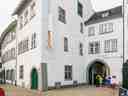
On your right, look for the tall, pale stucco building featuring orderly rows of dark green shutters and an arched wooden door framed by ornate reddish stone. This is Haus zur…और पढ़ेंकम दिखाएँ
समर्पित पेज खोलें →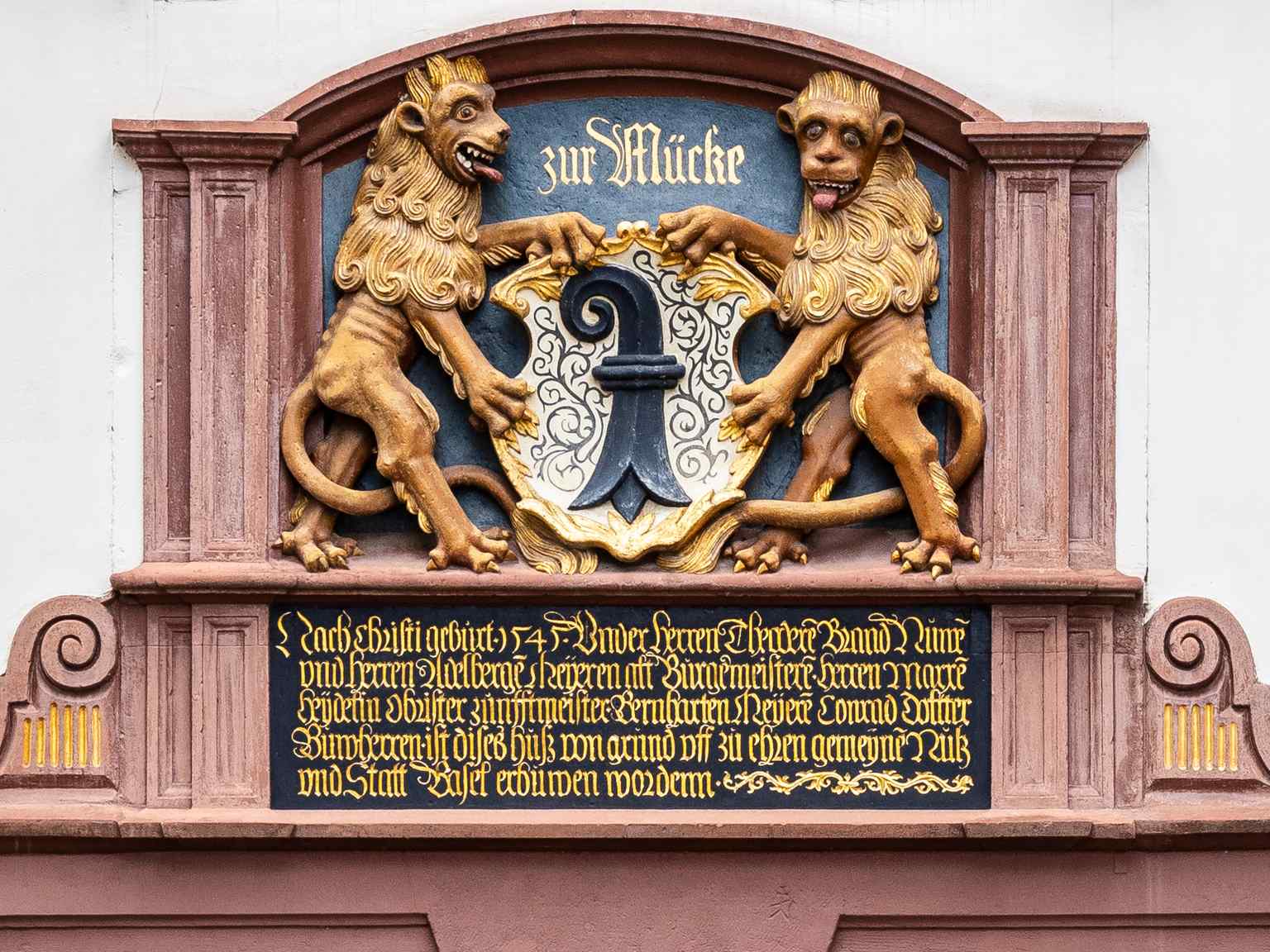
The historic Haus zur Mücke at Schlüsselberg 14, showcasing its beautiful portal relief and pale stucco facade (2023).Photo: JoachimKohler-HB, Wikimedia Commons, CC BY-SA 4.0. Cropped & resized. On your right, look for the tall, pale stucco building featuring orderly rows of dark green shutters and an arched wooden door framed by ornate reddish stone. This is Haus zur Mücke, and its foundations stretch all the way back to the Roman era. Things really got wild here in the Middle Ages, though. Back then, an older version of this building was an exclusive drinking hall for the local nobility. After jousting tournaments up at Münsterplatz, which is just a short walk from here, the elites would come down to this exact spot for lavish banquets and balls. It also hosted a massive historic power shift. In 1439, a papal conclave... a highly secretive, locked down meeting to elect a leader of the Catholic church... took place inside. They elected Duke Amadeus of Savoy, who became Pope Felix the Fifth. The city eventually bought the property, and in 1545, they demolished the old hall and built the structure you see today. Then it got a major intellectual upgrade. In 1671, it became Basel's first public museum. It displayed the Amerbach Cabinet, an incredible sixteenth century Wunderkammer... literally a room of wonder filled with rare art, books, and bizarre natural specimens. The public went absolutely crazy for it. The collection grew so massive they finally had to move it to a larger space in 1849. Since then, it has served as a school. They even added that third floor in 1862 by taking the old roof completely off and placing it right back on top. Enjoy the view of this historic facade, and then we will continue our walk.
Look to your right to spot Münsterplatz, a vast open square paved with tightly packed, multi colored river stones, framed by stately white buildings and a dense canopy of green…और पढ़ेंकम दिखाएँ
समर्पित पेज खोलें →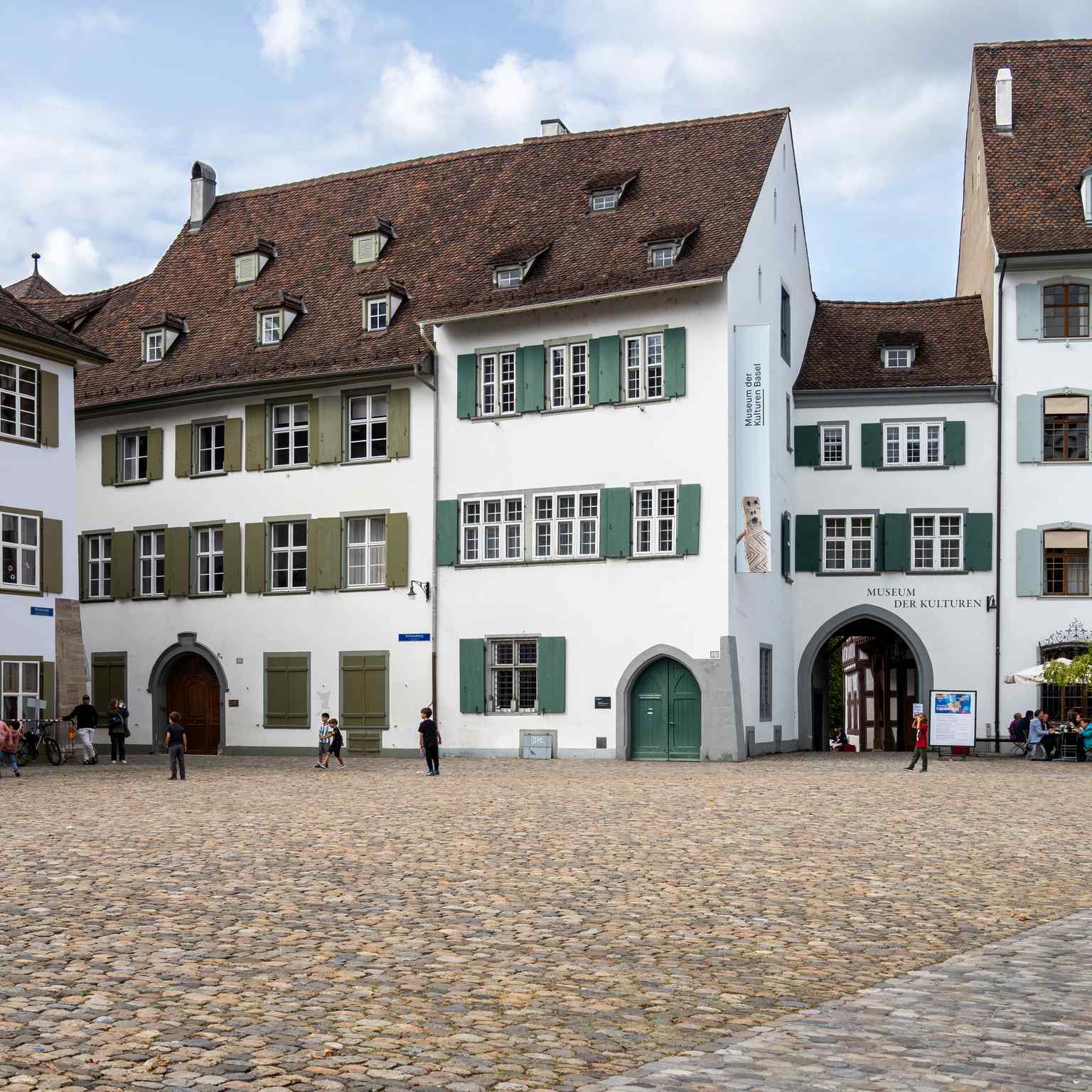
A sweeping overview of the magnificent Münsterplatz and the Museum of Cultures in Basel (2023).Photo: JoachimKohler-HB, Wikimedia Commons, CC BY-SA 4.0. Cropped & resized. Look to your right to spot Münsterplatz, a vast open square paved with tightly packed, multi colored river stones, framed by stately white buildings and a dense canopy of green trees sheltering the far corner. This is the ancient center of Basel. People have been gathering on this exact patch of elevated earth for over two thousand years. Long before these noble houses stood here, a Celtic tribe called the Raurici built an oppidum, a heavily fortified settlement, right on this very hill.
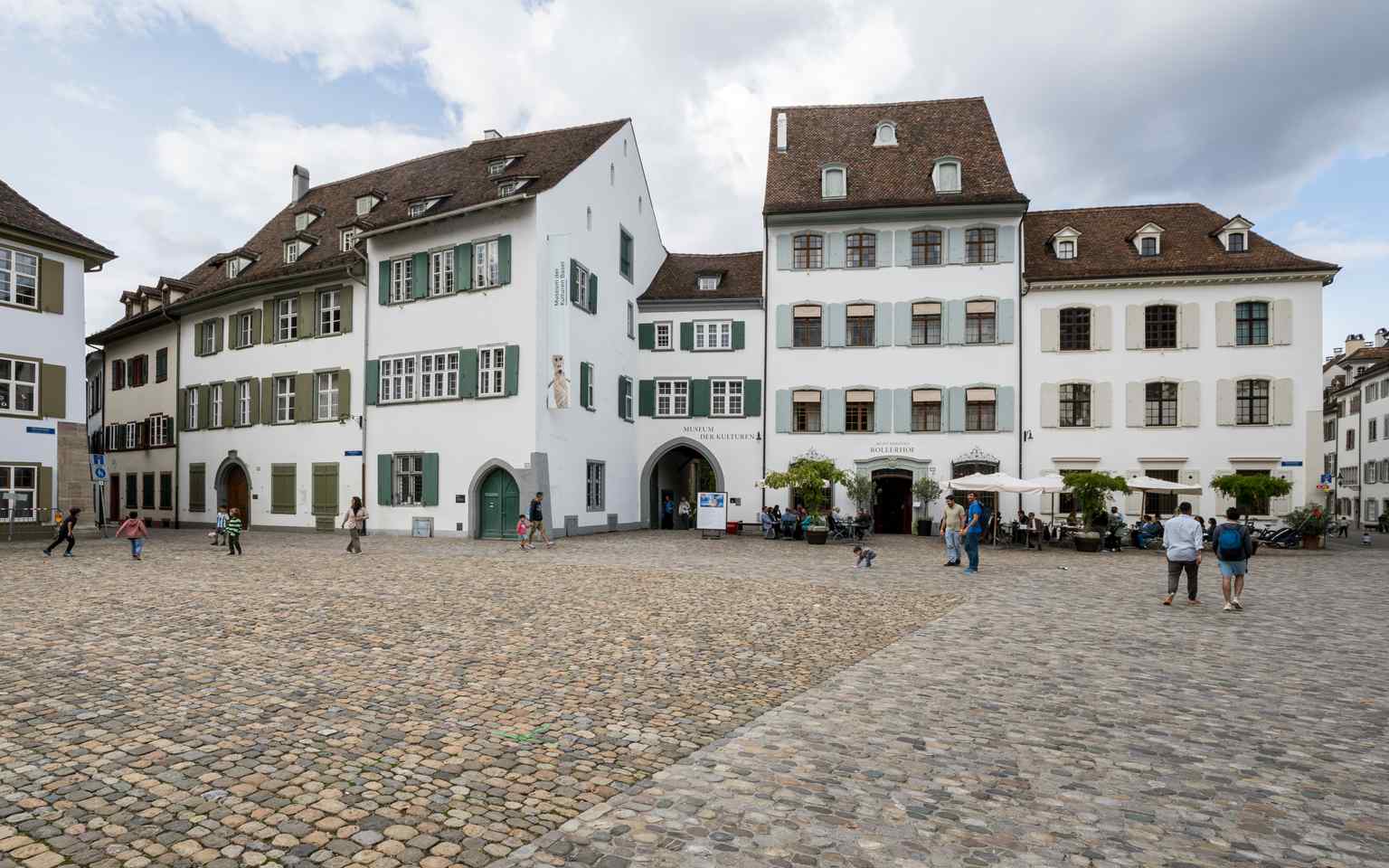
The grand northwest side of Münsterplatz, showcasing the historic architecture and the unique paved ground (2023).Photo: JoachimKohler-HB, Wikimedia Commons, CC BY-SA 4.0. Cropped & resized. Just think about the sheer amount of history that has played out across these stones. Speaking of which, look down at the ground. This unique paving has its own fascinating story. These stones are called Rheincken, or Gwäggi in the local dialect. They are flat river rocks hauled straight out of the nearby Rhine, split down the middle, and buried with the rough broken edge facing up. This original pavement was already here in the early fourteen hundreds.
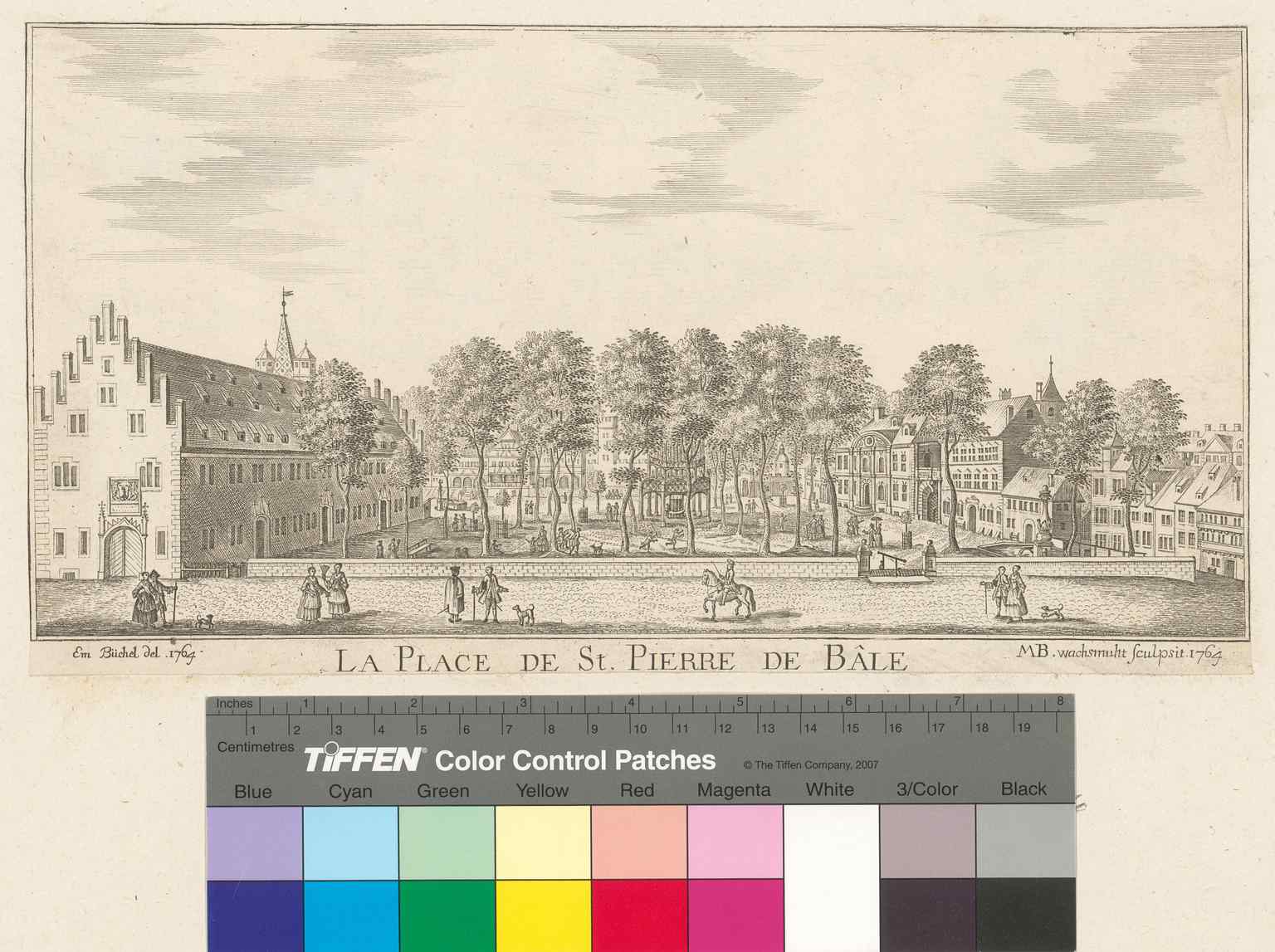
A historical depiction of the Cathedral Square, illustrating the bustling center of Basel and echoes of its medieval drama (1764).Photo: Emanuel Büchel (Künstler), Wikimedia Commons, Public domain. Cropped & resized. Now, remember Haus zur Mücke, which we walked past just a couple of minutes ago? That building was actually the center of massive medieval drama right here on this square. While the grand Council of Basel was busy meeting in the Minster to reform the church, those rebel factions we just mentioned at Haus zur Mücke were busy trying to install their newly elected rival pope, Felix the Fifth. It did not work out well for him. He failed to gain enough support across Europe, and the German Emperor eventually forced the council to dissolve entirely. But that is just one chapter. In 1376, a jousting tournament was held right where you are standing during the Böse Fasnacht, or Evil Carnival. The medieval festivities turned into a massive riot that ended in several tragic deaths. Then, fast forward to January 20th, 1798, and this same square transformed into a giant party. The Helvetic Revolution had just swept through, and Basel citizens celebrated their newfound political freedom by dancing around a towering Liberty Tree alongside French soldiers.
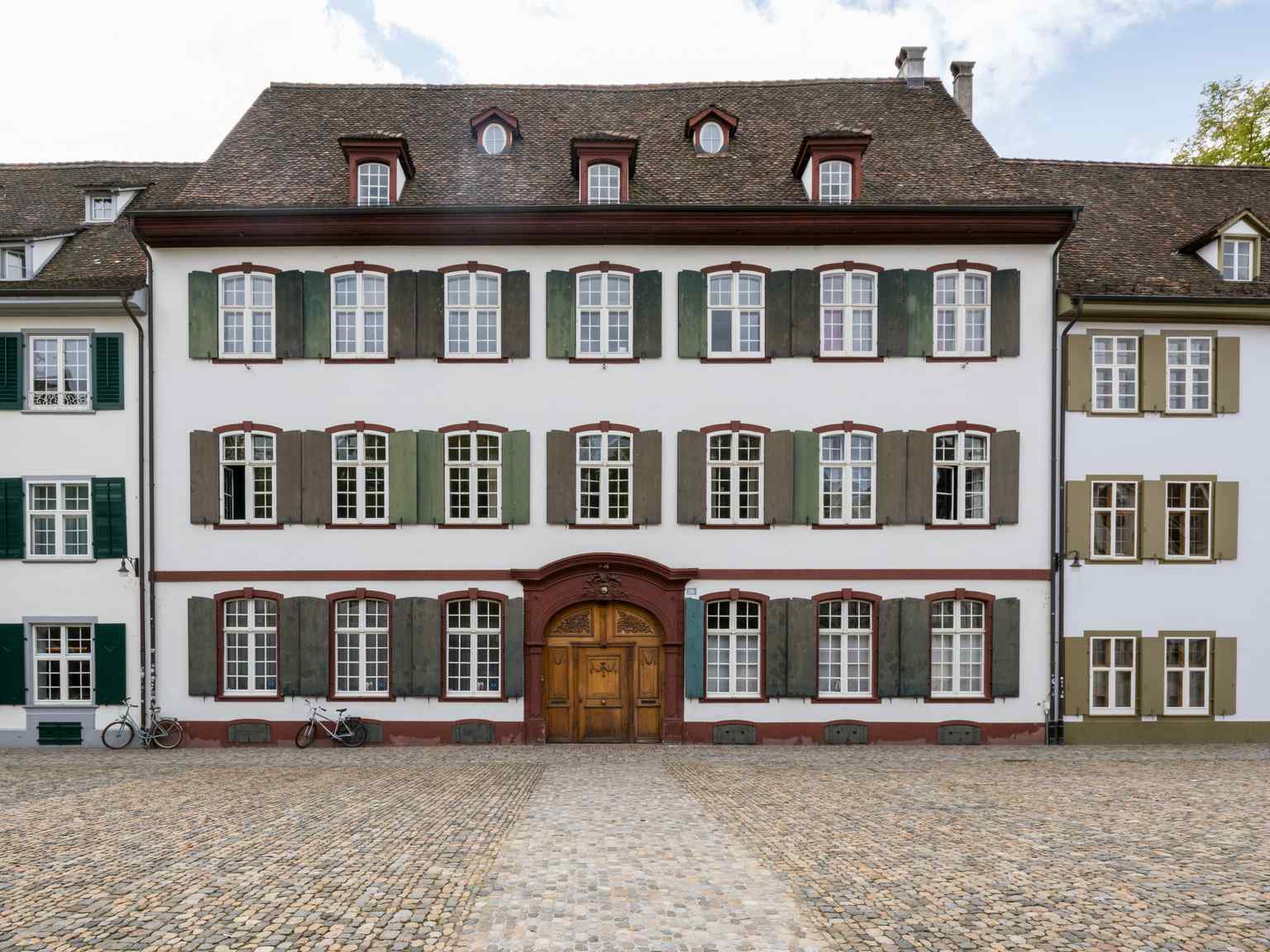
The stately facade of Münsterplatz 17 standing proudly as a testament to the square's evolving modernization and preservation efforts (2023).Photo: JoachimKohler-HB, Wikimedia Commons, CC BY-SA 4.0. Cropped & resized. By the late nineteenth century, things had calmed down, but the square had a very modern problem... noise. In 1871, the city actually paved over this entire historic plaza with a thick strip of asphalt. Why? Because the relentless clatter of wooden carriage wheels and horse hooves was completely ruining the daily lessons at the high school right across the square. Thankfully, the asphalt is gone today. Between 2006 and 2013, the city restored the beautiful Rhine stones. But they did something incredibly clever. To make the historic surface safe and accessible for wheelchairs and bicycles, engineers individually machine sanded and flamed the tops of the rough stones to create a brilliantly smooth, flat pathway.
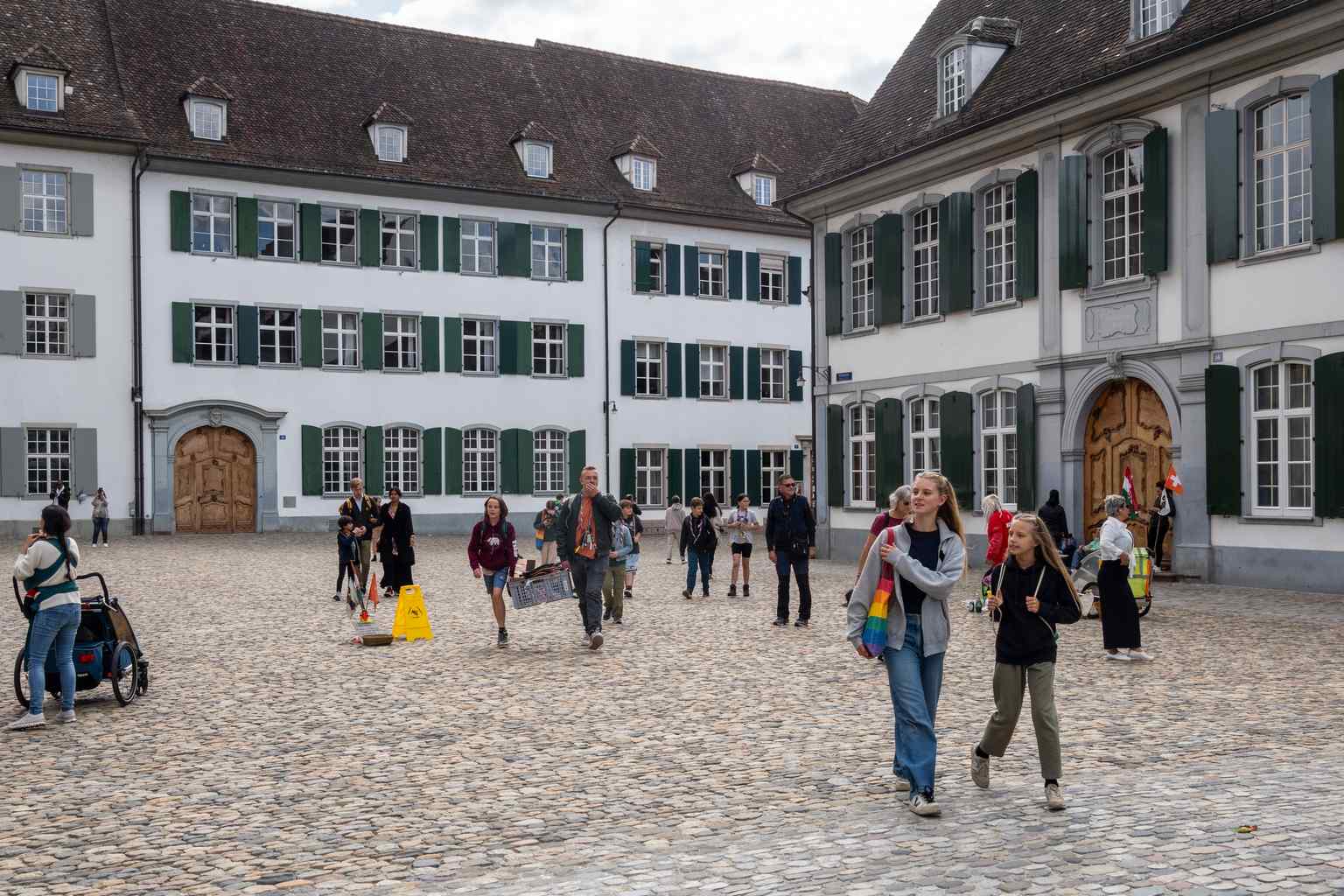
A serene view of the noble houses bordering the southeast corner of Münsterplatz, inviting visitors to linger and explore (2023).Photo: JoachimKohler-HB, Wikimedia Commons, CC BY-SA 4.0. Cropped & resized. As you explore, you might spot the Pisoni Fountain tucked under the trees in the smaller northern section. It was designed by an architect named Paolo Antonio Pisoni in 1784, but if you look closely at the base, you will see a tiny, low basin. The city added that in 1937 specifically as a drinking trough for local dogs. This public square remains open twenty four hours a day, every day of the week. Feel free to linger in the square, and head to the next location when you are ready.
Look to your left for the monumental structure built of striking red sandstone, defined by its two soaring asymmetrical towers and a bright golden clock face mounted on the right…और पढ़ेंकम दिखाएँ
समर्पित पेज खोलें →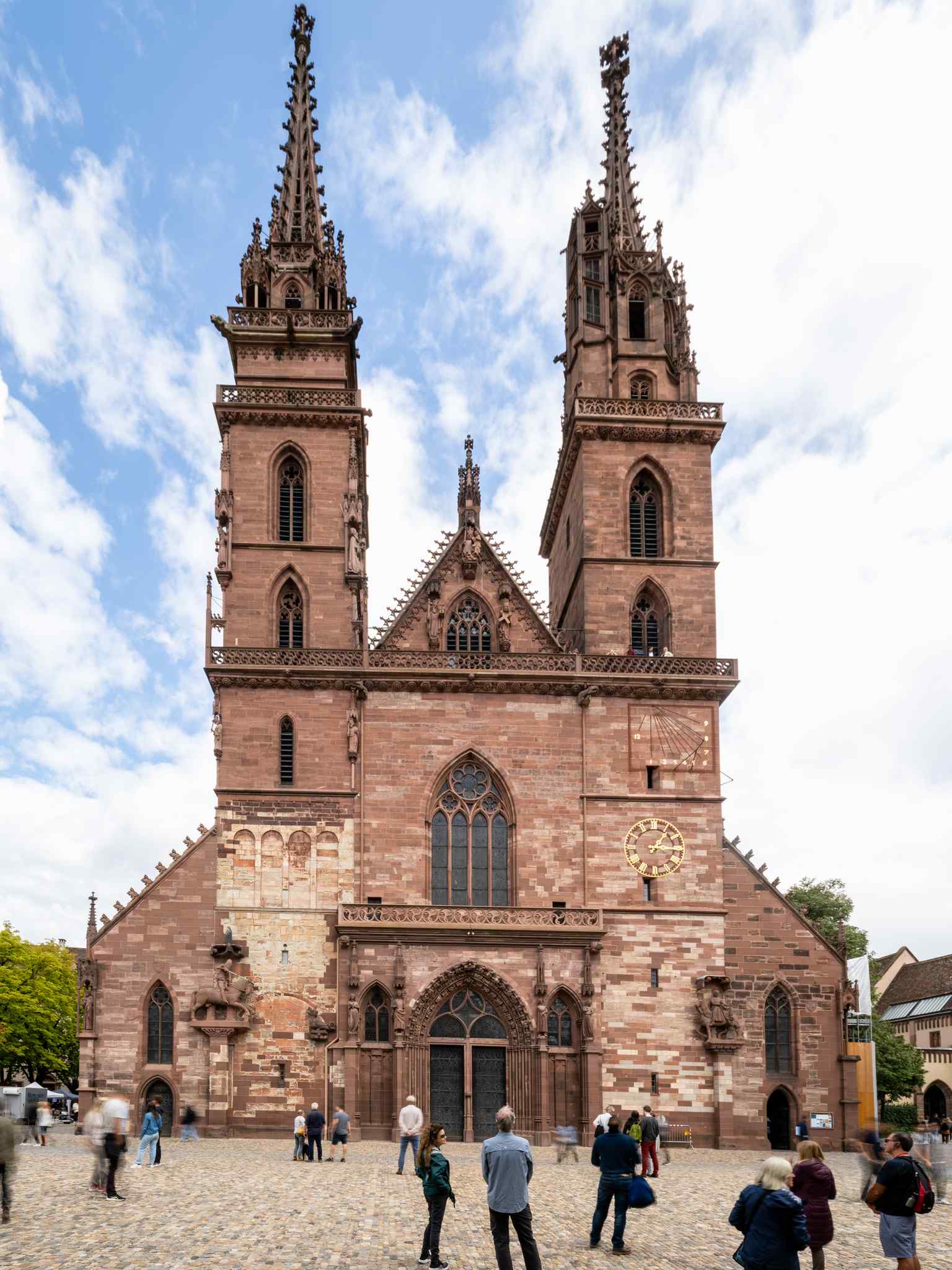
Westfassade des Basler Münsters (2023)Photo: JoachimKohler-HB, Wikimedia Commons, CC BY-SA 4.0. Cropped & resized. Look to your left for the monumental structure built of striking red sandstone, defined by its two soaring asymmetrical towers and a bright golden clock face mounted on the right side. Just a short walk from Bank La Roche and Company, you are now standing before Basel Minster, the ultimate architectural survivor of this city. This place is incredible. If you look closely at the main facade, you are looking at hundreds of years of artistic triumph and literal disaster. See those two slim towers? The one on the left is the Georgsturm, and the one on the right is the Martinsturm. They look similar at a glance, but they were actually finished almost eighty years apart. The cathedral originally had five massive towers, but that same catastrophic earthquake from 1356 we mentioned earlier violently shook the city, bringing the choir and most of the towers crashing to the ground. The reconstruction took over a century, relying on master architects who also designed the famous cathedrals in Ulm and Strasbourg.
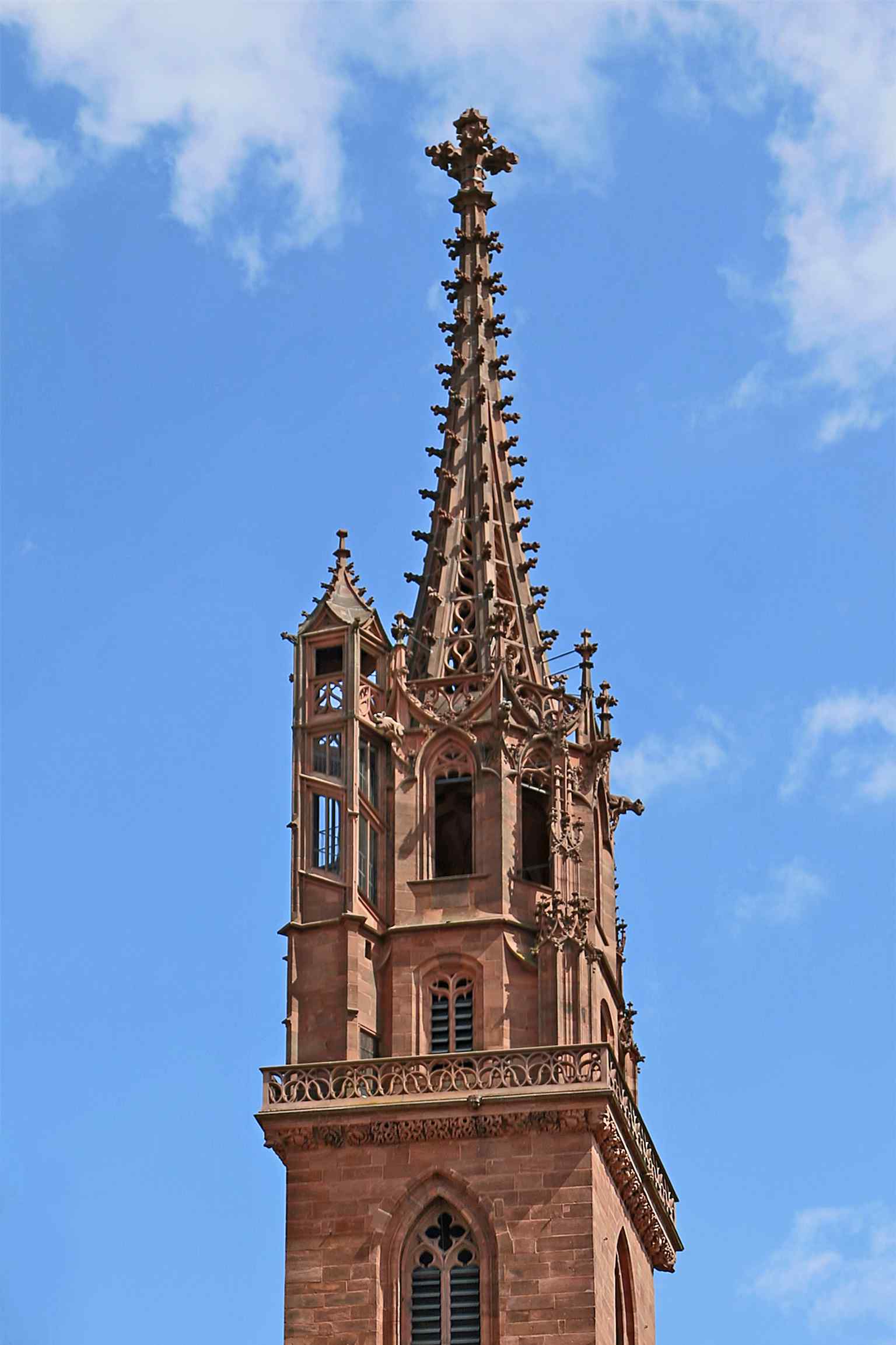
00 6115 Basler Münster (Schweiz)Photo: W. Bulach, Wikimedia Commons, CC BY-SA 4.0. Cropped & resized. Take a look at the main porch right in front of you. On the right side of the doors, there is a fascinating set of statues depicting a misguided virgin and a seducer, sometimes called the Prince of this World. From the front, he offers a handsome smile, but carved onto his back are crawling toads and snakes, symbolizing hidden evil. Right in the middle of the main doors is an empty column. That spot originally held a grand statue of the Virgin Mary, but it was violently removed. That empty space tells the story of February 9, 1529. During the wave of iconoclasm we talked about earlier, religious tension in Basel reached a boiling point. A mob of forty armed men marched from the market square and began smashing altarpieces. The priests desperately locked the heavy gates to protect the church. But the mob returned with two hundred rowdy men who smashed right through the barriers. Once inside, they destroyed crucifixes, statues, and paintings, viewing them as false idols. The cathedral went from being a Roman Catholic center to a Reformed Protestant church, which it remains today.
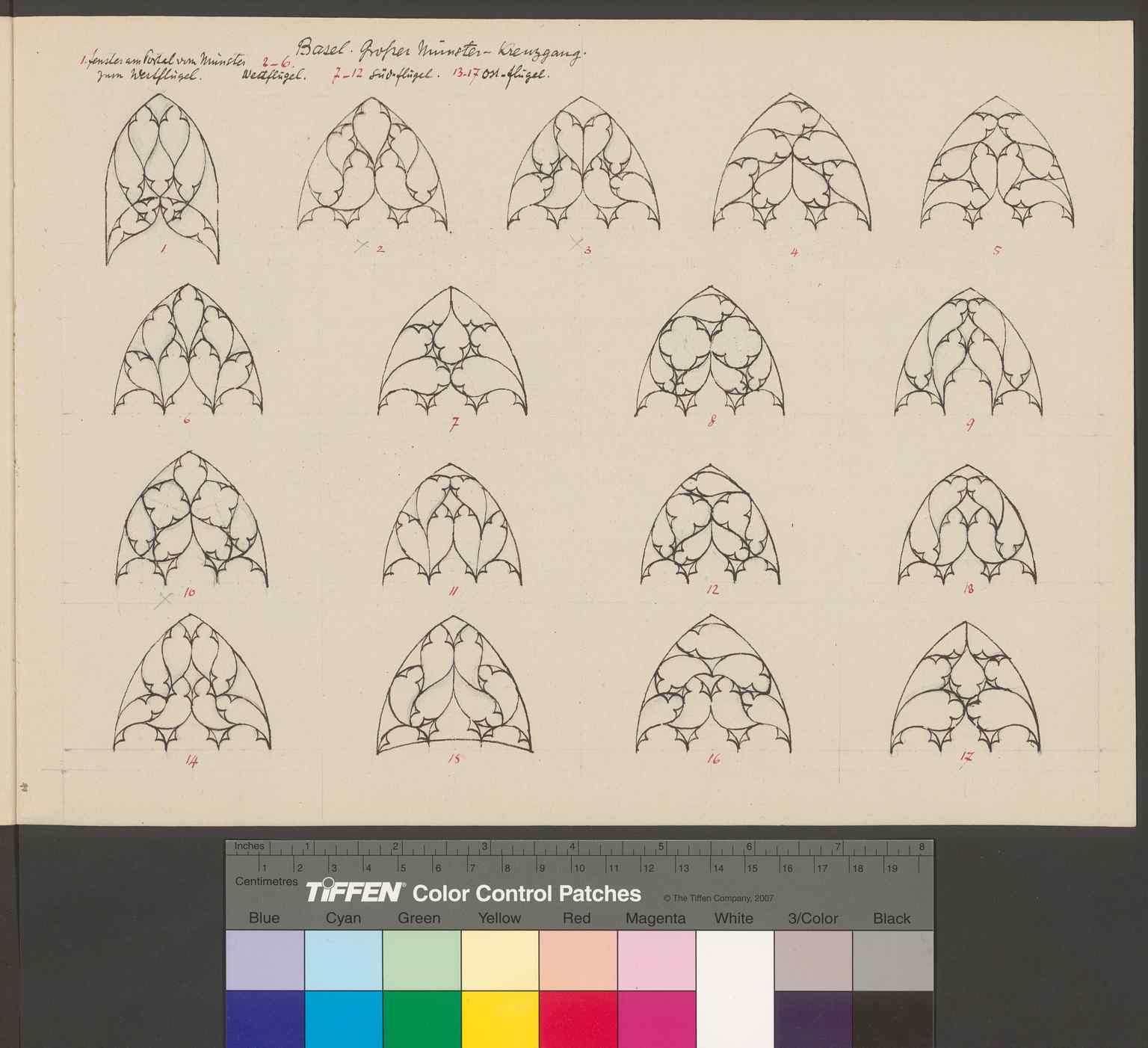
Zentralbibliothek Zürich - Basel. Grosses Münster - Kreuzgang - 991104742459705501Photo: Johann Rudolf Rahn, Wikimedia Commons, Public domain. Cropped & resized. The app has a neat side by side showing what the quiet courtyard of the great cloister looked like back in 1860. The city outside has completely modernized, but the serene gothic arches in that photo look virtually identical to what you would see if you walked through today.
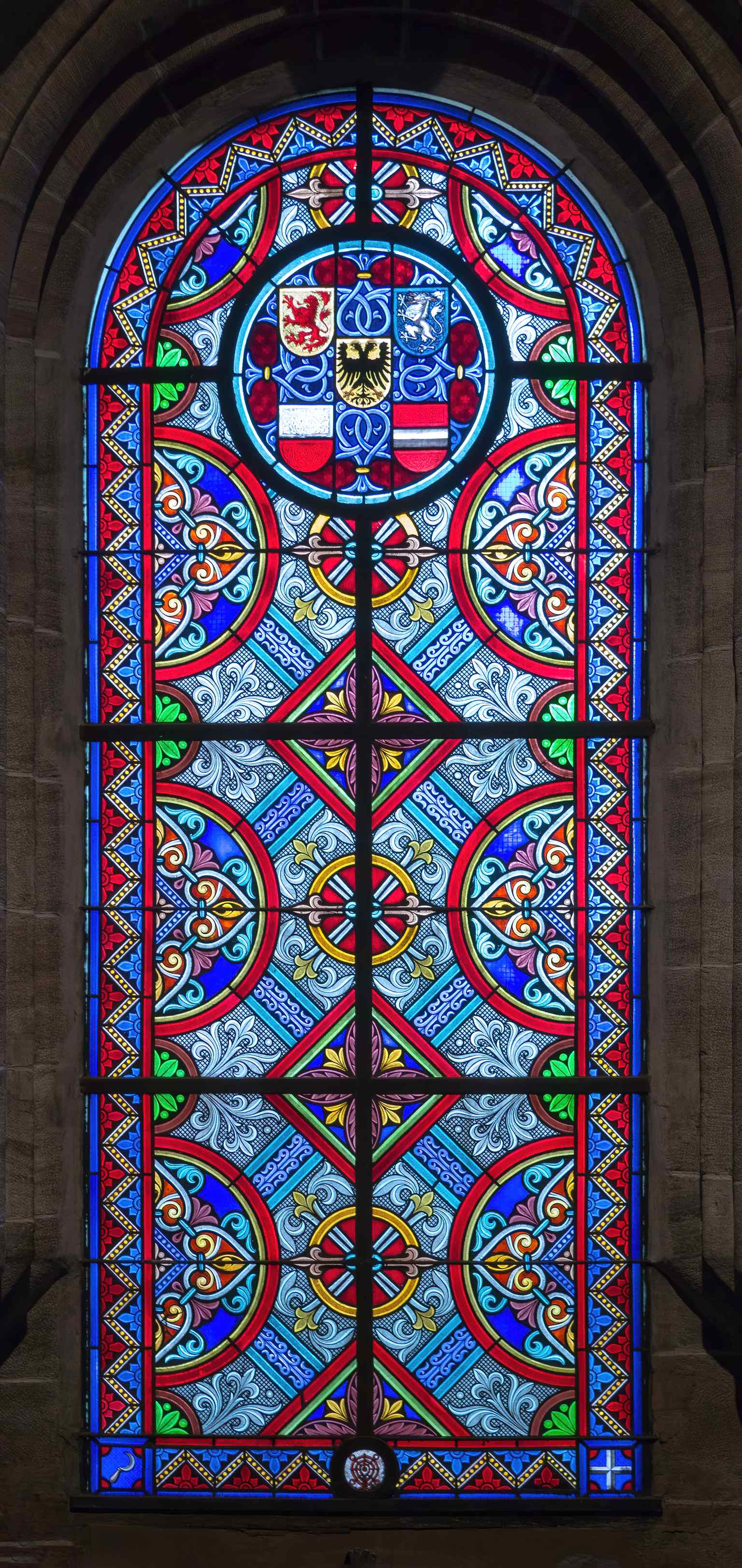
Basel Münster Fenster-20120505-RM-151554Photo: Ermell, Wikimedia Commons, CC BY-SA 4.0. Cropped & resized. If you want to step inside to see the magnificent vaulted ceilings or the historic tomb of Queen Anne of Habsburg, the Minster is generally open from eleven in the morning to four in the afternoon daily. This breathtaking sandstone giant has witnessed centuries of human drama and natural disaster, standing resilient through it all. Admire the intricate carvings for as long as you like before we continue.
Look for the grand beige stone facade with its tall recessed windows and the word MUSEUM carved directly into the stone above the heavy, intricately patterned doors. Just a quick…और पढ़ेंकम दिखाएँ
समर्पित पेज खोलें →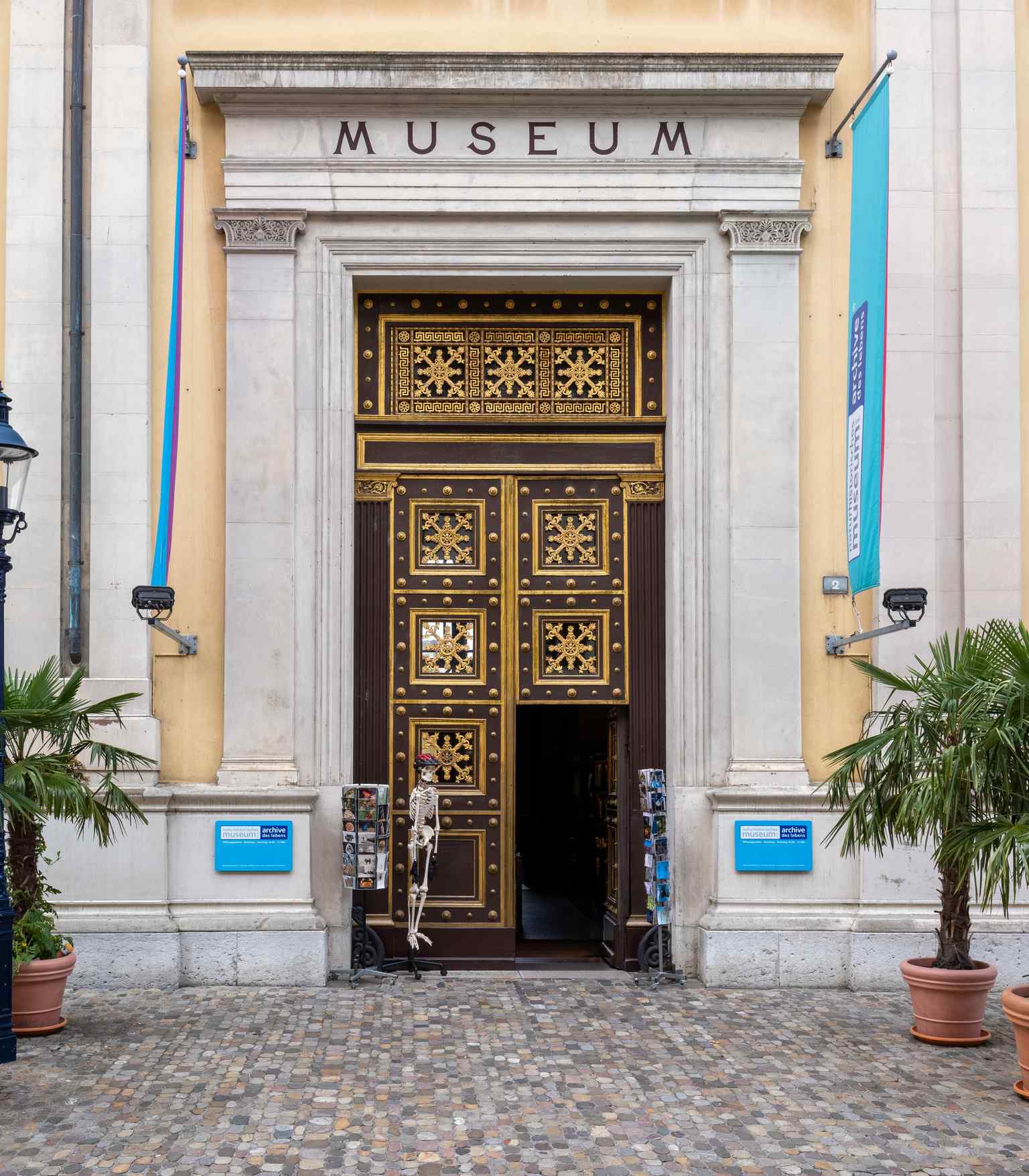
The intricately detailed entrance of the Natural History Museum Basel (2023).Photo: JoachimKohler-HB, Wikimedia Commons, CC BY-SA 4.0. Cropped & resized. Look for the grand beige stone facade with its tall recessed windows and the word MUSEUM carved directly into the stone above the heavy, intricately patterned doors. Just a quick walk from the towering red sandstone of Basel Minster, we have arrived at the Natural History Museum Basel. They call this place the Archive of Life. Inside, they house a staggering 11.8 million objects. Millions! The collection actually traces its roots all the way back to the sixteenth century. It began as another Wunderkammer, where wealthy collectors would pack a room floor to ceiling with rare shells, strange fossils, and exotic animal taxidermy. The city and university bought that private collection in 1661, making this one of the oldest public museum collections in the world.
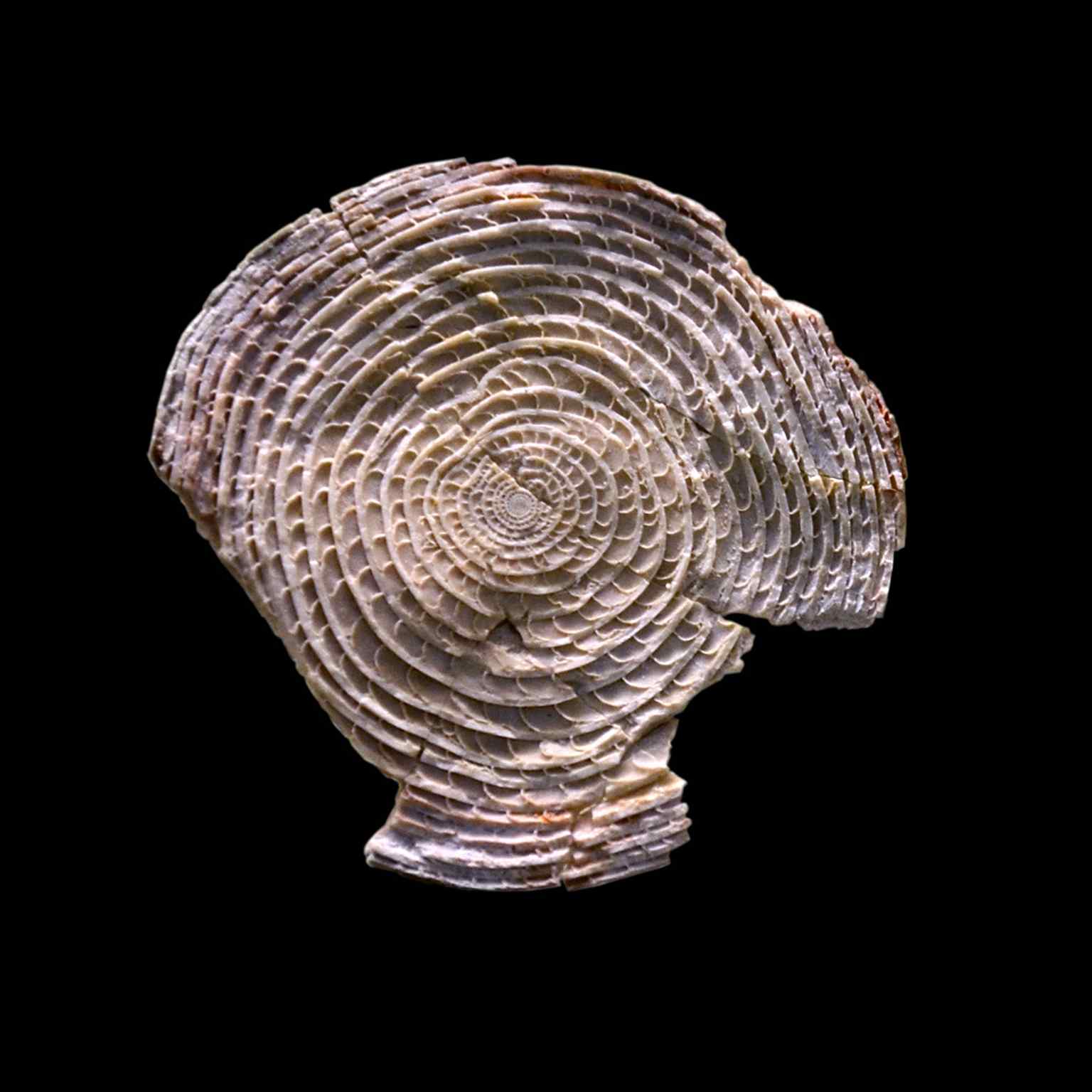
A fascinating Nummulite fossil from the museum's extensive collection, echoing the early Wunderkammer days (2013).Photo: Vassil, Wikimedia Commons, CC0. Cropped & resized. The monumental building you are looking at right now was designed by architect Melchior Berri and opened in 1849. It is a brilliant early example of a modern civic museum, a building constructed entirely for the education of the public rather than the amusement of private royalty. It was such a massive architectural triumph that the University of Basel awarded Berri an honorary doctorate just for designing it.
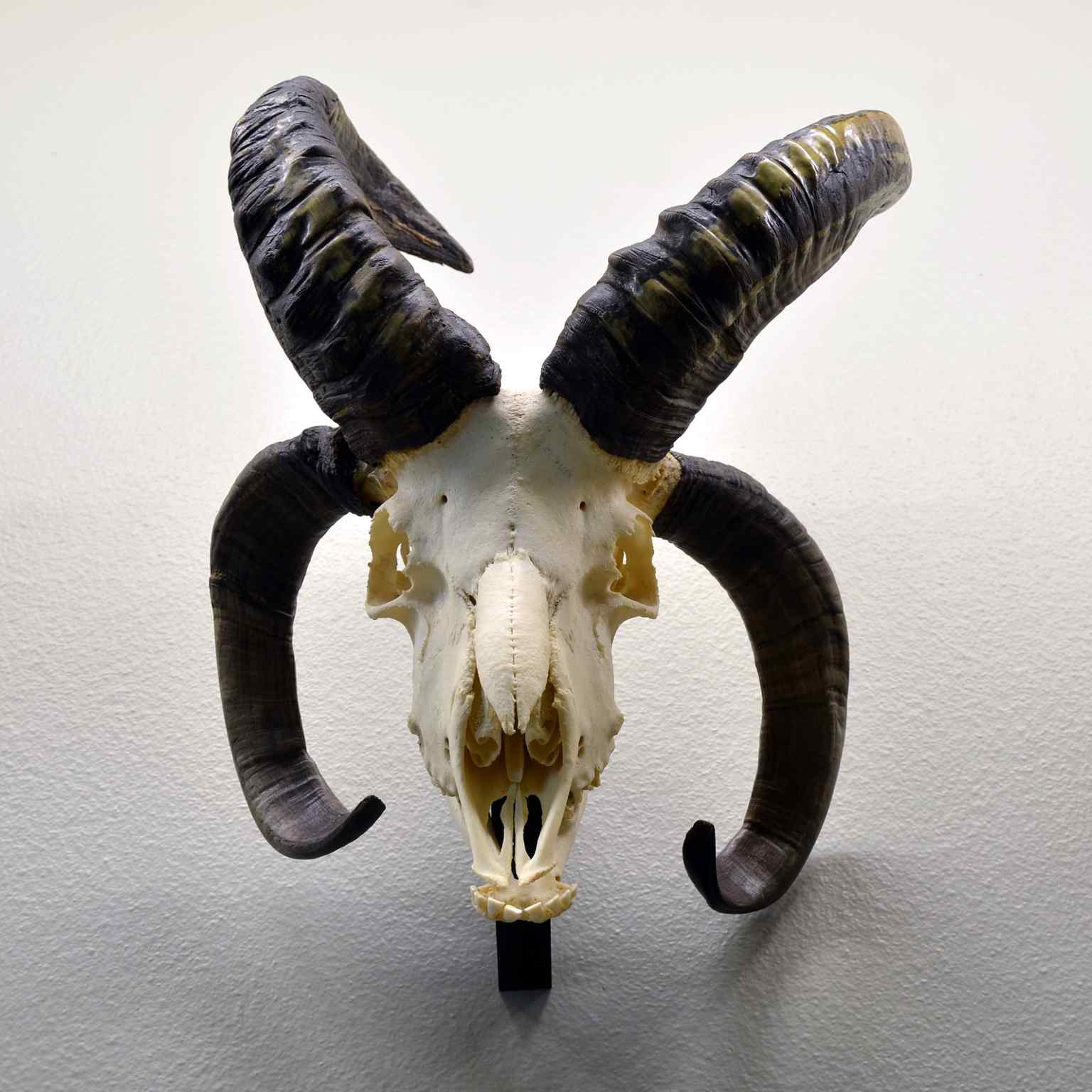
An animal skull on display, highlighting the museum's deep focus on skeletal anatomy and biology (2013).Photo: Vassil, Wikimedia Commons, CC0. Cropped & resized. But this is not just a giant, dusty storage unit for dinosaur bones. There is cutting-edge science happening right behind those walls. About a hundred staff members run active research projects here, especially in anthropology, the scientific study of human biology and ancient societies. When historic skeletons are unearthed during excavations around Basel, they are brought here. Researchers in this very building analyzed the famous mummy of Anna Catharina Bischoff, discovered in a local church, and even investigated a mysterious skeleton affectionately nicknamed Theo the pipe smoker, a title earned because of the distinct pipe-shaped wear pattern on his teeth.
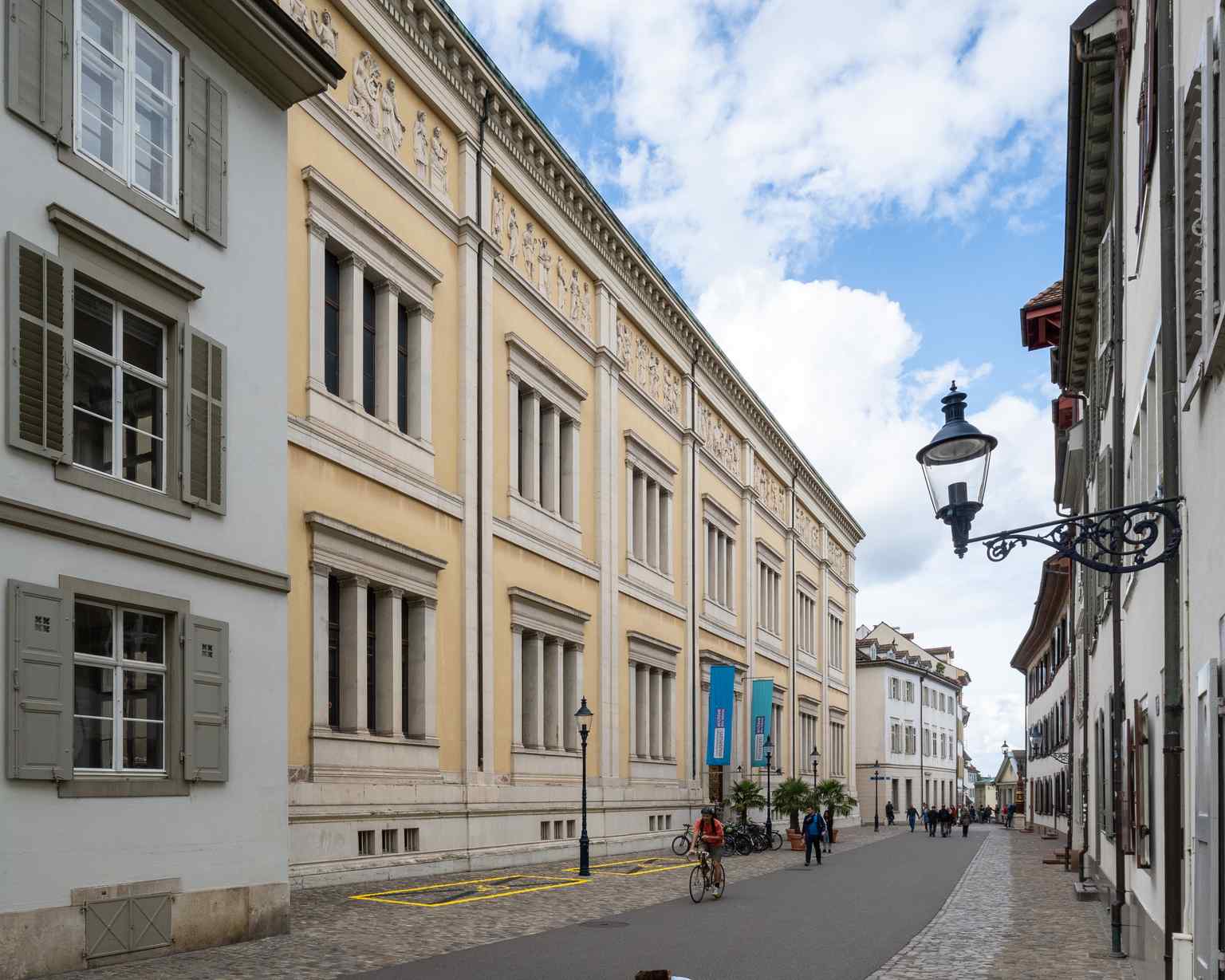
The monumental facade of the museum on Augustinergasse, which has housed these collections since 1849 (2023).Photo: JoachimKohler-HB, Wikimedia Commons, CC BY-SA 4.0. Cropped & resized. This magnificent building has served science beautifully, but keeping track of almost twelve million objects takes up a lot of space. The entire museum is actually preparing to pack up and move to a massive new facility near the St. Johann station by 2026. Until then, you can explore these historic halls Tuesday through Sunday from 10 AM to 5 PM. When you are ready, we can head over to the Museum of Cultures right next door.
Look to your left for the crisp white stucco facade featuring a broad arched entryway and a tall vertical banner hanging flat against the wall. Since we just stepped away from…और पढ़ेंकम दिखाएँ
समर्पित पेज खोलें →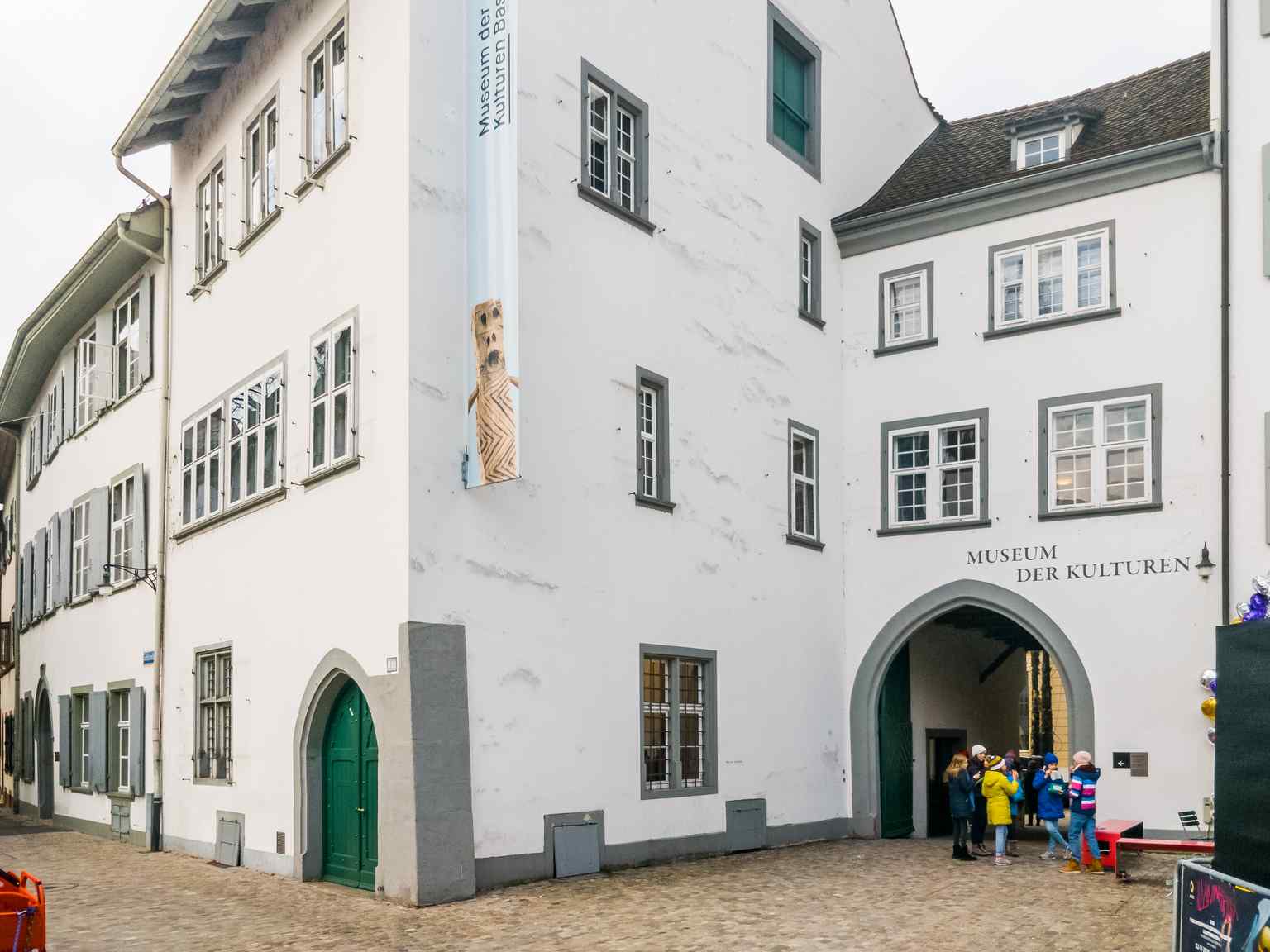
The crisp white facade and grand entryway of the Museum of Cultures Basel, viewed from Münsterplatz (2018).Photo: Raimond Spekking, Wikimedia Commons, CC BY-SA 4.0. Cropped & resized. Look to your left for the crisp white stucco facade featuring a broad arched entryway and a tall vertical banner hanging flat against the wall. Since we just stepped away from the Natural History Museum, you are actually looking at the other half of a historical split. Back in 1849, the architect Melchior Berri built a massive multipurpose museum right here, over the ruins of an old Augustinian monastery, which was a complex for monks living under strict religious vows. Berri's building originally held everything the city collected, from library books to ancient Mexican artifacts brought back by a wealthy Basel businessman named Lukas Vischer. What started as a cabinet of curiosities funded by rich private collectors evolved into a heavy-hitting scientific institution. Researchers like Fritz and Paul Sarasin journeyed outward, professionalizing the collection until it became one of the most important ethnographic museums in all of Europe. Ethnography is the systematic study of individual human cultures and customs, and this building houses a staggering collection of over three hundred and twenty thousand cultural objects. To give you a sense of the sheer scale hidden behind these walls, there is a sixteen meter tall cult house inside, constructed by the Abelam people of Papua New Guinea.
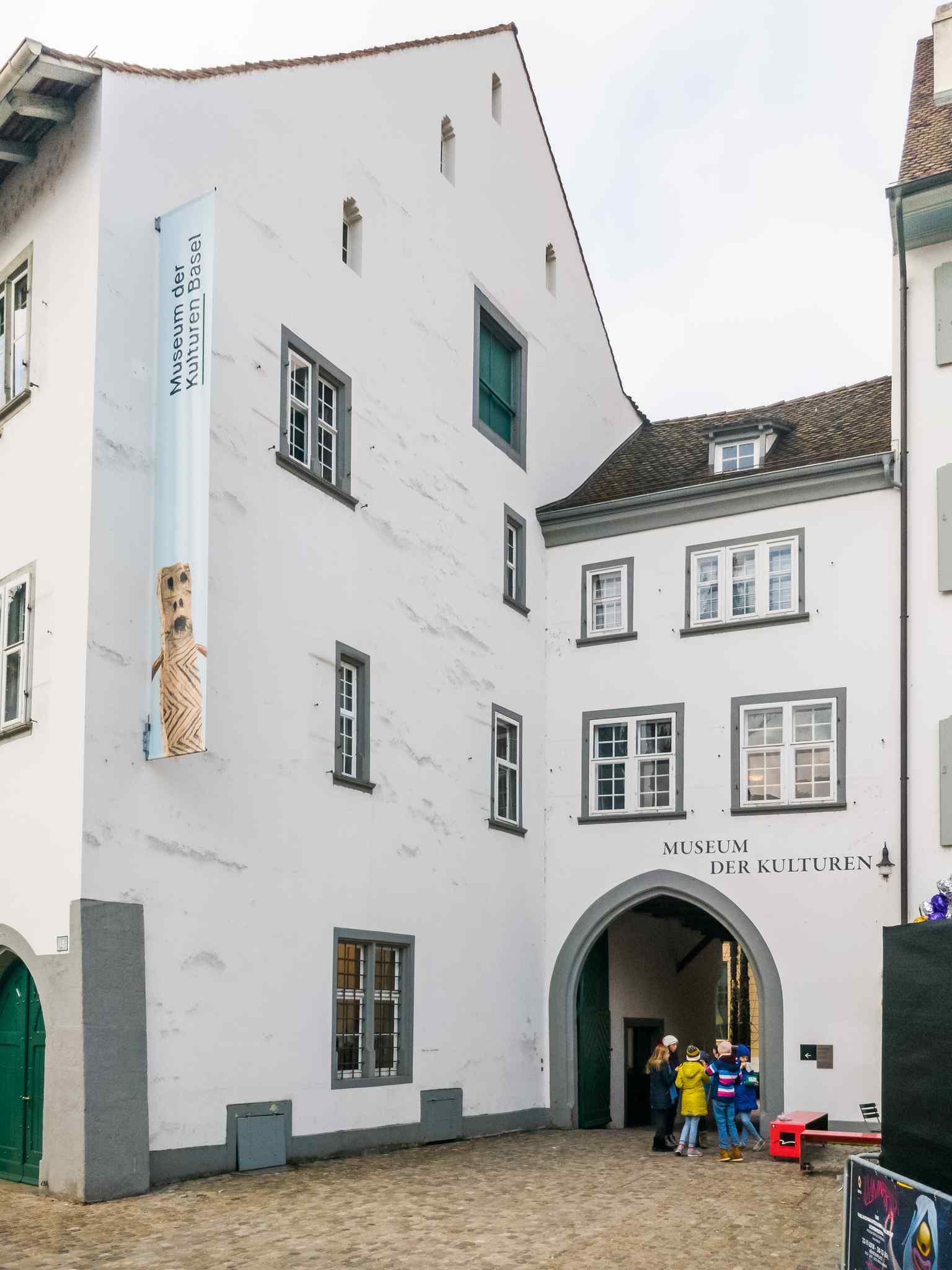
Another perspective of the museum building at Münsterplatz, highlighting the blend of historic elements and the modern architectural additions (2018).Photo: Raimond Spekking, Wikimedia Commons, CC BY-SA 4.0. Cropped & resized. As the decades passed, the world changed, and so did the museum's philosophy. In 1996, it officially became the Museum of Cultures Basel. The focus shifted away from simply putting foreign objects in glass boxes, moving instead toward active intercultural dialogue. They began curating thematic exhibitions that connect global human experiences directly to the here and now. And you cannot talk about this museum without talking about its roof. Between 2008 and 2011, the famous Basel architecture firm Herzog and de Meuron gave the courtyard building a radical crown. They designed a wildly modern, folded roof that aggressively overhangs the older structure, covered entirely in shimmering, black-green hexagonal tiles. The modern materiality was so shocking to local heritage defenders that they filed formal legal complaints to stop it. That fierce pushback sparked a massive debate over historic preservation and delayed the grand opening by three whole years. If you want to see that spectacular roof or the towering cult house yourself, the museum is open Tuesday through Sunday from 10 AM to 5 PM. This incredible blend of ancient artifacts and bold modern architecture makes this spot truly unforgettable. Once you have admired that incredible roof, we can make our way toward the Basel City Command.
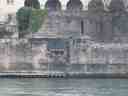
On your right, look closely at that imposing stone retaining wall right on the water, where you can spot a rectangular recessed bunker slit cut directly into the masonry beneath a…और पढ़ेंकम दिखाएँ
समर्पित पेज खोलें →On your right, look closely at that imposing stone retaining wall right on the water, where you can spot a rectangular recessed bunker slit cut directly into the masonry beneath a terrace draped in dark ivy. Down here on the banks of the Rhine, we are standing face to face with a completely different kind of history. It is absolutely wild to think about what this wall represents.
That narrow opening in the rock is a World War Two infantry bunker, a physical relic of the Stadtkommando Basel, or the Basel City Command. Under the leadership of Colonel Hans De Bary, this special military unit was tasked with an incredibly daunting mission: defending this border city from a potential invasion.
Basel was in a highly precarious spot. Because it holds vital bridges over the river, it was a massive strategic prize. But here is the most intense part. Basel was actually situated ahead of the primary Swiss defense line. Military planners knew it was nearly impossible to hold the city indefinitely against a massive force. So, the grim strategy was to use Basel as a heavily fortified speed bump to delay the enemy. If an attack came, soldiers were ordered to fight house by house, street by street. Think about the sheer grit that would require.
In the lead up to the war, troops scrambled to build over five hundred barricades, anti-tank obstacles, and hidden positions across the city. They even rigged the very bridges crossing this river with explosives, fully prepared to blow them sky-high to halt an advancing army. Can you imagine the anxiety of living here? Walking over a bridge to get to work, knowing the pillars below were packed with dynamite?
The tension reached a boiling point in May of 1940. Swiss military intelligence intercepted reports of massive German troop movements just across the border, and the City Command triggered its absolute highest level of alarm. A wave of sheer panic swept through the streets. The train station was completely overrun, and up to thirty thousand people fled the city for the safety of the Swiss interior.
Though that specific attack never came, the reality of the war forced a strategic shift. By late June, the Swiss army withdrew the bulk of its forces into the Reduit, which was a massive system of heavily fortified mountain bunkers deep in the Alps. Because of this retreat, Basel was declared an open city, an international military term meaning the army officially abandoned defensive efforts there to save the civilian population and infrastructure from being completely annihilated by bombardment.
The water flows quietly past these stones, but these fortifications stand as silent witnesses to a time when twelve thousand troops guarded these banks, waiting for a war that was practically on their doorstep. If you are curious about the area's modern administrative offices, they operate Monday through Friday from eight in the morning to noon, and twelve thirty to five in the afternoon, but are closed on weekends. Look out over the water, and then let us walk those few short steps to the Middle Bridge.
On your right, you will spot the Middle Bridge, an elegant structure of sweeping stone arches punctuated by a distinctive small, red-roofed chapel sitting directly on one of the…और पढ़ेंकम दिखाएँ
समर्पित पेज खोलें →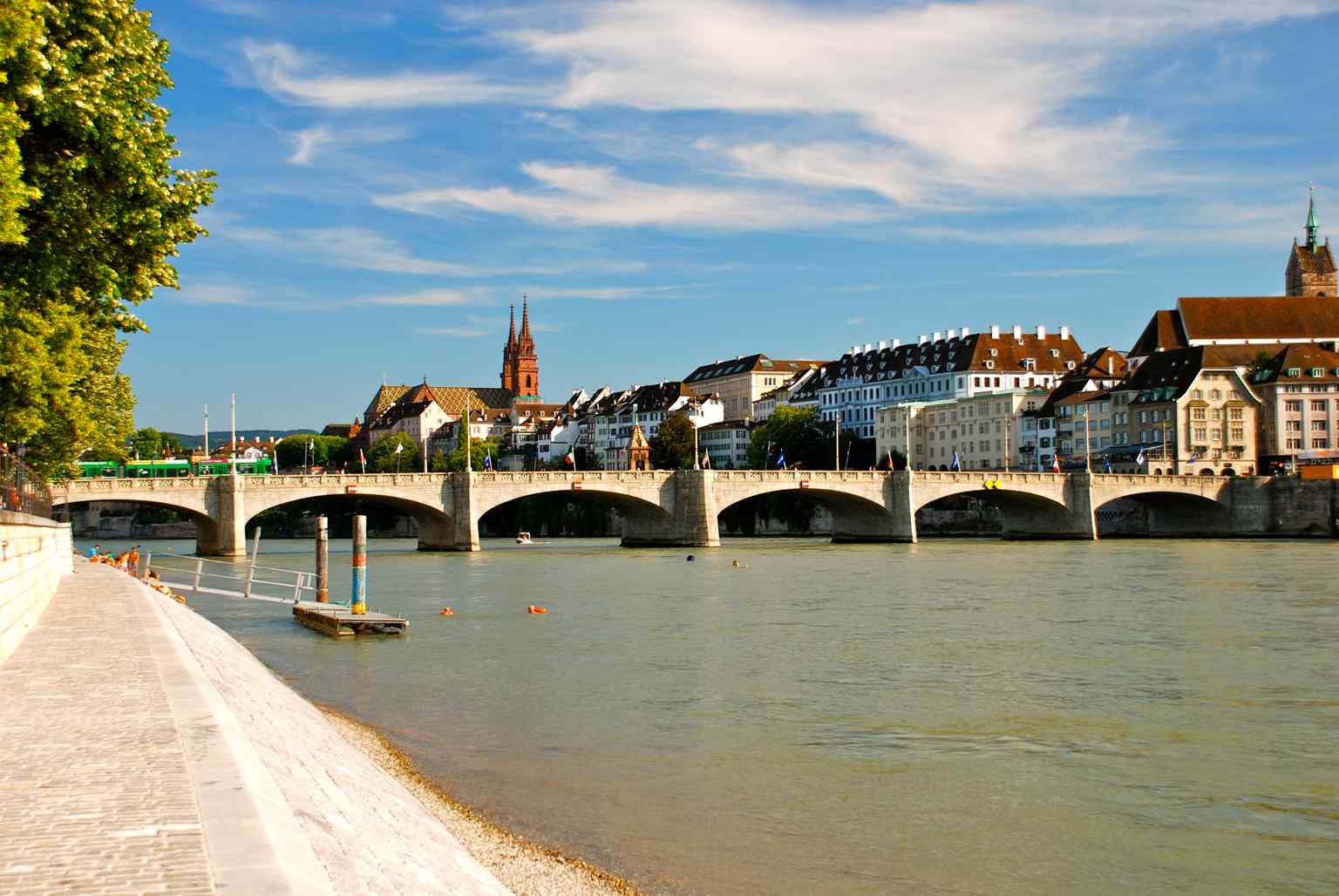
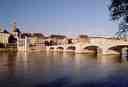
A sweeping view of the Middle Bridge, the oldest Rhine crossing in Basel. (2011)Photo: Lucazzitto, Wikimedia Commons, CC BY-SA 3.0. Cropped & resized. On your right, you will spot the Middle Bridge, an elegant structure of sweeping stone arches punctuated by a distinctive small, red-roofed chapel sitting directly on one of the central pillars. Having just left the Basel City Command, it is quite a shift to stand before the oldest Rhine crossing in the entire city.
This spot has connected the two halves of Basel since the thirteenth century. The original bridge, built around 1225, was a marvel of medieval engineering. The builders faced a massive problem. The riverbed on the near side was too deep, and the current was far too fierce for stone foundations. Their solution was ingenious. They built five solid stone pillars on the far side, but used eight massive oak stilts on this side. To let the water pass through without destroying the structure, the wooden planks of the roadway were just laid loosely on top, with absolutely no railings to keep travelers from falling in.
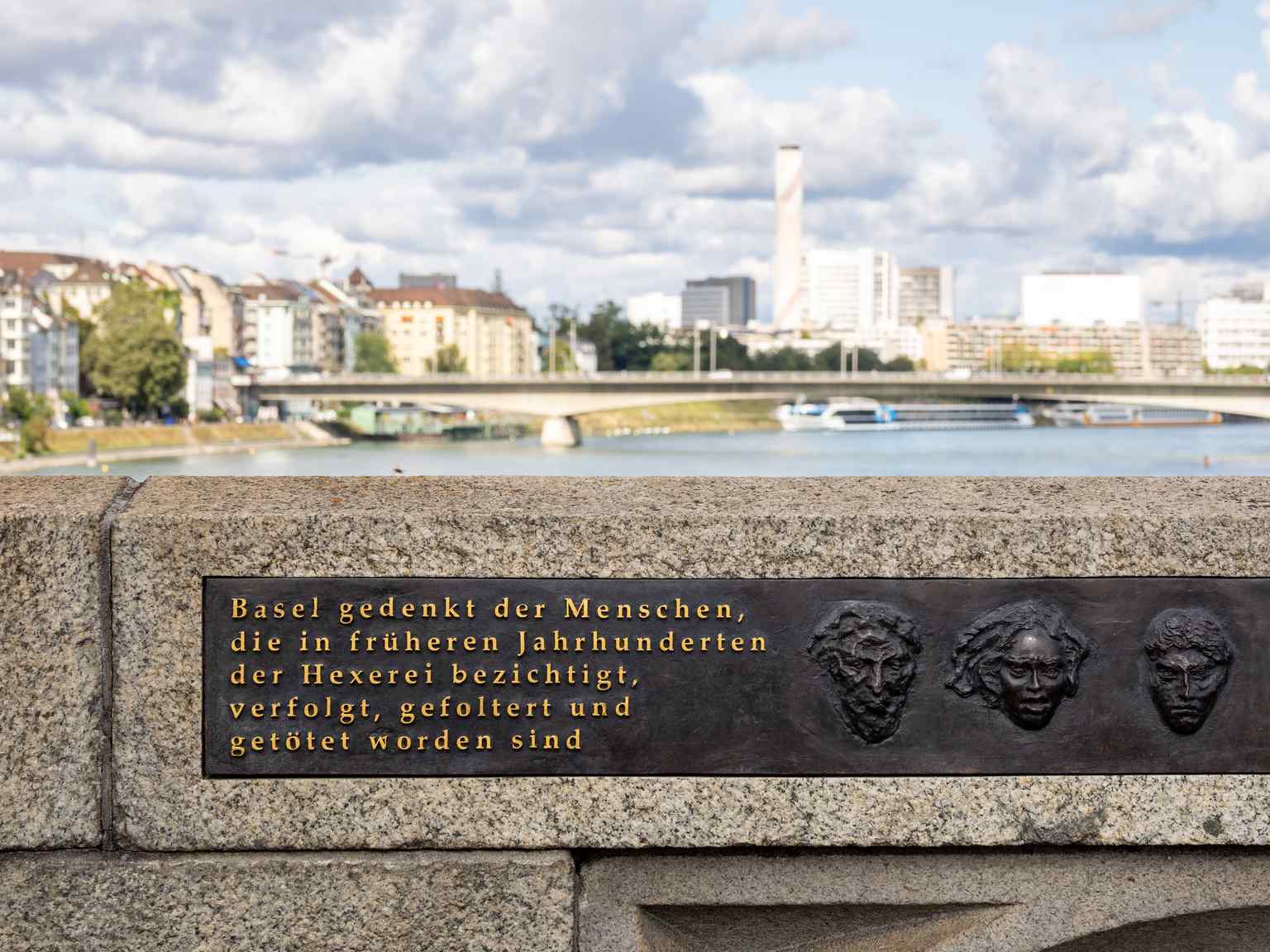
A memorial plaque on the Middle Bridge commemorating the victims of witch hunts, reflecting the site's dark history. (2023)Photo: JoachimKohler-HB, Wikimedia Commons, CC BY-SA 4.0. Cropped & resized. Take a look at that little chapel sitting on the middle pillar. It is called the Kaeppelijoch, which translates to a small bridge chapel. The original was built in 1392 for a highly practical reason. The builders needed extra weight to press the stone pillar down into the riverbed so the ferocious floods would not wash it away. But the Kaeppelijoch holds a dark history. For centuries, it served as an execution site. People condemned for theft, adultery, or infanticide were bound hand and foot and thrown into the rushing water below. However, there was a bizarre loophole in the law. If a condemned person managed to survive the violent current and was fished out alive at the next city watchtower downstream, their death sentence was canceled, and they were merely banished from the city. A few too many people managed to survive this brutal plunge, so the authorities eventually changed the punishment to beheading in 1634.
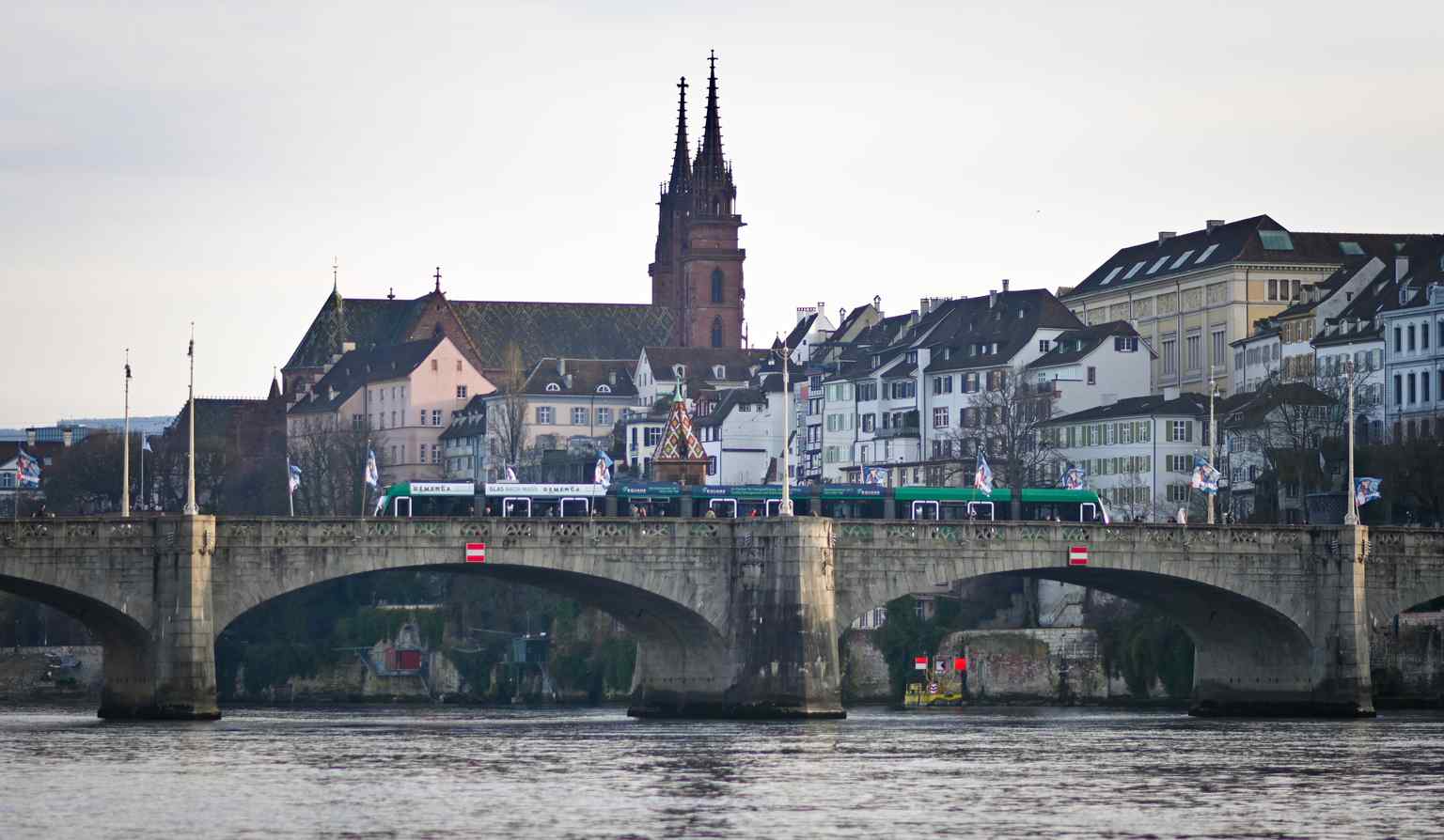
The classic stone arches of the modern Middle Bridge, deliberately designed to perfectly match the historic Basel Minster in the background. (2026)Photo: Penguin9, Wikimedia Commons, CC BY-SA 4.0. Cropped & resized. By the late nineteenth century, river traffic had increased, the water flowed faster, and the medieval foundations simply could not hold up anymore. The old bridge was torn down and replaced between 1903 and 1905 with the all-stone structure you see today. They used granite brought down from the Gotthard massif, a towering mountain range in the Swiss Alps. Instead of building a modern iron truss bridge made of a web of metal beams, the architects deliberately chose a classic stone arch design to perfectly match the historic beauty of the old town. The project cost 2.67 million francs, which would be roughly thirty million francs today.
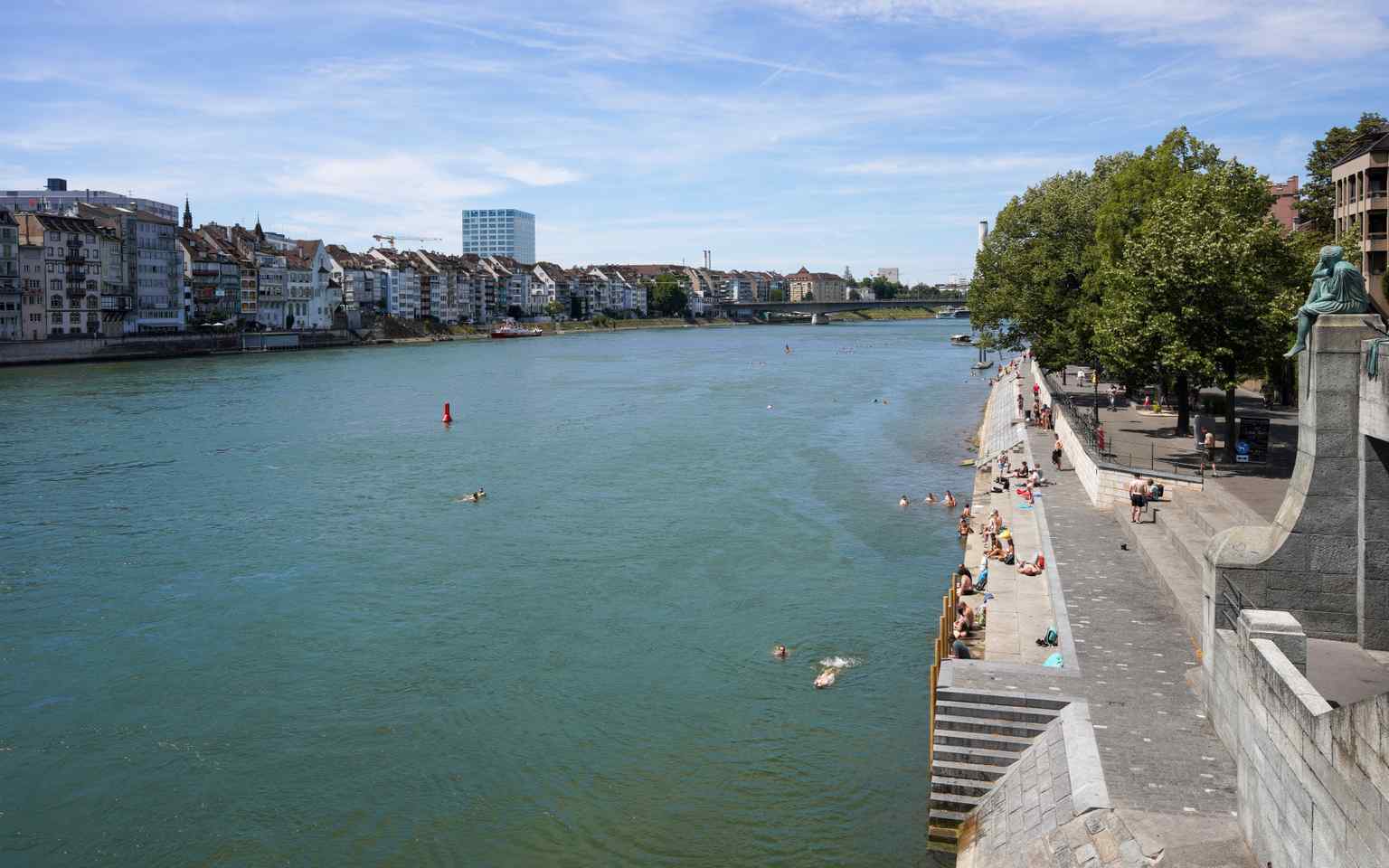
The rushing waters of the Rhine river, whose tricky currents continue to present a challenging navigation task for modern cargo ships. (2023)Photo: WikiEuropian, Wikimedia Commons, CC BY-SA 4.0. Cropped & resized. Even now, this bridge is notoriously difficult for large cargo ships to navigate. The arches are incredibly tight, and the bridge sits right on a bend in the river with tricky currents. Ship captains actually need a highly specialized Basel navigation license just to pass under it safely.
This magnificent crossing is completely open to pedestrians twenty-four hours a day, every day of the week. Watch the river rush beneath the arches, then stroll over to Hotel Les Trois Rois.
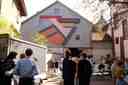
Look to your left for a gray wooden building with a gabled, or triangular, roof, instantly recognizable by the massive, brightly colored geometric mural plastered right across its…और पढ़ेंकम दिखाएँ
समर्पित पेज खोलें →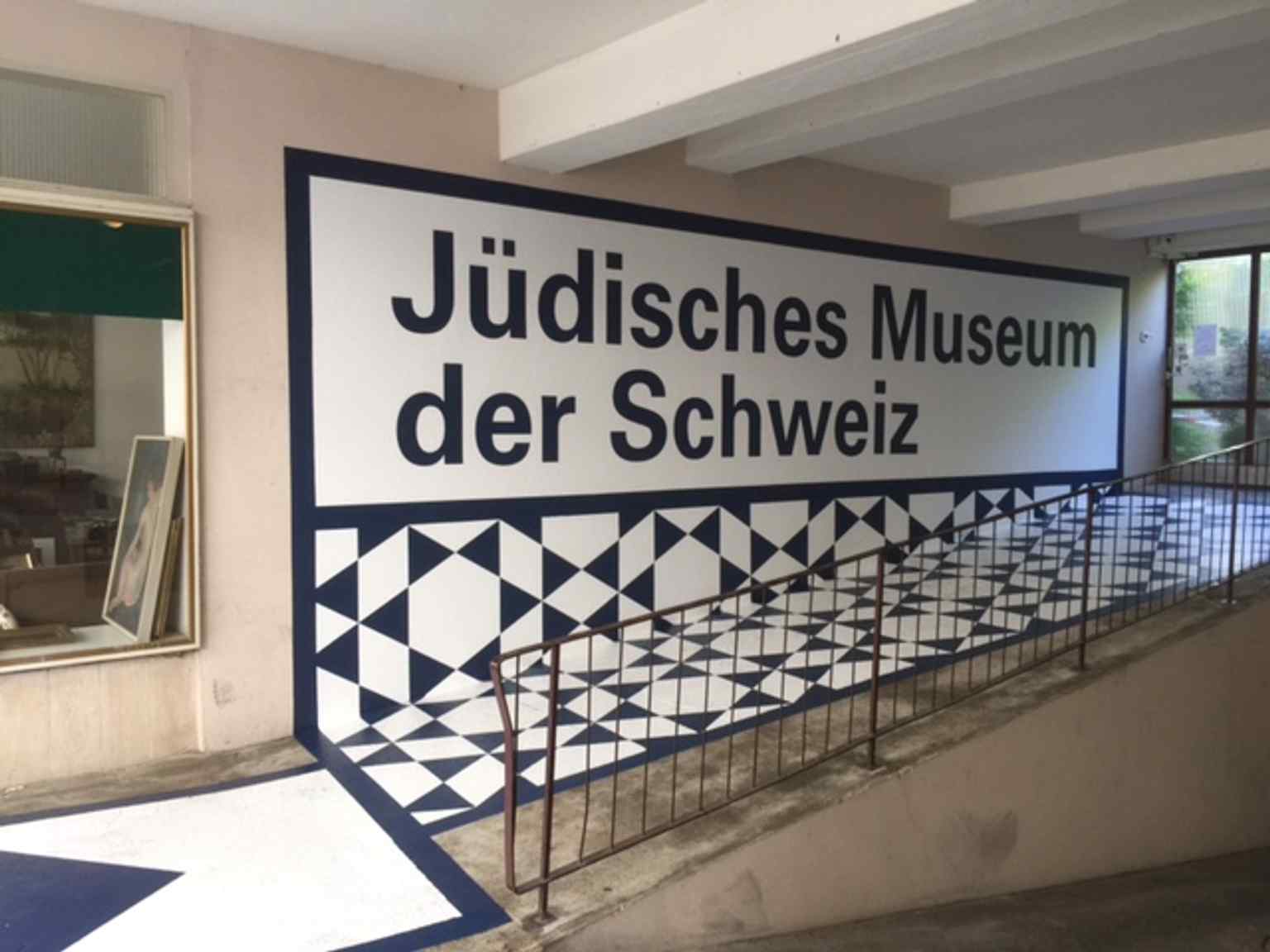
The exterior facade of the Jewish Museum of Switzerland (former location), photographed in 2025.Photo: RedaktionJMS, Wikimedia Commons, CC BY-SA 4.0. Cropped & resized. Look to your left for a gray wooden building with a gabled, or triangular, roof, instantly recognizable by the massive, brightly colored geometric mural plastered right across its exterior.
We are a little ways out from the grandeur of Hotel Les Trois Rois, but the stories held inside the Jewish Museum of Switzerland are just as monumental. You might expect to find only ancient religious artifacts inside, but cultural preservation goes much wider. The collections actually detail the modern lives of individuals who produce films, holding records that track the rise of early film production companies. It is fascinating to realize that among the historical texts, there are stories of pioneering producers who helped build the global entertainment industry. This place documents an entire spectrum of life, celebrating people who shaped art and media.
By the way, if you want to explore these exhibits, the museum is open every day from eleven in the morning until five in the afternoon. This building is a fantastic tribute to sheer cultural survival. Take all the time you need here, and whenever you are ready, we can head to the next stop at the University Library Basel.
Look to your right for an angular, modern building wrapped in horizontal bands of white window panels, resting above a recessed glass entrance supported by concrete pillars. You…और पढ़ेंकम दिखाएँ
समर्पित पेज खोलें →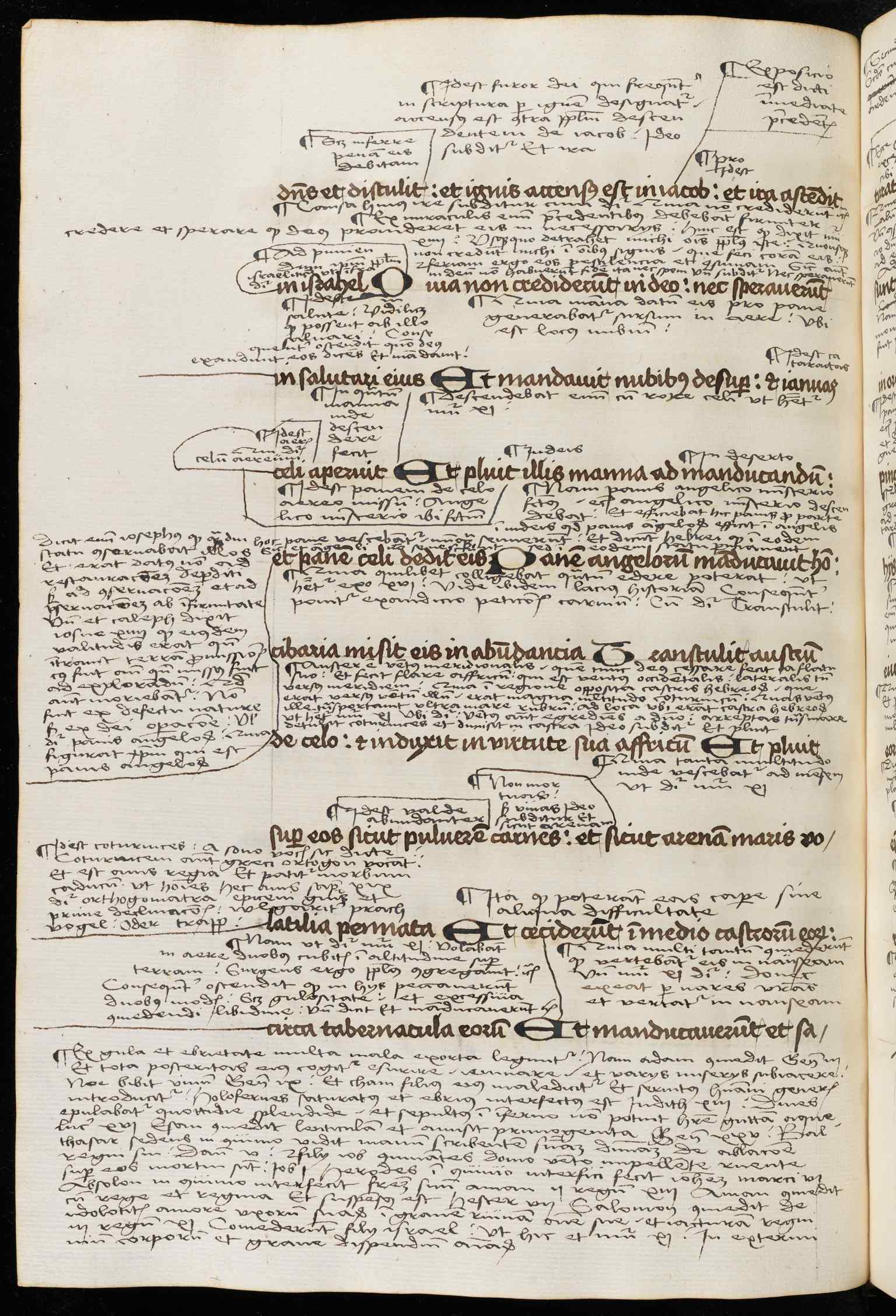
A 1472 medieval manuscript from the Carthusian Monastery of Basel, featuring theological texts and treatises.Photo: Henricus Arnoldi, Wikimedia Commons, Public domain. Cropped & resized. Look to your right for an angular, modern building wrapped in horizontal bands of white window panels, resting above a recessed glass entrance supported by concrete pillars. You have arrived at the University Library Basel, our final stop on this journey. If you remember the Haus zur Mücke from earlier in our walk, you already know a piece of this library's story. Back in 1671, the library's entire collection was moved into that very house. But as you can see by the sheer size of the concrete and glass structure in front of you, they eventually needed a lot more room. Built between 1962 and 1968, this modern facility replaced an older nineteenth century building on the same spot, which had simply burst at the seams.
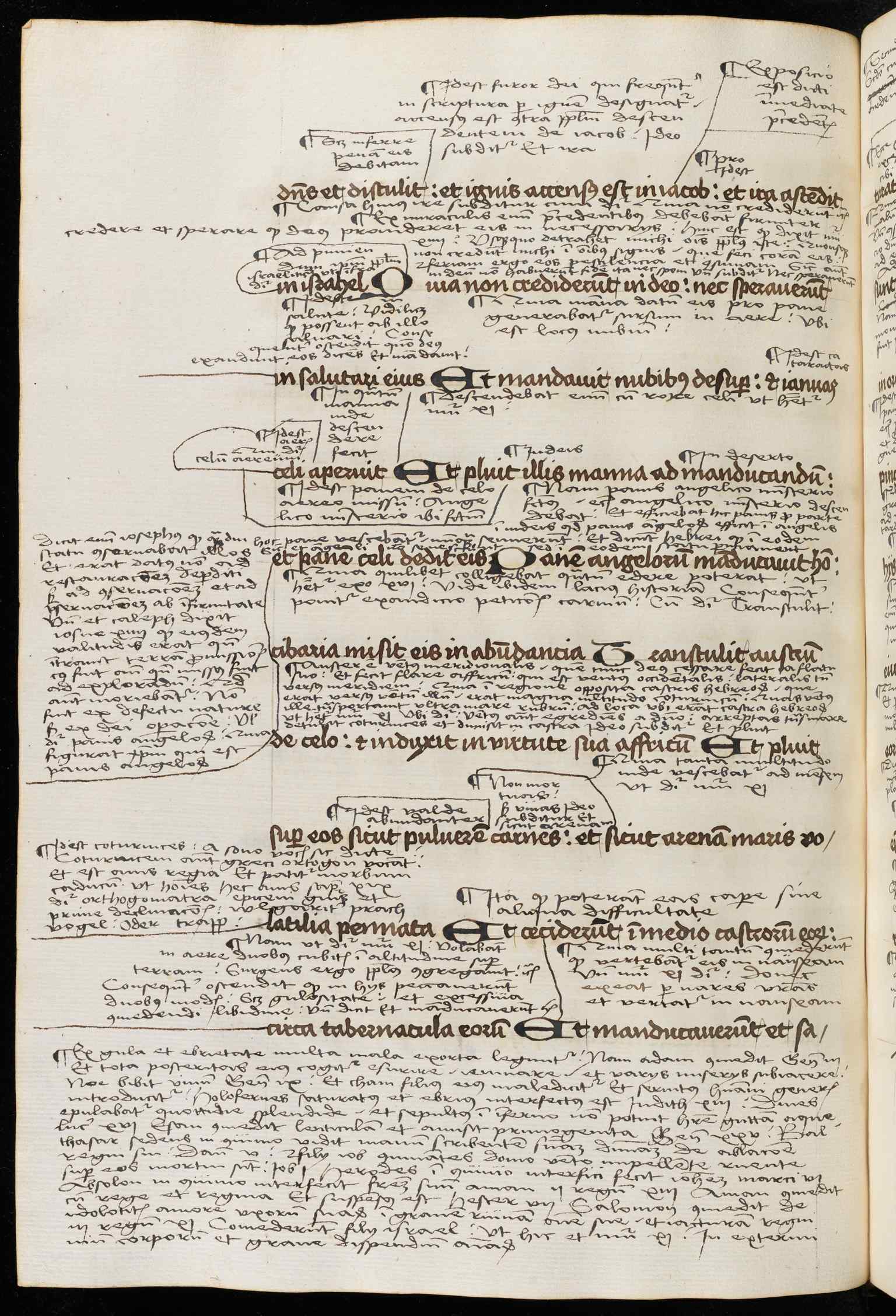
An intricately detailed commentary on the Psalms, written in 1503 by Ambrosius Alantsee shortly before his death.Photo: Ambrosius Alantsee, Wikimedia Commons, Public domain. Cropped & resized. Today, this structure holds over seven point six million items. It is a massive fortress of human thought, making it one of the largest libraries in all of Switzerland. But it is not just the sheer volume of modern books that makes this place extraordinary. It is what they keep in the historic collections. The library's roots trace all the way back to 1471. Inside, they guard about ten thousand handwritten manuscripts. Among those are seventeen hundred and fifty medieval codices. A codex is essentially the ancestor of the modern book, made of handwritten sheets of parchment or vellum bound together at one edge, rather than rolled up like a scroll. Many of these ancient texts were rescued from Basel monasteries right before the Reformation.
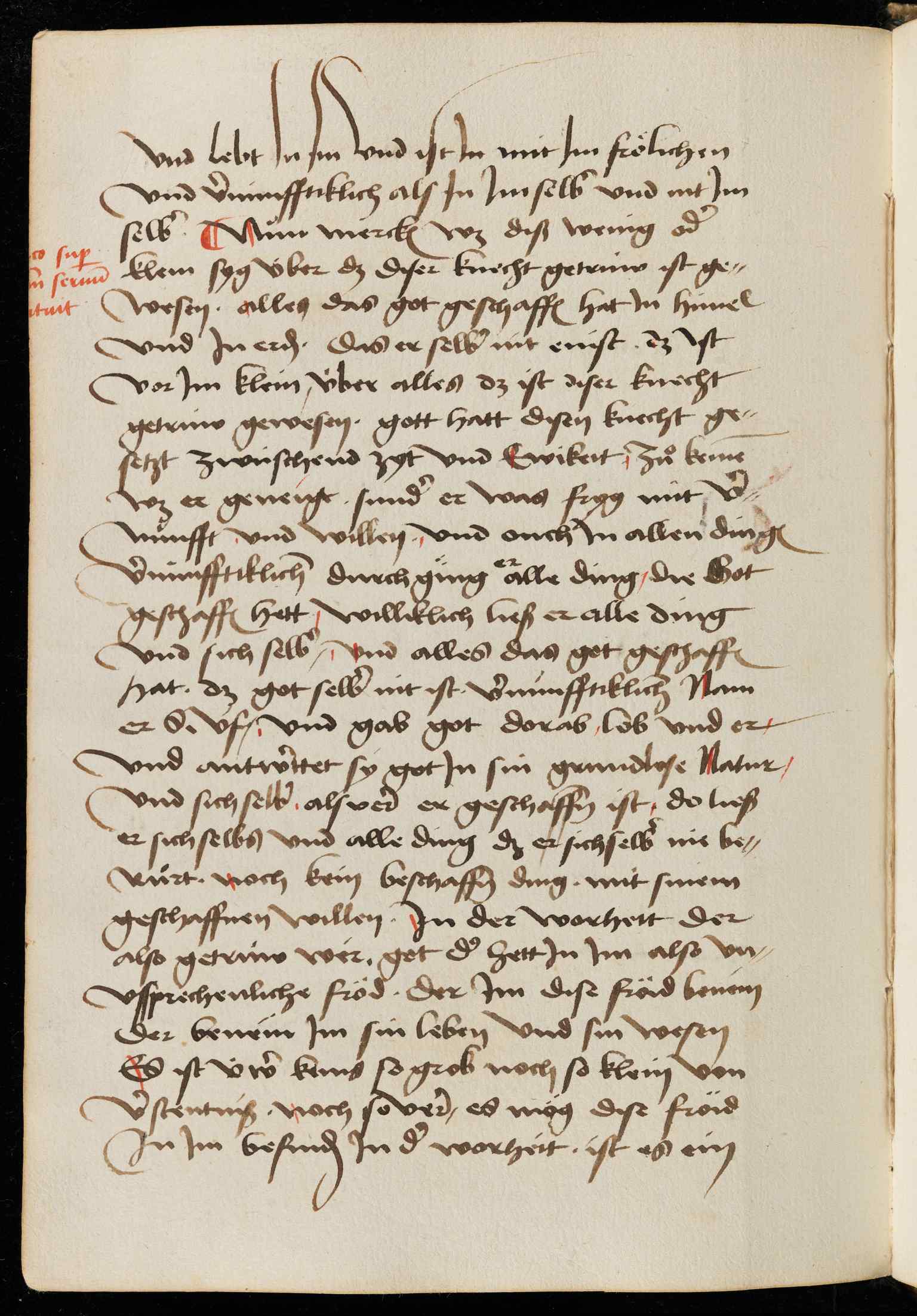
A 1550 composite theological manuscript featuring German translations, originally part of Ludwig Moser's private collection.Photo: Wilhelm Textoris, Wikimedia Commons, Public domain. Cropped & resized. This library also serves as the official cantonal library of Basel-Stadt. That means they collect something called Basiliensia, which is a special term for any publication, book, or document that has to do with the city and region of Basel, or people whose lives were central to it. Speaking of central figures, if you are a fan of philosophy or mathematics, this building is an absolute goldmine. The library holds the letters and academic notes of the famous Bernoulli family, a legendary dynasty of Swiss mathematicians. It is also considered the second most important collection of Friedrich Nietzsche documents in the entire world, trailing only the archive in Weimar. But do not let the ancient manuscripts and philosophical archives fool you into thinking this place is stuck in the past. They are fierce advocates for the digital age. In 2015, they became the very first university library in Switzerland to hire a Wikipedian in Residence, someone whose entire job was to help digitize their historical treasures and integrate them into the world's largest online encyclopedia. The following year, they released all their public domain digital scans for absolutely anyone to use for free. This brings our tour of Basel to a close. If you want to peek inside the library to absorb some of that intellectual energy, they are open Monday through Friday from 8 AM to 8 PM, Saturdays from 10 AM, but are closed on Sundays.
अक्सर पूछे जाने वाले प्रश्न
मैं टूर कैसे शुरू करूँ?
ख़रीदारी के बाद, AudaTours ऐप डाउनलोड करें और अपना रिडेम्पशन कोड दर्ज करें। टूर तुरंत शुरू करने के लिए तैयार होगा - बस प्ले टैप करें और GPS-गाइडेड रूट का पालन करें।
क्या टूर के दौरान मुझे इंटरनेट चाहिए?
नहीं! शुरू करने से पहले टूर डाउनलोड करें और पूरी तरह ऑफ़लाइन इसका आनंद लें। केवल चैट फ़ीचर को इंटरनेट की ज़रूरत है। मोबाइल डेटा बचाने के लिए WiFi पर डाउनलोड करने की सिफ़ारिश है।
क्या यह एक गाइडेड ग्रुप टूर है?
नहीं - यह एक सेल्फ-गाइडेड ऑडियो टूर है। आप अपनी गति से स्वतंत्र रूप से खोजते हैं, आपके फ़ोन से ऑडियो कथन बजता है। कोई टूर गाइड नहीं, कोई ग्रुप नहीं, कोई शेड्यूल नहीं।
टूर में कितना समय लगता है?
अधिकांश टूर पूरा करने में 60-90 मिनट लगते हैं, लेकिन गति पूरी तरह आपके नियंत्रण में है। जब चाहें रुकें, स्टॉप छोड़ें, या ब्रेक लें।
अगर मैं आज टूर पूरा नहीं कर सकता/सकती तो?
कोई समस्या नहीं! टूर की लाइफ़टाइम एक्सेस है। जब चाहें रोकें और फिर शुरू करें - कल, अगले हफ़्ते, या अगले साल। आपकी प्रगति सेव रहती है।
कौन सी भाषाएँ उपलब्ध हैं?
सभी टूर 50+ भाषाओं में उपलब्ध हैं। अपना कोड रिडीम करते समय अपनी पसंदीदा भाषा चुनें। नोट: टूर जेनरेट होने के बाद भाषा बदली नहीं जा सकती।
ख़रीदारी के बाद मैं टूर कहाँ एक्सेस करूँ?
App Store या Google Play से मुफ़्त AudaTours ऐप डाउनलोड करें। अपना रिडेम्पशन कोड (ईमेल द्वारा भेजा गया) दर्ज करें और टूर आपकी लाइब्रेरी में दिखेगा, डाउनलोड और शुरू करने के लिए तैयार।
अगर आपको टूर पसंद नहीं आया, तो हम आपकी ख़रीदारी वापस करेंगे। हमसे संपर्क करें [email protected]
सुरक्षित चेकआउट 


.jpg)
.jpg)
.jpg)

.jpg)
.jpg)
.jpg)
.jpg)


.jpg)


.jpg)


.jpg)


