
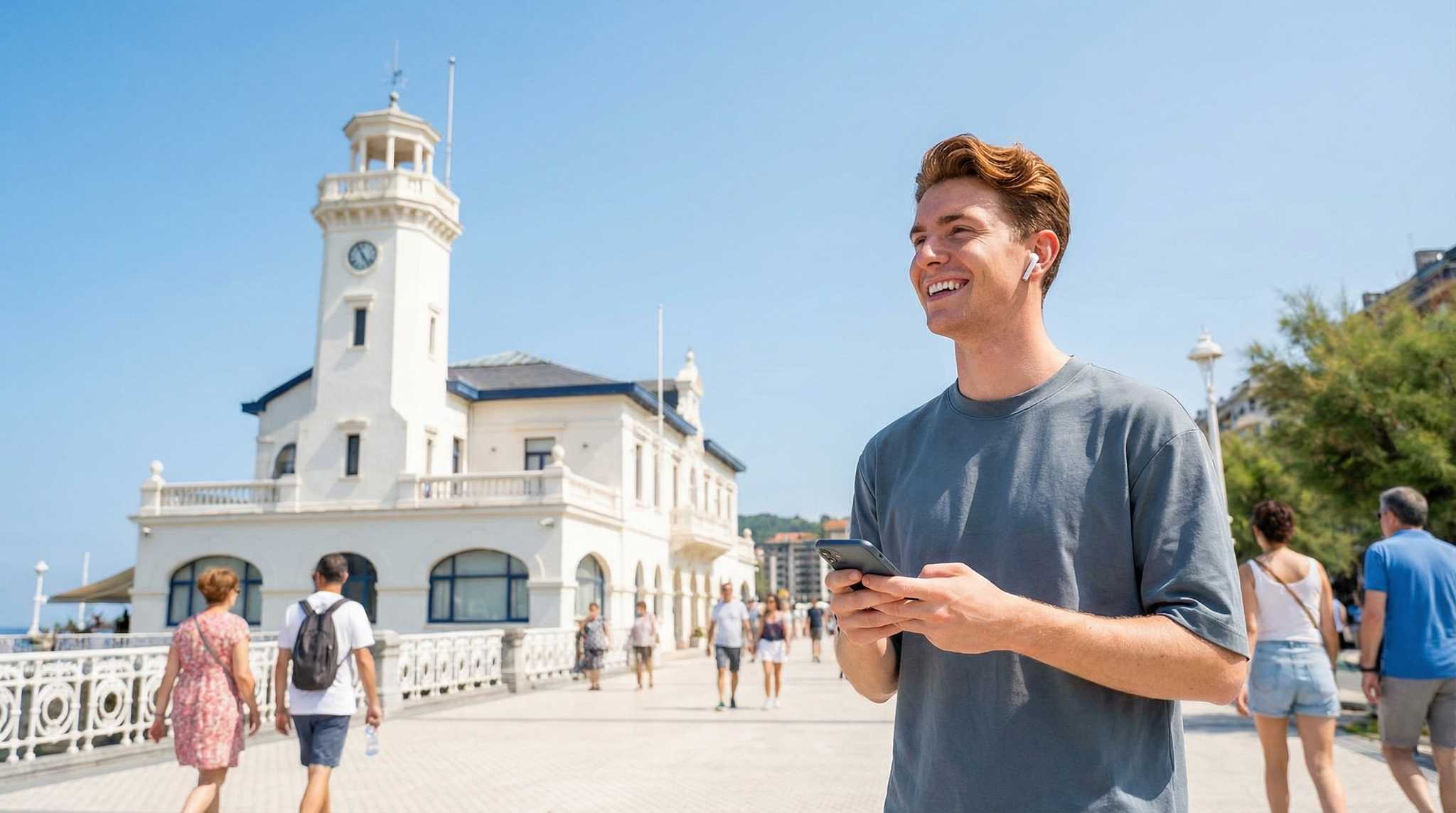
सैन सेबेस्टियन ऑडियो टूर: समुद्री किनारे की किंवदंतियाँ और शाही स्थल खोजे गए
सैन सेबेस्टियन के भव्य अग्रभागों और धूप से सराबोर तटों के पीछे, किंवदंतियाँ सतह के नीचे सुलग रही हैं—राजनीतिक प्रतिद्वंद्विताएँ, साहित्यिक नायक और गुप्त पलायन सभी ने यहाँ अपनी छाप छोड़ी है। यह स्व-निर्देशित ऑडियो टूर उन परतों को उजागर करता है जिन्हें कुछ ही आगंतुक देख पाते हैं, आपको पत्तेदार प्लाज़ा से सुनहरी रेत तक ले जाता है, हर रहस्य पिछले से अधिक समृद्ध होता है। किस गुप्त समझौते ने प्रांतीय परिषद के शक्तिशाली हॉलों का भाग्य हमेशा के लिए बदल दिया? किस विचित्र घटना के कारण डॉन क्विक्सोट खुद सर्वेंटेस स्क्वायर की निगरानी करने लगे? और जासूसी उपन्यास के योग्य दिल दहला देने वाले युद्धकालीन दुर्घटना में ला कोंचा समुद्र तट पर कौन उतरा? हलचल भरे चौकों और शांत तटरेखाओं के बीच घूमें क्योंकि हर मोड़ पर अतीत जीवंत हो उठता है। आप विद्रोह, व्यंग्य, ग्लैमर और रहस्य के अध्यायों से गुजरेंगे—यह खोजते हुए कि सैन सेबेस्टियन के परिचित दृश्य आपको आश्चर्यचकित करने वाली साहसी कहानियों को कैसे छिपाते हैं। सैन सेबेस्टियन के वास्तविक रहस्यों में गोता लगाने के लिए तैयार हैं? शहर को अपनी पोस्टकार्ड सुंदरता से परे क्या छिपा है, उसे प्रकट करने दें।
टूर पूर्वावलोकन
इस टूर के बारे में
- scheduleअवधि 40–60 minsअपनी गति से चलें
- straighten4.2 किमी पैदल मार्गगाइडेड पथ का पालन करें
- location_on
- wifi_offऑफ़लाइन काम करता हैएक बार डाउनलोड करें, कहीं भी उपयोग करें
- all_inclusiveलाइफ़टाइम एक्सेसकभी भी, हमेशा के लिए फिर सुनें
- location_onगुइपुज़कोआ की प्रांतीय परिषद से शुरू होता है
इस टूर के स्टॉप
To spot the Provincial Council of Guipúzcoa, look for a grand stone building with impressive arches on the ground level, rows of statues peering out from circular windows, and a…और पढ़ेंकम दिखाएँ
To spot the Provincial Council of Guipúzcoa, look for a grand stone building with impressive arches on the ground level, rows of statues peering out from circular windows, and a crest at the top center of the roof, nestled behind a cluster of trees in a leafy plaza. So, here you are in front of the mighty Provincial Council of Guipúzcoa-no, it’s not a castle, but it sure feels like one! Take a moment to picture the hustle and bustle that has happened here over the centuries. Back in the day, you’d have seen stern officials pacing under those arches, cloaks billowing as important decisions for Guipúzcoa were hammered out behind these walls. This building isn’t just beautiful-it’s the heart of government for this historic territory in the Basque Country, where autonomy and identity are fiercely protected like precious family jewels. The leadership here has changed hands from presidents to what’s now called the “General Deputy”-imagine the drama of elections, fierce debates, and the clinking of coffee cups as political heavyweights with names like Caballero, Sudupe, and Mendoza plotted the region’s future. The stories inside include moments of pride, some tension, and probably a few laughs (politicians-they’re just like us, right?). Today, Eider Mendoza is in charge-so if you hear someone mentioning her, you’re officially in the know! Now, as the wind moves through the trees and the grand façade towers above, let yourself soak in the history. Who knew government buildings could carry so many secrets? Don’t worry, I won’t tell if you decide to take a selfie!
समर्पित पेज खोलें →To spot Cervantes Square, just look for the circle of metal railings in the middle of an open plaza-inside, you'll see bronze statues of Don Quixote and Sancho Panza riding their…और पढ़ेंकम दिखाएँ
To spot Cervantes Square, just look for the circle of metal railings in the middle of an open plaza-inside, you'll see bronze statues of Don Quixote and Sancho Panza riding their steeds, as if ready to gallop right out to greet you! Welcome to Cervantes Square, a place where the wind of adventure is always swirling and every visitor gets a little taste of Spain's greatest literary legend. Imagine the year is 1905, the salty sea breeze drifts in from La Concha beach, and the city is buzzing to honor one very special writer-Miguel de Cervantes! That’s right, this quirky plaza was named after the mastermind behind Don Quixote, the lovable knight who tilted at windmills and made dreaming big an art form. Step closer and you can almost hear the clopping hooves of Don Quixote’s tired horse and Sancho Panza’s stubborn donkey, immortalized in bronze right before you. Back when this plaza first got its name, the world was celebrating 300 years of Quixote’s wild adventures-imagine all the toasts, costumes, and laughter echoing off these elegant buildings! So take a moment, breathe in the salty air, and picture locals of a century ago gathering here, chuckling over Cervantes’ tales, swapping Don Quixote jokes, and maybe even arguing over who would make the best Sancho Panza. The great Cervantes may be long gone, but thanks to this square, his spirit (and sense of humor!) lives on at the very heart of San Sebastián.
समर्पित पेज खोलें →Look straight ahead toward the water and you’ll spot a sweeping crescent of soft golden sand bordered by a lively promenade and colorful umbrellas-that’s the famous Beach of La…और पढ़ेंकम दिखाएँ
Look straight ahead toward the water and you’ll spot a sweeping crescent of soft golden sand bordered by a lively promenade and colorful umbrellas-that’s the famous Beach of La Concha. Welcome to the jewel of San Sebastián! Take in that sparkling bay and the perfect arc of La Concha’s shoreline-you know, they say if you took a giant ruler, you couldn’t draw a better curve. It’s like the beach got its shape from a really neat snail shell, which is exactly what “Concha” means. This spot has been the queen of seaside elegance since the 19th century, where high society strolled in ruffled swimsuits and made sandcastles the height of fashion. Imagine the air full of sea salt and the murmur of polite applause for anyone brave enough to dip their toes into the chilly waters. But it’s not just sunscreen and sunhats here-La Concha also has a mysterious side. In 1945, the beach saw a true-life thriller: Léon Degrelle, a man fleeing with the panic of a Hollywood villain, crash-landed his plane right here as he escaped the aftermath of World War II. Talk about a dramatic beach entrance! And if you’re a bookworm, you might know that Ernest Hemingway splashed through these waves in his novel “The Sun Also Rises.” His hero Jake took a dive here at the story’s end, probably to shake off all the drama. So as you stand here, picture elegant ladies, daring escapes, and literary legends, all woven into the salty breeze. And don’t let the tide surprise you-La Concha’s sands play hide-and-seek daily, growing and shrinking as the hours pass. Keep an eye out… you never know what stories might wash ashore next!
समर्पित पेज खोलें →


10 और स्टॉप दिखाएँकम स्टॉप दिखाएँexpand_moreexpand_less
To spot the San Sebastian Royal Nautical Club Building, look toward the water straight ahead-it's the white, modern-looking structure perched right on the edge of the bay,…और पढ़ेंकम दिखाएँ
To spot the San Sebastian Royal Nautical Club Building, look toward the water straight ahead-it's the white, modern-looking structure perched right on the edge of the bay, standing apart from the ornate stone buildings behind it. Now, let’s set the stage! Imagine a salty breeze whipping past you, sunlight glinting off the bay, and a building that looks like a sleek ocean liner ready to set sail. Welcome to the Royal Nautical Club of San Sebastián-a place with just as many secrets as there are waves crashing beneath your feet. This isn’t your average centuries-old palace. Oh no, this is a 20th-century marvel, dreamt up by the bold architects José Manuel Aizpurúa and Joaquín Labayen. Back in the 1920s and 30s, when jazz strolled the airwaves and daring ideas were floating everywhere, the architects said, “Let’s break the mold!” And boy, did they. This building sits on sturdy, square pillars-called pilotis-every six meters, holding up the whole place over the old aquarium’s stone bones. If you look closely, you’ll notice the old Club Nautico inside, with its darker wooden structure showing off its history like a badge amongst all that bright white concrete. Picture it bustling in its golden days, the lower floor alive with partygoers in tuxedos and summer dresses waltzing across the great reception hall, laughter and music spilling out toward the sea. Sailors and swimmers would dry off in their changing rooms, the kitchen sizzling with the promise of a fresh catch, and staff zipping up and down the double-length staircase-a staircase so long you’d think it was designed as a rite of passage! In the heart of the building, the designers wanted an open, free-flowing space. Think of it as the “loft apartment” before lofts were even cool! The lobby, the library, and the gaming room flow into one another, not sealed off by heavy doors, but just gently divided by glass, low walls, and curtains. The intention was clear: see and be seen, but never feel boxed in. Oh, and about that gaming room-it isn’t just for high-stakes drama. The walls are lined with twelve little square windows set just low enough so card players, while plotting their next move, can steal a peek at the bay. Outside, some windows are shaped like portholes, making the whole club feel like it’s always ready to cast off into adventure. Head up another level, and there’s an impressive wraparound window nearly 40 meters long. Up here, in the restaurant, everyone gets the best seat in the house: a panoramic feast for the eyes, with sunlight painting the tables and the sea winking back at every diner. Instead of walls cluttering things up, you see columns and furniture carefully placed to keep everything as open as possible. And let’s not ignore the building’s charm-part spaceship, part ocean liner. A circular staircase curls elegantly outside, almost like it’s trying to race a gull down to the bay. On the terrace is a solarium: closed to the city, open to the sea, a perfect sun trap for anyone wanting to soak up some rays or, let’s be honest, eavesdrop on seagulls arguing over lunch. The building’s design always keeps that beautiful bay in mind. Massive horizontal windows slice the light, making sure you never forget where you are-even on a misty day, the border between sky and sea is right at your fingertips. So, as you stand here, take a deep breath. Can you smell the salt and hear the echoes of laughter from glamorous parties past? Whether you’re a sailor, a dreamer, or just a fan of daring architecture, the Royal Nautical Club’s spirit-and its stories-are never far from the shoreline.
समर्पित पेज खोलें →To spot the Goicoa Palace, look directly ahead for a stately, sand-colored stone building with ornate railings and a flag waving above its grand entrance, just across from San…और पढ़ेंकम दिखाएँ
To spot the Goicoa Palace, look directly ahead for a stately, sand-colored stone building with ornate railings and a flag waving above its grand entrance, just across from San Sebastián City Hall. Now, let’s step back in time and imagine: right here during the Middle Ages, instead of this grand palace, you’d have seen the Igentea Tower-a strange, round fortress zealously guarding the corner of the city's walls. Fast forward to the late 1800s: the old fortress is gone, the city is thriving, and a plan emerges to build something worthy of this prominent spot. Captain José González designs the palace, but oddly enough, everyone ends up calling it Goicoa Palace-despite Mr. Goicoa not even being its architect! Talk about a case of mistaken identity. Construction begins in 1888, with stone blocks taking their place under the watchful eye of Colonel Paulino Aldaz Goñi. Imagine the clattering of tools and the shouts of workers as they race to complete their masterpiece by 1891. The palace isn’t just for show; inside, Captain Juan Olavide maps out a maze of offices and even designs the Secretary of Government’s residence, all so elegantly that, just years later, they needed to update the lighting and redecorate-because, naturally, every grand palace needs its touch of sparkle. For decades, Goicoa Palace buzzed as the headquarters of the Military Government of Gipuzkoa. These days, it’s left its military boots behind and opened its doors to serve the community-housing youth services, citizen information, and more. Picture it: where once decisions of defense echoed, today people come in for advice, help, and opportunities. Isn’t it funny how even the grandest stone walls can switch from top-secret meetings to welcoming everyone in with open arms? If these walls could talk, I bet they’d whisper secrets from both sides of history!
समर्पित पेज खोलें →Take a look at the grand building right ahead of you-doesn’t it look like the setting for a secret agent movie? Well, you’re standing in front of the San Sebastián City Hall, but…और पढ़ेंकम दिखाएँ
Take a look at the grand building right ahead of you-doesn’t it look like the setting for a secret agent movie? Well, you’re standing in front of the San Sebastián City Hall, but once upon a time, things inside were much more exciting than paperwork and council meetings. Picture it: The year is 1887. Elegant ladies twirl in fancy dresses, gentlemen tip their top hats, and the clinking of champagne glasses floats through the air. You’re at the opening of San Sebastián’s luxurious Casino, right here in the beautiful Alderdi-Eder gardens beside the sparkling La Concha Bay. Queen María Cristina herself attended the grand ceremony-a royal seal of approval! As you gaze at the building's ornate facade, imagine the high society revelers, dreaming of fortunes at the green felt tables, perhaps with a little wink and a sly smile. But, in 1924, the party ended faster than someone losing a poker game. Spain banned gambling, and the casino had to close its doors. After years of rolling the dice, the only games left here were the pigeons racing each other across the plaza. Eventually, in 1928, the building tried on a new identity as the Center of Attraction and Tourism. I suppose if you can’t bet on cards, you can at least bet on tourists! Yet, there was still one more transformation in store. In 1945, the city’s council-tired of holding meetings in the old town square-moved in and converted this building into San Sebastián’s new City Hall. Two visionary architects, Mr. Alday and Mr. Arizmendi, took on the challenge. Fun fact: Arizmendi wasn’t just an architect, he was also the chief firefighter! You could say he put out fires both in city planning and in actual fires. The City Hall soon became the stage for big political dramas. After democracy was restored in 1977, power see-sawed between different leaders and parties, just like a political game of tug-of-war. From Jesús María Alkain sneaking in as mayor without a clear majority in 1979, to coalitions changing the city’s direction every few years, alliances here could get more tangled than spaghetti. So as you stand here, take a deep breath and enjoy the history swirling around you. This building has played host to the city’s luckiest gamblers and its most cunning politicians-so if you feel a sudden urge to roll the dice in life, maybe the spirit of the old casino is giving you a little nudge!
समर्पित पेज खोलें →To spot the Hotel Maria Cristina, look across the river for a grand, pale yellow palace-like building with elegant balconies and “HOTEL MARIA CRISTINA” written proudly across the…और पढ़ेंकम दिखाएँ
To spot the Hotel Maria Cristina, look across the river for a grand, pale yellow palace-like building with elegant balconies and “HOTEL MARIA CRISTINA” written proudly across the top-it’s impossible to miss that stately presence overlooking the water! Now, let’s dive into the glamorous history of the Hotel Maria Cristina-don’t be surprised if you feel an urge to walk the rest of the tour with a movie star strut! Picture yourself in San Sebastián in the early 1900s: the city was bubbling with excitement, the air had a scent of pastries and sea spray, and everywhere you looked, stylish visitors arrived by train or carriage, eager to enjoy the latest European hotspot. The city wanted to impress the rich and famous, so a group of visionary locals decided, “We need a grand hotel! Not just any hotel-one fit for royalty and celebrities!” Plans were drawn up, and after a bit of debate about where to build it, they finally picked these gardens by the river. Construction began in 1909, and by 1912-just in time for the golden era known as the ‘belle époque’-the hotel opened its doors. Who was at the opening ceremony? None other than Queen Maria Cristina herself! If you listen hard enough, maybe you can still hear the rustle of royal gowns brushing these steps. But this hotel isn’t just about royalty. Over the decades, its guestbook has read like a who’s who of history and Hollywood-Trotsky may have argued about politics in the lobby, Mata Hari could have spied through the velvet curtains, and Coco Chanel might have sketched a new dress design while sipping tea. Imagine the notes floated on piano keys as Maurice Ravel stayed here, or the echo of laughter from Bette Davis, Audrey Hepburn, Alfred Hitchcock, Steven Spielberg, and even Mick Jagger! There are so many stories hidden in these walls that you half expect to find a secret passage leading straight to a movie premiere. During the chaos of the First World War, San Sebastián became a playground for the elite escaping trouble, and this hotel was the brightest jewel in the city’s crown, standing proudly with its French-inspired flair. Even after wars and darker times, its glitz returned with the San Sebastián International Film Festival. Each year, filmmakers and actors would step right out of this hotel, cross a plush red carpet-sometimes in the rain, sometimes in a flurry of flashbulbs-straight into the majestic theater next door. That tradition turned this street into an annual parade of glamour. The hotel has had makeovers over the years-an extra wing was added in the 1950s, giving the building a ‘U’ shape, and in the late 1980s, it closed for an upgrade to a full five-star status. Imagine the sounds of new marble floors and sparkling chandeliers being installed! Part of its newest chapter even includes a dash of controversy over its daring modern décor. Now under the care of Marriott’s Luxury Collection, it carries on dazzling guests, always just a step away from its famous neighbor, the theater. So, whether you dream of catching a runaway hat in the wind or spotting a movie star in sunglasses, the Hotel Maria Cristina is where San Sebastián's magic truly begins-and maybe, just maybe, some of that old glamour will rub off on you too!
समर्पित पेज खोलें →To spot Atotxa Stadium, look for an open, grassy field with a crowd-packed stand and tall, elegant buildings rising behind it, their façades peeking above the heads of cheering…और पढ़ेंकम दिखाएँ
To spot Atotxa Stadium, look for an open, grassy field with a crowd-packed stand and tall, elegant buildings rising behind it, their façades peeking above the heads of cheering football fans. Alright, take a deep breath and imagine yourself standing where football history was made-right in front of the legendary Atotxa Stadium. Here, the air would be thick with excitement, echoing with the shouts of 17,000 passionate fans, and maybe, just maybe, the faint smell of grass and roasted chestnuts from an old street vendor nearby. But watch out-a stray football might fly your way! Atotxa was more than just a football pitch; it had stories lurking in every blade of grass, each echo from the stands. Built on the bones of an old velodrome from 1888, Atotxa opened its gates for the first time in October 1913. The debut? A fierce face-off between Real Sociedad and Athletic Club Bilbao. The match ended 3-3, but the real fun fact: both the first goal ever scored here and the first in Bilbao’s San Mamés stadium were by the same guy-Rafael Moreno Aranzadi, affectionately known as Pichichi. He must have had a GPS for goalposts! Over the decades, Atotxa would witness the wildest triumphs and the bitterest defeats. Spectators crowded so close to the pitch you could swear players felt the spray of sweat from the front row. Cramped capacity? At its peak-over 27,000 fans! Those lucky enough to get in would see Spain’s national team in 1923, and local heroes battling it out. Imagine a stadium so beloved that Amadeo Labarta, a former player, made it his literal home for forty years, living right inside these walls. But here’s the real twist, a tradition as bright as fireworks-literally! When the home team scored, two fireworks would blast into the sky. Only one if the visitors netted a goal. Legend has it, sailors out at sea would listen for the booms, so they’d know how their team was doing. Not exactly live streaming, but close! As the sun set on Atotxa in 1993, there was a final, heartwarming farewell. With the stadium plunged into twilight, a young boy-carrying the memory of his footballer father-ran through a spotlight and scored the last symbolic goal. If that doesn’t tug your heartstrings, nothing will. Atotxa has vanished now, making way for homes and memories, but if you listen closely, you might just hear the ghosts of those old football cheers. Or maybe that’s just your stomach rumbling after all this walking!
समर्पित पेज खोलें →



अक्सर पूछे जाने वाले प्रश्न
मैं टूर कैसे शुरू करूँ?
ख़रीदारी के बाद, AudaTours ऐप डाउनलोड करें और अपना रिडेम्पशन कोड दर्ज करें। टूर तुरंत शुरू करने के लिए तैयार होगा - बस प्ले टैप करें और GPS-गाइडेड रूट का पालन करें।
क्या टूर के दौरान मुझे इंटरनेट चाहिए?
नहीं! शुरू करने से पहले टूर डाउनलोड करें और पूरी तरह ऑफ़लाइन इसका आनंद लें। केवल चैट फ़ीचर को इंटरनेट की ज़रूरत है। मोबाइल डेटा बचाने के लिए WiFi पर डाउनलोड करने की सिफ़ारिश है।
क्या यह एक गाइडेड ग्रुप टूर है?
नहीं - यह एक सेल्फ-गाइडेड ऑडियो टूर है। आप अपनी गति से स्वतंत्र रूप से खोजते हैं, आपके फ़ोन से ऑडियो कथन बजता है। कोई टूर गाइड नहीं, कोई ग्रुप नहीं, कोई शेड्यूल नहीं।
टूर में कितना समय लगता है?
अधिकांश टूर पूरा करने में 60-90 मिनट लगते हैं, लेकिन गति पूरी तरह आपके नियंत्रण में है। जब चाहें रुकें, स्टॉप छोड़ें, या ब्रेक लें।
अगर मैं आज टूर पूरा नहीं कर सकता/सकती तो?
कोई समस्या नहीं! टूर की लाइफ़टाइम एक्सेस है। जब चाहें रोकें और फिर शुरू करें - कल, अगले हफ़्ते, या अगले साल। आपकी प्रगति सेव रहती है।
कौन सी भाषाएँ उपलब्ध हैं?
सभी टूर 50+ भाषाओं में उपलब्ध हैं। अपना कोड रिडीम करते समय अपनी पसंदीदा भाषा चुनें। नोट: टूर जेनरेट होने के बाद भाषा बदली नहीं जा सकती।
ख़रीदारी के बाद मैं टूर कहाँ एक्सेस करूँ?
App Store या Google Play से मुफ़्त AudaTours ऐप डाउनलोड करें। अपना रिडेम्पशन कोड (ईमेल द्वारा भेजा गया) दर्ज करें और टूर आपकी लाइब्रेरी में दिखेगा, डाउनलोड और शुरू करने के लिए तैयार।
अगर आपको टूर पसंद नहीं आया, तो हम आपकी ख़रीदारी वापस करेंगे। हमसे संपर्क करें [email protected]
सुरक्षित चेकआउट 


