

एंगर्स ऑडियो टूर: आँगनों, कॉन्वेंट और रचनात्मकता के माध्यम से गूँज
एंगर्स के नीचे प्राचीन सुरंगों का एक जाल फैला हुआ है, जो उन रहस्यों से गूँज रहा है जो अभी भी ऊपर शहर को आकार देते हैं। एंगर्स के छिपे हुए पहलू को उजागर करने के लिए डिज़ाइन किए गए एक स्व-निर्देशित ऑडियो साहसिक कार्य के लिए तैयार हो जाएँ। अपनी गति से घूमें और अभय, चर्चों और भूली हुई गलियों में बुनी गई कहानियों को अनलॉक करें—वह सब कुछ खोजें जो अधिकांश आगंतुक कभी नहीं जानते। रॉनसेरे के अभय के पवित्र हॉल में एक कुख्यात घोटाला क्यों सामने आया? ट्रिनिटी के चर्च में आधी रात की प्रार्थना के दौरान कौन बिना किसी निशान के गायब हो गया? एंगर्स के आराधनालय के सबसे पुराने सदस्यों के बीच कौन सी रेसिपी केवल पीढ़ी-दर-पीढ़ी हस्तांतरित होने की अफवाह है? छायादार क्रिप्ट्स से धूप से भरे क्लोइस्टर्स तक जाकर सदियों की साज़िश और भक्ति का पता लगाएँ। एंगर्स के माध्यम से प्रत्येक कदम नाटक, रहस्योद्घाटन और इसके सबसे प्रिय स्थलों पर एक नया दृष्टिकोण आमंत्रित करता है। इन पत्थरों के रहस्य इंतज़ार कर रहे हैं—प्ले दबाएँ और उनकी कहानी का हिस्सा बनें।
टूर पूर्वावलोकन
इस टूर के बारे में
- scheduleअवधि 40–60 minsअपनी गति से चलें
- straighten2.6 किमी पैदल मार्गगाइडेड पथ का पालन करें
- location_on
- wifi_offऑफ़लाइन काम करता हैएक बार डाउनलोड करें, कहीं भी उपयोग करें
- all_inclusiveलाइफ़टाइम एक्सेसकभी भी, हमेशा के लिए फिर सुनें
- location_onएंगर्स का कूर डेस टुरेलस से शुरू होता है
इस टूर के स्टॉप
Look ahead to the courtyard and find the arched red wooden door set in an ornate stone frame, approached by a striking set of semi-circular stone steps. This is the Cour des…और पढ़ेंकम दिखाएँ
समर्पित पेज खोलें →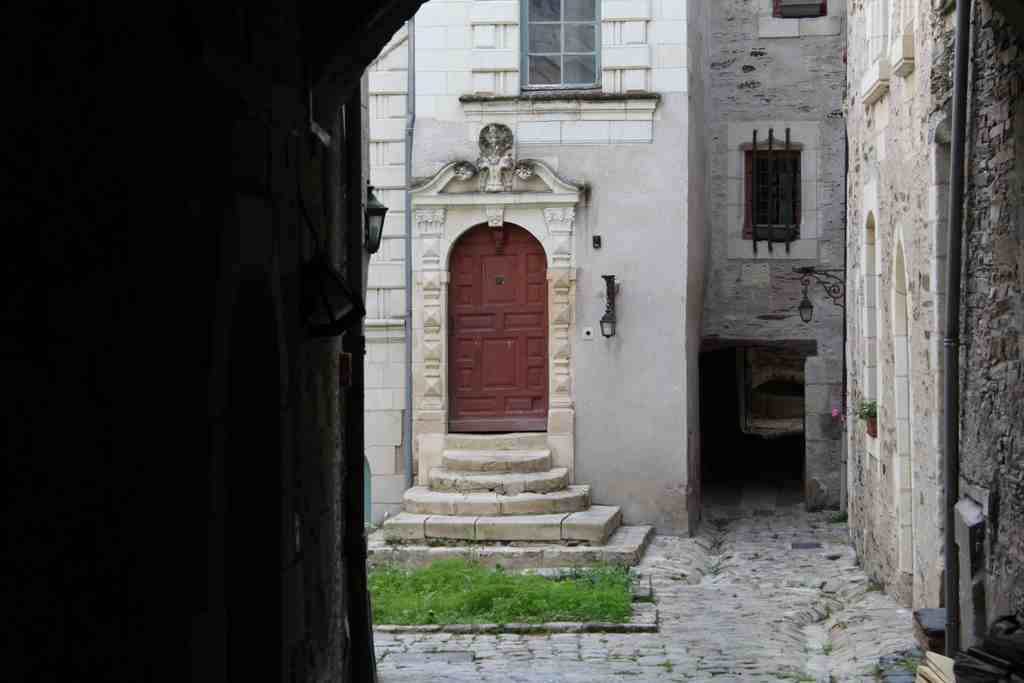
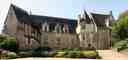
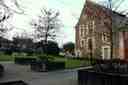
Cour des Tourelles d'AngersPhoto: Chabe01, Wikimedia Commons, CC BY-SA 4.0. Cropped & resized. Look ahead to the courtyard and find the arched red wooden door set in an ornate stone frame, approached by a striking set of semi-circular stone steps. This is the Cour des Tourelles, an estate that has seen more than its fair share of real estate drama.
In fourteen twenty-six, a man of influence named Jean Hocquet lived here in what was already known as the Manor of the Tourelles. Hocquet needed a quick route to his private port on the river, so he simply punched an alleyway straight through this interior courtyard. This created a public thoroughfare that lasted for nearly two centuries. The property later passed to the Crespin family, a line of royal officers who built a private chapel to stamp their authority on the site.
Then came Pierre Gohier in the early seventeenth century. Gohier was a lawyer with a vision. He spent years patiently buying up every single adjacent parcel of land from the Crespin family. In sixteen hundred and seven, he achieved his dream of reunifying the entire grand estate. Naturally, he died the very next year. His heirs immediately chopped the property back into five separate lots and built a wall to seal off the courtyard, permanently ending the free public passage Hocquet had created.
The story took a sharp turn in seventeen twenty-three when the estate was bought by the Mont-de-Piété, an institutional pawnbroker designed to offer low-interest loans to the poor in exchange for their belongings. Known locally as Auntie's House, the grand aristocratic home became a clearinghouse for desperation. The eighteen ninety-three inventory lists the exact items people brought in just to survive. That year alone, clerks took in two thousand three hundred and twenty-three bundles of laundry, one hundred and forty-five duvets, eighteen umbrellas, and one rifle. The contrast between the grand stone architecture and the piles of pawned laundry was jarring.
In eighteen eighty-two, the administrators decided the building did not look medieval enough. They orchestrated a massive neo-gothic restoration, completely erasing authentic eighteenth-century architectural features just to fulfill a romanticized fantasy of the past. Sometimes architects cannot help themselves.
But the building had older secrets. During restorations in the nineteen nineties, archaeologists uncovered original twelfth and thirteenth-century foundations, including a painted window. They also found physical evidence of those old property disputes... a sixteenth-century interior door that had been aggressively bricked up to seal off the neighboring house during a bitter seventeenth-century feud.
The pawnbroker finally closed its doors in nineteen ninety-nine, and the complex returned to private hands. From a medieval manor to a pawn shop and back again, this courtyard holds centuries of local ambition and petty rivalries. Take a moment to appreciate the details here, and when you feel ready, we will make our way toward the Church of the Trinity of Angers.
Look to your right to spot a towering structure of pale limestone, defined by a multi-tiered, intricately carved bell tower and a deeply recessed, arched stone doorway at its…और पढ़ेंकम दिखाएँ
समर्पित पेज खोलें →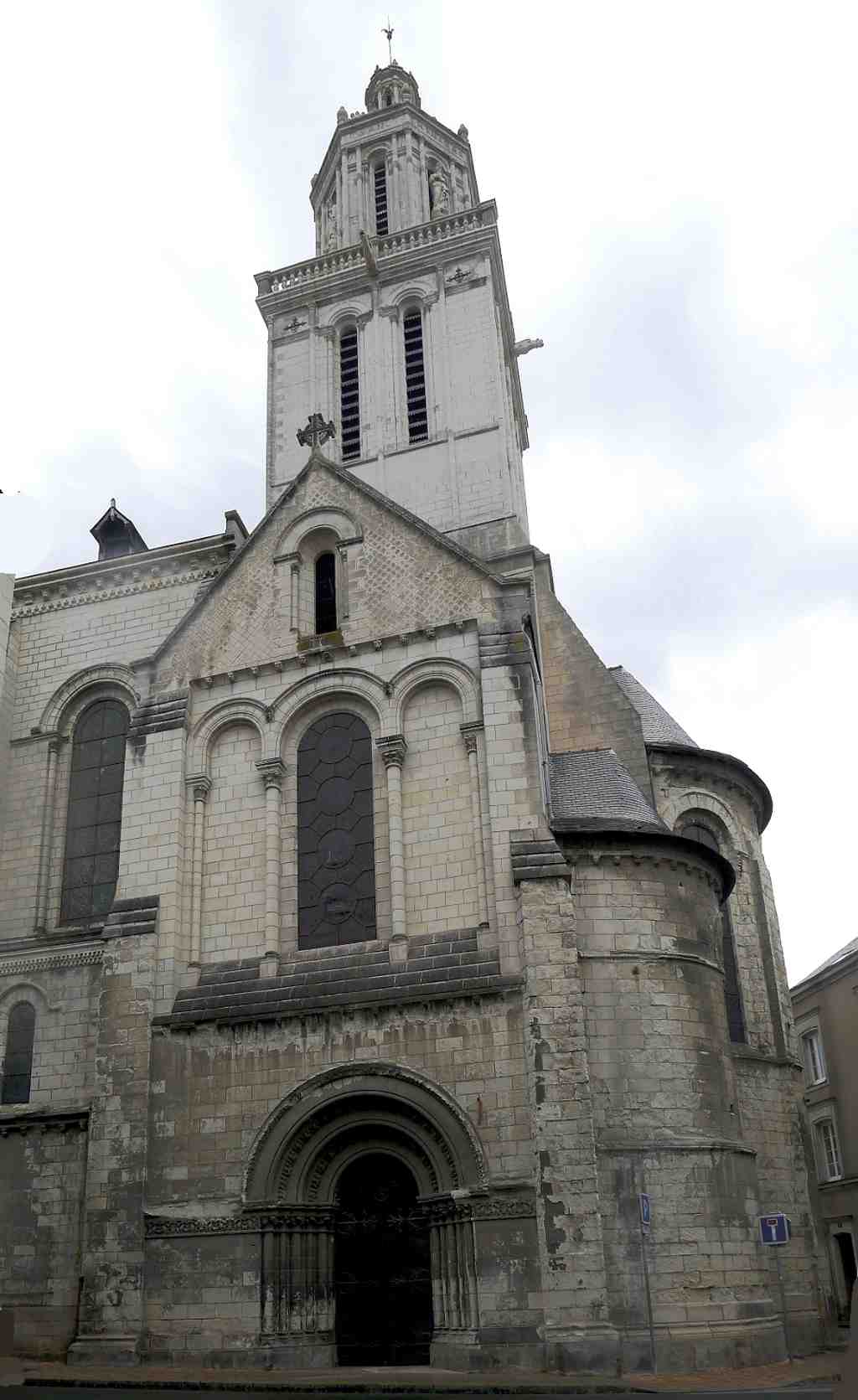
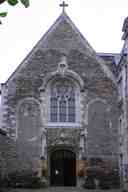
Church of the Trinity of AngersPhoto: Mbzt, Wikimedia Commons, CC BY 3.0. Cropped & resized. Look to your right to spot a towering structure of pale limestone, defined by a multi-tiered, intricately carved bell tower and a deeply recessed, arched stone doorway at its base. This is the Church of the Trinity.
It was built out of pure social awkwardness. Back in the eleventh century, the local abbesses ran the neighboring Abbey of Ronceray. They had a problem. The abbey was full of young, wealthy girls from the nobility. But their chapel was also being used by the local commoners. The abbesses wanted to maintain strict control over the parish, but they absolutely did not want their aristocratic girls mixing with the regular townsfolk. Their solution? They built this parish church completely tangled up in the abbey's architecture, keeping the commoners close, but safely separated by solid stone walls.
Take a look at your screen for a glimpse inside the main hall, or the nave. You are looking at a perfect example of what is called the first Angevin Gothic style. Unlike standard flat or slightly curved ceilings, this regional design features heavily domed vaults reinforced by irregular stone ribs. Notice the carved stone joints where the ribs meet. Each of those keystones is totally unique, with the central one seemingly suspended in mid-air.
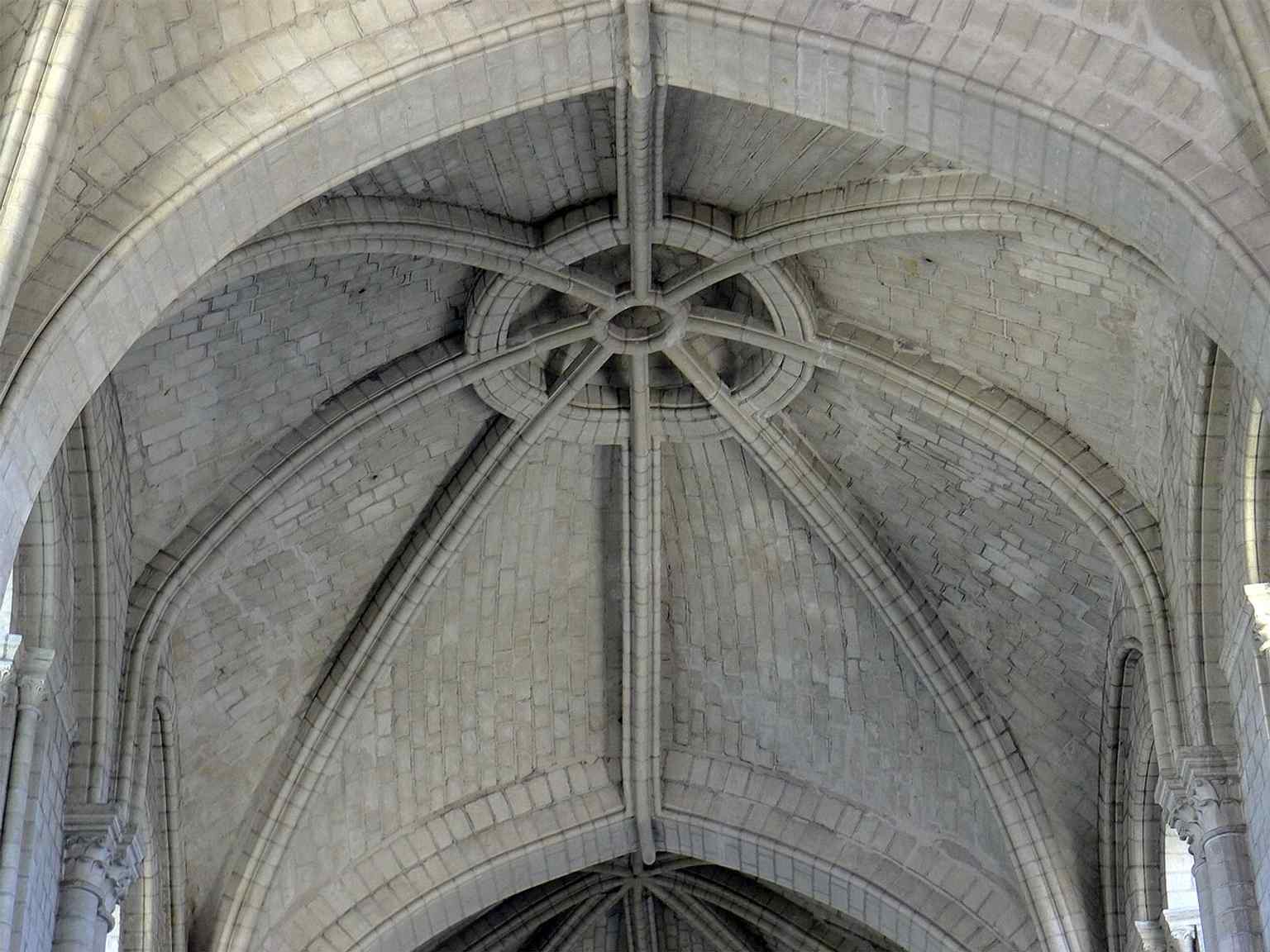
Close-up of the nave's unique vaulting, showcasing its irregular ribs and different keystones, including a remarkable 'suspended keystone,' characteristic of the 'first Angevin Gothic' style.Photo: Mbzt, Wikimedia Commons, CC BY-SA 4.0. Cropped & resized. Of course, this church has seen its share of drama. During the French Revolution in seventeen ninety-three, the resident priest, Father Simon-Jean Gruget, refused to swear allegiance to the new revolutionary government. He was forced into hiding. He holed up in a tiny secret room across town, overlooking the main square where the guillotine was set up. From a small window, he would watch the executions. Whenever a condemned prisoner was marched to their death, Father Gruget would wave a blue handkerchief with red checkers. This was a secret signal, letting the victims know he was silently giving them absolution, the religious forgiveness of their sins, right before the blade fell.
He narrowly escaped death himself. During a tense police raid on his hideout, he disguised himself as an old woman spinning yarn, completely faking his voice. A police inspector actually recognized him, but decided to let it slide, shouting out a greeting to the fake old woman to throw off the other guards and save the priest's life.
To really understand who held the power here, check your app again to see a hidden architectural detail tucked away inside. This intricately carved sixteenth-century spiral wooden staircase allowed for secret movement through the building. It leads directly down into the mysterious crypt of the neighboring abbey. Right on those stairs sits the heavy limestone tomb of an abbess from fourteen ninety-three. It is a very literal reminder that even after death, the noble abbesses were always hovering over the commoners.
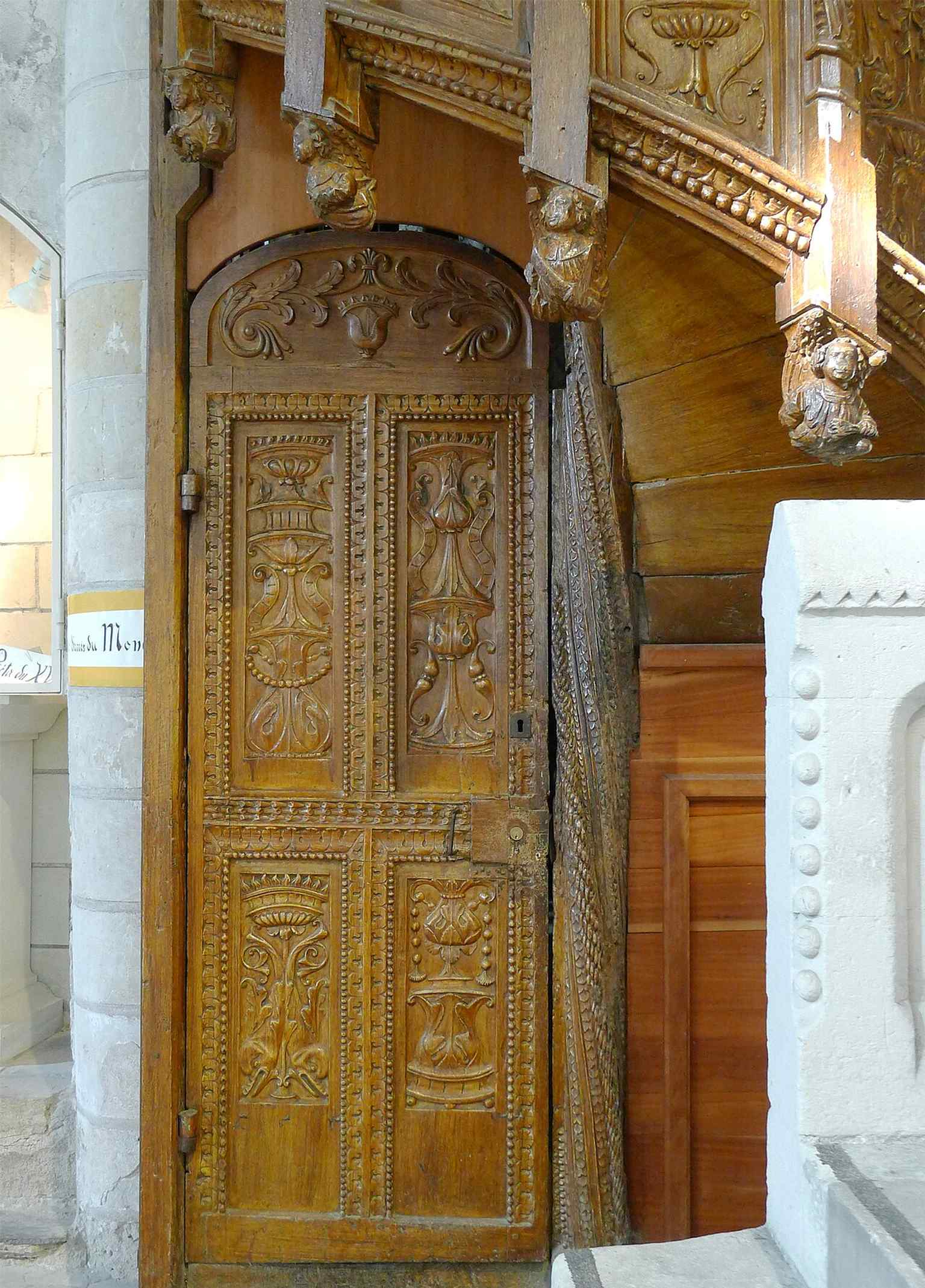
This 16th-century sculpted wooden helical staircase is a 'hidden architectural gem' that once provided secret internal circulation and leads to the crypt.Photo: Mbzt, Wikimedia Commons, CC BY-SA 4.0. Cropped & resized. This church is a brilliant piece of historical engineering, built to manage both faith and high society. Whenever you are ready to move on, we can head to the next stop.
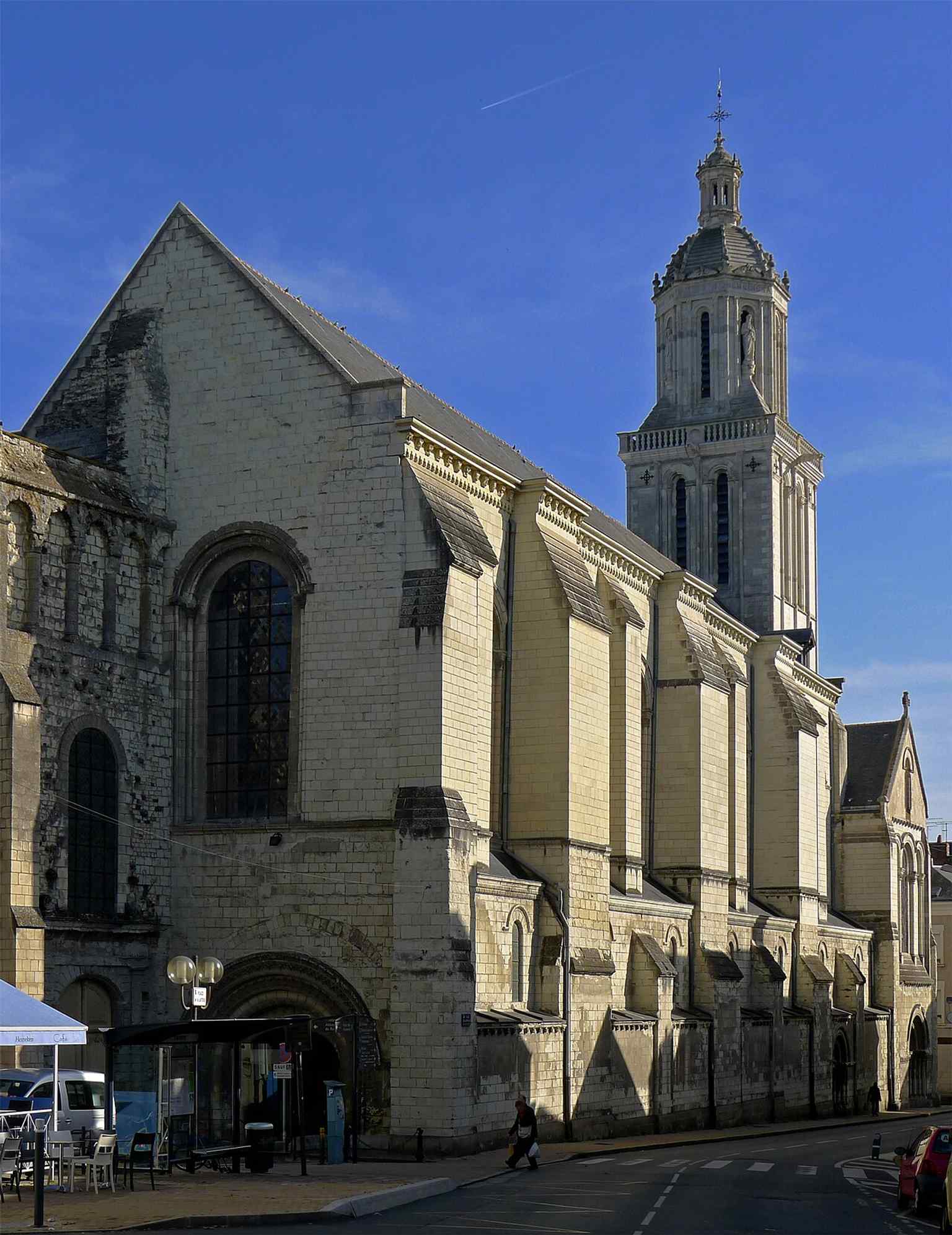
A general view of the Church of the Trinity, a historic monument in Angers classified in 1840.Photo: Mbzt, Wikimedia Commons, CC BY-SA 4.0. Cropped & resized. 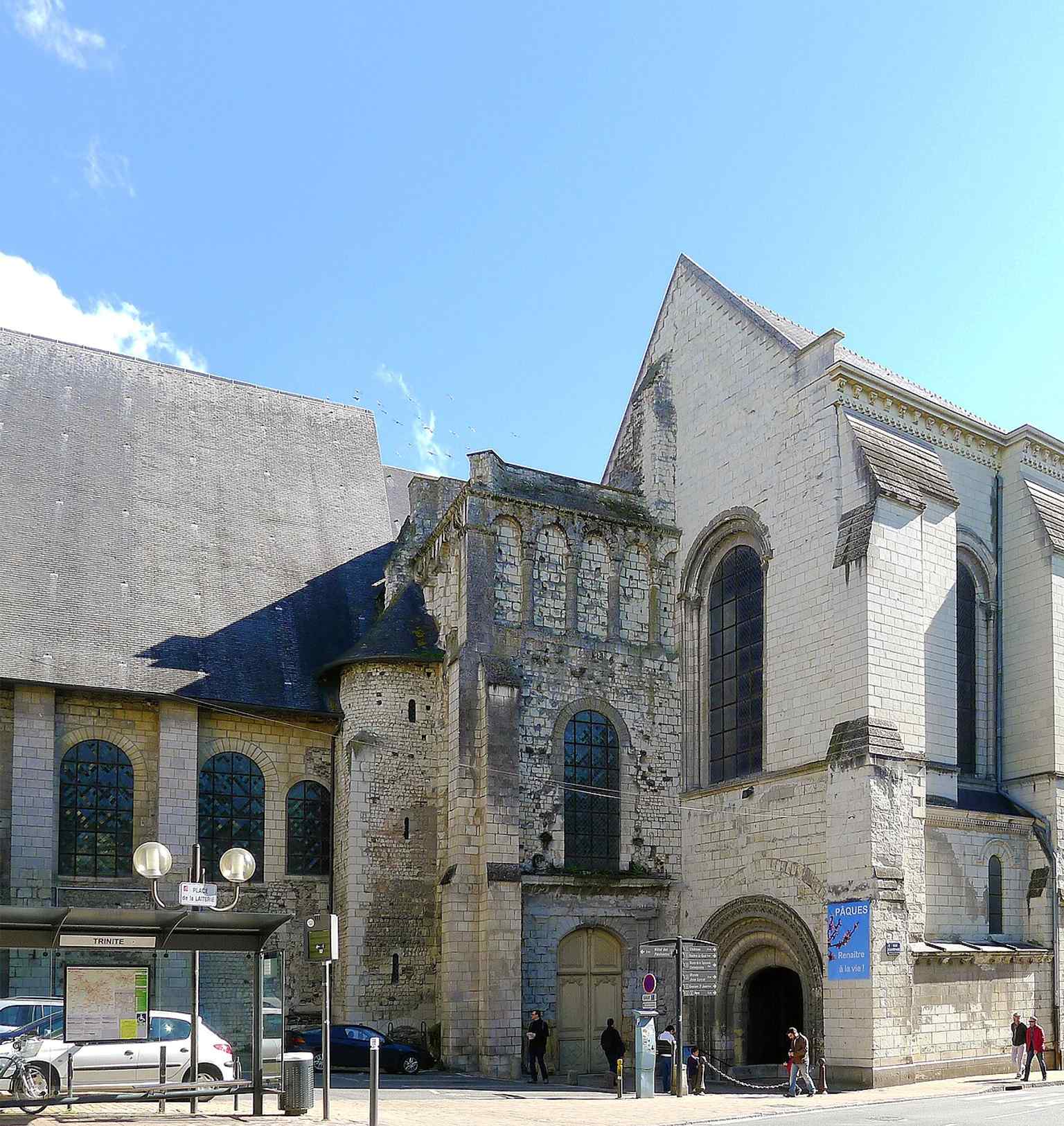
This photo illustrates the unique 'enmeshment' of the Church of the Trinity with the neighboring Abbaye du Ronceray, built to separate parishioners from the noble girls of the abbey.Photo: Mbzt, Wikimedia Commons, CC BY-SA 4.0. Cropped & resized. 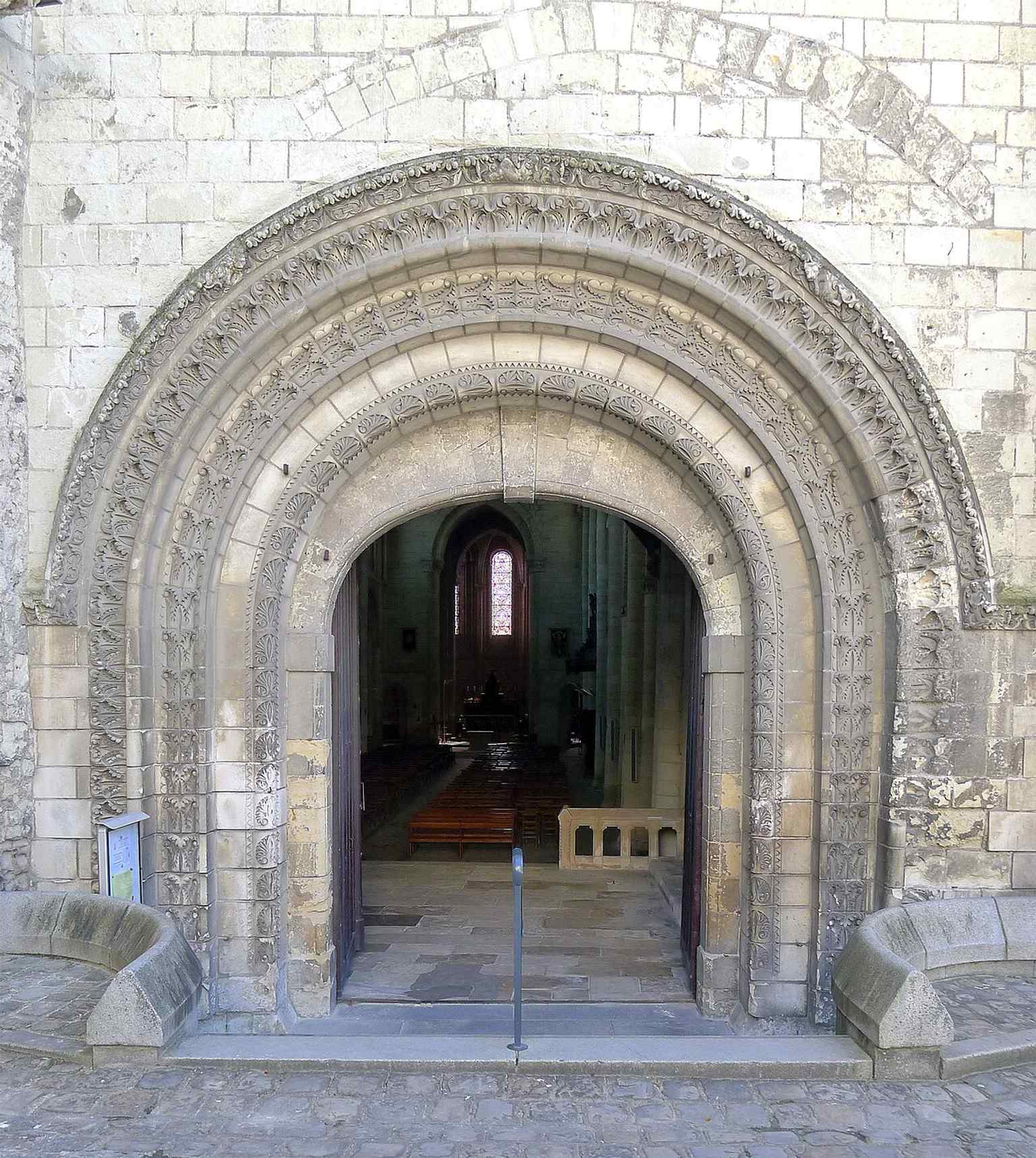
The Neo-Romanesque portal on the south facade, which was only fully revealed in the 1860s after old timber houses blocking it were destroyed during architect Joly-Leterme's restorations.Photo: Mbzt, Wikimedia Commons, CC BY-SA 4.0. Cropped & resized. 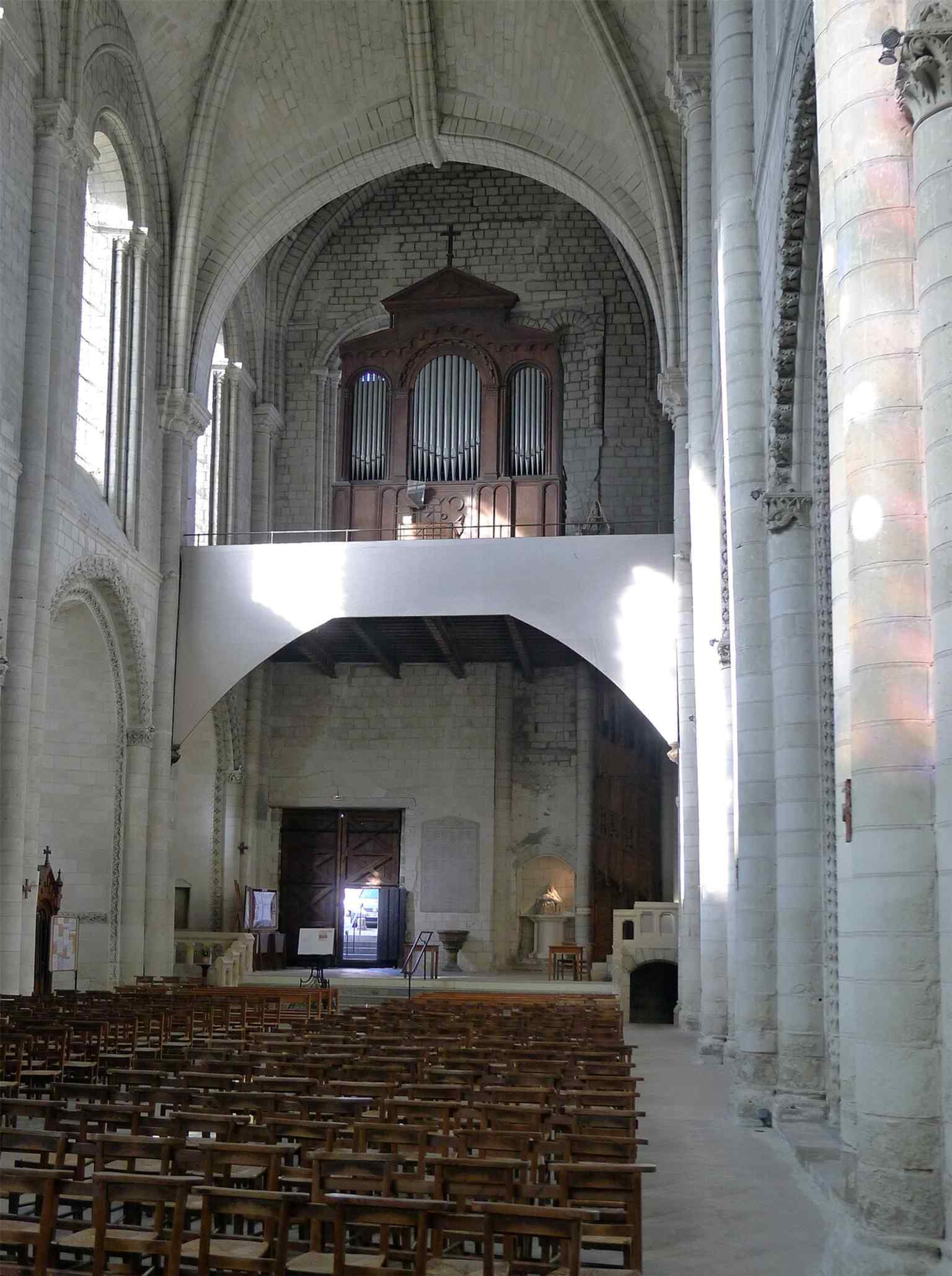
A general view of the nave, which features the distinctive 'first Angevin Gothic' style with its vault supported by irregular ribs.Photo: Mbzt, Wikimedia Commons, CC BY-SA 4.0. Cropped & resized. 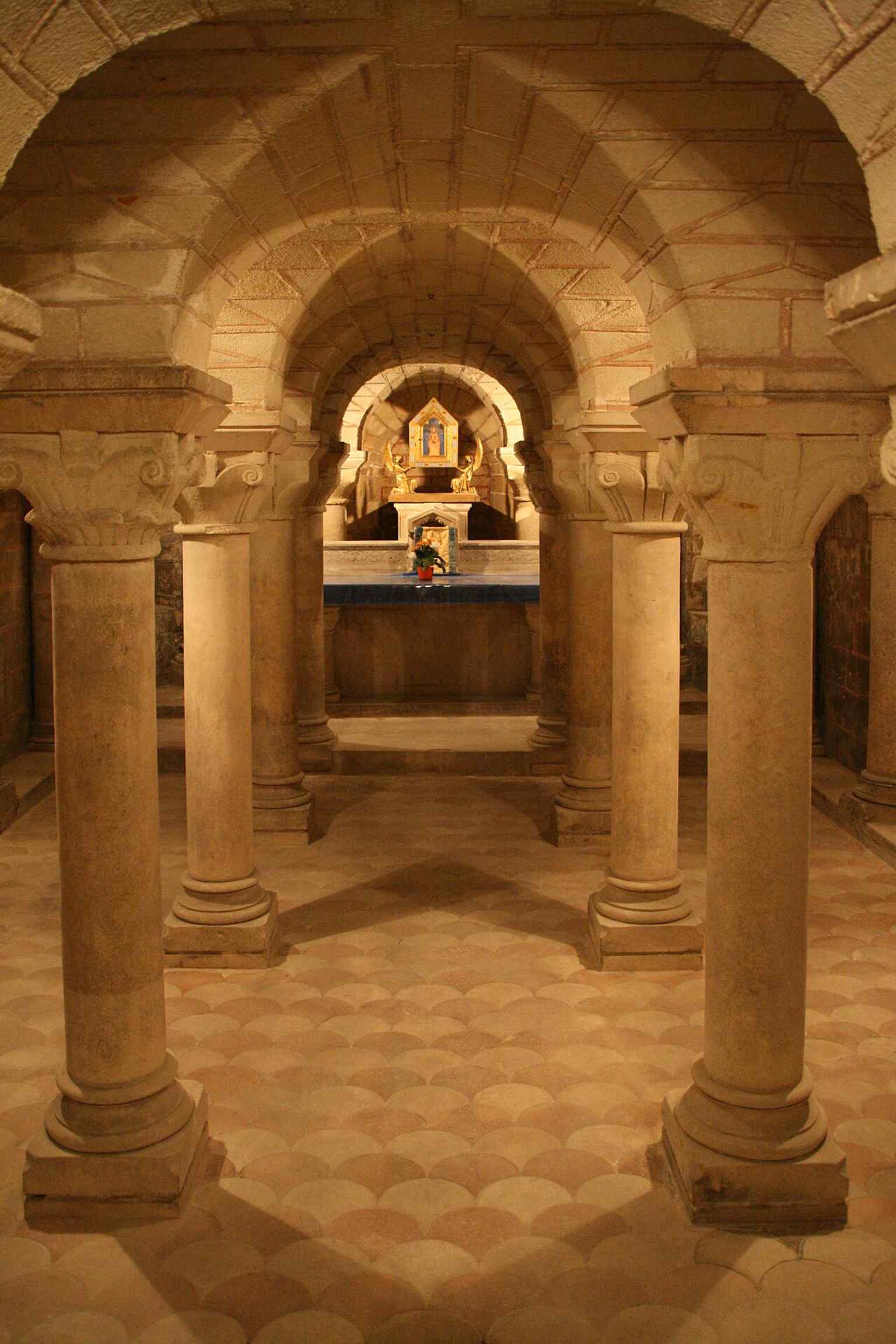
The crypt, rediscovered in 1527 and later formally attached to the parish church in 1857, offering a glimpse into the mysterious history of the Abbaye du Ronceray.Photo: Sémhur, Wikimedia Commons, CC BY-SA 4.0. Cropped & resized. 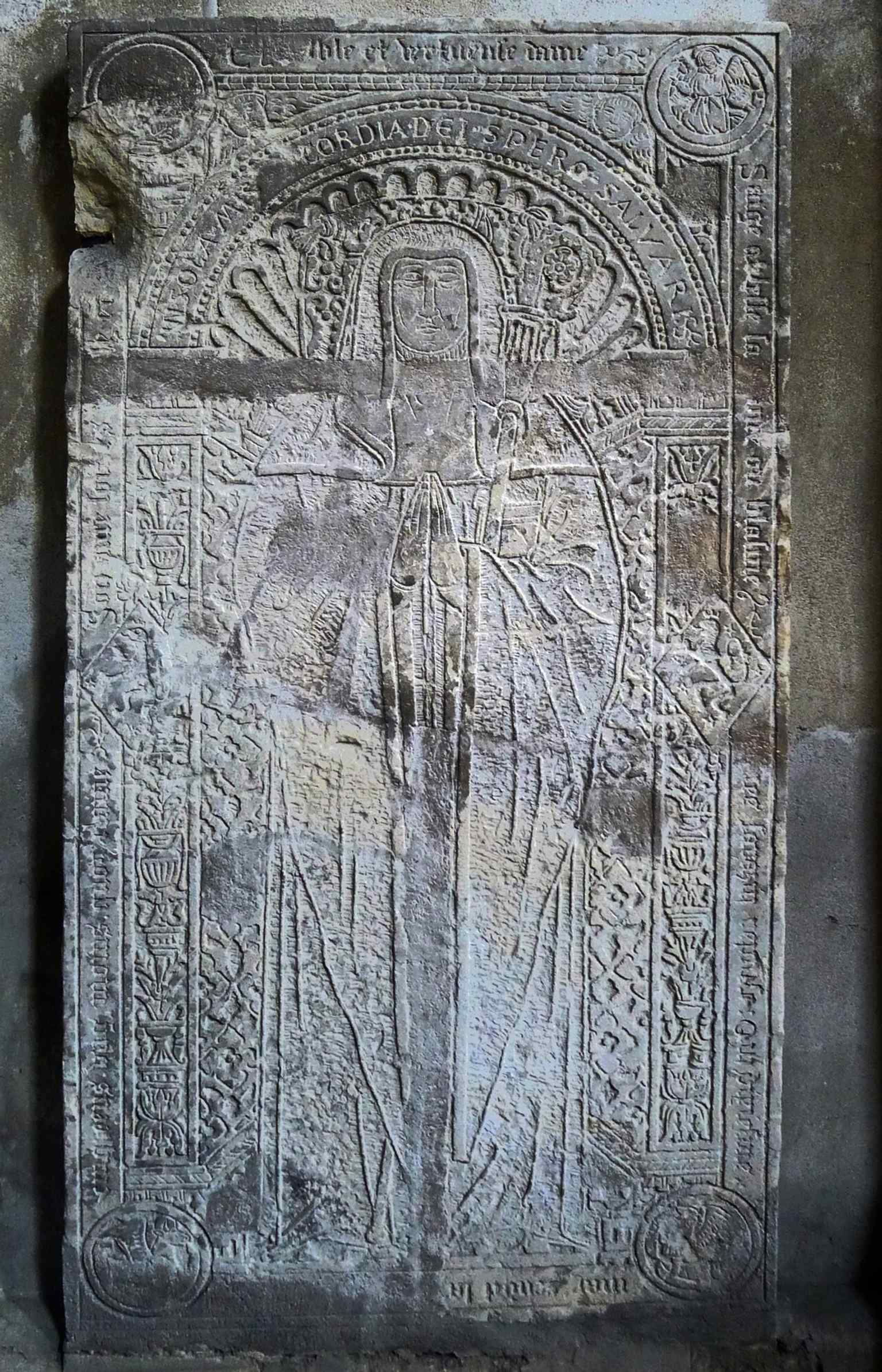
The limestone tombstone of Renée Sarazin, an abbess of Ronceray from 1493 to 1499, found within the ancient staircase, symbolizing the abbey's historical dominance over the parish.Photo: Mbzt, Wikimedia Commons, CC BY-SA 4.0. Cropped & resized. 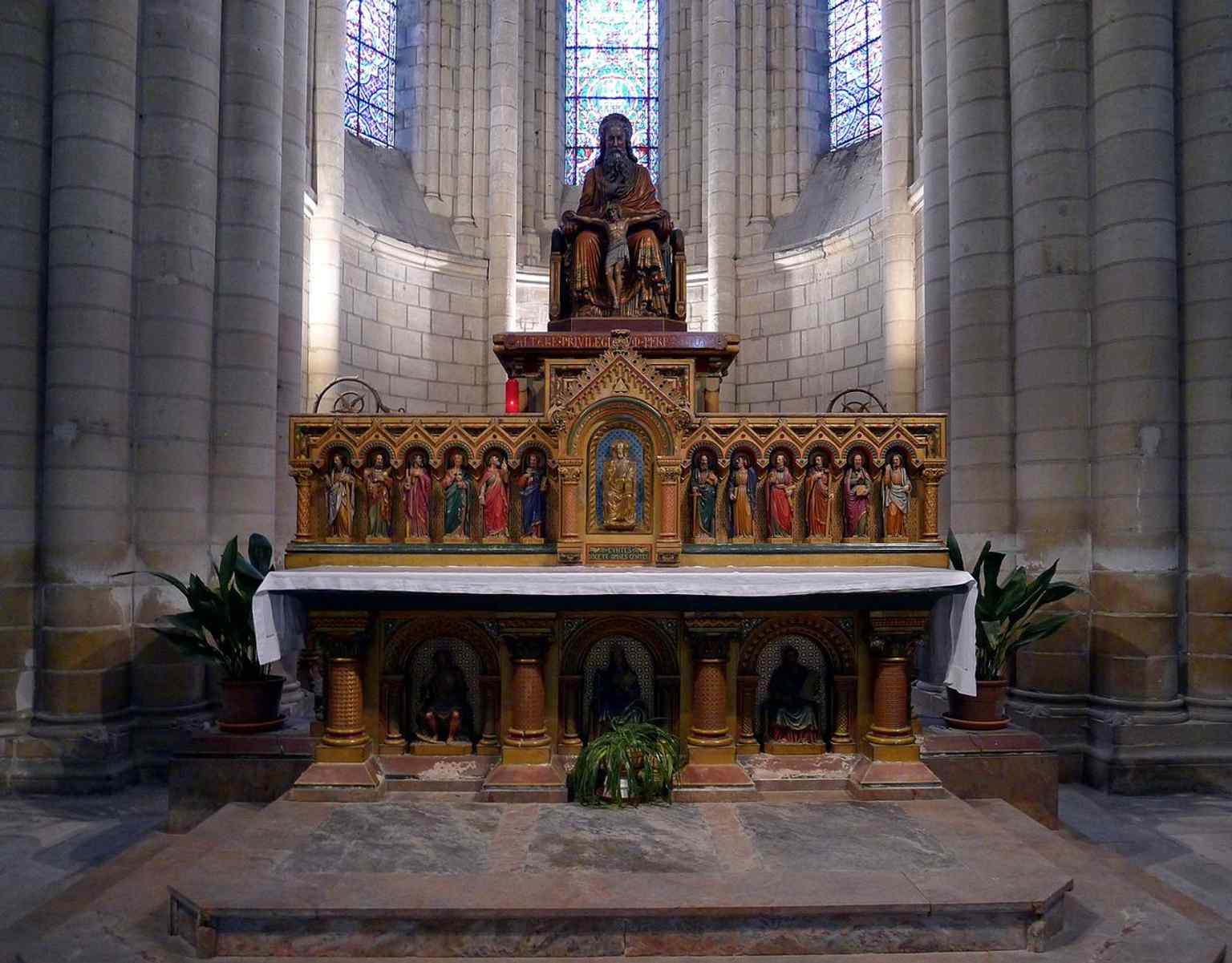
The main altar, crafted in 1873 from polychrome carved stone, features a rare Trinitarian motif and Apostles, notably replacing Judas with Paul.Photo: Mbzt, Wikimedia Commons, CC BY 3.0. Cropped & resized. 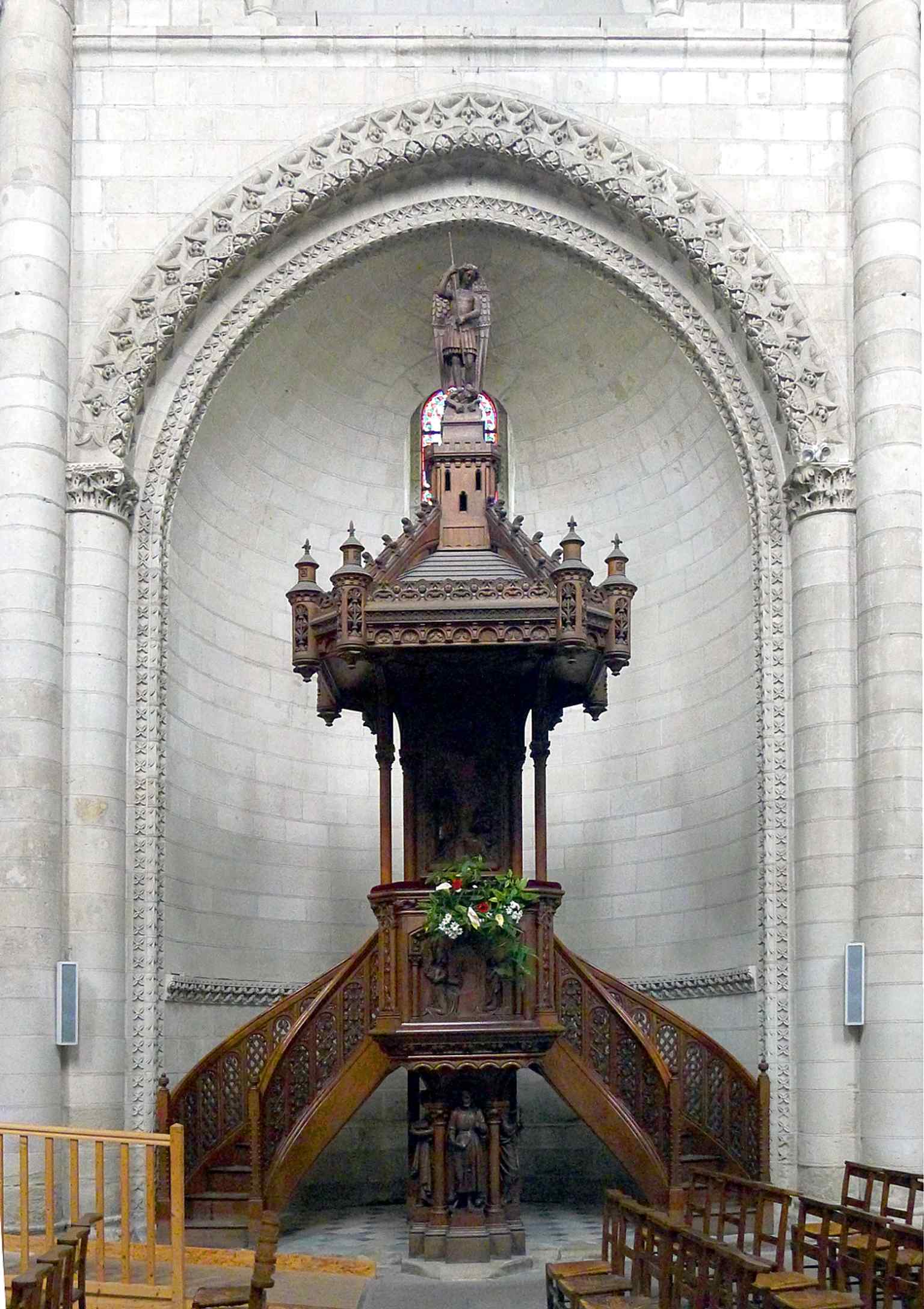
The 18th-century pulpit, an ornate piece of cabinetry adorned with sculptures including Saint George slaying the demon and the Annunciation.Photo: Mbzt, Wikimedia Commons, CC BY 3.0. Cropped & resized. 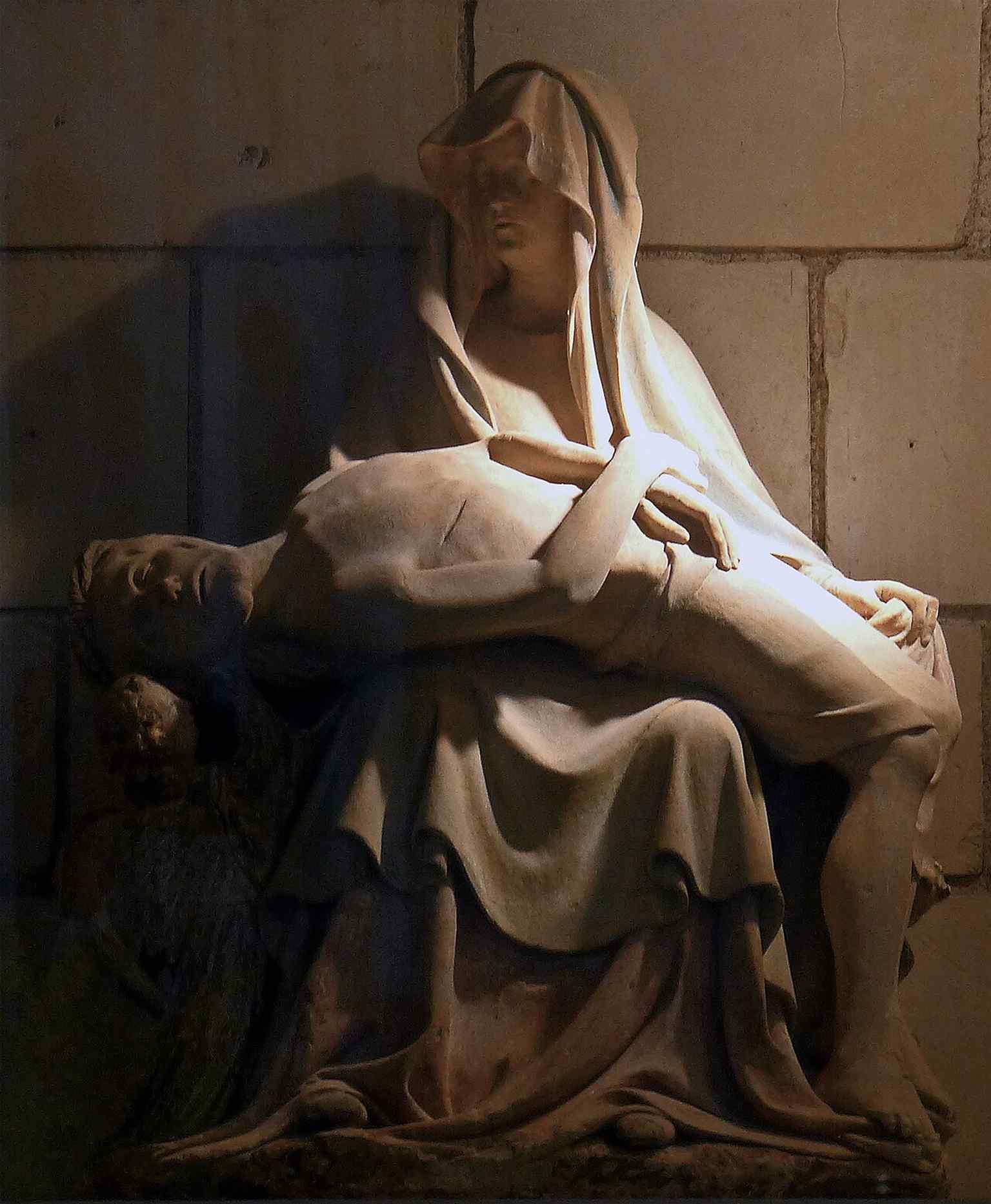
This medieval Pietà from the 15th century tragically lost its original polychrome colors due to repeated floods from the Maine river, including the historic 1910 inundation.Photo: Mbzt, Wikimedia Commons, CC BY-SA 4.0. Cropped & resized. 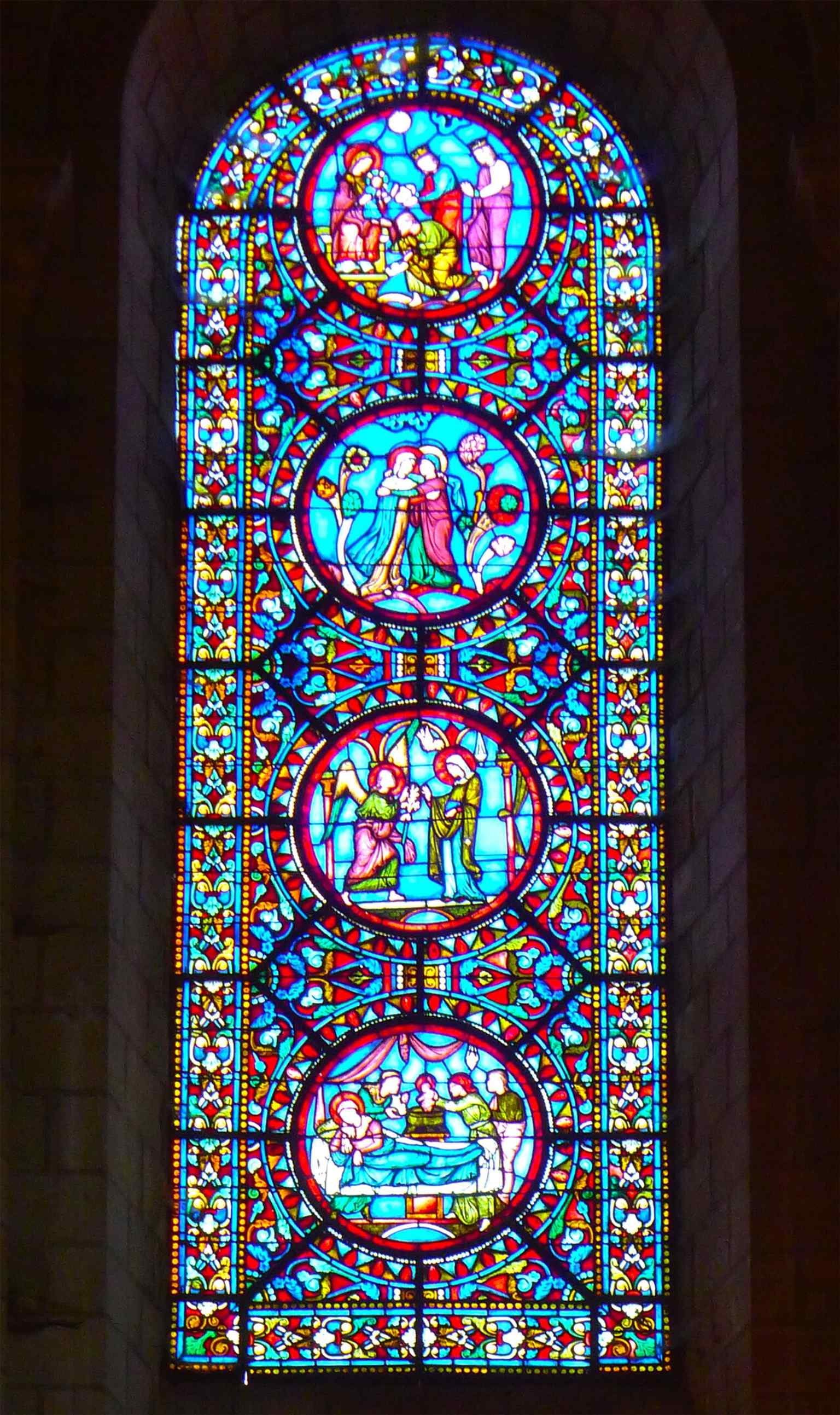
One of the choir's stained-glass windows by Thierry fils (1860s), designed in an 'archaeological' style with deep blues and medallion compositions to evoke a medieval atmosphere.Photo: Mbzt, Wikimedia Commons, CC BY-SA 4.0. Cropped & resized. 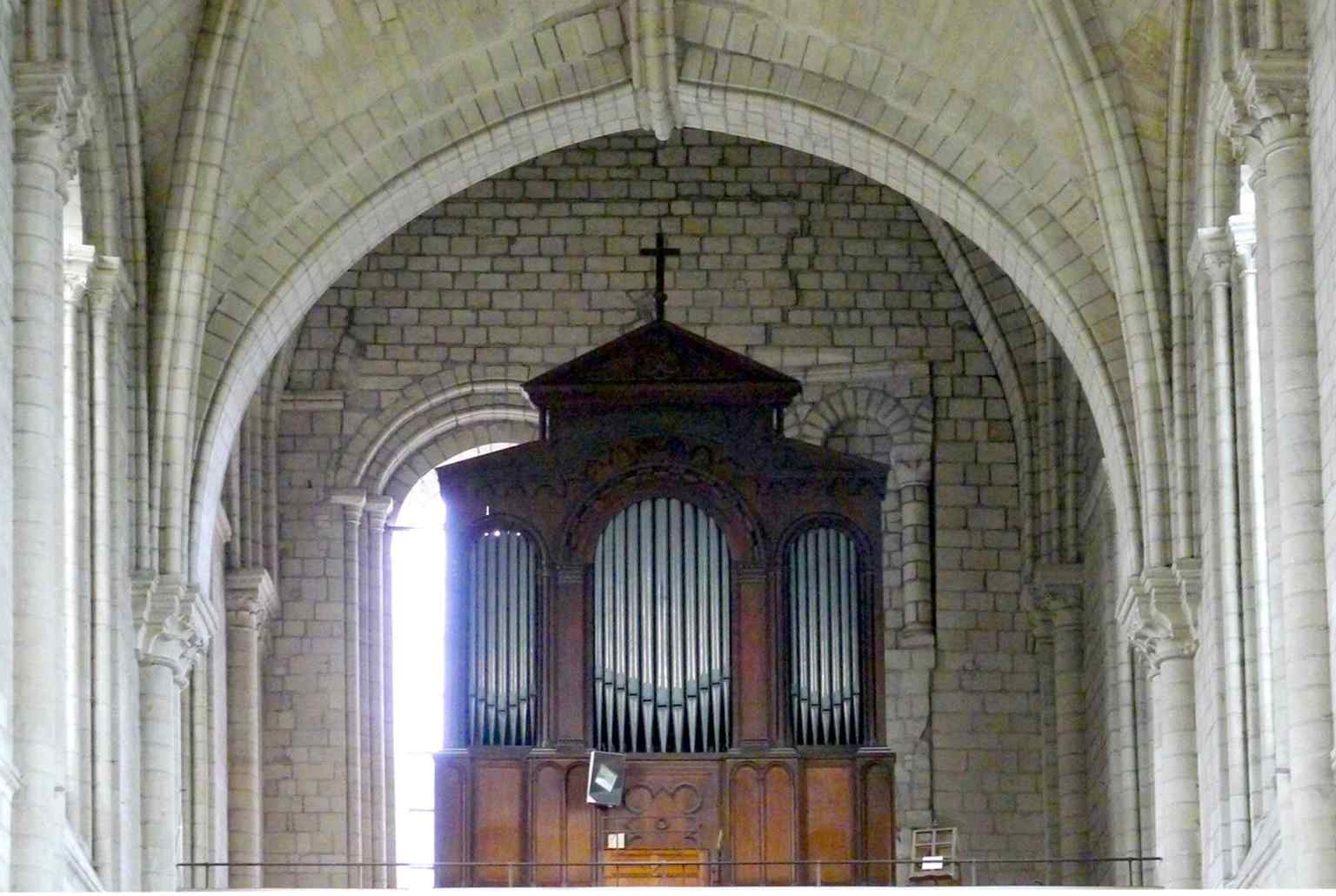
The current organ, built in 1840 by DAUBLAINE and CALLINET, which was declared a historical monument for its instrumental part in 1997.Photo: Mbzt, Wikimedia Commons, CC BY 3.0. Cropped & resized. Look for the tall, pale stone semi-circular structure featuring distinct vertical columns and a conical slate roof, squeezed tightly between the older rough stone walls. Welcome…और पढ़ेंकम दिखाएँ
समर्पित पेज खोलें →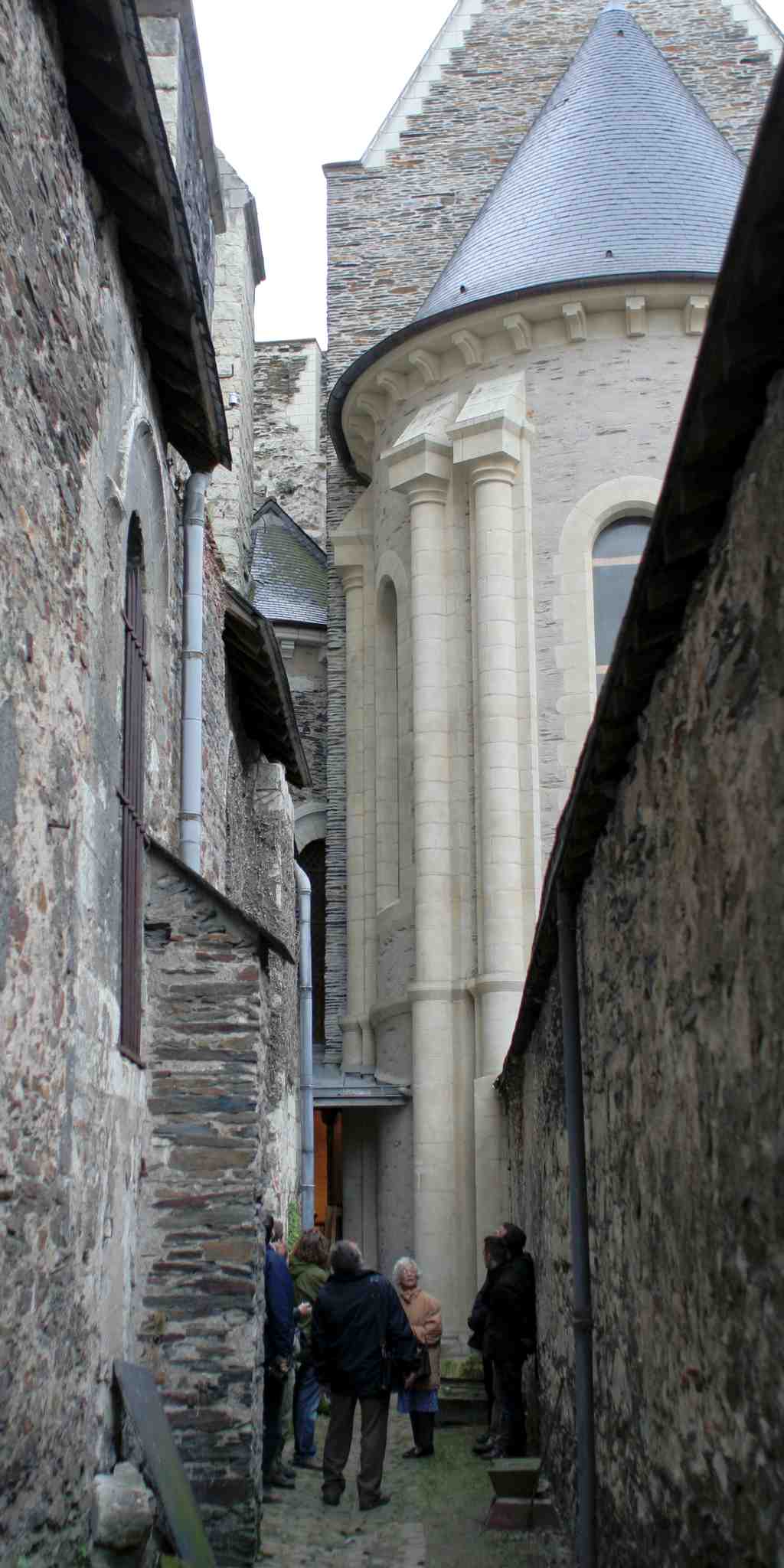
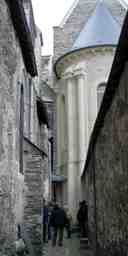
Abbey of Ronceray d'AngersPhoto: Coyau, Wikimedia Commons, CC BY-SA 3.0. Cropped & resized. Look for the tall, pale stone semi-circular structure featuring distinct vertical columns and a conical slate roof, squeezed tightly between the older rough stone walls. Welcome to the Abbey of Ronceray.
If you want to understand this place, you first have to understand medieval relationship counseling. In the year one thousand and twenty-eight, Count Foulques Nerra-also known as Fulk the Black-was looking to make amends. He had just returned from a pilgrimage to Jerusalem and needed to atone for his aggressively suspicious nature and his fierce, entirely unjustified jealousy toward his second wife, Hildegarde. His solution? He authorized her to build a massive monastery over the ruins of a sixth-century sanctuary. Nothing says I promise to stop accusing you of treason quite like funding a monumental abbey.
Check your device to see the impressive Romanesque exterior of the abbatial church, which was rebuilt starting in ten sixty. Under the strict Rule of Saint Benedict, this institution was highly exclusive. It only accepted daughters of the nobility. Naturally, accepting the elite meant accepting their colossal endowments. Ronceray quickly became one of the wealthiest, most powerful abbeys in the region, acting as a training ground for aristocratic women destined to run other major religious houses. You can check your phone to see the vast interior nave, the soaring central hall of the church, where these noble daughters once gathered.
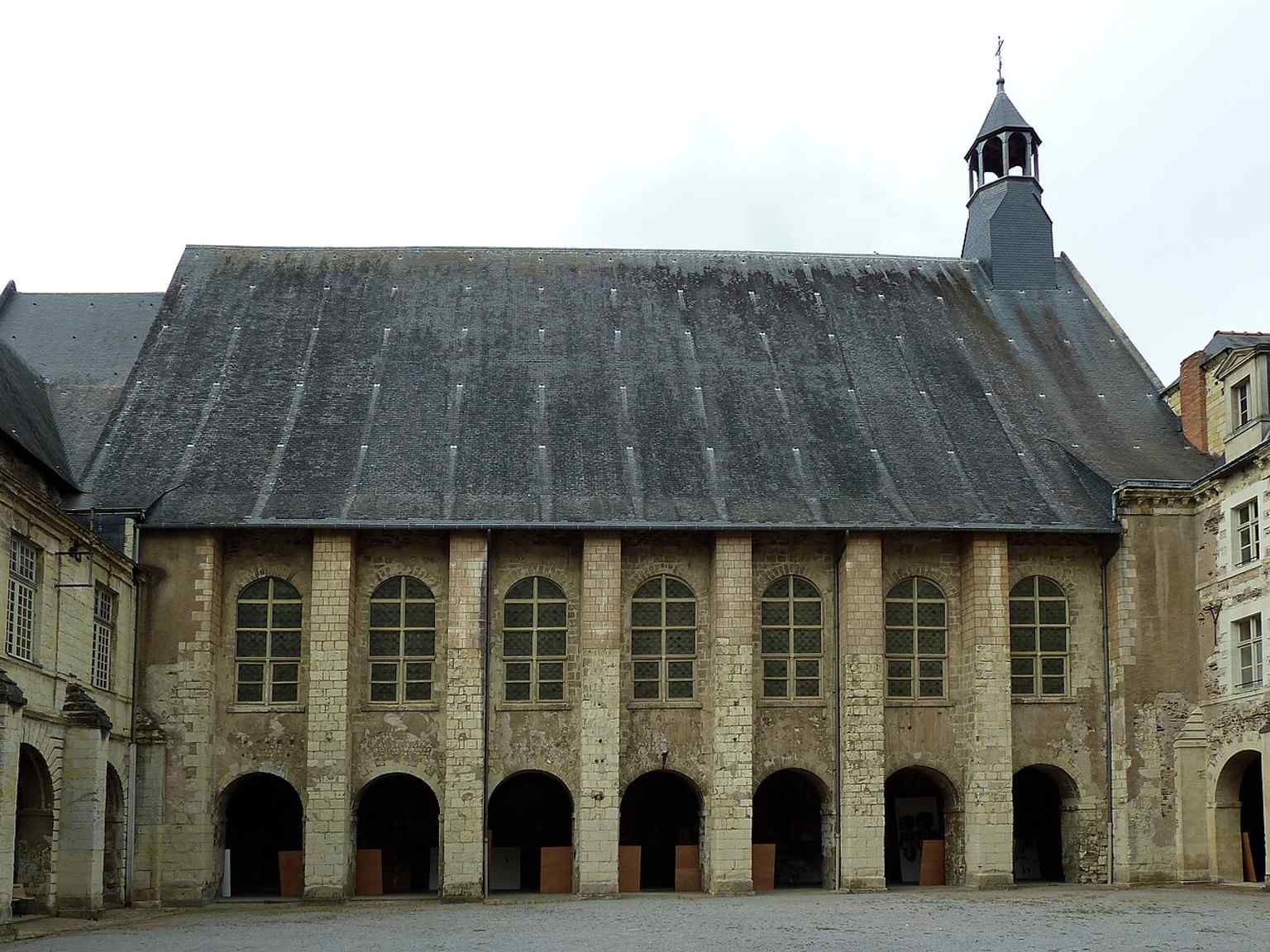
The impressive Romanesque abbatial church, visible here, was rebuilt between 1060/1070 and 1119, forming the heart of the once-opulent abbey.Photo: Sémhur (talk), Wikimedia Commons, CC BY-SA 4.0. Cropped & resized. Originally, the abbey was called Notre Dame de la Charité. But in fifteen twenty-seven, nuns excavating the crypt made a surprising discovery. They found a statue of the Virgin Mary with underground brambles-or ronces in French-miraculously wrapping around its feet. The imagery caught on, and the popular nickname Ronceray permanently eclipsed the official title.
As the abbey grew richer, it attracted the local goldsmiths, tanners, and merchants of the neighborhood who wanted to attend services. But the influx of laypeople shattered the contemplative life of the cloistered nuns. The abbess faced a logistical nightmare. How do you keep the locals happy without letting them ruin your peace and quiet? Her structural solution in the twelfth century was brilliantly simple. She ordered the construction of a separate parish church right next door. That Church of the Trinity of Angers we stood outside a few minutes ago? That was her elegant solution.
The aristocratic tranquility lasted until the French Revolution forced the final abbess and her nuns out in seventeen ninety. After a brief stint as a military hospital, the austere convent was handed over to a very different crowd in eighteen fifteen. The rowdy, undisciplined engineering students of the new School of Arts and Crafts moved in. These young students-known as the Gadzarts-clashed hilariously with the solemn architecture. They even forged an immense metal key, the Ex Key, to symbolize their graduation and final exit from the school's strict discipline. I appreciate the irony of industrial students turning a convent cloister into a theater for their noisy rituals.
It is a remarkable survival of medieval architecture perfectly adapted for industrial minds. Feel free to linger here as long as you like, and when you are ready, we can head to the next stop.
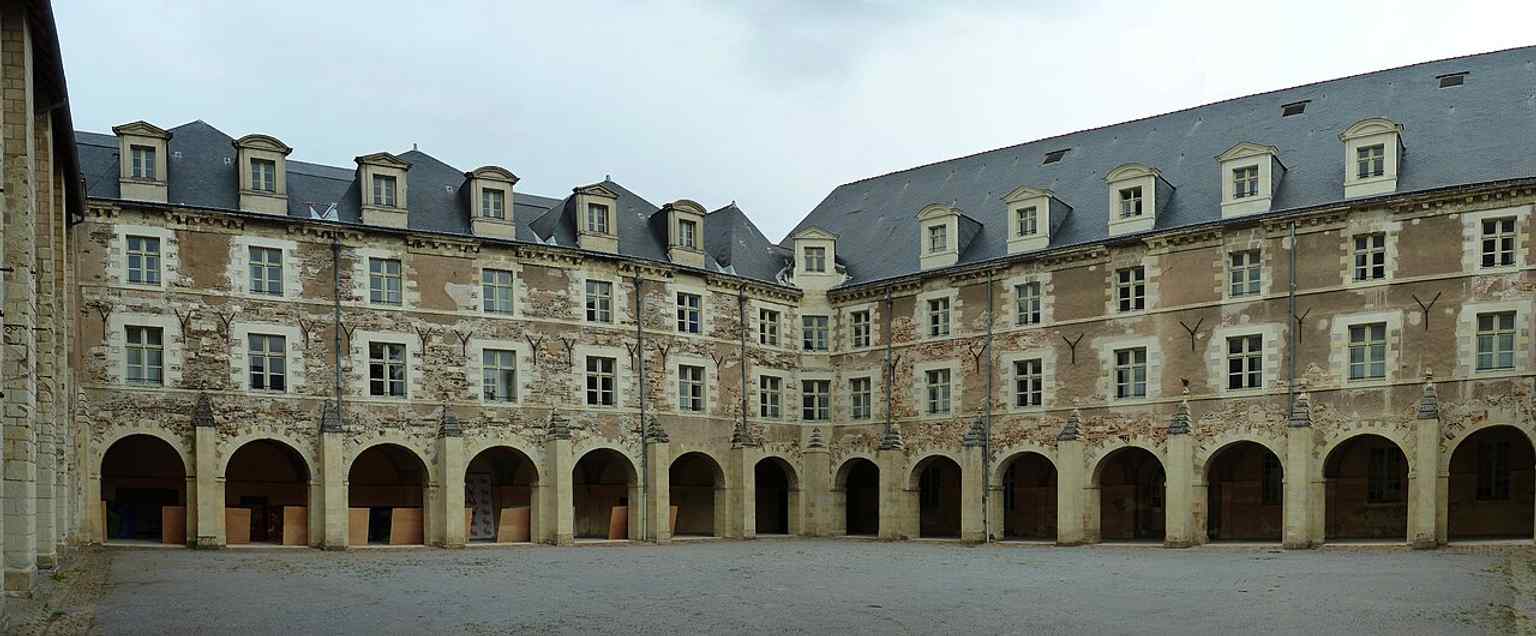
This panoramic view shows the Abbey of Ronceray, founded in 1028 by Hildegarde, wife of Foulques III, as a place of penance for her husband.Photo: Sémhur (talk), Wikimedia Commons, CC BY-SA 4.0. Cropped & resized. 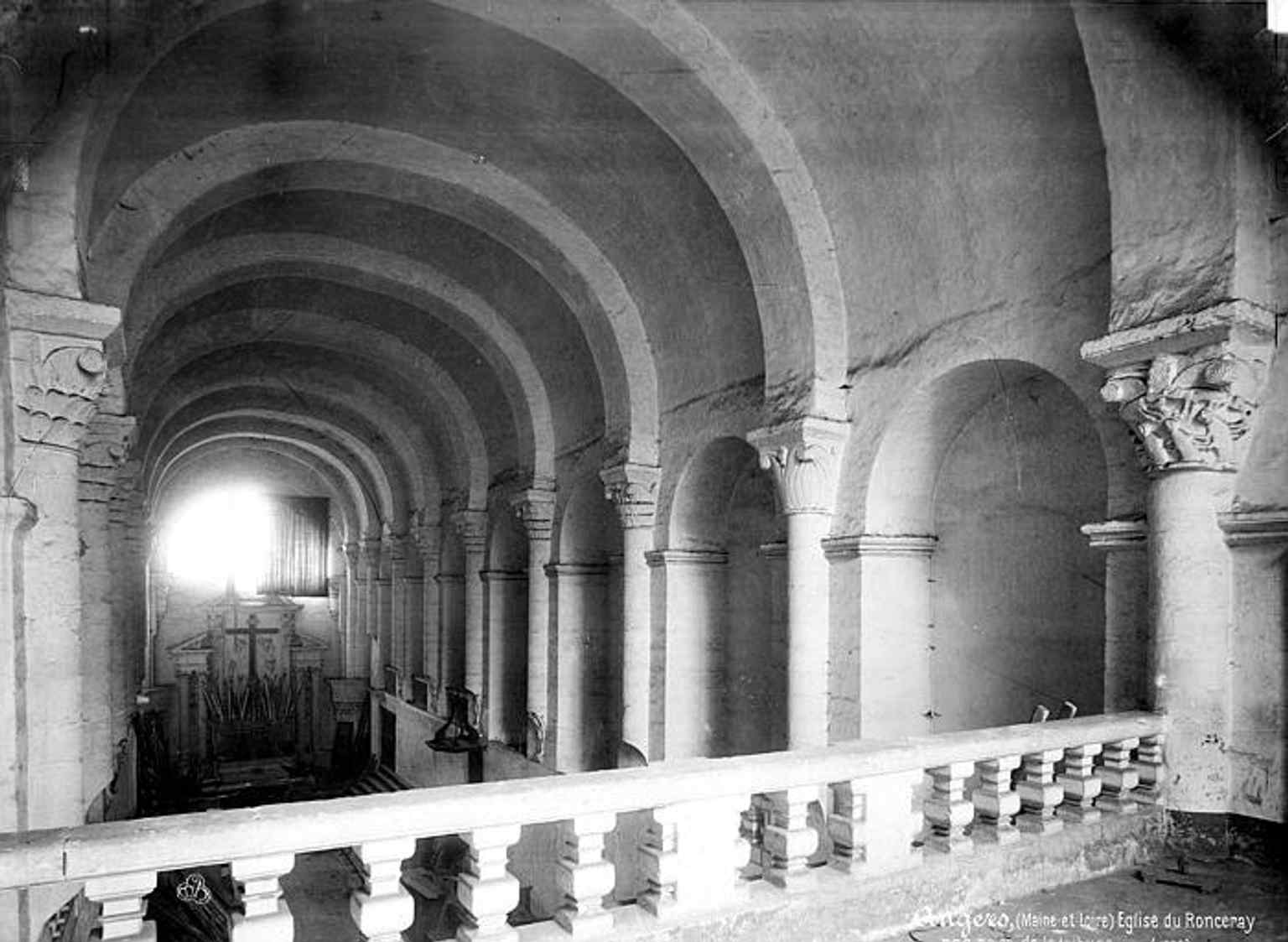
Step inside the vast nave of the abbey's church, where daughters of the nobility once followed the strict Rule of Saint Benedict.Photo: Séraphin-Médéric Mieusement, Wikimedia Commons, CC BY-SA 4.0. Cropped & resized. 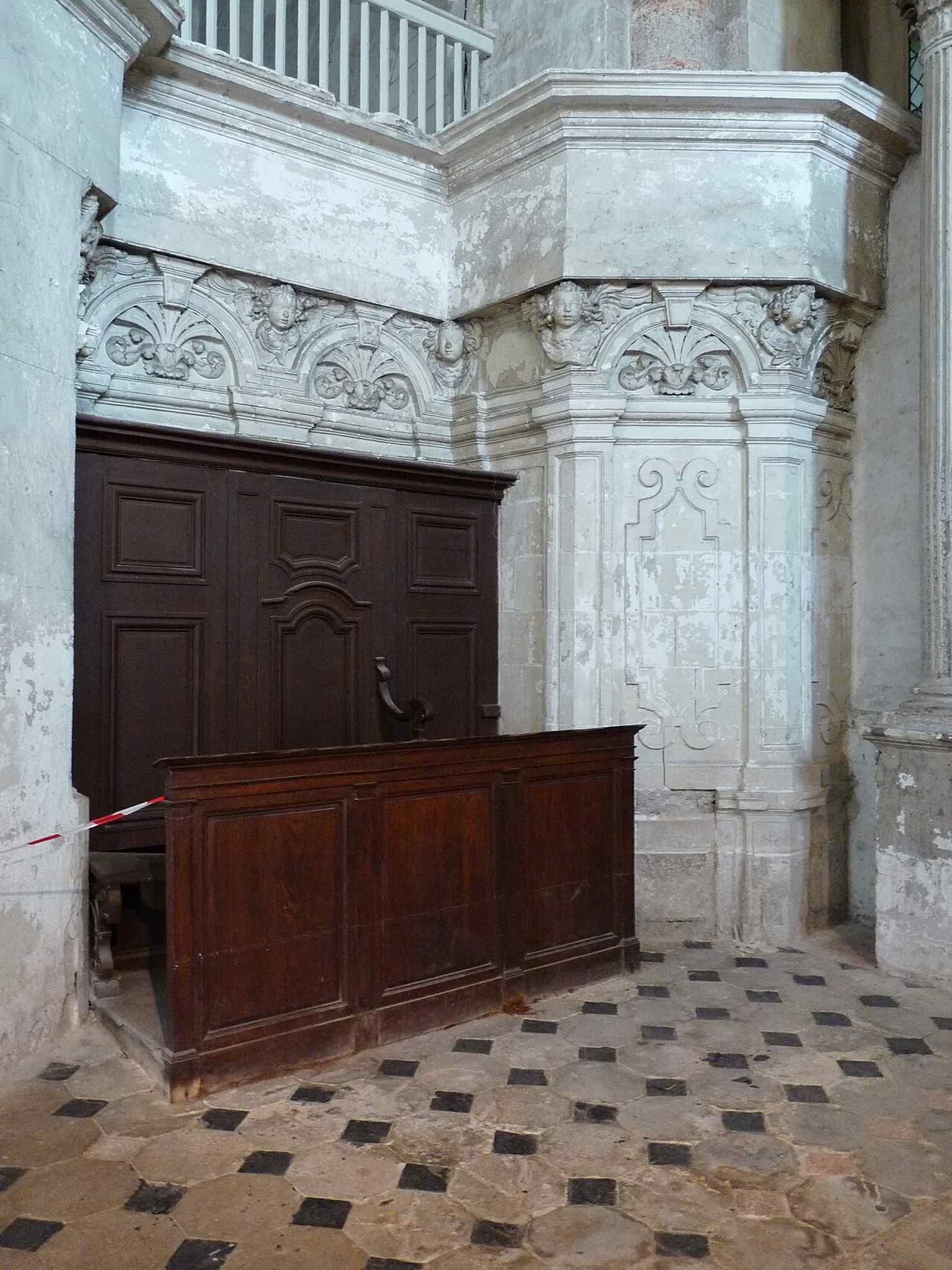
These wooden stalls within the abbatial church hint at the structured monastic life, where nuns gathered for daily prayers and contemplation.Photo: GO69, Wikimedia Commons, CC BY-SA 4.0. Cropped & resized. 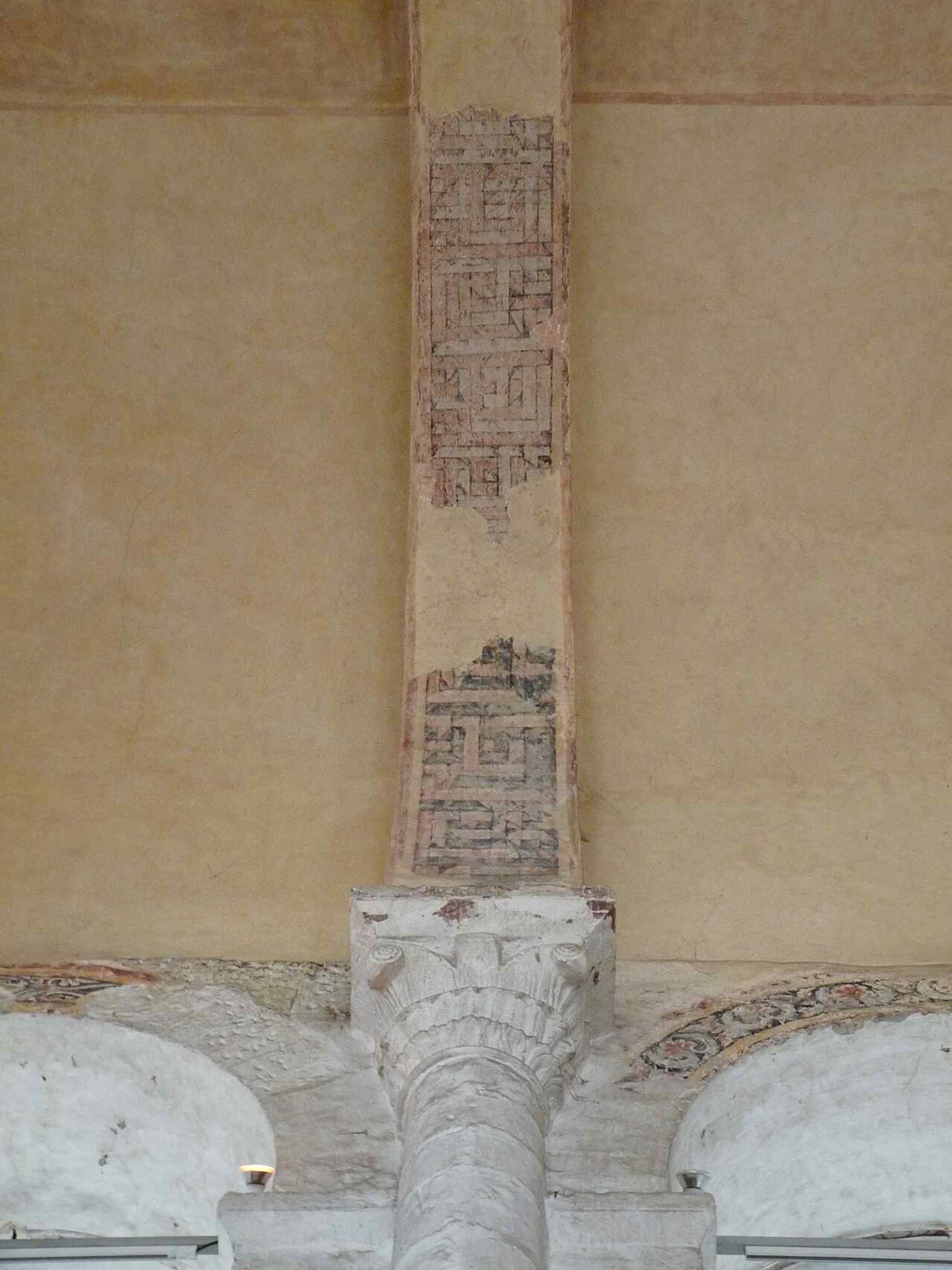
Observe the intricate carving of this Romanesque capital inside the church, showcasing the architectural detail of a building classified as a historical monument since 1840.Photo: GO69, Wikimedia Commons, CC BY 4.0. Cropped & resized. 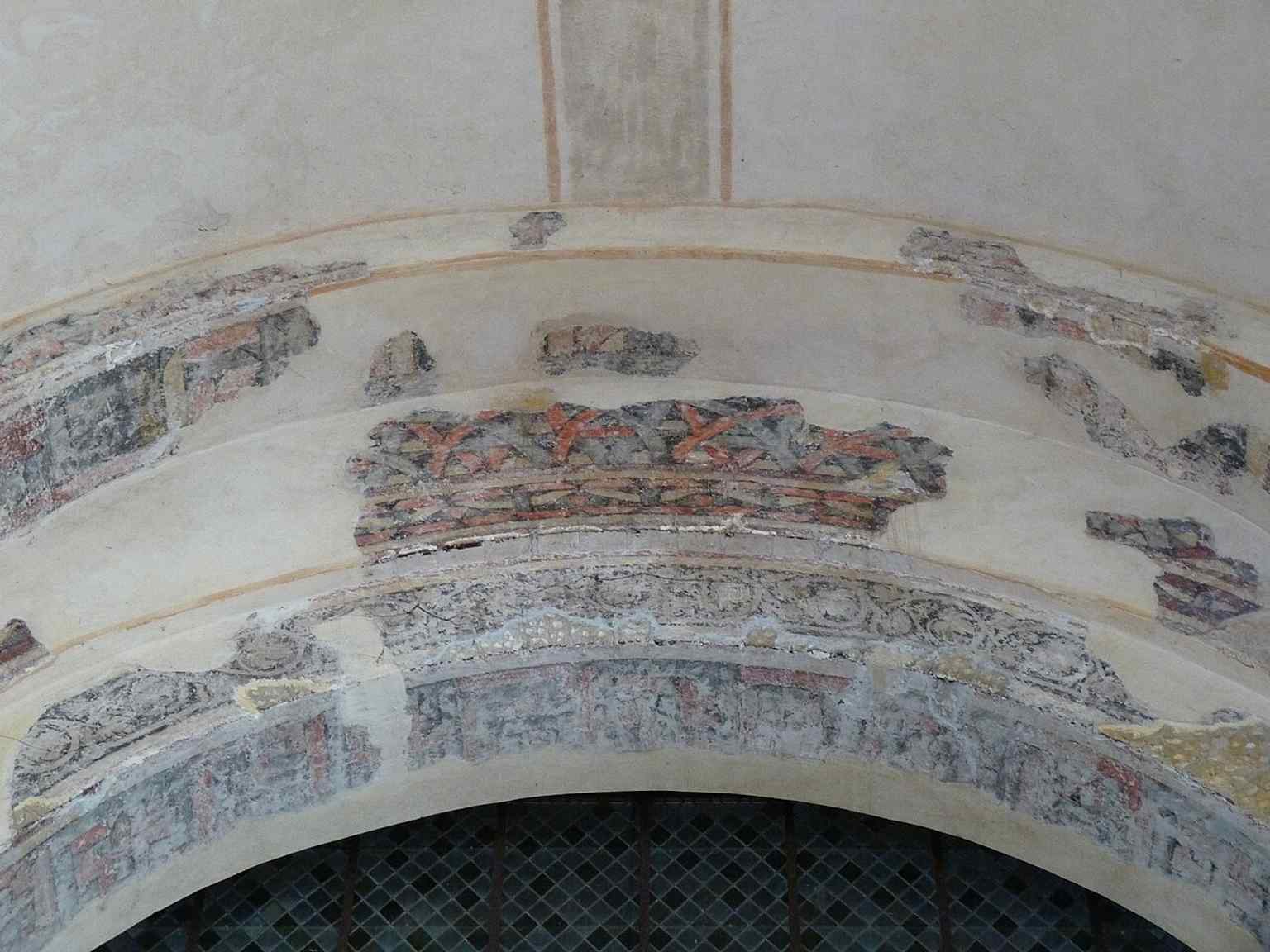
Discover fragments of ancient mural paintings within the abbatial church, adding to the rich artistic and historical layers of the Abbey of Ronceray.Photo: GO69, Wikimedia Commons, CC BY-SA 4.0. Cropped & resized.
11 और स्टॉप दिखाएँकम स्टॉप दिखाएँexpand_moreexpand_less
You will recognize the building on your right by its sturdy stone walls topped with steep slate roofs, the striking cylindrical stair tower capped with a pointed cone, and the…और पढ़ेंकम दिखाएँ
समर्पित पेज खोलें →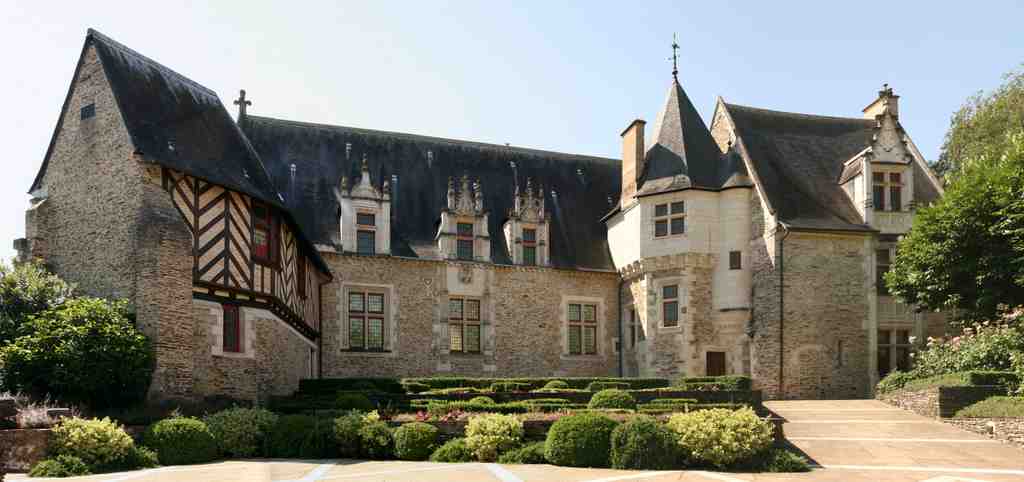
Hôtel des Pénitents d'AngersPhoto: Sémhur, Wikimedia Commons, CC BY-SA 4.0. Cropped & resized. You will recognize the building on your right by its sturdy stone walls topped with steep slate roofs, the striking cylindrical stair tower capped with a pointed cone, and the section of patterned half-timbering on the left wing.
This is the Hotel des Penitentes. If these walls look like they have a bit of a split personality, that is because they do. Take a look at your screen to see the full layout of the surviving architecture.
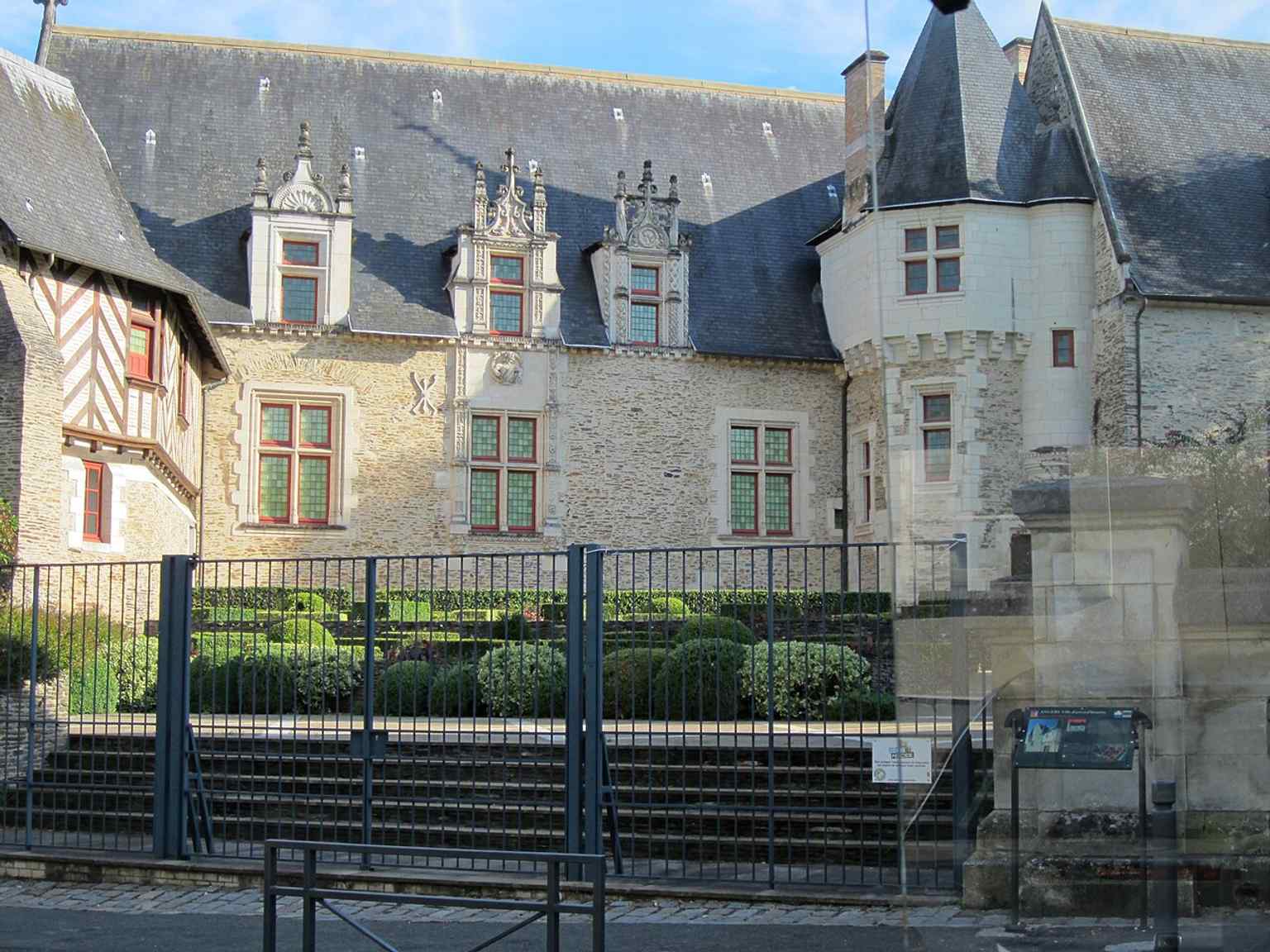
The Hôtel des Pénitentes d'Angers, classified as a historical monument in 1902, served as a house of correction and convent for centuries before being transformed into a culinary book library in 2018.Photo: Xfigpower, Wikimedia Commons, CC BY-SA 3.0. Cropped & resized. It was built in the late fifteenth century as a city refuge for the monks of the Saint-Nicolas abbey. Naturally, the monks almost never used it. Instead, it became a revolving door of unexpected tenants. A controversial abbot named Jean de Charnace died here in fifteen thirty-nine, and by sixteen forty-two, it was rented out to a famous local Baroque sculptor named Pierre Biardeau.
But the building's defining era began around sixteen forty. Caught up in the fervor of the Counter-Reformation, a priest named Claude Menard established a convent here for voluntary penitents, essentially women looking to leave a life of ill repute. It was not exactly a luxury retreat. Under the strict authority of the local bishop, Henri Arnauld, the women were subjected to a brutal regime of humility. Their uniform was a rough, grey serge dress shaped exactly like a sack, topped with a white wimple to hide their necks.
Things escalated in sixteen seventy-five. A new wing called the refuge was built to forcibly lock up public women on police orders for sanitary and moral reasons. So, you had devout volunteers and literal prisoners living under the same roof. By the early nineteenth century, it was a harsh holding pen for convicts, aging paupers, and the sick. In May of eighteen oh nine, it housed one particularly famous inmate. Her name was Renee Bordereau, known as the Angevin, a legendary female soldier who disguised herself as a man to fight in the royalist Vendean army during the Revolution.
The building itself has survived by the skin of its teeth. In eighteen sixty-four, urban planners plowed the new Descazeaux boulevard right through the complex, obliterating the prison wing and the chapel. Only this original manor house survived. Luckily, in nineteen forty-one, an art professor named Georges Chesneau painstakingly restored the surviving Renaissance stonework, even recreating a famous little sculpture of a penitent woman near the base of the western chimney.
Today, the story ends with a magnificent piece of irony, as this former house of correction and frugal, punishing meals was transformed in two thousand and eighteen into a culinary library holding over thirty-six thousand books on gastronomy. This strange stone structure has pulled off the ultimate architectural redemption.
Take a final look at this resilient facade. When you are ready, we will continue on.
You are looking at a sturdy stone complex wrapped around a central courtyard, defined by its rhythmic ground-floor arches and the towering wooden crucifix anchored right in the…और पढ़ेंकम दिखाएँ
समर्पित पेज खोलें →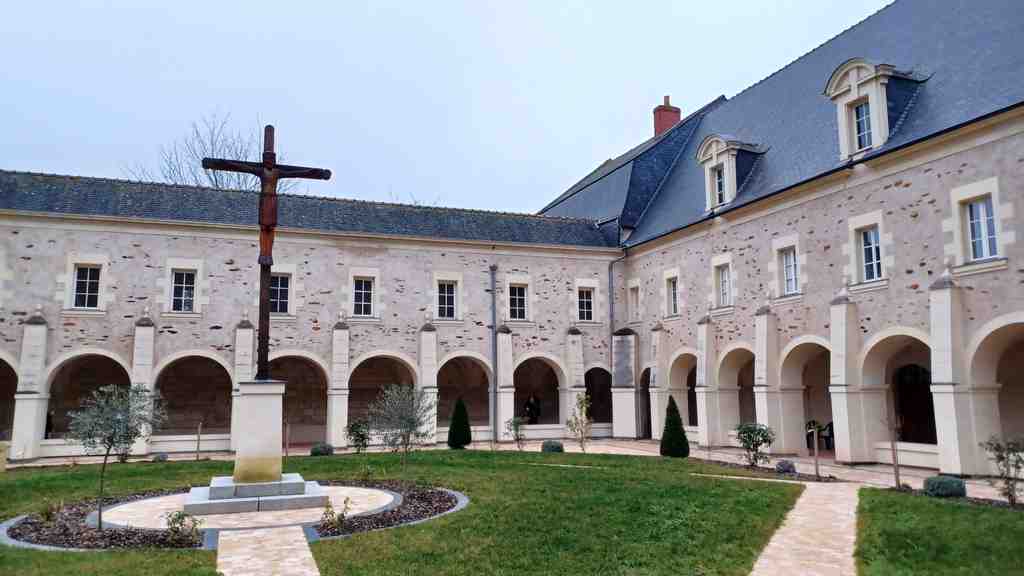
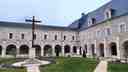
Convent of the Carmel of AngersPhoto: Ibex73, Wikimedia Commons, CC BY 4.0. Cropped & resized. You are looking at a sturdy stone complex wrapped around a central courtyard, defined by its rhythmic ground-floor arches and the towering wooden crucifix anchored right in the middle.
This is the Convent of the Carmel. Its story starts back in sixteen twenty-six, when five daring nuns arrived in Angers to set up shop. Their leader, the prioress, which is the head of the convent, was a woman named Renée de Jésus-Maria, and she was only twenty-six years old. They eventually bought this estate in sixteen thirty-eight and settled in early the next year.
For over a century, things were peaceful. The nuns prayed, lived quietly, and buried their sisters beneath the heavy stone slabs of the cloister. Take a glance at your screen to see the historic exterior that has weathered so many storms.
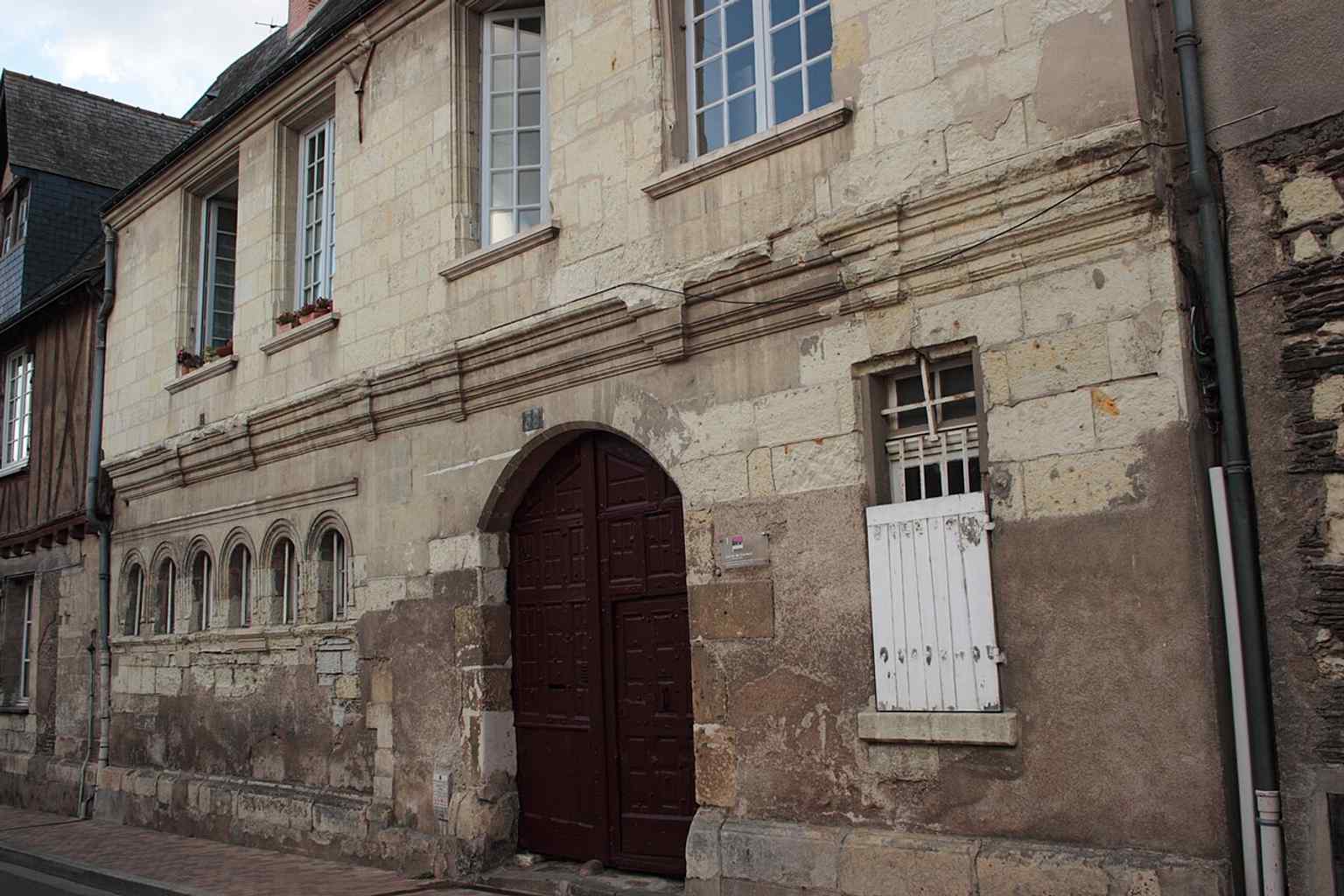
An exterior view of the Convent of the Carmel, which has been classified as a historic monument since 1963, preserving its legacy through centuries of change.Photo: Corbenic, Wikimedia Commons, CC BY-SA 3.0. Cropped & resized. But history has a habit of interrupting. In seventeen ninety-two, the French Revolution swept through. The government expelled the nuns and seized the property. The former sanctuary took a rather dark turn. It was converted into an orphanage, then a prison for women, and finally a hospital for incurable diseases. Eight of the local nuns were arrested and sentenced to permanent deportation. They somehow survived the Reign of Terror, a period of brutal political violence, but the original community never recovered.
Then, in eighteen fifty, a new group of nuns arrived from the city of Cahors. Against all financial odds, they managed to buy back the historic buildings in eighteen fifty-five.
They survived the Revolution, but the twentieth century brought its own problems. In nineteen forty-four, an American bombing raid completely flattened the chapel. The sisters simply cleared the rubble and rebuilt it by nineteen fifty-two.
Today, a community of about twenty nuns still lives behind these walls. They maintain a very practical connection to the outside world by manufacturing the communion wafers used across the diocese of Angers, the local administrative district of the church. The long survival of this convent is a testament to the quiet, stubborn resilience of its occupants.
Whenever you feel ready to leave this peaceful place, we will walk together to our next destination.
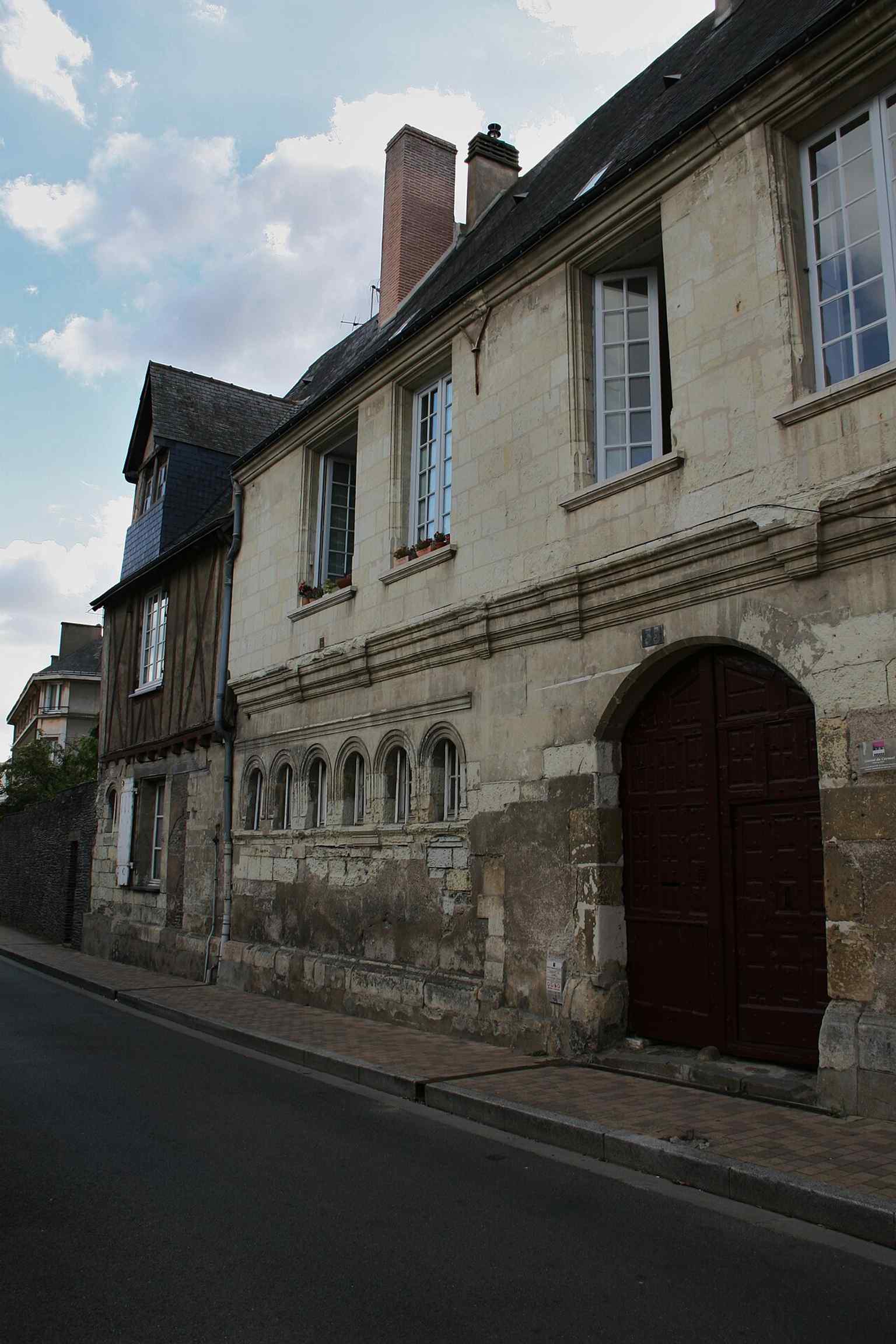
The entrance to the Convent of the Carmel, located at 39 rue Lionnaise, where the community acquired the Hôtel de Puy-Gaillard in 1638.Photo: Lexou, Wikimedia Commons, CC BY-SA 3.0. Cropped & resized. On your left, look for a building with rough, dark schist walls topped by a sharply pointed roof, featuring a tall, pale stone Gothic window right in the middle. This is the…और पढ़ेंकम दिखाएँ
समर्पित पेज खोलें →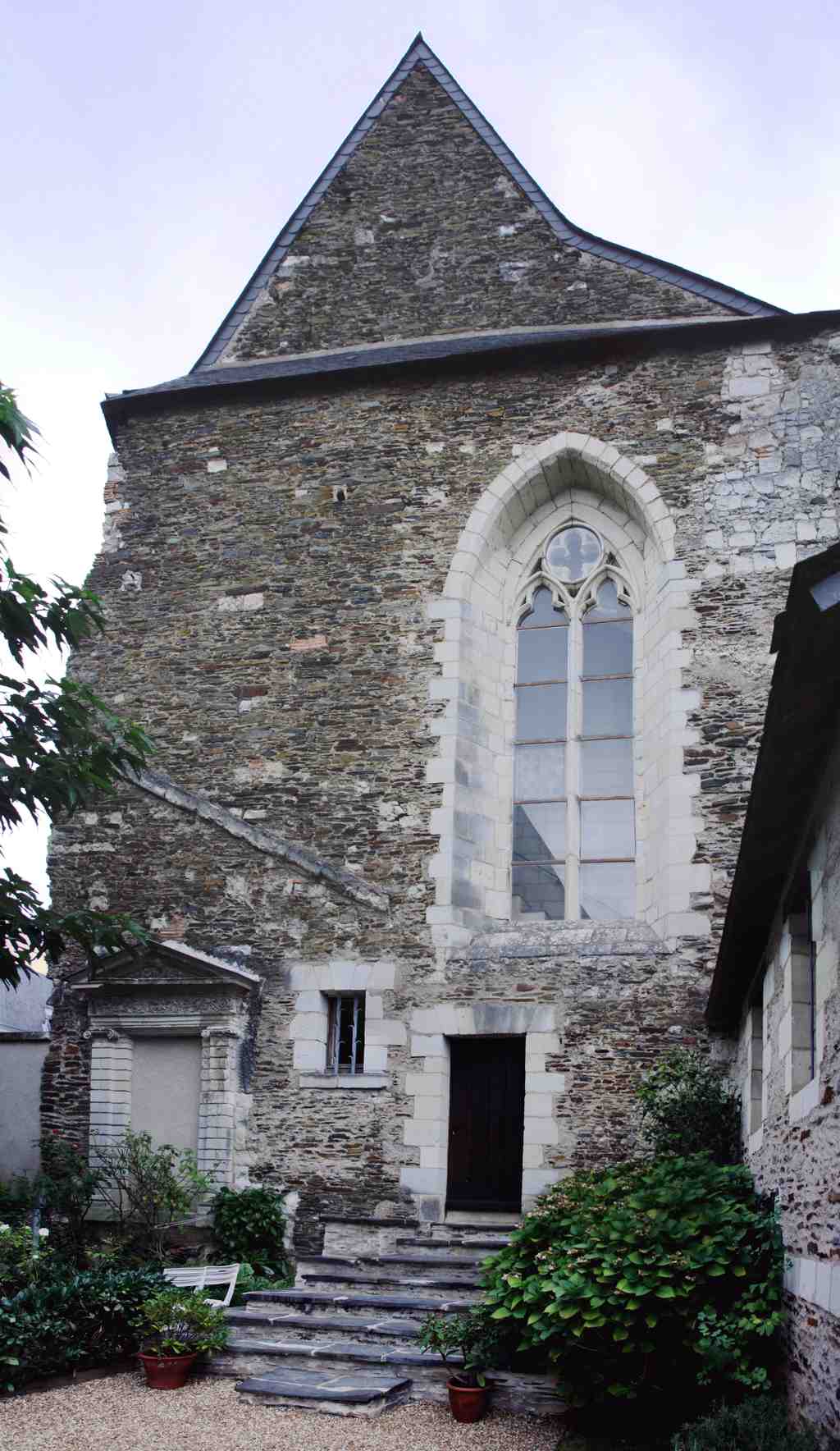
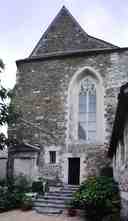
Augustinian Convent of AngersPhoto: Sémhur, Wikimedia Commons, CC BY-SA 4.0. Cropped & resized. On your left, look for a building with rough, dark schist walls topped by a sharply pointed roof, featuring a tall, pale stone Gothic window right in the middle.
This is the Augustinian Convent, or rather, the fragments that survived centuries of architectural recycling. Back in twelve sixty-three, this land was given to a rather obscure medieval order known as the Sack Friars. They earned their name by walking around in itchy, completely unrefined sackcloth. The Pope, perhaps offended by their aggressive lack of fashion sense, dissolved the entire order just eleven years later in twelve seventy-four. The Augustinian monks moved in shortly after, taking the site from a humble camp to a sprawling religious complex. They built a massive church, a grand cloister, and the fourteen eighty Chapel of the Passion, which is the structure with that soaring window you see before you.
Life in a monastery is usually quiet. Usually. Enter Father Jacques Hommey. In the early eighteenth century, this resident theology scholar wrote a sprawling chronicle full of highly critical political commentary. The ambassador of the Republic of Venice caught wind of it and took extreme offense. The ambassador demanded severe punishment, and the French authorities actually caved to the diplomatic pressure. They exiled the elderly monk across the country to Bar-le-Duc. He was only permitted to return to this very convent just before he died on the twenty-fourth of October, seventeen thirteen.
The French Revolution arrived in the late eighteenth century and completely dismantled the property. In seventeen ninety-five, the main church was demolished, and the massive plot of land was carved up and sold off. Fast forward to eighteen seventy-one, and the site took a sharp turn from spiritual salvation to mass production. The Savaton-Hamard company bought these holy walls and transformed them into a bustling shoe factory. This is where the engineering gets clever. The architect, Julien Moirin, did not just bulldoze the site. He systematically dismantled the ruined sections and recycled the medieval schist stones to build his new factory walls. Inside, he installed heavy cast-iron columns and thick wooden floors to support the clattering workshops. For decades, the peaceful chants of monks were replaced by the heavy, rhythmic thud of leather-cutting machinery.
The shoe business eventually folded in nineteen hundred and five. Since then, these walls have housed an orphanage, a painting company, and even a trade school. Then, in two thousand and twelve, a developer decided to build a high-end residential complex on the grounds. Before they poured a single drop of concrete, archaeologists from I-N-R-A-P, the French National Institute of Preventive Archaeological Research, took over the site. Digging directly beneath the old factory floors, they uncovered original medieval funereal niches. It was a stark, quiet reminder of the sacred ground hiding beneath centuries of aggressive industry.
Today, the surviving architecture stands as an incredibly resilient patchwork of stone, seamlessly bridging the gap between medieval devotion and modern living. Appreciate this strange layering of history. Once you are set, our walk continues.
On your right is Hotel rue de l'Hommeau, easily spotted by its rough stone lower walls, the smooth pale blocks outlining the arched windows, and that striking section of…और पढ़ेंकम दिखाएँ
समर्पित पेज खोलें →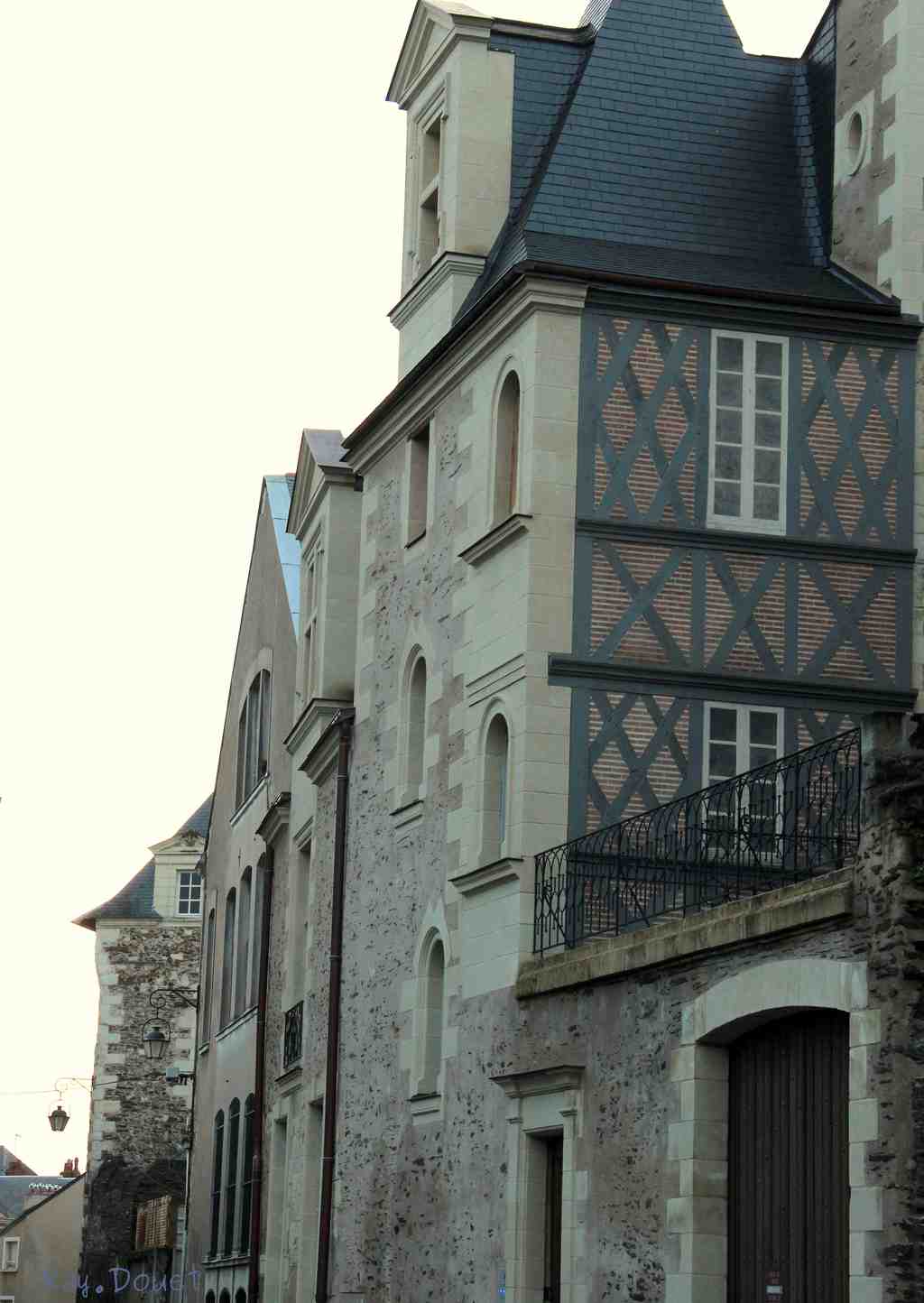
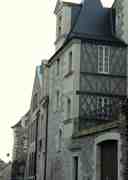
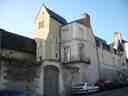
Hotel rue de l'HommeauPhoto: Raydou, Wikimedia Commons, CC BY-SA 4.0. Cropped & resized. On your right is Hotel rue de l'Hommeau, easily spotted by its rough stone lower walls, the smooth pale blocks outlining the arched windows, and that striking section of half-timbering with a crisscross brick pattern jutting out over a black iron balcony.
It might look somewhat unified at first glance, but structurally, it is a Frankenstein monster of renovations spanning the twelfth to the eighteenth centuries. At its core sits a twelfth-century medieval manor tower. Originally, it boasted a soaring vertical profile, but later owners literally chopped the top off to fit their newer designs.
This place is essentially a historical monument to architectural ambition crashing hard into financial reality. Throughout the fifteen hundreds and sixteen hundreds, wealthy families like the Gohiers bought this home, dreaming of a grand mansion. They launched massive construction projects. They planned a sprawling third floor and a large new wing. But they ran out of money. The third floor sat totally incomplete, and the new wing was simply abandoned. A century later, the Pinson family bought the property and tried another grand courtyard expansion. They ran out of money, too.
However, the most spectacular addition came in the late fifteen hundreds. Those owners actually managed to finish a majestic spiral staircase made of tuffeau, which is the soft, pale limestone native to the region, along with that wooden gallery you see up there.
And here is the best part. On the street-facing side of that timber gallery, the owner carved a public warning into the wood. In old French, it translates to: Beware of falling into financial trouble, for few remain your friends when your fortune reverses.
It is a brilliant piece of cynical advice. And considering how many owners of this exact house went completely broke trying to renovate it, they really should have read their own walls. In nineteen sixty-three, the government protected the facade, officially preserving this magnificent, half-finished monument to bad budgeting.
It is a beautiful piece of design and a very relatable piece of history. Take all the time you need here, and whenever you feel like continuing, we can take a short walk to our next stop.
You should be looking at a rough-hewn stone perimeter wall featuring a heavy arched wooden gate, shielding a complex of pale buildings with a prominent stone tower and steep…और पढ़ेंकम दिखाएँ
समर्पित पेज खोलें →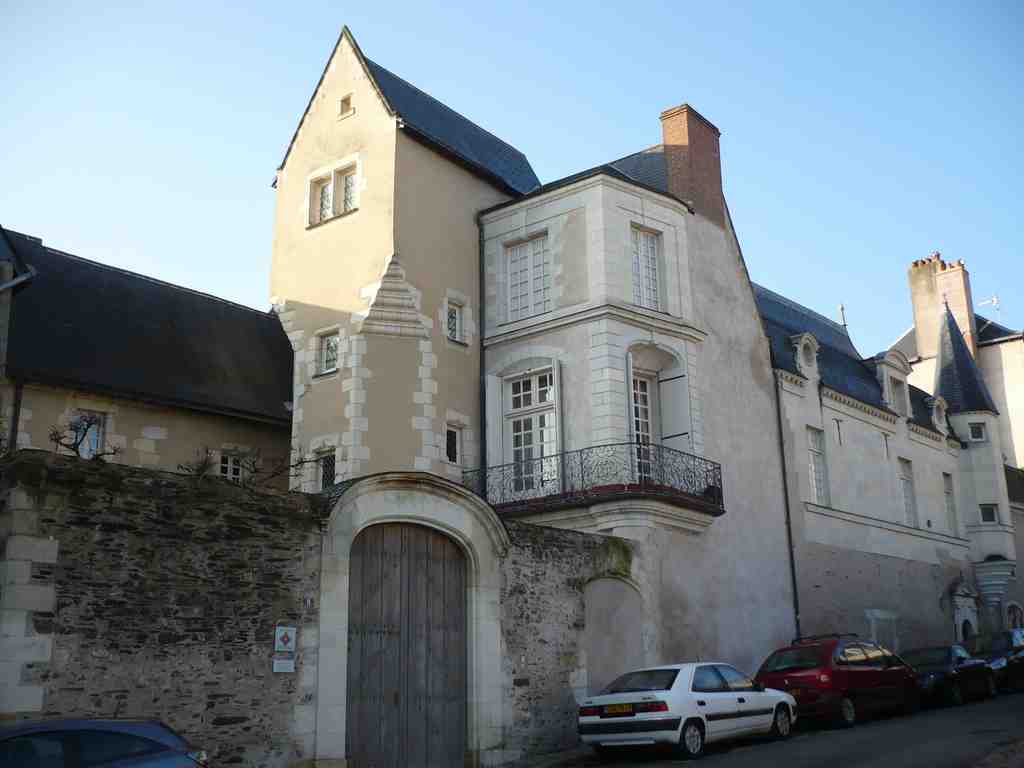
Hôtel de TinténiacPhoto: Romain Bréget, Wikimedia Commons, CC BY 3.0. Cropped & resized. You should be looking at a rough-hewn stone perimeter wall featuring a heavy arched wooden gate, shielding a complex of pale buildings with a prominent stone tower and steep pitched roof. Look closely at that barrier. When this was designed at the end of the fifteenth century, the wealthy had zero interest in mingling with the noise of the public street. They used a layout known as between courtyard and garden, intentionally placing a massive physical wall between themselves and the rest of the city.
The original owner was Jean de Tinténiac, a powerful Catholic priest who clearly felt vows of poverty were meant for other people. Between fourteen ninety-eight and fifteen zero two, he built this sprawling complex. He even added a majestic spiral staircase tower in the center of the courtyard, serving as the ultimate architectural flex to signal his authority and wealth.
The property history here is a masterclass in complicated family dynamics. By the mid-seventeenth century, a feared royal officer named Jacques Grandet de la Plesse bought the place and aggressively expanded it. But the real structural comedy happened in sixteen ninety-one. His two sons both wanted the estate. Instead of fighting it out, they literally chopped the domain in half. The older brother took the street-facing buildings, while the younger brother claimed the grand manor tucked away in the back.
The estate survived that split, but it barely survived its next occupants. In eighteen fifty-five, a congregation of nuns moved in to run a school. They kept the buildings active for over a century, which was wonderful for the foundation but a complete disaster for the architecture. To squeeze in their classrooms, the nuns methodically destroyed almost all of the ornate, centuries-old interior decor.
By the nineteen seventies, the empty mansion was literally collapsing. The city of Angers bought the ruin in nineteen seventy-two, likely took one look at the repair bill, and quickly sold it to a very brave private buyer. It took sixteen straight years of massive restoration campaigns to drag this medieval survivor back from the brink.
Today, it stands as a brilliant testament to extreme architectural stubbornness. Enjoy the view of this stubborn survivor, and when you are ready, let us keep moving.
Look for the imposing, curved structure made of rough-hewn stone and dark slate, featuring distinctive filled-in archways rising behind a white fence and a green metal gate. If…और पढ़ेंकम दिखाएँ
समर्पित पेज खोलें →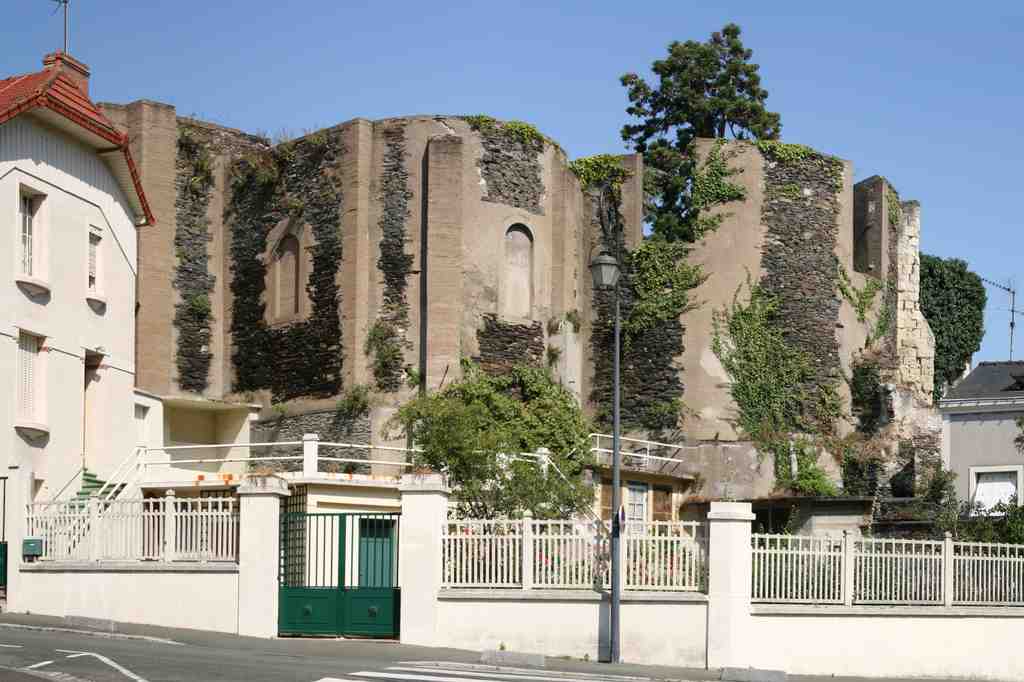
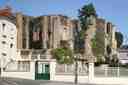
Synagogue of AngersPhoto: Sémhur, Wikimedia Commons, CC BY-SA 4.0. Cropped & resized. Look for the imposing, curved structure made of rough-hewn stone and dark slate, featuring distinctive filled-in archways rising behind a white fence and a green metal gate. If you are thinking this looks suspiciously like an ancient Christian church rather than a traditional synagogue, your architectural instincts are spot on.
This is the Synagogue of Angers, but it began its life in ten seventy-three as the Church of Saint-Laurent. It has had a wildly turbulent resume. By fifteen seventy-six, the church was already a ruin. Over the centuries, locals used the nave as a barn for fodder, scavengers treated the site as a demolition quarry, and, up until twenty twelve, the city used it as a storage unit for municipal cleaning supplies. Take a look at the photo on your screen to see the ivy-choked, roofless shell it was back in two thousand and nine.
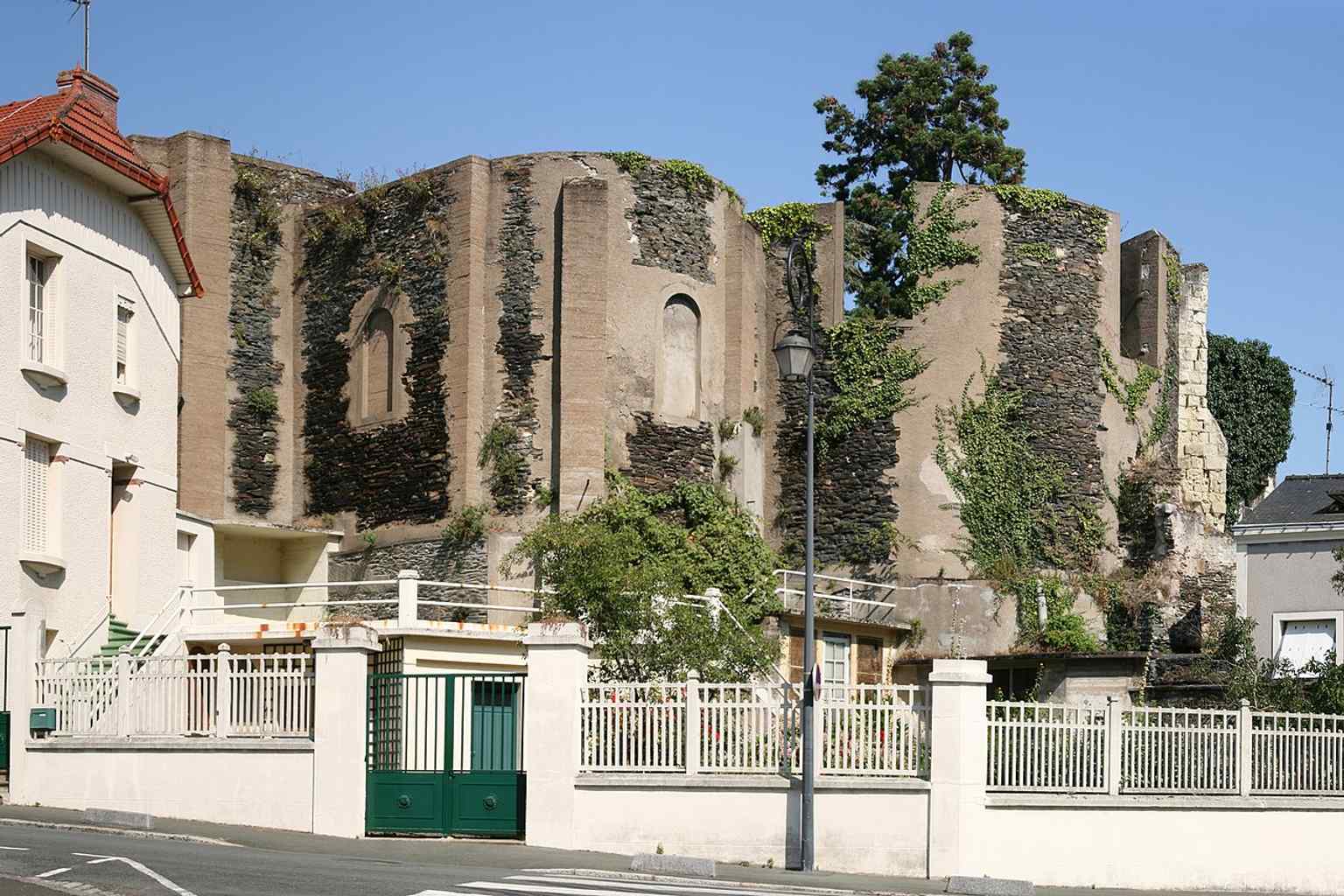
This 2009 photo shows the Église Saint-Laurent in its ruined state, as it was for over four centuries before being rehabilitated and inaugurated as the Synagogue of Angers in 2012.Photo: Sémhur (talk), Wikimedia Commons, CC BY-SA 4.0. Cropped & resized. The local Jewish community, whose roots in Angers actually stretch all the way back to the eleventh century, desperately needed a new home. Their old building was falling apart. So, the city stepped in, and architect François Terrien orchestrated a clever structural resurrection. He preserved the rugged Romanesque shell and lined the modern interior with local slate, a nod to the region's historic wealth. To complete the fusion of heritages, the community imported all the seating and furniture directly from Kibbutz Lavi in Israel.
But there is a heavy weight anchored to these ancient walls. On the exterior, a memorial stone lists the names of three hundred and twenty local Jewish residents whom the Nazis deported during the Second World War. Armed guards forced them onto Convoy number eight on July twentieth, nineteen forty-two. Under the zealous orders of a local Nazi police commander named Hans-Dietrich Ernst, this specific train bypassed typical transit camps and went directly to Auschwitz. Ernst blatantly ignored agreements to spare French citizens and children, arresting anyone he could find. The youngest victim from Angers, Henriette Josefowicz, was not even two years old when she was murdered.
Yet, history here also recorded incredible resilience. A teenager named Léo Bergoffen was deported on a later train and managed the near impossible feat of surviving Auschwitz. When he returned to Angers after the war, he met and married Odette Blanchet, a local Resistance fighter whom officials later recognized as Righteous Among the Nations for risking her own life to hide Jewish families.
It is a building that holds centuries of collapse, horror, and profound rebirth. Take your time to reflect on the layers of history here, and whenever you are ready, we can walk to our next stop.
Though you are standing outside, the true marvel of the Jean-Lurçat Museum is the space awaiting you inside: a vast hall defined by pale stone ribbed vaults, slender cylindrical…और पढ़ेंकम दिखाएँ
समर्पित पेज खोलें →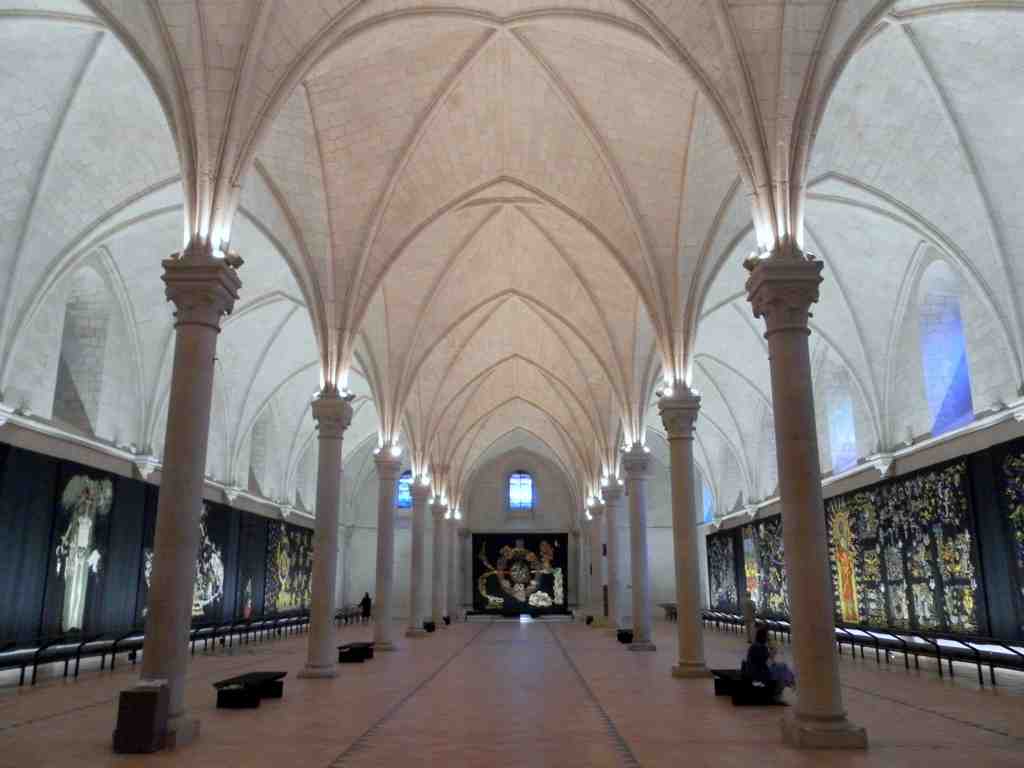
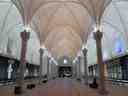
Jean-Lurçat Museum and Contemporary TapestryPhoto: Patrick89, Wikimedia Commons, CC BY-SA 3.0. Cropped & resized. Though you are standing outside, the true marvel of the Jean-Lurçat Museum is the space awaiting you inside: a vast hall defined by pale stone ribbed vaults, slender cylindrical columns, and expansive walls designed to hold monumental artwork. You are looking at the former Saint-Jean Hospital.
In eleven seventy-five, Étienne de Marsay, the seneschal, or chief royal administrator of Anjou, founded this hospital at the request of King Henry the Second. The King needed a grand public gesture. Five years earlier, in eleven seventy, Henry’s knights had assassinated Thomas Becket, the Archbishop of Canterbury. This hospital was built as a very expensive act of royal expiation. Designed in an elegant architectural style known as Gothic of the West, it operated as an Hôtel-Dieu, a charitable hospital run by the Catholic Church, housing up to five hundred patients until it finally closed its doors in eighteen sixty-five.
Étienne funded this sanctuary of healing, but his own end was far less comfortable. After loyally defending Henry’s territories, the new king, Richard the Lionheart, threw Étienne in prison, stripped his wealth, and let him die in grim conditions in eleven ninety.
Inside this medieval ward, you will find a modern vision of the end of the world. In nineteen thirty-seven, the artist Jean Lurçat visited the nearby Château d'Angers and was mesmerized by the medieval Apocalypse Tapestry. Deeply shaken by the Cold War and the looming threat of the atomic bomb, Lurçat decided to weave his own version. He called it The Song of the World. The monumental tapestry cycle begins with the nuclear destruction of Hiroshima but evolves into a message of hope, ending with a piece called Champagne, bursting with woven bubbles and butterflies.
Lurçat died in nineteen sixty-six before finishing the epic cycle. Knowing his dream was to display his work near the medieval masterpiece that inspired him, his widow Simone sold the collection to the city. It was officially hung in the hospital's great hall on the sixteenth of May, nineteen sixty-eight.
Next door, in a former orphanage, the museum showcases modern fiber art, including the profound work of Thomas Gleb. Born Yehouda Chaïm Kalman to Jewish weavers in Poland, Gleb carried the unimaginable trauma of losing his entire family in the Lodz ghetto during the Second World War. He poured that grief into his art. His spiritual tapestries feature deep, vertical woven slits that mimic both divine revelation and profound scars. Gleb forged such a deep connection with this region that he moved to Angers, leaving a permanent legacy here after his death in nineteen ninety-one.
The museum also hosts major temporary exhibitions. In a spectacular crossover running until late twenty twenty-six, the museum temporarily replaced Lurçat's masterpiece with a colossal woven tribute to J-R-R Tolkien's The Lord of the Rings.
If you plan to explore the tapestries and the original seventeenth-century apothecary inside, complete with ceramic pharmacy jars, keep in mind the museum is open from ten in the morning to six in the evening, Tuesday through Sunday.
Absorb the scale of these masterworks. When you're ready, our next destination awaits.
On your left, look for the tall pale stone monument shaped like an open-air archway, topped with a highly detailed metal spire and sheltering a large dark crucifix inside.…और पढ़ेंकम दिखाएँ
समर्पित पेज खोलें →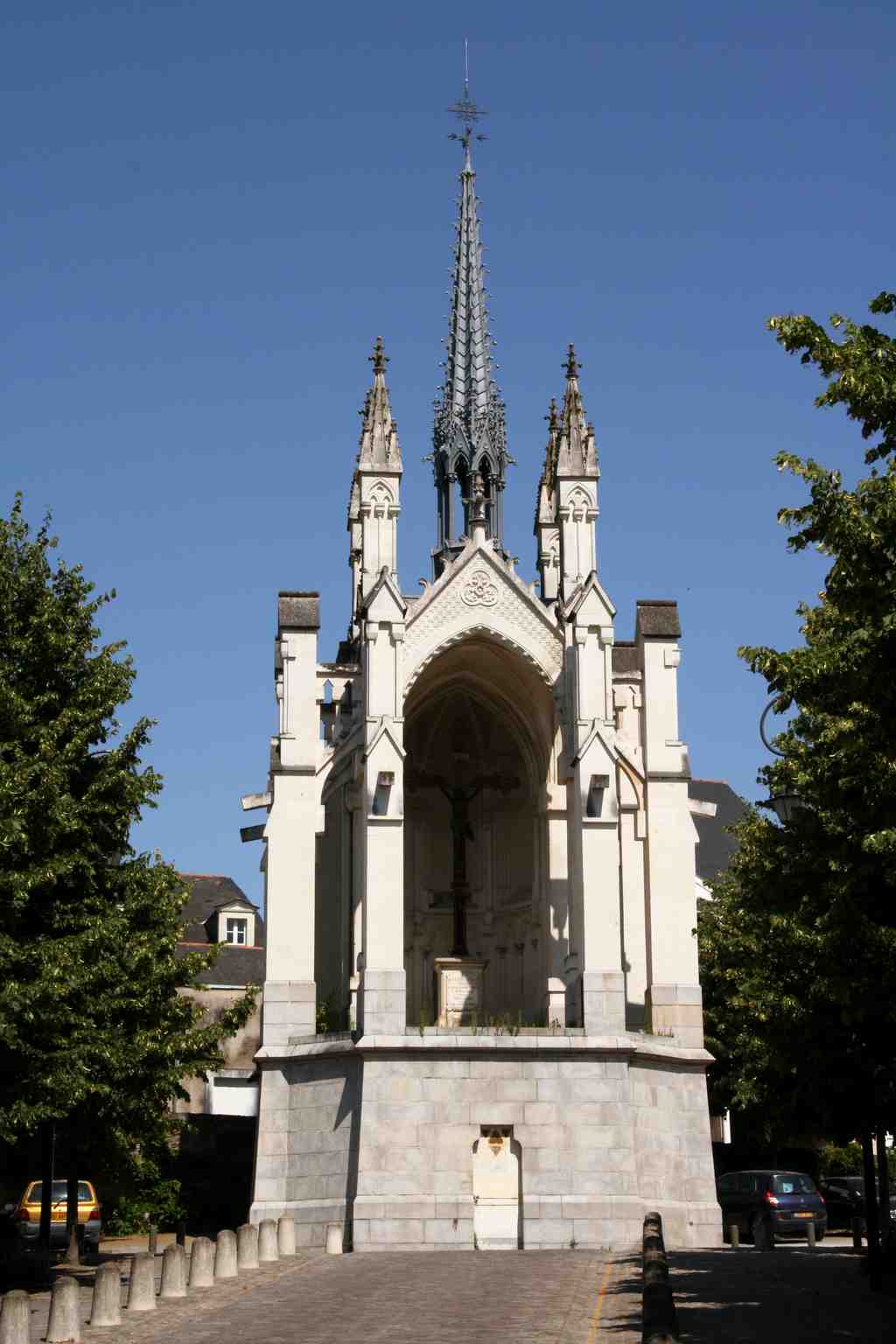
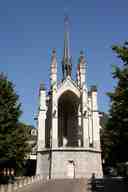
Chapel of the Crucifix in AngersPhoto: Sémhur, Wikimedia Commons, CC BY-SA 4.0. Cropped & resized. On your left, look for the tall pale stone monument shaped like an open-air archway, topped with a highly detailed metal spire and sheltering a large dark crucifix inside.
Originally, an octagonal structure stood here in the twelfth century, known cryptically as the tuba. It operated as a lantern of the dead, a hollow stone tower lit at night to honor the deceased in the surrounding cemetery. By the fourteenth century, it became the centerpiece of the Grand Sacre religious procession. Records suggest tens of thousands of people would flood the city just to see it, while the local abbess decorated the chapel bay with tapestries and white candles.
By the late eighteenth century, political upheaval swept the country, and the original chapel and cemetery were completely leveled. For decades in the nineteenth century, the parish solved this missing chapel problem by building a fragile, temporary wooden replica every single year. It cost them up to three thousand francs annually, which is tens of thousands of dollars today, for a stage set they had to constantly assemble and tear down. Finally, in eighteen seventy-four, Bishop Charles-Émile Freppel looked at this massive financial sinkhole and ordered a permanent masonry monument.
Architect René-Eugène Dusouchay took the commission, but he died in eighteen seventy-eight, leaving the project half-finished. The bishop had to hastily consecrate an active construction site. As someone who appreciates structural design, I have to point out that this building is literally incomplete. If you look at the supports, they seem strangely minimal. That is because the flying buttresses, the external stone arches meant to stabilize the upper walls, and the four central pillars from the blueprints were never actually built. They simply ran out of cash.
In eighteen ninety-one, to try and finish the look, they installed the massive cast-iron Christ on the cross that you see hanging inside the arch. It is a fascinating monument to both intense religious devotion and severe budget cuts.
Take a moment to examine the architecture here. When you are ready, we can move on to the next stop.
Look for the open square anchored by a tall, rough stone building with a sharply pitched roof and pale masonry framing its asymmetric windows. Welcome to Place de la Paix, or…और पढ़ेंकम दिखाएँ
समर्पित पेज खोलें →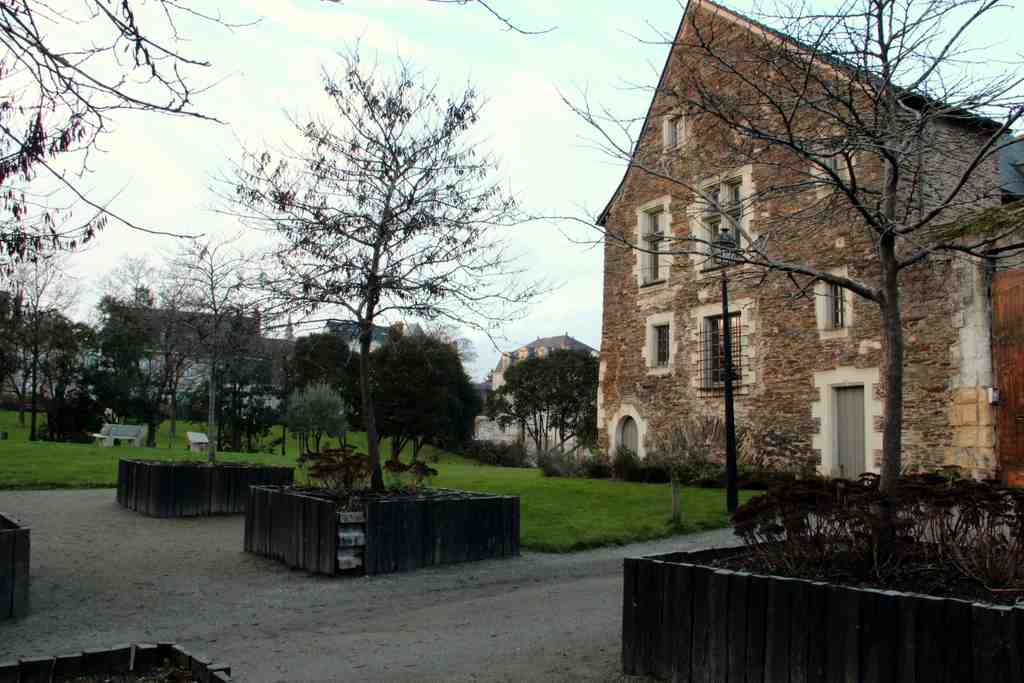
Place de la PaixPhoto: Raydou, Wikimedia Commons, CC BY-SA 3.0. Cropped & resized. Look for the open square anchored by a tall, rough stone building with a sharply pitched roof and pale masonry framing its asymmetric windows.
Welcome to Place de la Paix, or Peace Square. Sounds quite tranquil, right? Well, the peace they were referring to when they named it in seventeen ninety-two was the eternal kind. For about six hundred years, this was the cemetery for the city's poor.
Back in the late twelfth century, around eleven ninety, a nobleman named Philippe de Ramefort donated this land to bury the destitute patients of the Saint-Jean hospital. Imagine a sprawling, uneven plot shaded by oak and walnut trees. It was filled with unmarked graves and a massive central cross. Oh, and one very strange tomb shaped like a table balanced on four pillars. Nobody ever figured out who was buried in that one.
By seventeen seventy-six, a royal edict banned burying people inside city walls. Probably a smart public health move. The graves were relocated, and between eighteen twenty and eighteen thirty, engineers moved massive amounts of earth to level the bumpy terrain into the flat urban square you see today.
The square is ringed by some impressive historic mansions. We actually walked right up rue de l'Hommeau earlier to get here, which forms the southern edge of this space. At the corner stands the Hotel Marcouault, bought in fifteen fifty-four by a university regent who bolted on a fancy Renaissance pavilion, complete with carved stone masks and fruit, just to show off his status. Later, in the eighteenth century, a royal musketeer named René-Olivier Du Guesclin inherited the property.
But the real engineering marvel is hidden underneath the nearby Hotel de Scépeaux. It conceals massive, twelfth-century vaulted stone basements, proving this patch of land was built up long before it ever became a graveyard.
Decades later in the twentieth century, the square became a breeding ground for political heavyweights. Number fourteen was home to Maurice Poperen, an anarcho-syndicalist, which is essentially a radical labor movement teacher. He and his wife, a lacemaker named Marie, raised two sons here. Growing up in that intense, activist household produced spectacular, if conflicting, results. The older brother, Jean, grew up to be a prominent minister for the Socialist Party. His little brother, Claude, took a different path, becoming a formidable leader for the C-G-T, the General Confederation of Labor union, and a top official in the Communist Party. Talk about interesting family dinners.
From medieval burials to revolutionary politics, this square has certainly seen its share of action. Take a breath in this deceptively quiet space. When you are ready, we can walk to our final stop.
Look to your left at the rough stone facade of the church, easily spotted by its large pointed-arch window with delicate stone tracery and the simple cross crowning its steep…और पढ़ेंकम दिखाएँ
समर्पित पेज खोलें →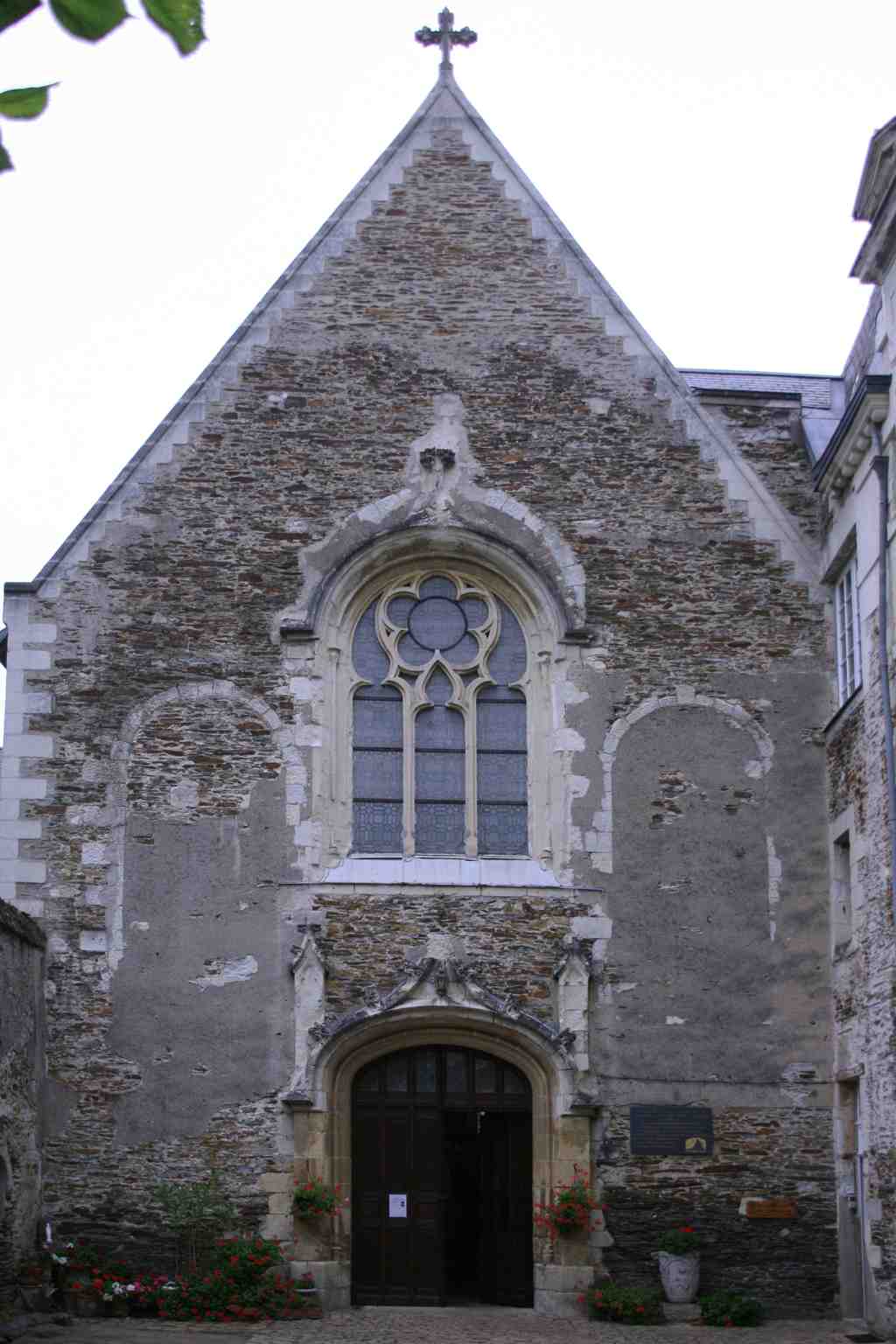
Convent of the Benedictine nuns of Calvaire d'AngersPhoto: Sémhur, Wikimedia Commons, CC BY-SA 4.0. Cropped & resized. Look to your left at the rough stone facade of the church, easily spotted by its large pointed-arch window with delicate stone tracery and the simple cross crowning its steep peak. This is the Convent of the Benedictine Nuns of Calvaire. It is an exceptionally rare piece of urban preservation, a fully intact medieval religious estate sitting right inside a modern city. High schist walls enclose cloisters, massive gardens, and historically, a working farm that allowed the nuns to live in total self-sufficiency.
Check your screen for a clear shot of this stone exterior. Prince Pierre de Rohan laid that very cornerstone in sixteen twenty. The nuns moved to this massive plot because their first location in Angers was too distracting for a strict contemplative lifestyle. They demanded absolute peace.
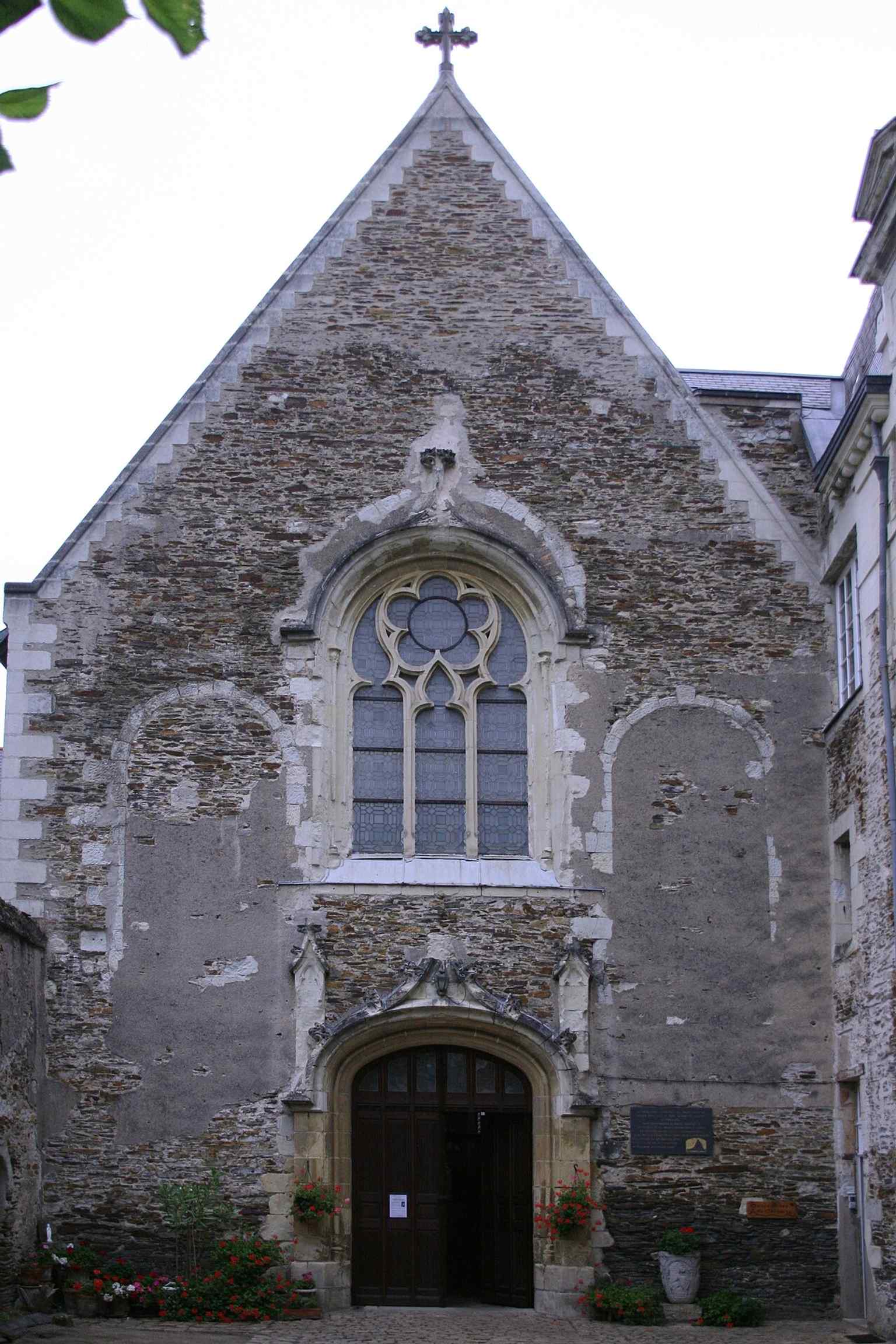
This exterior view shows the church whose cornerstone was laid on April 25, 1620, by Prince Pierre de Rohan and his wife Antoinette, marking the beginning of its construction.Photo: Sémhur (talk), Wikimedia Commons, CC BY-SA 4.0. Cropped & resized. Naturally, that did not last.
During the French Revolution, the government seized the estate and transformed it into a prison. It became a grim staging ground for women and children condemned to the firing squads. One inmate was a loyal servant to the wealthy d'Armaillé family. She knew exactly where her masters had hidden their fortune. To break her silence, revolutionary guards took away the three-year-old d'Armaillé daughter she was caring for. The child died of starvation right here in the former convent, but the servant took the secret of the treasure to her grave.
Another inmate, Victoire Bauduceau, was imprisoned for hosting clandestine midnight masses, which the revolutionary court claimed had fanaticized half her town.
The government chopped up the entire estate and sold it off in lots in seventeen ninety-five. You would assume the convent was gone forever.
Do not underestimate a group of patient nuns.
Returning in the early nineteenth century, the sisters successfully executed a staggering real estate operation. They quietly and systematically bought back every single parcel, piece by piece, until they had perfectly reconstituted their original medieval domain.
Since this is the final stop on our tour, I will leave you here to admire their iron will. Thank you for exploring Angers with me.
अक्सर पूछे जाने वाले प्रश्न
मैं टूर कैसे शुरू करूँ?
ख़रीदारी के बाद, AudaTours ऐप डाउनलोड करें और अपना रिडेम्पशन कोड दर्ज करें। टूर तुरंत शुरू करने के लिए तैयार होगा - बस प्ले टैप करें और GPS-गाइडेड रूट का पालन करें।
क्या टूर के दौरान मुझे इंटरनेट चाहिए?
नहीं! शुरू करने से पहले टूर डाउनलोड करें और पूरी तरह ऑफ़लाइन इसका आनंद लें। केवल चैट फ़ीचर को इंटरनेट की ज़रूरत है। मोबाइल डेटा बचाने के लिए WiFi पर डाउनलोड करने की सिफ़ारिश है।
क्या यह एक गाइडेड ग्रुप टूर है?
नहीं - यह एक सेल्फ-गाइडेड ऑडियो टूर है। आप अपनी गति से स्वतंत्र रूप से खोजते हैं, आपके फ़ोन से ऑडियो कथन बजता है। कोई टूर गाइड नहीं, कोई ग्रुप नहीं, कोई शेड्यूल नहीं।
टूर में कितना समय लगता है?
अधिकांश टूर पूरा करने में 60-90 मिनट लगते हैं, लेकिन गति पूरी तरह आपके नियंत्रण में है। जब चाहें रुकें, स्टॉप छोड़ें, या ब्रेक लें।
अगर मैं आज टूर पूरा नहीं कर सकता/सकती तो?
कोई समस्या नहीं! टूर की लाइफ़टाइम एक्सेस है। जब चाहें रोकें और फिर शुरू करें - कल, अगले हफ़्ते, या अगले साल। आपकी प्रगति सेव रहती है।
कौन सी भाषाएँ उपलब्ध हैं?
सभी टूर 50+ भाषाओं में उपलब्ध हैं। अपना कोड रिडीम करते समय अपनी पसंदीदा भाषा चुनें। नोट: टूर जेनरेट होने के बाद भाषा बदली नहीं जा सकती।
ख़रीदारी के बाद मैं टूर कहाँ एक्सेस करूँ?
App Store या Google Play से मुफ़्त AudaTours ऐप डाउनलोड करें। अपना रिडेम्पशन कोड (ईमेल द्वारा भेजा गया) दर्ज करें और टूर आपकी लाइब्रेरी में दिखेगा, डाउनलोड और शुरू करने के लिए तैयार।
अगर आपको टूर पसंद नहीं आया, तो हम आपकी ख़रीदारी वापस करेंगे। हमसे संपर्क करें [email protected]
सुरक्षित चेकआउट 


%20-%20Eglise%2C%20nef%20vue%20de%20la%20tribune%20-%20Angers%20-%20M%C3%A9diath%C3%A8que%20de%20l'architecture%20et%20du%20patrimoine%20-%20APMH00007971.jpg)
%20Abbatiale%20Notre-Dame%20du%20Ronceray%20-%20Int%C3%A9rieur%20-%2013.jpg)
%20Abbatiale%20Notre-Dame%20du%20Ronceray%20-%20Int%C3%A9rieur%20-%20Chapiteau%20-%2004.jpg)
%20Abbatiale%20Notre-Dame%20du%20Ronceray%20-%20Int%C3%A9rieur%20-%20Peintures%20murales%20-%2001.jpg)


