AudaTours logoAudaTours

Visite Audio de Leeds : Odyssée Audio du Patrimoine et des Trésors Cachés de Leeds

Guide audio15 arrêts

Un unique ruban d'eau scintillante traverse Leeds, sa surface paisible dissimulant des siècles de tumulte industriel et d'accords murmurés sous les ponts du canal. Cette visite audio autoguidée plonge au-delà des vitrines et des arches ferroviaires, promettant des histoires et des lieux que peu de visiteurs remarquent. Quelle crise secrète a failli engloutir l'empire Asda avant un sauvetage spectaculaire ? Quelle querelle cachée a mené à des quasi-bagarres pour le tracé du canal, menaçant de déchirer des villes ? Et qui a lancé une révolution rock sous une arche discrète au Cockpit, déclenchant des nuits endiablées qui ont changé l'histoire de la musique à Leeds pour toujours ? Marchez des chemins de halage tranquilles bordés de moulins victoriens aux légendes modernes de drames de supermarchés et de rébellions musicales. Chaque pas révèle intrigue, invention et scandale – Leeds se révèle comme une ville alimentée par le cran, l'ambition et une réinvention audacieuse. Osez marcher là où d'autres ne font que passer. Le pouls de l'histoire inédite de Leeds vous appelle – êtes-vous prêt à suivre son chemin ?

Aperçu du tour

map

À propos de ce tour

  • schedule
    Durée 40–60 minsAllez à votre propre rythme
  • straighten
    Parcours à pied de 4.6 kmSuivez le sentier guidé
  • location_on
    EmplacementLeeds, Royaume-Uni
  • wifi_off
    Fonctionne hors ligneTéléchargez une fois, utilisez n'importe où
  • all_inclusive
    Accès à vieRéécoutez n'importe quand, pour toujours
  • location_on
    Commence à Canal de Leeds et Liverpool

Arrêts de ce tour
  1. To spot the Leeds and Liverpool Canal, just look for the peaceful, narrow waterway stretching out ahead with a towpath beside it, and an old brick mill with a tall chimney rising…Lire plusAfficher moins

    To spot the Leeds and Liverpool Canal, just look for the peaceful, narrow waterway stretching out ahead with a towpath beside it, and an old brick mill with a tall chimney rising above the modern houses on the right. Now, as you stand here by the shimmering water, close your eyes for a second and imagine the air full of hustle and bustle, the soft splash of narrowboats drifting through the canal, and the distant clanging of hammers from the old mill. You’re standing by the gateway to centuries of tales and toil - because this canal isn’t just a quiet slice of scenery in Leeds; it’s a ribbon of history stretching all the way from here to Liverpool, snaking across 127 miles, wrestling with the Pennine hills, and sliding through a whopping 91 locks. The idea for this watery highway bubbled up in the 1760s, when Yorkshire’s growing towns - Leeds, Wakefield, and Bradford - were bursting with energy and ambition. Leeds was desperate for easier ways to move its coal, limestone, and famous textiles. Over in Liverpool, traders dreamt of cheaper coal by the boatload to power their booming industries. But building a canal? That was a piping hot debate, bouncing between rival committees in Bradford and Liverpool. Arguments about cost and which towns should get a stop along the way flew back and forth faster than a flock of startled pigeons by the water. Eventually, surveyors, engineers, and even the famous James Brindley were called in to settle the matter. “Let’s build the canal along the northern route!” declared Brindley - and, after much disagreement (and a few sulky faces in Liverpool), plans were drawn up. Think of this moment as the Marvel cinematic universe bringing together all your favourite superheroes, only with more mud, shovels, and powdered wigs. The first sod was cut in 1770, and the work began with pickaxes and spades. The canal grew in segments - first from Bingley to Skipton, then to Shipley, and onwards, wiggling east from Liverpool. It was a jigsaw puzzle of water, stone, and sweat. One of the greatest feats was the Bingley Five Rise Locks, an aquatic staircase overcoming a steep valley cliff. But it wasn’t all smooth sailing. The funds dried up, war broke out with America, and for more than a decade, the project seemed stuck in the mud. It took fresh acts of Parliament and even more money to get the canal we see today flowing through the coalfields of Burnley, Accrington, and Blackburn. When it reached hilly Burnley, engineers didn’t just dig - they built the mighty Burnley Embankment, a half-mile stretch of man-made earth towering 60 feet high, letting the canal float above town like a watery highway in the sky. You can almost hear the sighs of exhausted workers, and perhaps a few creative Yorkshire grumbles about “how much further to go?” Eventually, after almost 50 years, the canal was finished in 1816 and became the backbone of heavy industry along its path. By the Victorian era, over a million tons of coal sailed west every year, fueling Liverpool’s ships and factories. Leeds sent more coal than limestone, and cargo boats lined the canal, their crews swapping stories about leaky holds, mischievous children, and the most stubborn lock gates. The canal never truly ran out of steam - even with trains arriving, it kept carrying goods right through the 1900s. During World War II, the canal became part of Britain’s last-ditch line of defense. Pillboxes popped up along the banks, barns and pubs were fortified, and in Bootle, a bomb even breached the peaceful water. But the canal, stubborn as a Yorkshireman with a wet umbrella, held firm, patched up and pressed on. There have been droughts, repairs, new branches, and a modern link right into Liverpool’s city center. Today, when the sun dances on the surface, people stroll and cycle on the old towpaths where horses once pulled barges, and boats float quietly by, carrying echoes of coal smoke, laughter, and the determined voices of builders from an age gone by. So next time you hear the gentle splash of water here, remember: behind every ripple lies a tug-of-war, a bit of Yorkshire grit, and a waterway that was once fought for every inch, every penny, and every lock.

    Ouvrir la page dédiée →
  2. To spot Asda, look for the red-brick building with green trim just ahead, and you’ll see a statue of a man set on a brick pedestal out front, looking over the car park like he’s…Lire plusAfficher moins

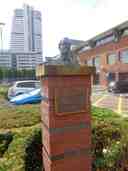
    To spot Asda, look for the red-brick building with green trim just ahead, and you’ll see a statue of a man set on a brick pedestal out front, looking over the car park like he’s keeping an eye out for good deals. Alright, welcome to Asda! Don’t worry, I won’t ask you to scan your own basket-though I might challenge you to find the cheapest biscuit in the snack aisle. As you stand here, you’re right outside the beating heart of British supermarket history, and-believe it or not-you’re also standing at the headquarters of one of the UK’s grocery giants, born and bred right here in Leeds. The story of Asda starts almost like a family legend. Imagine the sounds and the smells of a busy Yorkshire butcher’s shop in the 1920s--the Asquith family, sleeves rolled up, passing down secret cuts and business wisdom in Knottingley. Their little butchers’ empire grew and grew, until Peter and Fred Asquith, the original meat moguls, decided to dream even bigger. Meanwhile, some ambitious dairy farmers up the road had begun pooling their efforts as J. W. Hindell Dairy Farmers Ltd. By 1949, with the smell of fresh bread, milk, and hope in the air, they transformed into Associated Dairies and Farm Stores, led by Arthur Stockdale. Fast-forward to the swinging ‘60s. The Asquiths took over an old cinema in Castleford. Imagine it: ticket booth turned cheese counter, popcorn swapped out for pies-what a transformation! So began their adventure in “self-service supermarkets,” which meant people could actually pick their own groceries off the shelf-something that seemed almost as wild as a trolley race down aisle nine. Eventually, the Asquiths and Stockdales merged, combining their names-Asquith plus Dairies-to form Asda. Now, you’d think running a supermarket would be straightforward. But Asda’s story zig-zags more than a trolley with a dodgy wheel. In the late ‘80s, they spent a fortune snapping up other stores and ended up with a bill so big it nearly shut the doors for good. The shelves almost went bare-Asda teetered on the edge of bankruptcy. But then, new faces and bold ideas rode in, like Allan Leighton, who cut prices, chopped management jobs, sold off underperforming shops, and somehow pulled Asda back from the brink. By the late ‘90s, it was hailed as one of the greatest retail comebacks. The plot thickens! In 1999, the American retail giant Walmart swooped in like a hawk eyeing up a roast chicken on a Sunday, and bought Asda for £6.7 billion. New innovations followed: larger “Supercentres”, pharmacies, cafes, and even petrol stations sprouted up across England. And don’t forget “George,” the Asda clothing brand-suddenly, you could pick up socks and sausages in a single stop. But Asda never stopped evolving. There were a few headline-grabbing bumps along the way-some overenthusiastic advertising claims here, a questionable toy card there, and even a small scandal or two involving sandwiches or beef sauces not being quite what they seemed. Still, through changing owners, including the Issa brothers and TDR Capital in 2021, Asda’s remained resilient-tougher than a stale baguette, you might say. Today, Asda proudly boasts a new logo, a fresh slogan-“That’s More Like It”-and all sorts of store formats, from “supercentres” to “Living” shops packed full of clothes and homeware. There’s even talk of a £50 million store upgrade program in the works, so if you hear the distant echo of drills and paint rollers, you know progress is marching forward. And right in front of you, that statue is like Asda’s very own supermarket guardian. It’s a tribute to Peter Asquith, one of the founding fathers, with a plaque that says, “That’ll do for me…”-proving sometimes, a simple Yorkshire phrase says it all. So here’s to bargains, busy aisles, and being part of an ever-evolving Leeds legend. Now, onward to the next adventure-and don’t forget to watch out for surprising bargains along your walk! Ready to delve deeper into the store formats, brands and services or the distribution? Join me in the chat section for an enriching discussion.

    Ouvrir la page dédiée →
  3. To spot The Cockpit, look for a brick building tucked under the railway arches with a rounded stone doorway and a glowing neon sign above wooden double doors-it's the one that…Lire plusAfficher moins

    To spot The Cockpit, look for a brick building tucked under the railway arches with a rounded stone doorway and a glowing neon sign above wooden double doors-it's the one that feels like it's hiding a secret world behind those heavy doors. Alright, take a deep breath and let your imagination slip through those doorway arches because you’re standing in front of a legend-the Cockpit! If these bricks could talk, they’d probably shout over guitar feedback, because the Cockpit was where Leeds truly learned to let its hair down. It started out life as a humble pub called the Cock of the North, but it transformed into a gritty, electric haven for music lovers. Right here on Swinegate, just a stone’s throw from Leeds station, you’d once see people shivering with excitement (and maybe just a bit from the cold) as they waited to get inside. Close your eyes and picture it: The city rumbling above, but inside, three different rooms buzzed, each with its own stage and its own flavours of music-from roaring rock and heavy metal to indie, folk, punk and alternative. The main room could fit 500 bouncing fans, but if you wanted something cosier or even more secret, you had options. Sometimes, you could hear two bands blowing the roof off on the same night; one upstairs, one down, beer glasses clinking to the beat. And speaking of beats: the Cockpit was famous for its club nights. Tuesdays meant “Slam Dunk”-the kind of night where everyone left drenched in sweat and pop-punk dreams. Wednesdays were Southern Fried. Fridays pulsed with Heavy Soul and, come Saturday, it was Garage night. Thursdays had their own sparkle-a wild, colourful party called Poptastic that lit up the dance floor from the late ‘90s into the early 2000s. There’s a bit of rock and roll legend here too: one night, Nick Hodgson introduced Ricky Wilson to the rest of what would become the Kaiser Chiefs while dancing at the Cockpit’s Brighton Beach indie night. They say the walls here have more secrets than your gran after a few sherries at Christmas. But not all rock stories last forever. In 2014, the Cockpit said its goodbyes, as fewer people came out on weeknights, and the old building just couldn’t handle the noise anymore. The final encore ended, the lights were switched off, and the buzzing fans drifted up the street. But the spirit didn’t die-it just moved up to the Key Club in the Merrion Centre, passing the torch to a new generation of gig-goers. So, next time you hear a distant drumbeat, imagine it echoing here, under the railway arch, where countless bands had their first, last, or wildest nights on stage. And if you listen closely, you might still hear a distant guitar riff carried on the breeze.

    Ouvrir la page dédiée →
Afficher 12 arrêts de plusAfficher moins d'arrêtsexpand_moreexpand_less
  1. Right in front of you, you’ll spot a paved triangle of open space lined with grand historic buildings, dominated by the former General Post Office’s ornate clock tower on the…Lire plusAfficher moins

    Right in front of you, you’ll spot a paved triangle of open space lined with grand historic buildings, dominated by the former General Post Office’s ornate clock tower on the left, and, in the center, the dramatic equestrian statue of a rider on horseback-just keep your eyes peeled for the big bronze prince surrounded by leafy trees and lamplighter statues! Alright, take a deep breath and let your imagination wander as you stand here in the middle of City Square-once upon a time, before the roar of engines and the hum of city life, this very spot was bustling in a completely different way. Picture yourself back in the late 1800s: the Coloured Cloth Hall and Quebec House were torn down, leaving behind a patch of possibility-a public space for all. The lovely old General Post Office behind you sprouted up in 1896, and just like that, this spot became the gateway to Leeds from the railway station. Now, when the council was debating what to call this new square, there was a brilliant suggestion to name it after John Smeaton, a famous local engineer. But here’s where the excitement kicked in-Leeds was being awarded city status that very year, so City Square was born! Just imagine the sound of the trams-clang clang!-and the bustle as public lavatories and waiting rooms sprang up to greet newcomers. But if you think those early plans sounded a bit dull, you’re not alone! The Lord Mayor, Colonel Thomas Walter Harding, took one look and thought, “Not on my watch!” Instead, he hired William Bakewell to create something worthy of an Italian piazza, with grand statues and rows of trees-a proper place to make both locals and visitors go “Ooh!” and “Aah!” And so the transformation began. But this peaceful square has seen tougher days as well. During World War II, the Luftwaffe targeted Leeds-one night, bombs rained down, the square’s air raid shelter was hit, and chaos echoed through the city. Through it all, the statues in City Square have stood strong-let’s meet them. At the very center, see that huge equestrian statue? That’s Edward, the Black Prince, famously cast in Belgium because no British foundry was big enough! It took seven years and its journey was epic: shipped to Hull, floated up the River Aire on a barge, and finally unveiled to roaring crowds in 1903. Here’s a secret: Edward never actually set foot in Leeds. Don’t ask why he’s here; it was all the mayor’s idea, and it certainly made for some lively headlines. Look around at the other statues-James Watt, the engineer who helped spark the Industrial Revolution (though he never got around to mailing a postcard from Leeds either). Then there’s John Harrison, a real local hero who built schools and churches, and Dr. Hook, the vicar who rebuilt Leeds Minster and put up thirty schools. Finally, Joseph Priestley-chemist, theologian, and the man who played with gases from a local brewery to make scientific history while preaching at Mill Hill Chapel, which you can spot nearby. But just when you thought you’d seen it all, check out the ring of bronze nymphs! Yes, those are larger-than-life nude ladies holding lamps-rather shocking for 1899. Some locals thought the statues might make their grandmothers blush! They were moved a dozen times and almost chucked away in the 1990s, but the townsfolk fought to keep them circling the prince in their own unique formation. The square itself is encircled by architectural stars: the classical General Post Office with its clock tower chiming over the city, the grand Queens Hotel peering down from the south, the elegant Mill Hill Chapel to your left, and the modern face of No. 1 City Square to the north. If you look southwest, you’ll see the old Majestic Cinema and Ballroom, with that warm, terracotta glow. The Park Plaza Hotel nearby was once a stark concrete block, but has had quite the makeover! Don’t forget the Yorkshire Bank building, topped with a shiny green copper dome-very eye-catching. And here’s a hidden adventure: City Square is actually the very start of the White Rose Way-a 104-mile trail all the way to Scarborough. So if the city buzz ever tires you out, you could always trade the bronze prince for the North Sea breeze! So, whether you’re here to snap a selfie with the Black Prince, ponder why there are so many statues of men who’d never visited Leeds, or just rest your feet, remember: City Square is more than just a meeting point-it’s where Leeds puts its heart on show, celebrating its past, present, and a future full of stories yet to be written.

    Ouvrir la page dédiée →
  2. To spot Mill Hill Chapel, look across City Square for a low, stone building with pointed arched windows, Gothic details, and a blue plaque by the entrance-nestled snugly between…Lire plusAfficher moins

    To spot Mill Hill Chapel, look across City Square for a low, stone building with pointed arched windows, Gothic details, and a blue plaque by the entrance-nestled snugly between the trees and modern glass towers behind it. Now, as you stand outside Mill Hill Chapel, take a moment to let your mind wander back in time! Imagine Leeds in the 1670s-a bustling market town, filled with the sound of horses’ hooves and chatter from the cloth halls. Right here, where traffic now whizzes by and glass skyscrapers rise, a small group of bold thinkers built a chapel, making this slice of land the heart of religious rebellion. These were the Dissenters, folks who disagreed with the established church and wanted a space for their own ideas-a little bit like unplugging the Wi-Fi to host a board game night when everyone else wants to binge-watch TV. One of these early plotters was the father of historian Ralph Thoresby. Together with his friends, he steered the congregation into the leafy, sometimes controversial, path of Unitarianism-a Christian movement that loves debate and welcomes questions. You might say, Mill Hill became the place in Leeds to have a good argument, but in a friendly way! Jump forward to the 18th century and this little chapel was anything but shy. Many of Leeds’ most prominent families took up seats in these Victorian pews. There were the Oateses and the Dixons, local gentry like Hans Busk who preferred his very own Unitarian chaplain-because why have Netflix when you can have theology, right? Even the grand Lupton family hung their hats at both Mill Hill and the old Call Lane Chapel, making this place a power hub for politicians, industrialists, and passionate merchants. At one point, Mill Hill was jokingly called “the mayors’ nest” because so many mayors-and even lord mayors-were regulars. If these walls could talk, they’d spill more secrets than a city council WhatsApp group! Let’s jump again, into the 19th and early 20th centuries. The Kitson family left their mark here-William Morris, the famous designer, made a stained glass window to honour Ann Kitson. Later, her son James Kitson, the first Baron Airedale, paid generously to widen the vestry, and after James’s death, a colourful window by Archibald Keightley Nicholson was added in his memory, reminding us the spirit of this chapel was always evolving-much like Leeds itself. But this wasn’t just a place for wealthy families and beautiful glasswork. Mill Hill Chapel sparkled with ideas. The congregation was packed with members of the Leeds Philosophical and Literary Society-a group of the city’s brightest minds, who loved nothing more than debating science and philosophy over tea (or something a little stronger, if the rumours are true). There was a buzz of independence and identity here; middle-class values jostled with political activism. More than once, these corridors echoed with conversations about equality, education, and the future of Leeds. Among Mill Hill’s ministers, you’ll find some real characters. Joseph Priestley, for example, was here from 1767 to 1773. You might know him as the man who discovered oxygen (making him everyone’s favourite guest at a birthday party, since he literally brought the air). He led the chapel closer to Unitarianism before hammering on about liberty so vigorously that his ideas still leave a mark today. Others, like Thomas Walker, kept things fresh by stirring up a little heresy-which, let’s be honest, always livens up a Sunday sermon! Then there was the Victorian period-Rev Charles Wicksteed, who championed education and edited the progressive Prospective Review, helping Unitarian chapels around England swap stuffy eighteenth-century styles for bold, new Gothic architecture. Fitting, too, since you’re standing in one of the finest examples around! Fast forward to today, and Mill Hill still makes history. The plaque outside marks it as the first place of worship in Leeds city centre to conduct a same-sex wedding. That’s right-the tradition of forward-thinking, headline-grabbing spirit lives on. As you stand here, take in the pointed arches and textured stonework. Picture all the lively debates, the political deals whispered in corners, and the cheerful laughter of generations past. This isn’t just a building; it’s a living story, stitched deep into the fabric of Leeds, and one more stop on our grand adventure through the city’s quirkiest corners!

    Ouvrir la page dédiée →
  3. Look straight ahead down the bustling shopping street and you’ll spot a tall glass and steel tower with “Pinnacle” written boldly at the top, rising like a modern giant above the…Lire plusAfficher moins

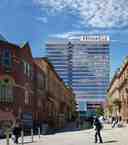
    Look straight ahead down the bustling shopping street and you’ll spot a tall glass and steel tower with “Pinnacle” written boldly at the top, rising like a modern giant above the older brick buildings around it. Imagine you’re here in the early 1970s-flared trousers swishing, newsagent kiosks buzzing, and something brand new piercing the Leeds skyline: this very building, once called West Riding House. Back then, it was the talk of the town. At twenty stories and eighty metres tall, it was Leeds’ first true skyscraper-so tall that locals probably wondered if you could spot Blackpool Tower from the top floor on a clear day! It cost £3.6 million in 1973, which is more than 50 million in today’s money-now that’s a lot of cups of Yorkshire tea. People would stream past, peering up in awe while shopping on their way to the thriving retail heart of Leeds. Downstairs, the ground floor buzzed with the hum of busy shops-a little oasis of commerce amid all that glass and steel. And behind those shiny doors? Leeds City Council’s staff, hustling through offices that, from the outside, seemed impossibly glamorous. But rewind time a little more-before all this steel and commerce, this very spot was home to the Albion Zion Chapel, later called St. James’ Chapel. On weekend nights in the swinging 60s, the lower floors pulsed with music from the famous Three Coins Club, where even legendary DJ Jimmy Savile spun records that set the dancefloor on fire. Can you hear the echoes of laughter and music as you stand here now? Fast forward again, and the modern city keeps growing up around Pinnacle, stealing a bit of its thunder with taller neighbours. Still, it stands proud, its mirrored windows catching the Leeds sunshine, reminding us of all the stories-business deals, shopping sprees, wild nights out, and even prayers-that have played out right here. Not every city landmark gets to reinvent itself, but this one does-so as you gaze up, just remember, you’re in the middle of a real-life time machine!

    Ouvrir la page dédiée →
  4. If you look to your left, rising proudly above the street, you’ll spot the creamy stone walls and tall gothic arches of Leeds Cathedral, topped by a squat tower fluttering the…Lire plusAfficher moins

    If you look to your left, rising proudly above the street, you’ll spot the creamy stone walls and tall gothic arches of Leeds Cathedral, topped by a squat tower fluttering the flag of Vatican City-a bit like a medieval castle parked in the middle of the city centre. Now, as you stand in front of this impressive building, let me whisk you back through the centuries. Imagine Leeds, centuries ago, bustling with a different kind of energy. The air is thick with the smell of coal smoke, and the bells of distant churches echo through narrow cobbled streets. But for local Catholics, there’s something missing-no great cathedral to call their own. Their story begins in secrecy and struggle, all the way back in 1786, when Lady Lane Chapel appeared like a beacon-Leeds’ very first legal Catholic place of worship since the reformation. Imagine creeping through shadowy lanes to attend mass, always watchful, always aware. Fast forward to 1838: Leeds is growing, and with it, the Catholic community. They build St Anne’s Church on the corner of The Headrow and Cookridge Street, finally giving the city an open and substantial place for worship. By 1878, when the Diocese of Leeds was formed, this church was promoted to full cathedral status-a proper “upgrade”, you might say! But no sooner had people started getting comfortable than, boom, disaster struck. In 1899, the buzzing city authorities decided The Headrow needed a makeover, aiming for something grand, Paris-style. The poor cathedral was caught right in the way-imagine someone deciding to build a new motorway through your favourite restaurant! Its fate was sealed; demolition followed, and its stones made way for a glittering new boulevard. They say you can find some pieces of that lost cathedral far from here, reused in a hotel on the Scarborough coast, like secrets hidden in plain sight. But the Catholic community wasn’t giving up. After scratching their heads and exploring every possible new location, they finally accepted a spot handed to them by the city council-not far from the old one, right where you’re standing now. So, in 1901, construction began again. Local architect John Henry Eastwood, with a name that sounds like he could have played a cowboy sheriff, designed the new building in the Arts and Crafts Gothic Revival style. The challenge? He had barely any space to play with. There are no sweeping wings or sprawling lawns to this cathedral-no, it’s compact but mighty! And as you look up at that beautiful west front, you’ll see a tall gable clinging between sturdy buttresses capped with those elegant turrets, and, if you squint, an ornate crucifix carving watching over the city’s busy bustle. The inside is dramatic, too- vaulting, stone pillars, and rows of pews invite you to imagine the light filtering through stained glass, while centuries-old relics from English Catholic martyrs rest under the altar, quietly reminding visitors of days when faith had to be guarded like treasure. If your ears are lucky, you might hear the mighty 1904 organ, with its seven divisions and 55 ranks, restored and ready for an encore after more than a century. Or perhaps a gentle Gregorian chant floating from the portable chamber organ, still played daily, as if the music has its own keys to the cathedral. And here’s a twist: while most big English cities have a grand Church of England cathedral, Leeds is a rebel-it leaves that to Ripon, Wakefield, and Bradford. Instead, this cathedral, along with the Church of the Holy Rosary up in Chapeltown, looks after the faithful of Leeds, generous and unfazed by boundary lines. As you stand here, in the heart of modern Leeds, between the whirl of cars, the aroma of coffee shops, and the calls of street vendors, take a moment to imagine that hidden layer of history beneath your feet. This building is far more than stone and glass-it’s a survivor, carrying traces of lost chapels, noisy demolitions, hidden relics, tireless architects, secret stories, and the laughter and tears of generations. It’s proof that even when the city is determined to bulldoze your history, a little determination-and perhaps a helping hand from above-can keep a community’s spirit shining tall. And really, isn’t that something worth seeing?

    Ouvrir la page dédiée →
  5. To find Leeds City Museum, just look for the grand, dark stone building with a dramatic row of arched windows and bold pillars, right ahead of you on Millennium Square-the…Lire plusAfficher moins

    To find Leeds City Museum, just look for the grand, dark stone building with a dramatic row of arched windows and bold pillars, right ahead of you on Millennium Square-the golden-lettered sign above the entrance reads “Leeds City Museum.” Now, as you stand here, take a deep breath-the air is alive with stories! The building in front of you wasn’t always a museum. In fact, it began its life in 1819 as the brainchild of some of Leeds’ most curious minds, tucked away inside Philosophical Hall over on Bond Street-a place designed for big thinkers who probably spent a suspicious amount of time muttering, “Eureka!” But as Leeds grew noisier, bigger, and bolder, so did its museum. First opening to the public in 1821, it gained a new home in 1862 on Park Row, where you can still spot the old stone portico, like a piece of ancient history hiding in plain sight. By 1921, the city council had taken charge, but fate had a few plot twists in mind. In 1941, the museum took a direct hit during bombing raids; imagine the crash of shattered glass and the heavy thud of falling brick. Priceless artifacts were lost, but a few survived-some, battered but beloved, found refuge in the city library, huddled together in just two rooms. Among them loomed the legendary Leeds Tiger, flanked by a giant moose skeleton and a carved wooden cart, which must have made for some interesting reading nooks. Years passed and the collection bounced between homes-packed in storage, scattered in libraries, peered at by researchers with flashlights and clipboards. Finally, the people of Leeds rallied for something grander. When the National Lottery awarded a cool £19.5 million, this very site-the former Mechanics’ Institute, an elegant slice of Victorian architecture conceived by Cuthbert Brodrick in the 1860s-was chosen for a new beginning. By 2008, after years of sweaty construction and some very nervous curators, the building reopened as the Leeds City Museum you see today. And let’s be honest, there’s something a little bit magic about entering a building where history itself has been so many things. Inside, the adventure continues. You’ll find a giant map of Leeds printed on the floor right as you enter, so try not to step on your own street-it’s like Godzilla, but less property damage. And check out the scale model of the old Quarry Hill flats; it’s mini-sized but big on local nostalgia. The Life on Earth gallery is where things get a little wild. Look up, and you might see the skeleton of a Long-finned Pilot Whale hanging from the ceiling, while below, you’re greeted by everything from dinosaur dung (that’s coprolite, if you’re fancy) to a time-traveling hippo named the Armley Hippo. The Leeds Tiger steals the show here. Shot in India in 1860, he traveled half the world in the form of a stretched-out tiger skin, then became a slightly lumpy taxidermy mount courtesy of some enthusiastic Victorians-and perhaps more arsenic soap than was strictly safe. Schoolchildren adore him, though his shape is a touch odd, like someone read the instructions upside-down. The legend goes that parents would start a riot if he was ever moved. You’d think that after 150 years on display, he’d have learned to smile for the crowds! Over in the Ancient Worlds gallery, things get really mysterious. There are fragments of Roman mosaic floors, tomb doors carved in marble that have traveled from Greece to Leeds, and even an ancient Egyptian mummy named Nesyamun whose face has been reconstructed to look you right in the eye. During World War II, bombing destroyed two other mummies, but Nesyamun survived and now rests in peace here… if he’s not watching you. Upstairs, the World View gallery celebrates Leeds’ rich mix of cultures, with a dazzling “Voices of Asia” exhibit and artefacts from Africa, North America, Europe, and Oceania. There’s always the sense that someone’s singing, chanting, or spinning a thread from half a world away. The Leeds Story gallery will walk you through the history of this city-right from ancient bones and medieval treasures, like the Malham Pipe, to glittering Anglo-Saxon hoards. It’s a whirlwind ride, and every display comes with a human story or a little quirk that makes Leeds, well, Leeds. All around you, curious objects fill the Collector’s Cabinet-some with tales of dazzling art, some downright odd, and others, like Alfred Drury’s bronze Circe, with a history of being lost to weather, then rescued and restored, a bit like the museum itself. Leeds City Museum isn’t just about things in glass cases-it’s a stage for the city’s memories, reinventions, and wildest curiosities. And if you listen closely, you might just hear a whisper of the Leeds Tiger’s roar, echoing down Millennium Square. Onward, explorer!

    Ouvrir la page dédiée →
  6. To spot the Leeds Arena, look ahead for a striking building clad in silver-grey panels and honeycomb-shaped windows, with a huge curved façade that almost seems to shimmer under…Lire plusAfficher moins

    To spot the Leeds Arena, look ahead for a striking building clad in silver-grey panels and honeycomb-shaped windows, with a huge curved façade that almost seems to shimmer under different lights-trust me, you can’t miss its futuristic look looming over the pavement! Welcome to the Leeds Arena, or as the banks call it these days, the First Direct Arena! If you’re wondering why it looks like a giant glowing beehive landed in Leeds, you’re not alone. The arena’s exterior design uses a honeycomb pattern called a “voronoi diagram,” which basically means someone on the design team REALLY liked their geometry class. And if you’re visiting in the evening, the front can light up and even change colours or patterns, as if the building is picking its own party outfit for the event! But let’s rewind. For years, poor Leeds had a bit of an identity crisis. No big indoor venue meant folks travelled miles just to see a gig, and every time a big name came through Yorkshire, they’d skip Leeds for cities with larger arenas. Heck, the biggest thing we had was Queen’s Hall-and they tore that down in 1989. No wonder the people of Leeds wanted an arena so badly. Imagine the whole town starting a Facebook campaign before it was cool-local papers, famous musicians, and residents all chanting, “Leeds needs an arena!” Honestly, for a while, it felt like you were more likely to see a unicorn playing darts in Millennium Square than a major act in the city centre. Of course, things got competitive-and slightly dramatic. The council scouted sites, developers argued, legal threats flew, and even the Parliament joined the debate. At one point, Leeds was up against Bristol as the last UK city without a major indoor arena. There was so much tension it almost felt like a sporting event in itself, with politicians from Sheffield booing from the sidelines, convinced Leeds would steal their thunder (and ticket sales). In the end, fate-and a plot of land at Claypit Lane-stepped in. The city council took matters into their own hands, and by 2011, the sound of construction filled the air. The arena’s construction was no small feat. Built right in the Arena Quarter, it took two years of hard work and some hefty funding-over £80 million, with cash coming in part from the city’s sale of Leeds Bradford Airport. The design itself was revolutionary, not just pretty on the outside but clever within: a fan-shaped “super theatre” format, giving perfect sightlines whether you’re grooving near the front or singing at the back. The farthest seat in the house is just 68 metres from the stage-so Elton John at the back is still pretty close! And the arena isn’t just for music: from basketball and wrestling to Disney on Ice and even the BBC Sports Personality of the Year awards, there’s barely a month when the building doesn’t echo with excitement. Then came opening night-or, actually, opening nights. The first legend to perform here was Bruce Springsteen in July 2013, the Boss himself, playing to 13,000 fans. But the official launch in September saw Sir Elton John take the stage, and you can bet there were more feathers and sequins than in a peacock parade. From that night on, Leeds Arena became the place to be seen. It’s welcomed everyone from Rod Stewart to Beyoncé, comedians like Michael McIntyre and Whoopi Goldberg, and even the Harlem Globetrotters spinning basketballs on their fingertips. Think of the musical bingo you could play-Pearl Jam, The Prodigy, Dolly Parton, Snoop Dogg, and even the X Factor finals! And on boxing nights, you could likely hear the crowd cheering for local hero Josh Warrington, who made this arena his fighting home. It’s not just a place for stars, it’s a real part of local life-you’re just as likely to find a rock legend as you are a school gymfest or a night of darts with thousands screaming for a “one hundred and eighty!” Today, there are more than 7,500 parking spaces nearby and easy access from the railway station and bus stops-just in case you’re planning to haul your air guitar and disco shoes here for a big night out. Fun fact: in 2014, this arena was crowned “best new venue in the world”-not just in Yorkshire, not just in England. The world! So take a moment, soak it in, and maybe let yourself dream about your own name in lights someday. Leeds Arena: proof that when a whole city wants something badly enough-and campaigns loudly enough-even the wildest dreams can come true.

    Ouvrir la page dédiée →
  7. To spot the Grand Theatre, just look for a striking red-brick building with castle-like turrets, arched doorways, and a big round window above its grand entrance, standing proudly…Lire plusAfficher moins

    To spot the Grand Theatre, just look for a striking red-brick building with castle-like turrets, arched doorways, and a big round window above its grand entrance, standing proudly right along New Briggate. Now, while you’re standing here, let me take you on a journey through the story of this magnificent landmark. Picture yourself back in 1878, and imagine Leeds buzzing with excitement as locals in their best hats gather around this spot, admiring a brand-new theatre like nothing they’d ever seen. The Grand Theatre opened its doors with a flourish, designed by the crafty James Robinson Watson-no relation (as far as I know) to Sherlock Holmes, but the architectural detail here definitely solves the mystery of style! With a mix of Romanesque and Scottish baronial splendour outside, red brick, stone trimmings, and pointy turrets, it looks almost like a castle, but instead of knights and dragons, it houses drama, music, and laughter. Back in its early days, the theatre wasn’t just a place for plays-it was part of a bigger complex that included six shops and the Assembly Rooms, making this stretch of New Briggate a real hive of activity. Can you imagine the hustle and bustle, shopkeepers calling out, horses clopping by, and the air tingling with the expectation of a night at the opera? Step through its doors (in your imagination), and you’ll discover a grand Gothic interior: vaulted ceilings, clustered pillars, and spectacular detail thanks to the artist John Wormald Appleyard. Originally, it seated 1,500 people-enough for a chorus of oohs and aahs at every curtain call! The Grand Theatre quickly became the city’s pride and joy, hosting pantomimes, comedies, operas, and all the best shows of the day. Now, the Assembly Rooms above took on a new life in 1907, when they were transformed into the Assembly Rooms Cinema-fancy catching a silent movie up there between performances? The cinema flickered on until 1985, when it traded popcorn for rehearsal space. Of course, not all days were grand. By 1970 the curtain was falling-almost-for this place, but Leeds City Council swooped in to save the show, buying it and starting a slow but steady restoration. Opera North took up residence in 1978, breathing new life (and a lot of high notes) into the auditorium. Fast-forward to 2005-time for a transformation worthy of a West End hit. The Grand closed for a massive refurbishment that cost an eye-watering £31.5 million, reopening in 2006 with Verdi’s Rigoletto and a brand-new sparkle. The stalls got new seats, the orchestra pit grew, and backstage received state-of-the-art tech. Today, this theatre welcomes everything from blockbusting musicals like Wicked and Phantom of the Opera to comedians with much better material than mine. It even premiered Kay Mellor’s Band Of Gold in 2019-talk about a show with a local heartbeat! And when the pandemic dimmed the stage lights in 2020, the Grand bounced back in 2021 with Northern Ballet’s Swan Lake, showing that in Leeds, the show really does go on. So, take a moment, look up at those turrets, and know you’re standing in front of a place where the past and present take a bow together. And who knows-maybe your next big theatrical moment is just a ticket away!

    Ouvrir la page dédiée →
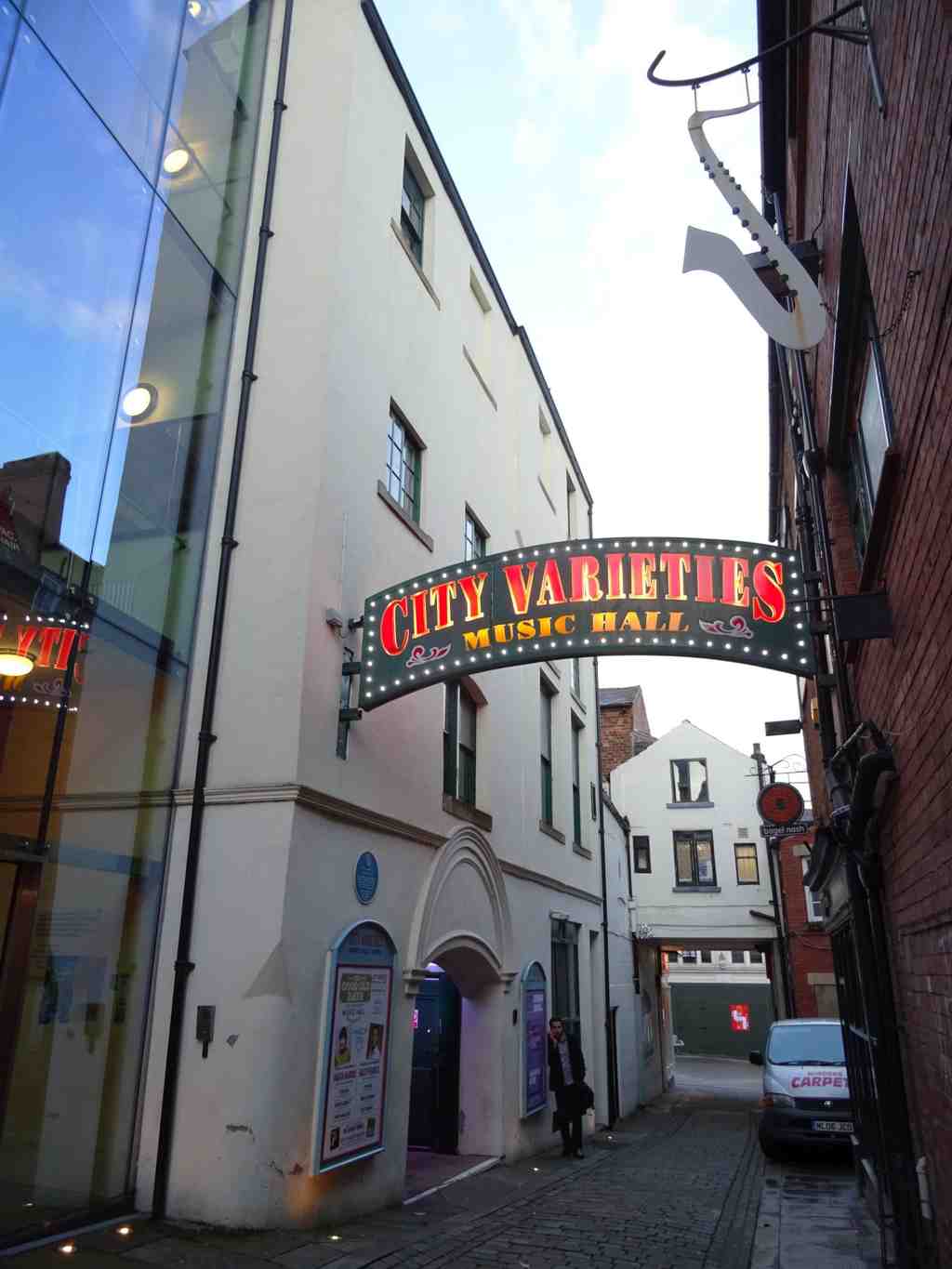
  8. Look for a tall, pale building with a dazzling old-fashioned sign arching over a narrow cobbled street, announcing “City Varieties Music Hall” in glowing lights-just ahead on your…Lire plusAfficher moins

    Look for a tall, pale building with a dazzling old-fashioned sign arching over a narrow cobbled street, announcing “City Varieties Music Hall” in glowing lights-just ahead on your right, beneath the gentle curve of the archway. Now, let’s imagine stepping back in time, right where you’re standing. It’s the year 1865: Leeds’ streets are alive with clattering hooves and lively chatter. A clever pub landlord named Charles Thornton decides his White Swan Inn-just up there-needed a splash of excitement, so he built this “Fashionable Lounge” next door for music and comedy. People squeezed in, eager for fun, laughter, and maybe a little scandal, as entertainers sang and strutted their stuff onstage. The hall hasn’t changed much since then-picture those ornate balconies above, overflowing with Victorian ladies fanning themselves and gents tipping their hats, all illuminated by flickering gaslight. There was even a “Singing Room” above the pub, but this hall outshone it from the start. Over time this place changed names more often than a magician changes hats-Thornton’s New Music Hall, the City Palace of Varieties-and became a magnet for legends. Imagine Charlie Chaplin twirling his cane here, Houdini escaping handcuffs-it’s as if you could smell sawdust and hear gasps of amazement echoing from the past. And do you know about “The Good Old Days”? For thirty years, this stage was the beating heart of a BBC television show, making homes across Britain shake with laughter and song. Even now, live “Good Old Days” performances draw people in, ready to cheer and clap as if it’s still 1895. The hall survived through hard times-almost forgotten, nearly faded-but with a little lottery magic, it reopened in 2011, gleaming and fresh. Take a moment and listen: can you hear the faint strains of music, a ripple of applause drifting past your shoulder? That’s the spirit of City Varieties-maybe you’ll spot a ghostly top hat or catch a wayward whoopee cushion rolling up the street. Go on, step closer! The show, as they say, must go on.

    Ouvrir la page dédiée →
  9. To spot Kirkgate Market, just look ahead for a grand, ornate building with yellow stone, domed rooftops, and an entrance proudly signed “Leeds City Markets”-it’s like a palace for…Lire plusAfficher moins

    To spot Kirkgate Market, just look ahead for a grand, ornate building with yellow stone, domed rooftops, and an entrance proudly signed “Leeds City Markets”-it’s like a palace for shopping, stretching along Vicar Lane and impossible to miss! Alright, brace yourself, because you’re standing before one of Leeds’ true giants-Kirkgate Market! If buildings could talk, this one would speak a thousand stories, and likely try to sell you a veg box while it was at it. Imagine stepping back into a bustling Victorian city, crowds weaving between traders’ stalls, and the sweet smell of fresh bread mixing with the sharp scent of fish and spices swirling through the air. Founded all the way back in 1822 as a simple open-air marketplace, Kirkgate grew so quickly, people must’ve thought they’d planted magic beans under the cobbles. Back then, traders had to tough it out whatever the weather, shouting their bargains in rain, wind, or the rare, golden sunshine. Over time, clever folks decided maybe everyone would enjoy dry socks, so between 1850 and 1875, the very first roofed sections appeared. These sheltered halls became the beating heart of Leeds’ trade. On one side, you’d have boisterous butchers, issuing friendly banter-and maybe the odd complaint about chilly fingers. On the other, fishmongers and stallholders selling everything from apples to fancy trinkets. But, oh-nothing here stayed peaceful for long! Fast forward to 1904, and the City of Leeds demanded something even grander for its marketplace. A contest was held to design an opulent new hall, and after plenty of drama, the prize went to Joseph and John Leeming of London. Their design was so spectacular, it put other markets to shame, with a dramatic glass dome, cast-iron supports, and enough decorative flourishes to make even a grand duchess blush. Picture the clattering of carts unloading goods as the markets opened, and a sea of umbrellas bobbing outside, rain or shine. Among all this glorious commotion, something small and extraordinary happened-Kirkgate Market is where Marks & Spencer got its start, not as a swanky high street brand, but as a tiny “penny bazaar” in 1884, where you could pick up a bargain for just a single copper. The original spot is marked inside the 1904 Hall by the Market Clock-a charming reminder that, sometimes, the mightiest oak comes from the humblest acorn (or in this case, a penny sweet shop). And don’t miss the echo of history when you pass that centenary clock; in 2012, Marks & Spencer returned to set up shop here, a fitting homecoming. Of course, the market didn’t always have it easy. It survived wars, competition, and even a fire in 1975 so fierce that over 100 firefighters battled towering flames through the night. The fire destroyed much of the rear halls but, miraculously, the ornate 1904 façade and dome stood untouched, as if the building was too stubborn to lose its crown. Like any great survivor, Kirkgate Market simply dusted off the ashes, rebuilt, and carried on trading after just three days. Traders who’d lost their stalls were welcomed into other halls around the city, and before long, the bustling crowds and cheerful chaos were back in full swing. In the years since, Kirkgate Market has grown, evolved, and been lovingly restored-sometimes after a bit of drama, like fires in roof domes or disagreements about what to demolish and what to save. In the 1990s, skilled craftsmen repaired the stonework and revived the fabulous wrought iron entrances, even turning abandoned upper floors into stylish new offices. The outdoor market was re-imagined with colorful roofs, and even as newer competitors came and went, Kirkgate proved it was the true heart of Leeds shopping. Today, this magnificent labyrinth houses over 800 stalls-enough to satisfy every craving, curiosity, or quest for a bargain. The aromas are still just as tempting, the sounds-the calls of traders and footsteps on old tile-still lively, and the spirit is as indestructible as ever. So take a moment, soak it all in, and picture generations of traders before you, their laughter and shouts still echoing under that grand glass dome. And if you spot a penny on the ground, remember-great things start small in Kirkgate Market!

    Ouvrir la page dédiée →
  10. Look for a grand, ashlar stone church with a tall, square Gothic tower topped with battlements and a prominent clock face rising high above street level-Leeds Minster will be…Lire plusAfficher moins

    Look for a grand, ashlar stone church with a tall, square Gothic tower topped with battlements and a prominent clock face rising high above street level-Leeds Minster will be right in front of you. Welcome to Leeds Minster, a place where echoes of ancient prayers and modern city bustle seem to mix in the very air. As you stand before those lofty spires, take a moment to imagine the centuries of footsteps that have passed this very spot-since the days when kings wore chainmail and folks believed the world was a much smaller place. The Minster’s story goes all the way back to the 7th century, when the first simple church was planted here among the fields and forests. Picture it: an old Anglo-Saxon settlement, smoke curling up from wooden cottages, and the locals wandering toward a humble church, maybe clutching a loaf of bread as an offering. Fast forward to the 11th century-Leeds gets a mention in the Domesday Book. And as the world grew wilder, so did the ambitions for this site. The church was reborn after a fire in the 1300s, and then again, spectacularly, in the 1840s. The Victorians had a talent for thinking big: by the time Robert Dennis Chantrell finished his Gothic Revival design, this was the largest new church in all England since Sir Christopher Wren’s St Paul’s Cathedral! The people of Leeds wanted a place that would make your jaw drop-especially after discovering the old church walls were so wobbly you could blow them over with a trumpet blast! The townsfolk didn’t just cheer from the sidelines-they rounded up more than £29,000 to fund this mighty structure (that’s more pounds than a professional rugby scrum, if you ask me). On consecration day in 1841, famous faces packed the pews: Florence Nightingale and Dr Edward Bouverie Pusey nodded along to music from the legendary Dr Samuel Sebastian Wesley at the organ. From then on, the sound of choral singing, bells, and bustling crowds would become the heartbeat of this church. Outside, you might spot the war memorial facing Kirkgate-a tribute to the Leeds Rifles, whose stories echo around the Minster’s walls. Inside, shafts of coloured light dance through ancient Flemish stained glass, and the Angel Screen sparkles with glass engraving-a work of art given in memory of Lord Marshall of Leeds. This place is a time capsule: fragments of a thousand-year-old Anglo-Saxon cross inside, a marble arcade and dazzling mosaics from Venice near the altar-each detail a nod to history’s patchwork. Leeds Minster wasn’t always called a minster-it got the prestigious upgrade in 2012, exactly 171 years after its grand reopening. It’s one of just three minsters in West Yorkshire, alongside Dewsbury and Halifax. It still stands at the city’s eastern edge, a beacon on two of Leeds’s oldest streets-Kirkgate and the Calls-while ancient pathways snake out like spokes from a wheel. The parish once spanned over 21,000 acres, a patchwork of townships with names like Armley, Holbeck, Beeston, and Bramley. Over time, with people pouring into Leeds for work, the church had to stretch even further. Chapels popped up in far-flung corners, so workers didn’t have to trudge miles just to get their weekly sermon. There’s even a rumour that a rugby league team, Leeds Parish Church, once played just up the road, giving support from the stands a whole new meaning. Look up at the tower-139 feet of Gothic ambition, topped with crocketted turrets, and a clock built by Potts of Leeds, which has ticked through wartime blackouts, snowstorms, and city festivals. Step inside another day, and you might just catch an organ recital that rattles your bones-this organ has seen as many repairs and upgrades as grandma’s favorite teapot but still belts out hymns that reach for heaven. In every corner of this building hides a story: memorials for the brave, tributes to adventurous explorers like Captain Oates of Antarctic fame, and the names of Leeds’s most influential families carved into stone. Even when dusk falls, Tetley’s brewery makes sure the Minster glows-the gift of floodlights keeps its grandeur shining after sunset. So, as you soak up the atmosphere here, remember you’re standing on the crossroads of history: a gathering place for medieval monks, Victorian powerbrokers, musical maestros, cheerful rugby players-and now, you! Who knows, maybe in another hundred years, someone will be touring this spot, listening to tales about the day you walked up to the gates of Leeds Minster. Wondering about the architecture, furnishings, fittings, glass and treasures or the minster? Feel free to discuss it further in the chat section below.

    Ouvrir la page dédiée →
  11. Let’s wind the clock back to a different soundscape, the summer of 1968. Bell-bottoms were in, The Beatles were still breaking records, and inside the Merrion Centre at precisely…Lire plusAfficher moins

    Let’s wind the clock back to a different soundscape, the summer of 1968. Bell-bottoms were in, The Beatles were still breaking records, and inside the Merrion Centre at precisely 5:30 pm on June 24th, a red light flicked on. BBC Radio Leeds was born. It wasn’t a grand affair at first-the station was just a two-year experiment, powered by Leeds City Council and the BBC. With a humble 50-watt transmitter tucked in Meanwood Park, the station was like a whispered secret across Leeds, broadcasting only on 94.6 MHz. Ironically, back then, most people were still glued to their crackly AM dials, meaning the initial listeners might’ve fit comfortably in a double-decker bus! But like the best underdog stories, Radio Leeds persevered. By 1970, their experiment was declared a success, and the airwaves were opened up to all of West Yorkshire. “The voice of West Yorkshire” became their rallying cry, as their signal began booming out from Holme Moss, the same transmitter that once bounced TV signals over the hills. Picture those early DJs knowing that each song and story traveled through rain, fog, and the city’s constant clatter-hopefully not getting drowned out by passing buses or the occasional stray sheep. The 1970s and 80s brought even more color and character. The studios moved up to Woodhouse Lane, where for 30 years, a cast of local legends told stories, played records, and made sure everyone knew what was happening from the rugby pitch to the city council. Back then, Radio Leeds was a sort of “friendly companion” from breakfast to teatime, while evenings were for specialist music-and for those with a taste for adventure, organ music shows that drew listeners as devoted as football fans. Between the rare saxophone solo and vibrant community magazines, almost everyone could hear something special-at least until 6 pm, when the station switched over to BBC Radio 2, the radio equivalent of saying, “Alright, time to hand over the aux cord.” Yet, just when you thought the dial was set, the 1980s arrived with a bang. After 6 pm, a new Night Network sparked to life, joining Radio Leeds with its Yorkshire neighbors for powerhouse broadcasts from the Leeds studios. You’d hear specialist music, late-night phone-ins, and sometimes, a heated football chat that could rival any city centre pub debate. And if you liked organ music, well, you were truly living in the golden age-those Saturday night shows became so legendary even other towns borrowed them! With every new decade, Radio Leeds adapted. In the 1990s, it boldly branded itself as “West Yorkshire’s FM BBC Radio Leeds,” ditching the static for crystal-clear sounds. The 2000s brought digital leaps-broadcasts boomed out through DAB, Freeview, and even online, so you could catch local news while making a cup of tea or waiting for your fish and chips. Radio Leeds became a lifeline during local sports, delivering minute-by-minute drama from Leeds United to Friday night rugby league. For any Yorkshire cricket fan, hearing the wickets fall live was almost as satisfying as a fresh pork pie from Kirkgate Market. Of course, the people made the magic real. Familiar voices like Liz Green, Martin Kelner, Stephanie Hirst, and even a young Richard Hammond (yes, the one from TV’s Top Gear!) became household names. You might remember a heartwarming breakfast wish or a head-spinning quiz-these were voices who still echo through local memory. Today, BBC Radio Leeds keeps up that same spirit, with more than 189,000 listeners tuning in each week. From broadcasting city news, community debates, quirky mysteries, or the sweet relief of the late-night blues, the station is always switched on. Local programming pours out from 6 am to 2 pm each day, with the studio’s pulse buzzing strongest when sports fever takes over. And even when the last light’s out, the signal keeps whirring, simulcasting overnight tales from BBC Radio 5 Live-because, in Leeds, the conversation never truly ends. So, as you stand here, picture the generations who’ve tuned in and felt less alone-through the weird weather, the wild goals, and the wonders of West Yorkshire life. Who knows? Maybe you’ll make it on air someday too-just promise to shout, “I got there with Andy the tour guide!” Now, onward to our next stop! Eager to learn more about the technical, programming or the presenters? Simply drop your inquiries in the chat section and I'll provide the details you need.

    Ouvrir la page dédiée →
  12. To spot the Leeds Playhouse, look ahead for a bold, modern building with huge windows and columns lined with dazzling panels in every color of the rainbow, and glowing neon…Lire plusAfficher moins

    To spot the Leeds Playhouse, look ahead for a bold, modern building with huge windows and columns lined with dazzling panels in every color of the rainbow, and glowing neon letters across the top spelling out “PLAYHOUSE.” Now, take a breath and imagine the gentle buzz of anticipation-audience chatter, ticket machines whirring, and the soft thud of footsteps on new stone, all blending together right outside this dramatic glass-and-rainbow theatre. But before this striking landmark lit up Quarry Hill, the story of the Leeds Playhouse began over a century ago, not with neon lights, but with the passionate fires of the Leeds Playgoers’ Society in 1907. Picture a much smaller group, clutching scripts by Shaw, Ibsen, and Chekhov, all dreaming of a city with a proper stage for modern drama. For decades, they made do, bouncing from venue to venue, determined to bring fresh, contemporary stories to Leeds-even if the city council seemed to think one theatre was more than enough. (What, were they worried about too much culture giving people ideas?) Fast forward to the swinging Sixties: 1964, to be exact, when a campaign began to finally build a permanent Leeds Playhouse. But drama isn’t just on the stage, is it? There was plenty behind the scenes, too. In 1968, a huge appeal was launched to raise funds. Imagine the electric atmosphere inside Leeds Town Hall on 5 May-Peter O’Toole rallying the crowd, Keith Waterhouse cracking wise, the splendid voice of John Neville echoing through the hall. It was a real ‘let’s put on a show!’ moment for Leeds, and by the end, the public had raised £20,000. Even so, there was nail-biting tension, as the final funds needed the council’s reluctant thumbs up. Eventually, the city council chipped in enough to get things rolling, and with a boost from the Arts Council and other foundations, the original Leeds Playhouse opened in 1970 in a University of Leeds building. The first show starred Tony Robinson-yes, that’s Baldrick from Blackadder-in “Simon Says.” And, as every good theatre knows, the show must go on: Robinson was back the next month for Shakespeare’s “The Merry Wives of Windsor” too. Imagine early audiences, hearts pounding as new voices and classic lines filled the air. In 1990, the Playhouse leveled up! It moved here to Quarry Hill as the West Yorkshire Playhouse, a vision by The Appleton Partnership brought to life and opened by none other than Diana Rigg, after Dame Judi Dench herself laid the foundation stone. It wasn’t cheap-£13 million, if you’re counting!-but it was worth every penny for a home featuring two grand auditoria, a studio, workshops, costume hire, bars, galleries, and rehearsal spaces galore. Watch out for the neon lyric outside from Chumbawamba’s “Tubthumping”-“I get knocked down but I get up again”-the spirit of theatre itself in glowing letters! And it just kept getting better. The big 2019 renovation wave not only decked out the foyer and improved accessibility, but turned the Playhouse so its doors now open proudly towards the city, saying, “come on in!” Even a new studio space-Bramall Rock Void-emerged, perfect for boundary-pushing performances. This place loves its art inside and out! Next to the theatre stands the sculpture “Ribbons” by Pippa Hale, a swirling tribute to the women of Leeds, and everywhere you look, there’s creativity bursting out of the walls. Inside, you’ll find a history packed full of surprises-award-winning drama, musicals like “Spend Spend Spend” that leaped all the way to London’s West End, and new works by up-and-coming writers like Zodwa Nyoni. Fancy a classic, like “Don Quixote”? Or something wild and new from the north? Each season offers a smorgasbord: Shakespeare, brand new scripts, visiting companies from all over the UK. You’ll hear laughter, fierce arguments, slow gasps, and thunderous applause. Theatre is expensive to run, but Leeds Playhouse thrives thanks to fans, city support, and generous arts funding. It’s the biggest regional producing theatre outside London and Stratford, a real hub of culture. So as you stand here, let the lights, glass, and buzz soak in. You’re at a theatre that keeps getting back up and stepping into the spotlight, no matter what. And I promise-the best dramas are not just on stage here, but all around you, woven into every colorful panel and echoing through every round of applause.

    Ouvrir la page dédiée →

Foire aux questions

Comment commencer le tour ?

Après l'achat, téléchargez l'application AudaTours et entrez votre code de réduction. Le tour sera prêt à commencer immédiatement - il suffit d'appuyer sur lecture et de suivre l'itinéraire guidé par GPS.

Ai-je besoin d'Internet pendant le tour ?

Non ! Téléchargez le tour avant de commencer et profitez-en pleinement hors ligne. Seule la fonction de chat nécessite Internet. Nous recommandons de télécharger en WiFi pour économiser vos données mobiles.

S'agit-il d'une visite de groupe guidée ?

Non - il s'agit d'un audioguide en autonomie. Vous explorez indépendamment à votre propre rythme, avec une narration audio diffusée par votre téléphone. Pas de guide, pas de groupe, pas d'horaire.

Combien de temps dure le tour ?

La plupart des tours durent entre 60 et 90 minutes, mais vous contrôlez totalement le rythme. Faites des pauses, sautez des arrêts ou arrêtez-vous quand vous le voulez.

Et si je ne peux pas finir le tour aujourd'hui ?

Pas de problème ! Les tours disposent d'un accès à vie. Faites une pause et reprenez quand vous le souhaitez - demain, la semaine prochaine ou l'année prochaine. Votre progression est sauvegardée.

Quelles sont les langues disponibles ?

Tous les tours sont disponibles dans plus de 50 langues. Sélectionnez votre langue préférée lors de l'utilisation de votre code. Note : la langue ne peut pas être changée après la génération du tour.

Où accéder au tour après l'achat ?

Téléchargez l'application gratuite AudaTours sur l'App Store ou Google Play. Entrez votre code de réduction (envoyé par e-mail) et le tour apparaîtra dans votre bibliothèque, prêt à être téléchargé et commencé.

verified_user
Satisfaction garantie

Si vous n'appréciez pas le tour, nous vous rembourserons votre achat. Contactez-nous à [email protected]

Paiement sécurisé avec

Apple PayGoogle PayVisaMastercardPayPal

AudaTours : Audioguides

Des tours à pied en autonomie, divertissants et économiques

Essayer l'application arrow_forward

Adoré par les voyageurs du monde entier

format_quote Ce tour était un excellent moyen de voir la ville. Les histoires étaient intéressantes sans paraître trop scénarisées, et j'ai adoré pouvoir explorer à mon propre rythme.
Jess
Jess
starstarstarstarstar
Tour de Tbilissi arrow_forward
format_quote C'était un bon moyen de découvrir Brighton sans se sentir comme un touriste. La narration était profonde et contextuelle, sans en faire trop.
Christoph
Christoph
starstarstarstarstar
Tour de Brighton arrow_forward
format_quote J'ai commencé ce tour avec un croissant dans une main et zéro attente. L'application vibre tout simplement avec vous, pas de pression, juste vous, vos écouteurs et quelques histoires sympas.
John
John
starstarstarstarstar
Tour de Marseille arrow_forward

Audioguides illimités

Débloquez l'accès à TOUS les tours du monde

0 tours·0 villes·0 pays
all_inclusive Explorer Unlimited