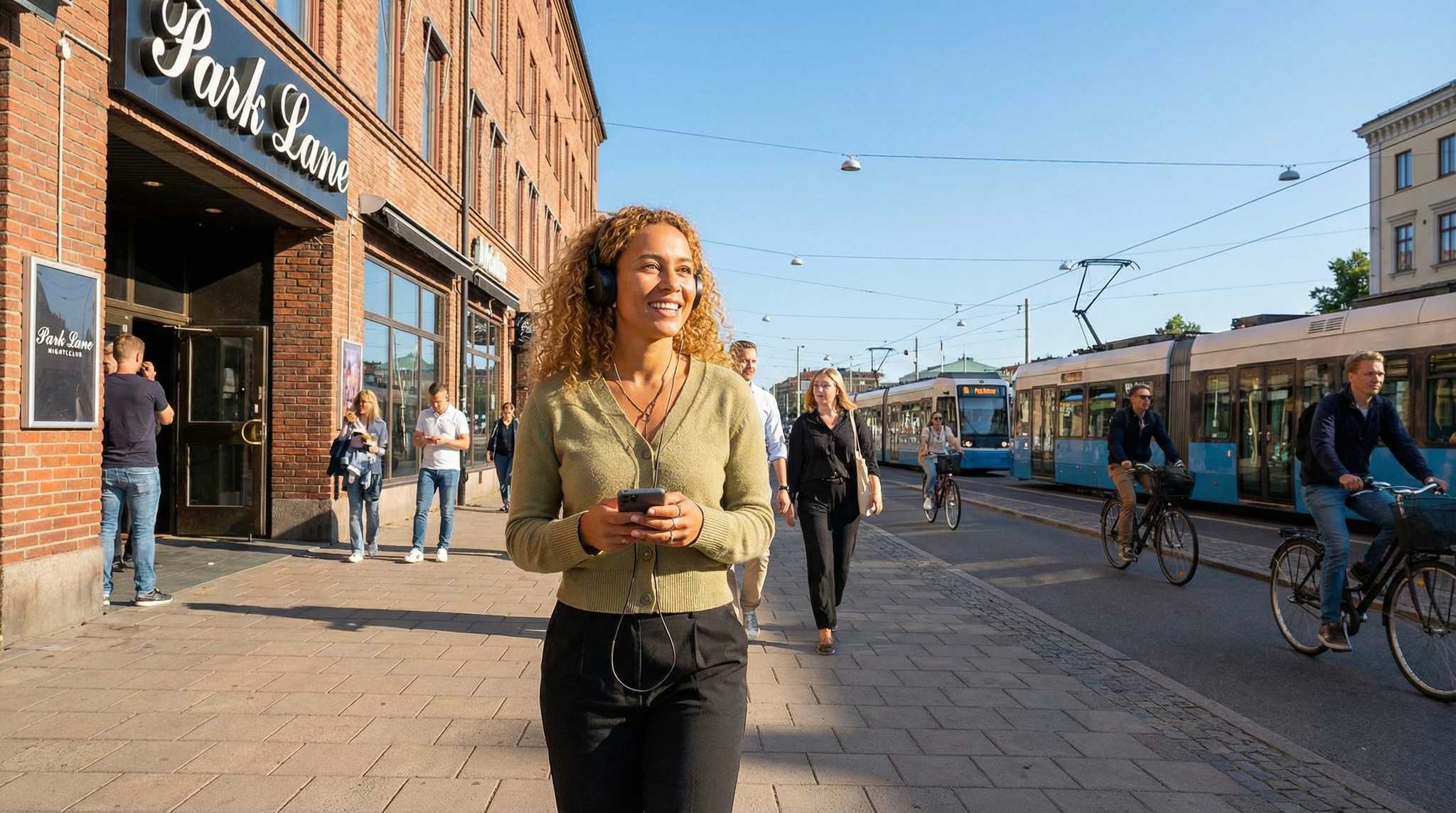
Visite Audio de Göteborg : Une Odyssée Urbaine
Une ville où les légendes planaient autrefois au-dessus des toits octogonaux et où les artistes faisaient des demeures majestueuses leur toile cache ses secrets les plus fous à la vue de tous. Découvrez le cœur dramatique de Göteborg lors de cette visite audio immersive autoguidée, en plongeant au-delà de la surface des monuments, des parkings et des parcs verdoyants pour découvrir des histoires que la plupart des visiteurs n'entendent jamais. Pourquoi un numéro de cirque défiant la mort s'est-il terminé par une tragédie soudaine ici ? Qu'est-il advenu du manoir disparu où les artistes cherchaient à la fois beauté et refuge ? Et la statue de bronze de Karl Gerhard murmure-t-elle des secrets de rébellion satirique les nuits venteuses ? Suivez des spectacles scandaleux, des domaines disparus et des artistes flamboyants en passant d'applaudissements centenaires à des statues silencieuses – sentant le pouls d'un frisson oublié monter sous vos pieds. C'est Göteborg révélée à travers des récits d'ambition, d'audace et de moments effacés des livres d'histoire mais vivants sous vos pas. Transformez la curiosité en découverte – laissez ces chapitres cachés vous entraîner maintenant. Le vrai drame vous attend là où vous vous tenez.
Aperçu du tour
À propos de ce tour
- scheduleDurée 40–60 minsAllez à votre propre rythme
- straightenParcours à pied de 2.3 kmSuivez le sentier guidé
- location_on
- wifi_offFonctionne hors ligneTéléchargez une fois, utilisez n'importe où
- all_inclusiveAccès à vieRéécoutez n'importe quand, pour toujours
- location_onCommence à Cirque de Lorensberg
Arrêts de ce tour
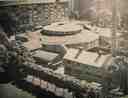
The historic Lorensbergs Cirkus can no longer be seen in person today, but let me paint a picture for you. Imagine a charming, slightly chaotic carousel of buildings, complete…Lire plusAfficher moins
The historic Lorensbergs Cirkus can no longer be seen in person today, but let me paint a picture for you. Imagine a charming, slightly chaotic carousel of buildings, complete with a central octagonal structure, a bit like a squat wedding cake, surrounded by trees. The scene is busy with various attached and adjacent buildings, and an old-school smokestack stands tall as a marker of the bygone era. To spot where Lorensbergs Cirkus used to be today, look for a modern parking facility standing as a sentinel to the past on this very ground. Yes, it was here that once a thriving hub of entertainment existed-now replaced by an unassuming parking lot. But don’t be fooled! Beneath those parked cars is a ground rich in history, soon to turn into a lively development come 2025, housing new residences, shops, and restaurants. Now, let's dive into the fun part: Lorensbergs Cirkus was a dazzling hotspot built in 1884, only to be rebuilt after a fire in 1900 and faced its final curtain call in 1969. From epic circus events to grand concerts, it was a sparkling gem in Gothenburg’s crown. Picture this: in 1898, an Italian horse trainer named Corradini dangled 15 meters above the circus floor on a gorgeous horse named Blondin, performing daredevil stunts until a tragic accident turned stirring spectacle into a sorrowful memory. This moment became an iconic story, even inspiring films! Through its time, Lorensbergs Cirkus showcased everything from wrestling to Shakespearean plays, charity concerts for Titanic’s victims, and even the whizzing brass of Louis Armstrong in 1933. A year later, comedy duo Laurel and Hardy had the audience in splits. It was a stage for debutants like boxer Ingemar Johansson and legendary rock acts like The Beatles, The Who, and Jimi Hendrix in the swinging sixties. Imagine the echoes of applause, laughter, and music still whispering in the air above the parking lot. And who knows, the spirit of the circus might just spring back to life when the promised new developments bring back some lively energy! So, while you stare at that modern car park, remember you are standing on the very soil where giants of entertainment once performed. Quite the magic trick of history, don’t you think?
Ouvrir la page dédiée →Ah, you’ve reached Rosengård! Take a look to your right. You might notice a structure that seems quite historical, yet humble among its more modern surroundings. The photo you're…Lire plusAfficher moins
Ah, you’ve reached Rosengård! Take a look to your right. You might notice a structure that seems quite historical, yet humble among its more modern surroundings. The photo you're looking at depicts what Rosengård once was - a magnificent building surrounded by trees, with a few smaller structures hinting at its former grandeur. Rosengård was an idyllic estate in Gothenburg, likely established in the early 1800s. The main building was situated on Södra Vägen, right opposite Lorensberg, and it survived into the early 1900s. One notable figure associated with this place was Jakob Emanuel Lange, a warehouse inspector and customs administrator, who owned Rosengård probably around 1866. Lange's daughter, Amélie, married Eduard Kullman, and the couple lived in the house originally belonging to Amélie's father. Their daughter Hellewi Kullman, born in 1861, became an artist and lived at Rosengård until her death in 1903. The estate shared its borders with Lilla Hedås, another property built between 1890-1910, and the Milow-Dickson farmland that faced Heden, connecting to Burgårdsvägen. Sadly, the grand main building of Rosengård was demolished early in the 20th century. A low structure replaced it but even this was torn down by the mid-1900s. Today, we can only imagine the beauty and tranquility this place once offered, as it stood amidst lush surroundings, maintaining a peaceful coexistence with its more bustling neighbors.
Ouvrir la page dédiée →As you approach the Karl Gerhard statue, look to your left. Nestled amidst lush greenery, you'll see a charming bust of a man atop a pink granite pedestal. The pedestal is…Lire plusAfficher moins
As you approach the Karl Gerhard statue, look to your left. Nestled amidst lush greenery, you'll see a charming bust of a man atop a pink granite pedestal. The pedestal is inscribed with Karl Gerhard's name, his years of birth and death (1891-1964), and a quote: "... och skönt allt snillrikt är...". The bust itself is sculpted with fine detail, capturing Karl Gerhard with a thoughtful expression, dressed in a bow tie, giving him a rather dapper look. Now, let's talk about the man of the hour, Karl Gerhard! This statue stands proudly in Karl Gerhards plats in Lorensbergsparken, right across from the entrance to Lorensbergsteatern. Gerhard was a Swedish cabaret singer, songwriter, and a prominent theatre personality known for his witty and often satirical performances. The sculpture was unveiled in 1968 outside the Theatre History Museum and was crafted by the talented Carina Ari. So, as you're standing here, take a moment to appreciate not just the statue, but also the vibrant history of theatrical and musical arts that Karl Gerhard represents. It's almost as if he's ready to break into a performance right here in the park! Keep an ear out-you never know, you might just hear a ghost of a cabaret tune. Well, maybe that's just the wind... or is it?
Ouvrir la page dédiée →
Afficher 12 arrêts de plusAfficher moins d'arrêtsexpand_moreexpand_less
Alright, you're approaching Park Lane now. Look to your right and you'll see a beige brick building with green awnings over the windows-a classic look that’s both inviting and…Lire plusAfficher moins
Alright, you're approaching Park Lane now. Look to your right and you'll see a beige brick building with green awnings over the windows-a classic look that’s both inviting and stylish. Above the entrance, big red letters boldly declare "PARK LANE." Now, let me entertain you with a little bit of history about this place! Park Lane is not just any nightclub in Gothenburg. Opened in November 1991, it has seen more rock stars than a Guitar Hero game! Legends like Prince and Motörhead have graced its stage. And it’s not just musicians who love this spot. Tech mogul Bill Gates himself has been spotted here. Can you imagine bumping into him at the bar? So, feel the energy of the place and enjoy the vibrant vibes that have kept this place buzzing for decades!
Ouvrir la page dédiée →As you approach stop number 4, the 17000 Park Avenue Hotel, look for a tall beige building with green awnings over the windows, a distinctive feature of this landmark. The hotel…Lire plusAfficher moins
As you approach stop number 4, the 17000 Park Avenue Hotel, look for a tall beige building with green awnings over the windows, a distinctive feature of this landmark. The hotel is positioned prominently on a corner, with a modern, clean look and several stories high. You’ll notice a large “E” on the side of the building’s upper floors-this is part of the logo for Elite Hotels. Now, onto the fun facts! The Elite Park Avenue Hotel is nestled in Lorensbergsparken at Kungsportsavenyen 36-38 in Gothenburg, right next to Lorensbergsteatern, the City Library, and Götaplatsen. The original building, designed by architect Nils Einar Eriksson, was completed in 1950. The hotel's journey began back in 1944, when Gothenburg’s booming industries needed more hotel rooms for their international guests. Post-World War II travel brought even more foreign visitors to the city. Led by city council chairman Ernst Jungen, a group of industrialists and shipowners decided to build a hotel with about 200 rooms and a restaurant. They formed a hotel company and chose a prime spot in Lorensbergsparken along Kungsportsavenyn. Thanks to the famous "Gothenburg spirit," entrepreneurs snapped up shares worth 4 million SEK. The city also invested, purchasing B-shares for 1.2 million SEK, covering the land cost that the hotel company bought from the city. Construction began in December 1948, and by June 6, 1950, the 12-story building with 177 rooms, a reception area, and a small breakfast room was ready. The first stage cost 8 million SEK and was built by Yngve Kullenberg Byggnads AB. The iconic Lorensbergs restaurant was still operational next to the hotel, so no new restaurant was built immediately. Later expansions included a restaurant and conference facilities. Fast forward to April 20, 1956, when the old Lorensberg restaurant closed, clearing the way for the Park Avenue Hotel expansion, which included new dining venues, additional rooms, and event spaces. This investment totaled 12 million SEK. By 1974, more conference rooms and 114 new rooms were added. In 1979, SAS purchased the hotel for about 15 million SEK, investing a further 75 million SEK over the following years. The hotel changed hands several more times, eventually being acquired by Elite Hotels at the turn of 2004/2005. A fun tidbit: Swedish legend Evert Taube decorated the hotel's grand ballroom with 20 wall panels depicting scenes from his songs. He stayed at the hotel, enjoying excellent food and drink for the two months it took to complete his artwork. Assisting him was artist Marianne Greenwood, who humorously described her payment as "board, lodging, and the privilege of having Evert all to herself for two months." The Park Avenue Hotel was also Sweden's first hotel to feature en-suite bathrooms and wall-to-wall carpeting in all rooms! Now, shall we move on to our next stop? If you're keen on discovering more about the historik, taubesalen or the kuriosa, head down to the chat section and engage with me.
Ouvrir la page dédiée →You're approaching Junggrens Café, which will be on your left. Look for a charming establishment with a grey awning featuring "Junggrens Café" in stylish script above the…Lire plusAfficher moins
You're approaching Junggrens Café, which will be on your left. Look for a charming establishment with a grey awning featuring "Junggrens Café" in stylish script above the entrance. There's outdoor seating with cozy tables and chairs behind glass barriers - a perfect spot for people-watching. Junggrens Café, affectionately known as Jungans, has been delighting visitors since it opened its doors in 1895. This café has always been a hub for the culturally inclined, attracting artists, actors, and more. In fact, it’s said that the famous artist Carl Larsson enjoyed his coffee here. Since 1969, walls inside the café have showcased two mural paintings by the artist Lars Gillis, depicting several famous patrons like Benkt-Åke Benktsson, Hjördis Petterson, and Karin Kavli. Imagine sipping your cappuccino and perhaps noticing where these creative spirits once sat! Through the years, Jungans has evolved but kept its cultural charm. It was first noted in Gothenburg’s calendar in 1944, and many owners have lovingly maintained it. The café underwent some refurbishment and reopened in April 2014, offering a refreshed yet nostalgic ambiance. So, why not take a moment to step inside, grab a coffee, and soak in the history that has brewed here for over a century? Enjoy!
Ouvrir la page dédiée →Alright, the Aveny Cinema is just up ahead on your left. Keep an eye out for a charming, vintage façade that stands out from the neighboring buildings. You'll notice an…Lire plusAfficher moins
Alright, the Aveny Cinema is just up ahead on your left. Keep an eye out for a charming, vintage façade that stands out from the neighboring buildings. You'll notice an impressive, curved marquee that once held the cinema name in bright lights. To add a bit more flair, there was even a sculpture of a lion leaping out from the sign-a real showstopper back in the day! Now for a bit of fun history: Aveny was a grand movie theater located at Kungsportsavenyen 25. It opened its doors on December 13, 1939, with the premiere of the film *Kalle på Spången*. In fact, the star of the movie, Edvard Persson, was there to celebrate the grand opening! The cinema was designed by architect Nils Olsson, who had crafted several other cinemas in Gothenburg. Aveny's interior was particularly special, featuring some unique decorations. One stand-out detail was how the name of the cinema was projected onto the sidewalk outside-imagine that! Inside, an impressive artwork of a woman holding a globe was positioned right in front of the screen. This masterpiece would descend into the floor as the curtain rose. Created by Gothenburg sculptor Erling Walldeby, the statue was later moved to other cinemas after Aveny closed in 1996. Today, it resides at Filmstaden Bergakungen near the VIP lounge. So, as you walk by, just picture lines of eager moviegoers excited to see the latest film, beneath the gleaming lights and that ever-watchful lion!
Ouvrir la page dédiée →As you walk along Kungsportsavenyen, you’ll see Spegeln on your right. Look for a building with a somewhat modernist façade, featuring a bold marquee sign that used to proudly…Lire plusAfficher moins
As you walk along Kungsportsavenyen, you’ll see Spegeln on your right. Look for a building with a somewhat modernist façade, featuring a bold marquee sign that used to proudly display the word "Spegeln." The marquee extends out towards the sidewalk, framed by a corrugated overhang. Underneath, you'll find what used to be the cinema’s entrance, with posters on either side, hinting at the cinematic treasures once shown there. Spegeln was a beloved cinema that opened its doors on April 26, 1940. It charmed movie-goers for nearly 50 years until it closed on December 11, 1989. Imagine the buzz on premiere nights, the smell of popcorn, and the anticipation as the lights dimmed. Today, the location houses a Burger King, but it will always hold a special place in the city's cinematic history. So, while grabbing a burger nowadays, think back to when movie posters decorated these walls, and tales from the silver screen captivated audiences. Ah, the golden days of cinema!
Ouvrir la page dédiée →As you approach stop number 10, you’ll see a grand avenue stretching before you, lined with trees and bustling with activity. Look ahead and you can't miss the magnificent…Lire plusAfficher moins
As you approach stop number 10, you’ll see a grand avenue stretching before you, lined with trees and bustling with activity. Look ahead and you can't miss the magnificent Poseidon statue in the foreground, standing boldly at Götaplatsen. The avenue you're facing is one of Gothenburg's crown jewels: Kungsportsavenyen, or simply "Avenyn." Kungsportsavenyen, commonly known as Avenyn, is Gothenburg's parade street. It stretches through the Lorensberg district, running southeast from the Kungsportsbron at Vallgraven, all the way up to Götaplatsen - where you’re currently standing. The final stretch is a slight uphill climb. The street is about 840 meters long, with buildings numbered from 1 to 45. Avenyn’s story dates back to an April 22, 1865, mention in city council records. The avenue was planned to extend from Kungsportsbryggan to a new broad alley leading to the new theater house, and then to connect with the large southern highway in a diagonal direction. Initially, the width was noted as 90 feet excluding the terrace gardens, and 150 feet with the gardens included. The area was previously plantations and gardens, mainly for the Kristinelund estate, which the city acquired in 1875. The name Kungsportsavenyen was proposed in a city plan revision on September 5, 1867. Fun fact: This avenue nearly got rebranded a few times! In 1880, it was proposed to rename it as Gustaf Adolfsgatan, and in March 1882, it was decided to change the name to Kungsportsgatan. However, this decision was reversed within a few months, mainly due to objections from local residents who didn’t want to go through the hassle (and expense) of changing their addresses. They preferred to keep the "aveny" name despite it sounding quite foreign and exotic at the time. Over the years, Avenyn evolved into the vibrant hub it is today, with its first store opening in 1914. In 1978, part of the avenue was closed to vehicular traffic, turning it into a more pedestrian-friendly area. The avenue boasts wide sidewalks, originally terrace gardens, making it a perfect spot for leisurely strolls. So, enjoy your walk along this historic street, and perhaps imagine the horse-drawn carriages that once trotted along the tree-lined avenue. Let’s keep moving and see what else Gothenburg has to offer! Wondering about the historik, spårväg or the i populärkulturen? Feel free to discuss it further in the chat section below.
Ouvrir la page dédiée →As you walk along, start looking to your right. You should see the impressive white building with intricate architectural details standing tall next to you. The Kvarteret Örup is…Lire plusAfficher moins
As you walk along, start looking to your right. You should see the impressive white building with intricate architectural details standing tall next to you. The Kvarteret Örup is unmistakable with its ornate façades adorned with stucco decorations and classical columns. You’ll spot beautiful balconies, and statues carved into the building's frontage, giving it an air of grandeur and history. Kvarteret Örup is a historic block located in the Lorensberg district of Gothenburg. The western part of this block faces the grand avenue of Göteborg, Kungsportsavenyen, with addresses Kungsportsavenyen 16-22. The rest of the block has addresses at Kristinelundsgatan 12-14, Lorensbergsgatan 1-7, and Vasagatan 43A-43B. The buildings along the avenue were designed in 1880-1882 by the renowned architect Adrian C. Peterson for the construction company Nils Andersson & Co. Most of Kvarteret Örup has been a listed building since April 10, 2001. The block is named after Örup Castle, and the buildings on the avenue now represent one of two preserved sides of the block with unbroken 19th-century character facing Kungsportsavenyen, the other being Kvarteret Kalmarehus. The houses are built of stone and have four stories, with plaster finishes and rich stucco decorations in a neo-Renaissance style, painted in white and yellowish-white. Adrian C. Peterson, a well-known Gothenburg architect, lived in number 18 himself. Although some modifications have been made, like installing shops on the ground floors and removing the garden plantings, the exteriors are well preserved. In the mid-19th century, Gothenburg was rapidly growing due to flourishing industries and lively international trade. Around 1860, the city's fortifications were replaced with new blocks, public buildings, and parks. The areas outside the park belt with Nya Allén, east of the suburb Haga, were still largely agricultural and pasture lands with scattered, disordered suburban buildings. The city’s affluent elite viewed the transformations occurring in European metropolises as a model to emulate, particularly the development of Vienna’s Ringstraße in 1857, which symbolized the growing power of the wealthy bourgeoisie. In a grand plan for Gothenburg’s expansion proposed in 1863, "Hagaheden" was highlighted as especially suitable for metropolitan construction. In the 1866 confirmed plan, the broad avenue from Kungsportsbron southwards, alongside Vasagatan, formed the plan's main axes. These streets became the main thoroughfares of elegant Gothenburg in the 1880s, lined with rows of trees and palatial façades. The build-out along Avenyn went on from 1872-1897, temporarily halting at Engelbrektsgatan until Lorensbergsparken could be breached, allowing the thoroughfare to continue south to Götaplatsen, which was established in time for the city’s grand jubilee exhibition in 1923. The "English" and "French" blocks facing each other were first completed along Avenyn (numbers 3-17 and 4-14 respectively). Designed by Johan August Westerberg between 1872 and 1877 as private palaces in three stories for one or two families each, these buildings showcased contrasting architectural styles: the "English" block in austere, Anglo-Saxon classicism and the "French" block in lively baroque with pronounced façade projections. In the Kvarteret Örup, the four-story buildings numbered 16-22 harmonized architecturally with lavish embellishments on the façades and roofs, characterized by grand impressions made by the projections and rhythmic subdivision of the façades with pilasters separating the closely spaced windows. The richly decorated façades and garden enclosures used cast cement details, an established method in Gothenburg since the 1860s. The roofs, with towers clad in slate or patterned zinc, were adorned in French style with dormers and wrought iron grills. Locally, people affectionately nicknamed the block "Adrianopel," cleverly referencing its architect, Adrian C. Peterson, who designed it between 1880 and 1883 for Nils Andersson & Co.
Ouvrir la page dédiée →As you approach Lorensbergsgatan, keep an eye out for a charming corner building on your left. The structure boasts a striking blend of older architectural styles. The red brick…Lire plusAfficher moins
As you approach Lorensbergsgatan, keep an eye out for a charming corner building on your left. The structure boasts a striking blend of older architectural styles. The red brick facade is accented by elegant, lighter stone detailing around the windows and corners, contrasting against the darker, slightly rounded roof adorned with smaller, arched windows. On closer inspection, you'll notice metal wrought-iron balconies adding a touch of elegance. This delightful mix gives the building a timeless character. The ground floor hosts various signs and shop entrances, adding a bit of modern life to its historical aura. Now, a bit about Lorensbergsgatan-this isn’t just any street; it’s a slice of Göteborg history! Located in the Lorensberg district, this street stretches a modest 260 meters from Vasagatan to Engelbrektsgatan. Its name dates back to 1872 and pays homage to Lorensberg estate. Before you ask, yes, the estate itself got its name from Lorens Petersén, a trader who owned it from 1770 to 1800. So, as you stroll down the 260-meter stretch of Lorensbergsgatan, remember that you're walking in the footsteps of history-or, more precisely, the footsteps of Lorens Petersén and perhaps his pet schnauzer! Enjoy the rest of your journey through Gothenburg!
Ouvrir la page dédiée →You're almost at the Ingrid Segerstedts gymnasium! As you approach, look to your right, and you’ll spot a striking building with a warm reddish hue. The façade showcases…Lire plusAfficher moins
You're almost at the Ingrid Segerstedts gymnasium! As you approach, look to your right, and you’ll spot a striking building with a warm reddish hue. The façade showcases beautiful, intricate stonework, with large, ornately decorated windows. But the big giveaway is the large burgundy banner hanging proudly, announcing "Ingrid Segerstedts Gymnasium." Now, onto the fun stuff! Ingrid Segerstedts gymnasium, located on Södra Vägen in Gothenburg, is a unique institution named after the renowned politician and journalist, Ingrid Segerstedt-Wiberg. The school operates in her spirit, aspiring to educate young people to be knowledgeable, courageous, empathetic, and confident global citizens. It's not just any school; it’s a foundation-driven haven of learning committed to democracy, freedom of speech, human equality, empathy, and peace. This isn't just a bunch of idealistic talk! Ingrid Segerstedts gymnasium is a United Nations-certified school and collaborates with the Swedish UN Association. They also work closely with Amnesty International and other human rights organizations. Fun fact: It’s one of the first HBTQ-certified schools in Sweden, showing their commitment to inclusivity and diversity. They offer high school preparatory programs focusing on social sciences, behavioral science, media, communication, law, and diplomacy. Plus, the student union formed in 2011 works tirelessly to make school life more rewarding by organizing community-building events and striving for a better learning environment. Ah, to be a high school student here must be a pretty outstanding experience!
Ouvrir la page dédiée →Heden is Gothenburg's go-to spot for sports and public gatherings. It's like the Swiss Army knife of outdoor spaces! Whether you're into football, handball, or even bandy (that's…Lire plusAfficher moins
Heden is Gothenburg's go-to spot for sports and public gatherings. It's like the Swiss Army knife of outdoor spaces! Whether you're into football, handball, or even bandy (that's a type of ice hockey, if you're wondering), Heden's got a patch of turf with your name on it. Imagine this space bustling during the Gothia Cup, one of the world's largest youth football tournaments, with kids from all over the globe showing off their best moves. But wait, there's more! Every summer, Heden transforms into Handball Heaven for the Partille Cup. Picture over 50 handball courts and 15,000 players turning this area into a massive festival of flying balls and sweaty competition. Before it became the epicenter of sports glory, Heden had a more regimented life as a military drill ground known as Excersisheden. They say if you listen closely, you might still hear the echoes of soldiers' marching drills. So, take it all in, my friend! You're standing on ground that's seen it all, from military drills to world championships. Now, onwards to our next stop!
Ouvrir la page dédiée →Look to your left, and you’ll spot a delightful path lined with trees on either side, stretching out in an inviting green tunnel. This is the Allén's Example, a picturesque avenue…Lire plusAfficher moins
Look to your left, and you’ll spot a delightful path lined with trees on either side, stretching out in an inviting green tunnel. This is the Allén's Example, a picturesque avenue perfect for a leisurely stroll. Gamla Allén, or the Old Avenue, is a charming, more-than-500-meter-long alleyway running along Södra Vägen in the Heden district of Gothenburg. It stretches between Engelbrektsgatan and Nya Allén. The idea to create an avenue here for both the city's beautification and the pleasure of residents walking by was conceived back in 1787 and came to fruition the following year. However, the current alley was replanted in the 1820s. Initially known as Nya Alléen, its name was changed to Gamla Allén in 1815. The masterminds behind its creation were Assessor Fredrik Georg Kall and Gothenburg’s Mayor Daniel Pettersson. Originally, there was a third row of trees in the middle of the two existing rows, making it even more lush. So, take a deep breath, enjoy the shade, and let Gamla Allén whisk you back to a time when this green pathway was the pride and joy of Gothenburg's promenade enthusiasts!
Ouvrir la page dédiée →As you approach Heden, you'll notice a spacious green area surrounded by charming, multi-story buildings with beautiful red rooftops. Take a look at those red-roofed beauties,…Lire plusAfficher moins
As you approach Heden, you'll notice a spacious green area surrounded by charming, multi-story buildings with beautiful red rooftops. Take a look at those red-roofed beauties, especially the ones adorned with turrets and decorative stonework. You'll see them standing tall around the lush greenery, making them easy to spot. Now, let's dive into the story of Heden. This area, known originally as Exercisheden, is a district and a primary area in the Centrum district of Gothenburg. It borders Gårda and Bö to the east, Lorensberg to the west, Krokslätt to the south, and Inom Vallgraven and Stampen to the north. Its boundaries include Vallgraven, Fattighusån, Mölndalsån, Getebergs led, and Södra Vägen. Covering 123 hectares, Heden has quite the history. It was once called Tegelbruksängen, where a Dutchman named Dr. Pieter á Naaldwyck established a brickworks in the 1620s. The brickworks was sold to the city of Gothenburg in 1629, and it wasn't until the 1850s that this activity ceased. In the mid-1700s, the military started using Exercisheden. Over time, Gothenburg city acquired the land in 1892. With the dismantling of the fortifications along Vallgraven in the early 1800s, the area saw new developments, including Gamla Allén and Parkgatan, as well as Trädgårdsföreningen park in 1842. The first buildings along Sten Sturegatan were erected in the early 1880s. In the '60s and '70s, many older structures were replaced with new developments, including the residential area east of Heden built in 1987. Skandia Insurance built its office in the mid-'70s in the central part of Heden. A veritable melting pot of history and modernity, today Heden is home to landmarks such as Gamla Ullevi, Ullevi, Scandinavium, Valhallabadet, Filmstaden Bergakungen, Svenska Mässan, Liseberg, Universeum, and the Museum of World Culture along Eventstråket. So, take a minute to soak in the vibrant blend of the past and present in Heden-where history, sports, and culture come alive!
Ouvrir la page dédiée →
Foire aux questions
Comment commencer le tour ?
Après l'achat, téléchargez l'application AudaTours et entrez votre code de réduction. Le tour sera prêt à commencer immédiatement - il suffit d'appuyer sur lecture et de suivre l'itinéraire guidé par GPS.
Ai-je besoin d'Internet pendant le tour ?
Non ! Téléchargez le tour avant de commencer et profitez-en pleinement hors ligne. Seule la fonction de chat nécessite Internet. Nous recommandons de télécharger en WiFi pour économiser vos données mobiles.
S'agit-il d'une visite de groupe guidée ?
Non - il s'agit d'un audioguide en autonomie. Vous explorez indépendamment à votre propre rythme, avec une narration audio diffusée par votre téléphone. Pas de guide, pas de groupe, pas d'horaire.
Combien de temps dure le tour ?
La plupart des tours durent entre 60 et 90 minutes, mais vous contrôlez totalement le rythme. Faites des pauses, sautez des arrêts ou arrêtez-vous quand vous le voulez.
Et si je ne peux pas finir le tour aujourd'hui ?
Pas de problème ! Les tours disposent d'un accès à vie. Faites une pause et reprenez quand vous le souhaitez - demain, la semaine prochaine ou l'année prochaine. Votre progression est sauvegardée.
Quelles sont les langues disponibles ?
Tous les tours sont disponibles dans plus de 50 langues. Sélectionnez votre langue préférée lors de l'utilisation de votre code. Note : la langue ne peut pas être changée après la génération du tour.
Où accéder au tour après l'achat ?
Téléchargez l'application gratuite AudaTours sur l'App Store ou Google Play. Entrez votre code de réduction (envoyé par e-mail) et le tour apparaîtra dans votre bibliothèque, prêt à être téléchargé et commencé.
Si vous n'appréciez pas le tour, nous vous rembourserons votre achat. Contactez-nous à [email protected]
Paiement sécurisé avec 



