
Visite audio d'Agra : Visite d'Agra
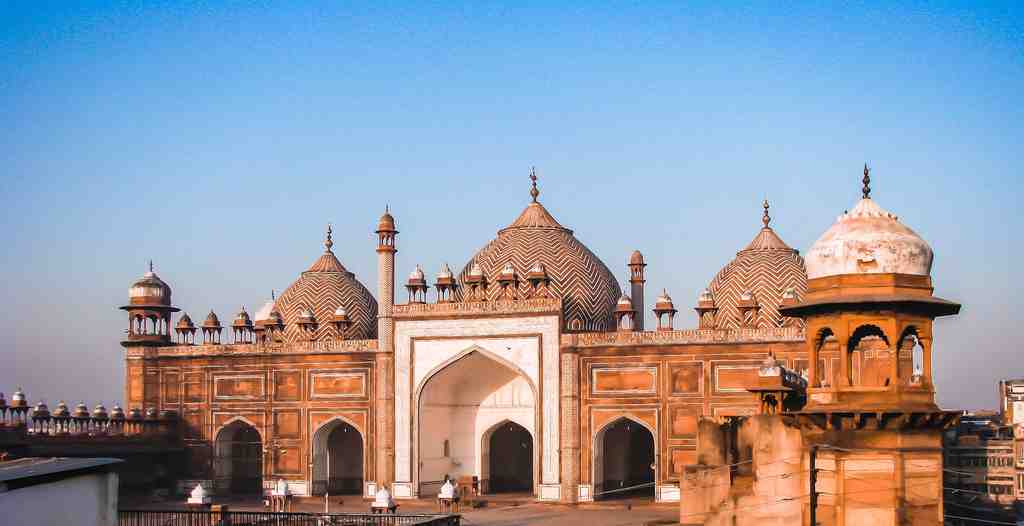
Un palais royal au bord de la rivière cache un labyrinthe souterrain. À l'ombre de puissants murs rouges, des empereurs furent couronnés et des prisonniers complotèrent leur évasion. Sous des dômes tourbillonnants, le pouvoir changeait à chaque prière murmurée. Cette visite audio autoguidée vous mène à travers le cœur turbulent d'Agra, révélant des rivalités épiques et des merveilles architecturales secrètes que la plupart ne remarquent jamais. Pourquoi un amour interdit a-t-il failli briser le Shah Jahani Mahal ? Quel complot s'est déroulé sous les arches de grès du Fort d'Agra, menaçant une dynastie du jour au lendemain ? Qu'y a-t-il de si inhabituel dans une piscine en marbre au centre de l'ancienne cour de la mosquée Jama ? Passez des portes imposantes aux cours silencieuses et aux arcades luxuriantes. Retracez des pas perdus à travers des batailles, des trahisons et des ambitions royales qui résonnent encore dans chaque pierre. Voyez Agra non pas comme une carte postale mais comme une épopée vivante façonnée par l'intrigue et les rêves oubliés. Commencez votre voyage là où les secrets persistent sous des salles blanchies à la chaux. La véritable histoire d'Agra vous attend juste au prochain coin de rue.
Aperçu du tour
À propos de ce tour
- scheduleDurée 30–50 minsAllez à votre propre rythme
- straightenParcours à pied de 3.0 kmSuivez le sentier guidé
- location_on
- wifi_offFonctionne hors ligneTéléchargez une fois, utilisez n'importe où
- all_inclusiveAccès à vieRéécoutez n'importe quand, pour toujours
- location_onCommence à Shah Jahani Mahal
Arrêts de ce tour
You see, the Mughal Emperor Shah Jahan wanted to put his own stamp on this redstone building, so he decided to spruce it up with some of his pizazz! He transformed the existing…Lire plusAfficher moins
You see, the Mughal Emperor Shah Jahan wanted to put his own stamp on this redstone building, so he decided to spruce it up with some of his pizazz! He transformed the existing structure, adding a large hall, side rooms, and even an octagonal tower that faces the beautiful river. Now, let me tell you, this palace used to be quite the sight! The walls were a spectacular combination of brick masonry and red stone, but they were all covered in a thick, white plaster. And to top it off, they painted the plaster with vibrant floral designs. It was like a giant coloring book! From where we stand, you can spot a lovely white marble dalan, which has five arches with nine cusps each. It's supported by double pillars and protected by a Chhajja, which is like an extended roof. Oh, and don't forget to check out the western bay, where they used to have a gate called Ghaznin. But there's more! Beneath our feet, there's a whole underground world. Yep, this palace has subterranean apartments in multiple stories. They're like hidden gems waiting to be explored! So, my friend, let's take a moment to appreciate the Shah Jahan Mahal for what it once was - a dazzling blend of red stone, white plaster, and colorful paintings. Now, let's head to our next stop and keep this adventure going!
Ouvrir la page dédiée →Ah, the Jama Mosque in Agra, what a beauty! This 17th-century mosque is a real gem in the heart of the city. It was built by Jahanara Begum, the daughter of none other than the…Lire plusAfficher moins
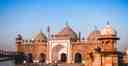
Ah, the Jama Mosque in Agra, what a beauty! This 17th-century mosque is a real gem in the heart of the city. It was built by Jahanara Begum, the daughter of none other than the legendary Mughal Emperor Shah Jahan. And let me tell you, when it comes to architecture, the Mughals really knew how to make a statement! Now, picture this: As Shah Jahan was ruling the empire, he decided that Agra needed a brand new mosque. But not just any mosque, mind you. This one had to be grand and magnificent. So, he gave the order for construction to begin in the year 1637. The princess Jahanara Begum, being the amazing daughter that she was, asked her father if she could personally fund the mosque. And you know what? The emperor granted her wish! What a daddy-daughter team, right? Now, here's the interesting part. Originally, the mosque was supposed to be built alongside the Yamuna River. But you know how things sometimes change? Well, attention was diverted towards completing another little masterpiece you might have heard of - the Taj Mahal. So, the plan shifted, and the Jama Mosque found its new home near the Agra Fort. We don't know if it was because the riverfront area was deemed more residential or if they were worried the mosque would overshadow the Taj's own mosque. Who knows? Regardless of the change in location, the construction finally began in 1643, and after a little delay caused by the land purchase, the mosque was finally completed in 1648. Phew! Five lakh rupees and a lot of hard work later, the Jama Mosque stood proudly in all its glory. Now, let's talk about the mosque itself. It's primarily made of stunning red sandstone, with hints of white marble adding that extra touch of elegance. The mosque covers an area of 1200 square meters, and let me tell you, it's quite a sight to behold. The prayer chamber, my friend, is a true masterpiece. It has five entrance archways, and the central one, well, let's just say it's something special. It's set within a high pishtaq, which features those beautiful Persian inscriptions praising the rule of Shah Jahan. Sound familiar? Yep, just like the Taj Mahal! The prayer chamber is crowned by not one, not two, but three bulbous domes. And believe me, these domes are no ordinary domes. They're decorated in a stunning herringbone pattern with red and white stone, and topped with lotus-flower finials. Talk about attention to detail! And hold on, there's more! The sahn, the courtyard, is enclosed on two sides, featuring these beautiful arcades with axial gates. In the center, you'll find a cool little pool for ritual ablutions. Gotta cleanse the soul, right? Well, my friend, that's the Jama Mosque in a nutshell. A true testament to the Mughal architecture and a place that will leave you in awe. So, shall we move on to our next stop, the Agra Fort? Just keep following me, and we'll make our way there in no time!
Ouvrir la page dédiée →
Afficher 3 arrêts de plusAfficher moins d'arrêtsexpand_moreexpand_less
Ah, the Moti Masjid, also known as the Pearl Mosque! This stunning mosque is a real gem within the Agra Fort. Built by the Mughal Emperor Shah Jahan, it's the perfect place to…Lire plusAfficher moins
Ah, the Moti Masjid, also known as the Pearl Mosque! This stunning mosque is a real gem within the Agra Fort. Built by the Mughal Emperor Shah Jahan, it's the perfect place to show off his love for marble. Now, picture this: a mosque entirely made of white marble. It's like walking into a dream! Shah Jahan wanted to add his personal touch to the Agra Fort, so he went all out with the Moti Masjid. He even went as far as dismantling some structures within the fort just to make room for this beauty. Construction began in 1646 and lasted until 1653, making it a relatively late addition to the Agra Fort. But hey, better late than never, right? And when Shah Jahan saw the finished mosque, he was so impressed that he brought his two sons to see it two years later. Talk about proud parenting! The Moti Masjid is surrounded by high walls and sits on a raised platform. It faces the Yamuna river, providing a picturesque view. Speaking of views, the outside walls are covered in red sandstone, while the inside is adorned with beautiful marble. It's like the mosque has a secret fashion statement going on! Once you step inside, you'll find a courtyard with arcades lining the edges. In the center, there's a tranquil ablution pool - perfect for some peaceful reflection. And on the western side of the courtyard, you'll find the main prayer hall. It's a grand structure with seven entryways and a roof boasting three domes and some chhatri. Now, what's a mosque without a little bit of shimmer? The front of the hall is shaded by a deep chhajja (eave) and adorned with stunning Persian inscriptions in black marble. Shah Jahan sure knew how to make a statement! But that's not all. The interior of the prayer hall is a sight to behold as well. Shah Jahan kept things elegant and simple with undecorated marble. And the design of the Moti Masjid was heavily influenced by another marble mosque he built at the Ajmer Sharif Dargah. Clearly, he had a thing for marble! So, step into this architectural masterpiece and experience the tranquility and beauty of the Moti Masjid. It's definitely a shining pearl within the Agra Fort!
Ouvrir la page dédiée →This architectural beauty was built by none other than Shah Jahan, who had quite the knack for building stunning structures. The Nagina Masjid is made of pure white marble, giving…Lire plusAfficher moins
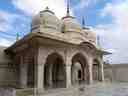
This architectural beauty was built by none other than Shah Jahan, who had quite the knack for building stunning structures. The Nagina Masjid is made of pure white marble, giving it an irresistible charm. Now, here's a fun fact for you - "Nagina" means "gem" in Hindi. So, you could say that this mosque is a real gem in Agra Fort. See what I did there? One of the interesting things about Nagina Masjid is its simplicity. It doesn't go overboard with excessive decorations, but rather focuses on a clean and elegant design. Inside, you'll find three bays separated by simple pillars, with arches above. The central arch is the star of the show, with its nine cusps. This private mosque was actually built for the ladies of the Royal family. Talk about exclusive! They could enjoy a stunning view of the road from the balcony, which runs towards the Hathi Pol on the northern side of the Masjid. Now, let me tell you a little secret. Down the road from the Nagina Masjid, there used to be a luxurious bazaar known as Mina Bazar. It was a shopping paradise for the royal ladies, who could stand in the balcony and shop to their heart's content. What a convenient shopping experience, right? So, as you explore this wonderful mosque, take a moment to imagine the royal ladies strolling through the bazaar, all while basking in the beauty of the Nagina Masjid.
Ouvrir la page dédiée →

Foire aux questions
Comment commencer le tour ?
Après l'achat, téléchargez l'application AudaTours et entrez votre code de réduction. Le tour sera prêt à commencer immédiatement - il suffit d'appuyer sur lecture et de suivre l'itinéraire guidé par GPS.
Ai-je besoin d'Internet pendant le tour ?
Non ! Téléchargez le tour avant de commencer et profitez-en pleinement hors ligne. Seule la fonction de chat nécessite Internet. Nous recommandons de télécharger en WiFi pour économiser vos données mobiles.
S'agit-il d'une visite de groupe guidée ?
Non - il s'agit d'un audioguide en autonomie. Vous explorez indépendamment à votre propre rythme, avec une narration audio diffusée par votre téléphone. Pas de guide, pas de groupe, pas d'horaire.
Combien de temps dure le tour ?
La plupart des tours durent entre 60 et 90 minutes, mais vous contrôlez totalement le rythme. Faites des pauses, sautez des arrêts ou arrêtez-vous quand vous le voulez.
Et si je ne peux pas finir le tour aujourd'hui ?
Pas de problème ! Les tours disposent d'un accès à vie. Faites une pause et reprenez quand vous le souhaitez - demain, la semaine prochaine ou l'année prochaine. Votre progression est sauvegardée.
Quelles sont les langues disponibles ?
Tous les tours sont disponibles dans plus de 50 langues. Sélectionnez votre langue préférée lors de l'utilisation de votre code. Note : la langue ne peut pas être changée après la génération du tour.
Où accéder au tour après l'achat ?
Téléchargez l'application gratuite AudaTours sur l'App Store ou Google Play. Entrez votre code de réduction (envoyé par e-mail) et le tour apparaîtra dans votre bibliothèque, prêt à être téléchargé et commencé.
Si vous n'appréciez pas le tour, nous vous rembourserons votre achat. Contactez-nous à [email protected]
Paiement sécurisé avec 


