AudaTours logoAudaTours

Visite audio de Brno : Échos de Nobles, de Liberté et de Chefs-d'œuvre Modernes

Guide audio15 arrêts

Sous la surface tranquille de Brno, des secrets séculaires s'agitent juste sous vos pieds. Des trams éclairés au néon serpentent devant d'élégantes places, mais chaque place et chaque pavé évoquent des rébellions perdues, des scandales oubliés et le vrombissement de révolutions disparues. Cette visite audio autoguidée vous ouvre les portes de recoins cachés et de récits oubliés, vous menant à travers le cœur de la Place Morave et dans l'histoire sinueuse du Quartier Masaryk. Quel acte désespéré a mené à une répression nocturne à Namesti Miru ? Pourquoi des figures obscures ont-elles disparu autour de la Place Comenius ? Et quelle invention particulière a suscité de folles rumeurs directement sur la Ligne Tramp ? Chaque pas vous plonge plus profondément dans le drame et la révélation, vous faisant traverser des jardins silencieux, des lignes de tram animées et des arcades oubliées. Les histoires prennent vie, changeant à jamais la ville sous votre regard. Les secrets attendent là où vous vous y attendez le moins. Appuyez sur lecture et laissez l'esprit agité de Brno vous guider vers l'inconnu.

Aperçu du tour

map

À propos de ce tour

  • schedule
    Durée 40–60 minsAllez à votre propre rythme
  • straighten
    Parcours à pied de 2.9 kmSuivez le sentier guidé
  • location_on
    EmplacementBrno, Tchéquie
  • wifi_off
    Fonctionne hors ligneTéléchargez une fois, utilisez n'importe où
  • all_inclusive
    Accès à vieRéécoutez n'importe quand, pour toujours
  • location_on
    Commence à La Maison des Seigneurs de Lipa

Arrêts de ce tour

  1. To spot the House of the Lords of Lipa, look for a grand four-story Renaissance palace with intricately decorated brownish-beige walls, two striking round bay windows at each end,…Lire plusAfficher moins

    To spot the House of the Lords of Lipa, look for a grand four-story Renaissance palace with intricately decorated brownish-beige walls, two striking round bay windows at each end, and a large stone entrance framed by statues and topped with “DŮM PÁNŮ Z LIPÉ” inscribed along the roofline. Welcome to one of Brno’s most elegant buildings-and oh, this palace has enough stories to keep you standing here until your legs want a vacation! Imagine you're in the heart of the 16th century; the city is bustling, and this spot was once home to a sturdy Gothic house. The building you see now rose from the dreams-and the deep pockets-of Kryštof Schwanz, one of Brno’s wealthiest wine merchants. By the 1590s, he’d commissioned Italian architect Antonio Gabri to build a palace that would dazzle every passerby. And if all the grapevine ornaments on the façade seem unusual, that’s no coincidence: Schwanz made his fortune trading fine wine, and he wanted to advertise his business in the fanciest way possible. Step closer to the bay windows and look at the detailed stone reliefs. You’ll see tales from mythology, scenes from scripture, even a few plucky medieval characters and grape harvesters immortalized in stone. If these old figures had opinions, they’d probably complain about all the renovations over the centuries! The house switched owners more often than a royal crown; it belonged to knights, noblemen, businessmen, and at one point, the palatial stables could fit 18 horses-talk about curb appeal! After a stint as a luxury home, it became a coffee house, a cadastral office, and even a storage room for a neighboring shop. By the 19th century, some less-than-lucky remodeling erased parts of the original sculpture, which angered art lovers but made for some interesting dinner debates, I imagine. Then, in 1913, it passed into the hands of a local business association-only to spend years gathering dust and neglect. In the 20th century, it survived bomb damage, partial abandonment, and clumsy repaintings. Luckily, in 2000, a major renovation gave the palace its present-day splendor, turning it into a lively place for cultural happenings and city views. Want the best view in Brno? Head upstairs and take it all in; just watch out for the ghosts of ancient wine merchants arguing about prices!

    Ouvrir la page dédiée →
  2. Straight ahead, you’ll spot Freedom Square by its wide, open space packed with trams, sleek modern and ornate old buildings side-by-side, and yes, that tall black granite…Lire plusAfficher moins

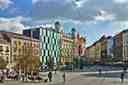
    Straight ahead, you’ll spot Freedom Square by its wide, open space packed with trams, sleek modern and ornate old buildings side-by-side, and yes, that tall black granite sculpture right in the center-if you see trees and lots of people relaxing, you’ve made it! Welcome to the bustling heart of Brno-Freedom Square, or as the locals like to call it, “Svoboďák.” Look around and imagine this triangular plaza not as a peaceful pedestrian zone, but centuries ago, a wild crossroads where three busy trade routes collided. It’s no accident that the square got its odd shape-back in the 13th century, merchants rolled in from all directions in squeaky carts, shouting deals and haggling over every last horseshoe and onion. The market’s name, then, was “Dolní trh”-the Lower Market. Let’s just say, if you ever needed spices, silk, or some Medieval gossip, this was the place to be. Picture the sound of horses’ hooves echoing off ancient cobblestones and vendors calling out their wares-take a moment to soak it in:. As the centuries rolled by, the square became more sophisticated. Wealthy burghers and nobles built grand houses right here, flexing their status by constructing towers taller (and undoubtedly fancier) than their neighbors’. The square’s importance only grew, especially in the darkest times-like in 1679, when a deadly plague swept through the city. The people of Brno responded with hope: they built the Marian Plague Column you can still see, topped with saints, rising bravely to the sky. Years later, in 1869, things got pretty dramatic for the local skyline when the old Church of St. Nicholas was knocked down. Its ghostly outline, however, still haunts the paving stones, marked forever after a wartime air raid finished off the last stones in 1945. Now, if you feel a chill in the air, don’t worry-it might just be the lost bell tower saying hello. The face of Freedom Square kept changing. At the turn of the 20th century, waves of rebuilding crashed through here. Grand houses bowed out, and in came noble new structures in neo-Renaissance style. On the western edge, a massive bank sprouted up in 1929, designed by architect Bohuslav Fuchs-liberated thinking in a time of rapid change. Let’s talk trams! In 1901, the electric line zipped right through square, north to south. Soon, the clang and ding of trams became as much a part of the city’s heartbeat as the laughter from cafes, the clinking glasses, and the gentle hum of gossip. Only the main north-south tram track remains these days-watch your step, you never know when another tram adventure might whiz by. Fast-forward to the 21st century and Freedom Square had a serious glow-up. In 2006, the old stones were replaced, fresh new trees were planted, and the 15-meter bronze fountain, gleaming with verses by local poet Jan Skácel, bubbled to life. Fun fact: those poetic lines made it onto the fountain after some family negotiations-his widow Božena nearly made the city shell out three million crowns, but settled for much less, proving that poetry, while priceless, sometimes needs a lawyer. And don’t miss the so-called clock in the center-built in 2010 and made from African granite, it looks like a giant black bullet. It commemorates Brno’s legendary resistance against the Swedes in 1645, but let’s call it what it is: the city’s most mysterious and mischievous timepiece. Watch carefully: if it spits out a glass marble at 11 am, that’s your cue to try and snatch it for luck-just be warned, local kids are fast! Over time, the square has held many names-Dolní trh, Velké náměstí, even Adolf Hitler Square (yikes), but since 1945, it’s proudly worn the badge of Liberty. Let your senses soak it all in: the modern blend of old and new architecture, the buzz of trams, the sunlight glinting off glass and bronze. Freedom Square is Brno-open, lively, and always changing.

    Ouvrir la page dédiée →
  3. You’re standing at the place where one of Brno’s greatest “now you see it, now you don’t” tricks happened. Let's step back in time, to the end of the 13th century, when kings,…Lire plusAfficher moins

    You’re standing at the place where one of Brno’s greatest “now you see it, now you don’t” tricks happened. Let's step back in time, to the end of the 13th century, when kings, queens, and monks all left their footprints here. Imagine yourself on the lively Dominican Square: cobblestones under your feet, merchants shouting their prices at the old Fish Market, and right before you, a stunning Gothic chapel rises - the Royal Chapel, dedicated first to the Virgin Mary and Saint Wenceslas, later swapped for Saints Cyril and Methodius. I know, it seems like everyone wanted their spot on the sign! Once upon a spring day in 1297, King Wenceslas II sat down (perhaps enjoying a cup of mead, who knows) and decided this spot needed a magnificent chapel for his so-called Margrave House. It started as a neighbor to an even older chapel nearby, which had its own noble story. But soon, these two neighboring chapels merged, united to become the glorious Royal Chapel-a rare feat in architecture, kind of like conjoining two castles but hoping they’ll never argue about bathroom schedules. This chapel didn’t just collect patrons, it also changed hands and its purpose faster than a set of keys at a medieval party. In the 14th century, the quick-thinking King John of Luxembourg gifted the chapel and neighboring house to dowager queen Elizabeth Richeza, who soon entrusted it to the newly-founded Cistercian nunnery in Old Brno. Their ownership lasted for centuries, all the way up to Emperor Joseph II’s reforms in 1782, who, like someone reorganizing their closet, decided the nunnery should go and the chapel should become… a military warehouse. Romantic, right? During those years, the chapel’s miraculous Gothic vault soared above, held up by a single slender column - a design so smart, even modern engineers might do a double-take. Frescoes covered its walls, light danced through stone tracery windows, and nuns would whisper prayers in the long shadows of dusk. But history marched on, as it always does. By the early 20th century, Brno wanted a modern city center. The army kept its wood and later archivable records here, but soon, city officials eyed the entire north side of the square for demolition. The Royal Chapel was marked for destruction in 1908. Picture artists shouting “Stop!” historians writing desperate letters, and even the future Franz Ferdinand d’Este taking interest. But despite the protests, bulldozers (or the early 1900s version-maybe “bulldonkeys?”) arrived. Here’s the twist worthy of a Sherlock Holmes story: before it vanished, the entire chapel was carefully measured and photographed. Its stones and precious décor were removed and stored all over Brno-some in museums, some deep in anti-air shelters under the Petrov hill. You can even see pieces today at the New Town Hall and in the Mintmaster’s Cellar, not far from where you’re standing. Plans to rebuild the Royal Chapel have surfaced and faded many times-a rooftop chapel above a parking garage, a spiritual oasis in a new train station. Maybe, just maybe, the Royal Chapel is waiting for its next act-like a medieval diva, always ready for a comeback. So next time you pass a parking garage, look closely. You just might spot a Gothic arch peeking out, dreaming of its days as the royal heart of Brno!

    Ouvrir la page dédiée →
Afficher 12 arrêts de plusAfficher moins d'arrêtsexpand_moreexpand_less
  1. Look for a striking white church with two tall, green-topped towers rising symmetrically above the entrance, just across the busy parking area-you can’t miss those towers reaching…Lire plusAfficher moins

    Look for a striking white church with two tall, green-topped towers rising symmetrically above the entrance, just across the busy parking area-you can’t miss those towers reaching into the blue sky! Now, take a moment to imagine the scene here nearly 800 years ago. The year is 1228, and Moravian Margrave Přemysl is gifting this spot, along with a small church dedicated to the archangel Michael, to a group of Dominican monks. Picture them in their cloaks, rolling up their sleeves to build a monastery that would echo with prayers and-let’s be honest-a fair bit of medieval gossip. Over the centuries, this church became much more than a place for sermons; it saw historic Moravian parliaments meet inside its walls, and the local estates would gather here, making it something like the world’s grandest town hall during the old days. Fast-forward to 1645, and suddenly the peaceful scene is shattered: the roar of cannons, the shout of Swedish soldiers, and the church is left in ruins after a siege. But Brno doesn’t give up! The city rebuilds bigger and better, with architect Jan Křtitel Erna giving us this grand Baroque beauty in the late 1600s. Don’t forget those twin towers-towering 60 meters high, topped off around 1740, and originally holding four bells. Today, only two survive, including St. Barbara, ringing out just as she did over 500 years ago. Oh, and see the heroic figure topping the church? That’s a copy of Archangel Michael, guardian of the place since 1728. The original actually took a little vacation in the justice complex while restoration work happened, but now he’s back-made even tougher this time to handle the wild Brno weather (and the pigeons). Swing around to the south side to spot the Chapel of the Holy Sepulchre, modeled after Jerusalem's legendary shrine. It’s like a surprise bonus level for architecture fans. Standing here, you’re not just outside a church-you’re on a living set for centuries of history, mystery, and even a bit of angelic drama. Now, how’s that for heavenly real estate?

    Ouvrir la page dédiée →
  2. To spot the Tramp Line Moravian Square - Svobody Square - Central Station, look for the classic red-and-white tram gliding along shiny rails in the middle of a bustling,…Lire plusAfficher moins

    To spot the Tramp Line Moravian Square - Svobody Square - Central Station, look for the classic red-and-white tram gliding along shiny rails in the middle of a bustling, shop-lined cobblestone street, surrounded by ornate facades and curious passersby. Alright, you’re standing at the heart of moving history-Brno’s lively tram line through Moravian Square, Svobody Square, and all the way to Central Station. Take a second to picture it here over a century ago: the year is 1901, the streets are full of anticipation, and excitement sparks in the chilly February air. Back then, this was the only tram line that boldly cut right through Brno’s historic center-quite the city shake-up! The deal for this electric adventure started with an agreement between Brno and an Austrian power company, sparking the transformation from steamy old trains to modern electric trams. Imagine the first trams gliding down the freshly-built tracks, their bells ringing, everyone wide-eyed in amazement. And not everyone was happy about a tram running through the city’s proud historical streets. Leaders and citizens argued-should progress get a backstage pass through Brno’s cultural heart? Or was it sacrilege to have rattling trams competing with church bells? Arguments aside, the trams pressed on, with their tracks winding from Moravské náměstí, down new streets blasted through sleepy city blocks, right across Svobody Square, and onward. The adventure wasn’t always smooth: you’d see conductors daring tricky turns, switching from double rails to single tracks so sharp that you’d wonder if the tramcar itself was getting dizzy! Sometimes, the track even forced trams to swap rails in the middle of the road, making it an everyday circus of precision. In the 1920s, the square welcomed a curious little mushroom-shaped pavilion-half waiting room, half shop, half public toilet (yes, it was multitasking before it was cool). Legend has it, if you missed your tram while staring at it, you’d have plenty to keep you occupied (quite literally) until the next one arrived! By the 1960s the mushroom was gone, and the tram lines kept reinventing themselves along with the city. Through the decades, trams here survived storms, wars, and more schedule changes than a confused tour guide-sometimes trams would vanish for months, only to triumphantly return, brushing off their cobbled wheels, to applause from delighted Brňáci. During all this, the line was never just tracks and cables. It carried laughter, daily drama, students late for exams, lovers heading for dates, a city humming with life. Even politicians couldn’t agree: some wanted the trams rerouted, others championed the “people’s rails.” At times, only one brave line-number 4-remained to trundle past the grand facades, keeping history rolling no matter what. You’re standing, quite literally, on a stage where generations of Brno’s stories were told. Add to this the clang of construction in the 1990s, when workers lifted every single stone, only to put them back-hopefully in the right order-over months of dust and anticipation. When the newly polished lines reopened in 2006, there was fanfare, speeches, and even the historic “H” tram chugging down the tracks once more, delighting nostalgic residents. Now, as you look at the modern tram zipping by, with as much pride as any museum exhibit, remember-you’re not just seeing public transport, you’re witnessing the pulse of Brno. Generations of students, workers, and wanderers have stood about where you are, hearing the same rattle of wheels, maybe hurrying to catch the same tram. So, keep an eye out-you never know whether your own Tram Line moment will be historic too! Ready to delve deeper into the route and stops, inosculation or the transport and line lines? Join me in the chat section for an enriching discussion.

    Ouvrir la page dédiée →
  3. To spot the New Town Hall, look for a grand, pale yellow baroque building with a striking black clock tower, red tiled roof, and ornate stonework right in front of you on…Lire plusAfficher moins

    To spot the New Town Hall, look for a grand, pale yellow baroque building with a striking black clock tower, red tiled roof, and ornate stonework right in front of you on Dominikánské náměstí. Now, imagine you’re standing where powerful decisions have shaped Brno for centuries-this impressive cluster of baroque facades didn’t always have such an official air. Back in the 13th century, this was the noisy backyard of a Dominican monastery, nestled right beside the Church of St. Michael. Picture monks bustling around, murmuring prayers, drifting through the original cloisters, their sandals flapping, while out in the city, craftspeople and merchants haggled on the old fish market, now Dominikánské náměstí. Fast-forward to the late 1200s, a small, rather chilly room in the monastery started moonlighting as the headquarters for Moravian legal affairs. Sometimes, important parliamentary and court sessions squeezed in here-sort of like trying to run all of Brno out of a janitor’s closet! But as Brno grew, so did its need for space, so in 1578, local nobles gave up on cramped quarters and hired Italian builders, Pietro and Antonio Gabri, to create something bigger. From 1582 to 1585, the brothers constructed elegant Renaissance halls on the first floor, adding a dashing outdoor stone staircase that still connects these spaces today. As you can see, they didn’t stop there-even arcades with a clock tower rose facing the square. But just as things were starting to look fancy, the city faced new headaches. By the 17th century, the land’s administration was bursting at the seams, especially when Brno became Moravia’s capital and all the region’s paperwork and royal business poured in. Plans for expansion kept getting foiled by little things like…oh, you know, military sieges and empty pockets. Eventually, construction picked up again in 1666, with new tribunal buildings sprouting up, and more extensions piling on for decades. The exterior you see now, with its harmonious baroque wings and that stately main entrance, is thanks to Moritz Grimm-by the early 1700s, he’d given the place the dignity of a true seat of power. No longer just about legal squabbles and politics, this building was officially the Zemský dům, or Land House. The 19th century, however, wasn’t kind-the army moved in, using it for storage, and historic frescoes suffered under dusty boots and bored soldiers. But by the late 1800s, conservationists, like the passionate Moritz Trapp, swept in to repair the damage and return some of the old flair. The complex picked up a rather ‘Frankenstein’ quality, borrowing stunning Renaissance and Baroque portals from other old Brno houses marked for demolition. You’ll find these masterpieces fitted into new doorways, each with its own story. When the city moved the mayor’s office into these halls in 1935, and the old town hall turned cultural, the name New Town Hall was born. In the courtyards, you’ll spot an elegant fountain and even a bust of Karel starší ze Žerotína, a tribute to those who shaped city life. Curiously, during WWII, the fountain went traveling-carted off to Janáčkovo Square, then returned after the war, as if it couldn’t quite live without the town hall’s drama. Today, if you’re listening to the footsteps and city bustle around you, this place still buzzes with city business: council meetings, international guests, and-perhaps less glamorous but more romantic-many Brno weddings in the ornate Knight’s Hall. The mayor still works here, and the building serves as both a symbol of city government and a showpiece for visitors. In fact, art lovers might admire the painting "The Joy of Rural Life" by Antonín Procházka, while history buffs can trace memories of all those negotiations, courtroom dramas, and public celebrations over the centuries. There’s talk these days of building a brand-new city hall for the 21st century-after all, modern bureaucracy needs more than what these 15 historic buildings can juggle. But Brno plans to keep this spot on the square for its most special events, ceremonies, and yes, a few dashing weddings. Now, take a moment to admire those baroque features and the shallow courtyard beyond-just don’t try to organize a parliament session in a monastery dining room, or you might end up with debates about cake instead of laws!

    Ouvrir la page dédiée →
  4. To spot the Museum of Applied Arts, look for a stately neoclassical building with pale stone walls, large arched windows lined in red, and elegant statues standing proudly on the…Lire plusAfficher moins

    To spot the Museum of Applied Arts, look for a stately neoclassical building with pale stone walls, large arched windows lined in red, and elegant statues standing proudly on the roof-it's right in front of you along Husova Street. Now, let’s whisk you back to 1873. Imagine the air buzzing with excitement and the clamor of industry-steam trains chugging, craftsmen hammering away, and a group of ambitious Moravian industrialists rolling up their sleeves. Right here, they founded the Moravian Industrial Museum, hoping to bring the latest trends and clever industrial inventions to Brno. In the very beginning, it was more about gears and gadgets, but people loved visiting so much, you’d think they were giving away free coffee and cake. The museum’s earliest exhibits even came straight from the grand Vienna World Exhibition that year-can you picture all those shiny contraptions arriving with a rattle and a clank? The building you’re facing was designed to be impressive-and big enough to show off everything from model machines to the finest hand-woven fabrics. Officially opening with great fanfare in 1883, it wasn’t just a place to see beautiful objects; it was home to the biggest art history library in the whole region, with a reading room and drawing studios so grand, the local artists practically camped out inside! But wait-the plot thickens. Over the years, the museum switched names more often than some people change socks: from the Moravian Industrial Museum to the princely Erzherzog-Reiner-Museum, and finally the Museum of Applied Arts. The collections kept growing-one day, you’d bump into pipes and kettles, the next, intricate glassware so delicate it made everyone nervous to breathe. In the early 20th century, under the direction of energetic leaders like Julius Leisching, the museum became the talk of the empire. This place was so influential it was named the honorary headquarters for museums across the monarchy-imagine a bunch of curators having their secret society meetings, plotting how to bring more art and beauty into people’s lives. But things didn’t always run smoothly-especially around the World Wars, when life outside was anything but beautiful. During the worst days of the Second World War, much of the museum was turned into offices for an armaments factory, and when bombs fell over Brno, even these grand walls shuddered. Post-war, a group of passionate curators and architects rescued the building from ruin. By 1947, it had been brilliantly restored-a phoenix rising from the ashes, now devoted not just to history, but to inspiring the next generation of designers and artists. Finally, a dose of modern magic-since 1961, it has been part of the Moravian Gallery, and its most recent sparkling renovation wrapped up in 2021. Today, you can walk inside to find cutting-edge exhibitions on design, glass, ceramics, and even fashion-yes, this is where Czech designers strut their stuff. Don’t miss the ground-floor design shop if you want a little creative sparkle for your own home! With every creak of the floors and every glimmer in the glass cases, you’re following in the footsteps of inventors, visionaries, and even a few slightly eccentric curators who believed Brno deserved to be at the center of the design world. It’s not just a museum-it’s Brno’s grand cabinet of curiosity, style, and innovation. Now, are you ready to see if design can truly change the way you see the world? Don’t forget to check out the permanent exhibition, 2000+, where the story of modern design rolls right up to today, and if you listen closely inside, you just might hear the faint echo of all those cranks, gears, and creative debates. Interested in knowing more about the founding of the museum, the development of the museum during the monarchy or the the museum in the years 1918-1945

    Ouvrir la page dédiée →
  5. To spot the Constitutional Court of the Czech Republic, look for a grand, light brown, palace-like building with ornate arches, towering windows, and statues along the roof,…Lire plusAfficher moins

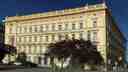
    To spot the Constitutional Court of the Czech Republic, look for a grand, light brown, palace-like building with ornate arches, towering windows, and statues along the roof, standing proudly on the corner just ahead of you. Here you stand, right in front of Brno’s most powerful courtroom-no need to plead your case for taking a break here! This magnificent building wasn’t thrown together overnight: it was built in the 1870s to house the Moravian Provincial Assembly, making it, fun fact, the only true parliamentary building in Czech lands to have been designed from scratch as a parliament. Imagine the air thick with the sharp scent of ink, heated debates echoing off these stone walls, and nervous politicians pacing the corridors in the age of quills and waistcoats. Flash forward-today, this is the seat of the Constitutional Court, the very institution that holds the ultimate power to guard the Czech Constitution. If you’re picturing big-hammer judges from movies, add a serious sense of justice and a dash of Czech politics! The Court sits outside the regular court system, functioning almost like the referee in a tense chess match. Its mission: protect the core laws of the country and keep fundamental human rights safe, even if an ordinary court gets things wrong. There are fifteen judges here-one president, two vice presidents, and twelve others, each ready to weigh in on the toughest questions in Czech law. You can bet they’ve got a lot of heated debates-and no, you don’t want to be caught holding a loud protest within 100 meters. That’s strictly forbidden! The story wasn’t always so steady. The first constitutional court for Czechoslovakia appeared all the way back in 1921, in Prague. It was just seven members strong, and, honestly, didn’t make many big splashes-most people barely noticed it! The concept was abandoned and resurrected more times than a soap opera character. It reappeared in 1938, then faded away during World War II, skipped a couple of appearances through the later constitutions, and was only firmly established for both the Czech and Slovak Republics in 1991, after the Velvet Revolution. Since 1993, this building in Brno, with the statues on its rooftop measuring the weight of stone and law alike, has hosted the Czech Constitutional Court. You might be surprised to learn some of the nation’s biggest controversies walk right through those doors. Controversial laws, heated social reforms, even presidential actions… if it’s a national drama, it probably passed through here. This is where politicians have faced the music-sometimes quite literally, as in the case of the complaint for treason against a president! Court decisions range from settling who owns historic party headquarters, to ruling on whether a political party gets dissolved or if a health care law is fair. And if you’re one of those who enjoys a good plot twist, the court once even cancelled already-announced elections, which left politicians in a frenzy. It’s not all black robes and stern faces-the judges themselves are chosen by the president, with the Senate’s approval, and their term is ten years, but they can return for an encore. Just being eligible to join them takes decades of legal experience, and, of course, a steady hand for coffee. So next time you stroll by this grand building, imagine the swirl of legal arguments, political intrigue, and the quiet determination of those statues above, who-from up high-can watch the drama unfold but don’t ever have to cast a vote. Ready to delve deeper into the powers, organizational setup and decision-making or the judges of the constitutional court? Join me in the chat section for an enriching discussion.

    Ouvrir la page dédiée →
  6. Directly in front of you, you’ll spot the tram tracks running alongside a steep stone wall, with tall lamps and electric wires stretching above-just follow the wires overhead and…Lire plusAfficher moins

    Directly in front of you, you’ll spot the tram tracks running alongside a steep stone wall, with tall lamps and electric wires stretching above-just follow the wires overhead and you’ll easily find the tram line ahead. Alright, traveler, you’re now face-to-face with the legendary Tramp Line Moravian Square - Czech - New Sets, one of the busiest veins in Brno’s beating heart! Picture yourself surrounded by the gentle hum of traffic and the quiet anticipation as trams glide by on smooth metal rails. Today, these trams might be ordinary, electric heroes whisking people between Moravské náměstí and Nové sady-but once upon a time, things here were a little wilder. In 1869, the very first trams didn’t run on electricity. Oh no, they were pulled by horses! Can you imagine the scene: hooves clopping, conductors shouting, and maybe a passerby dodging a rather impatient mare determined to stick to her timetable? The old route traced its way past what is now Moravské náměstí, curling through Žerotínovo náměstí and around the corner by the famous Red Church. But the days of horse-drawn trams galloped into history as, by 1872, the service was scrapped-just three years after opening-because, well, apparently horses are expensive employees and they eat a lot more than ticket money can buy. For a while, all that was left was the quiet clatter of memories and a few scattered rails, until February 2nd, 1901, when Brno lit up with excitement: the first electric tram line between Moravské náměstí and Nové sady sparked to life. Now, before you think this was as easy as plugging in a giant toaster, there was plenty of drama along the way. In 1903, new tracks were laid, weaving the tram line past St. Thomas Church, and before folks knew it, there were tracks in every direction-sidewalks, curbs, even cobblestone zones. Imagine the scramble when, eventually, the tram lines not only meant new ways to zip around, but also meant streets had to be torn up and rebuilt, with stones clinking and workmen shouting. Don’t worry, the chaos was usually followed by smiling passengers hopping onto trams bound for the markets or the station. Over the years, the network kept evolving. There were sections paved with concrete panels, others decorated with historic paving stones. Electric switches and all sorts of clever Y- and T-shaped intersections were engineered so that Brno’s trams could shimmy and shake their way to wherever people needed to go. The biggest changes came during the mid-20th century, when the clap and clang of tram bells became the city’s soundtrack. By the time the 1960s rolled around, trams not only zipped along their original routes but, in true tram fashion, started taking detours, switching tracks, and sometimes veering off for brand new neighborhoods-giving Brno’s people a ride to just about everywhere. If you’d stood here in the hottest summer months of 2001 or 2007, you would have heard the crackle of power tools and the groan of old rails being swapped for new. And, fun fact, with each round of renovation, the tram line got that little bit faster-meaning commuters could finally stop blaming the tram for being late and start blaming, well, probably the weather. From horse-powered days to the quiet hum of electric gliders, this tram line has been the backbone of Brno’s city life and the scene of countless love stories, lost gloves, and even the legendary chase of a runaway dog (don’t worry, he caught the tram too). So take a moment here, listen for that electric whir in the wires, and know you’re standing where generations have hurried, hustled, and hopped on board for the next adventure. All aboard! For a more comprehensive understanding of the route and stops, connection or the transport and line management, engage with me in the chat section below.

    Ouvrir la page dédiée →
  7. To spot the Bolek Polívka Theater, look straight ahead for a wide, grey stone building with three grand arched wooden doorways, and a sign above the center entrance that says…Lire plusAfficher moins

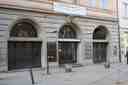
    To spot the Bolek Polívka Theater, look straight ahead for a wide, grey stone building with three grand arched wooden doorways, and a sign above the center entrance that says “Divadlo Bolka Polívky”-there’s even a cheeky sculpted face keeping watch over the doorway. Now, while you’re standing here, imagine yourself surrounded by the kind of magical chaos that only live theater can offer-because this place has drama, laughter, and maybe a few runaway juggling pins in its soul. The Bolek Polívka Theater isn’t just any stage; it’s a home for wild creativity, thanks to its founder, the famous actor and mime Boleslav Polívka, who has been making audiences laugh and think here since 1993. The theater originally opened its doors with the raucous play “Podivné odpoledne Dr. Zvonka Burkeho,” a story so absurd it makes even the oddest family gathering seem normal-imagine a man so attached to his flat that people keep disappearing into cupboards! But let’s wind the story back. This building on Jakubské square has worn many hats since the 1940s: it’s hosted Svobodné divadlo, Městské oblastní divadlo, Divadlo bratří Mrštíků, and the cheeky Satirické divadlo Večerní Brno, which brought sharp-witted humor to tough times. For a while, this place was even connected to the Scala cinema next door with a secret hallway-picture actors sneaking snacks from the movie theater during intermission. When Polívka took over, he brought his signature blend of physical comedy, clowning, and heartfelt acting, much of it adapted from his time at Brno’s legendary Husa na provázku theater. The first seasons were filled with his original shows, including slapstick duels between jesters and queens, tragicomic desert island tales, and even performances inspired by his own wild life (“For the Lady on the Balcony” was a whole play about chasing one mysterious woman-lucky for you, you only have to chase this tour). And speaking of families, the spirit of mischief has passed through generations: Boleslav shared the stage with his daughter Anna in the play “DNA,” and, turning a fatherly letter into art, wrote the show “The Jester and the Son” for his son Vladimír. But if you think only Polívka’s brand of mayhem takes the stage here, think again. This theater has always welcomed a parade of guest stars, from legendary Czech troupes like Studio DVA and Divadlo Na zábradlí to talented groups from neighboring countries. There’s even MALÉhRY-the “three-player” company led by three women, sharing real-life stories that range from hilarious to heartstring-tugging (titles like “Vepřo, knedlo, zelo”-named after a pork and dumplings dish-prove nothing is too small or funny for the stage). And then there’s “Manéž Bolka Polívky,” a variety show mixing acrobats, musicians, and comedians into one dazzling night-never the same twice, never held in just one spot. Sometimes, it’s here. Sometimes, it’s in a giant sports hall. Sometimes, they just pack up the jokes and go on tour to Paris, Vienna, or even Colombia. Once, the laughter even rolled all the way to London, where they performed “The Jester and the Son.” Even when theater doors close for a summer siesta, you’ll find Polívka’s troupe setting up shop at the Biskupský dvůr outdoor stage, letting the fun spill into the warm air. And every November, for the “Night of Theaters,” they throw the doors wide for all-night clown workshops and mask-making. Though this original home now also houses an art gallery and the theater’s backstage, the spirit of playfulness is impossible to miss. Before you head on, take a glance up at that sculpted face above the entrance-if it winks at you, don’t worry, you’re not imagining things. At Bolek Polívka Theater, a little nonsense is always in style. Ready to delve deeper into the poetics of theatre and repertoire, ensembles operating in the theatre or the the most successful production? Join me in the chat section for an enriching discussion.

    Ouvrir la page dédiée →
  8. Right in front of you, you’ll spot Jakub Square with the commanding sight of the Church of St. James-its tall Gothic windows, sharp spires, and pale stone walls stretching almost…Lire plusAfficher moins

    Right in front of you, you’ll spot Jakub Square with the commanding sight of the Church of St. James-its tall Gothic windows, sharp spires, and pale stone walls stretching almost the entirety of the square, surrounded on all sides by impressive buildings. Now, imagine you’re standing in the beating medieval heart of Brno, where narrow alleys once filled with merchants and townsfolk led to this very spot. This square has always been lively, but its star attraction is St. James’s Church-a 13th-century marvel that, funnily enough, was originally built to serve the German-speaking residents of Brno. Picture the air bustling with different languages, bustling market stalls, and horses clopping down Rašínova Street (which, by the way, still rings with the sound of trams passing today). The square’s roots run deep; believe it or not, it was the second “crystallizing core” of old Brno. Around this church grew a cemetery and eventually six chapels leaned up against it-although those were cleared away in the late 1700s and replaced by regular houses. If you glance around at the elegant façades, many of these buildings popped up during Brno’s great makeover at the turn of the 20th century, freshly renovated in recent years but still holding onto their grand old character. But the ground hides its own secrets! In 2001, archaeologists downed their coffee (maybe at the local Savoy café) and picked up their shovels, stumbling upon the legendary “Golden Well.” First mentioned in 1358, and restored nowadays with dramatic sandstone sculptures of a snake and a bird, the well gushes with water once again as if celebrating its comeback. And for thrill-seekers or fans of Spooky Season, right here is a hidden ossuary-a vast underground chamber discovered during that same excavation, stacked with the bones of up to 50,000 souls, many from times of plague and war. Fancy a little goosebumps? You can actually go down and stand among centuries of stories. And if your feet ache or your mind is spinning with history, there’s always the storied Savoy Café waiting in a lovingly renovated palace on the square’s edge. Opened in 1929 for one thousand (yes, one thousand!) guests, it has seen everything from swinging jazz to crumbling ceilings before returning to glory. Plus, over in “House Jakub,” the famous Bolek Polívka Theater brings laughter and applause for today’s crowds-a bit of modern mischief in this square that’s seen it all. So as you take it all in, remember: every stone and shadow here could tell you a secret-if it weren’t sworn to silence by centuries of Brno’s best gossip! For further insights on the position, golden well or the ossuary, feel free to navigate to the chat section below and inquire.

    Ouvrir la page dédiée →
  9. In front of you is Moravian Square-a spacious open plaza with a lively park split by tram lines, a modern circular fountain at its heart, and the striking Church of St. Thomas…Lire plusAfficher moins

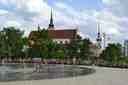
    In front of you is Moravian Square-a spacious open plaza with a lively park split by tram lines, a modern circular fountain at its heart, and the striking Church of St. Thomas with its tall spire rising above the red rooftops; to spot it, look for the wide stone-paved area and grassy parks bustling with people and the dramatic steeple standing guard over the scene. Welcome to Moravian Square, Brno’s favorite urban living room, whose layers of history are as thick as the foam on a cappuccino in the café just over there! Close your eyes for a second and let yourself drift back to medieval times, when the very ground beneath your feet trembled to the heavy beat of marching boots and the clang of armor. Back then, this square was held tight inside formidable city walls-some of the strongest fortifications in all of Moravia-protecting treasures like the Church of St. Thomas and the augustinian monastery that you see to the south, their spires peeking out like curious onlookers over centuries of stories. Travel forward and watch the walls crumble-first under Napoleon’s orders in 1809, then by the hands of eager city builders in the 19th century. Suddenly, light and air flowed, and the mighty Moravian Square was born, quickly growing into the largest public square in Brno. Picture it: the scent of freshly planted linden trees fills the air, and proud new palaces appear on the edges-like Bergl’s Palace, which popped up in the 1860s to impress passersby. In the north, a grand “German House” once stood, hosting lively societies and crowned by monuments such as a towering statue of Emperor Joseph II, all while newly laid tram tracks rattled and clanged past. You thought today’s trams were loud? Well, you should’ve heard the horses snorting and tram bells clanging when they first chugged through here in 1869! Moravian Square’s story is about more than stones-it’s about storms and calm, unity and upheaval. Imagine wartime, when the square bore the deeply chilling name of Adolf Hitler Platz, its grand German House scarred, then toppled, during the liberation of Brno. At the end of World War II, the cheers of liberation echoed as new memorials appeared: the powerful statue of a Red Army soldier by Vincenc Makovský still stands tall in the park, a silent sentinel recalling intense days of hope and sorrow. And the names? Let’s just say this square has had more new names than a spy switching disguises! From dikasterialplatz to Lažanský‌platz to náměstí Rudé armády, and finally, after 1990, the proud Moravian Square you stand on now. Today, the square buzzes with life and links Brno together. Kids skip around the modern circular fountain that replaced the old star-shaped one, running between cool sprays on summer days, while locals sip coffee on benches and the trams zip by in a hurry-a true crossroads of the city. You can see sculptures dotted around: a towering knight on horseback representing courage, a rather muscular man hauling off a mysterious cube (locals cheekily call this the “bailiff taking away the washing machine”), and even a bronze model of Brno just as it looked in 1645 when the city outfoxed a Swedish siege. Renovations in the last decade have refreshed the square: green lawns roll out like carpets, sleek benches curve around the fountain, and every corner invites conversation and play. What you don’t see, but should feel, is how Moravian Square weaves together centuries of drama, reinvention, laughter, and resilience. So take a moment-watch the families, breathe in the bright bustle, and remember: right here, where splashing water is louder than any old cannon, you’re standing on the very heartbeat of Brno. Now, who’s ready for another tram ride, or should I say, a ticket to the next chapter of history?

    Ouvrir la page dédiée →
  10. To spot Newton College, look for a large, bright yellow historic building with decorative details around the windows, standing tall to your right above several shopfronts along a…Lire plusAfficher moins

    To spot Newton College, look for a large, bright yellow historic building with decorative details around the windows, standing tall to your right above several shopfronts along a lively street. Now, let me take you on a trip through the world of Newton College-no apple necessary, but keep your wits about you! If you stood here in 2004, you’d be amazed to see the birth of a brand-new higher education experiment, led by a man named Petr Kraus. Petr wasn’t launching a spaceship, but in some ways, starting Newton College was almost as ambitious! With the official nod from the Czech Ministry of Education, the school leapt into existence as a private, non-university college focused on management, business, psychology, and marketing. The adventure didn’t stop in Brno; soon, Newton’s eager ambitions stretched to Prague and even across country borders to Bratislava. Today, close to 3,000 students call Newton their academic home, buzzing through bachelor’s, master’s, and postgraduate halls-well, not always quietly, let me assure you! Here’s a quirky twist: while it’s technically a non-university institution, these clever folks began calling themselves “NEWTON University.” If you’re thinking, “Wait, isn’t that bending the rules a bit?”-you’re not alone. The marketing team certainly knew how to stand out, though legally, they’re still Newton College on the books. In fact, in 2021 they officially changed their name to Vysoká škola NEWTON, and gave their English branding a shiny new look: “NEWTON University.” If there was a world championship for education marketing, Newton would surely get a medal for creativity! But it hasn’t always been smooth sailing. In fact, if Newton College’s story were a TV series, season three would have some serious drama. Back in 2017, the school got itself tangled up with a “whoops” moment-advertising study programs that the accreditation office hadn’t quite blessed. Talk about an academic plot twist! The school quickly shuffled things around, renaming these programs as “specializations,” and juggling students into other courses. Let’s say the National Accreditation Office was not exactly applauding from the sidelines, and Newton found itself at the center of a regulatory review-and a few heated press exchanges. The plot thickened during a short-lived partnership with a Polish institution, Collegium Humanum, where Newton offered some programs under a joint banner. But when stories emerged about questionable degree dealings over in Poland, Newton cut ties and distanced itself faster than you can say “MBA.” Through it all, Newton College kept growing and changing, adding bachelor’s, master’s, and postgrad professional education options, including flashy programs like Global Business and Management entirely in English-so you don’t need to master Czech grammar to join in the fun! The school prides itself on publishing research, especially in psychology, economics, and management, and releases its own journal called Scientia et Societas. Every year they remain center stage by hosting the European Business Forum-picture entrepreneurs, business leaders, and students all swapping bright ideas over coffee and croissants. Step inside today, and you’ll meet a vibrant academic squad: university leaders like Anna Plechatá Krausová, seasoned psychologists, marketing pros, legal experts, and mathematicians. Even the teaching roster brims with personalities who are part-mentor, part-standup comedian-ask about Professor Pokorný’s adventures and watch faces light up! And if you’re one of those people who likes a bit of name-dropping, Newton’s alumni have gone on to lead major companies, launch startups, and even show up on Forbes’ “30 under 30” list (sometimes while still hunched over coffee in the student lounge). So, as you look at this stylish yellow building, visualize all the dreams, debates, and occasional caffeine-fueled all-nighters happening within. Newton College isn’t just a place to learn about business; it’s a place where ambition meets reality-sometimes with a dash of controversy and always with a sense of adventure! Curious about the study, research or the educators and academics? Don't hesitate to reach out in the chat section for additional details.

    Ouvrir la page dédiée →
  11. To spot Masaryk University, look for a grand, light-yellow neoclassical building stretching out before you, with many tall windows evenly lining its facade and a stately entrance…Lire plusAfficher moins

    To spot Masaryk University, look for a grand, light-yellow neoclassical building stretching out before you, with many tall windows evenly lining its facade and a stately entrance just behind the trees on the corner. Alright! You’re now standing before the mighty Masaryk University, a place that has seen nearly all the drama Brno could muster-minus a dragon attack, but hey, no place is perfect! Now, imagine the year is 1919. The world is shaking off the dust from the Great War, Brno is buzzing with anticipation, and in the air you can almost hear the clacking of typewriters and shuffling of papers as professors and politicians plan something big-something new. The university’s founder, Tomáš Garrigue Masaryk-later the first president of Czechoslovakia-wasn’t just passionate about philosophy and politics, he was determined that Czech science and education should have some real competition. Until then, Prague had the only Czech university, and Tomáš believed that a little academic rivalry would spice things up. Of course, picking Brno as the home was a hot topic. The city’s German-speaking leaders weren’t thrilled with the idea, and tensions ran high-at one point, street clashes even turned tragic. Yet the winds of change blew in after the fall of the Austro-Hungarian Empire, and finally, Brno was chosen as the seat for this new academic adventure. When Masaryk University first opened its doors, there were just four faculties: Law, Medicine, Science, and the Arts. The dream was to build a whole university quarter, but in true construction style, only the Law faculty building made it up at first. Still, Brno embraced its new intellectual heart-and steadily, more faculties were added, from education to sports to informatics. If you’re curious about logos, the first one was a rather stylish “MU” on a shield, designed by artist Eduard Milén. And in 2018, for the university’s 100th anniversary, a hip new logo simply reading MUNI appeared-proof that even historic schools can stay on trend! But life at Masaryk University hasn’t always been a calm walk through the textbooks. During the Nazi occupation, tragedy struck the faculty and students; under communism, entire faculties-like Law-were shut down and only later revived. After the Velvet Revolution in 1989, the university sprang back, opening new faculties and international ties and even launching its own polar station in Antarctica. No kidding-they send people to study penguins and ice, which is perhaps the only thing colder than finals week here! Let’s not forget the science fiction-worthy modern campus in Bohunice, finally finished in 2010 after delays that would make any student giggle knowingly. Now, more than 30,000 students wander its halls, getting lost, finding themselves, and occasionally, by accident, learning something memorable. Masaryk University is second only to Charles University in size, often placing among the world’s top universities-and students here really appreciate the central computer study room: a place with almost 150 computers, open 24/7. The sound of keyboard clacking in there? Pure academic music. And tradition matters: Masaryk University has its own medals, scepters, and a fine list of honorary doctorates, from Leoš Janáček to Václav Havel. Of course, it’s not all sunshine-administrative hiccups, squabbles, and even a bit of courtroom drama have played out over the last century. But through it all, the university stands strong, brimming with stories. Just picture it: students hurrying across the square, the low murmur of conversation under the colonnades, a sudden peal of laughter as someone celebrates an exam passed. So take a deep breath-because you’re not just looking at another pretty facade. You’re stepping into a living, breathing city of learning, founded on courage, debate, fresh hope, and the occasional very cold morning! Want to explore the faculty, other workplaces or the university buildings in more depth? Join me in the chat section for a detailed discussion.

    Ouvrir la page dédiée →
  12. In front of you, you’ll spot a wide street lined with elegant, old townhouses and a set of tram tracks curving off into the distance-just keep your eyes on the rails and the…Lire plusAfficher moins

    In front of you, you’ll spot a wide street lined with elegant, old townhouses and a set of tram tracks curving off into the distance-just keep your eyes on the rails and the electric wires overhead, and you’ll know you’ve found the legendary tram line to Masaryk Quarter and Namesti Miru. So here you are, outside what looks like any other city street… but let’s time travel back to when this tram track was more than asphalt and steel-it was a promise, a bit of excitement, and, from time to time, a dash of chaos! Picture it: the year is 1901, and someone in Brno has just yelled, “Let’s build a tram track!” The result? A project that began right here at Comenius Square-well before cars and cell phones ruled the day. They started with a wild idea in 1898. Brno wanted to electrify its steaming, huffing steam trams and the Austrians promised electric wonder wagons. Suddenly, everyone’s obsessed with “the big loop”-a grand circuit that would send trams swooping through neighborhoods from Veveří to Obilní trh and onto this very road, Údolní. But if only you could have seen the looks when engineers realized the loop wasn’t making enough money; their faces must have had more twists than these tram tracks! So, they rolled up their sleeves in 1902 and smartly split the loop, keeping the popular lines-especially this stretch, which climbed right up to where you’re standing. By winter, a shiny one-track line was snaking out to Masaryk Quarter, dreamlike and new. And wouldn’t you know it, every stop along the way had its own flavor. Some were just platforms in the street where people hopped on with their groceries and dreams, the sound of hooves still echoing from carts nearby. As the city grew, so did the tram line. In 1924, they finally laid a second track-now trams could pass each other instead of playing an awkward game of “who’s braver on the tracks.” By 1929, the line reached its big finale: a looping turnaround right at Namesti Miru, so trams could rest a moment before whizzing off again. Want to know what the drivers got as a bonus? Their very own waiting room-with a bathroom! Hey, after a long shift, that’s luxury. The tramway’s life wasn’t always smooth sailing. The war years saw tracks bombed and routes split, and at one point, the line even had to be operated in two halves because of a collapsed house. Trams switched from color codes (imagine asking for “the yellow line to Masaryk Quarter!”) to numbers, but some things always stayed the same: the tram’s steady hum, the drivers’ sturdy nerves for Brno’s steepest hill (legend says if tram bells ever rang in Morse code, it was “SOS-I’m climbing!”). And it never stood still. In the ’70s, bigger trams meant more upgrades, and by 2002, the city built an underground transformer to keep the trams running-Brno’s first! Who knew electricity could be as adventurous as a tram ride? So as you watch the trams swing around, picture passengers through the decades-office workers, schoolchildren, old ladies clutching market flowers-each one part of Brno’s rolling story. The old loop may have started with a simple promise, but you’ve reached a modern symbol, still pulsing with character. Now, don’t go hopping on the tracks-unless you want an adventure of your own! Thanks for riding along with me on this journey through time. Intrigued by the route and stops, inosculation or the turning point? Explore further by joining me in the chat section below.

    Ouvrir la page dédiée →

Foire aux questions

Comment commencer le tour ?

Après l'achat, téléchargez l'application AudaTours et entrez votre code de réduction. Le tour sera prêt à commencer immédiatement - il suffit d'appuyer sur lecture et de suivre l'itinéraire guidé par GPS.

Ai-je besoin d'Internet pendant le tour ?

Non ! Téléchargez le tour avant de commencer et profitez-en pleinement hors ligne. Seule la fonction de chat nécessite Internet. Nous recommandons de télécharger en WiFi pour économiser vos données mobiles.

S'agit-il d'une visite de groupe guidée ?

Non - il s'agit d'un audioguide en autonomie. Vous explorez indépendamment à votre propre rythme, avec une narration audio diffusée par votre téléphone. Pas de guide, pas de groupe, pas d'horaire.

Combien de temps dure le tour ?

La plupart des tours durent entre 60 et 90 minutes, mais vous contrôlez totalement le rythme. Faites des pauses, sautez des arrêts ou arrêtez-vous quand vous le voulez.

Et si je ne peux pas finir le tour aujourd'hui ?

Pas de problème ! Les tours disposent d'un accès à vie. Faites une pause et reprenez quand vous le souhaitez - demain, la semaine prochaine ou l'année prochaine. Votre progression est sauvegardée.

Quelles sont les langues disponibles ?

Tous les tours sont disponibles dans plus de 50 langues. Sélectionnez votre langue préférée lors de l'utilisation de votre code. Note : la langue ne peut pas être changée après la génération du tour.

Où accéder au tour après l'achat ?

Téléchargez l'application gratuite AudaTours sur l'App Store ou Google Play. Entrez votre code de réduction (envoyé par e-mail) et le tour apparaîtra dans votre bibliothèque, prêt à être téléchargé et commencé.

verified_user
Satisfaction garantie

Si vous n'appréciez pas le tour, nous vous rembourserons votre achat. Contactez-nous à [email protected]

Paiement sécurisé avec

Apple PayGoogle PayVisaMastercardPayPal

AudaTours : Audioguides

Des tours à pied en autonomie, divertissants et économiques

Essayer l'application arrow_forward

Adoré par les voyageurs du monde entier

format_quote Ce tour était un excellent moyen de voir la ville. Les histoires étaient intéressantes sans paraître trop scénarisées, et j'ai adoré pouvoir explorer à mon propre rythme.
Jess
Jess
starstarstarstarstar
Tour de Tbilissi arrow_forward
format_quote C'était un bon moyen de découvrir Brighton sans se sentir comme un touriste. La narration était profonde et contextuelle, sans en faire trop.
Christoph
Christoph
starstarstarstarstar
Tour de Brighton arrow_forward
format_quote J'ai commencé ce tour avec un croissant dans une main et zéro attente. L'application vibre tout simplement avec vous, pas de pression, juste vous, vos écouteurs et quelques histoires sympas.
John
John
starstarstarstarstar
Tour de Marseille arrow_forward

Audioguides illimités

Débloquez l'accès à TOUS les tours du monde

0 tours·0 villes·0 pays
all_inclusive Explorer Unlimited