AudaTours logoAudaTours

Visite Audio de Gand : Dévoiler les Trésors Historiques

Guide audio10 arrêts

Enveloppées dans la brume matinale, les flèches de Gand ont été témoins de trahisons, de rébellions et de triomphes artistiques pendant des siècles. Cette visite audio autoguidée lève le voile sur une ville tout sauf ordinaire, révélant des récits dramatiques et des histoires secrètes derrière le Diocèse Catholique Romain, la Cathédrale Saint-Bavon et l'impressionnant Hôtel de Ville. Pourquoi le chef-d'œuvre d'une ancienne cathédrale a-t-il déclenché l'un des vols les plus déroutants d'Europe ? Quels accords ont été conclus dans des chambres éclairées à la bougie pour maintenir la paix lors de soulèvements violents ? Quel scandale privé d'un puissant ecclésiastique résonne encore aujourd'hui dans des couloirs oubliés ? Laissez ces rues chargées d'histoire vous transporter des autels dorés aux salles de réunion sombres, en suivant les chemins autrefois foulés par des saints, des voleurs et des révolutionnaires. Sentez Gand prendre vie sous vos pieds alors que le drame et la beauté se rencontrent à chaque coin de rue. Découvrez les profondeurs cachées de la ville dès maintenant – votre voyage dans les secrets de Gand commence ici.

Aperçu du tour

map

À propos de ce tour

  • schedule
    Durée 30–50 minsAllez à votre propre rythme
  • straighten
    Parcours à pied de 1.3 kmSuivez le sentier guidé
  • location_on
    EmplacementGand, Belgique
  • wifi_off
    Fonctionne hors ligneTéléchargez une fois, utilisez n'importe où
  • all_inclusive
    Accès à vieRéécoutez n'importe quand, pour toujours
  • location_on
    Commence à Diocèse Catholique Romain de Gand

Arrêts de ce tour
  1. The Diocese of Ghent, or Dioecesis Gandavensis in Latin, is an ecclesiastical territory of the Catholic Church in Belgium. And let me tell you, it has quite a history! It was…Lire plusAfficher moins

    The Diocese of Ghent, or Dioecesis Gandavensis in Latin, is an ecclesiastical territory of the Catholic Church in Belgium. And let me tell you, it has quite a history! It was established way back in 1559 and became independent of the Diocese of Tournai. Talk about spreading your wings! Now, the diocese's patron is none other than Saint Bavo of Ghent. He's kind of a big deal around here. The diocese was actually founded on the grounds of the Abbey of Saint Bavo, which was founded by Saint Amandus. But the canons eventually moved to the collegiate church of Saint John and changed its name to Saint Bavo. Talk about a name change! Initially, the diocese was much bigger and even included the city of Hulst. But nowadays, it spans the Belgian province of East Flanders, along with the municipality of Zwijndrecht in the Province of Antwerp. It's like the diocese went on a diet! Oh, did I mention that the diocese has had some notable clergy throughout its history? We're talking important priests and clergy like Edward Poppe. Pretty impressive, huh? Now, let's move on to our next stop, St Bavo's Cathedral. Trust me, you won't want to miss this one. It's cathedral-tastic!

    Ouvrir la page dédiée →
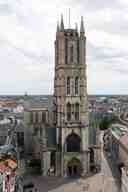
  2. Now, let me tell you a bit about this unique landmark. St Bavo's Cathedral, also known as Sint-Baafs Cathedral, is not your ordinary cathedral. It's like the Beyoncé of…Lire plusAfficher moins

    Now, let me tell you a bit about this unique landmark. St Bavo's Cathedral, also known as Sint-Baafs Cathedral, is not your ordinary cathedral. It's like the Beyoncé of cathedrals, standing tall at a whopping 89 meters! Impressive, right? This cathedral is the seat of the Diocese of Ghent and is named after Saint Bavo of Ghent. And guess what? It's not just any cathedral, it contains the famous Ghent Altarpiece! This masterpiece is a must-see, believe me. It's like the Mona Lisa of Ghent, except on a much bigger scale. But wait, there's more! The history of this cathedral goes way back. It was built on the site of the former Chapel of St. John the Baptist, which was consecrated way back in 942. Talk about ancient history! Traces of a Romanesque structure can even be found in the cathedral's crypt. It's like a historical treasure hunt. Construction of this magnificent Gothic church began around 1274, and from the 14th to the 16th centuries, they were like, "Hey, let's keep expanding this bad boy!" They added a new choir, chapels, transepts, a chapter house, and even a single-tower western section. It's like they just couldn't get enough of that Gothic goodness. Now, let's talk about some art. The Ghent Altarpiece, also known as the Adoration of the Mystic Lamb, is the star of the show here. Painted by the Van Eyck brothers, it's considered one of the most important works of the early Northern Renaissance. Unfortunately, one panel, The Just Judges, was stolen in 1934 and hasn't been recovered. But don't worry, they've replaced it with a fancy replica. Crisis averted! But wait, there's more art! St Bavo's Cathedral is home to works by other famous artists like Peter Paul Rubens, Lucas de Heere, and Frans Pourbus the Elder. It's like an art gallery with a twist of spirituality. Oh, and did I mention the organs? This cathedral has not one, not two, not three, but four organs! The main organ is the biggest in the Benelux, which is like winning the lottery of organs. It has over 6000 pipes and five manuals. I bet it sounds like angels singing. And hey, don't forget to check out the Baroque high altar and the tomb monuments of the Ghent bishops. They're like the fancy icing on top of a perfectly baked cathedral cake. So, there you have it, St Bavo's Cathedral in all its Gothic glory. Get ready for more adventures as we move on to our next stop, the Belfry of Ghent! Note: Please make sure to follow any safety regulations and guidelines when visiting this location. Enjoy your virtual tour!

    Ouvrir la page dédiée →
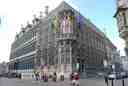
  3. First up, we have the alderman's house of De Keure. It was built in the late Gothic flamboyant style, between 1519 and 1539, by the brilliant minds of Rombout II Keldermans and…Lire plusAfficher moins

    First up, we have the alderman's house of De Keure. It was built in the late Gothic flamboyant style, between 1519 and 1539, by the brilliant minds of Rombout II Keldermans and Dominicus de Waeghemaekere. The facade was a fancy home for the statues of the Counts of Flanders. Unfortunately, those statues never made it to the party, but hey, we can still appreciate the effort, right? Next, we have the Gedele Alderman's House, which is a product of the Renaissance. It was built between 1595 and 1618 and boasts some serious architectural mojo. The facades are like a symphony of three-quarter columns and pilasters, inspired by the Italian renaissance palazzi. It's like the building is saying, "Hey, I'm fancy, and I know it!" Now, let's talk numbers. This place has a whopping 51 halls! Can you imagine trying to count them all? I think I'll stick to telling jokes instead. Throughout the centuries, this City Hall has seen some changes and renovations. In the 17th and 18th centuries, they added small offices and even a home for the caratekar of De Keure. I guess they wanted to make sure everyone had their own little cozy nook. Oh, and don't forget the Pacification Hall! It got its name from the Pacification of Ghent, proclaimed in 1576. They sure knew how to negotiate back then. Maybe we can learn a thing or two from them, huh? Overall, the Ghent City Hall is a fascinating mix of Gothic and Renaissance styles. It's like stepping into a time machine that takes you through the history of architecture. So take your time, explore the different wings, and don't forget to snap some jaw-dropping pictures! Are you ready to move on to our next stop? It's going to be epic, just like this City Hall!

    Ouvrir la page dédiée →
Afficher 7 arrêts de plusAfficher moins d'arrêtsexpand_moreexpand_less
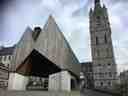
  1. Now that we've reached stop number 5, let me introduce you to the Stadshal, or as I like to call it, the City Pavilion. It's like a giant canopy, standing all on its own in the…Lire plusAfficher moins

    Now that we've reached stop number 5, let me introduce you to the Stadshal, or as I like to call it, the City Pavilion. It's like a giant canopy, standing all on its own in the heart of Ghent. You see, back in 2012, the city had this great idea to spruce up the squares and public spaces in the historic city center. And the Stadshal was born as part of that grand plan. But, let me tell you, not everyone was happy about it. Some folks looked at this massive structure and were like, "Whoa, hold on a minute! It's too big! It's too tall! And why in the world are they using modern materials in such a historical place?" You know how it is, people can be quite particular when it comes to preserving history. But hey, let's not dwell on the negative. The Stadshal has its own unique charm. With its sleek design and contemporary feel, it somehow manages to blend in with its surroundings, even if it stands out a bit. And trust me, it's a great spot to take some cool pictures or just gather with friends and enjoy the city vibes. So let's take a moment here at the Stadshal and soak in the ambiance. And don't worry, we won't judge you if you take a selfie or two. Just remember to tag us on social media, okay? #StadshalAdventures

    Ouvrir la page dédiée →
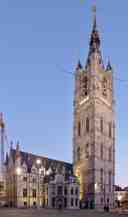
  2. Ah, the Belfry of Ghent, or as the Dutch call it, Belfort van Gent! This towering medieval beauty is one of three impressive towers in Ghent, along with Saint Bavo Cathedral and…Lire plusAfficher moins

    Ah, the Belfry of Ghent, or as the Dutch call it, Belfort van Gent! This towering medieval beauty is one of three impressive towers in Ghent, along with Saint Bavo Cathedral and Saint Nicholas' Church. Standing at a whopping 91 meters (299 ft), it proudly holds the title of the tallest belfry in all of Belgium. Talk about reaching new heights! Now, the construction of this magnificent tower began way back in 1313. Yep, it took quite a while to finish, with wars, plagues, and political chaos throwing a bit of a wrench in the works. But, hey, good things come to those who wait, right? It was finally completed in 1380, making every brick and beam truly worth the wait. You know, one of the coolest things about the Belfry of Ghent is its spire. It has been rebuilt a few times over the years, but the current stone spire we now see is a faithful recreation of the original design from the 14th century. It's like a blast from the past, just taller and more majestic. Now, let's talk about the bells, because what's a belfry without some bells, am I right? Originally, the bells here were only used for religious purposes. But as the city of Ghent grew, these bells took on a secular role, helping to regulate daily life in the bustling medieval city. They even had signals to announce the time and warn of any approaching enemies. Talk about multitasking! And speaking of bells, the carillon here in the Belfry is pretty impressive. It was crafted by the famous bellfounders, Pieter and François Hemony, in the 17th century. Weighing in at a hefty 30 tons, this carillon grew over the years and now boasts a whopping 53 bells. That's a lot of ringing! Now, if you're a history buff, you'll appreciate that this belfry had more than just a musical purpose. It also served as a fortified watchtower and housed important documents that proved the city's municipal privileges. Talk about a multitasking tower! Oh, and before I forget, let's not skip over the rectangular hall that's attached to the Belfry. It used to be the headquarters for the cloth trade, which made Ghent pretty wealthy during the Middle Ages. Inside, they inspected and measured the woollens, and all sorts of transactions took place. Nowadays, the hall has different occupants, like a militia guild and a fencing school. They really know how to keep things interesting! Okay, time to move on to our next stop. But before we do, here's a little joke for you: Why did the bell go to school? Because it wanted to be a ting-a-linguist! Ha! Let's keep that laughter going as we continue our adventure in beautiful Ghent!

    Ouvrir la page dédiée →
  3. Ah, the Korenmarkt, or as we like to call it, the "Wheat Market"! This bustling city square is located right in the heart of Ghent and is one of the most happening spots in town.…Lire plusAfficher moins

    Ah, the Korenmarkt, or as we like to call it, the "Wheat Market"! This bustling city square is located right in the heart of Ghent and is one of the most happening spots in town. You've got the beautiful Leie river on one side and the magnificent St. Nicholas' Church on the other. It's like being in the middle of a fairytale! Now, let's talk history. The Korenmarkt has been the center of attention since way back when. It's surrounded by all these stunning historic buildings that have been transformed into bars, restaurants, and terraces. So, if you're feeling thirsty or hungry, you're in the right place! And get this, my friend, the Korenmarkt is the beating heart of the legendary Gentse Feesten cultural festival. Can you believe it? That means that when this festival is in full swing, the square is packed with people, music, and festivities. It's an absolute blast! Not only that, but the Korenmarkt is also quite the connector. It's like the bridge that links Ghent's two busiest shopping streets, the Veldstraat and the Kortemunt. So, if you're in the mood for some retail therapy, you're just a hop, skip, and a jump away from some fantastic shops! But wait, there's more! On the western side of the Korenmarkt, you can access the picturesque Leie waterfront, specifically the famous Graslei. It's a scene straight out of a postcard, my friend, with all those charming old houses reflected in the shimmering water. Trust me, your camera won't be able to resist! Oh, and guess what? Did you know that the Korenmarkt got its name from the cereal trade? Back in the day, Ghent was the cereal capital of the County of Flanders, and this square was where all the trading magic happened. Cereal would come into the city from the Graslei and Korenlei along the Leie river, and then it would be sold right here on the market. It's like a living history lesson! And here's a fun fact to spice up the story: On January 26, 1340, the English King Edward III proclaimed his claim to the French crown right here in the Korenmarkt. Talk about a royal announcement! Little did he know that it would set off a little thing called the Hundred Years' War. Oops! So, my friend, take a moment to soak it all in. The Korenmarkt is not just any square - it's a vibrant hub of history, culture, and delicious food and drinks. Enjoy every bit of it!

    Ouvrir la page dédiée →
  4. Now, the church is a prime example of the local Scheldt Gothic style. What's that, you ask? Well, it's named after the nearby river and features things like blue-gray stone from…Lire plusAfficher moins

    Now, the church is a prime example of the local Scheldt Gothic style. What's that, you ask? Well, it's named after the nearby river and features things like blue-gray stone from the Tournai area, a big tower above the crossing, and these fancy little turrets at the corners of the building. It's like something out of a fairytale! Speaking of fairytales, this place used to be in the heart of the old trade center of Ghent, right next to the bustling Korenmarkt, a.k.a the Wheat Market. The guilds, who were like the medieval version of unions, loved this church because they did their business nearby. In fact, the guild members even had their own chapels added to the sides of the church in the 14th and 15th centuries. Talk about VIP treatment! Now, the central tower of the church used to be quite the lookout point. It even held the town bells until the famous Belfry of Ghent was built next door. These two towers, along with the nearby Saint Bavo Cathedral, help give Ghent its iconic medieval skyline. It's like a postcard come to life! But that's not all, folks! Inside the church, there's a real treasure - the organ. And not just any organ, mind you. This one was made by the renowned French organ builder Aristide Cavaillé-Coll. It's one of the most important romantic organs in all of Belgium. I guess you could say it really knows how to pull some heartstrings...or should I say, organ strings? Now, the church has seen better days. It started falling apart over the centuries, and they even plastered over cracks and bricked up windows to keep it from collapsing. Can you imagine living in a house like that? But around 1840, people realized this place was a historical gem and started making restoration plans. They even tore down little houses and shops that had been built up against the church's sad, dilapidated facades. Talk about a makeover! So, there you have it. The Saint Nicholas Church, Ghent - a true marvel of history, architecture, and music. I hope you enjoyed this stop on our tour! Now, buckle up because we're heading to our next stop - the Korenmarkt.

    Ouvrir la page dédiée →
  5. So, the Graslei is a quay in the historic city center of Ghent, located on the right bank of the Leie river. And on the other side, we have the Korenlei, which is like the…Lire plusAfficher moins

    So, the Graslei is a quay in the historic city center of Ghent, located on the right bank of the Leie river. And on the other side, we have the Korenlei, which is like the Graslei's best friend, or should I say "quay-mate"? These two quays were part of the medieval port of Ghent, where all the action was happening. Nowadays, the Graslei and Korenlei are like the pulsating heart of the city. They're a cultural and touristic hotspot, with tons of café patios for you to sit back, relax, and sip on some coffee while enjoying the view. And what a view it is! The row of historical buildings here is absolutely stunning. It's like a protected cityscape, frozen in time. You know, the Graslei has been around for a looong time. It dates back to the fifth century A.D., when Ghent was the center of the wheat trade in the County of Flanders. So basically, this place has seen a lot of grain come and go. I guess you could say it's the bread and butter of Ghent's history! Most of the houses you see here on the Graslei date back to the Middle Ages. But don't let their age fool you. The monumental façades have been spruced up a bit in the 18th and 19th centuries, giving them a modern touch. They were actually restored in anticipation of the 1913 World's Fair hosted by Ghent. Talk about planning ahead! So, take a moment to soak in the historical vibes and appreciate the charm of the Graslei. And if you're feeling thirsty, don't worry, there are plenty of cafes nearby to quench your thirst. Enjoy! Next stop, Saint Michael's Church. Let's keep this tour rolling!

    Ouvrir la page dédiée →
  6. Alright, folks, welcome to stop number 8 on our fabulous tour of Ghent! We are now standing on the Korenlei, or as some people like to say, the Wheat Quay or Corn Quay. And let me…Lire plusAfficher moins

    Alright, folks, welcome to stop number 8 on our fabulous tour of Ghent! We are now standing on the Korenlei, or as some people like to say, the Wheat Quay or Corn Quay. And let me tell you, this place is definitely a "grain" attraction! Now, take a look around. We're right in the heart of the historic city center, and we've got the beautiful Leie river flowing right next to us. It's like our own little slice of waterfront paradise! And speaking of slices, did you know that Ghent was once an important trading center for grain? Yep, this was the place where all the wheat and corn was unloaded from boats and shipped off to feed the hungry bellies of the city. So you could say that the Korenlei played a "kernel" role in keeping the people of Ghent well-fed! But hey, it's not just about the food here. Take a gander across the river, and you'll see the lovely Graslei, our next stop on this grand tour. It's like the Korenlei's partner in waterfront crime. So make sure to keep your eyes peeled and cameras ready for some prime selfie opportunities! Alright, folks, time to move along. Let's head over to our next stop, the Graslei, and continue unraveling the secrets of this magnificent city. Stay tuned for more fun facts and jokes along the way. Onward ho!

    Ouvrir la page dédiée →
  7. Let's dive into its fascinating history. Can you believe that there was already a chapel dedicated to St. Michael on this site way back in 1105? Talk about longevity! However, the…Lire plusAfficher moins

    Let's dive into its fascinating history. Can you believe that there was already a chapel dedicated to St. Michael on this site way back in 1105? Talk about longevity! However, the church faced some fiery challenges in the twelfth century when it was destroyed not once, but twice, by fire. It's a good thing they had some talented builders on hand! From 1147, Saint Michael's Church became its own independent parochial church, and that's when the real construction began. The current late Gothic church was started around 1440, and it was built in two phases. During the first phase in the fifteenth and sixteenth centuries, they built the western part of the church, including the tower, the three-aisled nave, and the transept. Talk about teamwork! By 1566, two levels of the tower were completed, but then disaster struck. Religious conflicts caused construction to come to a grinding halt, and the church suffered looting and destruction. Those Calvinists just couldn't resist causing a ruckus! Part of the church was even demolished in 1579. Can you imagine the chaos? Fast forward to 1623, and reconstruction finally began. They replaced the early Gothic choir with a fancy Brabantine Gothic choir. It seems like they wanted to hit a high note with the design, as architect Lieven Cruyl's plan included a sky-high spire measuring 134 meters! Unfortunately, it never got realized due to delays and cost concerns. Hey, sometimes you just have to play it safe! Now, let's talk about the church's exterior. It's made entirely of sandstone from Brussels and Ledian sandstone. It gives the building a solid, majestic appearance. But don't let the exterior fool you, because inside, you'll discover a rich Neo-Gothic interior. Prepare to be swept off your feet by the exquisite altar and pulpit in this style. Oh, and did I mention the incredible artworks? Saint Michael's Church is a treasure trove of paintings and sculptures. You'll find pieces by famous artists like Anthony van Dyck, Gaspar de Crayer, and Jan Boeckhorst, just to name a few. It's like an art gallery mixed with a church! Don't forget to check out the confessionals, which span various style periods. One of them, from the early 17th century, was designed by François Cruyt and features statues sculpted by Michiel van der Voort the Elder. It's a true masterpiece of craftsmanship. And last but certainly not least, let's talk about the organ. The current organ is a result of a collaboration between De Volder, who built the original organ in 1817, and Anneessens, who remodeled and expanded it in 1951. With 47 stops on three manuals and a pedal, this organ is sure to make your heart sing. Before we end our tour, don't forget to explore the silver collection. You'll find precious relics, including one brought to the church by Mary, Queen of Scots. Talk about a royal touch! Well, that wraps up our visit to Saint Michael's Church. I hope you had a heavenly time exploring this architectural marvel! Keep your eyes peeled for more stunning sights as we continue our tour of Ghent.

    Ouvrir la page dédiée →

Foire aux questions

Comment commencer le tour ?

Après l'achat, téléchargez l'application AudaTours et entrez votre code de réduction. Le tour sera prêt à commencer immédiatement - il suffit d'appuyer sur lecture et de suivre l'itinéraire guidé par GPS.

Ai-je besoin d'Internet pendant le tour ?

Non ! Téléchargez le tour avant de commencer et profitez-en pleinement hors ligne. Seule la fonction de chat nécessite Internet. Nous recommandons de télécharger en WiFi pour économiser vos données mobiles.

S'agit-il d'une visite de groupe guidée ?

Non - il s'agit d'un audioguide en autonomie. Vous explorez indépendamment à votre propre rythme, avec une narration audio diffusée par votre téléphone. Pas de guide, pas de groupe, pas d'horaire.

Combien de temps dure le tour ?

La plupart des tours durent entre 60 et 90 minutes, mais vous contrôlez totalement le rythme. Faites des pauses, sautez des arrêts ou arrêtez-vous quand vous le voulez.

Et si je ne peux pas finir le tour aujourd'hui ?

Pas de problème ! Les tours disposent d'un accès à vie. Faites une pause et reprenez quand vous le souhaitez - demain, la semaine prochaine ou l'année prochaine. Votre progression est sauvegardée.

Quelles sont les langues disponibles ?

Tous les tours sont disponibles dans plus de 50 langues. Sélectionnez votre langue préférée lors de l'utilisation de votre code. Note : la langue ne peut pas être changée après la génération du tour.

Où accéder au tour après l'achat ?

Téléchargez l'application gratuite AudaTours sur l'App Store ou Google Play. Entrez votre code de réduction (envoyé par e-mail) et le tour apparaîtra dans votre bibliothèque, prêt à être téléchargé et commencé.

verified_user
Satisfaction garantie

Si vous n'appréciez pas le tour, nous vous rembourserons votre achat. Contactez-nous à [email protected]

Paiement sécurisé avec

Apple PayGoogle PayVisaMastercardPayPal

AudaTours : Audioguides

Des tours à pied en autonomie, divertissants et économiques

Essayer l'application arrow_forward

Adoré par les voyageurs du monde entier

format_quote Ce tour était un excellent moyen de voir la ville. Les histoires étaient intéressantes sans paraître trop scénarisées, et j'ai adoré pouvoir explorer à mon propre rythme.
Jess
Jess
starstarstarstarstar
Tour de Tbilissi arrow_forward
format_quote C'était un bon moyen de découvrir Brighton sans se sentir comme un touriste. La narration était profonde et contextuelle, sans en faire trop.
Christoph
Christoph
starstarstarstarstar
Tour de Brighton arrow_forward
format_quote J'ai commencé ce tour avec un croissant dans une main et zéro attente. L'application vibre tout simplement avec vous, pas de pression, juste vous, vos écouteurs et quelques histoires sympas.
John
John
starstarstarstarstar
Tour de Marseille arrow_forward

Audioguides illimités

Débloquez l'accès à TOUS les tours du monde

0 tours·0 villes·0 pays
all_inclusive Explorer Unlimited