Tour de audio de Lowell: Canales, Catedrales y Espíritus Creativos Revelados
Las ruedas giratorias una vez tronaron por las calles de Lowell, impulsando más que tela, encendiendo feroces batallas por la igualdad y los sueños secretos de las jóvenes trabajadoras de la fábrica detrás de muros de ladrillo. Este tour de audio autoguiado abre puertas que la mayoría de los visitantes pasan de largo, superponiendo historias perdidas sobre aceras familiares y permitiéndote moverte a tu propio ritmo. ¿Qué mensaje urgente llevó a trabajadores desesperados a desafiar a los jefes de fábrica en el corazón de los molinos? ¿Qué rumor fantasmal acecha silenciosamente los estantes de la Biblioteca Conmemorativa Pollard? ¿Por qué un ingeniero enterró una carta codificada debajo de la Casa de Compuertas de Pawtucket, y qué ha mantenido en secreto durante un siglo? Serpenteando por canales, bibliotecas y casas de compuertas, cada giro se llena de descubrimientos. Siente la tensión de la rebelión bajo tus pies y vislumbra el alma de Lowell en destellos de sombra y vapor. Escucha, mira más de cerca y encuentra una ciudad transformada. Desbloquea los motores ocultos de Lowell: presiona reproducir y deja que los momentos más audaces de la ciudad resurjan.
Vista previa del tour
Sobre este tour
- scheduleDuración 100–120 minsVe a tu propio ritmo
- straighten4.7 km de ruta a pieSigue el camino guiado
- location_onUbicaciónLowell, Estados Unidos
- wifi_offFunciona sin conexiónDescarga una vez, úsalo en cualquier lugar
- all_inclusiveAcceso de por vidaReprodúcelo en cualquier momento, para siempre
- location_onComienza en Museo de Arte Whistler House
Paradas en este tour

lock_open 3 previews gratuitas · 10 se desbloquean con la compra
To spot the Whistler House Museum of Art, look for a stately light blue wooden house with crisp white trim, tall windows, and a pair of towering brick chimneys-it’s right on the…Leer másMostrar menos
To spot the Whistler House Museum of Art, look for a stately light blue wooden house with crisp white trim, tall windows, and a pair of towering brick chimneys-it’s right on the corner, with a tidy white fence and a classic black street lamp in front. Welcome to the Whistler House Museum of Art! Picture this: it's 1823, and you're in the heart of a brand-new industrial town-Lowell is buzzing with the clang of iron and the hopeful chatter of engineers. This house was built for the head honcho of the Locks and Canals Company-first, Paul Moody, a master mechanic who might have chuckled at the idea of “smart homes” two centuries too early. By 1834, George Washington Whistler and his wife Anna moved in, and right upstairs, baby James McNeill Whistler was born-destined to become a world-famous painter and etcher, though he probably just wanted some peace and quiet without all the inventions clanking around! When Chief Engineer James Francis moved in, even more family tales filled these walls-including a household of six kids (can you imagine the noise?). Fast-forward to 1908, and the place opened as a museum, displaying not just Whistler’s etchings, but all sorts of art that would have made those early engineers scratch their heads. Picture the creak of old floorboards as you step inside, and maybe, just maybe, the echo of artistic inspiration lingering in the halls.
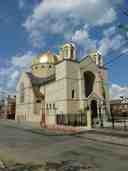
Abrir página dedicada →Look for a striking cream-colored church on your left, topped with shimmering golden domes that almost outshine the sun-trust me, you can’t miss that golden glow! Welcome to the…Leer másMostrar menos
Look for a striking cream-colored church on your left, topped with shimmering golden domes that almost outshine the sun-trust me, you can’t miss that golden glow! Welcome to the Holy Trinity Greek Orthodox Church, where history and tradition practically echo along these bricks. Imagine yourself back in 1906, when a wave of hardworking Greek immigrants settled in Lowell, their dreams buzzing in the air like summer cicadas. They were determined to build a home for their faith, a place as comforting as mama’s cooking-and that’s how this remarkable church, the very first built for a Greek Orthodox congregation in all of America, came to life by 1908. Now, you’ll notice those dazzling golden domes and the cross shape of the building, inspired by none other than the legendary Hagia Sophia in Constantinople. Not bad for a local architect, right? Right inside the narthex, there are breathtaking mosaics, and if you could peek in, you’d be greeted by glowing Byzantine icons and columns of stained glass, with the sun streaming through in dazzling technicolor. This church isn’t just a feast for the eyes-it’s packed with stories. Archbishop Iakovos himself was ordained here in 1940, and just next door, the Hellenic American Academy started life in the church basement-imagine learning your ABCs above centuries-old mosaics! The church even made the National Register of Historic Places in 1977, a well-earned badge of honor. Despite storms and age, the community came together for big restorations in 2010, patching up water damage and breathing life back into those iconic murals-proof that faith, pride, and elbow grease go a long way. So, take a moment and let this golden gem remind you of the dreams-and the humor-of those who built it. After all, only in Lowell could you start with a basement school and end up with a cathedral that glows like treasure in the sunlight!
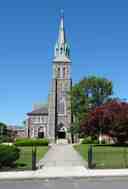
Abrir página dedicada →To spot St. Patrick’s Church, look for the eye-catching stone building ahead with a tall, pointed steeple and arched windows rising above the trees at the corner of Suffolk and…Leer másMostrar menos
To spot St. Patrick’s Church, look for the eye-catching stone building ahead with a tall, pointed steeple and arched windows rising above the trees at the corner of Suffolk and Cross Streets. Picture yourself nearly two hundred years ago in Lowell, when this site was filled with the sounds of Irish laborers and the clang of canal construction. St. Patrick’s Church began as a modest wooden building in 1831, thrown together for Irish immigrants who had taken on the mighty task of digging the Pawtucket and Merrimack Canals. Imagine them trudging here after a hard day’s work, hopeful for community and a touch of home in a strange, bustling city. By the 1850s, their numbers had mushroomed to over 400, and the wooden church was replaced by this stunning stone landmark-a true fortress of faith, designed by the famous Patrick C. Keely in the graceful Gothic Revival style. Notice how the sturdy rubblestone walls and dramatic arches make it look like it’s straight out of a European fairy tale, while the towering spire rises 160 feet to point toward the heavens. The windows burst with intricate tracery, and stone buttresses embrace the entrance, like a gentle handshake for every visitor. Life wasn’t all peaceful prayers, though; in 1904, a fire roared through and forced nearly the whole thing to be rebuilt -but, just like the people it served, the church rose strong again, each stone telling the story of resilience. Today, St. Patrick’s welcomes not only Irish and French Canadian families but also Southeast Asian communities, with Masses in Vietnamese and Cambodian. It’s a living story, welcoming all, anchored on the edge of The Acre where immigrant dreams first took root and where every new generation adds a page to the tale. Even if you don’t know a Hail Mary from a handball, you can't help but admire the stubborn hope this church has always inspired-standing tall, rain or shine, fire or flood!
Abrir página dedicada →
Mostrar 10 paradas másMostrar menos paradasexpand_moreexpand_less
Right in front of you, you’ll spot the Pawtucket Gatehouse: a sturdy, stone-and-brick building perched at the water’s edge, next to the flowing canal-just look toward the river,…Leer másMostrar menos
Right in front of you, you’ll spot the Pawtucket Gatehouse: a sturdy, stone-and-brick building perched at the water’s edge, next to the flowing canal-just look toward the river, where the water’s force is tightly controlled. Now, let’s dive into the whirlwind history swirling around the Lowell Power Canal System and Pawtucket Gatehouse! Close your eyes for a moment-just not while you’re near the water, I wouldn’t want you to take a dip-and picture the late 1700s. The air is thick with the sharp scent of river water, echoing sounds of axes and logs as workers build what would become America’s largest power canal system. Back then, the Pawtucket Canal was all about transportation, getting massive logs down the Merrimack to shipyards in Newburyport, and giving the river's mighty falls a run for their money. Fast forward to the 1820s. Francis Cabot Lowell’s crew swoops in, snapping up the old canal and kicking off a transformation that would change everything for this quiet corner of East Chelmsford. The canal gets widened and deepened-builders sweating in the sun, clanging metal and shouting orders-so it doesn’t just move wood; it powers textile mills and helps a sleepy town blossom into the bustling city of Lowell. Mill owners began selling water power like it was liquid gold. Soon, the Hamilton Canal got in on the action, then canals popped up everywhere: Merrimack, Lowell, Lawrence, Western, Eastern, and finally, the mighty Northern Canal. You can almost hear the rush of water and clunk of iron gates as the town boomed. In 1847, enter James B. Francis, a clever British engineer who upped the stakes. He masterminded the Northern Canal, the Moody Street Feeder, and-ta-da!-the Pawtucket Gatehouse you see before you. The gatehouse holds ten heavy wooden gates that used to be run by an invention called the Francis Turbine. Nowadays, it’s high-tech, all controlled electrically by Boott Hydroelectric, but the heart of Lowell’s river power still beats here. The dam behind you, with its old-school wooden flashboards, quietly keeps the powerful Merrimack in check-when water levels rise, pins bend back, letting the water roar. It’s like a river-sized safety valve! These canals aren’t just stone and water-they powered an entire city, made history, and even picked up some fancy titles along the way: Historic Civil and Mechanical Engineering Landmarks, National Register of Historic Places, and National Historic Landmark status. Not bad for something that started out moving logs!
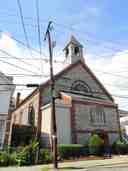
Abrir página dedicada →To spot St. George Antiochian Orthodox Church, look ahead for a stone building with red brick trim around its arched windows and doorway, topped with a small bell tower and gold…Leer másMostrar menos
To spot St. George Antiochian Orthodox Church, look ahead for a stone building with red brick trim around its arched windows and doorway, topped with a small bell tower and gold cross peeking above the power lines. Alright, traveler, let your imagination roll back to the late 1800s-picture the streets bustling not with smartphones and sneakers, but with the heavy steps of Syrian-Lebanese immigrants landing in Lowell, their hearts longing for a sense of home and community. These new arrivals came not only with dreams and suitcases, but also with their deep-rooted Eastern Orthodox faith. At first, without a church of their own, can you believe Sunday services were held in cramped living rooms, voices echoing in kitchens and halls? The effort to build a proper place of worship was no small joke; fundraising probably involved more coffee and baklava than you’d ever imagine. Finally, in 1917, they bought the building you’re looking at-originally crafted by French Huguenots in 1883, and transformed over two years to become an Orthodox haven. Imagine the pride and excitement on May 25, 1919, when Metropolitan Germanos Shehadeh, assisted by Archmandrite Seraphim Nassar, dedicated it with incense swirling and bells ringing. From just 25 to 30 families, the parish swelled as more folks came, drawn by the mills powering Lowell’s industrial boom. Inside, you’d find dazzling icons, including a breathtaking painting of the Holy Virgin, installed in the mid-1980s, and a majestic Christ overhead-let’s just say, you won’t find anything like this at IKEA. The building kept evolving: fresh air conditioning cooled summer crowds and, in 2008, St. George earned its place on the National Register of Historic Places-a badge of honor for the struggles and joys woven into every stone. So, as you stand here, you’re witnessing not just a church, but a living symbol of journey, faith, and the relentless quest for home in a new world.
Abrir página dedicada →Right in front of you, you’ll spot a big, three-story brick building with tall windows and a neat white balcony out front-look for the sign that says 517 Moody to know you’re in…Leer másMostrar menos
Right in front of you, you’ll spot a big, three-story brick building with tall windows and a neat white balcony out front-look for the sign that says 517 Moody to know you’re in the right place! Now, let’s travel through time: In the late 1800s, Moody Street would have been alive with the chatter of French-Canadian kids, their laughter echoing through these halls as nuns in crisp habits taught reading, writing, and-ooh la la-French grammar. This spot wasn’t just a school, but a lifeline for Lowell’s French-Canadian mill workers, who wanted their children to stay connected to home even as factory whistles blew just blocks away. If you’re imagining strict nuns, well, you’re not far off! The Grey Nuns of the Cross lived just next door at first, but by 1911 they needed this entire brick convent to house all the teachers. The convent and school saw classrooms packed with girls (the boys headed off to a different building), and for decades, this was a hub of Catholic education, launching more schools as Lowell grew. But as times changed and fewer students enrolled, by the 1980s the lively noise faded, and the doors closed in 1993. Thankfully, these walls didn’t trade chalk and rosaries for dust bunnies-a local nonprofit revived the interior in 2001, letting the building keep its classic charm. And in 2002, it got something every building dreams of: a spot on the National Register of Historic Places!
Abrir página dedicada →In front of you is a grand stone building with tall columns, rounded towers, and slate-blue rooftops-just look for the flag flying proudly out front and you can’t miss…Leer másMostrar menos
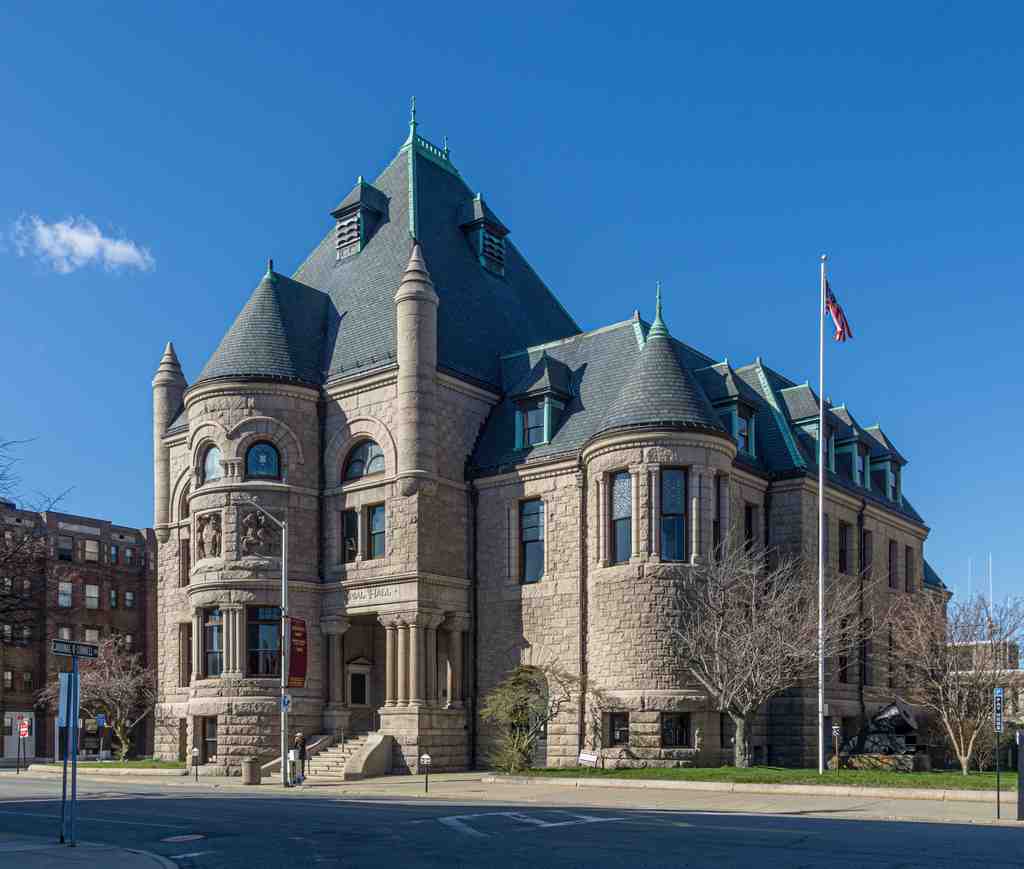
In front of you is a grand stone building with tall columns, rounded towers, and slate-blue rooftops-just look for the flag flying proudly out front and you can’t miss it! Welcome to the Pollard Memorial Library! If these sturdy stone walls could talk, oh, the tales they would tell. Picture this-you’re standing outside a building that’s not just a treasure chest for books, but a living scrapbook of Lowell’s past. Built to honor the city’s Civil War heroes, the library opened its doors back in 1893, after three years of patient stone-laying, hammering, and-probably-a fair dose of good-natured grumbling from the construction crew. All designed by Frederick W. Stickney, this impressive building is all about Richardsonian Romanesque style, which is just a fancy way of saying it looks like it could be the stronghold in a fairy tale. But the story doesn’t start here-even before these turrets and arches, Lowell’s library kicked off in 1844, tucked inside the old City Hall with just a few thousand books, most likely guarded by a suspiciously watchful librarian. The folks of Lowell loved their books so much that the collection just kept growing, hopping from building to building until this site was chosen as a permanent home. You can almost imagine the excitement at the grand opening of Memorial Hall-a gathering of proud townsfolk, the clinking of glasses, and maybe a kid or two sneaking behind the curtains. The library quickly became Lowell’s intellectual heartbeat, but it didn’t have an easy journey. In 1915, disaster struck! A fire ripped through the second floor, leaving the city clutching a bill of over $67,000 and a pile of lost books and precious relics. Yet, out of the ashes, the library rose again, rebuilt with the help of Stickney, this time adorned with grand military murals by French artist Paul Philippoteaux. And, it wasn’t all serious business either. Teenaged Jack Kerouac, future literary legend, could often be found hiding in a corner with a book, probably skipping math to travel the world from the pages of countless volumes. In 2015, the library created the Kerouac Corner, an official nook for dreamers and rebels. Over the years, the library saw its share of drama-fires, floods after a burst pipe in 2018 (imagine water pouring unchecked through the stacks for a whole weekend!), renovations with hammers pounding and dust flying, and even some workplace controversies thrown in for good measure. Yet through every twist, the library kept opening its doors. After a $10 million touch-up in 2002, the building shines even brighter today-a mix of old charm and modern comfort, thanks to generations of library staff and steadfast supporters. But it’s not just about books here! On your tour inside, you’ll find an impressive art collection. Look for paintings like "Venezia" by David Neal, a dramatic portrait of architect Stickney himself, and even a copy of George Washington at Dorchester Heights. You could spend an afternoon just admiring the murals and terra cotta friezes without even cracking a book. So, as you stand here on this sunlit corner, imagine the echoes of poets, students, soldiers, and citizens flowing in and out-each one part of the living history held inside these stone walls. And just think, if you listen closely, you might even hear a faint literary whisper on the breeze, inviting you in to turn the next page.
Abrir página dedicada →Lowell Heritage State Park stretches out in front of you with a tree-lined walking path beside the river, benches waiting for stories, and open space where the city’s modern edge…Leer másMostrar menos
Lowell Heritage State Park stretches out in front of you with a tree-lined walking path beside the river, benches waiting for stories, and open space where the city’s modern edge blends with nature-just follow the path and you can’t miss it. Imagine the rumble of old textile mills in the distance, the clatter of workers bustling with the excitement and exhaustion of a new industrial age. In the 1970s, long after the factory whistles faded, Lowell was chosen as the star of a big comeback story-this park was created in 1974 to celebrate how this city set America’s gears in motion. Before the Lowell National Historical Park even came to life, this very spot was waving its flag for the city’s role in the Industrial Revolution. Today, you’re surrounded by places where inventors’ wild ideas kept the canal wheels spinning and dreams of progress seemed almost as endless as the Merrimack River. Don’t be surprised if you sense a little rivalry between those old mill workers and today’s joggers racing along the paths! And hey, if you see the Sampas Pavilion, that’s the park’s way of saying, “Yes, history can rock out to live music too!” Soak in the view-Lowell’s story was written right where you stand.
Abrir página dedicada →To spot the New England Quilt Museum, look for a bold, red-brick building with tall windows, a rounded corner, and banners with quilt patterns dangling along the upper…Leer másMostrar menos
To spot the New England Quilt Museum, look for a bold, red-brick building with tall windows, a rounded corner, and banners with quilt patterns dangling along the upper walls-you’ll find it right at the street corner, impossible to quilt-miss! Now, let’s spin a tale as colorful as a crazy quilt! Imagine the year is 1987-big hair, bold colors, and right here in Lowell, a passionate band of quiltmakers is brewing up something extraordinary. They decide to stitch together a museum dedicated purely to quilts, the only one of its kind in the entire Northeast! This isn’t just a nod to grandma’s scrap basket. Oh no, they dream of a vibrant space exploding with art, history, and creativity-where every patch tells a story. Fast forward to 1994, and disaster strikes: a flood! But just like a well-patched quilt, the museum bounces back, landing in this historic Lowell Institute for Savings building you see before you. With its cavernous rooms and stately architecture, it’s now the perfect nest for not just exhibitions, but also classes, lively events, and a shop loaded with treasures for fiber fanatics. Inside, you’ll find quilts as old as the 1800s, most with New England roots, whispering secrets of bygone days-can you hear them rustling, or is that just the museum director searching for more pins? For years, the museum was also the lively hub of the Lowell Quilt Festival, where entries arrived from all over the US and Canada, each one a masterpiece. And every month, the “MassQuilts” group gathers here, piecing together the story of more than 8,000 quilts-each one a soft, fabric time capsule. So as you stand here, surrounded by brick, history, and the hum of creation, you’re wrapped in a patchwork of past and present-no thimbles required!
Abrir página dedicada →To spot the Lowell National Historical Park, just look for a long line of tall, red-brick mill buildings with large white-paned windows and a clock tower with a greenish dome -…Leer másMostrar menos
To spot the Lowell National Historical Park, just look for a long line of tall, red-brick mill buildings with large white-paned windows and a clock tower with a greenish dome - it’s quite hard to miss! Welcome to the heart of Lowell’s industrial legend! Right where you’re standing, imagine the steady clatter of spinning machines and the shouts of workers echoing down these brick-lined streets almost two centuries ago. The tall, stately mill you see in front of you is not just a building - it’s a monument to America’s transformation during the Industrial Revolution, when steam and the rush of water through nearby canals powered dreams, fortunes, and, let’s be honest, some pretty tired mill workers. Now, here’s a twist for you: Lowell wasn’t just any mill town. Back in the early 1820s, visionaries looked at the roaring Pawtucket Falls and the network of canals, and saw the future. They designed the city as a vast experiment, aiming for efficiency with a dose of democratic spirit, hoping to avoid the "cramped and inhumane" feel of the old British mill towns. The factories were surrounded by green space, and the workers - including the famous “Lowell mill girls,” many of them young women from New England and Quebec - lived in tidy dormitories instead of crammed, gloomy tenements. Picture it: hundreds of looms whipping up cloth, fresh-faced immigrants passing each other on the canal bridges, and the sky crisscrossed with the hopeful chatter of at least six languages on any sunny afternoon. But even the best yarn gets tangled - after World War II, the textile industry in New England wilted faster than linen in a rainstorm, and these mills fell silent. By the 1960s, the buildings stood empty, haunted by stories of invention, sweat, and even heartbreak. But never count Lowell out! In the 1970s, city leaders, preservation buffs, and educators banded together, united by a dream: to rescue these grand old mills from the wrecking ball. Imagine them, rolled-up blueprints in hand, debating in city council rooms and museum halls, fighting to preserve Lowell’s past for its future. And with local champions like Congressman F. Bradford Morse and passionate educators leading the way, Congress made it official in 1978 - Lowell National Historical Park was born. The old factories, canals, and boardinghouses became living museums, with exhibits you can roam and stories you can almost touch. Today, the park is a patchwork of cool treasures - from the Boott Cotton Mill Museum, where you can hear the clatter of real looms, to a walkway lined with memories from the city’s bustling canal system. Want a taste of the quirky side? There’s even a streetcar you can hop on and a boat tour that sneaks you through old gatehouses and locks. You’ll find tributes to everything from the powerful Francis Turbine to famous writer Jack Kerouac, who wandered these streets and wove Lowell’s faded glory into his stories. And if you ever wonder why there’s a big, shiny quarter with Lowell on it, that’s because in 2019, this park was picked as Massachusetts’ star in the America the Beautiful Quarters series - so keep an eye on your spare change! As you stand here, listen for the sigh of the river and the distant chatter of voices that once filled the air, and remember: this place, built of dreams, bricks, water, and hope, is still spinning stories for everyone who visits. On to the next adventure!
Abrir página dedicada →To spot the F. Bradford Morse Federal Building, look for a mighty, light-gray stone building with big columns right along Kearney Square and an American flag proudly waving above…Leer másMostrar menos
To spot the F. Bradford Morse Federal Building, look for a mighty, light-gray stone building with big columns right along Kearney Square and an American flag proudly waving above the entrance. Now, imagine you’re standing here back in 1930: the air smells like paper and ink, people rush in and out clutching envelopes and parcels, and the sound of rubber stamps fills the grand hall. This impressive post office, designed by George Augustine Daidy, was once the beating heart of Lowell’s mail system-a place where secrets, love letters, and maybe even a few birthday cards passed through daily. Fast forward to 1986 and the building adds another feather to its cap by joining the National Register of Historic Places-talk about a stamp of approval! But the story doesn’t end there. In 1996, Middlesex Community College sweeps in, giving the building an $11 million makeover (which is a lot of stamps), transforming it into a campus hub. In 2006, it’s renamed for hometown hero and Congressman F. Bradford Morse-a man who definitely had his mail delivered on time. Today, students fill the halls with whispers, laughter, and ideas, as the building houses the college library, Honors Center, and art studios. Hard to believe this place once worried mostly about lost packages!
Abrir página dedicada →Look straight ahead for a long, winding stretch of water tucked between the city streets-you’ll spot the Pawtucket Canal snaking past bridges and through the heart of…Leer másMostrar menos
Look straight ahead for a long, winding stretch of water tucked between the city streets-you’ll spot the Pawtucket Canal snaking past bridges and through the heart of Lowell. Alright, let's jump into the story swirling around this canal, where for over 200 years water has meant big business and even bigger changes. Picture it’s 1796: East Chelmsford is a rugged, wild place, and merchants from Boston-imagine them in their sharp coats, tricorn hats, and with a gleam for profit in their eyes-decide they've had enough of the stubborn Pawtucket Falls blocking their shipments of lumber down the Merrimack River. Now, these falls aren’t just a babbling brook-no, they’re a mile of rock and whitewater tumbling 32 feet down, making every log and barrel think twice before taking the plunge. So our clever merchants hatch a plan: build the Pawtucket Canal, creating a watery shortcut so Newburyport’s booming shipyards never run out of New Hampshire’s finest wood. They even form one of America’s first limited liability companies and call themselves the Proprietors of Locks and Canals. Catchy, right? But just as they’re starting to gloat, along comes the Middlesex Canal, whisking cargo directly to Boston, and suddenly everyone is asking, “Pawtucket who?” Talk about a business washout! Yet, the story takes a twist. In the 1820s, the real power players arrive-textile investors craving more waterpower after their mill success in Waltham. The Boston Manufacturing Company snaps up the canal and the water rights with it, deepening the canal, and setting off what you could call the “Lowell experiment.” The city’s first canal powers the first great cotton mill, and just like that, Lowell is transformed into America’s first planned industrial city. Today, Boott Hydro keeps the water moving-so every time you walk by, you’re tracing the path of ambitious merchants, daring engineers, and the mighty Merrimack’s restless spirit. You could say this canal has always been about finding a way around obstacles-and isn’t that just classic New England?
Abrir página dedicada →You’ll spot Saints Medical Center straight ahead-a large, modern, brick building with a big white sign at the top, lots of square windows, and a parking lot full of cars in…Leer másMostrar menos
You’ll spot Saints Medical Center straight ahead-a large, modern, brick building with a big white sign at the top, lots of square windows, and a parking lot full of cars in front. Alright, you’ve made it to your final stop-Saints Medical Center. Don’t let the calm parking lot fool you-this place has seen more medical drama than a TV hospital marathon. Let’s travel back to 1839, when the original St. Joseph’s Hospital started with a rather unusual twist: it was run by mill owners and set up in the mansion of Kirk Boott, the Boott Mills founder. Back then, Lowell was a city of clanging factories and spinning mills, filled with workers who needed patching up every now and then. The hospital was the first of its kind in the country, serving anyone hurt on the job, whether or not they could pay. If someone couldn’t pay, the mills would foot the bill-pretty generous, right? In those early days, patients included tough mill girls, boisterous laborers, and even a few kids-St. Joseph’s opened Massachusetts’ first children’s ward in 1840, squeezing 15 little beds into their humble quarters. By 1891, the hospital was ahead of its time, hiring Dr. Sara Williams, its first woman physician-a real pioneer in a starched collar. Come 1867, the city’s population had exploded with Irish immigrants and folks down on their luck. At St. Patrick’s Church, Father John O’Brien saw the need for a hospital that wouldn’t turn anyone away. So he and Sister Emerentiana found an old yellow house and, along with twelve seriously ill patients, started St. John’s Hospital with not much more than hope and a lot of elbow grease. For over a century, St. Joseph’s and St. John’s became trusted lifelines, growing and changing as Lowell itself did. By the 1990s, with medical costs rising and more patients than ever, the two hospitals joined forces in 1992 to become Saints Memorial Medical Center-think of it as a healthcare superhero team-up. Fast forward to 2012 and the hospital merged with Lowell General, becoming the “Saints Campus.” Despite all these changes, the spirit of caring lives on. In spring 2023, Saints earned a respectable B in hospital safety-proof that even after all these years, they’re still in the business of healing. So as you stand here, hear the distant beeping of monitors and the shuffle of busy feet inside, and remember-a lot of Lowell’s history has passed through these doors. And with that, you’ve reached the end of your tour. Thanks for walking with me through Lowell’s stories-if you need a checkup after all this walking, well, you know exactly where to go!
Abrir página dedicada →
Preguntas frecuentes
¿Cómo empiezo el tour?
Después de la compra, descarga la app AudaTours e ingresa tu código de canje. El tour estará listo para comenzar de inmediato - solo toca play y sigue la ruta guiada por GPS.
¿Necesito internet durante el tour?
¡No! Descarga el tour antes de empezar y disfrútalo completamente sin conexión. Solo la función de chat requiere internet. Recomendamos descargar en WiFi para ahorrar datos móviles.
¿Es un tour guiado en grupo?
No - esta es una audioguía autoguiada. Exploras de forma independiente a tu propio ritmo, con narración de audio reproduciéndose en tu teléfono. Sin guía, sin grupo, sin horario.
¿Cuánto dura el tour?
La mayoría de los tours toman 60–90 minutos para completar, pero tú controlas el ritmo completamente. Pausa, salta paradas o toma descansos cuando quieras.
¿Qué pasa si no puedo terminar el tour hoy?
¡No hay problema! Los tours tienen acceso de por vida. Pausa y continúa cuando quieras - mañana, la próxima semana o el próximo año. Tu progreso se guarda.
¿Qué idiomas están disponibles?
Todos los tours están disponibles en más de 50 idiomas. Selecciona tu idioma preferido al canjear tu código. Nota: el idioma no se puede cambiar después de generar el tour.
¿Dónde accedo al tour después de comprarlo?
Descarga la app gratuita AudaTours desde App Store o Google Play. Ingresa tu código de canje (enviado por email) y el tour aparecerá en tu biblioteca, listo para descargar y comenzar.
Si no disfrutas el tour, te reembolsamos tu compra. Contáctanos en [email protected]
Paga de forma segura con