
Tour de audio de Cheyenne: Ecos de la herencia en el corazón del Oeste
Hace un siglo, los pasillos del poder de Cheyenne resonaban con secretos lo suficientemente oscuros como para cambiar el destino de un estado. Cada ladrillo y columna en el centro esconde la huella de legisladores desafiantes, acuerdos susurrados y estratagemas judiciales que pasaron desapercibidos para las multitudes. Este tour de audio autoguiado desvela la verdadera Cheyenne, llevándote desde los históricos salones de la Cámara de Representantes de Wyoming hasta el Tribunal de Distrito de EE. UU. y los rincones ocultos del Distrito Histórico del Centro. Prepárate para desentrañar leyendas y escándalos locales a pocos pasos de las cuerdas de terciopelo. ¿Qué provocó realmente el tenso enfrentamiento bajo la cúpula dorada del Capitolio? ¿Quién desapareció mientras se enfrentaba a la justicia en los tribunales más antiguos de Cheyenne? ¿Qué escaparate descolorido vio cómo el complot de un gobernador se desbarataba por completo por accidente? Recorre las calles de Cheyenne con nuevos ojos, siguiendo los pasos de rebeldes, visionarios y los discretamente audaces. Cada edificio guarda una historia. Cada giro revela otro secreto. Comienza el viaje ahora. Hay más en Cheyenne de lo que nadie te contó jamás.
Vista previa del tour
Sobre este tour
- scheduleDuración 40–60 minsVe a tu propio ritmo
- straighten2.7 km de ruta a pieSigue el camino guiado
- location_onUbicaciónCheyenne, Estados Unidos
- wifi_offFunciona sin conexiónDescarga una vez, úsalo en cualquier lugar
- all_inclusiveAcceso de por vidaReprodúcelo en cualquier momento, para siempre
- location_onComienza en Distrito Histórico de Lakeview
Paradas en este tour
Look for charming old houses lining the quiet street-one is painted brown with a small porch, and the other is a cozy blue bungalow with a white chimney and inviting front…Leer másMostrar menos
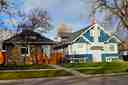
Look for charming old houses lining the quiet street-one is painted brown with a small porch, and the other is a cozy blue bungalow with a white chimney and inviting front steps. Take a moment to imagine the clatter of train wheels and the laughter of families, because you’re standing in one of Cheyenne’s oldest neighborhoods, drawn up on the city’s original map way back in 1870. The Lakeview Historic District is like a patchwork quilt of American dreams, where railroad workers and their families filled these homes with life, hope, and maybe a little stubbornness during the wild Wyoming winters. Many of the homes you see sprang up between 1880 and 1930-from fancy Queen Anne turrets to the classic, square shoulders of American Foursquare houses, and the snug bungalows that became all the rage as radios started buzzing and Model Ts puttered down the street. This area isn’t just about architecture; it’s a monument to everyday heroes who built the railroad, swapped stories over white picket fences, and shaped Cheyenne into a real community. The district gained its official historic status in 1996, and let’s not forget it hides the Moreton Frewen House, a place so special it scored its own national recognition. Who knew ordinary streets could have such extraordinary tales?
Abrir página dedicada →Each room is a new adventure. One moment, you’ll be gazing at a towering bison, the next you’ll meet vibrant displays of wildflowers and songbirds that call Wyoming home. Don’t be…Leer másMostrar menos
Each room is a new adventure. One moment, you’ll be gazing at a towering bison, the next you’ll meet vibrant displays of wildflowers and songbirds that call Wyoming home. Don’t be surprised if you feel the urge to look for gold-Wyoming’s mineral-rich past might just bring out your inner prospector! Along the way, you’ll also learn about the role Wyoming played in the National Park Service-after all, Yellowstone, the world’s first national park, is just up the road. Whether you’re a history buff, nature lover, or traveling with curious kids, the Wyoming State Museum proves that even a quiet little city like Cheyenne can tell a story as big as the sky.
Abrir página dedicada →

Mostrar 11 paradas másMostrar menos paradasexpand_moreexpand_less
Look directly ahead to find a tall, boxy peach-colored building with sharp rectangles, stretching eight stories high beside a two-story annex-right where the American flag sways…Leer másMostrar menos
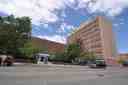
Look directly ahead to find a tall, boxy peach-colored building with sharp rectangles, stretching eight stories high beside a two-story annex-right where the American flag sways in front. Here you are at the Joseph C. O’Mahoney Federal Center, the big, bold Modern Movement building that’s part courthouse, part post office, and definitely all business. Imagine it’s the early 1960s-the nearby 1932 office building is bursting at the seams, and the city is buzzing with plans for something grander. Enter architects Porter & Porter and J. T. Banner & Associates-no relation to Bruce Banner, thankfully-and soon the air is thick with the sounds of construction. By 1965, this massive federal hub rises like a monument to mid-century confidence, funded by dreams of efficiency and plenty of concrete. But, there’s more-this building was renamed in 1973 to honor Joseph C. O’Mahoney, Wyoming’s longtime U.S. Senator, so important that it seems even the mail had to salute him. Now, as you stand here, try to picture the flurry of postal workers, stern judges, and maybe even a few undercover spies (okay, probably just accountants)-all crisscrossing through these doors, finding solutions in the heart of Cheyenne’s federal district. Not bad for eight stories and a whole lot of history.
Abrir página dedicada →You’ll spot St. Mary's Catholic Cathedral as a tall, sandy-colored stone building with a grand arched window and a tower on your right-just look for the beautiful, castle-like…Leer másMostrar menos
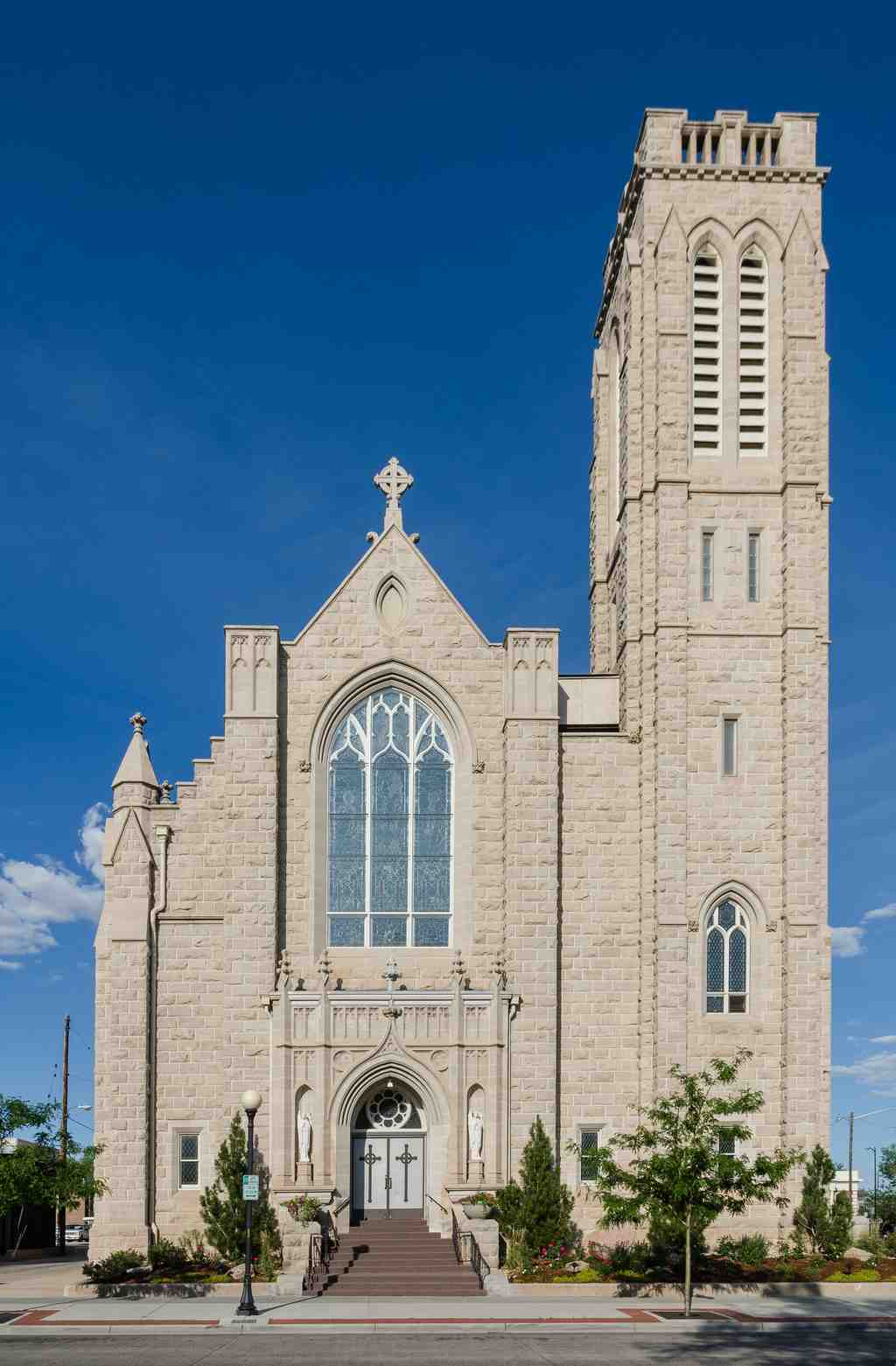
You’ll spot St. Mary's Catholic Cathedral as a tall, sandy-colored stone building with a grand arched window and a tower on your right-just look for the beautiful, castle-like church with intricate stonework and a cross at the top. Welcome to St. Mary’s Catholic Cathedral, a place that’s been a cornerstone-literally and figuratively-in Cheyenne for generations. Picture yourself back in 1907, when nearly 5,000 people gathered here to watch the cornerstone being laid; the excitement in the air was as thick as Wyoming dust on a windy day. The story begins even earlier though, in 1867, when Reverend William Kelly built a humble frame church on this very site-imagine creaky wood boards and the faint smell of old pine. But this congregation had big dreams, and by 1906, inspired by new beginnings and Bishop James J. Keane’s vision, folks were ready for a cathedral worthy of Wyoming’s growing spirit. The industry boomed with the help of builder Moses Patrick Keefe, who hauled in sandstone from Iron Mountain north of town. By 1909, the cathedral you see in front of you was complete, rising 135 feet long and 70 feet wide in dramatic Gothic Revival style, with towering arches and stained glass windows that glow like jewels when the sunlight breaks through. There’s a mystery too-nobody knows exactly who crafted those windows or when they arrived from Europe, so you can imagine the whispers and wonder as locals watched them being installed so carefully. Inside, the steel and concrete arches are faced with warm oak, and if you step in during a service, you’ll hear the Visser-Rowland pipe organ roaring to life, thanks to an upgrade in 1992-think of it as an old cathedral with a high-tech twist. Through booms, busts, and even a few roof repairs, St. Mary’s has never owed a dime when the work was done-a miracle in its own right. So, as you stand here, take a moment to soak in a century and a half of faith, community, and stories too good not to be shared.
Abrir página dedicada →Before you stands the United States District Court for the District of Wyoming-Wyoming’s own federal stronghold, where the rule of law is alive and well… and sometimes, a little…Leer másMostrar menos
Before you stands the United States District Court for the District of Wyoming-Wyoming’s own federal stronghold, where the rule of law is alive and well… and sometimes, a little unusual. This stately building helps keep order not just across all of Wyoming, but also-believe it or not-over wild stretches of Yellowstone National Park that sneak into Montana and Idaho. Now, take a moment to picture a judge’s gavel coming down hard on a hefty stack of case files. That’s the sound of justice ringing out across a courtroom that covers more territory than most. In fact, this is the only federal court to cross state borders-giving rise to Wyoming’s own legal oddity: the so-called “Zone of Death.” Up in the Idaho corner of Yellowstone, there’s a wild legal loophole. A clever law professor figured out a criminal trial there would need jurors from both Idaho and Wyoming-people who don’t actually live in that stretch. So, technically, if someone committed shenanigans in that sector, prosecuting them gets trickier than lassoing a wild mustang! The court is no sleepy outpost, either. There are two main stations: right here in Cheyenne, and up north in Casper. The cases that come through this courthouse can shoot up to the United States Court of Appeals for the Tenth Circuit-unless you’ve got one of those fancy patent disputes, or a claim against Uncle Sam himself, then you’re off to the Federal Circuit! The United States Attorney’s Office here, led as of summer 2025 by Darin Smith, has plenty of work to do representing the nation. Inside, there’s a sense of resolve and patience. The chief judge isn’t appointed for life like at the Supreme Court-here, the job rotates among judges, depending on how long they’ve been serving and even their age. If you want all the glory, you’d better act before turning 70. Otherwise, you’re passing the gavel-literally. So while this building looks calm, it’s seen its share of legal drama, tough rulings, and maybe even the occasional “zone of death” mystery. Don’t worry, though-here in Cheyenne, the law rides tall in the saddle! Ready to mosey on to our next stop?
Abrir página dedicada →To spot Lulu McCormick Junior High School, look for a large red-brick building with castle-like stone trim above the entrance and rows of big, square windows right ahead of…Leer másMostrar menos
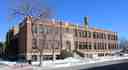
To spot Lulu McCormick Junior High School, look for a large red-brick building with castle-like stone trim above the entrance and rows of big, square windows right ahead of you. Alright, take a moment and imagine yourself right here back in 1929. The smell of fresh brick and chilly Wyoming air greets you as local kids-bundled up tight-shuffle into this grand new school, their boots crunching in the snow just like yours on the sidewalk today. Frederick Hutchinson Porter, the architect, must’ve wanted every student to feel like they walked straight into their own fortress of learning; just look at those castle-like decorations around the door! This building wasn’t always called Lulu McCormick Junior High-it once went by the Emerson Building, and I bet it’s heard more classroom giggles and school bell rings than any place around. Over the years, generations of Cheyenne’s kids passed through these very doors, from the Great Depression all the way to the age of the iPod. Thanks to its architecture and its important role in the community, this school was added to the National Register of Historic Places in 2005. So, if you listen closely, you might just hear echoes of chalk on blackboards or the low hum of a history lesson-hopefully with fewer pop quizzes for you!
Abrir página dedicada →Right in front of you, you’ll spot a commanding red sandstone church with a steep roof, soaring rectangular tower topped with four little turrets, and dozens of tall, pointed…Leer másMostrar menos
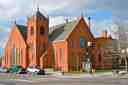
Right in front of you, you’ll spot a commanding red sandstone church with a steep roof, soaring rectangular tower topped with four little turrets, and dozens of tall, pointed stained glass windows-all sitting proudly at the busy corner of 18th Street and Central Avenue. You’re about to step into a story that starts way back in 1867, when Cheyenne was still a wild, new frontier town. Picture Reverend W.W. Baldwin, a determined circuit rider from Colorado, bouncing into town to hold the very first Methodist service in City Hall. Just three months later, those thunderous Union Pacific rails rolled in-and Cheyenne’s streets went from prairie to bustling overnight. Pretty soon, nine brave folks joined together to form the town’s first Methodist Society, and a local doctor, Dr. D.W. Scott, even became their first minister. Now, here’s where things get interesting-picture those folks scraping together a whole dollar to buy two empty lots from the railroad, then waiting for lumber shipped all the way from Chicago to build a modest little white-frame church. By 1871, Bishop Ames was dedicating it. But the church was just getting started! A few years later, some of the church’s Black members left to build their own African Methodist Episcopal Church a few blocks over. By 1890, Cheyenne was booming, and so was this congregation. Time for an upgrade: enter architect J.P. Julien and builder Moses Patrick Keefe, who raised this stately red sandstone building you see now-at a whopping cost of $25,000 (plus $5,000 for furnishings, fancy, huh?). Services didn’t even stop during construction; the old church was dragged out into Central Avenue and folks kept gathering there for two and a half years! And I’ve got a wild one for you-a Methodist minister here even married the legendary Wild Bill Hickok to Agnes Thatcher Lake. Five months after their “I do,” Wild Bill was shot in Deadwood. So as you gaze at those 27 stained glass windows and the impressive stonework, just imagine the layers of joy, struggle, and good old Wyoming grit echoing through these walls. This church isn’t just a building-it’s a living, breathing piece of Cheyenne’s heart!
Abrir página dedicada →Look for a grand, castle-like mansion with a round turret and a pointy brown roof standing proudly at the corner, just ahead of you on the edge of downtown’s old Cattle Barons’…Leer másMostrar menos
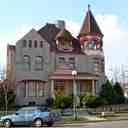
Look for a grand, castle-like mansion with a round turret and a pointy brown roof standing proudly at the corner, just ahead of you on the edge of downtown’s old Cattle Barons’ Row. Welcome to the Nagle Warren Mansion, where the walls have seen more drama than a soap opera marathon! Picture it: the year is 1888, Cheyenne is bustling with cattle barons and railroad tycoons, and Erasmus Nagle decides to build himself a home that would turn the neighbors green with envy. After Erasmus passed away just two years later, his wife Emma and their son wandered these very halls for nearly two decades. Can you imagine Emma renting this mansion to a real-life general, George Randall, with boots echoing on the stone floors? The story didn’t stop there-next up, U.S. Senator and Wyoming’s own Governor Francis E. Warren bought it in 1910. Their dining room table played host to none other than Presidents Theodore Roosevelt and William Howard Taft! Imagine overhearing that dinner conversation-hopefully they didn’t spill soup on the Victorian wallpaper. After the senator passed, the mansion transformed again, becoming a lively YWCA where the old carriage house echoed with parties instead of whinnying horses. Even as time wore down its stone walls-forcing a stucco makeover in 1960-families came and went, each leaving footprints on a home that never forgot its glamorous past. In 1997, the mansion was reborn as a bed and breakfast. Each room sported Old West flair, with cherry and mahogany woodwork, stained glass windows, and even a touch of Morocco with exotic tiles and a chandelier-now that’s how you mix the Wild West with a magic carpet ride! After decades of transformation, in 2019 it became a private home once more. Through all these years, you can almost imagine the rustle of petticoats, the laughter from grand parties, and the distant clip-clop of horses heading back to the stable.
Abrir página dedicada →Look ahead for a three-story white and yellow building with bay windows and a vintage sign that reads “Atlas Theatre” above its entrance-it stands out right in the middle of the…Leer másMostrar menos
Look ahead for a three-story white and yellow building with bay windows and a vintage sign that reads “Atlas Theatre” above its entrance-it stands out right in the middle of the block. Now you’re standing at a true Cheyenne classic, the Atlas Theatre! Picture it: in 1887, this building didn’t hear applause or laughter, but the constant shuffle of feet heading up to offices and the sweet clink of candy jars in the confectionery downstairs. Back then, Cheyenne’s downtown business district was the heartbeat of the city-and the Atlas was right in the middle of all that action. Then came 1908, and suddenly, the smell of popcorn replaced sugar treats, transforming the space into a theatre that was determined to entertain, even if it wasn’t the most lavish stage in town (talk about sibling rivalry between theatres!). The Capitol Avenue Theatre just a few blocks away was flashier, but the Atlas had something else: affordability and charm, giving folks a ticket to laughter or drama without breaking the bank. Even when listed on the National Register of Historic Places in 1973, the Atlas remained surrounded by the lively hum of commerce. So here, among the shops and daily rush, thousands have ducked inside to forget their worries for a couple of hours-cheap seats, big stories, and all.
Abrir página dedicada →Take a good look at the Tivoli Building standing proudly in front of you! It’s a real show-off, isn’t it? With its three stories of Victorian flair built in 1892, it’s the kind of…Leer másMostrar menos
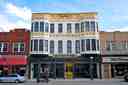
Take a good look at the Tivoli Building standing proudly in front of you! It’s a real show-off, isn’t it? With its three stories of Victorian flair built in 1892, it’s the kind of place that would make even the stodgiest architect loosen their tie. Imagine arriving in Cheyenne during the bustle of the railroad age, craving a cold drink at the fanciest place in town. The queenly oriel window catches the sunlight, the turret stands watch like a miniature castle, and foliated stonework throws leafy shadows on the sidewalk. Even the roofs once shimmered with pressed metal sheets that caught every ray of Western sun. Back in its early days, residents called this place “palatial”, which is fancy-speak for so swanky that Chicagoans probably blushed with envy. Downstairs, people grabbed a bite, swapped stories over frosty glasses of Pabst beer-thanks to the building’s own cold storage-and, during Prohibition, you might just find yourself whispering a password at the hidden speakeasy. Upstairs, the air was thick with secrets, as a brothel once operated on the second floor. To add some wholesome counterbalance: one of Wyoming’s greatest traditions, the Cheyenne Frontier Days, was dreamed up right here at a smoky table upstairs. But like anyone who’s partied too hard, the Tivoli fell into disrepair. By the 1960s, its last bar had closed, and it sat silent for years-no music, no laughter, just the wind howling through boarded-up windows. Thankfully, Cheyenne’s Chamber of Commerce swept in during the 1980s for a makeover. After a few more twists-coffee shops, questionable universities, and campaign headquarters-it’s now home to the Freedom’s Edge Brewing Company, brewing up fresh pints where old mysteries linger.
Abrir página dedicada →To spot the Downtown Cheyenne Historic District, look ahead for the vibrant red building on the left proudly displaying “THE WRANGLER” on its roof, with clusters of historic brick…Leer másMostrar menos
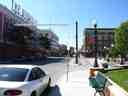
To spot the Downtown Cheyenne Historic District, look ahead for the vibrant red building on the left proudly displaying “THE WRANGLER” on its roof, with clusters of historic brick and stone buildings lining both sides of the street and a welcoming park area with benches on your right. Picture yourself here when Cheyenne first sprang to life-dusty boots clomping on boardwalks, horses snorting as they pulled wagons, and that mix of excitement and wild possibility buzzing in the air. The Downtown Cheyenne Historic District wasn’t just built overnight; this was the original hub of Cheyenne’s business world, where cowboys mingled with bankers, and where fortunes and legends were made every day. This core of seven city blocks became home to the city’s first masonry commercial buildings, trading the old wooden shacks for brick and stone-finally giving Mother Nature’s Wyoming winds something to think about. Over the years-as Cheyenne stretched its boots and grew-this historic district got bigger, not once, not twice, but three separate times. By 1996, it included 96 buildings, each one with stories stacked as high as its walls. Out of those, 67 still contribute to the character of the area, like the timeworn Plains Hotel on the corner, where travelers and troublemakers alike might cross paths, or the Dinneen Building, with its quirky twin towers and a facade that stands at a jaunty angle as if it’s daring you not to stare. Here, you’re surrounded by buildings that witnessed wild days, like the Majestic Building, the Capitol Avenue Theater built in 1904-imagine the velvet curtains rising for an opening night crowd-or the solid First National Bank that’s been standing guard on this street since 1882. And don’t miss the Union Pacific Depot, with its impressive red and gray sandstone and a history that’s earned it National Landmark status-where the echo of train whistles once signaled new arrivals and big dreams. Some of these buildings went out with their own bang: the Warren Block, which fell victim to an arsonist, left a gap where old-timers still swear they see ghosts of the Gilded Age. Others, like the Atlas Theater, have kept the spotlight on for generations. Take a stroll a bit further, and you'll pass the old UMW of America building and the Pioneer Hook and Ladder Company, silent tributes to working folks who helped keep the town ticking. The story here isn’t just about sturdy brick and stone; it’s about resilience, ambition, and a knack for reinvention. Even when a few treasures like the Sorensen Hardware Building and the old bus depot disappeared, new pieces were added, keeping the downtown’s historical patchwork vibrant and alive. So, as you stand in the heart of Cheyenne’s legacy, imagine the deals made at lively counters, the laughter spilling out from cozy theater seats, and the way this area still brings together the spirit of a frontier city that refuses to rust away. After all, you’re not just walking on sidewalks-you’re tracing the footsteps of dreamers, schemers, outlaws, and heroes from every chapter of Cheyenne’s big, bold story.
Abrir página dedicada →If you look just beyond the tracks, you’ll spot the grand, castle-like Cheyenne Depot Museum-built from tan sandstone blocks, it towers with its tall clock tower and arched…Leer másMostrar menos
If you look just beyond the tracks, you’ll spot the grand, castle-like Cheyenne Depot Museum-built from tan sandstone blocks, it towers with its tall clock tower and arched windows, making it hard to miss as you approach from the plaza. Now, while you stand outside this amazing building, imagine the clatter and hiss of steam engines rolling into town in the late 1800s. This place isn’t just any old train station-it’s a National Historic Landmark, built with sandstone hauled all the way from Fort Collins, and positioned right down the street from the capitol to show off its importance! Picture bustling travelers and conductors shouting, as this was once the Union Pacific’s biggest depot west of Council Bluffs. Over the years, it grew longer, got a fancy facelift in the roaring ’20s, and even a $6.5 million spruce-up in the 2000s-Cheyenne sure knows how to pamper its landmarks! These days, the plaza out front echoes with music and laughter during events. But after the last Amtrak train to San Francisco left in 1979, there was a bit less hustle-though plans for fresh train service are on the horizon. Since 1993, the museum inside has told wild tales of Cheyenne’s earliest days and the railroad that sparked a city. Can you almost sense that anticipation, as travelers stepped onto the platform, hoping for new beginnings out West? That’s the real magic of the depot.
Abrir página dedicada →



Preguntas frecuentes
¿Cómo empiezo el tour?
Después de la compra, descarga la app AudaTours e ingresa tu código de canje. El tour estará listo para comenzar de inmediato - solo toca play y sigue la ruta guiada por GPS.
¿Necesito internet durante el tour?
¡No! Descarga el tour antes de empezar y disfrútalo completamente sin conexión. Solo la función de chat requiere internet. Recomendamos descargar en WiFi para ahorrar datos móviles.
¿Es un tour guiado en grupo?
No - esta es una audioguía autoguiada. Exploras de forma independiente a tu propio ritmo, con narración de audio reproduciéndose en tu teléfono. Sin guía, sin grupo, sin horario.
¿Cuánto dura el tour?
La mayoría de los tours toman 60–90 minutos para completar, pero tú controlas el ritmo completamente. Pausa, salta paradas o toma descansos cuando quieras.
¿Qué pasa si no puedo terminar el tour hoy?
¡No hay problema! Los tours tienen acceso de por vida. Pausa y continúa cuando quieras - mañana, la próxima semana o el próximo año. Tu progreso se guarda.
¿Qué idiomas están disponibles?
Todos los tours están disponibles en más de 50 idiomas. Selecciona tu idioma preferido al canjear tu código. Nota: el idioma no se puede cambiar después de generar el tour.
¿Dónde accedo al tour después de comprarlo?
Descarga la app gratuita AudaTours desde App Store o Google Play. Ingresa tu código de canje (enviado por email) y el tour aparecerá en tu biblioteca, listo para descargar y comenzar.
Si no disfrutas el tour, te reembolsamos tu compra. Contáctanos en [email protected]
Paga de forma segura con 


