Tour de audio de Fatih: Ecos del imperio en el corazón atemporal de Cankurtaran
Un sultán desapareció una vez tras estas antiguas murallas, dejando el destino de la ciudad pendiendo de un hilo. Estambul esconde secretos que ni siquiera sus famosos monumentos apenas susurran. Explora a tu propio ritmo con este tour de audio autoguiado, que te llevará desde el Palacio de Topkapı hasta Santa Sofía y más allá. Descubre rebeliones perdidas, escándalos palaciegos y patios silenciosos que pocos turistas encuentran. ¿Por qué una emperatriz bizantina se reunió en secreto con sus rivales en Santa Irene al amparo de la oscuridad? ¿Qué rumor explosivo obligó a cerrar las puertas del Palacio de Topkapı durante semanas? ¿Qué detalle olvidado bajo la cúpula de Santa Sofía provocó una vez disturbios en las calles de la ciudad? Sigue caminos sinuosos donde los emperadores conspiraron, los visires tramaron y la gente común se atrevió a remodelar un imperio. Cada rincón crepita con drama. Observa cómo Estambul revela su corazón oculto a medida que cada historia se desarrolla a tu alrededor. Desbloquea los misterios de la historia: comienza tu aventura donde se forjan las leyendas.
Vista previa del tour
Sobre este tour
- scheduleDuración 40–60 minsVe a tu propio ritmo
- straighten2.5 km de ruta a pieSigue el camino guiado
- location_on
- wifi_offFunciona sin conexiónDescarga una vez, úsalo en cualquier lugar
- all_inclusiveAcceso de por vidaReprodúcelo en cualquier momento, para siempre
- location_onComienza en Museo de Historia de la Ciencia y la Tecnología en el Islam de Estambul
Paradas en este tour
To spot the Istanbul Museum of the History of Science and Technology in Islam, just look for the pale yellow building with tall, arched windows, right behind a giant golden globe…Leer másMostrar menos
To spot the Istanbul Museum of the History of Science and Technology in Islam, just look for the pale yellow building with tall, arched windows, right behind a giant golden globe sheltered under a striking metal dome structure. Welcome, curious explorer! You’re now standing outside a marvel that is part treasure chest, part time machine-the Istanbul Museum of the History of Science and Technology in Islam. Just past the gates of Gülhane Park and the echoes of horse hooves from centuries ago, you’ll find what used to be the Imperial Stables. But forget about hay and horseshoes-in 2008, the doors reopened with a twist: now, these walls burst with the mysteries and inventions of brilliant Muslim scholars from the 9th to the 16th centuries. Inside, you’ll meet astronomical gadgets, armillary spheres, and astrolabes, most of which are not ancient artifacts, but rather ingenious replicas. Picture a group of modern scholars in Frankfurt, hunched over faded manuscripts, squinting at scribbles and doodles from a thousand years ago, trying to imagine and recreate these wondrous inventions. Some are based on real blueprints, while others are pure “what if?”-a little like the world’s nerdiest guessing game! As you imagine the clink of brass and the flicker of candlelight, consider this: here, reality and imagination collide. Who knows-maybe one of these replicas was once someone’s dream… or maybe they’re just very, very old science fiction. Either way, you’re at the crossroads of science, art, and adventure. Ready to step into the world of ancient innovation?
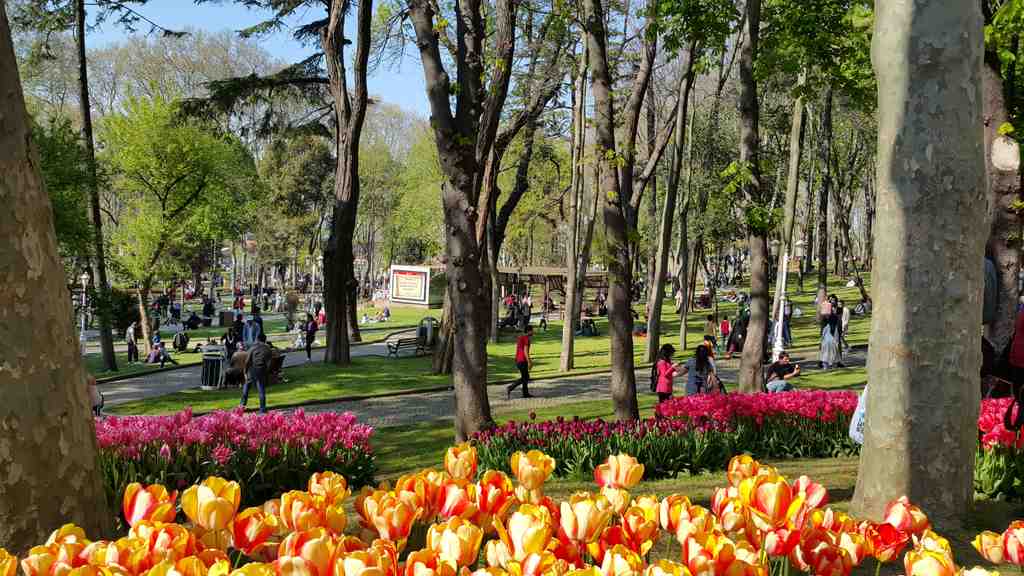
Abrir página dedicada →Right in front of you, you’ll spot Gulhane Park stretching out like a colorful carpet-just look for the tall, shady trees rising above waves of bright tulips and people relaxing…Leer másMostrar menos
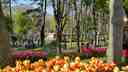
Right in front of you, you’ll spot Gulhane Park stretching out like a colorful carpet-just look for the tall, shady trees rising above waves of bright tulips and people relaxing on the wide green lawns. Picture yourself standing here hundreds of years ago-except, back then, only the sultans and their royal friends got to stroll among these roses. Gulhane Park was once the private backyard of the mighty Topkapi Palace. Just imagine: peacocks strutting, the breeze carrying the scent of roses, and maybe a vizier or two sneaking an extra baklava. Now, here’s a spot where history and mystery got together for a dramatic event. Right where you’re standing, in 1839, a crowd held its breath as the Tanzimat Edict was read out loud. It was a bold declaration that promised new rights and justice to everyone-like a royal promise that changed Turkish history forever. Fast forward to 1912, when Cemil Pasha gave the city a gift and opened these gardens to the public. Instead of fancy pashas, kids started racing down tree-lined paths and grandmas brought fresh bread for picnics on the grass. You’ll notice busts of Istanbul’s city mayors near the entrance and, as you wander, you might find yourself next to a statue of the legendary Ashik Veysel, or stumbling upon a giant Roman column left here by the Goths-plot twist, right?. During the Rose Festival, the whole park fills with sweet scents and laughter. Some folks say the roses gossip more than the visitors do! And who could forget Atatürk, showing the new Latin alphabet here under the open sky, or the city’s last farewell to him on Sarayburnu, as generals marched solemnly and crowds lined up to say goodbye. So find a sunny spot, stretch out on the grass, and just for a moment, listen-you might just hear the whispers of history between the trees.
Abrir página dedicada →If you look just ahead and to your left, you’ll spot the Zeynep Sultan Mosque-the old stone and brick building with a grand dome and rows of round and arched windows framed by…Leer másMostrar menos
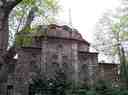
If you look just ahead and to your left, you’ll spot the Zeynep Sultan Mosque-the old stone and brick building with a grand dome and rows of round and arched windows framed by leafy trees. Now, imagine it’s 1769. Dust rises from the busy street, merchants are calling out, and there’s the scent of fresh bread wafting from a nearby oven. Right here, Ahmed III’s daughter, Zeynep Sultan, dreamed of creating a tranquil oasis amidst Istanbul’s lively hustle and bustle. With the help of architect Mehmet Tahir Ağa (yes, the same mastermind behind the Ayazma Mosque), she wanted a place that both honored her faith and nodded to the ancient Byzantine churches that once defined this city. If you study the bricks and rounded windows, you’ll spot clues that take you back centuries. Some folks even joke that this mosque is a bit of a “time traveler”-though, I haven’t caught it sneaking through any wormholes just yet! Over time, the mosque became more than a peaceful place of prayer-it was a hub of local life, complete with a small primary school tucked behind it, and a beautiful fountain out front. And here’s a twist: that fountain was once part of Abdul-Hamid I’s grand complex before it was rolled over here in the 1920s-probably the biggest move a fountain could ever hope for. The school in the back? That used to be a “mektep,” or Ottoman-era classroom, where local kids probably snuck a peek outside when lessons dragged on. If you peek into the mosque’s hazîre, or burial area, you’ll find the grave of Alemdar Mustafa Pasha, a hero in Ottoman military history. But perhaps the strangest thing is that Zeynep Sultan herself isn’t quite at rest yet-her remains lie in the cellar, patiently waiting for a proper tomb, thanks to new roads reshaping the city. So you could say she’s Istanbul’s most patient resident! With every stone and corner, this place tells stories of grand viziers, heroic battles, and clever architects. Take a moment-can you feel the centuries just beneath your feet?
Abrir página dedicada →
Mostrar 9 paradas másMostrar menos paradasexpand_moreexpand_less
To spot the Istanbul Archaeological Museums, look for an impressive neoclassical building with tall white columns and a grand entrance, directly in front of you-trust me, it’s…Leer másMostrar menos
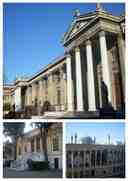
To spot the Istanbul Archaeological Museums, look for an impressive neoclassical building with tall white columns and a grand entrance, directly in front of you-trust me, it’s hard to miss! Now, imagine you’re standing at the gateway to a treasure chest of the ancient world-a place that holds more than one million artifacts from empires that once stretched from the Balkans to Africa, from Anatolia and Mesopotamia all the way to the golden sands of the Arabian Peninsula and even out to Afghanistan. You’re not just looking at any old museum; you’re gazing upon Turkey’s oldest building ever constructed as a museum, a true pioneer in the world of preserving the past. If walls could talk, these columns would probably chatter all day long. Let’s roll back the clock to 1869, a time when Ottoman dignitaries decided it was about time history got its own house. The grand plan began when Mehmed Esad Safvet Pasha, the head of education, decided to create a museum and called it The Imperial Museum-or, in Turkish, Müze-i Hümâyûn. Imagine the sound of grand doors being unlocked for the very first time on a sunny June morning in 1891, as the main building opened to welcome its first visitors. There’s a reason the museum is actually known in the plural: it’s not just one collection but three, stretching across time and space-the Archaeological Museum, the Museum of the Ancient Orient, and the Tiled Kiosk Museum. Now don’t go tripping on ancient relics, but each part of the museum complex tells its own story. The Tiled Kiosk, for example, is a jewel from the time of Sultan Mehmed II-dating back to 1472, with an entrance decorated by blue tiles and architecture that whispers of the Seljuk style. The identity of its mysterious architect has never been discovered-maybe they preferred to let their tiles do the talking. But it wasn’t always smooth sailing. As the collection grew, there simply wasn’t enough space (and few people enjoy playing ancient artifact Tetris). That’s when the Tiled Kiosk entered the stage, once simply a gorgeous old building, now packed full of Turkish ceramics so beautiful they might make your eyes glaze over (pun intended). Fast forward to 1881, and along comes Osman Hamdi Bey, the Indiana Jones of his day and the museum’s legendary director. This man had a passion for both painting and archaeology-pretty handy when you need to dig up a lost king or two. He launched excavations from Nemrut Mountain to the ancient necropolis of Sidon, where he uncovered the Alexander Sarcophagus, one of the most famous treasures in the world. When these mind-blowing discoveries couldn’t fit into the already crowded galleries, he called for a grand new structure, which you’re looking at right now, masterminded by the celebrated architect Alexandre Vallaury. The museum even trained the country’s first artists in what’s now the Mimar Sinan Fine Arts University. Even after the fall of the Ottoman Empire, the museum never stopped growing, gaining new wings-literally-like superhero add-ons between 1903 and 1907, and even a major extension between 1969 and 1983. So, as you stand here, let the atmosphere of centuries gone by fill your senses. Feel the weight of history whispering through the columns, think of sultans, artists, and explorers who walked this courtyard, and get ready, because this is just the beginning. Istanbul’s greatest stories are waiting just beyond those grand old doors.
Abrir página dedicada →To spot the Eski Şark Eserleri Müzesi, look for a grand cream-colored building with tall windows, elegant columns, a staircase framed by two dark lion statues, and a big wooden…Leer másMostrar menos
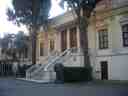
To spot the Eski Şark Eserleri Müzesi, look for a grand cream-colored building with tall windows, elegant columns, a staircase framed by two dark lion statues, and a big wooden door right up front. Alright, time for a journey back in time-careful on those ancient steps, they’ve seen more history than your last dozen shoes combined! You’re standing before the Museum of the Ancient Orient, a treasure chest full of stories from way before the Greeks, Romans, or Ottomans even dreamed of calling this city home. Imagine dusty deserts and sun-baked stones in faraway Mesopotamia, giant pyramids rising in Egypt, and mysterious kingdoms out on the Arabian Peninsula long before Islam. It’s as if every nook and cranny here whispers in forgotten tongues of gods, kings, traders, and… okay, the occasional sneaky tomb robber. Most of these artifacts were unearthed in the 1800s and early 1900s, when Ottoman archaeologists raced against rival empires to uncover secrets buried for thousands of years, then carried their prizes back to Istanbul-probably wishing for lighter luggage! If you listen closely, maybe you’ll catch echoes of those wild discoveries, the thrill of pulling a clay tablet from the dirt, or the drama of shipping it home before anyone else could. So take a moment-breathe in the history, and let the ancient world greet you right here in Istanbul.
Abrir página dedicada →To spot Hagia Irene, look ahead for a large, reddish-brown brick building with rows of tall arched windows and a huge domed roof, surrounded by lush grass and trees-it’s right in…Leer másMostrar menos
To spot Hagia Irene, look ahead for a large, reddish-brown brick building with rows of tall arched windows and a huge domed roof, surrounded by lush grass and trees-it’s right in front of you. Welcome to Hagia Irene, the “Church of Holy Peace”-and I promise, there’s a whole lot of not-so-peaceful history lurking behind those walls! Try to imagine that you’re standing in the spot where the very first church of Constantinople rose, even before the great Hagia Sophia. Constantine the Great himself is said to have commissioned the original structure in the 4th century, at a time when the city was just stretching towards its destiny as the new heart of the Roman Empire. And, as legend tells it, he may have been buried right in this courtyard-talk about a lasting connection to history! But peace? Well, that was sometimes in short supply. In 532, during the famous Nika Revolt-a riot that started, believe it or not, after a chariot race got out of hand-flames swept through the city. Imagine the roar of the angry crowds and the crackle of fire as the original Hagia Irene was set ablaze. Emperor Justinian, who almost lost his throne that day, ordered the church to be rebuilt as part of his grand plan to reshape the empire. The new Hagia Irene took on a shape that blended old Roman basilica with emerging Byzantine innovation-one dome to rule them all, right above where you stand. This site saw earthquakes too, the rulers constantly rebuilding and reinforcing its great stone arches. In 740, another powerful quake shook the city. Yet again the church rose from the rubble, its walls decorated with mosaics and shimmering crosses. Peek through the windows and you might imagine the golden glow of candlelit worshipers, and the mysterious synthronon-a semicircular bench where the clergy sat, a rare survivor from the Byzantine era. Why, you wonder, wasn’t Hagia Irene ever turned into a mosque, like so many churches after 1453? Here’s a twist: after the Ottomans conquered Constantinople, this church ended up inside the Topkapi Palace walls, right under the nose of the sultans. The mighty Janissaries turned it into an arsenal, storing muskets and cannons where monks once whispered prayers. If you’re listening on a quiet day, you might almost hear the clang of swords and the echo of marching feet on stone. In the 18th century, Hagia Irene took on a new life as the National Military Museum, stuffed with shining armor, banners, and even the spoils of war. Not exactly peaceful, huh? Over the centuries, it was filled to the rafters with military trophies, until finally, with a sigh of relief, the church became a place for music and memory. Today, thanks to its superb acoustics and haunting atmosphere, it’s a favorite home for concerts, where the music of Mozart or Turkish classical composers ripples off thousand-year-old stones. Architecturally, Hagia Irene still stands as a classic basilica, with a wide nave, side aisles, and a massive dome that’s pierced by twenty windows, flooding its interior with light. Inside, you’d see the ghostly outlines of ancient frescoes, and one very special mosaic cross-plain, bold, and outlined in black and gold from the days of Byzantine iconoclasm, when forbidden images were banished and symbols had to speak for faith. Around the apse, ancient inscriptions praise the house of God-look closely and you’ll spot words from the Psalms and the book of Amos. Through every age, Hagia Irene was shaped by emperors, earthquakes, revolutions, and finally by music and art. Its story is truly a patchwork quilt, sewn with fiery drama, royal rivalry, and the slow, peaceful persistence of history. So take a moment, listen for echoes, and remember-here peace had to work hard, but it still found a way in the end. Yearning to grasp further insights on the introduction, structure or the historiography? Dive into the chat section below and ask away.
Abrir página dedicada →To spot Topkapı Palace, look up the hill past the trees and you’ll see a cluster of cream-colored buildings and domes crowned by a pointed tower, rising along the edge of the…Leer másMostrar menos
To spot Topkapı Palace, look up the hill past the trees and you’ll see a cluster of cream-colored buildings and domes crowned by a pointed tower, rising along the edge of the promontory above the Bosphorus. Alright, time to step into the world of sultans, secrets, and treasures! Imagine, right where you stand, the Topkapı Palace has gazed out over the shimmering waters for over five centuries. It’s not just one big building-it’s a bustling maze of courtyards, gardens, and mysterious halls, each with its own tale to tell. Our story begins in the smoky aftermath of battle-1459. Istanbul, or as folks used to call it, Constantinople, is fresh under Ottoman rule. Sultan Mehmed the Conqueror decides it’s time for a palace worthy of an empire. Instead of patching up the old wrecked Byzantine palace, he picks this breezy, hilly spot where the waters of the Bosphorus, the Golden Horn, and the Sea of Marmara meet. Can you hear the drum of hammers and saws, and the shouts of workers from every corner of the empire? Back then, this wasn’t the “Topkapı Palace” you see today, but the “New Palace.” But as centuries rolled by and the seaside palace down the way was lost to flames, the name “Cannon Gate”-Topkapı-stuck around. By the time you passed through its massive Imperial Gate, covered with golden calligraphy and towering marble, you’d know you’d arrived somewhere extraordinary. And don’t try riding a horse through those gates-unless you’re the sultan, you’d have to dismount! Step inside those high, stone walls, and you’d find the First Courtyard-a bustling stage for judges, janissaries, and the unlucky few who’d visit the legendary Fountain of the Executioner. Imagine crowds gathering, the clang of armor, and whispers swirling about grand viziers and royal intrigue. Venture deeper, and the palace opens up like a storybook. Four courtyards unfold, each more secretive than the last. The palace kitchens-oh, the smells!-once fed a small army of 4,000 people, from sultans to stable boys. Picture gigantic bubbling pots, spices floating in the air, and chefs working double-time to prepare banquets fit for royalty. The Ottoman sultans also loved their porcelain so much that by the 18th century, their collection was the envy of China, Japan, and pretty much everyone who liked a decent cup of tea. Let’s not forget the mysterious Harem. Over 400 rooms of intrigue, politics, love, and just a pinch of danger. The great Hürrem Sultan, wife to Suleiman the Magnificent, once convinced Suleiman to house the entire royal harem here after a fire destroyed the Old Palace. Overnight, this place transformed from a sultan’s playground into the beating heart of imperial family life-and one or two soap opera-worthy dramas, if the walls could talk! Meetings of empire-shaking importance took place in the Imperial Council’s domed chamber. The sultan himself could listen in from a secret window behind a golden grill. I mean, who needs reality TV when you can eavesdrop on your ministers while they nervously ponder the fate of nations, right? Should you have been lucky enough to make it through to the Inner Courtyard-the fabled Gate of Felicity, mind you-you’d have made it to the real heart of power. Here, lush gardens and the sultan’s private chambers bathed in dappled sunlight, lined with marble, echoed only with whispers and the patter of slippered feet. Inside the treasury, guarded by soldiers who probably never smiled, you’d find priceless jewels like the Spoonmaker’s Diamond and the dazzling Topkapı Dagger-enough treasure to make any pirate green with envy. As centuries passed, the palace grew, suffered earthquakes and fires, but always picked itself up, piece by piece. By the 19th century, it began to lose its shine as a royal home when the sultans fell for the modern luxuries of Dolmabahçe Palace by the Bosphorus. But Topkapı never faded into obscurity-it turned into Turkey’s first museum in 1924, opening its doors to the world, and the stories only grew richer. Today, you stand before the Palace of Felicity, a world of intrigue, celebration, cautionary tales, and wild feasts-a place where silence was golden and secrets were the ultimate treasure. So, as you gaze at its walls and towers, remember: behind each door, history is never far from the present. For further insights on the name, imperial gate or the first courtyard, feel free to navigate to the chat section below and inquire.
Abrir página dedicada →Just ahead of you, you’ll spot a lavish stone fountain with a wide, overhanging roof topped by five little domes, richly decorated with tiles and golden calligraphy-right there in…Leer másMostrar menos
Just ahead of you, you’ll spot a lavish stone fountain with a wide, overhanging roof topped by five little domes, richly decorated with tiles and golden calligraphy-right there in the middle of the square, just in front of the Imperial Gate of Topkapı Palace. Imagine it’s the year 1728, and you’re strolling through the bustling heart of old Constantinople. Sultan Ahmed III, a lover of flowers, poetry, and luxury, wants to make the city bloom with beauty and refreshment. So he builds this extravagant fountain-a true jewel of the Tulip Period, an age where everyone had a bit of a tulip obsession! The Sultan’s grand fountain isn’t just for show; it’s a social hot spot, where people once gathered to chat, trade gossip, and enjoy cool water or a sweet sherbet, all for free. You’d simply step up, and an attendant, hidden behind a lattice grille, would pass you a cup of refreshment. Imagine grand ladies in silk robes and merchants with mustaches curling up at the ends, all meeting here, maybe to swap news or simply show off their newest tulip bulbs. The air would be thick with laughter, different languages, and-if you’re lucky-the sound of a poem! Look closely at the fountain’s walls. Each side is covered in flowing, beautiful calligraphy: a 14-line poem dedicated to water, written by the chief judge of Halep and Kayseri. If you could read Ottoman Turkish, you’d find a message of gratitude to water and its donor, swirling around the fountain like a river of words. Corner niches hide little sebils, triple-grilled and mysterious, as if inviting you to guess what’s behind them. And atop each side, golden finials catch the sun, shining like a crown on the city’s proudest fountain. Years later, the fountain would even be famous enough to appear on Turkish banknotes. That’s quite an upgrade from your average water cooler, isn’t it?
Abrir página dedicada →To spot Soğukçeşme Sokağı, look straight ahead for a beautiful white marble sign decorated with sculpted roses and elegant Ottoman-style script-right by the leafy entrance, it’ll…Leer másMostrar menos
To spot Soğukçeşme Sokağı, look straight ahead for a beautiful white marble sign decorated with sculpted roses and elegant Ottoman-style script-right by the leafy entrance, it’ll definitely catch your eye! Now, take a deep breath and imagine you’re drifting back in time, right into a charming old Istanbul neighborhood filled with the scent of jasmine and the laughter of children playing hide and seek. Soğukçeşme Sokağı-the “Street of the Cold Fountain”-isn’t just any street. It’s like a secret path tucked right between two of Istanbul’s crown jewels: the Hagia Sophia and Topkapı Palace. Picture this: no cars, just cobblestones beneath your feet and rows of wooden Ottoman houses, each with lacy balconies, pastel shutters, and overflowing flower boxes. These houses may look like they’ve just stepped out of a time machine from the 19th or 20th century, but don’t be fooled-they were actually given a second life by a visionary named Çelik Gülersoy in the 1980s. Thanks to his love for old Istanbul, these mansions-now called "Ayasofya Konakları" or the Hagia Sophia Mansions-welcome guests who want to sleep in velvet beds, draw silk curtains, and pretend (if only for a night) that they're Ottoman nobility. Even Queen Sofía of Spain stayed here for four whole nights-probably because the place is quieter than a library during finals! Each house has its own flowery name, planting a little garden in your imagination: Jasmine House, Wisteria House, Honeysuckle House. And speaking of blooming minds, one house is a treasure trove of Istanbul’s stories, packed with over 10,000 books-if you ever run out of things to read, you know where to go! You might even pass the birthplace of Turkey’s 6th president or stumble upon a mysterious Byzantine cistern, now home to a restaurant where secrets lurk beneath the ancient stones. Historic, cozy, and dripping with character-Soğukçeşme Sokağı is where past and present shake hands… and maybe share a cup of tea.
Abrir página dedicada →To spot the Hagia Sophia, just look ahead for the massive, pinkish building with a giant silver-gray dome in the middle, surrounded at the corners by four tall, slender minarets…Leer másMostrar menos
To spot the Hagia Sophia, just look ahead for the massive, pinkish building with a giant silver-gray dome in the middle, surrounded at the corners by four tall, slender minarets pointing at the sky like cosmic pencils. So, you’re standing before one of the world’s most legendary buildings-welcome to Hagia Sophia! Try to imagine: in 537 AD, crowds gathered right where you are, eyes wide as Emperor Justinian unveiled a church so vast and shimmery with marble that it looked like it was built for the gods and not mere mortals. Justinian himself supposedly looked up at the soaring dome and declared, “Solomon, I have surpassed thee!” Talk about architectural confidence! The dome above you was a wonder-soaring, glittering, and-to the people of the time-an almost magical canopy of gold and colored mosaics that seemed to float in midair. But Hagia Sophia hasn’t had an easy life. Even in its earliest days, this site was marked by drama. The first church here went up in the days of Emperor Constantius II, but it didn’t last. Fires, riots, and earthquakes kept testing its strength. The great Nika riots of 532 burned its predecessor to the ground, and the emperors couldn’t get insurance-so they built bigger, stronger, and more splendid every time disaster struck! The architects behind Hagia Sophia were two Greeks, Isidore of Miletus and Anthemius of Tralles, real-life math and engineering wizards-not a blue-collar duo but scientists sketching out the first truly monumental pendentive dome in history. Their creation was so massive, it made people dizzy trying to count the windows. And don’t get me started on the scavenger hunt for fancy columns-some say they were borrowed (with a little force) from temples all around the Mediterranean. If you see different colors and sizes, you’ll know why! As centuries rolled on, tremors shook the city, and the dome cracked and even collapsed at times. Picture feverish repairs as teams of craftsmen scrambled around scaffolding, chanting, roaring, and dodging falling stones. By 562, Hagia Sophia wore her crown again, bigger and taller than ever. Here’s where the plot thickens: Hagia Sophia wasn’t just a monument-it was a stage. For nearly a thousand years, it was the largest cathedral in the world, and the center of the mighty Byzantine Empire’s religious life. Crowds of worshippers, patriarchs in golden robes, and emperors with star-studded cloaks gathered here for coronations and ceremonies. At times, this place was so sacred, people spoke in whispers, listening as sunlight filtered through golden mosaics, making everything glow. But the world changed-sometimes thunderously! In 1204, Crusaders from the West stormed in, and you wouldn’t have wanted to be here for the party: looting, shouting, and even mules tramping down sacred halls. After all the chaos, the cathedral sat battered and bruised, until the Byzantines took it back and patched up the wounds. Then came 1453-drums and cannons of the Ottomans filled the air as Constantinople fell. Sultan Mehmed the Conqueror marched in, stood where you now stand, looked up in awe, and turned Hagia Sophia into a mosque. Soon, minarets shot up to the heavens, and the call to prayer echoed across the city. Over time, Hagia Sophia became a symbol for everyone. In 1935, it became a museum, so people from every background, faith, and corner of the world could admire its wonders. But the story wasn’t over-since 2020, Hagia Sophia has resumed its life as a mosque, and in 2024, the upper floor once again became a museum too. This building is a survivor-church, mosque, museum, and now a mix of all three, brimming with centuries of stories. If you listen close, you might still hear the echoes of past prayers, chants, and the distant hustle of ancient Constantinople just beyond the walls. And if a seagull swoops by-well, maybe it’s just carrying a bit of history in its wings! Interested in knowing more about the architecture, notable elements and decorations or the mosaics
Abrir página dedicada →To spot the Augustaion, look ahead for an open area framed by modern paving and bustling tourists-this square once lay east of where the Hagia Sophia looms grandly, in what’s now…Leer másMostrar menos
To spot the Augustaion, look ahead for an open area framed by modern paving and bustling tourists-this square once lay east of where the Hagia Sophia looms grandly, in what’s now Aya Sofya Meydanı; imagine it bordered by columned walkways and ancient structures on every side. Welcome to the heart of ancient Constantinople! If you stand here and listen carefully, you might just hear the echoes of footsteps from emperors, senators, and crowds milling about nearly 1,500 years ago. This square before you was called the Augustaion, and you’re walking atop layers of a truly grand story-one full of ambition, catastrophe, and a little family drama that could rival any soap opera. Close your eyes for a second and picture this place as it was in the time of Rome: a market square alive with bakers, fruit sellers, and townsfolk haggling over olives and bread. The Augustaion started as a simple agora-a public market-nestled within the growing city. But then along came Septimius Severus, that old Roman emperor who loved a bit of grandeur, and he transformed the original space into a mighty square lined with elegant porticoes. Right in the center stood a dazzling statue of Helios, the sun god, shining down on everyone like an ancient disco ball. But the best was yet to come. In the early 4th century, Emperor Constantine decided he’d turn Byzantium into the capital of his entire empire. With his power and purse, he built even more towering buildings, carving off a section of that old square to create a new one-the Augustaion, named after his beloved mother, Helena. A massive porphyry column went up, crowned with her statue-imagine it gleaming purple-red, catching the sunrise just right. Generations came and went, and so did the Augustaion’s fortunes. The square was rebuilt in 459 by Emperor Leo I, then again in the wild days after the Nika riots almost tore the city apart. Justinian-yes, the man who gave us the Hagia Sophia-waltzed in, patched things up, and turned this once public place into a much more exclusive courtyard. Now only the most important folks got to wander through here, surrounded by marble paving and fancy porticoes that stretched overhead in every direction. In those days, the Augustaion wasn’t just a pretty space-it was the crossroads of empire. To the north, you had the mighty Hagia Sophia and the Patriarch’s palace. To the east, the grand Senate house, rebuilt by Justinian himself, stood with a white-marble face and a line of six giant columns at its entrance. The monumental Chalkē Gate to the Great Palace was nearby, and if you listened closely, you might catch the cheer of the crowds drifting from the Hippodrome to the southwest. The Augustaion brimmed with statues, each one telling a story. There was Constantine atop his column, surrounded by his three sons-almost like a proud dad at a family reunion, but with a bit more marble. Later on, Theodosius the Great swapped out some statues for an equestrian version of himself, flanked by his sons yet again. Not to be outdone, Empress Aelia Eudoxia got her own statue here, but her noisy, pagan-loving inauguration was so rowdy it annoyed the patriarch, who ended up being exiled-proof that even in ancient times, parties could get out of hand. Maybe the most dramatic monument of all was Justinian’s victory column, raised in 543 at the Augustaion’s west end. Imagine it-topped with an imperial statue reusing bits of Theodosius’s, and at the base, three kneeling barbarian kings paying tribute. That column stood for nearly a thousand years, until it was finally toppled and lost after the Ottomans took the city. Curious travelers from the West visited in later centuries, only to find the Augustaion in ruins: lost columns jutting from the ground like ancient teeth, and marble stones scattered where emperors once strutted. Today, there’s little above ground, but if you listen carefully, you might imagine the clatter of horses, the rustle of silk robes, and maybe even a shout from an angry empress. So, as you stand here, picture yourself where public markets turned to imperial ceremony, and where every stone told tales of ambition, rivalries, and the dreams of a mighty empire. Now, on to our next wonder!
Abrir página dedicada →Look for a grand, cream-colored building with elegant arches and large windows, glowing warmly under beautiful lights-it’s right ahead of you, a striking sight against the evening…Leer másMostrar menos
Look for a grand, cream-colored building with elegant arches and large windows, glowing warmly under beautiful lights-it’s right ahead of you, a striking sight against the evening sky. Ah, welcome to your final stop: Sultanahmet Jail-well, what used to be a jail. Believe it or not, you’re standing by what is now the ultra-luxurious Four Seasons Hotel, but just a century ago, no one would have checked in here for a good night’s sleep! Let your imagination wander back to 1918. The city is buzzing, and this was the very first modern prison built in the Ottoman capital. Back then, its large windows were covered with iron bars, and there was little golden glow-instead, the sound of heavy doors slamming shut echoed through the courtyard. Designed in a Turkish neoclassical style, the building itself was almost too beautiful for a prison. Four stories tall, complete with guard towers and a big courtyard, Sultanahmet Jail was more like a fortress, with an inscription over the main gate that declared it the “Dersaadet Murder Jail”-I’m guessing the welcome mat was always missing. The air was thick with the tension and stories of people waiting for trials or serving their sentences, some for only a short time, but others… well, let’s just say the art scene in Istanbul owes a lot to these walls. You see, it wasn’t just petty thieves who landed here. Writers, artists, poets, and dreamers passed through these cells-imagine legendary poet Nazım Hikmet looking out the very windows you see, probably composing lines in his head while listening to distant footsteps on the stone. Or Billy Hayes, the American who inspired "Midnight Express," spending a nervous night behind those high walls before being sent on his infamous journey. These cells held men and women, young and old, with a fair supply of brooding poets and rebellious journalists. There’s a rumor the walls might have learned a witty poem or two themselves! As time rolled by and bigger prisons were built, the echoes here faded. The jail closed in 1969 but reopened during military rule for a bit, never quite shaking its mysterious past. Decades of silence gave way to a curious transformation in the 1990s-no more clanging chains! Instead, there was the sound of marble floors being polished, and guests wheeling their suitcases, not dragging their hopes. After a dazzling restoration, the old jail reopened in 1996 as the Four Seasons Hotel. Today, if you walk inside, you’ll find cozy luxury, not locked doors. Many poets and authors remembered Sultanahmet Jail in their works-it even appears in novels and poems. Hard to believe that guests today sip coffee in the lovely courtyard, unaware that it once echoed with the secrets and dreams of Istanbul’s most creative rebels. So as you stand here, outside these glowing windows, tip your hat to the past and imagine the stories that still linger, just behind the walls. To expand your understanding of the notable inmates, conversion into hotel or the in literature, feel free to engage with me in the chat section below.
Abrir página dedicada →
Preguntas frecuentes
¿Cómo empiezo el tour?
Después de la compra, descarga la app AudaTours e ingresa tu código de canje. El tour estará listo para comenzar de inmediato - solo toca play y sigue la ruta guiada por GPS.
¿Necesito internet durante el tour?
¡No! Descarga el tour antes de empezar y disfrútalo completamente sin conexión. Solo la función de chat requiere internet. Recomendamos descargar en WiFi para ahorrar datos móviles.
¿Es un tour guiado en grupo?
No - esta es una audioguía autoguiada. Exploras de forma independiente a tu propio ritmo, con narración de audio reproduciéndose en tu teléfono. Sin guía, sin grupo, sin horario.
¿Cuánto dura el tour?
La mayoría de los tours toman 60–90 minutos para completar, pero tú controlas el ritmo completamente. Pausa, salta paradas o toma descansos cuando quieras.
¿Qué pasa si no puedo terminar el tour hoy?
¡No hay problema! Los tours tienen acceso de por vida. Pausa y continúa cuando quieras - mañana, la próxima semana o el próximo año. Tu progreso se guarda.
¿Qué idiomas están disponibles?
Todos los tours están disponibles en más de 50 idiomas. Selecciona tu idioma preferido al canjear tu código. Nota: el idioma no se puede cambiar después de generar el tour.
¿Dónde accedo al tour después de comprarlo?
Descarga la app gratuita AudaTours desde App Store o Google Play. Ingresa tu código de canje (enviado por email) y el tour aparecerá en tu biblioteca, listo para descargar y comenzar.
Si no disfrutas el tour, te reembolsamos tu compra. Contáctanos en [email protected]
Paga de forma segura con