
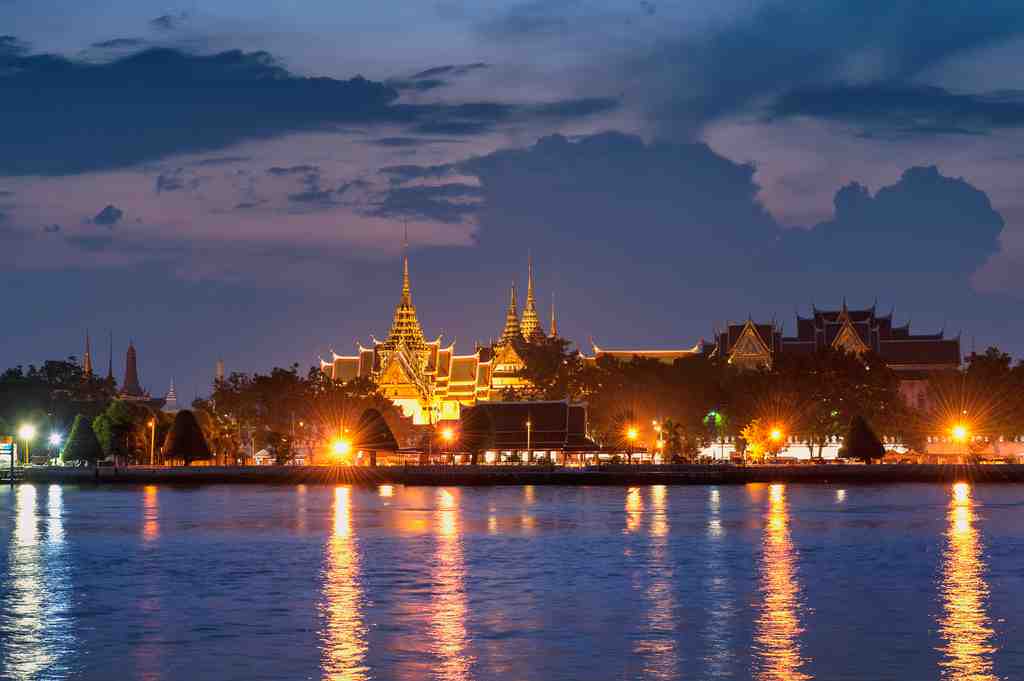
Audioguía de Bangkok: Un Viaje a Través del Tiempo y los Templos
Mil años de secretos yacen bajo los relucientes tejados y los sombreados patios de Bangkok, esperando justo más allá del rugido de los tuk-tuks. Este audioguía autoguiado te lleva por el corazón histórico de la ciudad, revelando dramas ocultos y momentos olvidados tras grandes museos, céspedes sagrados y Budas luminosos, detalles que la mayoría de los visitantes pasan por alto. ¿Quién lo arriesgó todo para robar estatuas legendarias al amparo de la noche? ¿Qué misterios parpadean en la hierba de Sanam Luang, donde las celebraciones reales una vez dieron paso a la tragedia? ¿Por qué un elefante terco cambia para siempre el viaje del Buda Esmeralda con una elección imposible? Camina con ligereza desde los salones del palacio hasta los verdes barridos por cometas y los santuarios revestidos de oro, mientras cada lugar se transforma ante tus ojos. Siente la historia latir en los jardines reales, capta susurros de rebelión y experimenta el asombro en lugares que nunca volverás a ver de la misma manera. Las historias comienzan ahora: acércate y escucha donde las leyendas de Bangkok aún perduran.
Vista previa del tour
Sobre este tour
- scheduleDuración 30–50 minsVe a tu propio ritmo
- straighten2.4 km de ruta a pieSigue el camino guiado
- location_on
- wifi_offFunciona sin conexiónDescarga una vez, úsalo en cualquier lugar
- all_inclusiveAcceso de por vidaReprodúcelo en cualquier momento, para siempre
- location_onComienza en Museo Nacional de Bangkok
Paradas en este tour
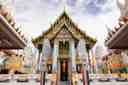
To spot the Bangkok National Museum, look for a grand white building with a striking red and gold roof, intricate golden decorations along the gables, and elegant windows running…Leer másMostrar menos
To spot the Bangkok National Museum, look for a grand white building with a striking red and gold roof, intricate golden decorations along the gables, and elegant windows running along its side-all set near a shady tree by the side of the wide brick walkway. Alright! Picture yourself now, right by the entrance, the sun glinting off golden ornaments that curl up toward the roof, and a gentle breeze rustling the leaves overhead-very different from when this spot first sprang to life over a century ago. If these walls could talk, I bet they’d tell you stories that are part history, part mystery, and maybe a joke about tourists getting lost on their way to the gift shop! Way back in 1874, King Chulalongkorn-King Rama V if you’re counting-had an idea: bring Thailand’s treasures out where everyone could enjoy them. His father, King Mongkut (yep, the “King and I” Broadway guy), had quite the royal collection, and Chulalongkorn thought, “Why keep all these dazzling artifacts hidden in dusty palace corners?” So he opened the doors of the first public museum in what’s now the Grand Palace and, just like that, September 19th became National Museum Day in Thailand. But the museum didn’t stay put for long! By 1887, it outgrew its original home and moved to a noble address: the Wang Na, or Front Palace-the very place you’re standing now, once home to the vice king, a position kind of like having a royal understudy, just in case the king needed a stand-in. Imagine the commotion as treasures, statues, and golden bits and bobs made their way here, earning this spot legendary status as the heart of Thai heritage. Step closer and you’ll see the old palace transformed into an explorer’s paradise. Inside, three main halls await. The Siwamokhaphiman Hall-mouthful, right?-was once an audience chamber where powerful voices would echo and important decisions were made. Now, it cradles the Thai History Gallery. Peek inside and you’ll find King Ram Khamhaeng’s Inscription, a big-deal artifact that UNESCO registered as one of the world’s most precious documents. It’s like the Rosetta Stone of Thai script, with secrets carved deep into black stone. Move on and you’ll wander through halls packed with treasures from every corner of Thailand and beyond. There are ancient Buddha statues, jewelry that would make a pirate blush, golden trinkets, and regional Asian marvels-Chinese, Vietnamese, Indonesian, and more. Each sculpture whispers of old empires: Dvaravati, Srivijaya, Sukhothai-the greatest hits of South Asian history, right before your eyes! And who needs a time machine when you’ve got a collection that stretches back to the Neolithic era? But hang on, don’t blink! In May 2024, the museum scored a huge win: the return of not one, but two legendary statues. The Golden Boy, a bronze marvel nearly 900 years old, and the Kneeling Lady, his mysterious companion, finally came back to Thailand after three decades in America. They’d been globe-trotting longer than most tourists! As you stroll, the scent of polished wood from the old halls lingers in the air. There’s the Buddhisawan Chapel, constructed in 1787, housing the revered Phra Phuttha Sihing Buddha-step inside to discover dazzling murals, and, just maybe, feel the hush of centuries-old prayers. The Red House, meanwhile, sits nearby, its teak walls once sheltering princesses and queens. Furnished just like the old days, complete with the personal treasures of Queen Sri Suriyendra, it lets you sneak a peek into royal nap time, centuries before air conditioning. You might hear echoes of the past, but don’t be surprised if you spot modern tech too-the museum’s getting a glow-up! Exhibit halls are getting dazzling lighting and multimedia displays, so don’t let the old royal bones fool you. This place keeps reinventing itself. So, how about that-a palace that turned into a treasure trove, a home for lost statues, and a portal into the wonders of Thailand’s past. But watch your step-it’s easy to get swept away by the legends… or distracted by the gift shop. Enjoy your journey through time! Want to explore the collections, the golden boy and the kneeling lady or the the buildings in more depth? Join me in the chat section for a detailed discussion.
Abrir página dedicada →In front of you is an enormous green field, fringed by rows of tall tamarind trees, where people are scattered around relaxing or flying kites, and if you look ahead you'll spot…Leer másMostrar menos
In front of you is an enormous green field, fringed by rows of tall tamarind trees, where people are scattered around relaxing or flying kites, and if you look ahead you'll spot the open expanse stretching towards the pointed golden spires of the Grand Palace. Welcome to Sanam Luang, the beating heart of Bangkok’s royal history and a field with tales taller than any tree in this park. Close your eyes for a moment-well, keep them open if you’re walking-and imagine you’re not just standing on grass, but on a royal stage where history has played out for centuries. See this vast green lawn? It’s not just a park. It’s 74.5 rai of land-about 119,200 square meters-where kings have buried their loved ones, people have celebrated new rice sprouts, and kites have soared so high even the crows get jealous. Sanam Luang, which means “royal turf,” sits perfectly between the sacred temples and royal palaces-almost as if the kings didn’t just want a nice front yard, but a battlefield for ceremonies and the occasional kingdom-sized picnic. The Royal Chronicle tells us that right here, royal cremations took place at the Phra Men Ground. Imagine golden pavilions, grand enough to impress even the gods, set up in the center, with royal music playing--each note competing with the breeze and the distant cries of vendors. Cremation fires flickered, royalty wept, and the nation gathered in honor, every emotion rippling across this field. Originally, Sanam Luang was called “Thung Phra Men,” the royal cremation ground, and since the days of King Rama I, this place has seen the farewells of kings, queens, and princes-good-bye parties with a lot more pageantry than your last office send-off, that’s for sure. During the reign of King Rama IV in 1855, the name was changed to “Thong Sanam Luang,” but most folks just call it Sanam Luang now. Don’t worry, even the locals take shortcuts! But don’t imagine it’s all solemnity here. The Royal Chronicles also paint lighter scenes. Picture the beginning of the tradewind season: the king, having swapped his crown for a kite string, letting a star-shaped Chula kite dance above the grass, while his brother, the Prince of the Front Palace, flew a Pakpao kite just across the way. Soon, the sky filled with color and laughter-okay, and maybe a touch of royal mischief. You can almost hear the laughter of children and the swoosh of kites tugging at their strings even today. During Rama III’s reign, war with Vietnam added a little tension, so our king wanted to show off just how rich and fertile his kingdom was. What better way to show off abundance than by planting rice in the palace’s front yard? The very ground you’re on was once a rice field, ploughed and planted until the next royal funeral, when it was smoothed and transformed again. Rama IV brought back the ceremonial side, setting walls for the Royal Ploughing Ceremony and creating a stage for plays, prayers, and prophecies for good harvests. At the edge, a barn-yes, a real barn-waited to be filled with the rice from these sacred fields. By the time Rama V took charge, he was inspired by palaces in Java and wanted a more peaceful, elegant park. He pulled down old buildings, expanded the square, and-taking a tip from the sultan-planted two rows of tamarind trees, encircling the field like a green embrace. Fun fact: those trees kept multiplying, and by 1967 there were 783 lining Sanam Luang’s edges, sheltering kite-fliers and lovers of shade alike. Sanam Luang adapted to the times: under Rama VI, it hosted parades, racetracks, and even a golf course as the city’s foreigners arrived-nothing like a quick round of golf in front of the Grand Palace, right? The celebrations never stopped. In 1897, Bangkok’s 100th birthday bash turned Sanam Luang into party central, and pageantry here has marked every step in the city’s life, from the 1982 bicentennial to the golden jubilee in 1996. But this ground has also seen darker days. In 1976, tragedy struck with a massacre right here and at nearby Thammasat University, when violence stole the peace from the crowd. More recently, massive crowds gathered in mourning after King Bhumibol’s death in 2016, their sorrow so powerful it felt like even the tamarind trees were bowing their heads. Change is always in the air here: protests, royal ceremonies, kite flying, music, laughter. One day it's a rally, the next day a historic parade, and soon, Sanam Luang will even host the opening of the 2025 SEA Games. As you look around, imagine all these layers-past and present-rippling over the field, the wind carrying stories, hopes, and the occasional kite right over your head. This, my friend, is Sanam Luang-Bangkok’s green living room, where every blade of grass might hold a memory, a secret, or a celebration.
Abrir página dedicada →To spot the Emerald Buddha, look straight ahead for a small, dazzling green figure clothed in glittering gold, seated high above an intricate golden altar against a rich mural…Leer másMostrar menos
To spot the Emerald Buddha, look straight ahead for a small, dazzling green figure clothed in glittering gold, seated high above an intricate golden altar against a rich mural backdrop-its emerald color will catch your eye in the middle of all that splendor. Ah, you’ve found it! Welcome to the extraordinary world of the Emerald Buddha, Thailand’s most revered and mysterious image. Standing here, take a deep breath and look up-imagine the cool, serene air inside the temple, mingled with the faint scent of incense. Right before you is a statue that’s not only beautifully dressed but also has a tale that jumps through centuries, storms, kingdoms, and legends, all while barely getting a scratch! So, let’s travel back in time-over two thousand years ago, in the ancient city of Pataliputra in India, a wise sage named Nagasena decided that ordinary statues just wouldn’t do. With a twinkle in his eye, he summoned the mighty deities Vishnu and Indra-like the original superhero team-up-to help him craft a statue that would become a beacon of faith across five lands: Sri Lanka, Ramalakka, Dvaravati, Chiang Mai, and Laos. What did they use? Not emerald, but deep green jasper! I suppose the name “Jasper Buddha” didn't have the same ring to it. Over the centuries, this precious figure began the ultimate game of “musical kingdoms.” According to Cambodian Royal Chronicles, after some three hundred years hanging out in India, the Emerald Buddha set sail for Sri Lanka to escape a civil war-imagine the suspense! Then, after a stop in Cambodia, it became the silent witness to sieges, plagues, and bold escapes. When Angkor Wat came under attack, the Emerald Buddha was whisked away for safety, journeying from Ayutthaya to Kamphaeng Phet, Laos, and eventually hidden away in Chiang Rai. There, a stroke of divine luck-or perhaps a handy thunderstorm-led to a lightning bolt striking a chedi. Locals discovered, under the cracked stucco, a glorious green figure waiting to shine. Talk about dramatic entrances! From there, the statue seemed to decide its own destiny. King Sam Fang Kaen of Lan Na wanted it for Chiang Mai, but the elephant carrying it refused to go-no GPS mix-up here, just a stubborn pachyderm who believed in destiny. After 32 years in Lampang, then Chiang Mai, the Emerald Buddha continued its tour-de-force, taken to Laos by Prince Setthathirath, then to the new capital of Vientiane, where it would stay for over two centuries. That would’ve been the end of its travels, but in 1779, General Chao Phraya Chakri, future King Rama I, had other plans. After capturing Vientiane, he brought the Emerald Buddha-pausing first for a victory lap at Wat Arun, then finally across the river to Bangkok. Here, in 1785, it was installed with grandeur in the magnificent temple you see today, at the very heart of Thai spirituality and royal tradition. Now, let your eyes follow the sparkling gold robes covering the Buddha. Did you know these change with the seasons? No regular wardrobe here: there’s a special golden outfit for summer, a lovely monk’s robe for the rainy season, and for winter-a diamond-studded golden shawl. The King of Thailand himself changes these robes during a breathtaking ceremony, climbing up that altar, gently wiping the figure clean, and switching the regalia while the crowd waits in anticipation. Don’t be surprised if you feel goosebumps just imagining the solemn hush and the soft murmurs of prayer that fill the air. This tiny, 66-centimeter-tall statue, glowing with green mystery and royal shimmer, has been paraded through the streets-for rain, for protection, or for hope. No statue in Thailand is treasured more: it is guardian, hero, and symbol, celebrated on Chakri Day and every season’s turn. The Emerald Buddha you see before you has survived war, weather, and wandering elephants, and still sits here-calm, composed, and, just maybe, a little proud of its own epic tale. If only statues could talk, right? Want to explore the origin myths, description or the seasonal decoration in more depth? Join me in the chat section for a detailed discussion.
Abrir página dedicada →
Mostrar 6 paradas másMostrar menos paradasexpand_moreexpand_less
That dazzling cluster of golden rooftops and detailed spires glowing against the twilight-just across the river-is the Grand Palace, so keep your eyes ahead and look for the…Leer másMostrar menos
That dazzling cluster of golden rooftops and detailed spires glowing against the twilight-just across the river-is the Grand Palace, so keep your eyes ahead and look for the majestic structures rising up beyond the walls! Let me take you on a journey back in time-more than 240 years ago, this very spot was just a humble patch of land by the Chao Phraya River, dotted with wooden houses and bustling with the lives of a relocated Chinese community. Suddenly, in 1782, the air was filled with excitement as King Rama I, determined to start a new dynasty, ordered his workers to build something grander than anything Bangkok had ever seen. Now imagine the clatter of workers hammering together wooden frames and the crackle of fires where bricks, hauled all the way from the ruins of Ayutthaya, would be forged. The Grand Palace was born out of both necessity and ambition, established as a fortress and beacon for the new capital of the Chakri Dynasty. At first, the palace wasn’t grand at all-timber instead of gold, a simple log fence instead of these imposing white walls. But every king who followed left his mark, adding throne halls, decorative pavilions, and ceremonial spaces, turning the Grand Palace into a sparkling labyrinth of history and legend. Each structure here whispers a different story: halls where royal babies took their first steps, courtyards once echoing with elephant parades, and gardens that sheltered secret royal meetings. The palace is so immense-over 218,000 square meters-that it’s been called a city within a city, protected by four mighty walls and the gentle watch of the river. As you stand here, imagine the fluttering of royal banners and the formal calls of ancient ceremonies. Within these walls, kings met foreign ambassadors and planned the destiny of a nation. The Outer Court bustled with ministers, stables for royal elephants, and even a royal mint, while deeper inside lay the Middle Court, home to spectacular throne halls like Amarin Winitchai, where the king received everyone from princes to nervous European envoys with wide eyes and plenty of bowing. Here, too, is the Temple of the Emerald Buddha, shimmering at the palace’s heart-a sacred chapel, not a temple, so holy even monks can’t live inside. It’s said the Emerald Buddha can decide the kingdom’s fortune just by a change in his seasonal robes-something only the king himself is allowed to do. The whispers of magic and mystery run as deep here as the river itself. The inner sanctuary, reserved for royal women, was once alive with the laughter and drama of the king’s harem-imagine hundreds of women, forbidden to leave, dreaming and scheming under the watchful gaze of eunuchs and palace guards. Meanwhile, out in the Middle Court, the king’s throne sat under a nine-tiered umbrella, each level representing his power over every direction in the cosmos-including, presumably, the odd lost tourist. Of course, time did its work. By the twentieth century, the kings moved their actual homes further north, the royal government shifted to modern buildings in the city, and the age-old harem was replaced by offices. But unlike most old palaces, this one is no silent relic. Royal ceremonies still fill the air with pageantry and purpose, and on any given day, amid the swirl of over eight million annual visitors, you might sense the presence of kings past, watching over their glittering legacy. So as you gaze at the ornate spires shining in the dusk and the dazzling rooflines that look like something out of a fantasy, remember: every crack in the plaster and gleam of gold leaf is part of a story that reaches from ancient palanquins and coronations right up to the bustle of Bangkok today. If you listen closely, you might just catch a secret or two that the palace keeps only for those who pause and wonder. To delve deeper into the outer court, temple of the emerald buddha or the middle court, simply drop your query in the chat section and I'll provide more information.
Abrir página dedicada →If you’re looking straight ahead, you’ll spot Wat Ratchapradit Satit Mahasimaram as a compact yet striking temple, its elegant marble chedis and intricately gabled buildings…Leer másMostrar menos
If you’re looking straight ahead, you’ll spot Wat Ratchapradit Satit Mahasimaram as a compact yet striking temple, its elegant marble chedis and intricately gabled buildings nestled tightly together, with white walls and ornate golden trim almost glowing where the sunlight hits-look for the temple tucked behind a simple gate, surrounded by grander government buildings and green parkland on either side. Now, take a moment here, and imagine you’ve suddenly stepped back into the 19th century. It’s hot and sticky, and instead of this little temple in front of you, you’re standing in what was once the King’s coffee plantation. Yes, you heard right-before monks, back in the old days of King Rama III, this piece of land was brimming not with prayer but with coffee beans and government workers’ homes. You can almost smell the roasted aroma drifting through the humid Bangkok air. Hard to picture now, isn’t it? Fast forward to the reign of King Rama IV, also known as King Mongkut-a king with a clever mind and a cleverer plan. The city was already dotted with two important royal temples, but tradition demanded a third. And this needed to be something different, something new, a temple for the monks of the Thammayut order-a reformist sect founded by Mongkut himself. He saw the empty coffee plot within spitting distance of the Grand Palace and thought: “What better place to serve royalty and rank than right next door?" In 1864, and remember this was still a bit of wild land with only a few shanty houses and the distant rumble of the royal elephants from the palace, King Mongkut bought up the property. Picture the royal surveying team tramping about, monocles gleaming, wiping sweat from their brows, negotiating with minor nobles who probably grumbled under their breath about having to move. Before long, where beans had once flourished, Mongkut’s vision sprouted: a small, carefully planned temple with ground so compact, every stone, statue, and spire had to be just right. I mean, the entire place covers less than three acres-barely enough space for a game of hide-and-seek, yet somehow more than enough room for history to unfold. What’s truly spectacular here is the craftsmanship and the history packed into such an intimate area. In the heart of the temple, the main hall, or viharn, is a tapestry of stories, with murals that take you around the “Twelve Royal Ceremonies” celebrated through the year. Imagine a Thai version of a royal calendar, but rendered in swirls of color across ancient walls instead of your grandma’s fridge. These murals were commissioned by King Rama V, adding another layer of royalty to this site-the kind where artists balanced on bamboo scaffolds for weeks, probably getting more temple gossip than they bargained for. The chedis here are not your run-of-the-mill-there’s the marble chedi, uniquely latticed and glinting under the sun, the Khmer-style prang, and the mysterious Prasat-each offering something new for wandering eyes (and lucky for you, no need to dodge coffee plants). Then there’s the “Throne Hall for the Dharma” or dhammasala, which, as legend has it, contains a royal pulpit crowned with a spired Mongkut-style finial-more bling than the King’s own crown, some say! But here’s a quirky bit you might not hear from most guides: This temple was built to such strict standards of royal use that, in earlier times, the monks’ quarters were strictly off-limits to women. If you were a lady in 19th-century Bangkok, you didn’t just stroll through that part of the grounds unless you fancied being chased away by an official with a stern face and even sterner cane. And about the names: the temple’s original and rather tongue-twisting title was Wat Ratchapradit Satit Dhammayutikkaram-try saying that in a hurry. Unsurprisingly, confusion reigned. Some folks called it Wat Ratchabandit (like the ‘temple of clever people’) or even Wat Song Pradit (“temple built by design”-as though others just sprung up by accident). King Mongkut himself had to step in, laying down the law: everyone must call it Wat Ratchapradit Satit Mahasimaram-a name fit for royalty and, conveniently, for tour guides who want to test your memory. Inside the grand viharn, you’ll find the Buddha Sihingkhapatimakorn-a replica of the famed Buddha Sihing, commissioned to remind everyone, monarch and commoner alike, of the unbroken links of Buddhist faith. Surrounding it are smaller golden Buddhas with evocative names: Chinnaratnoi, Srisasadanoy, Nirantarai-the latter being one of 18 statues gifted by King Rama V. This little temple is the first in Bangkok actually purpose-built for the Thammayut order-every other Thammayut temple, before and since, has had to make do with hand-me-downs or royal renovations. When completed, the king celebrated with three full days of ceremonies, the sort of bash where the incense almost out-smoked the city’s fires, and the chanting lasted until the monks probably wished for earplugs. So, here you are, standing where kings, monks, and courtly drama once mingled; where history wafts through the marble corridors, and the city’s ancient traditions are pressed together tighter than coffee beans in a grinder. Not bad for a temple that started out as a garden of caffeine!
Abrir página dedicada →Right ahead, spot Saranrom Park by looking for a golden, multi-tiered fountain surrounded by neatly trimmed bushes and blooming red flowers, all framed by lush green trees and the…Leer másMostrar menos
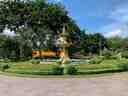
Right ahead, spot Saranrom Park by looking for a golden, multi-tiered fountain surrounded by neatly trimmed bushes and blooming red flowers, all framed by lush green trees and the cheerful sight of a bright yellow truck nearby. Now take a deep breath and listen closely-you’re standing on what was once royal ground, a place where princes strolled, kings plotted, and Thailand’s very first beauty queen might have picked a rose or two! Saranrom Park, now a quiet expanse of green and color, was born in 1874 at the suggestion of King Rama V’s British advisor, Henry Alabaster. The king wanted a park to rival the best in Europe, so he filled these grounds with bursts of orchids, fountains gushing with life, and beds of red roses-his favorites, in case you find a stray petal and want to impress future monarchs. Imagine back then, the garden was awash with the songs of birds in grand cages and creatures in curious little enclosures, all trying to look their fanciest for the royal guests above. Don’t let today’s calm deceive you, though-this park has seen its fair share of action! In 1904, King Rama VI marched his royal guard right where you stand, whipping them into shape for all sorts of palace drama…err, military readiness. One winter long ago, the lawns sparkled with lanterns for a rare, magical festival-Bangkok’s own winter wonderland! And if you walk near one old, unassuming building, that’s the former headquarters of the People’s Party. After the Siamese revolution of 1932, it was the scene of constitution celebrations every December 10, with speeches, cheers, and a little bit of revolutionary daring in the air. At the entrance, a sparkly sculpture still hints at the new hopes (and maybe a battle or two over sandwich choices) that once filled the rooms. Step into the shade and you’ll find a beautiful white marble memorial for Queen Sunanda Kumariratana, where King Chulalongkorn himself poured his heartbreak into inscriptions around her ashes-a gesture so moving that people have been pausing to read them for over a century. And don’t forget the Victorian-style greenhouse! It never quite filled up with plants, but back in its heyday, the city’s elite came to play cards and star in little amateur plays. Now, it’s just a storehouse-and if you listen closely, maybe you’ll catch the ghostly shuffle of a deck of cards. Hidden among the trees, there’s a mysterious Chinese pagoda shrine, built around a sacred Hopea log, dedicated to the spirit of Chao Mae Takhian Thong. Locals say it has been here so long, even the squirrels pay their respects before stealing the gardener’s snacks. All around, the air is thick with layers of history: parades and pageants, soldiers and songs, queens’ tears and children’s laughter. Today, Saranrom Park is simply a green haven for Bangkokians, donated for everyone’s pleasure since 1960. It’s a reminder that even the most regal gardens can become everyone’s backyard-though, between you and me, the roses still look suspiciously royal. Keep your eyes open-you never know what hidden stories a quiet fountain or an old tree might still be whispering as you stroll by!
Abrir página dedicada →Look straight ahead for a lively street lined with colorful old shophouses, buzzing with cars and motorcycles, and framed by an eye-catching mural on a tall building in the…Leer másMostrar menos
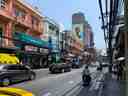
Look straight ahead for a lively street lined with colorful old shophouses, buzzing with cars and motorcycles, and framed by an eye-catching mural on a tall building in the distance-that’s Charoen Krung Road! Alright, take a nice deep breath-do you smell the roasted chestnuts, the tang of exhaust, and maybe a hint of old paper from a used book shop? You’re standing at the edge of time on Charoen Krung Road, where Bangkok’s history and energy come together in one long, vibrant ribbon. Right now, you’re on what was once called the “New Road,” though after 160 years, it’s a bit like calling grandma’s sweater “the latest fashion.” Back in the early 1860s, the city was a watery maze-think more Venice, less gridlock. People zipped around by boat, and the streets were muddy, grassy lanes best navigated by jungle creatures or anyone with very waterproof shoes. But then came the Europeans! Diplomatic consuls and traders with lovely carriages, fine hats, and an amazing ability to get sick from all the humidity and lack of fresh air. Imagine a line of foreigners, fanning themselves and coughing, petitioning King Mongkut-yes, just picture King Mongkut, the very same king you might know from 'The King and I'! The petition read something like, “Dear King, we love your city, but we’re all catching colds because there’s nowhere to ride our carriages!” The king, thoughtful and ever-modernizing, looked around at his muddy, tangled city streets and realized: maybe it was time to swap water taxis for the sweet sound of horseshoes clopping on pavement. Charoen Krung was built with wide ambition, beautifully straight, and at first, people looked at it like, “Wow, this street is enormous-who’s going to walk all the way across?” For a time, only one side was really used. Locals called it "Thanon Mai”-New Road-until the king gave it the much grander name Charoen Krung, meaning “prosperous city.” Suddenly, this was the place to be seen, the lifeline stretching away from the old walled city, sweeping through Chinatown, cruising past consulates, theaters, and more noodle shops than anyone could count. Feel the buzz of the present? That’s nothing compared to the excitement back when Bangkok opened its very first tram here in 1888-originally pulled by horses until the rails went electric. Generations of city dwellers would cling to the sides during the rush hour, bells dinging, ever so slightly behind schedule. The tram finally rattled its last journey in 1963, but a piece of one still waits for you at the far end of this road, resting in retirement like an old actor who refuses to leave the stage. As you look around, the past peeks through-ornate colonial balconies, Chinese shophouses, and the ever-present jungle of overhead power cables, like lines on the city’s palm, telling its fortune. In the glory days of the 19th and early 20th centuries, this was the main artery of town, the spine along which embassies clustered and stories pulsed. Fancy a French connection? Soi Charoen Krung 36, nicknamed Rue de Brest, commemorates diplomatic ties with France. Portugal? Their embassy still hums with old tales nearby. The road bends and twists, linking a mosaic of cultures: mosques, cathedrals, markets, renowned hotels, mosques and eccentric local shops selling everything from herbal medicine to fortune-telling birds. By the later 1900s, though, the real estate buzz swept elsewhere. Charoen Krung watched as Bangkok’s glitzy shopping centers grew up to the north and east, leaving its southern stretches to nap a bit as other districts grabbed the limelight. Some shops boarded up, but others held on stubbornly, giving this area a feeling of slightly faded grandeur-like an old movie star, still stylish, even if a bit outshone by flashier new arrivals. Then, the city changed gears again! The underground Blue Line MRT rumbled in beneath your feet, opening shiny new stations, and suddenly, Charoen Krung had a taste of the future-a “Creative District” sprang up, with quirky cafes and art spaces alongside temples and steamed bun vendors. Of course, that brings new worries: will the vintage soul of this place get squeezed out by the rush of modernity? There’s a little mystery in the air: what will Charoen Krung look like in ten years? Twenty? Today, all of that history is right here under your feet, threading together the old and the new, the grand and the ordinary. Hop onto Charoen Krung, and you’re not just walking a street; you’re time traveling through Bangkok’s growing pains, diplomatic dramas, and dreams of prosperity-one noodle shop, tram bell, and sidewalk tattoo artist at a time. Keep your eyes open, and you just might see the past waving to you from the next shopfront!
Abrir página dedicada →To spot Wat Pho, look straight ahead for a large complex bustling with golden rooftops and, if you peek through the entrance, you might catch a gleam from the enormous golden…Leer másMostrar menos
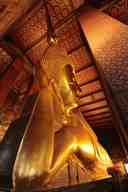
To spot Wat Pho, look straight ahead for a large complex bustling with golden rooftops and, if you peek through the entrance, you might catch a gleam from the enormous golden Reclining Buddha stretching out inside-just follow the flow of visitors and the shimmering light! Welcome to Wat Pho, a place that’s grander than a golden afternoon dream and older than the city of Bangkok itself! Imagine stepping through these gates centuries ago: the air is heavy with incense, monks chant softly, and every surface seems alive with the shimmer of gold and the chime of temple bells. Wat Pho is not just any temple-it’s the king of temples in Thailand, ranking first among royal temples and echoing with stories that stretch from the days of ancient Ayutthaya to today’s bustling Bangkok. Picture it: long before flashy tuk-tuks and skyscrapers, this plot of land hummed with the prayers of monks. It was already called Wat Photaram, named after the legendary Bodhi tree in India-where Buddha found his enlightenment. The French once tried to build a grand Star fort here, but King Phetracha had other plans, clearing the ground for something far more extraordinary. After wars and emperors, King Rama I, the founder of the present-day Bangkok dynasty, saw the faded ruins and decided to make Wat Pho shine anew. He ordered marshes to be drained, the land to be filled, and the old temple reborn. The king didn’t stop at just rebuilding-he gathered battered Buddha images from other destroyed temples, rescuing them from Ayutthaya to Sukothai, and made this place a sanctuary for memory, spirit, and hope. But the spark that puts Wat Pho in a league of its own? Step inside today and you’ll find yourself face-to-face (well, maybe face-to-foot!) with the gigantic Reclining Buddha: forty-six meters of serene, golden magnificence. That’s longer than a blue whale! Buddha lies here, entering Nirvana, his feet alone stretching four-point-five meters and covered in intricate mother-of-pearl inlays-108 different panels, each loaded with ancient symbols like elephants, dancers, flowers, and mystical chakras. Drop a coin in one of the 108 bronze bowls lining the corridor if you want a little extra luck and if you want to help the monks keep the temple glowing. Strolling the grounds, you’ll pass four towering chedis, each a colorful monument to the kings of the Chakri dynasty-green for Rama I, white for Rama II, yellow for Rama III, blue for Rama IV. These chedis aren’t just pretty faces; they hold centuries of royal ashes, relics, and even the fragments of an ancient Buddha rescued from invaders. Allegedly, when the Burmese stormed Ayutthaya and scorched its great bronze Buddha to steal its gold, Rama I preserved what he could and buried the remains right here, beneath layers of gleaming tiles. But wait-Wat Pho is not just a museum of ancient stones. In the time of King Rama III, the temple’s walls became a living library. More than a thousand Buddha images gaze serenely over marble pathways, and more than a thousand inscriptions line the pavilions. Lessons on medicine, massage, history-even riddles and astronomy-are etched into stone, making visitors wander in wonder. It’s UNESCO-recognized wisdom you don’t need to check out from any library! If you’re feeling meditative or a little stiff after this long wander, consider what else began here: Thai massage. That’s right-Wat Pho is where the world-famous art of gentle stretching, muscle kneading, and pressure points was first systematically taught. Even today, you can get a real Thai massage in these very grounds, guided by hand-carved diagrams and ancient wisdom scribed on stone. Fun fact: this is why some folks call Wat Pho Thailand’s very first university, where anyone-nobles, merchants, and backpackers alike-could come to learn and heal. As you listen to the breeze rustling in the temple gardens, and maybe hear laughter and chanting in the distance, take a final look around. Wat Pho is a living, breathing canvas of Thailand’s faith, history, and ingenuity. With every step, you’re walking through stories-royal dramas, epic rebuilds, hopeful renewals, and the quiet buzz of students learning the secrets of the body and mind. So, before you go and try to strike the Reclining Buddha’s pose (no judgment-just make sure you have enough room!), remember: this is a place where the ages meet, where ancient wisdom whispers from every golden tile and stone. That’s Wat Pho, magnificent at every angle and still waiting to teach you something new! Ready to delve deeper into the the temple complex, reclining buddha or the thai massage? Join me in the chat section for an enriching discussion.
Abrir página dedicada →

Preguntas frecuentes
¿Cómo empiezo el tour?
Después de la compra, descarga la app AudaTours e ingresa tu código de canje. El tour estará listo para comenzar de inmediato - solo toca play y sigue la ruta guiada por GPS.
¿Necesito internet durante el tour?
¡No! Descarga el tour antes de empezar y disfrútalo completamente sin conexión. Solo la función de chat requiere internet. Recomendamos descargar en WiFi para ahorrar datos móviles.
¿Es un tour guiado en grupo?
No - esta es una audioguía autoguiada. Exploras de forma independiente a tu propio ritmo, con narración de audio reproduciéndose en tu teléfono. Sin guía, sin grupo, sin horario.
¿Cuánto dura el tour?
La mayoría de los tours toman 60–90 minutos para completar, pero tú controlas el ritmo completamente. Pausa, salta paradas o toma descansos cuando quieras.
¿Qué pasa si no puedo terminar el tour hoy?
¡No hay problema! Los tours tienen acceso de por vida. Pausa y continúa cuando quieras - mañana, la próxima semana o el próximo año. Tu progreso se guarda.
¿Qué idiomas están disponibles?
Todos los tours están disponibles en más de 50 idiomas. Selecciona tu idioma preferido al canjear tu código. Nota: el idioma no se puede cambiar después de generar el tour.
¿Dónde accedo al tour después de comprarlo?
Descarga la app gratuita AudaTours desde App Store o Google Play. Ingresa tu código de canje (enviado por email) y el tour aparecerá en tu biblioteca, listo para descargar y comenzar.
Si no disfrutas el tour, te reembolsamos tu compra. Contáctanos en [email protected]
Paga de forma segura con 


