AudaTours logoAudaTours

Tour de audio de Funchal: Fortalezas, Fe y Huellas a Través del Tiempo

Guía de audio8 paradas

Bajo las calles soleadas de Funchal, los ecos de piratas, poetas y revolucionarios perduran en cada piedra. Las coloridas callejuelas del Casco Antiguo ocultan mil secretos incalculables y las murallas de la Fortaleza de São Tiago aún llevan las cicatrices de antiguos asedios. Este tour de audio autoguiado te invita a un vívido viaje a través del dramático pasado de Funchal, revelando historias ocultas y maravillas insólitas que la mayoría de los viajeros pasan por alto. ¿Quién intentó robar el oro de Madeira y desapareció sin dejar rastro de las atentas murallas de São Tiago? ¿Qué extraño ritual se desarrolló una vez bajo faroles de medianoche en Campo do Adelino Rodrigues? ¿Por qué una puerta azul en particular en el Casco Antiguo provoca un feroz debate entre los historiadores locales? Rastrea los callejones sinuosos y las plazas abiertas donde la traición se encendió, nacieron leyendas y se forjó el espíritu de Funchal. Cada esquina que giras descubre un nuevo drama y una belleza inesperada. ¿Estás listo para desvelar las capas de la historia secreta de Funchal? Comienza tu aventura ahora.

Vista previa del tour

map

Sobre este tour

  • schedule
    Duración 30–50 minsVe a tu propio ritmo
  • straighten
    2.8 km de ruta a pieSigue el camino guiado
  • location_on
    UbicaciónFunchal, Portugal
  • wifi_off
    Funciona sin conexiónDescarga una vez, úsalo en cualquier lugar
  • all_inclusive
    Acceso de por vidaReprodúcelo en cualquier momento, para siempre
  • location_on
    Comienza en Capela do Corpo Santo

Paradas en este tour
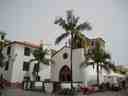
  1. Look for a small, whitewashed chapel with a dramatic Gothic doorway and a simple cross crowning its pointed gable, nestled between palm trees and just beside some inviting outdoor…Leer másMostrar menos

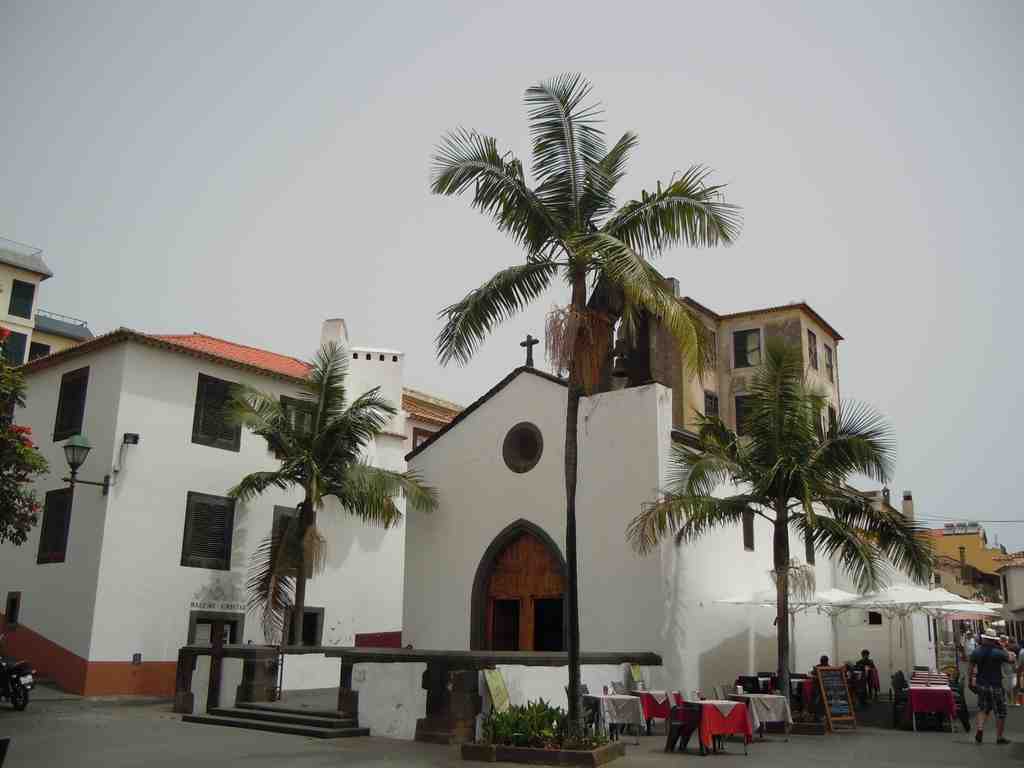
    Look for a small, whitewashed chapel with a dramatic Gothic doorway and a simple cross crowning its pointed gable, nestled between palm trees and just beside some inviting outdoor café tables. Standing here at the end of the old village of Funchal, you’re face to face with the Capela do Corpo Santo-a chapel built in the 15th century and dedicated to the patron saint of fishermen, Saint Pedro Gonçalves Telmo, or as the locals affectionately called him, “Corpo Santo.” Imagine the scent of salt in the air and the constant rumble of the ocean nearby, with fishermen hustling to and from the harbour, always pausing here for a quick prayer before braving the Atlantic. Although its original Gothic doorway is all that remains from its earliest days, step closer and picture how the place shimmered inside: gilded altars aglow, paintings by royal hands, and ceilings painted to catch every flicker of candlelight. In the 16th century, the altar was remodeled and clever new windows let in beams of sunlight-just the thing to lift spirits on a tough fishing day! But the chapel was far more than a spiritual pit stop; it doubled as an infirmary, a social safety net, and even a makeshift bank for those weary fishermen’s families. Here, kindness was a currency. Even the paintings tell stories-one set dated 1615 and 1616, with angelic musicians and scenes from the saint’s adventurous life. This little building holds centuries of hope, healing, and a few fishy tales in its walls!

    Abrir página dedicada →
  2. To spot the Old Town of Funchal, just look ahead for the cluster of orange-tiled rooftops and winding narrow streets, with a striking, light-colored three-story tower rising in…Leer másMostrar menos

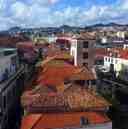
    To spot the Old Town of Funchal, just look ahead for the cluster of orange-tiled rooftops and winding narrow streets, with a striking, light-colored three-story tower rising in the middle-your gateway to centuries of history. Welcome to the Old Town of Funchal! Take a deep breath and imagine you’re stepping onto cobblestone streets that have whispered stories for over half a millennium. These crooked lanes once welcomed the very first settlers of Funchal-people eager for a fresh start on this lush island, risking a life among volcanic hills and salty breezes. Now, let’s travel back in time together. Picture the hushed morning air centuries ago, interrupted only by the church bells and the rustle of pirate sails far on the horizon. The narrow alleys, spanned by old stone arches, would have bustled with fishermen, merchants, and children darting around the massive church doors and pastel-painted homes. Imagine the wealth woven into the community-the rich merchant might have lived right here, inside those three magnificent old buildings on Rua Dom Carlos, numbers 33, 34, and 35. The proud little tower you see was once a mark of prosperity, with three stories facing this very street and two peering onto Rua dos Barreiros. Today the houses are separate, but the stone arches in the ground floor still hint at secret connections. In the upper floor, expanded in the 17th or 18th century, family rooms were designed for sweet dreams or maybe even some strategic midnight snack-planning. Not all was peaceful, though! Just beyond, the mighty walls of the Fortress of São Tiago watch over you like a stone guardian. Built in the 1600s to keep pirates and other troublemakers from raiding the port, its walls once stretched along the seafront, down from the chapel of Corpo Santo to the slopes below the Church of Saint James. Here, imagine the sound of boots on the ramparts, soldiers whispering about King Carlos’s future visit in 1901-yes, the first and last king of Portugal to visit Madeira. The fortress changed hands many times, from royal engineers like Jerónimo Jorge to the cultural caretakers of modern Madeira. And if you listen carefully, you might almost hear the distant boom of a ceremonial cannon, or the laughter of soldiers celebrating the king’s arrival. Hungry? You’re standing close to the legendary Mercado dos Lavradores-or Farmers' Market. Its bold, trapezoidal shape and impressive three-story tower make it hard to miss. Step inside and you find a lively open courtyard, with a colonnade looping around two levels of shops and stalls. The air is thick with the scent of fresh fruit and the sound of merchants shouting out today’s deals. Gaze at the dazzling tile panels, some of which tell Madeira’s story in vivid, blue-and-white scenes. Ah, if only walls could talk-or sell bananas! The Old Town isn’t just churches and markets, though. Peer down one alley, and you might spot the humble Capela da Nossa Senhora da Oliveira, tucked among houses. Its plain whitewashed walls and simple stone doorways hold centuries of prayers and hopes inside. And if you happen to pass the tall tower of the Igreja do Socorro, note the thick stonework and the wooden balconies. Inside, you’d find a soaring ceiling painted with wild architectural tricks designed to fool the eye-trompe l’oeil, the old artists called it. When light streams through the windows and glances off the golden altar, you’ll know you’re watching history glitter and glow. During the solemn days of Lent, people once lined these very streets for the Procession of the Passion. The devout would pause at each of five “passos,” or sacred stops; now only two remain, with the one here on Rua de Santa Maria dating back to 1733. Imagine chanted hymns rising above the rooftops as the faithful processed, their sorrow and hope echoing down to us today. The Old Town’s patchwork of eras and stories lives on in every weathered stone and mural around you. So as you wander, keep your eyes peeled and your curiosity sharper than a market vendor’s knife-here, every corner holds a new piece of Funchal’s heart. For a more comprehensive understanding of the properties on rua dom carlos nºs 33, 34 and 35, fort of santiago or the farmers' market, engage with me in the chat section below.

    Abrir página dedicada →
  3. To spot the Campo da Barca Garden, look for clusters of tall, leafy trees and the bursts of purple jacaranda blossoms overhead, tucked beside a low yellow wall along the road…Leer másMostrar menos

    To spot the Campo da Barca Garden, look for clusters of tall, leafy trees and the bursts of purple jacaranda blossoms overhead, tucked beside a low yellow wall along the road right in front of you. Welcome to Campo da Barca Garden, a green hideaway in the city with a story full of change and resilience. Imagine it’s 1818, and Funchal is much quieter. The southern part of this garden, now filled with shade and fresh air, was just starting to sprout life from newly planted trees. Fast forward to 1897, and the city takes over-locals now gather here to share stories (and maybe gossip about their neighbors). The garden soon grows north, thanks to a new health center in 1903. But the real drama arrives in 2010, when a powerful storm lashes Madeira. The southern park is battered-benches upended, paths washed away, and gardeners pulling their hair in despair. But the community rallies. Funds pour in for repairs-some say the paperwork took even longer than fixing the garden! By April 2012, the space reopens, sparkling with new life and plenty of benches, not to mention rare coral, ceiba, plumeria, and the majestic dragon tree that guards the park like an old wizard. If you spot a particularly grumpy pigeon, just know it’s probably still annoyed about that storm!

    Abrir página dedicada →
Mostrar 5 paradas másMostrar menos paradasexpand_moreexpand_less
  1. To spot Campo do Adelino Rodrigues, look for a large green football field bordered by stands on three sides, with a brick and white grandstand building in the middle, nestled…Leer másMostrar menos

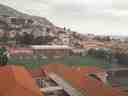
    To spot Campo do Adelino Rodrigues, look for a large green football field bordered by stands on three sides, with a brick and white grandstand building in the middle, nestled right in the city center against a backdrop of red-tiled roofs and rolling hills. Welcome to Campo do Adelino Rodrigues, the beating heart of local football in Funchal! Picture yourself standing here decades ago, as the dusty earth and clay pitch kicked up little clouds under the boots of players, and local fans filled the stands, cheering for their neighborhood heroes. This stadium, lovingly known as Campo do Liceu, has always been more than just a pitch-it's a place where legends like União da Bola trained, where students from the University of Madeira tried their luck, and where the community came together, rain or shine. The ground got a fancy makeover in 2003, swapping earth for sleek synthetic turf, so no more muddy knees! After a long spell at other stadiums, União called this their home again in 2019, bringing the energy right back to these stands. Even famous teams like Marítimo and Nacional have sheltered here while waiting for their own stadium to be rebuilt. Listen closely-you might almost hear echoes of old victory roars. Being here, you’re part of a decades-long football story… just watch out for the wild balls flying your way!

    Abrir página dedicada →
  2. To spot the Fortress of São Tiago, just look toward the sea and you’ll see a bright yellow, castle-like structure with corner turrets, rising up at the edge of the Old Town’s…Leer másMostrar menos

    To spot the Fortress of São Tiago, just look toward the sea and you’ll see a bright yellow, castle-like structure with corner turrets, rising up at the edge of the Old Town’s rocky coastline-it’s hard to miss against the dramatic cliffs in the background! Welcome to the iconic Fortress of São Tiago! Imagine yourself here in the early 1600s: the salty breeze tingles your nose, seagulls wheel overhead, and the fort’s thick yellow walls gleam defiantly above the Atlantic waves. This place was built for a serious purpose-defending Funchal from pirates and invaders, and let’s be honest, I think every city secretly wants a super-cool fortress to keep the neighbors in check. The first stone was laid when the Filipino dynasty ruled Portugal, and after years of construction and a few redesigns by engineers Mateus Fernandes and Jerónimo Jorge, the fortress was officially finished in 1614-if you’d look above the original gate, you’d see the date carved right into the stone, like a proud signature from four centuries ago. Back then, cannons were mounted on three separate levels, and the fortress was the proud guardian of Funchal’s eastern flank. Soldiers tromped up and down the echoing staircases, and if you peered out to sea, maybe you’d spot a menacing pirate ship on the horizon-or just some disappointed British sailors wishing for sunnier holidays. The 17th and 18th centuries were lively times here. The fortress grew bigger, got fresh new walls and a flashier entrance, and saw many changes in command. Some captains were chosen "ad honorem," with the strict job of keeping the place spotless and the guards alert-not so easy with all that wind and salty spray! It wasn’t just war, though. In 1801, British troops stormed onto Madeira with three ships, filling these barracks with 3,500 redcoats and the unmistakable sound of boots on stone. Only a couple of years later, a monstrous flood swept through Funchal, and the town’s governor packed the fortress with families who’d lost everything-a stone sanctuary against both cannonballs and the fury of nature. Even the local troublemakers got to know these walls. In 1803, João de Freitas da Silva was imprisoned here after escaping his convent. It seems this fortress has seen just about every kind of drama! If you fast-forward to the 1900s, things get a little more royal (and a bit fancier). King Carlos I of Portugal paid a visit, ate lunch in a glorious tent set up on the parade ground, and if you look closely today, you can still find the iron rings in the ground that once held the royal canopy in place. Over the decades, this fortress has served as a barracks, a meeting place for war veterans, even a hangout for lancers on horseback! Once the cannons quieted for good, São Tiago embraced a new life. In 1992, after a sparkling restoration, it became home to the Museum of Contemporary Art, filling the old stone halls with splashes of color and creativity instead of gunpowder. You’re now standing in a monument of regional interest-one that has protected, sheltered, and inspired generations of Madeirans. Pretty impressive, for a little yellow castle by the sea!

    Abrir página dedicada →
  3. To spot the Jewish Cemetery of Funchal, look for a dark gate framed by a curved grey-and-white wall with a round emblem at the top-right on Rua do Lazareto. Now, imagine a quiet…Leer másMostrar menos

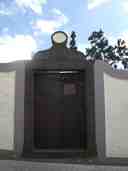
    To spot the Jewish Cemetery of Funchal, look for a dark gate framed by a curved grey-and-white wall with a round emblem at the top-right on Rua do Lazareto. Now, imagine a quiet hush falling as you stand here, a place where winds from the Atlantic once carried the hopes and voices of families who arrived from Morocco in 1819. These were wine lovers, embroidery experts-and let’s not forget, determined dreamers-who built lives on Madeira’s hills. In 1851, thanks to Judah Allof from Britain and Isaac Esnaty from Morocco, this cemetery opened its gates. Back then, the streets buzzed with merchants and tailors, but here, it was a peaceful resting spot for both Sephardic and Ashkenazi Jews. The story took a twist during World War II with families rushing from Gibraltar, escaping danger-imagine the mix of nerves and relief! Among them, about 200 Jewish people found safety in Funchal. Over the years, 38 were laid to rest here, their stories echoing from 1854 until 1976. For a long time, nature took over, vines creeping, stones crumbling-until a rescue mission in 2015 restored dignity with help from across Europe. Today, you’re not just seeing a cemetery, but stepping into a chapter of endurance, change, and hope on Madeira.

    Abrir página dedicada →
  4. Right before you is the Funchal Meteorological Observatory-a place where weather is big business and numbers are always up in the air! Imagine the salty, Atlantic breeze swirling…Leer másMostrar menos

    Right before you is the Funchal Meteorological Observatory-a place where weather is big business and numbers are always up in the air! Imagine the salty, Atlantic breeze swirling around, but here, people make it their daily job to measure every gust, droplet, and sunbeam. Since its founding, this spot has been the island’s weather compass, now managed by the dedicated Vítor Prior and his team of sky-watchers with gadgets that sound like they belong on a spaceship: pluviómetros for rain, anemographs for wind, spectrophotometers for sunlight, and even seismographs that listen for earthquakes. The Observatory isn’t just about forecasting whether you need an umbrella; it carefully tracks everything from how sticky the air feels to how hard the sun is shining, thanks to its heliógraph. It all helps Madeira’s farmers, tourists, pilots, and, let’s face it, anyone trying to plan a picnic. The Observatory once relied on old-school thermometers and hand-scribbled notes; now, it’s a high-tech science hub keeping an eye on the skies for all of Madeira. Next time you check the weather, remember-the real magic happens here, not in your phone. And honestly, predicting Atlantic weather on an island isn’t just science. Sometimes, it’s a bit of guesswork mixed with hope!

    Abrir página dedicada →
  5. Spot the Fort of Louros just ahead-look for a rugged old stone wall smothered in green vines, with a weathered watchtower poking up from one corner, keeping silent guard over the…Leer másMostrar menos

    Spot the Fort of Louros just ahead-look for a rugged old stone wall smothered in green vines, with a weathered watchtower poking up from one corner, keeping silent guard over the little road below. Now, let’s transport ourselves back to the late 1600s: the salty air is thick with tension, whispers of foreign ships off the coast, and along comes Eusébio da Silva Barreto-a man whose name sounds like it should come with a plume and a flourish! He pours his own money into building this plucky little fort, determined to protect the inlet and the stream here at Louros from any would-be invaders during the fierce War of Portuguese Restoration. Imagine the sharp clank of armor, the stomp of boots, and Eusébio himself watching the horizon, probably muttering about the cost of cannonballs. But time is a trickster: just as the fort’s cannons grow cold and silent, along comes a new idea. The Governor of Madeira starts dreaming, not of soldiers, but of silken threads! He wants to turn this battlement into a silk factory-cocoons instead of cannonballs, spinning wheels instead of gunpowder. Standing here, you can almost picture the awkward handover: a soldier hands a mulberry leaf to a silkworm and says, “The defense of Madeira is now in your hands!”

    Abrir página dedicada →

Preguntas frecuentes

¿Cómo empiezo el tour?

Después de la compra, descarga la app AudaTours e ingresa tu código de canje. El tour estará listo para comenzar de inmediato - solo toca play y sigue la ruta guiada por GPS.

¿Necesito internet durante el tour?

¡No! Descarga el tour antes de empezar y disfrútalo completamente sin conexión. Solo la función de chat requiere internet. Recomendamos descargar en WiFi para ahorrar datos móviles.

¿Es un tour guiado en grupo?

No - esta es una audioguía autoguiada. Exploras de forma independiente a tu propio ritmo, con narración de audio reproduciéndose en tu teléfono. Sin guía, sin grupo, sin horario.

¿Cuánto dura el tour?

La mayoría de los tours toman 60–90 minutos para completar, pero tú controlas el ritmo completamente. Pausa, salta paradas o toma descansos cuando quieras.

¿Qué pasa si no puedo terminar el tour hoy?

¡No hay problema! Los tours tienen acceso de por vida. Pausa y continúa cuando quieras - mañana, la próxima semana o el próximo año. Tu progreso se guarda.

¿Qué idiomas están disponibles?

Todos los tours están disponibles en más de 50 idiomas. Selecciona tu idioma preferido al canjear tu código. Nota: el idioma no se puede cambiar después de generar el tour.

¿Dónde accedo al tour después de comprarlo?

Descarga la app gratuita AudaTours desde App Store o Google Play. Ingresa tu código de canje (enviado por email) y el tour aparecerá en tu biblioteca, listo para descargar y comenzar.

verified_user
Satisfacción garantizada

Si no disfrutas el tour, te reembolsamos tu compra. Contáctanos en [email protected]

Paga de forma segura con

Apple PayGoogle PayVisaMastercardPayPal

AudaTours: Audioguías

Tours a pie autoguiados entretenidos y económicos

Probar la app arrow_forward

Amado por viajeros de todo el mundo

format_quote Este tour fue una excelente manera de ver la ciudad. Las historias fueron interesantes sin parecer demasiado guionadas, y me encantó poder explorar a mi propio ritmo.
Jess
Jess
starstarstarstarstar
Tour de Tbilisi arrow_forward
format_quote Esta fue una forma sólida de conocer Brighton sin sentirme como un turista. La narración tenía profundidad y contexto, pero no se excedía.
Christoph
Christoph
starstarstarstarstar
Tour de Brighton arrow_forward
format_quote Empecé este tour con un croissant en una mano y cero expectativas. La app simplemente vibra contigo, sin presión, solo tú, tus auriculares y algunas historias geniales.
John
John
starstarstarstarstar
Tour de Marsella arrow_forward

Audioguías Ilimitados

Desbloquea el acceso a TODOS los tours del mundo

0 tours·0 ciudades·0 países
all_inclusive Explorar Ilimitado