
Audioguía de Milán: Diseño, Historia e Innovación en el Municipio 8
Una iglesia de hormigón se alza como una corona esperanzadora desde los frondosos suburbios de Milán, mientras un río olvidado se desliza en secreto bajo las calles de la ciudad, recordatorios de que esta metrópolis siempre esconde más de lo que muestra. Esta audioguía autoguiada te llevará a través de los sueños de posguerra más audaces de Milán y por caminos donde la mayoría de los viajeros nunca ponen un pie. Escucha historias de renacimiento y vías fluviales enterradas, explora legendarios pabellones de exposiciones que se transformaron de la noche a la mañana para afrontar nuevas crisis, y sé testigo de cómo la historia se aferra al rostro siempre cambiante de la ciudad. ¿Por qué una iglesia de vanguardia esperó casi 25 años para su consagración? ¿Qué secretos se agitan bajo tus pies en el silenciosamente obstinado arroyo Pudiga? ¿Y qué recinto ferial desaparecido zumbaba una vez con inventos que cambiaron el mundo, solo para reaparecer como un salvavidas en la hora más oscura de Milán? Muévete de jardines bañados por el sol a maravillas de cristal y acero, a través de salones con eco y junto a la memoria viva, mientras cada paso desvela drama y reinvención. Descubre cómo la resiliencia da forma a cada rincón que pasas. Comienza ahora y deja que Milán revele las historias que susurra a aquellos dispuestos a mirar dos veces.
Vista previa del tour
Sobre este tour
- scheduleDuración 30–50 minsVe a tu propio ritmo
- straighten4.9 km de ruta a pieSigue el camino guiado
- location_on
- wifi_offFunciona sin conexiónDescarga una vez, úsalo en cualquier lugar
- all_inclusiveAcceso de por vidaReprodúcelo en cualquier momento, para siempre
- location_onComienza en Iglesia de Santa María Nascente
Paradas en este tour
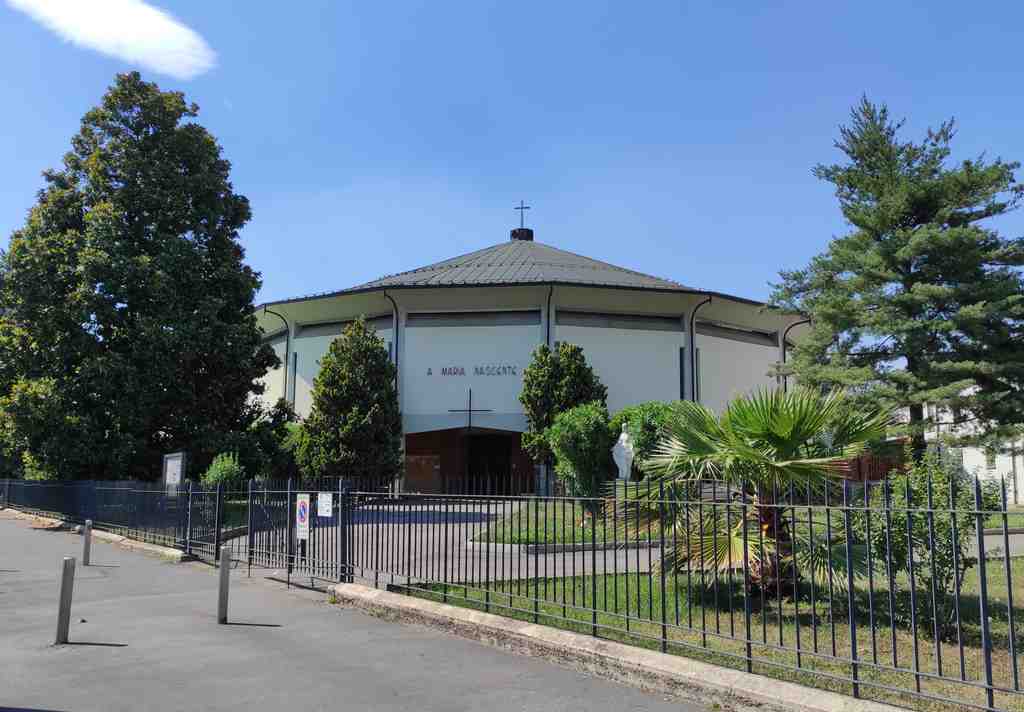
You’re looking for a round, modern church with a sloping roof, pale walls, and a cross perched on top, nestled behind a garden and almost peeking out from behind rows of green…Leer másMostrar menos
You’re looking for a round, modern church with a sloping roof, pale walls, and a cross perched on top, nestled behind a garden and almost peeking out from behind rows of green trees-you can spot it by its circular shape and the sign “A MARIA NASCENTE” above the entrance! Welcome, traveler, to the Church of Santa Maria Nascente, the architectural heart of the QT8 district! Picture yourself standing here in the late 1940s-Milan is still licking its wounds from the Second World War, and the city’s greatest minds are imagining new ways to rebuild, to bring community and hope back to every corner. It’s 1947, and the buzz of the Triennale fills the air-imagine a flurry of excited voices as architects Vico Magistretti and Mario Tedeschi dream up something striking: not a traditional church, but a symbol of rebirth at the center of a brand-new neighborhood! Step closer, and let the modern lines work their magic. This isn’t your classic, fortress-like cathedral. The church was drawn up for the QT8-a neighborhood literally built as a model for postwar living, created practically from scratch! Fun fact: the first church design competition actually wanted to place it somewhere else, but Magistretti and Tedeschi’s plan was so clever, it adapted gracefully to its final home, right here, where you’re standing now. In 1953, the blueprints became bustling construction, and only two years later-almost like a race against the clock-the church complex opened its doors to the public in 1955. It might surprise you, but the church was almost like an unfinished symphony: open since 1955, it wasn’t actually consecrated until 1980, when Cardinal Carlo Maria Martini finally sealed its destiny. So if the building seems peaceful and timeless today, remember, it waited a quarter century for its final blessing-talk about being fashionably late to your own inauguration! Look up at the bold shape-the circular base is actually made by shifting two big, offset circles: one for the church itself, and another for the porch that wraps around, as if the building is giving the world a big, concrete hug. The whole thing is held up by sixteen giant pillars of exposed, bare concrete, so no nonsense here-just modern strength on display! Up top, a band of windows lets the daylight peek in, creating a ring of gentle light under the big tiled roof. Inside, there’s a cozy warmth from exposed bricks-no hiding behind paint! Curved walnut panels form the backdrop for the women’s gallery, while a handful of steps take you up to the circular altar at the very heart, crowned by a wooden crucifix all the way from Val Gardena. Glance left, and there’s a little surprise: a modern bronze altar tucked inside the circular baptistery, its copper roof glittering in the sun like a hidden gem. Don’t miss the high-up balcony above the door: that’s where the mighty Tamburini organ lives, a 1950s marvel with pipes that could shake these walls, and keys ready for the next musical genius who walks through the door. This church is Milan’s postwar optimism carved in brick, concrete, and hope-a round beacon of community that’s been waiting to greet visitors (fashionably late or not!) for nearly seventy years. Now, shall we keep moving and see what else this remarkable neighborhood has to share?
Abrir página dedicada →To spot Fieramilanocity, just look for the enormous, futuristic structure with a bold roof, glass cylinders on each side, and the giant, colorful “fieramilanocity” sign across the…Leer másMostrar menos
To spot Fieramilanocity, just look for the enormous, futuristic structure with a bold roof, glass cylinders on each side, and the giant, colorful “fieramilanocity” sign across the very top-it’s almost impossible to miss! Welcome! Standing here, you’re right in front of one of Milan’s great marvels of modern architecture. Take in the size-four vast exhibition pavilions cover a whopping 43,000 square meters! But don’t let its sleek, industrial look fool you; this place is positively bursting with stories old and new. Picture the year: 1906. Milan is buzzing with excitement. The city is celebrating the grand opening of the Simplon Tunnel through the Alps and the arrival of the Exposition Universelle. Two different zones pop up-one right on this very ground for all things science and industry, and another over at Parco Sempione, where Milan’s creative dreams take off like doves at a wedding. Back then, pavilions covered this district, humming with crowds and inventions-while over in Sempione, art lovers wandered leafy paths and discovered wonders. You could travel between these zones on a quaint little electric train! Sadly, the train-and the old freight yard it once crossed-are now just chapters in a city’s ever-changing story. By the 1920s, Milan’s fair was gaining fame across the world. The crowd packed the old grounds near Porta Venezia, right up until 1923, when the grand exhibitions made this place their permanent home. For decades, the so-called Fiera Campionaria saw every corner of the globe meet right where you’re standing now. This was where deals were struck, dreams were launched, and new inventions dazzled wide-eyed visitors. The Fiera even had a go at changing its name-“Fiera d’aprile”-until it stretched its fair days across the whole year! Fast forward to the 1990s, and things start to change. The Alfa Romeo factories nearby close, making room for Fieramilanocity to grow. Enter award-winning architect Mario Bellini, who gives us these northwestern pavilions connected by airy bridges that cross busy roads, and a lush rooftop garden of hornbeams above Viale Scarampo. Peer upwards-see that huge pediment facing Piazza Gino Valle and the shining spiral staircases? Bellini called the new congress center’s swooping metal roof the “comet”! You’re right at the edge of Milanese innovation. But don’t blink! In the 2000s, most major fairs packed up and moved to the shiny new Rho-Pero grounds. Bit by bit, the grand old pavilions and their legendary Hall 20 disappeared, their ruins replaced by the soaring towers and green spaces of the CityLife district. When demolition teams finally took down Hall 20, the echoes must have sounded like the end of an era. And just when you thought Fieramilanocity’s story was over, in 2020 it transformed yet again-this time into a lifeline for the city as it battled COVID-19. In just weeks, these halls became a fully functioning hospital, with 205 intensive care beds ready to help save lives-a testament to Milan’s ability to innovate and adapt. So here’s Fieramilanocity: a place that’s been a stage for world’s fairs, a house of miracles, and a literal lifesaver-sometimes all in the same century. Not bad for a place with a roof you could practically land a UFO on, right? And who knows what the next chapter will bring!
Abrir página dedicada →
Mostrar 5 paradas másMostrar menos paradasexpand_moreexpand_less
Right in front of you, you’ll spot two modern, glassy office buildings framing a broad open plaza, with striking stripes of red on the left and a gigantic emblem on the right-just…Leer másMostrar menos
Right in front of you, you’ll spot two modern, glassy office buildings framing a broad open plaza, with striking stripes of red on the left and a gigantic emblem on the right-just follow the lines of trees and the busy road, and you can’t miss it! Welcome to Portello, once the roaring heart of Italy’s car-making dreams. Picture this area not so long ago: it was alive with the clatter of tools, the gleam of new Alfa Romeos rolling off the line, and a steady cloud of engine smells drifting on the breeze. Back then, you might have heard the shouts of factory workers swapping stories over espresso, or the determined silence of designers conjuring up racing legends. This was ground zero for Alfa Romeo, Darracq, Citroën, and Fiat-names that made car lovers’ hearts rev just a little faster. Time put the brakes on the old factories, but Portello refused to gather dust. Instead, it got a turbocharged makeover! Today, this area pulses with new energy thanks to one of Milan’s boldest urban transformations. Imagine swapping exhaust fumes for the scent of fresh grass in Parco Vittoria, the district’s modern park, or wandering through what’s set to be the city’s largest plaza. And somewhere nearby, shoppers hustle in one of Milan’s trendiest malls. There’s a certain electric vibe-the hum of a place inventing itself, right in the shadow of its racing past. But here’s a curious twist: the name “Portello” comes from a humble country road, once winding quietly out toward Rho before even the roar of racing engines. That old “Strada del Portello” connected fields and villages. Now, it’s become a major artery, while Portello itself sits right next door to the ultra-futuristic CityLife district. And just when you thought things couldn’t get faster-this very ground once hosted the 1947 Italian Grand Prix, engines howling in a blur of courage and competition. From country lane to racetrack to urban showpiece, Portello wears its layers of history like a champion’s trophy-always surprising, and always in motion.
Abrir página dedicada →If you look just ahead, you’ll spot a large, bold “ALFA ROMEO” sign perched high at the entrance gates, with a long, rectangular, two-story factory building stretching out behind…Leer másMostrar menos
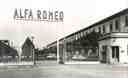
If you look just ahead, you’ll spot a large, bold “ALFA ROMEO” sign perched high at the entrance gates, with a long, rectangular, two-story factory building stretching out behind it-just follow the fence-lined driveway between the rows of trees and you can’t miss it! Now, take a moment to soak up the scene-imagine yourself standing here over a hundred years ago, right at the beating heart of Italy’s automobile dreams. This is the legendary Portello Alfa Romeo plant, where Milan’s streets once echoed with the clatter of engines and the hopes of thousands of workers. Built way back in 1906, when this part of Milan was more open fields than concrete jungle, the very air would have smelled of hot oil, new steel, and, if you were lucky, the sharp thrill of innovation. Picture a young engineer in a crisp shirt, perhaps Giuseppe Merosi himself, sketching out the very first “24 HP” model, while workers in flat caps and overalls push carts piled with crankshafts through these gates. In those days, the factory wasn’t just a workplace-it was a symbol of Italian ingenuity, and the site was chosen for its perfect placement: right alongside major trade routes to France, Switzerland, and the rest of northern Italy. No wonder the area quickly filled with other car companies-FIAT, Citroën, Isotta Fraschini… it was like the Silicon Valley of vintage engines! But trouble never waits long. In 1909, just three years after it was founded, the original French backers pulled the plug. Instead of lights out, Milan’s bankers swept in and bought the place, transforming it into “A.L.F.A.”-the Anonima Lombarda Fabbrica Automobili. With a new name, 250 hopeful employees, and big dreams, they aimed to roll out 300 new chassis a year. That might sound modest, but in Italy, building cars was still an art, not yet the mass production machine roared to life over in America by Ford. Just when they were hitting their stride, World War I slammed on the brakes. Suddenly, the plant wasn’t making cars for Milanese families anymore-it was producing trucks, air compressors, and, yes, even flamethrowers and airplane engines for the war effort. You wouldn’t have wanted to linger at the gates then, as the hot rhythms of assembly lines were joined by the thunder of heavy machinery and the scatter of marching boots. By 1919, after the dust of war had settled, over 2,000 people worked inside these walls. The factory’s fortunes rose and fell with the wild tides of Italy’s twentieth century. After the horror of the Great War, the Portello plant tried to find its feet: tractors for a nation that badly needed to feed itself, beautiful new car models for an audience hungry for a hint of style after years of hardship. Alas, the tractor “Romeo” didn’t exactly sweep the market-perhaps it just wasn’t as good at cornering as Alfa’s sportier models! Still, the 1920s and 30s brought a golden age. Race cars like the RL and the legendary 6C thundered out of these gates, engines tuned for both style and speed. If you listen hard enough, you might imagine the whine of an 8C engine or the cheers of crowds as Alfa cars whipped around the banking at Monza. At the same time, the plant boomed with heavy-duty production-buses, trucks, even aircraft engines, with thousands of workers bustling day and night beneath these roofs. By 1937, over 6,000 people were clocking in, and the plant stretched even further north, eventually divided by a tunnel running beneath the street-so you never had to dodge Milanese traffic to get from engine block to finished car. The Second World War brought devastation. The plant’s importance made it a target, and in the bombings of 1943-44, much of the old Portello was destroyed. But like any good Milanese, the factory dusted itself off and started again. When the war ended, the site was rebuilt from the ground up, and the air filled once more with the clang of tools and the laughter of workers who finally hoped for peace. The 1950s and 60s saw the rise of new legends: the Giulietta, the 1900, even a French import, the Renault Dauphine, assembled right here as factories around the city celebrated an age of prosperity. Conveyor belts rolled in, with sparkling new automation-out went the old days of handbuilt chassis; in came the era of crisp uniforms and teamwork, with assembly lines humming like mechanical orchestras. By then, Milan was growing rapidly, and before long, the city swallowed the countryside all around. Space got tight, and the decision was made: Alfa’s future would be at the bigger Arese plant outside town. Portello’s last cars, including the prized Alfa Romeo 2600, rolled out in the 1960s. By the 1980s, only memories and a handful of loyal workers remained. Piece by piece, the plant was dismantled, and finally, in 2004, the last walls were brought down. Yet for all those years, this was not just a place where cars were made-it was a place where generations found hope, families built futures, and Milan wrote itself into the legends of the road. So, as you stand here, imagine the clang of steel, the whirr of engines, and the hum of dreams that once echoed from these very gates.
Abrir página dedicada →Look for a strikingly modern, almost fortress-like building with a somewhat plain, curved brick facade-if you spot a structure that seems to bulge out toward you and isn’t showing…Leer másMostrar menos
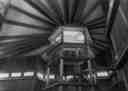
Look for a strikingly modern, almost fortress-like building with a somewhat plain, curved brick facade-if you spot a structure that seems to bulge out toward you and isn’t showing off too many ornate decorations, you’ve arrived at Sant'Ildefonso. Now, let me whisk you back to the mid-1950s-imagine Milan buzzing with optimism, right after a long and hard period of rebuilding from war. Amid the city’s mix of classical and modern shapes, this church rises up like a bold experiment, the dreamchild of architect Carlo De Carli. The art here isn’t about gold or grand paintings, but about space reaching up, up, up-like a prayer in bricks and beams! Sant'Ildefonso was born out of big ideas: it was one of 22 new churches commissioned to celebrate an exciting new chapter in the Catholic Church, the Second Vatican Council. And though it’s dedicated to the 7th-century St. Ildefonsus of Toledo, it holds a special memory for Cardinal Ildefonso Schuster, the beloved archbishop of Milan, a man so holy he even got the "blessed" stamp. Step a little closer, and you’ll notice something odd-the building almost hides its true form. From above, it’s shaped by a hexagon, but right in front, all you see is a no-nonsense curve of brick, looking like it’s keeping a secret. But peek inside, and you’ll get a treat: a main altar shaped like a six-sided gem, crowned with three layers of catwalks on tall columns-imagine balconies you’d expect gladiators to leap off, or maybe the world’s fanciest treehouse for saints! Light pours down from a giant skylight, making the altar glow no matter the weather. The ground level? Not a window to be found, so it feels private, a little mysterious. But each higher floor lets in more sunlight, as if you’re climbing out of the darkness toward heaven. Even the floor is daring-stripes of white stone shoot through the wood, like starbursts beneath your feet. This isn’t just a church; it’s a monument to the search for understanding, a place that invites you to look up, wander, and maybe, lose yourself in wonder-don’t judge a church by its cover, right?
Abrir página dedicada →To spot the Velodromo Vigorelli as you walk, look for a giant oval-shaped building with a pale greenish roof and curved edges, sitting boldly among the city blocks-just ahead of…Leer másMostrar menos
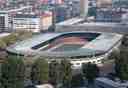
To spot the Velodromo Vigorelli as you walk, look for a giant oval-shaped building with a pale greenish roof and curved edges, sitting boldly among the city blocks-just ahead of you. Alright, you’ve made it to the legendary Velodromo Vigorelli! Imagine yourself in front of this semi-covered oval where speed, sweat, and a bit of rock ‘n’ roll history have all left their mark. This stadium first opened its gates back in 1935, built by Vigorelli Cycles, and was instantly recognized as a temple of cycling, but believe me-its story has a few unexpected twists. Picture Milan during the late 1930s. Crowds roaring, tires hissing against the steep wooden track, as riders set their sights on breaking the fabled hour record. For more than three decades, the world’s best cyclists came here to ride the furthest they could in just one hour. People held their breath as legendary names like Giuseppe Olmo, Fausto Coppi, and Jacques Anquetil smashed record after record, racing faster than most people’s scooters! Not just for solo heroes-Ernest Mills and Bill Paul zipped around in tandem back in 1937, setting a jaw-dropping one-hour tandem record, surely making every other cyclist think, “Maybe next time, I’ll bring a friend!” Of course, life here wasn’t all smooth rides. During World War II, a bombing raid by the RAF set the velodrome ablaze. Smoke and flames rose over Milan, threatening to erase this sporting cathedral forever. But the people of Milan are nothing if not stubborn; they rebuilt-just like dusting off after a crash on the track. Soon enough, the velodrome was back, faster and more famous than ever. The stadium holds up to 9,000 fans, and while these days you’re more likely to see American football here (home of the Milano Seamen and Rhinos Milano), cycling still echoes in its heart. Just imagine the roar when the Beatles played here in 1965, or the mayhem during Led Zeppelin’s 1971 concert, when melody gave way to a full-scale riot! There's never a dull moment in this place. Fast or slow, with music, bikes, or footballs, the Vigorelli stands as a monument to passion, endurance, and the spirit of Milan. As you gaze at its sweeping curves, remember: this isn’t just a stadium-it’s a survivor, a champion, and probably, at some point, the loudest place in the city.
Abrir página dedicada →Right in front of you, you’ll see a giant, creamy-white building with tall windows and an arched, glass-and-metal dome topping it off-if you spot a structure that looks like it…Leer másMostrar menos
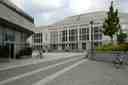
Right in front of you, you’ll see a giant, creamy-white building with tall windows and an arched, glass-and-metal dome topping it off-if you spot a structure that looks like it could swallow a couple of football fields for breakfast, you’re in the right place! Now, let me take you back almost a hundred years. Imagine you’re in Milan in 1923, the air is buzzing with excitement and you’re standing outside the freshly opened Palazzo delle Scintille-The Palace of Sparks! Built in the elegant Liberty style by Paolo Vietti-Violi, this was the very first sports palace in Milan, and trust me, back then it seemed almost magical. People would marvel at the enormous, shimmering steel-and-glass dome rising 32 meters above their heads… and rumor has it, even the pigeons flew a little slower to get a better look. Picture the energy when crowds rushed in for legendary events, like Italy’s first-ever world title boxing match in 1933. Imagine the sweat, cheers, and tension as Panama Al Brown battled it out with Italy’s own Domenico Bernasconi under those soaring arches-if those walls could talk, they’d tell stories that would knock your socks off! And like any good Milanese, the building has reinvented itself more times than a pasta recipe. In the 1930s, it transformed into Pavilion 3 of the Milan Fair, welcoming inventors and dreamers from all around the world. After World War II, when bombs had shattered La Scala’s doors, the Palazzo opened its arms to opera fans, filling its vast halls with music and applause. And, just when you think it’s done showing off, in 2021, it became Italy’s biggest COVID-19 vaccination center-so, believe it or not, these walls have heard as many “Ouch!” as “Bravo!” Now, Palazzo delle Scintille is part of the ultra-modern CityLife district, gleaming as bright as the name suggests. So, take a moment-look up, feel history echoing around you, and remember: everything here once began with just a spark!
Abrir página dedicada →
Preguntas frecuentes
¿Cómo empiezo el tour?
Después de la compra, descarga la app AudaTours e ingresa tu código de canje. El tour estará listo para comenzar de inmediato - solo toca play y sigue la ruta guiada por GPS.
¿Necesito internet durante el tour?
¡No! Descarga el tour antes de empezar y disfrútalo completamente sin conexión. Solo la función de chat requiere internet. Recomendamos descargar en WiFi para ahorrar datos móviles.
¿Es un tour guiado en grupo?
No - esta es una audioguía autoguiada. Exploras de forma independiente a tu propio ritmo, con narración de audio reproduciéndose en tu teléfono. Sin guía, sin grupo, sin horario.
¿Cuánto dura el tour?
La mayoría de los tours toman 60–90 minutos para completar, pero tú controlas el ritmo completamente. Pausa, salta paradas o toma descansos cuando quieras.
¿Qué pasa si no puedo terminar el tour hoy?
¡No hay problema! Los tours tienen acceso de por vida. Pausa y continúa cuando quieras - mañana, la próxima semana o el próximo año. Tu progreso se guarda.
¿Qué idiomas están disponibles?
Todos los tours están disponibles en más de 50 idiomas. Selecciona tu idioma preferido al canjear tu código. Nota: el idioma no se puede cambiar después de generar el tour.
¿Dónde accedo al tour después de comprarlo?
Descarga la app gratuita AudaTours desde App Store o Google Play. Ingresa tu código de canje (enviado por email) y el tour aparecerá en tu biblioteca, listo para descargar y comenzar.
Si no disfrutas el tour, te reembolsamos tu compra. Contáctanos en [email protected]
Paga de forma segura con 


