AudaTours logoAudaTours

Audioguía de Newcastle upon Tyne: Puentes, Leyendas y el Corazón del Tyne

Guía de audio15 paradas

Una fortaleza proyecta su sombra donde las legiones romanas una vez montaron guardia y los trenes de vapor tronaron por primera vez sobre hierro y piedra. Esta audioguía autoguiada te lleva a través de las arterias ocultas de Newcastle upon Tyne, revelando historias que la mayoría de los visitantes nunca escuchan. ¿Qué secretos susurraron los rebeldes desesperados dentro de los imponentes muros de El Castillo durante un asedio que amenazó el destino de la ciudad? ¿Quién orquestó una audaz rivalidad de ingeniería a orillas del río Tyne, con fortunas y reputaciones pendiendo de un hilo? ¿Y por qué el nombramiento de un obispo en 1882 todavía resuena en curiosos registros eclesiásticos dispersos por archivos polvorientos? Camina bajo puentes monumentales, sube antiguos escalones de piedra y deambula por calles donde escándalos políticos, levantamientos olvidados y rituales misteriosos moldearon generaciones. Redescubre Newcastle como una ciudad de visiones audaces, intriga sombría y comienzos inesperados. ¿Listo para seguir los pasos de los arriesgados de la historia? Deja que los ecos del pasado de Newcastle guíen tu aventura hoy.

Vista previa del tour

map

Sobre este tour

  • schedule
    Duración 40–60 minsVe a tu propio ritmo
  • straighten
    3.6 km de ruta a pieSigue el camino guiado
  • location_on
    UbicaciónCawnpore, India
  • wifi_off
    Funciona sin conexiónDescarga una vez, úsalo en cualquier lugar
  • all_inclusive
    Acceso de por vidaReprodúcelo en cualquier momento, para siempre
  • location_on
    Comienza en Puente de Alto Nivel, Río Tyne

Paradas en este tour
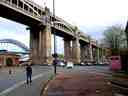
  1. As you're coming up to the High Level Bridge, look for a towering stretch of pale stone pillars and a long row of iron arches above you. The bridge is seriously hard to miss -…Leer másMostrar menos

    As you're coming up to the High Level Bridge, look for a towering stretch of pale stone pillars and a long row of iron arches above you. The bridge is seriously hard to miss - it’s huge, almost like a long, raised skeleton running from one riverbank to the other. Just tilt your head back, and you’ll spot the railings and upper roadways stretching far over your head. You’ll see another arched green bridge nearby too, but the High Level Bridge is the one with stone columns and boxy ironwork on top. Now, picture yourself about 175 years ago: the River Tyne below, the clang of metalworks in the air, and the sight of brand-new iron bones rising above the water. This bridge was the dreamchild of Robert Stephenson and the Hawks family - you might say they really “bridged” the gap between Gateshead and Newcastle! Sorry, couldn’t help myself. Queen Victoria herself came to open it, which probably meant the workers had to hide their lunch pies and shine their boots. The bridge's design was a real game-changer: it carries trains up top and cars and people below. Imagine the first steam trains rolling across, smoke pouring into the sky, while carriages and townsfolk strolled along just underneath. It wasn't just clever engineering; this bridge played a starring role in connecting Newcastle to London and Scotland. Back then, railway companies were scrambling like kids after the last biscuit to control the best routes. Money problems, wild plans, and a fair bit of competitive scheming brought the bridge to life. They even planned to run trains up steep inclines with ropes and steam engines-just imagine that noise and commotion! So as you stand beneath these iron arches, think about the ambition, the noise, and the excitement - and maybe be glad you don’t have to dodge bits of coal and steam as you walk by. Ready to head across or shall we stay and soak in the view a little longer? For a more comprehensive understanding of the first bridge proposals, definite plans or the design, engage with me in the chat section below.

    Abrir página dedicada →
  2. Just ahead of you, rising up like a silent giant from the city, is The Castle, Newcastle. If you’re looking for it, imagine a massive stone rectangle, tall and strong, with four…Leer másMostrar menos

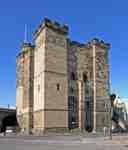
    Just ahead of you, rising up like a silent giant from the city, is The Castle, Newcastle. If you’re looking for it, imagine a massive stone rectangle, tall and strong, with four towers sticking up from the corners like watchful guards. The castle has an ancient, sturdy look, with creamy-yellow walls patched with darker stone, almost like it’s collected stories from every century on its surface. The steps at the front are broad, leading up like an invitation-or maybe a warning-from history itself. Now, while you stand here and gaze up at its walls, let me take you back to a time when knights clanked around in armor and arrows whistled through the air. This isn’t just any old building-it’s the very place that gave Newcastle its name. The first fortress here was Roman, called Pons Aelius, perched to guard the very first bridge over the Tyne. You can almost imagine Roman soldiers peering out for danger, squinting into the morning mist. Centuries later, Robert Curthose, who had an epic name and a habit of picking fights, built a wooden castle right here. That was after he’d gone off chasing Scots and come back victorious. Now, if you listen closely, you might just hear the crackle of flaming torches as Norman builders worked through chilly nights. But wooden castles burn, so in the 1100s, King Henry II said, “Let’s go stone!” The result is what you see towering above you now: the Keep. Not only did it keep enemies out, it kept kings and rebels in line, too. Eventually, the Black Gate was added, making it nearly impossible for invaders to stroll in uninvited-unless, of course, they had a really convincing disguise. And here’s the twist: neither the original Roman fort nor the first wooden castle has survived above ground. History swallowed them up, but the Keep and the Black Gate stubbornly stand, watched over these streets for centuries. Imagine the secrets these stones could tell-of ghostly monks from Monkchester, of fierce northern battles, and maybe even a runaway chicken or two during a siege. So, while you soak up the atmosphere, remember you’re standing on the very spot where Newcastle was born. Don’t worry, you’re perfectly safe-unless you happen to time travel back to the 1100s, in which case, I'd recommend not picking a fight with a knight! To expand your understanding of the norman castle, new stone castle or the english civil war, feel free to engage with me in the chat section below.

    Abrir página dedicada →
  3. You’re now standing in front of the Diocese of Newcastle - the heart of the Church of England here in Newcastle upon Tyne. Imagine the scene back in 1882, when this diocese first…Leer másMostrar menos

    You’re now standing in front of the Diocese of Newcastle - the heart of the Church of England here in Newcastle upon Tyne. Imagine the scene back in 1882, when this diocese first came into being: the city bustling, smoke pouring from tall chimneys, and a sense of real excitement in the air. The Bishoprics Act, which sounds much more exciting if you read it in a dramatic voice - “41 & 42 Vict. c. 68!” - helped carve out this very diocese for the rapidly growing North East. This Diocese is kind of like the referee for the spiritual lives of everyone living north of the River Tyne, across historic Northumberland, and even stretching into a bit of Cumbria. The headquarters? Newcastle Cathedral, which way back in the day was just your everyday parish church of St. Nicholas. Don’t worry, there’s not a test on that - but if you forget, just remember it’s the only cathedral in town where you might spot a bishop walking faster than usual because he’s late for tea. Helen-Ann Hartley is the current Bishop of Newcastle - leading a team that includes bishops, archdeacons, and some retired honorary assistant bishops who, with all their experience, probably have some fantastic tales about days gone by. And if you ever get lost in church paperwork, don’t worry - Northumberland Archives at Woodhorn has all the records, keeping secrets safe in dusty files, but unfortunately, no maps to buried treasure. Just parish registers and old letters. There's been a bit of musical chairs with the bishops, too. The Bishop of Berwick was revived - not from the dead, mind you, but from being a rather forgotten title - and now helps with all the episcopal heavy lifting. And if there's ever a parish that doubts the ministry of women priests, well, Stephen Race, the Bishop suffragan of Beverley, comes swooping in - kind of like the superhero version of a bishop, cape not included. It’s not all ancient robes and solemn services, though. The Diocese works alongside everyone, whether you’re Methodist, Baptist, or even just passing by. So next time you walk past a church in Newcastle and hear the ring of bells or the low murmur of ancient hymns, remember - you’re in the middle of a living story that began nearly a hundred and fifty years ago. If only the walls could talk - or at least whisper a good church joke!

    Abrir página dedicada →
Mostrar 12 paradas másMostrar menos paradasexpand_moreexpand_less
  1. You’re nearly face-to-face with the Holy Jesus Hospital now! Look ahead for a long, dark brick building with a row of arches at the ground level, topped with pale window frames.…Leer másMostrar menos

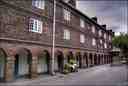
    You’re nearly face-to-face with the Holy Jesus Hospital now! Look ahead for a long, dark brick building with a row of arches at the ground level, topped with pale window frames. The arches almost look like a covered walkway-a bit like something out of a medieval marketplace. There’s plenty of stone and a stoic, dignified air about the place, but you’ll spot some greenery in pots breaking up all that brick. You can’t miss it. Now, picture yourself here hundreds of years ago. The smell of wood smoke and soup would drift through the air. This site has been helping people in Newcastle for more than seven centuries. That’s older than most jokes, and definitely older than the internet. First, it hosted black-clad Augustinian friars, shuffling about, offering prayers, healing-and maybe, if you were lucky, good advice on a rainy day. Back in the 1200s, Newcastle was bustling but overcrowded. Priests didn’t just heal souls, they patched up wounds and treated fevers. There were so many people in need that the friars had to run like a medieval A&E-without the vending machines. Imagine the clang of horseshoes in the street and the difficult job of keeping the priory clean-especially after the town got in trouble for dumping garbage near the monks’ house. The king himself had to tell people to stop throwing “filth and excrements” near the friary. Hardly the sort of welcome you’d want, right? Centuries rolled by, and this place transformed. It sheltered retired freemen, then became a soup kitchen, always looking after those in need. But don’t let its caring history fool you-this hospital once hosted royalty! When King Edward I stopped by in 1299, the friars got an extra bit of pocket money. Maybe they used it for better candles. Or more soup. The building itself is a time capsule: stand here and you’re looking at bricks from the 1600s, a 14th-century stone wall, and a chunky old tower that once heard all the secrets of the King’s Council. There aren’t many buildings left in Newcastle with this much history in their bones. These days, it’s an office and the base for the National Trust’s Inner City Project. Who knows-if you peek inside, you might just hear echoes of ancient chants or the laughter of young volunteers heading out for a countryside adventure. Or maybe, just the creak of those old brick arches, holding up centuries of stories. Ready to sneak off to the next bit of Newcastle’s past? Let’s move before a friar asks you help peel some soup potatoes! Yearning to grasp further insights on the augustinian priory (1291-1539), dissolution of the monasteries (1539) or the private ownership (1605-1646)? Dive into the chat section below and ask away.

    Abrir página dedicada →
  2. Alright, keep your eyes peeled as you stroll down this narrow, echoey lane-right up ahead, on your left, you’ll spot a tall, vertical sign simply saying “CINEMA.” That’s your cue…Leer másMostrar menos

    Alright, keep your eyes peeled as you stroll down this narrow, echoey lane-right up ahead, on your left, you’ll spot a tall, vertical sign simply saying “CINEMA.” That’s your cue you’ve reached the Tyneside Cinema. It doesn’t look like your flashy big-city multiplexes; instead, its white-tiled walls and understated entrance feel almost secret, like you’re discovering the city’s own hidden time capsule. Keep an eye out for the café-style tables out front-perfect for people-watching after the credits roll! Now, as you stand right here at the heart of Newcastle, imagine stepping into a world where the silver screen has never gone dark since the 1930s. The air is thick with movie magic and memories. This isn’t just the last newsreel cinema in the country-it’s the last full-time one still showing films, news, and stories in the entire United Kingdom. If these walls could talk, they’d be fast-talking reporters from the 1930s, spitting out the latest news before anyone could stream it on their phone. Back in the day, audiences packed the seats here to watch news from the other side of the world, sporting triumphs, travel adventures, and-just for good measure-some lively cartoons. It was the original way to “catch up on everything,” long before anyone invented Twitter. When TV marched in to steal the show and borrow the living rooms, Tyneside clung on for dear life, closing, reopening, dodging drama, and always refusing to fade to black. Even when it needed a £7 million facelift, the city rallied behind it. People even bought old cinema seats to help pay for the restoration-now that’s dedication! And don’t forget, this is no ordinary movie house. Its founder, Dixon Scott, was a globetrotter. He stuffed his head with wild ideas from the Middle and Far East, then splashed them all over the building’s Art Deco interior-if you catch a tour, look out for stained glass, mosaics, and details that feel like Arabian Nights met 1930s Newcastle. Dixon was also the great uncle of film legends Ridley and Tony Scott, so you could say movie-making runs in these bricks. Today, the Tyneside isn’t just about watching films-it’s a place for filmmakers, dreamers, and digital artists to huddle, plot, and maybe make the next big thing. There are free newsreel screenings, guided tours, and often a crowd of regulars who love film as much as popcorn. And who’s in their fan club? Only a couple of Mikes-Figgis and Hodges, and the odd Pet Shop Boy (Neil Tennant), just to name-drop. Standing here, you can almost hear the buzz from all those opening-night audiences, the crackle of news stories playing out on the screen, and the whisper of a city that keeps finding new reasons to keep its cinema alive. Pretty dramatic for a quiet alleyway, don’t you think? Ready for the next stop? For further insights on the restoration and reopening, controversies or the awards, feel free to navigate to the chat section below and inquire.

    Abrir página dedicada →
  3. If you're looking straight ahead, there's no missing it! Grey’s Monument rises up like a giant stone candle in the centre of the city, with a tall Roman-style column reaching to…Leer másMostrar menos

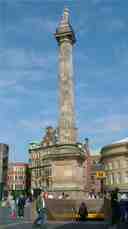
    If you're looking straight ahead, there's no missing it! Grey’s Monument rises up like a giant stone candle in the centre of the city, with a tall Roman-style column reaching to the sky and a statue of a serious-looking fellow perched right at the very top. Just follow the stretch of bustling pavement and crowds-look up, and you’ll spot him watching over Newcastle from his lofty perch. The monument is surrounded by shops and the subway entrance, so you’re right in the thick of city life. Now, as you stand in front of this impressive column, imagine it’s 1838. The whole area around you would have sounded very different-horses’ hooves clopping along, the cries of street vendors, distant church bells. This monument was built to honour Charles Grey, or as he’s better known to tea lovers everywhere, Earl Grey. But he didn’t just give his name to a nice cuppa-he gave the country a whole new way of voting and choosing leaders. Back then, politics was a bit of a mess-only a lucky few could vote, and the constituencies made as much sense as socks on a chicken. With the passing of the Great Reform Act in 1832, Grey helped tip things towards fairness. Suddenly, many more people could have their say, and the whole parliamentary system got a much-needed shake-up. Imagine the cheers and firecrackers going off when that happened! But not everyone was pleased with the spot for the monument. Some folks thought putting it right in the centre of the tram lines was a recipe for disaster-imagine Earl Grey being surrounded by honking, rattling trams every day. There were even calls to move the whole thing to help traffic flow, but there he remains, still the centre of attention. Today, it’s a favourite meeting spot-if you ever get lost in Newcastle, just tell your friends: “Meet you at the monument!” So, as you look up at that towering column and the proud earl keeping watch, you’re standing in a place that’s seen celebration, arguments, tram jams, and endless stories. And who knows-maybe Earl Grey up there is still keeping count of how many cups of tea get drunk in the city each day!

    Abrir página dedicada →
  4. Keep your eyes straight ahead! To spot Newcastle upon Tyne, soak in the wide, flowing River Tyne, then let your gaze drift up to the bold white arch of the Gateshead Millennium…Leer másMostrar menos

    Keep your eyes straight ahead! To spot Newcastle upon Tyne, soak in the wide, flowing River Tyne, then let your gaze drift up to the bold white arch of the Gateshead Millennium Bridge. The city rises proudly behind, dotted with a mix of sturdy old stone buildings and glassy new offices. Notice the soaring metal arches of Tyne Bridge just a bit upriver-hard to miss, honestly, unless you’re distracted by the river breeze or a particularly aggressive pigeon. Right now, you’re standing at the heart of Newcastle, surrounded by sights that have seen thousands of years of history, triumphs, and a fair few epic parties. Newcastle upon Tyne-locals just call it “Newcastle,” though if you want to sound very proper, it’s NEW-kah-səl-sits on the north bank of the River Tyne, always keeping an eye on Gateshead across the water. But believe it or not, this roaring city started quietly enough as a Roman outpost named Pons Aelius, set up almost two thousand years ago. Imagine Roman soldiers marching along the riverbank, maybe a bit homesick, maybe just very tired of the cold British wind. At its peak, Pons Aelius held just two thousand people-a mere crowd compared to the busy streets you see now. As you look around, picture a time when Hadrian himself, the Roman Emperor, may have stopped here. Bits of Hadrian’s Wall once snaked across the landscape, trying its best to keep pesky invaders out. In fact, some pieces of that wall can still be found not far from here, if you fancy a bit of ancient treasure hunting. After the Romans packed their bags and left, Newcastle became Munucceaster-or Monkchester to its friends-ruled by the Anglo-Saxon kingdom of Northumbria. Then came the Danes, the Normans, and a wooden castle built by William the Conqueror’s son, Robert Curthose. Imagine the hustle of timber and stone as the castle took shape, and the clamor of market traders and hopeful townsfolk growing day by day. The name “Newcastle”-funnily enough-comes from that ever-changing castle. They rebuilt it in stone in 1087, and again in 1172. The keep, tough and proud, still stands nearby today. Through the Middle Ages, this was England’s northern fortress. Rival Scots tried their luck at invading, but Newcastle held firm-a city so stubborn, even its walls are 25 feet high! Coal, believe it or not, turned Newcastle into a powerhouse. In the 1500s, if you wanted coal, you bought it from Newcastle, and no one else. That’s where the old saying "carrying coals to Newcastle" comes from-why bother, when Newcastle already has so much? So, as you stand here by the river, listen to Newcastle’s heartbeat-the laughter in the pubs, the footsteps on bridges, and maybe the ghostly whispers of Romans, monks, and kings all arguing over whose turn it is to buy the next round. Every corner here is layered with old secrets and new energy, which is just how Newcastle likes it. Ready to wander deeper? Interested in knowing more about the geography, culture or the media

    Abrir página dedicada →
  5. Right in front of you now stands Monument Mall, with its broad curve of creamy stone and tall windows looking out over the bustling street. Just look for the rounded corner with…Leer másMostrar menos

    Right in front of you now stands Monument Mall, with its broad curve of creamy stone and tall windows looking out over the bustling street. Just look for the rounded corner with large windows lined up neatly above - it almost feels like a ship ready to sail up Grey Street! You can't miss the big Banyan Bar & Kitchen signs beneath those royal blue awnings, perfect for a bit of people-watching if you fancy a break. Picture yourself stepping into this lively spot just as shoppers once did in 1992, the year it opened beside the Monument Metro station. It stands right in the city’s pulsing heart - smack in front of Grey’s Monument, with Grey Street stretching elegantly to one side and the buzz of Northumberland Street on the other. In fact, rumour has it if you stand quietly for a moment, you’ll hear the faint jingle of cash registers mingling with the chatter and clatter from years past! Monument Mall has had quite the adventure - changing hands more often than a hot potato, and every time for a staggering stack of pounds. Owners came and went, each one dreaming up even grander retail ideas. In 2011, the place got a serious makeover, costing a cool £15 million. They filled in old open walkways and made space for stylish shops - the sort where just walking by might inspire you to check your hairstyle in a shiny shop window. After that big refurb, Monument Mall turned into an exclusive club for high-end brands. Hugo Boss, The White Company, Molton Brown, and Michael Kors all set up shop. You might spot fashion lovers darting in for the latest Reiss dresses or a glint of Rox Jewellery sparkling in the window. Even Jamie’s Italian restaurant set up a table, in case shopping works up an appetite for pasta. Only a few old friends remain from the early days - like TK Maxx, now a proud flagship, and a secret passage back into Fenwick, another Newcastle legend. So whether you’re visiting for a bit of retail therapy, to catch the city atmosphere, or just to take a whiff of new-leather-handbag scent, you’re in the right spot. Keep an eye out: this corner of the city has stories behind every window, and you never quite know who or what you’ll discover next.

    Abrir página dedicada →
  6. If you’re looking straight ahead on Northumberland Street, you can’t miss Fenwick. It’s a grand, white-fronted building with tall arched windows and a bold green sign on its roof…Leer másMostrar menos

    If you’re looking straight ahead on Northumberland Street, you can’t miss Fenwick. It’s a grand, white-fronted building with tall arched windows and a bold green sign on its roof spelling out “Fenwick.” The big green-and-white awnings stretch along the ground floor like a friendly invitation. Window displays are usually dressed to impress, often full of mannequins and bright seasonal decorations, drawing in both locals and visitors. Just follow the buzz of shoppers and the trace of perfume wafting onto the pavement. Now, while you stand in front of Fenwick, imagine it’s 1882. Northumberland Street is alive with the clatter of horse carriages and the sound of boots on cobblestones. John James Fenwick, a fellow from Richmond who’d worked in his family’s grocery shop, throws open the doors to his brand-new business-a mantle maker and furrier’s, in what used to be a doctor’s house! It’s not exactly the department store we see today… back then, it was just one building, and every pound spent went toward growing the dream. Little did shoppers know they were stepping inside the very first chapter of a family legacy that would stretch across the UK. You might chuckle to think it started with drapes and furs, then spread quickly-snapping up numbers 37, 38, and 40 right here on Northumberland Street. The son, Fred, came back from Paris with big ideas after seeing the world’s first real department store. He must have marched through Newcastle with a baguette in one hand and fashion sketches in the other! Through world wars, roaring twenties, swinging sixties, and all the decades that followed, Fenwick survived-and thrived. If these display windows could talk, they’d have tales of changing fashions, mad Christmas rushes, and sales that made the city’s heart pound. Even now, it’s still run by the Fenwick family, determined to keep the magic alive. They’ve branched out across Britain, but this spot is their flagship, their headquarters-the crown jewel. Imagine all those generations, watching Newcastle change while Fenwick’s green sign glowed through it all. So as you stand here, you’re really at the centre of a story that’s over 140 years old. If you ever need a hat, a sofa, or just a good old-fashioned slice of cake, Fenwick is the place! Just be careful-step inside for five minutes and you might not come out for an hour. All part of the Fenwick experience.

    Abrir página dedicada →
  7. You’ve almost made it to Old Eldon Square! As you look ahead, you’ll spot a lovely patch of green right in the middle of the city’s bustle, framed by orderly pathways and dotted…Leer másMostrar menos

    You’ve almost made it to Old Eldon Square! As you look ahead, you’ll spot a lovely patch of green right in the middle of the city’s bustle, framed by orderly pathways and dotted with benches where locals and visitors like to sit and soak up the atmosphere. Kick your eyes towards the centre-you can’t miss the tall, elegant war memorial, standing proud on a broad pedestal, crowned by an impressive bronze statue of Saint George battling the dragon. On one side you’ll see the old, classical buildings with their grand windows; on the other, the modern facade of the shopping centre. It’s a kind of meeting point where the past shakes hands with the present, and the sense of history is almost thick enough to taste. Now, as you stand here, imagine it’s the 1800s. There’s a whiff of freshly cut stone, the rhythmic clink of hammers and chisels, and an air of excitement as John Dobson’s vision comes to life-a trio of handsome terraces, terraces so fine that campaigner Harriet Martineau called one home for a whole six months! In those days, cast-iron balconies, decorated with intricate Grecian honeysuckle, wrapped around the rows of windows. Giant Doric pillars stood resolutely at the corners, and genteel ladies would have peered curiously from the upper floors at the comings and goings below. Fast forward to the 1970s, and the once-grand terrace was replaced by the modern shopping centre you see behind you, but the promise was made: “only the buildings... the square will be safe!” And so it is-a little green pocket in the heart of Newcastle. Of course, right at the centre of everything is the city’s war memorial, unveiled in 1923 by Earl Haig himself. Take a stroll around the base; you’ll see bronze reliefs on every side. Look for the lion and the dates, the grieving women and Lady Justice, then the gentle symbol of peace, and-my favourite bit-Saint George bravely spearing a dragon on top. You won’t find any real dragons in Newcastle, but the pigeons might give you a run for your money. Now, Old Eldon Square is where Newcastle’s Remembrance Day ceremony unfolds every year, with quiet reflection, proud parades, and a rumble of emotion in the air. So, whether you’re here to shop, to sit in the sun, or just to listen to the stories the stones could tell, take a moment to look around: you’re standing on ground where everyday life and history always find a way to meet. Shall we find out what’s next?

    Abrir página dedicada →
  8. To spot the Eldon Square Shopping Centre, look straight ahead for a dramatic glass and steel structure with a clear roof above, letting sunlight stream onto the wide entrance.…Leer másMostrar menos

    To spot the Eldon Square Shopping Centre, look straight ahead for a dramatic glass and steel structure with a clear roof above, letting sunlight stream onto the wide entrance. You’ll notice open glass walls reflecting the buildings opposite, and the words “Eldon Square” marked above the doors. Crowds drift in and out carrying shopping bags, their footsteps echoing through the entrance. Welcome to Eldon Square-Newcastle’s biggest indoor jungle! Right now you’re facing one of the city’s favourite shopping spots, and if you listen for a moment, you can almost hear the distant hum of shoppers and the shuffle of busy footsteps. Eldon Square opened its doors in 1976, but before that, this whole area was bursting with stories. Imagine standing here back in Georgian times-the square was laid out by the famous architect John Dobson in 1824 and was once surrounded by elegant terraces and lush gardens. Of course, now you’re looking at a mighty glass-and-steel palace instead of leafy Nunn’s Garden! The change was so dramatic some locals called it “architectural vandalism”-it’s safe to say people had some pretty strong feelings! If you glance towards Blackett Street behind you, that's where the old town wall once ran, keeping watch over the city and its secrets. Centuries ago, you’d find vegetable gardens, defensive towers, and a bowling green where, today, we hunt for bargains instead of lost balls. Some of the malls inside are named after historical figures-like Douglas Way and Chevy Chase-so even the shop names have a tale to tell. As you step through the modern doors, picture the moment Queen Elizabeth II herself came here in 1977 for the official opening. It poured with rain, so it’s lucky the place had a roof! When you go inside, see if you can spot the mix of old and new-because in Eldon Square, history doesn’t just echo…it echoes with style. Ready to find a treasure-or at least a good sandwich? On we go!

    Abrir página dedicada →
  9. Look straight ahead for a solid, stately building made of reddish brick, crowned with a wide cream-colored stone band near the top. You’ll spot the bold gold letters above a…Leer másMostrar menos

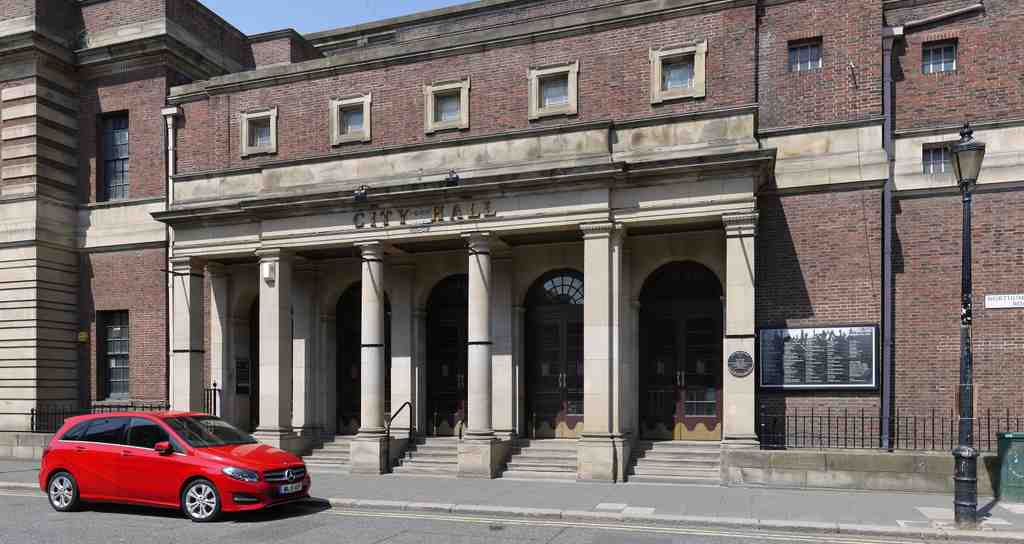
    Look straight ahead for a solid, stately building made of reddish brick, crowned with a wide cream-colored stone band near the top. You’ll spot the bold gold letters above a portico that says CITY HALL, supported by chunky Doric columns. The entrance is tucked behind those columns, with grand steps leading up and tall, dark wooden doors beneath five square windows above. If you see a building that feels as much like an old palace as a city landmark-you’re in the right place. Alright, let me take you on a little journey as you stand here at the front steps of Newcastle City Hall. Can you imagine the buzz of the crowd, the thrum of anticipation in the air-not to mention the smell of old wood and polished stone? This building opened in 1927, and what a parade of stars and sounds has passed through these doors! Orchestras, legendary rock bands, roaring laughter from comedy acts… even Bob Dylan and The Rolling Stones have sent the walls rattling with music. But this building isn’t just about concerts. Take a glance at those handsome columns-like old guards, they’ve watched generations come for a night out, a bit of civic ceremony, even the odd political debate. I’ve heard they’re very good listeners, though they might not tell you about the time city leaders nearly closed the place down. Picture the drama: supporters rallied, petitions flying, music history lovers standing shoulder-to-shoulder saying, “You can’t close this hall!” Legends wouldn’t fit in a storage closet, after all. And inside, there’s a musical gem: a mighty organ that has more pipes than a plumber’s wildest dreams-over four thousand! Built in 1928, it’s said to be the “Rolls-Royce” of organs. Sure, it might creak and groan these days, but it’s a rare survivor-much like the hall itself. The energy of every show, every performer, echoes through this place. From the soaring voice of Kathleen Ferrier to the wild rhythms of The Who and the psychedelia of The Grateful Dead, this building has seen it all. Maybe if you press your ear just right to the stone, you’ll hear some whisper of those glory days. Or maybe you’ll just hear the next show warming up. So, take your time-look around, soak up the stories. Newcastle City Hall might have a modern sponsor’s name over the door, but it’s still the city’s beating musical heart. And who knows? You could be walking past the next big music legend on your way in!

    Abrir página dedicada →
  10. If you look just ahead, you can't miss it - the Church of St Thomas the Martyr rises dramatically above the busy Haymarket. Keep an eye out for its tall, dark stone bell tower…Leer másMostrar menos

    If you look just ahead, you can't miss it - the Church of St Thomas the Martyr rises dramatically above the busy Haymarket. Keep an eye out for its tall, dark stone bell tower with open archways and sharp spires that stretch skywards, almost as if they're trying to tickle the clouds. The church’s large gothic windows and clock faces are easy to spot, and the pointed pinnacles decorate the top like a crown. Surrounded by trees on one side and a bustle of city life on the other, it stands proudly at the crossroads. Before you stands the Church of St Thomas the Martyr. Now, close your eyes for a second and imagine the world around you not full of city traffic, but the clatter of horse hooves and the murmur of medieval townsfolk. This church has a story rather juicier than a detective novel. Dedicated to St Thomas Becket, its history is tangled up with knights, kings, and a bit of mystery. Back in 1170, the Archbishop of Canterbury, Thomas Becket, was hacked down by four knights who thought they were doing King Henry II a favour. Not exactly a royal order anyone wanted written down! Afterward, the knights were wracked with guilt and legend has it, one of them - Hugh de Morville - came north to found a chapel as a kind of spiritual apology. That tiny riverside chapel grew and changed over hundreds of years, battered by floods, fires, and one very determined chaplain who rented out the chapel cellars just to keep the place running - talk about entrepreneurial spirit. Try to picture the drama: fire raging through Newcastle, the Tyne Bridge crumbling after a flood, and a chapel that somehow survives it all. Even the windmill profits were funneled in to help-imagine priests praying for a strong breeze, not rain! Fast forward a few centuries, and by the early 1800s, the old chapel was looking a bit sorry for itself. Enter John Dobson, Newcastle’s answer to ‘Changing Rooms.’ He whipped up this striking Gothic marvel you see before you, finished in 1830-complete with spires, arches, and a clock for every “five more minutes, please” moment. Today, it’s more alive than ever, filled with the laughter and energy of students and young people. It’s seen plague and pilgrim, marketplace chaos and quiet reflection, all under these very spires. If walls could talk, I daresay these would have quite a few stories-and maybe the occasional holy dad joke.

    Abrir página dedicada →
  11. Here you are, standing where creativity once buzzed like a hive of inspired minds - the former home of the North British Academy of Arts. Picture it: the year is 1910, and from…Leer másMostrar menos

    Here you are, standing where creativity once buzzed like a hive of inspired minds - the former home of the North British Academy of Arts. Picture it: the year is 1910, and from these Claremount Buildings, ambitious artists, writers, scientists, musicians, and pretty much everyone who admired the arts are talking enthusiastically about big ideas. You might even hear the clack of boots on the paving stones, as one of the academy’s ten different sections meets inside, each led by a true specialist - and no, they didn’t just discuss who to invite to the next garden picnic! This academy wasn’t just for painting pretty landscapes. It was for the “advancement of humanity” - now that’s a mission statement! At first, their goal was simply to boost art and fire up a bit of local pride. But soon, anything that sparked creativity was fair game: music, science, literature, law, even engineering. It was like Hogwarts for grown-ups… if Hogwarts gave out medals for best-in-show watercolour and held annual exhibitions. Membership was exclusive - you’d pay two guineas just to get in, and a guinea a year after. If you were feeling flashy, you could become a “Life Fellow” for a cool twelve guineas. Imagine that at your next dinner party: instead of “Dr.” or “Esq.” after your name, you’d pop on “F.N.B.A.” - Fellow of the North British Academy. Instant respect, and perhaps even a free scone at tea time. The academy’s walls once displayed paintings like “A Garden in Sark” by Frances Anne Hopkins, and a portrait of Miss Stanley “Bimbie” Edwards: the very first English girl scout, painted by Philip Homan Miller - and no, she didn’t have to do a badge in oil paints to earn a spot up here! What a crowd they gathered - from British prime ministers and scientists to a Cornish sculptor or even a Chinese diplomat elected as a fellow. It was a place where a Yorkshire painter might be chatting with a pharmacist-turned-Johnson & Johnson scientist about the future of medicine. I’m sure their conversations would make even the local pigeons feel inspired. But all good things must draw to a close - the Academy’s lights switched off for good in 1924. Still, can’t you almost sense the hum of debates, the laughter over mismatched art, the quick hush as a new president entered? Maybe that’s just the wind… or maybe the lingering energy of the passionate fellows who believed art could change the world - and each brushstroke and note brought them a little closer. Ready to walk on? We’re not done with creative spaces yet! Follow me to our next stop, where learning and curiosity are still very much alive.

    Abrir página dedicada →
  12. Just ahead, you’ll spot the Great North Museum: Hancock! Look for a grand Victorian building with a wide stone staircase and big welcoming doors. It’s right at the edge of…Leer másMostrar menos

    Just ahead, you’ll spot the Great North Museum: Hancock! Look for a grand Victorian building with a wide stone staircase and big welcoming doors. It’s right at the edge of Newcastle University’s campus, just beside the busy Great North Road-if you see a building that looks both historic and impressively sturdy, that’s your target. And if you find yourself distracted by a big orange arrow pointing the way, relax-you’re definitely not lost. So here you are, standing in front of the Great North Museum: Hancock, where stories from millions of years ago come to life. You might feel a gentle breeze carried over from Barras Bridge; if you listen closely, you can almost hear the whispers of Victorian visitors bustling up the steps, eager to explore. The museum opened its doors back in 1884 and has been welcoming curious minds ever since-though I’m willing to bet the first visitors didn’t have WiFi or a planetarium. But there’s more to this museum than meets the eye. Beneath your feet, hidden below the grounds of the museum, lies one of the city’s Second World War air raid shelters linked to the Victoria Tunnel. Imagine the echo of hurried footsteps and anxious whispers as people hurried underground when the sirens blared. Inside, the museum is a treasure chest packed with wonders: ancient Egyptian mummies, Roman artifacts from Hadrian’s Wall, glittering gems, fossils, and a digital planetarium that reveals galaxies far, far away. And the star of the show? A rather charming, slightly bewildered wombat-the earliest object in the collection, who’s been greeting visitors long before Instagram selfies were a thing. Every corner here is bursting with stories, from Marmaduke Tunstall collecting strange and wonderful creatures in the 1700s, to local heroes like Albany and John Hancock helping turn Newcastle into a city of science and discovery. So, take a deep breath, let your imagination off its leash, and get ready to meet crocodiles, Roman soldiers, and maybe, if you’re lucky, a ghost or two of curious Victorians. Whenever you’re ready, step inside and let the adventure begin! Curious about the location, collections or the library? Don't hesitate to reach out in the chat section for additional details.

    Abrir página dedicada →

Preguntas frecuentes

¿Cómo empiezo el tour?

Después de la compra, descarga la app AudaTours e ingresa tu código de canje. El tour estará listo para comenzar de inmediato - solo toca play y sigue la ruta guiada por GPS.

¿Necesito internet durante el tour?

¡No! Descarga el tour antes de empezar y disfrútalo completamente sin conexión. Solo la función de chat requiere internet. Recomendamos descargar en WiFi para ahorrar datos móviles.

¿Es un tour guiado en grupo?

No - esta es una audioguía autoguiada. Exploras de forma independiente a tu propio ritmo, con narración de audio reproduciéndose en tu teléfono. Sin guía, sin grupo, sin horario.

¿Cuánto dura el tour?

La mayoría de los tours toman 60–90 minutos para completar, pero tú controlas el ritmo completamente. Pausa, salta paradas o toma descansos cuando quieras.

¿Qué pasa si no puedo terminar el tour hoy?

¡No hay problema! Los tours tienen acceso de por vida. Pausa y continúa cuando quieras - mañana, la próxima semana o el próximo año. Tu progreso se guarda.

¿Qué idiomas están disponibles?

Todos los tours están disponibles en más de 50 idiomas. Selecciona tu idioma preferido al canjear tu código. Nota: el idioma no se puede cambiar después de generar el tour.

¿Dónde accedo al tour después de comprarlo?

Descarga la app gratuita AudaTours desde App Store o Google Play. Ingresa tu código de canje (enviado por email) y el tour aparecerá en tu biblioteca, listo para descargar y comenzar.

verified_user
Satisfacción garantizada

Si no disfrutas el tour, te reembolsamos tu compra. Contáctanos en [email protected]

Paga de forma segura con

Apple PayGoogle PayVisaMastercardPayPal

AudaTours: Audioguías

Tours a pie autoguiados entretenidos y económicos

Probar la app arrow_forward

Amado por viajeros de todo el mundo

format_quote Este tour fue una excelente manera de ver la ciudad. Las historias fueron interesantes sin parecer demasiado guionadas, y me encantó poder explorar a mi propio ritmo.
Jess
Jess
starstarstarstarstar
Tour de Tbilisi arrow_forward
format_quote Esta fue una forma sólida de conocer Brighton sin sentirme como un turista. La narración tenía profundidad y contexto, pero no se excedía.
Christoph
Christoph
starstarstarstarstar
Tour de Brighton arrow_forward
format_quote Empecé este tour con un croissant en una mano y cero expectativas. La app simplemente vibra contigo, sin presión, solo tú, tus auriculares y algunas historias geniales.
John
John
starstarstarstarstar
Tour de Marsella arrow_forward

Audioguías Ilimitados

Desbloquea el acceso a TODOS los tours del mundo

0 tours·0 ciudades·0 países
all_inclusive Explorar Ilimitado