Tour de audio de Gante: Catedrales, Castillos y Jazz en el Corazón del Centro
Bajo las ornamentadas agujas y los adoquines de Gante yace una ciudad de juegos de poder ocultos, multitudes rebeldes y melodías de medianoche donde cada plaza susurra secretos incalculables. Este tour de audio autoguiado te convierte en un detective urbano que descubre historias detrás de las puertas cerradas de las catedrales, ritmos de jazz resonantes y escándalos centenarios que incluso los lugareños pasan por alto. ¿Por qué un emperador obligó a los ciudadanos más orgullosos de la ciudad a desfilar en camisones en vergüenza pública? ¿Qué tesoros desaparecidos aún faltan en las bóvedas de la Catedral de San Bavón? ¿Y cómo un festival casi en bancarrota regresó con multitudes récord y artistas legendarios iluminando el cielo nocturno de Gante? Camina donde los obispos conspiraron, los santos se reformaron y las multitudes salvajes bailaron hasta el amanecer. Deja que Gante revele su intrincada red de triunfos, traiciones y dulce rebelión musical. La historia crepita bajo tus pies. ¿Curioso? Deja que la ciudad te muestre lo que la mayoría nunca ve: tu viaje comienza aquí.
Vista previa del tour
Sobre este tour
- scheduleDuración 30–50 minsVe a tu propio ritmo
- straighten2.2 km de ruta a pieSigue el camino guiado
- location_on
- wifi_offFunciona sin conexiónDescarga una vez, úsalo en cualquier lugar
- all_inclusiveAcceso de por vidaReprodúcelo en cualquier momento, para siempre
- location_onComienza en Diócesis Católica Romana de Gante
Paradas en este tour
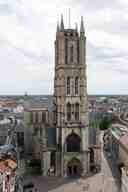
If you look straight ahead, you’ll spot a towering stone cathedral rising proudly above the square, with pointy spires and an arched entrance that almost seems to welcome you in.…Leer másMostrar menos
If you look straight ahead, you’ll spot a towering stone cathedral rising proudly above the square, with pointy spires and an arched entrance that almost seems to welcome you in. The church is an impressive shade of weathered gray, with tall windows watching over the city. It’s hard to miss-just follow the footsteps of other curious visitors staring up in awe! Alright, you made it! Welcome to the powerful heart of Roman Catholic Ghent, the seat of the Diocese. Imagine standing here centuries ago: the distant hum of bells, the soft murmurs of monks passing by, and all the drama of city life swirling around this grand stone sanctuary. This diocese isn’t just any church spot-it’s been the spiritual boss of Gent since 1559, when the Pope decided, “Eh, Tournai, you’ve had your chance!” In one papal swoop, Ghent got its own diocese, led for centuries by a parade of bishops with names longer than your grocery list. The patron saint? Bavo, who, legend says, was a wild party guy turned holy man. Now that’s a twist! The story here is full of excitement-abbeys disappearing, canons marching off to new churches, and priests with more drama than your favorite TV show. Abbots, bishops, even a saint or two passed through these doors, and today you’re sharing the square with history’s heavyweights. So, as you stand outside, picture all the secret meetings, whispered prayers, and maybe the odd argument over who gets the best hat! And hey, if you hear a monk’s footsteps behind you-don’t worry, it’s probably just another tourist hunting for the perfect photo angle. Ready for more stories? Let’s head toward the next stop!
Abrir página dedicada →Take a look straight ahead-there it is! St. Bavo’s Cathedral towers above the square like a giant stone guardian. To spot it, look for the tall, grey, gothic tower with four…Leer másMostrar menos
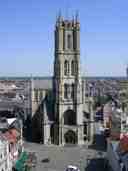
Take a look straight ahead-there it is! St. Bavo’s Cathedral towers above the square like a giant stone guardian. To spot it, look for the tall, grey, gothic tower with four dramatic spires-almost like the corners of a giant crown-stretching into the sky. The enormous pointed arches and rows of windows tell you this building is definitely not your average Sunday church. Now, imagine the sound of your footsteps echoing on the cobblestone as you approach. You’re standing before one of Gent’s proudest treasures. St. Bavo’s Cathedral isn’t just a church, it’s got more drama than your favorite detective series. Originally, it was just a quiet little parish dedicated to John the Baptist. But suddenly, in 942, there’s a bishop from Tournai coming over to bless it, giving it a brand new name-Sint-Janskerk. But history wasn’t done with it yet! Fast forward a few centuries, and Emperor Charles V isn’t happy. He teaches the rebellious people of Gent a serious lesson by forcing them, wearing nightgowns and rope nooses, to parade shamefully through the streets right past where you’re standing. And as a finishing touch, he tore down the nearby abbey and declared: “Nope, this will now be the site of the Spanish Castle!” The canons had to pack up and find a new church, which brought them right here, turning this place into what would become St. Bavo’s Cathedral. Over centuries, this cathedral has grown taller and even more majestic. The tower you’re gazing at rises 89 meters above you- that’s about as tall as 30 giraffes stacked on top of each other! Listen for the sound of the bells on a lucky day. Inside, the space fills with light from the grand stained glass windows, and the air is thick with echoes from centuries of whispered prayers and dramatic events. And don’t forget the secrets inside-world-famous art lives here! Jan van Eyck’s “Adoration of the Mystic Lamb” has been both celebrated and stolen-more often than your neighbor borrows sugar. There are paintings from Peter Paul Rubens, grand marble tombs, a spectacular baroque altar, and a pulpit with enough decoration to make even the fanciest cake jealous. So, as you stand here, picture crowds of people, kings, rebels, and even a few sneaky art thieves slipping through the shadows. And keep your ears open-if you hear the mighty “Bavo” bell ringing, remember that you’re standing right at the heart of Gent’s most epic stories.
Abrir página dedicada →You’re almost there-the Gent Jazz Festival, Gent’s home of cool tunes and good vibes. Now, if you’re wondering how to spot it, just look ahead for bold, blocky black letters,…Leer másMostrar menos
You’re almost there-the Gent Jazz Festival, Gent’s home of cool tunes and good vibes. Now, if you’re wondering how to spot it, just look ahead for bold, blocky black letters, spelling out GENT JAZZ. It’s a sign you can’t miss, as punchy as a trumpet blare at midnight. Now, close your eyes for a second, and imagine: You’re about to step into one of the grooviest corners of Ghent. Every July, this calm spot transforms into a swirling world of music, laughter, and the distant clink of glasses. The scent of summer street food drifts through the air and all around, people sway to rhythms-sometimes jazzy and wild, sometimes smooth as melted chocolate. The festival bursts into life for two weeks-first, All That Jazz, where legends like Herbie Hancock and Norah Jones have set the stage on fire. The second week, things get funky with All That Jazz?, where jazz flirts with soul, electronic beats, and anything with a groove. If a beat can make your toes curl, you’ll hear it here. Since its first notes as the Blue Note Festival in 2002, this event survived some wild plot twists. Back in 2022, financial trouble nearly meant the last curtain call-but, plot twist!-Greenhouse Talent rescued the show, and the very next year, a record 42,000 fans packed the festival. Imagine a cool Ghent evening, the crowd pressing in, breathless as Tony Bennett and Lady Gaga share a song together. You can almost feel the pulse of the old city, shaking its cobblestones to the groove of legends like Wayne Shorter, Paco de Lucia, B.B. King, and Diana Krall, all lighting up the night sky, one note at a time. So, if you hear the faint echo of a saxophone or the warm thump of a bass, you’re not imagining it-that’s Ghent’s heart beating, welcoming you to the jazz party of the summer. Are you ready for some music? Or, at the very least, for the world’s best people-watching!
Abrir página dedicada →
Mostrar 5 paradas másMostrar menos paradasexpand_moreexpand_less
Look ahead! St. James' Church stands out in front of you, with its twin chunky towers on the left-imagine castle towers but with a bit more medieval drama. The church’s walls are…Leer másMostrar menos
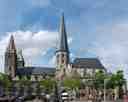
Look ahead! St. James' Church stands out in front of you, with its twin chunky towers on the left-imagine castle towers but with a bit more medieval drama. The church’s walls are made from thick, grey stone, and up above, the tall octagonal spire reaches for the clouds. If the church feels a bit lopsided, that’s not your imagination-it really does have an asymmetric face thanks to a fire centuries ago! Just follow the rows of pointy, gothic windows-trust me, you can’t miss it. Now that you’re standing here, take a deep breath and picture the street as it was almost a thousand years ago. The year is 1093. Pilgrims from across Europe have come trudging along, covered in dust and clutching scallop shells, stopping here on their long, sore-footed journey to Santiago de Compostela. The first church was just wood, but after invaders-led by a certain Robert Curthose, whose hobbies apparently included burning churches-swept through, it was rebuilt strong with stone. If you’re standing close to the western end, those towers you see are the oldest in Belgium to have a double-tower façade. History buffs, eat your hearts out! But wait, there’s more! In the 13th century, they added that tall, octagonal tower in the middle, and then along came a fire that left one tower a little sad and stumpy-a kind of Gothic hairstyle gone wrong! Over centuries, St. James’ floor got raised higher and higher until the pillars now look short and sturdy, almost as if the church tried on shoes that were just a bit too thick. Inside, the place buzzed with drama. During the wild religious battles of the 1500s, there were nights filled with smashing and chaos-imagine the whole street echoing with the sound of statues and altars toppling down. Ghent’s own chronicler wrote about the uproar, and you can almost sense that restless energy still floating around. But the church survived. In the chapels you’ll find paintings by great masters-Gaspar de Crayer and Jan van Cleef-showing the adventures of the Trinitarian monks, who set off to rescue prisoners from slavery during the Crusades. Tucked away are not one, but two giant tombs for Jan Palfijn, the man who invented the birth forceps. Apparently, when they built his first grave, everyone agreed it wasn’t fancy enough, so a year later Ghent gave him a much splashier tomb. Because in Ghent, even the dead get upgrades. And if you ever get a peek inside: imagine golden altars, enough religious art to make your head spin, and a classic pulpit with the apostle James, carved in white marble, teaching the crowd. And if you hear any heavy footsteps, don’t worry-it’s probably just another pilgrim, lost in time, looking for the next resting spot. Ready to continue our journey through the ages? On to the next stop!
Abrir página dedicada →Straight ahead, you’ll spot a long, brick building with tall, pointed arched windows and a roof that seems to slope forever. Look for the quirky, octagonal stone tower sticking…Leer másMostrar menos
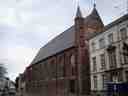
Straight ahead, you’ll spot a long, brick building with tall, pointed arched windows and a roof that seems to slope forever. Look for the quirky, octagonal stone tower sticking out like a proud turret just before the end of the structure-it’s like the building is wearing a wizard’s hat. And if those red banners hanging above the arched doorway don’t catch your eye, maybe the slightly mysterious Gothic style will! Take a moment to imagine yourself back in the 1200s. You’re in the heart of the Patershol district, where monks in big, heavy robes padded quietly through these streets. They were called the Discalced Carmelites-try saying that three times fast! “Discalced” means “barefoot,” though I promise the cobblestones are a bit gentler these days. These monks came all the way from the Middle East, escaping danger to find peace in Gent. They built their new home right here in 1272. This building isn’t just a church-it’s like a patchwork quilt of Gent’s history. Over time, it grew into a sprawling complex with a church, cloisters, a brewery (yes, even monks appreciate a good pint), and an impressive infirmary. That old infirmary upstairs is supported by carved oak satyr heads, each one grinning with its own personality. Imagine being sick in bed, but peeking down to a church service below through clever little openings! Here’s a bit of drama-a storm of angry protestors once swept through the city and ransacked the cloister, driving the monks away. Later, the place became Protestant for a while, with years of hard recovery before the monks took it back. And yes, the monks really did put their brewery up high, over the nearby canal, to keep the beer flowing (and the water running). Hidden under layers of plaster and mystery, beautiful wall paintings were discovered here-one in fancy neo-Renaissance style, and even older, medieval artwork underneath damaged by those wild days of the 16th century. When revolutions rolled through Europe, monks were out and the building began a new life-sometimes as a museum, sometimes as a home for locals, even as a storehouse for opera stage sets! These days, it’s an arts center called Kunsthal Gent, alive with exhibitions and creativity. Before you wander off, take a look at that tower’s stone staircase inside. It spirals upward with no central pole, showing off the wild ambitions of medieval architecture. Now, next time you stub your toe on a cobblestone, just remember: you’re walking a path tread by monks, rebels, painters, and, for a brief moment… you! Ready to explore more secrets of Gent? Let’s go!
Abrir página dedicada →Alright, take a good look ahead! You can’t miss this one. The Castle of the Counts stands boldly before you, its thick stone walls rising up above the dark water of the moat.…Leer másMostrar menos
Alright, take a good look ahead! You can’t miss this one. The Castle of the Counts stands boldly before you, its thick stone walls rising up above the dark water of the moat. You’ll see tall round towers at each corner, lined with arrow slits and topped with battlements-those classic tooth-shaped stones where defenders once kept watch. Two flags flap from the top of the tallest keep, like a medieval crown. Now, imagine walking up here about 850 years ago. The air would carry the sharp scent of smoke and the lively hum of merchants and townspeople. You’re standing in front of Het Gravensteen, or the Castle of the Counts-a place built not just for show, but for power. Its walls are nearly unbroken, as if daring anyone to try their luck storming the gate. Trust me, you’d need more than a butter knife and a brave heart to get in here in the old days! Built in 1180 by Count Philip of Alsace, the castle was home to the Counts of Flanders until the mid-1300s. It started life with a name that’s quite a mouthful-‘novum castellum’ or ‘new castle.’ But it didn’t just stick to one job. Over the centuries, Het Gravensteen worked overtime: it served as a courtroom, prison, even a cotton factory! At one point you might have heard the clang of coins being made, and at another, the thud of cotton bales hitting the floor. Who knew one castle could have so many careers? The site was picked for its marshy shores on a tall sand dune, right in the middle of the River Leie-nature’s own moat. Back in the days of rumbling Vikings, it was the perfect spot for a fortress. Count Baldwin I is said to have been the original boss of this stronghold, building it up out of fear of sudden Viking visits-let’s call those “very aggressive house calls.” But that first fort was made of wood. It was only later that Count Arnulf I beefed things up with a proper stone donjon, turning the place into a luxury castle for its time. Picture grand halls stacked on top of each other, big fireplaces blazing, and some surprisingly fancy toilets-seriously, the medieval folks here liked their comfort just as much as battle. The castle evolved over time, enduring fires, expansions, and even inspiration from the famous Krak des Chevaliers. In its grandest days, stone towers stood guard over the massive hall, a symbol of the Count’s might in a city that never stopped bustling or arguing. To the rich folks across the river, this was a daily reminder: the Count is watching! Now, it’s your turn to visit. Step inside if you dare-just watch out for any leftover ghosts from its prison days! And if you find a hidden stash of medieval gold, well, I’ll take a 10% tour guide fee, agreed? For a more comprehensive understanding of the controversy around the renewal plans, court objects and weapons or the accessibility, engage with me in the chat section below.
Abrir página dedicada →As you come around the corner and step into the heart of Gent, look straight ahead, just past the tram tracks. You can’t miss Saint Nicholas Church - it practically leaps out of a…Leer másMostrar menos
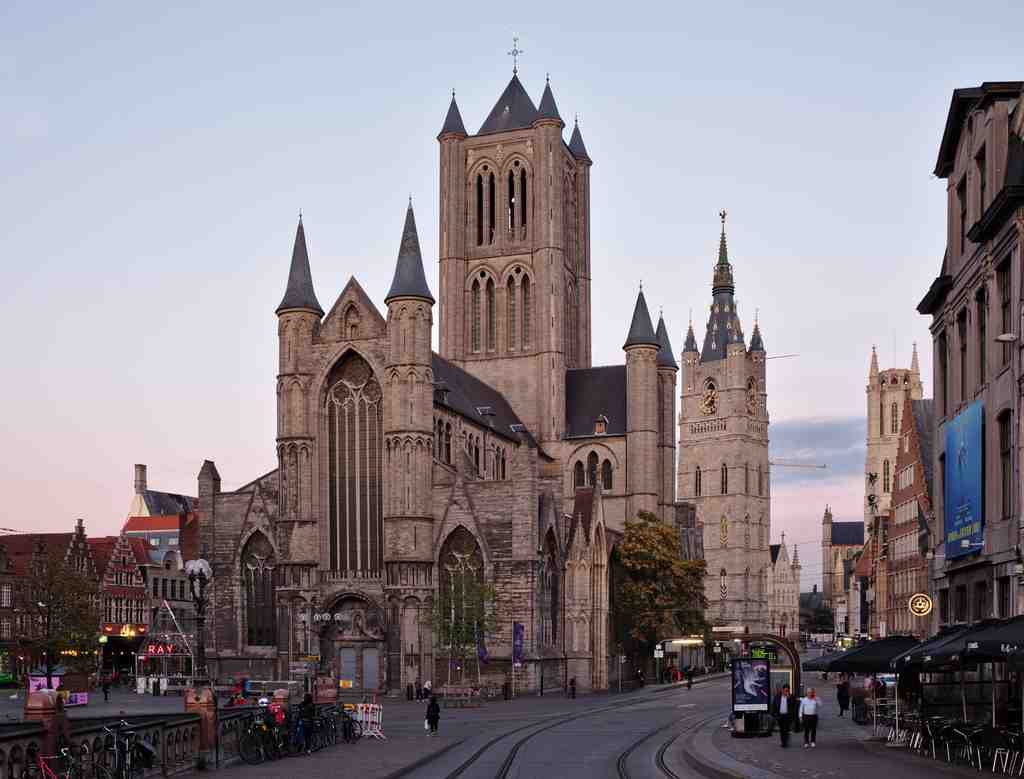
As you come around the corner and step into the heart of Gent, look straight ahead, just past the tram tracks. You can’t miss Saint Nicholas Church - it practically leaps out of a medieval fairy tale! Its tall central tower rises like a watchful giant, flanked by four skinny corner turrets, all capped with pointy little hats. The stone is a cool blue-gray color, which gives it a moody, mysterious feel, especially in the soft daylight. The huge pointed windows and the heavy wooden doors look like they’ve seen centuries of secret comings and goings. Imagine yourself back in the 1200s. All around you, merchants haggle over their wares in the Korenmarkt marketplace. The smell of fresh bread and the sound of coins clinking fill the air. But above it all - right where you’re standing - Saint Nicholas Church looks almost like a castle meant for tall tales and brave guildsmen, built as solid as a mountain to impress everyone who passed by. The stone they used was carried all the way from Tournai, a journey in itself! The church was not just a place to pray, but a bit of a medieval VIP zone: different trades had their own private chapels tucked along the sides - if you were with the mason’s guild, you had your own spot! Meanwhile, the city relied on the central tower for more than just looking pretty - it served as a watchtower. Locals would keep an eye out for trouble and, if need be, ring the bells to sound the alarm. If you have a good imagination, picture music billowing out from inside - not just any old tune, but thundering organ music. The church’s organ is a celebrity in its own right, built by the renowned Aristide Cavaillé-Coll all the way from Paris. It was once the pride of Belgium, attracting musicians from far and wide. The pipes towered like silver trees, and you could almost feel the vibrations under your feet when someone really let loose on it. Sadly, it fell silent for decades, hiding behind wooden boards. Today, it’s being restored, waiting for the day when it can once again wake up the city with its songs. So take a moment here. Look at those stone walls, the spires that tickle the sky, and imagine the stories trapped in each corner - secret chapels, watchful guards, scents of ancient candles, and the rise and fall of music that once made these stones tremble. This church is a treasure chest of Gent’s wild and wonderful history!
Abrir página dedicada →The Belfry of Ghent stands tall right in front of you. Look up-way up!-and you’ll spot a towering stone spire, topped by a golden dragon glinting above the city. The tower is…Leer másMostrar menos
The Belfry of Ghent stands tall right in front of you. Look up-way up!-and you’ll spot a towering stone spire, topped by a golden dragon glinting above the city. The tower is grand and square, with slender arched windows, and features black clock faces edged in gold. At its base, you’ll see attached halls with steep dark roofs and rows of tiny red dormer windows-you can’t miss it, just follow the line where old stone meets the sky. So, take a moment: You’re standing before the tallest belfry in Belgium! Right now, imagine the sound echoing through Ghent when bells ring from 91 meters above. Built from 1313, the Belfry watched over the city like a giant stone guardian. Not only did it keep the time-it kept the city’s secrets, including the precious papers that proved Ghent’s rights and freedoms. Picture medieval days with the heavy stone tower stretching above clouds of market sounds, shouts of merchants, and maybe the nervous whispers of townsfolk watching for invading armies. The belfry wasn’t just a lookout, it was also a safe hiding place during danger. And, if you listen closely, you might imagine the alarm bell Roland booming through the air-calling everyone to defend Ghent, or to celebrate a hard-won victory. There’s a dash of mystery here too, high above the door in the small Mammelokker annex, where a classic Roman legend lives in stone. It’s the tale of a prisoner, Cimon, saved not by a daring escape, but by a daughter’s secret kindness. Imagine the clang of swords and mutters of cloth merchants inside the adjoining hall-once the beating heart of Ghent’s booming wool trade. What a mix! Where else do you get dragons, defiant bells, ancient records, and epic legends all stacked into one soaring stone tower? So look up, snap a photo if you’d like, and let your mind’s ear try to catch one last echo of the age-old bells. You’ve just stood at the very heart-and the highest point-of medieval Ghent. And remember, if those bells ever start ringing wildly, you'd better grab your sword…or maybe just your phone for a video! If you're keen on discovering more about the role, cloth hall and mammelokker or the gallery, head down to the chat section and engage with me.
Abrir página dedicada →
Preguntas frecuentes
¿Cómo empiezo el tour?
Después de la compra, descarga la app AudaTours e ingresa tu código de canje. El tour estará listo para comenzar de inmediato - solo toca play y sigue la ruta guiada por GPS.
¿Necesito internet durante el tour?
¡No! Descarga el tour antes de empezar y disfrútalo completamente sin conexión. Solo la función de chat requiere internet. Recomendamos descargar en WiFi para ahorrar datos móviles.
¿Es un tour guiado en grupo?
No - esta es una audioguía autoguiada. Exploras de forma independiente a tu propio ritmo, con narración de audio reproduciéndose en tu teléfono. Sin guía, sin grupo, sin horario.
¿Cuánto dura el tour?
La mayoría de los tours toman 60–90 minutos para completar, pero tú controlas el ritmo completamente. Pausa, salta paradas o toma descansos cuando quieras.
¿Qué pasa si no puedo terminar el tour hoy?
¡No hay problema! Los tours tienen acceso de por vida. Pausa y continúa cuando quieras - mañana, la próxima semana o el próximo año. Tu progreso se guarda.
¿Qué idiomas están disponibles?
Todos los tours están disponibles en más de 50 idiomas. Selecciona tu idioma preferido al canjear tu código. Nota: el idioma no se puede cambiar después de generar el tour.
¿Dónde accedo al tour después de comprarlo?
Descarga la app gratuita AudaTours desde App Store o Google Play. Ingresa tu código de canje (enviado por email) y el tour aparecerá en tu biblioteca, listo para descargar y comenzar.
Si no disfrutas el tour, te reembolsamos tu compra. Contáctanos en [email protected]
Paga de forma segura con