
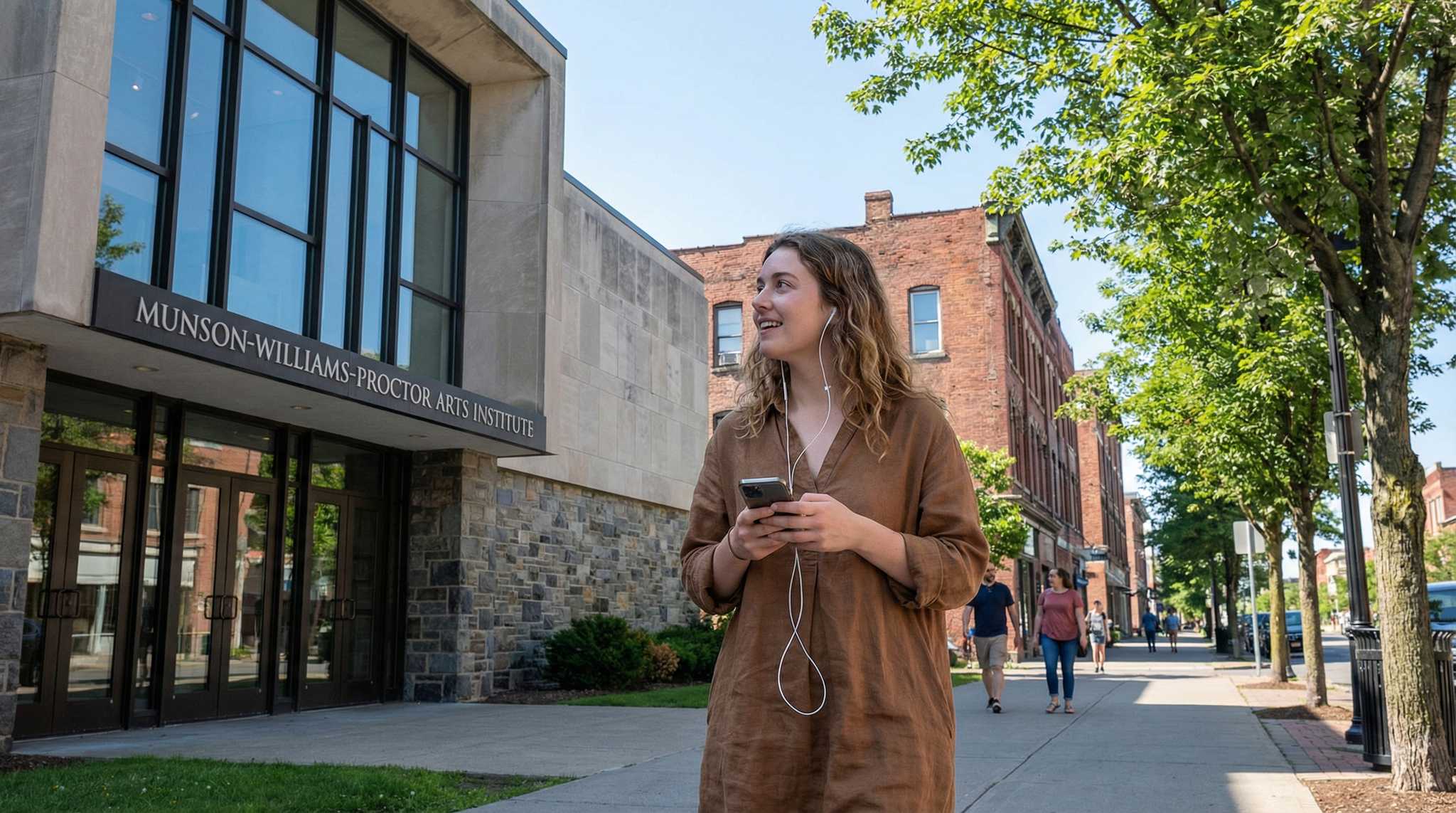
Utica Audio-Tour: Echos des Erbes im historischen Herzen der Innenstadt
Unter Uticas glänzenden Straßen verbirgt sich eine Geschichte, die von Rebellion, Erfindung und Intrigen geprägt ist. Diese Stadt hat mehr zu bieten, als man auf den ersten Blick sieht – eine verborgene Welt erwacht zum Leben, nur wenige Schritte von dort entfernt, wo das erste Bier der Stadt floss und lebendige Leinwände im Museumslicht schimmern. Diese selbstgeführte Audio-Tour enthüllt Geschichten, die von den meisten Reisenden übersehen werden. Wandern Sie von der legendären Matt Brewing Company zum leuchtenden Munson-Williams-Proctor Arts Institute und dem stoischen Alexander Pirnie Federal Building – jedes mit Geschichten, die die Vergangenheit der Stadt neu gestalten. Welche geheime Auseinandersetzung hallte einst um Mitternacht in den Bundesmauern wider? Welches Kunstwerk verschwand, nur um am seltsamsten Ort wieder aufzutauchen? Und warum versteckte Uticas ältester Braumeister Fässer hinter einer falschen Wand? Schreiten Sie durch lebendige Gassen voller Skandale, Konflikte und Inspiration. Erleben Sie Uticas Innenstadt als ein lebendiges Puzzle, das die Fragmente zusammensetzt, die von Rebellen und Visionären hinterlassen wurden. Hören Sie rein und beginnen Sie, die Geheimnisse zu lüften, die direkt unter Ihren Füßen verborgen sind.
Tourvorschau
Über diese Tour
- scheduleDauer 30–50 minsEigenes Tempo
- straighten4.8 km FußwegDem geführten Pfad folgen
- location_onStandortUtica, Vereinigte Staaten
- wifi_offFunktioniert offlineEinmal herunterladen, überall nutzen
- all_inclusiveLebenslanger ZugriffJederzeit wiederholen, für immer
- location_onStartet bei Doyle Hardware Gebäude
Stopps auf dieser Tour
Look for a massive four-story brick building with lots of tall, arched windows and a dramatic corner, sitting right at the edge of Main Street with its faded red and stone…Mehr lesenWeniger anzeigen
Look for a massive four-story brick building with lots of tall, arched windows and a dramatic corner, sitting right at the edge of Main Street with its faded red and stone exterior. Standing here, you’re beside the famous Doyle Hardware Building, a real heavyweight of Utica’s industrial age-imagine the clatter of sewing machines in the 1880s, steam and shouts bouncing off more than 80,000 square feet of brick and beam, all brought to life by local architect Frederick H. Gouge. It began its career as a clothing factory, reinvented itself as a spark plug plant in the ‘30s (there’s nothing like a spark to keep things exciting!), then became Doyle Hardware after the war-as if this building had its own resume full of career changes. In 1993, it landed a spot on the National Register of Historic Places, so it’s officially a VIP. Fast forward to more recent years, when folks dreamed of mixing straight-up history with modern buzz-a developer tried to turn it into the coolest new restaurant and lofts, but plans fizzled faster than a soda on a hot summer day. There’s a bit of suspense in the air, isn’t there? The story’s not over, and this place just might surprise everyone again.
Eigene Seite öffnen →To spot the Alexander Pirnie Federal Building, look for a large, light-colored rectangular limestone and brick structure spanning a full city block, with two grand doorways…Mehr lesenWeniger anzeigen
To spot the Alexander Pirnie Federal Building, look for a large, light-colored rectangular limestone and brick structure spanning a full city block, with two grand doorways wrapped in stone, Corinthian pilasters, and the words "Post Office," "Court House," and "Custom House" inscribed the length of its Broad Street facade ahead of you. Now, let me whisk you into the living history of this impressive building with its dignified slate roof and stately brick and limestone walls-stand tall, and get ready for a tale that’s as sturdy as this landmark itself. Picture the clack of footsteps as people have hurried up the granite steps for nearly a century, each visitor stepping into Utica’s crossroads of justice, law, and mail-not to mention a dose of drama from the ages. The Alexander Pirnie Federal Building wasn’t always called by this polished name; in fact, until 1984, it was simply the city’s post office, courthouse, and custom house-the nerve center for nearly every official deed, grand or mundane, in Utica. Here’s where the fun begins. Back in 1882, this spot was already part of Utica’s story, with a sturdy red brick building and a stone basement keeping letters dry and judges wise. But by 1927, the U.S. government decided Utica needed something bigger and better, unleashing the design magic of James A. Wetmore-one of the most prolific government architects of the era. Armed with the Public Buildings Act of 1926, he turned out plans for a whole new structure, one as dependable as a Swiss watch and pretty easy on the eyes too. Construction crews arrived, and if you imagine hammers clanging and bricks thudding, you’re not far off. By 1929, out rose the building before you-a classic example of Starved Classicism. Don’t worry, that doesn’t mean the building skipped dinner! It means a grand design, but with simpler, stripped-down details compared to the flowery Victorian neighbors. The style was all about strong lines, Corinthian columns that calmly promise stability, and just enough elegant touches to make you feel like you’re somewhere important without being accused of showing off. The structure itself is a wonder-three stories plus a slightly raised basement, all nearly square, except for the third floor’s U-shape, making room for the grand courtroom wing. It’s easy to spot from every side. On Broad Street, the facade stretches 166 feet, divided by stately pilasters and topped with an entablature declaring its many roles. Entrances on either end are flanked by lamps and Tuscan columns-so grand you might feel tempted to bow before entering. (But don’t worry, bowing is optional.) Windows line the exterior in neat rows, all gleaming with bronze anodized aluminum where there once was wood. Elevator penthouses poke up at the corners, ready to whisk judges or mail clerks skyward-even if it’s just a few stories. Inside, there’s a lobby straight out of a Gatsby novel, with a terrazzo floor trimmed in striking red and white marble. The public would bustle in for court business or to send a letter, their footsteps bouncing off polished surfaces. The most dramatic room has to be the courtroom: imagine walnut paneling glinting under a fretwork plaster cornice, original cork-tile floors cushioning every step, and a judge’s desk so imposing it could settle arguments just by being looked at. Alexander Pirnie’s name was added in 1984 to honor the local congressman. Today, after nearly a hundred years of bustling business and official secrets, the building is still a courthouse, a proud piece of the National Register of Historic Places since 2015. So as you stand here, let yourself drift for a moment-imagine hustling lawyers, determined postal clerks, and the dignity of justice all mingling within these walls. Don’t forget, amidst all that sturdy classicism, it’s survived nearly everything: from city booms to the odd overstuffed postbag, and even the occasional judge who tripped on those proud stairs outside-good thing the cases inside are usually more balanced.
Eigene Seite öffnen →To spot Hotel Utica, just look straight ahead for a grand, ten-story brick and limestone building towering over the street with elegant arched windows at ground level-it's a real…Mehr lesenWeniger anzeigen
To spot Hotel Utica, just look straight ahead for a grand, ten-story brick and limestone building towering over the street with elegant arched windows at ground level-it's a real showstopper that you can't miss! Now, let’s travel back over a hundred years! Imagine it’s March 11, 1912. You stand before a brand-new beacon of luxury-the “fireproof” Hotel Utica, its ten stories stretching above you, designed by the famous Esenwein & Johnson. With four dining rooms, a ballroom that once lit up the night with jazz and laughter, and even special restaurants just for ladies and gentlemen, this was the city’s heartbeat. You might hear fancy luggage wheels rolling over marble floors. By 1926, ambition piled three more floors on top, pushing its room total to 250-making it the talk of the town! Through these revolving doors passed legends: Judy Garland, Mickey Mantle, FDR and Eleanor Roosevelt, Hopalong Cassidy, Mae West, Bobby Darin-the list goes on. Picture the clink of glasses and the buzz of secret meetings in shadowy corners. But every great place has its ups and downs. By the 1970s, as business faded, the hotel’s stories shifted from grand to grim-its elegant ballrooms now quiet, serving as adult residences. One day, silence filled the lobby. But Utica wouldn’t give up! Local heroes-Joseph Carucci and Charles Gaetano-swooped in, launching a $13 million rescue mission, giving Hotel Utica a second life in 2001. Over the next years, she dressed herself in new names, partnering with major hotel chains, dodging a few financial pies to the face (hey, who hasn’t?), and kept reinventing. Since 2017, she glows again as the DoubleTree by Hilton. And get this-a sitting president, Donald Trump, visited in 2018, reviving the old buzz and putting Utica in the national spotlight once again. So as you stand here, let your mind drift through a century of jazz, glamour, struggle, and triumphant rebirth-because this isn’t just a building. It’s Utica’s living memory, ten stories tall!
Eigene Seite öffnen →
7 weitere Stationen anzeigenWeniger Stationen anzeigenexpand_moreexpand_less
To spot Grace Church, simply look for the tall, pointed stone steeple with a cross on top rising above the trees and the busy street-it stands out immediately with its brown…Mehr lesenWeniger anzeigen
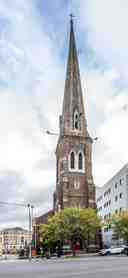
To spot Grace Church, simply look for the tall, pointed stone steeple with a cross on top rising above the trees and the busy street-it stands out immediately with its brown brickwork and striking red door. If you imagine yourself here back in 1838, you’d find a handful of determined parishioners convincing their rector to let them form a new Episcopal church-no fancy building, just eager neighbors gathering in an upstairs room. Now, you’re looking at their legacy, a church that faced more drama than a soap opera. The first building was put up at the corner of Broadway and Columbia, but after two decades, they aimed higher. In 1856, workers set the very cornerstone beneath your feet, the sound of hammers and hopeful voices buzzing through the air. The trouble was, money was tighter than a drum, and by 1859 it looked like the church would remain a beautiful but unfinished dream. Enter Reverend Brandegee, the third rector, who hustled and fundraised tirelessly, practically shaking every tree along Genesee Street for nickels and dimes. Finally, in 1860, the doors creaked open for the first service-imagine the pride and relief echoing through these walls! And by Easter of 1864, the mortgage was paid; it only took them $30,000 and countless bake sales. Over the years, Grace Church became a hub for helping neighbors, its mission echoing in all corners of the city. Even as its congregation grew smaller, it stayed resilient; in 1994, it welcomed a new wave of friends from Calvary Church, creating a new chapter in its story. After more than 150 years of joy, struggle, and music-thanks to organist Norman Coke-Jephcott for nearly a decade-it earned its spot on the National Register of Historic Places in 1997. Grace Church isn’t just bricks and stone; it’s a testament to what a bit of stubborn faith and a lot of teamwork can build.
Eigene Seite öffnen →To spot the New Century Club, look for a pale blue, stately brick building with tall windows and greenish trim, right at 253 Genesee Street-just across from its yellow-toned…Mehr lesenWeniger anzeigen
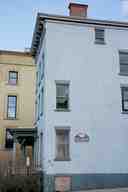
To spot the New Century Club, look for a pale blue, stately brick building with tall windows and greenish trim, right at 253 Genesee Street-just across from its yellow-toned neighbor. Now, take a step closer and imagine the year is 1905. The air is filled with the chatter of determined women, hats perched just so, flowing skirts brushing across the steps as they hurry inside. This is no ordinary house-this is the headquarters of the New Century Club, crafted by local architect Frederick H. Gouge in the elegant Greek Revival style. Don’t worry, you’re not the only one impressed by those bold columns and perfect symmetry! Within these historic walls, a group of trailblazing Utica women plotted to transform the city’s future. Their projects weren’t just about tea and cookies (though there was probably plenty of both), but about opening new schools, building parks where kids could play, and even rethinking justice for young people who’d made a mistake or two. Every decision, every meeting buzzed with energy as they tackled challenges and debated ideas, their determination echoing right down to us today. The secret to their success? A pinch of courage, a dash of imagination, and a scoop of heart-proving that when you mix the right people together, even the grandest building can feel like the center of something revolutionary.
Eigene Seite öffnen →To spot the Matt Brewing Company, look for the tall red-brick building with large arched windows and “West End Brewing Company” carved above the second story, just to the right of…Mehr lesenWeniger anzeigen
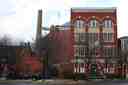
To spot the Matt Brewing Company, look for the tall red-brick building with large arched windows and “West End Brewing Company” carved above the second story, just to the right of the towering smokestack reaching into the sky on Schuyler Street. Imagine yourself in the late 1800s here in Utica-horses clopping by, the air filled not with car exhaust but the sweet, tangy scent of malted grains and hops drifting from this very brewery. This family-owned operation first fired up its kettles in 1888, thanks to the ingenuity of Francis Xavier Matt, who had traveled all the way from Germany’s Black Forest. With brewing knowledge learned not just in classrooms, but as “an art, not a science,” Matt built the West End Brewing Company into the proud centerpiece you see today. Now, picture the wild times of Prohibition-no beer, but the Matt family wasn’t about to throw in the bar towel. They stayed afloat with root beer, ginger ale, and tonics with not a drop of alcohol, all carrying the Utica Club label. If you were here then, you’d hear the fizz and pop of soft drink bottles instead of beer barrels rolling. When the country finally lifted the ban, this brewery raced to become the first in America to snag a beer license. I bet the city was ready for a cold one, don’t you think? TV brought the next big act: Schultz and Dooley, talking beer steins who became national celebrities almost as famous as the beer itself. Beer lovers across the Northeast knew the jingle and the friendly argument-ending line: “It’s tough to argue over a Utica Club, ‘cause they put too much love into it!” If you find the original Schultz and Dooley mugs today, don’t put them in the dishwasher-some have fetched over a thousand dollars at auction. That’s more than some people’s beer tabs for an entire year. Through the 1950s and 60s, the brewery wasn’t just making beer; it was making Utica the grooviest club in the country, at least according to its “Utica Club Natural Carbonation Band Beer Drinking Song.” They even had advertisements featuring a mythical nightclub where your only job was to sip the latest brews. And as times changed, so did the beers: from the classic lagers to today’s award-winning Saranac Pale Ale, brewed right here under the same tall smokestack. The Matt family’s grip never loosened. Generations adapted, modernized, and sometimes went to war with the beer giants. One time, they even fired off a rhyming challenge to Budweiser and Miller! Creativity, resilience, and a big dash of friendly spunk-that’s the Matt way. But not all was smooth sailing. In 2008, a fire ripped through the packaging building, flames licking up the sides and black smoke billowing over Utica. It destroyed entire floors and millions in equipment, but the Matt family response? They grabbed their hoses, rebuilt, and made the brewery better than ever. In fact, the upgraded canning facility now outshines the old one by miles. From there, the Matt Brewing Company went on to help rescue other breweries, including Buffalo’s Flying Bison and Frederick’s Flying Dog, showing that helping competitors can be good for everyone-especially if there’s a beer involved. As you stand outside, maybe you catch the echo of laughter from Saranac Thursday. Each summer, the brewery hosts these grand Thursday night gatherings with music, food, and-surprise-more beer, drawing people from all over and turning Varick Street into the "Brewery District." Tours are still a big draw, so if you’re curious about how beer is born (and want to taste some), you might swing by any weekend. So while you marvel at the arched windows, the tied history, and maybe even dream of finding an original Schultz stein, remember: this brewery isn’t just old, it’s alive-changing, brewing, welcoming, and never losing its sense of fun. And in Utica, if someone offers you a root beer or a Saranac, you’ll know exactly where it was made! Interested in a deeper dive into the family leadership, award winning beers or the saranac pale ale? Join me in the chat section for an insightful conversation.
Eigene Seite öffnen →To spot St. Joseph’s Church, just look for the grand double-towered brick building with arched windows and limestone trim standing proudly along Columbia Street-it’s so big, you…Mehr lesenWeniger anzeigen
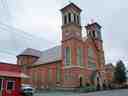
To spot St. Joseph’s Church, just look for the grand double-towered brick building with arched windows and limestone trim standing proudly along Columbia Street-it’s so big, you might wonder if giants come here on Sundays! Alright, imagine you’re standing here in the 1800s-horses clopping by, a few hopeful immigrants looking for work on the canals, and suddenly the sound of church bells fills the air. At first, local Catholics had no fancy building-Mass was celebrated in someone’s living room, specifically John C. Devereux’s! As the community grew, so did their wishes. By 1840, they got creative and bought the old Methodist church, transforming it for their own lively worship. But the magic really began in 1871, when this brick masterpiece was completed. Stretching a full 180 feet, the church was built in the solid, no-nonsense German Romanesque style-perfect for the community of hardworking German immigrants. Those tall stained glass windows? They're from Innsbruck, Austria-imagine the sunlight beaming through in a rainbow of colors, dazzling everyone sitting in the pews. And of course, the church isn’t alone. The Parochial School, built in 1885, welcomed countless local kids (and probably heard more mischief than prayers some days), while a cozy brick convent and residence housed the tireless Sisters of St. Francis, who even opened the city’s first hospital out of a tiny house nearby. By 1977, this place was such a legend that it ended up on the National Register of Historic Places! In more recent times, after St. Joseph's joined forces with St. Patrick's, the church became famous for helping those in need. Walk around back today and you might even catch the warm aroma of soup from Mother Marianne’s Westside Kitchen, making sure no one in Utica goes hungry. So, whether for faith, food, or simply a quick history lesson, St. Joseph’s Church is definitely a local hero!
Eigene Seite öffnen →To spot the Munson-Williams-Proctor Arts Institute, look straight ahead for a bold, windowless granite and bronze cube, sitting high above the ground with broad steps leading up…Mehr lesenWeniger anzeigen
To spot the Munson-Williams-Proctor Arts Institute, look straight ahead for a bold, windowless granite and bronze cube, sitting high above the ground with broad steps leading up to its modernist entrance and a banner over the door. Alright, picture yourself here in 1960-jazz music in the air, the latest cars gliding by, and you’re staring at a building so different it actually floated… or so it seemed! Believe it or not, the Munson Museum of Art building is a square, 60,000 square foot cube dreamt up by the legendary architect Philip Johnson, a man with glasses almost as round as his ideas. The whole structure is held up by eight giant concrete piers, dressed up in bronze and sleek black Canadian granite, looking like a mysterious block from the future had landed in Utica. And that “floating” vibe? The building hovers above sunken offices, surrounded by a dry moat. Feels a little like something out of a spy movie, doesn’t it? Back in the day, a model of this cube was so impressive it even represented the U.S. at the Brussels World’s Fair in 1958, which is basically the Olympics… for buildings! And while Johnson’s modern marvel grabs your eye, don’t miss the Victorian Fountain Elms mansion next door-picture evening parties, candlelight, and the swish of silk skirts, now home to the Institute’s collection of decorative arts. The two are linked by a 1995 education wing, as if the past and future decided to hold hands. But step inside, and you’re in the world of art giants: Picasso, Dalí, O’Keeffe, Hopper, even a set of Thomas Cole’s “The Voyage of Life”-the other set’s at the National Gallery in Washington, D.C.! The museum’s permanent collection now tops 25,000 works, and you might spot something from Jasper Johns, Rembrandt, or even Andy Warhol winking at you from the walls. Upstairs in the two-story sculpture court, sunlight pours through the skylight, bouncing off bold modern forms. Munson isn’t just a place to see art-it’s where you make it, too. Since 1936, artists of all ages have come to learn, and when the Arts Guild of New York City packed up and moved here, they began what would become one of the region’s best art schools. Today, you might meet future legends studying through the PrattMWP program, finishing their BFA in Brooklyn but always remembering where their creative journey began. And if you’re wondering about that long, tongue-twisting title, Munson-Williams-Proctor Arts Institute-well, in 2023 they decided to just call it “Munson.” Simple, friendly, and just as full of surprises. This cube may look serious, but inside, it’s a treasure chest of color and life, ready to spark your imagination! Want to explore the museum of art, school of art or the selection of notable artists featured in the museum collection in more depth? Join me in the chat section for a detailed discussion.
Eigene Seite öffnen →The Utica Public Library stands proudly ahead with its sturdy red brick facade, a grand stone entrance framed by massive Corinthian columns, and a pediment that seems to welcome…Mehr lesenWeniger anzeigen
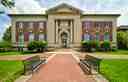
The Utica Public Library stands proudly ahead with its sturdy red brick facade, a grand stone entrance framed by massive Corinthian columns, and a pediment that seems to welcome every curious mind inside. Picture yourself back in 1901, with the buzz of the industrial age filling Utica-the library, designed by Arthur C. Jackson, rises up like a palace of knowledge, built from New Haven brick atop a foundation of cool limestone. Its impressive entrance will make anyone feel like a wise philosopher the moment they climb the steps! But the library’s story began long before that: imagine a small room in the 1820s, where attorney Justus Rathbone stored shelves of precious books, and where the smell of aging leather mingled with legal debates about “who’s overdue again?” By 1842, there were just 1,700 books; by 1865, 4,000-imagine the shifting stacks and growing towers of pages! Then, in 1904, an epic move: more than 25,000 books wheeled down the street from Elizabeth Street, surely with a few close calls with rainclouds and passing carriages. As decades passed, the library’s basement even hosted the Junior Museum, alive with children’s laughter and curious minds in the 1960s. Listed on the National Register of Historic Places, the library today stands as a testament to generations of learning, imagination, and the occasional panicked search for that one lost library card.
Eigene Seite öffnen →To spot the Millar-Wheeler House, just look for the deep red brick mansion with its grand, ornate entrance portico topped by a projecting oriel window and a little belvedere…Mehr lesenWeniger anzeigen
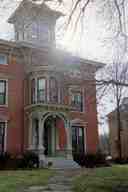
To spot the Millar-Wheeler House, just look for the deep red brick mansion with its grand, ornate entrance portico topped by a projecting oriel window and a little belvedere perched right on top-like a crown for this historic home! Now, take in the scene: it’s 1866, carriages clatter past while the scent of brick dust and freshly sawed wood fills the air. The Millar-Wheeler House rises three stories tall, square and dignified, its broad eaves stretching out as if tipping a hat to visitors. Imagine stepping up to that elaborate portico-a showpiece of Italianate charm, each curled bracket and carved flourish practically daring you to guess the stories inside. Gossipy Uticans might have peered up at the belvedere, wondering about the family’s secrets or what impressive guests might be roaming those plush hallways. Over time, the laughter of visitors gave way to the gentle creak of floorboards as it transformed into the Rosemont Inn, a bed and breakfast where you might still imagine old-timey whispers floating through the halls. And in 2000, the house got its gold star: a spot on the National Register of Historic Places. A little bit mysterious, a little bit grand-this old beauty has seen more late-night tales and early-morning sunlight than most homes ever will. Congratulations! You’ve completed your Utica adventure standing in the shadow of a house that’s watched the city change for more than 150 years.
Eigene Seite öffnen →

Häufig gestellte Fragen
Wie starte ich die Tour?
Laden Sie nach dem Kauf die AudaTours-App herunter und geben Sie Ihren Einlösecode ein. Die Tour ist sofort startbereit – tippen Sie einfach auf „Play“ und folgen Sie der GPS-geführten Route.
Benötige ich während der Tour Internet?
Nein! Laden Sie die Tour vor dem Start herunter und genießen Sie sie vollständig offline. Nur die Chat-Funktion benötigt Internet. Wir empfehlen den Download über WLAN, um mobiles Datenvolumen zu sparen.
Handelt es sich um eine geführte Gruppentour?
Nein – dies ist ein selbstgeführter Audioguide. Sie erkunden unabhängig in Ihrem eigenen Tempo, wobei die Audioerzählung über Ihr Telefon abgespielt wird. Kein Reiseleiter, keine Gruppe, kein Zeitplan.
Wie lange dauert die Tour?
Die meisten Touren dauern 60–90 Minuten, aber Sie kontrollieren das Tempo vollständig. Pausieren Sie, überspringen Sie Stopps oder machen Sie Pausen, wann immer Sie wollen.
Was, wenn ich die Tour heute nicht beenden kann?
Kein Problem! Touren haben lebenslangen Zugriff. Pausieren Sie und setzen Sie sie fort, wann immer Sie möchten – morgen, nächste Woche oder nächstes Jahr. Ihr Fortschritt wird gespeichert.
Welche Sprachen sind verfügbar?
Alle Touren sind in über 50 Sprachen verfügbar. Wählen Sie Ihre bevorzugte Sprache beim Einlösen Ihres Codes. Hinweis: Die Sprache kann nach der Tour-Generierung nicht mehr geändert werden.
Wo greife ich nach dem Kauf auf die Tour zu?
Laden Sie die kostenlose AudaTours-App aus dem App Store oder von Google Play herunter. Geben Sie Ihren Einlösecode (per E-Mail gesendet) ein, und die Tour erscheint in Ihrer Bibliothek, bereit zum Download und Start.
Wenn Ihnen die Tour nicht gefällt, erstatten wir Ihnen den Kaufpreis. Kontaktieren Sie uns unter [email protected]
Sicher bezahlen mit 


