
London Audio Tour: Kunst, Legenden & Lachen im lebhaften Westminster
London leuchtet am hellsten, wo Tradition und Rebellion aufeinandertreffen. Um jede Ecke des geschäftigen Herzens von Westminster flimmern Geheimnisse unter den Neonschildern und Filmpalästen. Diese selbstgeführte Audiotour lüftet den roten Teppich, um die wilden wahren Geschichten, den Schabernack und die Meisterwerke zu enthüllen, die diese Straßen legendär gemacht haben – weit über die touristische Linse hinaus. Wer entfachte eine komische Revolution über einem berüchtigten Stripclub in Soho – und riskierte alles für einen Lacher? Welcher Leinwandstar verbarg einst viktorianische Dampfbäder, skandalöse Eskapaden und sogar königliche Besuche? Welches verzweifelte Rennen zwang ein ganzes Kino, seine Sitze herauszureißen, nur um ein episches Wagenrennen unterzubringen? Schlendern Sie vorbei an leuchtenden Vordächern und durch verborgene Schichten der Showbiz-Geschichte. Springen Sie in einem einzigen Schritt von Stand-up-Legenden zu Hollywood-Premieren, während jeder Schritt einen weiteren Schub an Drama oder Erfindung enthüllt. Machen Sie sich bereit, Londons Unterhaltungskern wie nie zuvor zu sehen. Lassen Sie Neugier Ihr Ticket sein – treten Sie näher, hören Sie zu und lassen Sie sich vom Puls Londons überraschen.
Tourvorschau
Über diese Tour
- scheduleDauer 40–60 minsEigenes Tempo
- straighten2.3 km FußwegDem geführten Pfad folgen
- location_onStandortLondon, Vereinigtes Königreich
- wifi_offFunktioniert offlineEinmal herunterladen, überall nutzen
- all_inclusiveLebenslanger ZugriffJederzeit wiederholen, für immer
- location_onStartet bei The Comedy Store
Stopps auf dieser Tour
To spot The Comedy Store, look for a black awning and a glowing red neon sign spelling out its name just above the entrance-it's hard to miss, especially in the evening when the…Mehr lesenWeniger anzeigen
To spot The Comedy Store, look for a black awning and a glowing red neon sign spelling out its name just above the entrance-it's hard to miss, especially in the evening when the sign lights up the street and crowds gather outside for a night of laughter. Now, let’s get you in the mood for a little time travel-back to a wilder Soho, long before the Netflix specials and TikTok comedians. Picture yourself standing here on Oxendon Street, just as the sun’s going down and the energy of the city is bubbling up. It’s 1979-sounds ancient, but don’t worry, the spirit of fun is timeless! Let’s set the stage: right here, The Comedy Store opened its doors for the very first time, born from a cross-continental spark of inspiration and just a dash of madness. How did this spot become the beating heart of British comedy? It started with an ordinary man-Peter Rosengard, an insurance salesman by trade-not exactly your typical funnyman. One night on holiday in Los Angeles with his wife, Peter asked a hotel concierge what to do with their evening. The answer? The original Comedy Store in Hollywood. Peter wandered in, laughed his head off, and had a wild idea: “Why can’t we have something like this in London?” His friends all said it’d never work. Luckily, Peter didn’t listen to them! Back in London, he teamed up with Don Ward, who just happened to have access to the upper floors of 69 Dean Street-a building with its own wild saga. Believe it or not, those rooms had been home to the famously decadent Gargoyle Club, catering first to artists and bohemians, then sold off and reborn as the Nell Gwynne, a strip club with plenty of glamorous mischief of its own. In the late ‘70s, the club was a patchwork: topless barmaids, a long-running revue, and then-thanks to Peter’s persistence-a slot for a weekly night of stand-up comedy. Picture the scene: It’s Saturday night, the air is buzzing, and you’re about to climb the stairs above a strip club to find a tiny stage and a wild crowd ready to jeer, cheer, or even “gong” the acts off with ruthless delight. The Comedy Store’s original open mic night wasn’t for the faint-hearted: comedians had to perform in a place that, to put it lightly, lacked frills. There wasn’t even a toilet in the dressing room-so, rumor has it, the sink saw more action than you’d think possible. Not glamorous, but it certainly built character! In those early days, there was a hilarious overlap between striptease and stand-up. At eleven, the Nell Gwynne would shut down its more risqué business, and the crowd would shift gears, ready for the cutting edge of British humor. If you were a comic on the rise, you’d rush across London between pubs and the Comedy Store, squeezing in multiple gigs a night and hoping the rowdy crowd here was in the mood for laughter, not just heckling. Who were these brave comedic pioneers? Picture a lineup stacked with future legends-Alexei Sayle, Rik Mayall, Adrian Edmondson, French & Saunders, Nigel Planer, Peter Richardson. They would go on to revolutionize British TV and comedy. The spirit of anarchy and invention here birthed the legendary Comic Strip team and shaped a generation of performers like Paul Merton, Jo Brand, Ben Elton, and Mark Thomas. Paul Merton, by the way, has been at it since 1984 and still shows up-comedy has stamina! But the story doesn’t end with stand-up. In 1985, a handful of extraordinary improvisers-the Comedy Store Players-decided to take the stage with nothing but their wits. Imagine a young Mike Myers, Paul Merton, and a rotating cast, waiting backstage, ready to invent entire worlds with just a suggestion from the crowd and maybe a prompt or two. That same spirit-quick, clever, and just a bit chaotic-would lead some of them onto “Whose Line Is It Anyway?” where those lightning-fast gags won new fans far beyond Soho. Of course, comedy is always moving, and when the club outgrew its original space (and probably got tired of explaining the sink situation), it bounced through a couple of venues before landing right here at 1a Oxendon Street. Now, The Comedy Store is the big top of British laughter, hosting everything from established stars to up-and-coming jokers angling for their big break-all inside the glow of that iconic red sign. Next time you walk by a noisy crowd here, just pause a second: behind those doors, someone’s about to get a hearty laugh, a playful roast, or maybe even a pie in the face. Stand-up, improv, satire-it all lives at The Comedy Store, where British comedy found, and keeps finding, its wildest voice. Alright, don’t trip over the punchlines as we move along! Curious about the the comedy store, careers or the groups? Don't hesitate to reach out in the chat section for additional details.
Eigene Seite öffnen →

9 weitere Stationen anzeigenWeniger Stationen anzeigenexpand_moreexpand_less
To spot the Odeon Luxe West End, just glance upward at the striking modern building in front of you-the sleek glass and metal façade is sliced with bold vertical fins, and a giant…Mehr lesenWeniger anzeigen
To spot the Odeon Luxe West End, just glance upward at the striking modern building in front of you-the sleek glass and metal façade is sliced with bold vertical fins, and a giant column spells out “ODEON” in gleaming white letters atop the unmistakable “Dolby Cinema” sign. Now, let’s take a walk through time-and trust me, this building has more plot twists than an Oscar-winning movie! Imagine yourself standing here in the swirling night air of London, surrounded by the bright lights and endless bustle of Leicester Square. Today, you see a futuristic cinema gleaming in blue and steel, but rewind your mental projector to 1930, and you’d be standing before the brand-new Leicester Square Theatre. It was built with all the razzle-dazzle in mind by actor Jack Buchanan and theatre impresario Walter Gibbons-Buchanan himself had a swanky two-story apartment perched on the top! If walls could talk, these would gossip about movie stars and maybe sing a show tune or two. That first incarnation was more theatre than cinema, with boxes ready for elegant guests and walls of black polished marble. The opening night was a real spectacle-a swirl of film, live stage performances, and the mighty Wurlitzer organ filling the air. For a while, the stage was live with variety shows and toe-tapping singers, with Marie Kendall crooning, “Just Like the Ivy” to the kind of crowd you’d imagine in a golden age movie. A revolving stage-a bit of special effects, 1930s style-added a sprinkle of magic. But the lure of film was too strong, and like a popcorn kernel in hot oil, the theatre popped back and forth between live shows and movies with names like Buchannan’s own film, “That’s a Good Girl.” It quickly became a place where celluloid dreams came to life. The theatre changed hands faster than a Hollywood script, flipping between Warner Brothers, United Artists, RKO, and eventually the Rank Organisation. Famous names and dazzling premieres became the heart and soul of this spot-picture starlets in glamorous gowns and dapper gents under the flashes of old-fashioned cameras. London has never been short of drama, and neither was this building. During World War II, late October 1940, a bomb blasted the place-Buchanan’s glamorous apartment included. But like all great cinemas, it was resilient, returning in 1941, restored and ready to whisk audiences away again. In the years that followed, it hosted the UK premieres of “Alice in Wonderland,” Laurence Olivier’s “Richard III,” and the much-loved “Mary Poppins”-that means somewhere in this very spot, magical nannies were practically perfect in every way! Fashions changed, and so did the theatre. In 1968, it underwent a full Hollywood-style makeover-completely modern, echoing the mood of swinging London-with a Royal Charity Premiere of “Shalako” starring none other than Sean Connery and attended by actual royalty (that’s right, Princess Margaret herself!). Over nearly five decades, it welcomed blockbuster after blockbuster. “Crocodile Dundee” came swaggering in here, and if the walls had ears, they probably still remember every punchline of that premiere. By 1988, the place had a new name: Odeon West End. Through the ‘90s and into the 2000s, it hosted London Film Festival screenings and big-ticket premieres, from “Toy Soldiers” to “Sex and the City.” In contrast to the packed stars-and-stripes showings, there were days with less than ten people in the audience. I guess not every film can be a box office smash-someone call the extras! But change, like an untimely plot twist, hit in 2015. After years of movie magic, popcorn spills, and probably a few overdue library fines from all those scripts floating around, the cinema closed its curtains. The whole site was demolished, making way for a brand-new, £300 million scene: The Londoner hotel, topped off (or should I say, bottomed out?) with the reborn Odeon Luxe West End. When it reopened in 2021, it arrived as a digital dream-a state-of-the-art palace sunk deep underground, with plush seats and a Dolby Cinema that would make even the ghosts of old theatre managers jealous. Now, it’s one of the sparkling jewels of London’s cinema world, hosting the stars of the BFI London Film Festival and the glitzy remaster premieres, like “Les Misérables.” So next time you’re walking by and catch the scent of fresh popcorn in the air, remember that this glimmering cinema has survived bombs, rebuilds, squatters, and even a global taste for digital projection-no spoilers, but that’s what I call a real cinema classic!
Eigene Seite öffnen →To spot St Martin-in-the-Fields, just look for the grand neoclassical church with a tall white spire and a stunning row of Corinthian columns facing out onto the street, standing…Mehr lesenWeniger anzeigen
To spot St Martin-in-the-Fields, just look for the grand neoclassical church with a tall white spire and a stunning row of Corinthian columns facing out onto the street, standing boldly on the north-east corner of Trafalgar Square. Now, step a little closer, take in the sweeping stone steps and those mighty columns, and let’s go for a walk through time. Imagine standing here centuries ago-not on a busy London street, but in open countryside with only the occasional passing sheep for company and the distant sounds of fields and wind in the grass. Funny to think this was once literally "in the fields"-the edge of the city, where Romans laid their loved ones to rest, followed by generations of Saxons. Whispered stories and secrets soaked into the very ground beneath your feet. By 1222, the first church made the local abbots argue about who got to run the place-and let’s be honest, what’s a British church without centuries of squabbling clergy? It was so far from the city that Henry VIII himself rebuilt it in the 1500s, mostly because he didn’t want plague-stricken Londoners walking past his palace on the way to church. Picture it: an isolated, lonely building on the ancient road, trying its best to keep the peace (and the plague) away. Fast-forward to King James I's time, around 1606-the city is growing, burials are stacking up, people are crowding in-the church is not so lonely anymore. Eventually, there were even galleries squeezed inside to pack in all the faithful, so everyone could get a good view. A bit like trying to fit your whole family on the sofa for Christmas telly, only with more pillars and less pudding. But after hundreds of years, the walls and roof began to give up. By 1710, things were looking a bit grim, and the powers that be decided they needed a new church that wouldn't fall down mid-sermon. This is where James Gibbs shows up, rolls up his sleeves, and says, “How about something neoclassical and a bit flashy?” The present church was built between 1722 and 1726-and get this, costs soared from the budgeted £22,000 to a whopping £33,661. Classic construction project, am I right? If you look up, those six giant Corinthian columns at the entrance are just showing off, really, and that spire soars nearly 192 feet above the ground. Gibbs did something clever with the design: instead of just sticking the tower next to the church, he tucked it into the main building so majestically that this style was copied all over the world, especially by Protestants. Churches as far away as Charleston, South Carolina and even in South Africa owe their look to this spot you’re standing outside. Not only is the church itself a visual anchor in Trafalgar Square, but it’s played host to notables who are anything but boring: Robert Boyle (the scientist), Nell Gwyn (the actress and royal mistress), and Thomas Chippendale (the furniture designer so legendary, people still sit on his namesake chairs). Fame isn’t just for those buried here though-its crypt, now a lovely café, often echoes with jazz concerts and the clink of teacups, the proceeds going to help the city’s homeless. Move closer and you might almost hear the peal of Sunday morning bells, all twelve of them, still rung by volunteers today. These bells even had a starring role in a trip to Australia, forming part of the famous Swan Bells tower in Perth. Talk about a gap year! St Martin-in-the-Fields is sometimes called the “Church of the Ever Open Door”-it’s famous for its kindness, opening its arms for centuries to the homeless and lost, with The Connection charity supporting thousands with shelter, meals, and life-changing help. At Christmas, their BBC Radio 4 Appeal tugs at heartstrings-and purse strings-across the nation. But it’s not just a stage for charity. The musical heartbeat of the place shines all year round, with choirs, lunchtime and evening concerts, and the world-famous Academy of St Martin-in-the-Fields calling it home. The very organ you’d hear if you stepped inside now is the result of generations of craftspeople, filling the air with rich music and mysteries of centuries past. And here’s a quirky snapshot: not only has the church popped up in classics like Doctor Who and films like Notting Hill, it might just be the St Martin’s of the nursery rhyme “Oranges and Lemons.” Pretty good for what started out as a country church in the middle of nowhere, don’t you think? As you stand here today, right in the heart of buzzing Westminster, you’re not just seeing a church-you’re gazing at centuries of life, death, laughter, song, and hope, all rooted in a patch of London that’s seen it all, from ancient burials through plague, royal dramas, to jazz in the crypt. And if you listen hard enough, perhaps you’ll hear an echo of everything that’s come before. To delve deeper into the in popular culture, royal connections or the charity, simply drop your query in the chat section and I'll provide more information.
Eigene Seite öffnen →To spot the National Gallery, look straight ahead for a grand, cream-colored building with tall columns, big stone steps leading up to a prominent central dome, and large red…Mehr lesenWeniger anzeigen
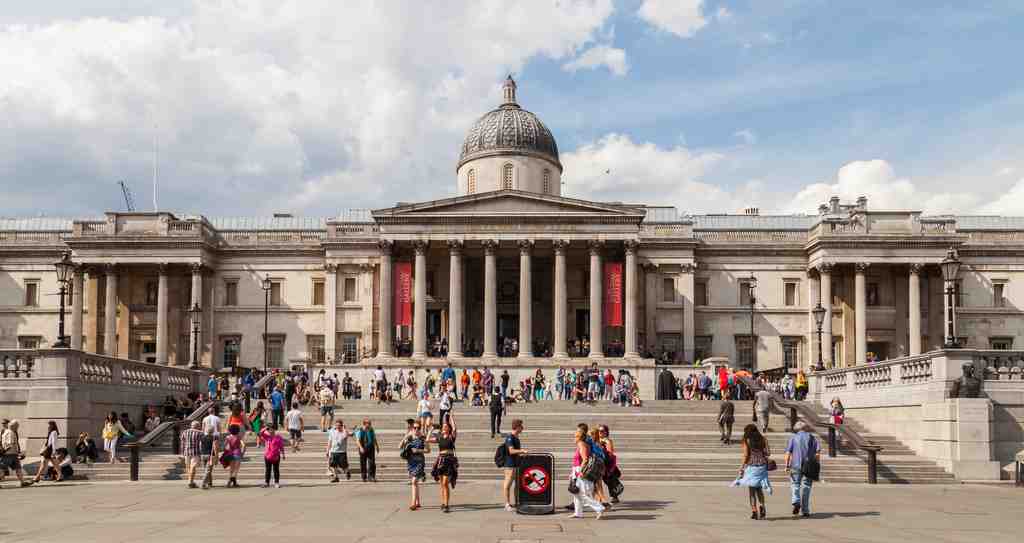
To spot the National Gallery, look straight ahead for a grand, cream-colored building with tall columns, big stone steps leading up to a prominent central dome, and large red banners on either side of its main entrance. Welcome to the National Gallery, the sparkling heart of Trafalgar Square! Take a deep breath and imagine the bustle of carriages, horses, and Londoners from centuries past. All eyes are on this proud neoclassical building, its massive columns and majestic dome standing at attention like guards of honour. The Gallery has been watching over the square since 1838, but its story began in 1824, when the British government decided-finally!-to build a world-class art collection for everyone to enjoy, not just royal families and princes. In fact, unlike Europe’s grand museums, our National Gallery didn’t begin with a king’s private trove. Instead, it started with the humble purchase of 38 paintings from the heirs of a banker called John Julius Angerstein. Picture the scene: Parliament buzzing with debate, newspapers reporting scandal. Should we really spend this much on art, they wondered? Thankfully, artists and art-loving aristocrats won the day. Soon, the gallery outgrew Angerstein’s poky house on Pall Mall-so small, one critic grumbled it was like squeezing an elephant into a suitcase! Here on Trafalgar Square, between Mayfair’s riches and the bustling East End, the new gallery became a gift to all Londoners, rich and poor. If you think the building looks a little… eclectic, you're not alone! When architect William Wilkins was handed the job, he reused columns from King George IV’s old palace and even recycled statues from Marble Arch (talk about upcycling!). When it opened, even the king called it “a nasty little pokey hole.” Critics said its dome and corner turrets looked like a mantelpiece with teapots on top. But hey, tastes change-now it's part of London’s soul. Step closer and listen carefully -the very ground you stand on once housed royal stables! As the years rolled on, the Gallery survived wars, dust, grumpy critics, overcrowded rooms, and even arguments about whether to show Impressionist masterpieces (some trustees were so appalled, they compared it to hosting a circus in a cathedral!). During World War II, with bombs falling, every single painting was whisked away to a slate quarry in Wales, safe from harm. Every day, the Gallery stood empty-except for a few brave musicians like Myra Hess, who played lunchtime concerts on the echoing marble just for Londoners seeking hope in dark times. Over the years, incredible gifts and bequests expanded the collection, from priceless Raphaels to rowdy Titians and even Van Gogh’s Sunflowers. The director Charles Lock Eastlake became a kind of art detective, scouring Italy and the continent for hidden treasures to bring home. The Gallery grew sideways and upwards, sprouting new wings-though not always gracefully, if we're honest. At one point, so many British paintings arrived, there was literally nowhere to hang them, and a new museum, the Tate Gallery, had to be created! There’s mystery and drama around every corner-artists squabbling with curators, critics worried that restorers might “over-clean” masterpieces, daring heists avoided, and decades-long battles over whether paintings should be here, in Dublin, or across the seas. Often, the gallery had to rally the entire nation for donations just to keep a masterpiece in public hands: “Will you chip in for a Titian?” Picture schoolchildren sending in their pennies. Today, the National Gallery is owned by the people and free to visit-so you, yes you, are now a partner in this grand adventure. As you stand before its storied façade, think about what hangs inside: over 2,300 paintings mapping 700 years of ambition, grief, hope, and creative genius-all drawn together in a building once called “a pokey hole,” but now a beloved palace of pictures. So go on-step inside and meet everyone from Giotto to Cézanne. Just don’t try to take home any souvenirs, unless you fancy starting an international art scandal! Wondering about the architecture, incidents or the list of directors? Feel free to discuss it further in the chat section below.
Eigene Seite öffnen →To spot Theatre Royal Haymarket, look for a grand white building with a dramatic six-column portico, its capitals painted gold, right on Haymarket street-like a classical Greek…Mehr lesenWeniger anzeigen
To spot Theatre Royal Haymarket, look for a grand white building with a dramatic six-column portico, its capitals painted gold, right on Haymarket street-like a classical Greek temple that suddenly decided theatre was more fun than housing gods! Now, let’s step into the magic of the Haymarket! You’re standing before a theatre that’s been delighting, shocking, and occasionally confusing audiences for more than three hundred years. Picture London in 1720: muddy streets, flickering lanterns, and the scent of roasted chestnuts-and right here, where you’re standing, a brand-new playhouse springs up, built over a gunsmith’s shop charmingly called the Cannon and Musket. The locals called it the “New French Theatre,” clearly hoping Parisians would feel at home even as rain trickled down their backs. This wasn’t just some ordinary playhouse, mind you. This theatre was a rebel, an alternative to stuffy opera and panto-packed rivals. It gave space to anyone daring enough to lampoon politicians or put on witty burlesques-think of it as the “Saturday Night Live” of Georgian London. Henry Fielding himself marched his clever, biting satires onto the Haymarket stage, much to the nervous twitching of Prime Minister Robert Walpole, who was so offended he brought in the notorious Licensing Act of 1737. Imagine a politician so thin-skinned, they pass a law just to stop you making fun of them on a Friday night! The Haymarket flourished with success stories, notorious hoaxes (yes, a man once advertised he’d climb into a wine bottle on stage-spoiler: he didn’t, and the crowd rioted), and nightly dramas, both scripted and accidental. In the 18th century, audiences poured in, hoping to catch something new, subversive, or just wonderfully silly. The lease and license would bounce between flamboyant characters: at one point, the great Samuel Foote took control, producing plays where no one was safe from a sharp-tongued caricature-local politicians hid in the back rows just in case. Now, leave the mud and candle smoke behind and imagine 1821, when architect John Nash rebuilt the theatre-he dressed it up in the grand attire you see now, those golden Corinthian columns glowing with pride, the perfect backdrop for a red carpet (or a misbehaving ghost). And yes, speaking of ghosts, keep your eyes peeled during comedies-rumor says John Baldwin Buckstone, a 19th-century manager, still pops by to giggle at the punchlines, even when no one else laughs. Patrick Stewart himself claims to have seen Buckstone hanging around in the wings! This place has seen it all. Oscar Wilde premiered his cleverest comedies here; imagine the gasps and roaring laughter as Lady Bracknell issued her legendary lines right through that very door. Electric lighting was a novelty here, modernising the stage and wowing crowds who’d never before seen their favorite actors lit up as bright as day. Playwrights and actors-names like Sothern, Gilbert, Sullivan, Maude, and Tree-turned this spot into the toast of the West End. Even the decor received several facelifts: the Louis XVI style dates back to 1904, when opulence was all the rage. Move forward in time and you’ll see this theatre in every era: jazz hands in the roaring twenties, wartime elegance and determination, the starpower of Alec Guinness, Ralph Richardson, and the wit of Noël Coward. Its boards have been walked by Dame Judi Dench and Sir Ian McKellen, while on wild nights in the 2000s, the ceiling joined in the drama by dropping a bit of itself onto the crowd (don’t worry, that was fixed before you arrived!). Even today, the Haymarket is a hive of creative energy. It’s not just the shows-it’s the future too. The Masterclass charity runs spirited workshops and apprenticeships here, welcoming fresh talent and making sure young dreamers can still get their big break on this historic stage. So, as you gaze up at those golden columns, take a breath. Imagine three centuries of drama: from riots over magical wine bottles to standing ovations for comic musicals. If you listen closely, you might just hear the echoes of laughter, applause, and the occasional shocked gasp drifting out from behind the doors of London’s third oldest, and perhaps most mischievous, playhouse. Now, on to our next stop-before a ghost tries to join the tour!
Eigene Seite öffnen →To spot the Reform Club, just look for the grand, palatial building on the south side of Pall Mall with beautifully symmetrical stone windows and a stately, Italian…Mehr lesenWeniger anzeigen
To spot the Reform Club, just look for the grand, palatial building on the south side of Pall Mall with beautifully symmetrical stone windows and a stately, Italian Renaissance-style exterior-think of a Roman palace dropped right into London! Alright, now take a deep breath and step back with me in time! Imagine yourself in London, 1836. The city’s abuzz with political debates, top hats bobbing up and down, and radical ideas swirling like London fog. Suddenly, you hear a distant murmur of lively conversation just behind those imposing stone walls. This is the Reform Club, and-believe it or not-it was founded to be the ultimate hangout for progressive thinkers who wanted to turn the world upside down. The brain behind the club was Edward Ellice-a wealthy Whig MP who, thanks to the Hudson’s Bay Company, had enough cash in his pocket to build something truly special. But what he really wanted was a headquarters where reformers-those who fought for the 1832 Reform Act-could gather to plot, scheme, and share ideas for a more equal Britain. The first meeting? At No. 104 Pall Mall, over a century and a half ago. But the vision grew fast, and soon, construction began on this very spot, led by the legendary Sir Charles Barry. If the name sounds familiar, it should-he also designed the Houses of Parliament. Not too shabby, huh? Now, imagine walking up the steps for the first time in the 1840s, the immense stone façade towering overhead. Inside, the club was-and still is-no ordinary gentleman’s refuge. Barry’s design was inspired by the Palazzo Farnese in Rome. You can almost hear the soft rustle of silk gowns and the click of polished shoes on marble as members made their way to the Saloon, a room considered the finest among London’s exclusive clubs. This was where they gathered to exchange ideas, surrounded by rich wood, tall bookshelves, and high ceilings that seemed to echo with ambition. For decades, the Reform Club’s halls were strictly off-limits to women-until, in 1981, history changed course and ladies were finally welcomed as equals. Imagine the first woman setting foot here, heels clicking defiantly, while club members-once the mighty Radicals and Whigs-exchanged nervous glances over their newspapers. Nowadays, the club is proudly diverse; of its nearly 2,700 members, some 500 are “overseas members,” and more than 400 are women, while diplomats and thinkers from all walks of life gather here from around the globe. This building has stories hidden in every corner. The library grew so vast from member donations it boasted over 85,000 books, a treasure trove of history, ambition, and the odd tall tale. Over the years, the membership’s turned from fiery politicians to civil servants and even literary stars. William Makepeace Thackeray walked these halls, and so did Arnold Bennett. Wilfred Owen’s brother, Harold, once showed up looking for Siegfried Sassoon, who wrote “Lines Written at the Reform Club” just for the members-how’s that for poetic drama? Oh, and if you’ve ever fancied yourself as Phileas Fogg, here’s a fun fact: it’s right here, in Jules Verne’s “Around the World in Eighty Days,” that the courageous-and perhaps slightly eccentric-Fogg accepted his famous bet, racing around the globe and returning to these very doors. Didn’t pack your suitcase for international adventure? That’s fine! The Reform Club pops up on screen more often than some actors. James Bond fenced his way through here in “Die Another Day,” Michael Palin both began and ended his own round-the-world jaunt on those famous steps (though rumor has it, Palin was stopped at the door to avoid disturbing the club members-no tie, no entry!), and it even graced scenes in films from Paddington to Sherlock Holmes to Tenet. As you pass by, picture the echo of heated debates, the suspense of spies slipping in for secret meetings, and maybe, if you listen closely, the ghost of a Victorian chef rolling out a grand feast in MJ Carter’s deliciously mysterious “The Devil’s Feast.” Behind those serious stone walls lies a world of secrets, scandal, and, yes, the occasional stubborn dress code. So, hats off to the Reform Club-where history is always in the making, footsteps echo through marble halls, and you never quite know who (or what) you might bump into next! Exploring the realm of the literary associations, appearances in popular culture and literature or the notable members? Feel free to consult the chat section for additional information.
Eigene Seite öffnen →You can spot Trafalgar Square by looking for the great, open space with its magnificent fountains in the foreground, the tall Nelson’s Column guarded by four bronze lions in the…Mehr lesenWeniger anzeigen
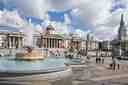
You can spot Trafalgar Square by looking for the great, open space with its magnificent fountains in the foreground, the tall Nelson’s Column guarded by four bronze lions in the center, and the grand pillared facade of the National Gallery stretching along the north side. Alright, let’s jump into the centre of London’s stage-Trafalgar Square! Take a good look around: you’re standing on a site that’s been buzzing with people for centuries. This square, sparkling with fountains and overlooked by the National Gallery’s stately columns, commemorates a naval victory so dramatic it sounds like it was written for the movies-the Battle of Trafalgar in 1805, when Admiral Nelson gave Napoleon’s fleet quite a British surprise off the coast of Spain. The square gets its name from that iconic win, though you’re not likely to find any waves around here-unless you count a sea of tourists and the occasional street performer. Legend has it, back in the 1200s, this area was home to the King’s Mews-not “mews” as in cute kitten sounds, but the royal stables, where hawks and then horses kicked up a fuss. It wasn’t until King George IV rode his horses off to Buckingham Palace that John Nash, an architect with a vision, was told to clear some space for a grand new square. Mind you, Nash didn’t quite live to see it open. Things sort of slogged along until Charles Barry, another architect, ramped up construction in the 1840s. Finally, in 1844, this plaza swung its gates open and Trafalgar Square was born, just in time for those first Londoners to test out its legendary reputation for public gatherings. Now, at the very heart of the square stands Nelson’s Column-a whopping 169 feet high! Perched atop is Admiral Nelson himself, keeping an eye out for enemy ships (or maybe just watching the crowd below). The four massive lions at his feet were added later; the sculptor, Sir Edwin Landseer, was so keen to study a real lion that he borrowed a dead one from the zoo, but took so long that the poor beast started to fall apart… so if the paws look more like moggies than mighty lions, now you know why. This square isn’t just about statues, though. Over the years, it’s seen everything from royal parades to political protests that made the ground shake. In the Victorian era, the square’s most notorious residents were actually pigeons-so many that their droppings did almost as much damage as an invading army! The city finally had to call in falcons and bylaws to shoo them away. And if you visit near Christmas, keep an eye out for the towering tree, a yearly gift from Norway as thanks for Britain’s help during World War II-just try not to stand too close when they turn on the lights, it’s a sparkly spectacle! Fast forward to the present and you’ll notice something called the “fourth plinth” in the square; it was left empty for years and is now a playground for modern artists. You never quite know what’ll appear up there-a giant blue rooster, a swirl of ice cream, or something just as surprising. Contemporary art in the heart of historic London-now that’s something Admiral Nelson never saw coming. Look in every direction and you’ll spot even more pieces of history. The National Gallery stands to the north, home to centuries of art. To the east, St Martin-in-the-Fields church-where, if you listen carefully, you might hear a choir or two-and Canada House and South Africa House are always waving their flags. The old Charing Cross marker stands nearby, the point from which distances to London are measured. Think of it: right now, you’re standing at the center of old and new London. You might just catch the sound of water splashing from the fountains-a clever addition to keep crowds cool and riotous gatherings down (because nothing ruins a good protest like a soggy sock). If the city seems particularly lively, that’s because Trafalgar Square has always been a magnet: film premieres, sports celebrations, New Year’s festivities, and marches for every cause imaginable-it’s all happened under Nelson’s watchful gaze. So as you turn in a slow circle, imagine the echo of speeches, music, laughter, even the flapping of pigeons past-as if every stone is storing stories of Londoners through the ages. That’s Trafalgar Square for you: a meeting place, a memory box, and possibly the only spot in the city where four lions, an admiral, and a giant Christmas tree can share the same stage for the world to see. Intrigued by the name, geography or the statues and monuments? Make your way to the chat section and I'll be happy to provide further details.
Eigene Seite öffnen →Right in front of you, you’ll spot a grand, curved stone building with five archways in the middle, rows of tall windows on either side, flagpoles fluttering the Union Jacks, and…Mehr lesenWeniger anzeigen
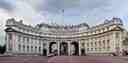
Right in front of you, you’ll spot a grand, curved stone building with five archways in the middle, rows of tall windows on either side, flagpoles fluttering the Union Jacks, and an impressive Latin inscription running along the top-just follow the red road of The Mall as it sweeps through those mighty arches. Now, as you’re standing here, take a moment to imagine yourself at the very threshold between royal pageantry and the lively buzz of Trafalgar Square. Welcome to Admiralty Arch-a gateway that’s seen the footsteps of kings, queens, and maybe even the odd curious pigeon looking for a taste of history! This isn’t just an arch; it’s a dramatic curtain between the old and new, between regal processions and the pulse of London. Let’s step back to the beginnings: The year is 1912, and the city is humming with the clang of construction. King Edward VII, in memory of his mother Queen Victoria, commissions this triumphal arch-though, in a twist of royal timing, he doesn’t live to see it completed. The man responsible for its grand face is Aston Webb, the same architect who reshaped Buckingham Palace and designed the Victoria Memorial at the other end of The Mall. If you had to pick someone to put a stately tidiness on your city, Webb was your man! Above your head, stretch a trail of royal flags and, if you peer up, intricate Latin letters. Sculptures guard the flanks: Navigation on the left, Gunnery on the right, created by Thomas Brock-almost as if the building itself is ready to set sail down The Mall! And here’s a quirky twist to the stately symmetry; notice how the right side of the building, viewed from The Mall, has more floors than the left. You could say someone was listening to a different drum at the planning table! Over the decades, Admiralty Arch wasn’t just a posh façade-it was a warren of government secrets. This was the office and home of the First Sea Lord, the nerve center for the British Admiralty, and an underground maze storing government archives. Rumor has it, there’s a hidden passageway linking the Arch all the way to 10 Downing Street. If walls could talk, these would probably whisper about late-night strategy, top-secret plans… or maybe where the biscuits were hidden. But all empires change. In 2012, the Arch was sold for a cool £60 million, launching it into a new era. The next time you visit London, the familiar arches will open onto the shimmer of the Waldorf Astoria luxury hotel-so, if you book a room, you’ll wake up where admirals once plotted and kings passed by. Every major royal occasion, every carriage, every parade-Admiralty Arch has seen it pass under its arches. The central arch is still only for royalty-or the especially royal-minded squirrel, if you ask me. Ready for a dash of mystery? Peek inside the northernmost archway, about seven feet up, and you might spot a peculiar protrusion: a sculpted human nose! Placed in 1997 by artist Rick Buckley in a tongue-in-cheek protest against “Big Brother” society, it’s become one of London’s smallest and quirkiest hidden gems. As you stand here, you’re in the footsteps of history, scandal, pomp, and even a bit of artistic mischief-Admiralty Arch, the ultimate grand gateway between past and future. Now, isn’t that a memorable way to end our journey? Keep your eyes open, your nose keen, and your imagination ready for whatever comes next!
Eigene Seite öffnen →


Häufig gestellte Fragen
Wie starte ich die Tour?
Laden Sie nach dem Kauf die AudaTours-App herunter und geben Sie Ihren Einlösecode ein. Die Tour ist sofort startbereit – tippen Sie einfach auf „Play“ und folgen Sie der GPS-geführten Route.
Benötige ich während der Tour Internet?
Nein! Laden Sie die Tour vor dem Start herunter und genießen Sie sie vollständig offline. Nur die Chat-Funktion benötigt Internet. Wir empfehlen den Download über WLAN, um mobiles Datenvolumen zu sparen.
Handelt es sich um eine geführte Gruppentour?
Nein – dies ist ein selbstgeführter Audioguide. Sie erkunden unabhängig in Ihrem eigenen Tempo, wobei die Audioerzählung über Ihr Telefon abgespielt wird. Kein Reiseleiter, keine Gruppe, kein Zeitplan.
Wie lange dauert die Tour?
Die meisten Touren dauern 60–90 Minuten, aber Sie kontrollieren das Tempo vollständig. Pausieren Sie, überspringen Sie Stopps oder machen Sie Pausen, wann immer Sie wollen.
Was, wenn ich die Tour heute nicht beenden kann?
Kein Problem! Touren haben lebenslangen Zugriff. Pausieren Sie und setzen Sie sie fort, wann immer Sie möchten – morgen, nächste Woche oder nächstes Jahr. Ihr Fortschritt wird gespeichert.
Welche Sprachen sind verfügbar?
Alle Touren sind in über 50 Sprachen verfügbar. Wählen Sie Ihre bevorzugte Sprache beim Einlösen Ihres Codes. Hinweis: Die Sprache kann nach der Tour-Generierung nicht mehr geändert werden.
Wo greife ich nach dem Kauf auf die Tour zu?
Laden Sie die kostenlose AudaTours-App aus dem App Store oder von Google Play herunter. Geben Sie Ihren Einlösecode (per E-Mail gesendet) ein, und die Tour erscheint in Ihrer Bibliothek, bereit zum Download und Start.
Wenn Ihnen die Tour nicht gefällt, erstatten wir Ihnen den Kaufpreis. Kontaktieren Sie uns unter [email protected]
Sicher bezahlen mit 


