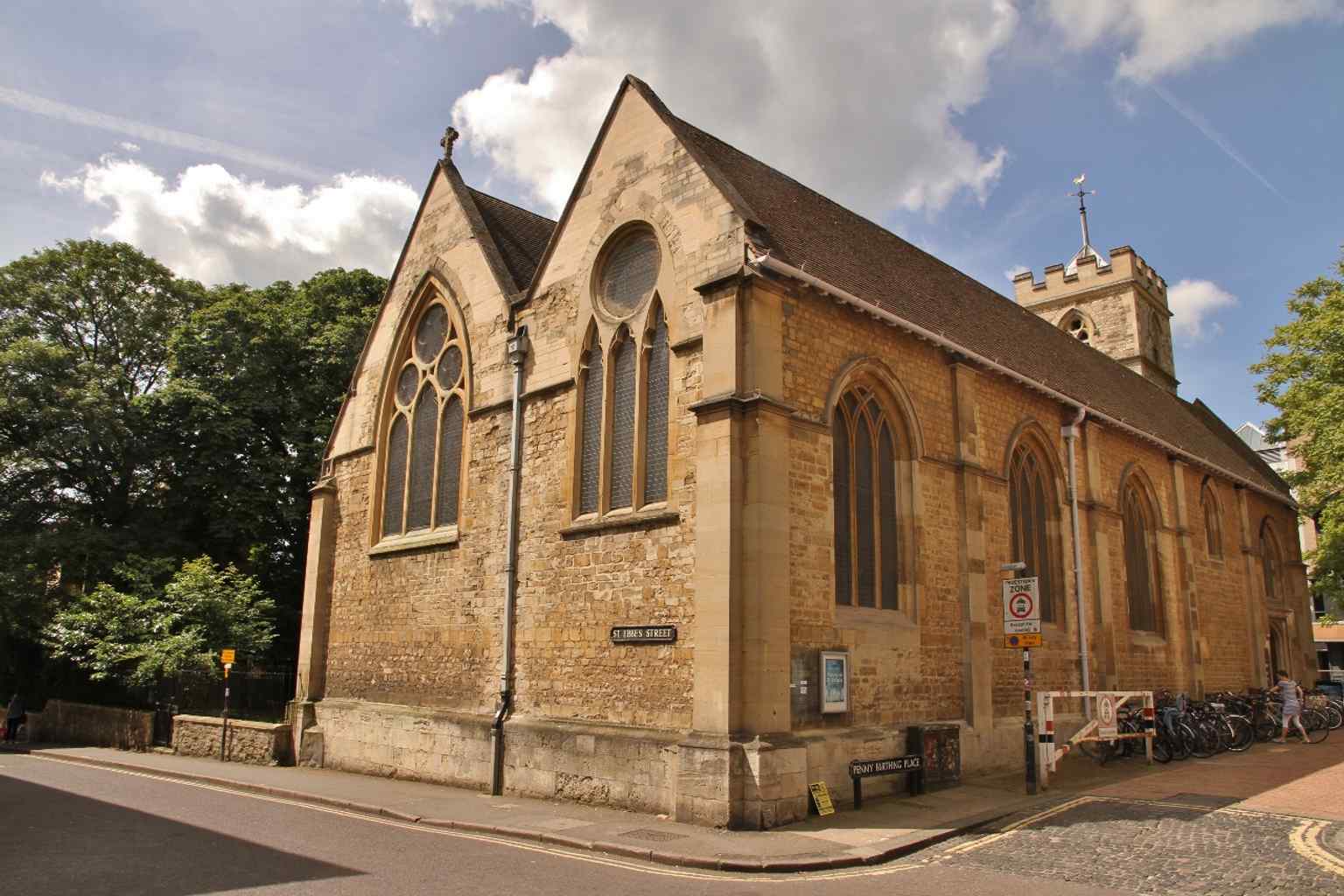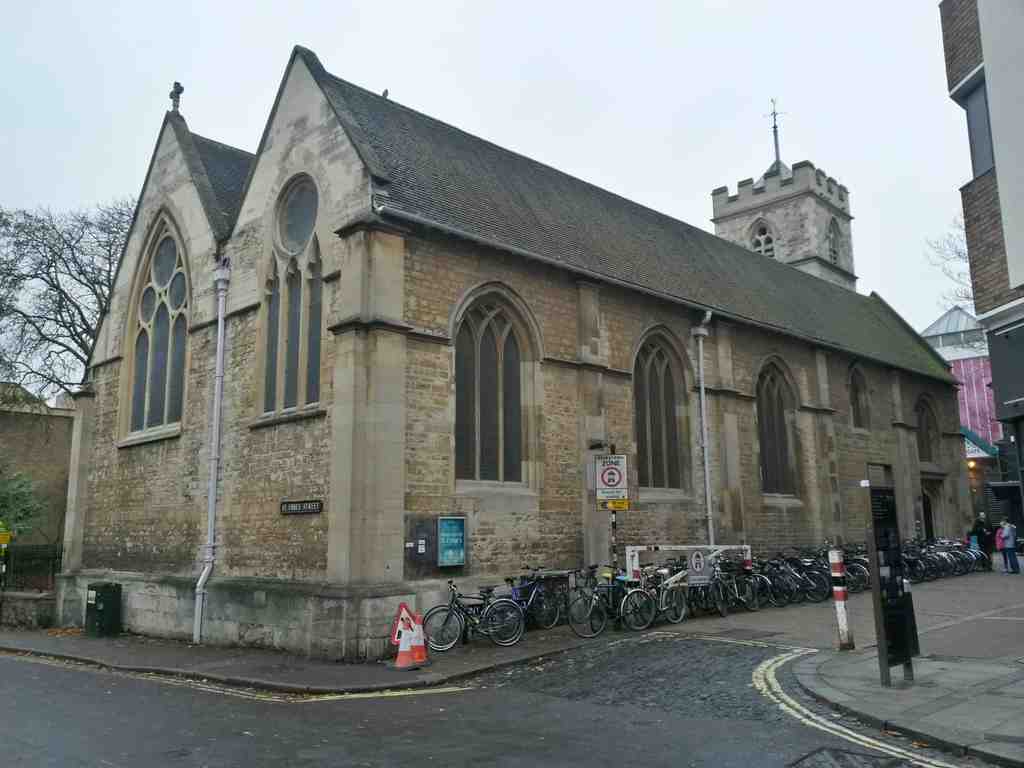
On your right stands a pale stone church with a broad rectangular form, a squat tower, and a restored Norman doorway with rounded arches that hints at a much older past.
St Ebbe's looks fairly restrained, almost polite... but its story runs deep. People worshipped on this site before ten oh five, and even then records called it the ancient St Ebbe's. It takes its name from Saint Ebbe, a seventh-century abbess - that is, the head of a community of nuns - usually identified as Ebbe of Coldingham in Northumbria. Though, in classic Oxford fashion, there is also an argument that this Ebbe may have been a different local saint entirely. Even the patron saint comes with footnotes.
The name enters the record when Aethelmaer the Stout granted the church to Eynsham Abbey around ten oh five. That alone tells you this place mattered early. The building in front of you, though, is much newer. People rebuilt it between eighteen fourteen and eighteen sixteen, then restored it again in the eighteen sixties, again in nineteen oh four, and again in twenty seventeen under the architect Quinlan Terry. So what you see is really Oxford in layers: old devotion, Georgian rebuilding, Victorian repair, modern polishing.
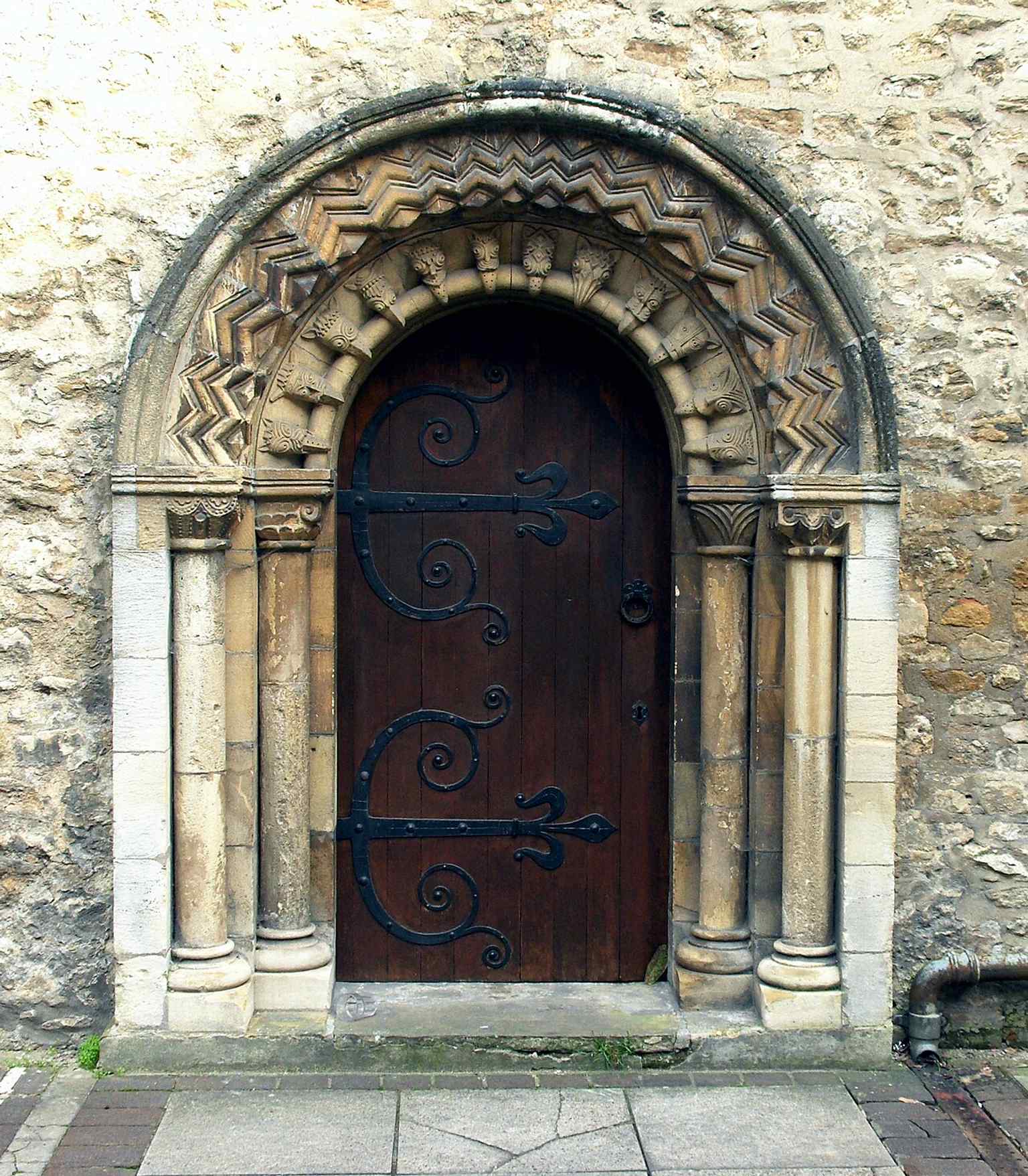
One piece reaches much further back. If you check the image on your screen, you can see the restored twelfth-century Norman doorway at the west end, with its thick rounded arch and sturdy medieval carving. It is a survivor from an earlier church, quietly outlasting centuries of rebuilding, which is more than most of us can say. Another view in the app helps you take in the whole exterior as it stands today, neat and self-contained in the middle of the city.
St Ebbe's has not stood still spiritually either. It belongs to the conservative evangelical tradition in the Church of England, and it takes part in the Anglican Reform movement. Today the congregation draws people from many nations, including plenty of Oxford students, and Vaughan Roberts has served here as rector since nineteen ninety-eight, alongside his work as an author and conference speaker. The church is active through the week and on Sundays, though its position has also shaped debate: it has formally rejected the ordination of women and female leadership, and it receives oversight from the Bishop of Ebbsfleet.
The neighborhood around it changed dramatically when part of the old parish - the church's local district - disappeared for the Westgate redevelopment in the nineteen seventies. Even so, St Ebbe's kept adapting, absorbing the parish of Holy Trinity in nineteen fifty-seven and St Peter-le-Bailey in nineteen sixty-one.
If you want to return later, it is generally open Monday to Friday from nine thirty to five, closed Saturday, and open Sunday from nine thirty to noon and again from three thirty to eight thirty.
St Ebbe's proves that a church can be rebuilt, reduced, argued over, and still remain very much alive.
When you're ready, continue on toward Campion Hall, where Oxford's religious world shifts tone again.