AudaTours logoAudaTours

Sevilla Audiotour: Echos und Legenden des verborgenen Herzens des Casco Antiguo

Audioguide15 Stopps

Eine einzige Kanonenkugel erschütterte einst Sevillas alte Mauern und hinterließ eine Narbe, die noch immer im Stein sichtbar ist. Unter diesen goldenen Straßen hallen Geheimnisse und Geschichten wider – gut sichtbar für diejenigen, die wissen, wo sie suchen müssen. Mit dieser selbstgeführten Audiotour schlendern Sie in Ihrem eigenen Tempo durch das Casco Antiguo und entschlüsseln die Legenden, die sich hinter stillen Fassaden und schattigen Innenhöfen verbergen. Entdecken Sie Geschichten, an denen die meisten Reisenden einfach vorbeigehen. Wer war der rebellische Priester, dessen Schreie während einer stadtweiten Belagerung vom Glockenturm donnerten? Welches verschwundene Kunstwerk löste einst einen Skandal in der Kirche der Verkündigung aus? Warum meiden einige Einheimische nach Einbruch der Dunkelheit immer noch eine bestimmte Ecke in der Nähe der Erlöserkirche? Folgen Sie unsichtbaren Fäden durch Gassen und Plätze und spüren Sie das Drama, den Glauben und die Intrigen, die Sevilla prägten. Jeder Schritt schreibt neu, was Sie über dieses alte Herz wissen. Drücken Sie auf Play und sehen Sie Sevillas alte Steine in einem überraschend neuen Licht.

Tourvorschau

map

Über diese Tour

  • schedule
    Dauer 40–60 minsEigenes Tempo
  • straighten
    3.0 km FußwegDem geführten Pfad folgen
  • location_on
    StandortSevilla, Spanien
  • wifi_off
    Funktioniert offlineEinmal herunterladen, überall nutzen
  • all_inclusive
    Lebenslanger ZugriffJederzeit wiederholen, für immer
  • location_on
    Startet bei Mauern von Sevilla

Stopps auf dieser Tour
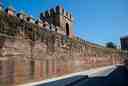
  1. If you look ahead along the side of the road, you’ll spot a massive, brownish stone wall rising high above you, topped with sharp, pointed battlements and broken up by the…Mehr lesenWeniger anzeigen

    If you look ahead along the side of the road, you’ll spot a massive, brownish stone wall rising high above you, topped with sharp, pointed battlements and broken up by the imposing shape of a square tower - you can’t miss it, especially with the sun casting deep shadows beneath its centuries-old surface. Now, I hope you’re ready to travel back in time, because these Walls of Seville have seen more drama than a soap opera set! Imagine yourself standing here, centuries ago: the air is tense, the city bustling behind these colossal walls, and in the distance the clang of armor and horses’ hooves bounces off the stones. The history of these walls is as layered as an onion - and just as likely to make you cry (either from awe or from imagining all that manual labor). The very first defensive walls around Seville were built during Roman times, back when the city was called Hispalis. Roman soldiers and citizens would have patrolled these ramparts, but today, not a single visible piece of those original Roman walls remains. Archeologists have only found hints of them buried under the city, and interestingly, some of that ancient stone was later recycled by new rulers who came to power. Sustainability, ancient style! What you see in front of you now is mostly the work of the Almohads, a mighty Muslim dynasty from the 12th century. Their walls, made of tamped earth nearly two meters thick, were lined with sturdy towers every 40 or 50 meters. Just imagine: back then, these walls stretched for seven kilometers, guarded by 166 towers and over a dozen great gates - the ultimate historical security system! But the reason for all this defense wasn’t just to keep out invading armies. In the year 844, for example, Viking raiders - yes, Vikings, with funny helmets and even funnier beards - stormed the city. The walls were rebuilt and reinforced by Abderramán II, only to be torn down and built again by his descendants. If these walls could talk, they’d probably ask for a little less drama and a lot more R&R. Through every invasion, treasure caravan, and tax collection (yes, the walls doubled as a customs post for collecting tariffs), these sturdy stones stood witness. Even royalty bowed here - kings and queens of Castile swore their oaths at the Macarena gate. In some doors, builders even added a secret twist: the entrances didn’t open straight into the city. Instead, they bent at a sharp angle, making it harder for intruders to rush in. Bit like a medieval theme park: everyone wants to get in, but first you have to make it past the zig-zag queue! But all walls must come down, or at least, most of them. By the 19th century, the city was bursting at the seams. Carriages were getting stuck, trains needed their tracks, and the local government decided those ancient stones had had a good run. The demolition began - gates fell, towers crumbled, and new neighborhoods rose from the dust. Still, some of the most spectacular pieces survived, thanks to a certain José Gestoso who campaigned fiercely to preserve them. Thanks to him, and a royal decree, what you see today between the Macarena gate and the Cordoba gate was saved from total destruction. And don’t be fooled, not all of Seville’s walls are in plain sight! Many old fragments are tucked away in private courtyards, under modern streets, or inside hidden gardens. Walking the edge of these battlements, you’re stepping through time: past Roman soldiers, Moorish architects, Castilian kings, and cheeky customs officers counting barrels of olive oil. So, as you gaze up at these mighty spans, imagine what secrets are still buried beneath - perhaps the next time you pass, the city will reveal yet another of its hidden stories… and just be glad that you don’t have to pay a tariff to enter like in the old days! Want to explore the gates and shutters to access the city, preserved sections of the wall or the photo gallery in more depth? Join me in the chat section for a detailed discussion.

    Eigene Seite öffnen →
  2. Right in front of you is the Plaza del Pan, a cozy, trapezoidal square flanked by lively yellow, white, and terracotta buildings, with the name “PEDRO ROLDAN” boldly perched above…Mehr lesenWeniger anzeigen

    Right in front of you is the Plaza del Pan, a cozy, trapezoidal square flanked by lively yellow, white, and terracotta buildings, with the name “PEDRO ROLDAN” boldly perched above one of the facades-so just look for that iconic sign and bustling café tables under umbrellas! Welcome to one of Seville’s most storied squares, where history isn’t just written in dusty books, but in the layers of stone, the chatter of shoppers, and perhaps a stray breadcrumb or two (it is called the “Plaza del Pan”-the Bread Square-for a reason). Long before this place echoed with café orders and the laughter of families, it buzzed with the calls of bread sellers and the commotion of the old market, all in the shadow of the magnificent Church of the Saviour just behind you. Now, don’t be fooled by the official name-Plaza Jesús de la Pasión! To locals, writers, and (let’s be honest) anyone with a fond memory of a good crusty loaf, this will always be Plaza del Pan. If walls could roll their eyes, these buildings surely would whenever someone insists on using the new name! Way back during the Almohad period, this square was part of a sprawling marketplace outside the old mosque of Ibn Adabbas. Imagine rows of stalls hawking fish, vegetables, bread so fresh you could follow the aroma through the winding alleys. Even after the Christian conquest in 1248, merchants kept streaming in. Bakers rubbed shoulders with cobblers from neighboring streets-craft and commerce as inseparable as coffee and toast. By the 1600s, the plaza was such a scene that Miguel de Cervantes himself (imagine a Spanish Shakespeare with a better mustache) set episodes of his mischievous tale “Rinconete y Cortadillo” right here. Later, if you’d strolled through, you might have bumped into brawny Galician porters hauling crates, immortalized by writers like Cernuda and Palacio Valdés. Now that’s a moving story. The buildings add to the show. That striking structure with the Pedro Roldán sign? Built in the 1920s by José Espiau y Muñoz, it was once a grand fabric warehouse-a nod to the ever-changing trade of the plaza. And peep at the charming arches along the church wall; each one shelters a shop, a tradition that reaches back centuries, with the smells of leather mingling with the faint memory of flour. The square’s identity has shifted as much as its official names. Every political twist brought a new label, but through it all, loaves kept selling and stories kept swirling. Writers, both local and visiting, couldn’t resist describing the unique hustle-whether marveling at bakers from Alcalá de Guadaíra or the wit of shopkeepers who probably had a pun ready for every passing poet. So, as you stand here, let your imagination mix with the reality. Feel the crunch where bakers once peddled their trade, listen for echoes of Cervantes’ heroes, and soak in the sun-because in Plaza del Pan, every day is market day and every visitor is part of the story. Watch your step though, you never know when a runaway bread roll might trip you up! Exploring the realm of the denomination, description or the places of interest? Feel free to consult the chat section for additional information.

    Eigene Seite öffnen →
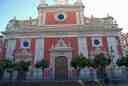
  3. Look straight ahead for a tall, bold red-and-beige church with an imposing rectangular façade, decorated with white stone trim, circular windows, and guarded by rows of orange…Mehr lesenWeniger anzeigen

    Look straight ahead for a tall, bold red-and-beige church with an imposing rectangular façade, decorated with white stone trim, circular windows, and guarded by rows of orange trees just outside a spiked iron fence. Alright, you’ve made it to the dazzling Church of the Saviour! Picture the busy Plaza del Salvador just outside, alive with chatter and the sweet citrus scent drifting from the orange trees. Imagine this spot centuries ago, when the earth beneath your feet was still echoing with Roman steps and Moorish prayers. Legend once whispered there was a grand Roman basilica right here, though not a single archaeologist has found so much as a dusty brick from that era-talk about ancient fake news! Now, let's add some drama! In the early 800s, a powerful mosque called Ibn Adabbás rose here, filling the air with the call to prayer each day. This was the heart of Islamic Seville for over three centuries, until in 1182, the local rulers decided there needed to be an even bigger mosque. The original was shut down, reopened, and by 1248-a thunderous year-King Ferdinand III of Castile swept into the city, taking the mosque and transforming it into a church dedicated to the Divine Saviour. Suddenly, monks and priests were bustling about, hammering altars into place and singing out sacred hymns that echoed off the new stonework. Over the centuries, this church wasn’t just a house of worship-it became the city’s big musical hangout! In the 1500s, the choir swelled with voices, a huge wooden organ thundered beneath fingers, and even the local master builder was asked to whip up a new organ-though he had the misfortune of dying mid-project. Don’t worry, his replacement finished the job, and from the 16th to well into the 19th century, soaring melodies of sacred music rolled out over Seville, enough to make rival churches a bit jealous. But time and gravity have a wicked sense of humor. By the 1600s, this whole building had sunken so far below the ever-rising street that folks had to walk down twenty steps just to get inside-and if you jumped high enough, you could smack the roof from ground level. Eventually, enough was enough-so in 1671, the old church was demolished. The next attempt, in 1679, ended in disaster when the entire building collapsed because the supports were taken away just a little too soon. Oops. Persistence pays, though! By 1712, under the creative eyes of two star architects from Granada and Seville, the church you see before you now rose elegant and proud. Check out the main façade: its dramatic red walls, white trims, playful curves and swirls, all completed in a mix of baroque and a style called ‘mannerism.’ Inside, it’s a one-of-a-kind giant rectangular hall with columns decorated with castles and lions, topped by a dazzling octagonal dome that lets sunlight dance in and out. Seville’s favorite saints and stories are everywhere here. There are 14 intricate altarpieces within. In the grandest is the amazing ‘Transfiguration of Jesus’ scene, flanked by golden angels and mighty archangels with names that sound like they belong in a Marvel movie (Jegudiel, Barachiel, Sealtiel, and friends). There’s also a revered Christ of Love, a beautiful Madonna called the Virgin of the Waters, and a silver-embellished altar once called upon for help during storms, floods, and droughts. The local people would gather here, voices tense and hopeful, when the rain wouldn’t stop, the clouds wouldn’t come, or when ships needed protection far across the seas. Over time, the church’s status flip-flopped from ultra-important 'collegiate' church back to regular parish, and survived more near-calamities than you can shake a hymnal at. Even in modern times, the church needed a superhero-style restoration, finished in 2008 and celebrated by royal visitors and the city’s grandest leaders. Want even more secrets? Behind the main altar, there’s a tiny museum packed with extravagant 17th-century art. And outside, you’ll find a wooden cross at the corner-legend says it never had anything to do with snakes, despite what modern myths claim. This is no quiet corner of the past-it’s a spot where civilizations and centuries collide, and a street artist or two might still strum a guitar in the shadow of that incredible Baroque façade. Seville wouldn’t be Seville without it! For a more comprehensive understanding of the description, brotherhoods or the see also, engage with me in the chat section below.

    Eigene Seite öffnen →
12 weitere Stationen anzeigenWeniger Stationen anzeigenexpand_moreexpand_less
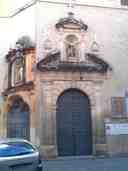
  1. To spot the Church of San Alberto, look for a tall and narrow golden-brick façade with a grand arched wooden door and a statue of a saint looking down at you from an ornate alcove…Mehr lesenWeniger anzeigen

    To spot the Church of San Alberto, look for a tall and narrow golden-brick façade with a grand arched wooden door and a statue of a saint looking down at you from an ornate alcove above the entrance-trust me, it almost feels like he’s checking if you remembered your homework! Now, take a step closer and let your imagination whisk you away to the start of the 17th century, when the air here would have been filled with the clatter of horse hooves and the echoing voices of monks in long, rustling robes. This church wasn’t just any neighborhood place-it began as part of a bustling Carmelite convent and college. Picture the formidable Brother Benito Enríquez, a man so persuasive that his friend Bernardina, a generous widow, donated an impressive pile of coins to found a new school right here. We're talking 13,000 gold ducats-just imagine carrying that to the bank! Later, with the blessing of Archbishop Fernando Niño de Guevara, this spot blossomed into the San Alberto of Sicily College, where young minds wrestled with theology and philosophy by candlelight. At first, students and friars prayed in a makeshift church, and it wasn’t until 1626 that the lovely building before you took shape. Money troubles and a bit of family drama meant the main chapel took decades to finish-maybe it’s a Spanish tradition to be fashionably late, even with chapels! The rooms bustled with as many as 44 sharp-tongued friars and around 40 students, all ready to debate the mysteries of the universe. For a little twist, famed friars left behind magnificent libraries-imagine walking through rows of ancient books, the air thick with the smell of ink and parchment. It wasn't only soul and mind on the menu here. The church also became home to the lively Hermandad de Nuestra Señora de la Encarnación-the Brotherhood of Our Lady of the Incarnation. Originally founded by city porters (think medieval FedEx workers), this brotherhood came, disappeared, and was reborn right here like a holy boomerang. And if you listen carefully, you might almost hear a faint chorus in the distance. In the 18th century, kids from the neighborhood gathered to pray and sing the rosary to a beloved statue of the Virgin of Carmel just beyond these doors. Soon, adults couldn’t resist joining, turning the little corner into a whirl of prayer and music day and night. The calm here, however, was interrupted by the thunder of boots-French soldiers seized the convent during their 1810 invasion, kicked out the friars, and set up their quarters inside. When the French were finally sent packing, the Carmelite community returned to patch up the damages and start over, only to be thrown out once more in the 1830s when the building was confiscated. It changed hands several times-even turning into a school, and later, a hub of literary minds at the Sevillian Academy of Fine Letters. One wonders how many ink stains are hidden beneath the floorboards from all those poets’ quarrels! But the story doesn’t end in the past. By the late 19th century, the Oratory of Saint Philip Neri found its new home here, reviving old melodies. In 1976, a passionate director named Fernando España built a choir, the Coral San Felipe Neri, which filled these walls with glorious harmonies, the sound of sopranos, tenors, and basses mingling like a swirl of color. Step inside, if you get the chance, and you’ll find a single spacious nave lined with five sections, glittering with golden altarpieces-all added after the French finally left. In the main altarpiece your eyes are drawn to a powerful Christ on the cross beside the gentle Virgin Mary. Peer to either side of the altar and you’ll spot a duo of shining angels, lamps in hand, as if lighting your way through centuries of secrets. Art once housed here now circles the globe: paintings by masters like Alonso Cano and Francisco Herrera ended up in places from Madrid to Massachusetts and London to Bucharest. In a sense, a little piece of San Alberto has traveled the world, but the memory-and the magic-still live right here if you stand quietly…and maybe hum a little tune to the figure above the door. Intrigued by the philippian community, san felipe neri choir or the description? Make your way to the chat section and I'll be happy to provide further details.

    Eigene Seite öffnen →
  2. To spot the Church of San Isidoro, look ahead for a tall yellowish building with an elegant, pointy bell tower and a grand stone doorway decorated with intricate Gothic arches-it…Mehr lesenWeniger anzeigen

    To spot the Church of San Isidoro, look ahead for a tall yellowish building with an elegant, pointy bell tower and a grand stone doorway decorated with intricate Gothic arches-it stands out clearly at the end of this narrow street. Welcome to the Church of San Isidoro, a treasure chest of Seville’s mysteries and legends! Imagine, you’re standing on one of the highest points of this ancient city-a place where the very first settlements once took root. Picture yourself in the year 1248, just after the Castilian conquest. The streets are buzzing, and the foundation stones of this church are being laid, making it one of the first parish churches built after the city’s transformation. Midway through the 1300s, skilled builders, covered in dust and chatter, start shaping this church in the dazzling Gothic-Mudejar style, combining the elegance of pointed arches with the tangled patterns of Moorish legacy. Now, look closely at the main entrance before you. There’s something very unusual about it-a long, almost secretive porch that feels like a tunnel to the past. It shelters a pointed arch filled with tooth-like zigzags and a triangular crown, and if you look up sharply at the center, you’ll find a six-pointed Star of Solomon, a striking Jewish symbol from the Middle Ages, tucked within Christian stonework. Down the street, the sunlight bounces off the canary-yellow walls, while the stonework keeps its own medieval secrets. But wait! Let’s bring this church to life. Picture the late 1500s: craftsmen clattering with hammers and chisels are called back to widen the presbytery and add two new side chapels. Later, in the 1700s, the church hums with the grandeur of the Baroque age. The bell tower on your right erupts into its current dramatic height, designed by Francisco Jiménez Bonilla. While almost everything is now Baroque, it still hides a tiny Mudejar staircase, like a spiral fossil of a forgotten world. Peer up-you’ll see glimmering tiles picturing San Isidoro and San Leandro, adding a splash of color. Step inside, if you can, and you’ll find a forest of sturdy pillars leading down rectangular naves. The wooden ceiling of the main nave is carved with dazzling geometric patterns-if only ceiling fans had been invented, these artisans might have relaxed! Each corner is soaked in history, including vibrantly decorated side chapels and an altar that shines with gold and dramatic paintings. The altar’s centerpiece is a powerful painting from 1613 by Juan de Roelas, capturing the final moments of Saint Isidore. This masterpiece is framed by glimmering gold, thanks to the hands of Benito de Hita and Castillo. One chapel, the Capilla del Cristo de la Sangre, houses a striking 14th-century Gothic crucifix-one of only three in all of Seville’s province. Beneath it, tiles crafted by Hernando de Valladares in the 1600s shimmer quietly, almost as if they’re whispering prayers of old. Fancy a bit more magic? The main chapel’s dome is decorated with trompe-l’oeil scenes-the painted figures of San Fernando and San Hermenegildo almost spring to life if you stare long enough. Over centuries, the church grew so lively it was almost a neighborhood celebrity! A pair of particularly notable neighbors were Miguel de Cervantes, the legendary author of Don Quixote, and Bartolomé Esteban Murillo, the painter of light and angels. And even today, the church is a hub of devotion-two ancient brotherhoods, including the Archconfraternity of the Three Falls, call it home. On Good Friday, their processions wind through these streets, carrying statues with music and the scent of incense trailing behind them. So, gaze up at the bell tower, touch the stone if you can, and let your mind spin back through layers of faith, art, and secret stories. Here, at San Isidoro, the pulse of old Seville beats on with every turn of the key, every echo of a bell, and every footstep in its shadow.

    Eigene Seite öffnen →
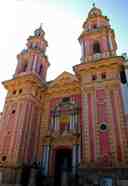
  3. To spot the Church of San Ildefonso, look straight ahead for a striking salmon-pink and gold façade with twin towers flanking a grand entrance gate-if you see two tall towers like…Mehr lesenWeniger anzeigen

    To spot the Church of San Ildefonso, look straight ahead for a striking salmon-pink and gold façade with twin towers flanking a grand entrance gate-if you see two tall towers like an old cathedral wearing its fanciest party hats, you've found it! Now, take a moment and imagine yourself standing in the same Plaza San Ildefonso where, back in 1794, the first stones of this church were laid. The city was bustling, carriages rattling on cobblestones, and the local architect Julián Barnecilla-probably holding a seriously furrowed brow-began sketching out his bold vision for a neoclassical marvel right here in Seville. Fast-forward nearly fifty years, and in 1841 the church finally opens, its construction finished by José Echamorro. Talk about patience! Just think, if it had taken any longer, the church might have had to host its own retirement party. Look at the front: those impressive twin towers stretch up toward the Andalusian sky, three levels each, changing shape as they rise-square, octagonal, then suddenly round-ringed by elegant columns. They stand like silent guards, daring you to walk between them and under the jewel of a portal below. At street level, a delicate ironwork gate leads you into the embrace of chunky Ionic columns and scrolling stone vases perched overhead. Above all this, a stone San Ildefonso watches you from his niche, as if to say, “Don’t worry, I’ve got the view covered.” But all that flash on the outside is just the beginning. Step inside and you’re transported directly into the 19th century, surrounded by the quiet solemnity and perfect symmetry neoclassicism loves so much-plenty of straight lines, three long naves divided by thick square pillars, and barely a curve out of place except for the splendid dome that crowns the crossing. It feels almost like you’re standing in a giant jewelry box, complete with intricate vaults, criss-crossed with the soft echo of your own footsteps. Head towards the main altar, and you’ll find a sight to behold: San Ildefonso takes pride of place in the center, flanked by St. Peter and St. Paul-three stern fellows, all sculpted between the 17th and 19th centuries, just to make sure no century feels left out. And with a flourish, there’s also a dazzling neoclassical canopy made of red jasper, designed by José Barrado, sheltering a glowing statue of the Immaculate Conception. But don’t rush on-there are stories in every corner. Over to the left, there’s the Virgin of Coral, starring in her own mural on an altar built in the mid-1800s. This isn’t just any painting; it’s wrapped in a mystery! Legend claims this Virgin was the “special advocate of sailors and women going through miracle births,” and, get this, was even venerated by Sebastián Elcano before he set off to sail around the globe. Who knew a church in Seville could be tangled into the world’s greatest adventure? Move further and you’ll find the retablo of the Virgin de la Soledad, work of Juan de Astorga in the 1800s, whose gaze wishes you a little calm in this whirlwind of baroque and neoclassic marvel. There’s also the powerful image of Jesús Cautivo, standing quietly behind his own impressive altar-his eyes almost catching yours, as if he’s inviting you into his silent story. And the Guild of Tailors? They have a retablo too, crowned by an elegant lady: Nuestra Señora de los Reyes, dating all the way back to the 1500s. Before you wander off, peek down at the baptismal chapel, tucked at the back, where you’ll find a beautiful relief by Martínez Montañés from 1609. Seville’s buzzing outside, but here you’re surrounded by centuries-old secrets and legends-some joyful, some solemn, but all echoing off these red and gold walls. Not bad for what started as a patch of empty plaza, don’t you think? And just remember-next time you’re pressed for time, tell yourself, at least you don’t have to wait forty-seven years for your next visit!

    Eigene Seite öffnen →
  4. Just ahead, you'll spot the Church of Buen Suceso by its striking, warm brick façade with three levels, round windows, and three statues perched above a grand, dark wooden arched…Mehr lesenWeniger anzeigen

    Just ahead, you'll spot the Church of Buen Suceso by its striking, warm brick façade with three levels, round windows, and three statues perched above a grand, dark wooden arched doorway-like guardians from another era keeping watch over the street. Now, imagine for a moment the swirl of centuries right where you’re standing-the Church of Buen Suceso has watched Seville change, endure, and reinvent itself since the eighteenth century. Take in the beautifully restored brickwork, dotted with round windows and framed by those three statues: the Virgin of Carmen is in the center, flanked by Saint Joseph with the Child and the Prophet Elijah. These figures, sculpted much later by a local artist, add a dash of modern spirit to this age-old façade-because apparently, even churches like a makeover every few centuries! Originally, this wasn’t just a church. Back in the 1600s, the site buzzed with the compassionate chaos of a hospital run by the Brothers Hospitallers-local folks called them "los obregones," following the vision of Bernardino de Obregón, who believed that recovering patients deserved dignity, care, and a bit of hope. Their mission took them from Madrid, where they cared for convalescents, all the way here to Seville. And just wait for this twist: as two of their brothers made a nerve-wracking journey to Rome to get approval for their habits, a wild storm forced them to hide among rocks in the mountains near Traiguera. There, they stumbled upon a statue of the Virgin Mary. When they presented this statue to Pope Paul V, he declared, “Brothers, you’ve had good success on your journey; may your request have the same!”-and gave them a golden cross for the statue as a symbol of their new luck. From this miraculous discovery, the devotion to the Virgin of Buen Suceso was born-a story worthy of its own adventure novel! The hospital’s first chapel crumbled so badly that it was demolished in 1690 (talk about calling for a renovation). The new church, the one you see here, was inaugurated in 1730 with eight straight days of festivities-the city probably ran out of confetti by the end. The red marble columns inside, carved by the renowned Pedro Roldán and his son, prop up a nave that sparkles with thirty-six vivid canvases by Domingo Martínez. The main altar once held the legendary statue of the Virgin of Buen Suceso, a symbol of the original miracle, which sadly vanished in the 1800s. Like the best mysteries, nobody knows where she went. This building has survived more plot twists than a soap opera. When the hospital was closed in 1835, the church faced demolition, but was saved thanks to the town’s charity board. It turned into a boarding house (with a church attached, naturally) and later even served as a meeting hall for local militias. Monks, nuns, even revolutionaries-every decade, someone new claimed these walls as their own. Since 1896, the Carmelite Order has called this place home. They’ve seen hard times, especially in 1931 when the church was looted during political unrest, and priceless artworks were lost or destroyed. Yet the spirit of Buen Suceso remains strong. The current statue of the Virgin of Carmen-by Rafael Barbero-processes through the neighborhood every November, sharing hope, memory, and just a bit of theatrical flair. Inside, if you ever step out of the busy street and into the cool hush, you’ll find sculptures by legends like Alonso Cano and Juan Martínez Montañés. Their saints, still gazing faithfully through centuries of change, prove that caring for the sick and the suffering is never out of fashion-even after all this time. So whether you’re here for architecture, art, or just a good story, the Church of Buen Suceso never runs out of surprises. And that’s no accident-it’s just what happens when miracles, mystery, and a little bit of stubbornness all come together, right in the heart of Seville.

    Eigene Seite öffnen →
  5. To spot the Municipal Newspaper Library of Seville, just look for the grand neoclassical building ahead of you, with its stately columns and the Spanish and Andalusian flags…Mehr lesenWeniger anzeigen

    To spot the Municipal Newspaper Library of Seville, just look for the grand neoclassical building ahead of you, with its stately columns and the Spanish and Andalusian flags waving above the entrance-if you see those columns, you’re in the right spot! Now, picture yourself standing right at the gates of history-because that’s what this building is, even if on the outside it looks like a very serious judge wearing a brick-and-stone jacket. Once upon a time, this was actually the Palace of Justice of Seville, built between 1893 and 1913, almost as if the architects José Sáez y López and José Gallegos wanted to make sure justice and paperwork had a dramatic entrance! But believe me, what’s inside now is even more exciting if you have a curious mind. Let’s travel back to August 4, 1934-imagine the city buzzing under the summer sun, and in the grand halls of the Alcázar, the very first Municipal Newspaper Library opened its doors. Its mission was bold: to save and safeguard every bit of news, gossip, and story printed in Seville, becoming a treasure chest of stories for future generations. But fate had its own drama ready: just two years later, the Spanish Civil War swept in like a storm, forcing the library to close and leaving its collections half-abandoned, like forgotten actors after the curtain falls. Fast forward to 1944, and the rescued volumes were moved to the beautiful Mudejar Pavilion-the museum in Plaza de América. But here’s the twist: part of the building collapsed in 1967! Imagine the panic-precious newspapers lost to rubble, and the city’s chronicle nearly erased. But don’t worry, this story has resilient heroes. In 1972, the volumes found a new refuge in the pavilion of La Madrina, tucked into the lush Gardens of San Telmo. They flourished there for a while, until one final move in 1987, into this very building, once a courthouse and now a palace for stories. And what a palace! The restored facade greets you with bold neoclassical columns, while inside, two light-filled courtyards and a sweeping marble staircase welcome daily explorers-historical detectives, students, even the odd digital tourist! Today, the library holds almost 30,000 volumes and nearly 9,000 different titles, some dating all the way back to 1661 with the Gazeta Nueva. Can you smell the old paper and imagine the crackle of turning pages from centuries ago? As you stand here, you might even hear whispers of Italian and French magazines, or echoes of theater programs from the 1800s! Let’s not forget the digital age-Seville doesn’t just dwell on the past. In 2019, the NO8DO Digital project kicked off, bringing thousands of historical documents, photos, and newspapers to the internet, all for free. And, with their virtual exhibition hall, you can now explore Seville’s history from anywhere-even in pajamas at home! All those images, posters, and clippings are carefully annotated so anyone, from curious children to the nerdiest professors, can dive headfirst into the city’s memory. So, if you ever need a certificate proving your relative’s embarrassing letter to the editor, or you want to discover a forgotten headline from the 1700s, you know where to start. The Municipal Newspaper Library may have changed addresses over time, but its purpose-to hold onto Seville’s stories, both grand and quirky-has never wavered. And with projects like NO8DO Digital, these stories are set to keep the city’s memory alive, one click-or rustling page-at a time!

    Eigene Seite öffnen →
  6. Ah, you’ve found your way to the stately, slightly mysterious Church of the Annunciation! Take a look at those grand brick walls before you-can you almost hear the footsteps of…Mehr lesenWeniger anzeigen

    Ah, you’ve found your way to the stately, slightly mysterious Church of the Annunciation! Take a look at those grand brick walls before you-can you almost hear the footsteps of scholars and monks echoing through time? Built in 1565, this church was first a Jesuit stronghold, part of the intellectual lightning bolt that was the Counter-Reformation in Spain. The Jesuits, with their serious brows and ambitious ideas, launched their overseas adventures from right here-and trust me, they didn’t travel by Ryanair in those days! But then in 1767, imagine the jarring clang of keys turning in locks as the Jesuits were kicked out of Spain by royal decree. The church, and the whole adjoining convent, stood abandoned like a fancy palace left out in the rain. That is, until 1771, when Pablo de Olavide, always brimming with Enlightenment ideas (and surely a love for grand architecture), moved the University of Seville right in. From the somber chanting of monks to the academic squabbling of professors-if only the walls could talk! (I mean, they’d probably complain about all the chalk dust…) Nowadays, the building is deeply woven into Seville’s story. Just gaze at the facade: two mighty Ionic columns hold up a bold entablature and a triangular pediment. Fancy words! But what you’ll really notice is how the design seems to invite you in. Lights and shadows play among the niches-one in the center cradles a statue of the Virgin Mary with Baby Jesus, crafted by Juan Bautista Vázquez the Elder. Off to the sides, keep an eye out for Saints Raphael and Joseph, keeping watch like ancient bouncers at a heavenly nightclub. Step inside in your imagination, and you’ll stand in a classic Latin cross layout-think soaring domes and vaults overhead. Picture the sun glinting off golden altarpieces and flickering over swirling murals, some freshly restored so the angels seem to be holding their breath. At one end is the monumental main altarpiece, where late mannerism mingles coyly with early naturalism. The likes of Antonio Mohedano and Juan de Roelas painted sprawling, dramatic scenes-at the center, the Holy Family, and over to the right, the Adoration of the Shepherds. Even masters like Martínez Montañés left their mark, chiseling saints that almost sigh with relief at finally being finished after hours of careful carving. But perhaps the greatest mystery lies below your feet-the Pantheon of Illustrious Sevillians, hidden in the crypt. Descend (if only with your mind for now) and find the city’s all-star cast sleeping their eternal siesta here. Among them are the famous poet Gustavo Adolfo Bécquer, his painter brother Valeriano, and an assortment of noble Ponce de Leóns, their story stretching all the way back to the kings of León and Aragón. Some of these tombs were rescued, Indiana Jones-style, from ruined monasteries and reburied here, their stone epitaphs telling tales of war, love, and loss. It’s a bit like a VIP lounge for the afterlife-everybody who was anybody wants in. The church isn’t just a historic relic, though. Seville’s university still cherishes this building, using it for solemn academic ceremonies, and even the occasional classical concert-the music echoing through the centuries, as timeless as the stones themselves. And come Holy Week, the church teems with anticipation-the Brotherhood of El Valle, a compassionate and venerable group, sets out on their hauntingly beautiful procession from here each Holy Thursday. So, as you stand on this busy street, half-caught between the bustle of the present and the whispers of the past, imagine the generations who’ve come through these doors: students, scholars, saints-and maybe, just maybe, a poet or two hiding away in a corner, scribbling their dreams.

    Eigene Seite öffnen →
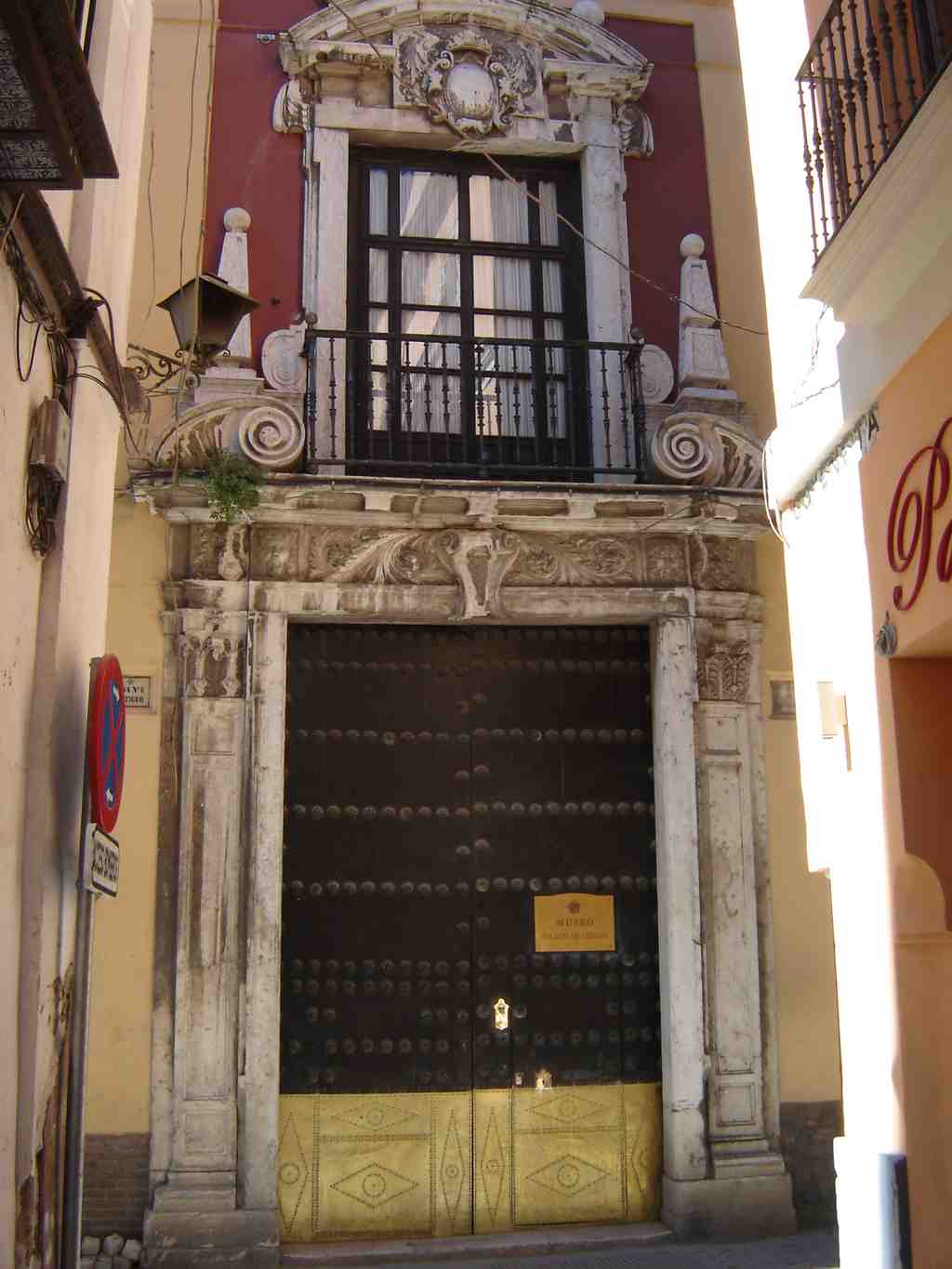
  7. To spot the Palace of the Countess of Lebrija, look for a grand, two-level marble entrance on Cuna Street with detailed carvings, a wrought-iron balcony, and huge dark wooden…Mehr lesenWeniger anzeigen

    To spot the Palace of the Countess of Lebrija, look for a grand, two-level marble entrance on Cuna Street with detailed carvings, a wrought-iron balcony, and huge dark wooden doors decorated with golden panels near the bottom. Now, let’s dive into the magic of the Palace of the Countess of Lebrija! Imagine yourself here centuries ago, on one of Seville’s busiest streets, under the watchful eyes of spectacular statues and columns. This palace began its life in the 15th century as a noble mansion and boy, has it seen some changes. Its face, a true Sevillian beauty crafted in marble, certainly knows how to stop people in their tracks, especially when sunlight glints off those gilded metal studs on the doors. After passing from family to family-Paiba, Corbos, Miraflores-it became home to one very important woman: María Regla Manjón, the Countess of Lebrija. In 1901, she took this already splendid house and turned it into her personal treasure trove. Picture her, dressed in the finery of the day, directing work with architect José Sáez y López, as crates of ancient artifacts and Roman marvels arrived daily. A passionate archaeologist (and arguably a top-tier antique shopper), she decorated every inch with wonders: Roman mosaics, colorful azulejos from the 16th century, even friezes and woodwork rescued from other crumbling palaces. The collection became so jaw-dropping that folks started calling it the “best-paved house in Europe.” Walk inside and imagine the floors-mosaics from ruined villas, including one showing the god Pan (apparently quite the romantic) serenading Galatea. Eight medallions show Zeus’s mischievous love affairs and at every corner, allegories of the four seasons remind visitors of time’s steady march. The palace walls are a patchwork of history: Moorish arches, plateresque ornaments, tiles from a lost convent, and ceilings from the Renaissance. Some rooms tell of summer siestas, others of cozy winters by the fire. Today, not only can you wander these halls and courtyards, but if you time it right, you might stumble into a glitzy gala, a candlelit concert, or even a scholarly conference. The library upstairs? Over four thousand volumes-enough to inspire any bookworm or would-be detective. From Van Dyck to Murillo, the Countess’s art tastes spared no expense. So, as you stand before this ornate gateway, remember: this isn’t just a palace, but a living museum of adventure, love, discovery, and a fair share of house renovations!

    Eigene Seite öffnen →
  8. Right here in front of you stands the Convent of San Acacio, a building that’s worn a lot of hats over the centuries-like an actor in an endless historical play! Imagine it’s the…Mehr lesenWeniger anzeigen

    Right here in front of you stands the Convent of San Acacio, a building that’s worn a lot of hats over the centuries-like an actor in an endless historical play! Imagine it’s the late sixteenth century: the outskirts of Seville are quieter, a bit wild, and the air buzzes with the plans of the Augustinian monks. They're eager to build a new school, but their wallets are about as deep as a puddle in August. Just as their hopes are fading, Leonor de Virués, a generous widow, steps onto the stage. Her late husband, Gaspar Ruiz de Montoya, left her some properties with gardens just outside the city walls, and with the flair of an unexpected twist in a telenovela, she donates them to the monks-with just one request: a family funeral chapel in the new church. By 1593, the monks roll up their sleeves and dig in, eager to transform this quiet plot into the bustling Colegio de San Acacio. The church over there was completed by 1601-quick work, but I guess the monks didn't have Netflix to distract them! Their first leader was Friar Agustín Vallejo, who likely kept everyone on task. Yet even their peaceful sanctuary couldn’t escape the churn of city life. In 1633, San Acacio packed up and moved from these leafy outskirts into town, renting homes from the well-to-do Luis de Tapia y Paredes, right opposite the Convent of Santa Paula. Where did their old property go? It ended up in the hands of Lelio Levanto, a Genoese, who must have liked a fixer-upper-by 1642, Carmelite nuns took over and built the Convent of Santa Teresa de Jesús. Back to San Acacio: the Augustinians shifted to Calle Sierpes in 1634, buying a set of houses from Francisco Pérez de Meñacas. Here, they dug in for good. Construction was bankrolled by Melchor de León Garavito, and everything wrapped up by 1660. This address became quite the hotspot: brotherhoods and processions drew crowds for nearly two centuries. In the late seventeenth century, an impressive baroque courtyard was added-a square patio, with four graceful arches guarding each side, designed by Leonardo de Figueroa. If you poke around, you’ll still find parts of the original facade and that glorious courtyard tucked behind the doors. Evenings brought a rhythmic swirl of devotion and drama. In 1728, a men’s rosary procession set out from this very spot, their prayers slipping through the warm air. Thirty years later, the women joined in, and Seville’s nights glowed with their candlelight. But then, history thundered in. The French invaded in 1810, the monks were ousted, and their quiet halls buzzed with the business of the Public Credit Office. Still, the convent's library-founded by the erudite Cardinal Gaspar de Molina y Oviedo in 1749-kept going, thanks to a brave friar-bibliophile who even outfoxed the French to protect the books. With the winds of reform in 1835, the library finally closed. Some precious paintings were whisked away to Seville's city hall, like portraits of famous locals and yes-one of Bartolomé Esteban Murillo himself. Throughout the 19th and 20th centuries, the building morphed again and again: a school of arts, a public archive, the city’s main post office. Since 1951, it’s been the headquarters of the Royal Circle of Farmers-a club for those who’d rather tend a garden than a flock of monks. From studious prayers and secret processions, to noisy postmen and now elegant soirées, the Convent of San Acacio has always kept Seville’s pulse ticking beneath its arches. Quite a résumé for one address, don't you think?

    Eigene Seite öffnen →
  9. Just ahead of you, you'll notice Sierpes Street-an inviting, narrow pedestrian lane lined with colorful old buildings, plenty of balconies, and noticeable fabric shades stretched…Mehr lesenWeniger anzeigen

    Just ahead of you, you'll notice Sierpes Street-an inviting, narrow pedestrian lane lined with colorful old buildings, plenty of balconies, and noticeable fabric shades stretched above to block out the sun. Ah, welcome to Calle Sierpes, possibly Seville’s most famous street-and definitely the most mysterious! Stand right here and soak in the buzz: the polished cobblestones, the cheerful shop windows, and the fluttering awnings overhead, put in place every summer to shield pedestrians from the sizzling Andalusian sun. Close your eyes and imagine yourself here back in the Middle Ages. Instead of a lively shopping street, this was once the ancient course of the Guadalquivir River! Not the best place to forget your umbrella-people used to complain bitterly in the 1700s when the rains came and the street would flood, especially after they removed a wooden walkway that helped people cross. But Sierpes isn’t just a street; it’s a labyrinth of stories. It all begins with a legend fit for a Hollywood thriller. The name “Sierpes” means “serpents”-and no, it’s not because the street is twisty (despite what some say, it’s always been fairly straight). The most famous legend tells of a time in the 15th century when children began to disappear from the city. Rumors swirled, fingers were pointed at everyone-from mysterious foreign merchants to local rivalries. The city was in uproar, parents afraid to let their children outside. Enter Melchor, a clever outsider who claimed he could solve the mystery-if only the city would pardon his old crimes. He led the local authorities on a daring trek through the old Roman sewers. Deep underground, they came face-to-face with the monster: a six-meter-long serpent, its jaws stuffed with human bones! Melchor claimed to have slain the beast, and its body was dragged through the streets and put on show for all to see. For months, Sierpes was the talk of the town-children were safe once more, and Melchor got a royal pardon…and the boss’s daughter as a reward. Quite a fairytale ending! The real story as to why it’s called Sierpes? Well, historians love to keep us guessing. The legend stuck around, and the street’s previous names-like Espaderos, after sword makers-vanished as quickly as the snake ended up in the museum. And look, there’s more than legend lurking in these buildings: over the centuries, Sierpes has been home to monasteries, libraries, even the Royal Prison of Seville at its end. Rumor has it writers like Miguel de Cervantes did time here. Maybe that’s why he was so great at writing adventure stories! In the 19th century, Sierpes became the fashion district of Seville, chock full of charming old shops still surviving today. See that shop called “La Campana”? Its sweets have tempted locals since 1885-and trust me, the only thing dangerous nowadays is how addictive those pastries are. From religious processions in Semana Santa to art deco cinemas and buzzing cafés, Sierpes is the living heart of Seville’s culture. And when shade sails overhead snap in the wind or the crowd’s laughter rolls down these walls, you’re hearing centuries of stories colliding in one straight, slender avenue. So keep your eyes out for local legends and maybe treat yourself at one of these historic shops. Just watch your ankles… you never know when a “sierpe” might slither by! Intrigued by the denomination, twinning or the traditional shops? Explore further by joining me in the chat section below.

    Eigene Seite öffnen →
  10. Directly in front of you, the Town Hall of Seville stretches wide across the square, dressed in pale stone with intricate carvings, lots of arched windows, and an elegant…Mehr lesenWeniger anzeigen

    Directly in front of you, the Town Hall of Seville stretches wide across the square, dressed in pale stone with intricate carvings, lots of arched windows, and an elegant arcade-look for a richly decorated facade that seems to glow almost golden in the sunlight. Alright, get ready for a story that’s got almost as many twists and turns as this building’s decorative carvings! Right where you’re standing, imagine yourself as someone in 16th-century Seville, when this site was just becoming the center of all decisions great and small, from city celebrations to the odd argument about where to keep the best olives. But don’t let these ornate walls fool you-they once stood beside medieval city walls and a patch of land called Corral de los Olmos, crowded with merchants, priests, city leaders, and maybe even a few stray chickens. When Seville’s fortunes boomed with New World treasure-thanks to the Casa de Contratación arriving in 1503-city leaders thought, “Let’s build an ayuntamiento worthy of all this gold!” And so, in 1526, with the wedding bells for Emperor Charles I and Isabel of Portugal ringing nearby, the old council hall was replaced by this stunner of a building. Imagine the clang of stones arriving from Utrera, the shouts of craftsmen, and the local boys ducking under carts for a look at the action. Master architect Diego de Riaño led a whole team, including stonemasons from as far as France and the Basque Country. They worked, paused (when the money ran out-classic city project, right?), and picked up again, crafting a masterpiece. See those carved faces and columns? They’re the high-water mark of Plateresque style, like a wedding cake made from stone-busts of mythical and real historic figures, medallions, the coat of arms, and even the twisted Columns of Hercules with the motto “Plus Ultra” (More Beyond) for all those who dreamed of adventure. Over the archway, Hercules and Julius Caesar stand guard, as rumor has it Hercules founded the city and Julius Caesar gave it proper Roman swagger. By the 19th century, the story gets rowdy. Napoleon’s troops stormed in, turned the neighboring convent into a barracks, and left the city scrambling. Then, fire and politics swept through, reshaping the square and the hall. When Queen Isabel II was due for a visit, the facade wasn’t finished, so the local architect hung up a giant painted “trick” canvas. Yes, Seville invented the pop-up, centuries before Instagram filters! If you’re scanning the building, see if you can spot spots where new and old crash together-a patchwork of beauty and debates, with bits designed by Balbino Marrón in neoclassical style beside the show-stopping 16th-century work. You might even spot the cross by the corner, marking a plague pit from 1649, quietly reminding us that city life wasn’t always about celebrations. Inside, the grand halls were council chambers for centuries, the ceiling decorated with Spain’s royal family tree: kings and queens in every square. The meeting rooms are lined with scenes from religion and heroism-Noah and his ark, San Fernando conquering foes, allegories for Justice, Prudence, and a reminder to councilors: don’t let anger (or friendship, or snacks) get in the way of fair judgment. Over the centuries, the Town Hall became a museum, too-housing everything from a late Gothic painting of the Virgin and Child between saints, to portraits of kings, queens, and even the legendary Martínez Montañés. There’s even a pair of bronze busts memorializing two modern heroes lost to terror, standing as silent witnesses. Picture the events in this square: shouts of traders, parades crossing the plaza, stonemasons chiseling away, councilors debating Spain’s fate, and Seville’s people celebrating their city through every age-from golden empire to modern marvel. If you feel a bit dizzy standing before all this grandeur, don’t worry, it’s not just the heat-history here comes at you with flair!

    Eigene Seite öffnen →
  11. But don’t let all this modern bustle fool you! Tetuán’s story stretches back centuries and is packed with twists and turns-like your average bargain sale at one of its famous…Mehr lesenWeniger anzeigen

    But don’t let all this modern bustle fool you! Tetuán’s story stretches back centuries and is packed with twists and turns-like your average bargain sale at one of its famous stores. In the fifteenth century, this street was called “Monteros,” because it was home to the king’s hunters-imagine the scent of leather, the clatter of boots, and maybe the distant howls of hounds belonging to King Fernando III’s entourage. Just a hundred years later, the name “Colcheros” took over, thanks to the street’s thriving guild of quilt makers and sellers. So, if you feel strangely cozy here, now you know-your inner quilt lover is calling! Let’s fast-forward to 1869, when the street took the name “Tetuán.” This was a nod to the capture of the city of Tetouan in Morocco by General O’Donnell, in one of those dramatic moments of Spanish history-politics and pride leaving their mark on even the place-names. Briefly, during the Spanish Republic in the 1930s, it was grandly renamed “Conquista de Tetuán,” but by 1936, simplicity won, and it was just “Tetuán” again. Over centuries, Tetuán curled and bent with the city-widened, straightened, and paved with everything from brick and sand in 1552 to stylish cobblestones in the 1860s. And in 1991, with a move as bold as a shop owner’s Black Friday sale, Tetuán shut out car traffic forever. Imagine! No honking, no squeezing between bumpers-just the laughter and footsteps of thousands weaving through a pedestrian oasis. As you gaze around, check out the beautiful early 20th-century buildings. Don’t miss Number 1 at the corner with Rioja-a work by Seville’s famous architect, Juan Talavera y Heredia. The next corner, Number 2, was designed by Aníbal González in 1917, and for decades, the Gran Britz café on the ground floor was the place to be seen-Seville’s answer to Parisian glamour (or at least, as close as one could get before siesta time). At Number 25, at Jovellanos Street, spot another Talavera gem built for Francisco Gil Fernández in 1911. But perhaps the biggest drama here played out on the very spot where fashion shops now stand. From the 16th century’s Hospital del Espíritu Santo, to the 19th-century Academy of Buenas Letras, to the splendid Teatro San Fernando-opened in 1847, the pride of the city, its operas, zarzuelas, and grand concerts drew crowds until its demolition in 1973. If you listen closely, you might just hear the faint strains of an aria, mixed in with the sound of credit cards being swiped. So go ahead-shop, stroll, people-watch, and imagine the hunters, quilt-makers, kings, and artists who’ve called Tetuán home. And if you find an amazing bargain-well, that’s history in the making!

    Eigene Seite öffnen →
  12. To spot the Church of the Holy Angel, look ahead for a crisp white facade with bright yellow trim, topped by a sculpted angel over the ornate doorway and a tall central…Mehr lesenWeniger anzeigen

    To spot the Church of the Holy Angel, look ahead for a crisp white facade with bright yellow trim, topped by a sculpted angel over the ornate doorway and a tall central window-snugly set between modern buildings. Now take a step closer and let’s step back in time. Imagine the street as it once was in the late 1500s, the hum of distant carriages, horses’ hooves on cobblestones, and the busy chatter of Sevillians rushing past what were then just a group of houses. These unassuming homes would soon become the birthplace of the convent of the Santo Ángel de la Guarda, founded by the barefoot Carmelite friars-the same brave souls who’d already founded the Convent of Los Remedios across the city. Picture the year 1587: the friars moved in with little more than faith and hope, installing themselves right here on what is now Calle Rioja. But don’t get too cozy-in less than a year, thanks to a generous friend named Melchor de Herrera, they managed to buy the old, empty hospital of the Holy Cross of Jerusalem for a whopping 5,000 ducats. I bet even then, real estate in Seville was expensive! They had big dreams-offering patronage to the mysterious Genovese knightly community here in Seville. But in the end, their grand benefactors became Martín Ruiz de Vernui, a lawyer from Granada, and his wife Beatriz de Montoya. These two lovely folks didn’t just give money; they also donated some neighboring houses and, at their suggestion, gave the convent a grand new name: the Convent of Our Lady of Mercy of Mount Carmel and the Guardian Angel. Quite a mouthful-try saying that three times fast! But life here wasn’t all peaceful prayers and incense. Over the years, the church witnessed storms of history. Troops marched in when the French invaded Seville in 1810. The convent was expropriated and the friars were exiled. Picture the hurried footsteps and echoing orders as the sacred halls were turned into a barracks for the Fourth Civic Battalion. For a moment, it even became a school for the fine arts, then bounced from one secular use to another: a lawyers’ society, a cultural club, a university hall, and even a big shared house. Honestly, it’s had more identities than a secret agent! And yet, here it stands. Out of all that chaos, from expropriation to threatened demolitions, the Carmelite Order managed to reclaim their beloved home in 1904. The elegant facade you see on Calle Muñoz Olivé? That was designed by the famed architect Aníbal González, the same man behind Seville’s Plaza de España. Not a bad resume! Look above the entrance and you’ll spot a cherub with a proud inscription in Latin: “God commanded His angels to protect you in all your ways.” And, fittingly, the Angel of the Guardian watches from his statue overhead, a silent guardian over everyone passing beneath. But step inside-carefully!-and you’ll enter a world woven with stories and art. The neoclassical main altar glows with the serene face of the Virgin of Carmen, sculpted in 1780 by Cristóbal Ramos. She’s surrounded by friends: Saint Teresa, Saint John of the Cross, the Guardian Angel, St. Raphael-what a heavenly company! You can even spot a masterpiece by Juan Martínez Montañés, the Christ of the Forsaken, loved and venerated since 1617. And on the walls, scenes painted by Francisco and Miguel Polanco capture dramatic tales: Abraham meeting angels, Jacob wrestling with one (talk about a workout!), and saints guided by celestial helpers. Some treasures once here have traveled with time-a vanished funerary altar now scattered, its statues in San Antonio Abad and its paintings in Madrid’s Prado Museum. It all adds an air of mystery: treasures lost and found, history hidden in old stones and long prayers. Today, the convent lives on, its 17th-century spirit intact, sheltering a working Carmelite community, a charming library, and, since 2016, a little museum filled with stories like the ones I’m telling you now. Take a moment outside, close your eyes, and let the weight of centuries whisper through the quiet. And before you go, remember-Seville’s soul is in places like this: not just seen, but sung, prayed, and remembered. And that’s the last stop on our journey! Thank you for letting me guide you today-may your path be watched over, just like this church once promised, by angels in all your ways. If you're curious about the convent of the holy guardian angel, description or the heritage from the convent, the chat section below is the perfect place to seek clarification.

    Eigene Seite öffnen →

Häufig gestellte Fragen

Wie starte ich die Tour?

Laden Sie nach dem Kauf die AudaTours-App herunter und geben Sie Ihren Einlösecode ein. Die Tour ist sofort startbereit – tippen Sie einfach auf „Play“ und folgen Sie der GPS-geführten Route.

Benötige ich während der Tour Internet?

Nein! Laden Sie die Tour vor dem Start herunter und genießen Sie sie vollständig offline. Nur die Chat-Funktion benötigt Internet. Wir empfehlen den Download über WLAN, um mobiles Datenvolumen zu sparen.

Handelt es sich um eine geführte Gruppentour?

Nein – dies ist ein selbstgeführter Audioguide. Sie erkunden unabhängig in Ihrem eigenen Tempo, wobei die Audioerzählung über Ihr Telefon abgespielt wird. Kein Reiseleiter, keine Gruppe, kein Zeitplan.

Wie lange dauert die Tour?

Die meisten Touren dauern 60–90 Minuten, aber Sie kontrollieren das Tempo vollständig. Pausieren Sie, überspringen Sie Stopps oder machen Sie Pausen, wann immer Sie wollen.

Was, wenn ich die Tour heute nicht beenden kann?

Kein Problem! Touren haben lebenslangen Zugriff. Pausieren Sie und setzen Sie sie fort, wann immer Sie möchten – morgen, nächste Woche oder nächstes Jahr. Ihr Fortschritt wird gespeichert.

Welche Sprachen sind verfügbar?

Alle Touren sind in über 50 Sprachen verfügbar. Wählen Sie Ihre bevorzugte Sprache beim Einlösen Ihres Codes. Hinweis: Die Sprache kann nach der Tour-Generierung nicht mehr geändert werden.

Wo greife ich nach dem Kauf auf die Tour zu?

Laden Sie die kostenlose AudaTours-App aus dem App Store oder von Google Play herunter. Geben Sie Ihren Einlösecode (per E-Mail gesendet) ein, und die Tour erscheint in Ihrer Bibliothek, bereit zum Download und Start.

verified_user
Zufriedenheit garantiert

Wenn Ihnen die Tour nicht gefällt, erstatten wir Ihnen den Kaufpreis. Kontaktieren Sie uns unter [email protected]

Sicher bezahlen mit

Apple PayGoogle PayVisaMastercardPayPal

AudaTours: Audioguides

Unterhaltsame, budgetfreundliche, selbstgeführte Stadtrundgänge

App ausprobieren arrow_forward

Beliebt bei Reisenden weltweit

format_quote Diese Tour war eine großartige Möglichkeit, die Stadt zu sehen. Die Geschichten waren interessant, ohne zu konstruiert zu wirken, und ich liebte es, in meinem eigenen Tempo erkunden zu können.
Jess
Jess
starstarstarstarstar
Tbilisi-Tour arrow_forward
format_quote Das war eine solide Art, Brighton kennenzulernen, ohne sich wie ein Tourist zu fühlen. Die Erzählung hatte Tiefe und Kontext, übertrieb es aber nicht.
Christoph
Christoph
starstarstarstarstar
Brighton-Tour arrow_forward
format_quote Habe diese Tour mit einem Croissant in der einen Hand und null Erwartungen gestartet. Die App schwingt einfach mit einem mit, kein Druck, nur man selbst, Kopfhörer und ein paar coole Geschichten.
John
John
starstarstarstarstar
Marseille-Tour arrow_forward

Unbegrenzte Audioguides

Schalten Sie Zugriff auf JEDE Tour weltweit frei

0 Touren·0 Städte·0 Länder
all_inclusive Unlimited erkunden