AudaTours logoAudaTours

Sevilla Audio-Tour: Eine Audio-Reise durch Sevillas zeitlose Seele und verborgene Winkel

Audioguide12 Stopps

Flamenco lebt nicht nur in Sevilla – er lodert aus versteckten Innenhöfen und altem Gemäuer und haucht jeder verwinkelten Gasse Rhythmus ein. Wandern Sie zielgerichtet auf dieser selbstgeführten Audio-Tour und entdecken Sie vergessene Kapitel und geheime Ecken weit jenseits der üblichen Postkarten. Welches dunkle Ereignis hallte einst von diesen Festungsmauern wider, als Eindringlinge die Stadt im Morgengrauen bedrohten? Warum sagen manche, dass eine einzige Steigung das Schicksal eines ganzen Viertels verändert hat? Über welche legendäre Tänzerin wird hinter den verschlossenen Türen eines schattigen andalusischen Patios noch immer geflüstert? Bewegen Sie sich durch Jahrhunderte, in denen Skandale auf der Straße brodelten und Rebellen unsichtbare Treppen erklommen. Spüren Sie, wie sich die Spannung im Schatten der Mauern von Sevilla aufbaut und die Neugier unter hängenden Balkonen geweckt wird. Diese Reise bietet mehr als nur Ausblicke – es ist ein atemberaubender Spaziergang durch Leben, Legenden und Lachen, wie es nur Sevilla zaubern kann. Lassen Sie sich vom Feuer des Flamenco mitreißen – beginnen Sie zu erkunden und sehen Sie, wohin Sevillas verborgene Geschichten Sie als Nächstes führen werden.

Tourvorschau

map

Über diese Tour

  • schedule
    Dauer 40–60 minsEigenes Tempo
  • straighten
    2.3 km FußwegDem geführten Pfad folgen
  • location_on
    StandortSevilla, Spanien
  • wifi_off
    Funktioniert offlineEinmal herunterladen, überall nutzen
  • all_inclusive
    Lebenslanger ZugriffJederzeit wiederholen, für immer
  • location_on
    Startet bei Flamenco-Tanzmuseum

Stopps auf dieser Tour
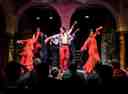
  1. To spot the Flamenco Dance Museum as you walk, keep your eyes out for a beautiful, old building with warm, sandy-colored stone and traditional arched entrances. It’s nestled right…Mehr lesenWeniger anzeigen

    To spot the Flamenco Dance Museum as you walk, keep your eyes out for a beautiful, old building with warm, sandy-colored stone and traditional arched entrances. It’s nestled right on a narrow street in the heart of the historic Santa Cruz neighborhood. If you see a sign that says “Museo del Baile Flamenco” and hear distant guitar strings, you’re in the right place. Look for a doorway leading into a cool, shaded Andalusian courtyard-if you hear the echo of heels or laughter, you’re very close! Now, standing here, you’re right outside the world’s only Flamenco Dance Museum, the Museo del Baile Flamenco. Imagine for a second that you’ve just strolled away from the busy buzz of Plaza de la Alfalfa and find yourself caught between the past and present of Andalusia. Here, in this very spot, people from all over the planet come to feel the fire and soul of one of Spain’s oldest and proudest traditions: flamenco. It might look calm on the outside, but step in and WHAM-your senses are about to dance!. Inside, there are four whole floors dedicated to music, movement, and passion. There's even a secret underground level, where the stone walls seem to hum with history. On the ground floor, there’s a rare sight-a classic Andalusian patio-one of the last in Seville. It’s like a secret oasis, and almost every night, this quiet courtyard bursts alive with swirling dresses, flying hands, and lightning-fast feet. All of this magic started with a local flamenco star, Cristina Hoyos, who wanted to create a home for this art. She turned an 18th-century building into this living museum, blending old tradition with modern technology. Every corner takes you deep into flamenco-through stories about legends like Carmen Amaya and Sara Baras, and interactive displays that let you try your own moves (don’t worry, I promise not to judge your Sevillanas!). You’ll find more than just dancing here. Art fills the walls-photographs catch the flash of a dancer’s heel, paintings capture those explosive moments of duende, that wild spirit you feel only with flamenco. Throughout the museum, you’ll hear echoes of top artists, politicians, and even movie stars who have come for a taste of this magic. The best part? As the day winds down, the patio becomes a stage, and world-class artists sweep onto it. There’s singing, there’s guitar, and above all, there’s the deep, urgent rhythm of flamenco-the rumba, tangos, alegrías, and more. So, ready to feel the soul of Seville? Don’t be shy-flamenco is not just about dancing on stage; it’s about letting the rhythm pull you in, even if your dancing skills are more “awkward tourist” than “graceful Sevillano.” Let’s see if we can catch a bit of that magic before we head on to the next stop!

    Eigene Seite öffnen →
  2. Alright, take a good look in front of you! You’ll see a classic Sevillian building, all golden brick arches at street level and lined with black iron balconies on each floor…Mehr lesenWeniger anzeigen

    Alright, take a good look in front of you! You’ll see a classic Sevillian building, all golden brick arches at street level and lined with black iron balconies on each floor above. Vines dangle gracefully from the top, and the wide wooden doors with shutters give it that elegant, old-world charm. If you spot the “COPYUR” shop sign and arched entries on your right or left, you’re definitely on the Cuesta del Rosario. Now, let me take you back in time for a moment. Imagine the street before you as it was long ago-not just another road, but the ONLY sloped street in all of Sevilla! Back in the mid-1800s, folks would marvel that such a thing as an incline could exist in their pancake-flat city. You’re walking a path where, once upon a time, Sevillanos probably stopped to catch their breath, looked up, and wondered if they were climbing their very own mountain. Félix González de León, an old historian from the 1800s, described this spot in his book as if it were a place of legend, connecting from the bustling Plaza del Pan (or Plaza de Jesús de la Pasión) to where it meets Augusto Plasencia-linking lively corners and winding lanes, full of stories. Can you hear the echoes of old carriage wheels creaking, merchants calling out, neighbors gossiping from balconies? Maybe even someone muttering, “Why is it always uphill both ways?” As you stand here today, think of all the steps taken before yours. The laughter, the secrets, the hurried feet-all echoing down the Cuesta del Rosario, Sevilla’s own little hill that made everyone feel like a mountain climber-even if just for a minute. Don’t worry, though, the only thing speeding up your heart rate now should be excitement, not the slope! Ready for the next stop? Let’s keep exploring!

    Eigene Seite öffnen →
  3. Look up ahead and slightly to your left - see that long, towering wall, rough and ancient, stretching alongside the road? Notice the thick, earthy stone blocks at the base, topped…Mehr lesenWeniger anzeigen

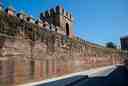
    Look up ahead and slightly to your left - see that long, towering wall, rough and ancient, stretching alongside the road? Notice the thick, earthy stone blocks at the base, topped with rows of pointy, square merlons marching along the wall like a line of chess pieces. Up high, you’ll spot one of the old gate towers, a big stone archway that feels like it could open into another world. If you look closely, you might even spot small plants and moss squeezing between the stones - nature’s way of sneaking into history. Right here in front of you stands what’s left of Seville’s mighty Walls. Now, try to imagine it - a thousand years ago, you’d be staring at a fortress! These huge military walls circled the entire old city, making sure nobody got in unless they were supposed to. Every era built a bit more wall as Seville grew, but the ones you see here? They’re mostly from the 1100s, when the Almohads ruled the city. Amazing, right? Not even a magic trick - just hard work, sweat, and about two meters of wall thickness! You won’t see much of the Roman original, but deep underground, historians still find hints: a chunk of Roman stone here, a buried corner there. The funny thing? People used to tell wild tales that Julius Caesar built the first walls, but by the time the Romans arrived, walls were already in place. Maybe the real magic was how everyone kept recycling and improving what came before. Imagine the city in those days - noisy, lively, but always on edge. Let’s add some drama. In 844, Vikings attacked, so the city hurried to beef up its defenses. Later, the walls grew stronger, taller, packed with towers every 40-50 meters. Back then, there were 18 gates and secret postigos - you’d have to know the right one to sneak in with your goat or basket of oranges. Only four gates remain today. If these stones could talk, I bet they’d whisper endless secrets about old battles, invaders, and the daily life of everyone hurrying through the gates. So, take a slow walk along these walls. You’re not just looking at old rocks - you’re stepping along the skin of Seville’s history! Keep your eyes out: every shadow and crack might be hiding a bit more of the story. And hey, if you hear whispering, it’s probably just the wind… or maybe a ghostly architect checking his medieval handiwork! Exploring the realm of the gates and shutters to access the city, preserved sections of the wall or the photo gallery? Feel free to consult the chat section for additional information.

    Eigene Seite öffnen →
9 weitere Stationen anzeigenWeniger Stationen anzeigenexpand_moreexpand_less
  1. As you walk up, you’ll spot the Municipal Newspaper Archive of Seville right ahead-just look for the grand entrance framed by four impressive stone columns, standing tall like…Mehr lesenWeniger anzeigen

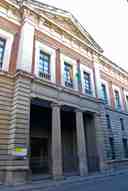
    As you walk up, you’ll spot the Municipal Newspaper Archive of Seville right ahead-just look for the grand entrance framed by four impressive stone columns, standing tall like ancient guards. Above them, you’ll see a row of serious-looking windows, and two flags waving in the breeze: one Spanish, and one green-and-white for Andalucia. The building’s red brick and cream stone trim make it stand out from its neighbors, almost like it’s posing for its own front-page story. Now, let’s imagine you’re stepping through time. This is not just any archive-it’s the keeper of Seville’s stories, where old newspapers, wild headlines, and secret histories are saved from being lost forever. The Municipal Newspaper Archive was born back in 1934, right inside the grand halls of the Alcázar, during a summer so hot that even the ink on the papers must have threatened to melt! This place holds almost 30,000 volumes, with newspapers dating all the way back to 1661. Can you imagine? Walking by dusty shelves, you’d find the first issues printed in candlelight, gossip from royal courts, and posters for plays that made people laugh and cry in long-vanished theaters. The archive has survived more drama than some soap operas! During the Civil War, its first home was abandoned, papers left behind like forgotten treasure. Then in the ‘60s, part of another home-the Pabellón Mudéjar-collapsed, sending a rain of bricks and a few precious collections into history’s black hole. But the people of Seville never gave up. They moved the archive again and again, determined that every headline and scandal would be preserved. Now, the archive is embracing the digital age. With the NO8DO Digital project, you can browse hundreds of years’ worth of Sevillian life online, with photos, virtual exhibits, and stories you’d never believe. As you stand here, you’re just steps away from centuries of laughter, heartbreak, and headlines. You know, if newspapers could talk, I bet this building would never sleep! Ready for the next chapter of your tour? Let’s wander on through history.

    Eigene Seite öffnen →
  2. Take a look to your left-the Church of the Annunciation stands out with its solid brick walls and a proud, domed bell tower rising above the rooftops. The church faces Calle…Mehr lesenWeniger anzeigen

    Take a look to your left-the Church of the Annunciation stands out with its solid brick walls and a proud, domed bell tower rising above the rooftops. The church faces Calle Laraña, and you’ll spot its grand entrance flanked by two mighty columns, almost like a couple of muscular guards on door duty. There’s a tall rectangle of a facade, broken up by a large arched door, and if you squint, you might see stone statues peering down from their perches. Over the entrance, notice the central statue of the Virgin and Child, keeping watch over everyone passing by. The building’s reddish-brown color gives it a warm “baked in the sun” look. Now, imagine standing here in Seville nearly 500 years ago. The street noise would have been a little different-maybe clopping horse hooves and excited chatter as people hurried to lectures. The Church of the Annunciation was more than just a church; it was a powerhouse during the Spanish Counter-Reformation and a launchpad for Jesuit missions that sailed to lands far away. It was built beginning in 1565, and its design shows off the brains of not one but two masterminds: Bartolomé de Bustamante and Hernán Ruiz the Younger-the latter being the “rockstar architect” of Seville’s cathedral. No pressure, right? Standing by the impressive entrance, picture yourself in front of two floors of stonework. There are columns, rectangular windows, fancy frames, statues of saints, and-if you look in the middle niche-a careful sculpture of the Virgin Mary by Juan Bautista Vázquez. But here’s where it gets even more interesting: below your feet, hidden from view, is a crypt that keeps the remains of Sevilla’s most celebrated citizens, like the poet Gustavo Adolfo Bécquer. Maybe if you put your ear to the ground you’ll catch a whisper of poetry! This spot has been a chameleon through time: first a Jesuit HQ, then the beating heart of a university, stuffed with scholars and books and wild discussions about the future. It’s seen the Jesuits booted out, the university move in, and generations of knowledge-hungry students pass through. When you’re ready, we’ll take our next step through the living history of Seville-no time machines required.

    Eigene Seite öffnen →
  3. As you’re walking down this narrow street, glance to your left and you’ll spot a building with a grand, dark wooden door studded with bronze, topped by a richly decorated stone…Mehr lesenWeniger anzeigen

    As you’re walking down this narrow street, glance to your left and you’ll spot a building with a grand, dark wooden door studded with bronze, topped by a richly decorated stone archway. Above the entrance, there’s a balcony with bold black railings and some fancy stone scroll work curling out to the sides. You’re looking for that elegant but slightly dramatic doorway, almost as if it’s waiting for a countess to sweep out in a swirl of mystery and history. Welcome to the Lebrija Palace, one of Seville’s best-kept secrets! Imagine the bustling sounds of carriage wheels bumping along the cobbles as noble families come and go, centuries ago. This building has been standing here since the 16th century-though, trust me, its story is much older than the paint on its walls. Now, the outside is classic Andalusian-that deep red behind the stonework, the carved windows, and just a hint of drama. But inside? Well, you’d better let your imagination loose. It’s like stepping into a treasure chest where every inch hides a new surprise. The Countess of Lebrija, Regla Manjón, collected Roman mosaics as if she was gathering rare stamps. In fact, there are mosaics straight from the ancient city of Italica, spread like magic carpets across the ground floor. A historian once called this the “best paved house-palace in Europe”-which honestly sounds like an Olympic event, but with a lot more marble. Picture this: in the palace courtyard, sunlight bounces off the colorful stones of a giant Roman mosaic. Right in the center, you’d find Pan, the god of wild music, playing his flute and trying to charm a nymph. You might even hear the echo of a flute if you listen closely-of course, that might just be my imagination or a clever tour guide with a sound app. All around, marble busts grin or stare, ancient columns stand like guards, and everywhere you look, there’s another curious artifact or artwork. The countess loved archaeology so much she turned her house into a living museum. She filled it with treasures from Roman times, Moorish pieces, and even art from distant China and Persia. And just when you think it can’t get more impressive, you wander upstairs to discover libraries packed with over 4,000 old books-enough to keep any bookworm busy for the next several centuries. So, as you stand here, try to imagine being invited inside for a grand dinner or secret meeting. Maybe you’d discover a priceless painting, or perhaps just lose yourself in the echoes of the past. In 1999, the palace was opened to the public, so luckily, you don’t need to be a count or countess to enter now-just a curious visitor thrilled by stories and beauty. Don’t worry, no secret passwords required!

    Eigene Seite öffnen →
  4. Look ahead and slightly upward-you can’t miss the bold, rosy-red facade of the Iglesia del Salvador! Framed by striking white stone columns and topped with decorative domes, the…Mehr lesenWeniger anzeigen

    Look ahead and slightly upward-you can’t miss the bold, rosy-red facade of the Iglesia del Salvador! Framed by striking white stone columns and topped with decorative domes, the church almost looks like it’s wearing a royal coat, complete with a giant circular window in the center, like a jewel on its chest. Notice the ornate carvings and the grand wooden doors, all behind a line of playful orange trees standing guard by an old iron fence. If you’re facing the busy plaza, that magnificent building right in front is where the history happened. Alright, picture this: more than a thousand years of stories have stacked up on this very spot! First, there may have been a Roman building here, then a Visigothic church-or so the legends say. But one thing’s for sure: in the early 800s, the grand mosque of Ibn Adabbás rose up here, filling these stones with the sound of ancient prayers. Jump forward to 1248, and things get dramatic! King Ferdinand III of Castile takes Seville, and suddenly, this mosque is transformed into a church, dedicated to the Divine Savior. Imagine the whirlwind of change: minarets turning into bell towers, and the buzz as people wondered what would come next. By the 17th century, the church was in bad shape-so sunken into the street you had to walk down 20 steps to get inside! You could almost touch the roof from the outside, which is quite convenient if you’re scared of heights, but not great for a church. In 1671, they tore it all down and started fresh. But oops-a classic builder’s blunder! The new church collapsed just before opening, thanks to hasty removal of supports. Back to the drawing board! The fiery red walls and white trim you see now were finally finished in the early 1700s by architect Leonardo de Figueroa. Imagine the grand opening-all the music, the voices, and the pride as Seville’s largest Baroque church shone in the sunlight. Inside, this place turned into a musical hotspot, echoing with some of the best sacred music in town. After all those ups and downs, the church lost its old title in the 1800s and became a regular parish, though plenty of locals stubbornly call it the old name anyway! Its last big facelift was in 2003, restoring a touch of that original shine. So as you stand here, outside this feast of color and history, take a deep breath and listen-you can almost hear the footsteps of Romans, the prayers of Moors, and the joyful sounds of centuries gone by.

    Eigene Seite öffnen →
  5. Look just to your right as you stroll forward-the sign on the nearest yellow building says it all: “Blanca de los Ríos.” This narrow street is like a cozy ribbon quietly tied…Mehr lesenWeniger anzeigen

    Look just to your right as you stroll forward-the sign on the nearest yellow building says it all: “Blanca de los Ríos.” This narrow street is like a cozy ribbon quietly tied through the old heart of Sevilla. You’ll see small shops, wrought-iron balconies dripping with local flavor, and echoes of the past under those dangling lights strung above. Now, imagine walking down this alley back in the day when it was known as Calle Agujas-yes, Needle Street! The name might sound a bit prickly, but the story here is far more enchanting than a poke in the finger. In 1839, Félix González de León described it in his legendary book about Seville’s street names. Thousands of footsteps-shoemakers, poets, and lovers-have echoed right where you’re standing. Let your senses roam. Picture the faint scent of fresh bread drifting from an old bakery, mingling with the distant strum of a Spanish guitar. Can you hear the hum of merchants chatting, and the surprising silence that sometimes falls, broken only by the fluttering of pigeons overhead? Street names in Seville aren’t just labels-they’re whispers from another era, secrets hidden in plain sight. The next time you turn a corner and wonder how a street got its name, remember Blanca de los Ríos. Even among the bustle, history is waiting patiently, pretending to be just another ordinary street-while you and I both know it’s anything but. And if you happen to meet a local, just ask them for a story-Sevillanos never need much encouragement when it comes to a good tale!

    Eigene Seite öffnen →
  6. To help you spot the Capilla de San José as you walk, look ahead for a rather narrow, tall building edged in ornate brickwork. Its main door is richly decorated, framed by two…Mehr lesenWeniger anzeigen

    To help you spot the Capilla de San José as you walk, look ahead for a rather narrow, tall building edged in ornate brickwork. Its main door is richly decorated, framed by two levels of baroque statues and shiny tiles, almost as if someone squeezed an entire treasure chest onto a slice of street. Right at the center above the entrance, you'll see a small statue of Saint Joseph watching over the passersby-you can’t miss it. If you walk beside it, there’s also a smaller door, crowned by an image showing the Wedding of the Virgin, and, just above, a sun dial. Baroque? Oh, yes. Modest? Not really. Alright, time to take you back in time! Imagine the year is 1700. The city smells of orange blossoms, and right here, the local carpenters have decided they want their own chapel. Now, just picture the frowns on the architects when they heard-carpenters drawing up building plans! That led to a big drama, almost like an episode of Reality TV, 18th-century style. But hey, they pulled it off, and here it stands. Everything about this place tells a story of survival and passion. When you step inside, your eyes are hit with a rush of gold and swirling decoration-walls covered in sculptures, all curves, drama, and light. You can almost hear the hushed whispers of people with dreams much bigger than the size of the space. Now let’s talk about the baroque style-think of it as the peacock of architecture: bright, bold, and impossible to ignore. Those gold-covered altars in front of you? Created by the talented Cayetano de Acosta, so dazzling that you might need to squint. If you notice the columns twisting upwards, almost like they’re dancing, that’s no accident-this place was meant to impress. Between the shining chandeliers, the painted ceilings, and the heavy scent of incense, it feels kind of magical here, doesn’t it? But there’s serious history, too. In 1931, as social unrest rattled Sevilla, the chapel was stormed, robbed, even set on fire in the dead of night. But like a good Sevillano, she dusted herself off and shined again. Best of all, this little chapel holds a rare honor-the same spiritual privileges as Rome’s grand Basilica of Saint John Lateran. Not bad for a small chapel hugged between city streets! So, take a deep breath, enjoy the golden glow-and let your imagination roam where centuries of Sevillians have stood in wonder.

    Eigene Seite öffnen →
  7. You’re almost there! Just look ahead for a grand building with tall, pale stone columns and delicate stucco details, all surrounding handsome arches. If you spot a beautiful old…Mehr lesenWeniger anzeigen

    You’re almost there! Just look ahead for a grand building with tall, pale stone columns and delicate stucco details, all surrounding handsome arches. If you spot a beautiful old courtyard with a square ground plan, big lanterns hanging over your head, and rows of arched windows, you’ve made it-you’re at the Convent of Saint Acacius. Peer through the windows, and you might even see elegant old chess tables waiting for their next match. That’s your cue! Now, let me sweep you back in time. Imagine it’s the 16th century, and outside the walls of Sevilla, this place buzzed with monks in long robes-Augustinians, to be exact. There’s a whiff of anxiety in the air: they want to build a grand college, but their coin purse is lighter than a feather. Just when hope is fading, along comes Leonor de Virués, a widow with a heart as generous as her garden, donating houses and orchards so these monks can finally get building. You’d see students hustling over dusty paths, books clutched tight-maybe dodging an overzealous chicken or two. By 1601, the church here was finished and became a beacon for those seeking wisdom, faith, and maybe a slice of peace away from the city’s clatter. Over time, the city grew and this convent moved to its present spot, right here in the heart of Sevilla. Oh, but it wasn’t all quiet prayers and gentle chanting. This building’s life is like a Spanish soap opera: monks in, monks out, artists, noblemen, invading armies (hello, Napoleon), and even a public credit office at one point. At night, neighbors would gather for rosary processions, wandering these cloisters by lantern light, filling the warm air with whispers and song. Look up at the sturdy columns around you and picture a line of monks with secrets under those heavy robes-perhaps sneaking extra bread, or maybe just a forbidden chess game on those old tables. And don’t forget, this courtyard was designed by the famous Leonardo de Figueroa-in the late 1600s-so every detail is a little piece of art. In the end, this convent retired from holy work and transformed into the Real Círculo de Labradores in the 1950s-a place of gathering, laughter, and lively debate. So next time someone tells you Sevilla is all oranges and flamenco, tell them there’s history and drama waiting behind every arched door. Alright, onward to our next adventure!

    Eigene Seite öffnen →
  8. Ahead of you, you’ll spot a bustling intersection where the street seems to open up, almost like a tiny plaza surrounded by buildings with elegant yellow-and-white trim. On your…Mehr lesenWeniger anzeigen

    Ahead of you, you’ll spot a bustling intersection where the street seems to open up, almost like a tiny plaza surrounded by buildings with elegant yellow-and-white trim. On your left, you’ll see a charming shopfront with blue signage welcoming you to “La Campana.” If you look up, you’ll notice a mix of balconies-some with ornate iron railings, some with bay windows-wrapped around classic Sevilla architecture. Follow the rows of tables set outside; they’re a clue you’ve arrived at the heart of the action. Welcome to La Campana, or just “The Bell,” the beating heart of Seville’s historic center. Years ago, this spot was famous for its delicious bakers and sweet shops. In fact, it used to be nicknamed “Street of the Pastry Chefs”-so if you suddenly catch a whiff of sugar in the air, you’re not dreaming! Today, La Campana isn’t just about sweets, though the famous confitería-running since 1885-is right here and still tempting locals with treats. Long before coffee and cake, this area was home to a curious city warehouse. The building had a big bell hanging from it, used to rally neighbors when there was a fire. Imagine: the ringing echo would signal everyone to grab a bucket, rush out, and help save the day. Some say the bell was so loved that, once the old warehouse was gone, someone even painted a giant bell on a nearby wall just for the memories. Over time, the street transformed, and by the 1800s, La Campana took on its current shape-a short but lively avenue with narrow ends, a little like a plaza pretending to be a street. You’re standing where the city comes alive, the official starting line for Seville’s most famous Holy Week processions. Picture thousands of chairs lining the street, people squeezing in for the best view, and the sound of drumbeats echoing off the buildings. On one side, take a look at the neomudéjar-style building with the ornate brickwork, built by architect Aníbal González in 1907. On the other side, you’ll see another grand building from 1912, a real gem designed by José Gómez Millán. If the ground feels oddly uneven under your feet, don’t worry-it’s just a reminder that, back in 1961, a flood swept through here after the Tamarguillo river overflowed. Locals say that after the water receded, the only thing drier than the pavement was the Sevillian sense of humor. So, whether you’re here for a slice of cake, a dash of history, or to just watch the world go by, La Campana is the real crossroads of Seville. And hey, if you hear a bell, maybe double-check you haven’t accidentally walked into pastry paradise!

    Eigene Seite öffnen →
  9. Right in front of you stands a tall, striking doorway flanked in golden yellow, topped with old stonework, and guarded by a giant wooden door covered in glinting metal bolts. If…Mehr lesenWeniger anzeigen

    Right in front of you stands a tall, striking doorway flanked in golden yellow, topped with old stonework, and guarded by a giant wooden door covered in glinting metal bolts. If you look up above the door, you’ll spot a painted image of a saint standing watch inside a little arched alcove, framed by elegant columns and swirls, almost like he’s welcoming you to step through into another century. Now, let’s dive into the story! Imagine it’s the 1700s, the air thick with the smell of candles and the sound of carriages clattering along this very street. The Church of Saint Anthony the Abbot is a true Sevillian oddball-because it actually has two naves instead of one! That’s like walking into a house and finding it has two living rooms stuck side by side. Why? Two different brotherhoods with their own buildings decided, “Hey, why not combine forces?” So, in the 18th century, an architect named Diego Antonio Díaz did just that, turning two separate spaces-one a hospital chapel, one a brotherhood’s sanctuary-into a single church with two parallel halls. Picture those flat ceilings arching above your head, covered in gentle barrel vaults, softening the sounds of prayers whispered for centuries. If you peek through the doors, you’d see two grand altars: one with Jesus Nazareno, the other with the Virgin of the Conception, each side proudly watched over by its brotherhood, especially during the famous Semana Santa processions. There’s a bit of drama, too-later on, in the 1800s, the side dedicated to the Virgin got a big makeover, adding a wide door right onto the street. They loved an entrance in style, it seems! So, as you stand here, you’re not just at the end of our tour. You’re standing in front of a living relic, still humming with mystery and centuries of faith-where Sevillians have gathered for prayers, secrets, maybe even a few nervous glances when waiting for nighttime processions. Not bad for a building with twice the personality! And remember, when it comes to churches in Seville, sometimes two naves are better than one!

    Eigene Seite öffnen →

Häufig gestellte Fragen

Wie starte ich die Tour?

Laden Sie nach dem Kauf die AudaTours-App herunter und geben Sie Ihren Einlösecode ein. Die Tour ist sofort startbereit – tippen Sie einfach auf „Play“ und folgen Sie der GPS-geführten Route.

Benötige ich während der Tour Internet?

Nein! Laden Sie die Tour vor dem Start herunter und genießen Sie sie vollständig offline. Nur die Chat-Funktion benötigt Internet. Wir empfehlen den Download über WLAN, um mobiles Datenvolumen zu sparen.

Handelt es sich um eine geführte Gruppentour?

Nein – dies ist ein selbstgeführter Audioguide. Sie erkunden unabhängig in Ihrem eigenen Tempo, wobei die Audioerzählung über Ihr Telefon abgespielt wird. Kein Reiseleiter, keine Gruppe, kein Zeitplan.

Wie lange dauert die Tour?

Die meisten Touren dauern 60–90 Minuten, aber Sie kontrollieren das Tempo vollständig. Pausieren Sie, überspringen Sie Stopps oder machen Sie Pausen, wann immer Sie wollen.

Was, wenn ich die Tour heute nicht beenden kann?

Kein Problem! Touren haben lebenslangen Zugriff. Pausieren Sie und setzen Sie sie fort, wann immer Sie möchten – morgen, nächste Woche oder nächstes Jahr. Ihr Fortschritt wird gespeichert.

Welche Sprachen sind verfügbar?

Alle Touren sind in über 50 Sprachen verfügbar. Wählen Sie Ihre bevorzugte Sprache beim Einlösen Ihres Codes. Hinweis: Die Sprache kann nach der Tour-Generierung nicht mehr geändert werden.

Wo greife ich nach dem Kauf auf die Tour zu?

Laden Sie die kostenlose AudaTours-App aus dem App Store oder von Google Play herunter. Geben Sie Ihren Einlösecode (per E-Mail gesendet) ein, und die Tour erscheint in Ihrer Bibliothek, bereit zum Download und Start.

verified_user
Zufriedenheit garantiert

Wenn Ihnen die Tour nicht gefällt, erstatten wir Ihnen den Kaufpreis. Kontaktieren Sie uns unter [email protected]

Sicher bezahlen mit

Apple PayGoogle PayVisaMastercardPayPal

AudaTours: Audioguides

Unterhaltsame, budgetfreundliche, selbstgeführte Stadtrundgänge

App ausprobieren arrow_forward

Beliebt bei Reisenden weltweit

format_quote Diese Tour war eine großartige Möglichkeit, die Stadt zu sehen. Die Geschichten waren interessant, ohne zu konstruiert zu wirken, und ich liebte es, in meinem eigenen Tempo erkunden zu können.
Jess
Jess
starstarstarstarstar
Tbilisi-Tour arrow_forward
format_quote Das war eine solide Art, Brighton kennenzulernen, ohne sich wie ein Tourist zu fühlen. Die Erzählung hatte Tiefe und Kontext, übertrieb es aber nicht.
Christoph
Christoph
starstarstarstarstar
Brighton-Tour arrow_forward
format_quote Habe diese Tour mit einem Croissant in der einen Hand und null Erwartungen gestartet. Die App schwingt einfach mit einem mit, kein Druck, nur man selbst, Kopfhörer und ein paar coole Geschichten.
John
John
starstarstarstarstar
Marseille-Tour arrow_forward

Unbegrenzte Audioguides

Schalten Sie Zugriff auf JEDE Tour weltweit frei

0 Touren·0 Städte·0 Länder
all_inclusive Unlimited erkunden