
Logroño Audio-Tour: Von Brücken zu Baronen – Geschichten hinter den Steinen
Ein Brunnen plätschert zu Füßen bronzener Löwen, während ein mächtiger General über Logroño blickt – eine Stadt, geprägt von epischen Schlachten, mitternächtlichem Zugpfeifen und Geheimnissen hinter Samtvorhängen. Diese selbstgeführte Audio-Tour führt Sie über die postkartenreifen Ansichten hinaus, um Geschichten aufzudecken, die sich direkt vor Ihren Augen verbergen. Wer entfachte Empörung im Schatten von Esparteros Statue und brachte beinahe ein politisches Erbe zu Fall? Welche verborgenen Narben bleiben unter den glatten Steinen der Gran Vía Juan Carlos I von einer explosiven Festnacht zurück? Welcher pikante Skandal zwang die Schauspieler des Teatro Bretón de los Herreros zur Improvisation auf der Bühne – ohne dass das Publikum etwas merkte? Schreiten Sie durch rauschende Brunnen und prächtige Alleen, wo Rebellion ihre Spuren hinterließ. Verweilen Sie unter Theaterbögen, die von Flüstern und donnerndem Applaus widerhallen. Jede Ecke pulsiert vor Drama. Bereit, in die Fußstapfen von Legenden zu treten und die unerzählten Geschichten der Stadt zu entdecken? Die Geheimnisse von Logroño warten – treten Sie näher, schauen Sie tiefer, lassen Sie sich von der Geschichte überraschen.
Tourvorschau
Über diese Tour
- scheduleDauer 40–60 minsEigenes Tempo
- straighten3.7 km FußwegDem geführten Pfad folgen
- location_on
- wifi_offFunktioniert offlineEinmal herunterladen, überall nutzen
- all_inclusiveLebenslanger ZugriffJederzeit wiederholen, für immer
- location_onStartet bei Denkmal für Espartero
Stopps auf dieser Tour
You’re looking for a striking bronze statue of a man on horseback, towering above a circular fountain and guarded by four lounging lions-just look for the tallest pedestal in the…Mehr lesenWeniger anzeigen
You’re looking for a striking bronze statue of a man on horseback, towering above a circular fountain and guarded by four lounging lions-just look for the tallest pedestal in the middle of the Paseo del Espolón and you can’t miss it! Now, picture yourself right here over 100 years ago. The air is buzzing with excitement, people packed into this very square, craning their necks to see the newest monument rise above them. This is the Monument to General Espartero, built to honor one of Spain’s most famous politicians and military heroes, Baldomero Espartero. He was once the regent of Spain, and he lived right here in Logroño with his wife, María Jacinta, who was a native of this very city-so, yes, Logroño was home base for a real power couple! The statue you see took muscle to make-literally! All 11,130 kilos of bronze, mostly recycled from old cannons. That’s right, the very metal that once thundered through battles now stands peacefully beneath Espartero and his horse. And if you were around on the 27th of February, 1872, you’d have caught people clapping and cheering as the first stone was laid-on the general’s birthday, no less. I like to think this monument was their version of a surprise party. But wait, the drama! The monument wasn’t originally supposed to look like this at all. The project changed hands and changed ideas more often than a soap opera-with sculptors Francisco de Luis y Tomás and P. Gilbert each putting in their two cents, until finally the leaping horse and its brave rider were cast and hauled all the way from Barcelona, where the bronze was smelted in big, smoky workshops. Now, check out the lions at General Espartero’s feet-two are sleeping, two are wide awake, heads up and alert, as if guarding him night and day. Not a bad gig for a lion, except the fountain splashes nearby might tickle their paws. Look closer at the words around the base: “Justice, Heroism, Victory, Prudence”-each one a tribute to Espartero’s bravery and, I suppose, his ability to keep a remarkably stern face on horseback. There’s even “Logroño” and “Spain,” so the city and the country are immortalized right here. They say every city needs its local hero, and in Logroño, Espartero is the guy-hat firmly on his head, unlike his hand-holding twin in Madrid! So next time you cross a square and see a bronze horse standing proud, ask yourself: was this horse ever a cannon in a past life? Here, the answer is yes-and that’s the magic of history riding by your side.
Eigene Seite öffnen →You’ll know you’ve reached Gran Vía Juan Carlos I when you spot a wide avenue lined with tall, modern buildings on both sides and, right in the center, a fountain spraying up like…Mehr lesenWeniger anzeigen
You’ll know you’ve reached Gran Vía Juan Carlos I when you spot a wide avenue lined with tall, modern buildings on both sides and, right in the center, a fountain spraying up like it’s competing with the sunshine-just look straight ahead and you can’t miss those bursts of water sparkling in front of you! Alright, time for a little stroll through time… Close your eyes for a second-well, maybe just imagine, don’t actually bump into anyone! Picture Logroño back in the 1950s: a clattering railway track splitting the city in two, steam and smoke, people saying goodbye or hello as trains rumbled away. But in 1958, the last whistle blew, the trains rolled out for good, and suddenly there was this big empty space where the tracks had been. What to do with all that land? Someone must’ve had a serious lightbulb moment (and maybe a coffee or two) because an idea popped up: why not build a grand avenue that would sew together the old and new parts of town? It took a few years-and maybe a few heated discussions over rioja wine-but by 1963 Gran Vía officially began to take shape, wider than you’d think possible at 46 meters! Imagine the dust and noise as bulldozers rumbled and hammers rang, all for a promise of fresh trees, wide walkways, and a vibrant heartbeat for city life. Today, you’re standing on what was once the busy route of the train, now a lively avenue stretching from east to west, linking neighborhoods and people instead of just train stations. But Gran Vía hasn’t always just been about peaceful strolls and splashing fountains-oh no! In 2001, in the thick of San Bernabé festival madness, an explosion of a very different kind shook the avenue. Thankfully, only bricks and windows were rattled, not people, but it’s a reminder that even the most beautiful places can have moments of real drama. And yet, Gran Vía bounces back-renovated in 2006 with new plazas and roundabouts, now home to playful artworks like the Gorgorito monument unveiled in 2008. So next time you walk down the Gran Vía, remember: beneath your feet once ran trains, then dreams, then maybe a bit of controversy-but always that spirit of moving forward!
Eigene Seite öffnen →If you look straight ahead, you’ll spot a beautifully ornate grey building trimmed in pale pink with grand arched windows and the name teatro Bretón de los Herreros proudly…Mehr lesenWeniger anzeigen
If you look straight ahead, you’ll spot a beautifully ornate grey building trimmed in pale pink with grand arched windows and the name teatro Bretón de los Herreros proudly announced above the entrance. Now, give your shoes a quick shuffle-after all, you’re standing in front of a stage loved by generations! The Theatre of Bretón de los Herreros isn’t just any old building; it’s the beating heart of Logroño’s drama and excitement. It was first built in the nineteenth century, when top hats, swirling gowns, and candlelight ruled the night. Back then, the air grew thick with anticipation as crowds packed the hall, whispering about the latest play-sometimes romantic, sometimes scandalous! Imagine the actors behind this very facade: one nervously peeking through the heavy red curtain, another trying hard not to sneeze at just the wrong moment. In 1902, this theatre got its official new name, celebrating Manuel Bretón de los Herreros, Logroño’s own witty playwright. They say he could make an entire crowd roar with laughter or sniffle into their handkerchiefs, all in one evening! By 1983, Spain recognized just how special this place was, making it a Bien de Interés Cultural-a cultural treasure. So, next time you see the lights flicker or hear applause, remember you’re part of a long, lively tradition right here, where the magic of theater never really leaves. And hey, just watch out for dramatic exits-actors are known for those!
Eigene Seite öffnen →
11 weitere Stationen anzeigenWeniger Stationen anzeigenexpand_moreexpand_less
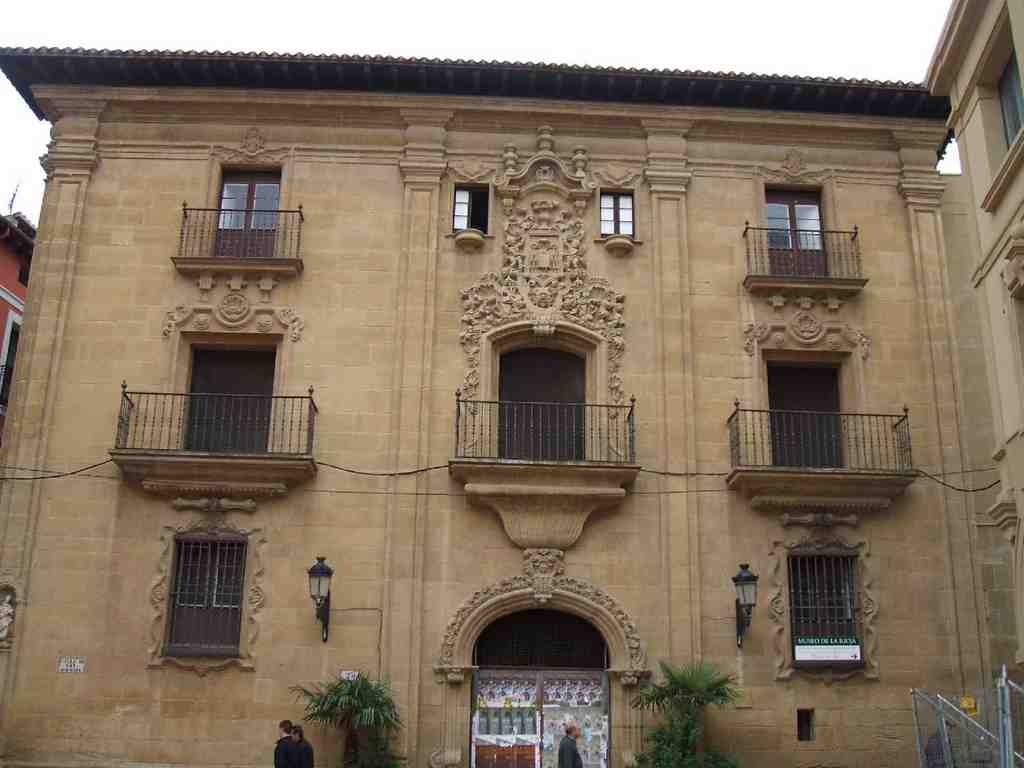
Right in front of you, you’ll spot a grand, stone building with a strikingly ornate central balcony crowned by a large decorative coat of arms-just look for the neoclassical…Mehr lesenWeniger anzeigen
Right in front of you, you’ll spot a grand, stone building with a strikingly ornate central balcony crowned by a large decorative coat of arms-just look for the neoclassical façade with symmetrical windows and wrought iron balconies standing out proudly in the heart of Logroño! Now, take a deep breath and picture this: it’s the 18th century, and the air is buzzing with the sounds of construction--as Pedro Ruiz de la Porta, ruler of Logroño, oversees the creation of his gleaming new palace. This isn’t just any home; this is the building that would one day be woven into the heart and soul of La Rioja’s story. Its thick walls, balustraded balconies and grand central tower know secrets, drama, and even a bit of noble gossip, oh yes! Fast forward a century or so-imagine the elegant footsteps of General Baldomero Espartero echoing through the halls. Espartero, a Spanish war hero and political heavyweight, settles here after hanging up his sword and marrying María Jacinta Martínez. You can almost hear his boots clanking down the staircase as he escapes the turbulence of politics for domestic calm... But well, as you might expect, peace in a palace like this is always in short supply! The building soon earns a new name: Palacio de Espartero. But don’t get too cozy, because the palace is about to embark on quite the adventure. Upon the deaths of Espartero and his wife-who, by the way, had no children to inherit their stately home-the palace passes to Vicenta Martínez de Sicilia, the Marquesa de La Habana, a relative with a taste for both adventure and real estate deals. She rents this splendid place to the state, and soon--the palace transforms into government offices and even the home for Logroño’s bishop (well, at least in theory; the bishop preferred his digs in Calahorra and never moved in). If these walls could talk, they’d laugh-because next comes a parade of tenants. At the turn of the 20th century, children’s laughter fills the corridors as the Asilo de Santa Rosa moves in, a safe haven for the kids of the hardworking women in Logroño’s nearby factories. The sound of tiny footsteps and laughter would have echoed down those grand staircases. Then, a few years later, the building hosts the House of the Infant Jesus, a savings bank, the Chamber of Commerce, and even an artistic circle. This palace always found a way to stay busy-even as plans to turn it into a fancy archive fell through. If you ever feel indecisive, just remember: you’ve probably never been used by this many people for so many different things in your whole life! In 1962, someone finally has the bright idea to just call it a monument (about time, right?), and by 1971, after nearly two centuries of changing hands, the grand doors open to the public as the Museo de La Rioja. For the first time, art, history, and the stories of ordinary people all gather under one elegant roof. And what a collection lies inside! You’ll find glorious 19th and 20th-century paintings, medieval treasures, and the showstopper: the fourteenth-century Tablas de San Millán. These painted panels-which used to be doors on a monastery altar-are masterpieces of gothic art, alive with images of the Virgin Mary, Jesus, and San Millán. If you can picture a world of glittering gold leaf, mysterious monks, and medieval devotion, you’re in the right mindset. The museum is still a place full of surprises: wooden statues, ancient furniture, archaeological finds, and objects showing the everyday life of Rioja’s people-farmers, craftsmen, and families whose hands shaped the very landscape around us. But it wouldn’t be a proper Spanish museum without a plot twist, right? When 21st-century architects decide to upgrade the building, sparks fly between regional and central governments-some want to gut the place, others to keep its ancient heart beating just as it is. After years of debate, stress, and dust (trust me, lots of dust!), a plan is finally agreed upon. The museum grows, modernizes, and, in October 2013, throws open its doors for a whole new era. Now, as you stand outside, take a moment. Imagine the footsteps, the secrets, the laughter, and the passionate debates that have echoed here for over 250 years. This palace, now a museum, is a true survivor-filled with layers of memories, drama and, of course, a treasure trove of La Rioja’s rich and colorful story.
Eigene Seite öffnen →To spot the Parliament of La Rioja, look straight ahead for a grand, sandy-yellow stone façade decorated with columns, arches, and elegant sculpted details, just beside the…Mehr lesenWeniger anzeigen
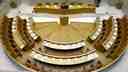
To spot the Parliament of La Rioja, look straight ahead for a grand, sandy-yellow stone façade decorated with columns, arches, and elegant sculpted details, just beside the fluttering flags of La Rioja, Spain, and the European Union. Ah, you’ve arrived at the very heart of La Rioja’s democracy! Picture yourself in front of these impressive stone doors, where the building stands tall like a wise old storyteller. Just imagine the echo of footsteps as politicians enter through this ornate entrance, ready to make decisions that shape the region. This isn’t just any building-it’s the supreme representative body of La Rioja, the big boss of local governance since 1982. Inside, 33 seats are up for grabs every election, with citizens casting their votes to decide who gets in. Don’t worry; you don’t have to take a math test to understand their system. Let’s just say they use something called the D'Hondt method to count the votes, which sounds much more complicated than picking your favorite ice cream flavor! The Parliament does all the heavy lifting for the community-passing laws, approving budgets, and even choosing the person who will wave the La Rioja flag in the Spanish Senate. So, if you ever wondered where the region’s big questions are debated and decided, this is ground zero. Occasionally, when politicians disagree a bit too enthusiastically, you might almost hear the rumble of passionate debates rising through these old stone walls. And guess what? The Parliament is led by a President-right now, it’s Marta Fernández Cornago-whose job is to guide discussions and keep everything running smoother than a Rioja wine poured on a sunny afternoon. There are also vice-presidents and secretaries, keeping everything ticking. Every decision and discussion inside shapes La Rioja’s present and future, all within this stately old building, whose walls have seen history unfold since the region’s autonomy was granted. So as you stand here, close your eyes for a moment and imagine the energy just behind these walls-laws being written, voices debating, and from time to time, perhaps a bit of friendly chaos. Welcome to the living, breathing heart of La Rioja’s democracy! Exploring the realm of the functions, composition of parliament in the eleventh legislature or the senator appointed by the parliament of la rioja? Feel free to consult the chat section for additional information.
Eigene Seite öffnen →To spot the Recellen Cube (El Cubo del Revellín), look for a large, round stone tower built right into the old city wall at the edge of the walkway, with its weathered blocks…Mehr lesenWeniger anzeigen
To spot the Recellen Cube (El Cubo del Revellín), look for a large, round stone tower built right into the old city wall at the edge of the walkway, with its weathered blocks standing out beside the smoother, newer wall and nearby buildings. Now, take a deep breath and bring your imagination back to the early 1500s. The air is tense, and you can almost feel the city of Logroño holding its breath-because you’re standing right next to one of its most heroic defenders: El Cubo del Revellín. This isn’t just any old stone tower! It was built between 1522 and 1524, right after the people of Logroño survived a terrifying siege by an army of French and Navarrese forces led by the fearsome general André de Foix. The siege was so dramatic, you’d expect someone to jump out with a cannonball at any moment. But instead of crumbling under the pressure, the citizens outlasted the attackers, and the city was called "the key to Castile." Afterward, everyone realized the ancient medieval walls just wouldn’t cut it anymore against the age of cannons. Enter Master Lope de Isturizaga, a stone mason who came all the way from San Sebastián to create cutting-edge defenses-a new kind of fort called a "fortification of transition." It was the superhero of walls: half-medieval, half-modern, and ready for battle. The Recellen Cube was the first phase of a city-wide facelift that was, honestly, a bit like starting a gym membership and only going to two classes. They got the Cube done…but the rest of the plan sort of fizzled out when the money ran dry. How did they get the money in the first place? A city tax called a “sisa.” It was so unpopular, even the local clergy declared a strike-refusing to hold church services or even funerals-just to avoid paying! You have to admit, that's a pretty “grave” protest. Eventually, Emperor Charles V stepped in and gave Logroño a juro, an annual payment to fuel the wall-building spree. Imagine the parade of stonemasons, laborers, and even donkeys, all busy bringing loads of stones-hundreds in 1522, thousands by 1524. If you listen closely, you can almost hear them as they built, brick by brick. But it wasn’t all about money and missing funerals. The Cube was designed with the latest military technology of its time. It’s not just a chunky tower; it holds a triple platform, walkways, and two gun galleries, so defenders could fire at attackers from both above and below. It even had a secret well, where water was stored to cool the cannons during battle-and maybe for a sneaky drink or two. Rumor has it, there might have even been a hidden “listening gallery,” where defenders could eavesdrop for noises of tunneling attackers trying to sneak in. Spies with very dirty boots, you could say. Through the centuries, the Recellen Cube saw the city change all around it. The strategic military value of Logroño faded as Spain unified and battlefronts moved further away. In quieter years, the walls sheltered all sorts of local life. In 1884, a pelota court was added to its eastern side, and in the 1930s, the place was humming with artists like Alejandro Rubio Dalmati, who left his mark with a stone relief. Just when you thought the Cube would retire, the frontón building was turned into the lively Cine Frontón, echoing with laughter and movie soundtracks for decades. By the late 20th and early 21st centuries, the city decided it was time to pull the Cube and the nearby Puerta del Camino back into the spotlight. Restoration efforts peeled away newer buildings, giving us the remarkable stonework and sweeping ramparts you see today. Archaeologists found layers of history here: parts of even older walls, the famous Cube from the 1500s, and later reinforcements built during Napoleon's time. Every stone you see has survived sieges, strikes, sports, and cinema-if these walls could talk, imagine the stories they’d gossip about. Now, as you stand here and look at the thick, ancient walls, picture defenders peering from the galleries and readying for action, townsfolk bustling with quarrels (and a few skipped sermons), and the old city holding firm against the tides of history. The Recellen Cube is Logroño’s ultimate survivor: solid, stubborn, and always ready for the next chapter. To delve deeper into the context, construction process or the financing, simply drop your query in the chat section and I'll provide more information.
Eigene Seite öffnen →You’re standing in front of the magnificent Concatedral de Santa María de la Redonda: look for two tall, identical towers flanking a grand stone façade, like enormous…Mehr lesenWeniger anzeigen
You’re standing in front of the magnificent Concatedral de Santa María de la Redonda: look for two tall, identical towers flanking a grand stone façade, like enormous candleholders rising proudly above the old town’s historic center. Now, let’s dive into the drama, mystery, and magnificence of this remarkable place-but keep an eye out! In Logroño, history is hiding around every corner, perhaps even behind that pigeon. Picture yourself back a thousand years ago: the air is fresh, there’s a hint of wood fire in the breeze, and pilgrims in dusty cloaks are crossing the ancient stone bridge over the Ebro, their laughter and footsteps echoing together. This very spot wasn’t always bustling-only after the famous Camino de Santiago passed through did Logroño grow from a handful of riverside huts into a real city. Pilgrims needed somewhere to rest and pray on their way to Santiago de Compostela, and what better place to build than right here? The first church on this site was different-it had a round or polygonal floor plan, which is where the name “La Redonda” comes from. Trust me, back then, church designs were quite the architectural fashion statements. Over time, Logroño flourished, especially after King Alfonso VI of León gave it special rights to attract new residents in 1095. As the city blossomed, so did the buildings. Churches started popping up like mushrooms after the rain: Santiago el Real, Santa María de Palacio, San Bartolomé, and, of course, the original Santa María de la Redonda. By 1435, the church here was so important it was declared a collegiate church, and eventually, in 1959, it leveled up once more to “co-cathedral” status-meaning, yes, you’re looking at one of only three cathedrals sharing bishop duty in this entire diocese. They say sharing is caring, but sharing a bishop? Only in La Rioja! Now, look up at the twin towers guarding the main entrance. Built in the 18th century by Martín de Beratúa, these are the definition of “twinning” goals. Their tall, slender silhouettes-modelled after the nearby church of Santo Tomás de Haro-tower above the city in true “Riojan baroque” style. Whenever someone tells you to look for Logroño’s icon, these towers are the answer. Between them, a striking stone altarpiece façade rises above the door, intricate as lacework carved from golden sandstone. It’s a sight fit for a storybook-but with less dragons and more saints. Step just inside, and the ceiling lifts above you, like entering a forest of stone-columns soar up to vaults decorated with delicate stone branches, casting light and shadow patterns above. If only old stone could talk! But wait, perhaps the artwork whispers stories-behind the main altar, you’ll find a small painting that’s the cathedral’s own Mona Lisa. Legend says it might be by Michelangelo himself, brought here by Bishop Pedro González del Castillo, who, if you ask me, had a bit of an art-collecting obsession. The bishop, a true Renaissance man, even made sure to be buried close to his beloved chapel and artwork, perhaps hoping some of that genius would rub off for the afterlife. But don’t ask for the painter’s autograph-after centuries of debates, experts still aren’t quite sure if Michelangelo really left his mark here, or if it’s a case of mistaken identity. (Even in art, authorship is a mystery worthy of a detective story!) As you explore, you’ll find treasures brought in from as far as Paris and as old as the 1400s. There are exquisite Flemish altarpieces showing scenes of the Annunciation and the Epiphany, painted almost lovingly-a curious bystander peeks through a hole in the wall, while Mary quietly reads, perhaps wishing she had brought earplugs. Don’t miss the statue of San Prudencio of Armentia-it’s a silver bust from 1461, complete with gothic inscription, and holds the remains of this patron saint. The main altarpiece, a grand display of stone and artistry, is both a fortress and a work of art, accentuated by ironwork and stained glass. If you’re puzzled by the cathedral’s orientation, you have keen eyes-it’s aligned perfectly east to west, opening out onto the bustling Plaza del Mercado, where history still hums beneath the cobblestones. The street life outside is a tapestry of old and new: friends meet for coffee, children dart past, and weddings sometimes spill out in laughter and confetti. So here you stand, where medieval pilgrims walked, bishops schemed to leave their artistic legacy, and every stone tells a secret. The Concatedral de la Redonda isn’t just a building-she’s the wise old grandmother of Logroño, keeper of treasures, mysteries, and more than a few architectural jokes. Just ask her twin towers-they’ve been hearing all the city’s best stories for centuries. To delve deeper into the historical introduction, evolution of temple architecture or the art collections, simply drop your query in the chat section and I'll provide more information.
Eigene Seite öffnen →Look right ahead towards the greenery of the plaza and you’ll spot a life-sized bronze statue of a man standing tall and dignified on a stone pedestal, holding what looks like a…Mehr lesenWeniger anzeigen
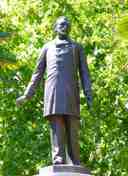
Look right ahead towards the greenery of the plaza and you’ll spot a life-sized bronze statue of a man standing tall and dignified on a stone pedestal, holding what looks like a scroll in one hand and wearing a buttoned-up coat-a bit like a teacher waiting for class to begin! Now, as you stand here, let yourself drift back to the late 1800s, when Logroño’s proud citizens felt the urge to honor one of their most famous sons: Práxedes Mateo Sagasta. Picture the excitement in the city in June 1891-people everywhere, the mayor beaming with pride, and a spark of celebration in the air! With great fanfare, they unveiled this very statue you see before you, crafted by the sculptor Pablo Gilbert, to immortalize Sagasta, a legendary statesman who put Logroño on the map. But Sagasta’s journey as a statue was nothing short of an adventure itself. At first, he stood with dignity just outside the Convento del Carmen-yes, the very building that is now the Práxedes Mateo Sagasta High School! But then came the winds of change… and maybe a touch too much excitement. In 1938, as Spain reeled through turbulent times, the statue was whisked away to the banks of the Ebro River, next to some very lucky wine cellars. It’s as if Sagasta wanted a taste of Rioja while reflecting by the water, right? However, this was not a restful retirement! In a moment of wild vandalism, someone actually attacked the statue-decapitated Sagasta and hurled his head into the river! Poor Sagasta, he truly lost his head over Logroño... Literally! For years, the headless statue sat in a lonely municipal warehouse, missing both his thoughts and his view. Luckily, in 1955, a talented local artist, Jesús Infante, gave Sagasta a brand new bronze noggin. But even then, the poor man waited another twenty years before being brought back into the sunlight, finally finding his spot here in this beautiful plaza. And just a few years ago, the city gave him a splendid new column to stand on, so he can keep a watchful bronze eye on Logroño for centuries to come. So, as you look up at Sagasta, remember-he’s survived more than a few headaches, and now he’s back to keeping us in good company, head held high!
Eigene Seite öffnen →To spot the Church of San Bartolomé, just look for a stone building with an impressive, wide arched entrance filled with rows of carved figures and detailed medieval scenes…Mehr lesenWeniger anzeigen
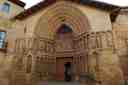
To spot the Church of San Bartolomé, just look for a stone building with an impressive, wide arched entrance filled with rows of carved figures and detailed medieval scenes surrounding an old wooden door. As you stand in front of this mighty old church, let your feet tingle with history because you are right where countless travelers on the Way of St. James have stopped, marveled, and maybe even whispered a little prayer for strong legs. Built way, way back in the 12th century, the Church of San Bartolomé is the oldest in Logroño-basically Logroño’s grandparent in stone! Its thick Romanesque head and the base of the tower came first, sturdy and uncomplicated, built to withstand time and weather-and probably the odd enthusiastic pigeon. Not long after, the city's masons got a bit creative and stepped into the 13th century with stunning Gothic style. It was then they designed this magnificent arched doorway. But wait, don’t just walk by-those nearly 20 tiny sculpted scenes crowding the entrance aren’t just random decorations! They’re ancient comic strips, carved in stone, and they tell stories packed with action, drama, miracles, and even a little bit of ancient horror. Start on the far right: here’s Saint Bartholomew himself, heroically saving the king’s daughter from madness-who needs a superhero cape when you’re wielding 13th-century sainthood? Then, move along to see him evangelizing at court, a group of maidens deep in discussion, and then-dramatic pause-watch as Saint Bartolomé clashes with angry priests and expels the demon from the pagan idols. That’s when things get wild. The priests? Furious. The idol Berith perched on a column, the saint driving out the devil-all right there, frozen in centuries-old stone. In the next scenes, poor Bartholomew is marched, not without a heroic expression, to King Astyages. And, if this were a film, this is where things might get a tad R-rated for medieval tastes: Bartholomew is eventually tied down by his limbs and-gulp-skinned alive as punishment, the table held by three female figures representing lust, vanity, and laziness. Yes, history was rarely gentle or boring! And, incredibly, the last scenes show Bartholomew preaching, his own skin nonchalantly draped over his shoulder. Sometimes history just leaves you speechless, right? A look higher up and you’ll spot the tympanum-once neatly above the doorway before renovations in the 1500s shifted it down to add light for the choir. This sunny intervention was the work of Pedro de Acha, who also tucked in a Renaissance arch for a bit of contemporary flair. Step inside-if you ever get the chance-and you’ll see three naves divided by sturdy octagonal pillars and covered with dramatic groin vaults. The Romanesque crossing and apse still stand out, though the original, glittering altarpiece is long gone. Once it was painted white and gold, dazzling enough to make the saints squint. Legend has it it resembled the grand altarpiece of Calahorra’s Holy Martyrs. Now, the church’s story isn’t all holy calm. During the fifteen-day French siege of Logroño in 1521, enemy artillery battered the tower. Remember, this church wasn’t just a place to pray but part of the city’s defensive wall, its tower a watchful guardian beside the Herbentia gate. It was later rebuilt in brick, showing off stylish Mudejar details from Aragón. Over centuries, the church’s role twisted and turned like a medieval soap opera. During the First Carlist War, a telegraph station perched atop the tower, sending winky-face messages-or okay, semaphore code-across Spain’s first optical network. It’s been a warehouse, a hospital, a school, and at one point, nearly became a theater. Imagine trading all this ancient stone for popcorn and Shakespeare! Glad they changed their minds. Today, this church, right beside the elegant Palace of the Marquises of Monesterio, stands protected, holding centuries of Logroño’s secrets and stories. If only these stones could talk-or maybe, after all this, you feel like they already have!
Eigene Seite öffnen →Look for a striking stone church with a tall, pointed octagonal spire shaped like a crown, and a solid square bell tower-just gaze upward and you can’t miss it! Welcome to the…Mehr lesenWeniger anzeigen
Look for a striking stone church with a tall, pointed octagonal spire shaped like a crown, and a solid square bell tower-just gaze upward and you can’t miss it! Welcome to the magical world of the Imperial Church of Santa María de Palacio! Right now, as you stand here, imagine yourself whisked back in time-let’s say, to the year 1130. There’s a bit of royal drama brewing: King Alfonso VII decides to donate his grand palace, right on this very spot, to create the first foundation of the Order of the Holy Sepulchre in the entire Kingdom of Castile! How generous, right? Thanks to Alfonso, this church gained the extra-star title of “imperial,” and you, my friend, are standing at the core of centuries-old stories. What sets the church apart is its unique silhouette on the city skyline-the octagonal spire overhead was built in the 1200s and looks like a crown fit for a fairy-tale emperor. If you close your eyes for a second, you can almost hear the swirling winds brushing over those stone pinnacles and crests. The church itself stretches back to the 12th and 13th centuries, but it’s like a patchwork quilt of history, with each era leaving its stubborn stitch. Some parts are Gothic-pointed arches, tall naves-while others are from the constant renovations that kept the church standing no matter what trouble came its way. In fact, the poor spire you see overhead was nearly taken down in 1671 when it tilted dangerously! They even banned carriages from clattering along the street because everyone was afraid the whole thing would come tumbling down. Fortunately, after years of repairs and no small amount of wringing hands, the spire survived, though much of the daylight that once flooded the altar was lost. Step closer to the doors and you’ll spot two main entrances: the elegant Baroque portal with columns and the image of the Assumption on this side, added in 1627, and another entrance honoring Saint John over on Rúa Vieja-so the church is always ready for a dramatic entrance, no matter which direction you’re coming from! Inside, there’s even more medieval mystery. The church has three naves, each stretching out to side chapels, and above, a great octagonal dome rises up, echoing that famous spire on the outside. But the real crowning glory is the main altarpiece, built by Arnao de Bruselas. Believe it or not, that grand triptych was originally made for the city’s cathedral-only to be rejected because Arnao sneakily included his own coat of arms! Instead, it landed here in Santa María de Palacio, where it became the church’s pride and joy. Say what you want about 16th-century artists, but at least they knew how to leave their mark, right? Peer closer at the altar, and you’ll see stories upon stories: delicate stone prophets, tiny scenes from the life of Jesus, saints, the Last Supper, and one spectacular Tree of Jesse that branches up from a snoozing ancestor to Mary and Jesus after generations of twists and turns. Above it all, you’ll spot the Calvary scene, with the Virgin, Mary Magdalene, and Mary Salome grieving at the cross-emotional enough to send shivers down your spine. Speaking of drama, take a look at the choir. Built in the late 1600s, it’s got nineteen seats with elegant Corinthian columns. You might notice statues of Saint Barnabas, the beloved patron of Logroño, and Saint Matthew, honored every year at the grape-harvest festival. Imagine this place echoing with their celebrations, filled with music and laughter. Now, here’s a mystery even master detectives might puzzle over: the story of the church organ. No one really knows how old it is, but it’s been through a few... let’s say, “less than harmonious” renovations. The old mechanical magic was swapped out for electric gadgets, and much of the original sound disappeared forever. Still, every Sunday at noon-and at special weekday masses-the organ comes alive, played by a dedicated organist. Picture the echoes of the music soaring up, brushing against ancient stones. If you explore a bit further, the cloister once belonged to the strict Cistercian order; only one simple, rugged wall survives from the Middle Ages, but the rest hints at that austere life of long-ago monks. So, as you look up at Santa María de Palacio, with its sky-stabbing crown and mix of stories from every century, remember: kings, artists, monks, and townsfolk have all left a trace in this extraordinary place-almost as if the past itself is hiding in the cool stone shadows, just waiting for you to listen. Interested in a deeper dive into the origin, temple architecture or the altarpiece? Join me in the chat section for an insightful conversation.
Eigene Seite öffnen →To spot the Stone Bridge ahead, look for a long, gently curved structure made of pale grey stone with seven large arches stretching across the wide river and crowned by…Mehr lesenWeniger anzeigen
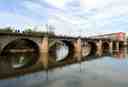
To spot the Stone Bridge ahead, look for a long, gently curved structure made of pale grey stone with seven large arches stretching across the wide river and crowned by classic-style streetlamps. Welcome to the legendary Stone Bridge of Logroño, where history whispers with every step and the old stones could probably tell you more stories than your grandma-if only you spoke “bridge.” As you stand here, take a moment to imagine the swift current of the Ebro at your feet, and the echo of centuries passing overhead. This isn’t just any bridge; it’s the grand gateway of Logroño and a proud symbol of the city itself-you’ll even spot it on the town’s coat of arms. Hundreds of thousands have crossed here, from medieval pilgrims weary on their way to Santiago de Compostela to everyday locals searching for the city’s best churros. But centuries ago, if you’d arrived in Logroño, you might have found a bridge of a very different shape-one bristling with twelve mighty arches, three imposing towers, and at times even a drawbridge, ready for knights, merchants, and maybe a stray goose parade. In fact, no one really knows exactly when the very first bridge graced this spot. The oldest record dates all the way back to 1095-so if these stones creak in the wind, it might just be their knees. Legends say it was Saint John of Ortega, namesake of a vanished chapel on the far bank, who oversaw the bridge’s earliest construction, making sure pilgrims could cross safely on their epic journeys. Centuries of war and water did their best to unseat the Stone Bridge. Medieval chroniclers marvelled at the twelve arches-each one 46 feet wide-spread like giant stone wings over the river. The bridge’s three towers acted as sentinels; the story goes they could house up to 40 armed men, keeping lookouts through narrow slits and storing heavy chains for a drawbridge, just in case any unfriendly visitors tried to pop by uninvited. Imagine the shouts of guards and the clanking of iron-crossing here must’ve evoked more nerves than a school exam! But water always wins in the end. In June of 1775, the Ebro rose up, drowning the bridge beneath its wild torrent and crashing down the first tower. Then came wars-when one arch was torn out and swapped with a rickety wooden substitute. By the time the 19th century rolled around, the bridge’s towers were gone and its fate hung by a thread, until finally, in 1871, another flood claimed three more arches. At this point, the city’s patience was wearing thinner than a tourist’s flip-flops. Resourceful locals built a temporary wooden crossing-sometimes using little more than boats and planks! There’s even a tragic tale: in 1880, a group of artillery men crossing on a floating platform lost their balance. The vessel tipped, pitching the soldiers into shallow water. Despite the river being only waist-deep, panic and chaos struck; ninety lives were lost that day, and the whole city was shaken. Seeing how vital this crossing was, the government acted swiftly. There was a short-lived “Sagasta Bridge” made of wood, then a bold, elegant iron bridge. But Logroño couldn’t let go of its “stone stronghold” heritage! Enter engineer Fermín Manso de Zúñiga, a name as sturdy as his plans. He set about building the structure you see now, completed in 1884 and designed with seven graceful arches, elliptical vaults, and stone brought in part from the ancient remains and in part from quarries near Laguardia. The bridge stretches almost 200 meters long, its arches anchored by stout, round pillars-ready to meet any stubborn flood. The city didn’t stop there: in 1917, they widened the passage with cantilevered walkways so today’s traffic (and tired pilgrims) have plenty of room. Over the decades, the Stone Bridge has seen more face-lifts than a movie star. The latest upgrades, as recent as 2020, added glowing, color-changing lights-so some nights, the bridge looks like it’s celebrating a festival just for you. Take in the views, listen to the river, close your eyes for a second. You’re standing at the true heart of Logroño-the path of pilgrims and conquerors, the stage for age-old dramas, the stone spine of the city. Cross this bridge, and you’re walking in the footsteps of a thousand years. Now, onward to our next stop, where science awaits-just don’t try to build your own bridge on the way, alright?
Eigene Seite öffnen →



Häufig gestellte Fragen
Wie starte ich die Tour?
Laden Sie nach dem Kauf die AudaTours-App herunter und geben Sie Ihren Einlösecode ein. Die Tour ist sofort startbereit – tippen Sie einfach auf „Play“ und folgen Sie der GPS-geführten Route.
Benötige ich während der Tour Internet?
Nein! Laden Sie die Tour vor dem Start herunter und genießen Sie sie vollständig offline. Nur die Chat-Funktion benötigt Internet. Wir empfehlen den Download über WLAN, um mobiles Datenvolumen zu sparen.
Handelt es sich um eine geführte Gruppentour?
Nein – dies ist ein selbstgeführter Audioguide. Sie erkunden unabhängig in Ihrem eigenen Tempo, wobei die Audioerzählung über Ihr Telefon abgespielt wird. Kein Reiseleiter, keine Gruppe, kein Zeitplan.
Wie lange dauert die Tour?
Die meisten Touren dauern 60–90 Minuten, aber Sie kontrollieren das Tempo vollständig. Pausieren Sie, überspringen Sie Stopps oder machen Sie Pausen, wann immer Sie wollen.
Was, wenn ich die Tour heute nicht beenden kann?
Kein Problem! Touren haben lebenslangen Zugriff. Pausieren Sie und setzen Sie sie fort, wann immer Sie möchten – morgen, nächste Woche oder nächstes Jahr. Ihr Fortschritt wird gespeichert.
Welche Sprachen sind verfügbar?
Alle Touren sind in über 50 Sprachen verfügbar. Wählen Sie Ihre bevorzugte Sprache beim Einlösen Ihres Codes. Hinweis: Die Sprache kann nach der Tour-Generierung nicht mehr geändert werden.
Wo greife ich nach dem Kauf auf die Tour zu?
Laden Sie die kostenlose AudaTours-App aus dem App Store oder von Google Play herunter. Geben Sie Ihren Einlösecode (per E-Mail gesendet) ein, und die Tour erscheint in Ihrer Bibliothek, bereit zum Download und Start.
Wenn Ihnen die Tour nicht gefällt, erstatten wir Ihnen den Kaufpreis. Kontaktieren Sie uns unter [email protected]
Sicher bezahlen mit 


