Jerez de la Frontera Audio-Tour: Geschichte und Kultur enthüllt
Eine Stadt, in der einst Ritter jede Straßenecke bewachten und Geheimgesellschaften stillschweigend herrschten – Jerez de la Frontera ist kein gewöhnlicher Scheideweg der Geschichte. Auf dieser selbstgeführten Audio-Tour tauchen Sie ein in prächtige Paläste, schattige Kirchtürme und sonnige Patios, um Geschichten zu entdecken, die die meisten Besucher nie hören. Welcher tödliche Verrat in San Juan de los Caballeros verwandelte Nachbarn über Nacht in Feinde? Welches vergessene Relikt im Archäologischen Museum flüstert von einem Skandal, der das alte Jerez bis ins Mark erschütterte? Und warum verbirgt der Königliche Landpalast einen alten Weinkeller, der immer noch vom Lachen von Partys widerhallt, die vielleicht nie geendet haben? Schreiten Sie durch Jahrhunderte von Duellen, Invasionen, geflüsterten Gebeten und Mitternachtsgeschäften. Jeder Schritt enthüllt vergrabene Geheimnisse und lässt Sie Jerez nicht nur als Stadt, sondern als lebendiges Geflecht aus Überleben und Intrigen sehen. Sind Sie bereit, das verborgene Herz von Jerez zu entdecken? Die erste Geschichte wartet.
Tourvorschau
Über diese Tour
- scheduleDauer 40–60 minsEigenes Tempo
- straighten3.1 km FußwegDem geführten Pfad folgen
- location_onStandortJerez de la Frontera, Spanien
- wifi_offFunktioniert offlineEinmal herunterladen, überall nutzen
- all_inclusiveLebenslanger ZugriffJederzeit wiederholen, für immer
- location_onStartet bei Kirche San Juan de los Caballeros
Stopps auf dieser Tour
Walking up the street, look for a tall stone tower with a dome on top covered in blue and white checks. If you're squinting into the sunlight, you might notice the tower has a…Mehr lesenWeniger anzeigen
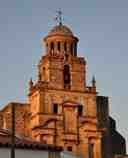
Walking up the street, look for a tall stone tower with a dome on top covered in blue and white checks. If you're squinting into the sunlight, you might notice the tower has a weather vane shaped like a bird, and there are thick, castle-like walls at its base. The soft golden light on the stone makes it look extra dramatic in the evening. The best way to spot the Church of San Juan de los Caballeros is to look up-this tower is all about height and standing out over the lower rooftops nearby. Now, standing here, close your eyes for a moment and imagine: instead of the quiet neighborhood you see today, picture a city always ready for battle. The year is 1264, and you’re in Jerez-the most defended fortress on the frontier. The air would have been filled with the clang of armor, nervous whispers, and the sound of hooves thundering by. This church, San Juan de los Caballeros, was one of the first six parishes made by King Alfonso X right after he reclaimed the city from the Moors. It was built right over an old mosque-talk about putting your own mark on a place! Look at the stonework: inside, the oldest part is all sharp lines and pointed arches from the end of the 1300s-classic Gothic style. But as the years passed, Jerez kept changing, so did the church. The nave, or main hall, is a mix of late Gothic, Renaissance, and starry stone vaults that almost make you dizzy if you look up too long. There’s a chapel here called the Capilla de la Jura, once belonging to the powerful Martínez Tocino family. It’s filled with secrets-faded frescoes and hidden tombstones from distant Flanders were only recently rediscovered. And don’t miss the tower-this is your landmark. Designed mostly by the famous Alonso de Vandelvira, it’s got a Renaissance base and a Baroque top built later by Antón Martín Calafate. If you look into the vaulted entrance below it, you might spot the symbol of Saint John the Evangelist: an eagle. See if you can find it-it’s the same icon they use for all the churches dedicated to the four evangelists here. Outside, the quiet cemetery was once filled with the city’s stories-now replaced with houses and city life. Every stone and arch here has seen centuries of tension and power struggles. Jerez was battered by invaders again and again-after the city was taken by Alfonso, it was far from peaceful. Imagine the fear each time armies crossed the Strait of Gibraltar, the town bracing for another attack. One thing’s for sure: if these church walls could talk, they’d have some wild stories to share… though, unlike me, they wouldn’t add in the occasional bad pun! Intrigued by the description, of the knights or the conservation? Explore further by joining me in the chat section below.
Eigene Seite öffnen →Right in front of you is the Municipal Archaeological Museum of Jerez de la Frontera. You’ll know you’re here when you see a grand, whitewashed building with thick stone corners,…Mehr lesenWeniger anzeigen
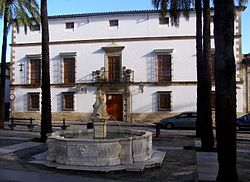
Right in front of you is the Municipal Archaeological Museum of Jerez de la Frontera. You’ll know you’re here when you see a grand, whitewashed building with thick stone corners, tall windows with iron bars, and a lovely old balcony above the main entrance. The words “Museo Arqueológico” are carved just above that doorway. You can’t miss the circular fountain in the square, its water trickling over sculpted creatures at its center, watched over by the majestic palm trees of Plaza del Mercado. Let’s imagine walking inside. You’d be stepping into a treasure chest of Jerez’s history, where every object has a story that might surprise you-or try to keep a few secrets! The museum is one of the most important in the city and all of Cádiz. Most of the things here were actually dug up right in Jerez and the area around it. Not just any old place either! You’re standing over land that stretches all the way from the busy city center, down the muddy edges of the Guadalete River, and out to ancient burial sites-some older than your grandma’s grandma’s grandma. The museum is like a mansion frozen in time. Picture stepping through cool stone passages and exploring sunlit patios, just as someone in the late 1700s might have done-except, instead of fancy fans and fluffy wigs, you’re surrounded by prehistoric axes, Roman coins, and a corinthian helmet once found near the river. It’s the only one of its kind in Spain, so if it starts whispering your name, don’t worry-it’s just the helmet trying to tell you its battle stories! Inside, it’s not all formal displays. There’s always something lively going on, like workshops for kids or volunteers fussing excitedly over artifacts uncovered in Jerez. Locals have been lovingly hunting for every pottery shard and rusty sword since the 1800s. And watch out for the slightly spooky collection of medieval belt buckles upstairs-they look like they belong to a knight... or, if you’re not careful, maybe a mischievous ghost. So take in the sight of that gorgeous patio and the gently bubbling fountain. Imagine the clatter of Roman sandals, the chit-chat of Phoenician traders, and the whispers of archaeologists thrilled by every scrap they uncover. You’re standing in a place where thousands of years of stories are all waiting for a curious listener-like you! Seeking more information about the origin, the building or the facilities? Ask away in the chat section and I'll fill you in.
Eigene Seite öffnen →To spot the Royal Country Palace, or Palacio de Campo Real, just look straight ahead. You can't miss it: a grand white façade stretches across the street, standing proud with…Mehr lesenWeniger anzeigen
To spot the Royal Country Palace, or Palacio de Campo Real, just look straight ahead. You can't miss it: a grand white façade stretches across the street, standing proud with tall, green-shuttered windows and a line of elegant stone balconies. The main wooden door is set between two impressive columns, with a balcony right above where, if you use your imagination, you can picture noble families waving to the crowds-or maybe telling off a mischievous servant. It's a building that almost dares you to guess what kind of grandeur is hiding behind those heavy shutters. All right, take a deep breath-imagine the air thick with the scent of orange blossoms and just a hint of old money. You’re standing in front of one of Jerez’s oldest secrets: the Palacio de Campo Real. This place is like the VIP lounge of the city’s history. Legend has it that Alfonso X himself rewarded a brave knight with this very spot after conquering Jerez. I bet that knight would never have guessed his prize would grow into such a palace. Over time, the noble families of Jerez played quite the game of musical chairs-marrying, merging fortunes, and passing down this stately home. If you take a close look at the balcony above the main door, you’ll notice its neoclassical style; think of it as a centuries-old fashion statement, designed to impress visitors and maybe to remind the neighbors who’s boss. Now here’s a little secret: hidden inside is a wine cellar said to be the oldest in Jerez. Imagine parties with music echoing in the grand halls-dueling violins, laughter floating beneath the chandeliers, and someone always trying to sneak into the wine before the main toast. And don’t miss the courtyard-if your mind’s eye could wander inside, you’d see a rectangle bordered by four elegant sides, lush with plants and family crests. One medallion even shows the marriage of Pedro Benavente and Beatriz Bernalte-the original power couple. So, as you stand here, let yourself drift back to a night when the palace glowed with candlelight, and the city’s finest strolled across the cobblestones. Who knows, maybe you would have stolen the show at those legendary galas. Ready to head to the next stop, or do you want to try knocking on that huge wooden door to see if there’s still a party inside?
Eigene Seite öffnen →
12 weitere Stationen anzeigenWeniger Stationen anzeigenexpand_moreexpand_less
If you look just ahead on Plaza del Arroyo, you'll spot the Bertemati Palace by its dramatic, wavy stone doorway and ornate iron balcony peeking out like a stage set from the flat…Mehr lesenWeniger anzeigen
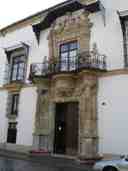
If you look just ahead on Plaza del Arroyo, you'll spot the Bertemati Palace by its dramatic, wavy stone doorway and ornate iron balcony peeking out like a stage set from the flat white façade. The stonework is so lively it almost seems like it’s rippling in front of you-don’t worry, that’s just the Baroque style showing off! On the upper level, look for the two stone figures resting above the balcony, almost as if they’re watching over the entrance and waiting for someone interesting-like you-to arrive. Now, picture yourself standing here about 250 years ago. The air smells of baked earth and orange blossoms, and craftsmen are chipping away at stone columns, guided by the shouts of architect Juan de Bargas. This palace was born from the dreams (and wallet) of Juan Dávila Mirabal, who decided in 1768 it was high time to build himself a house fit for a storybook. But time can be a bit of a prankster. The once-grand home saw the Dávila family fortunes fall, and the palace split into two, like a soap opera with a dramatic commercial break! One side transformed into a house of neoclassical taste-think straighter lines and a little less “let’s impress the neighbors.” The other corner went wild, mixing French and neo-Nasrid styles. Imagine rooms with Parisian charm rubbing elbows with hints of the Alhambra! Eventually, the Bertemati family brought everything under one roof again, gifting the palace to the Church in 1942. Since then, it has become the official headquarters of the Diocese of Asidonia-Jerez. If you could peek inside, you might find nuns bustling about and an ancient archive, with whispering papers dating back to the 1400s. The palace you see now is the proud result of a major restoration, completed in 2006. Its bold baroque façade, those wavy columns and swirling decorations-all stand as a monument not just to power and prestige, but to the resilience of a house that’s played many different roles, maybe more than a talented actor. So, don’t be shy-take in the dramatic curves, give a nod to the silent stone figures up top, and imagine: What secrets might linger in a palace that’s seen so many fortunes rise and fall? Jerez is full of surprises, and this palace is one of its most theatrical! Shall we continue?
Eigene Seite öffnen →You’re almost face-to-face with one of Jerez’s most striking sights! Look up and to your left-you’ll see a honey-colored stone giant rising above you. The Cathedral of Jerez…Mehr lesenWeniger anzeigen
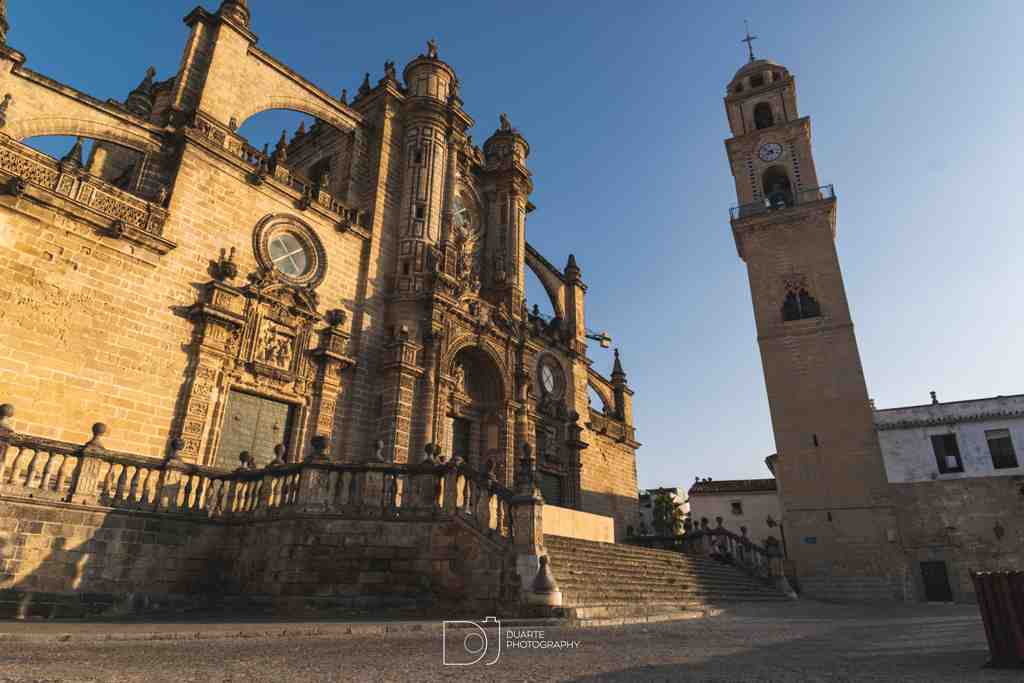
You’re almost face-to-face with one of Jerez’s most striking sights! Look up and to your left-you’ll see a honey-colored stone giant rising above you. The Cathedral of Jerez doesn’t just blend in, it more or less shouts, “Here I am!” with its grand staircase leading up, huge round windows watching you like eyes, and towers full of historic character. On its right, there’s a tall bell tower with a clock-if you hear ringing, don’t worry, you’re not late for anything but history. So here you are, standing at the foot of a building that’s been a dream in stone for centuries. Imagine the air filled with the clink of chisels long ago. Construction on the cathedral began all the way back in the 1600s, and it mixes three big styles-gothic, baroque, and neoclassical. It took over 80 years to finish because, let’s be honest, building something this big in the old days was basically the original “DIY nightmare.” But this spot has even deeper roots: under your feet once stood Jerez’s first major mosque, then a medieval church called the Iglesia del Salvador. The old church collapsed in ruins, but the dream of this grand cathedral didn’t stay down for long. If you squint at the bell tower, that’s the last survivor from those ancient days-some locals say it’s seen almost everything but a UFO landing. The cathedral’s inside is just as impressive. There are five naves, all different sizes, and in the center, an octagonal dome so high up you might get a crick in your neck just looking. Perched on each corner above are statues of eight wise saints, almost as if they're keeping an eye on the city-and, in my opinion, judging everyone’s taste in hats. This place hasn’t just watched over history, it’s made it! It became a true cathedral only in 1980 (so, by cathedral standards, it’s practically a teenager). The locals have celebrated everything here, from bishop’s ceremonies to huge religious festivals. For an unbeatable moment, picture the main doors swinging open and the sounds of a festival mass spilling out into the plaza. Don’t miss a glance at the big gates and the delicate carvings all around the entrance-this cathedral was built to impress, outshine, and make you wonder how on earth they got all that stone so perfectly balanced. Some say the bells still echo with stories from all those years ago. And just for fun: if the statues on top start whispering to each other, don’t worry, you just have a really good imagination. Ready to stroll on, or need a little more time to admire this masterpiece? Want to explore the description of the temple, permanent exhibition of the cathedral or the crypt in more depth? Join me in the chat section for a detailed discussion.
Eigene Seite öffnen →Standing in front of the Alcázar of Jerez, you can almost hear the echoes of ancient footsteps along these sturdy walls. This fortress is truly the grandfather of all buildings…Mehr lesenWeniger anzeigen
Standing in front of the Alcázar of Jerez, you can almost hear the echoes of ancient footsteps along these sturdy walls. This fortress is truly the grandfather of all buildings here-built way back in the 12th century by the Almohads, making it the oldest one of its kind on the whole Iberian Peninsula. Just imagine: you’re standing where sultans plotted, guards kept watch, and, if walls could talk, they'd probably have some juicy gossip from several centuries. The hill beneath your feet has seen humans come and go since the Stone Age-over 5,000 years. Archaeologists even found evidence from the Copper Age, so this spot has been the ‘hottest’ real estate in Jerez since before sherry was invented! But it’s the Almohad period that shines here. They built this as both a palace and a fortress-a real “multitasking” building before that was cool. Flash forward to dramatic medieval times: Muslim rulers ran the show here first, but then came epic sieges, secret tunnels, and surprise attacks. There were times when the Christians were in charge, sometimes the Muslims took it back-everyone wanted the keys to this castle. Picture the night the rebels dug a tunnel, sneaking in right under the walls. The tension must have been incredible! At one point, legend says a knight named Don Fortún de Torres held the royal banner high, refusing to surrender even as battle raged around him. That’s dedication-and maybe a little bit of not knowing when to quit! After one especially brutal siege, Jerez finally joined the Kingdom of Castile, and this fortress-palace became a symbol of power for the new rulers, changing hands but always keeping its eye on the city below. Today, the Alcázar still hosts events and welcomes visitors, but it has definitely calmed down since its action-movie past. Step closer, run your hand along the ancient stone, and feel like you’re part of the thousand-year-old story-minus the swords and secret tunnels, of course. Shall we stroll on to the Alameda Vieja next? Let’s go! Exploring the realm of the description, exploitation or the photo gallery? Feel free to consult the chat section for additional information.
Eigene Seite öffnen →Straight ahead, you’ll spot Alameda Vieja by its long, checkerboard plaza stretching out beneath a canopy of rich green trees. Look for the elegant iron pavilion at the very…Mehr lesenWeniger anzeigen
Straight ahead, you’ll spot Alameda Vieja by its long, checkerboard plaza stretching out beneath a canopy of rich green trees. Look for the elegant iron pavilion at the very center-like a crown-inviting you to take a seat or snap a dramatic photo. The leafy trees form shady tunnels on each side, and if you glance to your right you’ll see some ancient stone walls peeking through. If you’re worried you’ve wandered into a giant chessboard for local pigeons, don’t worry-you’re exactly where you should be! Take a moment here and imagine yourself back in the late 1700s. There’s a gentle breeze coming in from the bay, and the air is filled with laughter, music, and maybe even the clink of wine glasses. This spot isn’t just your regular park-Alameda Vieja is a piece of Jerez’s soul. It was once dug up by the powerful Rodrigo Ponce de León and then transformed into a green, lively space for everyone to enjoy. Over time, it’s hosted wild parties, glittering dances, and even a bit of opera-talk about a place with a dramatic past! You’re standing where townspeople have strolled on warm evenings, taking in cool breezes that slip through those old trees. Look for the entrance: flanked by two proud columns with statues of Fortuna and Ceres, the Roman goddesses, keeping a watchful eye over everyone who passes. It might surprise you, but there’s more than meets the eye beneath your feet. Under the paving stones, there’s a parking lot-added in 1981, when the Alameda was spruced up yet again. As you walk, imagine the layers of history under every step. This was the go-to place for concerts, puppet shows, and unforgettable fiestas-all spilling onto the main walkway, with the whole city buzzing. Even today, people gather here for market days, festivals, and open-air events. Sometimes, you might hear the sounds of music drifting from the little pavilion-a reminder that the spirit of old Jerez still dances here. If only these stones could talk! For now, it’s your turn to add a memory to this living patchwork of stories. Ready to wander on?
Eigene Seite öffnen →If you look ahead, you can’t miss it-the Church of San Miguel is a real show-stopper! Just look up and spot the tall, stone bell tower with all those intricate carvings and little…Mehr lesenWeniger anzeigen
If you look ahead, you can’t miss it-the Church of San Miguel is a real show-stopper! Just look up and spot the tall, stone bell tower with all those intricate carvings and little statues peeking out. The facade is packed with swirls and patterns, as if some medieval artist decided to doodle all day long. There’s a big, arched doorway right in the center, which almost begs you to step into another century. Let the scent of nearby orange trees mix with the old stone, and you’ll know you’re in the right place. Now imagine this: you’re standing where generations before you have stood-knights, monks, and maybe even the occasional cathedral cat! This grand church got its start at the end of the 1400s, right when knights wore clanking armor and the Catholic Monarchs paid a visit. Legend says they gave the go-ahead to start building when they rolled through town in 1484. Back then, there was just a humble little hermitage here, but clearly, someone thought, “Let’s upgrade!” Only, as big dreams often do, the project took… well, centuries. Workers from different eras left their fingerprints on the stones. Some days, it probably felt like the church was growing slower than a turtle through molasses! That’s why, when you look closely, you’ll see a bit of everything: fancy Gothic touches, bold Renaissance flair, and some dramatic Baroque twists to finish it off. If churches could talk, San Miguel would have quite the accent. Step back and take in the whole building: three long naves inside, with the tallest in the middle and decorated columns between them that look as if they’ve burst into stone flowers. The result? A space that feels almost cathedral-like and is known as one of the best temples in all of Jerez. In other words, this isn’t any ordinary stop-it’s a masterpiece born from centuries of patience, a bit of royal encouragement, and probably more than a few tired stonemasons! So go ahead-admire those carvings, imagine the stories, and if you hear the bell, don’t worry! It’s just San Miguel reminding you that you’re in a city where history still rings out loud.
Eigene Seite öffnen →As you walk ahead, look for the wide open space ringed by elegant buildings with pale stone walls and rows of wooden shutters over the windows. The area is dotted with palm trees…Mehr lesenWeniger anzeigen
As you walk ahead, look for the wide open space ringed by elegant buildings with pale stone walls and rows of wooden shutters over the windows. The area is dotted with palm trees and orange trees, and right in front of you there’s a striking bronze statue-a figure caught mid-stride, cape swirling dramatically behind them. If you spot lush greenery, a tall streetlamp, and a gathering of people soaking up the sun, you’ve found Arenal Square. Imagine you’re stepping into the heart of Jerez, with the sun warming your face and the voices of people echoing gently across the plaza. But centuries ago, it wasn’t laughter or café talk you’d hear. Close your eyes for a second-now picture the thumping of horses’ hooves and the clatter of swords as knights face off right where you stand. Why all this action? Because this was the “Arenal”-from the Latin "arenarium," the battlefield! It was the arena, the site of duels, dramatic tournaments, and even bullfights. You could say this place has seen more action than a popcorn bucket at a movie premiere. Once, the mighty walls of Jerez ended just over there, and this spot was right at the edge of town, where fierce contests and epic rivalries between noble families played out all day long. The crowd would be buzzing, perched atop the old city wall for the best view, heckling knights and gasping as the dust flew. Talk about front row seats! Later, the square swapped its dusty battleground feel for a more sophisticated look, with tree-lined paths, neat benches, and the famous monument to Miguel Primo de Rivera on horseback by the artist Mariano Benlliure. Over the years, it’s had so many names to keep up with Spain’s changing kings, queens, and governments-seriously, it’s like the plaza couldn’t decide what to call itself when it woke up in the morning! From “Plaza de la Constitución” to “Plaza de Isabel II” to “Plaza de la República”-imagine the poor mailman trying to keep up! But through it all, Jerez’s main square has been a witness to history: royal visits, parades, and more spectacles than you could shake a sword at. Take a deep breath and let it all sink in. Right here, where people once risked life and limb for glory, you can enjoy the shade of orange trees, the gleam of sunlight on the old stone, and maybe, just for a moment, feel the thrill of all those battles past.
Eigene Seite öffnen →To spot the Chapel of the Remedies as you approach, keep your eyes peeled for a white-walled building with an elaborately carved stone entrance. Look for two sturdy columns…Mehr lesenWeniger anzeigen
To spot the Chapel of the Remedies as you approach, keep your eyes peeled for a white-walled building with an elaborately carved stone entrance. Look for two sturdy columns flanking a large, dark wooden door. Above the door, there’s a niche carved into the sandstone, holding a statue that seems to watch over everyone passing by. The façade stands out from the calmer white wall, like someone dressed up for a special occasion while the neighbors are still in their pajamas! Now that you’re right in front of it, let’s step into the story of this chapel. Picture the days just after the Reconquista, when this part of Jerez was a hotspot for surprises-some of them much less charming than flamenco dancers! The city would sometimes find itself under siege, and in the chaos and dust, locals would dash through the Puerta Real, desperate for safety. Legend has it that, in the thick of one particularly scary siege, a chunk of the old city wall crumbled away-much to everyone’s shock. Inside the new gap, revealed like a secret prize, was the image of the Virgin, which the townsfolk quickly called Our Lady of Remedies-Señora de los Remedios. And if there’s anything you want during a siege, it’s definitely a remedy! In 1517, a brotherhood formed here, dedicating themselves to help the sick and the needy-a tradition that grew so much they actually built a bigger chapel right in this spot. By the mid-1600s, the church got a bit of a makeover. That’s when this grand carved entrance was put in, probably to make sure even the most distracted visitor knew they had reached somewhere important. For a while, this place was like the town’s unofficial “cure-all” station. It even housed a small hospital run by Juan Grande, until his patients moved to a bigger hospital nearby. But Jerez-and its chapels-are nothing if not dramatic. By the 1800s, this place was closed up and silent, only to burst back into life in the 20th century. If you peek just beside the entrance, you’ll see the Chapel of the Señor de la Puerta Real-another little treasure attached to this one, thanks to its neighborly spot halfway between two busy squares. Originally, the most beloved sight here was a statue: the Virgin holding her child, a symbol of comfort and hope for hundreds of years. Today, the Chapel of the Remedies stands quietly in the heart of Jerez, watching the world sway by, with stories of sieges, miracles, and second chances tucked into every carved corner. And isn’t that just the remedy we could all use every now and then? Don’t worry, nobody’s going to ask you to withstand a siege-just enjoy the silence, the art, and maybe whisper a quick “gracias” for all the remedies history has to offer.
Eigene Seite öffnen →Can you hear the gentle hum of footsteps and distant voices? Welcome to the Jerez de la Frontera City Council, or as the locals call it, the beating heart of the city’s…Mehr lesenWeniger anzeigen
Can you hear the gentle hum of footsteps and distant voices? Welcome to the Jerez de la Frontera City Council, or as the locals call it, the beating heart of the city’s government. Right here, important decisions about Jerez’s future are debated-sometimes with enough passion to put a flamenco show to shame! The building you’re looking at isn’t just an office; it’s the old Hospital de la Caridad, brought back to vibrant life in 1987. If these walls could talk, I bet they’d have some stories-maybe even about the time the council moved between places like a game of hide and seek. Inside, you’d find grand halls decorated with paintings and treasures dating back to the 16th century. There’s even a secret weapon up their sleeve: a special wine cellar for greeting important guests. I suppose the mayor has to keep spirits high-literally! Speaking of the mayor, right now María José García-Pelayo holds the keys to the city, guiding a team that covers everything from local parties to centuries-old monuments. Sometimes I wonder if they need roller skates to tackle it all. The City Council isn’t all about rules and regulations, though. They give out honors every year-sometimes gold medals, sometimes a curious award called the Racimo and Filoxera. The Racimo celebrates those who push for equality, but beware: the Filoxera is for folks who, shall we say, miss the grapevine on that front! There’s also a growing focus on history, with offices tracing events from the Civil War right through to modern democracy. It’s a place where the memories of old Jerez are as carefully guarded as its secrets. Want a little mystery? Imagine the soft clink of glasses in that tucked-away bodega, where famous visitors have toasted to Jerez’s future. If you’re lucky, maybe you’ll get invited for a sip-or at least a peek at some illustrious portraits in the Hall of Fame inside. Ready to move on? Our next stop holds more stories waiting for you, just down the lane. Intrigued by the municipal plenary session, local government board or the municipal government structure? Explore further by joining me in the chat section below.
Eigene Seite öffnen →Take a look straight ahead-welcome to the Plaza de la Asunción. You can’t miss it: right in the center there’s a tall monument, almost as if the plaza itself is showing off, and…Mehr lesenWeniger anzeigen
Take a look straight ahead-welcome to the Plaza de la Asunción. You can’t miss it: right in the center there’s a tall monument, almost as if the plaza itself is showing off, and surrounding you are buildings of different personalities. On your left, you’ll spot a grand white palace with elegant rows of windows, and straight in front is the stone facade of the Iglesia de San Dionisio, with its sturdy arched entrance-those details are the clues you’re in the right place. Now, let’s imagine you’re standing here way back in time. Picture the square not filled with tourists and locals, but scribes-hunched over their wooden stands, scratching away at important documents. That’s right, this used to be the Plaza de los Escribanos, the Square of the Scribes. Can you hear the flutter of parchment and the murmur of deals being made? Not a bad spot for some old-school gossip! This spot has seen almost everything: from the clang of justice in the old courthouse and jail (yikes, best not get in trouble), to heavenly chants drifting out of the church. That imposing building in front of you is the Iglesia de San Dionisio-it was once a mosque before becoming the heart of Jerez’s religious life. Right beside you stand the Cabildo Antiguo, once the city hall, now a proud memory keeper for Jerez. And, just to spice things up, on one corner the old palace was once the HQ for the Spanish Inquisition-yes, that one! I promise, no inquisitors will jump out at you today. Soak up the mix of styles here-Renaissance, Mudéjar, Neoclassical-all mingling together like guests at a very elegant party. And if you need a little break, pull up a chair at one of the café terraces; the plaza’s been remodeled to be extra welcoming, and even the trees seem to wave you over for a bit of shade. This is the beating civic heart of old Jerez, where important things happened, secrets were whispered, and a city built on tradition-and more than a few surprises-still comes alive every day. Let’s see what tales the next stop has in store!
Eigene Seite öffnen →You’re just about to step into Plaza Plateros. To spot it, look for an open, lively square framed by cafe terraces and a scattering of sunlit tables, with the sturdy medieval…Mehr lesenWeniger anzeigen
You’re just about to step into Plaza Plateros. To spot it, look for an open, lively square framed by cafe terraces and a scattering of sunlit tables, with the sturdy medieval tower-the Torre de la Atalaya-rising up at the far end, looking like it’s just keeping an eye on things. Above you, in winter, you might catch some glittering festive lights stretched across the square. There’s plenty of shade from the tall trees, and the chatter of people blends with the clinking of glasses. Now, imagine you’re back several hundred years. Plaza Plateros has always been a busy meeting spot. In the days of city walls and winding narrow streets, this square was the crossroads for traders, merchants, and townsfolk. You can still sense the energy of all those deals being struck: bread, vegetables, silver goods (that’s how it got its name-the plateros were the silversmiths!), and even some not-so-legal trading now and then. Honestly, the only thing that’s changed is that now, you buy your cerveza instead of sheep. Keep your eyes on that tower-Torre de la Atalaya. They also call it Torre del Reloj, the Clock Tower. Legend has it that, on the night Alfonso X conquered Jerez, the bell at the top rang by itself to welcome the king. Must have been a loud party! This bell has a name too-la campana cascada-and it once warned everyone when danger was near. Built way back in 1012 and patched up in later centuries, the tower is one of the oldest witnesses to all the hustle, bustle, and secrets of the square. And don’t miss the red-painted Cervecería El Gorila-its chunky stone corners and elegant balconies make it easy to spot. The building dates back to the 1800s, perfect for a side of history with your snack. Imagine centuries ago, women selling bread and vegetables called out to passersby, while soldiers kept a watchful eye from the nearby Plaza del Arenal. The plaza has changed its name about as often as it’s changed its shoes-Plaza del Pan when it was known for bread sellers, Plaza de las Vendedoras for all the women vendors, and Plaza de los Mercaderes, because, well, there were so many merchants. But of all the names, “Plateros” stuck, thanks to those skilled silversmiths who polished their wares and probably their stories right here. So, as you stand in the middle of the plaza, let yourself soak up the atmosphere: the taste of strong coffee in the air, the clatter of cups, and the feeling that you’re part of a living history that’s always been about coming together, trading tales and treasures. Not bad for what started as just another shortcut between city gates, right? If only the tower could talk… Or maybe it still does, whenever the bell rings. For a more comprehensive understanding of the origin, featured buildings or the names of plaza plateros, engage with me in the chat section below.
Eigene Seite öffnen →Ahead of you is the wide, tree-lined promenade of Alameda Cristina. To spot it, just look for the long checkered pathway stretching out in front of you, shaded by tall palms and…Mehr lesenWeniger anzeigen
Ahead of you is the wide, tree-lined promenade of Alameda Cristina. To spot it, just look for the long checkered pathway stretching out in front of you, shaded by tall palms and leafy trees. The elegant old buildings on either side and the occasional horse-drawn carriage add an unmistakable charm. If you hear hooves or spot a few ornate benches, you’re in the right place. Take a deep breath-the gentle rustling of the palm trees above you was once drowned out by the chatter of townsfolk and clatter of horse carriages rolling through this very spot. Alameda Cristina is no ordinary plaza; it has a real VIP history. This has been the most stylish open space in Jerez for centuries. Back in medieval times, it went by many different names-you could say it was a bit of a chameleon. But its most famous name came from Queen María Cristina, who ruled while her daughter, Isabel II, was still playing with dolls. Imagine, if you will, a time when this very ground was called Llano de San Sebastián, a wide pasture just outside the old city walls. People gathered here coming in from the countryside, especially through the bustling city gate, the Puerta de Sevilla. Picture crowds on market days, travelers hurrying to Seville, and somewhere in the chaos, the lively noise of medieval games-sometimes with bulls! Sadly for thrill-seekers, by the 14th century those wild games were limited to Plaza del Arenal. From there, Alameda Cristina became more refined-think less rodeo, more royal promenade. In the 1700s, the area was transformed, and started attracting grand buildings like the stunning Palacio del Marqués de Montana right nearby-a true gem of Jerez’s architecture. Over the years, this spot has seen everything from the rise and fall of hospitable convents to the opening of the city’s most important schools and banks. Even a few royal hospital dramas played out here, including the passing of the saintly Juan Grande in 1600. Nowadays, Alameda Cristina is like the beating heart of the city, connecting north and south, east and west. If you listen carefully, you might just hear the footsteps of history alongside the sound of cyclists and, soon, the soft whoosh of a tram. So as you stand here, feel the sun filtering through the palm leaves and imagine all the lives, secrets, and playful moments this grand promenade has witnessed. Ready for our final stop? Let’s keep exploring! Fascinated by the origin, evolution or the connections? Let's chat about it
Eigene Seite öffnen →To spot the Palace of the Marquis of Montana, look for a grand building with pale, cream-colored walls and tall, iron-barred windows standing behind a pointed iron fence. The main…Mehr lesenWeniger anzeigen
To spot the Palace of the Marquis of Montana, look for a grand building with pale, cream-colored walls and tall, iron-barred windows standing behind a pointed iron fence. The main entrance grabs your attention right in the center, framed with swirls of pink stone that almost look like they’re melting in the heat, and topped by a balcony with a dark iron railing. Two floors of big, dramatic windows face the street, topped off by a row of smaller windows at the very top. The whole palace sits apart from other buildings, hugged by a neat garden and a spacious cobblestone square. If you see a noble-looking house with a flourish of Baroque personality and a neat, formal garden in front, you’ve found it! Listen to this: Imagine standing here in the late 1700s. Horse-drawn carriages rattle along cobblestones. The shiny, fresh palace rises in front of you, its pale walls catching the sunlight, while the gardens are fragrant with flowers. The first Marquis of Montana, Antonio Cabezas de Aranda, wanted a place that would turn heads - and, judging by all the folks who still stop to stare, he got his wish! For nearly two centuries, this palace was known as the home of the famous Domecq family - yes, the same Domecqs who are royal in the world of sherry. But this all began when the Marquis, feeling rather grand, hired architect Juan Díaz de la Guerra to build a home fit for parties, politics, and the occasional siesta. The building feels almost symmetrical, with that sturdy, almost boxy shape. Step closer to the main door: Can you see the carved faces staring out above the entrance, watching over visitors through centuries of Jerez history? Here’s a twist for you: just three years after he moved in, the Marquis died - and the palace’s life became a whirlwind of change, filled with customs offices, royal taxes, and eventually, new owners whose fortunes rose and fell faster than a waiter carrying too many tapas. In fact, for a while, it was even part of a big American company, until a local entrepreneur took it over and gave it some stylish TLC. Today, after a dazzling restoration, the palace is a star venue for glitzy events, but still stands as a beacon of Jerez’s baroque elegance. In the old days, nothing but open countryside stretched out ahead, and the palace ruled over what’s now the busy square, the Alameda Cristina, and the Plaza del Mamelón. As you stand here, try picturing winds whistling through empty lanes and the sound of horse hooves echoing off the palace walls. If these old stones could talk, they’d probably spill brilliant stories of masquerade balls, city secrets, and the occasional spilled sherry - but for now, they’ll have to settle for impressing us!
Eigene Seite öffnen →
Häufig gestellte Fragen
Wie starte ich die Tour?
Laden Sie nach dem Kauf die AudaTours-App herunter und geben Sie Ihren Einlösecode ein. Die Tour ist sofort startbereit – tippen Sie einfach auf „Play“ und folgen Sie der GPS-geführten Route.
Benötige ich während der Tour Internet?
Nein! Laden Sie die Tour vor dem Start herunter und genießen Sie sie vollständig offline. Nur die Chat-Funktion benötigt Internet. Wir empfehlen den Download über WLAN, um mobiles Datenvolumen zu sparen.
Handelt es sich um eine geführte Gruppentour?
Nein – dies ist ein selbstgeführter Audioguide. Sie erkunden unabhängig in Ihrem eigenen Tempo, wobei die Audioerzählung über Ihr Telefon abgespielt wird. Kein Reiseleiter, keine Gruppe, kein Zeitplan.
Wie lange dauert die Tour?
Die meisten Touren dauern 60–90 Minuten, aber Sie kontrollieren das Tempo vollständig. Pausieren Sie, überspringen Sie Stopps oder machen Sie Pausen, wann immer Sie wollen.
Was, wenn ich die Tour heute nicht beenden kann?
Kein Problem! Touren haben lebenslangen Zugriff. Pausieren Sie und setzen Sie sie fort, wann immer Sie möchten – morgen, nächste Woche oder nächstes Jahr. Ihr Fortschritt wird gespeichert.
Welche Sprachen sind verfügbar?
Alle Touren sind in über 50 Sprachen verfügbar. Wählen Sie Ihre bevorzugte Sprache beim Einlösen Ihres Codes. Hinweis: Die Sprache kann nach der Tour-Generierung nicht mehr geändert werden.
Wo greife ich nach dem Kauf auf die Tour zu?
Laden Sie die kostenlose AudaTours-App aus dem App Store oder von Google Play herunter. Geben Sie Ihren Einlösecode (per E-Mail gesendet) ein, und die Tour erscheint in Ihrer Bibliothek, bereit zum Download und Start.
Wenn Ihnen die Tour nicht gefällt, erstatten wir Ihnen den Kaufpreis. Kontaktieren Sie uns unter [email protected]
Sicher bezahlen mit