Alcoy Audio-Tour: Historische Schätze von Alcoy
Unter Alcoys hoch aufragenden Bögen und schattigen Tunneln liegt eine Stadt, die für immer von Industrie, Widerstandsfähigkeit und radikalen Träumen geprägt ist. Diese selbstgeführte Audio-Tour enthüllt den erbitterten Einfallsreichtum, der von der stattlichen San Roque Brücke bis zum geheimen Unterschlupf unter dem Cervantes Park und dem geschichtsträchtigen Mauerwerk der Matias Zementfabrik widerhallt. Welche verzweifelte Tat zwang ganze Familien unter die Erde, während Bomben über ihnen donnerten? Wer stritt sich über Baupläne und politischen Stolz auf Alcoys ständig wachsenden Brücken? Und welche Geheimnisse schwelen noch immer im stillen Herzen einer Zementfabrik, die einst von Legenden heimgesucht wurde – und vielleicht, einer unerwarteten Begegnung mit Hemingway? Schreiten Sie durch verlorene Frontlinien, tauchen Sie unter Straßen, wo geflüsterte Ängste einst im Dunkeln widerhallten, und wandern Sie zwischen hartnäckigen Ziegeln, die Revolutionen und rebellische Erfindungen befeuerten. Alcoy verwandelt sich zu Ihren Füßen – roh, echt, niemals nur eine Postkarte. Treten Sie mutig ein. Alcoys Tiefen warten darauf, neu entdeckt zu werden.
Tourvorschau
Über diese Tour
- scheduleDauer 40–60 minsEigenes Tempo
- straighten3.2 km FußwegDem geführten Pfad folgen
- location_on
- wifi_offFunktioniert offlineEinmal herunterladen, überall nutzen
- all_inclusiveLebenslanger ZugriffJederzeit wiederholen, für immer
- location_onStartet bei San Roque Brücke
Stopps auf dieser Tour
You’re getting close! To spot the San Roque Bridge, look out for a long, strong stone structure stretching across a deep ravine. You’ll notice its elegant black iron railings with…Mehr lesenWeniger anzeigen
You’re getting close! To spot the San Roque Bridge, look out for a long, strong stone structure stretching across a deep ravine. You’ll notice its elegant black iron railings with decorative patterns, standing tall above three graceful arches. If you see old-fashioned lamps lining the sides and a bit of city bustle just beyond, you’re in the right place! Now, pause for a second and imagine you’re standing here in the 1860s. Picture workers hauling heavy blocks of local stone, their sleeves rolled up, hands dirty, their laughter echoing over the empty ravine below. It’s the 19th century, and Alcoy is buzzing with industrial energy. Machines are clattering away in factories, the air tinged with possibility and the occasional whiff of...well, let’s just say, history isn’t always fragrant! The man behind this bridge was Eduardo Miera-an architect with a plan to make life easier for everyone trying to travel between the Santa Rosa and Horta Major neighborhoods. Before this bridge, imagine zigzagging around the hills just to cross the city. Thanks to Miera, people and carts now sweep right over the bridge, all 20.5 meters above the little Soler ravine below. When it was built, this bridge wasn’t just a shortcut. It marked a turning point for Alcoy-literally! The city started spreading out from here, growing wider and busier. Rumor has it that the city council chipped in for the construction, just so they wouldn’t have to deal with zigzags or rollercoaster curves designed by the State engineers. Sometimes, if you want things done right, you’ve got to pay up! Standing here, glance down through those arches at the trickling stream far below, and feel the cool stone beneath your hand. You are literally connected to Alcoy’s vibrant, industrious past-and I promise, no acrobatics required to cross it. Just steady feet and a bit of imagination. Ready for the next stop?
Eigene Seite öffnen →If you’re looking for the Refugio-Museo de Cervantes, keep your eyes peeled for a rather unremarkable and sturdy entrance-it looks almost hidden, tucked quietly at ground level…Mehr lesenWeniger anzeigen
If you’re looking for the Refugio-Museo de Cervantes, keep your eyes peeled for a rather unremarkable and sturdy entrance-it looks almost hidden, tucked quietly at ground level next to the green spaces of Cervantes Park. The doorway leads you underground. As you step inside, you’ll see a long, arched tunnel carved from solid concrete, lit by simple overhead lamps. The walls are rough and strong, almost like stone, and the tunnel seems to stretch on forever, with side galleries branching off like the arms of a giant octopus. It’s cool and a little echoey down here. You might feel a gentle chill-not just from the underground air but from the echoes of history. This place is a real survivor! The Refugio-Museo de Cervantes was once a lifeline for the people of Alcoy during the Spanish Civil War. Imagine it-1938, the sound of enemy bombers beating the air above. Savoia SM 79 planes, sent by the Italian Legionary Aviation, launched attacks seven times between September 1938 and January 1939. More than twenty-five refuges like this popped up across the city, but this one right here could hold a whopping 1,166 people-all squeezed together, hearts pounding, hoping for safety beneath over 100 meters of protective concrete. Picture the scene: entire families, clutching one another, packed into these eight connected galleries while bombs thundered above. There were two narrow side corridors, four toilets (I hope nobody needed to queue in a rush), two sinks, and a little room for first aid. Right when you enter, you’d spot the old warning sign: “Es peligroso permanecer aquí”-it is dangerous to stay here. Basically, don’t get too cozy! Now, it’s not just a safe spot, but a museum that brings those tense days to life with interactive displays. Each gallery here tells a different story: you’ll find photos of the air attacks, objects from the era, and even video interviews with people who lived through it all. Touch the walls, and you might just feel the echoes of whispered prayers and thudding hearts. So take a moment-imagine the past trembling right under your feet. This isn’t just a piece of history; it’s a time machine to a night when bravery happened underground and hope was as thick as the concrete above. And let’s be honest, if you ever wanted to try out your best action movie slow-motion run, this tunnel is perfect for it!
Eigene Seite öffnen →Alright, look ahead! You should spot a bold, industrial silhouette rising up in front of you - that’s the Matias Cement Factory. This isn’t your average factory, oh no. Picture…Mehr lesenWeniger anzeigen
Alright, look ahead! You should spot a bold, industrial silhouette rising up in front of you - that’s the Matias Cement Factory. This isn’t your average factory, oh no. Picture sturdy brick walls, huge old windows, and tall chimneys-a little bit like something out of a history movie, except it’s standing proud right here in Alcoy. The air might feel a touch cooler in its shadow, and if you close your eyes for a second, you might just catch the distant echo of machines working, a reminder of when this place was at the heart of Alcoy’s industry. Now, standing here, imagine you’re not just next to a factory, but beside the kind of place that would have made an impression on adventurers, writers, and dreamers alike. Speaking of adventurers-let me tell you about someone whose story is as epic as any building: Ernest Hemingway. Hemingway wasn’t just a writer; he was a one-man adventure. Born in Oak Park, Illinois in 1899, he grew up in a house so proper it inspired Frank Lloyd Wright to joke about all the churches and “good people” there. Hemingway’s parents were serious folks-his dad a doctor, his mom a musician, and they gave him the sort of upbringing where even his clothes didn’t tell you if he was a boy or girl! No wonder Hemingway liked a bit of drama in his life. He started out as a reporter, and then, with a classic Hemingway twist, he signed up to drive ambulances in World War I, and that’s where things got interesting. He was wounded badly, but that brush with death turned into the spark for his famous novel, A Farewell to Arms. He lived life fast: married four times, made friends in Paris with the writers of the “lost generation,” survived wars as a journalist, and even managed to win the Nobel Prize for Literature and the Pulitzer Prize. Not bad for a kid from Oak Park! His adventures didn’t stop with the pen; he was nearly killed in not one, but two airplane crashes while on safari in Africa. Talk about using up your nine lives. So as you stand in front of the Matias Cement Factory and feel the tough, working energy of this place, think about Hemingway tapping away at his typewriter, his mind full of adventure, grit, and the urge to turn everyday life into something legendary. Hemingway once said that good writing is like an iceberg-all the heavy stuff is under the surface. Maybe that’s why this old factory suits him so well; solid, a little mysterious, with stories hidden inside its walls. Keep your eyes wide open on this tour-after all, you never know when adventure (or an old Hemingway story) is going to pop up next. Ready to move on? To delve deeper into the biography, style or the topics, simply drop your query in the chat section and I'll provide more information.
Eigene Seite öffnen →
10 weitere Stationen anzeigenWeniger Stationen anzeigenexpand_moreexpand_less
Right in front of you stands the Real Fábrica de Paños de Alcoy! To spot it, look for a tall, elegant stone building with serious-looking rows of rectangular windows, each…Mehr lesenWeniger anzeigen
Right in front of you stands the Real Fábrica de Paños de Alcoy! To spot it, look for a tall, elegant stone building with serious-looking rows of rectangular windows, each carefully guarded by black iron bars. The big wooden door in the center almost dares you to imagine what’s locked inside! The narrow balconies overhead seem to line up like soldiers, watching over Santa Rita street. If this place had a face, I bet it would have a mighty, bushy mustache! Now, transport yourself back to the 1700s. Imagine a crowd here, workers bustling in and out, the sound of heavy doors banging shut behind them. This building was no ordinary factory - it was the beating heart of Alcoy’s textile world. People called it the Casa de la Bolla, and it was here that every single piece of cloth for the King of Spain’s army got its final check. You wouldn’t want a soggy sock in the royal cavalry, right? But the story goes even deeper. Documents show that as far back as 1561, Alcoy’s textile makers had official rules-65 chapters worth! They even had a special mark called “la Bolla,” a sort of medieval “made in Alcoy” stamp. It was ironed and hammered onto the fabric, so buyers knew it was top-notch. Only the finest cloth passed through these doors, and if your fabric wasn’t up to scratch, you might hear the disappointed sighs of the master inspectors. Then, in 1800, King Carlos IV himself gave this factory the title of “Real,” meaning Royal. Suddenly, the workers weren’t just ordinary people-they were vital to the king, so much so that they didn’t have to go off to fight in wars. They had their own little world right here, with a school next door to train future textile wizards! All these efforts helped Alcoy survive the Industrial Revolution, even when folks elsewhere thought machines would steal their jobs. And standing here now, you can almost hear the echoes of old arguments about machines and tradition, of laughter from students trying to master new skills, and of craftsmen proud to stamp their Alcoy seal. So, next time you wrap up warm in a finely woven coat, remember-it might just owe its style to this very spot. Now, shall we see where the next twist of history takes us?
Eigene Seite öffnen →You’re right in front of the Círculo Industrial de Alcoy. Take a good look at the building across the street here at San Nicolás number 19, right in the heart of the old town.…Mehr lesenWeniger anzeigen
You’re right in front of the Círculo Industrial de Alcoy. Take a good look at the building across the street here at San Nicolás number 19, right in the heart of the old town. It’s hard to miss: the facade is elegant and full of character, with beautiful wrought iron balconies and playful floral and geometric decorations. See those striking female figures at the top? Those are inspired by Greek goddesses-keeping watch over everyone who passes by! The mint green and creamy colors are a nod to its original look, freshly restored twice over the last century. Now, close your eyes for a second and imagine stepping back in time to the late 1800s. Alcoy is buzzing with innovation; the air smells faintly of factory smoke and fresh paper. Imagine men in tailored suits and women in elegant dresses, exchanging ideas and secrets-maybe even the latest town gossip-right in this very spot. The Círculo Industrial was founded in 1868 as the ultimate club for Alcoy’s business class, entrepreneurs, and movers and shakers. But it wasn’t just a place to talk business; it became a social and cultural playground. Picture grand parties, fancy dinners, and heated debates about the future of industry and art. The building itself, finished in 1911, is one of the finest examples of Valencian Modernism anywhere. Architect Timoteo Briet Montaud pulled out all the stops here. Modernism, in case you’re curious, is like Art Nouveau's stylish cousin-think flowing lines, playful elegance, and lots of personality. There’s even a bit of mystery inside! Deep underground there’s “the grotto”-an exotic secret room where members could escape the world above. Above that, the elegant round hall was used for gatherings. Can you hear the echo of laughter and clinking glasses? When you look at the facade, try to picture the stories embedded in the ironwork and sculptures. Each detail is a clue to the energy and dreams of people who transformed Alcoy into an industrial powerhouse. Today, it’s a protected building-like Alcoy’s own museum piece, but one that lives and breathes, hosting events just like it did over a hundred years ago. So, whether you’re here to soak up some history or just admire a really fabulous door, the Círculo Industrial is the place where Alcoy’s past and present still mingle. If you listen closely, you might even hear an old business deal being struck-just don’t ask for stock market tips from 1911! Ready for the next stop?
Eigene Seite öffnen →Alright, you’re getting close! As you walk, keep your eyes peeled for a modern, almost futuristic entrance nestled below the ground of the bustling Plaça d’Espanya. You might…Mehr lesenWeniger anzeigen
Alright, you’re getting close! As you walk, keep your eyes peeled for a modern, almost futuristic entrance nestled below the ground of the bustling Plaça d’Espanya. You might think you’re just seeing another city square, but look down and around for a staircase leading underneath the plaza. Step closer-you’re about to visit the Llonja de Sant Jordi, one of Alcoy’s hidden treasures. Ready? Picture this: as you head inside, you’re not just entering an exhibition hall; you’re stepping beneath the city’s feet into a startlingly bright, white chamber that feels both serene and a little mysterious. The ceiling above you curves in crisp, elegant arches that stretch out like the ribs of a giant whale. Seriously, if Moby Dick had a living room, it might look like this! Designed by architect Santiago Calatrava in the 1990s, this exhibition space has a cool, underwater vibe-thanks to all those sweeping curves overhead. Can you imagine the people above, totally unaware that you’re down here, surrounded by art and the gentle sound of trickling water from the fountain above? It’s almost like a secret lair for art lovers! Even the way you enter-by descending beneath the square-adds a touch of mystery. The mechanisms and snaking staircases make it feel like you’re unlocking a puzzle just to get inside. So take a breath and have a look around. Whether you’re here for an art show or just to marvel at the architecture, Llonja de Sant Jordi wraps you in a quiet, modern beauty-like you’ve found a secret, whale-shaped world beneath the city. Just don’t start singing whale songs-you might get some odd looks!
Eigene Seite öffnen →If you’re walking ahead, keep your eyes peeled for a wide-open square surrounded by tall, sandy-colored buildings. Look for elegant ground-floor arcades and a neat row of windows…Mehr lesenWeniger anzeigen
If you’re walking ahead, keep your eyes peeled for a wide-open square surrounded by tall, sandy-colored buildings. Look for elegant ground-floor arcades and a neat row of windows and balconies stacked above them-like perfectly-balanced pastries in a bakery window. The tiled plaza opens up before you, so you can’t miss it! Now, take a breath and look around. This is Dins Square-a place where Alcoy’s history still whispers in the arches and cobblestones. Imagine yourself back in the mid-1800s. Instead of the buzz of city life, you might have heard the gentle echo of footsteps beneath the arched walkways. This square isn’t just a pretty face-it’s made with a classic neoclassical style, which basically means it’s got style and symmetry to spare. The arches around the edge aren’t just for show. They let you step right into the ten different buildings that make up the plaza, almost like ten doors to secret adventures-or at least, ten cozy cafes! Long ago, this spot was actually the cloister of San Agustín Convent. The architects got creative and transformed old, abandoned convent spaces into bright city plazas like this one. As the city grew, the ground floor stayed sturdy and stone-look at those arches and pilasters holding everything up-while the upper floors became homes, with each one a little different. Some are four stories, some are five. I guess you could say Alcoy’s homeowners liked to keep things interesting! Now, here’s a bit of mystery: if you enter the square from Sant Tomàs Street, you can still spot a gothic arch. That’s all that remains of the old convent’s church-a secret doorway to the past, hiding in plain sight. Picture market stalls crowded here, children laughing, and the passing footsteps of generations, all stitched together by the history in these stones. Pretty cool, right? And just remember-if you ever get lost, just look for the place with more arches than a medieval bakery! Ready to keep exploring?
Eigene Seite öffnen →If you look straight ahead, you’ll spot a grand sandy-colored building topped by an enormous blue-tiled dome that gleams almost like a sapphire under the sun. Its bell tower rises…Mehr lesenWeniger anzeigen
If you look straight ahead, you’ll spot a grand sandy-colored building topped by an enormous blue-tiled dome that gleams almost like a sapphire under the sun. Its bell tower rises high on the right, crowned with a cross and a clock just above street level-so if you ever get lost in Alcoy, just look for this landmark like a sailor spotting a lighthouse. The entrance is grand but friendly, with windows watching you like curious eyes from every floor. Now, as you stand right here, with the imposing Iglesia arciprestal de Santa María in front of you, let’s dive into a story that’s spanned centuries! Imagine you’re in the late 1700s: Alcoy is growing, the wind smells faintly of wool and machinery, and local chatter swirls around building a truly magnificent church for the city. This wasn’t just any church plan-it was the dream project, decided right up here at the top of the old town, across from the ancient Augustinian convent. Take a deep breath and picture the scene in 1725, when a shiny jade stone was laid as the first stone, sparkling with royal and village crests. This place filled with excitement, hopes, and a good bit of dust. But time wasn’t always kind to Santa María. When the Spanish Civil War broke out in 1936, its walls rang not with bells, but with the sadness of change. That year, the church’s treasures were destroyed, and in 1937, the entire place was knocked down-imagine the crash, the gasps, dust swirling where prayers once echoed. Almost everything inside vanished. Yet, out of those ruins, Alcoy’s spirit didn’t give up. By 1940, hope returned, and by 1955, this new church rose like a phoenix, imitating the beauty of the one before, right on top of its soul. Locals say if you look up at the dome, you can almost hear the past whispering blessings and secrets. Funny enough, this church has given its name to all sorts of things around town-a café, a bakery, even a brand of stuffed olives! And its tower, along with the San Jorge bridge, is like the Batman and Robin of Alcoy’s skyline-a true city symbol. So here you are, outside a place where stones have seen glory, destruction, and rebirth. If you listen closely, can you hear the echoes of centuries? Or maybe just a pigeon, plotting world domination from that blue dome? Either way, don’t forget to look up and soak in the grandeur-this is history standing tall, just for you. Ready to delve deeper into the emplacement, first decorations or the fire and first reconstruction? Join me in the chat section for an enriching discussion.
Eigene Seite öffnen →Alright, get ready to look up and be amazed! Right ahead of you spans the mighty San Jorge Bridge, one of Alcoy’s most jaw-dropping sights. If you’re facing forward, you can’t…Mehr lesenWeniger anzeigen
Alright, get ready to look up and be amazed! Right ahead of you spans the mighty San Jorge Bridge, one of Alcoy’s most jaw-dropping sights. If you’re facing forward, you can’t miss it: it cuts a striking figure across the skyline with its tall, elegant arches and dramatic art déco lines reaching up toward the clouds. Its towering supports stand firmly rooted on each side of the valley, lifting the bridge high above the trees, houses, and the riverbed far below. The geometric shapes along the railing and the clean symmetry-now that’s how you make concrete look classy! Let’s imagine what it was like nearly a century ago. It’s 1931, and after years of dust, scaffolding, and lots of impatient toe-tapping in Alcoy, the San Jorge Bridge is finally ready to open. The city buzzes with excitement. People come from far and wide, wondering: “Will it really hold the weight of so many people-and their donkeys?” (Spoiler: yes, it does.) The bridge isn't just a way to cross the river; it’s basically the city’s high-flying handshake, connecting the old parts of Alcoy to the new, promising neighborhoods. Almost like Alcoy dressing up in its fanciest, most modern suit and saying, “Look at me now!” It’s made mostly of reinforced concrete-which back then, was as impressive as solar-powered cars are today. What makes it really stand out is that art déco style: bold lines, geometric patterns, and a feeling like you’re walking into a grand movie set from the Roaring Twenties. And boy, did building it take teamwork! There were architects, engineers, and even a dash of financial drama-over a million pesetas spent, which, at the time, was enough to make anyone clutch their wallet. So take a deep breath and soak it in: the view from here is spectacular, and you’re standing where history and innovation met to give Alcoy its most iconic landmark. You’re basically getting a VIP invite to Alcoy’s architectural party-no hard hat required!
Eigene Seite öffnen →As you walk along, look up past the dense green leaves and tall bushes to spot a sturdy, pale stone tower rising above the treetops. It’s hard to miss-the top of the Tower of Na…Mehr lesenWeniger anzeigen
As you walk along, look up past the dense green leaves and tall bushes to spot a sturdy, pale stone tower rising above the treetops. It’s hard to miss-the top of the Tower of Na Valora stands square and strong against the blue sky, flying several colorful flags. The corners of the tower are neatly cut stone, and you’ll see the walls are thick, with a hint of ancient strength still clinging to them. Now, as you stand at the foot of this medieval guardian, let’s jump back in time. Imagine the year is somewhere around 1270. Alcoy is just a small but determined town clinging to survival. Suddenly, you hear the warning bells -you and the townsfolk glance anxiously at the walls above. Is it another raid, or just one of those goats that keeps escaping? This Gothic-style tower, the Tower of Na Valora, was built as part of the very first defenses for Alcoy. In fact, it spent a few centuries hiding in plain sight, buried by other buildings until 1987 when construction accidentally revealed its ancient stones. I like to imagine it gave the workers quite a shock-"Hey, boss, I think I found a bit more than a pipe!" The tower itself is made from a clever mix of packed earth and blocks of beautiful, creamy travertine rock. If you could walk through its walls, you’d notice just how thick they are-over a meter in some spots! It was originally two stories tall, with a perfect pointed arch just tall enough to let the tallest knight ride through without losing his helmet. Back in its prime, this wasn’t just a lookout. It was a main line of defense, with watchers always peeking out, scanning the countryside for signs of trouble. People living here would have kept their ears open for shouts of alarm and their noses ready for the smell of smoke-because that usually meant business wasn’t going well. Over the years, the poor tower’s had all sorts of jobs-after its military career, it became part of someone’s house, and the neighbors probably didn’t even realize they had a real slice of the 13th century in between the laundry lines. Today, the Tower of Na Valora stands tall-one of the chosen “Royal Works of the Conquest,” celebrating the eight-hundredth birthday of King James I. If you close your eyes for a second, you might just hear the muffled footsteps of soldiers in the old alleyways, or maybe that one goat still causing trouble on the wall. Right here, in the shade of its stones, you’re standing beside centuries of drama, mystery, and the odd bit of medieval comedy. Now, are you ready to march on to our next stop? Just please, don’t try to scale the walls… the tower’s had enough surprises for one lifetime!
Eigene Seite öffnen →To spot the Camil Visedo Archaeological Museum, look for a grand stone building with a row of sturdy arches supported by thick columns right in front of you. Above those arches,…Mehr lesenWeniger anzeigen
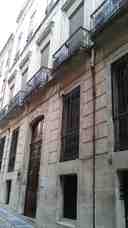
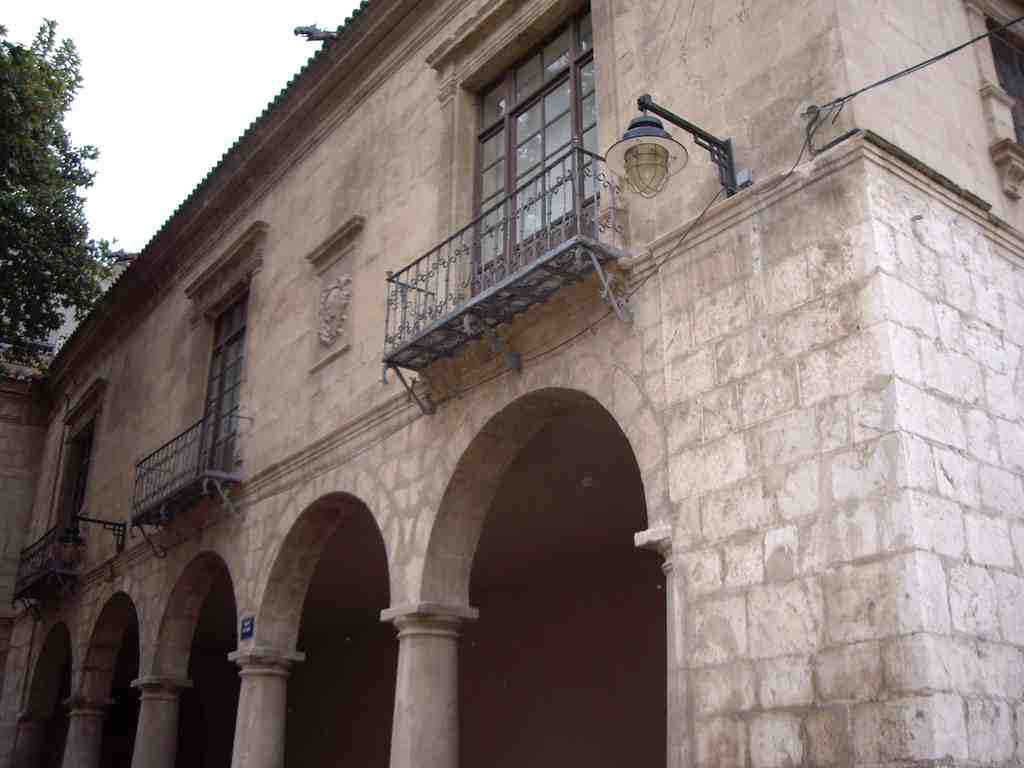
To spot the Camil Visedo Archaeological Museum, look for a grand stone building with a row of sturdy arches supported by thick columns right in front of you. Above those arches, you’ll see elegant balconies made of black ironwork and big windows framed by centuries-old walls. On one side, the building meets at a right angle, forming an “L” shape. One part feels almost like a medieval fortress-solid and a bit mysterious-while the longer side shows off five striking arches below. Alright, ready to step back in time? Imagine you’re crossing the centuries with every footstep down this street. To your left, those stone columns and arches could have echoed with the voices of merchants, or the laughter of children hurrying to school-because this place was more than just a museum! This museum actually sits inside a building that’s played many roles: town hall, community school, and even a hub of local life between the 1500s and the 1800s. Now, it’s got a split personality! The chunkier, older section is pure Gothic style, with its thick stone walls and a heavy doorway. Right next to it? Its Renaissance sibling, showing off a classic arched gallery and those five impressive arches at ground level-like it’s just waiting for a parade of toga-wearing Romans to stroll by. If you peek up, spot the three baroque balconies-imagine someone standing there, waving a fan, watching the buzz of Alcoy below. Oh, and the shield carved into the wall? That’s Alcoy’s own coat of arms, guarding its treasures. Inside, ancient secrets are tucked away: artifacts from cave dwellers, Bronze Age warriors, Roman settlers, and Islamic craftsmen. Some finds come from nearby sites like La Serreta and El Puig, so you get a taste of thousands of years of human adventure-right under Alcoy’s very stonework. This museum owes its existence to a local hero: Camilo Visedo. Back in 1945, he couldn’t resist collecting fascinating objects. You might say he was Alcoy’s own Indiana Jones-just with a bit less running from boulders. Step inside and you’ll find not just the main exhibits, but a hidden world: a specialist library, labs, rooms stuffed with paleontology and pottery collections-there’s even a room devoted to vintage photography of Alcoy! Ah, but don’t rush-just imagine the marvelous treasures you’re about to see, and remember: every echo in these arches has a story to tell!
Eigene Seite öffnen →You’re now standing right outside the Museu Alcoià de la Festa! To spot it, look for a tall, beige building with grand stone columns framing a glass double door. Above the door,…Mehr lesenWeniger anzeigen
You’re now standing right outside the Museu Alcoià de la Festa! To spot it, look for a tall, beige building with grand stone columns framing a glass double door. Above the door, iron balconies jut out with deep reddish shutters, almost as if the building is taking a moment to peek down at everyone passing by. The museum name is printed on the glass, so you know you’re at the right place! Ready to dive in? Imagine stepping through those glass doors and suddenly, you’re whisked into a world of swirling music, clashing swords, and vibrant costumes as the story of the Moros y Cristianos festival rushes up to greet you! This museum is the heart and soul of Alcoy’s most famous celebration-a wild festival where Moors and Christians face off, but instead of epic battles, you get a parade of fancy dress, old legends, and more excitement than a popcorn kernel in hot oil. The building itself? It’s as noble as the party it houses! Built back in the 1600s, this was once the home of Alcoy’s upper crust. Picture grand families, probably hiding their favorite snacks from each other, living right where you stand. The moment you step inside, the museum throws all your senses into fiesta mode. On the ground floor, there’s a room where the story of the festival bursts to life on screen, complete with the sounds of drums and cheers. Tradition here isn’t just dust and old paper-there’s a hall packed with posters, the original one from 1876 hanging proudly, as if daring the others to look as good after that many birthdays. On the first floor, you’ll meet San Jorge-he’s Alcoy’s patron saint and basically the VIP guest of every festival. There’s even a display about his legendary dragon-slaying heroics. Honestly, I wouldn’t want to be a dragon on his watch! Upstairs, the air almost vibrates with the magic of music. There’s a room dedicated to the composers behind the festival’s unforgettable tunes. Imagine the swirl of capes, the gleam of polished helmets, and rows of spectacular costumes worn by the captains and standard bearers every year-each one more eye-popping than the last! You’ll find stories from everyone-historians, locals, and even the occasional party animal-talking about what the festival means to Alcoy. There’s even a salute to the people who make the celebration possible, with secrets about how everything gets ready behind the scenes. Spoiler: it’s a lot of hard work, and probably a little magic. On the top floor? You get a “walk through time”-costumes changing as fast as fashion in a celebrity magazine! Videos play out the best moments from last year’s festival: marching, pageantry, the bang and blast of fireworks, and some of the happiest noise you’ll ever hear. So, as you stand here in front of these mighty doors, get ready to step inside and join centuries’ worth of celebration, creativity, and colorful chaos. Trust me, you’ll leave with a smile so big you’ll need your own parade! When you’re ready, just walk through those glass doors-Alcoy’s party awaits inside!
Eigene Seite öffnen →Look ahead and to your left-you’ll spot a sturdy, stone building with a proud, geometric symmetry. The walls are textured with rows of cut stone, and the windows march in perfect…Mehr lesenWeniger anzeigen
Look ahead and to your left-you’ll spot a sturdy, stone building with a proud, geometric symmetry. The walls are textured with rows of cut stone, and the windows march in perfect alignment. See that tall chimney poking up? That’s your clue you’ve found the place! You’ll also notice a smart, modern glass-and-black reception box in front; just beside it is the sign welcoming you to MUBOMA. The museum sits nestled by trees, with the bright sky painting everything in gold. You can’t miss it! You’ve made it! Welcome to the Firefighters Museum of Alcoy, officially known as MUBOMA-but I promise there’s no pop quiz on acronyms here. This striking building was once a hive of industrial activity, known as the Factory of Plugs. Now, it’s devoted to heroes who don’t wear capes, but do wear helmets. Picture this place a century ago: the smell of pine wood beams, stone walls echoing with the sounds of work, and the hum of machinery. Today, instead of factory noise, you’ll hear the whispers of history and maybe a few delighted giggles from kids discovering the magic of old fire trucks. Step inside (but keep your eyebrows at a safe level of excitement) and you’ll find all sorts of treasures: gleaming brass helmets, thick canvas jackets still smelling faintly of smoke, axes sharp enough to make any log nervous, and-my favorite-the oldest fire engines you can imagine. These red, shiny beasts look like something straight out of a movie about daring rescues. Imagine the thrill as they roared to life, bell clanging, men leaping aboard, ready to face the flames! The whole museum is a tribute to the courage and inventiveness of Alicante’s firefighters-real-life action heroes. From hand-pumped wagons to modern-day gear, it’s a showcase of bravery and clever design. Wander through history, run your fingers along the cool stone, and try to picture the story of every helmet, suit, and vehicle crammed inside. And if you feel a sudden rush of respect-or maybe even the urge to slide down a fireman’s pole-don’t worry, it happens to everyone here. This is a temple of teamwork and adrenaline, where each beep and clang tells a story of bravery. Thanks for joining me on this adventure-if only I could sound an old-fashioned fire alarm to celebrate your journey’s end!
Eigene Seite öffnen →
Häufig gestellte Fragen
Wie starte ich die Tour?
Laden Sie nach dem Kauf die AudaTours-App herunter und geben Sie Ihren Einlösecode ein. Die Tour ist sofort startbereit – tippen Sie einfach auf „Play“ und folgen Sie der GPS-geführten Route.
Benötige ich während der Tour Internet?
Nein! Laden Sie die Tour vor dem Start herunter und genießen Sie sie vollständig offline. Nur die Chat-Funktion benötigt Internet. Wir empfehlen den Download über WLAN, um mobiles Datenvolumen zu sparen.
Handelt es sich um eine geführte Gruppentour?
Nein – dies ist ein selbstgeführter Audioguide. Sie erkunden unabhängig in Ihrem eigenen Tempo, wobei die Audioerzählung über Ihr Telefon abgespielt wird. Kein Reiseleiter, keine Gruppe, kein Zeitplan.
Wie lange dauert die Tour?
Die meisten Touren dauern 60–90 Minuten, aber Sie kontrollieren das Tempo vollständig. Pausieren Sie, überspringen Sie Stopps oder machen Sie Pausen, wann immer Sie wollen.
Was, wenn ich die Tour heute nicht beenden kann?
Kein Problem! Touren haben lebenslangen Zugriff. Pausieren Sie und setzen Sie sie fort, wann immer Sie möchten – morgen, nächste Woche oder nächstes Jahr. Ihr Fortschritt wird gespeichert.
Welche Sprachen sind verfügbar?
Alle Touren sind in über 50 Sprachen verfügbar. Wählen Sie Ihre bevorzugte Sprache beim Einlösen Ihres Codes. Hinweis: Die Sprache kann nach der Tour-Generierung nicht mehr geändert werden.
Wo greife ich nach dem Kauf auf die Tour zu?
Laden Sie die kostenlose AudaTours-App aus dem App Store oder von Google Play herunter. Geben Sie Ihren Einlösecode (per E-Mail gesendet) ein, und die Tour erscheint in Ihrer Bibliothek, bereit zum Download und Start.
Wenn Ihnen die Tour nicht gefällt, erstatten wir Ihnen den Kaufpreis. Kontaktieren Sie uns unter [email protected]
Sicher bezahlen mit