
Halten Sie Ausschau nach der riesigen trapezförmigen Asphaltfläche, die von massiven Betonwänden begrenzt wird, welche wiederum dicht mit farbenfrohen, völlig legalen Graffitis überzogen sind. Wenn Sie auf Ihren Bildschirm blicken, sehen Sie eine aktuelle Ansicht dieses markanten geometrischen Grundrisses in seiner alltäglichen Funktion als gewaltiger Parkplatz.
Yes, it looks like a simple stretch of pavement, but this ground perfectly captures how this district transformed from a place of rigid obedience into a playground for creative chaos. And it started, quite literally, with garbage. Back in 1889, the city used this exact spot as a municipal dump. They piled up household trash until it formed a massive hill, which they later leveled out to engineer this very plaza.
In 1912, the city moved its traditional fair, the Karlsruher Mess, to this newly flattened terrain. Why here? Pure logistical efficiency. It sat directly between two major tram lines. The move was an instant financial success.
But the story of this space mirrors the darker turns of the twentieth century as well. In 1933, the Nazi-dominated city council systematically banned Jewish exhibitors from the fairgrounds. During the Second World War, the fair was moved or canceled entirely. The massive gas works operating right next door made this area an incredibly dangerous target for incoming bombers.
Following the war, the city built the Oststadthalle here, an arena holding up to five thousand people. This is where the local culture took a sharp turn toward the eccentric. The hall hosted wild, multi-week professional wrestling tournaments. In 1971, the electronic music pioneers Kraftwerk performed here, using custom-built synthesizers to completely disrupt the traditional music scene. In 1985, the punk band Die Toten Hosen turned the arena into an absolute madhouse, leading hundreds of spiky-haired punks in roaring sing-alongs of traditional German folk tunes. The building eventually fell into disrepair and was demolished in 1997, but the city officially handed the perimeter walls over to graffiti artists, ensuring the rebellious spirit stuck around.
That instinct for clever disruption showed up again during the COVID-19 pandemic. When indoor theaters went dark, a local director invested a quarter of a million euros to build a drive-in cinema right on this asphalt. They engineered a sixteen-meter-high podium with a massive screen and broadcast the audio directly to car radios via a local FM frequency. It was a massive hit that financially saved the theater.
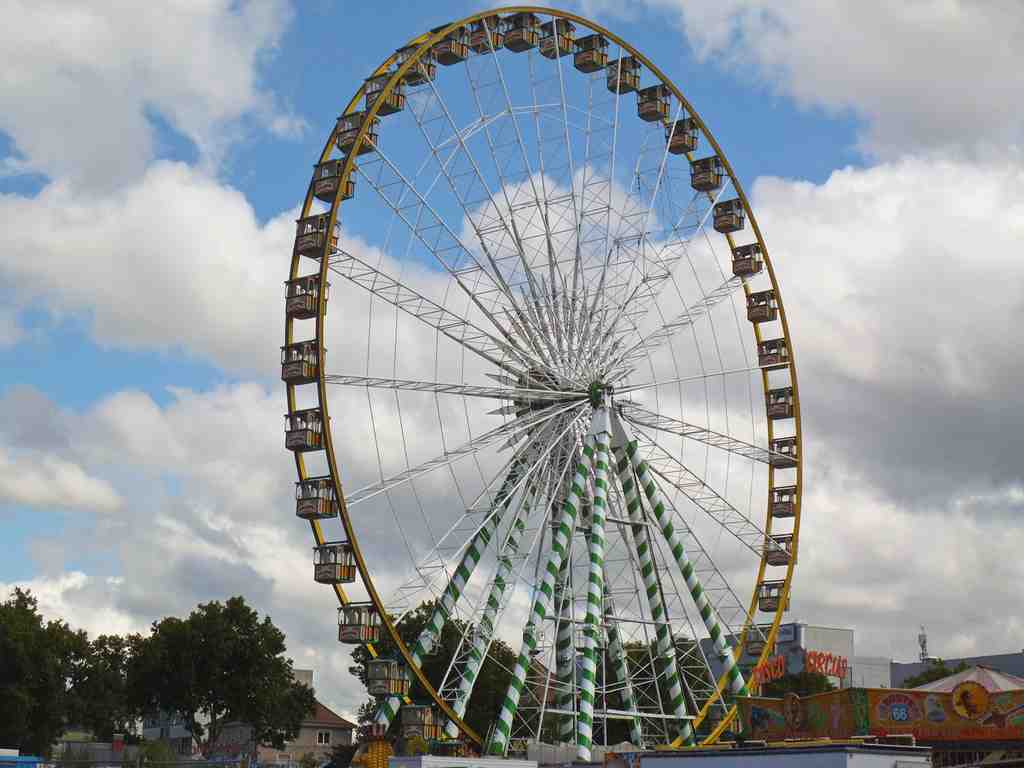
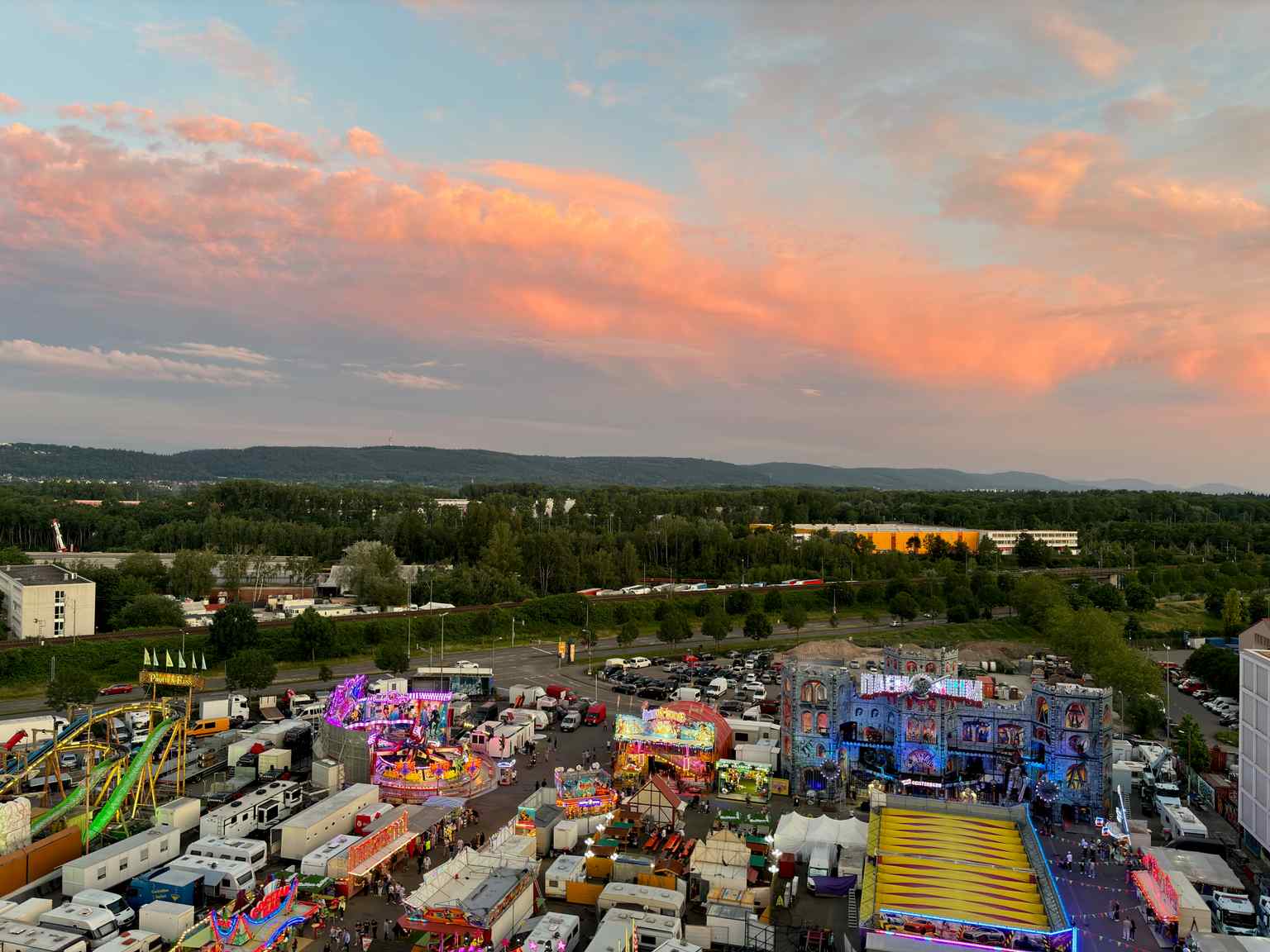
Today, the space still hosts enormous seasonal fairs featuring rides that pull up to five Gs of gravitational force. For the traveling showmen, this lot becomes a temporary village of caravans. It is a raw, communal space, though that intense energy occasionally boils over, like a massive brawl between teenagers that fractured a few noses late last year.
Most days, it is simply a place to leave your car. The lot is open Monday through Saturday from 7 AM to 8 PM, and closed on Sundays. Let us keep moving toward the district's main artery now, and transition to Durlacher Allee, just a four-minute walk from here.





