
Angers Audio-Tour: Mönche, Herrenhäuser & Meisterwerke-Pfad
Ein einziger Stein in Angers verbarg einst ein Geheimnis, das das Schicksal der Stadt über Jahrhunderte hinweg erschütterte. Verborgene Intrigen schimmern unter jedem Buntglasfenster und revolutionäre Echos flüstern hinter hallenden Bibliotheksgängen. Diese selbstgeführte Audio-Tour ist Ihr Schlüssel zu Angers' bestgehüteten Geheimnissen. Wandern Sie jenseits der Postkartenfassaden, um Geschichten zu entdecken, die die meisten Besucher nie vermuten würden – selbst in den belebtesten Ecken der Stadt. Wer riskierte alles bei einer mitternächtlichen Rebellion im Museum der Schönen Künste? Welches verschwundene Artefakt spukt noch immer in den gewölbten Schatten des Juliomagus? Und welches verbotene Buch veränderte leise Leben, nur wenige Schritte von den Regalen der Toussaint Mediathek entfernt? Folgen Sie verwinkelten Gassen und sonnigen Innenhöfen. Spüren Sie, wie die Geschichte auf lebhaften Plätzen und in stillen Kreuzgängen aufbricht. Lassen Sie jede Geschichte, jeden Skandal und jeden vergessenen Aufstand die Art und Weise, wie Sie Angers sehen, für immer verändern. Bereit, den Stein zu lüften und die darunter liegenden Geheimnisse zu enthüllen? Ihre Reise beginnt jetzt.
Tourvorschau
Über diese Tour
- scheduleDauer 40–60 minsEigenes Tempo
- straighten3.1 km FußwegDem geführten Pfad folgen
- location_onStandortAngers, Frankreich
- wifi_offFunktioniert offlineEinmal herunterladen, überall nutzen
- all_inclusiveLebenslanger ZugriffJederzeit wiederholen, für immer
- location_onStartet bei Toussaint Mediathek
Stopps auf dieser Tour
To spot the Toussaint Media Library, look for a striking cube of glass with tall windows nestled among gardens and reflecting the stone arches of an ancient abbey right in front…Mehr lesenWeniger anzeigen
To spot the Toussaint Media Library, look for a striking cube of glass with tall windows nestled among gardens and reflecting the stone arches of an ancient abbey right in front of you. Now, take a deep breath-can you smell those flowers? You’re about to step into a real-life time machine. The Toussaint Media Library is the beating heart of Angers’ knowledge, welcoming people of all ages with the promise of discovery-plus the distinct possibility of losing your library card somewhere between 570,000 documents. That’s right, with around 11,500 members (half under 25-watch out, TikTok!), and up to 1,900 visitors bustling around on a Saturday, it’s the grand central station of books, music, and movies in Angers. But let’s wind the clock back. Picture yourself in the Middle Ages, parchment crackling, the air thick with candle smoke. The library’s very roots are buried in history-the idea sprang up between 1376 and 1422, in the shadowy lecture halls of Angers’ university, and then flourished thanks to the city council and curious minds of the day. During the French Revolution, as monasteries were emptied out, their precious books traveled through the city's most sacred places-Toussaint Abbey, Saint-Serge, and even Saint-Martin-before landing in, believe it or not, an old bishop’s palace. The public library finally opened its doors on March 30, 1798-imagine a line of eager readers waiting for the keys to a treasure chest! Over the centuries, the collection outgrew one home after another, squeezing into the dignified but creaky old Logis Barrault until the 1940s. At one point, so many books overwhelmed the floor that part of the building collapsed! Not the ideal ending to a story hour, I admit. Fast forward to 1978, when the glassy cube you’re standing by rose from the ruins of the old Toussaint Abbey-the architects making sure you could still feel whispers of the past. The library spread out on over 6,400 square meters and, soon, more than 7,000, with plans for children’s play spaces, performance halls, and a magical “gallery of treasures” where rare medieval manuscripts and centuries-old children’s books await their next audience. If you think moving house is tough, try packing up 16 kilometers of books-some so old and fragile they need custom-made cradles! Today, the Toussaint Media Library is a living, growing network of nine libraries touching every corner of Angers, all coordinated from here. The collections themselves are a patchwork of confiscated church books, rare atlases, personal letters, medieval music, and contemporary novels. Fancy a peek at King René’s illuminated manuscripts or the Bible of Saint-Aubin? The “Treasures Gallery” will soon let you do just that. The library is much more than silent aisles. There’s laughter-at storytelling hours, author visits, concerts, and even rowdy blind tests. Exhibitions bring together everything from medieval art to contemporary comics, drawing children and grownups into the magic of the written word (and sometimes, the magic of figuring out French footnotes). And the fun never stops. Whether they’re working with local hospitals, sending books to the prison library, or running writing workshops on the Apocalypse (yes, you heard that right!), the librarians turn every week into a new chapter. So the next time you visit, look up-the new renovations promise gardens inside and out, sunlight bouncing through solar panels, and spaces as green as they are serene. This is a library that holds a thousand years of stories, but today, it’s waiting to add yours. Exploring the realm of the historical, fund or the heritage collections? Feel free to consult the chat section for additional information.
Eigene Seite öffnen →To spot the Museum of Fine Arts of Angers, look for a stately cream-colored mansion with grey slate roofs and rows of tall windows, arranged around a small square, with a modern…Mehr lesenWeniger anzeigen
To spot the Museum of Fine Arts of Angers, look for a stately cream-colored mansion with grey slate roofs and rows of tall windows, arranged around a small square, with a modern glass entryway marked "MBA" ahead of you and a bold black sculpture on the right by the courtyard. You’re now standing before the magnificent Museum of Fine Arts of Angers-where history and creativity have been shaking hands for centuries! Just imagine: in the late 18th century, this very spot hummed with the post-revolution buzz as the grand logis Barrault, once a private mansion, was swept into a whirlwind of change. After the French Revolution, the state decided, “Let there be art!” and so an École centrale-a kind of all-in-one college-opened here in 1797. Only a handful of years later, in 1801, Angers rolled out its own museum, with visions of rivalling the mighty Louvre. (All they needed was a few million extra paintings... and maybe the Mona Lisa’s smile!) Through the open doors over the centuries came waves of wonders-antiquities from Egypt and Rome thanks to passionate collectors, paintings by titans like Ingres and Fragonard, and even a bouncy gallery named after the local superstar sculptor David d’Angers. The museum became so prized that by 1805, the folks of Angers declared it municipal, and showered it with gifts, legacies, and the odd “Oops, I just found this sketch in my attic.” One generous artist, Lancelot Théodore Turpin de Crissé, didn’t just donate masterpieces-he practically sent a whole treasure chest, bursting with Greek vases, bronzes, and paintings. Here’s a twist worthy of a thriller! In World War II, the museum was battered by conflict, losing and rediscovering gems. Some stolen paintings even found their way home decades later, like undercover agents returning from Cold War missions. The care, restoration, and detective work never stopped, with experts poring over every old brick and dusty drawing, sometimes unearthing surprises right in the walls. Picture the place by the 1970s: There were so many masterpieces and quirky objects that the museum started running out of space. Dozens of fierce arguments must have been held over where to put a giant Roman bust or a modernist painting, and rabbits probably wouldn’t have fit unless they were very flat indeed! In the early 2000s, the city rolled up its sleeves, calling in super-architects Gabor Mester de Parajd and Antoine Stinco, who blended old and new like expert chefs-preserving vaulted loggias and medieval masonry while adding new wings and bright, airy galleries. Every age left its mark, and if you look closely at the facades, you’ll spot a whole timeline in stone and glass. Today, the museum stretches across 7,000 square meters-yes, good luck seeing it all in one day! You can wander from medieval gold-leaf icons to wild 20th-century experiments, or even dip into Angers’ own history, with archaeological finds showing how this city grew from a Roman outpost into the heart of Anjou. There’s even a cabinet of graphic arts so packed, it boasts some of the richest collections of drawings outside Paris. If you’re a fan of big names, spot paintings from Watteau, Boucher, David, and Houdon’s famous buste of Voltaire, glaring suspiciously like he’s guarding all the secrets. And don't be surprised if memories of past visitors bounce off the old stones, especially during the Night of Museums, when the place buzzes with thousands of art-lovers and a few people who just want to say they finished the entire tour before midnight. So take a deep breath-maybe you’ll catch a whiff of old parchment or freshly polished floors-and remember, every step in this museum is a dance between the past and the present. Just don’t touch the art, or one of those stern 18th-century portraits might just raise an eyebrow at you! Wondering about the historical, life of the collections or the exhibition halls? Feel free to discuss it further in the chat section below.
Eigene Seite öffnen →To spot the Abbey of Saint-Aubin d'Angers, look straight ahead for the towering pale stone structure with pointed spires and large arched windows, rising dramatically above the…Mehr lesenWeniger anzeigen
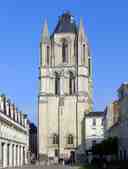
To spot the Abbey of Saint-Aubin d'Angers, look straight ahead for the towering pale stone structure with pointed spires and large arched windows, rising dramatically above the neighboring buildings. Now, take in the sight of this remarkable tower, the last proud remnant of an abbey that has seen centuries of drama, faith, and a little bit of medieval mischief! The Abbey of Saint-Aubin has stories hidden in its stones-and like an onion, every century added a new layer. Let’s peel it back together. This place began as a humble funerary basilica sometime in the deep fog of the 6th or 7th century, built to keep safe the remains of Bishop Aubin, a respected figure who fought for justice and compassion. Aubin was laid to rest in a small chamber-just imagine monks tiptoeing on the chilly stone floors, whispering prayers as construction echoed around them. Soon, a grand basilica rose over the site, catching the eye of none other than Gregory of Tours, who wrote about it nearly 1,500 years ago. Pretty good Yelp review for the time! Fast forward a little, and the site became a full-blown monastery. By the 7th century, monks swapped gossip and cheese in the cloisters, and by the 8th century, a group of canons-clergy with special privileges-had taken over from the monks. The Abbey even played a cameo as a medieval jail: poor Theodulf of Orléans, accused of supporting a rebellion, was locked up right here from 818 until his death two years later. I bet he didn't get many TripAdvisor stars. Life here wasn’t always peaceful. Imagine the tension in the 10th century when, after years of changes and reform, monks resettled in the abbey. The grand buildings saw feasts, fasts, and more than a few midnight snacks (I suspect). But revolution doesn’t care about tradition. During the French Revolution, the monks were forced out, and their home scattered to the winds. What you’re standing before now isn’t the full abbey-it’s the mighty Saint-Aubin tower. Built in the 12th century, this 54-meter marvel once stood as a lookout, watching over Angers like a medieval security camera. It was fortified, complete with arrow slits and a well, like a stone superhero ready to repel any trouble. Over the centuries, the tower wore many hats: after falling into ruin in the 19th century, it served as a factory for hunting shot. Then in the 1900s, it became home to an industrial museum-and even a weather observatory. These days, it swaps out science for art, hosting exhibitions in a space filled with old secrets. While the abbey’s church was demolished in 1811 to create the place Michel-Debré you see nearby, the Romanesque cloister nearly escaped the passage of time. Only the eastern gallery and some impressive 12th-century arches remain, now integrated into the local prefecture’s courtyard. Picture monks bustling under these carved arcades-stone sculptures above them depicting stories like David and Goliath and the Virgin Mary. Sadly, a failed attempt in the 1300s to add a Gothic vault left many sculptures worse for wear-proof that medieval home improvement projects had their disasters, too. In 1862, the tower became an officially protected historic monument-earning safety from any future demolition teams or clumsy renovators! Over the next century, it collected new titles with every restoration and historical listing. So next time you gaze up at the soaring Saint-Aubin tower, let your imagination add monks, prisoners, revolutionaries, and artists back into the story. Every stone above you has seen a different chapter, and I’m pretty sure, if they got together, they’d have some wild stories to swap at dinnertime. If you're curious about the historical, the saint-aubin tower or the the cloister of the abbey, the chat section below is the perfect place to seek clarification.
Eigene Seite öffnen →


10 weitere Stationen anzeigenWeniger Stationen anzeigenexpand_moreexpand_less
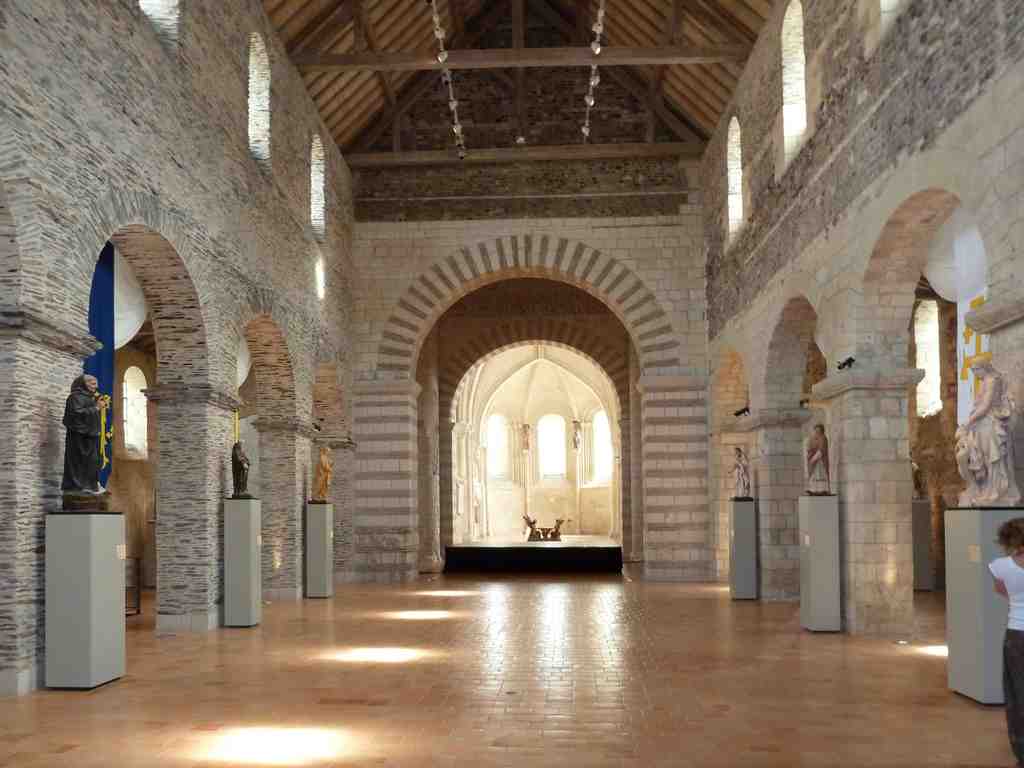
To spot the Church of Saint-Martin, look for a striking stone building with tall arched windows and robust columns-its ancient, textured walls and serene presence make it stand…Mehr lesenWeniger anzeigen
To spot the Church of Saint-Martin, look for a striking stone building with tall arched windows and robust columns-its ancient, textured walls and serene presence make it stand out from the surroundings. Alright, adventurer, here we are at the magnificent Church of Saint-Martin! Just imagine: you're standing in front of one of France’s best-preserved Carolingian treasures, where time has stacked itself up like layers of cake-only, this cake is made of stone and stories! From outside, the rough blue-gray schist and limestone bricks almost seem to whisper about all the centuries they've seen. Travel back with me to the 5th, 6th, and 7th centuries, when the very first churches were built on this ground. Legend has it, the original church was created to shelter the tomb of a local bishop. It wasn’t long before things outgrew the bishop-literally! By the 7th century, the ambitious Bishop Loup had overseen the building of an even larger church, cross-shaped and elaborate for its time. Picture a flurry of tools and voices as new walls rose under the gaze of curious townsfolk. Down below, in the ancient crypt, archaeologists uncovered timeworn sarcophagi and slate coffins. No vampire stories, just real Merovingian graves! If you had a shovel and a time machine, who knows what else you might dig up-though I'd recommend a proper permit instead. Leaping ahead to the 10th and 11th centuries, the church gets another extreme makeover. With its impressive arches of alternating pale tuffeau stone and red brick, the building sported a look that would have made any medieval architect jealous. During the reign of Foulques Nerra-now there’s a fellow with dramatic flair-the church officially became a collegiate church and received a beautiful stone dome that still stands today. Oh, and Foulques’s wife, Hildegarde, made sure there were 13 canons to keep things orderly. Talk about a power couple! Fast-forward to the era of soaring Gothic grandeur in the 12th and 13th centuries. The choir was transformed and stretched out with majestic Angevin-also called Plantagenet-gothic vaults, their gently rounded shapes quite the local hallmark. The chapel on the side, named “Chapelle des Anges,” was smothered with vivid paintings; you’d spot angels, a sorrowful massacre, and wise men bowing before the Virgin and Child. These now-faded images are just a whisper of their former splendor, but with the play of sunlight and clever spotlights, the carved capitals still come to life today. Now, let’s not forget the Renaissance drama. The church got an extra polish thanks to King René-imagine him sweeping in, armor shining, tossing coins for new roof beams and decorating the place with his own emblems. He wanted everyone to know: King René was here. And that’s not the end-after the Revolution, the church went rogue! It stored confiscated books, became a warehouse for firewood, even hosted tobacco. The poor building saw its roof and bell tower hacked away. And then-plot twist-in 1986, it was sold to the county for just one franc. What a bargain! Today, this beautiful shell is no longer a church, but a museum where statues from ages past are displayed. It’s a true survivor, rebuilt and lived in over and over, now sharing its ancient secrets with you. You’re not just looking at old rocks; you’re admiring 1,500 years of dramatic change, mishaps, royal bling, and splendid resurrection. If only all old buildings could boast such a wild résumé! Curious about the foundation and first churches, the tenth and eleventh centuries or the the gothic period? Don't hesitate to reach out in the chat section for additional details.
Eigene Seite öffnen →Just ahead of you lies Boulevard du Maréchal-Foch-a grand, tree-lined avenue with wide lanes bustling with cars, specialty bus lanes, and a modern tram gliding smoothly along a…Mehr lesenWeniger anzeigen
Just ahead of you lies Boulevard du Maréchal-Foch-a grand, tree-lined avenue with wide lanes bustling with cars, specialty bus lanes, and a modern tram gliding smoothly along a central green strip; keep an eye out for the colorful tram as your beacon, guiding you straight to the heart of Angers. Now, picture yourself stepping back in time, right here on this bustling boulevard. Imagine the echoes of carriage wheels on cobblestones and the grand plans of city builders in the early 1800s. Back then, what you see as a lively city artery was created in 1812 after Napoléon Bonaparte signed a decree to reshape Angers’ fortifications. Out went the ancient city walls, and in came wide, elegant boulevards-meant for both parades and promenades. The avenue you’re standing on was once called the “Boulevard de Saumur,” but don’t worry, nobody expects you to know all Angers’ ‘old street nicknames.’ Even the city council got confused: someone tried (and failed) to rename it Boulevard de la République! Then, in a twist worthy of a soap opera, the grande avenue finally became Boulevard du Maréchal-Foch. The catch? It was named after Ferdinand Foch, the celebrated World War I general, and officially received his name after his death-even breaking the city rule that a street had to wait five years before getting a new name. If you ever want to win a local trivia night, remember: this street is the rebellious rule-breaker of Angers boulevards. Every Saturday morning, the north end of the boulevard turns into a cacophony of color and chatter with its market. Picture stalls piled high with cheeses, fresh fruits, and spicy sausages, vendors calling out their best prices, and neighbors swapping stories over baskets of produce. In the air, you might catch the scent of roasting coffee from a local café or-even better-the wafting aroma of a fresh croissant from the nearest bakery. As you stroll, cast your eyes up at the elegant old mansions and 19th-century buildings that line the road. Many of them were glamorous hotel particuliers from the days when Angers’ high society would cruise along in horse-drawn carriages, tipping their hats and sizing up the latest fashions. For a dash of architectural jazz, don’t miss the striking Maison Bleue near Rue d’Alsace, a seven-story marvel wrapped in dazzling mosaics by Isidore Odorico-proof that Angers has always had a flair for the dramatic. The modern tram slices right through the middle of all this history, its bell clanging cheerfully as it glides past. With roomy new sidewalks, dedicated lanes for buses, and those ever-present green spaces, it feels like the city planners wanted the boulevard to be spacious enough for both 19th-century parades and a 21st-century game of hopscotch. And if life in Angers seems a bit too calm, don’t worry: rumor has it that every building here has a story, from hidden courtyards to secret gardens behind high stone walls. Even today, with a new Hotel du Département rising to join restaurants and shops at “Centre d’activités Foch,” history and modern life mix together-like butter and jam. Speaking of which, if you catch a warm pastry aroma as you walk, follow your nose-it’s the best way to make history taste delicious!
Eigene Seite öffnen →To spot the Abbey of All Saints of Angers, look for a striking, pale stone building with a grand circular rose window and a tall, pointy slate roof-it stands proudly at the end of…Mehr lesenWeniger anzeigen
To spot the Abbey of All Saints of Angers, look for a striking, pale stone building with a grand circular rose window and a tall, pointy slate roof-it stands proudly at the end of the path ahead, surrounded by green trees and a peaceful courtyard. Now, let’s step into a bit of magic from the past! Imagine the year is 1040, and right where you stand, the air would have been filled with the echo of monks’ footsteps and the soft voices of prayers whispered for the poor and weary. This wasn’t just any grand abbey: it began its life as a humble almshouse, a place called “aumônerie Toussaint,” caring for those in need and answering to the great Abbey of the Holy Trinity in Vendôme. But Angers always had a taste for drama! By the early 1100s, a new cast moved in-canons of Saint Augustine-who brought fresh rules, sharp minds, and perhaps a little more noise to the place. The 13th century rolled around, the abbots rolled up their sleeves, and the abbey church was rebuilt in a unique T-shape, like the good old Greek letter tau. Fast forward through the centuries-don’t trip over the centuries now!-and you’ll find that the very ground near the door once hid the graves of the first abbots, both conveniently named Robert, and even the founder, Girard, all waiting to tell their secrets if you listen closely enough. But here’s the biggest twist: by the 1980s, the abbey was almost lost to time, until the city swooped in like a hero in a storybook, putting a stunning glass roof over it and filling it with art instead of prayers. These walls have seen kings, bishops, legendary abbot Williams, and even the body of Saint Brieuc pass through. Now, it’s part museum, part legend-quite a comeback for a place once started just to help the everyday folk. If these stones could talk, I’m sure they’d say, “Abbey Road, eat your heart out!”
Eigene Seite öffnen →Look to your left for a wide, open square surrounded by elegant buildings with red awnings, a colorful tram gliding through, and a carousel right at the center-this is Place du…Mehr lesenWeniger anzeigen
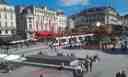
Look to your left for a wide, open square surrounded by elegant buildings with red awnings, a colorful tram gliding through, and a carousel right at the center-this is Place du Ralliement. If you find yourself feeling like you’ve just entered the lively heart of Angers, you’re absolutely right! Place du Ralliement has been the main stage for the city's daily drama for centuries. Listen to the sounds of people chatting at sidewalk cafés and the distant jingle of the tram bell as it glides through the square. Today it’s all clinking coffee cups and laughter, but believe it or not, this spot once held a much more serious tone. Back after the revolution of 1789, three grand churches once stood here-Saint-Mainboeuf, Saint-Maurille, and Saint-Pierre. When they were sold off as national property in 1791, the space was suddenly open, though bumpy and dramatically sloped-less perfect square, more “accidental skate park.” It first was named Place Saint-Maurille, but soon enough, the drama picked up: troops rallied here, guillotines were set up, and crowds gathered for the gravest of events. In fact, this became the city’s rendezvous spot for revolutionary justice, including the execution of notable figures like Noël Pinot and Jean-Michel Langevin, as well as many others who now are counted among the 99 martyrs of Angers. Don’t worry, guillotines are out, but gathering is in. Over the years, fires like the one that destroyed the old theater in 1865 forced the square’s redesigns, and the slope gradually became the wide open, welcoming plaza you see today. Shops and cafés sprang up; even the underground parking lot you’re walking above was a ’70s creation, still going strong with over 400 spaces-though today, traffic above ground is reserved for feet, bikes, trams, and the urgent blur of the occasional delivery van. Want a hint of old Angers meeting modern sparkle? The Grand Théâtre rises nearby, the tram stop slices through the middle of the square, and annual events like the Christmas market or Accroche-Cœurs festival fill the air with excitement. At the very center of it all, the carousel spins-a reminder that today, Place du Ralliement is a place for laughter, love, and maybe a bit of shopping mischief. Whether it’s a festival, a political rally, or just a sunny afternoon coffee, Angers keeps rallying right here.
Eigene Seite öffnen →Coming up ahead, you’ll spot the Palais du Tau by its impressive mix of pale stone and brickwork, its grand T-shaped layout, and the rounded tower anchoring one corner-just look…Mehr lesenWeniger anzeigen
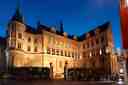
Coming up ahead, you’ll spot the Palais du Tau by its impressive mix of pale stone and brickwork, its grand T-shaped layout, and the rounded tower anchoring one corner-just look for the castle-like building glowing with character right next to the cathedral. Now, as you stand before the Palais du Tau, imagine yourself a thousand years back, when this grand residence would have brimmed with the buzz and footsteps of bishops, clergy, and the occasional knight. Built up right against what was once the third-century city wall-yes, a reminder that this chunk of stone has seen everything from Roman sandals to modern sneakers-the palace you see today took shape in the early 1100s. But the land’s story goes even further back, with bishops keeping residence by the cathedral since at least the 800s. Here's a fun twist: the building’s funky T-shape isn’t just an accident of architecture. Picture Bishop Ulger of Angers in 1131, attending the grand council in Reims and gawking in awe at the palatial archbishop’s residence. He comes back home, feeling a bit of palace envy, and orders his own digs to be remade-just as he saw in Reims. That T-shape became so iconic that it even gave the palace its name: “Tau” is the Greek letter T. There are only two episcopal palaces in France with this special shape-one here in Angers, the other in Reims. So, you could say Angers is one “tau-rrific” place! Don’t let these dignified stones fool you-they’ve seen plenty of mischief and makeover. In 1438, Bishop Hardouin de Bueil fancied a proper library, so he reshaped the roof and created a sprawling room for books and serious thinking. Then, in 1506, Bishop François de Rohan constructed a grand staircase facing the courtyard-but apparently lost the will (or perhaps the funds) to finish it, leaving it incomplete for over 350 years! Later bishops tinkered with the palace too: the kitchens got circular makeovers, chapels expanded or contracted, a new wing sprouted in the 1800s, and elegantly sculpted decor was sometimes left unrecognizable by zealous renovations. Yet, through all these tumbles of history, the complex has managed to preserve a sense of unity and grace. And if you stumble around to the old stone walls, you might spot some intriguing Latin inscriptions. One line graciously welcomes clerics and knights to honor and hospitality, but gently nudges everyone else to the less glamorous rooms-a medieval way of saying, “VIP lounge this way; everyone else, try downstairs.” Another carved phrase promises honey to friends, but a sting to anyone causing trouble-a motto fit for an era of both intrigue and hospitality. Over centuries, as revolutionaries stormed and museums flourished, the Palais du Tau transformed from bishop’s home to museum of tapestries and religious art, and now serves as the diocesan house for good works-a monument recognized for its historic importance since 1907. Whether you picture robed bishops debating the fate of souls, or just wonder how many times that incomplete staircase tripped someone up, the Palais du Tau is a place where the old world feels just a little bit closer. Now, onward to your next Angers adventure! If you're keen on discovering more about the situation, historical or the entries, head down to the chat section and engage with me.
Eigene Seite öffnen →Right in front of you stands a striking stone mansion with ornate window frames, sharp gables, spires, and even a tower-look for the creamy Renaissance façade, with its elaborate…Mehr lesenWeniger anzeigen
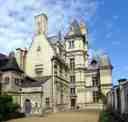
Right in front of you stands a striking stone mansion with ornate window frames, sharp gables, spires, and even a tower-look for the creamy Renaissance façade, with its elaborate carvings and a sprinkle of elegant windows along rue Lenepveu. Let me introduce you to the Pinched Dwelling-or “Le Logis Pincé” if you want to impress the locals! Imagine this: It’s the early 1500s, Angers is buzzing with the latest Renaissance trends, and in 1528, Jean de Pincé, the city’s very proud mayor, decides to make his architectural mark. He calls upon Jean Delespine, the Renaissance star-architect of Angers, and says, “I want something that will make everyone stop and stare!” You can probably picture the discussions: “Enough towers? Needs more flair! How about some carvings? Make it fancy!” Seven years of work later, out comes this absolute showstopper-a private mansion that would make any Renaissance noble jealous. Over the centuries, the building saw a parade of admirers, but let’s fast-forward to the 1800s for a little drama. In 1861, a painter named Guillaume Bodinier, clearly moved by its beauty (or perhaps disappointed with his own real estate), buys the place. But he’s not keeping it! He decides the people of Angers should enjoy it and donates it to the city for one very special purpose: to turn it into a museum bursting with treasures from around the old world. The museum opens in 1889. Instead of just French trinkets and dusty portraits, it fills with astonishing artifacts: Greek and Roman ceramics, Egyptian statues and hieroglyphics, Chinese porcelains, and Japanese masks that could spook-or charm-you depending on the lighting. The collections come from generous donors-Turpin de Crissé, Moll, Saint-Genys, and more. In 2020, after a long nap for repairs, the museum wakes up, spiffier than ever, with dazzling exhibits arranged by geography. Step inside and you might even sniff the incense of China or test your embalmment skills like an ancient Egyptian-no mummy wrapping required! Every year, new exhibitions keep things lively: one year the sea, the next, herbaria and botanical wonders, then the mysteries of seduction, and in 2024, the acclaimed Léveilley collection took the spotlight. So, outside these storied walls, you’re standing where Angers’ mayor once dreamed big and where history, art, and a pinch of local pride came together under those pointed roofs. If you hear a distant laugh or sigh, don’t worry-it’s just Jean de Pincé checking that everyone’s still admiring his masterpiece. Onward to the next stop!
Eigene Seite öffnen →Right now, you’re facing a bright, wide pedestrian street lined with chic shopfronts and elegant stone buildings-just glance ahead for the large glass windows and FNAC sign, and…Mehr lesenWeniger anzeigen
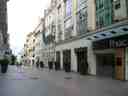
Right now, you’re facing a bright, wide pedestrian street lined with chic shopfronts and elegant stone buildings-just glance ahead for the large glass windows and FNAC sign, and you’ve found Rue Lenepveu! Now, imagine you’re standing right here in the middle of Angers’ fashion runway-except instead of models, it’s regular folks showing off their new Zara finds and Mango accessories! Rue Lenepveu is like the beating heart of downtown Angers, alive with locals darting from shop to shop, tourists juggling shopping bags and ice cream, and windows dazzling with the latest trends. But this street has secrets woven through its stones. Once upon a time, it went by the less exciting name “Rue Milton”-but that all changed in 1871, when it was renamed for Jules Lenepveu, a painter who probably never guessed he’d one day be more famous for a street than his brushstrokes. If you think about it, every hefty bag you see someone carrying might just be their own tribute to art! The buildings here are a delightful patchwork. Some are classic Parisian Haussmann-style facades, with ornate balconies that make you want to belt out a musical number. Nestled between them, you’ll spot rare timbered houses, survivors from centuries past-timidly peeking out at fashionistas, as if thinking, “Well, in my day, wood was all the rage!” And if you wander a little, you might find the Musée Pincé, a Renaissance jewel that has watched over this street since the 19th century-imposing as ever, quietly humming with history and dignified as a museum with such a name should be. During July, this calm haven bursts into the annual braderie-a sort of grand bargain hunt where every store fights for your attention. Come December, the street transforms into a winter fairy tale with the Soleil d’Hiver Christmas market: imagine twinkling lights, wooden chalets, the smell of chocolates and warm drinks thick in the air. September brings the whimsical parade of the Accroche-Cœurs festival, and in March, masked revelers twirl by during the bustling Carnival. No cars allowed here-thank goodness! Just your footsteps, laughter, and maybe some light cursing if you try shoe shopping on a Saturday. Rue Lenepveu is always safe, always lively, always ready to surprise. Welcome to Angers’ most stylish promenade.
Eigene Seite öffnen →In front of you, you’ll notice a narrow square framed by tall, characterful houses with timber beams and Renaissance details-just look for the old buildings and the lively hub of…Mehr lesenWeniger anzeigen
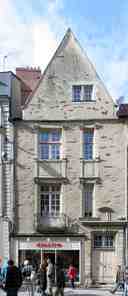
In front of you, you’ll notice a narrow square framed by tall, characterful houses with timber beams and Renaissance details-just look for the old buildings and the lively hub of people near the brasseries and shops. Now, let your mind wander a little as you stand here in the Place du Pilori-whose name sounds a bit like a spell Harry Potter might fear. But centuries ago, there was something truly magical if you enjoyed public shaming: this place was once the local stage for parading wrongdoers! Malefactors used to be tied up right here for everyone to see; talk about a harsh version of community service. The square itself bursts with stories from different eras: medieval lanes paved with timeworn stones connect you to the past, as do the Renaissance half-timbered houses that almost seem to wink at you. People strolling by today might have a coffee in hand, but during the Revolution this was rebranded the Place de la Loi-liberty, equality and maybe a croissant on the side. There’s never a dull moment; the square hosts lively markets at Christmas (imagine the sweet scent of chichis and waffles), and in June, rock bands turn it into a dance floor. Even September brings surprise performances for the Accroche-Cœurs festival. Buy a baguette, check out the shops, or simply imagine all the drama that has unfolded here-a stage with no tickets required!
Eigene Seite öffnen →

Häufig gestellte Fragen
Wie starte ich die Tour?
Laden Sie nach dem Kauf die AudaTours-App herunter und geben Sie Ihren Einlösecode ein. Die Tour ist sofort startbereit – tippen Sie einfach auf „Play“ und folgen Sie der GPS-geführten Route.
Benötige ich während der Tour Internet?
Nein! Laden Sie die Tour vor dem Start herunter und genießen Sie sie vollständig offline. Nur die Chat-Funktion benötigt Internet. Wir empfehlen den Download über WLAN, um mobiles Datenvolumen zu sparen.
Handelt es sich um eine geführte Gruppentour?
Nein – dies ist ein selbstgeführter Audioguide. Sie erkunden unabhängig in Ihrem eigenen Tempo, wobei die Audioerzählung über Ihr Telefon abgespielt wird. Kein Reiseleiter, keine Gruppe, kein Zeitplan.
Wie lange dauert die Tour?
Die meisten Touren dauern 60–90 Minuten, aber Sie kontrollieren das Tempo vollständig. Pausieren Sie, überspringen Sie Stopps oder machen Sie Pausen, wann immer Sie wollen.
Was, wenn ich die Tour heute nicht beenden kann?
Kein Problem! Touren haben lebenslangen Zugriff. Pausieren Sie und setzen Sie sie fort, wann immer Sie möchten – morgen, nächste Woche oder nächstes Jahr. Ihr Fortschritt wird gespeichert.
Welche Sprachen sind verfügbar?
Alle Touren sind in über 50 Sprachen verfügbar. Wählen Sie Ihre bevorzugte Sprache beim Einlösen Ihres Codes. Hinweis: Die Sprache kann nach der Tour-Generierung nicht mehr geändert werden.
Wo greife ich nach dem Kauf auf die Tour zu?
Laden Sie die kostenlose AudaTours-App aus dem App Store oder von Google Play herunter. Geben Sie Ihren Einlösecode (per E-Mail gesendet) ein, und die Tour erscheint in Ihrer Bibliothek, bereit zum Download und Start.
Wenn Ihnen die Tour nicht gefällt, erstatten wir Ihnen den Kaufpreis. Kontaktieren Sie uns unter [email protected]
Sicher bezahlen mit 


