
Antwerpen Audiotour: Kunst, Echos und versteckte Ecken
Rubens versteckte einst seine größten Meisterwerke in Antwerpens verwinkelten Gassen. Doch selbst Jahrhunderte später verbergen die prächtigen Fassaden der Stadt seltsame Geheimnisse und vergrabene Skandale. Diese selbstgeführte Audiotour führt Sie abseits der ausgetretenen Pfade tief in Antwerpens Vergangenheit. Entdecken Sie Geschichten, die in den eleganten Sälen des Königlichen Museums der Schönen Künste Antwerpen und des stimmungsvollen Antwerpener Fotografiemuseums lauern und die die meisten Besucher völlig übersehen. Welches unbezahlbare Kunstwerk verschwand hier während eines Kunstraubs im Krieg? Welches verbotene Foto löste einen Aufruhr aus, der durch ganz Europa hallte? Und warum wartete ein berüchtigter Maler jede Nacht auf einer schattigen Treppe auf jemanden, der nie kam? Verfolgen Sie Antwerpens verwickelte Geschicke durch Aufruhr und Erneuerung. Stellen Sie sich vor, wie Sie von sonnendurchfluteten Galerien zu gepflasterten Gassen schlendern, wobei jeder Schritt neue Intrigen hinter verschlossenen Türen und Leinwänden enthüllt. Entschlüsseln Sie die Geheimnisse der Stadt, die Jahrhunderte gewartet haben. Ihre Reise in Antwerpens geheimes Herz beginnt jetzt.
Tourvorschau
Über diese Tour
- scheduleDauer 30–50 minsEigenes Tempo
- straighten2.2 km FußwegDem geführten Pfad folgen
- location_on
- wifi_offFunktioniert offlineEinmal herunterladen, überall nutzen
- all_inclusiveLebenslanger ZugriffJederzeit wiederholen, für immer
- location_onStartet bei Königliches Museum der Schönen Künste Antwerpen
Stopps auf dieser Tour
To spot the Royal Museum of Fine Arts Antwerp, just look for the grand, stately stone building on Leopold de Waelplaats with high columns and striking bronze statues of chariots…Mehr lesenWeniger anzeigen
To spot the Royal Museum of Fine Arts Antwerp, just look for the grand, stately stone building on Leopold de Waelplaats with high columns and striking bronze statues of chariots on the roof. Now that you’re standing by Antwerp’s Royal Museum of Fine Arts-don’t let your jaw drop when you realize how monumental this place is! Imagine yourself arriving in the late 1800s, with the newly finished building towering above you like a palace for paintings, designed by architects Jean-Jacques Winders and Frans Van Dijk. The museum has always been the cultural pride of Antwerp, a parade of classical columns, intricate masonry, and those two greenish chariots perched on top, as if ready to race off with the entire collection. Let’s step into its story: For centuries, Antwerp was one of Europe’s leading art capitals, especially during the 16th and 17th centuries. Paintings, drawings, and sculptures piled up like Belgian chocolates in a box. When the museum opened in 1890, it became the keeper of treasures by painters like Rubens, Van Dyck, and Jordaens-names that could make any art lover’s knees go a bit wobbly! You’ll find not just local superstars but also Dutch masters like Rembrandt and Jan Steen, and even some works from Italian and French geniuses. Really, the only thing missing here is a painting of a waffle. The museum’s collection has ballooned to over 13,000 pieces-featuring everything from medieval Madonna-and-child masterpieces to boldly modern works by artists like Magritte and Modigliani. On the upper levels, you could marvel at Jan van Eyck’s delicate brushwork or the drama of Rubens’ baroque scenes. Downstairs, you’d wander through 20th-century Belgian innovation, with splashes of surrealism from René Magritte or wild color from Pierre Alechinsky. Fun fact: this museum houses the world’s biggest and wildest collection of works by James Ensor, a painter who loved ridiculous masks-maybe he’d fit right in at a carnival! But it hasn’t always been smooth sailing for the museum. After more than a century, leaks, drafts, and a lack of space meant it was in dire need of a facelift. When the doors closed in 2011 for an epic renovation, the building looked like it was auditioning to be in a gloomy mystery novel. After 11 years with hammers and paintbrushes-plus four entirely new museum patios and glistening white floors that the cleaning crew still grumbles about-the museum emerged in 2022 brighter, bigger, and with better climate control than most Belgian chocolate shops. There’s now a whole wing just for Ensor, featuring nearly 40 of his whimsical and haunting works. The reopening was such a hit that the new sparkling floors were covered with scuff marks within hours. If you see anyone with white soles-say thanks on behalf of the cleaning staff! Despite the glory and glamour, the museum does have its passionate moments-and a dash of drama. On Human Rights Day in 2022, activists gave the pristine white floor an impromptu makeover with fake oil and blood, protesting the sponsorship of Rubens’ restoration by an oil company. Talk about leaving a mark! And if you’re ever stuck in front of the museum waiting for the rain to pass, look for statues of Willem van Oranje and Filips van Marnix in the garden, and remember: even the world’s great museums have their quirks, controversies, and-if rumors of a tram station under the plaza ever come true-a possible underground secret! So, ready to brace yourself for some jaw-dropping art and a bit of time travel? Don’t worry, there’s no test at the end-but there’s always another masterpiece around the corner.
Eigene Seite öffnen →To spot the Deep Fountain, just look for a giant, rectangular pool shimmering right in front of you, with thousands of green, leaf-like patterns beneath the water-almost as if an…Mehr lesenWeniger anzeigen
To spot the Deep Fountain, just look for a giant, rectangular pool shimmering right in front of you, with thousands of green, leaf-like patterns beneath the water-almost as if an autumn forest took a dive and decided to stay! Now, this isn’t any ordinary fountain; you’re standing before a masterpiece by the Spanish artist Cristina Iglesias, made in 2006 and stretching a whopping 34 by 14 meters! Each of those 2,700 copper-green plates under the water was crafted from resin, echoing the timeless feel of ancient bronze, but with a modern twist. Right in the middle, you’ll spot a channel-think of it as the fountain’s heartbeat-where water gently flows in and out, creating its own tiny tide every seven minutes. Sometimes, when the museum reflects perfectly in the surface, locals like to call it the “water mirror.” Iglesias imagined this piece as a tribute to tides, time, and the reflections of life itself. But getting the fountain to behave was its own adventure. When it first arrived, the pumps had a mind of their own, and let’s just say the nearby sidewalks got very, very clean-maybe too clean! The city and several partners pooled together 700,000 euros to bring this watery wonder to life. So pause for a moment-let the layers of leaves, time, and reflection ripple through your imagination!
Eigene Seite öffnen →Keep an eye out for a grand stone building with two chunky towers, decorated with chunky blocks and round windows peering down over the door - that’s Zuiderpershuis right in front…Mehr lesenWeniger anzeigen
Keep an eye out for a grand stone building with two chunky towers, decorated with chunky blocks and round windows peering down over the door - that’s Zuiderpershuis right in front of you! Now, take a deep breath and try to imagine Antwerp’s Waalse Kaai over a hundred years ago: there’s the chatter of dockworkers, the clang of metal, and in the midst of it all stands this powerful monument. The Zuiderpershuis might look like a fortress, but its true strength lay not in its walls, but in the heart-thumping force of steam! Built in 1878, and designed by the optimistic architect Ernest Dieltiens, the building is like a proud, stone-clad statement that hard work and beauty should always go hand-in-hand. Plus, let’s be honest, if fortresses ever went on Tinder, this one would clean up with those fancy Renaissance curves. Back then, the whole Antwerp harbor buzzed with cranes, bridges, and sluices, but who gave them their muscle? That’s right: inside, Zuiderpershuis was crammed with pistons, engines, and two massive towers containing powerful hydraulic accumulators. The air inside would have been thick with steam, the smell of oil and coal, and the rumble of heavy machinery. At its prime, this place powered 164 cranes, six immense locks, eight bridges, and more gadgets than a steampunk convention. The building was basically a steam superhero, swooping in to save workers from muscle strain by providing them with mechanical brawn. But, like all good superheroes, times changed. It took until 1958 for steam to fully bow out, gently handing power to electricity. From then until 1977, the old engines stubbornly worked on, still operating the Nassaubrug. Afterwards, the Zuiderpershuis finally fell silent, becoming a lonely warehouse that looked a bit like an overqualified bouncer at a library. Fast forward to the 1980s, and the story takes a twist. The Internationale Nieuwe Scène swept in, filling the old halls with the chorus of actors rehearsing and dreaming up new stories. The building began to transform, restored bit by bit, and soon, it wasn’t just a relic but a buzzing cultural center. And not just any: from 1993 to 2012, it became the epicenter for world culture in Antwerp - a place where artists, musicians, and dancers from every corner of the globe swapped songs, stories, and a few recipes in the foyer designed by Bob Van Reeth. This cultural powerhouse pumped out not just music, theater, and dance, but also ideas, crossing borders and bringing new voices onto the stage. People came here to debate, laugh, and maybe have a coffee where talk shows like Café Corsari set up shop - who says culture can’t have a little caffeine? Even after its official funding was cut, the building kept on beating, a safe haven for startups, artists, and dreamers of every stripe. It’s still a place where you might stumble across a wild new play, a brainstorming entrepreneur, or even a ghostly echo of a steamy past. So as you stand here, give a nod to the mighty Zuiderpershuis, where steam powered the port, and creativity now powers the city. The real energy? Maybe it’s buzzing right beside you.
Eigene Seite öffnen →
7 weitere Stationen anzeigenWeniger Stationen anzeigenexpand_moreexpand_less
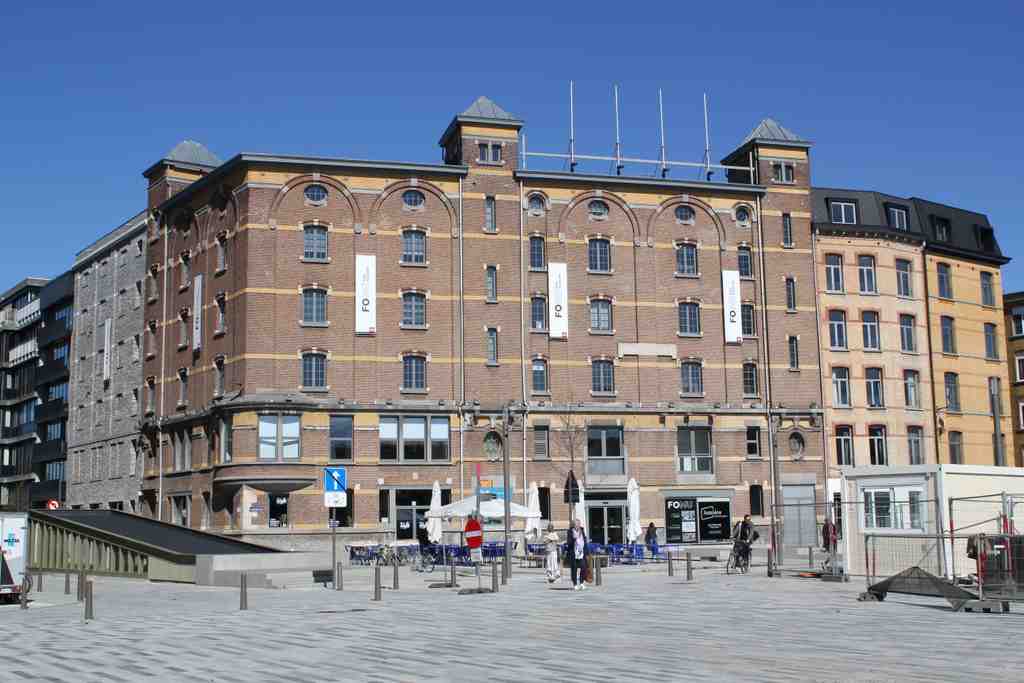
Take a look straight ahead for a tall, proud brick building with arched windows and vertical white banners marked “FOMU”-this is the Antwerp Museum of Photography, housed right…Mehr lesenWeniger anzeigen
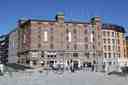
Take a look straight ahead for a tall, proud brick building with arched windows and vertical white banners marked “FOMU”-this is the Antwerp Museum of Photography, housed right across from the Water Gate and hard to miss as you stroll the spacious square. Now, gather ‘round-both real and imaginary camera bugs-as I snap you into the marvelous story of FOMU! Picture the year 1911: a massive warehouse called ‘Vlaanderen’ rises from the Antwerp docks, all brick on the outside but boasting an iron-and-concrete skeleton on the inside, thanks to the revolutionary Hennebique system. Imagine the sounds of carts clattering, dockworkers shouting, and ships unloading into this very building. Fast-forward: the 1960s. The old docks get filled in, and our warehouse no longer has a cargo to cradle. At the same time, over in Deurne, a special exhibition, ‘125 Years of Photography,’ is drawing crowds-so many folks in bell-bottoms and miniskirts craning for a better glimpse of antique cameras and mysterious black-and-white images. The museum curators, along with some real photography fanatics like Karel Sano and Dr. Roosens, become obsessed: why stop at just one exhibition? Why not create a whole museum dedicated to photography? You know, they say a picture is worth a thousand words, but these folks thought it was worth a few million museum visits, too! After years of hustle, paperwork, and pleading (probably with the occasional shake of the fist and wave of a photo print), the province of Antwerp gives them their wish. In 1986, this warehouse transforms-almost magically-into FOMU, making it Antwerp’s official temple for everything photographic, from old daguerreotypes to the latest digital masterpieces. The vaults fill up fast. Today, FOMU’s collection is jaw-dropping: around three million items! I’d say it’s the largest selfie collection in Belgium, if only cameras back then could take selfies! The museum isn’t just about images, though-the collection includes over 23,000 pieces of camera equipment. From bizarre early contraptions that look like something out of a mad scientist’s lab to the stylish classics everyone wishes their grandparents had stashed away, you’ll find it all here. There’s even a special connection to Agfa-Gevaert, the legendary Belgian photographic company, whose archives and treasures now live within these walls. FOMU loves to mix things up. Each visit means brand-new exhibitions showcasing everything from iconic international artists to rising Belgian stars, whether their focus is the gritty, the glamorous, or the goofy. Want to see the work of Ai Weiwei, August Sander, or even the first non-binary artist exhibited here in 2018? You’re in the right place. Of course, all photographic exploration makes people hungry-for knowledge and for snacks. You’ll find a museum café buzzing with chitchat, a shop filled with books that could tip your bookshelf, and a library holding more than 43,000 volumes, from ancient tomes on early shutterbugs to the hottest contemporary releases. The library even underwent a renovation in 2018-more space, better access, and, hopefully, fewer complaints about people hogging all the best photo books! But wait, there’s a twist in the tale: the museum's own cinema, once known as Cinema Zuid, became Cinema Lumière in 2019, showing everything from cutting-edge films to classics, sometimes in perfect harmony with the exhibitions next door. Don’t leave without pondering the building’s biggest innovation: the Lieven Gevaert Tower. Built in 2016 and named after the legendary Belgian photo industrialist, it’s the first climate-neutral depot of its kind in Europe-an eco-fortress for fragile negatives, precious prints, and those cameras that look like they’d be better at making coffee than taking photos. So, whether you’re here to admire gallery walls packed with iconic images, nerd out on centuries-old cameras, or just relax with a coffee and watch an arty film, FOMU has a little something for everyone. Alright, say cheese… actually, hold that smile! We’re not done yet-ready for the next stop? Exploring the realm of the cinema lumière, buildings or the collection? Feel free to consult the chat section for additional information.
Eigene Seite öffnen →Directly in front of you, you’ll spot Lambermontplaats-a wide, octagonal square lined with elegant historic façades in creamy white and brick, and you’ll know you’re in the right…Mehr lesenWeniger anzeigen
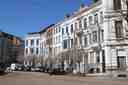
Directly in front of you, you’ll spot Lambermontplaats-a wide, octagonal square lined with elegant historic façades in creamy white and brick, and you’ll know you’re in the right place when you see a ring of beautiful townhouses and the cobbled, open plaza with a striking feeling of history. As you stand here on Lambermontplaats, close your eyes for a moment and imagine carriages rattling over the cobblestones and elegant ladies in long dresses strolling beneath budding blossoms, back at the turn of the 20th century. This spot is more than just a pretty face with its rows of grand, neoclassical and eclectic mansions; it’s a whispering time capsule of Antwerp’s ambitions and dramatic history! Long ago, back in 1875, this area was simply a stretch of the Volksstraat. But as the city grew, plans shifted and new stories were written into these very stones. Picture the excitement in 1885, when this very square became a carnival and showcase for the World’s Fair, full of international wonders and wide-eyed visitors. After the fair packed up, the land was carved up and built upon, until, between 1900 and 1914, the stately homes you see now began to appear, each one distinct, each one with tales to tell. Peek around and you’ll notice the diverse architecture-not just houses, but history you can touch. Some are so special they’re officially protected as city landmarks, like the house at Lambermontplaats 12-13, once home to a renowned Antwerp architect. Over the years, some buildings have lost their original neoclassical faces in the quest for modern living, but the square’s charm is resilient. But the true heart of Lambermontplaats lies at its core: the Lambermont Monument, unveiled in 1912 with much royal fanfare. Designed like a stone boat in a curved basin-a bit of aquatic drama in the middle of the city-it’s a tribute to Baron Lambermont, the man who freed the Scheldt River from hefty tolls and opened Antwerp’s gateway to the world. Look up at the bronze figures: a woman stretching her arms like she's welcoming progress; a man leaping over a chest, his every muscle straining for prosperity and trade; a crouched figure by a gear-industry, ready to spring. On the monument’s flanks, you’ll meet symbols of science, nature, and the city’s wildest hopes. So next time someone says history is dry, point to Lambermontplaats and say, “Not in Antwerp-it’s got ships, statues, and stories at every turn.”
Eigene Seite öffnen →To spot the Citadel, look straight ahead for an old fortress layout-picture a huge five-pointed star with thick walls, surrounded by grassy open space where the city blends into…Mehr lesenWeniger anzeigen
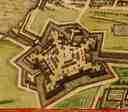
To spot the Citadel, look straight ahead for an old fortress layout-picture a huge five-pointed star with thick walls, surrounded by grassy open space where the city blends into history. Imagine it’s the late 1500s, and you’re walking where the air is tense with the smell of gunpowder and the echo of marching boots. The Citadel of Antwerp-also called the Zuidkasteel or Zuiderkasteel-wasn’t just for decoration. It was built by order of the Duke of Alva, a man so feared he probably made even the shadows shiver. After a wild spree called the Beeldenstorm swept the Low Countries, everyone was on edge. The Duke charged an Italian architect, Francesco Paciotto, with drawing up plans for a fortress that could crush any hint of rebellion. When Paciotto packed his bags, Bartolomeo Campi, another Italian, stepped in, adding his own twist to the design-a five-sided, star-shaped stronghold with mighty bastions at every point, each one proudly sporting a name like Hernando, Toledo, Pacietto, Alva, and Duc. Inside, it was a world unto itself: barracks where soldiers squabbled over cards, powder magazines stacked high with the future of Antwerp-sometimes literally, if the wind caught the wrong spark-and a chapel where maybe even the toughest guard muttered a quick prayer. The Duke must have had a sense of humor; he put up a giant bronze statue of himself, but after he left, the locals wasted no time tearing it down. Then came one of the darkest moments in Antwerp’s story. In 1576, the Citadel became the launching pad for the Spanish Fury, an explosion of chaos led by a man named Sancho d’Avila. During the rampage, the city rang with cries and cannon fire. The following year, fiery citizens took the initiative, chased out the occupying soldiers, and even started knocking down the hated walls. They weren’t kidding around-bastions Hernando and Duca came tumbling down as if they were just tired old stones. But the Citadel just wouldn’t stay gone. It was rebuilt again and again-surviving attempted assassinations, sieges, and even a case of “revolutionary deja vu” during the Belgian Revolution, when it was battered by Dutch troops before finally surrendering to the French. By 1881, it was finally demolished, but if you dig around (and archaeologists certainly have, in 2006, 2012, and 2020) you’ll discover chunks of ancient fortress hiding under today’s streets. The Citadel’s story doesn’t just live on in the ground. Its star-shaped outline is still printed on medals, the names of its bastions sitting proudly on monuments in the Netherlands. Not bad for a fortress that began as an instrument of fear and ended up famous. And all because someone thought a five-pointed star was just the right shape for keeping a city on its toes!
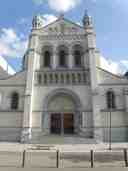
Eigene Seite öffnen →To spot the Hollandse Synagoge, look for a grand stone façade with two striking towers topped by rounded domes, and a huge rose window above an ornate arched entrance right in…Mehr lesenWeniger anzeigen
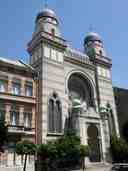
To spot the Hollandse Synagoge, look for a grand stone façade with two striking towers topped by rounded domes, and a huge rose window above an ornate arched entrance right in front of you. Welcome to the Hollandse Synagoge, or as its official sign says, Synagogue Shomré Hadas. Imagine it’s 1893-this block used to be much quieter, but suddenly, this magnificent Moorish Revival building rises, shimmering under the Antwerp sun. Picture sharp-dressed 19th-century families, many with roots in the Netherlands, standing proud on opening day as the doors swing wide. Joseph Hertogs, the architect, poured his imagination into those onion-domed towers, designing something even Indiana Jones might squint at, looking for hidden secrets. During World War II, a Nazi V1 flying bomb fell right here, shattering windows and hearts alike. But in 1958, with determination and optimism, the community restored every detail, including a rare pipe organ for a synagogue-just like in Budapest! Today, it’s mostly quiet except for the buzzing energy on Rosh Hashana, Yom Kippur, and Shabbat mornings. Even as Antwerp hustles around it, this protected monument stands strong, carrying tales of celebration, survival, and the sweet sound of history moving forward.
Eigene Seite öffnen →To spot the Church of St. Michael and St. Peter, look for an imposing pale stone facade with grand arched windows and an ornate set of wooden doors at the top of a wide staircase,…Mehr lesenWeniger anzeigen
To spot the Church of St. Michael and St. Peter, look for an imposing pale stone facade with grand arched windows and an ornate set of wooden doors at the top of a wide staircase, flanked by two slim towers-it's right in front of you on Amerikalei. Ah, you’ve made it to our final stop! Take in that impressive sight-this basilica towers above the street like a storybook castle plucked straight from a medieval legend. But get ready-the Church of St. Michael and St. Peter has enough drama, mystery, and architectural flair to make any blockbuster jealous! Imagine the 7th century here: dusty paths, distant bells, and a determined preacher named St. Amandus kicking up sand as he brings faith to Antwerp. His first church was dedicated to Peter and Paul, standing strong…until, one stormy day in 836, the distant *roar* of Viking warships crashed into town, leaving devastation behind. Out of the ashes of that chaos, a new church appeared with a powerful new patron: Michael, the dragon-slayer himself! Centuries spun by like pages in a novel. In 1124, the relentless St. Norbertus founded an abbey nearby, linking its fate to Michael’s church. Monks, prayers, and chants filled the air, until the French Revolution swept through in 1794 and-bam!-the abbey was partly flattened, left in ruins like an abandoned movie set. Fast-forward nearly a hundred years. Antwerp was stretching its arms, growing beyond its old walls. The city needed a new landmark, and here’s where things get a little bit epic. Enter the “Société Anonyme du Sud d'Anvers”-that’s a fancy way of saying a local development team-who generously offered up this ground. With a tip of the hat to history, they chose to bring back both St. Michael and St. Peter in the new name. Before this grand church sprouted from the ground, a temporary chapel served the community. But the parish dreamed bigger! Enter architect Frans Van Dijk (who also designed Antwerp’s Royal Museum of Fine Arts-clearly, he had a thing for the ‘wow’ factor). After a trip to France and Italy to sniff out some architectural inspiration, Van Dijk and the passionate parish priest, Hendrik Kintsschots, decided: “Why not build a basilica in a bold mix of Romanesque and Byzantine styles?” And if you think raising money for your kid’s bake sale is hard, imagine funding a church of this size! State, city, devoted parishioners chipped in, and the priest’s own brother heroically covered a huge chunk-talk about keeping it in the family. By 1897, church bells rang as the cardinal of Mechelen himself blessed this site. But inside? The decorating marathon had only just begun. Years passed as artists and craftsmen slowly brought the interior to life, always following the original vision. And what a vision! Step inside and sunlight pours through lofty windows, glinting off columns of Swedish red granite and green stone from the Vosges. Vivid mosaics glitter in the choir and chapels, crafted in Venice and designed by Antwerp’s own Henry Redig. Look for Christ on his throne, apostles gathered around-almost like they’re ready for their own group selfie. Just above you, the round gallery atop the 70-meter tower was inspired by Italian campaniles, with its pine-cone shaped roof, and on the front, there’s a striking “Majestas Domini” tympanum by Jan Gerrits: Christ holds the “Book of Life,” surrounded by an eagle, bull, lion, and angel-no, not a new superhero team, but the symbols of the four evangelists. Imagine whispers in confessionals built right into the side aisles, or the solid marble pulpit resting atop two blue marble lions. Don’t miss the elaborate brass “Way of the Cross,” or dazzling mosaics of St. Michael and St. Peter standing guard over entrances. Even the tabernacle sparkles with rock crystal and gold, proving Antwerp knows how to do “fancy” just right. This church stands not just as stone and glass, but as a patchwork of the city’s brightest hopes, worst disasters, and most creative talents. Standing here, you’re connected to every builder, dreamer, and believer who shaped Antwerp’s wild, wonderful soul. Thanks for joining me, and-just between us-don’t pick a fight with St. Michael. He’s got a thing for dragons!
Eigene Seite öffnen →
Häufig gestellte Fragen
Wie starte ich die Tour?
Laden Sie nach dem Kauf die AudaTours-App herunter und geben Sie Ihren Einlösecode ein. Die Tour ist sofort startbereit – tippen Sie einfach auf „Play“ und folgen Sie der GPS-geführten Route.
Benötige ich während der Tour Internet?
Nein! Laden Sie die Tour vor dem Start herunter und genießen Sie sie vollständig offline. Nur die Chat-Funktion benötigt Internet. Wir empfehlen den Download über WLAN, um mobiles Datenvolumen zu sparen.
Handelt es sich um eine geführte Gruppentour?
Nein – dies ist ein selbstgeführter Audioguide. Sie erkunden unabhängig in Ihrem eigenen Tempo, wobei die Audioerzählung über Ihr Telefon abgespielt wird. Kein Reiseleiter, keine Gruppe, kein Zeitplan.
Wie lange dauert die Tour?
Die meisten Touren dauern 60–90 Minuten, aber Sie kontrollieren das Tempo vollständig. Pausieren Sie, überspringen Sie Stopps oder machen Sie Pausen, wann immer Sie wollen.
Was, wenn ich die Tour heute nicht beenden kann?
Kein Problem! Touren haben lebenslangen Zugriff. Pausieren Sie und setzen Sie sie fort, wann immer Sie möchten – morgen, nächste Woche oder nächstes Jahr. Ihr Fortschritt wird gespeichert.
Welche Sprachen sind verfügbar?
Alle Touren sind in über 50 Sprachen verfügbar. Wählen Sie Ihre bevorzugte Sprache beim Einlösen Ihres Codes. Hinweis: Die Sprache kann nach der Tour-Generierung nicht mehr geändert werden.
Wo greife ich nach dem Kauf auf die Tour zu?
Laden Sie die kostenlose AudaTours-App aus dem App Store oder von Google Play herunter. Geben Sie Ihren Einlösecode (per E-Mail gesendet) ein, und die Tour erscheint in Ihrer Bibliothek, bereit zum Download und Start.
Wenn Ihnen die Tour nicht gefällt, erstatten wir Ihnen den Kaufpreis. Kontaktieren Sie uns unter [email protected]
Sicher bezahlen mit 


