
Melbourne Audio-Tour: Erbe und Harmonie in East Melbourne
Eine einzelne Sirene am Melbourne Cricket Ground ließ einst 100.000 Herzen erstarren und hallte durch die alten Bäume des Yarra Parks. Unter Melbournes Sportlegenden und hellen Stadionlichtern pulsieren Geschichten von Rebellion, Ruhm und verborgenen Traditionen durch die Adern der Stadt. Begeben Sie sich auf eine selbstgeführte Audio-Tour durch gewundene Parkwege und geschichtsträchtige Stadien und entdecken Sie lokale Geheimnisse, die viele unbemerkt passieren. Welcher verzweifelte Skandal hätte den Ruf des MCG in seiner goldenen Ära beinahe zerstört? Wer hinterließ eine mysteriöse Narbe im Yarra Park, lange bevor der erste Fußball getreten wurde? Warum strömten Tausende in das Australian Sports Museum, um einen letzten Blick zu erhaschen, bevor es 2003 schloss? Bewegen Sie sich von üppigem Grünland zu heiligen Stätten und hinter Museumsmauern, die von Sieg und Kontroverse leben. Jeder Schritt enthüllt Drama und Entdeckung. Melbourne wird nie wieder dasselbe aussehen. Das Herz von Melbourne schlägt – drücken Sie auf Play, um seinen unerzählten Geschichten nachzujagen.
Tourvorschau
Über diese Tour
- scheduleDauer 40–60 minsEigenes Tempo
- straighten4.0 km FußwegDem geführten Pfad folgen
- location_onStandortMelbourne, Australien
- wifi_offFunktioniert offlineEinmal herunterladen, überall nutzen
- all_inclusiveLebenslanger ZugriffJederzeit wiederholen, für immer
- location_onStartet bei Yarra Park
Stopps auf dieser Tour
As you walk along, the Melbourne Cricket Ground (MCG) will be hard to miss. Look to your left and you'll see an enormous oval structure with tall light towers and a roofline that…Mehr lesenWeniger anzeigen
As you walk along, the Melbourne Cricket Ground (MCG) will be hard to miss. Look to your left and you'll see an enormous oval structure with tall light towers and a roofline that just speaks of grand sporting events. The exterior is a blend of modern architecture with sweeping lines and vast expanses of glass and steel. It's got this unique logo with "MCG" prominently displayed, which you can spot easily. Now, let me tell you more about this iconic place in a fun way: Welcome to the legendary Melbourne Cricket Ground, affectionately known as “The ’G”! It's not just a stadium, but a colossal arena where history-both sporting and cultural-has been made countless times. Opening its doors in 1853, this place is like the great-grandparent of all stadiums. Imagine a venue so beloved that it's the largest in the Southern Hemisphere, the second-largest cricket venue in the world, and it can fit nearly 100,000 fans. Just think of the ground-shaking roars! It’s served as the Olympic stadium in 1956, Commonwealth Games venue in 2006, and hosted the finals of not one, but two Cricket World Cups-1992 and 2015. That’s a lot of sports memorabilia, right? This ground isn’t just for cricket either. It’s the beating heart of Australian Rules Football, holding the annual AFL Grand Final, which is nothing short of a national festival. The MCG has also seen thrilling rugby matches, dazzling concerts, and even hosted a record-setting evangelistic crusade by Billy Graham in 1959 where a jaw-dropping 143,750 people attended. The MCG has been labeled "a shrine, a citadel, a landmark, a totem" by journalist Greg Baum. And if you listen closely, you might still hear echoes of those first historic cricket matches played between Australia and England in the late 1800s. Oh, and don’t forget to check out the Australian Sports Museum while you’re here. It’s packed with sports treasures and tales that’ll make any sports enthusiast’s heart race. So, enjoy standing in the footpaths of legends, in a venue that's as versatile as it is venerable! Yearning to grasp further insights on the early history, stadium development or the cricket? Dive into the chat section below and ask away.
Eigene Seite öffnen →As you continue your walk, keep an eye to your right. You'll soon spot a modern-looking building with large glass windows and a prominent sign that used to read "National Sports…Mehr lesenWeniger anzeigen
As you continue your walk, keep an eye to your right. You'll soon spot a modern-looking building with large glass windows and a prominent sign that used to read "National Sports Museum" in bright letters. It's positioned right underneath the sleek and impressive Olympic Stand, Gate 3 of the Melbourne Cricket Ground (MCG). You can't miss it! Now, let's dive into the fun stuff about this landmark! The Australian Sports Museum, formerly known as the National Sports Museum, is a treasure trove dedicated to celebrating Australia's rich sports history. This museum isn't just about cricket and Australian rules football-though you'll find plenty on those too! You'll also discover fascinating exhibits on the Summer and Winter Olympic Games, tennis, rugby league and union, soccer, basketball, boxing, netball, and yes, even horse racing. One of the coolest parts of the museum is the Australian Sports Hall of Fame, where legends of various sports are immortalized. Plus, the adjoining Melbourne Cricket Club (MCC) Museum showcases the history of the prestigious MCC. Interesting tidbit: on October 6, 2010, the Australian Racing Museum joined the fold, making room for horse racing exhibits to stand proudly alongside other iconic sports. After a significant redevelopment, thanks to a $17.1 million facelift (including a cool $5 million from the state government), this gem of a museum reopened in February 2020 with its new name. Before it transformed into the Australian Sports Museum, the space was home to the Australian Gallery of Sport and Olympic Museum, which opened in 1986 but closed its doors in 2003. But guess what? In just its final week before closing, over 35,000 people visited, proving just how beloved this spot was and continues to be. Fancy stepping inside? Let's head in and explore the sports magic waiting for us!
Eigene Seite öffnen →


12 weitere Stationen anzeigenWeniger Stationen anzeigenexpand_moreexpand_less
As you're walking, keep an eye out for a striking modern building with a large, prominent sign that reads "NATIONAL SPORTS MUSEUM" in bold letters. This structure is defined by…Mehr lesenWeniger anzeigen
As you're walking, keep an eye out for a striking modern building with a large, prominent sign that reads "NATIONAL SPORTS MUSEUM" in bold letters. This structure is defined by its steel framework and large glass windows, which give it a contemporary and inviting look. You'll notice pillars supporting the overhang above the entrance, and large banners or graphics depicting various sports figures on either side of the building. The sign for Gate 3 is also a great indicator that you're at the right spot. Now, let me whisk you away into the world of horse racing! The Australian Racing Museum is a treasure trove of all things horse racing! Imagine stepping into a place dedicated to the thrilling world of Thoroughbred horses, jockeys, and trainers. This museum was originally set up at the Caulfield Racecourse in 1981 but closed on 30 August 2003. It then moved to the bustling Federation Square on Flinders Street. Here, you'll find fascinating exhibits showcasing the rich history and culture of Australian horse racing. From legendary racehorses to iconic jockeys and trainers, it's a tribute to the sport that has captured the hearts of many Australians. So, whether you're a die-hard racing fan or just curious about the sport, this museum offers a galloping good time!
Eigene Seite öffnen →As you approach Fitzroy Gardens, you'll notice lush greenery on your left. The well-manicured lawns and tree-lined pathways are hard to miss. Look for the grand trees arching over…Mehr lesenWeniger anzeigen
As you approach Fitzroy Gardens, you'll notice lush greenery on your left. The well-manicured lawns and tree-lined pathways are hard to miss. Look for the grand trees arching over the path and the verdant, open spaces dotted with various species of beautiful trees and plants. The towering palm trees and historical buildings peeking through the foliage will guide you towards one of Melbourne’s prized Victorian-era gardens. Now, let me tell you about the Fitzroy Gardens in a fun way! The Fitzroy Gardens sprawls over 26 hectares, which is just about as big as 48 football fields! Nestled in the southeastern edge of Melbourne's buzzing central business district, the gardens are bordered by Clarendon Street, Albert Street, Lansdowne Street, and Wellington Parade-think of them as guardians of your leafy retreat. One of the oldest and most stunning Victorian-era landscaped gardens in Australia, Fitzroy Gardens earned Melbourne its nickname "the garden city of Australia." The gardens boast an enchanted mix of wonders, including an ornamental lake, a historic scarred tree, a visitor information center and café, a vibrant conservatory, and even Cooks’ Cottage, the actual dwelling of Captain James Cook’s parents, shipped all the way from England in the 1930s. Imagine walking down tree-lined avenues where paths are shaded perfectly, all thanks to the intricate design by Clement Hodgkinson and planting by James Sinclair. Ever wondered where even fairies live? Well, here you’ll find the charming "Fairies’ Tree," among other magical attractions like a model Tudor village, a band pavilion, a picturesque rotunda, numerous fountains, and compelling sculptures. Originally quite a swampy plot, the gardens were transformed by landscaping the creek with ferns and 130 willows. Over time, the locals used the creek water for irrigation, but it improved significantly when sewerage mains were introduced in the early 1900s. The garden’s evolution didn’t stop there! In the 1880s and 90s, quick-growing blue gums were replaced by more diverse plants, creating space for lush lawns and ornamental flowerbeds. Sub-tropical plants became stars of the show along new paths like the Grey Street Walk. Fast forward to the 1930s and 40s: the gardens welcomed the Conservatory and Cooks' Cottage, and in 2014, an area previously used for depot activities transformed into reclaimed garden space with a stormwater harvesting system, enhancing environmental sustainability. Fitzroy Gardens hold historical, aesthetic, architectural, scientific (horticultural), and social significance. Part of Melbourne’s ring of public reserves, these gardens offered 19th-century city dwellers a green haven-and they still do today! As you stroll through, imagine the stories these trees and paths could tell, each shade-giving tree no accident but a meticulously planted and cared-for gem in Melbourne’s rich urban tapestry. Enjoy your leafy adventure! Interested in a deeper dive into the horticulture, heritage listing or the wildlife? Join me in the chat section for an insightful conversation.
Eigene Seite öffnen →As you're walking, keep an eye out to your right for a charming, old-world cottage made of red brick with ivy climbing the walls. It's got a steep, shingled roof and quaint little…Mehr lesenWeniger anzeigen
As you're walking, keep an eye out to your right for a charming, old-world cottage made of red brick with ivy climbing the walls. It's got a steep, shingled roof and quaint little windows. Oh, and there's a British flag waving proudly in front-you can't miss it! Now, welcome to Cooks' Cottage! Also known as Captain Cook's Cottage, this cozy little house was originally constructed in 1755 in the English village of Great Ayton, North Yorkshire. Captain James Cook's parents, James and Grace Cook, built this cottage, and while it's a point of debate if Cook lived here, he definitely visited. Here's a fun twist-the cottage wasn't always in Melbourne. In 1934, it was brought over brick by brick by Sir Russell Grimwade, an Australian philanthropist, as a present to Victoria for Melbourne’s centenary. It arrived in 253 cases and 40 barrels onboard the Port Dunedin-imagine the packing job on that one! Inside, you'll find it styled to reflect the 18th century, complete with centuries-old antiques. Even the volunteer guides dress up in period attire. It's a bit like stepping back in time. The cottage is surrounded by a lovely English cottage garden which just adds to its old-timey charm. And get this-prominent Sydney radio presenter Mick Molloy once famously crashed here after a night of heavy drinking. That's one story for the ages! It also made a cameo in the movie "Any Questions for Ben?" in 2012. So take your time, soak in the history, and maybe even imagine what it might have been like back in the day. Enjoy!
Eigene Seite öffnen →As you approach the East Melbourne Cricket Ground, keep an eye on your left side. You'll be looking for an old-fashioned grandstand structure, distinguished by its wooden seating,…Mehr lesenWeniger anzeigen
As you approach the East Melbourne Cricket Ground, keep an eye on your left side. You'll be looking for an old-fashioned grandstand structure, distinguished by its wooden seating, white-painted picket fencing, and a shed-like building in the background. The stands have an open-roof design with support beams running along the roofline. Picture the kind of place where old-timey sports fans in top hats and tails might have cheered on their team! Now, let's go back in time to one of Melbourne’s sporting gems! The East Melbourne Cricket Ground was where sports magic happened from 1860 until 1921. Imagine the excitement as cricket bats smacked balls and crowds roared for Australian rules football. Highlights like the record-smashing Smokers v Non-Smokers cricket match, with the Non-Smokers scoring a whopping 803 runs, and the very first interstate representative football match with 10,000 spectators crammed in, created a tapestry of thrilling moments at this oval. Oh, but its charms weren't just limited to cricket and football. The quirky ground sloped down towards the railway, introducing a unique challenge for players, compounded by winds that seemed to have a mind of their own! Doesn’t this sound like the sports equivalent of playing Quidditch? Various football clubs made this ground their temporary home, including Essendon and North Melbourne, even though it sometimes felt like the sporting version of musical chairs. Essendon, for instance, traveled a fair mile to settle here and stayed until the ground’s closure. Unfortunately, the beautiful chaos came to an end with the growth of Melbourne’s transport system. In 1921, the land was annexed to house trains as part of Melbourne's rail network electrification. The East Melbourne Cricket Ground had hosted countless unforgettable sporting moments, from exhilarating victories to devastating losses, all wrapped up in an old-world charm that continues to echo in Melbourne's rich sporting history. Keep walking as we move on to our next historic spot!
Eigene Seite öffnen →As you're walking, keep an eye slightly to your right, and you won't miss it-St Patrick's Cathedral, Melbourne, with its towering spires touching the sky. This majestic cathedral…Mehr lesenWeniger anzeigen
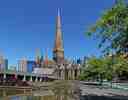
As you're walking, keep an eye slightly to your right, and you won't miss it-St Patrick's Cathedral, Melbourne, with its towering spires touching the sky. This majestic cathedral stands proudly, its intricate Gothic Revival architecture making it a standout against the modern cityscape. You'll see a large central spire flanked by two shorter ones and an impressive façade that draws your gaze upward. The lush greenery around it adds to its tranquil aura. Now let's dive into the fun part! The Cathedral Church and Minor Basilica of Saint Patrick, a.k.a. St Patrick's Cathedral, is the central hub for the Roman Catholic Archdiocese in Melbourne. If cathedrals were celebrities, this place would be the rockstar of churches-designated as a minor basilica by Pope Paul VI in 1974. Pope John Paul II even graced it with a visit in 1986. This basilica is laid out on a classic east-west axis, with the altar resting at the eastern end, symbolic of the resurrection of Christ. The architecture is based on a Latin cross layout, complete with a nave, side aisles, and a sanctuary featuring seven chapels. Think of it as the 19th-century version of a modern architectural mega-project. The Victorian Heritage Register couldn’t resist listing it in 1999-it’s just too iconic. And get this: Melbourne locals, mostly Irish back in the day, dedicated it to St Patrick, Ireland’s patron saint. Construction started in 1851 but was a bit of a slow burn, speeding up only when funds were available. Building a massive bluestone Gothic giant isn't cheap, you know. Designed by the talented William Wardell, St Patrick's flaunts Geometric Decorated Gothic style, most evident in its grand west window. The cathedral even has a chevet of radiating chapels in the French style but keeps it quintessentially English in its late 13th-century design ethos. It’s a stunning blend of cultural and architectural history wrapped in one impressive package. So, as you stand here, take a moment to soak in the grandeur and the centuries of history etched into every stone. Fun, awe-inspiring, and a true architectural gem-St Patrick’s Cathedral has it all!
Eigene Seite öffnen →As you approach stop number 11, keep an eye to your right! The Lutheran Trinity Church should be coming into view. Look for the striking bluestone structure with distinct…Mehr lesenWeniger anzeigen
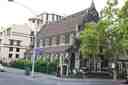
As you approach stop number 11, keep an eye to your right! The Lutheran Trinity Church should be coming into view. Look for the striking bluestone structure with distinct architectural details. The front facade features several pointed arches and a pitched slate roof. It's nestled among some greenery and set back a bit from the sidewalk. You’ll also notice a green iron fence surrounding the church grounds. Look out for the Parliament Place sign-a clue that you’re in the right spot. Now, let’s dive into this gem’s history! The Lutheran Trinity Church in East Melbourne, built in 1874, is a heritage-listed marvel. It was listed on the Victorian Heritage Register on 9 October 1974. Fun fact: its services are mostly in German! It sits strategically on Parliament Place, just south of St Patrick's Cathedral and east of Parliament House. The church we see today replaced the original structure from 1854. Back then, an acre of land was bought in 1853, and through generous donations, a grant, and a bank loan, the first church was completed in 1854. As the congregation grew, they decided to upgrade, and by 1874, this beautiful bluestone basilica with a pitched slate roof stood tall and proud. Architect Carl Blackmann offered his services (for free!) and designed the church as we see it now. With its five pointed arches supported by columns with foliated capitals, the interior would almost make you say “Guten Tag!” to the architecture itself. The church, hall, manse, and surrounding land were all heritage-listed in 1974, a testament to the site's continuous use since 1853. Interesting nugget: This church has a rich interior with timber ceilings and Ferguson & Urie stained glass windows. The pipe organ inside, dedicated in 1875, still retains its original charm despite a couple of rebuilds. Whether you're a history buff or just here to admire the architecture, the Lutheran Trinity Church is a splendid stop on our journey. Enjoy the tranquil presence of this historical marvel!
Eigene Seite öffnen →As you walk along Spring Street, look to your right. You'll notice a grand, light brown stone building that stands out with its symmetrical and ornate Renaissance Revival…Mehr lesenWeniger anzeigen
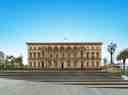
As you walk along Spring Street, look to your right. You'll notice a grand, light brown stone building that stands out with its symmetrical and ornate Renaissance Revival architecture. The building has a central section with large arched windows, flanked by wings with rectangular windows, and there's a series of grand steps leading up to its entrance. Cast iron lamps add a touch of old-world charm to the setting. Spot the flag flying high above the central section - that's your clue! Welcome to the Old Treasury Building! Constructed between 1858 and 1862, this beauty was designed by J.J. Clark, who was just 19 years old at the time. It’s like he finished his architecture homework on a grand scale! The building's grand Renaissance Revival style was chosen to reflect the wealth and optimism of Melbourne during the Victorian gold rush. Originally, its basement vaults were intended to house gold from the gold rush. Imagine all those glittering gold bars stacked up down there! However, by the time the building was finished, the rush was over, and the vaults became storage for government documents. The offices upstairs served high-ranking officials, including the Chief Secretary and the Treasurer. Now, it’s a museum dedicated to Melbourne’s history. Stroll inside, and you might come across J.J. Clark’s original drawings! This building has witnessed many significant events, from the comings and goings of Governors to Melbourne's stint as Australia’s temporary capital city. The next time you walk by, just remember: this building isn’t just old - it’s gold! Well, metaphorically speaking, unless those vaults are hiding some secrets. Enjoy exploring!
Eigene Seite öffnen →Alright, walk straight ahead and on your right, you’ll spot Spring Street. The building you're looking at, with its imposing columns and grand Victorian architecture, is…Mehr lesenWeniger anzeigen
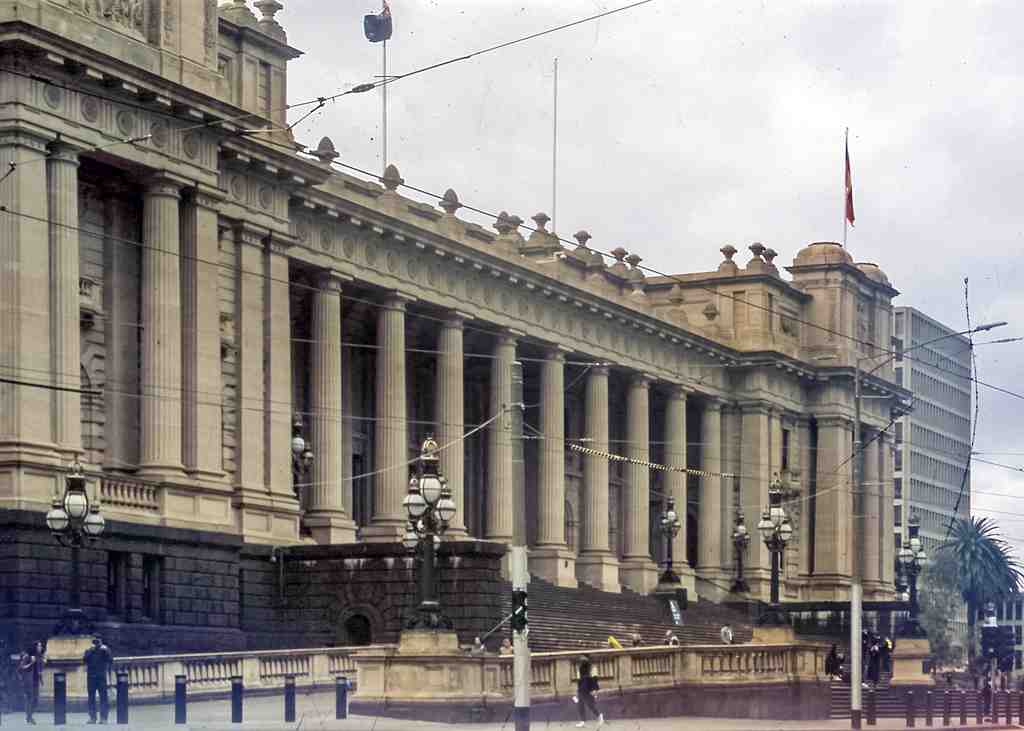
Alright, walk straight ahead and on your right, you’ll spot Spring Street. The building you're looking at, with its imposing columns and grand Victorian architecture, is Parliament House. This place has quite the historical flair! You’ll know you’re there when you see the grand stairway leading up to the entrance, flanked by lush greenery and lined with ornate lamps. Now, let me tell you a fun tidbit about Spring Street! It's not just any street - it's like the brain of Victoria’s government. You know how fancy dresses make an impression? Spring Street does that with its Renaissance Revival architecture. Think of it as Melbourne's VIP street that's invited all the cool cultural institutions to hang out. Parliament House, the Old Treasury Building, the Windsor Hotel (charmingly nicknamed the Duchess of Spring Street), and the Princess Theatre all add to its charm. One of the coolest things about this street is its name mystery! Some say it's named after Baron Thomas Spring Rice, who was Chancellor of the Exchequer under Lord Melbourne. Others think it's named because the golden wattles were super pretty when Richard Bourke visited. But the simplest explanation might just be the winner - it’s a common street name and springs (like water, not the season) are pretty significant! Spring Street runs from Flinders Street in the south to Victoria Street and the Carlton Gardens in the north. It’s got a whole host of architecturally notable buildings and institutions along its length, mixing old and new like a pro. Trams love this street too! Routes 35, 48, 86, and 96 all have their tracks running along part or all of its length. So keep your eyes peeled for colorful trams and perhaps even a horse-drawn carriage as you explore! Alright, let's continue your adventure! Parliament House, here we come!
Eigene Seite öffnen →Alright, as you're strolling down Bourke Street, keep an eye out to your right. You'll spot the Parliament House of Victoria standing grandly on Spring Street. The building…Mehr lesenWeniger anzeigen
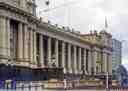
Alright, as you're strolling down Bourke Street, keep an eye out to your right. You'll spot the Parliament House of Victoria standing grandly on Spring Street. The building dominates the view with its impressive colonnaded front and its stately presence at the top of the hill. You’ll notice a large staircase leading up to this majestic structure, flanked by imposing columns and adorned with statues. Two flags fly proudly above the building, waving down at you from high atop the structure. Parliament House is where the magic of the Parliament of Victoria happens. It's one of the eight parliaments in the Australian states and territories. Now, let's shine a light on a bit of history - construction kicked off in 1855, but it’s never been fully completed. The biggest omission? A planned dome that never saw the light of day, making it one of Melbourne’s most famous unbuilt features! From 1901 to 1927, this fine building even took on the role of the meeting place for the Parliament of Australia, as Melbourne played stand-in for the then-unfinished national capital, Canberra. It sure has a rich heritage, so much so that it’s listed on the Victorian Heritage Register. Parliament House’s story begins with the Victorian gold rush, which brought in a lot of wealth and people, fuelling the call for greater democracy and a place to debate. Governor Charles La Trobe and Surveyor General Robert Hoddle played significant roles in selecting this very spot atop Bourke Street for Parliament. The choice wasn’t without its debates, but eventually, in 1854, Eastern Hill made the cut. The design history is quite the soap opera with many architects and designs coming and going. The final grand design by Knight & Kerr, crafted in 1855, boasts a Palladian style, with some reworking leading to the grand colonnaded structure you see today. Construction took place in stages due to the sheer size and cost involved. By November 1856, the Victorian Government held its first session in these impressive new chambers. Subsequent phases added the Library and Eastern Wing, which completed in 1860 after much debate over the choice of stone, ultimately settling on freestone from Bacchus Marsh. So, take a moment to soak in the history and magnum opus of Victorian architecture as you stand before Parliament House! Curious about the background, construction and completion or the temporary home of federal parliament? Don't hesitate to reach out in the chat section for additional details.
Eigene Seite öffnen →


Bewertungen
Häufig gestellte Fragen
Wie starte ich die Tour?
Laden Sie nach dem Kauf die AudaTours-App herunter und geben Sie Ihren Einlösecode ein. Die Tour ist sofort startbereit – tippen Sie einfach auf „Play“ und folgen Sie der GPS-geführten Route.
Benötige ich während der Tour Internet?
Nein! Laden Sie die Tour vor dem Start herunter und genießen Sie sie vollständig offline. Nur die Chat-Funktion benötigt Internet. Wir empfehlen den Download über WLAN, um mobiles Datenvolumen zu sparen.
Handelt es sich um eine geführte Gruppentour?
Nein – dies ist ein selbstgeführter Audioguide. Sie erkunden unabhängig in Ihrem eigenen Tempo, wobei die Audioerzählung über Ihr Telefon abgespielt wird. Kein Reiseleiter, keine Gruppe, kein Zeitplan.
Wie lange dauert die Tour?
Die meisten Touren dauern 60–90 Minuten, aber Sie kontrollieren das Tempo vollständig. Pausieren Sie, überspringen Sie Stopps oder machen Sie Pausen, wann immer Sie wollen.
Was, wenn ich die Tour heute nicht beenden kann?
Kein Problem! Touren haben lebenslangen Zugriff. Pausieren Sie und setzen Sie sie fort, wann immer Sie möchten – morgen, nächste Woche oder nächstes Jahr. Ihr Fortschritt wird gespeichert.
Welche Sprachen sind verfügbar?
Alle Touren sind in über 50 Sprachen verfügbar. Wählen Sie Ihre bevorzugte Sprache beim Einlösen Ihres Codes. Hinweis: Die Sprache kann nach der Tour-Generierung nicht mehr geändert werden.
Wo greife ich nach dem Kauf auf die Tour zu?
Laden Sie die kostenlose AudaTours-App aus dem App Store oder von Google Play herunter. Geben Sie Ihren Einlösecode (per E-Mail gesendet) ein, und die Tour erscheint in Ihrer Bibliothek, bereit zum Download und Start.
Wenn Ihnen die Tour nicht gefällt, erstatten wir Ihnen den Kaufpreis. Kontaktieren Sie uns unter [email protected]
Sicher bezahlen mit 


