
Cairns Audio-Tour: Historische und moderne Symphonie der Stadt Cairns
Unter den sonnenverwöhnten Palmen von Cairns verbergen sich alte Geheimnisse hinter elegantem Mauerwerk und lebhaften Ladenfronten. Diese selbstgeführte Audiotour erschließt Ecken der Stadt, an denen viele einfach vorbeigehen, und enthüllt berüchtigte Skandale, erbitterte Rivalitäten und Träume, die aus den Ruinen von Zyklonen entstanden sind. Was löste im Zollhaus einen fieberhaften Skandal aus, der den Ruf der Stadt über Nacht bedrohte? Welches ungelöste Redaktionsgeheimnis bei The Cairns Post spukt noch immer durch die Korridore? Wie konnte eine gelb gestrichene Chinatown-Fassade über Jahrzehnte hinweg sowohl wegweisende Kaufleute als auch zwielichtige Gestalten beherbergen? Verfolgen Sie Cairns' verworrene Geschichten, während Sie sich von stattlichen Kolonialrelikten zu belebten Gassen bewegen, die von den Echos von Rebellion und Erneuerung schimmern. Spüren Sie, wie jeder Schritt Sie weiter von der Postkartenperfektion in packende Geschichten zieht, die nur wenige je hören. Bereit, den Schleier über Cairns' erstaunlichsten verborgenen Geschichten zu lüften? Treten Sie näher – die Wahrheit der Stadt wartet gleich hinter jeder Tür.
Tourvorschau
Über diese Tour
- scheduleDauer 40–60 minsEigenes Tempo
- straighten3.7 km FußwegDem geführten Pfad folgen
- location_onStandortCairns, Australien
- wifi_offFunktioniert offlineEinmal herunterladen, überall nutzen
- all_inclusiveLebenslanger ZugriffJederzeit wiederholen, für immer
- location_onStartet bei Zollhaus Cairns
Stopps auf dieser Tour
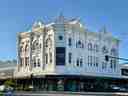
To spot the Cairns Customs House, look for a charming two-storeyed building with a combination of stucco and brickwork, complemented by its red tiled roof. You'll spot tall,…Mehr lesenWeniger anzeigen
To spot the Cairns Customs House, look for a charming two-storeyed building with a combination of stucco and brickwork, complemented by its red tiled roof. You'll spot tall, narrow windows accented with decorative detailing, and a prominent front entrance with arched doorways. Look for the palm trees flanking the entrance and a sign that reads "Cafe China." The picturesque building stands out against the modern structures around it. **Cairns Customs House:** Welcome to Cairns Customs House, a true relic of the past that now delights taste buds as a restaurant! Originally built between 1936 and 1937 by Watkins & Deal, this heritage-listed gem at 6A-8A Abbott Street has quite the story to tell. Designed by Robert Henry Bowen, this house was the third customs house to grace the site. The land has been a customs reserve since the port of Cairns first opened in 1876. The customs activities here expanded alongside the city's booming economy, supported by sugar, mining, maize, dairying, timber, and fruit growing industries. By the late 1930s, Cairns had become Queensland’s third-largest port! The current building was part of an interwar redevelopment boom that saw the construction of many new structures, revitalising the city after severe cyclones in 1920 and 1927. The ground floor housed offices, while upstairs, the sub-collector of customs enjoyed his residence. But by 1989, customs work shifted to a new location, and various state government departments occupied the building. Fast forward to today, the Customs House charmingly operates as Cafe China Noodle Bar, blending history with delectable cuisine as part of the Reef Hotel Casino complex. Who knew customs could taste so good? So, as you stand here, let the building’s storied past soak in and maybe indulge in a tasty treat!
Eigene Seite öffnen →Ahoy there, fearless explorer! You're now standing near The Cairns Post building. Look out for a prominent structure that likely features signage bearing the words "The Cairns…Mehr lesenWeniger anzeigen
Ahoy there, fearless explorer! You're now standing near The Cairns Post building. Look out for a prominent structure that likely features signage bearing the words "The Cairns Post." This is often a bustling place with people coming and going-so keep an eye out for any surrounding activity or delivery vans that may hint at a newspaper office. Now let's dive into some fun history about The Cairns Post! This major News Corporation newspaper has been keeping Cairns residents well-informed since it first hit the stands back in 1883. Imagine all the ink they've gone through! The paper covers everything from local events to world news, health, beauty, and even cars and lifestyle. Publishing every weekday, with a special edition known as The Weekend Post every Saturday, it's truly a cornerstone of Cairns' daily life. It all began with Frederick Thomas Wimble, an adventurous ink manufacturer who moved to Australia for his health. Cairns wasn't his first choice; he started in Melbourne and then Sydney before finally settling here. Wimble's initial foray into farming didn't quite pan out, but lucky for Cairns, he decided to dive into newspaper publishing instead. The paper saw many changes and a fair bit of drama-economic depressions, lost fortunes, and even horsewhippings! But through it all, the spirit of the publication persevered. Today's Cairns Post traces its lineage directly back to those early days, continuing to serve as a vital source of news and information for the Cairns community. Wandering around this historic site, you can almost feel the buzz of decades of news gathering and reporting. Now, onward to our next stop, intrepid adventurer!
Eigene Seite öffnen →As you approach stop number 3, the Cairns Chinatown Building, look to your right. You’ll spot a colorful, lively scene. The building stands out with its vibrant paint job: one…Mehr lesenWeniger anzeigen
As you approach stop number 3, the Cairns Chinatown Building, look to your right. You’ll spot a colorful, lively scene. The building stands out with its vibrant paint job: one shop is painted a cheerful yellow with a green trim, and another boasts a deep purple and blue façade with a sign reading "FISH TALES SILKS". The architectural design with the multiple gabled roof of differing heights reflects its heritage. Now, let’s dive into a little history! The Cairns Chinatown Building, a heritage-listed gem, resides at 99 Grafton Street. Built sometime between approximately 1892 and 1902, it’s one of the last remnants of the historic Cairns Chinatown. The building was constructed from handmade bricks and originally accommodated two shops. Back then, this area was bustling with Chinese activity. Fun fact: one of the pioneers of Chinese business in Cairns was Andrew Leon, who, along with 100 other Chinese businessmen, started a large-scale sugar cultivation operation. This enterprise, known as "Pioneer", opened with much fanfare in 1881. But Andrew’s story doesn’t stop there. He was a notable figure in the Cairns Chinese community, acting as an interpreter in court and helping preserve cultural connections. From housing merchants like Lee Yan Kee, who were among the first Chinese women to arrive directly from China, to the somewhat notorious use of the property for housing women working as prostitutes up until the 1960s, this place has a colorful and multifaceted history. So, take a moment to soak in the vibrant history and appreciate the stories hidden within these handcrafted brick walls!
Eigene Seite öffnen →

12 weitere Stationen anzeigenWeniger Stationen anzeigenexpand_moreexpand_less
As you’re strolling along Abbott Street, keep your eyes out for an elegant cream-colored building that clearly looks like it means business - the Cairns Court House Complex. It’s…Mehr lesenWeniger anzeigen
As you’re strolling along Abbott Street, keep your eyes out for an elegant cream-colored building that clearly looks like it means business - the Cairns Court House Complex. It’s on your right, and you’ll recognize it by its stately appearance, complete with a symmetrical, classical façade featuring columns and a decorative crest at the top. Now, let’s dive into its fascinating history. The Cairns Court House Complex is a heritage-listed site and was initially built between 1919 and 1921. Its counterpart, initially a public administration building, was constructed a bit later between 1934 and 1936. Interestingly, this 2-acre site has been reserved for police purposes since 1876! In fact, the primary courthouse here is the third in line, following versions that were - let’s face it - more of 'rustic charm' than sturdy architecture. The Art Gallery, which now calls this place home, opened its doors in 2020 and showcases a fantastic array of art, both historical and contemporary, from regional, national, and international artists. Art lovers, this one’s your spot! Picture the 1920s and '30s, when this city was booming again, transitioning from shanties and tents to substantial masonry constructions. Cairns was solidifying its status as the principal port of Far North Queensland post-World War I, and the building’s very structure echoed the government’s optimism for the city's growth. Think of all those bustling flapper-era folks, perhaps not quite jazzing it up, but definitely paving the way for modern Cairns. It's curious to think that long ago, this was just a port to serve gold miners in 1876! Who could have guessed it would grow to become such a significant hub? So there it is - a peek into Cairns' vibrant past and its energetic transformation through the ages!
Eigene Seite öffnen →Alright, get ready to spot a slice of history on your right! If you look ahead, you’ll see a grand, cream-colored building with a clock perched on top. This is the Bolands Centre.…Mehr lesenWeniger anzeigen
Alright, get ready to spot a slice of history on your right! If you look ahead, you’ll see a grand, cream-colored building with a clock perched on top. This is the Bolands Centre. The building has a distinctly charming, classical look with large arched windows and ornate details running along the edge of its roof. The name "Boland's" is unmissable, emblazoned at the center above the entrance and on the side facade. The Bolands Centre is a heritage-listed department store located at Lake Street, Cairns City, Cairns. Designed by Edward Gregory Waters and built in 1912, this magnificent structure was once home to a David Jones department store and a well-loved toy shop. Also known as Boland's Building or Boland's Departmental Store, this historic gem was added to the Queensland Heritage Register on April 7, 2006. Constructed from reinforced concrete, the Bolands Centre was erected in 1912-1913 for Michael Boland, an Irish immigrant who made his way to Australia in 1881, becoming a leading merchant in Cairns. This building was designed by Cairns architect Edward Gregory Waters and, for many years, stood as the tallest structure in the city. It’s a fantastic example of an early 20th-century department store and the last of its kind still standing in Cairns. Michael Boland's journey is a classic rags-to-riches story. Born in 1863 in Ireland, Boland moved to Dublin at age 15 to study business briefly before emigrating to Australia in 1879. His initial lodgings were in Melbourne, followed by a stint in Queanbeyan, New South Wales, where he gained experience as a grocer at his uncle's store. He arrived in Cairns in 1882, where he purchased a small plot on Lily Street and embarked on various economic ventures. Between 1882 and 1887, his ventures included clearing streets and establishing a hotel during the construction of the Cairns-to-Herberton railway line. These diverse undertakings provided him with the capital to return to Cairns in 1890 and establish a modest grocery shop on Abbott Street, which was then the commercial center of Cairns. In 1893, Boland faced significant business challenges due to a global recession and the closure of the National Bank of Queensland. Yet, Boland’s shrewd business sense saw him through the “store wars”-an intense competitive period-and in 1898, he moved his business to an allotment at the northeast corner of Lake and Spence Streets. This area eventually became known as "The Golden Block" for its concentration of prominent firms. Boland’s business grew steadily, adapting and expanding to meet the demands of a growing Cairns. Today, the Bolands Centre stands as a testament to Michael Boland’s entrepreneurial spirit, resilience, and the essential role his enterprise played in the development of Cairns. Isn’t it amazing how one building can tell such an expansive story? Alright, onward! Our next stop is the third landmark on this historic trail: The Cairns Post. Keep enjoying the walk!
Eigene Seite öffnen →You're approaching the Cairns City Council Chambers, now the City Library, and it's right there to your right! To help you spot it, look for a grand, white building adorned with…Mehr lesenWeniger anzeigen
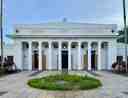
You're approaching the Cairns City Council Chambers, now the City Library, and it's right there to your right! To help you spot it, look for a grand, white building adorned with classical columns. It's quite a beauty, isn't it? The columns and the words "CAIRNS CITY COUNCIL" emblazoned at the top will give it away. Now, let’s take a fun trip back in time! The Cairns City Council Chambers, built in 1929-1930 by Alex McKenzie and designed by Hill & Taylor, was crafted during the golden era of the city's development. Imagine it-Cairns, flexing its architectural muscles and saying, "Look at me, I'm the principal port of Far North Queensland!" This reinforced concrete beauty stands proudly on a lush corner site, surrounded by parkland-a majestic sight that joined the Queensland Heritage Register on October 5, 1998. Once the epicenter of civic pride, the Cairns City Council Chambers has since transformed into the Cairns City Library, but its historic charm hasn't changed a bit! It all started back in October 1876 when Cairns was officially established as a port to support the Hodgkinson goldfields. Initially, Cairns struggled for trade with towns like Cooktown and Port Douglas until some sweet boosts came along: local sugar industry growth, mineral field discoveries in the Atherton Tablelands, and the announcement of the Cairns-to-Herberton railway terminus in 1885. Fast forward to the 1920s and 1930s, Cairns saw an unprecedented building frenzy. This includes the sturdy reinforced concrete structures-more solid than those old wooden buildings swept away by the cyclones. Talk about a makeover! In this era, classical detailing became all the rage, and the Cairns City Council Chambers was built to affirm the power and presence of government in the community. So, while you admire this grand facade, try to imagine the hustle and bustle of Cairns’ growth years, between war and peace, sugar and railways, and the boundless spirit of a city determined to establish itself as a regional powerhouse. And now, it's lending that same majestic atmosphere to a treasure trove of knowledge at the library. Quite the story, eh?
Eigene Seite öffnen →As you walk along The Esplanade, you'll see the Cairns War Memorial on your right. It's hard to miss! Look for a tall, elegant obelisk of granite and sandstone with a soldier…Mehr lesenWeniger anzeigen
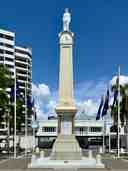
As you walk along The Esplanade, you'll see the Cairns War Memorial on your right. It's hard to miss! Look for a tall, elegant obelisk of granite and sandstone with a soldier (digger) statue perched right at the top, keeping a watchful eye over the area. On closer inspection, you'll notice a clock set into the upper part of the monument - a symbol of timeless tribute. Welcome to the Cairns War Memorial! Built in 1925 and gracing this location since 1972, this heritage-listed memorial has a wealth of history standing between the Esplanade and Trinity Bay near Florence Street. It’s a fine example of how communities commemorate significant events and honor those who served. The WWI monument, initially unveiled at the intersection of Abbott Street and Shields Street in 1926, commands attention with the noble figure of the soldier at its pinnacle. Accompanying the granite and sandstone obelisk are an 1887 naval gun, a 1940 field gun, and a memorial garden walkway adorned with plaques. These plaques honor conflicts and services beyond WWI, reflecting the ongoing collective memory of the city's military and emergency service history. Now, let’s sprinkle in some fun trivia! Did you know that before becoming the vibrant city it is today, Cairns almost got overshadowed by Port Douglas, which provided an easier access route to the goldfields? Thankfully, in 1884, Cairns was declared the preferred terminus for the railway from Herberton, securing its future as the main settlement and port for Far North Queensland. During the interwar period, Cairns thrived due to the prosperity from the sugar industry, improved transport, and increased tourism, reflecting in the city’s architecture and monumental landmarks like this one. Speaking of monuments, the term “cenotaph” means "empty tomb," and it commonly refers to war memorials like this one. In Queensland, the soldier statue, or "digger," was a popular choice for WWI memorials, with 61 erected and 59 still standing today! So, next time you see that digger standing tall, remember the stories and sacrifices it represents. And maybe give a little salute-you know, just in case!
Eigene Seite öffnen →You'll recognize St Joseph's Convent by its prominent two-storied design with a grand entrance portico. The building boasts a charming beige facade accented with Gothic elements…Mehr lesenWeniger anzeigen
You'll recognize St Joseph's Convent by its prominent two-storied design with a grand entrance portico. The building boasts a charming beige facade accented with Gothic elements like arched windows and a decorative circular window above the entrance. If you spot the statue of Jesus extending his arms outside, you've found the right place. ### Historical Highlight: St Joseph's Convent, located at 179 Abbott Street, is a heritage-listed gem designed by Edward Gregory Waters and constructed from 1912 to 1914. It was added to the Queensland Heritage Register on 1 July 1997. This convent was built for the Sisters of Mercy, who had been a part of Cairns since 1892. The current building replaced two earlier cottage convents and was an initiative of Bishop James Murray, one of his finest achievements for Catholic education and community. ### Architectural Marvel: In architectural terms, St Joseph's is a two-storeyed building with a rectangular layout and a striking entrance portico. It's constructed from reinforced concrete, designed to withstand cyclones - a necessity in early 1900s Cairns. The wraparound verandah on both levels helps the building breathe in the tropical climate, making it an early adopter of climate-conscious design. ### Visual Delight: Apart from its functional features, St Joseph's Convent is a visual delight with its Gothic-styled arched entrance and wide surrounding lawns, lined with mature trees. It retains much of its original features, including the concrete fence and the arched gate adorned with "Cyclone" mesh panels. ### A Strong Community Bond: Beyond its architectural and aesthetic contributions, St Joseph's Convent has played a pivotal role in the advancement of Catholic education in far north Queensland. For over 80 years, it has been closely associated with the Sisters of Mercy's work, leaving a lasting legacy in the Cairns community. So, as you stand before this historic convent, take a moment to appreciate not just its beauty but its rich history and enduring significance in the Queensland heritage. Enjoy exploring this delightful piece of Cairns' history!
Eigene Seite öffnen →Alright, intrepid explorer, you're now approaching the magnificent Bishop's House! Look to your left, and you can't miss it. This grand, two-storied building stands out with its…Mehr lesenWeniger anzeigen
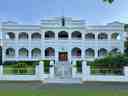
Alright, intrepid explorer, you're now approaching the magnificent Bishop's House! Look to your left, and you can't miss it. This grand, two-storied building stands out with its white façade and elegant arches that frame the balconies on both floors. It's enclosed by a charming white fence, so be sure to spot that too! The Bishop's House, originally known as St Monica's Monastery and later St Monica's Priory, is a heritage-listed former Catholic monastery that's now the residence of the bishop. It was designed by Father Joseph Phelan and constructed in 1930 by Michael Garvey. On 1st July 1997, it was proudly added to the Queensland Heritage Register. Cairns was established in October 1876 to serve the Hodgkinson goldfields. In the same year, the Pro-Vicariate of North Queensland was formed, stretching from Cardwell to Cape York. The first St Monica's Church, a timber building on the current site of the Bishop's House, was opened on 10th January 1886. In 1887, the Pro-Vicariate was upgraded to the Vicariate Apostolic of Cooktown, and a timber presbytery was constructed adjacent to St Monica's Church. In 1906, the Augustinian fathers moved their residence to Cairns from Cooktown, making St Monica's Church a pro-cathedral. The 1920s and 1930s saw a rapid development in Cairns, and the Catholic community contributed enthusiastically to the construction of new buildings, including the monastery in 1930. Father Joseph Phelan, with his architectural nous, designed the monastery. The construction saw a surge of volunteer efforts and community contributions, with the building being completed in a swift six months. Its opening was described as "the finest episcopal residence in Australia" by Archbishop James Duhig of Brisbane. This quickly-built monolith stands today as a testament to the resilient and zealous spirit of the Augustinian Fathers and the Catholic community in Cairns. It's hard to believe that, despite cyclones, floods, depression, and disputes, this grand house was erected in such a short time. Now, isn't that a story worth ringing a church bell for? Keep strolling, there's more to see!
Eigene Seite öffnen →You're almost at St Monica's Old Cathedral! As you approach, look to your left. You’ll see a distinctive pale-yellow building standing proudly with tall arches and an impressive…Mehr lesenWeniger anzeigen
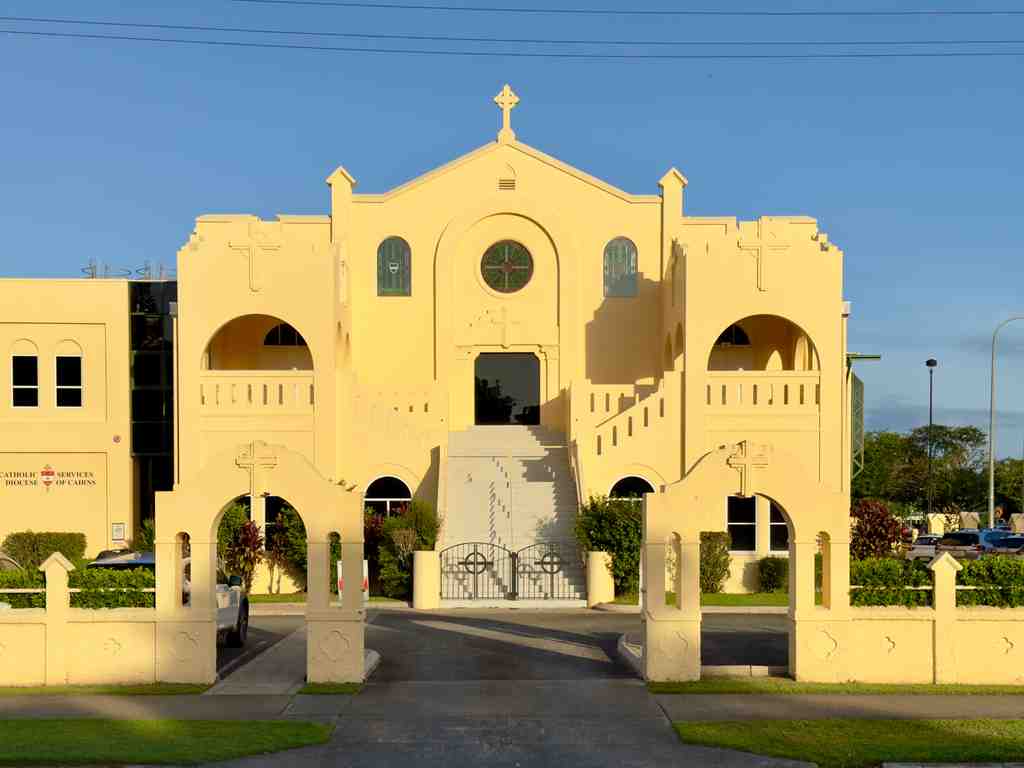
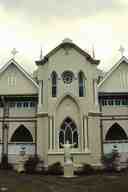
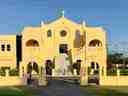
You're almost at St Monica's Old Cathedral! As you approach, look to your left. You’ll see a distinctive pale-yellow building standing proudly with tall arches and an impressive set of stairs leading up to the entrance. The building has Gothic motifs and two crosses prominently displayed near the top. There are also two white archways in the foreground, marking a grand entrance. Let's dive into the story of St Monica's Old Cathedral! This heritage-listed building at Minnie Street, Cairns City was designed by Lawrence and Lordan and built way back in 1927 by Michael Garvey. Originally functioning both as a church and a school, it took on a new lease of life as office space for the Diocese of Cairns and the local parish after the new St Monica's Cathedral was completed. Now, a little about its past: Cairns, established in 1876, quickly attracted settlers and prospectors due to its proximity to goldfields. The area was soon designated as part of the Pro-Vicariate of North Queensland. Fast forward to 1885, and St Monica's parish was founded by three Irish Augustinian fathers. However, the original St Monica's Church and School didn't fare well against Cyclone Willis in February 1927, being completely demolished. The locals were a resilient bunch, though. Despite a cyclone, a flood, a trade depression, and waterfront disputes, they managed to raise funds to rebuild. The new structure, designed to be both a church and a school, was promptly constructed and opened in just seven months - a testament to the determination of the community. So, as you stand here, imagine the bustling activity of the past, the dedication of the parishioners, and admire the beautiful Gothic architecture that withstood the test of time. Pretty inspiring, right? And there you have it, a bit of fascinating history to enrich your visit!
Eigene Seite öffnen →Ah, welcome to St Monica's Cathedral! To spot this beautiful landmark, look to your left. You'll see a building with a distinctive modern look, characterized by large vertical…Mehr lesenWeniger anzeigen
Ah, welcome to St Monica's Cathedral! To spot this beautiful landmark, look to your left. You'll see a building with a distinctive modern look, characterized by large vertical windows framed by striking white arches against the red brick walls. The entrance is fronted by a set of gentle stairs leading up to the doors. The Cathedral's contemporary aesthetic is hard to miss! Now let's dive into some fun facts about this fascinating place. St Monica's Cathedral, also known as St Monica's War Memorial Cathedral, is a significant structure for the Catholic Church in Cairns. Designed by Ian Ferrier, it was constructed from 1967 to 1968 and officially added to the Queensland Heritage Register in 1998. This cathedral, serving as the seat for the Bishop of Cairns, currently Joe Caddy, stands as a memorial to the Battle of the Coral Sea. Imagine, Cairns was buzzing as a port city back in 1876 to service goldfields! The land for the first St Monica's Church was acquired the same year and has been a cornerstone of the strength and resilience of the community ever since. The first church and school were, unfortunately, destroyed in a cyclone on 9 February 1927, but the community's spirit didn’t waver. They rallied together, and by October 1927, a new reinforced concrete building rose from the ruins. This incredible effort highlighted the resilience of the Cairns Catholic community, raising nearly £5,000 for reconstruction within eight months! Fast forward to 1941, St Monica’s Church was elevated to St Monica’s Cathedral when the Vicariate Apostolic of Cooktown became the Diocese of Cairns. Over the years, it experienced numerous changes and renovations, yet it remains an emblem of faith and perseverance in the heart of Cairns. So, take a good look at this impressive Cathedral. It’s not just a place of worship; it's a testament to the enduring spirit and community of Cairns. And hey, while you're here, try to spot the nearby Old Cathedral, Bishop's House, and St Joseph's Convent - all part of this remarkable ecclesiastical group! Enjoy your tour!
Eigene Seite öffnen →As you're walking along Abbott Street, keep an eye out to the left for the distinct and grand building that is St Monica's High School Administration Building. This two-storey…Mehr lesenWeniger anzeigen
As you're walking along Abbott Street, keep an eye out to the left for the distinct and grand building that is St Monica's High School Administration Building. This two-storey structure is easy to spot with its impressive height and the standout horizontal and vertical lines giving it a sleek, streamlined look. The facade is predominantly light in color, punctuated by subtle yet striking architectural features, including a cross in the center that hints at its rich heritage. Now, let's dive into the story of this iconic building! The St Monica's College Sr Cecilia Building, lovingly referred to as St Monica's High School in its early days, has quite the history! This heritage-listed gem was designed by the brilliant Vibert McKirdy Brown and brought to life by the skillful hands of VW Doyle back in 1941. This building has served as the heart of St Monica's school administration for many years, although it's now bustling with classrooms filled with eager students! St Monica's College holds the proud title of the oldest school in the Cairns region, complete with not just one but two heritage-listed buildings - the Sr Morrissey Building and, of course, the Sr Cecilia Building. The High School was built to provide the Sisters of Mercy a purpose-designed space for secondary education, a need that became urgent during the interwar period. With a distinctive design that boasts sweeping lines and minimal ornamentation, the building is a testament to the architectural prowess of its era. The reinforced concrete structure, including those deep verandahs, has stood the test of time, quite literally. When construction wrapped up in August 1941 with a price tag of about £5,000, it was considered a major asset to Cairns' architectural landscape. So next time you're around, give a friendly wave to this magnificent building - a quiet guardian of Cairns’ educational and architectural history!
Eigene Seite öffnen →As you continue your walk, keep your eyes peeled to the right. The Cairns Aquarium should be quite easy to spot with its modern architecture and large, striking signage featuring…Mehr lesenWeniger anzeigen
As you continue your walk, keep your eyes peeled to the right. The Cairns Aquarium should be quite easy to spot with its modern architecture and large, striking signage featuring the logo of a sawfish. The building itself is large and impressive, showcasing a modern facade with glass elements, likely giving you a glimpse of the wonders within even before you step inside. Now, let's dive into what makes this spot so spectacular! The Cairns Aquarium, which opened its doors in 2017, is truly a splash of aquatic magic in the city. This public aquarium houses more than 15,000 animals across 10 ecosystems. Imagine it as a watery Noah’s Ark, but without the sea-sickness! The $54 million, three-level facility in Queensland spans 7,800 square meters (or about 25,600 square feet for those playing along at home), and it boasts 71 tanks. Among them, you'll find an ocean tank holding a whopping 1,800,000 liters (480,000 US gallons) of water - that's basically enough to fill over half a million bathtubs! You'll also see Australia’s largest freshwater tank with 400,000 liters (110,000 US gallons) of water, a deep reef tank, and the world's first true tidal motion tank. It's one of the few aquariums where you can gaze upon endangered or rarely seen species like emerald tree monitors, Jardine River turtles, ribboned pipefish, freshwater sawfish, and even scalloped hammerhead sharks. It's like having a front-row seat to Nature's Greatest Hits! But it's not just a feast for the eyes. The aquarium is an interactive research and education center, home to the Cairns Turtle Rehabilitation Centre, where they help our flippered friends get back on their fins. A bit of trivia to impress your fellow travelers: In 2018, the Cairns Aquarium bagged the Master Builder Queensland award for Project of the Year and the award for Leisure Facilities over $10 million. So, it's not just cool; it's award-winning cool. Now that you know what's in store, get ready to be mesmerized by the underwater marvels as you journey into the depths of the Cairns Aquarium! Happy exploring!
Eigene Seite öffnen →As you approach stop number 14, the Cairns Masonic Temple on Minnie Street, keep an eye to your right. You'll spot a striking white concrete building that's two storeys tall. Its…Mehr lesenWeniger anzeigen
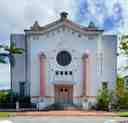
As you approach stop number 14, the Cairns Masonic Temple on Minnie Street, keep an eye to your right. You'll spot a striking white concrete building that's two storeys tall. Its most notable feature is a large circular window framed by ornate columns and intricate detailing above the entrance. The building is set off by the greenery of palm trees planted in front of it. There's a small gated fence lining the property, welcoming you in. Now, let’s dive into the temple’s intriguing history! The Cairns Masonic Temple, standing proud at 8 Minnie Street, was constructed between 1934 and 1935 and was added to the Queensland Heritage Register on 28 August 1998. Even though masonic activities at this temple ceased following its sale to the Catholic Church in 2017, its historical importance is impressive. This grand, two-storey concrete masterpiece was the third building utilized as a Masonic Temple in Cairns. The community of Freemasons in Cairns dates to a gathering held in December 1885 at Hides Hotel, and the establishment of the first Masonic Lodge in Cairns, Gregory Lodge No. 50, followed in April 1886. By the mid-1920s, six lodges convened in Cairns. Unfortunately, the cyclone of 1927 resulted in their relocation to a building near the current temple's site. In 1934, masons decided to construct a Memorial Temple as a tribute to World War I craftsmen and the peace that followed. This led to its completion in 1935, under the architectural guidance of Hill and Taylor, and the skillful hands of contractor CE Steadman, all masons themselves. What sets this temple apart, besides its architectural grandeur, is its symbolic foundation stone laid on Armistice Day in 1934. The building functions as a memento of the union of Freemasonry and an homage to those who sacrificially served during the Great War. During the large-scale interwar redevelopment that essentially rebuilt Cairns following severe cyclone damage in the 1920s, the temple became an iconic structure. Its dedication ceremony in October 1935 was a grand affair, attended by roughly 700 representatives of Lodges, and highlighted features like ventilated brickwork to keep cool during humid evenings, and impressive North Queensland walnut and maple joinery. So, here stands the Cairns Masonic Temple - a historical gem with tales of resilience, dedication, and a touch of mystery
Eigene Seite öffnen →As you're approaching the last stop, the Cairns Control Room, keep an eye on your right. You're looking for a small, squat building with a distinctive round brown roof that almost…Mehr lesenWeniger anzeigen
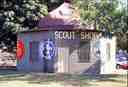
As you're approaching the last stop, the Cairns Control Room, keep an eye on your right. You're looking for a small, squat building with a distinctive round brown roof that almost looks like a hat. The building is square with small, barred windows and a plain, somewhat weatherworn door in the front. Painted directly onto the building, in bold letters, is "SCOUT SHOP," along with several large scout emblem murals - these should be easy to spot from a distance. Welcome to the Cairns Control Room, a heritage-listed military building with a fascinating story! Built in 1942 by the Queensland Department of Public Works, this place was crucial during World War II. It's had many names over the years, including the World War II Volunteer Defence Corps, the Cairns Scout Hut, and the Cairns Scout Shop. During the war, especially after the dramatic events like the attack on Pearl Harbor and the fall of Singapore, a more substantial building was needed for a civil defence control centre. This reinforced concrete building served as a control room for the Volunteer Defence Corps, police, and ambulance service to coordinate emergency services in case of air raids. Post-war, the building survived and found a new purpose. By the mid-1950s, it was handed over to the Scouting Association of Queensland and became the local scout headquarters. Imagine, this building was a beehive of activity during the war, with Air Raid Protection Committees planning emergency responses and air raid wardens ensuring compliance with blackout regulations and drills. It's like the Avengers' headquarters, but with more khaki uniforms and fewer capes! As you stand here, picture this little building playing its crucial part in keeping Cairns safe during one of the most turbulent times in history. It’s a tiny building with a giant story!
Eigene Seite öffnen →


Häufig gestellte Fragen
Wie starte ich die Tour?
Laden Sie nach dem Kauf die AudaTours-App herunter und geben Sie Ihren Einlösecode ein. Die Tour ist sofort startbereit – tippen Sie einfach auf „Play“ und folgen Sie der GPS-geführten Route.
Benötige ich während der Tour Internet?
Nein! Laden Sie die Tour vor dem Start herunter und genießen Sie sie vollständig offline. Nur die Chat-Funktion benötigt Internet. Wir empfehlen den Download über WLAN, um mobiles Datenvolumen zu sparen.
Handelt es sich um eine geführte Gruppentour?
Nein – dies ist ein selbstgeführter Audioguide. Sie erkunden unabhängig in Ihrem eigenen Tempo, wobei die Audioerzählung über Ihr Telefon abgespielt wird. Kein Reiseleiter, keine Gruppe, kein Zeitplan.
Wie lange dauert die Tour?
Die meisten Touren dauern 60–90 Minuten, aber Sie kontrollieren das Tempo vollständig. Pausieren Sie, überspringen Sie Stopps oder machen Sie Pausen, wann immer Sie wollen.
Was, wenn ich die Tour heute nicht beenden kann?
Kein Problem! Touren haben lebenslangen Zugriff. Pausieren Sie und setzen Sie sie fort, wann immer Sie möchten – morgen, nächste Woche oder nächstes Jahr. Ihr Fortschritt wird gespeichert.
Welche Sprachen sind verfügbar?
Alle Touren sind in über 50 Sprachen verfügbar. Wählen Sie Ihre bevorzugte Sprache beim Einlösen Ihres Codes. Hinweis: Die Sprache kann nach der Tour-Generierung nicht mehr geändert werden.
Wo greife ich nach dem Kauf auf die Tour zu?
Laden Sie die kostenlose AudaTours-App aus dem App Store oder von Google Play herunter. Geben Sie Ihren Einlösecode (per E-Mail gesendet) ein, und die Tour erscheint in Ihrer Bibliothek, bereit zum Download und Start.
Wenn Ihnen die Tour nicht gefällt, erstatten wir Ihnen den Kaufpreis. Kontaktieren Sie uns unter [email protected]
Sicher bezahlen mit 


